


Leucine and Muscle Growth: Why Protein Quantity Is Not the Whole Story
When people start paying attention to muscle health, one number usually receives most of the attention:
How many grams of protein am I eating?
Protein quantity certainly matters.
If your overall protein intake is inadequate, maintaining or building muscle becomes more difficult.
But two meals containing the same 25 grams of protein do not necessarily provide exactly the same amino-acid profile, digestibility or physiological response.
This is where the relationship between leucine and muscle growth becomes important.
Leucine is one of the nine essential amino acids. Your body cannot manufacture enough of it on its own, so it must come from food.
More importantly for muscle health, leucine does more than simply provide raw material for making new proteins.
It also participates in signalling pathways involved in stimulating muscle protein synthesis.
This has led to leucine sometimes being described as an anabolic “trigger.”
That description is useful—but incomplete.
Leucine cannot build muscle by itself.
You still need the other essential amino acids, adequate total protein, sufficient energy, and most importantly, a reason for the muscle to adapt—usually resistance exercise.
So the practical question is not:
“How much leucine should I supplement?”
A better question is:
“Does each important meal provide enough high-quality protein and essential amino acids to support muscle protein synthesis?”
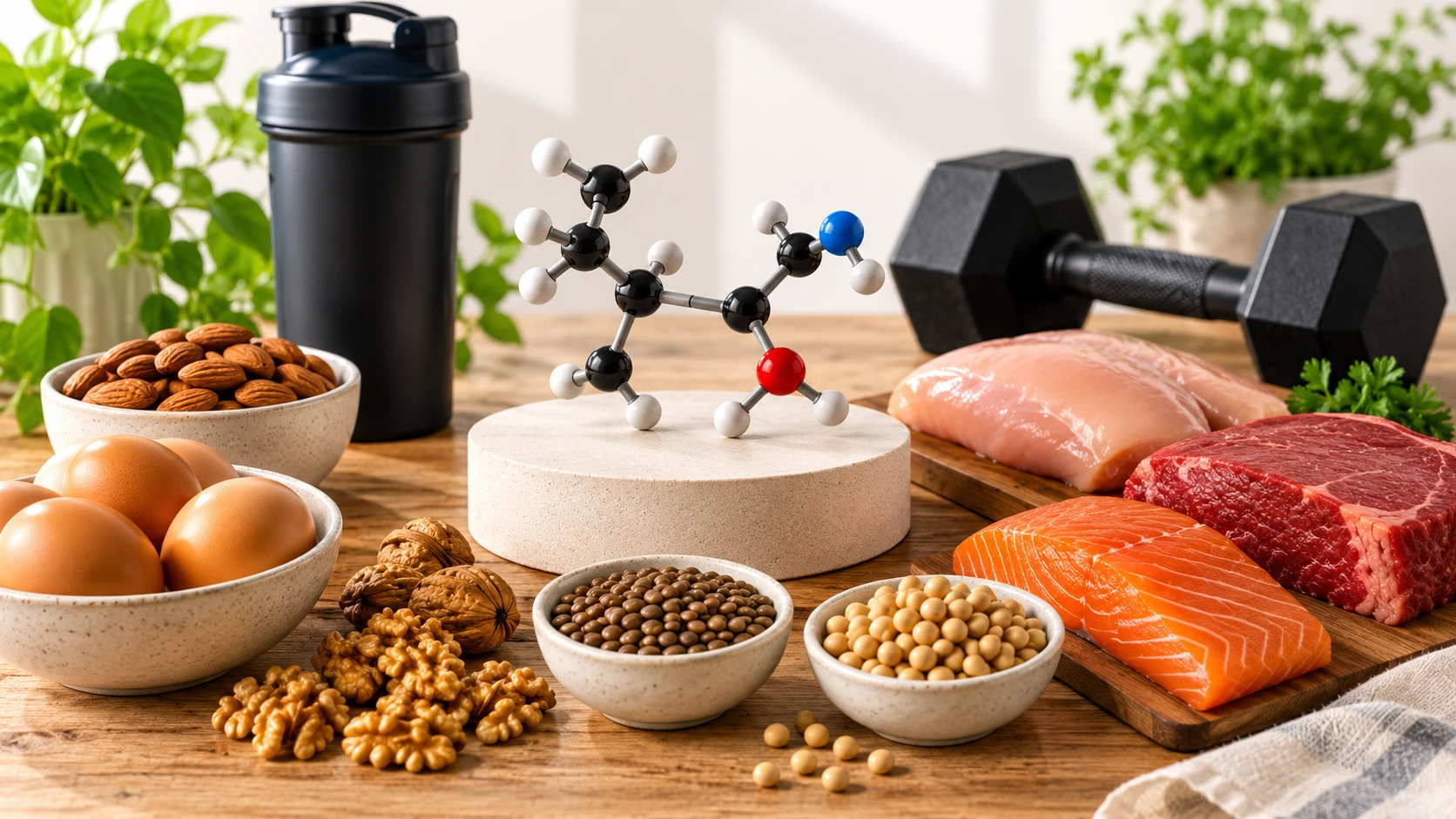
What Is Leucine?
Leucine is an essential branched-chain amino acid, or BCAA.
The three BCAAs are:
- Leucine.
- Isoleucine.
- Valine.
All three contribute to normal protein metabolism, but leucine has received particular attention because of its role in regulating muscle protein synthesis.
Dietary leucine is naturally present in many protein-rich foods, including:
- Milk and curd.
- Whey protein.
- Paneer.
- Eggs.
- Fish.
- Chicken and other meats.
- Soya and tofu.
- Lentils and dals.
- Beans and chickpeas.
- Peanuts and some other nuts and seeds.
The amount of leucine per gram of protein varies between foods.
This is one reason why looking only at total grams of protein can sometimes oversimplify protein quality.
Leucine and Muscle Growth: What Actually Happens After You Eat Protein?
When you eat protein, digestion breaks it down into amino acids and small peptides.
These amino acids are absorbed into the bloodstream and become available to tissues throughout the body.
Skeletal muscle can then use essential amino acids to synthesise new muscle proteins.
Leucine has a particularly important signalling role in this process.
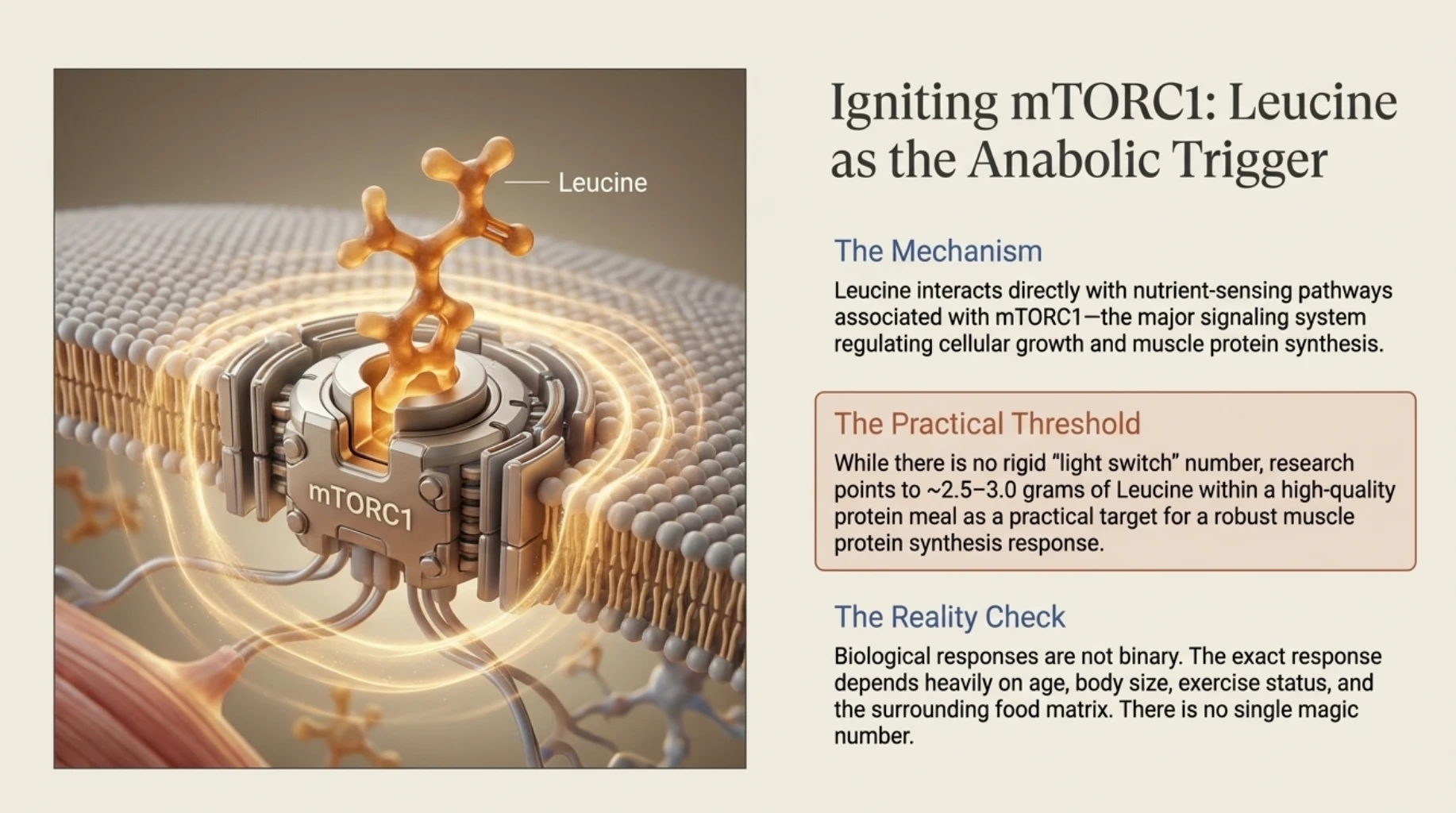
It interacts with nutrient-sensing pathways associated with activation of mTORC1—the mechanistic target of rapamycin complex 1.
mTORC1 is one of the major signalling systems involved in regulating cellular growth and muscle protein synthesis.
This explains much of the interest surrounding leucine and muscle growth.
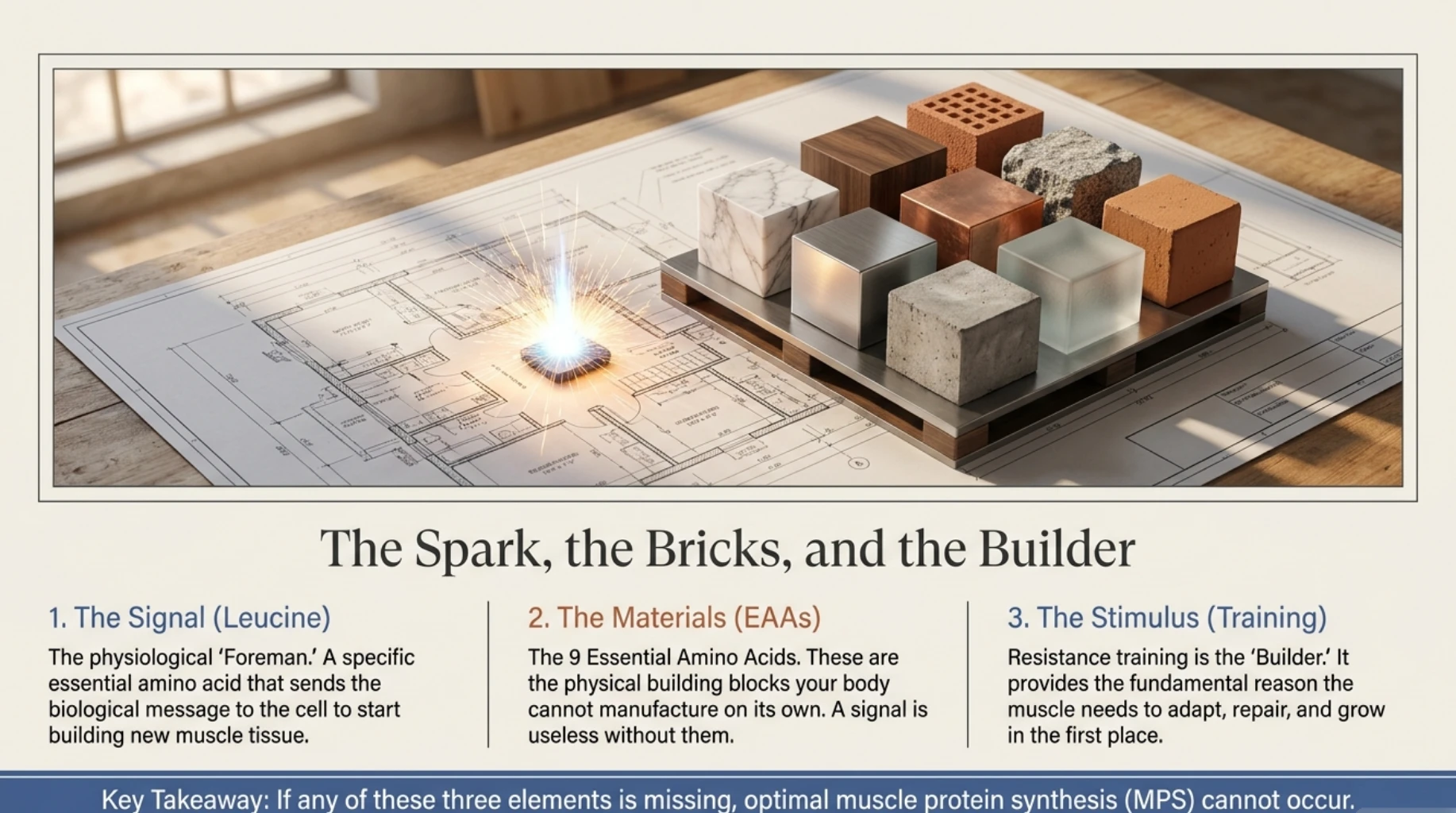
Think of Leucine as a Signal, Not the Entire Construction Team
A useful analogy is a construction site.
Leucine helps send the message:
“Start building.”
But sending the message is not enough.
The builders still need construction material.
For muscle, those materials include all the essential amino acids required to assemble new proteins.
If leucine is present but the other essential amino acids are insufficient, muscle protein synthesis cannot continue optimally simply because more leucine has been added.
This is why taking isolated leucine is not nutritionally equivalent to eating an adequate serving of complete or appropriately combined dietary protein.
What Is Muscle Protein Synthesis?
Your muscles are constantly undergoing protein turnover.
Old or damaged proteins are broken down while new proteins are synthesised.
The creation of new muscle proteins is called muscle protein synthesis, commonly abbreviated as MPS.
Muscle mass over time depends partly on the relationship between:
- Muscle protein synthesis.
- Muscle protein breakdown.
Eating protein temporarily increases muscle protein synthesis.
Resistance exercise also stimulates muscle protein synthesis and makes muscle more responsive to amino acids.
When resistance training and adequate dietary protein are combined repeatedly over weeks and months, the environment becomes favourable for muscle maintenance or hypertrophy, depending on the person’s training status and energy balance.
Why Protein Quantity Alone Does Not Tell the Whole Story
Imagine two meals that both contain 20 grams of protein.
On a nutrition tracker they look identical:
Protein = 20 g.
Physiologically, however, several characteristics can differ.
| Protein Factor | Why It Matters |
|---|---|
| Total protein | Determines the overall quantity of amino acids potentially available |
| Essential amino acids | Provide amino acids the body cannot synthesise adequately on its own |
| Leucine content | Contributes to the signalling involved in stimulating muscle protein synthesis |
| Digestibility | Influences how much dietary protein becomes available for absorption |
| Amino-acid profile | Determines whether all essential amino acids are available in appropriate amounts |
| Food matrix | Can influence digestion, amino-acid availability and the post-meal anabolic response |
| Meal size | Affects the total amount of protein and essential amino acids delivered |
| Exercise | Resistance exercise increases muscle sensitivity to dietary amino acids |
Therefore, counting grams of protein is useful—but it is only the first step.
What Is the Leucine Threshold?
You may have heard that every meal must contain a specific amount of leucine to “switch on” muscle growth.
This idea is commonly known as the leucine threshold or leucine trigger hypothesis.
The basic concept is that the rise in circulating leucine after eating contributes to stimulation of muscle protein synthesis.
There is biological and experimental support for this concept, particularly in older adults and in studies involving isolated proteins.
However, the modern interpretation is more nuanced.
There is not one universal leucine number that works identically for every person, every meal and every protein source.
Leucine and Muscle Growth Are Not Controlled by a Single Magic Number
The muscle protein synthesis response to a meal can depend on:
- Age.
- Body size.
- Amount of protein consumed.
- Essential amino-acid content.
- Protein source.
- Food matrix.
- Whether resistance exercise was performed.
- Habitual protein intake.
- Overall energy intake.
- Health and training status.
This is why it is misleading to say that 2.5 or 3 grams of leucine automatically “switches on” muscle growth while 2.4 grams does nothing.
Biological responses do not generally behave like an electrical light switch.
How Much Leucine Is Needed Per Meal?
There is no universally accepted leucine dose that every adult must reach at every meal.
However, research in older adults often points towards meals providing roughly 2.5–3 grams or more of leucine, usually delivered within an adequate serving of high-quality protein, as a useful practical range for supporting a robust muscle protein synthesis response.
Importantly, this should not be interpreted as a supplement prescription.
The leucine is preferably delivered as part of a protein-rich meal that also provides the other essential amino acids.
For many adults, focusing on an adequate serving of high-quality protein is more practical than calculating leucine to the nearest milligram.
Older Adults May Need More Attention to Leucine Per Meal
The relationship between leucine and muscle growth becomes particularly relevant with ageing.
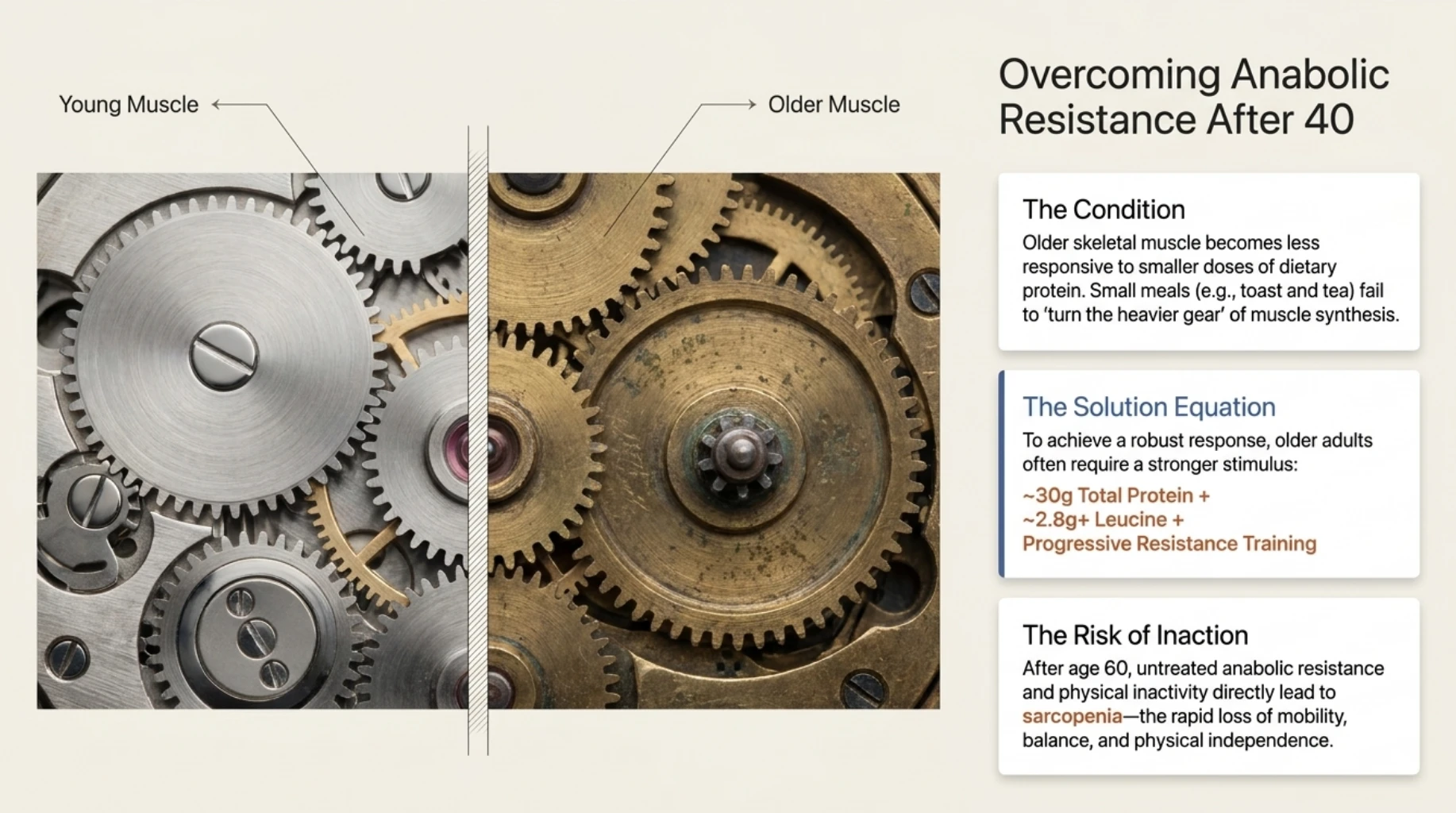
Older skeletal muscle can become less responsive to smaller doses of dietary protein—a phenomenon commonly called anabolic resistance.
This does not mean older muscles cannot respond to protein.
It means that a larger or higher-quality protein stimulus may sometimes be required to produce a robust response.
Recent reviews suggest that meals providing around 30 grams of protein and approximately 2.8 grams or more of leucine may be useful targets in many older adults, although individual needs vary.
What Is Anabolic Resistance?
Anabolic resistance describes a reduced muscle protein synthesis response to stimuli that would produce a stronger response in younger muscle.
It can be associated with:
- Ageing.
- Physical inactivity.
- Prolonged bed rest.
- Illness.
- Muscle disuse.
- Some chronic diseases.
This is one reason why a very small protein serving at breakfast may be less useful for an older adult than a more substantial protein-rich meal.
Resistance exercise is also important because physical activity increases muscle sensitivity to dietary amino acids.
Does More Leucine Always Mean More Muscle Growth?
No.
This is one of the most important points in understanding leucine and muscle growth.
Once an adequate anabolic stimulus and sufficient essential amino acids are available, adding progressively larger amounts of isolated leucine does not mean muscle growth will continue increasing proportionately.
Muscle protein synthesis is regulated by multiple factors.
More leucine cannot compensate indefinitely for:
- Insufficient total protein.
- Missing essential amino acids.
- Inadequate calorie intake.
- Poor resistance-training stimulus.
- Prolonged inactivity.
- Poor recovery.
This is why “more leucine” should not become the nutritional equivalent of “more protein is always better.”
Leucine vs Complete Protein: What Is the Difference?
Leucine is one amino acid.
A complete dietary protein provides all nine essential amino acids in adequate proportions.
This difference is fundamental.
| Feature | Leucine Alone | High-Quality Complete Protein |
|---|---|---|
| Provides leucine | Yes | Yes |
| Provides all essential amino acids | No | Yes |
| Provides building blocks for muscle protein | Only one amino acid | Broad essential amino-acid supply |
| Can stimulate anabolic signalling | Yes | Yes, depending on amount and composition |
| Can independently sustain muscle protein synthesis | No | Better suited because the required amino acids are available |
| Best practical role | Specific situations rather than routine replacement of protein | Foundation of normal muscle-supporting nutrition |
Why Essential Amino Acids Matter Alongside Leucine
Your body requires nine essential amino acids from the diet:
- Histidine.
- Isoleucine.
- Leucine.
- Lysine.
- Methionine.
- Phenylalanine.
- Threonine.
- Tryptophan.
- Valine.
Leucine may provide an important anabolic signal, but muscle proteins cannot be assembled from leucine alone.
Think again about the construction-site analogy.
Starting the machinery does not help if essential building materials are missing.
This is why the total essential amino-acid profile of a meal matters.
Protein Quality Matters for Leucine and Muscle Growth
Protein quality is more complicated than simply asking whether a food contains protein.
Factors include:
- Essential amino-acid composition.
- Digestibility.
- Bioavailability.
- Leucine density.
- Food processing and preparation.
- The overall food matrix.
Animal-derived proteins such as dairy, eggs, fish and meat generally provide all essential amino acids in favourable proportions and tend to be highly digestible.
That does not mean plant proteins cannot support muscle growth.
They can.
But some plant proteins contain lower proportions of one or more essential amino acids, may provide less leucine per serving, or may be less digestible in their whole-food form.
Plant Protein Is Not “Bad Protein”
This point deserves emphasis.
Calling plant protein “incomplete” and therefore useless is an outdated oversimplification.
Plant foods contain all essential amino acids, but the proportions and digestibility vary between sources.
A well-planned vegetarian diet can provide adequate protein for muscle maintenance and growth.
Strategies include:
- Eating sufficient total protein.
- Using larger portions where appropriate.
- Including protein-rich foods at several meals.
- Combining different plant-protein sources across the diet.
- Using higher-quality sources such as soy.
- Using dairy, eggs or whey when compatible with dietary preference.
Leucine in Indian Vegetarian Diets
This discussion is particularly relevant in India because many people obtain a substantial proportion of dietary protein from vegetarian foods.
Common foods include:
- Dal.
- Rajma.
- Chana.
- Milk.
- Curd.
- Paneer.
- Soya chunks.
- Tofu.
- Peanuts.
- Whole grains.
The problem is usually not that these foods contain no leucine.
They do.
The practical issue is that some meals contain too little total protein to deliver a strong essential amino-acid and leucine stimulus.
Why a Typical Indian Breakfast May Be Low in Leucine and Protein
Consider breakfasts such as:
- Tea with two biscuits.
- Poha with tea.
- Plain upma.
- Toast with jam.
- A small bowl of cereal.
- Fruit alone.
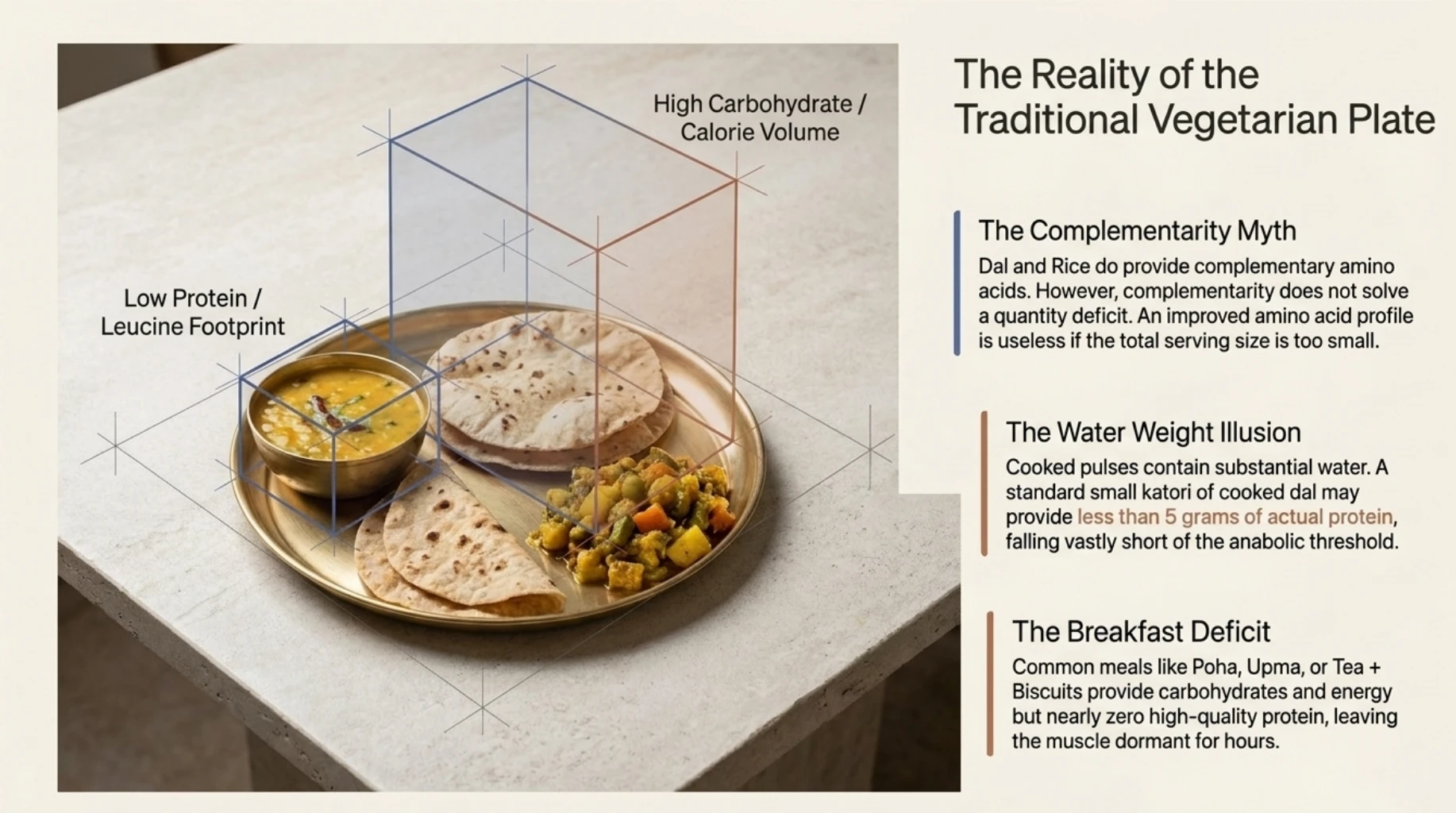
These meals may provide carbohydrates and energy but relatively little high-quality protein.
Simply adding the word “healthy” to a breakfast does not make it adequate for muscle health.
A more protein-focused breakfast might include combinations such as:
- Moong chilla with curd.
- Paneer-based filling with a suitable roti or chilla.
- Greek-style/high-protein curd with other foods.
- Eggs with an appropriate accompanying meal.
- Soya or tofu preparations.
- Whey protein when practical and appropriate.
The goal is not merely to chase leucine.
The goal is to build a meal with meaningful total protein and a strong essential amino-acid profile.
Dal Contains Protein—but Portion Size Matters
Dal is nutritious and should not be dismissed as a poor food.
It provides protein, fibre, minerals and other nutrients.
But a small katori of cooked dal does not provide the same amount of protein or leucine as a large serving of a concentrated protein source.
This distinction becomes important when someone says:
“I eat dal every day, so my protein intake must be sufficient.”
The relevant questions are:
- How much dal?
- How much actual protein does that portion provide?
- What other protein sources are present in the meal?
- What is the total protein intake across the day?
Food names alone cannot determine whether protein intake is adequate.
Dal and Rice: Does Combining Them Solve the Protein-Quality Problem?
Cereals and pulses have complementary amino-acid profiles.
Legumes tend to be relatively limited in sulphur-containing amino acids such as methionine, whereas cereals tend to be relatively lower in lysine.
Eating both across the diet improves the overall amino-acid pattern.
But there is an important practical limitation.
A plate containing a large amount of rice and a small amount of dal may technically combine complementary proteins while still providing insufficient total protein for someone trying to optimise muscle health.
Complementarity does not eliminate the importance of quantity.
Protein Quantity vs Protein Quality: You Need Both
| Situation | Likely Problem |
|---|---|
| Adequate protein quantity + good amino-acid profile | Generally favourable for supporting muscle protein synthesis |
| Adequate protein quantity + lower-quality sources | May still work well if protein intake, variety and meal composition are appropriately planned |
| Low protein quantity + high-quality source | Serving may simply be too small to provide enough amino acids |
| High leucine + inadequate essential amino acids | Signal may be present, but building materials remain limited |
| High protein + no resistance training | Supports maintenance, but does not replace the training stimulus required for optimal hypertrophy |
This is the central lesson behind leucine and muscle growth:
Protein quantity matters, protein quality matters, leucine matters—and resistance exercise matters.
None should be considered in complete isolation.
Which Foods Are Rich in Leucine?
Understanding leucine and muscle growth does not mean that you need to calculate the leucine content of every meal.
For most people, a more practical strategy is to regularly include protein-rich foods that naturally provide meaningful amounts of leucine together with the other essential amino acids.
Dairy proteins, particularly whey, are naturally rich in leucine. Eggs, fish, poultry and meat also provide substantial amounts.
Among vegetarian foods, soy is particularly useful, while pulses, beans, peanuts and other plant foods contribute leucine as part of the total diet.
The important issue is portion size.
A food may contain leucine, but a small serving may not provide enough total protein or essential amino acids to create a substantial muscle protein synthesis response.
Approximate Leucine Content of Common Protein Foods
The following values are approximate because leucine content varies with the specific food, brand, processing method, moisture content and serving size.
They are intended to show relative differences rather than provide laboratory-level precision.
| Food | Typical Serving | Approx. Protein | Approx. Leucine |
|---|---|---|---|
| Whey protein | 30 g powder* | ~22–25 g | ~2.4–2.8 g |
| Chicken breast, cooked | 100 g | ~30–31 g | ~2.3–2.5 g |
| Fish, cooked | 100 g | ~20–25 g | ~1.6–2.0 g |
| Whole eggs | 2 large | ~12–13 g | ~1.0 g |
| Milk | 250 mL | ~8 g | ~0.7–0.8 g |
| Paneer | 100 g | ~18–20 g** | ~1.5–2.0 g** |
| Firm tofu | 150 g | ~18–24 g** | ~1.4–1.9 g** |
| Soya chunks, dry | 50 g | ~25 g** | ~1.8–2.1 g** |
| Cooked dal | 1 cup | ~14–18 g** | ~1.0–1.4 g** |
| Cooked chickpeas | 1 cup | ~14–15 g | ~1.0–1.2 g |
*Check the nutrition label because protein content differs substantially between whey products.
**Values can vary considerably according to the specific product, pulse, preparation method and moisture content.
The table illustrates an important point about leucine and muscle growth: the relevant question is not simply whether a food contains leucine.
Almost all meaningful dietary protein sources do.
The more useful question is whether the portion provides enough total protein, leucine and other essential amino acids within the overall meal.
Whey Protein and Leucine: Why Whey Is So Effective
Whey has become popular in sports nutrition for good reasons.
It is highly digestible, provides all essential amino acids and contains a relatively high proportion of leucine.
It is also rapidly digested, producing a relatively rapid rise in circulating amino acids after consumption.
This combination makes whey particularly effective at stimulating muscle protein synthesis.
However, this does not mean everyone needs whey protein.
Whey is a convenient food-derived protein supplement—not a requirement for muscle growth.
Who May Find Whey Protein Useful?
Whey can be practical for people who:
- Struggle to obtain enough protein from normal meals.
- Follow a vegetarian diet that includes dairy.
- Have a low-protein breakfast.
- Need a convenient post-workout protein source.
- Have reduced appetite during weight loss.
- Need to increase protein without greatly increasing meal volume.
The decision should be based on dietary need rather than the assumption that whey has a unique ability to create muscle.
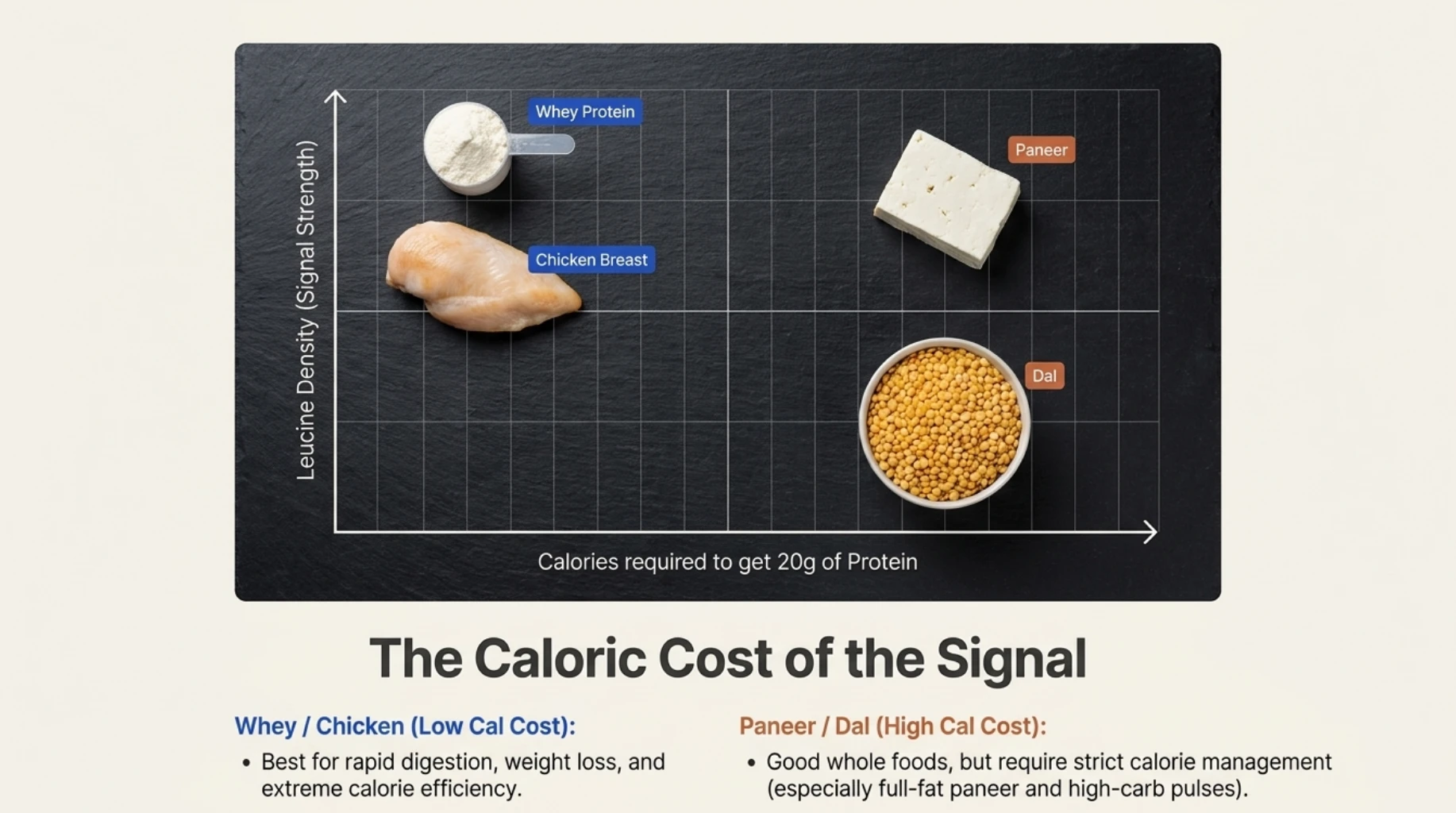
Whey vs Paneer for Leucine and Muscle Growth
Both whey and paneer originate from milk, but their protein characteristics differ.
Whey is rapidly digested and relatively leucine-rich.
Paneer contains predominantly casein-type dairy protein and is digested more slowly.
Paneer also provides a substantial amount of protein, but depending on how it is prepared, it can contain considerably more fat and calories than whey.
| Feature | Whey Protein | Paneer |
|---|---|---|
| Protein concentration | High | Moderate to high |
| Leucine density | High | Good |
| Digestion | Relatively rapid | Slower |
| Calories per gram of protein | Usually relatively low | Can be considerably higher, especially full-fat paneer |
| Satiety | Useful but consumed as a drink | Whole-food meal component and often more filling |
| Best practical use | Convenient protein supplementation | Regular protein-rich meal component |
There is no need to declare one universally “better.”
The appropriate choice depends on the rest of the diet, calorie needs, appetite and convenience.
Eggs and Leucine: Are Two Eggs Enough?
Two whole eggs provide approximately 12–13 grams of protein and around 1 gram of leucine.
Eggs are a high-quality complete protein, but two eggs alone provide a relatively modest total protein dose.
This distinction matters.
Someone may say:
“I had a high-protein breakfast because I ate two eggs.”
Two eggs certainly contribute useful protein.
But for an adult trying to optimise muscle protein intake, particularly an older adult or someone performing resistance training, the total meal may benefit from additional protein.
For example, eggs could be combined with an appropriate amount of curd, milk or another suitable protein source depending on dietary preference and calorie requirements.
Soy Protein, Leucine and Muscle Growth
Soy deserves particular attention in vegetarian nutrition.
It provides all essential amino acids and is one of the stronger plant-based protein options for supporting muscle health.
Soya chunks are especially protein-dense because much of the water and fat have been removed during processing.
Tofu is less protein-dense by weight because it contains considerably more water, although firm and extra-firm varieties can still provide substantial protein.
This is why comparing “100 grams of tofu” with “100 grams of dry soya chunks” is misleading.
The water content is completely different.
Does Soy Reduce Testosterone in Men?
Normal dietary consumption of soy foods has not been shown to meaningfully reduce testosterone in men.
The belief largely comes from concerns about soy isoflavones, which are phytoestrogens, but their biological activity is not equivalent to human oestrogen.
For men who enjoy soy foods, there is no evidence-based reason to avoid reasonable amounts of tofu, soy milk or soya foods simply because of fear of lowering testosterone.
Dal, Rajma and Chana: Good Foods, but Do the Maths
Pulses are excellent foods.
They provide:
- Protein.
- Fibre.
- Slowly digestible carbohydrate.
- Potassium.
- Magnesium.
- Folate.
- Other micronutrients and phytochemicals.
But calling a food “protein-rich” does not tell you how much protein your actual serving contains.
Cooked pulses contain substantial water.
A small katori may therefore provide much less protein than people assume.
Leucine and Muscle Growth: Why Dal Portion Size Matters
Suppose someone eats:
- 2 rotis.
- A small katori of dal.
- Sabzi.
- Salad.
This can be a nutritious Indian meal.
But if the dal serving is small, most of the meal’s calories may still come from carbohydrate rather than protein.
The solution is not to remove roti or dal automatically.
The solution is to assess the meal properly.
Depending on the person’s needs, the protein component can be strengthened with a larger appropriate portion of dal or foods such as curd, paneer, tofu, soy, eggs, fish or chicken.
Can You Get Enough Leucine on a Vegetarian Diet?
Yes.
A vegetarian diet can provide adequate leucine and total protein.
But planning becomes more important when dairy, eggs and soy are limited or excluded.
Useful vegetarian protein sources include:
- Milk.
- Curd and Greek-style/high-protein curd.
- Paneer.
- Whey protein.
- Soya chunks.
- Tofu.
- Tempeh.
- Lentils.
- Chickpeas.
- Beans.
- Peas.
- Peanuts.
Rather than relying heavily on one food, dietary variety helps provide a broader amino-acid profile.
What About Vegan Diets and Leucine?
A well-planned vegan diet can also support muscle growth.
However, because some plant proteins have lower digestibility and/or lower proportions of particular essential amino acids, total protein requirements may need more attention.
Useful strategies include:
- Prioritising soy foods.
- Using legumes regularly.
- Including adequate protein at each major meal.
- Using complementary plant-protein sources across the day.
- Using an appropriate plant-protein supplement when dietary intake is difficult to achieve.
Plant protein powders combining sources such as pea and rice can provide a more balanced essential amino-acid profile.
Leucine and Muscle Growth After 40
The importance of leucine and muscle growth becomes more relevant as adults move through midlife.
From approximately the fourth decade onward, many adults gradually become less active.
Resistance training often disappears from daily life.
Protein intake may also become concentrated in one meal—usually dinner.
Over time, these factors can contribute to gradual loss of muscle mass and strength.
Age itself is only part of the problem.
Physical inactivity is a major contributor.
Do Adults Over 40 Need More Protein?
Protein requirements depend on health, activity level, body composition and goals.
For healthy adults performing resistance training, intakes above the basic RDA are often used to support muscle adaptation.
For older adults, many expert groups have proposed approximately 1.0–1.2 g/kg/day as a practical range for healthy ageing, with higher intakes sometimes considered during illness, recovery or substantial physical training.
However, protein targets should be individualised, particularly in people with chronic kidney disease or other medical conditions affecting protein recommendations.
Leucine and Muscle Growth After 60
After 60, preventing muscle loss becomes increasingly important for maintaining mobility and independence.
The objective is not simply bodybuilding.
Muscle helps adults:
- Stand from a chair.
- Climb stairs.
- Carry groceries.
- Recover from illness.
- Maintain balance.
- Remain physically independent.
Because anabolic resistance becomes more relevant with ageing, very small protein servings may produce a weaker muscle protein synthesis response.
This is why adequate protein per meal, leucine-rich protein sources and resistance exercise become increasingly important.
Protein Per Meal: Why Distribution Matters
Consider an adult consuming 80 grams of protein per day.
There are several ways that protein could be distributed.
| Meal | Pattern A | Pattern B |
|---|---|---|
| Breakfast | 8 g | 25 g |
| Lunch | 17 g | 25 g |
| Snack | 5 g | 5 g |
| Dinner | 50 g | 25 g |
| Total | 80 g | 80 g |
The daily protein total is identical.
But Pattern B provides several substantial protein-containing meals rather than concentrating most protein at dinner.
Research suggests that distributing adequate protein across meals can provide repeated opportunities to stimulate muscle protein synthesis, although total daily protein remains extremely important.
Why Dinner-Heavy Protein Intake Is Common in India
A typical pattern may look like:
Breakfast: tea + poha/upma/paratha.
Lunch: roti + sabzi + small dal.
Evening: tea + biscuits/namkeen.
Dinner: dal/paneer/chicken + roti or rice.
The person may believe they eat “protein throughout the day,” but the actual protein distribution can be heavily skewed towards dinner.
Breakfast is often the weakest meal.
Improving breakfast and lunch protein can sometimes be more practical than simply making dinner larger.
Do You Need 30 Grams of Protein at Every Meal?
No universal rule says every adult must eat exactly 30 grams of protein at every meal.
Protein needs depend on body size, age, activity, training status and total daily intake.
A commonly discussed research-based approach is roughly 0.3–0.4 g of high-quality protein per kilogram of body weight per meal, particularly when muscle protein synthesis is an important goal.
Older adults may benefit from the upper end of this range or somewhat more in some circumstances because of anabolic resistance.
These are practical frameworks—not rigid limits.
Can Your Body Use More Than 30 Grams of Protein at Once?
Yes.
The claim that the body can absorb only 20 or 30 grams of protein per meal is incorrect.
The digestive system can absorb substantially more.
The more relevant question is how much of that protein maximally stimulates muscle protein synthesis during a particular post-meal period.
Additional amino acids are not simply “wasted.”
They can be used for:
- Other body proteins.
- Enzymes.
- Hormones and signalling molecules.
- Oxidation for energy.
- Other metabolic pathways.
Therefore, protein absorption and muscle protein synthesis are not the same thing.
Leucine and Muscle Growth After Resistance Exercise
Resistance training changes the equation.
After resistance exercise, muscle becomes more responsive to dietary amino acids.
This enhanced sensitivity can persist for many hours.
Protein consumed during the broader recovery period supports muscle repair and adaptation.
This is why leucine and muscle growth should never be discussed without resistance training.
Protein provides the nutritional substrate.
Training provides the reason for muscle to adapt.
Do You Need Protein Immediately After Exercise?
The traditional bodybuilding idea of an extremely narrow 30-minute “anabolic window” is exaggerated.
You do not lose the benefit of your workout because you failed to drink a protein shake within minutes of your final repetition.
The anabolic response to resistance exercise persists considerably longer.
However, consuming an adequate protein-containing meal within a practical period around training remains sensible, especially if several hours have passed since the previous protein-rich meal.
There is no need to panic about the clock.
Is Whey Better Immediately After a Workout?
Whey is convenient because it is rapidly digested and rich in essential amino acids and leucine.
That makes it an effective post-workout option.
But a normal high-quality protein-containing meal can also support recovery.
If you finish training and are going to eat eggs, paneer, tofu, fish, chicken, curd or another substantial protein-rich meal soon afterwards, a separate whey shake may not be necessary.
Do You Need a Leucine Supplement?
For most healthy adults consuming adequate high-quality protein, isolated leucine supplementation is usually unnecessary.
Whole protein sources provide leucine together with the other essential amino acids required for muscle protein synthesis.
Supplemental leucine may have specialised applications in research, clinical nutrition or situations where protein intake is limited, but this is different from recommending it routinely to everyone trying to build muscle.
Leucine Supplement vs Whey Protein
| Feature | Isolated Leucine | Whey Protein |
|---|---|---|
| Provides leucine | Yes | Yes |
| Provides all essential amino acids | No | Yes |
| Provides substantial total protein | No | Yes |
| Supports anabolic signalling | Yes | Yes |
| Provides building blocks for new muscle protein | Very limited | Yes |
| Routine usefulness when diet is adequate | Usually limited | Useful when additional dietary protein is needed |
If the underlying problem is insufficient protein intake, adding only leucine does not correct the underlying protein deficit.
What About BCAA Supplements?
BCAA supplements usually contain leucine, isoleucine and valine.
They became popular because these amino acids are involved in muscle metabolism.
However, muscle protein synthesis requires all essential amino acids—not just three BCAAs.
If someone already consumes adequate high-quality protein, additional BCAA supplements are unlikely to offer the same value as simply ensuring sufficient complete protein intake.
For most recreational exercisers, prioritising normal protein-rich foods or a complete protein supplement when needed is a more rational strategy.
BCAA Is Not a Substitute for Protein
This is worth stating clearly.
A flavoured BCAA drink containing a few grams of branched-chain amino acids should not be counted as equivalent to a meal containing 25–30 grams of complete protein.
The nutritional roles are different.
When the goal is muscle maintenance or growth, total dietary protein and essential amino-acid availability remain fundamental.
Leucine and Muscle Growth During Weight Loss
Protein quality becomes especially important during calorie restriction.
When someone is deliberately eating less energy to lose fat, there is a greater risk of losing some lean tissue along with fat.
Adequate protein and resistance training help preserve muscle.
Leucine-rich high-quality protein can contribute to that strategy, but leucine does not independently prevent muscle loss.
The overall programme still matters.
That includes:
- A sensible calorie deficit.
- Adequate total protein.
- Good protein distribution.
- Resistance training.
- Sleep and recovery.
Leucine and Muscle Growth During GLP-1-Based Weight Loss
People taking GLP-1-based obesity medicines may experience a substantial reduction in appetite.
This can make it difficult to consume enough total food and protein.
When meal volume becomes small, protein quality and protein density become particularly relevant.
A patient may eat very little and feel full, but that does not automatically mean the reduced diet is nutritionally adequate.
Protein-rich foods should therefore be prioritised within the smaller amount of food that can comfortably be eaten.
Resistance training also deserves attention because significant weight loss can include lean tissue as well as fat.
Can Leucine Prevent Age-Related Muscle Loss?
Leucine alone cannot prevent sarcopenia.
Age-related muscle loss is influenced by multiple factors, including:
- Physical inactivity.
- Insufficient resistance exercise.
- Low protein intake.
- Anabolic resistance.
- Illness.
- Hospitalisation and bed rest.
- Hormonal changes.
- Neurological factors.
- Overall nutritional status.
Leucine-rich protein can be one part of the solution, but preserving muscle with age requires a broader strategy.
Leucine Is Important, but Resistance Training Is the Stronger Message
If someone eats an excellent high-protein diet but never challenges their muscles, they are missing a major stimulus for maintaining and building muscle.
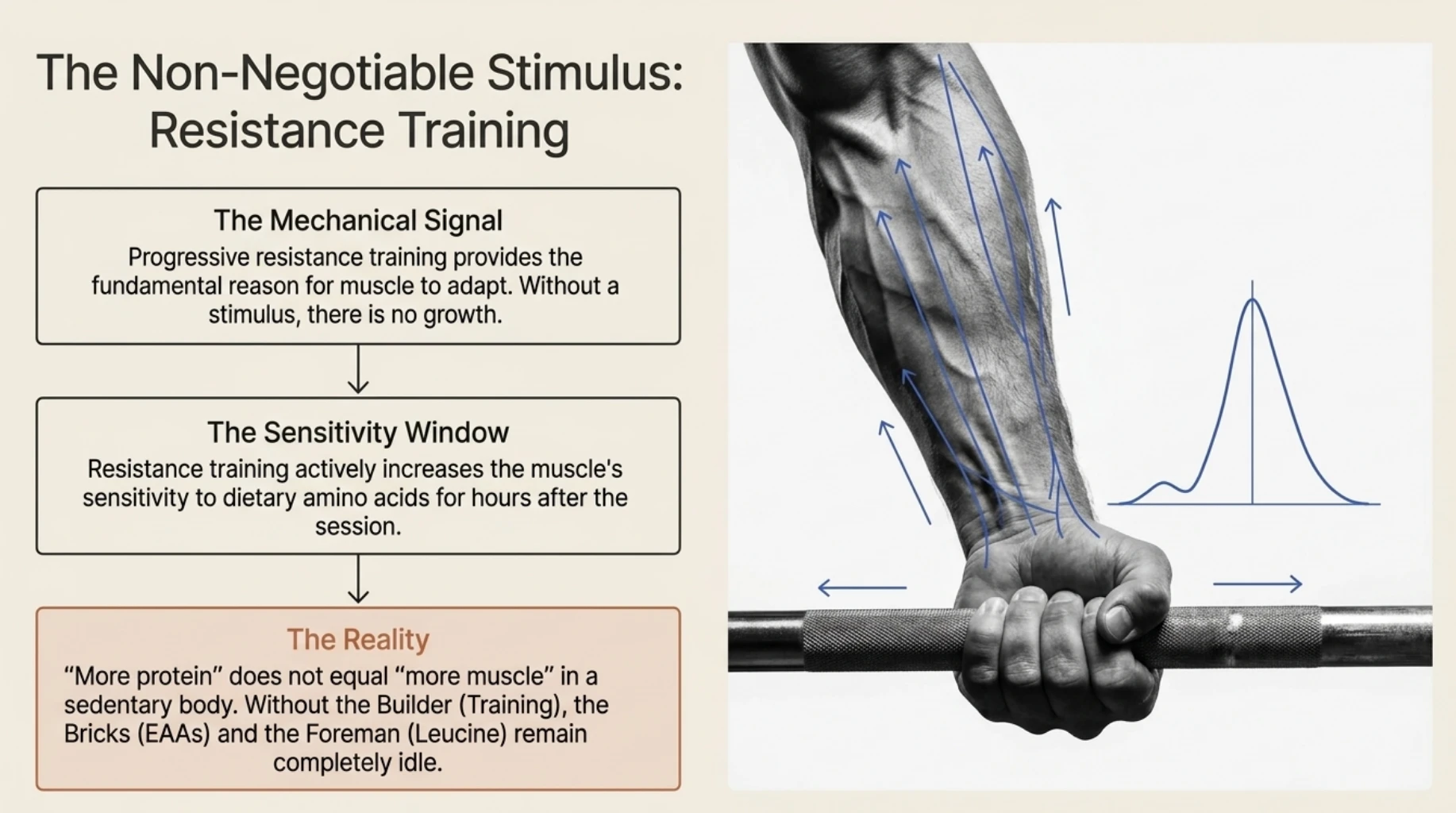
Resistance exercise provides the mechanical signal for adaptation.
Protein provides the amino acids required to support that adaptation.
This relationship can be summarised simply:
| Factor | Main Role |
|---|---|
| Resistance training | Provides the mechanical stimulus for muscle adaptation |
| Total protein | Provides amino acids required for protein synthesis and repair |
| Leucine | Contributes importantly to anabolic signalling |
| Other essential amino acids | Provide the remaining essential building blocks required for new muscle proteins |
| Total energy intake | Influences the overall environment for maintenance, fat loss or muscle gain |
| Sleep and recovery | Support adaptation and training quality |
That is why the science of leucine and muscle growth should not be reduced to buying another supplement.
For most people, the bigger opportunity is to improve the structure of their meals and train their muscles consistently.
Leucine and Muscle Growth: Practical Indian Meal Examples
Understanding the physiology of leucine and muscle growth is useful, but patients ultimately need to know what to put on the plate.
The aim is not to calculate leucine at every meal.
A more practical approach is to build major meals around a meaningful protein source and then add vegetables, whole grains or other carbohydrate sources according to individual requirements.
The following examples illustrate how an ordinary Indian meal can be strengthened nutritionally.
| Meal | Common Lower-Protein Pattern | More Protein-Focused Alternative |
|---|---|---|
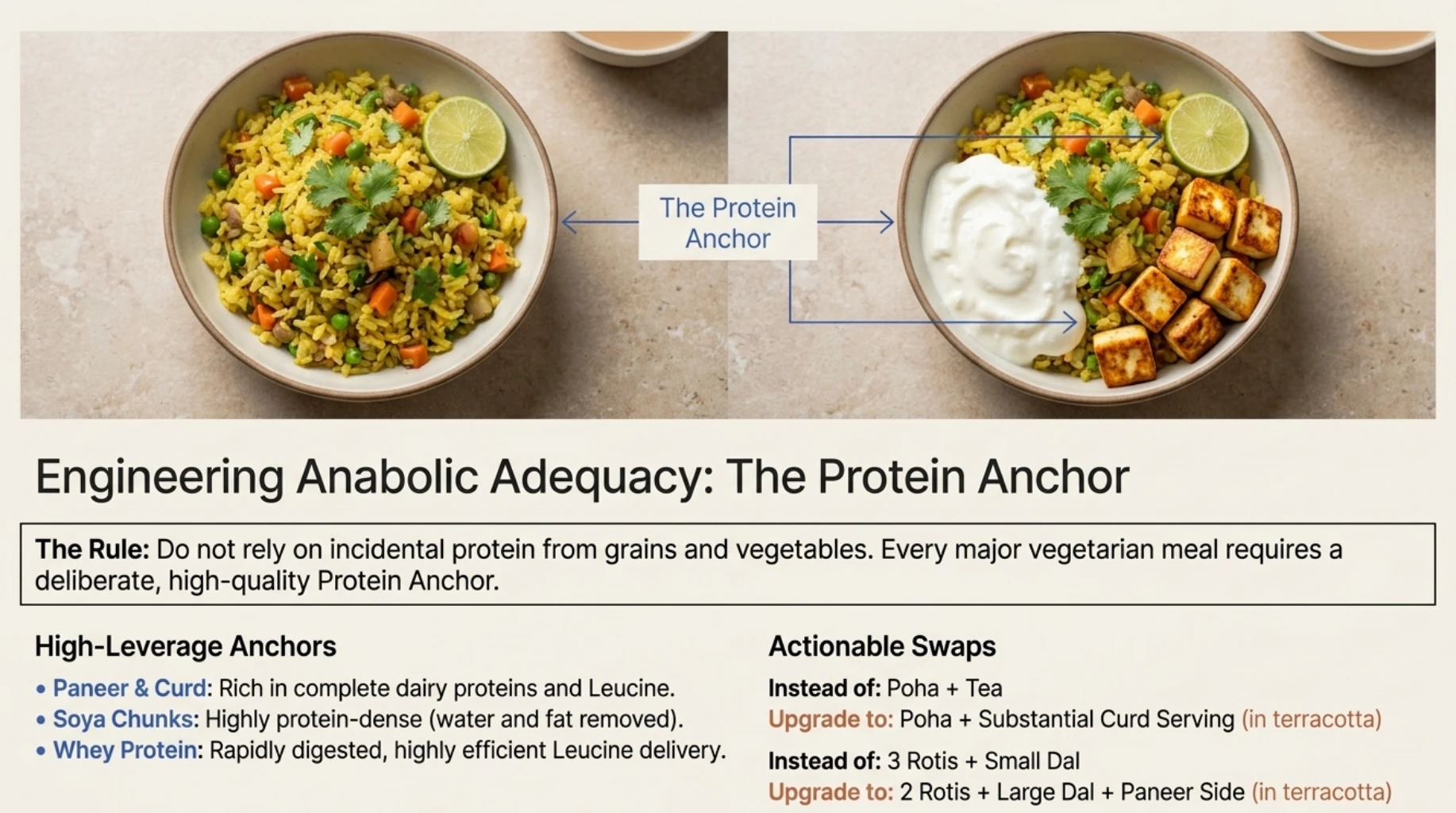
| Breakfast | Poha + tea | Poha + substantial curd serving, or another protein-rich side |
| Breakfast | 2 slices toast + tea | Eggs + toast + curd/milk according to requirements |
| Breakfast | Plain vegetable upma | Upma + protein-rich curd or a suitable soy/dairy protein addition |
| Lunch | 2–3 rotis + sabzi + very small dal | Appropriate roti portion + larger dal serving + curd, paneer or another suitable protein source |
| Lunch | Rice + small rajma serving | Controlled rice portion + substantial rajma serving + curd where appropriate |
| Evening | Tea + biscuits | Curd, milk, roasted chana or another protein-containing snack |
| Dinner | Roti + sabzi | Roti + vegetables + paneer/tofu/soy/eggs/fish/chicken according to dietary preference |
The exact quantities should depend on body size, total calorie needs, medical conditions, appetite and activity.
Vegetarian Meal Strategies for Leucine and Muscle Growth
A vegetarian diet can support muscle maintenance and hypertrophy, but relying on incidental protein from roti, rice and vegetables is rarely the most effective approach.
Each major meal should contain an identifiable protein anchor.
Examples include:
- Paneer.
- Tofu.
- Soya chunks.
- Dal and other pulses in meaningful portions.
- Milk.
- Curd.
- High-protein curd.
- Whey protein where useful.
The combination can then be adjusted according to calorie and carbohydrate requirements.
Example: Improving a Vegetarian Breakfast
Suppose breakfast consists of one bowl of vegetable poha.
Poha is not inherently unhealthy.
But it is predominantly a carbohydrate-based meal and may provide relatively little protein unless deliberately modified.
Rather than eliminating poha, consider adding an appropriate protein source.
Depending on the person’s dietary requirements, this could include:
- A substantial serving of curd.
- High-protein curd.
- Milk.
- A paneer side.
- Whey protein separately.
This changes the amino-acid profile of the meal without requiring an entirely unfamiliar breakfast.
Example: Improving a Dal-Roti Lunch
A common Indian lunch might contain two rotis, sabzi, salad and a small bowl of dal.
Again, this is not a “bad” meal.
The question is whether the protein portion matches the individual’s needs.
If the dal serving is very small, the meal can be strengthened by increasing the pulse portion appropriately or including curd, paneer, tofu or another protein source.
The objective is to make protein a deliberate part of the meal rather than an incidental nutrient.
Non-Vegetarian Meal Strategies for Leucine and Muscle Growth
People eating eggs, fish or poultry generally have access to concentrated complete-protein sources.
But simply being non-vegetarian does not guarantee adequate protein intake.
Someone who eats chicken only twice per week while consuming low-protein breakfasts and lunches on other days may still have inadequate overall protein intake.
Protein adequacy depends on what is eaten across the entire day and week.
Two Eggs Are Useful—but Look at the Whole Meal
Two eggs provide high-quality protein and useful leucine, but approximately 12–13 grams of protein is still a relatively modest amount for a complete meal in many adults.
Instead of asking whether eggs are “good protein,” ask:
How much total protein does this breakfast provide?
That question produces a much more useful answer.
Leucine and Muscle Growth in People Trying to Lose Fat
When the goal is fat loss, people often focus almost entirely on reducing calories.
But preserving muscle should be part of the plan.
Muscle loss during weight reduction can be influenced by:
- Large calorie deficits.
- Low protein intake.
- No resistance training.
- Rapid weight loss.
- Prolonged inactivity.
- Older age.
A protein-rich diet with adequate leucine and essential amino acids can support muscle preservation, particularly when combined with resistance training.
This does not mean protein prevents all lean-mass loss during dieting.
It means the overall strategy can reduce unnecessary muscle loss.
Should Protein Be Increased During Calorie Restriction?
Protein needs often deserve greater attention during fat loss because total food intake is reduced while preserving lean tissue becomes a priority.
Higher protein intake can also improve satiety in many people.
However, there is no universal high-protein prescription.
The appropriate amount depends on:
- Body size.
- Body composition.
- Age.
- Training status.
- Degree of calorie restriction.
- Kidney function and other medical considerations.
Protein targets should therefore be individualised rather than copied from a fitness influencer.
Leucine and Muscle Growth in Diabetes
People with diabetes do not need to avoid protein simply because they have diabetes.
Protein-rich foods can help construct meals with better satiety and can support muscle maintenance.
Resistance exercise also improves muscle function and can contribute to better glucose handling.
However, protein recommendations require additional consideration when diabetic kidney disease or chronic kidney disease is present.
The appropriate protein intake should then be based on kidney function, albuminuria, nutritional status and the overall clinical situation.
Muscle Is Metabolically Important in Diabetes
Skeletal muscle is a major site of glucose disposal, particularly in response to insulin and exercise.
Maintaining muscle mass and regularly using that muscle through physical activity are therefore relevant to metabolic health.
This is another reason protein nutrition in diabetes should not be viewed only through the lens of calories.
Leucine and Muscle Growth in Fatty Liver
People with fatty liver are often advised simply to lose weight.
Weight reduction can certainly be beneficial when excess adiposity is present.
But losing weight while becoming weaker is not the ideal outcome.
A comprehensive strategy for metabolic health should aim to:
- Reduce excess body fat.
- Reduce central adiposity.
- Preserve or improve muscle.
- Improve cardiorespiratory fitness.
- Improve glucose and lipid metabolism.
Adequate protein and resistance exercise therefore remain important during lifestyle treatment of fatty liver.
Leucine and Muscle Growth During Menopause
The menopausal transition can be accompanied by changes in body composition, including increasing central adiposity and gradual loss of lean mass in some women.
This makes muscle-preserving habits increasingly important.
The answer is not leucine supplementation alone.
A more comprehensive approach includes:
- Progressive resistance training.
- Adequate total protein.
- Protein distributed across major meals.
- Protein sources providing sufficient essential amino acids.
- Regular aerobic activity.
- Adequate energy and micronutrient intake.
- Attention to sleep and recovery.
Understanding leucine and muscle growth can help improve protein choices, but it remains only one part of healthy ageing.
Leucine and Muscle Growth After Illness or Bed Rest
Periods of illness, hospitalisation or bed rest can accelerate muscle loss, particularly in older adults.
Reduced food intake often occurs at exactly the same time that physical activity falls dramatically.
This combination can be particularly harmful to muscle.
Recovery therefore requires more than simply restoring body weight.
Depending on the person’s medical condition, rehabilitation may include:
- Gradual mobilisation.
- Progressive resistance exercise.
- Adequate calories.
- Adequate protein.
- Protein-rich meals containing essential amino acids and leucine.
Clinical nutrition after significant illness should be individualised, especially in frail older adults.
Can You Build Muscle Without a Calorie Surplus?
Yes, in some circumstances.
Muscle gain can occur without a deliberate calorie surplus, particularly in:
- People new to resistance training.
- People returning after a long training break.
- Some individuals with excess body fat.
More experienced and leaner trainees may find substantial muscle gain more difficult during an energy deficit.
Regardless of energy balance, leucine and muscle growth cannot be separated from progressive resistance training and adequate total protein.
Can You Build Muscle Just by Eating More Protein?
Not effectively.
Protein does not substitute for resistance exercise.
Increasing protein intake from inadequate to adequate can improve the nutritional environment for muscle maintenance and growth.
But simply consuming increasingly large quantities of protein while remaining sedentary does not reproduce the adaptive effects of resistance training.
The muscle needs a reason to become stronger.
Common Mistakes When Using Protein for Muscle Growth
Mistake 1: Counting Daily Protein but Ignoring Breakfast
A person may achieve a respectable daily protein total by consuming a very large dinner.
But distributing meaningful protein servings across the day provides repeated opportunities to stimulate muscle protein synthesis.
Mistake 2: Treating Every Gram of Protein as Physiologically Identical
Protein sources differ in digestibility, essential amino-acid composition, leucine content and food matrix.
Total protein remains important, but protein quality also deserves attention.
Mistake 3: Buying BCAA Instead of Fixing a Low-Protein Diet
If someone’s total protein intake is inadequate, a few grams of BCAAs do not correct the underlying problem.
A complete protein source is generally more useful because it provides all essential amino acids.
Mistake 4: Taking Leucine but Not Resistance Training
Leucine contributes to anabolic signalling.
It does not replace mechanical loading.
Progressive resistance exercise remains one of the strongest modifiable stimuli for maintaining and building muscle.
Mistake 5: Assuming More Protein Always Means More Muscle
Muscle growth does not increase indefinitely as protein intake rises.
Once protein requirements are adequately met, other factors such as training quality, total energy, recovery and genetics become increasingly important.
Mistake 6: Ignoring Calories in Protein Foods
Protein-rich does not mean calorie-free.
Paneer, nuts, peanut butter and seeds can contribute protein but can also provide substantial calories.
This matters particularly during weight loss.
Mistake 7: Depending on One Protein Source
A varied diet provides a broader nutrient profile.
There is usually little reason for every meal to depend on whey powder or any single food unless medical or practical circumstances require it.
Mistake 8: Ignoring Overall Diet Quality
A high protein intake does not compensate for a diet lacking vegetables, fruits, fibre, appropriate fats and micronutrients.
Muscle health is one part of overall health.
Do You Need to Calculate Leucine at Every Meal?
Usually, no.
For researchers and sports nutrition professionals, calculating leucine can be useful.
For most patients, it creates unnecessary complexity.
A simpler strategy is:
- Estimate an appropriate daily protein target.
- Distribute meaningful protein servings across major meals.
- Choose protein sources with a good essential amino-acid profile.
- Include leucine-rich foods regularly.
- Perform resistance training consistently.
If these fundamentals are in place, calculating whether lunch contained exactly 2.63 grams of leucine is rarely necessary.
Leucine and Muscle Growth: A Practical Checklist
| Question | What to Consider |
|---|---|
| Am I eating enough total protein? | Start with overall daily protein adequacy |
| Is most of my protein eaten at dinner? | Strengthen breakfast and lunch where necessary |
| Does each major meal contain an identifiable protein source? | Do not depend only on incidental protein from grains and vegetables |
| Are my protein sources varied? | Use dairy, soy, pulses, eggs, fish, poultry or other appropriate sources according to preference |
| Am I getting enough essential amino acids? | Consider protein quality as well as grams |
| Do I need leucine or BCAA supplements? | Usually not if adequate complete protein is already being consumed |
| Am I resistance training? | Nutrition cannot replace the mechanical stimulus for muscle adaptation |
| Am I losing weight rapidly? | Pay additional attention to protein intake and muscle-preserving exercise |
Frequently Asked Questions About Leucine and Muscle Growth
What Does Leucine Do for Muscle Growth?
Leucine is an essential amino acid that contributes to activation of anabolic signalling pathways, including mTORC1, involved in muscle protein synthesis.
However, leucine cannot build muscle independently because the other essential amino acids are also required.
How Much Leucine Do I Need Per Meal for Muscle Growth?
There is no universal cutoff that applies to everyone. A practical range of roughly 2.5–3 grams of leucine within an adequate serving of high-quality protein is frequently discussed, particularly for older adults, but the response depends on age, body size, protein source, total protein and exercise.
Which Food Is Highest in Leucine?
Among commonly used protein sources, whey protein is particularly leucine-rich. Dairy, eggs, meat, poultry, fish and soy also provide meaningful amounts.
Is Leucine Better Than Whey Protein?
They are not equivalent.
Leucine is one essential amino acid. Whey provides leucine plus all the other essential amino acids required for muscle protein synthesis.
Do I Need a Leucine Supplement?
Most healthy adults consuming adequate high-quality protein do not need an isolated leucine supplement.
Are BCAAs Necessary for Muscle Growth?
Usually not when total dietary protein is adequate. BCAAs provide only three essential amino acids, whereas muscle protein synthesis requires all essential amino acids.
Can Vegetarians Get Enough Leucine?
Yes. Dairy, whey, soy, tofu, soya chunks, pulses and other protein foods can provide leucine. Total protein intake and portion sizes need to be considered.
Is Dal Enough Protein for Building Muscle?
Dal contributes useful protein, but whether it is sufficient depends on portion size and the rest of the diet. A small katori of dal should not automatically be assumed to provide enough protein for an entire meal.
Does Leucine Become More Important After 50?
Protein quality becomes particularly relevant with ageing because older muscle may show anabolic resistance. Adequate protein per meal, leucine-rich protein sources and resistance exercise can therefore become increasingly important.
Can Leucine Prevent Sarcopenia?
Leucine alone cannot prevent sarcopenia. Muscle preservation requires adequate nutrition, resistance exercise, physical activity and management of medical factors contributing to muscle loss.
Can I Take Leucine Without Exercising?
You can consume leucine as part of normal dietary protein, but supplementation does not substitute for resistance training when the goal is muscle growth.
Is More Leucine Better?
No. Once adequate leucine and essential amino acids are available, progressively increasing isolated leucine does not produce unlimited increases in muscle protein synthesis.
Leucine and Muscle Growth: What Matters Most?
Instead of concentrating on one nutrient, consider the entire muscle-building system.
| Factor | Importance | Practical Focus |
|---|---|---|
| Resistance training | Fundamental | Progressively challenge major muscle groups |
| Total daily protein | Fundamental | Meet an appropriate individual protein target |
| Essential amino acids | Important | Choose adequate, varied protein sources |
| Leucine | Important | Usually obtain it through adequate high-quality protein |
| Protein distribution | Useful | Avoid leaving nearly all protein until dinner |
| Total energy | Important | Avoid unnecessarily severe calorie restriction |
| Sleep and recovery | Important | Allow adaptation between training sessions |
| Consistency | Essential long term | Think in months and years, not individual meals |
Final Thought
Leucine may help provide the signal for muscle protein synthesis, but a signal is not enough to build muscle. You still need sufficient total protein, all essential amino acids and progressive resistance exercise. For most people, improving the quality and distribution of everyday protein intake will matter far more than chasing isolated leucine or BCAA supplements.
If you want a personalized metabolic assessment and lifestyle strategy, you can book a consultation here:
Book an Appointment