


Morning vs Evening Exercise: Which Timing Is Better for Your Body?
You have decided to exercise regularly.
Now comes another question:
Should you exercise in the morning or evening?
Search online and you will find confident arguments on both sides.
Morning workouts are often promoted for fat loss, discipline and metabolism.
Evening workouts are promoted for better strength, flexibility and exercise performance.
Some people are told that exercising after sunset will disturb sleep. Others are advised to exercise after dinner to improve blood sugar.
The science of morning vs evening exercise is considerably more nuanced.
Your body does not function identically throughout the day. Body temperature, hormones, alertness, muscle function, glucose metabolism and sleep-wake signals follow daily rhythms.
These circadian patterns can influence how exercise feels and how well you perform at different times.
But that does not mean there is one perfect workout time for everyone.
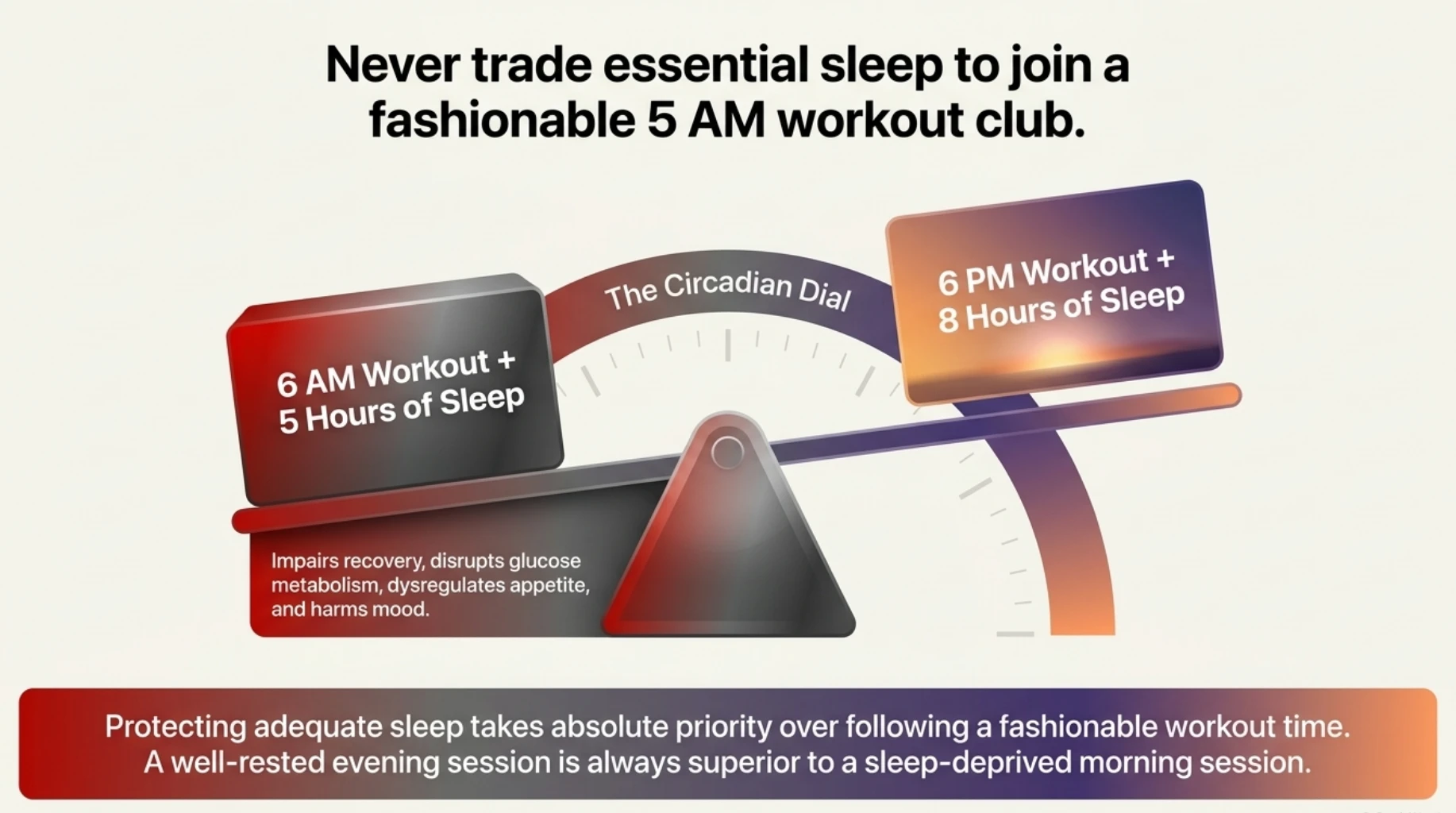
A 6 AM workout that repeatedly causes sleep deprivation may be less helpful than a consistent 6 PM workout.
Similarly, someone with type 2 diabetes who experiences high glucose after dinner may have different priorities from an athlete trying to maximise strength performance.
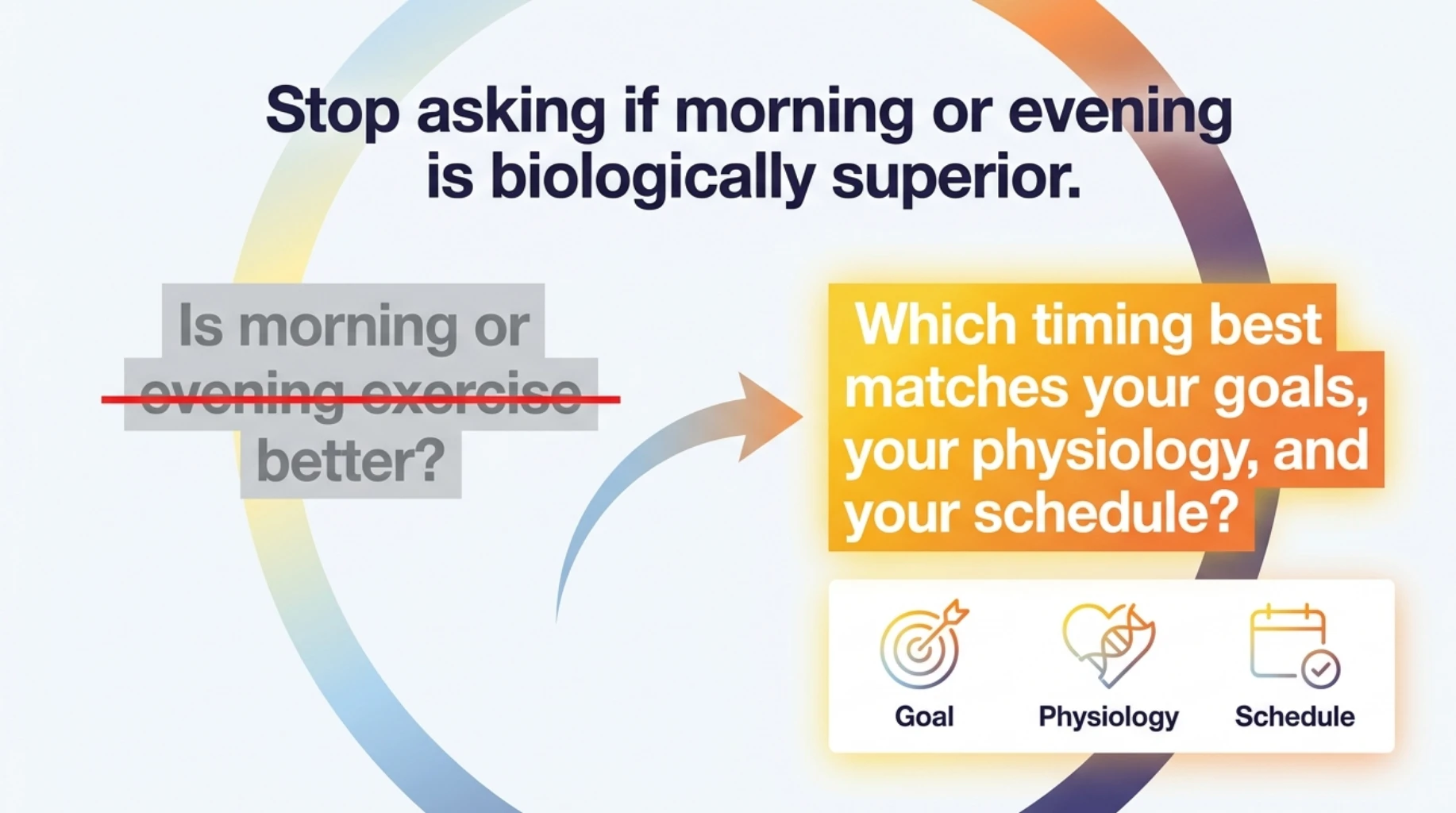
The better question is therefore not simply:
“Is morning or evening exercise better?”
It is:
“Which exercise timing best matches your goal, your physiology and the schedule you can maintain?”

Morning vs Evening Exercise: Why Timing Could Matter
The human body operates according to approximately 24-hour biological rhythms known as circadian rhythms.
These rhythms influence numerous physiological processes, including:
- Sleep and wakefulness.
- Body temperature.
- Hormone secretion.
- Blood pressure.
- Alertness.
- Glucose metabolism.
- Digestive function.
- Physical performance.
Light exposure is one of the strongest signals synchronising the central circadian clock, but meals, physical activity and other behaviours can also interact with daily biological rhythms.
This is one reason researchers are increasingly interested in morning vs evening exercise.
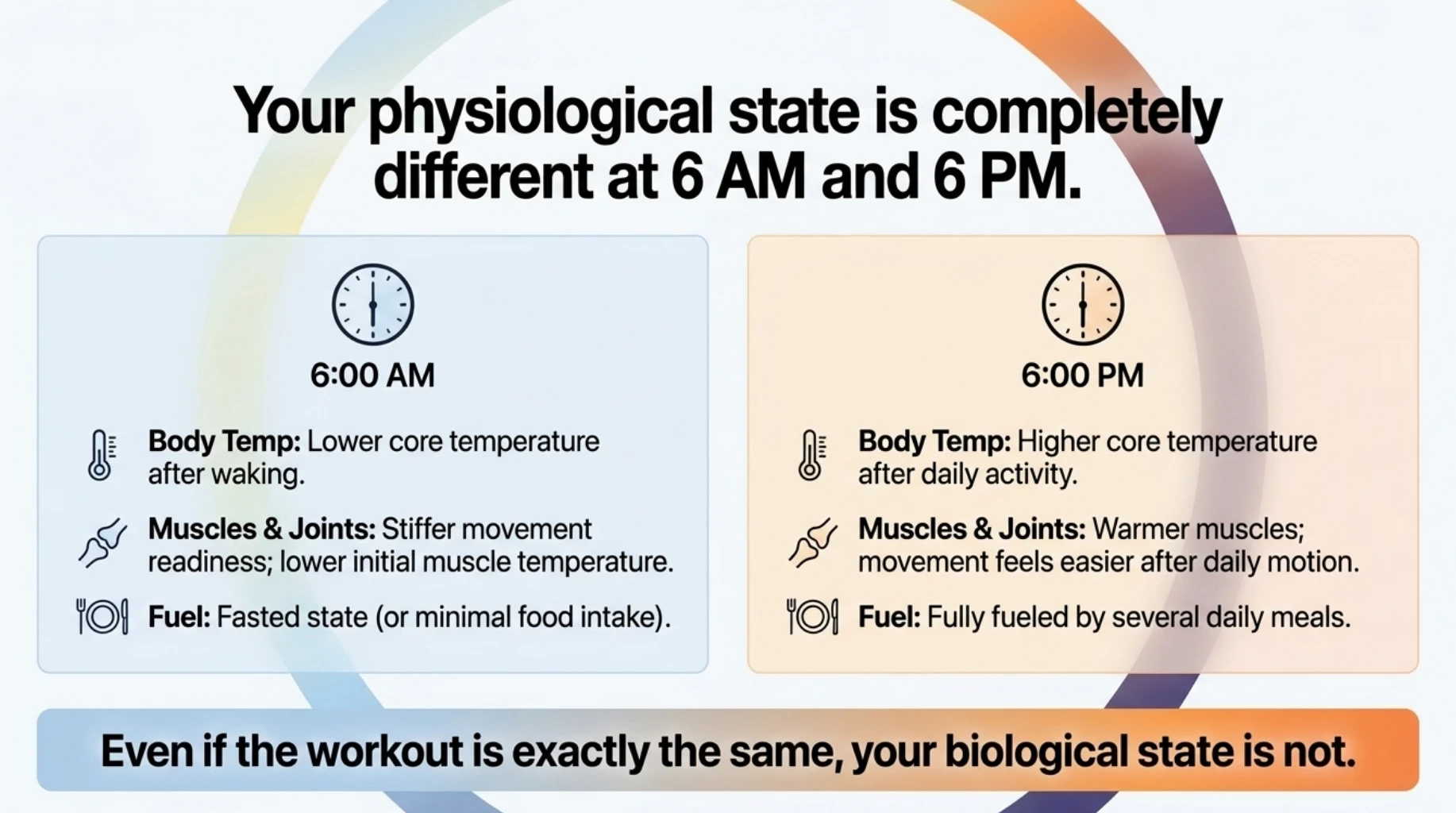
Your Body Is Not Physiologically Identical at 6 AM and 6 PM
Imagine performing exactly the same strength workout at 6 AM and 6 PM.
The exercises may be identical.
Your physiological state may not be.
Several factors change across the day.
| Factor | Earlier in the Day | Later in the Day |
|---|---|---|
| Core body temperature | Generally lower after waking | Generally higher later in the day |
| Muscle temperature | May be lower initially | Often higher |
| Joint and movement readiness | May feel stiffer in some people | Often feels easier after normal daily movement |
| Alertness | Depends strongly on sleep and chronotype | May be higher for some afternoon/evening types |
| Strength and power | Can be slightly lower in some individuals | Often peak later in the day in laboratory studies |
| Meal status | Often fasted or after a small meal | Usually several meals have already been consumed |
These are general patterns, not rules that apply identically to everyone.
Is Evening Exercise Better for Physical Performance?
For certain types of physical performance, later-day exercise can have an advantage.
Strength, power and some measures of high-intensity performance frequently show time-of-day variation, with better performance in the afternoon or early evening in many people.
Several mechanisms may contribute.
Core body temperature rises across the day and is generally higher later in the afternoon or evening.
Warmer muscles can influence:
- Muscle contractile function.
- Nerve conduction.
- Joint mobility.
- Movement efficiency.
- Perceived readiness.
This does not mean morning strength training is ineffective.
It means that if you compare a person’s immediate maximum performance at different times, the later session may sometimes produce slightly better results.
Why You May Feel Stronger in the Evening
Suppose you perform squats at 6:30 AM.
You have recently woken up, your body temperature is relatively low, and you may not have eaten much.
The same exercise at 5:30 PM occurs after hours of movement, food intake and normal daily activity.
It is therefore unsurprising that the evening session may initially feel better.
However, training adaptation complicates the picture.
If you regularly train in the morning, your ability to perform at that time can improve.
Does Morning Training Become Easier With Practice?
Yes.
Your current performance at a particular time does not necessarily represent a fixed biological limitation.
Regularly training at the same time can produce time-specific adaptation.
Someone preparing for a marathon that begins at 6 AM may therefore benefit from performing at least some important training sessions in the morning.
Similarly, an athlete whose competition takes place in the evening may want some training exposure at that time.
For ordinary adults, however, this level of timing optimisation is usually much less important than simply training consistently.
Morning vs Evening Exercise for Muscle Growth
If your primary goal is building muscle, should you train in the evening because strength performance may be slightly better?
Not necessarily.
Acute performance and long-term hypertrophy are not the same thing.
If you can perform more repetitions or lift slightly more weight later in the day, that could theoretically help training quality.
But muscle growth occurs over weeks and months of progressive resistance training.
The most important factors remain:
- Progressive overload.
- Adequate training volume.
- Appropriate exercise selection.
- Sufficient protein.
- Adequate energy intake.
- Sleep and recovery.
- Long-term consistency.
Current evidence does not justify telling everyone that evening resistance training produces more muscle than morning resistance training.
Consistency Can Matter More Than the Clock for Muscle Growth
Consider two people.
| Factor | Person A | Person B |
|---|---|---|
| Workout time | 6:30 AM | 6:30 PM |
| Training frequency | 4 sessions/week consistently | Frequently misses evening sessions |
| Progressive overload | Yes | Inconsistent |
| Protein intake | Adequate | Adequate |
| Sleep | Adequate | Adequate |
Even if Person B could theoretically perform slightly better in an evening session, Person A may achieve better long-term results because the programme is actually completed.
This is a recurring theme when comparing morning vs evening exercise.
The theoretically optimal time is not necessarily the practically optimal time.
Morning vs Evening Exercise for Fat Loss
This is where many myths appear.
Morning exercise—particularly fasted morning cardio—is often promoted as a superior way to burn body fat.
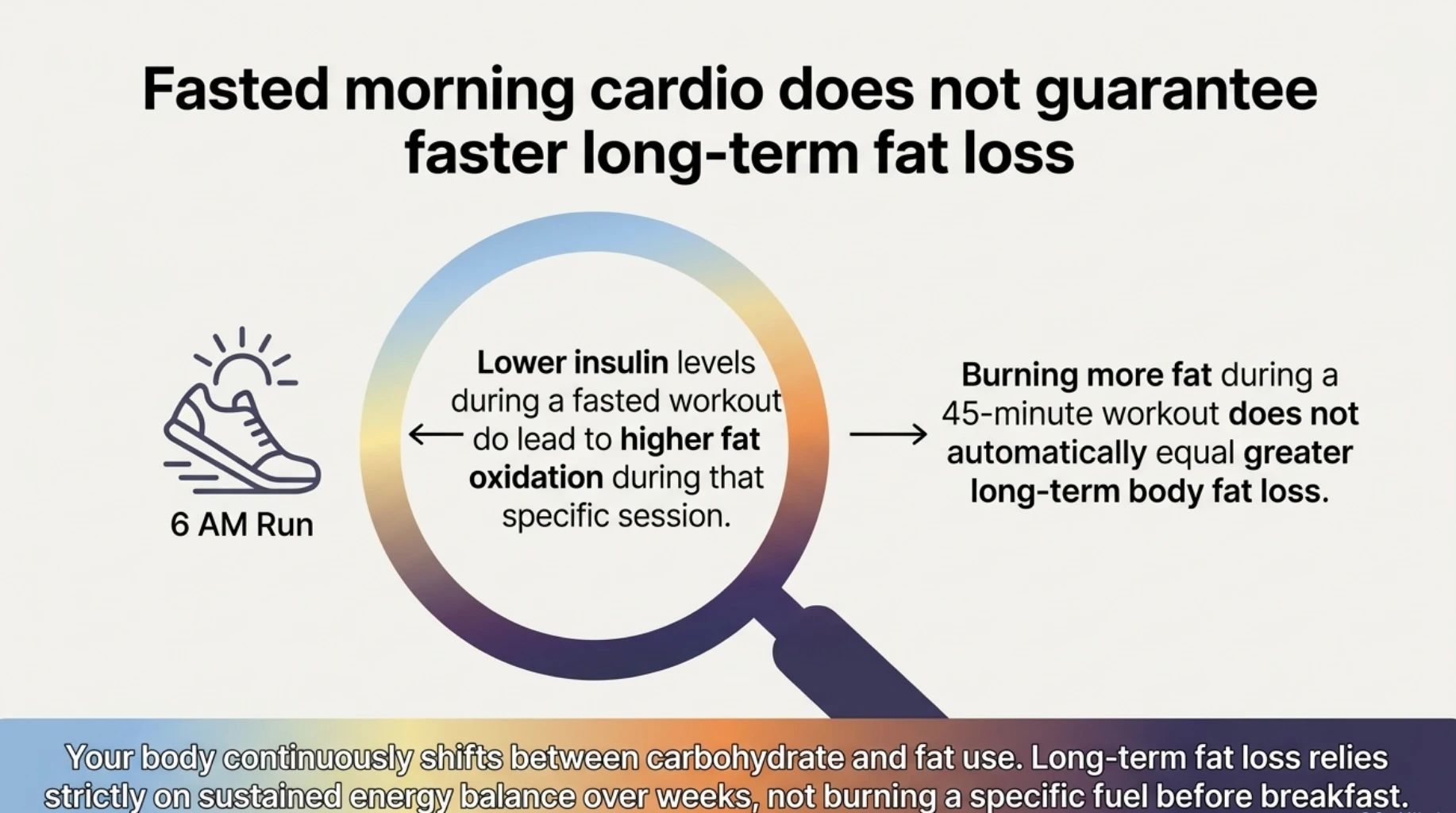
It is true that the proportion of fuel used during an individual exercise session can differ depending on whether you have eaten recently.
But burning more fat during a workout does not automatically mean losing more body fat over weeks and months.
Long-term fat loss depends primarily on sustained energy balance, dietary intake, physical activity and adherence.
Does Fasted Morning Exercise Burn More Fat?
During fasted exercise, insulin levels are generally lower and the body may rely more heavily on fat oxidation during the session.
This observation is physiologically real.
The mistake is assuming that greater fat oxidation during one workout automatically produces greater long-term fat loss.
Your body continuously shifts between carbohydrate and fat use throughout the day.
What ultimately matters for body-fat reduction is the longer-term balance between energy stored and energy expended.
Fasted Cardio vs Fed Cardio
| Feature | Fasted Morning Cardio | Fed Cardio |
|---|---|---|
| Fat oxidation during session | May be higher | May be lower depending on meal composition and timing |
| Long-term fat loss | No clear inherent advantage when overall energy balance is comparable | Can produce equivalent fat loss |
| Exercise performance | May be reduced during longer or harder sessions in some people | May support higher training intensity |
| Comfort | Preferred by some people | Preferred by others |
| Best choice | Depends on tolerance and preference | Depends on tolerance and preference |
Therefore, if you enjoy walking or exercising before breakfast, there is usually no need to stop solely because it is fasted.
But there is also no need to force fasted exercise because you believe breakfast will prevent fat loss.
Does Morning Exercise Increase Metabolism for the Whole Day?
This claim is often exaggerated.
Exercise can increase energy expenditure during the activity and sometimes for a period afterwards, particularly following more demanding exercise.
But there is no special morning metabolic switch that causes dramatically greater calorie burning throughout the entire day simply because the workout occurred before breakfast.
Total activity and energy balance remain much more important.
Morning Exercise May Have One Major Practical Advantage
Morning exercise can be easier to protect from the unpredictability of the day.
At 6:30 AM, there may be fewer:
- Meetings.
- Work emergencies.
- Social commitments.
- Traffic delays.
- Family interruptions.
- Unexpected tasks.
For some people, this makes morning exercise considerably easier to perform consistently.
That behavioural advantage may matter more than a small physiological difference between morning and evening.
But Morning Exercise Should Not Come at the Cost of Sleep
This is one of the most important qualifications.
Suppose you normally sleep from midnight until 7 AM.
You decide that “successful people exercise at 5 AM” and begin waking at 4:45 AM without moving bedtime earlier.
You have gained an exercise session but lost more than two hours of sleep.
That is not automatically a health improvement.
Chronic sleep restriction can negatively affect:
- Appetite regulation.
- Glucose metabolism.
- Training recovery.
- Mood.
- Attention.
- Exercise performance.
When comparing morning vs evening exercise, protecting adequate sleep should take priority over following a fashionable workout time.
Morning vs Evening Exercise for Blood Sugar
Exercise timing becomes particularly interesting when glucose control is the goal.
Skeletal muscle can increase glucose uptake during and after physical activity.
This means exercise can reduce the glucose excursion associated with a meal, particularly when activity is performed around the post-meal period.
For someone whose largest glucose rise occurs after dinner, an evening or post-dinner activity may therefore provide a practical advantage.
But this does not mean everyone with diabetes should move all exercise to the evening.
Post-Meal Exercise May Matter More Than Morning vs Evening
Imagine two people with type 2 diabetes.
Person A has relatively stable glucose through the day but experiences a substantial rise after dinner.
Person B has high glucose after breakfast.
Telling both people simply to “exercise in the morning” ignores the pattern you are trying to influence.
A short walk after the meal producing the largest glucose excursion may sometimes be more strategically useful than debating morning versus evening in isolation.
Why a Post-Dinner Walk Can Be Useful
Walking after dinner is one of the simplest ways to combine exercise with glucose management.
Muscle contractions stimulate glucose uptake through mechanisms that are partly independent of insulin.
Even relatively modest post-meal activity can therefore help reduce postprandial glucose excursions in some people.
This does not require an exhausting workout.
A practical walk after dinner may be enough to provide a useful metabolic stimulus.
Morning vs Evening Exercise for Type 2 Diabetes
Research examining morning vs evening exercise in type 2 diabetes suggests that timing may influence glucose responses, but findings are not sufficiently uniform to prescribe one time to every patient.
Exercise type, intensity, medication, meals, baseline glucose control and individual circadian biology can all modify the response.
A more useful approach is to ask:
- When is blood glucose highest?
- Which meal produces the largest rise?
- When can exercise be performed consistently?
- Is the person taking insulin or medicines that can cause hypoglycaemia?
- What type and intensity of exercise are being performed?
This creates a personalised exercise strategy rather than a generic rule.
Exercise Timing and Insulin Sensitivity
Regular exercise improves insulin sensitivity regardless of whether every session occurs at the supposedly perfect time.
This is an important point because discussions about exercise timing can distract from the much larger effect of moving from inactivity to regular physical activity.
A sedentary person who begins exercising consistently at 7 PM is likely to gain substantially more metabolic benefit than someone who spends months searching for the theoretically ideal 6 AM workout protocol but rarely follows it.
Morning vs Evening Exercise for Blood Pressure
Blood pressure also follows a daily rhythm.
It normally rises around waking and changes throughout the day in response to activity, stress, meals, sleep and medications.
Exercise can produce a temporary reduction in blood pressure afterwards, known as post-exercise hypotension.
Researchers have therefore examined whether exercise timing can be used strategically for hypertension.
Some studies suggest time-of-day differences in blood-pressure responses, but this does not yet justify one universal exercise time for every person with hypertension.
Regular aerobic and resistance exercise remain more important than simply choosing morning or evening.
Morning Exercise and the Early-Morning Blood Pressure Surge
Some people with cardiovascular disease worry that morning exercise is inherently dangerous because cardiovascular events occur more frequently during certain morning hours at the population level.
This should not be translated into a blanket recommendation that morning exercise is unsafe.
For most healthy people accustomed to exercise, morning physical activity can be performed safely.
However, people with known cardiovascular disease, poorly controlled hypertension, concerning exertional symptoms or significant medical risk may need individualised guidance before beginning vigorous exercise.
Morning vs Evening Exercise and Appetite
Exercise can influence appetite, but the response varies considerably between individuals.
Some people find that morning exercise improves dietary structure for the rest of the day.
Others become very hungry after a morning workout and compensate by eating more.
Similarly, an evening workout may reduce appetite temporarily in one person while causing another person to eat a large late-night meal.
This is another area where personal response matters more than a universal rule.
Can Morning Exercise Improve Daily Discipline?
Possibly—but this is behavioural rather than a unique metabolic effect.
People who exercise early may feel that completing the workout before work makes the habit easier to maintain.
For someone with unpredictable evenings, this can be a powerful strategy.
But people differ.
A person who naturally struggles with early mornings may repeatedly skip a 6 AM programme but happily train at 6 PM.
For that person, evening exercise is the more disciplined choice because it is the schedule they can actually sustain.
Your Chronotype May Influence the Best Exercise Time
Not everyone has the same preferred sleep-wake pattern.
Some people naturally feel alert earlier in the day, while others function better later.
This tendency is sometimes described as chronotype.
An early chronotype may feel energetic and coordinated during morning exercise.
A later chronotype may experience morning sessions as unusually difficult but perform much better in the afternoon or evening.
Work schedules and social obligations can override these preferences, but chronotype helps explain why the same workout time does not suit everyone.
Morning vs Evening Exercise: The Comparison So Far
| Goal or Factor | Morning Exercise | Evening Exercise |
|---|---|---|
| Long-term fat loss | Effective | Effective |
| Strength/power performance | Can be slightly lower initially in some people | Often somewhat better later in the day |
| Muscle growth | Can support hypertrophy | Can support hypertrophy |
| Consistency | Excellent if mornings are predictable | Excellent if evenings fit lifestyle better |
| Post-dinner glucose | Does not directly target the dinner excursion | Post-dinner activity can be useful |
| Sleep | Usually not a concern unless waking early reduces sleep duration | Usually compatible with sleep, but very late vigorous exercise may affect some people |
| Fasted exercise | Easier to perform before breakfast | Usually performed after one or more meals |
| Training readiness | May require a more deliberate warm-up | Body temperature and movement readiness are often higher |
So far, the evidence does not support declaring a universal winner in the debate over morning vs evening exercise.
The better time depends on what you are trying to achieve—and whether the chosen time allows you to train consistently without sacrificing sleep or recovery.
Morning vs Evening Exercise and Sleep: Will a Late Workout Keep You Awake?
One of the most common arguments against evening exercise is that it supposedly interferes with sleep.
The reality is more nuanced.
For many healthy adults, exercising in the late afternoon or early evening does not appear to harm sleep and may be completely compatible with good sleep quality.
The concern becomes more relevant when exercise is both very vigorous and performed very close to bedtime.
A demanding workout can temporarily increase:
- Heart rate.
- Core body temperature.
- Sympathetic nervous system activity.
- Alertness.
For some people, this makes it harder to settle down immediately afterwards.
Others can exercise late and sleep without difficulty.
Therefore, when comparing morning vs evening exercise, individual sleep response matters more than a blanket rule that exercise after a particular hour is harmful.
How Close to Bedtime Is Too Close?
There is no universal cutoff such as “never exercise after 7 PM.”
The answer depends on exercise intensity, duration, habitual bedtime and individual sensitivity.
If you finish a moderate workout in the evening and continue to sleep well, there is little reason to move the session solely because of the clock.
On the other hand, if high-intensity intervals or heavy resistance training immediately before bed consistently leave you alert and unable to sleep, finishing earlier may be sensible.
Do Not Sacrifice Sleep to Exercise in the Morning
The opposite problem is frequently overlooked.
People sometimes force themselves to exercise early because morning workouts are perceived as healthier.
If doing so means repeatedly cutting sleep from seven or eight hours to five or six hours, the trade-off may be counterproductive.
Sleep restriction can impair recovery, appetite regulation, glucose metabolism, mood and physical performance.
So if the choice is between:
6 AM exercise with chronic sleep deprivation
and
6 PM exercise with adequate sleep,
the evening session may be the more sensible option for that individual.
Morning vs Evening Exercise for Weight Loss
Exercise timing is sometimes presented as a hidden secret for faster weight loss.
It is not.
Both morning and evening exercise can contribute to weight management by increasing energy expenditure, improving fitness, helping preserve muscle and supporting metabolic health.
Some studies have reported differences in weight-loss outcomes according to exercise timing, but the research is not consistent enough to conclude that everyone should exercise at one particular time to lose more weight.
Several behavioural factors can also influence the result.
For example, exercise timing might change:
- Appetite later in the day.
- Food choices.
- Sleep.
- Daily movement outside the workout.
- How consistently the programme is followed.
These effects can differ substantially between individuals.
Morning Exercise Does Not Automatically Mean Faster Weight Loss
Suppose someone burns approximately 300 calories during a morning workout but becomes extremely hungry afterwards and eats considerably more throughout the day.
Another person performs the same workout in the evening and does not compensate with additional food.
The morning session is not automatically superior simply because it happened earlier.
The overall behavioural and energy-balance response matters.
Evening Exercise Does Not Stop Fat Loss
Another common misconception is that calories burned in the evening somehow count less because metabolism supposedly “slows down” at night.
That is an oversimplification.
Your body continues to use energy around the clock.
Although circadian biology influences metabolism, long-term fat loss is not cancelled because exercise occurred at 7 PM instead of 7 AM.
If evening exercise is the session you can perform consistently, it can be an excellent choice.
Morning vs Evening Exercise for Belly Fat
No particular exercise time selectively removes abdominal fat.
Belly-fat reduction depends on broader changes in body fat, energy balance, physical activity and metabolic health.
Exercise can help reduce visceral fat over time, especially when aerobic activity and resistance training are performed consistently.
But there is no reliable evidence that a morning workout specifically targets abdominal fat while an evening workout does not.
Spot reduction remains a myth whether the exercise is performed at sunrise or sunset.
Morning vs Evening Exercise for Insulin Resistance
For people with insulin resistance, exercise itself is a powerful intervention.
Muscle contractions increase glucose uptake, and regular physical activity can improve insulin sensitivity over time.
Researchers are studying whether exercising at particular times can provide additional metabolic advantages.
Some studies have suggested favourable glucose responses from afternoon or evening exercise in people with impaired metabolic health.
However, findings vary according to study design, exercise intensity, meal timing and participant characteristics.
The evidence is not strong enough to tell every person with insulin resistance to avoid morning exercise.
Meal Timing May Be as Important as Clock Time
Instead of asking only whether exercise should occur at 7 AM or 7 PM, consider its relationship to meals.
For glucose management, a short walk after eating can be particularly useful because muscle activity occurs during the period when glucose from the meal is entering the circulation.
This makes exercise timing relative to food intake clinically relevant.
Pre-Meal vs Post-Meal Exercise
| Timing | Potential Advantage | Important Consideration |
|---|---|---|
| Before breakfast | Convenient and often performed in a fasted state | Not proven to produce superior long-term fat loss |
| Before lunch | May fit work schedules for some people | Performance depends on previous food intake and activity |
| After lunch | Light activity may help reduce post-meal glucose excursion | Very vigorous exercise immediately after a large meal may be uncomfortable |
| Before dinner | Can provide a structured evening workout | May increase appetite in some people |
| After dinner | Walking can help manage postprandial glucose | Keep intensity appropriate, particularly close to bedtime |
How Long Should You Walk After a Meal?
You do not necessarily need a long workout to influence post-meal glucose.
Even relatively short bouts of walking after meals can be useful.
A practical strategy for many adults is approximately 10–15 minutes of comfortable-to-brisk walking after a major meal.
Someone who cannot perform one long exercise session may find several shorter bouts easier to incorporate.
For example:
- 10 minutes after breakfast.
- 10 minutes after lunch.
- 10–15 minutes after dinner.
This pattern also helps break up prolonged sitting.
Morning vs Evening Exercise for Strength Training
Strength and power often show a later-day peak in many individuals.
This can make evening resistance training feel better.
You may notice that:
- The same weight feels slightly easier.
- Your warm-up is shorter.
- Your joints feel less stiff.
- You can perform an extra repetition.
- High-intensity effort feels more natural.
But these differences are generally much smaller than the effect of following a well-designed resistance-training programme consistently.
Should You Move Your Morning Gym Session to the Evening?
Not if the morning session is working well.
If you train consistently, progressively increase the training stimulus, recover adequately and enjoy your routine, there is little reason to change solely because laboratory studies sometimes show higher peak performance later in the day.
The situation is different for competitive athletes trying to optimise small performance differences.
For general health, those marginal gains are usually less important.
A Better Warm-Up Can Help Morning Performance
People who exercise early may benefit from spending slightly more time warming up.
After waking, body temperature is relatively low and some people feel stiff.
A progressive warm-up can include:
- Several minutes of easy walking, cycling or rowing.
- Dynamic movement through the joints being trained.
- Gradually increasing exercise intensity.
- Several lighter preparation sets before heavy resistance exercises.
This can reduce the subjective difference between morning and evening training.
Morning vs Evening Exercise for Running and Endurance Training
Endurance exercise can be performed effectively at either time.
Morning running is popular because temperatures may be cooler, schedules may be less crowded and long sessions can be completed before work.
Evening runners may benefit from higher body temperature and greater food availability before training.
For competitive runners, there is another consideration:
When will the race occur?
If an important race begins early in the morning, regularly performing some training at that time can help establish an appropriate routine for waking, eating, hydration and bowel habits.
Exercise Timing in Hot Weather
Climate can be more important than circadian optimisation.
When outdoor temperatures are high, exercising in the cooler morning or later evening may reduce heat stress compared with training during the hottest part of the day.
This is especially relevant for:
- Running.
- Cycling.
- Outdoor sports.
- Long walks.
- Older adults.
- People unaccustomed to heat.
Hydration, clothing, humidity and exercise intensity also matter.
In hot conditions, choosing a safer environmental window is more important than debating whether morning or evening has a small metabolic advantage.
Morning vs Evening Exercise for Older Adults
Older adults should choose an exercise time that supports consistency, safety and good physical function.
Some may prefer mornings because energy levels are better and the day’s commitments have not yet accumulated.
Others may feel stiff immediately after waking and perform better after several hours of normal movement.
Important considerations include:
- Balance and fall risk.
- Joint stiffness.
- Medication timing.
- Blood pressure.
- Blood glucose.
- Meal timing.
- Outdoor temperature.
- Sleep quality.
For older adults, the type and consistency of exercise usually matter far more than whether it occurs in the morning or evening.
Morning vs Evening Exercise After 40
After 40, exercise priorities often begin to change.
Maintaining muscle, cardiorespiratory fitness, mobility and metabolic health becomes increasingly important.
A useful programme may include:
- Resistance training.
- Moderate-to-vigorous aerobic activity according to fitness level.
- Regular walking.
- Mobility where needed.
- Breaking up prolonged sitting.
If morning exercise helps you complete these consistently, exercise in the morning.
If evening exercise produces better adherence and stronger workouts, use the evening.
There is little value in selecting a theoretically ideal time that repeatedly results in missed sessions.
Morning vs Evening Exercise for Women
There is no universal rule that women should exercise at a different time from men.
Individual schedules, sleep, menstrual symptoms, menopausal symptoms, childcare responsibilities, work patterns and personal preference may all influence the best exercise time.
Some research has reported sex-specific responses to exercise timing, but the evidence is not sufficiently consistent to prescribe morning exercise to all women or evening exercise to all men.
Individualisation remains more appropriate.
Morning vs Evening Exercise During Perimenopause and Menopause
During perimenopause and menopause, resistance training and aerobic exercise can support muscle, bone, cardiovascular fitness and metabolic health.
Sleep disturbance is also common during this stage of life.
Therefore, exercise timing should be chosen partly according to its effect on sleep.
If late vigorous exercise worsens an individual’s sleep, moving the session earlier may help.
If evening exercise causes no sleep difficulty and is the only practical time available, there is no reason to abandon it simply because it occurs later in the day.
Morning vs Evening Exercise for Shift Workers
The morning-versus-evening debate becomes less useful for people working night shifts or rotating schedules.
For them, clock time and biological time may not align normally.
A nurse finishing a night shift at 8 AM is physiologically in a very different situation from an office worker beginning the day at 8 AM.
Exercise should therefore be planned around:
- The main sleep period.
- Fatigue.
- Meal timing.
- Work demands.
- Individual alertness.
Exercising when severely sleep-deprived simply because it is technically “morning” is unlikely to be an optimal strategy.
Should You Exercise Immediately After Waking?
You can, provided you feel well and the exercise is appropriate for your fitness level.
But you do not need to jump directly from bed into high-intensity exercise.
Allow some time for:
- Hydration.
- Normal morning routine.
- Adequate warm-up.
- Food if needed for the planned session.
People who experience dizziness on standing, very low blood pressure, hypoglycaemia or other symptoms should not ignore them simply to maintain a morning workout habit.
Do You Need Breakfast Before Morning Exercise?
Not necessarily.
For a comfortable walk or a relatively short low-to-moderate-intensity workout, many healthy adults can exercise before breakfast without difficulty.
For longer, harder or performance-focused sessions, eating beforehand may improve training quality.
The decision depends on:
- Exercise duration.
- Exercise intensity.
- Individual tolerance.
- Training goal.
- Previous evening meal.
- Medical conditions and medications.
Someone taking insulin or glucose-lowering medication associated with hypoglycaemia requires additional consideration before performing fasted exercise.
Should You Eat Before Evening Exercise?
Evening workouts usually occur after several meals have already been consumed.
A large meal immediately before vigorous exercise can cause:
- Heaviness.
- Bloating.
- Reflux.
- Nausea.
- Reduced exercise comfort.
If possible, allow appropriate digestion time after a substantial meal.
A smaller pre-workout meal or snack may be sufficient when training occurs between normal meals.
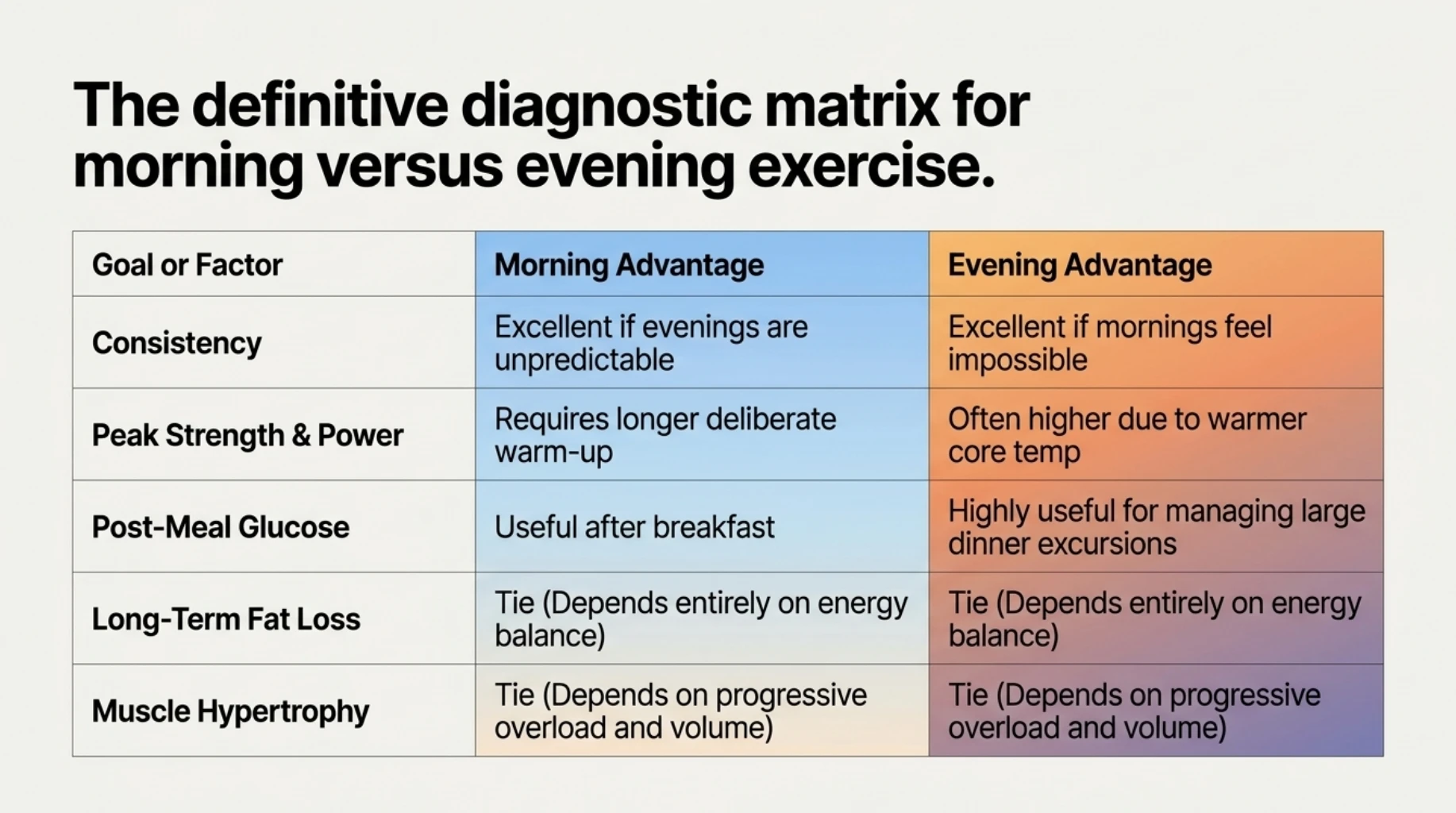
Morning vs Evening Exercise: Which Is Better for Different Goals?
| Goal | Morning May Be Useful When… | Evening May Be Useful When… |
|---|---|---|
| General health | It improves consistency | It improves consistency |
| Weight loss | You prefer exercising before the day’s commitments | You train more consistently or intensely later |
| Muscle growth | You can perform progressive resistance training consistently | Higher later-day performance improves training quality |
| Strength | You need to train or compete early | You naturally feel stronger later in the day |
| Post-meal glucose | Useful when activity follows breakfast | Useful when activity follows lunch or dinner |
| Sleep | Exercise does not require sacrificing sleep | Exercise does not interfere with bedtime |
| Outdoor exercise | Morning conditions are cooler or safer | Evening conditions are cooler or safer |
| Adherence | Your mornings are predictable | Your evenings are predictable |
What If You Can Exercise Only at Night?
Exercise at night rather than abandoning exercise altogether.
For many people, work and family responsibilities make later exercise the only realistic option.
If you train at night and sleep normally afterwards, there is little reason to consider the workout unhealthy simply because it occurs late.
If vigorous late exercise does interfere with sleep, possible adjustments include:
- Finishing slightly earlier.
- Reducing very high-intensity work close to bedtime.
- Using a longer cool-down.
- Keeping the post-workout meal comfortable rather than excessively large.
- Reducing late caffeine intake.
The last point is particularly important.
Sometimes It Is the Pre-Workout Caffeine, Not the Evening Workout
A person may conclude that evening exercise is destroying sleep when the real problem is a high-caffeine pre-workout supplement consumed at 6 or 7 PM.
Caffeine can remain active for hours.
People vary substantially in how quickly they metabolise it and how strongly it affects sleep.
If evening training is associated with difficulty falling asleep, review caffeine intake before blaming exercise timing alone.
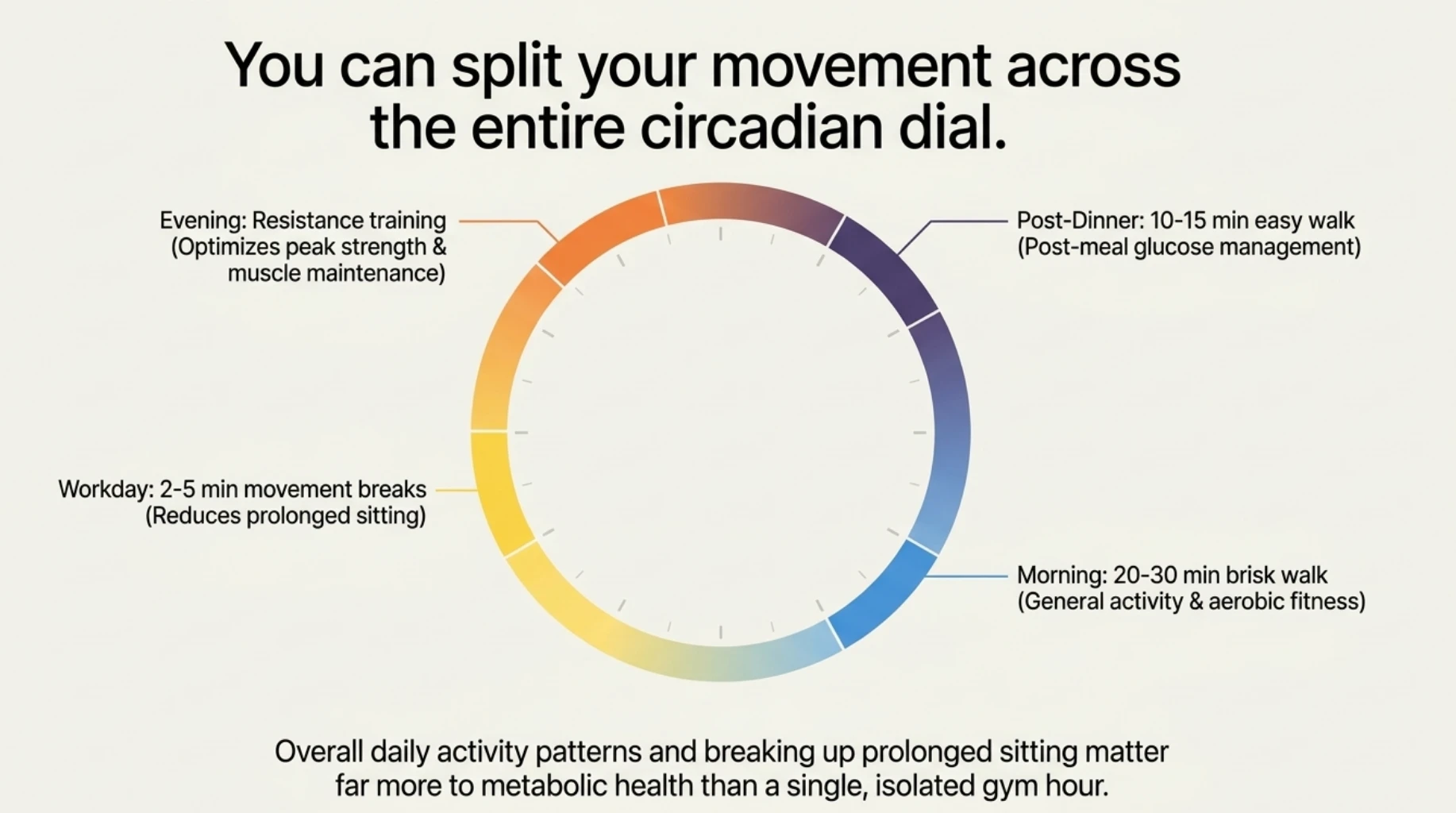
Can You Split Exercise Between Morning and Evening?
Absolutely.
You do not need to place all physical activity into one workout window.
For example:
- Morning: 20–30 minute brisk walk.
- Daytime: brief walking breaks from prolonged sitting.
- Evening: resistance training.
- After dinner: 10-minute easy walk.
This can be an excellent strategy for people trying to improve metabolic health while also building strength.
It also illustrates why the debate over morning vs evening exercise can sometimes create a false choice.
You can benefit from movement at several times during the day.
Exercise Timing Matters Less Than Breaking Up Long Sitting
A one-hour gym session is beneficial, but it does not make the remaining 15 waking hours irrelevant.
Someone may exercise every morning and then sit almost continuously for the rest of the day.
Another person may exercise in the evening but accumulate substantial walking and movement throughout the day.
For metabolic health, the complete activity pattern matters.
Try to combine structured exercise with regular movement outside the gym.
The Bigger Question Is Not Morning vs Evening Exercise
For most adults, the more important questions are:
| Question | Why It Matters |
|---|---|
| Am I exercising consistently? | Long-term adherence drives adaptation |
| Am I resistance training? | Helps preserve strength, muscle and physical function |
| Am I doing enough aerobic activity? | Supports cardiorespiratory and metabolic health |
| Am I sitting for most of the remaining day? | Structured exercise should be combined with regular daily movement |
| Am I progressing appropriately? | The body needs sufficient stimulus to continue adapting |
| Am I sleeping enough? | Sleep influences recovery, metabolic health and exercise performance |
| Can I maintain this schedule for months? | A sustainable routine usually beats a theoretically perfect one |
Once these fundamentals are in place, optimising exercise timing can become useful.
Before that, the clock is usually not the biggest problem.
Morning vs Evening Exercise: Common Myths
The growing interest in exercise timing has also created several myths. Some come from genuine physiological observations that have been extended much further than the evidence supports.
Understanding these myths can make the morning vs evening exercise decision much simpler.
Myth 1: Morning Exercise Is Always Better for Fat Loss
Morning exercise can certainly contribute to fat loss, but there is no universal rule that exercising before breakfast produces greater long-term body-fat reduction.
Fasted exercise may increase fat oxidation during the workout, but fat oxidation during one session and long-term loss of body fat are not the same thing.
Overall calorie balance, dietary intake, total physical activity, resistance training and consistency matter much more.
Myth 2: Evening Exercise Is Bad for Sleep
Not necessarily.
Many people can exercise in the evening without adversely affecting sleep.
The potential problem is more likely to occur when very vigorous exercise is performed close to bedtime in someone who is sensitive to it.
Late caffeine intake may also contribute to sleep problems and can easily be mistaken for an effect of evening exercise itself.
Myth 3: You Must Exercise at the Same Time Every Day
No.
A consistent routine can make exercise easier to maintain, but your body does not require every workout to begin at exactly the same time.
You could strength train in the evening during weekdays and exercise in the morning on weekends if that suits your schedule.
The programme as a whole matters more than perfect clock-time consistency.
Myth 4: Fasted Exercise Burns Belly Fat
Fasted exercise does not selectively target abdominal fat.
Your body cannot be instructed to remove fat specifically from the waist simply because you exercised before breakfast.
Reduction in abdominal and visceral fat occurs as part of broader changes in body composition and metabolic health.
Myth 5: Evening Exercise Is Always Better for Muscle Growth
Strength and power performance can be somewhat better later in the day for many people.
That does not automatically mean greater long-term muscle growth.
Progressive resistance training, adequate protein, total training volume, recovery and consistency remain the major determinants.
Myth 6: A 5 AM Workout Is More Disciplined Than a 7 PM Workout
There is nothing inherently superior about exercising before sunrise.
Discipline means following a sustainable exercise routine—not selecting the earliest possible workout time.
If waking at 5 AM repeatedly reduces sleep, the routine may actually undermine recovery.
Myth 7: You Should Never Exercise After Dinner
A light-to-moderate walk after dinner can be particularly useful for reducing prolonged sitting and managing the post-meal glucose response.
A very demanding workout immediately after a large dinner may be uncomfortable, but that is a different issue.
Morning vs Evening Exercise: What Should You Choose?
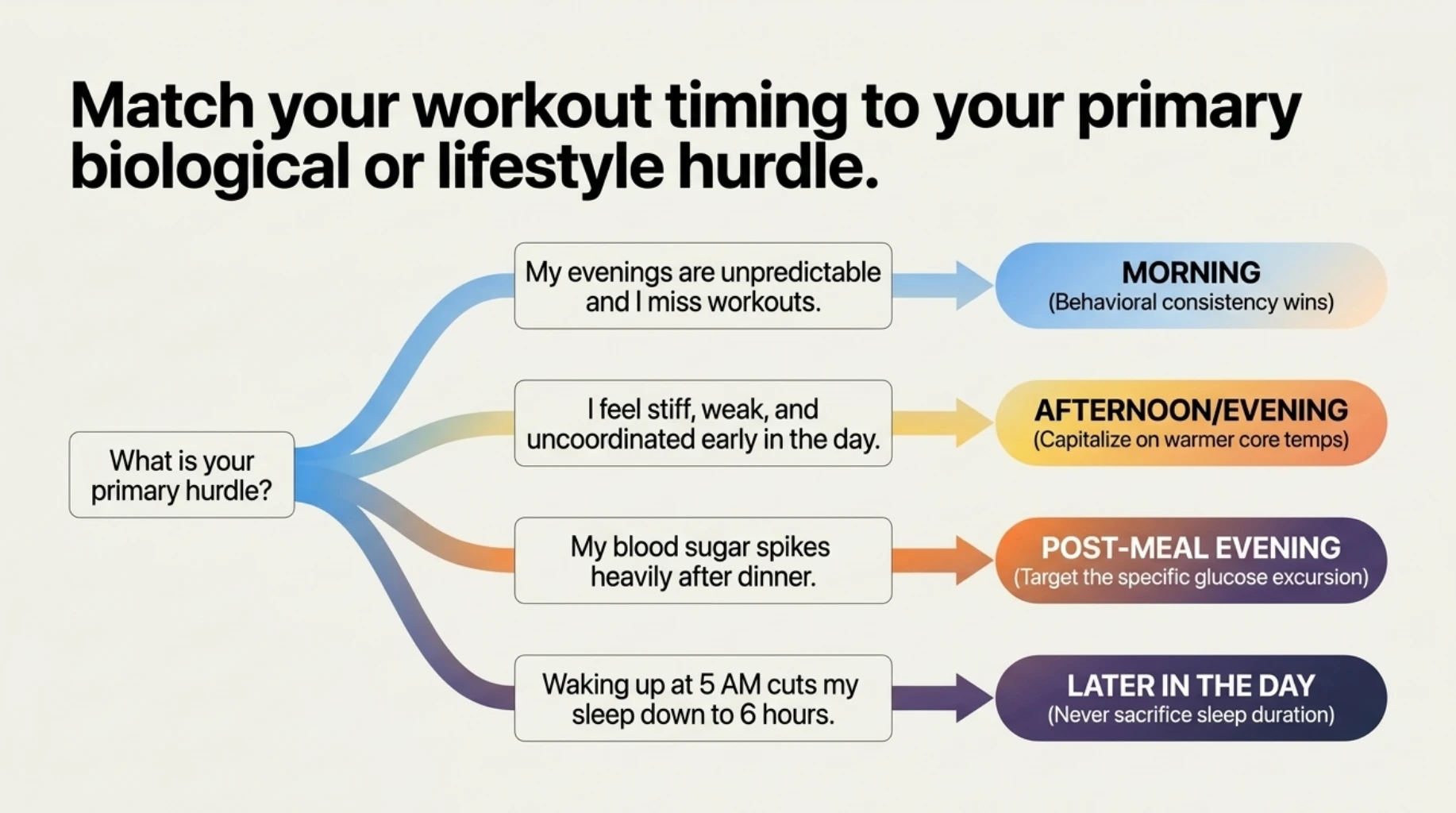
Instead of searching for one universally superior time, start with your primary goal.
| Your Situation | Timing to Consider | Why |
|---|---|---|
| Evenings are unpredictable | Morning | Completing exercise before work may improve adherence |
| You feel weak and stiff early in the morning | Afternoon/evening | Body temperature and physical readiness may be better later |
| Strength performance is the priority | Afternoon/evening may be useful | Strength and power often peak later in the day, although training adaptation can reduce the difference |
| You have high post-dinner glucose | Activity after dinner | Post-meal walking can help reduce the glucose excursion |
| You repeatedly miss evening workouts | Morning | Consistency is more important than a small theoretical timing advantage |
| Morning training reduces your sleep | Later in the day | Exercise should not routinely come at the expense of adequate sleep |
| Late intense workouts disturb sleep | Earlier | Moving vigorous training away from bedtime may help |
| You exercise outdoors in very hot weather | Cooler morning or evening period | Reducing heat exposure may be more important than metabolic timing |
| You are training for an early-morning event | Include morning sessions | Training at competition time can improve familiarity with the routine |
A Simple Way to Find Your Best Exercise Time
If you are unsure whether morning or evening suits you better, you can test both rather than guessing.
Try a consistent morning schedule for approximately two weeks and observe:
- How often you complete the planned sessions.
- Your energy during training.
- Strength or exercise performance.
- Hunger afterwards.
- Sleep duration.
- Overall fatigue.
- How easily the routine fits your day.
Then try a comparable evening schedule.
You may discover that one time clearly works better for your lifestyle even if the physiological differences are small.
What If Morning and Evening Both Work?
Then you do not need to choose.
Different types of activity can be placed at different times.
For example:
| Time | Possible Activity | Purpose |
|---|---|---|
| Morning | 20–30 minute brisk walk | General activity and aerobic fitness |
| During work | 2–5 minute movement breaks | Reduce prolonged sitting |
| Evening | Resistance training | Strength and muscle maintenance |
| After dinner | 10–15 minute comfortable walk | Additional movement and post-meal glucose management |
This approach may actually be more useful for metabolic health than concentrating every movement into one workout and remaining sedentary for the rest of the day.
Morning vs Evening Exercise for Prediabetes
For someone with prediabetes, regular exercise is more important than finding a perfect workout hour.
Both aerobic and resistance exercise can contribute to improved insulin sensitivity and glucose regulation.
However, exercise can also be strategically placed around meals.
If post-meal glucose is a concern, short walks after meals can complement the main exercise programme.
For example, someone could perform resistance training in the morning and still walk for 10–15 minutes after dinner.
It does not have to be either-or.
Morning vs Evening Exercise for Diabetes
People with diabetes may need to think beyond the clock.
Exercise response can be affected by:
- Pre-exercise glucose.
- Insulin use.
- Sulfonylureas or other medicines that can cause hypoglycaemia.
- Timing of the previous meal.
- Exercise intensity.
- Duration of exercise.
- Previous episodes of hypoglycaemia.
Someone taking insulin may therefore require a more individualised approach than simply being told that morning or evening exercise is “best.”
Unusual dizziness, trembling, confusion, excessive weakness or other possible symptoms of hypoglycaemia during exercise should not be ignored.
Should You Exercise When Blood Sugar Is High?
The answer depends on how high the glucose is, why it is elevated, the type of diabetes, symptoms and whether ketones are present.
Moderate physical activity can lower glucose in many circumstances.
However, vigorous exercise is not automatically appropriate when glucose is markedly elevated, particularly in people with type 1 diabetes when ketones are present.
This is an example of why individual medical circumstances can be more important than morning vs evening exercise.
Morning vs Evening Exercise for High Blood Pressure
People with hypertension should focus first on establishing regular physical activity.
Aerobic exercise, resistance training and increased daily movement can all contribute to blood-pressure management.
Timing can then be refined according to:
- Medication schedule.
- Blood-pressure pattern.
- Symptoms.
- Temperature and humidity.
- Sleep.
- Personal preference.
Someone who experiences dizziness after taking morning blood-pressure medication, for example, may need a different strategy from someone who feels completely well at that time.
Morning vs Evening Exercise for Heart Health
For cardiovascular health, regular exercise is far more important than choosing one specific time of day.
Cardiorespiratory fitness improves through repeated training, not because exercise occurs at a particular hour.
People with known cardiovascular disease or symptoms such as exertional chest discomfort, unexplained breathlessness, fainting or significant palpitations should seek appropriate medical assessment rather than attempting to solve the problem by changing workout timing.
When Should You Avoid Hard Exercise?
Regardless of whether you prefer morning or evening, there are circumstances when a hard workout may need to be postponed or modified.
Examples include:
- Fever or significant acute illness.
- Severe sleep deprivation.
- Marked dehydration.
- Significant dizziness or fainting.
- New chest discomfort.
- Unexplained severe breathlessness.
- Acute musculoskeletal injury.
- Markedly abnormal glucose in situations where vigorous exercise may be unsafe.
The clock should never override obvious warning signs from your body.
Frequently Asked Questions About Morning vs Evening Exercise
Is Morning or Evening Exercise Better?
There is no universally better time. Evening exercise may offer a small advantage for some measures of strength and power, while morning exercise may be easier to maintain for people with busy evenings. The best time is usually the one that supports consistent training without compromising sleep.
Is Morning Exercise Better for Weight Loss?
Not necessarily. Morning exercise can help with weight management, but current evidence does not establish it as universally superior for long-term fat loss. Energy balance, diet, total activity and adherence matter more.
Is Evening Exercise Better for Muscle Growth?
Not necessarily. Strength performance is often somewhat better later in the day, but both morning and evening resistance training can support muscle growth when training, protein intake and recovery are appropriate.
Does Fasted Morning Exercise Burn More Fat?
It can increase fat oxidation during the exercise session, but that does not automatically produce greater long-term body-fat loss.
Can Evening Exercise Disturb Sleep?
It can in some people, particularly when very vigorous exercise occurs close to bedtime. However, moderate evening exercise does not necessarily impair sleep, and individual responses vary.
Is It Okay to Exercise at 8 PM?
For many people, yes. If you exercise at 8 PM and continue to sleep well, there may be no reason to change. If late intense exercise consistently delays sleep, consider moving it earlier or reducing intensity near bedtime.
Is Walking After Dinner Better Than Walking in the Morning?
They serve somewhat different purposes. A morning walk provides useful physical activity, while a post-dinner walk can additionally help reduce the post-meal glucose excursion. You can also do both.
What Is the Best Exercise Time for Diabetes?
There is no single best time for everyone with diabetes. Exercise timing can be matched to glucose patterns, meals, medication, insulin use and personal schedule. Post-meal activity can be particularly useful for controlling postprandial glucose.
Should I Exercise Before or After Breakfast?
Either can work. Low-to-moderate-intensity activity is often well tolerated before breakfast, while food may improve performance during longer or more demanding sessions. People using glucose-lowering medicines associated with hypoglycaemia may require additional planning.
What Is the Best Time for Strength Training?
Strength and power often peak later in the day, but morning strength training remains effective. The best practical time is one that allows consistent progressive training.
Is a 5 AM Workout Healthy?
It can be if you are obtaining adequate sleep and feel well. A 5 AM workout that requires chronic sleep restriction should not automatically be considered healthier than exercising later.
Can I Exercise Twice a Day?
Yes, depending on exercise intensity, fitness level and recovery. For general health, this could simply mean a morning walk and an evening strength session rather than two demanding workouts.
Morning vs Evening Exercise: Final Comparison
| Factor | Morning Exercise | Evening Exercise |
|---|---|---|
| Fat loss | Effective | Effective |
| Muscle growth | Effective with progressive training | Effective with progressive training |
| Strength/power | May initially be somewhat lower in some people | Often somewhat higher later in the day |
| Fasted training | Easier to arrange | Less common |
| Post-dinner glucose | Does not directly target it | Post-dinner activity can be useful |
| Adherence | May suit people with unpredictable evenings | May suit people who dislike early mornings |
| Sleep | Good if waking early does not reduce sleep | Usually compatible with sleep; very late vigorous sessions may affect some people |
| Warm-up | May require more gradual preparation | Body temperature is generally higher |
| Outdoor heat | Often cooler than midday | Often cooler after sunset |
| Overall verdict | Useful when it fits your physiology and schedule | Useful when it fits your physiology and schedule |
Final Thought
When deciding between morning vs evening exercise, do not spend so much time optimising the clock that you neglect the exercise itself.
The best workout time is usually the one you can repeat consistently without sacrificing sleep, recovery or the rest of your health.
Once consistency is established, timing can then be fine-tuned according to your goals—such as strength performance, post-meal blood sugar, competition timing or personal energy levels.
If you want a personalized metabolic assessment and lifestyle strategy, you can book a consultation here:
Book an Appointment