


Why Choosing the Right Fitness Centre Matters After 60
Many people believe that ageing naturally means becoming weaker, slower and less physically active. Although some changes in muscle mass, strength and physical capacity occur with advancing age, the extent of functional decline varies considerably between individuals.
Regular physical activity can help older adults maintain muscle strength, cardiovascular fitness, mobility and independence.
Exercise can also contribute to better blood pressure management, glucose regulation, bone health and psychological well-being.
However, not every exercise facility is equally suitable for an older adult.
A gym designed primarily for young bodybuilders may have excellent strength-training equipment but limited accessibility, insufficient beginner supervision or few appropriate exercise options for people with mobility limitations.
Conversely, a facility advertising itself as a senior fitness centre may not necessarily have qualified trainers or adequate safety arrangements.
The important question is not whether a gym has a separate senior citizen section. It is whether the facility can provide appropriate, individualised exercise in a safe and supportive environment.
When evaluating senior fitness centres, older adults and their families should look beyond attractive interiors, membership discounts and promotional claims.
Trainer competence, equipment suitability, accessibility, fall prevention, emergency preparedness and appropriate exercise progression are more meaningful considerations.Is Gym Exercise Safe After 60?
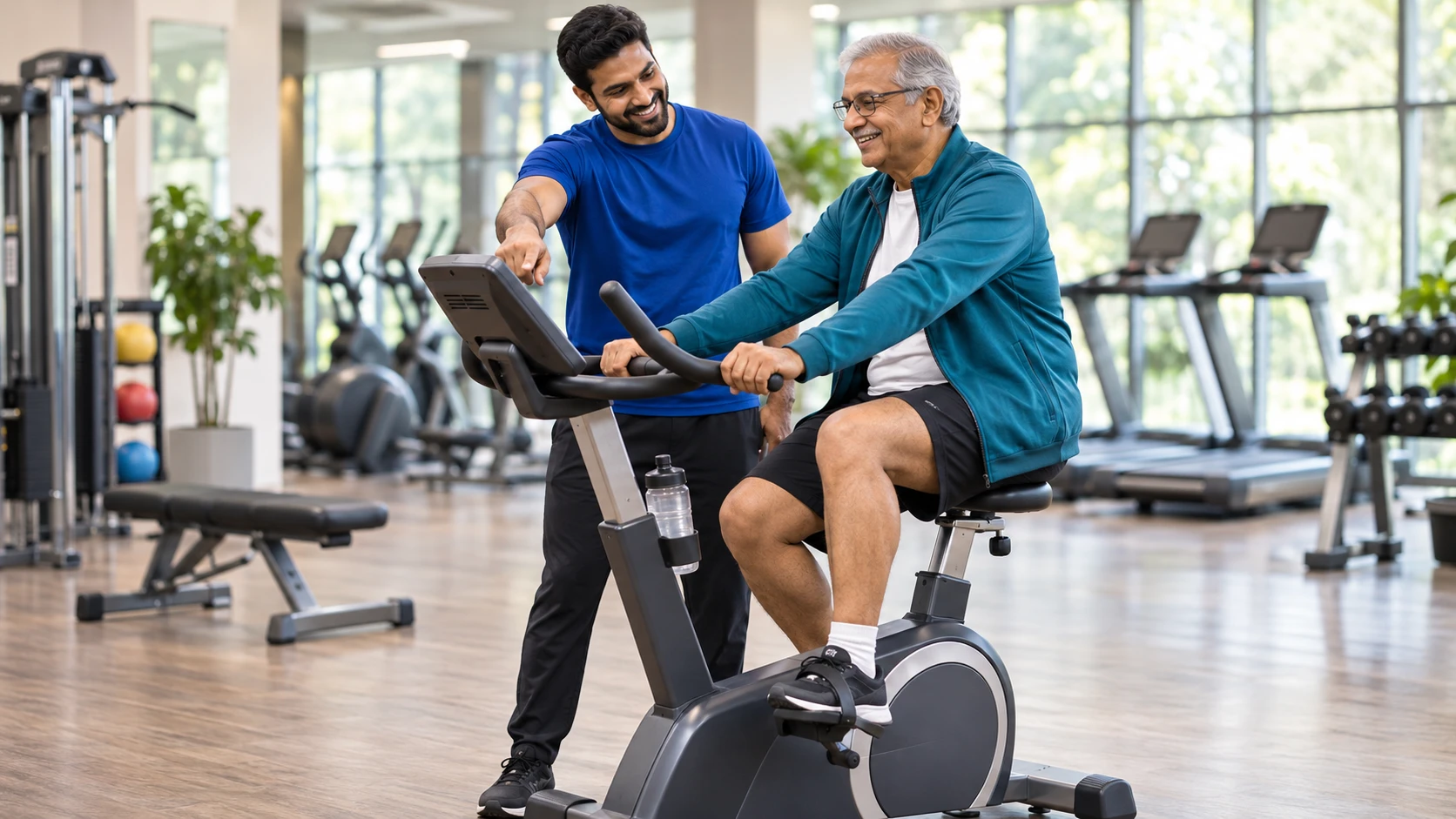
For many older adults, regular gym exercise can be safe and beneficial when appropriately selected and performed.
Age alone is not a reason to avoid resistance training, aerobic exercise or other structured physical activity.
In fact, remaining physically inactive may contribute to declining muscle strength, reduced cardiovascular fitness, impaired balance and loss of functional independence.
However, exercise safety depends on the individual’s health status, physical capacity, symptoms and the type and intensity of activity.
Does Everyone Over 60 Need Medical Clearance?
No.
Not every older adult requires a routine medical fitness certificate before beginning light or moderate physical activity.
Current approaches to exercise preparticipation screening aim to avoid creating unnecessary barriers to beneficial physical activity.
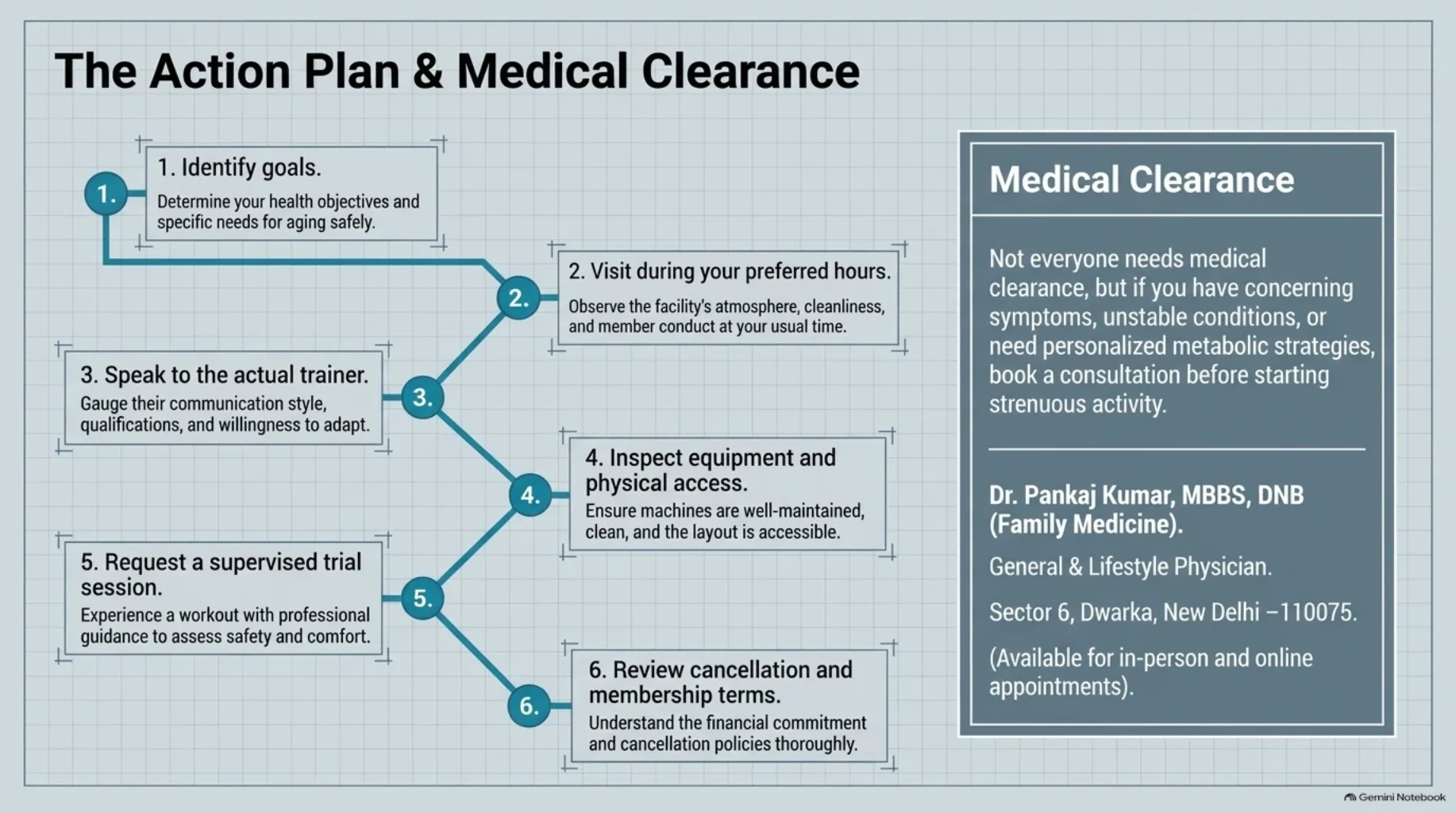
However, medical assessment may be appropriate for people with concerning symptoms, unstable cardiovascular conditions, significant functional limitations or other medical problems that could affect exercise safety.
The need for evaluation should be individualised rather than determined by age alone.
Can Someone Start Exercising at 65 or 70?
Yes.
People can begin appropriately selected exercise programmes later in life.
Older adults who have been sedentary may need to start with lower workloads, shorter sessions and more supervision.
Exercise progression should reflect their response, confidence and physical capacity.
Is Walking Enough After 60?
Walking provides important cardiovascular and general health benefits.
However, walking alone may not adequately address every component of physical fitness.
Muscle-strengthening activities and balance exercises are also important, particularly for maintaining functional ability and reducing fall risk.
A well-designed programme may combine aerobic activity, resistance training and balance exercises according to individual needs.
Clinical perspective: Exercise after 60 should not focus only on burning calories or losing weight. Maintaining strength, balance, mobility and the ability to perform everyday activities is equally important.

1. Does the Fitness Centre Assess Your Starting Health and Physical Ability?
One of the first things to check when selecting senior fitness centres is whether the facility evaluates a new member before recommending exercises.
Older adults differ considerably in their physical abilities.
A physically active 68-year-old who regularly walks, cycles or performs resistance training may tolerate a substantially different programme from someone of the same age who has been inactive for several years.
Similarly, a person recovering from a fracture may require different exercise modifications from someone managing uncomplicated hypertension.
What Should the Initial Assessment Include?
A suitable exercise assessment may include discussion of current activity levels, exercise experience, mobility, balance, previous falls, relevant injuries and medical conditions.
Trainers should also ask about symptoms that may affect exercise safety.
Depending on the person’s condition and professional scope, a basic functional assessment may help identify appropriate starting activities.
However, gym assessments should not be presented as substitutes for medical diagnosis.
Should the Trainer Ask About Falls?
Yes.
A history of falls, near-falls or fear of falling may indicate a need for closer supervision or targeted balance training.
Older adults who experience recurrent falls or unexplained dizziness may require medical evaluation before participating in challenging balance activities.
What About Joint Pain or Arthritis?
Many people with osteoarthritis can benefit from appropriately selected strengthening and aerobic exercise.
However, the programme may require modifications according to symptoms, mobility and functional limitations.
A trainer should not assume that all knee or back pain requires complete avoidance of exercise.
Equally, persistent or concerning symptoms should not be dismissed.
Should Every Older Adult Perform a Fitness Test?
Not necessarily.
Some functional assessments may be useful, but testing should be selected according to individual needs and performed by appropriately trained personnel.
Maximal exercise testing is not routinely necessary for every older adult joining a gym.
What if the Facility Offers No Assessment?
A facility that immediately assigns the same workout to every new member may not be adequately considering individual differences.
Ask how exercise programmes are adjusted for people with different levels of strength, mobility and health status.
Warning sign: Be cautious if a trainer dismisses a history of falls, unexplained fainting, chest discomfort or significant mobility problems and recommends strenuous exercise without appropriate assessment.
2. Are Trainers Qualified to Work With Older Adults?
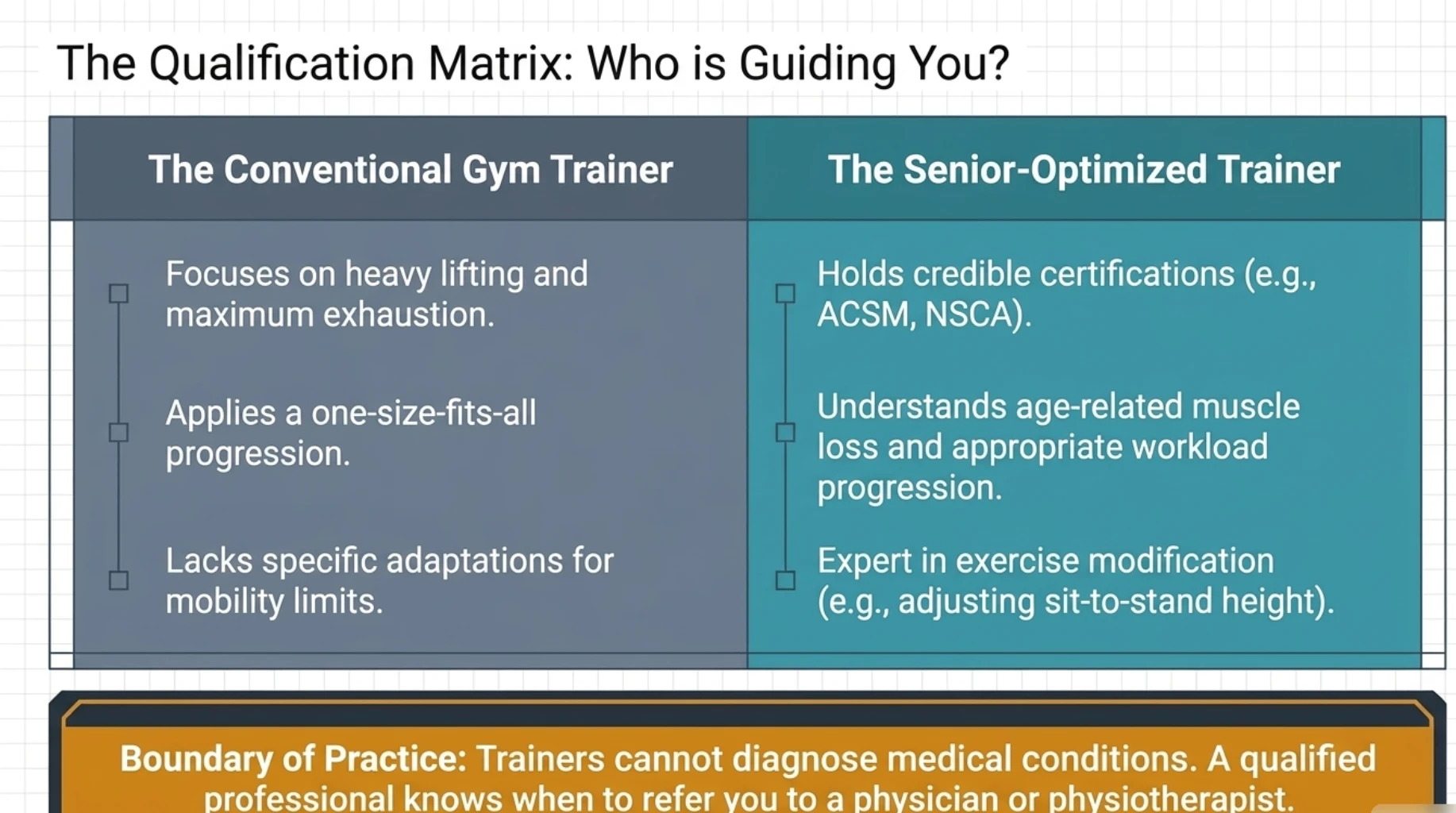
Trainer qualifications and experience are especially important when choosing an exercise facility after 60.
Although older adults can perform many of the same exercise categories as younger adults, the starting workload, supervision and progression may need to differ.
A trainer experienced primarily in competitive bodybuilding may not necessarily have appropriate expertise in balance training, functional mobility or exercise adaptations for people with chronic conditions.
What Qualifications Should You Look For?
Relevant exercise science education, recognised fitness certifications and additional training in working with older adults may be useful indicators.
Certifications from established organisations such as the American College of Sports Medicine (ACSM), National Strength and Conditioning Association (NSCA) or other credible providers may demonstrate relevant preparation.
However, no certificate automatically guarantees competence.
Practical experience, communication, professional judgement and the ability to work within an appropriate scope of practice are also important.
Should Trainers Understand Age-Related Muscle Loss?
Yes.
Age-related declines in muscle strength and muscle mass can affect mobility and physical function.
Progressive resistance training can help older adults improve or maintain strength.
However, exercise selection and progression should be appropriate for the individual.
Trainers should not assume that older adults must avoid all resistance training or, conversely, that everyone should begin with heavy lifting.
Should Trainers Know How to Modify Exercises?
Yes.
For example, a person who finds it difficult to stand from a low chair may initially benefit from a modified sit-to-stand exercise using a suitable seat height.
Someone with limited balance may need stable support during certain standing exercises.
A person with shoulder discomfort may require alternative upper-body movements.
The trainer should understand when a modification is appropriate and when referral for medical or physiotherapy assessment is needed.
Should a Trainer Have CPR Training?
Current CPR and first-aid training are valuable safety qualifications for fitness staff.
Ask whether trained personnel are available during the hours when older adults attend.
Can a Gym Trainer Diagnose Medical Conditions?
No.
Fitness trainers should not diagnose heart disease, osteoporosis, diabetes complications or other medical conditions unless they separately hold the necessary professional qualifications and authority.
They should recognise concerning symptoms and refer members for appropriate healthcare assessment.
How Can You Evaluate a Trainer During a Trial Session?
Observe whether the trainer explains exercises clearly, demonstrates appropriate technique, asks about discomfort and adjusts the programme when necessary.
A good trainer should encourage questions and avoid pressuring older adults to exceed their capabilities.
3. Is the Fitness Centre Accessible and Easy to Navigate?
Accessibility is a major consideration when evaluating senior fitness centres.
A facility may have modern exercise machines but still be unsuitable if reaching the exercise area requires climbing multiple flights of stairs or navigating slippery surfaces.
Older adults with mobility limitations may find poorly designed entrances, crowded corridors or inaccessible changing rooms particularly challenging.
Is There Step-Free Access?
Check whether the entrance and main exercise areas can be accessed without unnecessary steps.
Where stairs are unavoidable, suitable handrails and safe stair design are important.
Lifts or ramps may be necessary for some members.
Are Floors Safe and Non-Slippery?
Exercise areas should have appropriate flooring that provides stable footing.
Loose mats, wet surfaces, trailing cables and unnecessary obstacles may increase the risk of trips or falls.
Inspect the route between the entrance, exercise floor, drinking water area and toilets.
Are Toilets and Changing Rooms Accessible?
Older adults may need toilets that are easy to reach and have suitable lighting, non-slip flooring and supportive fixtures where appropriate.
Facilities should be evaluated according to the member’s actual mobility requirements.
Is There Adequate Lighting?
Good lighting can help members identify steps, equipment edges and changes in floor level.
Poorly illuminated corridors or staircases may create avoidable hazards.
Is the Gym Conveniently Located?
Location influences regular attendance.
A facility that requires a long, difficult journey may be less practical than one closer to home.
Consider traffic, parking, safe entry and exit, and whether transport arrangements are manageable.
For older adults living in Delhi NCR, accessibility during extreme heat, winter fog or poor outdoor air quality may also affect the practicality of attending regularly.
Does the Facility Have a Comfortable Resting Area?
A suitable resting area can be useful for members who need breaks between activities.
However, persistent dizziness, chest discomfort or unusual breathlessness should not simply be managed by sitting down and continuing the workout later.
Such symptoms may require medical assessment.
Senior Fitness Centre Accessibility Checklist
| Facility Feature | What to Check | Why It Matters |
|---|---|---|
| Entrance | Step-free access or suitable ramp | Improves accessibility for members with mobility limitations |
| Stairs | Stable handrails and appropriate lighting | Supports safer movement |
| Flooring | Dry, stable and free of loose obstacles | Reduces avoidable trip hazards |
| Exercise area | Adequate space between equipment | Allows safer movement and supervision |
| Toilets | Easy access and suitable supportive fixtures | Improves usability and comfort |
| Lighting | Well-lit corridors and exercise areas | Helps members identify obstacles |
| Seating | Stable chairs with appropriate support | Provides convenient rest opportunities |
| Parking and transport | Convenient and accessible arrangements | Supports regular attendance |
4. Does the Facility Provide Suitable Exercise Equipment?
Older adults do not necessarily require expensive or specialised exercise machines.
However, equipment should be appropriate for their physical abilities and training goals.
A well-equipped facility may provide a combination of aerobic equipment, resistance machines, free weights and balance-training options.
The emphasis should be on safe use, appropriate progression and adequate supervision.
Are Resistance Machines Useful for Older Adults?
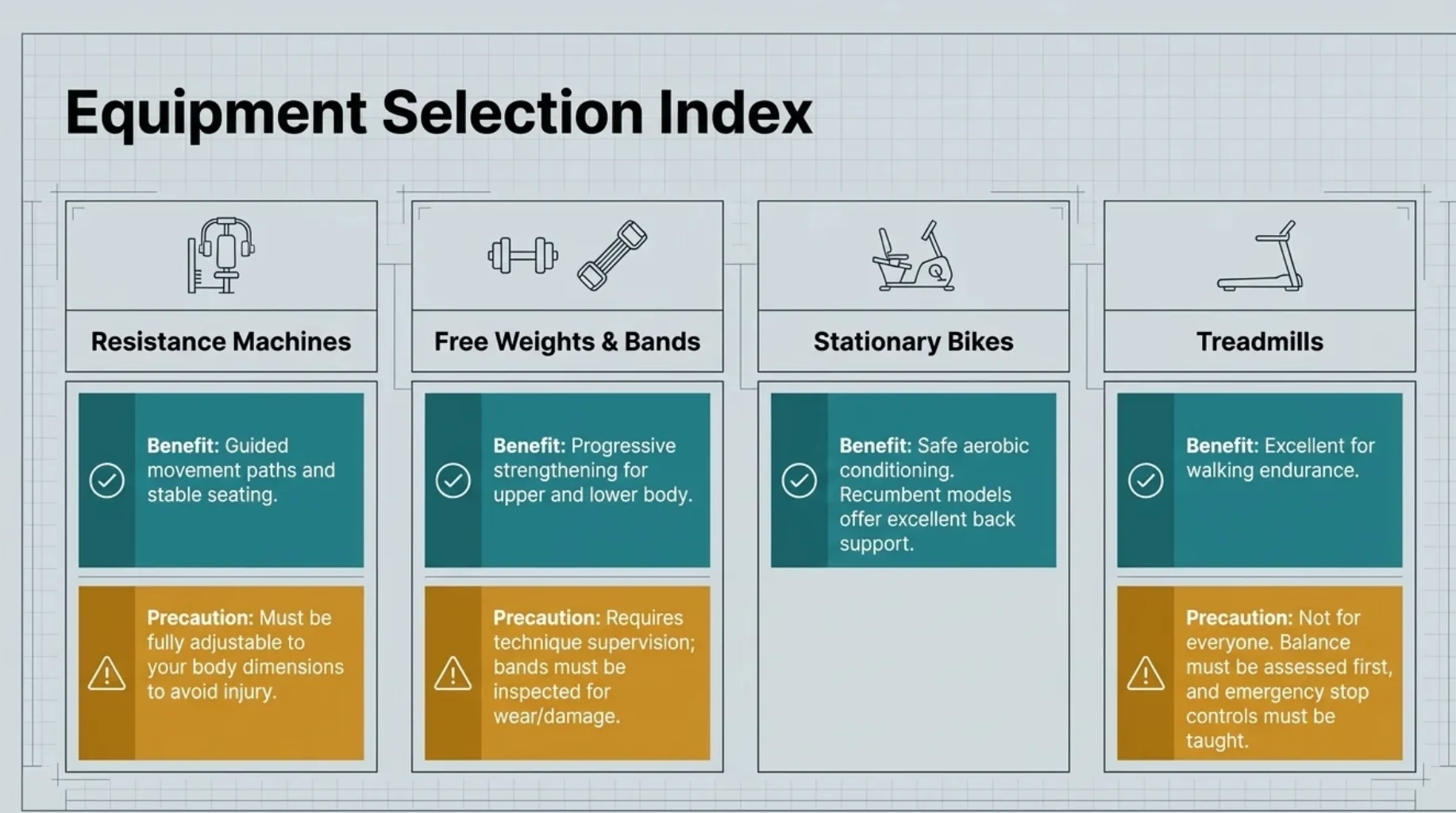
Resistance machines can be helpful because some provide stable seating, adjustable resistance and guided movement paths.
However, machines must fit the individual’s body dimensions and allow appropriate movement.
A machine that cannot be adjusted to a comfortable position may be unsuitable even if it is expensive.
Are Free Weights Safe After 60?
Free weights can be used safely by many older adults when exercises are selected appropriately and technique is taught correctly.
Light dumbbells may be useful initially, but appropriate resistance should be determined by individual strength and exercise goals rather than age alone.
Some older adults can safely progress to substantial resistance loads with suitable training and supervision.
Are Resistance Bands a Good Option?
Resistance bands can provide convenient strengthening exercises.
However, bands should be inspected for damage, anchored securely when necessary and used with appropriate technique.
They are not automatically safer than every other form of resistance equipment.
Should Every Senior Use a Treadmill?
No.
Treadmills can be useful for some older adults, but they may not be appropriate for everyone.
People with impaired balance, significant gait difficulties or certain medical conditions may require an alternative aerobic activity.
Where treadmills are used, members should receive instruction about starting, stopping and emergency controls.
What About Stationary Bicycles?
Stationary bicycles may provide a suitable aerobic option for some people who prefer seated exercise.
Recumbent bicycles can offer additional back support and a different seating position.
However, comfort and suitability depend on the individual.
Are Balance-Training Tools Necessary?
Balance exercises do not always require specialised equipment.
Supported standing activities, weight-shifting exercises and appropriately supervised functional movements may be useful.
Unstable surfaces should not be introduced indiscriminately, particularly for members with significant balance impairment.
Which Exercise Equipment May Be Useful After 60?
| Equipment | Potential Benefit | Safety Consideration |
|---|---|---|
| Resistance machines | Muscle-strengthening exercises | Correct seat position and suitable resistance |
| Light dumbbells | Progressive upper- and lower-body strengthening | Controlled technique and appropriate load |
| Resistance bands | Adaptable strengthening exercises | Check band condition and secure attachment |
| Stationary bicycle | Aerobic conditioning | Suitable seating and safe mounting |
| Treadmill | Walking-based aerobic exercise | Assess balance and teach emergency controls |
| Stable chairs | Supported functional exercises | Chair stability and appropriate height |
| Handrails or support bars | Support during selected balance exercises | Secure installation and supervision |
| Exercise mats | Selected floor-based activities | Ability to get down to and rise from the floor safely |
5. Does the Fitness Centre Include Balance Training and Fall Prevention?
Balance training is an important component of physical activity for many older adults, particularly those with reduced mobility or an increased risk of falling.
Falls can lead to injuries, loss of confidence and reduced independence.
However, fall risk is influenced by multiple factors, including muscle weakness, balance impairment, vision problems, medications and environmental hazards.
Exercise can address some of these factors, but it does not eliminate every cause of falling.
Why Is Balance Training Important After 60?
Maintaining balance requires coordination between sensory information, muscle function and the nervous system.
Changes in these systems can affect stability during walking, turning, climbing stairs or standing from a chair.
Appropriately designed balance exercises can improve functional balance and contribute to fall prevention.
What Types of Balance Exercises May Be Used?
Depending on the individual’s abilities, exercises may include supported standing, controlled weight shifting, tandem standing, stepping activities and functional movement practice.
These exercises should be selected according to the person’s balance capacity and fall risk.
Someone with substantial instability may require close supervision or referral to a physiotherapist.
Is Standing on One Leg Suitable for Everyone?
No.
Single-leg standing can be useful for selected individuals, but it may be inappropriate without support for people with significant balance impairment.
Exercises should progress from safer, supported activities towards more challenging movements as appropriate.
Does Strength Training Help Reduce Fall Risk?
Strength training can improve muscle strength and physical function.
However, fall prevention programmes often benefit from combining strength exercises with balance and functional training rather than relying on strengthening alone.
Should the Trainer Ask About Previous Falls?
Yes.
Previous falls can provide important information about future fall risk.
Recurrent falls, unexplained loss of balance or dizziness should prompt consideration of medical assessment.
Can a Gym Replace Physiotherapy for Balance Problems?
Not always.
People with significant balance impairment, neurological conditions, recent fractures or complex mobility problems may require assessment and rehabilitation by an appropriately qualified physiotherapist.
A fitness centre may become useful later as part of an ongoing activity programme.
Clinical takeaway: A safer exercise facility for older adults should provide appropriate balance and functional training, recognise fall risk and know when a member requires medical or physiotherapy assessment.
What Makes a Senior Fitness Centre Different From a Conventional Gym?
A senior-focused fitness centre does not necessarily need entirely different equipment.
Its main advantage should be the ability to adapt the exercise environment and programme to the needs of older adults.
| Feature | Senior-Friendly Approach | Potential Concern |
|---|---|---|
| Initial assessment | Reviews mobility, activity level and relevant health concerns | Identical workout assigned to everyone |
| Training supervision | Appropriate instruction and exercise modification | Limited guidance for beginners |
| Exercise progression | Gradual changes based on tolerance and ability | Pressure to increase intensity rapidly |
| Balance training | Supported and progressively challenging activities | Unsupervised unstable exercises |
| Accessibility | Safe pathways, suitable access and usable facilities | Steps, obstacles and difficult access |
| Equipment | Adjustable and suitable for different abilities | Equipment that cannot be adapted |
| Medical awareness | Recognises concerning symptoms and referral needs | Dismisses medical concerns |
| Environment | Respectful, supportive and comfortable | Pressure, intimidation or age-related stereotypes |
6. Does the Senior Fitness Centre Have an Emergency Response Plan?
Emergency preparedness is one of the most important considerations when evaluating senior fitness centres.
Exercise is generally beneficial for older adults, and serious exercise-related medical emergencies are uncommon. However, cardiovascular events, falls, injuries and other medical problems can occasionally occur during physical activity.
A suitable exercise facility should have clear procedures for recognising emergencies, contacting medical services and providing appropriate initial assistance.
Emergency preparedness should not depend entirely on the presence of a particular trainer.
Are Staff Trained in CPR and Basic First Aid?
Cardiopulmonary resuscitation (CPR) is an essential emergency response skill.
Fitness facilities should ideally have staff with current CPR and basic first-aid training available during operating hours.
Ask whether employees know how to recognise cardiac arrest, activate emergency medical services and begin appropriate assistance.
Training should be refreshed according to the relevant certification requirements.
Does the Facility Have an Automated External Defibrillator?
An automated external defibrillator (AED) can analyse heart rhythm and deliver an electrical shock when indicated during certain cardiac arrests.
Having an accessible AED, trained staff and a coordinated emergency response procedure is a valuable safety feature.
However, simply purchasing an AED is not enough. Staff should know its location, how to use it and how to summon emergency assistance.
Is There a Clear Procedure for Medical Emergencies?
A suitable facility should know how to respond when someone collapses, develops chest discomfort, experiences severe breathlessness or sustains a significant injury.
Staff should be able to contact emergency medical services promptly and provide accurate information about the facility’s location.
In India, emergency assistance can be requested through the national emergency response number 112. Local ambulance arrangements should also be understood by the facility.
Should the Gym Record Emergency Contact Details?
Having an emergency contact can be useful, particularly when an older member exercises independently.
However, personal information should be collected only as necessary, stored securely and accessed appropriately.
Emergency contact arrangements should not delay contacting medical services when urgent treatment is required.
What Symptoms Should Never Be Ignored During Exercise?
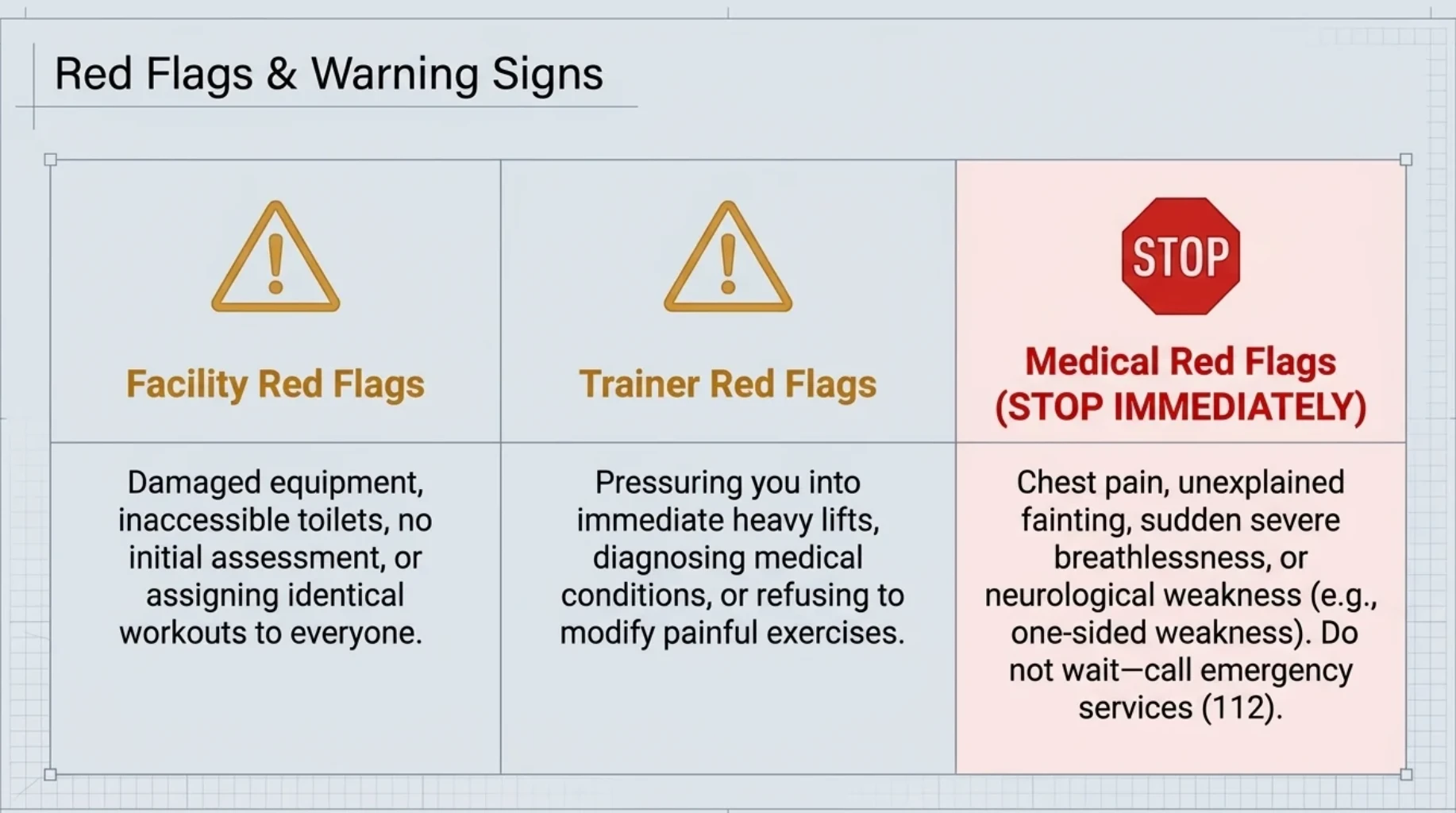
Chest discomfort, fainting, unexplained severe breathlessness, sudden neurological symptoms and marked dizziness may indicate a serious medical problem.
Exercise should be stopped immediately, and urgent medical assessment should be arranged when indicated.
Trainers should never encourage someone to continue exercising through potentially serious symptoms.
Medical warning: Chest pain, collapse, sudden weakness affecting one side of the body, severe unexplained breathlessness or loss of consciousness requires immediate attention. Activate emergency medical services rather than waiting for symptoms to resolve during a gym session.
7. Can the Facility Accommodate Diabetes, Hypertension and Other Chronic Conditions?
Many adults over 60 live with one or more chronic medical conditions.
Diabetes, hypertension, cardiovascular disease, osteoarthritis and other conditions may influence exercise selection, intensity or monitoring requirements.
However, having a chronic condition does not automatically mean that gym exercise is unsafe.
Appropriately selected physical activity is an important component of managing many chronic diseases.
The key is to recognise individual precautions without creating unnecessary restrictions.
Exercise Safety for Older Adults With Type 2 Diabetes
Regular aerobic and resistance exercise can improve insulin sensitivity, physical function and glycaemic management.
However, older adults with diabetes may have additional considerations related to medications, peripheral neuropathy, cardiovascular disease or other complications.
For patients taking insulin or sulfonylureas, exercise can increase the risk of hypoglycaemia.
These individuals may require personalised advice about glucose monitoring, carbohydrate availability and medication-related precautions.
Trainers should recognise possible symptoms of hypoglycaemia, such as sweating, shakiness, confusion or unusual weakness.
However, they should not independently adjust prescription medication doses.
What About Diabetic Peripheral Neuropathy?
Peripheral neuropathy may reduce sensation in the feet and affect balance.
Some patients may require suitable footwear, regular foot inspection and modifications to exercise selection.
People with active foot ulcers or significant foot complications require individualised medical advice.
Exercise should not be prescribed using a single universal rule for all patients with neuropathy.
Exercise Safety for Older Adults With Hypertension
Regular physical activity can help improve blood pressure management and cardiovascular health.
Both aerobic and appropriately prescribed resistance training may be beneficial.
However, patients with severely uncontrolled blood pressure or concerning symptoms should receive medical assessment before strenuous exercise.
Trainers should encourage appropriate breathing during resistance exercise and avoid unnecessary prolonged breath-holding, particularly during heavy lifting.
Should Blood Pressure Be Checked Before Every Workout?
Not necessarily.
Routine blood pressure checks before every exercise session are not required for all older adults.
Monitoring may be appropriate for selected individuals depending on their medical condition, treatment status and clinical recommendations.
Exercise facilities should not substitute arbitrary blood pressure rules for individual medical guidance.
Exercise After a Heart Attack or Cardiac Procedure
People recovering from a heart attack, cardiac surgery or certain cardiovascular events may benefit from structured cardiac rehabilitation.
Cardiac rehabilitation provides medically supervised assessment, exercise training and risk-factor management when indicated.
A conventional fitness centre should not automatically be considered equivalent to a cardiac rehabilitation programme.
Transitioning to independent gym exercise should follow appropriate clinical recommendations.
Exercise for Older Adults With Thyroid Disorders
Many people with appropriately treated thyroid disorders can participate in regular exercise.
However, uncontrolled hyperthyroidism, significant symptoms or associated cardiovascular problems may require medical assessment before intense activity.
Exercise programmes should be based on actual fitness and health status rather than assuming that all thyroid conditions require special workouts.
What About Multiple Medical Conditions?
Some older adults have several conditions simultaneously, such as diabetes, hypertension and osteoarthritis.
In such situations, exercise recommendations may require balancing different needs.
A suitable trainer should understand professional limitations and coordinate with the treating healthcare team when necessary.
Clinical perspective: Chronic medical conditions often increase the importance of regular physical activity. The goal is to adapt exercise appropriately, recognise relevant precautions and avoid unnecessary inactivity.

Exercise Precautions for Common Conditions After 60
| Condition | Potential Exercise Benefits | Important Precautions |
|---|---|---|
| Type 2 diabetes | Improved insulin sensitivity, fitness and physical function | Hypoglycaemia risk with certain medications; assess complications |
| Hypertension | Improved blood pressure management and cardiovascular fitness | Assess severely uncontrolled blood pressure or concerning symptoms |
| Osteoarthritis | Improved strength, mobility and functional ability | Modify exercises according to symptoms and joint function |
| Osteoporosis | Support for strength, balance and functional capacity | Consider fracture risk and movement modifications |
| Coronary artery disease | Potential cardiovascular and functional benefits | Follow clinical guidance; rehabilitation may be indicated |
| Peripheral neuropathy | Improved fitness and selected functional outcomes | Foot care, balance and appropriate footwear |
| Chronic kidney disease | Improved physical function and exercise capacity | Individualise according to disease severity and clinical status |
| Thyroid disorders | General fitness and muscle-strengthening benefits | Consider symptoms and adequacy of medical treatment |
8. Does the Facility Understand Osteoporosis, Arthritis and Joint Limitations?
Musculoskeletal conditions become more common with advancing age.
Osteoarthritis, osteoporosis, previous fractures and chronic joint discomfort may influence exercise preferences and functional ability.
However, these conditions do not necessarily require complete avoidance of physical activity.
Appropriate exercise can help improve strength, mobility and confidence.
Can People With Osteoporosis Perform Strength Training?
Many people with osteoporosis can benefit from appropriately selected resistance training.
Strengthening exercises may improve muscle function, while suitable balance training can help address fall risk.
However, exercise selection should consider fracture history, bone health and individual risk.
People with vertebral fractures or high fracture risk may need particular care with loaded spinal flexion, twisting and other movements that place substantial stress on the spine.
A qualified physiotherapist or other appropriately trained clinician may be needed to develop suitable modifications.
Are Forward Bending Exercises Always Dangerous in Osteoporosis?
No single movement rule applies to every individual.
However, people with osteoporosis and elevated vertebral fracture risk may need to avoid repeated or heavily loaded spinal flexion and certain twisting activities.
Exercise decisions should reflect individual fracture risk, movement control and clinical assessment.
Can People With Knee Osteoarthritis Use Gym Equipment?
Yes, many can.
Appropriately selected strengthening and aerobic exercise are commonly recommended components of osteoarthritis management.
Some individuals may benefit from stationary cycling, resistance exercises or other activities adapted to symptoms.
Exercise intensity and range of motion may need adjustment.
Should All Knee Pain Be Avoided During Exercise?
Not necessarily.
Mild, tolerable discomfort during rehabilitation exercises does not always indicate harm.
However, severe pain, marked swelling, instability or persistent worsening symptoms should prompt reassessment.
Trainers should not encourage members to push through significant or unexplained pain.
What About Previous Joint Replacement Surgery?
Many people can return to structured physical activity following hip or knee replacement.
However, the timing and type of exercise depend on surgical recovery, rehabilitation progress and individual recommendations.
Members should follow guidance from their treating surgeon or rehabilitation team when relevant.
When Is Physiotherapy More Appropriate Than Gym Training?
Physiotherapy assessment may be particularly useful for people with recent fractures, substantial balance impairment, persistent functional limitations or complex musculoskeletal problems.
A fitness centre may later support ongoing conditioning once an appropriate rehabilitation plan has been established.
9. Does the Centre Offer a Balanced Exercise Programme After 60?
A good senior exercise programme should not focus exclusively on walking or light stretching.
Older adults can benefit from several complementary forms of physical activity.
These commonly include aerobic exercise, resistance training, balance activities and functional movement practice.
The appropriate combination depends on individual abilities and health goals.
Aerobic Exercise for Cardiovascular Fitness
Aerobic activities such as walking, cycling and swimming can improve cardiovascular fitness and support metabolic health.
Exercise intensity should reflect the person’s starting capacity.
For many older adults, moderate-intensity activity is an appropriate long-term goal.
However, some people may need to begin with shorter sessions or lighter workloads.
Resistance Training for Muscle Strength
Age-related muscle loss and reduced strength can affect everyday activities such as climbing stairs, carrying groceries and standing from a chair.
Resistance training can help maintain or improve muscle strength and physical function.
Exercises may use machines, free weights, resistance bands or body weight.
The training load should be sufficiently challenging to produce adaptation while remaining appropriate for the individual’s ability and recovery.
Balance Training for Functional Stability
Balance exercises are especially relevant for older adults with impaired balance or increased fall risk.
These activities should progress according to the person’s capacity and be performed with appropriate support when needed.
Functional Training for Everyday Activities
Functional exercises focus on movements used in daily life.
Examples may include standing from a chair, stepping onto a low platform, carrying appropriate loads and practising controlled changes of direction.
These activities can help improve the ability to perform everyday tasks.
Does Flexibility Training Matter?
Flexibility and mobility exercises may help maintain useful joint movement and support comfortable participation in other activities.
However, stretching alone does not replace strength, aerobic or balance training.
How Much Exercise Is Recommended After 60?
World Health Organization guidance recommends that adults, including older adults, aim for 150–300 minutes of moderate-intensity aerobic activity per week, or an equivalent amount of vigorous activity.
Muscle-strengthening activities involving major muscle groups are recommended on at least two days per week.
Older adults should also include multicomponent physical activity emphasising functional balance and strength on three or more days per week as part of their weekly activity, particularly to support functional capacity and prevent falls.
These are long-term population-level recommendations, not mandatory starting workloads.
Previously inactive older adults can begin with smaller amounts and increase gradually according to tolerance.
What Should a Balanced Senior Exercise Programme Include?
| Exercise Component | Examples | Primary Purpose |
|---|---|---|
| Aerobic activity | Walking, cycling, suitable low-impact activities | Cardiovascular and metabolic fitness |
| Resistance training | Machines, dumbbells, resistance bands | Muscle strength and functional capacity |
| Balance training | Supported standing, stepping and weight shifting | Balance and fall-risk reduction |
| Functional training | Sit-to-stand, step-ups and carrying tasks | Everyday movement ability |
| Mobility exercises | Controlled joint movements and suitable stretches | Movement comfort and flexibility |
| Recovery | Appropriate rest and workload adjustment | Adaptation and exercise tolerance |
10. Is Exercise Supervision Appropriate for Older Adults?
Supervision can be particularly useful when an older adult is beginning resistance training, learning unfamiliar exercises or managing functional limitations.
However, not every older adult requires continuous one-to-one supervision.
The appropriate level of support depends on the person’s health status, confidence, exercise experience and programme complexity.
Should Every Senior Hire a Personal Trainer?
No.
Some older adults may benefit from an initial period of individual instruction before exercising independently.
Others may require ongoing supervision because of mobility limitations, complex health conditions or specific training needs.
The decision should be based on individual requirements rather than age alone.
Are Group Exercise Classes Safe After 60?
Group classes can provide social interaction, motivation and structured physical activity.
However, the instructor should be able to adapt exercises for participants with different abilities.
Class size, available space and the instructor’s ability to supervise participants should be considered.
What Is the Ideal Trainer-to-Member Ratio?
There is no single evidence-based ratio appropriate for every senior exercise class.
A group of independent, experienced participants may require different supervision from a class involving people with significant mobility or balance limitations.
The important question is whether the instructor can observe participants, provide corrections and respond to problems.
Should Trainers Monitor Exercise Intensity?
Yes, when appropriate.
Exercise intensity may be assessed using perceived exertion, the ability to speak during aerobic activity and other suitable measures.
Heart-rate monitoring can be useful in selected situations, but medications such as beta-blockers may affect heart-rate responses.
Therefore, fixed heart-rate targets are not suitable for every older adult.
Should Older Adults Exercise Until Exhaustion?
No.
Exhaustion is not necessary for obtaining meaningful exercise benefits.
Training should provide an appropriate stimulus while allowing adequate recovery.
Persistent fatigue, unusual weakness or prolonged functional deterioration may indicate that the programme requires reassessment.
Can Exercise Be Progressively Challenging After 60?
Yes.
Older adults can improve strength and fitness through progressive training.
The goal is not to keep every exercise extremely easy indefinitely.
Instead, resistance, duration or complexity should increase when the individual is ready, with appropriate attention to technique, symptoms and recovery.
Clinical takeaway: Appropriate supervision after 60 means providing enough support to make exercise safe and effective without unnecessarily limiting the person’s independence or physical potential.
Senior Fitness Centre Red Flags: Warning Signs to Watch For
Before purchasing a membership, older adults and their families should evaluate whether the facility follows appropriate safety practices.
Some warning signs may indicate that additional questions or a different facility are warranted.
| Warning Sign | Why It Matters |
|---|---|
| No assessment of mobility or relevant health concerns | May lead to unsuitable starting exercises |
| Damaged or poorly maintained equipment | May increase injury risk |
| No clear emergency response procedure | May delay appropriate assistance |
| Unsupervised challenging balance exercises | May increase fall risk in vulnerable participants |
| Pressure to lift heavy weights immediately | May result in inappropriate exercise progression |
| Advice to ignore chest pain or severe dizziness | May delay urgent medical care |
| Trainers diagnosing medical conditions | Exceeds ordinary fitness training scope |
| Inaccessible toilets or unsafe walking surfaces | May create avoidable mobility hazards |
| No exercise modifications for different abilities | May reduce suitability and safety |
| Promises to reverse every age-related condition | May indicate exaggerated or unsupported claims |
How to Choose a Senior Fitness Centre: A Practical Step-by-Step Guide
Choosing between different senior fitness centres can be challenging, particularly when facilities advertise similar equipment, personal training services and senior citizen packages.
However, the best facility is not necessarily the largest, most expensive or most technologically advanced.
For older adults, practical accessibility, qualified supervision, suitable equipment and a supportive environment may be more important than luxury interiors.
A structured evaluation can help older adults and their families make an informed decision before purchasing a membership.
Step 1: Identify Your Main Exercise Goals
Before visiting a fitness centre, consider what you want to achieve.
Some older adults want to improve walking endurance, while others are concerned about declining muscle strength, balance or difficulty performing everyday activities.
People with diabetes or hypertension may also wish to improve their cardiometabolic health through regular physical activity.
Your goals will help determine which facilities and exercise programmes are suitable.
Step 2: Consider Your Current Physical Ability
Age alone does not determine fitness.
A physically active 70-year-old may have substantially different exercise requirements from a sedentary 60-year-old with significant mobility limitations.
Consider your usual activity level, previous exercise experience, balance, mobility and any symptoms that may affect participation.
If you have concerning symptoms or unstable medical conditions, obtain appropriate medical assessment before beginning strenuous exercise.
Step 3: Visit the Facility During Your Preferred Exercise Time
A fitness centre may appear spacious and comfortable during a quiet afternoon but become crowded during peak hours.
Visit at the time you are most likely to exercise.
Observe whether equipment is accessible, trainers are available and members can move around safely.
Step 4: Speak With the Trainer Who Will Actually Supervise You
Do not evaluate the facility solely through its sales representative.
Ask to meet the trainer or instructor responsible for your programme.
Discuss their qualifications, experience with older adults, approach to exercise progression and ability to modify activities.
Step 5: Inspect Equipment and Accessibility
Check whether resistance machines are adjustable, exercise areas are uncluttered and walking surfaces are stable.
Inspect the entrance, stairs, lifts, toilets and changing rooms according to your mobility needs.
Step 6: Ask About Emergency Preparedness
Find out whether staff have current CPR training, whether an automated external defibrillator is available and how medical emergencies are managed.
The facility should have a clear procedure for contacting emergency services.
Step 7: Request a Supervised Trial Session
A trial session can help you evaluate the trainer’s communication, exercise selection and attention to safety.
It can also reveal whether the environment feels comfortable and supportive.
Step 8: Review Membership Terms Before Paying
Understand the membership duration, trainer charges, cancellation conditions, renewal fees and any additional costs.
Consider beginning with a shorter membership if you are uncertain whether the facility suits your needs.
Senior Fitness Centre Safety Checklist Before Joining
The following checklist can be used during a facility visit.
| Safety Feature | What to Check | Your Assessment |
|---|---|---|
| Initial assessment | Relevant health, mobility and exercise history reviewed | Yes / No |
| Trainer qualifications | Relevant training and experience with older adults | Yes / No |
| Exercise modifications | Suitable alternatives for different abilities | Yes / No |
| Equipment condition | Well-maintained, adjustable and appropriate | Yes / No |
| Accessibility | Safe entrance, pathways, stairs or lifts | Yes / No |
| Fall prevention | Balance training and appropriate support | Yes / No |
| Emergency preparedness | Clear emergency plan and trained personnel | Yes / No |
| CPR and AED | Trained staff and accessible equipment where available | Yes / No |
| Supervision | Appropriate attention during exercise | Yes / No |
| Programme progression | Gradual, individualised workload adjustments | Yes / No |
| Medical awareness | Recognition of symptoms requiring referral | Yes / No |
| Membership transparency | Clear charges and written conditions | Yes / No |
This checklist is a practical decision aid rather than a validated safety score. A facility should not be considered safe simply because it satisfies a particular number of items.
Some features, such as an appropriate emergency response plan and safe equipment, deserve particular attention.
Should You Take a Trial Session Before Joining a Senior Fitness Centre?
A supervised trial session can provide useful information about the facility’s approach to older adults.
However, the purpose of the trial should be to evaluate suitability rather than test your maximum physical capacity.
What Should Happen During a Trial Session?
The trainer should discuss your current activity level, relevant limitations and exercise goals.
They may demonstrate a few suitable exercises and assess how comfortably you perform them.
The session should allow time for questions and adjustments.
Should You Be Asked to Lift Heavy Weights Immediately?
Not simply to prove your strength.
Resistance training can be beneficial after 60, including with progressively challenging loads.
However, the initial workload should be selected according to your ability, exercise experience and clinical circumstances.
What Should You Observe About the Trainer?
Notice whether the trainer explains movements clearly, observes technique and responds appropriately to discomfort.
A good instructor should encourage confidence without pressuring members to perform unsuitable activities.
Should You Feel Exhausted After the First Session?
No.
Feeling completely exhausted is not a requirement for an effective workout.
Beginners may experience some temporary muscle soreness after unfamiliar activities, but severe pain, marked weakness or concerning symptoms require reassessment.
Can You Ask for Exercise Modifications?
Yes.
Older adults should feel comfortable asking for alternatives when an exercise is painful, difficult or unsuitable.
A trainer who refuses reasonable modifications may not be providing appropriate individualised supervision.
Practical advice: A useful trial session should leave you understanding what exercises you will perform, why they were selected and how the programme will progress. It should not be designed primarily to impress you with exercise intensity.
How Much Does a Senior Fitness Centre Cost in India?
The cost of joining a fitness centre varies according to location, facilities, membership duration, trainer availability and the level of individual supervision.
Some conventional gyms offer discounted memberships for senior citizens, while specialised facilities may charge separately for supervised exercise programmes.
There is no single standard fee for senior fitness centres across India.
Is an Expensive Fitness Centre Always Safer?
No.
Higher membership fees may reflect premium interiors, additional amenities or a convenient location.
However, these features do not automatically establish trainer competence, emergency preparedness or appropriate exercise programming.
Are Personal Training Charges Worth Paying?
Individual supervision may be useful for older adults who are unfamiliar with exercise equipment, have mobility limitations or require substantial programme modification.
However, continuous personal training is not necessary for every older adult.
Some individuals may benefit from a limited period of instruction before exercising more independently.
Should You Choose an Annual Membership?
An annual membership may reduce the average monthly fee, but it also creates a longer financial commitment.
If you have not previously used the facility, a shorter membership or trial period may help you assess suitability.
What Additional Charges Should You Ask About?
Possible additional costs include personal training, specialised classes, registration charges, assessment fees, locker facilities and membership renewal.
Ask for written details before making payment.
Senior Fitness Centre Membership: What Are You Paying For?
| Service | Questions to Ask |
|---|---|
| Basic membership | Which exercise areas and equipment are included? |
| Initial assessment | Is it included or charged separately? |
| Trainer supervision | Is general supervision available during all operating hours? |
| Personal training | What are the additional charges and session duration? |
| Senior group classes | Are classes included in the membership? |
| Trial session | Is a supervised trial available? |
| Membership duration | Are monthly or quarterly options available? |
| Cancellation | What are the written cancellation and refund terms? |
| Medical interruption | Can membership be paused during illness or recovery? |
| Renewal | Are there automatic renewals or additional charges? |
Common Mistakes Older Adults Make When Joining a Gym
Even a well-equipped fitness centre may not provide the expected benefits if exercise is poorly selected or performed inconsistently.
Recognising common mistakes can help older adults develop a safer and more sustainable routine.
Starting With Too Much Exercise
Some people attempt to compensate for years of inactivity by beginning with long or intense workouts.
However, previously inactive adults may need to start with shorter sessions and progress gradually.
Sudden large increases in exercise workload can increase discomfort and make regular participation more difficult.
Doing Only Treadmill Walking
Walking provides important health benefits, but it does not fully replace muscle-strengthening and balance exercises.
A more balanced programme can support several components of physical fitness.
Avoiding Strength Training Because of Age
Resistance training can improve muscle strength and functional capacity in older adults.
Age alone should not be considered a reason to avoid appropriate resistance exercise.
Copying Younger Members’ Workouts
Exercise programmes should reflect individual goals, abilities and experience.
A workout designed for a competitive athlete may not be appropriate for a beginner, regardless of age.
Ignoring Balance Training
Balance and functional exercises are particularly important for older adults with increased fall risk.
These activities should be incorporated according to individual needs.
Continuing Exercise Despite Concerning Symptoms
Chest discomfort, fainting, severe breathlessness and sudden neurological symptoms should never be dismissed as normal exercise fatigue.
Exercise should stop, and urgent medical assessment should be arranged when indicated.
Relying Only on Supplements
Protein supplements, vitamins and other products are sometimes marketed as essential for maintaining fitness after 60.
However, supplements do not replace an appropriate exercise programme or nutritionally adequate diet.
Supplement use should be based on individual needs and relevant medical considerations.
Expecting Immediate Results
Improvements in strength, endurance and functional ability generally develop over time.
Progress varies according to starting fitness, training consistency, health status and other factors.
Regular participation is more important than expecting dramatic results after a few sessions.
Can Older Adults Exercise at Home Instead of Joining a Fitness Centre?
Yes.
A gym membership is not essential for every older adult.
Many forms of aerobic activity, resistance training and balance exercise can be performed at home when the environment and programme are suitable.
However, some people may benefit from professional instruction, access to equipment or the social environment of a fitness centre.
Who May Benefit From Home Exercise?
Home exercise may be practical for people who have difficulty travelling, prefer a familiar environment or already know how to perform suitable exercises.
However, individuals with substantial balance impairment or complex rehabilitation needs may require professional assessment and supervision.
Is Gym Equipment Necessary for Strength Training?
No.
Body-weight exercises, resistance bands and simple free weights can provide useful strengthening options.
The important factors are appropriate exercise selection, technique and progressive challenge.
Does Group Exercise Offer Additional Benefits?
Group exercise may provide social interaction, motivation and opportunities for regular participation.
These benefits may be particularly valuable for older adults who enjoy structured activities with others.
Which Option Is Better?
The most suitable option depends on personal preferences, health status, access, affordability and the ability to exercise consistently.
Some people may benefit from combining supervised gym sessions with home-based physical activity.
Home Exercise vs Senior Fitness Centre: Comparison
| Factor | Home Exercise | Senior Fitness Centre |
|---|---|---|
| Travel | Usually unnecessary | Requires visiting the facility |
| Equipment | May be limited | Usually offers more options |
| Supervision | Depends on arrangements | May provide professional instruction |
| Cost | Can be relatively inexpensive | Membership and possible trainer fees |
| Social interaction | May be limited | Opportunities for group participation |
| Exercise progression | Possible with suitable planning | May be easier with available equipment and guidance |
| Convenience | Often highly convenient | Depends on location and schedule |
| Suitability | Depends on safety and individual ability | Depends on facility quality and individual needs |
Frequently Asked Questions About Senior Fitness Centres
1. Is It Safe to Join a Gym After 60?
For many older adults, appropriately selected gym exercise is safe and beneficial. Safety depends on health status, exercise selection, supervision and the facility’s environment.
2. Can Someone Start Gym Exercise at 70?
Yes. Older adults can begin exercise later in life. Previously inactive individuals should generally start with manageable workloads and progress according to their abilities.
3. What Is the Best Exercise for People Over 60?
There is no single best exercise for everyone. A balanced programme may include aerobic activity, resistance training, balance exercises and functional movements.
4. Should Senior Citizens Lift Weights?
Many older adults benefit from resistance training. The appropriate weight and exercise technique depend on individual strength, experience and medical circumstances.
5. Is Treadmill Walking Safe After 60?
Treadmills can be suitable for some older adults. People with significant balance or gait difficulties may require alternative activities or additional supervision.
6. Is Cycling Better Than Walking for Older Adults?
Both can provide aerobic benefits. The better choice depends on mobility, balance, joint comfort, personal preference and exercise goals.
7. How Many Days a Week Should Seniors Exercise?
Exercise frequency should be individualised. WHO recommends regular aerobic activity, muscle-strengthening activities on at least two days weekly and multicomponent balance and strength activities on three or more days weekly for older adults.
8. Is Strength Training Safe for People With Osteoporosis?
Appropriately selected resistance training may be beneficial. People with high fracture risk or previous vertebral fractures may require specific exercise modifications and professional guidance.
9. Can People With Knee Arthritis Join a Gym?
Many can. Strengthening and aerobic exercise are important components of osteoarthritis management. Activities may need modification according to symptoms and function.
10. Can Older Adults With Diabetes Exercise Safely?
Yes, many can. People taking insulin or sulfonylureas may need additional precautions because exercise can increase hypoglycaemia risk.
11. Is Gym Exercise Safe With High Blood Pressure?
Regular exercise can benefit many people with hypertension. However, severely uncontrolled blood pressure or concerning symptoms may require medical assessment before strenuous activity.
12. Does Every Senior Need Medical Clearance Before Joining?
No. Medical clearance is not automatically required solely because someone is over 60. The need for evaluation depends on symptoms, medical conditions and intended exercise intensity.
13. Should Senior Fitness Centres Have an AED?
Access to an AED, trained staff and an organised emergency response plan are valuable safety features, particularly in facilities serving members with cardiovascular risk factors.
14. Is Personal Training Necessary After 60?
Not for everyone. Individual supervision may be particularly useful for beginners, people with mobility limitations or those requiring substantial exercise modifications.
15. Can Exercise Reduce the Risk of Falling?
Appropriately designed balance and functional exercise programmes can reduce fall risk in many older adults. However, falls have multiple causes, and some people require additional medical assessment.
16. Are Resistance Bands Safe for Seniors?
Resistance bands can be useful when selected and used appropriately. Bands should be checked for damage and used with suitable technique and secure attachment where necessary.
17. Is a Senior-Only Gym Better Than a Regular Gym?
Not necessarily. A conventional gym with qualified trainers, suitable equipment and appropriate safety practices may be suitable for older adults.
18. How Much Does a Senior Fitness Centre Cost in Delhi NCR?
Fees vary according to location, facilities, trainer supervision and membership duration. Compare total costs, included services and cancellation conditions rather than relying only on advertised discounts.
19. Can Older Adults Build Muscle After 60?
Yes. Many older adults can improve muscle strength and, in some circumstances, muscle mass through appropriately programmed resistance training and adequate nutrition.
20. What Is the Most Important Feature of a Safe Senior Fitness Centre?
No single feature guarantees safety. Qualified supervision, appropriate exercise selection, accessible facilities, well-maintained equipment and emergency preparedness should all be considered.
Evidence-Based References and Further Reading
The following guidelines and authoritative resources support the article’s discussion of physical activity, exercise safety, falls, osteoporosis and chronic disease management. The 2020 WHO guideline remains an important foundational recommendation and is included alongside more recent publications.
- World Health Organization. WHO Guidelines on Physical Activity and Sedentary Behaviour. 2020. WHO Physical Activity Guidelines.
- World Health Organization. Physical Activity Fact Sheet. Updated 2024. WHO Physical Activity.
- Montero-Odasso M, et al. World Guidelines for Falls Prevention and Management for Older Adults: A Global Initiative. Age and Ageing. 2022;51(9):afac205. World Falls Prevention Guidelines.
- Sherrington C, et al. Exercise for Preventing Falls in Older People Living in the Community. Cochrane Database of Systematic Reviews. 2019;1:CD012424. Cochrane Review.
- Gregson CL, et al. UK Clinical Guideline for the Prevention and Treatment of Osteoporosis. Archives of Osteoporosis. 2022;17:58. Osteoporosis Clinical Guideline.
- American Diabetes Association. Standards of Care in Diabetes — 2026. ADA Standards of Care.
- National Institute for Health and Care Excellence. Falls: Assessment and Prevention in Older People and in People 50 and Over at Higher Risk (NG249). 2025. NICE Falls Guideline.
- American College of Sports Medicine. Exercise Is Medicine: Clinical Resources and Physical Activity Guidance. Exercise Is Medicine.
- Centers for Disease Control and Prevention. Older Adult Fall Prevention — STEADI Initiative. CDC STEADI Resources.
- National Institute on Aging. Exercise and Physical Activity Resources for Older Adults. NIA Exercise Resources.
Medical and Lifestyle Consultation in Dwarka, New Delhi
Regular physical activity is an important part of maintaining health and independence as people age.
However, older adults may have medical conditions, symptoms or functional limitations that influence the type and intensity of exercise that is appropriate.
Dr. Pankaj Kumar, General & Lifestyle Physician in Dwarka, New Delhi, provides medical consultations for general health concerns and lifestyle-related conditions.
His clinical interests include diabetes, hypertension, obesity, thyroid disorders, fatty liver disease and preventive healthcare.
Medical assessment may help identify relevant health concerns, evaluate symptoms and determine whether additional investigations, treatment or specialist rehabilitation are necessary before beginning strenuous physical activity.
Clinic Information
Dr. Pankaj Kumar Medical & Lifestyle Clinic
Doctor: Dr. Pankaj Kumar
Designation: General & Lifestyle Physician
Qualifications: MBBS, DNB (Family Medicine)
Location: Sector 6, Dwarka, New Delhi – 110075
Consultation: In-person and online appointments
About the Author
Dr. Pankaj Kumar
MBBS, DNB (Family Medicine)
General & Lifestyle Physician
Founder, Diet Plus Minus
Dwarka, New Delhi
Dr. Pankaj Kumar is a General & Lifestyle Physician with a clinical interest in diabetes, obesity, metabolic health, hypertension, thyroid disorders, fatty liver disease and preventive medicine. His approach emphasises evidence-based medical care, practical nutrition education and sustainable lifestyle modification.
Medical Disclaimer: This article is intended for general health education and does not replace individual medical advice, exercise assessment or physiotherapy evaluation. Exercise suitability depends on medical conditions, symptoms, medications, physical capacity and individual circumstances. Older adults with concerning symptoms, unstable medical conditions or significant functional limitations should seek appropriate professional assessment. Stop exercising and seek urgent medical assistance for chest pain, collapse, severe unexplained breathlessness or sudden neurological symptoms.
If you want a personalized metabolic assessment and lifestyle strategy, you can book a consultation here:
Book an Appointment