


Online Pharmacy vs Local Pharmacy: Which Is Safer for Buying Medicines?
Imagine that you have been prescribed medicines for diabetes, hypertension or a thyroid disorder. You can purchase them from the medical store near your home, or you can order them through an online pharmacy that offers home delivery and an attractive discount.
Which option should you choose?
For many patients, the decision comes down to convenience, price and availability. However, medicines are not ordinary consumer products. Their quality, strength, storage conditions and correct use can directly influence treatment outcomes.
In India, the availability of online medicine-ordering platforms has changed how people purchase prescription medicines. Patients can compare prices, upload prescriptions and arrange deliveries without visiting a physical store.
At the same time, local pharmacies continue to provide important services, including immediate medicine availability, face-to-face interaction with pharmacists and assistance with prescriptions.
Neither model is automatically safer simply because it operates online or through a physical shop.
The important question is whether the pharmacy follows appropriate dispensing practices and whether the medicine supplied matches the prescription.
This guide to online pharmacy vs local pharmacy explains seven important factors that patients should check before purchasing medicines in India.

Why Does the Choice of Pharmacy Matter?
When patients compare pharmacies, they often focus on the amount of money they can save.
For someone taking several medicines every day, discounts can make a meaningful difference to monthly healthcare expenses.
However, the lowest price does not necessarily represent the best purchase.
A medicine may be unsuitable if it has been stored incorrectly, supplied in the wrong strength, substituted without appropriate verification or delivered too late for the patient’s treatment schedule.
For example, a person taking levothyroxine for hypothyroidism may require a particular tablet strength. Receiving a different strength can create confusion and potentially affect thyroid control.
Similarly, a patient using insulin may need assurance that the product was transported and stored under conditions consistent with the manufacturer’s instructions.
These concerns apply to both online and local pharmacies.
Are Online Pharmacies Always Less Reliable?
No.
An online ordering service may be connected to an appropriately licensed pharmacy with qualified personnel, suitable storage arrangements and established dispensing procedures.
However, patients should not assume that a professional-looking website or popular mobile application automatically establishes regulatory compliance.
Are Local Medical Stores Always Safer?
Not necessarily.
A physical pharmacy may offer immediate access and personal interaction, but it must still comply with applicable licensing, dispensing and storage requirements.
Unsafe practices can occur in either model.
What Should Patients Prioritise?
Patients should prioritise the legitimacy of the seller, correct prescription handling, medicine quality, storage requirements and access to professional advice.
Price and convenience should be considered after these basic safeguards.
Clinical takeaway: The safest pharmacy is not necessarily the one offering the largest discount or the fastest delivery. It is one that supplies the correct medicine through appropriate, accountable dispensing procedures.
Online Pharmacy vs Local Pharmacy: Quick Comparison
| Factor | Online Pharmacy | Local Pharmacy |
|---|---|---|
| Convenience | Ordering from home may be easier | Requires a visit unless home delivery is offered |
| Medicine availability | May provide access to a wider distribution network | Depends on local stock and ordering arrangements |
| Delivery time | Depends on stock, location and delivery service | Often immediate when the medicine is in stock |
| Prescription verification | Should be performed through an appropriate dispensing process | Can be performed directly by the pharmacist |
| Pharmacist interaction | May be available remotely | Often available face-to-face |
| Pricing | May offer promotional discounts | May offer discounts or competitive prices |
| Cold-chain medicines | Requires suitable storage and transport arrangements | Requires suitable storage; transport home also matters |
| Returns and complaints | Depends on provider policies and applicable requirements | May be easier to discuss directly |
| Emergency purchases | Delivery delays may be a limitation | Often more practical for immediately available medicines |

1. Check Whether the Pharmacy Is Properly Licensed and Accountable
The first consideration when comparing online pharmacy vs local pharmacy is whether medicines are being supplied through a legitimate and appropriately licensed pharmacy.
In India, the sale and distribution of medicines are regulated under the Drugs and Cosmetics Act, 1940, and the Drugs and Cosmetics Rules, 1945, as amended.
Retail drug licences are generally granted and regulated by the relevant State Licensing Authority.
These requirements matter because medicine sellers are responsible for complying with applicable conditions relating to dispensing, storage and recordkeeping.
How Can You Check a Local Pharmacy?
A local pharmacy should be able to provide relevant business and drug licence information.
Patients may ask for the name of the licensed pharmacy and details of the licence under which medicines are sold.
If there is doubt about the authenticity of a licence, verification may be sought through the relevant State Drug Control Department.
A clean shop, attractive shelves or a familiar business name does not by itself establish licensing compliance.
How Can You Check an Online Pharmacy?
Online medicine-ordering platforms may operate through different commercial and fulfilment arrangements.
Patients should identify the actual pharmacy or licensed seller responsible for dispensing the medicines, rather than relying solely on the name of the application.
Useful information includes the seller’s name, address, relevant licence details, contact information and a clear process for complaints.
Where information is unavailable or difficult to verify, patients should exercise caution.
Is Every Medicine-Ordering App Automatically Licensed as an E-Pharmacy?
No.
India’s regulation of online medicine sales requires particular care in interpretation.
The Government published draft e-pharmacy rules in 2018 proposing a dedicated regulatory framework. Government statements in 2025 continued to refer to these as draft rules.
Therefore, patients should not assume that downloading an application means the platform has obtained a separate, nationally issued e-pharmacy registration under those draft provisions.
The relevant drug-sale licensing and dispensing requirements remain important.
What About Medicines Sold Through General E-Commerce Websites?
Patients should be especially cautious when medicines are advertised by unidentified sellers or through platforms that do not clearly establish who is legally responsible for dispensing them.
A marketplace listing, discount advertisement or seller rating is not a substitute for appropriate pharmacy licensing and prescription verification.
Should You Always Ask for a Bill?
Yes.
Obtain a proper invoice or cash memo containing the relevant transaction details.
A bill provides a record of the purchase and may help if there is a dispensing error, product complaint or recall.
Keep the invoice and original medicine packaging until the treatment course is completed or for as long as reasonably needed.
Warning sign: Avoid purchasing prescription medicines from anonymous social-media sellers, unverified messaging accounts or websites that conceal the identity of the dispensing pharmacy and cannot provide appropriate documentation.
2. Check Whether Prescription Medicines Are Properly Verified
The second important consideration is how the pharmacy handles prescription medicines.
Some medicines can be purchased without an individual prescription, while others are subject to specific legal requirements.
In India, medicines classified under Schedule H, Schedule H1 and Schedule X are subject to prescription-related restrictions under the applicable Drugs and Cosmetics Rules.
The relevant requirements apply regardless of whether the patient initiates the purchase through an app or visits a physical pharmacy.
Why Is Prescription Verification Important?
A prescription communicates important information about the intended medicine, strength, dosage form, route and treatment instructions.
Proper verification helps reduce the risk of dispensing the wrong product or an inappropriate quantity.
It may also help identify unclear prescriptions, duplicate medicines and potentially important medication-related concerns.
Should an Online Pharmacy Ask for a Prescription?
When a medicine legally requires a prescription, the dispensing process must comply with the applicable prescription requirements.
A platform offering prescription-only medicines without appropriate verification should be treated as a warning sign.
Uploading a prescription image does not, by itself, establish that all legal and professional requirements have been met.
Patients should look for evidence of a responsible pharmacy and an appropriate pharmacist-supervised dispensing process.
Should a Local Pharmacy Dispense Antibiotics Without a Prescription?
Prescription-only antibiotics should not be supplied without complying with the applicable prescription requirements.
Unnecessary antibiotic use can contribute to adverse effects and antimicrobial resistance.
Patients should not purchase antibiotics simply because they were effective during a previous illness.
Can the Pharmacist Change the Prescribed Medicine?
Pharmacists may identify potential problems and clarify prescriptions, but a clinically significant change in the prescribed medicine should not be made casually.
Where clarification or prescriber authorisation is required, the pharmacist should follow the applicable professional and legal requirements.
Patients should be informed about any proposed substitution and should understand whether the active ingredient, strength, dosage form and release characteristics remain appropriate.
What Is the Role of a Registered Pharmacist?
A registered pharmacist contributes to safe dispensing by reviewing prescriptions, identifying relevant medicine-related concerns and providing appropriate instructions.
For example, a pharmacist may clarify whether a medicine should be swallowed whole, whether it has special storage requirements or whether there are important precautions to discuss.
Pharmacists should also recognise situations requiring referral to the prescribing clinician.
Can Patients Reuse an Old Prescription?
Patients should not assume that an old prescription remains appropriate indefinitely.
Whether a prescription can be used for a subsequent supply depends on the medicine, the prescription, applicable requirements and the patient’s treatment plan.
Chronic medicines may require periodic medical review, even when the patient feels well.
Why Is This Particularly Important for Chronic Diseases?
Patients with diabetes, hypertension, thyroid disorders and cardiovascular disease may take several medicines simultaneously.
Changes in kidney function, medical conditions, other medicines or treatment goals can influence whether a previously prescribed regimen remains suitable.
Automatic refills and convenient delivery should support continuity of care rather than replace periodic clinical review.
Clinical takeaway: A pharmacy that checks prescriptions and provides access to a qualified pharmacist is offering an important safety service. A seller that bypasses prescription requirements is not necessarily providing better convenience—it may be removing a safeguard.

What Should Patients Check Before Handing Over a Prescription?
| Question | Why It Matters |
|---|---|
| Is the pharmacy appropriately licensed? | Helps establish accountability for medicine supply |
| Is the actual dispensing seller identifiable? | Important for verification and complaints |
| Is the prescription checked? | Helps reduce dispensing errors |
| Is a registered pharmacist involved? | Supports professional dispensing and counselling |
| Is the exact medicine and strength available? | Reduces inappropriate substitutions |
| Are unclear instructions clarified? | Helps avoid dosing errors |
| Will a proper invoice be provided? | Supports documentation and accountability |
| Can the patient contact the pharmacy after purchase? | Useful for resolving errors and medicine-related questions |
3. Check Medicine Authenticity, Storage Conditions and Expiry Dates
When comparing online pharmacy vs local pharmacy, medicine quality should be one of the most important considerations.
A medicine may have the correct name and strength printed on its packaging, but patients should also consider whether it comes from a legitimate supply chain, has been stored appropriately and remains within its expiry date.
These concerns apply equally to online medicine deliveries and medicines purchased from neighbourhood medical stores.
How Can You Check Whether a Medicine Is Genuine?
Counterfeit, falsified and substandard medical products are recognised public health concerns.
However, patients usually cannot establish medicine authenticity through visual inspection alone.
Checking the packaging can help identify obvious warning signs, but it cannot guarantee that the product is genuine or meets all quality standards.
Patients should purchase medicines from appropriately licensed and accountable sellers who obtain products through legitimate distribution channels.
When receiving a medicine, check whether the product name, manufacturer, strength, batch number and expiry date are clearly identifiable.
If the packaging appears altered, unusually damaged or inconsistent with previous supplies, contact the dispensing pharmacy before using the medicine.
What Packaging Details Should You Check?
Before accepting a medicine, compare the supplied product with the prescription and review the information printed on the pack.
Important details include the medicine name, strength, dosage form, batch number, expiry date and manufacturer.
Also check whether the packaging is intact and whether the medicine has been supplied in an appropriate container.
For medicines supplied as loose strips or partial packs, patients should still be able to identify the product and relevant batch and expiry information.
Can a Genuine Medicine Become Unsafe Because of Poor Storage?
Yes.
Medicines are manufactured and tested for stability under specified storage conditions.
Exposure to excessive heat, moisture, light or inappropriate temperatures may affect the stability of certain products.
The consequences depend on the medicine, formulation, duration of exposure and manufacturer’s specifications.
Not every brief temperature excursion automatically makes a medicine unusable, but suspected significant exposure should be assessed using product-specific information.
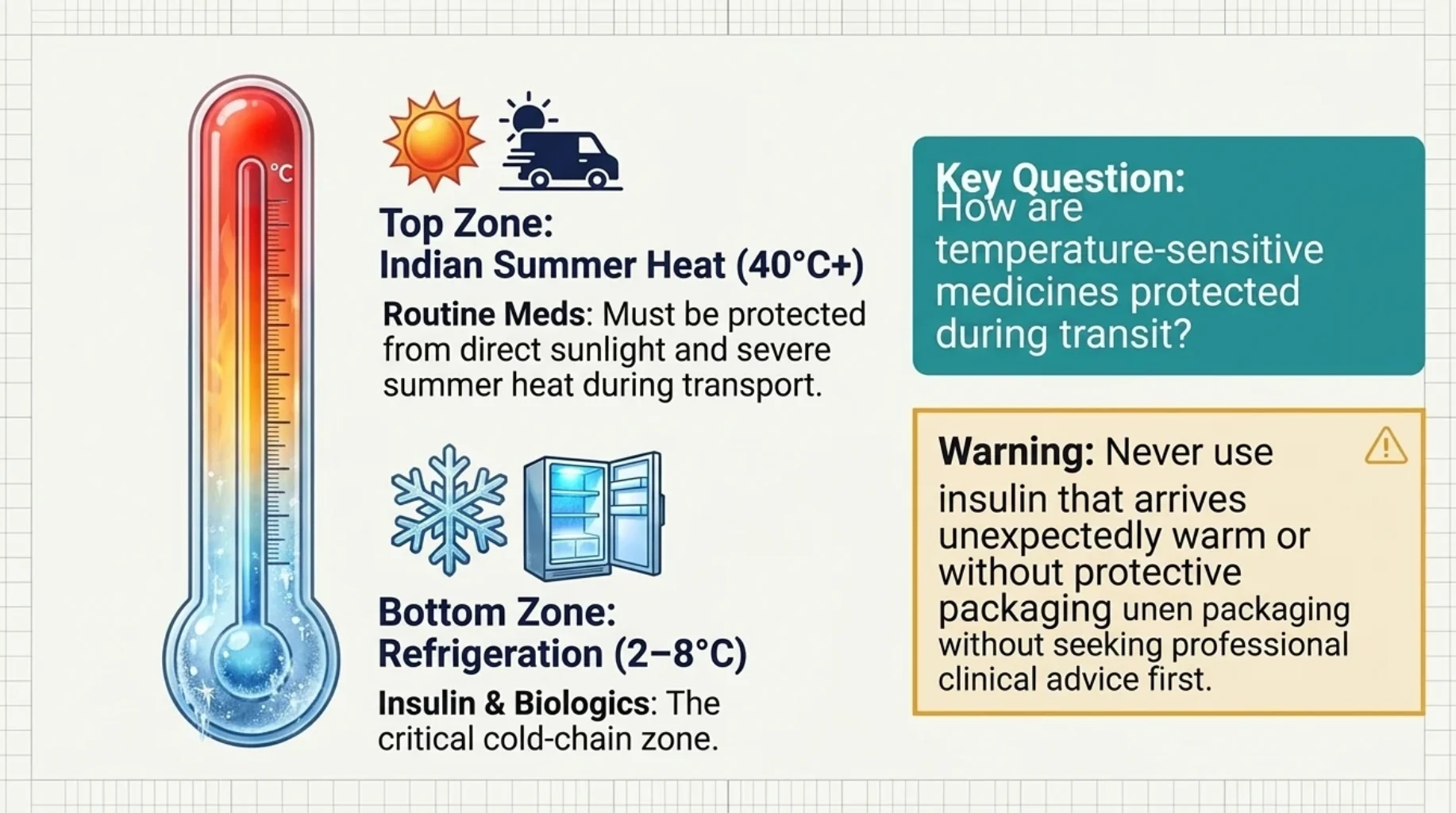
Does Indian Summer Heat Matter for Medicine Storage?
It can.
In Delhi NCR and many other parts of India, outdoor temperatures can become very high during summer.
Medicines stored in direct sunlight, parked vehicles or poorly ventilated areas may be exposed to conditions outside their recommended storage range.
However, patients should not assume that every medicine requires refrigeration.
The correct storage conditions are those specified for the particular product.
Are Online Pharmacy Deliveries Safe During Hot Weather?
Online delivery can be appropriate when the seller and delivery network follow suitable storage and transport procedures.
However, patients should ask how temperature-sensitive medicines are protected during transportation.
For ordinary medicines, packaging and transport requirements depend on the product’s labelled storage conditions.
For refrigerated medicines, suitable temperature-controlled arrangements may be essential.
What About Local Pharmacy Storage?
Local pharmacies also need appropriate storage facilities.
A medicine displayed on an open shelf is not necessarily unsafe, but the shop must maintain conditions suitable for the products being stocked.
For refrigerated medicines, patients may ask whether the pharmacy uses appropriate refrigeration and temperature monitoring.
A refrigerator alone does not establish that a medicine has been stored correctly.
Why Are Insulin and Other Temperature-Sensitive Medicines Different?
Insulin and some injectable medicines have specific storage requirements.
Many unopened insulin products require refrigeration, commonly within 2–8°C, although the exact instructions depend on the formulation and manufacturer.
In-use storage limits may differ between insulin products.
Patients should therefore follow the product-specific instructions rather than assuming that all insulin pens and vials have identical storage rules.
Some other medicines, including certain biological products and injectable therapies, may also require temperature-controlled storage.
Can You Use Insulin That Arrived Warm?
Do not automatically assume it is safe or unusable.
The answer depends on the product, the temperature reached and the duration of exposure.
If an insulin delivery arrives unexpectedly warm or without the expected protective packaging, contact the dispensing pharmacy or manufacturer for product-specific advice before use.
If the next insulin dose is due, arrange prompt clinical or pharmacy advice to avoid an unsafe interruption in treatment.
What Should You Do if a Medicine Has Expired?
Do not use expired medicines without appropriate professional advice.
Expiry dates indicate the period during which the manufacturer supports the product’s quality under specified storage conditions.
Patients should check expiry dates before purchase and again when medicines are delivered.
For long-term medicines, consider whether the remaining shelf life is sufficient for the quantity being purchased.
Medicine safety warning: Do not use medicines with suspected tampering, uncertain identity, significant unexplained storage exposure or compromised packaging until the concern has been resolved. For essential medicines, arrange a safe replacement promptly rather than stopping treatment without a plan.
Medicine Storage: What Patients Should Check
| Medicine Category | Important Consideration | What to Check Before Purchase |
|---|---|---|
| Routine tablets and capsules | Protection from inappropriate heat, moisture or light | Labelled storage instructions and packaging integrity |
| Insulin | Product-specific refrigerated and in-use storage requirements | Temperature-controlled supply where required |
| Other refrigerated injections | May require controlled temperatures during storage and transport | Manufacturer’s instructions and delivery arrangements |
| Eye drops | Storage requirements vary; contamination risk after opening | Expiry, seal and instructions for use after opening |
| Liquid medicines | Some require special storage or have limited stability after preparation | Preparation date and product-specific instructions |
| Reconstituted antibiotic suspensions | Storage and usable period vary by product | Pharmacist’s instructions after reconstitution |
| Inhalers | Protection from excessive heat and physical damage | Device condition and labelled storage requirements |
4. Check the Correct Medicine, Strength, Formulation and Generic Substitution
Receiving a medicine with a familiar name does not always mean that the correct product has been supplied.
Medicines may be available in several strengths, dosage forms and release formulations.
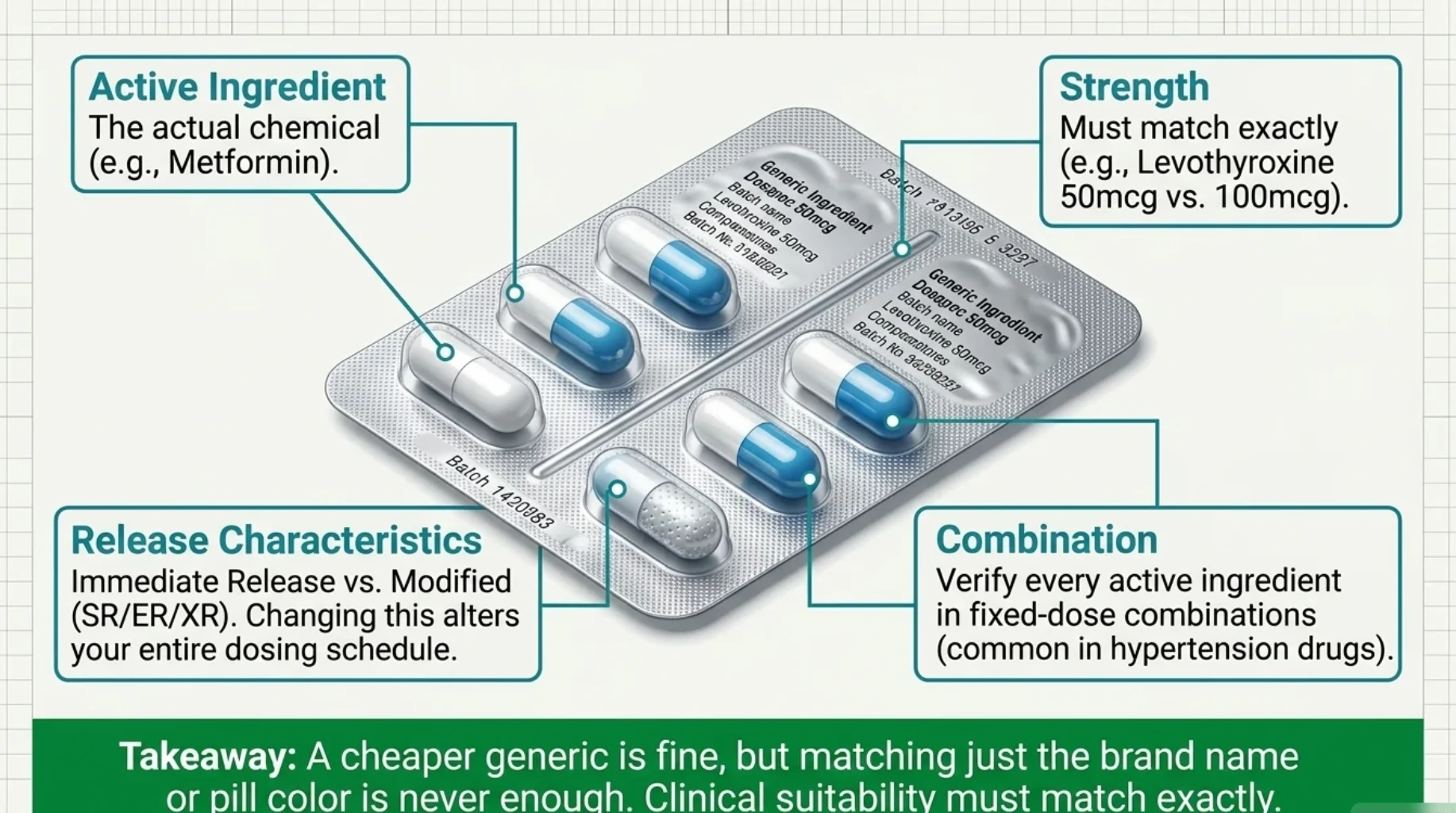
For example, a medicine may be available as an immediate-release tablet, an extended-release tablet or a fixed-dose combination with another active ingredient.
These products may not be interchangeable simply because they share part of their name.
Why Does Medicine Strength Matter?
The strength identifies the quantity of active ingredient in a particular dosage unit.
For example, a patient prescribed a 50 microgram tablet of levothyroxine should not assume that a 100 microgram tablet is an equivalent replacement without specific instructions.
Similarly, tablets with similar packaging may contain different strengths.
Patients should check the strength printed on the pack rather than relying only on colour or appearance.
What Is the Difference Between Immediate-Release and Extended-Release Medicines?
Immediate-release formulations generally release the active ingredient relatively promptly after administration.
Modified-release formulations are designed to alter the rate or location of drug release.
Terms such as SR, ER, XR, CR and MR may indicate modified-release characteristics, although naming conventions vary between products.
These formulations should not be substituted casually.
Can You Replace Metformin SR With Ordinary Metformin?
Not without appropriate clinical or pharmaceutical verification.
Although both contain metformin, the release characteristics and dosing instructions may differ.
Changing formulations may affect tolerability, dosing frequency and treatment management.
Are Generic Medicines as Effective as Branded Medicines?
An appropriately approved and quality-assured generic medicine is expected to meet applicable standards for quality, strength and performance.
Where bioequivalence is required and established, it supports the expectation of comparable systemic exposure to the reference product.
However, not every product with the same active ingredient is automatically interchangeable in every clinical situation.
Differences in formulation, release characteristics, route of administration and other product-specific factors may matter.
Are Branded Medicines Always Better?
No.
A higher price or familiar brand name does not automatically establish superior clinical effectiveness.
Medicine quality depends on appropriate manufacturing standards, regulatory compliance and product performance.
Patients should avoid assuming that every inexpensive generic medicine is inferior.
Can a Pharmacy Substitute a Different Brand?
Any proposed substitution should be assessed according to applicable legal and professional requirements and the clinical suitability of the product.
The active ingredient, strength, dosage form, release characteristics and other relevant factors must be considered.
Patients should not accept an unexplained substitution when they are uncertain whether the replacement matches their prescription.
What About Combination Medicines?
Fixed-dose combinations contain two or more active ingredients in one product.
Two combination tablets may have similar names but contain different ingredients or strengths.
For example, antihypertensive combinations may include different doses of an angiotensin receptor blocker, calcium-channel blocker or diuretic.
Patients should verify every active ingredient and its strength before accepting a substitute.
Why Is This Important for Thyroid and Diabetes Medicines?
Thyroid medicines are often prescribed in microgram strengths, making careful verification important.
Diabetes medicines may also be available in multiple strengths, release formulations and combinations.
Incorrect substitution can create dosing confusion or alter the intended treatment regimen.
Should Patients Compare Medicine Appearance?
Appearance may help identify an unexpected change, but it is not sufficient to confirm equivalence.
Different manufacturers may use different tablet colours, shapes and packaging.
Always verify the printed medicine details.
Clinical takeaway: A suitable generic alternative may reduce treatment costs, but the replacement must be clinically and pharmaceutically appropriate. Matching only the medicine name is not enough.
Medicine Substitution: What Must Match?
| Feature | Why It Matters | Example |
|---|---|---|
| Active ingredient | Determines the pharmacologically active substance | Metformin versus another glucose-lowering medicine |
| Strength | Determines the amount of active ingredient | 50 micrograms versus 100 micrograms |
| Dosage form | May influence administration and absorption | Tablet versus oral solution |
| Release characteristics | May affect drug release and dosing | Immediate-release versus extended-release |
| Combination ingredients | May change the intended treatment | Single-agent versus combination tablet |
| Route of administration | Determines how the medicine is used | Oral versus injectable preparation |
| Device compatibility | Important for certain delivery systems | Insulin pen and compatible cartridge |
5. Compare Medicine Prices, Discounts and Hidden Charges
Cost is an important factor when comparing online pharmacy vs local pharmacy, especially for patients taking medicines every day.
Someone receiving treatment for diabetes, hypertension, thyroid disease or cardiovascular conditions may purchase several medicines every month.
Even modest savings can become meaningful over a year.
However, the advertised discount does not always represent the final amount paid.
Are Online Pharmacies Always Cheaper?
No.
Online pharmacies may offer promotional discounts, subscription benefits or reduced prices on selected products.
However, local pharmacies may also provide competitive pricing, particularly for regular customers or commonly used medicines.
The better price depends on the exact product, quantity, current offer and additional charges.
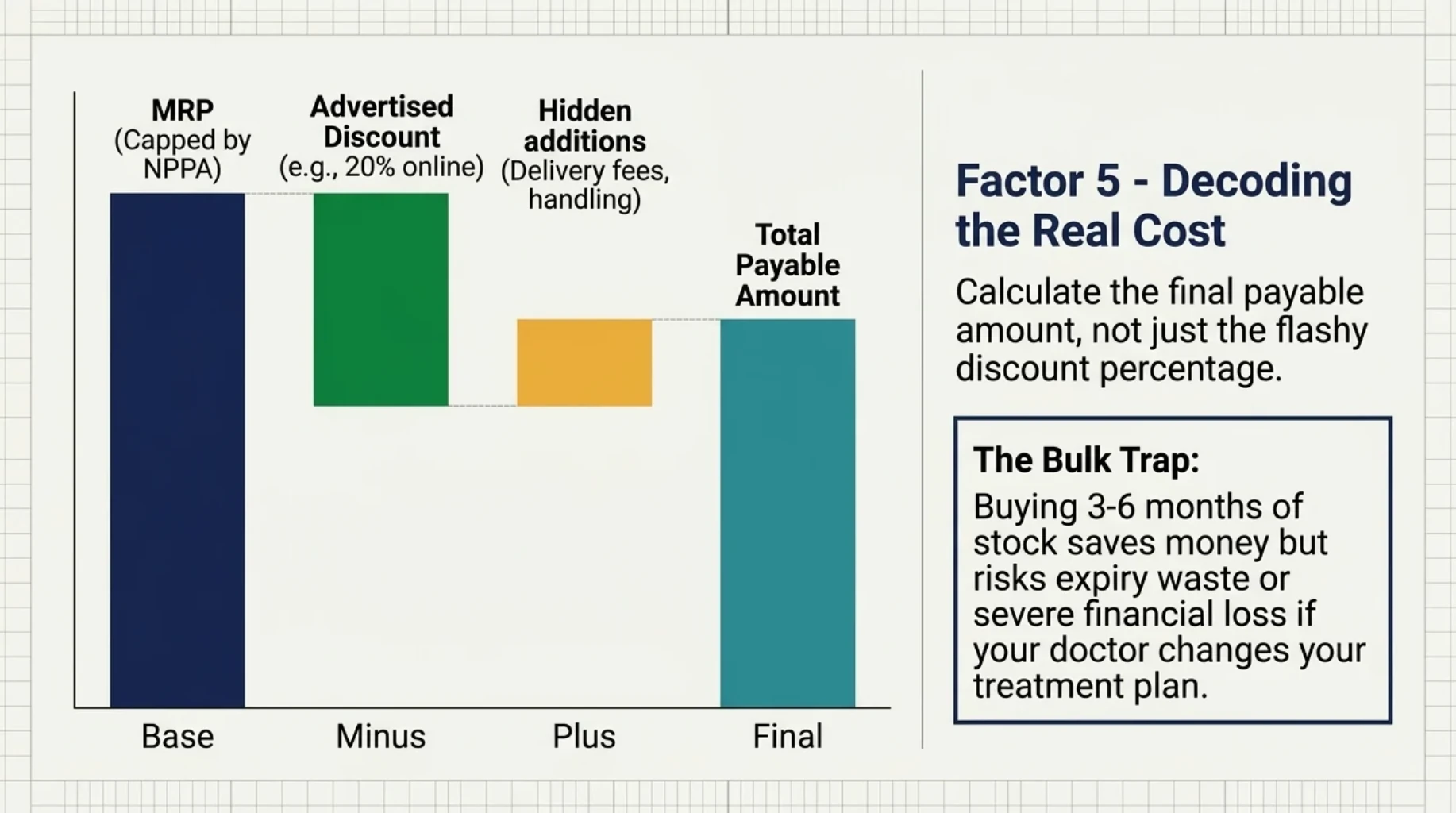
Should You Compare MRP or Final Price?
Compare the final payable amount for the same medicine, strength, formulation and quantity.
Maximum Retail Price (MRP) provides useful information, but the actual purchase price may be lower.
For online orders, delivery fees, handling charges or other applicable costs may affect the total.
What About Discounts on Generic Medicines?
Generic alternatives may offer savings when an appropriate equivalent is available.
However, patients should not select a medicine solely because it is cheaper.
Clinical suitability, quality assurance and correct formulation remain essential.
Are Government Price Controls Relevant?
Yes.
India’s National Pharmaceutical Pricing Authority (NPPA) implements pharmaceutical pricing provisions under the applicable framework, including the Drugs (Prices Control) Order, 2013, as amended.
Some medicines are subject to notified ceiling prices, while other products are governed by different pricing provisions.
Patients can consult official NPPA resources when they have concerns about medicine pricing.
Can You Compare Prices Using the Pharma Sahi Daam Platform?
The NPPA provides the Pharma Sahi Daam platform for accessing medicine price information.
It can be useful when checking relevant notified or listed prices.
However, patients should ensure that they are comparing the correct formulation, strength and pack size.
Should You Buy Several Months of Medicines to Save Money?
Not automatically.
Bulk purchases may reduce costs, but patients should consider expiry dates, storage requirements and the possibility that treatment may change.
For medicines requiring periodic dose adjustments, purchasing large quantities may lead to unnecessary wastage.
Are Online Subscription Discounts Worthwhile?
Subscription services may be convenient for stable long-term treatment.
However, patients should review renewal terms, medicine availability, cancellation conditions and whether prescriptions require periodic review.
Automatic delivery should not replace medical follow-up.
Example: Comparing the Actual Cost of Medicines
Consider a hypothetical monthly medicine purchase with an MRP of ₹2,000.
| Cost Component | Online Pharmacy | Local Pharmacy |
|---|---|---|
| Medicine MRP | ₹2,000 | ₹2,000 |
| Illustrative discount | 20% | 12% |
| Price after discount | ₹1,600 | ₹1,760 |
| Delivery or handling charges | ₹80 | ₹0 |
| Total payable | ₹1,680 | ₹1,760 |
| Difference | Online purchase costs ₹80 less in this example | |
Note: These prices and discounts are hypothetical and do not represent current offers from any pharmacy.
In this example, the online pharmacy is slightly cheaper.
However, the decision should also consider whether the exact prescribed medicines are available, whether delivery is timely and whether suitable professional support is provided.
What If the Cheaper Pharmacy Supplies a Different Brand?
Before comparing prices, confirm that the products are clinically appropriate alternatives.
A lower price is not meaningful if the product has a different strength, formulation or combination of active ingredients.
6. Check Delivery Speed, Medicine Availability and Treatment Continuity
Delivery time is another important consideration when deciding between an online pharmacy and a local medical store.
For some medicines, a delay of one or two days may be inconvenient.
For others, interruption of treatment can create significant health risks.
The importance of delivery speed therefore depends on the medicine and the patient’s medical condition.
When Is a Local Pharmacy More Practical?
A nearby pharmacy may be preferable when a medicine is required immediately and is available in stock.
For example, patients who unexpectedly run out of essential regular medicines may need prompt access to a replacement supply.
However, a local pharmacy is not automatically the best option if the prescribed medicine is unavailable or the pharmacy cannot provide appropriate dispensing services.
When Is Online Medicine Delivery Useful?
Online ordering may be convenient for patients receiving stable long-term treatment, especially when medicines can be ordered sufficiently early.
It may also help people with mobility limitations or those who have difficulty travelling to a pharmacy.
However, delivery estimates should be treated as estimates rather than guaranteed clinical arrangements.
What Happens if a Medicine Is Out of Stock?
The pharmacy should clearly inform the patient when a prescribed medicine is unavailable.
If an alternative product is proposed, its suitability should be verified.
Patients should not independently change strengths, formulations or active ingredients simply because the prescribed product is unavailable.
Should You Wait for Online Delivery During a Medical Emergency?
No.
Online medicine delivery is not a substitute for emergency medical care.
Symptoms such as severe chest pain, sudden weakness, collapse, severe breathlessness or other potentially serious problems require immediate medical assessment.
Ordering medicines online should never delay emergency care.
How Early Should You Order Regular Medicines?
Patients taking long-term medicines should consider ordering before their current supply is exhausted.
The appropriate buffer depends on delivery reliability, medicine availability and the consequences of missing doses.
For example, someone requiring insulin should have a clear plan for obtaining their next supply without an avoidable interruption.
Should You Keep Extra Medicines at Home?
A modest reserve may be useful for selected chronic medicines when consistent with the treatment plan.
However, excessive stockpiling can create expiry, storage and medication-management problems.
Patients should discuss appropriate refill quantities with their treating clinician or pharmacist when necessary.
What If the Wrong Medicine Is Delivered?
Do not use a medicine that does not match the prescription until the discrepancy has been resolved.
Contact the dispensing pharmacy and retain the packaging and invoice.
If an essential dose is due, seek prompt advice about obtaining the correct medicine.
Can Medicine Delivery Be Delayed During Festivals or Bad Weather?
Yes.
Transport disruptions, local availability and operational delays may affect delivery times.
Patients relying on regular medication deliveries should account for these possibilities.
Practical advice: Online ordering may work well for planned refills, while a reliable local pharmacy can be useful for urgent availability. Many patients may benefit from using both options according to their needs.
Online Pharmacy vs Local Pharmacy: Which Is Better for Different Situations?
| Situation | Potentially More Practical Option | Important Consideration |
|---|---|---|
| Planned monthly refill | Either | Compare quality, total cost and delivery reliability |
| Medicine needed immediately | Local pharmacy if available | Do not delay urgent medical care |
| Patient with limited mobility | Home delivery from a reliable pharmacy | Confirm the responsible seller and pharmacist access |
| Temperature-sensitive medicine | Either with verified storage arrangements | Product-specific temperature control is essential |
| Uncommon medicine | Whichever legitimate pharmacy can source it | Confirm the exact prescribed product |
| Multiple chronic medicines | Either | Medication review and accurate dispensing matter |
| Need for face-to-face counselling | Local pharmacy may be convenient | Ensure access to a registered pharmacist |
| Price-sensitive planned purchase | Compare both | Use final payable price for equivalent products |

7. Check Pharmacist Guidance, Privacy and After-Sales Support
The final consideration when comparing online pharmacy vs local pharmacy is the quality of professional support available before and after purchasing medicines.
Medicines are not ordinary consumer products. Patients may need help understanding dosage instructions, recognising potential interactions, storing medicines correctly or identifying an unexpected change in the supplied product.
A reliable pharmacy should provide access to appropriate professional guidance and a clear process for resolving dispensing problems.
This applies whether the purchase takes place through a mobile application, website or neighbourhood medical store.
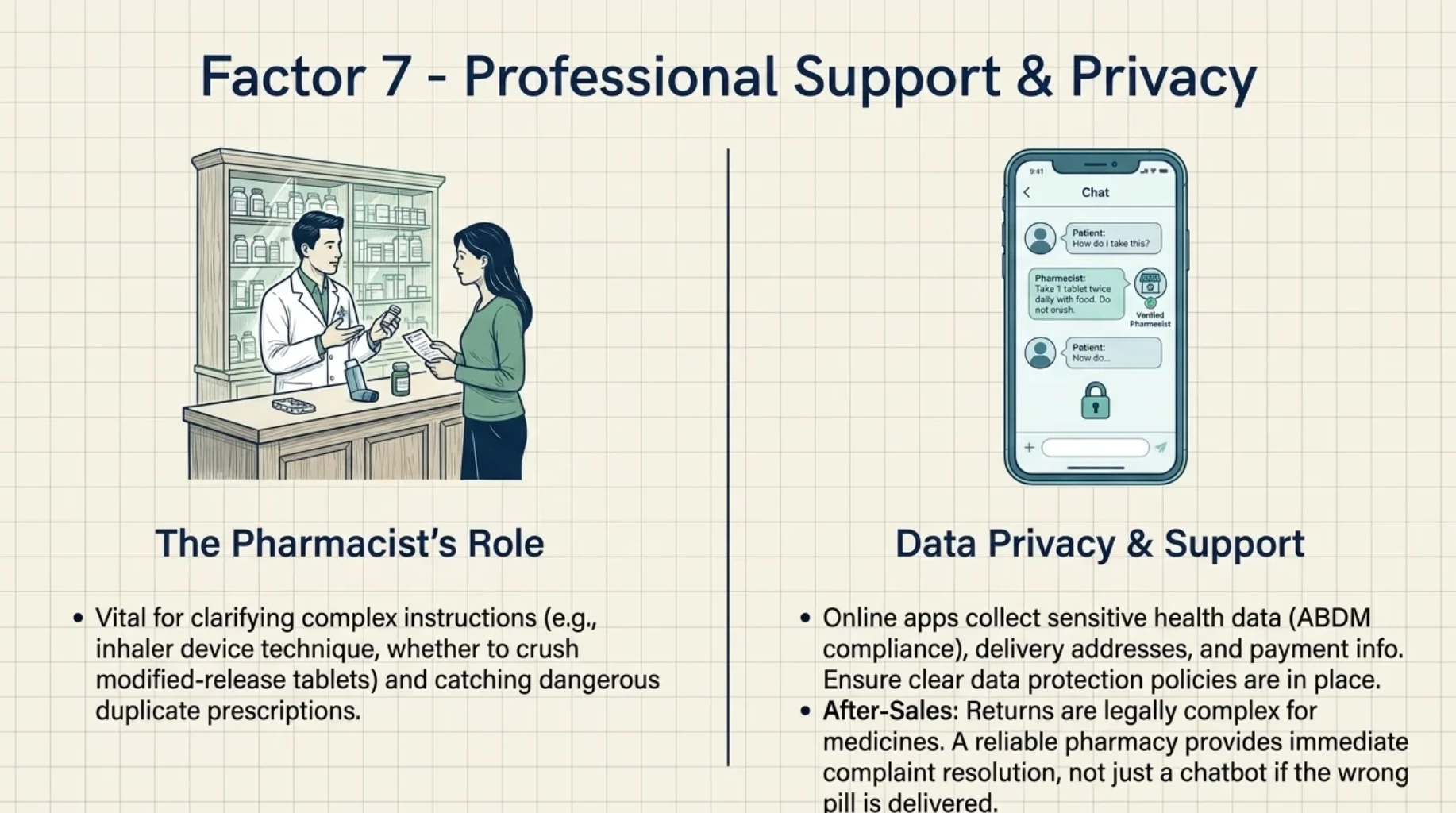
Why Is Access to a Registered Pharmacist Important?
A registered pharmacist plays an important role in safe medicine dispensing.
Pharmacists can help clarify prescription instructions, identify potential medicine-related problems and explain appropriate storage and administration.
For example, a patient receiving a modified-release tablet may need advice about whether the tablet can be split or crushed.
Similarly, someone using an inhaler or insulin pen may benefit from instruction on correct device technique.
However, pharmacists should not independently diagnose medical conditions or make treatment changes beyond their professional and legal scope.
Can Online Pharmacies Provide Pharmacist Counselling?
Yes, online services may provide access to pharmacists through telephone, chat or other remote communication methods.
However, patients should verify that meaningful professional assistance is available rather than assuming that an automated customer-support system provides the same service.
For complex medication questions, direct communication with a qualified professional may be particularly important.
Is Face-to-Face Counselling Always Better?
Not necessarily.
Face-to-face interaction can be helpful when patients need demonstrations, have difficulty reading medicine labels or require assistance understanding a complicated regimen.
However, suitable remote counselling may also be effective for straightforward questions when the patient can communicate clearly and the pharmacist has adequate information.
The important issue is whether the patient receives accurate, understandable and appropriate advice.
What About Elderly Patients Taking Several Medicines?
Older adults may take medicines for diabetes, hypertension, heart disease, thyroid disorders and other conditions simultaneously.
Taking multiple medicines can increase the complexity of treatment and the risk of medication-related problems.
A pharmacist may help identify duplicate products, clarify administration instructions and recommend medical review when necessary.
However, a comprehensive medication review may require coordination between the prescribing clinician and pharmacist.
Can the Pharmacy Help With Side Effects?
Pharmacists can provide general medicine-related information and recognise situations requiring medical attention.
However, patients should not rely solely on pharmacy advice when experiencing severe or potentially dangerous adverse effects.
Symptoms such as facial or throat swelling, breathing difficulty, collapse or a severe allergic reaction require emergency medical assessment.
How Important Is Prescription Privacy?
Prescriptions may contain sensitive personal information, including the patient’s name, age, medical conditions and prescribed treatments.
Online pharmacy platforms may also collect contact details, delivery addresses and payment information.
Patients should review how their information is collected, used, shared and protected.
Applicable Indian privacy and data-protection obligations should be considered according to the law and rules in force at the relevant time.
Should You Upload Prescriptions to Unknown Websites?
Avoid sharing prescriptions with unidentified sellers or websites that do not clearly explain who operates the service and how patient information is handled.
Patients should be particularly cautious when a seller requests unnecessary personal information or directs them to an unrelated payment account.
What About Medicine Returns and Refunds?
Medicine return policies may differ from those for ordinary consumer goods.
Returned medicines may be unsuitable for resale because their storage and handling conditions cannot always be verified.
Patients should check the pharmacy’s policy for incorrect, damaged, expired or missing products before placing an order.
Applicable consumer-protection and other legal requirements continue to matter regardless of the seller’s published policy.
What Should You Do if the Wrong Medicine Is Supplied?
Do not take the medicine until the discrepancy is resolved.
Contact the pharmacy promptly and retain the invoice, packaging and relevant order details.
If the medicine is essential and the next dose is due, seek prompt advice about obtaining the correct product without an unsafe treatment interruption.
Where Can Patients Report Suspected Medicine Quality Problems?
Patients may contact the dispensing pharmacy, manufacturer or relevant regulatory authority.
Suspected adverse drug reactions can be reported through India’s Pharmacovigilance Programme of India (PvPI).
Suspected medicine quality defects may require reporting to the relevant drug regulatory authority.
Clinical takeaway: A pharmacy’s responsibility should not end when payment is completed. Access to appropriate pharmacist guidance, clear complaint procedures and responsible handling of patient information are important parts of safe medicine supply.
Online Pharmacy vs Local Pharmacy: The Complete 7-Point Safety Checklist
Before buying medicines, patients can use the following checklist to evaluate whether a pharmacy is suitable for their needs.
These seven considerations apply to both online and local pharmacies.
| Safety Check | What to Verify | Why It Matters |
|---|---|---|
| 1. Pharmacy licence | Identifiable licensed seller and appropriate regulatory compliance | Establishes accountability for medicine supply |
| 2. Prescription verification | Appropriate review of prescriptions and pharmacist supervision | Helps prevent dispensing errors and inappropriate supply |
| 3. Medicine quality and storage | Intact packaging, batch details, expiry and suitable storage | Supports medicine quality and safe handling |
| 4. Correct medicine | Matching active ingredient, strength, formulation and prescribed instructions | Reduces medication errors and inappropriate substitutions |
| 5. Total cost | Final payable price, discounts and additional charges | Supports informed and affordable purchasing |
| 6. Availability and delivery | Reliable supply, suitable delivery time and appropriate transport | Helps prevent avoidable treatment interruptions |
| 7. Professional support | Pharmacist access, privacy safeguards and complaint resolution | Supports safe use and accountability after purchase |
This checklist is a practical patient decision aid, not a validated pharmacy quality score.
A pharmacy should not be considered safe simply because it satisfies a particular number of items.
Some requirements, such as appropriate licensing and lawful prescription dispensing, are fundamental rather than optional.
Which Pharmacy Is Better for Patients With Chronic Diseases?
Patients receiving long-term treatment often have different priorities from those purchasing an occasional medicine.
For someone with diabetes, hypertension, hypothyroidism or cardiovascular disease, continuity of treatment and correct dispensing may be particularly important.
For Patients With Diabetes
Patients taking glucose-lowering medicines should verify the exact prescribed product, strength and formulation.
Those using insulin should pay particular attention to product-specific storage and transport requirements.
Patients taking medicines associated with hypoglycaemia should also understand relevant precautions and have access to appropriate professional guidance.
Whether the medicines are purchased online or locally, treatment interruptions should be avoided whenever possible.
For Patients With Hypertension
Antihypertensive medicines are available in multiple strengths and combinations.
A patient prescribed a particular combination tablet should verify every active ingredient and strength before accepting an alternative.
Patients should not change medicines simply because another combination is cheaper or more readily available.
For Patients With Hypothyroidism
Levothyroxine is commonly prescribed in microgram strengths.
Patients should carefully verify the supplied strength and follow their clinician’s instructions regarding administration.
When changing between products, clinical circumstances may justify follow-up thyroid testing after an appropriate interval.
For Patients With Heart Disease
Some cardiovascular medicines require consistent administration and should not be interrupted without medical advice.
Patients should arrange refills early and have a plan if their regular pharmacy cannot supply the prescribed medicine.
Potential interactions and changes in combination medicines deserve particular attention.
For Older Adults Taking Multiple Medicines
Older adults may benefit from maintaining an updated medication list containing the medicine name, strength, prescribed dose and administration schedule.
Using one reliable pharmacy for most prescriptions may help maintain a consistent dispensing history, although it does not guarantee detection of every interaction or medication-related problem.
Periodic medication review by the treating clinician remains important.
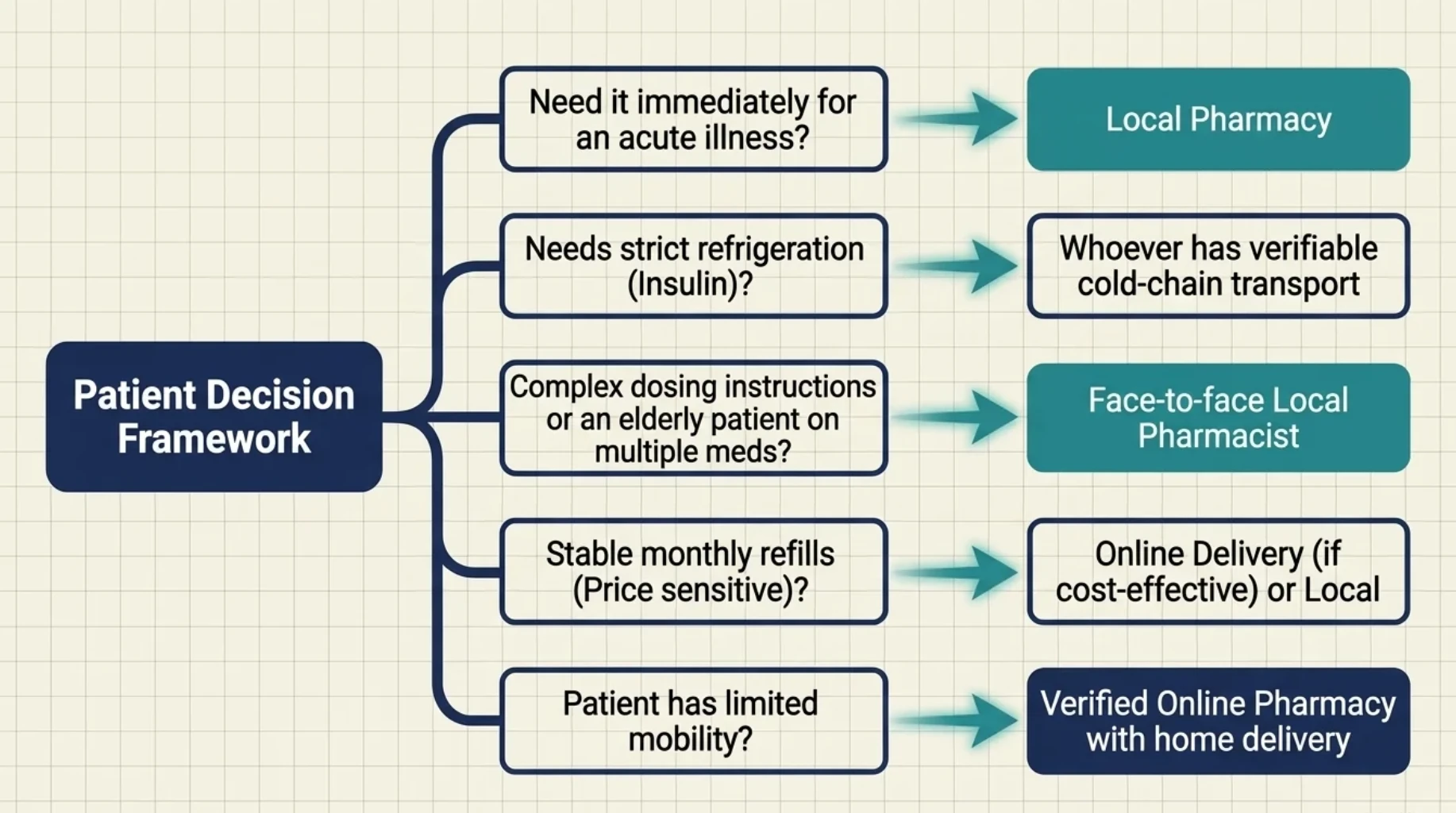
Online Pharmacy vs Local Pharmacy for Common Patient Needs
| Patient Situation | Practical Consideration | Preferred Approach |
|---|---|---|
| Stable monthly medicines | Cost, convenience and reliable refills | Either model, provided dispensing is appropriate |
| Urgent medicine requirement | Immediate availability | Reliable nearby pharmacy may be more practical |
| Insulin or refrigerated medicines | Product-specific temperature control | Pharmacy with verifiable storage and transport arrangements |
| Multiple medicines | Interaction review and accurate dispensing | Pharmacy with accessible pharmacist support |
| Patient with mobility limitations | Travel difficulty | Reliable home delivery may be helpful |
| Complex medicine instructions | Need for counselling or demonstration | Provider offering suitable professional guidance |
| Cost-sensitive chronic treatment | Long-term affordability | Compare appropriate products and total costs |
| Suspected dispensing error | Prompt verification and correction | Use an accountable pharmacy with clear complaint procedures |
Common Mistakes Patients Make When Buying Medicines
Choosing Only the Largest Discount
Discounts can be useful, but medicine authenticity, correct dispensing and storage conditions should come first.
Accepting a Different Strength Without Checking
Similar medicine names may represent different strengths or formulations.
Patients should verify the supplied product before use.
Buying Prescription Medicines From Unverified Sellers
Unidentified social-media sellers and websites without clear dispensing accountability may expose patients to unnecessary risks.
Ignoring Expiry Dates
Patients purchasing several months of treatment should check whether the remaining shelf life is appropriate.
Ordering Essential Medicines Too Late
Waiting until the last tablet or insulin dose can increase the risk of treatment interruption if the medicine is unavailable or delivery is delayed.
Assuming Every Generic Product Is Identical
Appropriate generic medicines can be effective and affordable, but product-specific equivalence and formulation characteristics matter.
Not Keeping the Invoice
An invoice provides useful documentation if the wrong product is supplied or a quality concern arises.
Changing Treatment Based on Pharmacy Advice Alone
Pharmacists provide valuable professional guidance, but clinically important changes to prescribed treatment may require review by the treating clinician.
Frequently Asked Questions About Online Pharmacy vs Local Pharmacy
1. Is an Online Pharmacy Safe in India?
Online medicine ordering can be appropriate when medicines are supplied through an accountable, appropriately licensed pharmacy that follows applicable prescription, storage and dispensing requirements.
2. Is a Local Pharmacy Safer Than an Online Pharmacy?
Not automatically. Safety depends on licensing, medicine quality, storage, prescription verification and professional supervision rather than the ordering method alone.
3. Are Online Pharmacy Medicines Genuine?
Medicines supplied through legitimate channels may be genuine, but patients should not assume authenticity based only on a website or app. Verify the responsible seller and inspect the supplied product.
4. Why Are Online Medicines Sometimes Cheaper?
Online sellers may offer promotional discounts, different pricing arrangements or subscription benefits. Compare the final payable amount for the same appropriate product.
5. Can Online Pharmacies Sell Prescription Medicines?
Prescription medicines must be supplied in accordance with applicable Indian drug-sale and prescription requirements. Online ordering does not remove those obligations.
6. Can I Buy Antibiotics Online Without a Prescription?
Prescription-only antibiotics should not be supplied without complying with the applicable prescription requirements. Unnecessary antibiotic use also contributes to antimicrobial resistance.
7. Is It Safe to Buy Insulin Online?
It may be appropriate when the pharmacy can maintain the product’s required storage and transport conditions. Verify the specific insulin product and its temperature requirements.
8. Are Generic Medicines as Good as Branded Medicines?
Appropriately approved and quality-assured generic medicines are expected to meet applicable standards. However, formulation differences and product-specific interchangeability should be considered.
9. Can a Pharmacist Change My Medicine Brand?
Any substitution must be appropriate and comply with relevant professional and legal requirements. Patients should verify the active ingredient, strength and formulation and seek prescriber clarification when needed.
10. What Should I Do if the Wrong Medicine Is Delivered?
Do not take it. Contact the dispensing pharmacy, retain the packaging and invoice, and arrange timely access to the correct medicine.
11. Can I Return Medicines Purchased Online?
Return and refund arrangements depend on the circumstances, seller policies and applicable legal requirements. Incorrect, damaged or expired supplies should be reported promptly.
12. Should I Check the Expiry Date Before Buying Medicines?
Yes. Check the expiry date and ensure that the remaining shelf life is appropriate for the quantity being purchased.
13. Are Medicine Discounts Available at Local Pharmacies?
Some local pharmacies offer discounts. Compare the final payable amount and confirm that the products being compared are clinically appropriate equivalents.
14. What Is NABL Accreditation? Does It Apply to Pharmacies?
NABL accreditation is primarily associated with testing and calibration laboratories and certain other conformity assessment activities. It should not be confused with the retail drug licence required for pharmacy operations.
15. How Can I Check Whether a Pharmacy Is Licensed?
Ask for the identity and licence details of the dispensing pharmacy. Relevant information may be verified through the appropriate State Drug Control Department.
16. Can I Order Thyroid Medicines Online?
Medicines such as levothyroxine may be obtained through an appropriate pharmacy supply process. Verify the prescribed strength, product and administration instructions.
17. Is Home Delivery Better for Senior Citizens?
Home delivery can be convenient for older adults with mobility limitations, provided the pharmacy offers reliable dispensing, appropriate transport and access to professional guidance.
18. Should I Buy Three Months of Medicines Together?
This depends on the treatment plan, prescription, expiry dates, storage requirements and likelihood of dose changes. Discuss suitable refill quantities with your clinician or pharmacist when needed.
19. What Should I Do if a Medicine Looks Different From My Previous Purchase?
Check the name, strength, manufacturer and formulation. Contact the pharmacist before taking it if the difference is unexpected or cannot be explained.
20. Which Is Better: Online Pharmacy or Local Pharmacy?
Neither is universally better. Choose an appropriately licensed and accountable pharmacy that supplies the correct medicines, maintains suitable storage conditions, follows prescription requirements and provides reliable professional support.
Scientific and Regulatory References
- Central Drugs Standard Control Organisation (CDSCO). Drugs and Cosmetics Act, 1940, and Drugs and Cosmetics Rules, 1945, as amended. Official regulatory resources. CDSCO.
- National Pharmaceutical Pricing Authority (NPPA). Drugs (Prices Control) Order and medicine price information. NPPA Official Website.
- National Pharmaceutical Pricing Authority. Pharma Sahi Daam: Medicine price information. Pharma Sahi Daam.
- Pharmacy Council of India. Pharmacy Practice Regulations and professional standards for pharmacists. Pharmacy Council of India.
- World Health Organization. Substandard and Falsified Medical Products. Updated fact sheet and related resources. WHO Resources.
- Indian Pharmacopoeia Commission. Pharmacovigilance Programme of India (PvPI): Adverse drug reaction reporting and medicine safety. Indian Pharmacopoeia Commission.
- National Health Authority. Ayushman Bharat Digital Mission: Health information and digital health ecosystem resources. ABDM Official Website.
- World Health Organization. Medication Without Harm: Global Patient Safety Challenge. WHO Medication Safety.
- National Pharmaceutical Pricing Authority. Official notifications and current medicine price orders. NPPA Price Notifications.
Regulatory note: Pharmacy licensing, medicine pricing and digital health requirements may change. Readers should consult current official notifications and applicable State Drug Control authorities for specific regulatory questions. Some foundational laws and professional standards listed above predate the last five years but remain relevant as amended.
Medical Consultation and Medication Review in Dwarka, New Delhi
Patients taking multiple medicines or receiving long-term treatment may benefit from periodic medical review.
Medication review can help identify unnecessary duplication, potential interactions, adverse effects and situations where treatment adjustments may be appropriate.
Dr. Pankaj Kumar, General & Lifestyle Physician in Dwarka, New Delhi, provides medical consultations for general health concerns and chronic lifestyle-related conditions.
His clinical interests include diabetes, hypertension, thyroid disorders, obesity, fatty liver disease and metabolic health.
Patients who are uncertain about medicine substitutions, treatment schedules or unexpected medication-related symptoms should seek appropriate professional advice.
Clinic Information
Dr. Pankaj Kumar Medical & Lifestyle Clinic
Doctor: Dr. Pankaj Kumar
Designation: General & Lifestyle Physician
Qualifications: MBBS, DNB (Family Medicine)
Location: Sector 6, Dwarka, New Delhi – 110075
Consultation: In-person and online appointments
About the Author
Dr. Pankaj Kumar
MBBS, DNB (Family Medicine)
Diploma in Nutrition & Health Education
General & Lifestyle Physician
Founder, Diet Plus Minus
Dwarka, New Delhi
Dr. Pankaj Kumar is a General & Lifestyle Physician with a clinical interest in diabetes, obesity, metabolic health, hypertension, thyroid disorders, fatty liver disease and preventive medicine. His approach emphasises evidence-based medical care, practical health education and sustainable lifestyle modification.
Medical Disclaimer: This article is intended for general health education and does not replace individual medical advice, pharmacist counselling or applicable legal requirements. Medicine selection, dispensing, substitution and storage should follow the relevant prescription, product instructions and professional standards. Do not independently start, stop or change prescribed treatment. Seek urgent medical assistance for severe allergic reactions, suspected overdose or other potentially serious medication-related symptoms.
If you want a personalized metabolic assessment and lifestyle strategy, you can book a consultation here:
Book an Appointment