

Women-Only Gyms: Why Privacy Should Not Be the Only Priority
For many women, joining a gym is not simply about finding a treadmill or a place to exercise. It is about finding an environment where they feel comfortable, respected and confident enough to build a consistent fitness routine.
This is one reason women-only gyms have become an attractive option for women who prefer exercising in a female-focused setting.
Some women may feel more comfortable working out without men around. Others may prefer female trainers, greater modesty, a less intimidating atmosphere or programmes designed around their personal fitness goals.
These preferences are valid considerations when choosing an exercise facility.
However, privacy is only one aspect of a good gym.
A women-only facility may offer a comfortable environment but still have poorly maintained equipment, inadequately trained instructors, limited strength-training options or programmes that rely on unrealistic promises.
Similarly, a well-managed mixed-gender gym may provide excellent training facilities and professional supervision.
The important question is not whether a gym is exclusively for women, but whether it provides the conditions needed for safe, effective and sustainable exercise.
For women managing obesity, polycystic ovary syndrome (PCOS), diabetes, hypertension, perimenopause or age-related muscle loss, the quality of exercise guidance may be particularly important.
This guide explains seven things to look for when choosing women-only gyms, beyond privacy and appearance.

What Makes a Good Women-Only Gym?
A good women-only gym should support women with different fitness levels, ages and health conditions.
For example, a 25-year-old beginner who wants to improve fitness may have different exercise needs from a 45-year-old woman experiencing perimenopausal changes or a 65-year-old woman who wants to maintain strength and balance.
Although all three may benefit from regular physical activity, their starting fitness levels, exercise preferences and training progression may differ.
A gym that offers the same high-intensity workout to every member is unlikely to provide the most appropriate experience for everyone.
Instead, the facility should assess individual needs, explain exercise techniques and offer suitable progression.
It should also recognise when a member requires medical assessment or specialised rehabilitation rather than routine gym instruction.
Is a Women-Only Gym Better Than a Regular Gym?
Not necessarily.
Women-only gyms may be preferable for women who value privacy, modesty or female-only training environments.
However, exercise effectiveness depends on factors such as training quality, consistency, appropriate intensity and progressive overload.
There is no strong basis for assuming that a women-only gym automatically produces better weight loss or fitness outcomes simply because men are not present.
The best gym is one that a woman can attend consistently while receiving appropriate guidance and access to suitable equipment.

Do Women Need Different Exercise Equipment?
Women do not generally need entirely different exercise equipment from men.
Muscles respond to resistance training according to physiological principles that apply across sexes.
However, equipment should accommodate different body sizes, strength levels and mobility needs.
Adjustable machines, lighter starting weights and a suitable range of resistance options can make training more accessible.
Should Women-Only Gyms Focus Mainly on Weight Loss?
No.
Weight management may be an important goal for some members, but exercise offers benefits beyond changes in body weight.
Regular physical activity can improve cardiovascular fitness, muscular strength, functional ability, metabolic health and psychological well-being.
A good gym should therefore promote fitness, strength and health rather than judging success only by the number on the weighing scale.
Clinical takeaway: Privacy may help women feel comfortable starting exercise, but long-term benefits depend on appropriate training, progressive exercise, qualified supervision and consistency.
Women-Only Gyms: The 7 Essential Factors to Evaluate
| Factor | What to Look For | Why It Matters |
|---|---|---|
| 1. Trainer qualifications | Relevant certifications, practical experience and appropriate supervision | Supports safe exercise instruction |
| 2. Strength-training equipment | Adjustable machines, free weights and suitable resistance options | Supports muscle strength and long-term fitness |
| 3. Exercise safety | Individual assessment, technique instruction and progressive training | Reduces avoidable exercise-related risks |
| 4. Programmes for different life stages | Appropriate modifications for pregnancy, postpartum recovery, menopause and older age | Recognises different functional and health needs |
| 5. Hygiene and facilities | Clean equipment, ventilation, toilets, changing areas and drinking water | Supports comfort and basic safety |
| 6. Membership transparency | Clear fees, cancellation rules, trainer costs and realistic claims | Helps prevent financial surprises |
| 7. Supportive environment | Respectful coaching, realistic goals and an inclusive fitness culture | Encourages consistency and long-term participation |

1. Check Trainer Qualifications and Practical Experience
The first important consideration when choosing women-only gyms is the quality of the trainers.
A gym may have attractive interiors, modern machines and enthusiastic instructors, but these features do not guarantee that its trainers can provide appropriate exercise guidance.
Qualified fitness professionals should understand basic exercise physiology, movement techniques, training progression and relevant safety precautions.
They should also recognise the limits of their professional role.
What Qualifications Should a Female Gym Trainer Have?
There is no single certification that automatically establishes competence in every aspect of fitness training.
However, recognised education or certifications in exercise instruction, personal training or strength and conditioning may provide useful evidence of formal training.
Patients can ask about the trainer’s qualifications, practical experience, continuing education and familiarity with working with beginners or people with relevant health conditions.
First-aid and CPR training are additional useful considerations.
Is Having a Female Trainer Enough?
No.
Some women prefer female trainers for personal, cultural or comfort-related reasons.
However, the trainer’s sex does not establish professional competence.
A female trainer should still be able to explain exercise technique, select appropriate resistance levels and modify activities according to the member’s abilities.
Can Gym Trainers Provide Medical Advice?
Fitness trainers can provide exercise instruction within their competence, but they should not diagnose medical conditions or independently prescribe medical treatment.
For example, a trainer should not advise a woman with hypothyroidism to stop prescribed levothyroxine or claim that exercise alone will cure the condition.
Similarly, a trainer should not recommend discontinuing diabetes medication simply because the member has started exercising.
Medical treatment decisions belong to appropriately qualified healthcare professionals.
What Should a Trainer Know About PCOS?
Women with PCOS can benefit from regular physical activity, including aerobic exercise and resistance training.
However, PCOS does not require one universally prescribed gym routine.
Exercise should be tailored to fitness level, preferences, metabolic health and any relevant medical considerations.
A trainer should avoid promising that a particular workout will cure PCOS or guarantee rapid weight loss.
Should Trainers Understand Menopause-Related Changes?
It is useful for trainers working with middle-aged and older women to understand the importance of resistance training, balance, mobility and progressive exercise.
However, menopausal symptoms and medical conditions may require assessment beyond the trainer’s professional scope.
How Can You Assess a Trainer During a Trial Session?
Observe whether the trainer asks about your exercise experience, current limitations and goals.
A responsible trainer should explain the planned exercises and demonstrate appropriate technique.
They should also respond constructively when a member reports pain, dizziness or difficulty performing a movement.
Be cautious if the trainer immediately prescribes a very demanding routine without understanding your fitness level.
Warning Signs of Poor Training Practices
Examples include repeatedly encouraging exercise through significant pain, making guaranteed weight-loss promises, recommending unregulated supplements or dismissing important medical symptoms.
These behaviours should not be accepted as normal fitness coaching.
Important: A fitness trainer should not replace a doctor, physiotherapist or registered dietitian when a member requires medical assessment, rehabilitation or specialised nutrition care.
2. Look for Proper Strength-Training Equipment, Not Just Cardio Machines
One common misconception about women’s fitness is that women should focus mainly on walking, cycling, dancing or other calorie-burning activities.
Aerobic exercise is valuable, but resistance training is also an important component of a balanced fitness programme.
Strength training can improve muscular strength, functional ability and body composition.
It is particularly relevant for women who want to preserve muscle during weight loss or maintain strength as they age.
Why Is Strength Training Important for Women?
Muscle strength contributes to everyday activities such as climbing stairs, carrying shopping bags, lifting objects and maintaining independence with increasing age.
Resistance exercise also supports metabolic health and may help preserve lean mass during weight management.
For postmenopausal women, appropriately designed resistance and weight-bearing exercise can form part of a broader strategy for maintaining musculoskeletal health.
However, exercise does not replace indicated medical treatment for osteoporosis or other conditions.
What Equipment Should a Women-Only Gym Have?
A good gym does not necessarily require expensive or highly specialised machines.
It should provide a suitable range of resistance options and equipment that can be adjusted for different users.
Useful options may include dumbbells, resistance bands, cable machines, adjustable benches and appropriately maintained resistance-training machines.
Some facilities may also provide barbells, squat racks and other equipment for more advanced training.
The most important consideration is whether the equipment supports the exercises members need and whether trainers can teach its safe use.
Are Light Dumbbells Enough for Women?
Light weights can be useful for beginners, rehabilitation-related exercise or particular movements.
However, as strength improves, a person may need greater resistance to continue making progress.
A gym that offers only very light dumbbells may limit progression for some members.
Resistance should be selected according to the exercise, the individual’s ability and the intended training goal.
Will Lifting Weights Make Women Bulky?
Resistance training does not automatically produce excessive muscle growth.
Muscle hypertrophy depends on factors including training volume, intensity, nutrition, genetics and duration of training.
For most women, progressive resistance training is a practical way to improve strength and functional fitness.

Is Cardio Enough for Weight Loss?
Aerobic activity can support energy expenditure and cardiovascular health.
However, weight management is influenced by multiple factors, including dietary intake, physical activity, sleep, medications and underlying health conditions.
Resistance training can complement aerobic exercise by helping maintain muscle mass during weight reduction.
A programme combining appropriate aerobic and muscle-strengthening activities is often more useful than relying exclusively on cardio machines.
What About Functional Training and Group Classes?
Functional training, yoga, Pilates and group exercise classes may be useful depending on the instructor, exercise selection and participant’s abilities.
However, labels such as “functional” or “toning” do not automatically establish that a programme is effective.
Patients should evaluate what exercises are actually performed and whether the intensity and progression are appropriate.
Does the Gym Need Heavy Weights?
Not every member requires heavy lifting.
However, a good facility should offer enough resistance options to accommodate different strength levels and allow progression over time.
For beginners, supervised technique and appropriate starting loads are more important than lifting heavy weights immediately.
Strength Training vs Cardio: Why Women Benefit From Both
| Exercise Type | Main Benefits | Examples |
|---|---|---|
| Aerobic exercise | Cardiorespiratory fitness, endurance and metabolic health | Brisk walking, cycling, swimming |
| Resistance training | Muscular strength, lean mass and functional capacity | Dumbbells, resistance machines, bands |
| Balance training | Balance and movement control, especially relevant with ageing | Supported single-leg balance, selected stability exercises |
| Mobility and flexibility | Joint movement and activity-specific flexibility | Controlled mobility exercises, stretching |
| Group fitness | Physical activity, enjoyment and social participation | Dance fitness, supervised circuits, yoga |
A balanced programme may combine several of these exercise types rather than relying on one category alone.
3. Evaluate Exercise Safety, Assessment and Individual Progression
A good gym should not assume that every new member can safely follow the same exercise routine.
Women joining a gym may differ considerably in age, exercise experience, physical capacity and medical history.
For example, a previously inactive woman in her twenties may need a gradual introduction to exercise, while a woman with symptomatic knee osteoarthritis may require modifications to certain movements.
Exercise safety begins with understanding the individual’s needs rather than immediately prescribing an intense workout.
Should a Gym Assess Your Fitness Before Starting?
A basic intake process can help identify exercise goals, previous activity levels, relevant symptoms and limitations.
The assessment should be appropriate to the facility and the type of training offered.
Not every healthy adult requires a medical examination or extensive laboratory testing before beginning light-to-moderate exercise.
However, certain symptoms or known medical conditions may justify medical evaluation before vigorous activity or particular forms of training.
What Questions Should a Trainer Ask?
Relevant questions may include whether the member has exercised previously, whether she experiences pain during particular movements, whether she has any important medical conditions and what she hopes to achieve.
The trainer should also ask about recent injuries or functional limitations when relevant.
Personal medical information should be handled respectfully and confidentially.
What Is Progressive Overload?
Progressive overload refers to gradually increasing the training challenge as the body adapts.
Progression may involve changes in resistance, repetitions, sets, exercise difficulty or training frequency.
It does not mean that every workout must be harder than the previous one.
Appropriate progression also requires recovery and adjustment according to individual response.
Should Beginners Start With High-Intensity Workouts?
Not necessarily.
High-intensity exercise can be appropriate for some individuals, but it is not essential for obtaining health benefits.
Beginners often benefit from starting with manageable activity and gradually increasing the challenge.
A gym that immediately places every new member into demanding circuits may not provide suitable individualisation.
How Important Is Exercise Technique?
Appropriate exercise technique can help members perform movements effectively and manage training demands.
However, there is not always one perfect movement pattern suitable for every individual.
Trainers should consider body proportions, mobility, previous injuries and the purpose of the exercise.
Technique instruction should be practical and adaptable rather than unnecessarily rigid.
Should Exercise Cause Pain?
Exercise can produce effort, fatigue and temporary muscle soreness, particularly when someone begins a new activity.
However, sharp pain, worsening joint pain, severe dizziness, chest discomfort or unusual breathlessness should not be dismissed as normal training effects.
Exercise should be stopped and appropriate assessment obtained when concerning symptoms occur.
What Emergency Arrangements Should a Gym Have?
Fitness facilities should have an appropriate emergency response plan.
Useful considerations include staff training in first aid and CPR, accessible emergency contact procedures, a stocked first-aid kit and a clear process for obtaining emergency medical assistance.
Availability of an automated external defibrillator (AED), where feasible, is an additional safety consideration.
Members should know how to seek help if someone becomes unwell during exercise.
Is a Medical Fitness Certificate Necessary for Everyone?
No.
Routine medical clearance is not universally required for every healthy adult starting ordinary exercise.
The need for assessment depends on symptoms, known medical conditions, current activity level and the intended exercise intensity.
For example, someone experiencing unexplained exertional chest pain should obtain medical evaluation rather than simply requesting a routine fitness certificate.
Clinical takeaway: Good exercise supervision is not about pushing every member to exhaustion. It is about selecting appropriate activities, teaching technique, progressing gradually and recognising when medical assessment is necessary.
4. Look for Exercise Programmes That Support Different Stages of Women’s Health
One important consideration when choosing women-only gyms is whether the facility can accommodate women with different health needs and fitness levels.
Women may join a gym during their twenties, after childbirth, while managing polycystic ovary syndrome (PCOS), during perimenopause or after the age of 60.
Although regular physical activity can benefit women across these stages, exercise programmes should not automatically be identical for everyone.
A good fitness facility should understand when modifications are appropriate and when specialised medical or rehabilitation guidance may be necessary.
Do Women With PCOS Need a Special Gym Programme?
PCOS is commonly associated with metabolic disturbances, including insulin resistance in some women.
Regular physical activity is an important component of PCOS management because it can support metabolic health, cardiovascular fitness and psychological well-being.
Both aerobic exercise and resistance training can be useful.
However, there is insufficient evidence to recommend one specific exercise type or intensity as universally superior for all women with PCOS.
Exercise selection should reflect individual preferences, physical capacity, medical considerations and long-term sustainability.
Women should be cautious of gyms promising to cure PCOS through a particular workout or guaranteeing rapid hormonal correction.
Is High-Intensity Interval Training Necessary for PCOS?
No.
High-intensity interval training may be suitable for some women, but it is not mandatory for effective PCOS management.
Moderate-intensity aerobic exercise, resistance training and other enjoyable forms of physical activity can also provide health benefits.
The most useful programme is often one that the individual can perform consistently and progress safely.
What Should Pregnant Women Look for in a Gym?
Many women with uncomplicated pregnancies can benefit from regular physical activity.
However, exercise recommendations depend on the pregnancy, previous activity level, symptoms and any obstetric complications.
A gym offering prenatal exercise should have instructors who understand pregnancy-related exercise modifications and recognise when medical advice is needed.
For example, a trainer should not automatically prescribe the same vigorous workout to every pregnant woman.
Women with significant pregnancy complications or concerning symptoms may require obstetric assessment before continuing exercise.
Are Strength Exercises Safe During Pregnancy?
Appropriately selected resistance exercises may be suitable during uncomplicated pregnancy.
However, exercise intensity, positioning, balance demands and other factors may need modification as pregnancy progresses.
Women should follow individual advice from their obstetric care team when relevant.
What About Exercise After Childbirth?
Postpartum recovery differs between women.
The appropriate return to exercise depends on factors such as delivery type, complications, symptoms, pelvic floor function and recovery progress.
Some gentle activities may be resumed relatively early after an uncomplicated delivery, while more demanding exercise may require gradual progression.
A gym should not pressure every woman to resume high-intensity training immediately after childbirth.
Should Postpartum Women Be Assessed for Pelvic Floor Symptoms?
Symptoms such as urinary leakage, pelvic heaviness or pain during exercise may indicate the need for assessment by an appropriate healthcare professional.
A pelvic health physiotherapist may be particularly helpful in selected cases.
Gym instructors should recognise these symptoms rather than dismissing them as an unavoidable consequence of childbirth.
What Should Women in Perimenopause Look for?
During perimenopause and menopause, changes in body composition, sleep, symptoms and physical capacity may influence exercise preferences and recovery.
Resistance training is particularly valuable for maintaining or improving muscular strength.
Aerobic exercise supports cardiovascular fitness, while balance and functional exercises may also be useful.
However, there is no single menopause-specific workout that every woman must follow.
Exercise should be individualised according to fitness, symptoms and medical history.

Can Strength Training Help After Menopause?
Yes.
Progressive resistance training can improve muscular strength and physical function in postmenopausal women.
Appropriate weight-bearing and resistance exercise can also contribute to musculoskeletal health.
However, women with osteoporosis, previous fragility fractures or other relevant conditions may require modifications and individual assessment.
What About Women Above 60 Years?
Older women can benefit substantially from regular physical activity, including strength, balance and aerobic exercises.
Training should consider functional ability, fall risk, mobility and existing health conditions.
A good gym should provide appropriate starting resistance, safe equipment access and suitable supervision.
Older members should not automatically be restricted to gentle stretching if they can safely participate in progressive resistance training.
Clinical takeaway: Women at different life stages do not necessarily need completely different types of exercise. They need programmes adapted to their abilities, symptoms, medical circumstances and goals.
Women’s Health Conditions and Exercise: What a Good Gym Should Understand
| Health Situation | Potentially Useful Exercise | Important Consideration |
|---|---|---|
| PCOS | Aerobic exercise and resistance training | Individualise intensity and avoid unsupported hormonal claims |
| Uncomplicated pregnancy | Appropriate aerobic and strengthening activities | Consider obstetric advice and pregnancy-related modifications |
| Postpartum recovery | Gradual return to activity and progressive strengthening | Consider delivery history and pelvic floor symptoms |
| Perimenopause | Resistance training, aerobic activity and mobility | Adjust for symptoms, recovery and fitness |
| Postmenopause | Progressive resistance and weight-bearing exercise | Consider bone health and fracture risk |
| Older age | Strength, balance and aerobic training | Consider functional ability and fall risk |
| Obesity | Progressive aerobic and resistance exercise | Choose sustainable activities and appropriate starting loads |
| Type 2 diabetes | Aerobic and resistance exercise | Consider glucose management, medications and complications |
5. Check Hygiene, Ventilation, Equipment Maintenance and Essential Facilities
Cleanliness and basic infrastructure are important when evaluating women-only gyms.
However, a gym that looks attractive in photographs may not necessarily maintain appropriate hygiene or equipment safety.
Before purchasing a membership, patients should visit the facility during normal operating hours and observe how it is managed.
Why Does Gym Hygiene Matter?
Fitness equipment is used by multiple people throughout the day.
Frequently touched surfaces, shared exercise mats and changing areas require appropriate cleaning procedures.
Poor hygiene can contribute to an unpleasant environment and may increase the risk of certain infections, particularly when shared surfaces or personal items are contaminated.
However, the mere presence of microorganisms on a surface does not establish that infection will occur.
What Should You Check During a Gym Visit?
Observe whether equipment and shared surfaces are cleaned regularly.
Check whether members have access to suitable cleaning materials and whether staff maintain the facility throughout the day.
Toilets, changing rooms and washbasins should be clean and functional.
Is Air Conditioning Enough for Good Ventilation?
No.
Air conditioning and ventilation are not the same thing.
Air conditioning primarily controls indoor temperature, while ventilation helps replace or dilute indoor air.
A comfortable room temperature does not automatically mean that fresh-air supply is adequate.
Fitness facilities should maintain suitable ventilation according to the building, occupancy and activities performed.
Why Is Ventilation Important During Exercise?
During physical activity, people breathe more deeply and frequently.
In crowded indoor spaces, adequate ventilation can help improve indoor air quality and reduce the accumulation of certain airborne contaminants.
However, ventilation is only one part of maintaining a healthy indoor environment.
Should You Avoid Crowded Gyms?
Not necessarily, but crowding can affect exercise comfort, access to equipment and supervision.
For example, a facility may have adequate equipment for 15 members but become difficult to use when 40 people attend simultaneously.
During a trial visit, observe the gym at the time you would normally exercise.
What About Equipment Maintenance?
Resistance machines, treadmills, cables and other equipment should be inspected and maintained appropriately.
Damaged cables, unstable benches, loose components or malfunctioning machines should not remain in use.
Members should be able to report equipment problems and expect the facility to address them.
Are Clean Changing Rooms Important?
Yes.
Changing rooms should provide reasonable privacy, hygiene and secure storage options.
Women who prefer modesty or have specific cultural requirements may place particular importance on the design and management of these spaces.
However, the availability of changing rooms should not be treated as a substitute for overall facility quality.
Should Women-Only Gyms Have Drinking Water?
Access to safe drinking water is a useful facility feature.
Members should also be able to take appropriate breaks and manage hydration according to their activity and environmental conditions.
There is no need for every member to consume a fixed amount of water during every workout.
What About Emergency Exits and Fire Safety?
Gym facilities should have suitable emergency arrangements and comply with applicable building and fire safety requirements.
Exits should be accessible and not blocked by equipment or stored materials.
Members should be able to identify how to leave the facility during an emergency.
Warning signs: Poorly maintained machines, blocked emergency exits, visibly unhygienic changing areas, inadequate supervision and repeated equipment breakdowns should prompt caution before purchasing a membership.
Women-Only Gym Facility Inspection Checklist
| Facility Feature | What to Check | Why It Matters |
|---|---|---|
| Exercise equipment | Condition, stability and maintenance | Supports safer equipment use |
| Ventilation | Adequate air exchange and indoor comfort | Supports indoor air quality |
| Cleaning | Routine cleaning of shared equipment and surfaces | Supports hygiene |
| Toilets | Cleanliness, water supply and functionality | Supports basic sanitation |
| Changing rooms | Privacy, hygiene and security | Supports comfort and personal safety |
| Drinking water | Safe and accessible supply | Supports hydration needs |
| Emergency exits | Clearly accessible routes | Supports emergency evacuation |
| First-aid arrangements | Available supplies and staff preparedness | Supports initial response to injuries |
| Peak-hour crowding | Equipment availability and supervision | Influences training quality and comfort |
6. Understand Membership Fees, Personal Training Costs and Cancellation Policies
Membership pricing is another important consideration when selecting women-only gyms.
Some facilities advertise attractive monthly rates but charge separately for registration, personal training, group classes or other services.
Before paying, patients should understand what the membership actually includes.
Should You Choose the Cheapest Women-Only Gym?
Not automatically.
A lower membership fee may be suitable if the facility provides the equipment, supervision and environment you need.
However, the cheapest option may not offer adequate training support or convenient access.
Similarly, a premium gym is not necessarily better simply because it charges more.
What Costs Should You Ask About?
Important questions include the monthly or annual membership fee, registration charges, personal training costs, group class fees and any additional facility charges.
Patients should also ask whether fees include applicable taxes and whether the advertised offer is available for the full membership period.
Is Personal Training Necessary?
Not for everyone.
Some beginners may benefit from a period of individual instruction to learn exercise technique and establish a suitable routine.
Others may be able to exercise effectively through supervised group sessions or a well-designed independent programme.
The need for personal training depends on experience, goals, confidence and individual circumstances.
Are Long-Term Memberships Better Value?
Longer memberships may offer lower average monthly costs.
However, paying for a year in advance can create financial risk if the gym becomes inconvenient, closes, changes its services or does not meet expectations.
Patients should consider starting with a shorter membership when they are uncertain about the facility.
What Should You Check in the Cancellation Policy?
Review the written terms covering cancellation, refunds, membership freezing, transferability and service changes.
Do not rely only on verbal assurances from sales staff.
Where a membership includes personal training sessions, ask what happens to unused sessions if the trainer leaves or the member cannot continue.
Should You Take a Trial Session Before Joining?
Yes, when available.
A trial session can help you assess the training environment, equipment, instructor behaviour and crowding.
It may also reveal whether the gym’s advertised services match the actual experience.
What About Guaranteed Weight-Loss Packages?
Be cautious of programmes promising a fixed amount of weight loss within a short period.
Individual weight changes depend on multiple factors, including energy intake, physical activity, medications, medical conditions and adherence.
No responsible fitness facility should guarantee identical weight-loss results for every member.
Can a Gym Guarantee Belly Fat Reduction?
No.
Exercises targeting the abdominal muscles can improve muscular strength and endurance, but they do not reliably produce selective fat loss from the abdomen.
Overall changes in body fat depend on broader physiological and behavioural factors.
Are Detox and Hormone-Balancing Fitness Packages Scientific?
Claims that a particular workout removes toxins or universally balances hormones should be treated cautiously.
Regular exercise can influence metabolic and hormonal physiology, but broad claims of detoxification or guaranteed hormonal correction are not supported simply by the existence of a branded fitness programme.
Medical conditions such as hypothyroidism and PCOS require appropriate clinical assessment rather than relying on marketing claims.
Should Gyms Sell Fat-Burning Supplements?
Patients should be cautious about supplements marketed with exaggerated weight-loss or muscle-building claims.
Some products may contain undeclared ingredients or substances associated with adverse effects.
Supplements should not be presented as essential for achieving fitness benefits.
Practical advice: Before purchasing a gym membership, request a written breakdown of costs, clarify cancellation conditions and take a trial session if possible. Avoid paying for expensive packages based on guaranteed weight-loss or hormonal claims.

Gym Membership Costs: What Should Be Included in Your Comparison?
| Cost or Policy | What to Ask | Why It Matters |
|---|---|---|
| Membership fee | What is the total monthly or annual cost? | Establishes affordability |
| Registration charge | Is there a one-time joining fee? | Identifies additional expenses |
| Personal training | Is individual coaching included or charged separately? | Clarifies the actual service |
| Group classes | Are all classes included? | Prevents unexpected charges |
| Membership freeze | Can the membership be paused? | Useful during illness or travel |
| Cancellation | What are the written cancellation terms? | Protects against financial surprises |
| Refunds | When are refunds available? | Clarifies financial commitments |
| Trainer availability | What happens if the assigned trainer changes? | Supports continuity of coaching |
| Trial session | Can you experience the gym before paying? | Helps assess suitability |
7. Choose a Supportive Gym Environment That Encourages Long-Term Fitness
The final consideration when selecting women-only gyms is the overall training environment.
Privacy may help women feel more comfortable entering a fitness facility, but a positive exercise experience depends on much more than the absence of male members.
The behaviour of trainers, attitudes towards different body sizes, respect for personal boundaries and quality of communication can influence whether women feel comfortable continuing their exercise routines.
A gym should support physical fitness, confidence and health rather than creating unnecessary pressure about appearance.
Why Does Gym Culture Matter?
Starting a new exercise programme can be intimidating, particularly for someone who has never used gym equipment or has previously experienced negative comments about body weight.
Some women may also feel self-conscious about their fitness level, physical limitations or lack of exercise experience.
A supportive gym environment can make it easier to ask questions, learn new movements and progress gradually.
Conversely, an environment where trainers repeatedly criticise body shape, compare members or encourage excessive exercise may undermine confidence and motivation.
Should a Gym Focus Only on Weight Loss?
No.
Although weight management is a legitimate goal for some women, physical activity provides benefits beyond weight reduction.
Regular exercise can improve muscular strength, cardiorespiratory fitness, physical function and several aspects of metabolic health.
These improvements may occur even when body weight changes only modestly.
For example, a woman who begins resistance training may notice that she can climb stairs more comfortably, lift heavier objects or complete daily activities with less fatigue.
Such improvements are meaningful indicators of progress.
What Is a Body-Positive Fitness Environment?
A supportive fitness environment respects people of different body sizes, ages, abilities and fitness levels.
It does not require ignoring health risks associated with excess body fat or other medical conditions.
Instead, it encourages evidence-based health improvement without humiliation, stigma or unrealistic expectations.
Trainers should discuss body weight and measurements sensitively, when relevant to the member’s goals, rather than making unsolicited comments.
Should Gyms Take Before-and-After Photographs?
Progress photographs are optional and should never be compulsory.
Some members may find photographs useful for documenting changes, while others may prefer to track strength, endurance, waist circumference or other measures.
Photographs should be taken and used only with informed, voluntary consent.
Permission to take a photograph should not automatically be treated as permission to publish it on social media or use it for advertising.
What About Privacy in Changing Rooms?
Changing areas should provide appropriate privacy and security.
Members should be informed about the facility’s photography and recording policies.
Recording in changing rooms or other areas where individuals reasonably expect privacy is a serious concern.
A gym should have clear procedures for responding to privacy complaints.
Should a Women-Only Gym Have a Harassment Policy?
Yes.
Women-only facilities should still maintain clear standards of respectful behaviour among members, trainers, employees and visitors.
Unwanted physical contact, inappropriate comments, intimidation and harassment should not be tolerated.
Members should know how to report concerns and who is responsible for handling complaints.
Applicable workplace, criminal and other legal requirements may differ according to the circumstances.
Is Physical Contact During Exercise Instruction Acceptable?
Some exercise instruction may involve demonstrating body positioning or correcting technique.
However, trainers should explain what they intend to do and obtain consent before using hands-on assistance.
Members should be free to decline physical contact and request verbal instruction instead.
Should a Gym Offer Female Personal Trainers?
For women who prefer female instructors, availability of appropriately qualified female trainers may be an important factor.
However, professional competence, communication and respect for boundaries remain essential.
How Important Are Class Timings?
Convenient timings can make a substantial practical difference to exercise consistency.
A woman balancing employment, household responsibilities, childcare or caregiving may find it difficult to attend classes at fixed hours.
A gym offering suitable schedules or flexible access may be easier to use consistently.
Convenience should therefore be considered alongside equipment quality and professional supervision.
Does the Gym Encourage Independence?
A good trainer should help members understand exercises and develop confidence.
Although some individuals benefit from ongoing personal training, a gym should not deliberately make members feel incapable of exercising without purchasing expensive coaching packages.
Education, progressive skill development and appropriate supervision are important elements of responsible fitness training.
Clinical takeaway: The best gym environment is one where women feel respected, receive appropriate guidance and can pursue meaningful fitness goals without body shaming, unwanted contact or unrealistic promises.
Women-Only Gyms: The Complete 7-Point Checklist Before Joining
Before paying for a membership, visit the facility and evaluate the following seven factors.
| Factor | Questions to Ask | Warning Signs |
|---|---|---|
| 1. Trainer qualifications | Are trainers appropriately qualified and experienced? | Unverifiable qualifications, unsafe advice or guaranteed results |
| 2. Strength equipment | Are suitable resistance machines, dumbbells and adjustable equipment available? | Only cardio equipment or no suitable progression options |
| 3. Exercise safety | Are beginners assessed and exercises adapted to their abilities? | Identical high-intensity routines for everyone |
| 4. Life-stage support | Can trainers modify exercise for pregnancy, postpartum recovery, menopause or older age? | Unsupported medical claims or inappropriate exercise advice |
| 5. Hygiene and facilities | Are equipment, ventilation, changing areas and emergency arrangements adequate? | Damaged equipment, poor sanitation or blocked exits |
| 6. Membership transparency | Are all charges, cancellation terms and trainer fees explained in writing? | Hidden fees, high-pressure sales or unrealistic promises |
| 7. Supportive culture | Are members treated respectfully, with clear privacy and complaint procedures? | Body shaming, harassment, unwanted photography or pressure |
This checklist is intended as a practical decision aid rather than a scientifically validated gym-rating instrument.
A facility should not be considered suitable simply because it satisfies a particular number of items.
Serious concerns involving safety, harassment or inappropriate professional practices should be addressed regardless of the gym’s other advantages.
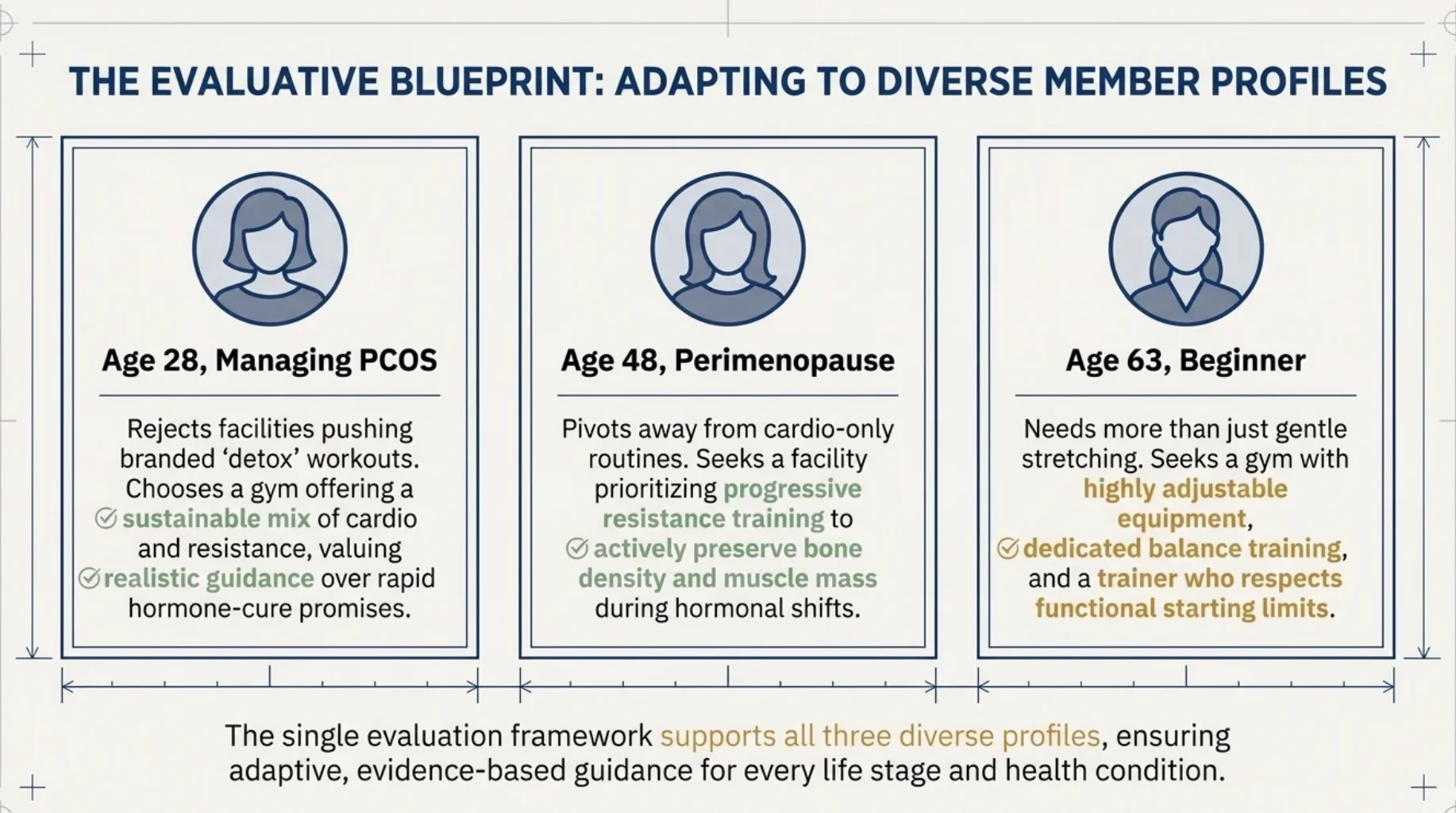
How to Choose a Women-Only Gym: Three Practical Examples
Example 1: A 28-Year-Old Woman With PCOS Who Wants to Improve Fitness
Consider a woman aged 28 who has PCOS and wants to improve fitness, body composition and metabolic health.
She visits two women-only gyms.
The first offers daily high-intensity workouts and advertises rapid PCOS reversal through a special exercise package.
The second provides aerobic and resistance-training options, individual progression and realistic guidance about exercise benefits.
The second gym may be more suitable because it focuses on sustainable physical activity rather than unsupported claims.
PCOS management may also involve medical care, nutritional changes and other interventions according to individual needs.
Example 2: A 48-Year-Old Woman Concerned About Weight Gain During Perimenopause
A woman aged 48 notices gradual weight gain and reduced strength during perimenopause.
She initially looks for a gym offering intensive cardio classes because she believes that burning more calories is the only way to improve her health.
However, a facility that provides progressive resistance training alongside aerobic exercise may better address her broader fitness needs.
Her programme should also consider sleep, symptoms, recovery and any relevant medical conditions.
The goal should be improved strength, fitness and metabolic health rather than focusing exclusively on the weighing scale.
Example 3: A 63-Year-Old Woman Joining a Gym for the First Time
A 63-year-old woman wants to improve strength and maintain independence.
She has not exercised regularly for several years and is concerned about using gym equipment.
A suitable gym would offer a gradual introduction, appropriately adjustable equipment, balance exercises and supervision.
The trainer should consider her functional ability and any relevant medical conditions.
She should not be excluded from resistance training solely because of her age.
Practical lesson: A good gym is not necessarily the most expensive, the most fashionable or the one with the largest number of classes. It is the facility that can safely support your personal fitness goals over time.
Women-Only Gym vs Mixed-Gender Gym: Which Is Better?
Women-only gyms and mixed-gender gyms can both provide effective exercise environments.
The most appropriate choice depends on personal preferences, facility quality and accessibility.
| Consideration | Women-Only Gym | Mixed-Gender Gym |
|---|---|---|
| Privacy preference | May better suit women who prefer a female-only environment | Depends on layout and individual comfort |
| Trainer qualifications | Must be assessed individually | Must be assessed individually |
| Strength-training equipment | Varies by facility | Varies by facility |
| Exercise effectiveness | Depends on programme quality and consistency | Depends on programme quality and consistency |
| Female trainers | May be more readily available | May also be available |
| Membership fees | Depend on location and services | Depend on location and services |
| Safety and hygiene | Require individual evaluation | Require individual evaluation |
| Long-term adherence | May be easier when personal preferences are met | May be equally suitable when comfortable and convenient |
There is no strong scientific basis for claiming that women-only gyms inherently produce superior weight-loss, strength or metabolic outcomes compared with well-managed mixed-gender facilities.
Comfort, access, programme quality and consistent participation are more meaningful considerations.

Frequently Asked Questions About Women-Only Gyms
1. Are Women-Only Gyms Better Than Regular Gyms?
Not automatically. Women-only gyms may provide greater comfort or privacy for some women, but exercise quality depends on training, equipment, supervision and consistency.
2. Are Women-Only Gyms Good for Beginners?
Yes, provided the facility offers suitable beginner instruction, appropriate equipment and gradual exercise progression.
3. Can Women Lose Weight by Joining a Gym?
Regular exercise can support weight management, but weight change also depends on nutrition, medical conditions, medications and other factors. Joining a gym does not guarantee weight loss.
4. Is Strength Training Safe for Women?
Appropriately designed resistance training is generally safe and beneficial for many women. Exercise selection and progression should reflect individual ability and relevant health considerations.
5. Will Weightlifting Make Women Bulky?
Not automatically. Muscle growth depends on training, nutrition, genetics and other factors. Resistance training is valuable for strength and functional health.
6. Are Women-Only Gyms Suitable for PCOS?
Yes. Women with PCOS can benefit from aerobic and resistance exercise. No single workout is universally superior, and exercise should be individualised.
7. Can Exercise Cure PCOS?
Exercise can improve several aspects of health in women with PCOS, but it should not be described as a guaranteed cure.
8. Should Pregnant Women Join a Gym?
Many women with uncomplicated pregnancies can exercise safely, but activities should be appropriate to their circumstances. Obstetric advice may be necessary, particularly when complications or concerning symptoms are present.
9. When Can Women Return to the Gym After Childbirth?
The timing depends on delivery type, recovery, symptoms and complications. A gradual return is usually appropriate, with individual medical or pelvic health advice when needed.
10. Are Women-Only Gyms Good After Menopause?
Yes. A suitable gym can support resistance training, aerobic activity and functional fitness, all of which can be valuable after menopause.
11. Can Women Above 60 Start Strength Training?
Yes. Many older women can benefit from appropriately supervised resistance training, with modifications according to functional ability and medical circumstances.
12. Is Cardio Better Than Weight Training for Women?
Both provide important but partly different benefits. A balanced programme commonly includes aerobic activity and muscle-strengthening exercise.
13. How Many Days a Week Should Women Exercise?
General adult physical activity recommendations include 150–300 minutes of moderate-intensity aerobic activity per week, or an equivalent amount of vigorous activity, alongside muscle-strengthening activities on at least two days per week.
Individuals should build towards appropriate activity levels according to their abilities and health status.
14. Do Women Need a Personal Trainer?
Not everyone needs ongoing personal training. However, beginners and people with specific training needs may benefit from professional instruction.
15. Should a Gym Trainer Provide a Diet Plan?
Trainers may provide general healthy-lifestyle education within their competence, but individual medical nutrition therapy and disease-specific dietary treatment should be provided by appropriately qualified professionals.
16. Can Gym Exercise Reduce Belly Fat?
Exercise can contribute to overall fat reduction and improved metabolic health, but abdominal exercises do not reliably produce selective fat loss from the abdomen.
17. Is a Medical Fitness Certificate Required Before Joining?
Not universally. The need for medical assessment depends on symptoms, existing conditions and intended exercise intensity.
18. What Should I Check During a Gym Trial Session?
Assess trainer behaviour, equipment quality, exercise instruction, cleanliness, crowding and whether the environment feels comfortable and respectful.
19. Are Expensive Women-Only Gyms Better?
Not necessarily. Higher fees do not guarantee better coaching, safer equipment or improved fitness outcomes.
20. What Is the Most Important Factor When Choosing a Women-Only Gym?
The most important consideration is whether the facility provides a safe, supportive and professionally managed environment that helps you exercise consistently.
Scientific References and Professional Guidelines
- World Health Organization. WHO Guidelines on Physical Activity and Sedentary Behaviour. Geneva: WHO; 2020. WHO Guidelines.
- Teede HJ, et al. Recommendations From the 2023 International Evidence-based Guideline for the Assessment and Management of Polycystic Ovary Syndrome. Human Reproduction. 2023;38(9):1655–1679. DOI.
- American College of Obstetricians and Gynecologists. Physical Activity and Exercise During Pregnancy and the Postpartum Period. Committee Opinion No. 804. 2020, reaffirmed 2023. ACOG Guidance.
- American Diabetes Association Professional Practice Committee. Standards of Care in Diabetes—2026. Diabetes Care. 2026. ADA Standards of Care.
- U.S. Centers for Disease Control and Prevention. Physical Activity Guidelines for Adults. CDC Physical Activity Guidance.
- World Health Organization. Physical Activity: Fact Sheet. Updated 2024. WHO Physical Activity Fact Sheet.
- National Institute on Aging. Exercise and Physical Activity Resources for Older Adults. NIA Exercise Resources.
Reference note: Foundational recommendations are included alongside more recent guidelines. Publication dates and recommendations should be checked against the latest official updates before clinical application.
Medical and Lifestyle Consultation in Dwarka, New Delhi
Women who are starting exercise after a long period of inactivity or who have important medical conditions may benefit from individual assessment and guidance.
Dr. Pankaj Kumar, General & Lifestyle Physician in Dwarka, New Delhi, provides consultations for general health concerns and lifestyle-related conditions, including obesity, diabetes, thyroid disorders, PCOS, hypertension and metabolic health.
Medical assessment may be particularly relevant for women experiencing concerning symptoms during exercise, those with significant health conditions or those requiring coordination between medical treatment and physical activity.
Clinic Information
Dr. Pankaj Kumar Medical & Lifestyle Clinic
Doctor: Dr. Pankaj Kumar
Designation: General & Lifestyle Physician
Qualifications: MBBS, DNB (Family Medicine)
Location: Sector 6, Dwarka, New Delhi – 110075
Consultation: In-person and online appointments
About the Author
Dr. Pankaj Kumar
MBBS, DNB (Family Medicine)
Diploma in Nutrition & Health Education
General & Lifestyle Physician
Founder, Diet Plus Minus
Dwarka, New Delhi
Dr. Pankaj Kumar is a General & Lifestyle Physician with a clinical interest in diabetes, obesity, metabolic health, hypertension, thyroid disorders, fatty liver disease and preventive medicine. His approach emphasises evidence-based medical care, practical health education and sustainable lifestyle modification.
Medical Disclaimer: This article is intended for general health education and does not replace individual medical advice, physiotherapy assessment or qualified fitness instruction. Exercise recommendations should be adapted to individual health conditions, symptoms and physical capacity. Pregnant women, postpartum women and individuals with significant medical conditions may require specific professional guidance. Stop exercising and seek appropriate medical assessment if you experience chest pain, fainting, severe breathlessness or other concerning symptoms.
If you want a personalized metabolic assessment and lifestyle strategy, you can book a consultation here:
Book an Appointment