
Resting Heart Rate and Fitness: What Changes Should You Pay Attention To?
Your smartwatch says your resting heart rate was 62 beats per minute last month.
This week, it is averaging 68.
Should you be concerned?
Or perhaps the opposite has happened.
You started walking, cycling and exercising regularly, and your resting heart rate gradually decreased from 76 to 66 beats per minute.
Does that prove your heart has become healthier?
Resting heart rate and fitness are related, but interpreting the number requires more context than many fitness trackers suggest.
Resting heart rate can reflect aspects of cardiovascular fitness and autonomic nervous system activity. Regular aerobic training often lowers resting heart rate over time because the cardiovascular system becomes more efficient.
But fitness is only one influence.
Your resting heart rate can also change because of:
- Sleep.
- Psychological stress.
- Illness.
- Dehydration.
- Heat.
- Alcohol.
- Caffeine.
- Medications.
- Hormonal factors.
- Training fatigue.
This means one unusually high or low reading rarely tells the entire story.
What often matters more is the trend.
If your usual resting heart rate is around 60 and your watch reports 64 tomorrow morning, that small difference may mean very little.
But if it remains substantially above your usual baseline for several days and you also feel unwell, unusually tired or breathless, the change becomes more meaningful.
The goal of tracking resting heart rate should therefore not be to chase the lowest possible number.
It should be to understand what is normal for you and recognise changes that deserve attention.

What Is Resting Heart Rate?
Resting heart rate is the number of times your heart beats per minute when your body is at rest.
In practical terms, it is best measured when you are:
- Awake.
- Physically relaxed.
- Not exercising.
- Not immediately after walking or climbing stairs.
- Not acutely stressed or rushing.
Many people measure it first thing in the morning before getting out of bed.
Wearable devices may estimate resting heart rate using multiple heart-rate readings collected during periods of inactivity.
The exact calculation can differ between devices.
What Is a Normal Resting Heart Rate?
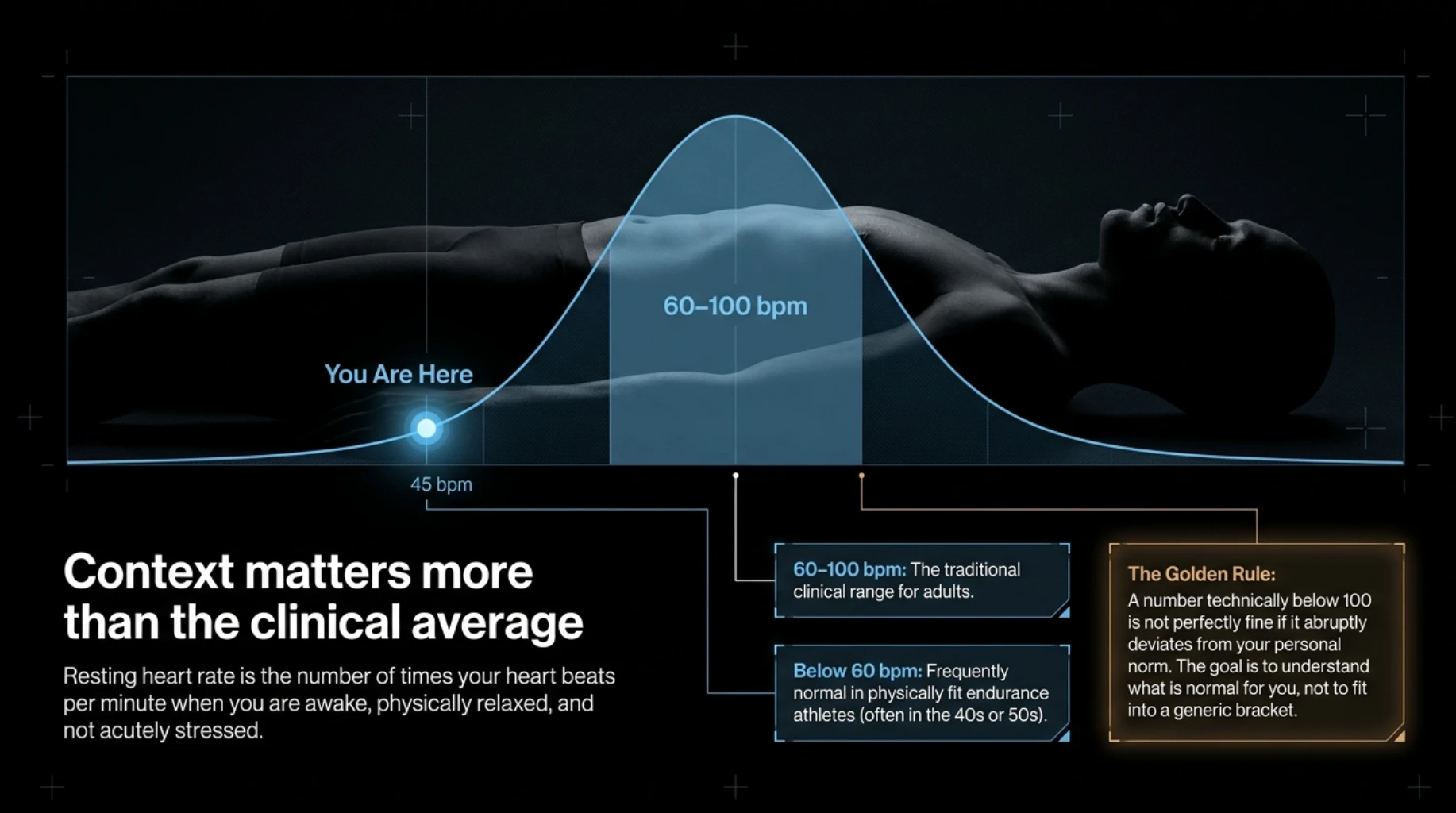
For many adults, a resting heart rate somewhere within approximately 60–100 beats per minute is traditionally considered within the usual clinical range.
But this range requires interpretation.
A resting heart rate below 60 is not automatically abnormal.
Well-trained endurance athletes and physically active people may naturally have resting heart rates in the 40s or 50s.
Conversely, being technically below 100 beats per minute does not necessarily mean a resting heart rate should be ignored if it has changed substantially from your usual level or is accompanied by symptoms.
| Resting Heart Rate | General Interpretation |
|---|---|
| Below 60 bpm | Can be normal in physically fit people, but symptoms, medications and medical context matter |
| 60–100 bpm | Falls within the traditional resting range for many adults, but individual baseline still matters |
| Above 100 bpm at rest | Generally considered tachycardia and deserves assessment when persistent or unexplained |
These numbers should not be treated as a self-diagnosis chart.
Heart rhythm, symptoms, medication and clinical context are equally important.
Is a Lower Resting Heart Rate Always Better?
No.
This is one of the most important misconceptions surrounding resting heart rate and fitness.
A lower resting heart rate can accompany improved aerobic fitness.
But the goal is not to make your heart rate as low as possible.
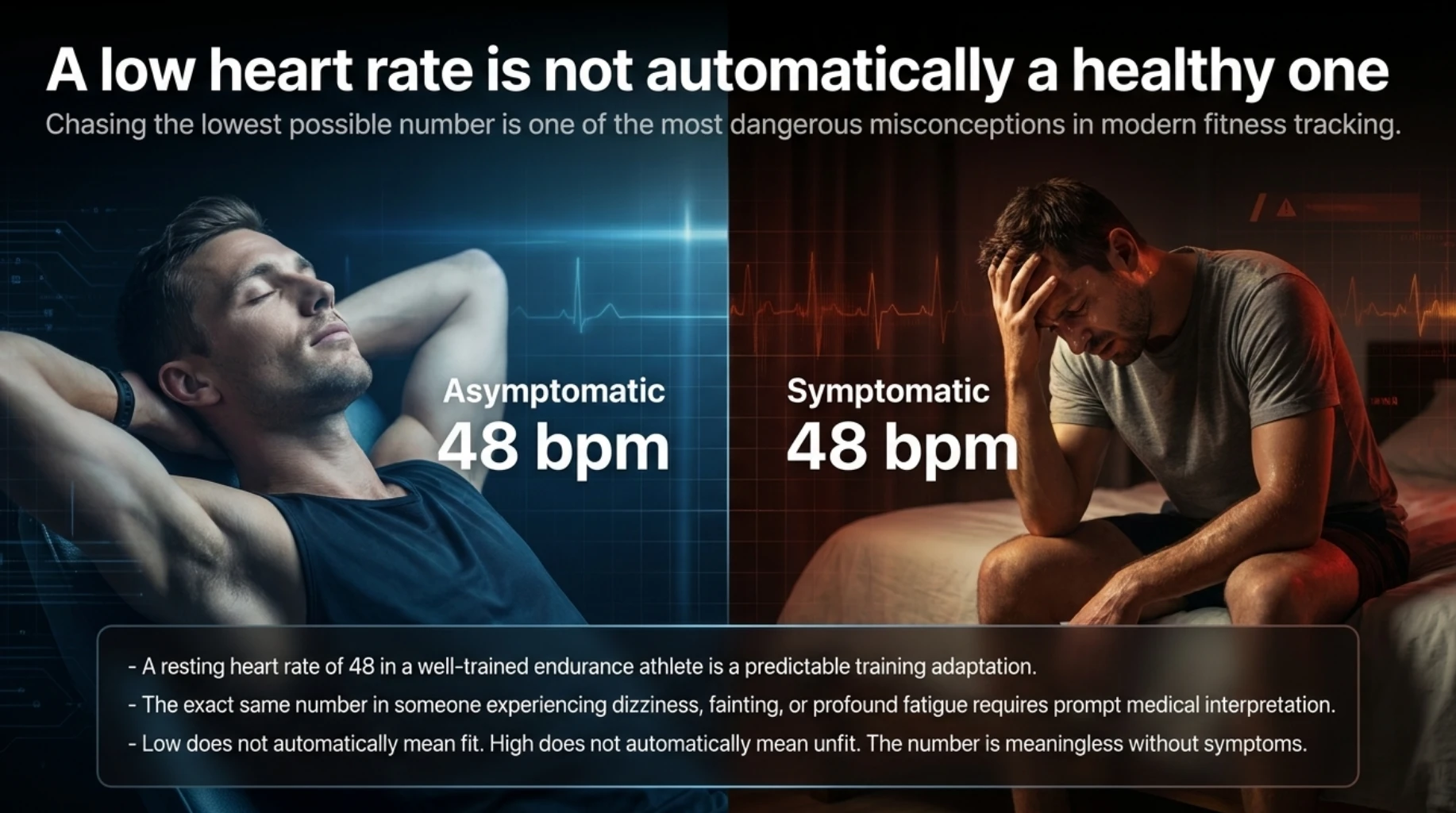
A resting heart rate of 48 beats per minute in a well-trained, asymptomatic endurance athlete may be completely expected.
The same number in someone who is experiencing dizziness, fainting or profound fatigue requires a different interpretation.
Low does not automatically mean fit.
High does not automatically mean unfit.
The number needs context.
Why Does Aerobic Fitness Lower Resting Heart Rate?
Regular aerobic training produces several cardiovascular adaptations.
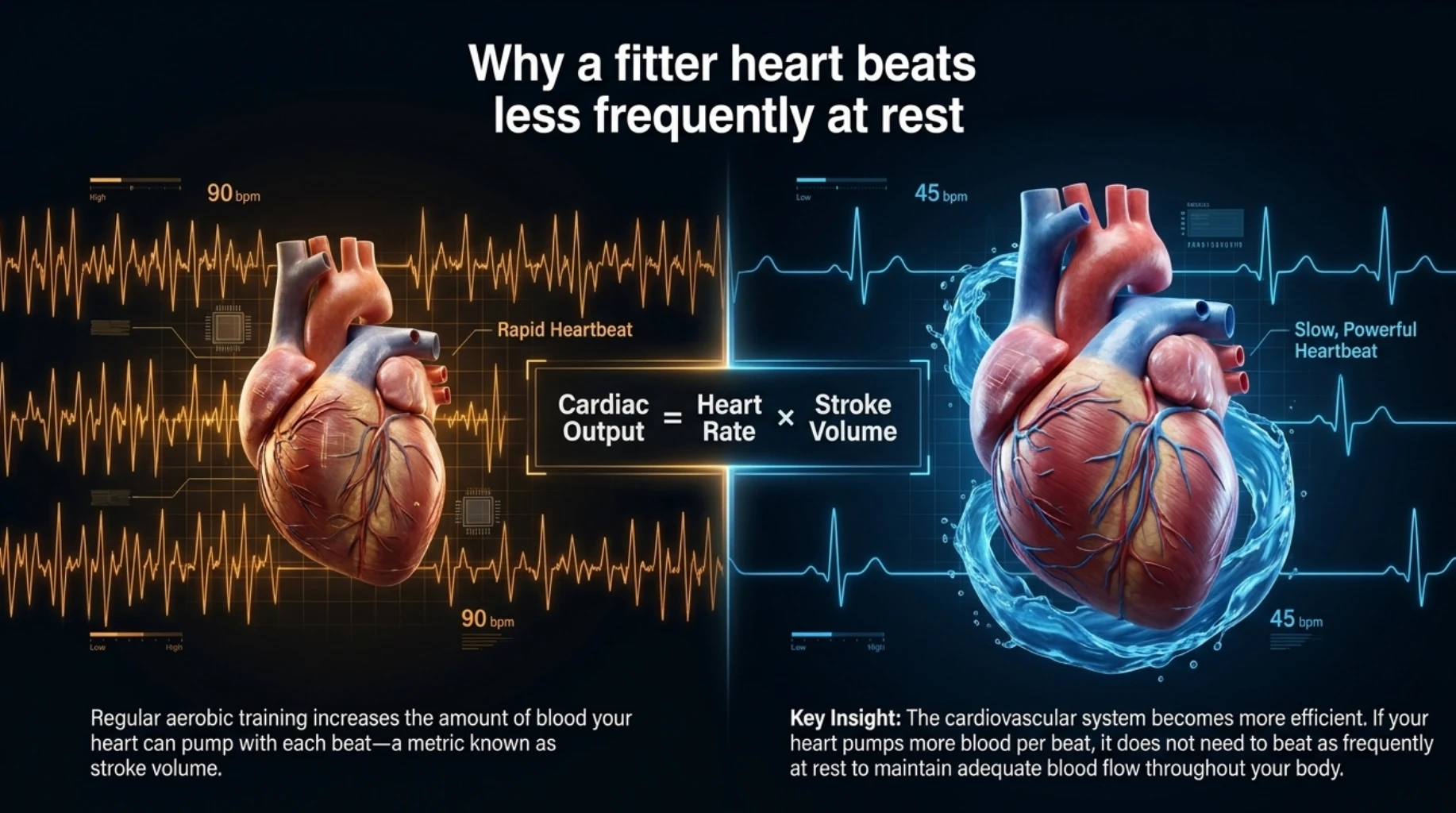
One important adaptation is an increase in the amount of blood the heart can pump with each beat, known as stroke volume.
If more blood can be pumped per beat, the heart may not need to beat as frequently at rest to maintain adequate cardiac output.
Training also influences autonomic regulation of the heart.
These adaptations help explain why endurance-trained individuals frequently have lower resting heart rates.
Resting Heart Rate and Stroke Volume
Cardiac output represents the amount of blood pumped by the heart per minute.
It depends on both heart rate and stroke volume.
In simplified terms:
Cardiac output = heart rate × stroke volume
If training increases stroke volume, the heart can sometimes maintain adequate resting cardiac output with fewer beats per minute.
This is one reason a gradually falling resting heart rate can accompany improving aerobic conditioning.
Does Strength Training Lower Resting Heart Rate?
Resistance training provides important cardiovascular and metabolic benefits, but its effects are not identical to those of endurance training.
Regular strength training can contribute to overall cardiovascular health and fitness.
However, if lowering resting heart rate is observed during an exercise programme, improvements in aerobic conditioning are often particularly relevant.
This is another reason a balanced programme can be useful.
Strength training develops muscular strength.
Aerobic exercise develops cardiorespiratory fitness.
Walking and general daily movement reduce sedentary behaviour.
These adaptations overlap, but they are not interchangeable.
Can Zone 2 Cardio Lower Resting Heart Rate?
Regular moderate-intensity aerobic exercise can improve cardiovascular fitness and may gradually lower resting heart rate in some people.
Zone 2-style training is one way of accumulating sustainable aerobic exercise.
But there is nothing magical about staying inside one exact heart-rate zone.
Brisk walking, cycling, swimming, jogging and other forms of aerobic activity can all contribute when performed at an appropriate intensity and consistently over time.
Higher-intensity aerobic exercise can also improve cardiovascular fitness.
The broader training programme matters more than one coloured zone on a smartwatch.
How Quickly Can Resting Heart Rate Change With Exercise?
There is no universal timeline.
Some previously sedentary people may notice changes over the first several weeks or months of consistent aerobic training.
Others may show relatively little change in resting heart rate despite meaningful improvements in fitness.
The response depends on:
- Starting fitness.
- Exercise frequency.
- Exercise intensity.
- Training volume.
- Genetics.
- Age.
- Medication.
- Sleep and recovery.
- Medical conditions.
This is why resting heart rate should not become the only way you judge whether exercise is working.
Resting Heart Rate Is Not the Same as Cardiovascular Fitness
A lower resting heart rate can accompany better aerobic conditioning, but it is not a direct measurement of fitness.
Cardiorespiratory fitness refers to the ability of the cardiovascular and respiratory systems to supply oxygen during sustained physical activity.
Measures such as VO₂ max or exercise performance provide different information.
| Measurement | What It Mainly Tells You |
|---|---|
| Resting heart rate | How frequently the heart is beating during rest |
| Exercise heart rate | Heart-rate response to a particular workload |
| Heart-rate recovery | How heart rate falls after exercise stops or intensity decreases |
| VO₂ max | Maximal cardiorespiratory fitness |
| Walking or running performance | Real-world exercise capacity influenced by several physiological factors |
Looking at several measures gives a better picture than relying on resting heart rate alone.
Why Your Resting Heart Rate Changes From Day to Day
One of the biggest mistakes people make with wearables is treating every daily change as meaningful.
Human physiology is not perfectly stable.
Your resting heart rate may naturally fluctuate from one day to another.
For example, imagine your recent morning readings are:
62 → 61 → 63 → 60 → 64 → 62 beats per minute.
That pattern is very different from:
62 → 68 → 71 → 72 → 70 → 71 beats per minute.
The second pattern represents a more sustained departure from the previous baseline.
It does not tell us the cause, but it gives us more reason to ask why the change occurred.
Resting Heart Rate and Sleep
Poor sleep can influence autonomic activity, stress physiology and recovery.
After a short or disturbed night, some people notice a higher-than-usual resting heart rate the following day.
This is particularly common when poor sleep occurs alongside:
- Stress.
- Alcohol.
- Late-night eating.
- Travel.
- Hard training.
One elevated reading after a poor night’s sleep usually provides much less information than a persistent change.
Resting Heart Rate and Stress
Psychological stress can increase sympathetic nervous system activity.
This can increase heart rate even when you are not exercising.
You may notice this before:
- An important meeting.
- An examination.
- A medical procedure.
- A stressful journey.
- An emotionally difficult event.
This does not mean every increase in resting heart rate is “just anxiety.”
It means stress is one possible contributor that should be considered alongside other causes.
Resting Heart Rate and Dehydration
Dehydration can reduce circulating plasma volume.
The cardiovascular system may compensate partly by increasing heart rate to maintain circulation.
This is why your heart rate may be higher after:
- Heavy sweating.
- Prolonged exercise.
- Hot weather.
- Vomiting.
- Diarrhoea.
- Inadequate fluid intake.
A higher heart rate accompanied by dizziness, weakness or significant fluid loss deserves more attention than a small isolated change on a smartwatch.
Resting Heart Rate in Hot Weather
Heat places additional demands on the cardiovascular system.
More blood is directed towards the skin to help dissipate heat, and sweating increases fluid loss.
As a result, heart rate may be somewhat higher in hot conditions even at the same physical workload.
This matters when comparing fitness data across seasons.
A heart rate recorded during a hot, humid Delhi afternoon should not necessarily be compared directly with a reading obtained under cool, comfortable conditions.
Resting Heart Rate and Fever
Illness is an important reason resting heart rate can rise.
Fever commonly increases heart rate.
Inflammation, dehydration and the body’s stress response during infection can contribute as well.
Sometimes a wearable detects a change before someone fully recognises that they are becoming unwell.
However, an elevated resting heart rate cannot tell you which infection or illness is present.
It is a signal—not a diagnosis.
Can a Higher Resting Heart Rate Mean You Are Getting Sick?
Sometimes.
A sustained increase above your normal baseline can occur during infection or other physiological stress.
But the same pattern can also occur because of poor sleep, dehydration, alcohol, psychological stress or heavy training.
Look for accompanying symptoms.
For example:
- Fever.
- Sore throat.
- Cough.
- Body aches.
- Diarrhoea or vomiting.
- Unusual fatigue.
The combination provides more information than heart rate alone.
Resting Heart Rate and Alcohol
Alcohol can alter sleep quality, hydration and autonomic nervous system activity.
Many wearable users notice a higher overnight or morning heart rate after drinking alcohol.
This can occur even when they do not feel obviously unwell the next morning.
The response varies between individuals and depends partly on the amount consumed and other circumstances.
It is another example of why resting heart rate reflects more than fitness.
Resting Heart Rate and Caffeine
Caffeine can influence heart rate and blood pressure, although individual responses vary considerably.
Habitual caffeine users may respond differently from people who rarely consume it.
If you are trying to compare resting heart-rate measurements manually, taking the measurement under similar conditions—such as before morning coffee—can reduce one source of variability.
Resting Heart Rate and Overtraining
When training load increases substantially without enough recovery, resting heart rate may change in some people.
But an elevated resting heart rate alone cannot diagnose overtraining syndrome.
Training fatigue should be assessed more broadly.
Relevant clues may include:
- Persistent fatigue.
- Declining exercise performance.
- Poor sleep.
- Loss of motivation.
- Persistent muscle soreness.
- Mood changes.
- Repeated illness.
A single high morning heart rate after a difficult workout is very different from a sustained deterioration in performance and recovery.
Can Resting Heart Rate Tell You Whether You Need a Rest Day?
It can provide one piece of information.
Suppose your resting heart rate is usually around 58–62 beats per minute.
You wake up after several hard workouts and see 72.
You also slept poorly, your legs feel unusually heavy and your normal training pace feels difficult.
Together, those observations may suggest that recovery deserves attention.
But if your resting heart rate is 65 instead of 62 and you otherwise feel excellent, automatically cancelling your workout may be unnecessary.
Use the metric alongside how you feel and how you perform.
Resting Heart Rate and Recovery: Look for Patterns
| Pattern | Possible Interpretation |
|---|---|
| Small one-day increase | Normal variation, sleep, stress, hydration or recent activity may contribute |
| Several days above usual baseline | Consider illness, recovery, stress, dehydration, alcohol or other physiological changes |
| Gradual decline over months with improved aerobic performance | May be compatible with improving cardiovascular conditioning |
| Very low heart rate with dizziness or fainting | Requires medical assessment rather than assuming it represents excellent fitness |
| Persistent resting rate above 100 bpm | Should not be dismissed as poor fitness without appropriate evaluation |
| Sudden major change with chest pain or significant breathlessness | Requires prompt medical attention |
Resting Heart Rate and Fitness: Trend Beats a Single Number
This is the principle I would emphasise most strongly.
Your personal baseline is often more useful than comparing yourself with another person.
Someone whose normal resting heart rate is 52 may have a meaningful change when it remains at 68.
Another person’s normal resting heart rate may naturally sit around 72.
The second person is not automatically less healthy simply because their number is higher.
Age, genetics, fitness, medications and many other factors influence resting heart rate.
Rather than asking:
“Is my resting heart rate lower than everyone else’s?”
ask:
“What is normal for me, and is that pattern changing?”
When a Falling Resting Heart Rate May Reflect Better Fitness
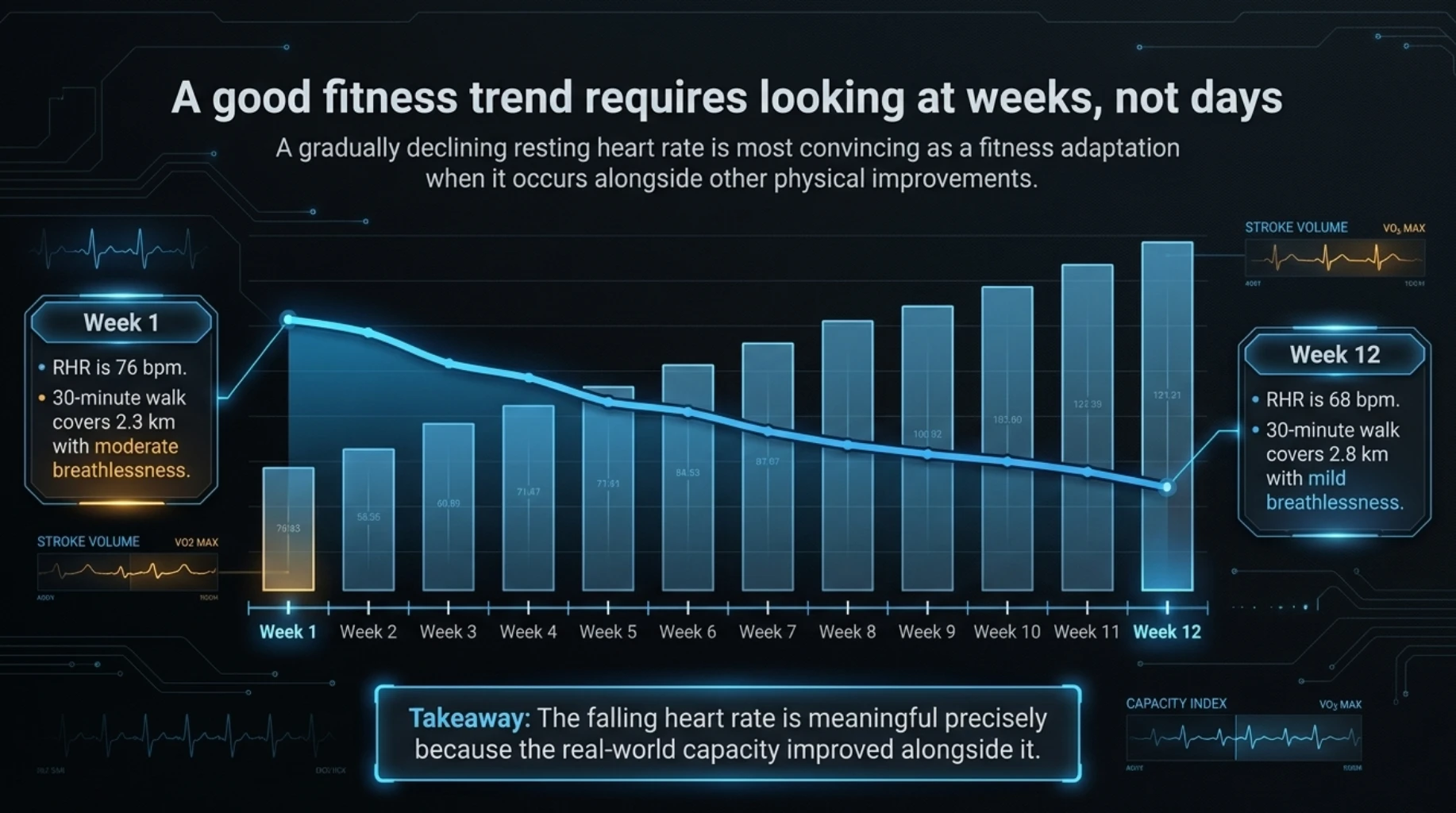
A gradually declining resting heart rate is most convincing as a fitness adaptation when it occurs alongside other improvements.
For example:
- You can walk faster at the same effort.
- Your usual cycling route feels easier.
- You can exercise for longer.
- Your exercise heart rate is lower at the same workload.
- You recover more comfortably after aerobic activity.
Now the heart-rate trend fits into a larger pattern.
That is much more meaningful than celebrating a lower number in isolation.
When a Falling Resting Heart Rate Should Not Automatically Be Celebrated
If resting heart rate becomes unusually low and you also develop symptoms, the interpretation changes.
Pay particular attention to:
- Dizziness.
- Fainting or near-fainting.
- Unusual fatigue.
- Exercise intolerance.
- Confusion.
- Significant breathlessness.
- Chest discomfort.
Medications can also lower heart rate.
A low number caused by medication or a heart rhythm problem is not the same thing as a training adaptation.
Resting Heart Rate Is Useful Because It Is Easy—But That Is Also Its Limitation
Modern wearables allow us to measure heart rate almost continuously.
That can be useful.
But access to more data does not automatically create better understanding.
A resting heart rate should be treated as one physiological signal among many.
It becomes more informative when interpreted alongside:
- Exercise performance.
- Sleep.
- Symptoms.
- Training load.
- Illness.
- Medication.
- Blood pressure where relevant.
- Overall cardiovascular risk.
How Accurate Are Smartwatches for Resting Heart Rate?
For many people, modern wrist-worn devices provide reasonably useful estimates of resting heart rate, particularly when the person is still and the device fits properly.
That does not mean every reading is exact.
Most watches use optical sensors that detect changes in blood flow beneath the skin. The signal can be affected by several factors, including:
- Loose or incorrect watch placement.
- Movement.
- Poor skin contact.
- Cold extremities.
- Device algorithms.
- Irregular heart rhythms.
The practical value of a smartwatch is often not whether it distinguishes 61 from 62 beats per minute perfectly.
Its greater value may be that it measures heart rate repeatedly under reasonably similar conditions and allows you to observe longer-term trends.

Smartwatch Resting Heart Rate Is Not Necessarily Your Morning Pulse
This causes considerable confusion.
Your smartwatch may report a “resting heart rate” that does not match the number you see when you manually check your pulse after waking.
That does not necessarily mean either measurement is wrong.
Different manufacturers can calculate resting heart rate differently.
A device may use heart-rate readings collected during periods of inactivity across the day rather than simply displaying your lowest overnight value or your pulse immediately after waking.
For this reason, comparisons are most useful when you use the same device consistently.
Resting Heart Rate vs Sleeping Heart Rate
These terms should not automatically be used interchangeably.
Heart rate often falls during sleep, although the pattern changes across different sleep stages.
Your lowest sleeping heart rate may therefore be considerably lower than your daytime resting heart rate.
| Measurement | What It Represents |
|---|---|
| Manual resting pulse | Heart rate measured while awake and physically resting |
| Wearable resting heart rate | An algorithm-derived estimate based on the device manufacturer’s methodology |
| Sleeping heart rate | Heart rate measured during sleep |
| Lowest heart rate | The lowest recorded value, which may occur during sleep and is not necessarily the same as resting heart rate |
| Exercise heart rate | Heart rate during physical activity at a particular workload |
Before comparing numbers, make sure you are comparing the same measurement.
How Should You Measure Resting Heart Rate Manually?
If you want a simple manual measurement, morning can be convenient.
After waking, remain relaxed for several minutes before significant activity.
You can feel your pulse at the wrist and count the beats.
For a regular rhythm, counting for 30 seconds and multiplying by two can provide an estimate.
If the rhythm feels irregular, counting for a full minute is more informative, although persistent or newly detected irregularity should not be diagnosed from self-pulse checking alone.
For trend monitoring, try to measure under similar conditions each time.
Should You Check Resting Heart Rate Every Day?
You can, particularly if your wearable collects the information automatically.
But there is rarely a need to react to every daily fluctuation.
If repeatedly checking the number creates anxiety without changing any useful health behaviour, less frequent review may actually be more helpful.
Weekly averages and longer-term trends are often easier to interpret than individual daily values.
Resting Heart Rate After 40: What Changes?
There is no special heart-rate switch that occurs on your 40th birthday.
However, the decades after 40 are often when cardiovascular risk factors and changes in physical activity become more relevant.
People may become:
- More sedentary.
- Less aerobically fit.
- Heavier around the waist.
- More likely to develop hypertension.
- More likely to develop insulin resistance or diabetes.
- More likely to use medications that affect heart rate.
At the same time, someone who begins regular exercise at 45 can substantially improve fitness.
Chronological age does not prevent cardiovascular adaptation.
Does Resting Heart Rate Increase With Age?
The relationship is not simple enough to say that resting heart rate must steadily rise every year as you get older.
Ageing affects cardiovascular physiology, but resting heart rate is influenced by many competing factors.
Physical activity, medication, autonomic function, disease and fitness all matter.
This is another reason personal trends are more useful than assuming a particular heart rate belongs to a particular age.
Resting Heart Rate and Fitness After 40
After 40, I would not use resting heart rate as the sole measure of cardiovascular fitness.
A more useful picture includes what your body can actually do.
For example:
- Can you walk briskly without excessive breathlessness?
- Can you climb several flights of stairs?
- Can you sustain moderate aerobic exercise?
- Is the same exercise workload becoming easier?
- Are you recovering appropriately after exercise?
If your resting heart rate gradually falls while these measures improve, the overall pattern becomes much more consistent with improving aerobic fitness.
Resting Heart Rate and Exercise Heart Rate Tell Different Stories
Imagine you normally walk on a treadmill at 5.5 km/h.
Three months ago, that workload produced an average heart rate of 135 beats per minute.
After consistent training, the same speed and incline produce 122 beats per minute and feel easier.
That change may reflect improved efficiency at that workload.
Your resting heart rate may also have fallen—but it does not have to.
Exercise performance can improve even when resting heart rate changes only modestly.
Heart Rate Recovery Is Different From Resting Heart Rate
Heart-rate recovery describes how quickly heart rate decreases after exercise stops or intensity is substantially reduced.
It provides different information from resting heart rate.
After exercise, parasympathetic activity begins to recover and sympathetic drive decreases, allowing heart rate to fall.
Fitness can influence this response.
However, heart-rate recovery is also affected by:
- How hard the exercise was.
- Whether you stop completely or continue walking.
- Temperature.
- Hydration.
- Medication.
- The measurement protocol.
For that reason, comparing heart-rate recovery requires a reasonably standardised exercise and recovery method.
Is Faster Heart-Rate Recovery Better?
Generally, an appropriate and relatively prompt decline after exercise is considered favourable.
But comparing your number with random values online can be misleading because testing protocols differ.
For personal fitness tracking, a more practical approach is to compare similar workouts under similar conditions.
If your exercise capacity improves and your heart rate settles more comfortably after the same workload, that can be useful evidence of adaptation.
Resting Heart Rate and VO₂ Max Are Not the Same
VO₂ max reflects maximal cardiorespiratory capacity.
Resting heart rate does not.
A person can improve VO₂ max substantially while showing only a modest change in resting heart rate.
Similarly, a naturally low resting heart rate does not prove that someone has exceptional VO₂ max.
If you want to understand fitness, performance matters.
Can Weight Loss Lower Resting Heart Rate?
It can in some people, particularly when weight loss occurs alongside increased physical activity and improved cardiovascular conditioning.
But the response is not universal.
Weight loss can influence several physiological factors simultaneously, including:
- Cardiovascular workload.
- Blood pressure.
- Insulin sensitivity.
- Sleep quality.
- Physical activity.
- Autonomic function.
Therefore, a falling resting heart rate during weight loss should not automatically be attributed to the loss of body fat itself.

What if Resting Heart Rate Rises During Weight Loss?
A rising heart rate during weight loss deserves context.
Potential contributors include:
- Dehydration.
- Very low calorie intake.
- Illness.
- Anaemia.
- Excessive training.
- Poor sleep.
- Stress.
- Medication effects.
Rapid weight loss combined with weakness, dizziness, palpitations or poor exercise tolerance should not simply be interpreted as part of “getting fit.”
Resting Heart Rate During Medical Weight Loss
People undergoing medical treatment for obesity increasingly track heart rate, sleep and activity with wearable devices.
This can provide useful additional information, but the numbers need clinical context.
If appetite becomes very low and food or fluid intake falls substantially, dehydration and reduced nutritional intake can influence how someone feels during exercise.
A persistent change in resting heart rate accompanied by symptoms deserves assessment rather than simply adjusting a smartwatch target.
Resting Heart Rate and Diabetes
Diabetes does not produce one characteristic resting heart rate.
However, diabetes can coexist with several factors that influence cardiovascular function, including:
- Obesity.
- Hypertension.
- Reduced cardiovascular fitness.
- Sleep apnoea.
- Autonomic dysfunction in some people with longstanding diabetes.
Resting heart rate therefore needs to be interpreted as part of the broader clinical picture.
It cannot diagnose diabetes or tell you whether diabetes is well controlled.
Resting Heart Rate and Insulin Resistance
Observational research has found relationships between higher resting heart rate and various cardiometabolic risk factors.
But this does not mean heart rate can be used to diagnose insulin resistance.
Many of the same lifestyle and physiological factors can influence both metabolic health and heart rate.
Regular exercise may improve both without one necessarily being the direct cause of the other.
Resting Heart Rate and Fatty Liver
There is no specific resting heart-rate pattern that diagnoses metabolic fatty liver.
However, people with fatty liver frequently have overlapping metabolic risk factors such as abdominal obesity, insulin resistance, diabetes, hypertension and reduced physical activity.
Improving aerobic fitness is valuable in this population, but progress should not be judged by resting heart rate alone.
Waist circumference, metabolic parameters, exercise capacity and liver-related assessment remain separate considerations.
Resting Heart Rate and Blood Pressure Are Different Measurements
Heart rate tells you how frequently your heart is beating.
Blood pressure tells you about the pressure within the arterial circulation.
One cannot be reliably inferred from the other.
You can have:
- A normal heart rate with high blood pressure.
- A high heart rate with normal blood pressure.
- A low heart rate with high blood pressure.
- Changes in both simultaneously.
This is why a resting heart rate of 65 does not mean your blood pressure must be normal.
Resting Heart Rate and Thyroid Function
Thyroid disorders can influence heart rate.
Excess thyroid hormone can produce a faster heart rate and palpitations, while reduced thyroid function can sometimes be associated with a slower heart rate.
But resting heart rate is far too nonspecific to diagnose thyroid disease.
A persistent unexplained change accompanied by other compatible symptoms may contribute to the clinical decision to investigate further.
Resting Heart Rate and Anaemia
Anaemia can cause the cardiovascular system to compensate for reduced oxygen-carrying capacity.
Some people develop a faster heart rate, particularly with exertion, along with symptoms such as:
- Fatigue.
- Breathlessness.
- Reduced exercise tolerance.
- Dizziness.
- Palpitations.
A smartwatch cannot diagnose anaemia.
If your resting or exercise heart rate has changed significantly and your exercise tolerance has deteriorated, the overall clinical picture matters more than the wearable number alone.
Resting Heart Rate and Sleep Apnoea
Sleep apnoea can affect cardiovascular physiology through repeated episodes of airway obstruction, oxygen changes and sympathetic nervous system activation during sleep.
It is also strongly associated with conditions such as obesity and hypertension.
Someone with loud snoring, witnessed pauses in breathing, morning headaches or excessive daytime sleepiness should not use a normal resting heart rate as reassurance that sleep apnoea is absent.
Heart rate is not a screening substitute for appropriate sleep assessment.
Medications Can Change Resting Heart Rate
This is particularly important when interpreting fitness data.
Some medicines can lower heart rate, while others may increase it directly or indirectly.
A change after starting or adjusting medication may therefore have little to do with fitness.
Medication history should always be considered when a person’s resting heart rate changes significantly.
Beta-Blockers and Resting Heart Rate
Beta-blockers commonly reduce heart rate by limiting the effect of sympathetic stimulation on the heart.
They may be prescribed for several cardiovascular indications and other conditions.
If someone taking a beta-blocker has a resting heart rate of 55, that cannot automatically be interpreted as evidence of excellent aerobic fitness.
The medication is influencing the number.
Beta-blockers also affect exercise heart rate.
This makes generic age-predicted training zones less reliable.
Perceived exertion, the talk test and individual clinical guidance can therefore become particularly useful when prescribing exercise.
Should You Stop a Medicine Because Your Heart Rate Is Low?
No medication should be stopped solely because a smartwatch displays a low heart rate.
If you develop an unexpectedly low heart rate, particularly with dizziness, fainting, weakness or exercise intolerance, discuss it with your treating clinician.
The appropriate response may involve reviewing the medication, dose, rhythm and overall clinical situation.
Do not independently stop a prescribed cardiovascular medicine based on a wearable reading.
What About Medicines That Increase Heart Rate?
Several medications and substances can influence heart rate.
Depending on the person and situation, examples may include certain:
- Bronchodilators.
- Decongestants.
- Stimulant medications.
- Thyroid hormone when the dose is excessive.
- Other drugs affecting autonomic activity.
The important question is whether a change is expected, persistent and clinically significant.
Resting Heart Rate and Menopause
Some women notice more awareness of palpitations or heart-rate fluctuations during the menopausal transition.
Sleep disruption, hot flushes, stress and hormonal changes may all contribute to symptoms.
However, new palpitations should not automatically be attributed to menopause.
Persistent or concerning symptoms may require assessment for other causes such as rhythm disturbances, thyroid disease, anaemia or medication effects.
Resting Heart Rate and Pregnancy
Pregnancy produces substantial cardiovascular adaptations, including an increase in blood volume and cardiac output.
Resting heart rate commonly increases during pregnancy.
This is a physiological situation where comparing current heart rate with a pre-pregnancy fitness baseline can be misleading.
Symptoms and obstetric context should guide assessment.
When Is a High Resting Heart Rate Concerning?
A persistent resting heart rate above 100 beats per minute is generally described as tachycardia.
That does not identify the cause.
Possible explanations range from temporary physiological stress to medical conditions requiring treatment.
Examples include:
- Fever.
- Dehydration.
- Anaemia.
- Thyroid excess.
- Medication or stimulant effects.
- Heart rhythm disturbances.
- Other acute illness.
Persistent unexplained tachycardia deserves medical evaluation rather than simply being labelled poor fitness.
When Is a Low Resting Heart Rate Concerning?
A resting heart rate below 60 beats per minute is called bradycardia in conventional clinical terminology, but it is not automatically a disease.
It can be normal in trained individuals.
Concern increases when a low heart rate is new, unexplained or associated with symptoms such as:
- Fainting.
- Near-fainting.
- Dizziness.
- Marked weakness.
- Exercise intolerance.
- Chest discomfort.
- Significant breathlessness.
Medication use and heart rhythm also need consideration.
What if Your Resting Heart Rate Suddenly Changes by 10–15 Beats?
There is no universal rule that a particular increase automatically represents danger.
Instead, ask several questions.
| Question | Why It Matters |
|---|---|
| Is this one reading or a persistent trend? | Sustained changes are usually more informative than isolated fluctuations |
| Did you sleep poorly? | Sleep disruption can influence resting heart rate |
| Have you been training harder? | Training stress and inadequate recovery may affect the trend |
| Are you unwell? | Fever, infection and inflammation can raise heart rate |
| Could you be dehydrated? | Fluid loss can increase cardiovascular demand |
| Was alcohol involved? | Alcohol can influence sleep, hydration and autonomic activity |
| Has a medication changed? | Some medicines alter heart rate |
| Do you have symptoms? | Chest pain, fainting or significant breathlessness substantially change the urgency |

Do Not Ignore the Rhythm
The number of beats per minute is only one part of heart-rate assessment.
The rhythm matters too.
A pulse can be 80 beats per minute and still be irregular.
If you repeatedly notice an irregular heartbeat, unexpected racing, fluttering or episodes of palpitations, assessment may be appropriate even when the average heart rate appears “normal.”
A wearable notification can sometimes provide useful information, but it does not replace a clinical-quality electrocardiogram when a rhythm diagnosis is required.
Palpitations Are Not the Same as a High Resting Heart Rate
Palpitations describe the sensation of being aware of your heartbeat.
You may experience:
- Racing.
- Pounding.
- Fluttering.
- Skipped-beat sensations.
Some people experience palpitations with a normal measured heart rate.
Others have tachycardia without being particularly aware of it.
The symptom and the number therefore need to be considered separately.
When a Change in Resting Heart Rate Needs Urgent Attention
Heart-rate data become much more important when accompanied by concerning symptoms.
Seek prompt medical attention for a significant heart-rate abnormality accompanied by symptoms such as:
- Chest pain or pressure.
- Fainting.
- Severe or unexplained breathlessness.
- Marked dizziness or near-fainting.
- New confusion.
- Severe weakness.
- Persistent rapid or markedly abnormal heartbeat with significant symptoms.
Do not spend time repeatedly checking the smartwatch when significant symptoms are present.
What Changes in Resting Heart Rate Should You Actually Pay Attention To?
The most useful approach is to combine magnitude, duration and symptoms.
| Change | How to Think About It |
|---|---|
| 2–4 bpm different for one day | Often normal day-to-day variation |
| Persistent increase above your usual baseline | Look at sleep, illness, stress, hydration, alcohol, medication and recovery |
| Gradual reduction with improving exercise performance | May be compatible with improved aerobic conditioning |
| Unexpected progressive decline with symptoms | Requires medical context rather than assuming improved fitness |
| Persistent resting rate above 100 bpm | Needs evaluation if unexplained |
| New irregularity or recurrent palpitations | May require rhythm assessment even when average rate is normal |
| Any major change with chest pain, fainting or severe breathlessness | Seek prompt medical assessment |
Do Not Chase a Resting Heart Rate of 50
Fitness culture sometimes turns physiological measurements into competitions.
Resting heart rate should not become one of them.
If your healthy baseline is 64 beats per minute, there is no reason to believe that forcing it towards 50 should become a fitness objective.
The better goal is to improve cardiovascular capacity.
Can you do more work?
Can you sustain aerobic activity more comfortably?
Can you recover appropriately?
Can you remain physically active consistently?
Those outcomes matter more than winning a lowest-heart-rate contest.
What a Good Fitness Trend Might Look Like
Suppose a previously sedentary adult begins a structured programme containing brisk walking, moderate aerobic exercise and resistance training.
Over several months:
- Resting heart rate falls from around 78 to around 69 beats per minute.
- The same walking pace produces a lower exercise heart rate.
- Walking speed improves.
- Stairs cause less breathlessness.
- Exercise duration increases.
- Recovery feels easier.
That combination provides much stronger evidence of improving fitness than the resting heart-rate change alone.
What if Fitness Improves but Resting Heart Rate Does Not Fall?
That can happen.
Do not assume your training has failed.
If you can exercise longer, perform more work at the same perceived effort and demonstrate improved cardiorespiratory capacity, those changes are meaningful.
Resting heart rate is only one response to training.
It is not a mandatory fitness scorecard.
Resting Heart Rate and Fitness: Use the Number as a Clue
A resting heart rate is most useful when it leads to better questions.
If it is gradually decreasing:
Is your fitness improving too?
If it suddenly increases:
Are you ill, dehydrated, sleep deprived, stressed or recovering from unusually hard training?
If it becomes unusually low:
Are you highly trained and completely asymptomatic, or are you dizzy and struggling with exercise?
If the rhythm feels abnormal:
Is this really an issue of rate at all, or does the rhythm itself require assessment?
Those questions turn wearable data into useful health information rather than simply producing another number to monitor.
The Bigger Lesson From Resting Heart Rate Tracking
The growing availability of wearable devices has made heart-rate data accessible to millions of people.
That is potentially useful.
But health monitoring works best when measurements are interpreted physiologically rather than competitively.
A lower number is not automatically better.
A higher number is not automatically disease.
And one unusual morning reading rarely deserves the same attention as a sustained trend accompanied by symptoms or declining exercise capacity.
For resting heart rate and fitness, the pattern matters far more than the pursuit of a perfect number.
How to Track Resting Heart Rate Without Becoming Obsessed With It
Resting heart rate is useful because it is simple and easy to measure.
But once a smartwatch starts producing a new number every morning, it is easy to give every fluctuation more importance than it deserves.
A better approach is to establish your personal baseline and look for meaningful trends.
If you use a wearable, review averages over several days or weeks rather than reacting to every morning’s value.
If you measure manually, try to use similar conditions each time.
Consistency matters more than collecting as many measurements as possible.
A Practical Resting Heart Rate Tracking Strategy
| What to Track | Practical Approach |
|---|---|
| Resting heart rate | Look at your usual range and longer-term trend rather than one isolated reading |
| Sleep | Notice whether unusually high readings follow poor or shortened sleep |
| Training load | Consider whether exercise volume or intensity has recently increased |
| Illness | Look for fever, respiratory symptoms, gastrointestinal illness or unusual fatigue |
| Hydration | Consider heat exposure, sweating, vomiting, diarrhoea or reduced fluid intake |
| Alcohol | Note whether overnight and morning heart rate changes after drinking |
| Symptoms | Pay particular attention to chest discomfort, dizziness, fainting, breathlessness or palpitations |
| Exercise performance | Track whether the same workload is becoming easier or harder |
This gives the number context.
Without context, a resting heart rate is simply another measurement.
Common Mistakes When Interpreting Resting Heart Rate and Fitness
Mistake 1: Assuming Lower Is Always Better
A lower resting heart rate commonly accompanies endurance fitness, but that does not mean the lowest possible heart rate is the healthiest.
A low rate associated with dizziness, fainting or exercise intolerance deserves medical attention rather than celebration.
Mistake 2: Comparing Your Heart Rate With Someone Else’s
Your friend may have a resting heart rate of 52 while yours is 68.
That comparison tells you surprisingly little by itself.
Genetics, fitness, medication, age, body size and autonomic physiology all contribute.
Your own baseline is often more useful.
Mistake 3: Reacting to One High Reading
A single elevated reading after poor sleep, dehydration, stress or a demanding workout may be temporary.
Look for persistence and associated symptoms.
Mistake 4: Assuming Every Increase Means Overtraining
Training fatigue is only one possible explanation.
Illness, alcohol, heat, dehydration, medication and psychological stress can all raise heart rate.
Overtraining cannot be diagnosed from one wearable metric.
Mistake 5: Assuming a Normal Resting Heart Rate Means the Heart Is Healthy
A normal resting heart rate does not exclude hypertension, coronary disease, abnormal cholesterol or other cardiovascular conditions.
Heart rate is only one part of cardiovascular assessment.
Mistake 6: Assuming a Low Resting Heart Rate Proves High Fitness
Medication and some rhythm or conduction abnormalities can also produce a low heart rate.
Fitness is better assessed using exercise capacity alongside the resting measurement.
Mistake 7: Ignoring Symptoms Because the Watch Says “Normal”
If you have chest pressure, fainting, substantial breathlessness or concerning palpitations, a normal-looking average heart rate should not provide false reassurance.
Symptoms can be clinically important even when a wearable number falls inside its normal range.
Mistake 8: Treating the Smartwatch as an ECG
Some wearables can record a limited single-lead ECG or provide irregular-rhythm notifications.
These features can sometimes be useful.
But a wearable should not be treated as a complete cardiac evaluation.
When a rhythm disorder is suspected, appropriate clinical assessment and ECG-based evaluation may be required.
Resting Heart Rate and Zone 2 Cardio
Resting heart rate and exercise heart-rate zones are related measurements, but they should not be confused.
Resting heart rate describes what happens when you are physically inactive.
Zone 2 describes a range of aerobic exercise intensity.
As aerobic fitness improves, you may notice both:
- A lower resting heart rate.
- A lower heart rate at the same submaximal workload.
But neither change is guaranteed.
The strongest evidence that your aerobic training is working is usually improved exercise capacity.
Can Resting Heart Rate Help Calculate Exercise Zones?
Some heart-rate zone methods incorporate resting heart rate rather than using only a percentage of estimated maximum heart rate.
The heart-rate reserve method is one example.
It considers the difference between maximum and resting heart rate.
This can provide a more individualised estimate than simply applying the same percentage of maximum heart rate to everyone.
However, it remains an estimate.
Maximum heart rate formulas themselves can be inaccurate for individuals, and medication can substantially alter the response.
For general recreational exercise, the talk test and perceived exertion remain valuable alongside heart-rate data.
Does a Lower Resting Heart Rate Mean Your Zone 2 Has Changed?
Possibly, particularly if your overall cardiovascular fitness has improved.
But you should not automatically recalculate every exercise target because your resting heart rate changes by a few beats.
Fitness adaptations are better identified through a combination of:
- Resting trends.
- Exercise heart rate.
- Pace or power.
- Perceived exertion.
- Breathing.
- Exercise duration.
If you can walk faster or cycle at greater power while maintaining a similar moderate effort, that is a meaningful sign of progress.
Resting Heart Rate and Strength Training
Strength training and aerobic exercise produce different adaptations.
A person can become considerably stronger without seeing a dramatic reduction in resting heart rate.
That does not make the strength programme ineffective.
Resistance training contributes to:
- Muscular strength.
- Muscle preservation.
- Bone loading.
- Functional capacity.
- Metabolic health.
Aerobic training places greater emphasis on cardiorespiratory adaptation.
For healthy ageing, these forms of exercise are complementary.
Resting Heart Rate After a Hard Strength Workout
A demanding resistance-training session can contribute to temporary physiological stress.
Depending on training volume, sleep, hydration and recovery, your resting heart rate may be somewhat different the following day.
That does not automatically indicate a problem.
What matters is whether recovery occurs and whether your overall training performance remains stable or improves.
Resting Heart Rate and Rest Days
A higher-than-usual resting heart rate can sometimes contribute to the decision to reduce training intensity.
But it should not make the decision alone.
Consider the complete picture.
| Observation | Possible Response |
|---|---|
| Heart rate slightly elevated but you feel well | Normal training may still be reasonable |
| Heart rate elevated after poor sleep | Consider reducing intensity if fatigue is substantial |
| Heart rate elevated with heavy legs and declining performance | Additional recovery may be useful |
| Heart rate elevated with fever or illness | Prioritise recovery rather than pushing through hard training |
| Heart rate elevated with chest pain or significant breathlessness | Seek medical assessment rather than treating it as a fitness problem |
Should You Exercise When Resting Heart Rate Is Higher Than Normal?
There is no universal number at which everyone should automatically cancel exercise.
Ask why the heart rate may be elevated.
If you otherwise feel normal and the change is small, it may represent ordinary variation.
If you have fever, acute illness, significant dehydration or substantial fatigue, strenuous training may be inappropriate.
If the elevation is accompanied by chest discomfort, fainting, significant breathlessness or a sustained abnormal rhythm, the priority becomes medical assessment rather than completing the workout.
Resting Heart Rate and Exercise During Fever
A noticeably elevated resting heart rate during fever is not a signal to compensate by performing lighter cardio.
Acute febrile illness places additional stress on the body.
Hard exercise should generally be avoided until recovery is appropriate.
Returning to training should then be gradual, particularly after a significant systemic illness.
What Happens to Resting Heart Rate After a Break From Exercise?
If you stop regular aerobic training for an extended period, some cardiovascular adaptations can gradually decline.
Resting heart rate may increase in some people as fitness decreases.
But the response varies considerably.
A temporary exercise break therefore should not be judged solely by the resting heart-rate number.
When you return, assess how your usual workload feels and rebuild gradually.
Can Resting Heart Rate Improve Again After 40 or 50?
Yes.
People can improve cardiovascular fitness well beyond early adulthood.
A previously sedentary 50-year-old who begins regular walking, cycling or other aerobic training can experience meaningful physiological adaptation.
Resting heart rate may fall as part of that process.
More importantly, exercise capacity can improve.
Age is not a reason to abandon aerobic training.
What About Resting Heart Rate After 60?
The same general principles apply, but medical context becomes increasingly important.
Older adults are more likely to use medications that influence heart rate and may have cardiovascular or conduction abnormalities that alter the number.
Fitness programmes should therefore consider:
- Current functional capacity.
- Medical conditions.
- Medication.
- Balance.
- Strength.
- Exercise tolerance.
A low heart rate should not automatically be attributed to fitness simply because someone walks regularly.
Resting Heart Rate vs HRV: Which Is More Useful?
Heart-rate variability, or HRV, measures variation in the time intervals between heartbeats.
It is increasingly available on consumer wearables and is often marketed as a recovery metric.
HRV and resting heart rate provide different information.
Both can be influenced by sleep, stress, illness, alcohol and training load.
Neither should be interpreted in isolation.
HRV is also highly individual, which makes comparisons with other people particularly problematic.
If you track it, your own trend is usually more useful than someone else’s score.
Do You Need Both HRV and Resting Heart Rate?
No.
You do not need advanced wearable metrics to exercise effectively.
Many people can make excellent progress by monitoring:
- How consistently they exercise.
- How hard exercise feels.
- How their performance changes.
- How well they recover.
Wearables can add information.
They should not become a prerequisite for being physically active.
What Is More Important Than Resting Heart Rate?
For long-term health, I would not focus on resting heart rate while ignoring established cardiovascular risk factors.
A broader assessment may include:
- Blood pressure.
- Smoking status.
- Blood glucose and diabetes status.
- Lipid profile.
- Body composition and waist circumference.
- Physical activity.
- Cardiorespiratory fitness.
- Sleep.
- Family and medical history.
A resting heart rate of 55 does not cancel out uncontrolled hypertension, diabetes or smoking.
Health metrics need perspective.
A Better Fitness Dashboard After 40
If you enjoy tracking health data, use measurements that represent different aspects of physical capacity rather than collecting multiple versions of the same information.
| Metric | What It Adds |
|---|---|
| Resting heart rate | A simple cardiovascular and recovery-related trend |
| Blood pressure | Information about arterial pressure and cardiovascular risk |
| Waist circumference | A practical marker related to central adiposity |
| Walking pace or aerobic performance | Real-world information about cardiorespiratory capacity |
| Strength performance | Information about muscular capacity |
| Grip strength | A convenient additional marker of muscular strength |
| Daily movement | Helps identify prolonged sedentary behaviour |
No single metric deserves to become your definition of fitness.
How to Tell Whether Your Cardiovascular Fitness Is Actually Improving
Instead of looking only at resting heart rate, watch for several changes occurring together.
You may notice:
- Your resting heart rate gradually trends downward.
- The same walking pace produces a lower heart rate.
- You can walk faster at the same perceived effort.
- You can cycle at a greater workload comfortably.
- You can exercise for longer.
- Stairs cause less breathlessness.
- Your heart rate settles more comfortably after exercise.
The more these changes occur together, the stronger the evidence that your cardiovascular conditioning is improving.
A Simple Example: Resting Heart Rate and Fitness Over 12 Weeks
| Measure | Week 1 | Week 12 | Possible Interpretation |
|---|---|---|---|
| Resting heart rate | 76 bpm | 68 bpm | Compatible with improved conditioning when supported by other changes |
| 30-minute walking distance | 2.3 km | 2.8 km | Greater exercise capacity |
| Breathlessness at usual pace | Moderate | Mild | Same activity feels easier |
| Strength training | None | 2 sessions/week | Broader improvement in physical fitness |
The resting heart rate is useful here because it agrees with the larger pattern.
If it remained 76 while walking performance improved substantially, the training could still be considered productive.
Frequently Asked Questions About Resting Heart Rate and Fitness
What Is a Good Resting Heart Rate?
Many adults have resting heart rates between approximately 60 and 100 beats per minute. Physically trained people may have lower rates. Rather than chasing a particular number, consider your personal baseline, symptoms, medications and fitness level.
Is a Resting Heart Rate Below 60 Dangerous?
Not necessarily. It can be normal in fit individuals. A low heart rate becomes more concerning when it is new, unexplained or accompanied by symptoms such as dizziness, fainting, marked fatigue or exercise intolerance.
Is a Resting Heart Rate of 50 Good?
It may be completely normal for a trained and asymptomatic person, but the number alone cannot determine whether it is “good.” Medication and heart rhythm also need consideration.
Is a Resting Heart Rate of 80 Too High?
A resting rate of 80 beats per minute falls within the traditional 60–100 range for adults. Interpretation depends on your usual baseline, symptoms and clinical context rather than one number alone.
Does a Lower Resting Heart Rate Mean I Am Getting Fitter?
It can. A gradual reduction accompanied by improved aerobic performance is compatible with cardiovascular adaptation. Resting heart rate can also change for other reasons, so the trend should not be interpreted alone.
Why Has My Resting Heart Rate Suddenly Increased?
Possible contributors include illness, fever, dehydration, stress, poor sleep, alcohol, heat, medication and increased training load. Persistent or symptomatic changes deserve more attention.
Can Poor Sleep Increase Resting Heart Rate?
Yes. Sleep disruption can affect autonomic and stress physiology, and some people notice a higher resting heart rate after a poor night.
Can Dehydration Increase Resting Heart Rate?
Yes. Reduced circulating volume can increase cardiovascular demand, particularly when dehydration is significant.
Can Alcohol Raise Resting Heart Rate?
Yes. Alcohol can affect autonomic activity, hydration and sleep, and wearable users commonly observe higher overnight or morning heart rates after drinking.
Can Stress Raise Resting Heart Rate?
Yes. Psychological stress can increase sympathetic nervous system activity and raise heart rate.
Does Weight Loss Lower Resting Heart Rate?
It may, particularly when weight loss occurs alongside improved aerobic fitness and metabolic health. The response is not universal.
Can Beta-Blockers Lower Resting Heart Rate?
Yes. Beta-blockers commonly lower resting and exercise heart rate. Heart-rate-based fitness targets therefore need additional interpretation in people taking these medicines.
Is Resting Heart Rate the Same as Sleeping Heart Rate?
No. Heart rate commonly falls during sleep, and the lowest overnight value may be below your usual awake resting heart rate.
Should I Trust My Smartwatch Resting Heart Rate?
Wearables can be useful for monitoring trends, particularly during rest, but they are not perfectly accurate and different manufacturers calculate resting heart rate differently.
Should I Exercise if My Resting Heart Rate Is Higher Than Usual?
A small isolated increase does not automatically require rest. Consider how you feel, whether you are ill, sleep deprived, dehydrated or unusually fatigued, and whether the increase persists.
What Resting Heart Rate Is Too High?
A persistent resting heart rate above 100 beats per minute is generally considered tachycardia and should be evaluated when unexplained. Symptoms can make assessment more urgent even at lower rates.
When Should I Worry About a Low Resting Heart Rate?
Seek medical assessment when an unusually low heart rate is accompanied by fainting, dizziness, significant weakness, chest discomfort, breathlessness or impaired exercise tolerance.
Can Resting Heart Rate Diagnose Heart Disease?
No. Resting heart rate is one cardiovascular measurement. Heart disease assessment may require history, examination, blood pressure, ECG, laboratory testing or other investigations depending on the situation.
Can Resting Heart Rate Diagnose Overtraining?
No. A change can accompany training fatigue, but overtraining cannot be diagnosed from resting heart rate alone. Exercise performance, recovery, sleep, mood and other factors need consideration.
Resting Heart Rate and Fitness: What Changes Matter Most?
| What You Notice | What to Do With the Information |
|---|---|
| Small day-to-day fluctuations | Usually observe rather than overreact |
| Gradual fall plus better aerobic performance | May reflect improving cardiovascular fitness |
| Several days substantially above your baseline | Review illness, sleep, stress, hydration, alcohol and training load |
| Persistent unexplained resting rate above 100 bpm | Arrange medical evaluation |
| Unexpectedly low rate with symptoms | Seek medical assessment |
| New recurrent irregular rhythm or palpitations | Consider appropriate rhythm evaluation |
| Major change with chest pain, fainting or significant breathlessness | Seek prompt medical attention |
Final Thought
Your resting heart rate can provide useful information, but the number becomes meaningful only when you understand the story around it.
Do not ask only:
“Is my resting heart rate low?”
Ask:
“Am I becoming fitter, functioning better and remaining healthy while this number changes?”
That is a far more useful way to think about resting heart rate and fitness.
If you want a personalized metabolic assessment and lifestyle strategy, you can book a consultation here:
Book an Appointment