

Protein Per Meal: How Much Can Your Body Use at One Time?
“Can my body really use more than 30 grams of protein in one meal, or does the rest simply go to waste?”
This is one of the most persistent questions surrounding protein intake. You may have heard that the human body can absorb only 20, 25, or 30 grams of protein at one time and that anything beyond this amount is wasted.
The reality is more complicated.
Your digestive system can absorb considerably more protein than these commonly quoted limits. However, the amount of protein per meal that maximally stimulates muscle protein synthesis is a different question—and this distinction is important.
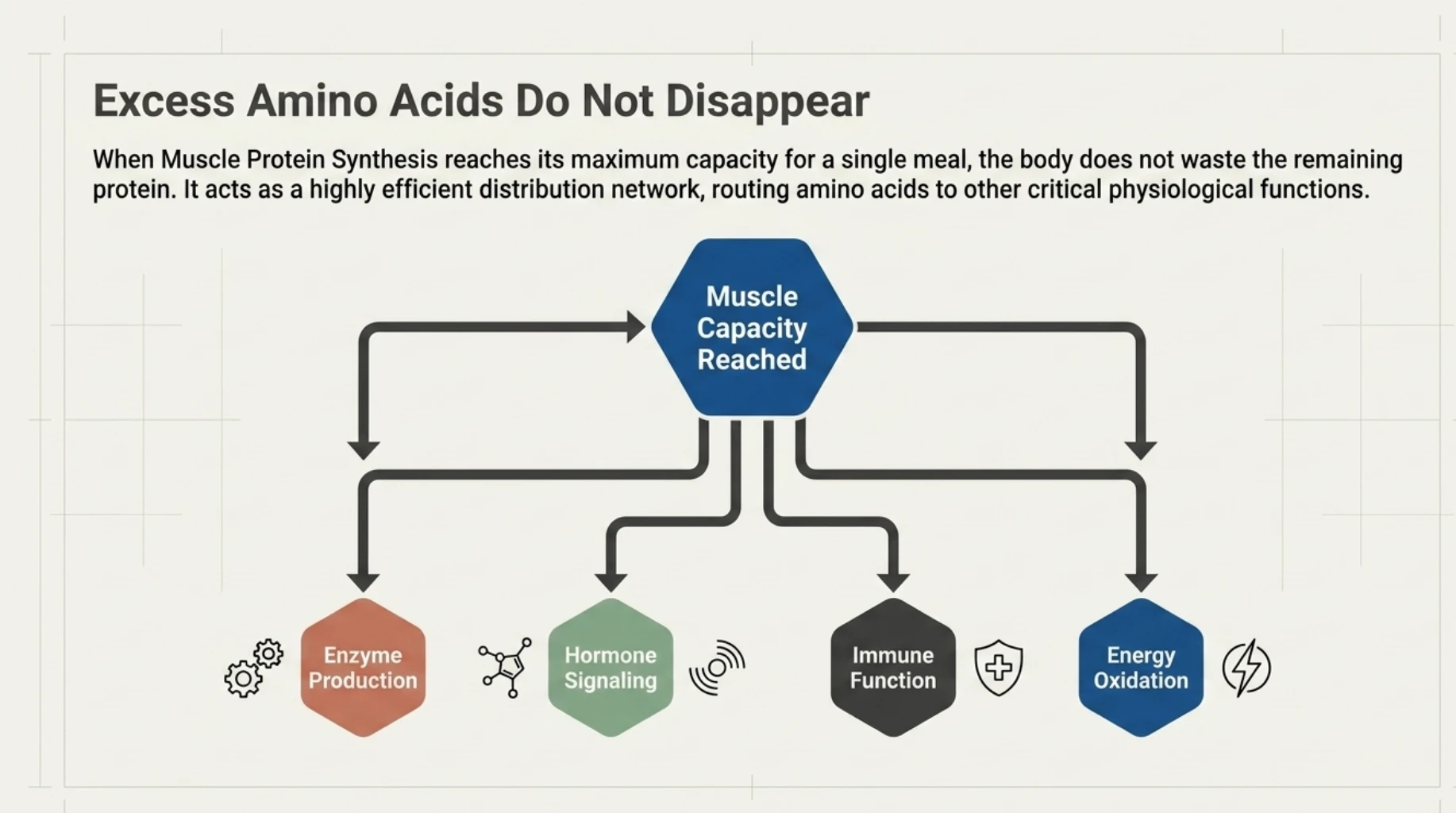
Protein is not used exclusively for building muscle. Amino acids obtained from dietary protein are involved in producing enzymes, hormones, transport proteins, immune-system components, and numerous other molecules. They may also be oxidised for energy or participate in other metabolic pathways.
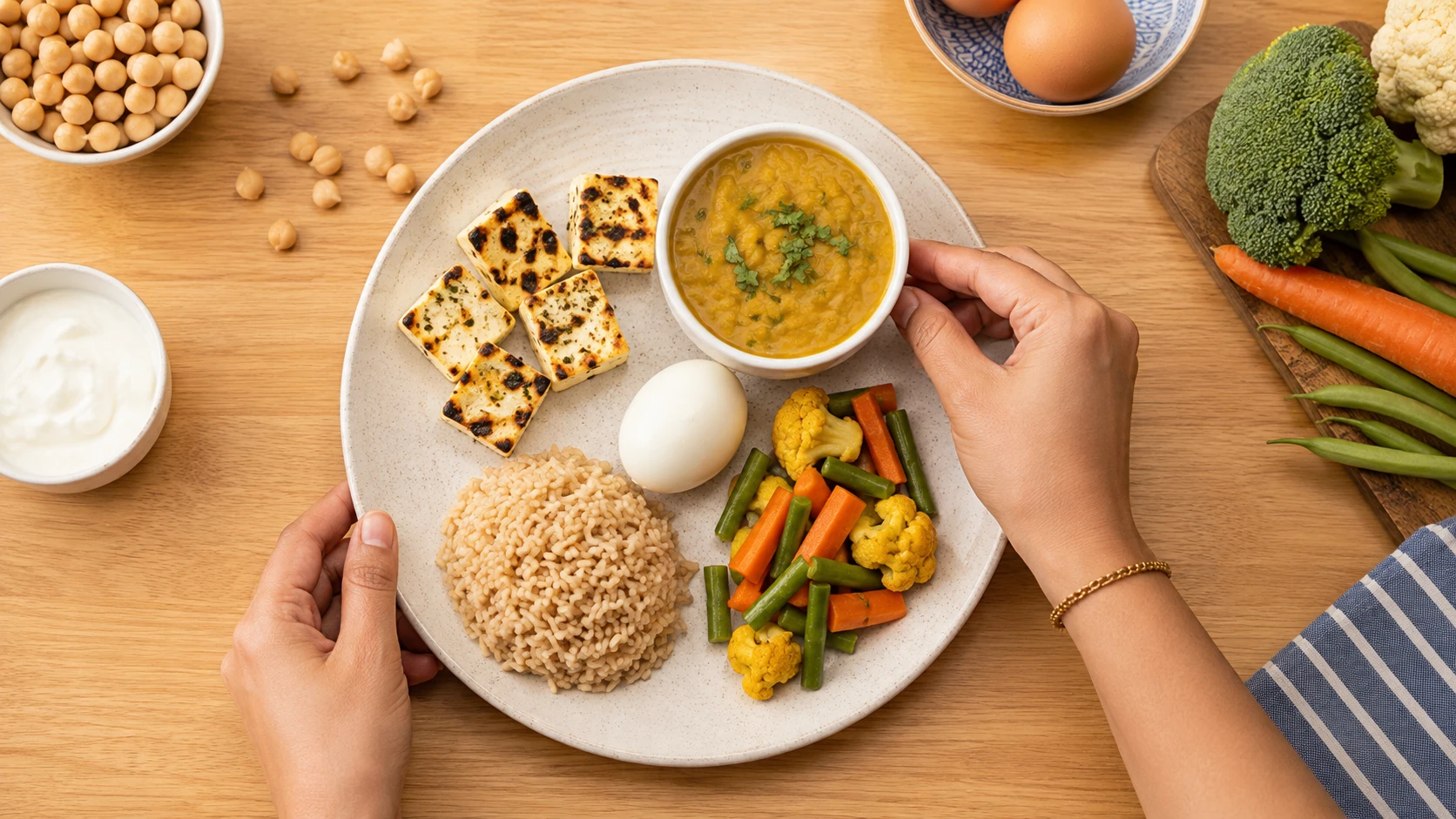
Therefore, asking how much protein per meal your body can “use” does not have one universal numerical answer.
Your age, body size, total daily protein intake, exercise habits, meal composition, protein quality, energy intake, and health status all influence your requirements.
This article explains how much protein per meal you may need, why the popular 30-gram limit is misleading, how protein absorption differs from muscle protein synthesis, and how to distribute protein throughout the day for better muscle and metabolic health.
What Does Protein Per Meal Actually Mean?
Before deciding how much protein per meal you should eat, it is important to understand what happens after you consume a protein-rich food.
During digestion, dietary proteins are broken down into smaller peptides and amino acids. These are absorbed through the small intestine and enter the circulation, where they become available for different tissues and metabolic processes.
The body does not simply stop absorbing protein once you have consumed 20 or 30 grams.
A larger protein-containing meal generally takes longer to digest and provides amino acids to the body over a longer period.
The more relevant question for someone interested in maintaining or building muscle is not:
“How much protein can I absorb?”
but rather:
“How much protein at this meal provides a strong stimulus for muscle protein synthesis?”
Protein Per Meal: Absorption Is Not the Same as Muscle Building
This distinction is responsible for much of the confusion surrounding protein per meal.
Protein absorption refers to the movement of amino acids and small peptides from the digestive tract into the body.
Muscle protein synthesis, often abbreviated as MPS, refers to the biological process through which muscle cells build new proteins.
The amount of protein needed to strongly stimulate muscle protein synthesis at one meal is considerably different from the maximum amount of protein the digestive system can absorb.
Once the muscle-building response to a meal approaches its maximum, additional amino acids do not suddenly become useless.
They remain available for other tissues and physiological processes, and some may be oxidised for energy.
Therefore, the statement that “your body wastes everything above 30 grams of protein” is an oversimplification.
How Much Protein Per Meal Can Your Body Use?
There is no single amount of protein per meal that applies equally to every adult.
Research examining muscle protein synthesis suggests that the response depends partly on body size and the quality of the protein consumed.
A practical target frequently discussed in sports and muscle-health research is approximately 0.4 grams of high-quality protein per kilogram of body weight per meal when protein is distributed across several meals.
This should be viewed as a useful starting framework rather than a strict biological ceiling.
For example:
| Body Weight | Approximate Protein Per Meal at 0.4 g/kg |
|---|---|
| 50 kg | 20 g |
| 60 kg | 24 g |
| 70 kg | 28 g |
| 80 kg | 32 g |
| 90 kg | 36 g |
| 100 kg | 40 g |
These numbers should not be interpreted as maximum absorption limits. A 70-kg adult who eats 40 grams of protein at dinner does not suddenly waste everything above 28 grams.
Instead, the table provides a practical way of thinking about protein per meal when the goal is to distribute daily protein reasonably across several eating occasions.
Why Protein Per Meal Should Be Based Partly on Body Size
A fixed recommendation such as “everyone should eat 25 grams of protein” ignores major differences between individuals.
A woman weighing 50 kg and a man weighing 100 kg do not necessarily have identical protein requirements.
Body size, lean mass, physical activity, age, and training goals all influence protein needs.
This is why expressing protein per meal relative to body weight can sometimes be more useful than recommending the same serving to everyone.
Where Did the 20–30 Gram Protein Limit Come From?
The idea that the body can use only approximately 20–30 grams of protein at once probably developed from studies examining the muscle protein synthesis response after individual protein doses.
In many studies involving younger adults, moderate servings of high-quality protein produced a strong muscle protein synthesis response after exercise.
However, this finding gradually became transformed into a much broader claim:
“The body cannot absorb more than 30 grams of protein at one time.”
That interpretation is incorrect.
The studies were generally investigating how much protein maximised a particular muscle-building response under specific experimental conditions—not the digestive system’s total capacity to absorb protein.
Therefore, there is no universal 30-gram absorption ceiling for protein per meal.
Does Protein Per Meal Above 30 Grams Get Wasted?
No. Protein consumed beyond the amount required to maximally stimulate muscle protein synthesis at that particular moment does not simply disappear from the body.
Amino acids have numerous important functions.
They are required for:
- Muscle and connective tissue.
- Enzymes involved in thousands of chemical reactions.
- Hormone and signalling molecule production.
- Immune-system proteins.
- Transport proteins.
- Skin, hair, and other tissues.
- Production of other nitrogen-containing compounds.
Some amino acids may also be oxidised for energy, and their carbon skeletons can enter other metabolic pathways.
So, while progressively increasing protein per meal does not necessarily produce progressively greater muscle growth, describing the additional protein as completely “wasted” is physiologically inaccurate.
Why Protein Per Meal Becomes More Important After 40
Protein intake becomes particularly relevant during middle age because adults gradually begin losing muscle mass and strength as they get older, especially when physical activity and resistance training are inadequate.
One contributing factor is a phenomenon often described as anabolic resistance. With ageing, skeletal muscle may become less responsive to smaller amounts of dietary protein and exercise stimuli.
Consequently, older adults may sometimes require a stronger protein stimulus than younger adults to generate a comparable muscle protein synthesis response.
This does not mean everyone over 40 needs very high protein intake.
It does mean that paying attention to both total daily protein and protein per meal becomes increasingly important as part of a broader muscle-preservation strategy.
Protein Per Meal After 40 Should Work with Resistance Training
Increasing protein per meal without using your muscles is not an ideal strategy for preserving strength.
Resistance exercise and dietary protein work together.
Strength training provides the mechanical stimulus telling muscle tissue that it needs to adapt, while dietary protein supplies the amino acids required to support repair and remodelling.
For adults concerned about age-related muscle loss, the combination of adequate protein, resistance training, regular physical activity, sufficient energy intake, and good recovery is therefore more important than obsessing over a single protein number.
Is Total Daily Protein More Important Than Protein Per Meal?
For most people, achieving an appropriate total daily protein intake remains the first priority.
Perfectly distributing protein per meal provides little benefit if total daily protein intake is consistently inadequate.
Once adequate daily intake is established, distributing protein reasonably across meals may provide additional advantages for supporting muscle protein synthesis throughout the day.
Unfortunately, many adults follow the opposite pattern.
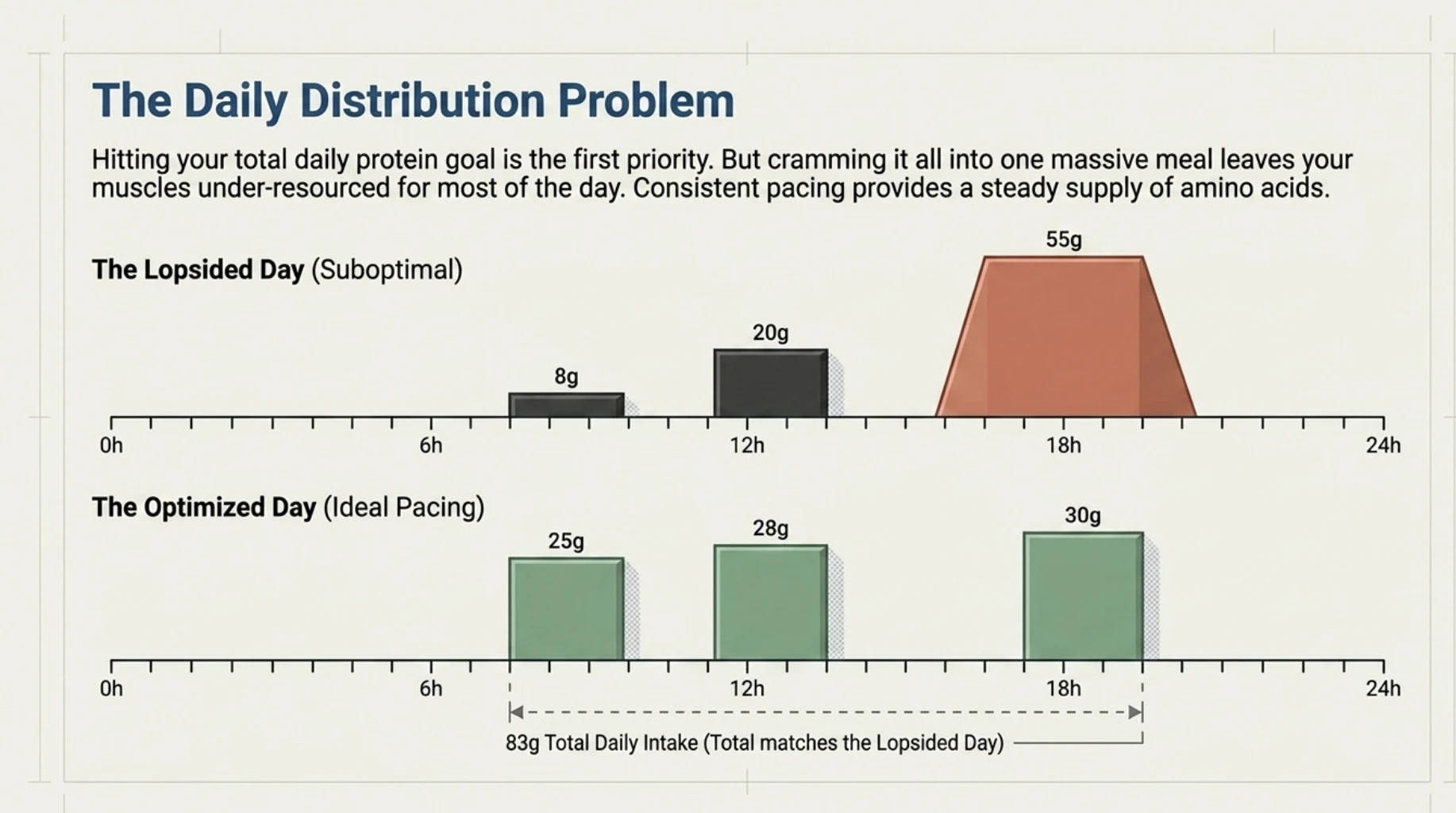
Breakfast may contain very little protein, lunch provides a moderate amount, and most of the day’s protein is consumed at dinner.
A more balanced distribution may look like:
- Breakfast: 25–30 g protein.
- Lunch: 25–35 g protein.
- Dinner: 25–35 g protein.
- Optional snack: Additional protein depending on total daily requirements.
The appropriate amount of protein per meal will still vary according to body size, age, physical activity, health status, and overall daily requirements.
Why Breakfast Is Often the Weakest Protein Meal
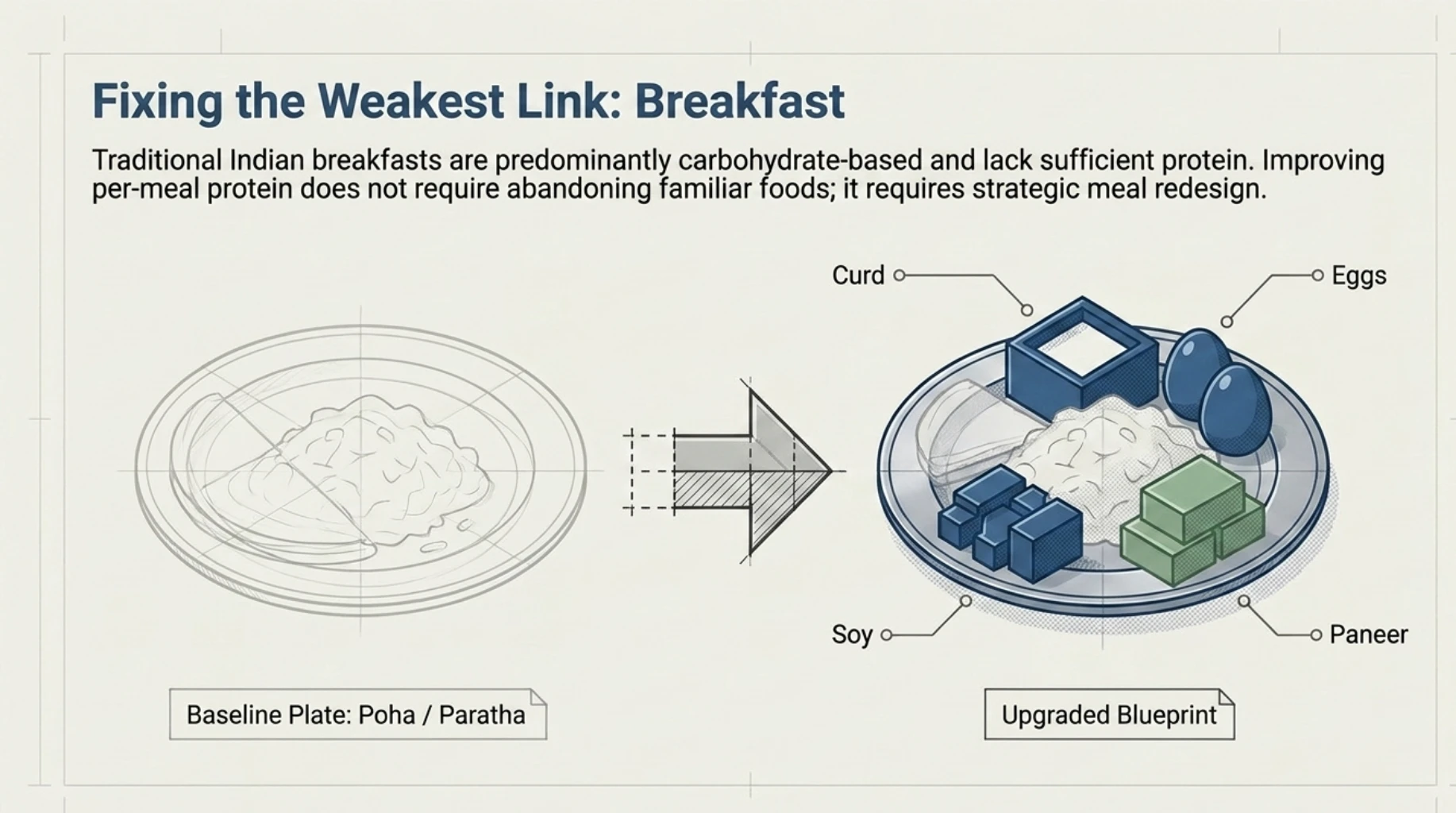
For many people, especially in India, breakfast is predominantly carbohydrate-based.
Common breakfasts such as plain poha, upma, toast, paratha, cereal, or tea with biscuits may provide substantially less protein than a meal containing eggs, dairy, paneer, soy, pulses, or other protein-rich foods.
This does not make traditional carbohydrate-containing foods unhealthy. The issue is simply that the overall meal may contain insufficient protein.
Improving protein per meal does not necessarily require abandoning familiar foods.
Instead, the meal can be redesigned.
For example, poha can be accompanied by curd and additional protein-rich ingredients; a paratha meal can include curd, paneer, or eggs; and oats can be prepared with milk or yoghurt and other appropriate protein sources.
The objective is to build a balanced meal rather than chase an isolated protein number.
How to Calculate Protein Per Meal for Your Daily Needs
Once you understand that there is no universal 20- or 30-gram absorption limit, the next question becomes practical: how should you decide your own protein per meal target?
A useful starting point is to first estimate your total daily protein requirement and then distribute that protein reasonably across three or four eating occasions.
For many healthy adults, the basic Recommended Dietary Allowance of approximately 0.8 grams of protein per kilogram of body weight per day is intended to prevent deficiency. However, this minimum should not automatically be interpreted as the optimal intake for every person.
Adults who perform regular resistance training, older adults trying to preserve muscle, or people losing weight while attempting to maintain lean mass may require higher protein intakes depending on their individual circumstances.
Rather than focusing exclusively on one meal, think about both daily protein intake and protein per meal.
A Practical Protein Per Meal Calculation
For muscle-focused meal planning, approximately 0.4 g/kg per meal can be used as a practical starting point when protein is distributed across several meals.
For example:
| Body Weight | Approximate Protein Per Meal | Example Across 3 Meals |
|---|---|---|
| 60 kg | 24 g | About 72 g |
| 70 kg | 28 g | About 84 g |
| 80 kg | 32 g | About 96 g |
| 90 kg | 36 g | About 108 g |
| 100 kg | 40 g | About 120 g |
Again, these figures are not maximum limits. They simply illustrate how a body-weight-based protein per meal approach can help distribute protein more evenly throughout the day.
Individual requirements may differ substantially, particularly in people with obesity, very high or low lean body mass, chronic disease, athletic training, or specific weight-management goals.
Should Protein Per Meal Be Spread Evenly Throughout the Day?
For muscle health, distributing protein across several meals is generally more practical than consuming very little protein for most of the day and then eating an extremely protein-heavy dinner.
Consider two people who consume similar amounts of protein each day.
Person A:
- Breakfast: 8 g
- Lunch: 20 g
- Dinner: 55 g
Person B:
- Breakfast: 25 g
- Lunch: 28 g
- Dinner: 30 g
Both may consume a broadly similar total amount, but the second pattern provides meaningful servings of protein at multiple points during the day.
This does not mean every meal must contain exactly the same amount. There is no need to turn eating into a mathematical exercise.
The practical objective is simply to avoid repeatedly consuming very low protein per meal during the day and attempting to compensate with one enormous serving at night.
Protein Per Meal Does Not Need to Be Perfectly Equal
Nutrition advice sometimes becomes unnecessarily rigid.
If your calculated target is 30 grams of protein per meal, you do not need to consume exactly 30 grams at every meal.
A day containing approximately 25 grams at breakfast, 35 grams at lunch, and 30 grams at dinner may be perfectly reasonable depending on your overall requirements.
Consistency over weeks and months matters more than hitting an exact number at every meal.
Protein Per Meal for Muscle Gain
People trying to build muscle often assume that consuming enormous protein portions will accelerate muscle growth.
Muscle growth does not work that way.
Muscle hypertrophy requires several factors working together:
- Progressive resistance training.
- Adequate total daily protein.
- Sufficient energy intake.
- Appropriate protein per meal.
- Good-quality sleep.
- Adequate recovery between training sessions.
Once sufficient protein is available, simply doubling protein intake does not automatically double muscle growth.
Training stimulus remains essential.
This is why someone consuming very high protein but performing little resistance exercise may achieve less muscle development than someone consuming an appropriate amount of protein while following a well-designed progressive strength-training programme.
Does Protein Per Meal Need to Be Higher After a Workout?
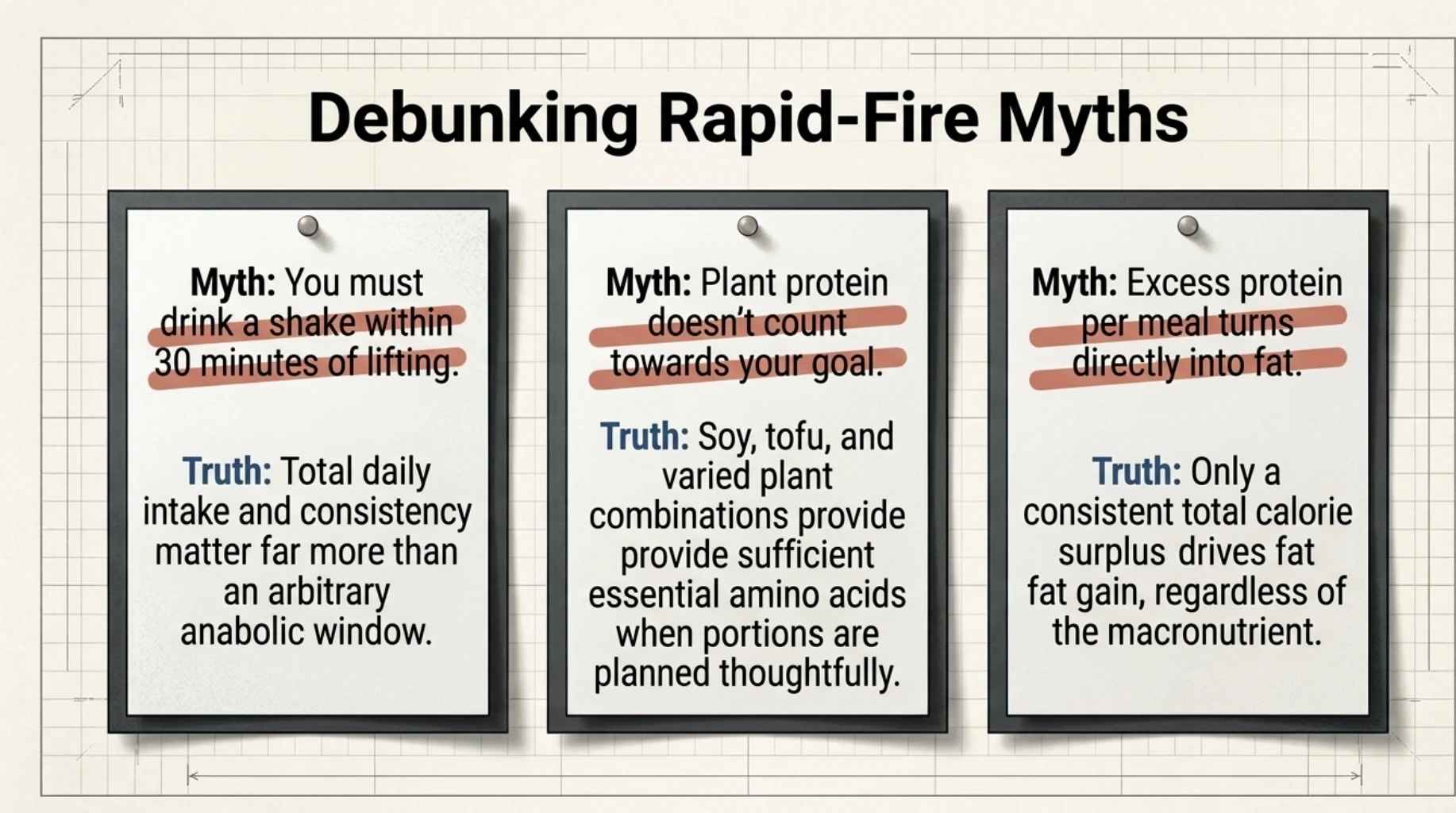
Eating protein around resistance training can support muscle recovery and adaptation, but there is no need to panic if you cannot consume a protein shake immediately after your final repetition.
The old concept of an extremely narrow “anabolic window” has become less rigid as research has evolved.
Your overall daily protein intake, protein per meal, previous meal timing, and training programme are all relevant.
For most recreational exercisers, consuming a good-quality protein-containing meal within a reasonable period around training is sufficient.
Consistency matters more than racing to drink a protein shake within a few minutes of leaving the gym.
Protein Per Meal During Weight Loss
Protein becomes particularly important when someone is intentionally losing weight.
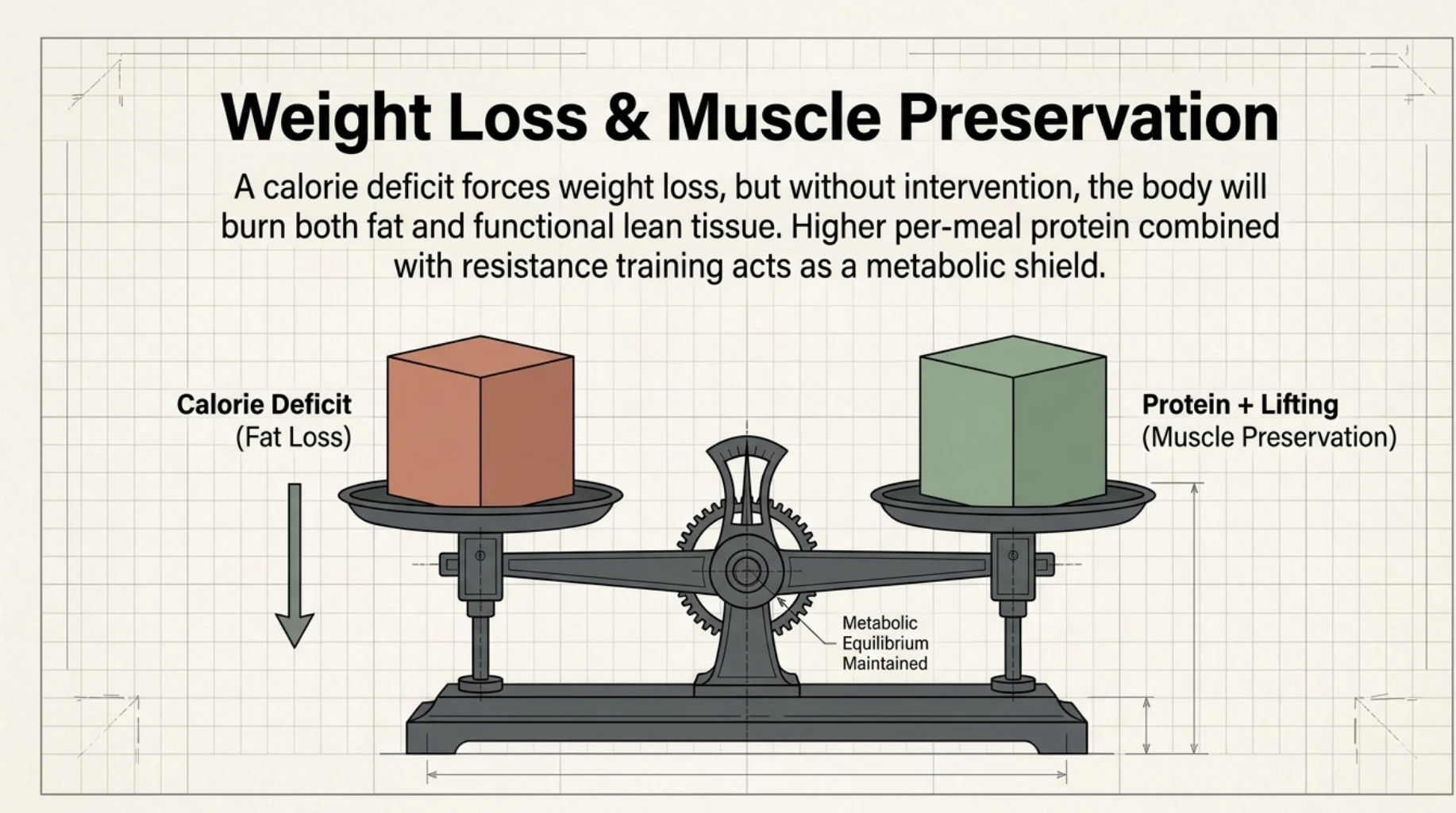
A calorie deficit encourages weight loss, but the body may lose both fat and lean tissue if the programme is poorly designed.
Adequate protein intake combined with resistance training helps preserve lean body mass during weight reduction.
This is important because successful weight management should not simply aim to make the number on the weighing scale smaller.
The objective should be to preferentially reduce excess body fat while preserving as much functional muscle as possible.
Paying attention to protein per meal may also improve satiety, helping some people remain satisfied for longer after eating.
Protein Per Meal Can Support Satiety but Does Not Burn Fat Automatically
Protein-rich meals are often more satiating than meals dominated by refined carbohydrates and low-fibre foods.
This may help reduce unnecessary snacking or excessive hunger in some individuals.
However, protein is not a magical fat-burning nutrient.
If total calorie intake consistently exceeds energy requirements, simply increasing protein per meal will not guarantee weight loss.
Protein should therefore be incorporated into a broader strategy that includes appropriate calorie intake, vegetables and fibre-rich foods, regular movement, resistance training, sleep, and sustainable eating habits.
Protein Per Meal for Adults Over 40
Middle age is an important time to begin thinking about muscle preservation rather than waiting until significant muscle loss has already occurred.
After approximately the fourth decade of life, muscle mass and strength may gradually decline, particularly in sedentary individuals.
Over subsequent decades, this can contribute to sarcopenia, reduced physical function, poorer glucose regulation, and eventually loss of independence.
For this reason, adequate protein per meal becomes particularly relevant when combined with regular resistance exercise.
Older adults may also experience anabolic resistance, meaning that muscle sometimes requires a stronger stimulus from dietary protein and exercise than it did at a younger age.
Why Protein Per Meal Matters for Sarcopenia Prevention
Sarcopenia is characterised by declining muscle strength, muscle quantity or quality, and physical performance with ageing.
No single food or supplement can prevent sarcopenia.
However, adequate protein per meal, sufficient total daily protein, and progressive resistance training form an important nutritional and exercise foundation for preserving muscle.
This is especially relevant for adults who are simultaneously trying to lose weight, because aggressive calorie restriction without sufficient protein or resistance training can accelerate lean tissue loss.
Does Protein Quality Affect Protein Per Meal Requirements?
Not all protein sources have identical amino acid profiles or digestibility.
High-quality proteins generally provide all nine essential amino acids in adequate proportions and are efficiently digested.
Animal-derived protein sources such as eggs, dairy, fish, and meat generally provide complete essential amino acid profiles.
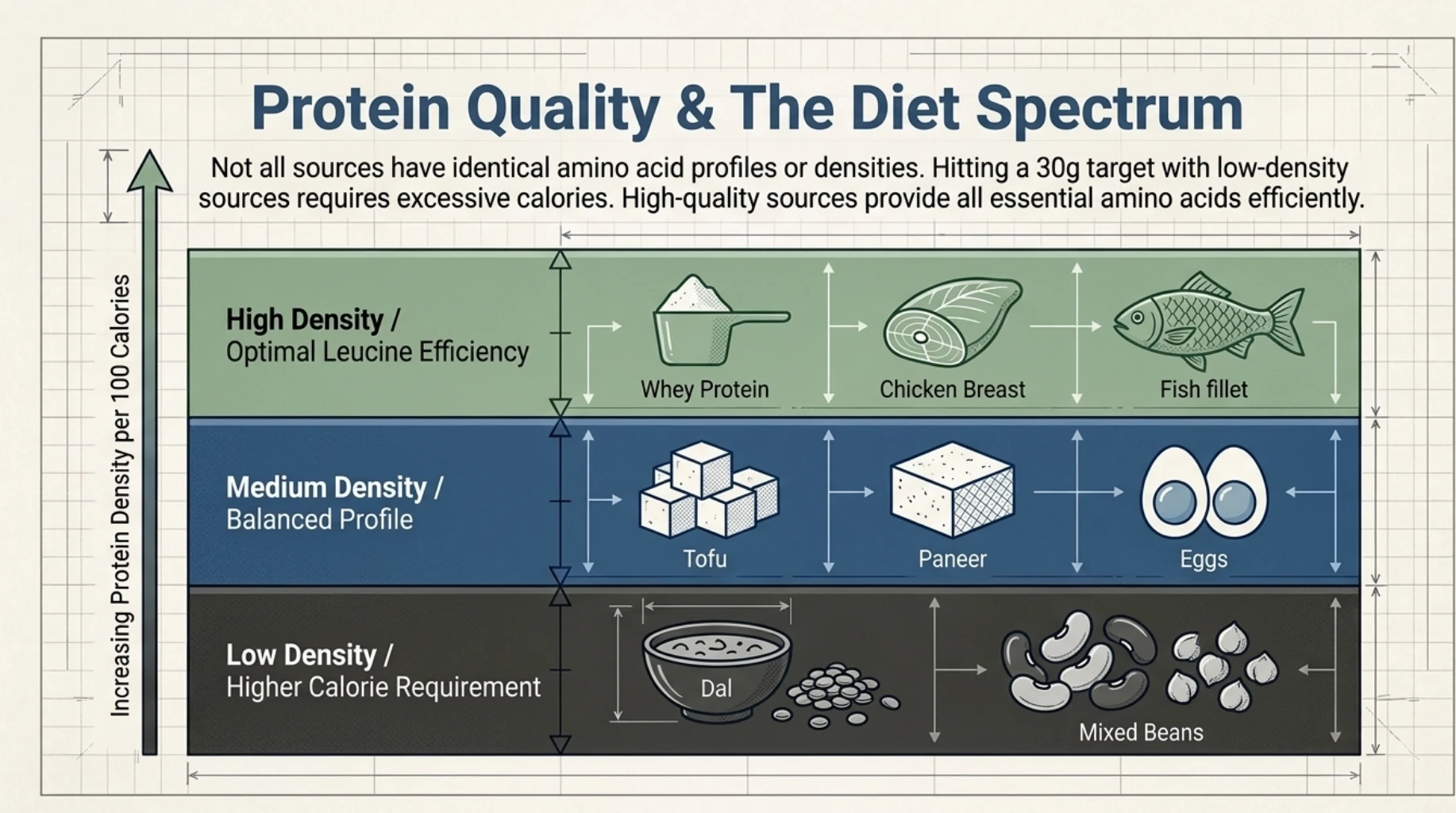
Several plant foods, particularly soy, also provide high-quality protein, while other plant proteins can be combined across a varied diet to provide sufficient essential amino acids.
Therefore, planning protein per meal should consider not only the number of grams but also the quality and variety of protein sources.
Leucine and Protein Per Meal
Among the essential amino acids, leucine plays an important signalling role in stimulating muscle protein synthesis.
This is one reason high-quality protein sources containing adequate essential amino acids can produce a strong muscle protein synthesis response.
However, focusing exclusively on leucine while ignoring total protein intake, dietary quality, and resistance training is unnecessary for most people.
Whole protein-rich foods usually provide leucine together with other essential amino acids required for muscle protein synthesis.
Best Indian Foods for Increasing Protein Per Meal
Achieving adequate protein per meal does not require eating chicken breast at every meal or depending entirely on protein powders.
Indian diets contain numerous useful protein sources.
Vegetarian options include:
- Paneer.
- Milk.
- Curd and Greek-style yoghurt.
- Soy chunks.
- Tofu.
- Dal.
- Rajma.
- Chana.
- Mixed pulses.
Non-vegetarian options include:
- Eggs.
- Chicken.
- Fish.
- Lean meat.
- Dairy products.
The protein density differs considerably between these foods. For example, a bowl of dal contributes useful protein but may not provide the same amount as a substantial serving of paneer, tofu, soy, eggs, chicken, or fish.
This distinction becomes important when trying to achieve a meaningful protein per meal target without consuming excessive calories.
Do You Need Protein Powder to Reach Your Protein Per Meal Target?
No.
Protein powders are convenient foods or supplements, not mandatory components of a healthy diet.
Many people can achieve their protein per meal requirements through ordinary foods.
However, protein powder may be useful when dietary intake is difficult because of convenience, appetite, vegetarian dietary patterns, high protein requirements, or a busy schedule.
Whey protein is popular because it provides high-quality protein and is rich in essential amino acids. Plant-based protein powders can also be useful, particularly when appropriately formulated.
The decision to use a protein supplement should therefore be based on need and convenience rather than the belief that powders build muscle better than a well-planned diet.
Does More Protein Per Meal Automatically Become Body Fat?
Another common misconception is that any protein consumed beyond the amount used for muscle synthesis is immediately converted into body fat.
Human metabolism is considerably more complex.
Amino acids may be used for protein synthesis throughout the body, production of important molecules, oxidation for energy, or other metabolic pathways.
However, protein still contributes calories. Consistently consuming more total energy than the body requires can contribute to weight gain, regardless of whether those calories come from protein, carbohydrate, or fat.
Therefore, increasing protein per meal should not mean adding unlimited protein calories on top of an already excessive diet.
The goal is to build balanced meals that provide enough protein while remaining appropriate for your overall energy requirements.
Can Too Much Protein Per Meal Be Harmful?
For most healthy adults, consuming a protein-rich meal is not inherently harmful. The body is capable of digesting and metabolising substantial amounts of dietary protein.
However, this does not mean that unlimited protein per meal is necessary or beneficial.
Very large protein portions may add unnecessary calories, displace vegetables, whole grains, fruits, and other nutrient-rich foods, or cause gastrointestinal discomfort in some people.
The objective should therefore be adequacy rather than excess.
Most people benefit more from meeting their overall protein needs consistently than from consuming extremely large amounts at one sitting.
Protein Per Meal and Kidney Health
Concerns about protein and kidney health require an important distinction between people with healthy kidneys and those with established kidney disease.
In healthy adults, evidence does not support the idea that reasonable higher-protein diets automatically cause chronic kidney disease. However, protein requirements may need to be modified in people who already have chronic kidney disease or certain other medical conditions.
Someone with reduced kidney function should therefore not simply follow a high-protein diet found online.
The appropriate daily protein intake and protein per meal may need to be individualised according to kidney function, nutritional status, stage of kidney disease, dialysis status, and medical advice.
Common Myths About Protein Per Meal
Protein nutrition is surrounded by persistent myths, particularly on social media and in fitness communities. Understanding these misconceptions can make meal planning much simpler.
Myth 1: Your Body Can Absorb Only 30 Grams of Protein Per Meal
This is probably the most common misconception about protein per meal.
The digestive system does not suddenly stop absorbing amino acids once a meal contains 30 grams of protein.
The confusion comes largely from research examining how different protein doses stimulate muscle protein synthesis.
The amount required to strongly stimulate muscle protein synthesis is not the same as the maximum amount your digestive system can absorb or your entire body can use.
Myth 2: Anything Above the Ideal Protein Per Meal Is Wasted
Additional amino acids do not simply disappear.
They may be used by other tissues, incorporated into enzymes and proteins, used to produce biologically important compounds, or oxidised for energy.
However, this does not mean progressively increasing protein per meal will continuously increase muscle growth. Muscle protein synthesis has a finite response to a particular meal and training stimulus.
Myth 3: More Protein Per Meal Always Means More Muscle
Muscle growth requires much more than protein.
Progressive resistance training provides the stimulus for adaptation. Adequate energy, sleep, recovery, and total protein intake support that process.
Someone consuming very large protein portions without resistance training should not expect the same muscle-building response as someone following a structured strength programme.
Myth 4: Plant Protein Does Not Count
Plant protein absolutely contributes towards daily protein requirements.
However, plant foods differ in their essential amino acid composition, digestibility, and protein density. Some plant-based meals may therefore require thoughtful food selection or somewhat larger portions to provide sufficient essential amino acids and total protein.
Soy foods, tofu, pulses, beans, lentils, dairy for lacto-vegetarians, and combinations of different plant foods can all contribute towards an appropriate protein per meal target.
Myth 5: Everyone Needs a Protein Shake After Exercise
Protein shakes can be convenient, but they are not essential.
A normal meal containing sufficient high-quality protein can support muscle recovery just as effectively in an appropriately planned diet.
A supplement becomes useful when it makes meeting your total daily protein and protein per meal goals easier.
How to Build a Balanced High-Protein Meal
A healthy meal should not consist of protein alone.
A practical meal can combine:
- Protein: Eggs, paneer, tofu, soy, dal, chicken, fish, curd, or another suitable source.
- Vegetables: A generous portion of seasonal vegetables or salad.
- Quality carbohydrates: Roti, rice, millets, oats, potatoes, or other minimally processed carbohydrate sources according to individual needs.
- Healthy fats: Nuts, seeds, or appropriate cooking oils in reasonable amounts.
This approach allows you to achieve an appropriate protein per meal target without turning every meal into a restrictive bodybuilding diet.
Protein Per Meal: A Practical Indian Day
The following example demonstrates how protein can be distributed across familiar Indian meals. Exact portions should be adjusted according to individual requirements.
Breakfast Protein Per Meal
Instead of relying only on tea and toast, poha, or plain paratha, consider adding a meaningful protein source.
Options may include eggs with vegetables and roti, paneer with a traditional breakfast, Greek-style yoghurt or thick curd with oats, or a protein-rich besan or moong-based meal accompanied by dairy or another suitable protein source.
Lunch Protein Per Meal
A balanced lunch might include dal or beans together with curd, vegetables, and roti or rice. Depending on individual requirements, paneer, tofu, soy, chicken, fish, or eggs can further increase the meal’s protein content.
Dinner Protein Per Meal
Dinner can follow the same principle rather than becoming the only high-protein meal of the day.
Choose an appropriate serving of paneer, tofu, soy, pulses, eggs, chicken, or fish alongside vegetables and a suitable carbohydrate portion.
The important principle is not the exact menu. It is distributing meaningful amounts of protein per meal rather than leaving most of your daily protein for dinner.
Who May Need More Attention to Protein Per Meal?
Although adequate protein matters throughout adulthood, some people may benefit from paying closer attention to both total protein intake and its distribution.
These include:
- Adults over 40 concerned about gradual muscle loss.
- Older adults at risk of sarcopenia.
- People performing regular resistance training.
- Individuals losing weight while trying to preserve muscle.
- Vegetarians with relatively low protein intake.
- People recovering from illness or prolonged inactivity, where medically appropriate.
- Women during and after the menopausal transition.
Individual needs can vary considerably, so protein per meal should be viewed as part of a complete nutrition plan rather than an isolated target.
When Should You Seek Professional Advice About Protein Intake?
Most healthy adults can improve protein intake through ordinary food choices without complicated calculations.
However, personalised guidance may be appropriate if you have:
- Chronic kidney disease.
- Significant liver disease.
- Unexplained weight loss.
- Marked muscle loss or weakness.
- Difficulty eating adequate food.
- Complex metabolic or medical conditions.
- A highly restrictive diet.
In these situations, simply increasing protein per meal without considering the underlying medical condition may not be appropriate.
Frequently Asked Questions About Protein Per Meal
Is 40 Grams of Protein Per Meal Too Much?
Not necessarily. For many healthy adults, a meal containing 40 grams of protein can be digested and utilised normally. Whether you actually need that amount depends on your body size, total daily protein requirement, age, activity level, and goals.
Can Your Body Absorb 50 Grams of Protein Per Meal?
Yes. The frequently repeated 20–30 gram figure should not be interpreted as an absorption ceiling. Your digestive system can absorb amino acids from a meal containing considerably more protein.
The amount that maximally stimulates muscle protein synthesis at one time is a separate question.
Is 30 Grams of Protein Per Meal a Good Target?
For many adults, approximately 25–35 grams of high-quality protein at a main meal can be a practical amount, but it is not a universal recommendation.
A body-weight-based approach and total daily requirements provide better context.
Should Older Adults Eat More Protein Per Meal?
Older muscle may respond less strongly to small protein servings because of anabolic resistance. Therefore, adequate high-quality protein at each main meal, combined with resistance exercise, becomes particularly important with ageing.
Should I Eat Protein Before Bed?
Pre-sleep protein has been studied in relation to overnight muscle protein synthesis, particularly among people performing resistance training. However, it is not essential for everyone.
Total daily intake, overall protein per meal, training, calorie requirements, and dietary preferences remain more important for most people.
Final Thought
Your body does not suddenly stop using protein after an arbitrary 30-gram limit. Instead of worrying about whether a few extra grams of protein are being “wasted,” focus on the bigger picture: adequate daily protein, sensible protein per meal, high-quality foods, regular strength training, and consistency over time.
If you want a personalized metabolic assessment and lifestyle strategy, you can book a consultation here:
Book an Appointment