

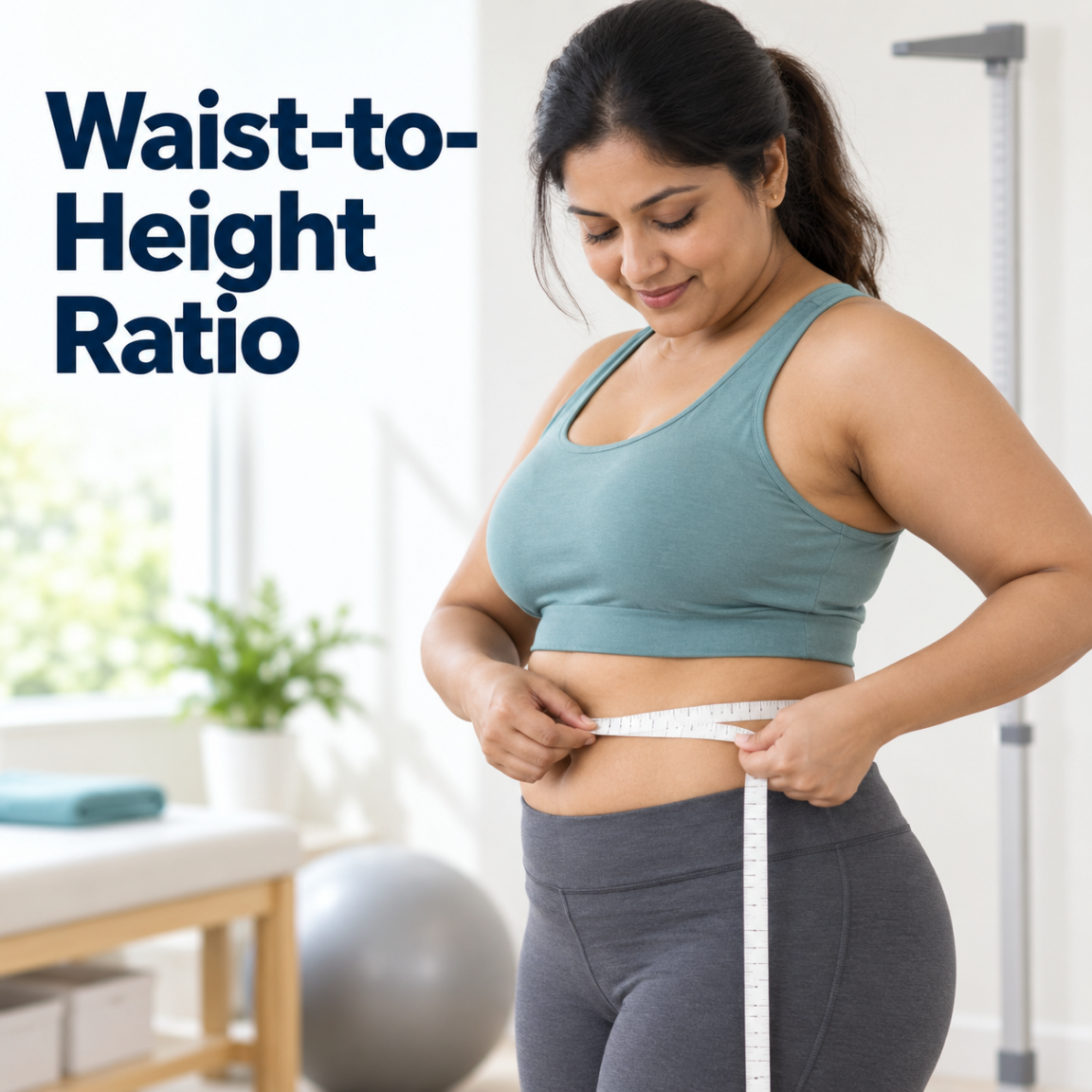
Waist-to-Height Ratio: Is It More Useful Than BMI for Indian Adults?
For decades, BMI has been one of the most commonly used numbers for deciding whether an adult is underweight, normal weight, overweight or living with obesity.
It is simple, inexpensive and useful.
But BMI has an important limitation.
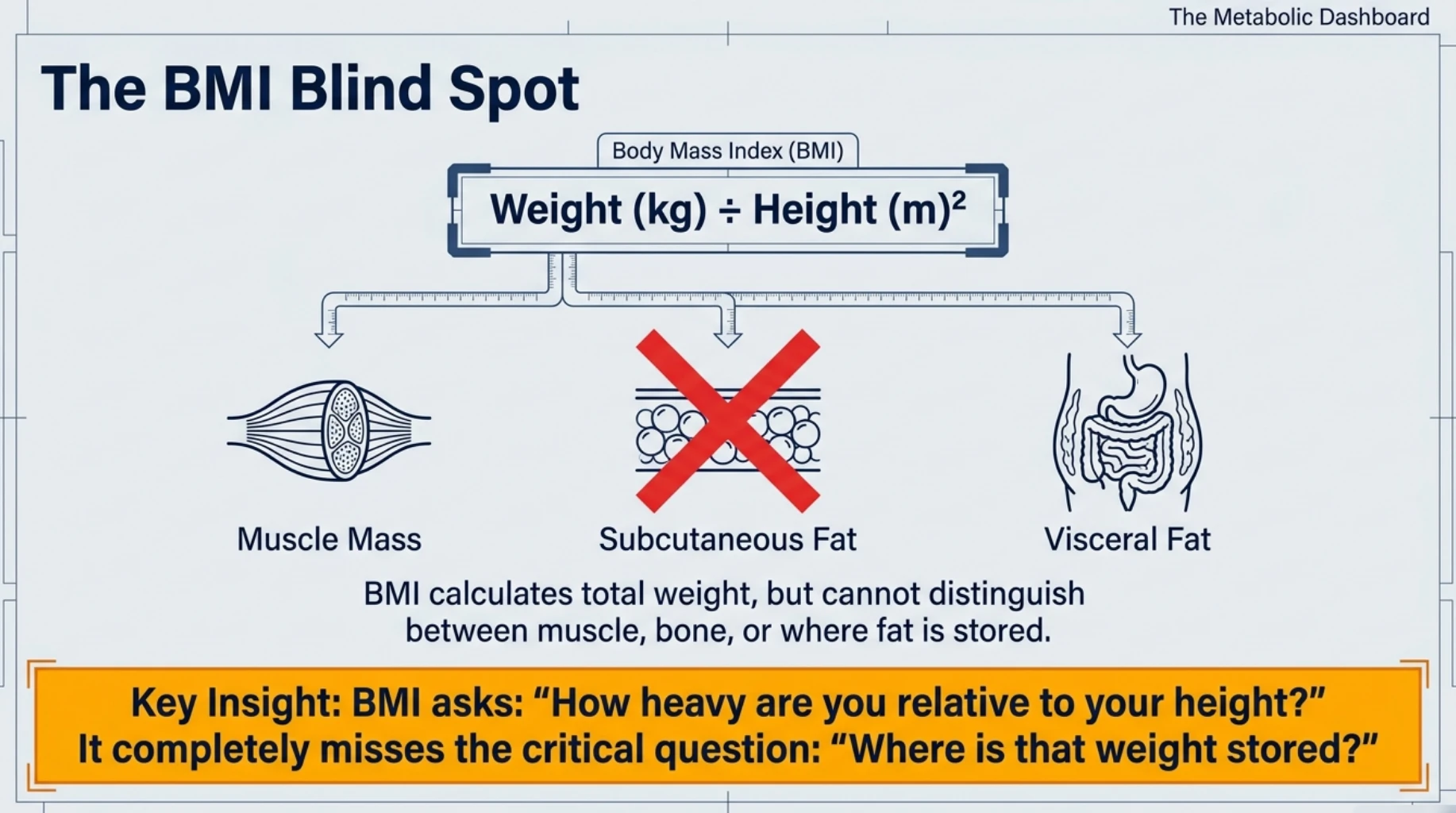
It tells you how much you weigh relative to your height.
It does not tell you where that weight is stored.
This distinction matters particularly for Indian and other South Asian adults because metabolic problems can develop at relatively modest body weights.
A person may have a BMI that does not look especially high but still carry substantial abdominal fat, have fatty liver, insulin resistance, high triglycerides or prediabetes.
This is where the waist-to-height ratio becomes useful.
Instead of considering only total body weight, the waist-to-height ratio compares your waist circumference with your height.
It therefore gives a simple estimate of central adiposity—the accumulation of fat around the abdomen.
The most memorable advice is:
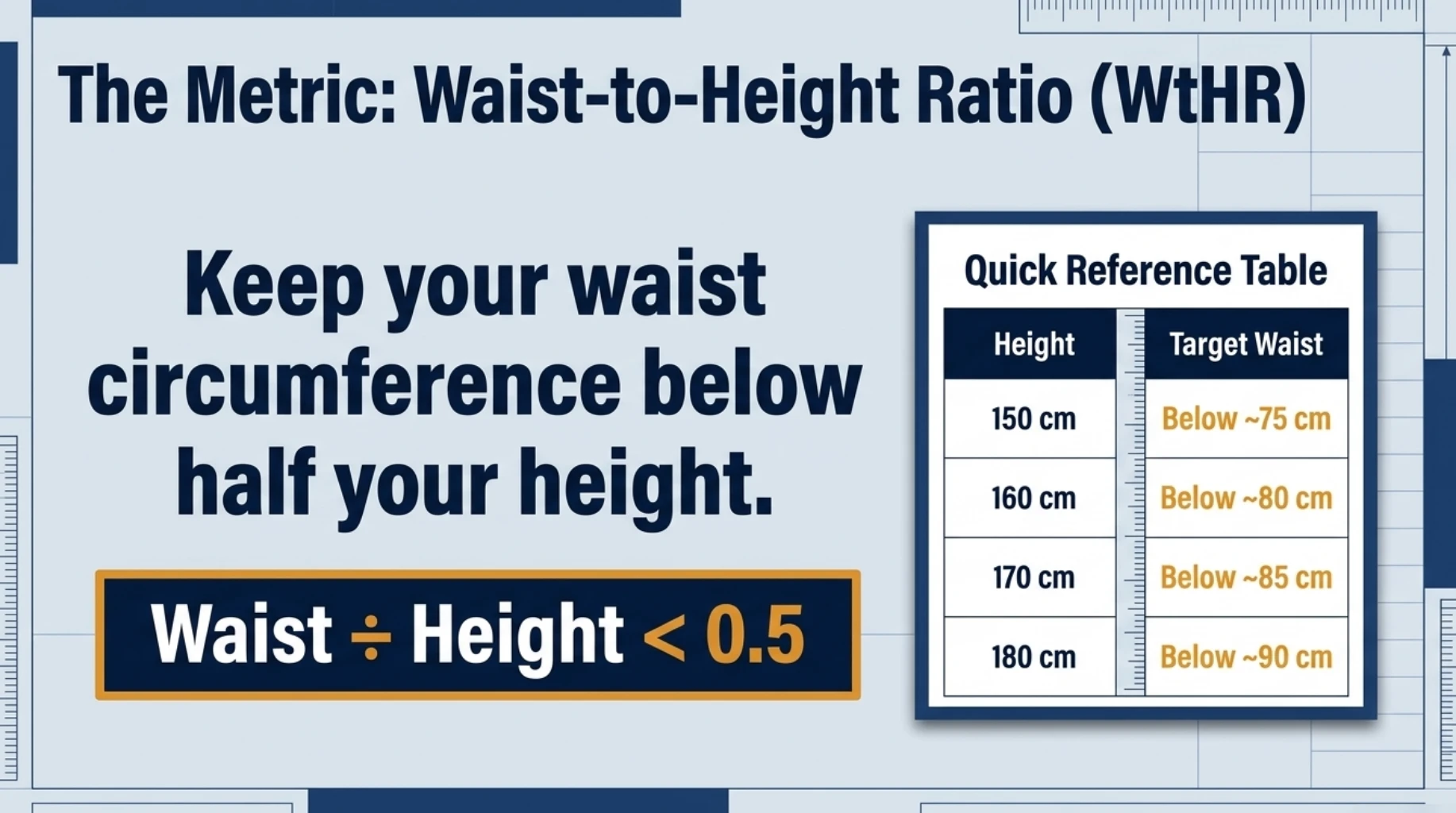
Try to keep your waist circumference below half your height.
That corresponds to a waist-to-height ratio below 0.5.
But does that make waist-to-height ratio better than BMI?
For many Indian adults, it can provide valuable additional information that BMI misses. However, it should not be treated as a perfect measurement or a complete replacement for clinical assessment.

What Is Waist-to-Height Ratio?
The waist-to-height ratio compares waist circumference with height using the same unit of measurement.
The formula is simple:
Waist-to-height ratio = waist circumference ÷ height
For example, if someone is 170 cm tall and has a waist circumference of 85 cm:
85 ÷ 170 = 0.50
The person’s waist-to-height ratio is therefore 0.50.
Why Waist-to-Height Ratio Is Easy to Understand
The main advantage of the waist-to-height ratio is that it produces a simple message that people can remember without complicated calculations:
Keep your waist below half your height.
For someone who is 160 cm tall, this would mean aiming for a waist below approximately 80 cm.
For someone who is 180 cm tall, it would mean aiming for a waist below approximately 90 cm.
This does not mean that crossing the 0.5 threshold suddenly causes disease.
Risk exists on a continuum.
The cutoff is best viewed as a practical screening threshold rather than a biological wall separating healthy from unhealthy.
How to Calculate Waist-to-Height Ratio
Both measurements must use the same unit.
If height is measured in centimetres, waist circumference should also be measured in centimetres.
| Measurement | Example |
|---|---|
| Height | 170 cm |
| Waist circumference | 85 cm |
| Calculation | 85 ÷ 170 |
| Waist-to-height ratio | 0.50 |
You can perform the same calculation using inches as long as both height and waist are measured in inches.
How Is Waist-to-Height Ratio Interpreted?
Current NICE guidance classifies central adiposity in adults with BMI below 35 kg/m² using the following waist-to-height ratio ranges:
| Waist-to-Height Ratio | Classification | General Interpretation |
|---|---|---|
| 0.40–0.49 | Healthy central adiposity | No increased health risk attributed to central adiposity |
| 0.50–0.59 | Increased central adiposity | Associated with increased cardiometabolic risk |
| 0.60 or higher | High central adiposity | Associated with further increased cardiometabolic risk |
These categories are useful for screening, but they should not be interpreted as diagnoses.
A waist-to-height ratio above 0.5 does not mean someone definitely has diabetes or heart disease.
It indicates that central adiposity deserves attention in the broader metabolic assessment.
Why Waist-to-Height Ratio May Be Especially Useful for Indian Adults
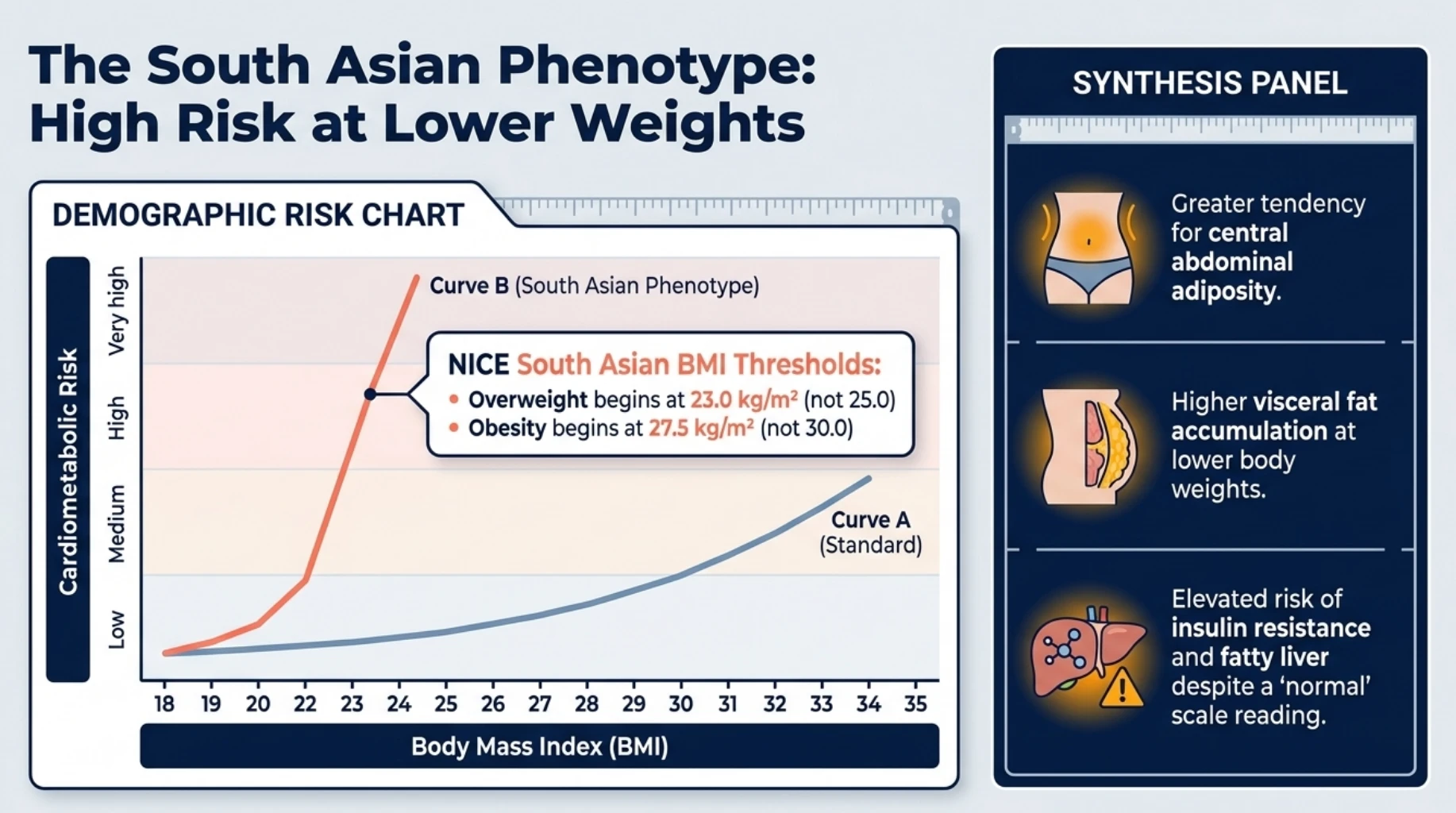
Indian adults can develop type 2 diabetes, fatty liver and cardiovascular risk at lower BMI levels than many European-origin populations.
This is partly related to differences in body composition and fat distribution.
South Asians tend to have a greater tendency towards:
- Central abdominal adiposity.
- Visceral fat accumulation.
- Higher body-fat percentage at a given BMI.
- Insulin resistance.
- Type 2 diabetes at comparatively lower BMI levels.
- Fatty liver and metabolic dysfunction.
For this reason, a BMI that appears only mildly elevated—or even falls within a conventional “normal” range—does not always provide complete reassurance in Indian adults.
The waist-to-height ratio adds information about abdominal fat distribution.
South Asians Have Different BMI Risk Thresholds
This issue is important enough that modern guidelines do not use identical BMI risk thresholds for every ethnic group.
NICE recommends lower BMI thresholds for South Asian adults because cardiometabolic risk tends to occur at lower BMI values.
| BMI Category | Standard Adult Threshold | South Asian and Certain Other Ethnic Groups |
|---|---|---|
| Overweight | 25.0–29.9 kg/m² | 23.0–27.4 kg/m² |
| Obesity | 30.0 kg/m² or above | 27.5 kg/m² or above |
This is one reason Indian adults should be cautious about relying only on the conventional BMI cutoffs seen in many online calculators.
Waist-to-Height Ratio vs BMI: What Does Each Measure?
BMI and waist-to-height ratio answer different questions.
BMI asks:
“How heavy are you relative to your height?”
Waist-to-height ratio asks:
“How large is your waist relative to your height?”
That distinction is clinically important.
| Feature | BMI | Waist-to-Height Ratio |
|---|---|---|
| Uses body weight | Yes | No |
| Uses height | Yes | Yes |
| Uses waist circumference | No | Yes |
| Reflects central adiposity | Poorly | More directly |
| Distinguishes fat from muscle | No | No |
| Useful for population screening | Yes | Yes |
| Can miss normal-weight central obesity | Yes | Less likely |
Neither measurement is perfect.
The strength of using both is that they provide different pieces of information.
Why BMI Can Miss Abdominal Fat
BMI is calculated entirely from weight and height.
It does not know whether the weight comes predominantly from:
- Body fat.
- Muscle.
- Bone.
- Body water.
It also cannot determine whether fat is stored mainly around the hips and thighs or deep within the abdomen.
This becomes particularly important when visceral fat is the concern.
Two People Can Have the Same BMI but Different Metabolic Risk
Consider two Indian adults with a BMI of 24 kg/m².
| Feature | Person A | Person B |
|---|---|---|
| BMI | 24 kg/m² | 24 kg/m² |
| Waist-to-height ratio | 0.44 | 0.56 |
| Waist | Relatively smaller | Relatively larger |
| Physical activity | Regular | Mostly sedentary |
| Triglycerides | Normal | Elevated |
| Fatty liver | Not detected | Present |
| Glucose regulation | Normal | Prediabetes |
The BMI is identical.
The metabolic picture is clearly not.
This example illustrates why the waist-to-height ratio can provide useful information beyond BMI.
Does Waist-to-Height Ratio Measure Visceral Fat?
Not directly.
This is an important limitation.
The waist-to-height ratio uses waist circumference as a practical proxy for central adiposity.
But waist circumference includes abdominal structures and both subcutaneous and visceral fat.
It cannot tell you exactly how many kilograms or litres of visceral fat are present.
Direct assessment of visceral adipose tissue requires imaging methods such as CT or MRI.
Those tests are not necessary for routine obesity screening in most adults.
Waist-to-Height Ratio Is a Screening Tool, Not a Scan
This distinction prevents overinterpretation.
A higher waist-to-height ratio suggests greater central adiposity and higher metabolic risk at a population level.
It does not provide a precise visceral-fat measurement.
For routine practice, however, that simplicity is one of its strengths.
You need only:
- A measuring tape.
- Your height.
- A simple calculation.
Why Waist-to-Height Ratio Can Identify Risk in Normal-BMI Indians
One of the biggest advantages of the waist-to-height ratio is its ability to draw attention to central adiposity in people who might otherwise feel reassured by their BMI.
An Indian adult may have:
- BMI 22.5 kg/m².
- A relatively large waist.
- Fatty liver.
- High triglycerides.
- Low HDL cholesterol.
- Prediabetes.
Calling that person “normal weight” does not fully describe their metabolic health.
This phenotype is sometimes informally described as being “thin outside, fat inside,” although that phrase is imprecise and should not replace proper assessment.
Normal Weight Does Not Always Mean Normal Body Composition
Someone can have a normal BMI but relatively low muscle mass and higher abdominal fat.
This becomes increasingly common with ageing, prolonged physical inactivity and repeated cycles of restrictive dieting.
In such situations, BMI may remain unchanged while body composition becomes less favourable.
The waist-to-height ratio, waist circumference, strength and metabolic markers can help provide a more complete picture.
Waist-to-Height Ratio and Insulin Resistance
Central adiposity is closely associated with insulin resistance.
Visceral fat and dysfunctional abdominal adipose tissue are linked with increased fatty-acid flux, inflammation and disturbances in normal glucose regulation.
This does not mean a higher waist-to-height ratio directly causes diabetes.
But it can identify a body-fat pattern associated with greater metabolic risk.
This is particularly relevant for Indian adults, given the high burden of prediabetes and type 2 diabetes.
Waist-to-Height Ratio and Fatty Liver
Fatty liver frequently coexists with abdominal obesity and insulin resistance.
Someone with a relatively modest BMI but a high waist-to-height ratio may still have metabolic dysfunction-associated steatotic liver disease.
This is why fatty liver assessment should not depend exclusively on body weight.
When central adiposity is present, additional factors such as glucose, triglycerides, blood pressure and liver health may deserve attention.
Waist-to-Height Ratio and Cardiovascular Risk
Higher central adiposity is associated with a greater likelihood of several cardiovascular risk factors, including:
- Hypertension.
- Insulin resistance.
- Type 2 diabetes.
- High triglycerides.
- Low HDL cholesterol.
For this reason, the waist-to-height ratio can contribute useful information when assessing cardiometabolic risk.
However, it cannot replace direct measurement of blood pressure, glucose, cholesterol or other established cardiovascular risk factors.
Is Waist-to-Height Ratio Better Than BMI?
The most accurate answer is:
It depends on what you are trying to measure.
If the question is whether someone has excess body weight relative to height, BMI is useful.
If the question is whether someone has excessive central adiposity, the waist-to-height ratio provides information that BMI cannot.
For Indian adults, where abdominal adiposity and cardiometabolic risk can occur at relatively low BMI, using both measurements is often more informative than choosing one and ignoring the other.
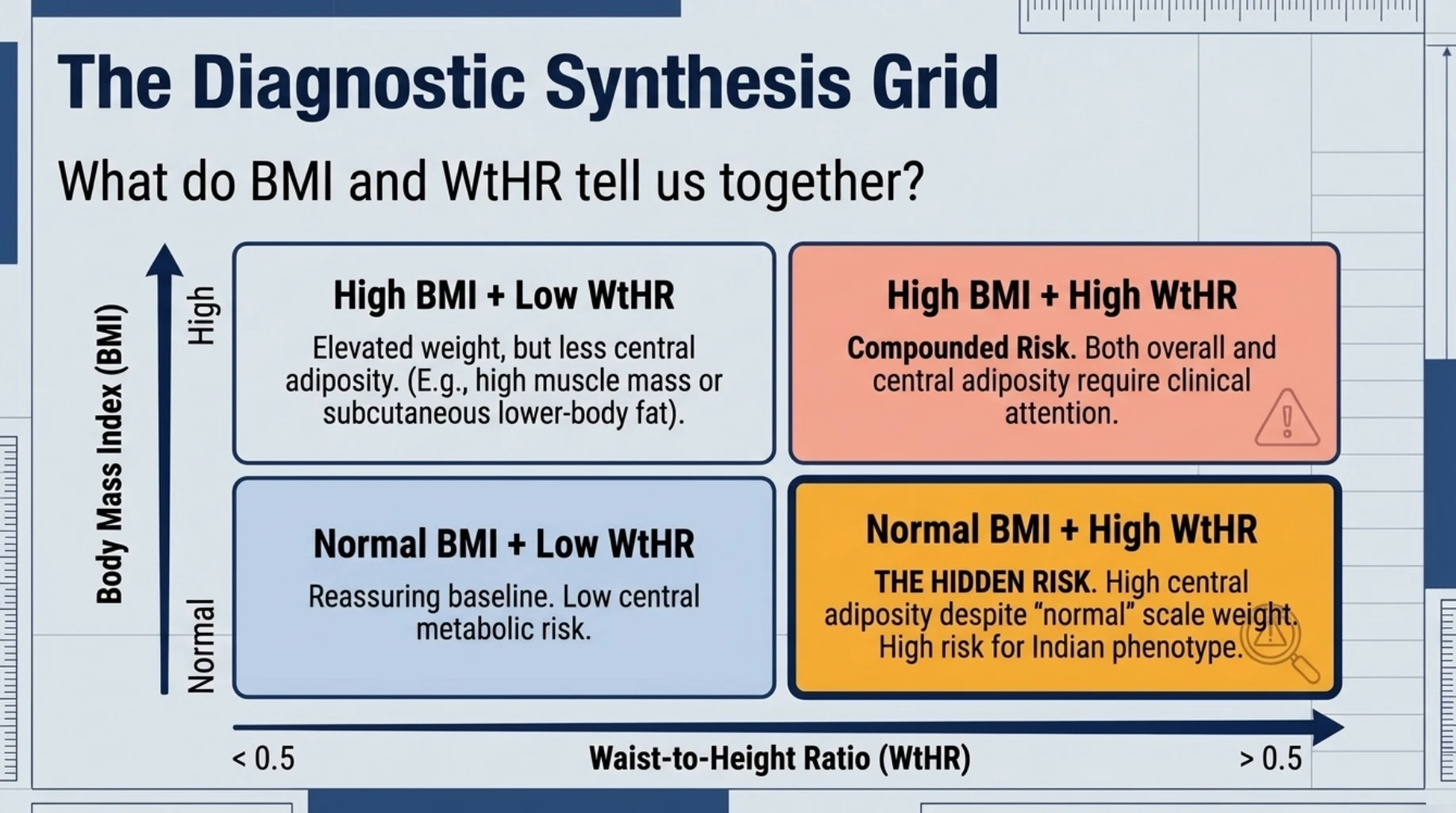
Waist-to-Height Ratio Should Complement BMI, Not Automatically Replace It
This is the key message.
BMI remains useful because it is simple, well studied and widely used in clinical practice.
The waist-to-height ratio adds information about central fat distribution.
Rather than debating:
“BMI or waist-to-height ratio?”
a better clinical question is:
“What do BMI and waist-to-height ratio tell us together?”
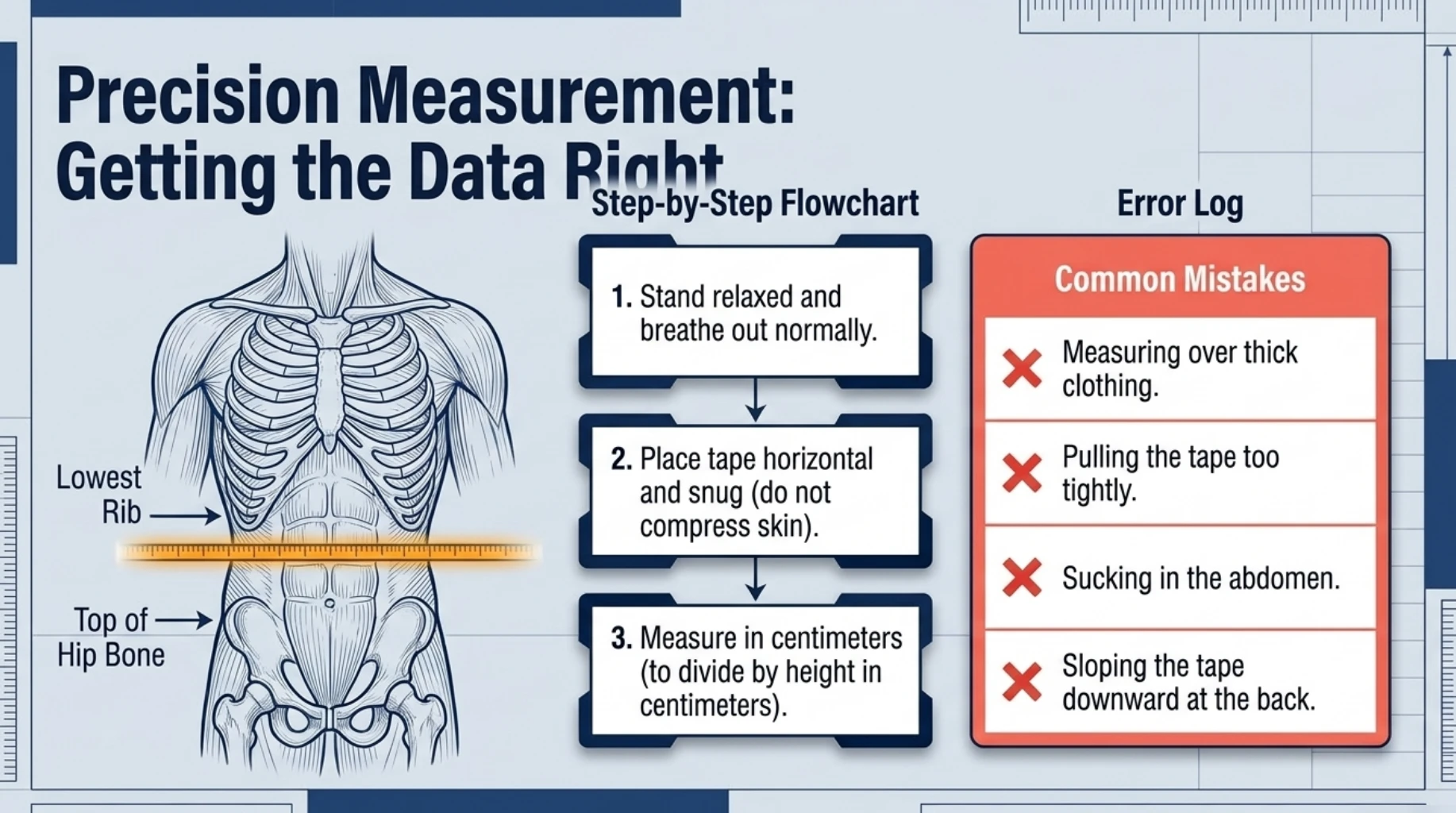
How to Measure Waist Circumference Correctly
The usefulness of the waist-to-height ratio depends heavily on how accurately waist circumference is measured.
A tape placed too high, too low, too loose or pulled excessively tight can change the result.
For consistency, use the same measurement technique each time.
A practical approach is to measure waist circumference midway between the lowest rib and the top of the hip bone, after breathing out normally, with the tape horizontal and snug but not compressing the skin.
Different guidelines and studies sometimes use slightly different anatomical landmarks, which is another reason small differences between measurements should not be overinterpreted.
Common Waist-Measurement Mistakes
- Measuring over thick clothing.
- Pulling the tape too tightly.
- Allowing the tape to slope downward at the back.
- Measuring after deliberately sucking in the abdomen.
- Using a different anatomical location each time.
- Comparing a relaxed evening measurement with a tightly measured morning value.
For monitoring change, consistency matters more than chasing the smallest possible number.
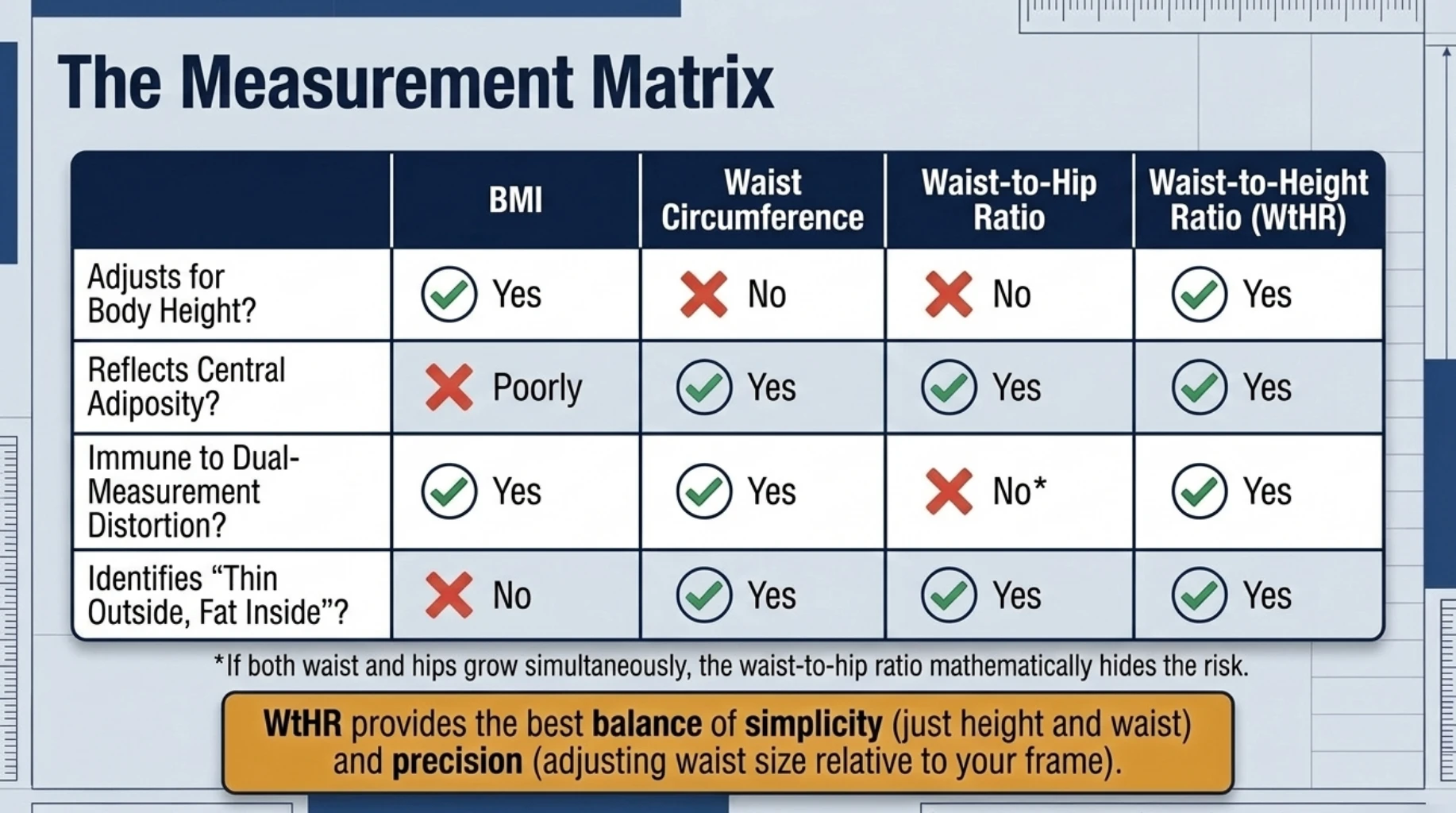
Waist-to-Height Ratio vs Waist Circumference: Which Is Better?
Waist circumference itself is already a useful marker of central adiposity.
The advantage of waist-to-height ratio is that it adjusts waist size for a person’s height.
Consider two adults:
| Measure | Person A | Person B |
|---|---|---|
| Height | 150 cm | 185 cm |
| Waist circumference | 82 cm | 82 cm |
| Waist-to-height ratio | 0.55 | 0.44 |
Their waist circumferences are identical.
The significance relative to body size is not.
This is why the waist-to-height ratio can sometimes be easier to interpret across people of different heights than one fixed waist cutoff.
Waist-to-Height Ratio vs Waist-to-Hip Ratio
Another commonly discussed measure is the waist-to-hip ratio.
It compares waist circumference with hip circumference.
This can provide information about fat distribution, but it has an important limitation: both measurements can change.
For example, if waist circumference increases but hip circumference also increases, the ratio may change less than expected.
By comparison, adult height is relatively stable, making the waist-to-height ratio simpler to track over time.
| Measure | What It Uses | Main Strength | Main Limitation |
|---|---|---|---|
| BMI | Weight + height | Simple and widely used | Does not assess fat distribution |
| Waist circumference | Waist only | Simple marker of central adiposity | Does not adjust for height |
| Waist-to-height ratio | Waist + height | Adjusts central adiposity for body size | Still indirect; does not directly measure visceral fat |
| Waist-to-hip ratio | Waist + hip | Shows body-fat distribution pattern | Influenced by changes in both waist and hip size |
Why “Keep Your Waist Below Half Your Height” Is Useful
Public-health messages work better when people can remember them.
The advice to keep the waist below approximately half of height makes the waist-to-height ratio easy to understand without memorising different waist thresholds for different heights.
For example:
| Height | Half of Height | Simple Waist Target |
|---|---|---|
| 150 cm | 75 cm | Below about 75 cm |
| 160 cm | 80 cm | Below about 80 cm |
| 170 cm | 85 cm | Below about 85 cm |
| 180 cm | 90 cm | Below about 90 cm |
Again, this is a screening guide rather than an exact biological boundary.
Waist-to-Height Ratio and Men
Men tend to accumulate more abdominal and visceral fat than premenopausal women, although there is substantial individual variation.
This makes central adiposity particularly relevant in men with:
- Increasing waist circumference.
- High triglycerides.
- Prediabetes or diabetes.
- Fatty liver.
- Hypertension.
- Sleep apnoea.
A man whose BMI has changed very little over several years may still experience a meaningful increase in waist-to-height ratio if abdominal fat accumulates while muscle declines.
This is one reason stable body weight should not automatically be interpreted as stable metabolic health.
Waist-to-Height Ratio in Women
Women can also benefit from tracking the waist-to-height ratio, particularly during midlife.
Before menopause, women commonly store a greater proportion of fat in subcutaneous depots around the hips and thighs.
During the menopausal transition, fat distribution can shift towards the abdomen even if overall weight changes relatively little.
This means a woman’s waist may increase while the weighing scale remains surprisingly stable.
For this reason, waist-to-height ratio can provide information that body weight alone may miss.
Waist-to-Height Ratio During Menopause
Menopause does not automatically cause obesity, but hormonal changes, ageing, reduced activity, sleep disturbance and muscle loss can contribute to changes in body composition.
A rising waist-to-height ratio during this period may indicate increasing central adiposity and deserves attention alongside strength, metabolic markers and overall health.
The response should not simply be aggressive dieting.
Resistance training, adequate protein, regular aerobic activity, sustainable nutrition and sleep remain important.
Waist-to-Height Ratio After 40
After 40, body composition can change even when body weight remains stable.
Muscle may gradually decline while fat accumulates around the abdomen.
This can produce a relatively unchanged BMI but a rising waist-to-height ratio.
That is one reason waist measurement becomes increasingly useful during midlife.
The combination of:
- Rising waist circumference.
- Declining strength.
- Reduced physical activity.
- High triglycerides.
- Fatty liver.
- Prediabetes.
deserves more attention than a reassuring scale reading alone.
Waist-to-Height Ratio and Sarcopenic Obesity
Sarcopenic obesity refers broadly to the coexistence of excess adiposity with low muscle mass and/or poor muscle function.
Someone can therefore have:
- A relatively high waist-to-height ratio.
- Reduced muscle strength.
- Normal or only moderately elevated body weight.
This can be especially important in older adults and people who have repeatedly lost weight through severe calorie restriction without resistance training.
Body composition and function matter—not just the number on the scale.
Can Waist-to-Height Ratio Improve Without Major Weight Loss?
Yes.
If waist circumference decreases while body weight remains relatively stable, the waist-to-height ratio will improve.
This can occur during body recomposition, when fat decreases while muscle is maintained or increased.
For example:
| Measurement | Before | After |
|---|---|---|
| Height | 170 cm | 170 cm |
| Body weight | 75 kg | 74 kg |
| Waist circumference | 94 cm | 85 cm |
| Waist-to-height ratio | 0.55 | 0.50 |
The scale changed by only 1 kg.
The waist changed substantially.
This illustrates why the waist-to-height ratio can reveal progress that scale weight may underestimate.
How to Reduce a High Waist-to-Height Ratio
There is no exercise or diet that selectively reduces the ratio itself.
The goal is to reduce excess abdominal fat while maintaining or improving muscle and overall health.
A comprehensive approach usually includes:
- Appropriate calorie reduction when excess body fat is present.
- Resistance training.
- Regular aerobic activity.
- Increased daily movement.
- Adequate protein.
- High-quality, minimally processed food choices.
- Sleep and recovery.
- Medical treatment of obesity when clinically indicated.
1. Reduce Excess Body Fat Gradually
If excess body fat is present, a sustainable calorie deficit can reduce abdominal fat over time.
Crash dieting is unnecessary.
Very aggressive calorie restriction can increase hunger, reduce training performance and make muscle preservation more difficult.
The goal should be improved body composition rather than the fastest possible drop in body weight.
2. Include Resistance Training
Resistance training does not directly “burn belly fat,” but it helps preserve or build muscle while body fat decreases.
This becomes especially important after 40 and during weight loss.
Preserving muscle can improve physical function and supports better long-term body composition.
3. Add Regular Aerobic Activity
Brisk walking, cycling, swimming, jogging and other aerobic activities can contribute to energy expenditure and improve cardiovascular fitness.
You do not need to perform extreme amounts of cardio.
Consistency matters more than trying to burn the largest number of calories in every session.
4. Increase Daily Movement
People can exercise for 30 minutes and still spend most of the remaining day sitting.
Walking more, using stairs, standing periodically and reducing prolonged sedentary time can increase daily energy expenditure and support metabolic health.
5. Improve Diet Quality
A diet supporting reduction in central adiposity generally emphasises:
- Adequate protein.
- Vegetables.
- Whole fruits.
- Pulses and legumes.
- Appropriate whole grains.
- Nuts and seeds in reasonable portions.
- Fewer energy-dense ultra-processed foods.
- Reduced excess alcohol where relevant.
No special “waist-loss food” is required.
Can Abdominal Exercises Reduce Waist-to-Height Ratio?
Crunches, planks and other core exercises can strengthen abdominal muscles.
They do not selectively remove fat from the abdomen.
This is the same principle as spot reduction elsewhere in the body.
You cannot choose where fat is removed simply by exercising the muscles underneath it.
A lower waist-to-height ratio generally results from broader changes in energy balance, body fat and body composition.
Does Losing Weight Always Reduce Waist-to-Height Ratio?
Usually, meaningful fat loss reduces waist circumference to some extent, but the relationship is not perfectly predictable.
Two people who each lose 5 kg may lose different amounts from the abdomen because fat distribution is influenced by genetics, sex, age, hormones and baseline body composition.
This is another reason to measure the waist directly rather than assuming the change from scale weight alone.
Waist-to-Height Ratio and GLP-1-Based Weight Loss
People using GLP-1-based medicines for obesity or diabetes may experience substantial reductions in appetite and body weight.
Waist circumference often falls as overall adiposity decreases.
However, weight loss can also include lean tissue.
This means an ideal programme should monitor more than scale weight.
Resistance training, adequate protein and overall nutritional quality remain important alongside improvements in waist-to-height ratio.
Waist-to-Height Ratio and Fatty Liver Improvement
Reduction in abdominal adiposity often accompanies improvement in metabolic health and fatty liver risk.
However, changes in waist-to-height ratio should not be used as the sole measure of liver improvement.
Depending on the clinical situation, liver assessment may involve:
- Liver enzymes.
- Ultrasound.
- Fibrosis-risk scores.
- Elastography/FibroScan where appropriate.
- Metabolic risk-factor assessment.
A smaller waist is encouraging, but it does not replace appropriate liver evaluation.
Can Waist-to-Height Ratio Replace Blood Tests?
No.
A normal waist-to-height ratio does not guarantee normal glucose, cholesterol, liver health or blood pressure.
Likewise, a high ratio does not prove that these abnormalities are present.
It is a screening marker.
When metabolic risk is suspected, direct assessment may include:
- Blood pressure.
- Fasting glucose and/or HbA1c.
- Lipid profile.
- Liver evaluation when indicated.
- Other tests based on clinical history.
When Waist-to-Height Ratio Is Less Useful
No anthropometric measure works perfectly in every situation.
The waist-to-height ratio can be harder to interpret or less useful in situations such as:
- Pregnancy.
- Significant abdominal swelling or ascites.
- Conditions causing major abdominal distension.
- Very muscular athletes with unusual body composition.
- Situations where waist measurement cannot be performed reliably.
Clinical context always matters.
Waist-to-Height Ratio Should Not Become Another Number to Obsess Over
One risk of introducing a better screening measure is that people simply replace one obsession with another.
Instead of weighing themselves repeatedly, they may begin measuring the waist every day.
That is unnecessary.
Waist circumference does not change meaningfully from body-fat loss overnight.
Day-to-day variation can occur because of:
- Food volume.
- Bloating.
- Constipation.
- Menstrual-cycle-related changes.
- Measurement technique.
For most people, measuring under similar conditions every few weeks is more useful than measuring several times per day.
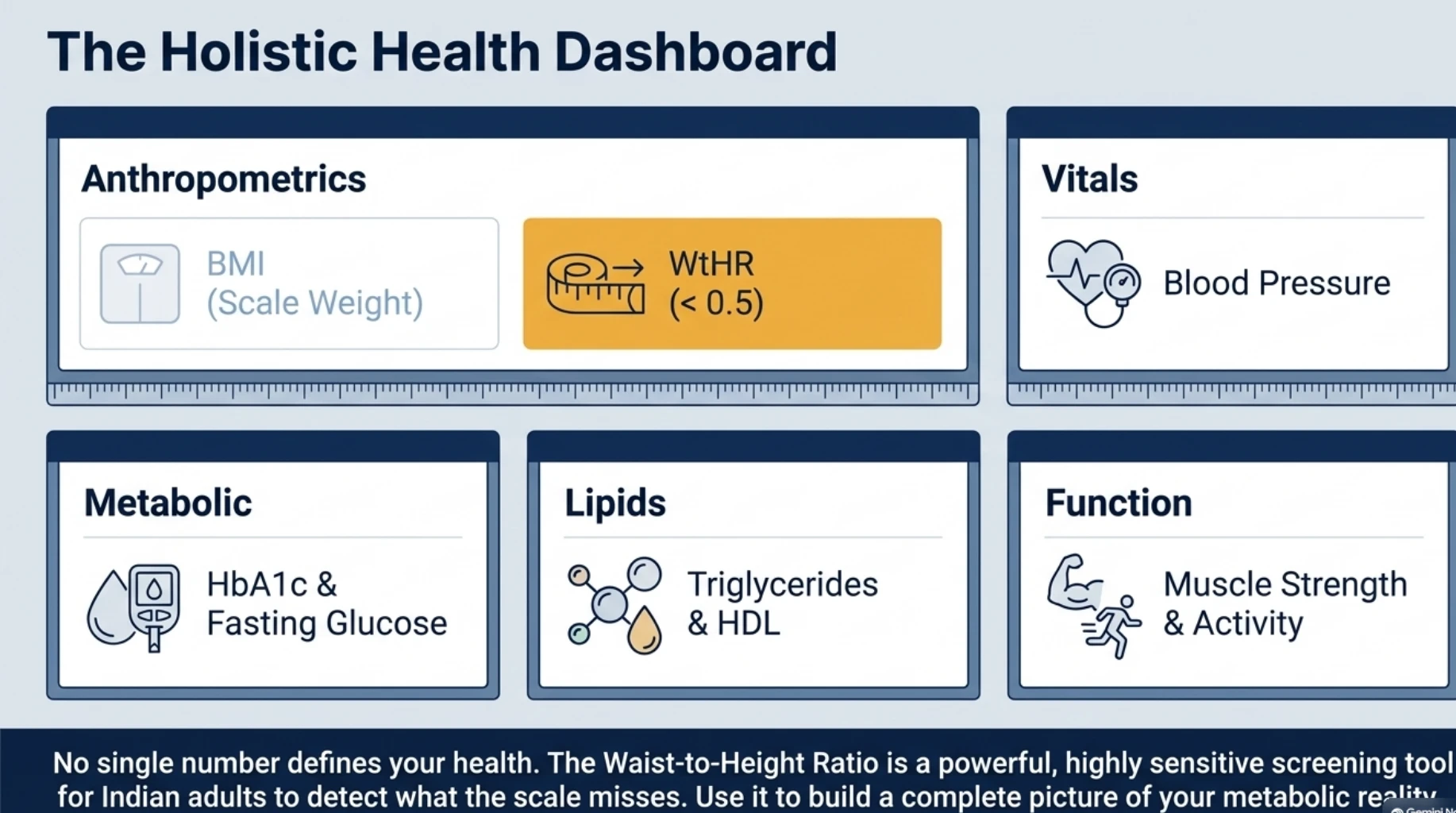
What Should Indian Adults Track Alongside Waist-to-Height Ratio?
| Marker | What It Adds |
|---|---|
| Waist-to-height ratio | Simple indication of central adiposity relative to height |
| BMI | Overall body weight relative to height |
| Waist circumference | Absolute abdominal size |
| Blood pressure | Direct cardiovascular risk factor |
| HbA1c/glucose | Assessment of glucose regulation |
| Lipid profile | Triglycerides, HDL, LDL and broader cardiovascular risk information |
| Liver health | Important when fatty liver or metabolic dysfunction is suspected |
| Strength and activity | Add information about muscle and functional health |
Using several indicators together gives a much better picture than relying on any one number.
Common Myths About Waist-to-Height Ratio
The waist-to-height ratio is simple, but simplicity can sometimes lead to overinterpretation. It is useful as a screening tool, not as a stand-alone diagnosis.
Myth 1: Waist-to-Height Ratio Is Always Better Than BMI
Not exactly.
The two measures answer different questions.
BMI estimates body weight relative to height. The waist-to-height ratio reflects central adiposity relative to height.
For Indian adults, waist-to-height ratio can provide important information that BMI misses, especially when abdominal fat is present at a relatively modest BMI.
But BMI still remains useful in clinical assessment.
Myth 2: A Waist-to-Height Ratio Below 0.5 Means You Have No Metabolic Risk
No.
A lower waist-to-height ratio is generally favourable, but it does not rule out diabetes, high LDL cholesterol, hypertension, fatty liver, smoking-related risk, genetic risk or other medical problems.
It should be interpreted alongside the broader clinical picture.
Myth 3: A High Waist-to-Height Ratio Means You Definitely Have Visceral Fat
A higher ratio suggests greater central adiposity, but it does not directly measure visceral fat.
Waist circumference includes both subcutaneous and deeper abdominal tissues.
Imaging such as CT or MRI is required for direct quantification of visceral fat.
Myth 4: If BMI Is Normal, Waist-to-Height Ratio Is Unnecessary
This is particularly problematic in Indian adults.
Someone can have a conventional “normal” BMI and still have a relatively large waist, insulin resistance, fatty liver or prediabetes.
That is precisely where the waist-to-height ratio can add useful information.
Myth 5: You Can Reduce Waist-to-Height Ratio With Abdominal Exercises
Core exercises can strengthen abdominal muscles.
They do not selectively remove abdominal fat.
Reduction in waist circumference generally requires broader improvements in energy balance, physical activity and body composition.
Myth 6: Everyone Should Have the Same Waist Circumference
No.
A fixed waist measurement has different significance in a shorter versus taller adult.
This is one reason the waist-to-height ratio can be useful: it adjusts waist size for height.
Myth 7: Measuring Waist Every Day Is Better
Daily waist measurement usually adds more noise than useful information.
Bloating, meal volume, bowel contents and technique can change the number slightly from day to day.
For most adults, measuring under similar conditions every few weeks is more informative.
Waist-to-Height Ratio: Frequently Asked Questions
What Is a Healthy Waist-to-Height Ratio?
As a practical screening guide, a waist-to-height ratio below 0.5 is generally considered favourable in adults.
Values from approximately 0.5 to 0.59 indicate increased central adiposity, while 0.60 or above suggests higher central adiposity.
These are screening thresholds rather than disease diagnoses.
How Do I Calculate Waist-to-Height Ratio?
Divide waist circumference by height using the same unit.
For example, an 84 cm waist and a height of 168 cm gives:
84 ÷ 168 = 0.50
Is Waist-to-Height Ratio Better Than BMI?
It can be more informative for central obesity because BMI does not show where fat is stored.
For Indian adults, using both BMI and waist-to-height ratio can provide a more complete picture than relying on either one alone.
Is Waist-to-Height Ratio Useful for Indian Adults?
Yes. It is particularly relevant because South Asians can develop central adiposity, insulin resistance, diabetes and fatty liver at lower BMI levels than many Western populations.
Can I Have a Normal BMI but a High Waist-to-Height Ratio?
Yes.
This can happen when abdominal fat is relatively high despite a body weight that falls within a conventional normal BMI range.
Does Waist-to-Height Ratio Measure Visceral Fat?
No.
It is a practical marker of central adiposity, but it does not directly quantify visceral fat.
How Often Should I Measure Waist-to-Height Ratio?
There is usually no need to calculate it every day.
When monitoring body-composition change, measuring waist every few weeks under similar conditions is often sufficient.
Can Waist-to-Height Ratio Improve Without Weight Loss?
Yes.
If waist circumference falls while body weight stays relatively stable, the ratio improves.
This can happen during body recomposition when fat decreases while muscle is preserved or gained.
Is Waist-to-Height Ratio Useful After 40?
Yes. It can be particularly useful during midlife because waist circumference may increase even when body weight changes very little.
Should Waist-to-Height Ratio Replace Blood Tests?
No.
It is a screening measure, not a replacement for blood pressure, HbA1c, glucose, lipid profile or liver assessment when these are clinically indicated.
Waist-to-Height Ratio: Practical Examples
| Height | Waist | Waist-to-Height Ratio | General Interpretation |
|---|---|---|---|
| 160 cm | 72 cm | 0.45 | Healthy central adiposity range |
| 160 cm | 84 cm | 0.53 | Increased central adiposity |
| 170 cm | 80 cm | 0.47 | Healthy central adiposity range |
| 170 cm | 92 cm | 0.54 | Increased central adiposity |
| 180 cm | 110 cm | 0.61 | High central adiposity |
These examples show why absolute waist size can be easier to interpret when adjusted for height.
When Should a High Waist-to-Height Ratio Prompt Further Evaluation?
A high waist-to-height ratio is especially important when it occurs alongside other metabolic risk factors.
Further assessment may be useful when central adiposity is accompanied by:
- Prediabetes or diabetes.
- High triglycerides.
- Low HDL cholesterol.
- Hypertension.
- Fatty liver.
- Sleep apnoea.
- A strong family history of type 2 diabetes or premature cardiovascular disease.
- Progressive increase in abdominal size.
The objective is not to treat the ratio itself.
The objective is to identify and manage the underlying metabolic risk.
Waist-to-Height Ratio and Metabolic Health: What Matters Most?
The waist-to-height ratio is most useful when it is interpreted as part of a broader health assessment.
| Question | Why It Matters |
|---|---|
| Is waist-to-height ratio increasing? | May suggest worsening central adiposity |
| Is BMI also increasing? | Adds information about overall body-weight change |
| Is strength declining? | May suggest loss of muscle or physical function |
| Are triglycerides or glucose rising? | May indicate worsening metabolic health |
| Is fatty liver present? | Central adiposity commonly coexists with metabolic liver disease |
| Is blood pressure elevated? | Adds direct cardiovascular risk information |
Waist-to-Height Ratio: Why It Can Be More Practical Than BMI Alone
For Indian adults, the main advantage of the waist-to-height ratio is that it captures something BMI misses: central body-fat distribution.
This matters because South Asians often develop cardiometabolic abnormalities at lower BMI levels.
A person who appears only mildly overweight—or even normal weight—may still have:
- A relatively large waist.
- Visceral adiposity.
- Insulin resistance.
- Fatty liver.
- High triglycerides.
- Prediabetes.
That does not make BMI useless.
It means BMI should not be asked to do a job it was never designed to do.
Waist-to-Height Ratio vs BMI: The Practical Answer for Indian Adults
If you are an Indian adult trying to understand metabolic risk, the most useful approach is usually not to choose one measurement and discard the other.
Use them together.
| Situation | What It May Suggest |
|---|---|
| Normal BMI + low waist-to-height ratio | Generally reassuring body-size pattern, though other risk factors can still exist |
| Normal BMI + high waist-to-height ratio | Possible central adiposity despite relatively normal body weight |
| High BMI + low/moderate waist-to-height ratio | Body weight is elevated, but central adiposity may be less pronounced than BMI alone suggests |
| High BMI + high waist-to-height ratio | Both overall and central adiposity deserve attention |
This combination is much more informative than relying on one number in isolation.
Final Thought
If you remember only one thing about the waist-to-height ratio, remember this: your waist should ideally remain below approximately half your height. It is not a diagnosis, but for Indian adults it can be a simple and useful warning sign that central adiposity deserves attention even when BMI appears acceptable.
If you want a personalized metabolic assessment and lifestyle strategy, you can book a consultation here:
Book an Appointment