


Why Do Two Laboratories Sometimes Report Different Results?
Imagine that you undergo a thyroid function test at one diagnostic laboratory and receive a TSH value of 4.2 mIU/L. The following day, you repeat the test at another laboratory, where the result is 4.7 mIU/L.
Which report should you trust?
This is a common concern among patients who undergo repeat investigations, compare reports from different diagnostic centres or monitor chronic conditions such as diabetes, thyroid disorders and kidney disease.
Many people assume that a blood test produces one exact number that should remain identical whenever it is measured.
However, laboratory testing is a measurement process, and measurements have inherent variability.
Even when two laboratories use appropriate quality-control procedures, their results may not be numerically identical.
The difference may arise because the patient’s biological state changed between samples, because the samples were collected or handled differently, or because the laboratories used different analytical methods.
Understanding different lab test results requires recognising three important concepts: biological variation, preanalytical variation and analytical variation.
Most importantly, a numerical difference does not automatically establish that one laboratory made a mistake.
However, differences should not automatically be dismissed as harmless either. Their clinical significance depends on the test, the size of the difference and the patient’s medical circumstances.

1. Biological Variation: Your Blood Test Values Are Not Completely Fixed
One of the most important reasons why laboratory results vary is that the human body is constantly changing.
Blood glucose, hormone concentrations, electrolytes and many other measurable substances fluctuate according to normal physiological processes.
These changes may occur over minutes, hours or days.
Therefore, two blood samples collected from the same person at different times may produce different results even when both laboratories perform the tests accurately.
What Is Within-Person Biological Variation?
Within-person biological variation refers to natural fluctuations in a laboratory measurement within the same individual over time.
For example, blood glucose concentrations change in response to meals, physical activity, medication and metabolic regulation.
Similarly, TSH concentrations can fluctuate according to physiological rhythms and other influences.
These changes are not necessarily caused by laboratory error.
Can Blood Tests Change Within a Few Hours?
Yes.
Some laboratory measurements can change substantially within hours, while others remain relatively stable over short periods.
For example, glucose levels may change after eating, whereas HbA1c reflects glycaemic exposure over a longer period and generally does not change meaningfully over a few hours.
The expected degree of biological variation differs between tests.

Does the Time of Blood Collection Matter?
For some tests, yes.
Hormones such as cortisol exhibit pronounced daily rhythms, making collection time particularly important.
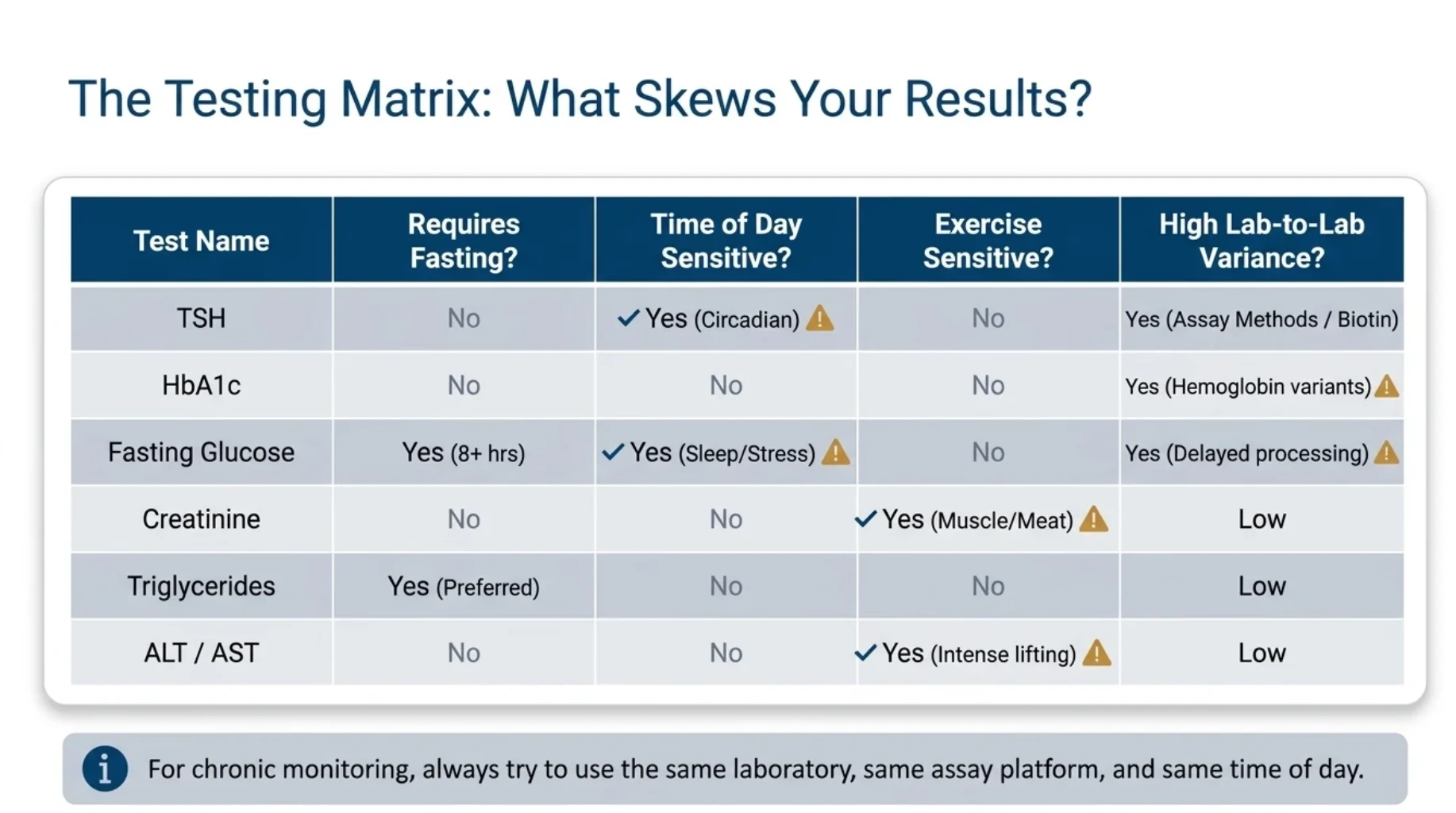
TSH also exhibits circadian variation, although the clinical relevance of a particular difference depends on the circumstances.
For tests influenced by time of day, consistent sampling conditions can improve the interpretation of serial results.
Can Exercise Affect Blood Test Results?
Yes.
Strenuous physical activity may temporarily influence certain laboratory measurements, including creatine kinase, some liver-associated enzymes and other biochemical markers.
For example, an individual who undergoes intense resistance training shortly before blood collection may show an elevated creatine kinase concentration.
This finding requires interpretation in the context of exercise history, symptoms and other results.
Does Hydration Affect Laboratory Values?
Hydration status may influence some measured concentrations.
Dehydration can affect blood concentration and may contribute to changes in certain biochemical and haematological measurements.
However, the effect varies by test and the degree of dehydration.
Patients should follow the specific preparation instructions rather than deliberately drinking excessive water before testing.
Can Illness Change Blood Test Results?
Yes.
Acute infections, inflammation, physiological stress and other illnesses can influence numerous laboratory parameters.
For example, an acute illness may affect white blood cell counts, glucose regulation and inflammatory markers.
Consequently, comparing a result obtained during an illness with one collected after recovery may reflect genuine biological change.
Clinical takeaway: A change in a laboratory value does not necessarily mean that the laboratory was inaccurate. The patient’s biological condition may have changed between the two blood samples.
2. Preanalytical Variation: What Happens Before the Sample Is Tested?
Another major explanation for different lab test results involves events occurring before the sample reaches the analyser.
This stage is called the preanalytical phase.
It includes patient preparation, sample collection, identification, transport, storage and processing.
Problems during this stage can affect the quality of the sample and, consequently, the reported result.
Does Fasting Make a Difference?
Fasting requirements depend on the investigation.
Some tests require specific preparation, while others can be performed without fasting.
For example, fasting glucose testing requires an appropriate fasting period, whereas HbA1c generally does not require fasting.
Routine lipid profiles can often be performed without fasting, although fasting may be appropriate in selected situations.
If one sample is collected after fasting and another after a meal, some differences may reflect preparation rather than laboratory performance.
Can the Blood Collection Technique Affect Results?
Yes.
Prolonged tourniquet application, repeated fist clenching, difficult venepuncture and sample contamination may influence certain measurements.
For example, contamination from intravenous fluids or collection-related haemolysis can produce misleading biochemical results.
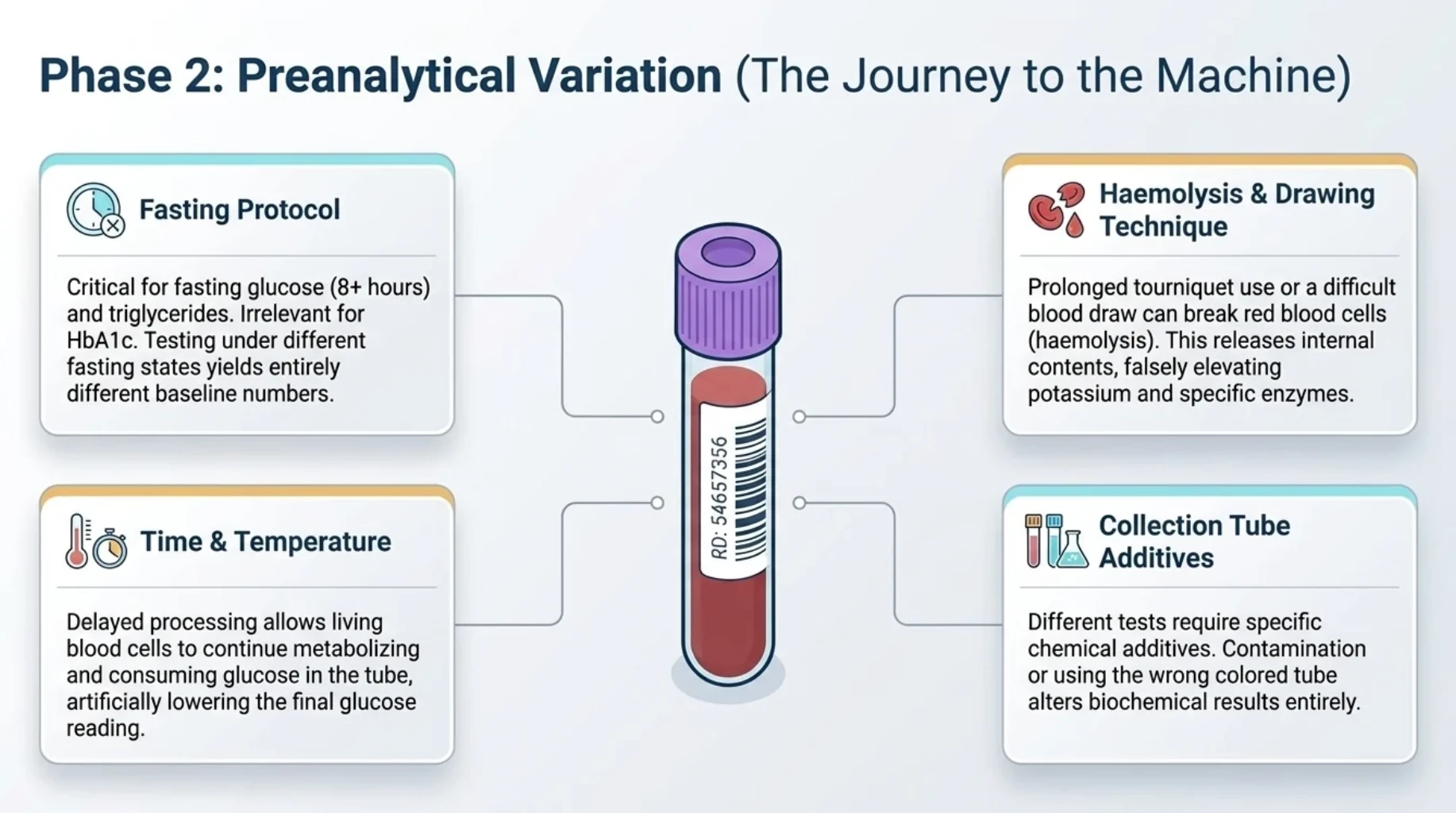
What Is Haemolysis?
Haemolysis occurs when red blood cells break apart and release their contents into the surrounding sample.
It can occur during collection or handling.
Haemolysis may interfere with several laboratory measurements, including potassium and certain enzymes.
A haemolysed sample may need to be recollected, depending on the test and the degree of interference.
Can Delayed Sample Processing Change Results?
Yes.
Some substances remain stable for relatively long periods under appropriate conditions, while others require prompt processing or special handling.
For example, glucose may decrease in unseparated blood because cells continue to metabolise glucose after collection.
Appropriate collection tubes, processing times and temperature control help minimise this effect.
Does Sample Transportation Matter?
Transportation conditions can influence sample quality.
Depending on the investigation, excessive delays, inappropriate temperatures or improper handling may affect the measured result.
However, home sample collection or transportation to a central laboratory is not inherently unreliable when validated procedures are followed.
Can the Wrong Collection Tube Affect Results?
Yes.
Different laboratory investigations require particular sample types and collection tubes.
Using an inappropriate tube or introducing additive contamination can affect certain measurements.
Laboratories therefore use specimen acceptance and rejection criteria to identify unsuitable samples.
Important: Unexpectedly high potassium, markedly abnormal glucose or other potentially serious results should not automatically be attributed to sample handling. Depending on the clinical situation, urgent assessment or prompt repeat testing may be necessary.

Common Preanalytical Factors That Can Affect Blood Test Results
| Factor | Possible Effect | Practical Consideration |
|---|---|---|
| Fasting status | May influence glucose and triglyceride measurements | Follow test-specific fasting instructions |
| Time of collection | May affect hormones and other time-sensitive markers | Use consistent timing when clinically relevant |
| Recent strenuous exercise | May influence creatine kinase and some enzymes | Inform the doctor about recent exercise |
| Hydration status | May alter certain measured concentrations | Maintain usual hydration unless instructed otherwise |
| Haemolysis | May interfere with potassium and other analytes | Laboratory may need to recollect the sample |
| Delayed processing | May affect glucose and other unstable measurements | Appropriate processing and preservation are important |
| Transportation conditions | May affect sample stability | Validated transport procedures are necessary |
| Collection tube contamination | May produce misleading biochemical results | Correct tubes and collection technique are essential |
| Medication or supplement use | May alter physiology or interfere with testing methods | Disclose relevant medications and supplements |
3. Analytical Variation: Different Machines and Methods Can Produce Different Results
After the sample reaches the laboratory, it undergoes analytical testing.
Different laboratories may use different instruments, reagents, calibration systems and measurement methods.
These differences can contribute to variation between results.
Even when laboratories use the same general testing principle, their results may not be perfectly identical.
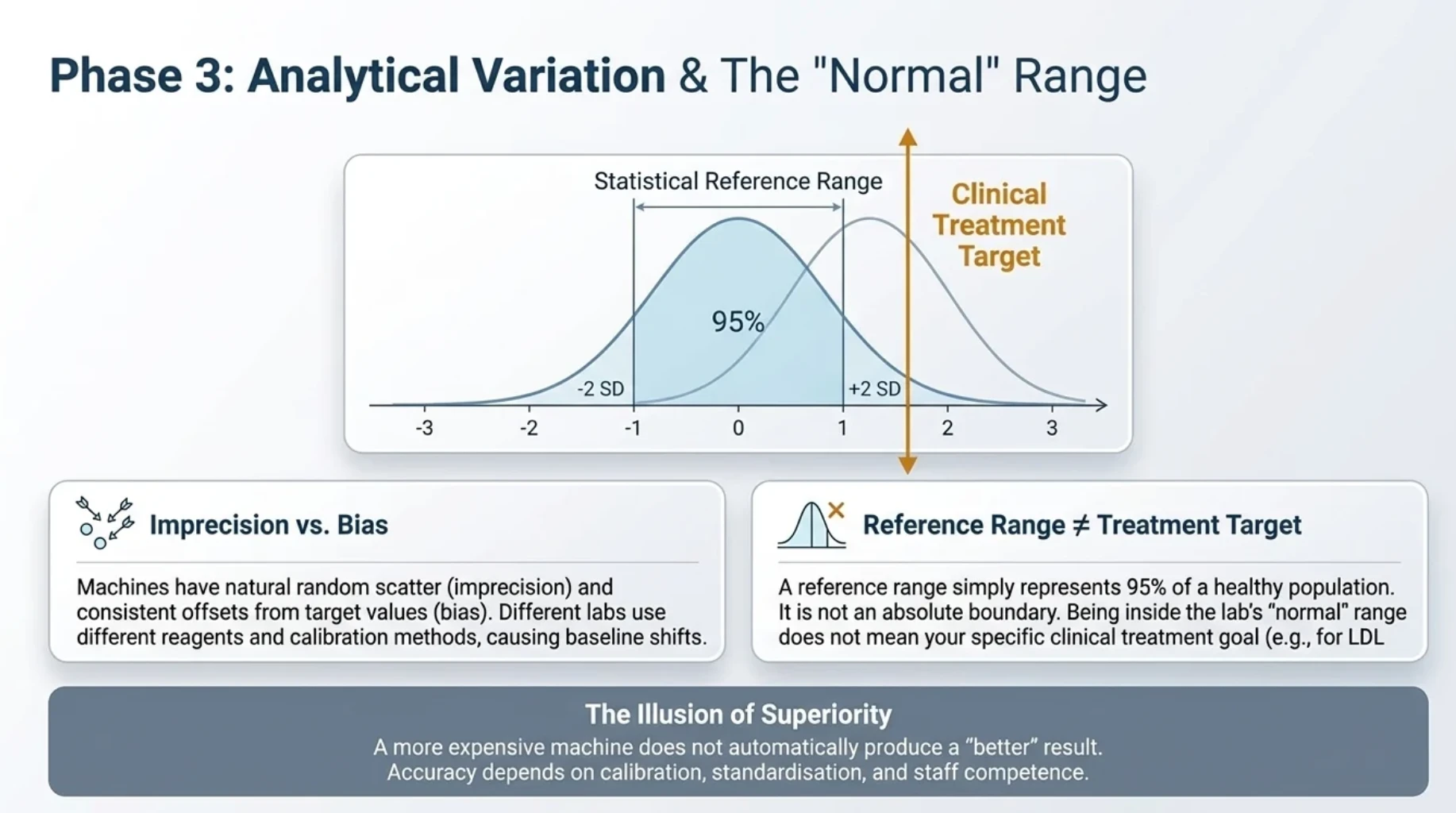
What Is Analytical Imprecision?
Analytical imprecision refers to the variability observed when a measurement procedure is repeated.
For example, repeated measurements of the same material may produce slightly different values because no measurement system is perfectly free from random variation.
Laboratories monitor imprecision through internal quality-control procedures.
What Is Analytical Bias?
Analytical bias refers to a systematic difference between the average result produced by a measurement procedure and an appropriate reference or target value.
Two laboratories may show different results if their methods have different biases.
Calibration, standardisation and external quality assessment help laboratories identify and control such differences.
Does a More Expensive Machine Always Produce a Better Result?
No.
The quality of a laboratory result depends on the suitability of the measurement method, calibration, quality control, staff competence and other operational factors.
The price or appearance of the instrument alone does not establish accuracy.
Can Different Testing Methods Produce Different Thyroid Results?
Yes.
TSH and other thyroid hormones are commonly measured using immunoassay methods.
Differences between assay platforms, calibration systems and susceptibility to interference may contribute to variation.
For serial monitoring, using the same laboratory and method where practical can help reduce unnecessary differences.
What About Vitamin B12 and Vitamin D Tests?
These tests may also show method-related variation.
Different assay systems and laboratory procedures can influence results, particularly near clinically important decision thresholds.
Interpretation should consider the assay, clinical context and relevant symptoms rather than relying on a single isolated number.
Does Laboratory Accreditation Guarantee Identical Results?
No.
Accreditation indicates that a laboratory has been assessed against specified quality and competence requirements within its accredited scope.
It does not guarantee that every measurement will be identical across laboratories or that errors can never occur.
In India, patients may look for NABL accreditation and verify whether the relevant testing discipline or investigation falls within the laboratory’s accredited scope.
Analytical Imprecision vs Analytical Bias
| Concept | Meaning | Why It Matters |
|---|---|---|
| Analytical imprecision | Random variation between repeated measurements | Can cause small differences even with the same method |
| Analytical bias | Systematic difference from an appropriate target value | Can contribute to consistent differences between methods |
| Calibration | Establishing the relationship between instrument response and measurement values | Supports reliable measurement performance |
| Internal quality control | Routine monitoring of analytical performance | Helps detect unexpected measurement problems |
| External quality assessment | Comparison of performance using independently supplied materials | Helps evaluate laboratory performance |
| Method standardisation | Alignment of results with recognised reference systems where available | Improves comparability across laboratories |
4. Why Do Different Laboratories Have Different Normal Ranges?
Patients often notice that two laboratories not only report slightly different values but also print different reference ranges.
For example, a laboratory may classify a particular result as within its reference interval while another laboratory flags a similar value as slightly elevated.
This can create confusion, especially when the difference is small.
What Is a Laboratory Reference Range?
A reference interval describes the range of values expected in a defined reference population using a particular testing method.
For many laboratory measurements, the central 95% of values from an appropriately selected reference population is used to establish a reference interval.
However, not every test uses this approach, and some tests are interpreted using clinical decision limits rather than population-based reference intervals.
Why Can Reference Ranges Differ?
Reference intervals may vary according to the testing method, analytical platform, reference population, age, sex and other relevant factors.
Laboratories may establish or verify intervals appropriate to their measurement procedures.
Does a Result Outside the Reference Range Always Mean Disease?
No.
A result slightly outside a reference interval does not automatically establish a medical diagnosis.
Some healthy individuals may have values outside a statistically defined reference interval.
Conversely, a result within the interval does not necessarily exclude disease.
Clinical interpretation requires consideration of symptoms, medical history, previous results and other relevant findings.
Are Reference Ranges the Same as Treatment Targets?
No.
This distinction is particularly important.
A laboratory reference interval is not necessarily the same as a clinical decision threshold or treatment target.
For example, LDL cholesterol treatment goals depend on cardiovascular risk and clinical guidelines rather than simply whether the laboratory marks the value as normal.
Similarly, diabetes diagnosis and monitoring involve established clinical criteria that should not be replaced by arbitrary laboratory reference intervals.
Should You Compare Your Result With the Range Printed on Another Laboratory’s Report?
Generally, no.
Use the reference interval or decision limits appropriate to the method that produced your result.
If two laboratories use different methods, the values may require careful interpretation before being compared directly.
For long-term monitoring, using the same laboratory and testing method where practical can make trends easier to interpret.
Clinical takeaway: A laboratory reference range is an interpretation aid, not an absolute boundary between health and disease. Clinical decision thresholds and treatment targets may differ from the reference interval printed on the report.
5. Are Slight Differences Between Laboratory Results Always Normal?
Not every difference between laboratory reports has the same clinical meaning.
A small numerical difference may be expected for one test but important for another.
The significance depends on the test’s biological variability, analytical performance and the clinical decision being made.
For example, a modest difference in a stable biochemical marker may have little practical significance in one situation.
However, a smaller difference near a critical treatment threshold may influence clinical management.
Therefore, there is no universal percentage difference that can be considered acceptable for every laboratory investigation.
Is a 5% Difference Between Two Labs Acceptable?
It depends on the test.
A fixed percentage cannot be applied to all laboratory measurements.
Some analytes are tightly regulated by the body and require relatively precise measurement.
Others exhibit greater natural biological variation.
Clinical interpretation should use test-specific analytical performance information and the patient’s circumstances.
What Is a Reference Change Value?
In laboratory medicine, the reference change value is a statistical concept used to assess whether a difference between serial measurements is larger than expected from combined analytical and within-person biological variation.
It can be useful when interpreting changes in certain laboratory parameters.
However, its calculation requires appropriate test-specific variation estimates and assumptions.
It should not be replaced by an arbitrary rule such as assuming that every change greater than 10% is medically important.
Can a Small Difference Change a Diagnosis?
Sometimes.
When a result is close to a clinical decision threshold, even a modest difference may affect how the result is classified.
For this reason, clinicians may consider repeat testing, confirmatory investigations or additional clinical information before establishing a diagnosis.
Should You Automatically Repeat Every Different Result?
No.
Repeating investigations without a clear clinical reason can increase costs and sometimes create additional confusion.
Repeat testing is most useful when it is expected to clarify an important diagnostic or treatment decision.
The appropriate timing and method depend on the particular test and clinical situation.
Important: A large unexpected difference, a critical laboratory value or a result inconsistent with serious symptoms should be reviewed promptly. Do not assume that laboratory variation explains every abnormal finding.
6. Why Do TSH Results Differ Between Laboratories?
Thyroid-stimulating hormone (TSH) is one of the investigations that frequently creates confusion when patients compare reports from different diagnostic laboratories.
For example, a patient may receive a TSH result of 4.3 mIU/L from one laboratory and 4.8 mIU/L from another.
Although these values are different, the difference does not automatically indicate that either laboratory performed the test incorrectly.
Several factors may contribute, including biological variation, collection timing, assay differences and analytical imprecision.
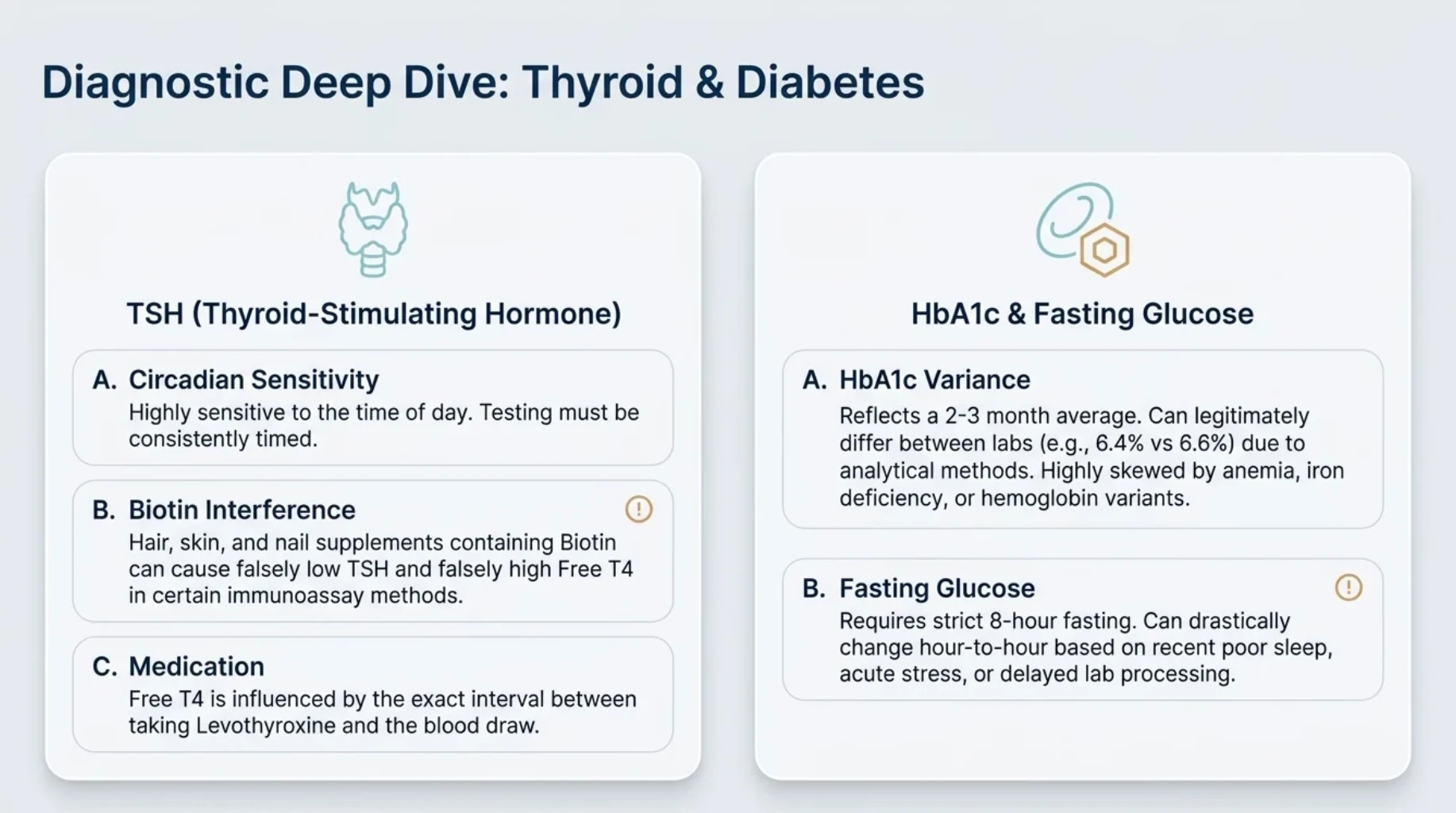
Does TSH Change During the Day?
Yes.
TSH secretion follows a circadian rhythm. Concentrations generally rise during the evening and overnight and tend to be lower during parts of the daytime.
Consequently, blood samples collected at different times may produce different TSH values.
The magnitude of variation differs between individuals and cannot be predicted using a single universal percentage.
Can Different TSH Testing Machines Produce Different Results?
Yes.
TSH is commonly measured using immunoassays. Different manufacturers may use different antibodies, reagents, calibration systems and analytical platforms.
Although modern assays are designed to provide clinically reliable results, some between-method differences can remain.
These differences may become particularly relevant when a result is close to a clinical decision threshold.
Can Biotin Supplements Affect Thyroid Test Results?
Yes.
Biotin, sometimes included in hair, skin and nail supplements, can interfere with certain immunoassay methods.
Depending on the assay design, biotin interference may produce falsely low TSH results and falsely high free thyroid hormone results.
However, not every thyroid testing platform is equally susceptible.
Patients should inform their doctor and laboratory about biotin use. The need and duration of withholding biotin before testing depend on the dose and assay used.
Does Levothyroxine Timing Matter?
For patients taking levothyroxine, medication adherence and consistency are important when interpreting thyroid results.
Free T4 may be influenced by the interval between taking levothyroxine and blood collection.
TSH generally reflects thyroid hormone exposure over a longer period and does not respond immediately to a single dose in the same way.
For serial monitoring, consistent medication and sampling practices can help improve comparability.
Should You Change Thyroid Medicine Because of a Small TSH Difference?
Not automatically.
A small difference between two laboratories should be interpreted alongside symptoms, treatment history, previous TSH trends, free T4 when indicated and the relevant clinical circumstances.
Medication changes should be made by the treating clinician rather than based solely on a small numerical difference between reports.
Clinical takeaway: When monitoring a stable thyroid condition, using the same laboratory, similar collection timing and consistent medication practices can make serial TSH results easier to interpret.
7. Why Can HbA1c Results Be Different Between Two Labs?
HbA1c is widely used for diagnosing and monitoring diabetes.
It reflects haemoglobin glycation over the lifespan of circulating red blood cells and provides an estimate of glycaemic exposure over approximately the preceding two to three months, with greater influence from more recent weeks.
Unlike fasting glucose, HbA1c does not usually change substantially within a few hours because of a single meal.
However, different lab test results can still occur when HbA1c is measured using different analytical systems.
Can One Lab Report HbA1c as 6.4% and Another as 6.6%?
Yes, such a difference is possible.
For illustration, a result of 6.4% from one laboratory and 6.6% from another may reflect analytical variation, method differences or other factors.
These numbers are examples, not an established acceptable difference between all HbA1c methods.
The distinction can be clinically important because 6.5% is a commonly used diagnostic threshold for diabetes when measured using an appropriately standardised laboratory method.
In an asymptomatic person, diagnosis generally requires confirmation according to accepted diagnostic criteria.
Do All Laboratories Use the Same HbA1c Method?
No.
HbA1c may be measured using high-performance liquid chromatography, immunoassay, enzymatic methods or other validated techniques.
Appropriate standardisation and quality assurance improve comparability, but method-related differences may still occur.
Can Anaemia Affect HbA1c Results?
Yes.
Conditions that alter red blood cell lifespan or haemoglobin characteristics may affect HbA1c independently of average glucose exposure.
For example, some forms of iron deficiency, haemolytic anaemia, recent blood loss or transfusion can make HbA1c interpretation more difficult.
The direction and magnitude of the effect depend on the underlying condition.
What About Haemoglobin Variants?
Haemoglobin variants may interfere with some HbA1c methods.
Other methods may be less susceptible to particular variants.
When HbA1c results do not match glucose readings or the clinical picture, clinicians may consider assay interference or conditions affecting red blood cell turnover.
Is HbA1c Always the Best Test for Diabetes Monitoring?
HbA1c is useful for many patients, but it does not describe day-to-day glucose variability or episodes of hypoglycaemia.
In selected patients, self-monitoring of blood glucose or continuous glucose monitoring can provide additional information.
When HbA1c is unreliable, glucose-based measurements may be needed for diagnosis or management.
Important: An HbA1c result close to the diabetes diagnostic threshold should not be interpreted in isolation. Consider confirmatory testing, the analytical method and conditions that may make HbA1c unreliable.
8. Why Do Fasting Blood Sugar Results Vary Between Laboratories?
Fasting blood glucose is another common investigation that may produce different values when samples are collected at different times or processed differently.
For example, one report may show fasting glucose of 101 mg/dL while another shows 109 mg/dL.
The difference could reflect biological variation, fasting conditions, sample processing or analytical factors.
It is not possible to determine the cause from the two numbers alone.
Does the Duration of Fasting Matter?
Yes.
Fasting plasma glucose testing generally requires at least eight hours without caloric intake.
However, fasting duration is only one consideration.
Recent illness, medication use, sleep disruption and other physiological factors may also influence glucose concentrations.
Can Poor Sleep Affect Fasting Glucose?
Sleep deprivation and physiological stress may influence glucose regulation.
Therefore, results collected after substantially different sleep or stress conditions may not be directly comparable.
Does Delayed Sample Processing Affect Glucose?
Yes.
Blood cells continue consuming glucose after collection unless appropriate measures are taken to limit glycolysis.
Delayed separation or inadequate sample preservation may therefore produce a falsely lower glucose result.
Appropriate collection tubes and timely processing are important for reliable glucose measurement.
Can a Glucometer Reading Be Compared Directly With a Laboratory Result?
Not as though the two methods were interchangeable.
Home glucose meters and laboratory analysers use different measurement systems and have different performance requirements.
Many modern glucose meters report plasma-equivalent values, but differences may still arise because of meter performance, sample type, timing and other factors.
Laboratory plasma glucose measurements are generally used for establishing a diabetes diagnosis.
Should You Repeat Fasting Glucose When Results Are Borderline?
Repeat or confirmatory testing may be appropriate when a result is near a diagnostic threshold, particularly when the person has no clear symptoms.
The choice of test and timing should follow accepted diagnostic criteria and the patient’s clinical circumstances.
9. Why Can Serum Creatinine and eGFR Differ Between Labs?
Serum creatinine is commonly used to assess kidney function and calculate estimated glomerular filtration rate (eGFR).
Patients may become concerned when creatinine increases slightly or the reported eGFR changes between two laboratory reports.
However, interpretation requires understanding both biological and analytical factors.
Can Creatinine Change Without Kidney Disease?
Yes.
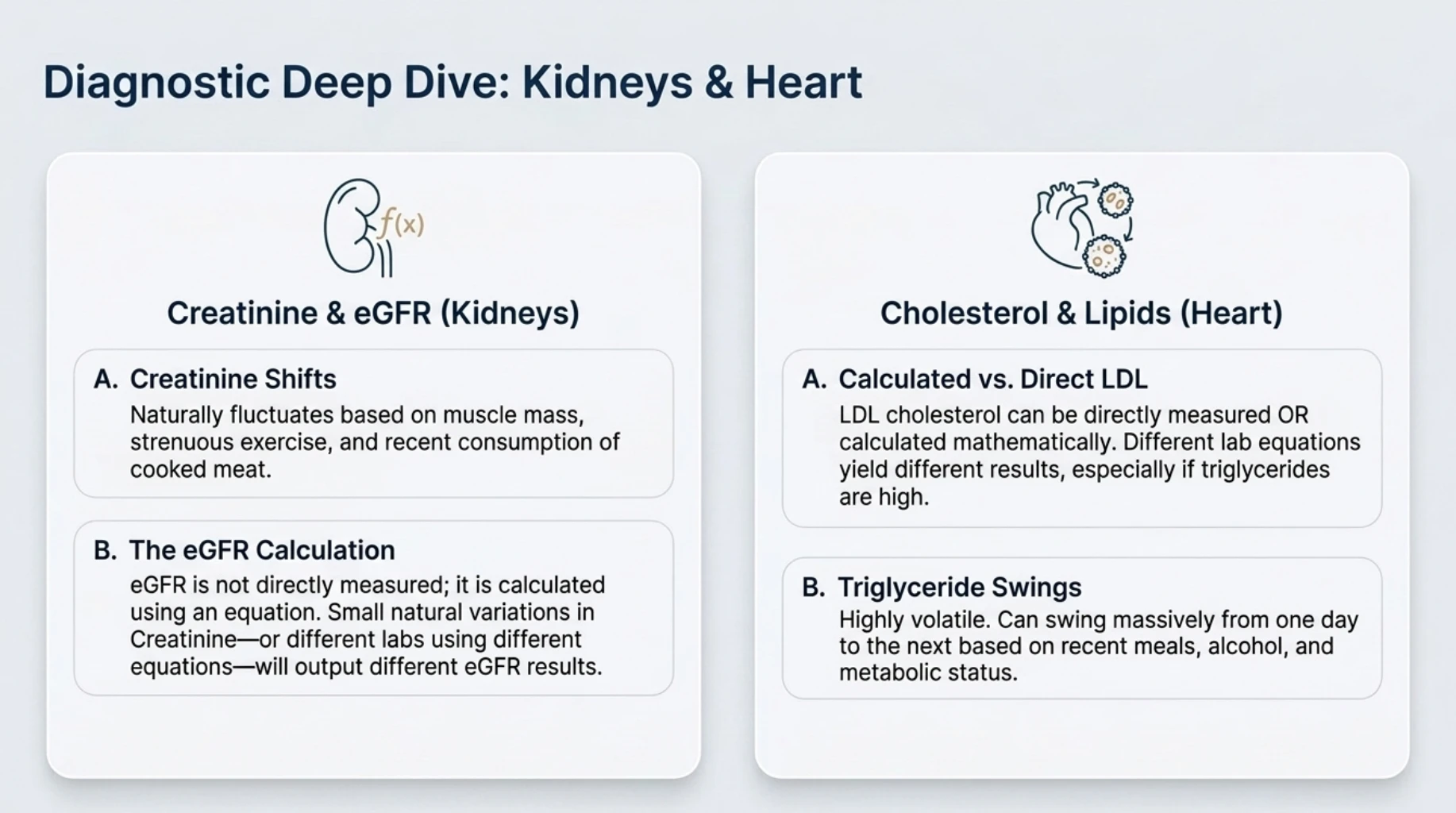
Creatinine concentrations are influenced by muscle mass, dietary intake, certain medications and other factors.
Recent consumption of cooked meat or strenuous exercise may temporarily influence creatinine measurements.
These factors do not explain every increase, and clinically significant changes still require assessment.
Do Laboratories Use Different Creatinine Methods?
Yes.
Creatinine may be measured using Jaffe-based or enzymatic methods.
Different methods have different susceptibility to analytical interference.
Standardisation improves comparability, but small differences may remain.
Why Does eGFR Change When Creatinine Changes Slightly?
eGFR is calculated using an equation rather than directly measured in most routine laboratory reports.
Because serum creatinine is an input into the equation, a change in creatinine can alter the calculated eGFR.
Additional differences may arise if laboratories use different eGFR equations or reporting conventions.
Does a Small eGFR Difference Mean Kidney Function Is Getting Worse?
Not necessarily.
Kidney function should be interpreted using the clinical context, serial measurements and other relevant findings.
Chronic kidney disease generally requires evidence of kidney abnormalities persisting for at least three months, rather than one isolated mildly abnormal result.
Urine albumin-to-creatinine ratio and other investigations may be important when evaluating kidney disease.
When Is a Creatinine Change More Concerning?
A rapid increase in creatinine, particularly with reduced urine output, dehydration, acute illness or relevant medication exposure, may indicate acute kidney injury.
Such changes should not be dismissed as ordinary laboratory variation.
Prompt medical assessment may be necessary.
10. Why Do Cholesterol and Triglyceride Results Vary Between Laboratories?
Lipid profiles are frequently repeated during treatment for dyslipidaemia, diabetes and cardiovascular risk reduction.
However, patients sometimes find that total cholesterol, LDL cholesterol or triglycerides differ between laboratories.
Several factors may contribute to these differences.
Does Fasting Affect Lipid Results?
Fasting is not routinely necessary for every lipid profile.
Non-fasting lipid testing is appropriate in many clinical situations.
However, triglycerides can rise after meals, and fasting samples may be preferred in selected circumstances, particularly when triglycerides are markedly elevated or when the result affects a clinical decision.
Why Can LDL Cholesterol Differ?
LDL cholesterol may be directly measured or calculated using an equation.
Different laboratories may use different calculation methods or direct assays.
As a result, LDL cholesterol values may differ even when the same person’s lipid profile is being assessed.
The difference can be more relevant when triglyceride concentrations are elevated.
Are Calculated and Direct LDL Results Always Identical?
No.
Calculated LDL depends on the values of other lipid components and the equation used.
Direct LDL assays use different analytical principles and may have their own limitations.
Neither approach should automatically be assumed to be perfect in every clinical situation.
Can Triglycerides Change From One Day to Another?
Yes.
Triglycerides can be influenced by recent food intake, alcohol consumption, metabolic status, illness and other factors.
Therefore, differences between reports may reflect genuine physiological variation as well as analytical differences.
Should Statin Treatment Be Changed Based on One Different LDL Result?
Not automatically.
LDL cholesterol results should be interpreted alongside cardiovascular risk, treatment goals, medication adherence and previous trends.
Where a result is unexpected or close to an important treatment threshold, further evaluation may be appropriate.
11. Why Do Liver Function Test Results Differ Between Labs?
Liver function test panels commonly include ALT, AST, alkaline phosphatase, bilirubin, albumin and other measurements.
However, these tests do not all assess the same aspect of liver health.
ALT and AST primarily reflect hepatocellular injury or enzyme release, while albumin and certain coagulation measurements provide different information about liver function.
Results may vary because of biological changes, analytical methods and preanalytical factors.
Can ALT and AST Change After Exercise?
Yes.
Strenuous exercise, particularly activities causing substantial muscle stress, may increase AST and sometimes ALT.
AST is not specific to the liver and is also found in muscle and other tissues.
Therefore, exercise history may be relevant when interpreting unexpected enzyme elevations.
Can Fatty Liver Cause Fluctuating Liver Enzymes?
Yes.
ALT and AST concentrations may fluctuate in people with metabolic dysfunction-associated steatotic liver disease (MASLD).
However, normal liver enzyme levels do not exclude significant liver disease or fibrosis.
Clinical assessment may require additional investigations depending on risk factors and other findings.
Can Bilirubin Change With Fasting?
Yes, particularly in people with Gilbert syndrome.
Fasting, illness or physiological stress may increase unconjugated bilirubin in susceptible individuals.
However, elevated bilirubin should not automatically be attributed to Gilbert syndrome without appropriate evaluation.
Do Different Laboratories Have Different ALT Reference Ranges?
Yes.
Reference intervals can vary with analytical methods and reference population characteristics.
Clinical interpretation should consider the appropriate laboratory range and the patient’s risk factors.
Should Mildly Elevated Liver Enzymes Always Be Repeated Immediately?
Not necessarily.
The need and timing of repeat testing depend on the magnitude of elevation, symptoms, medication exposure and clinical context.
Marked abnormalities, jaundice or concerning symptoms may require more urgent evaluation.
12. Why Do Vitamin B12 and Vitamin D Results Differ Between Laboratories?
Vitamin B12 and vitamin D testing is common among patients experiencing fatigue, dietary concerns or suspected nutritional deficiencies.
However, these tests can present interpretation challenges.
Why Can Vitamin B12 Results Vary?
Total serum vitamin B12 is commonly measured using automated immunoassays.
Different assays may produce different results because of method-related factors and analytical interference.
In addition, total serum B12 is not a perfect indicator of tissue-level vitamin B12 status.
When results are borderline or inconsistent with symptoms, clinicians may consider additional information or tests such as methylmalonic acid in appropriate circumstances.
Does a Normal Vitamin B12 Result Always Exclude Deficiency?
No.
Clinical symptoms, dietary history, medication use and other findings may influence interpretation.
A normal result does not necessarily exclude deficiency in every situation, particularly when assay interference or other limitations are suspected.
Why Can Vitamin D Results Differ?
Vitamin D status is commonly assessed using serum 25-hydroxyvitamin D.
Laboratories may use different immunoassay or chromatographic methods.
Differences in assay specificity, calibration and standardisation may contribute to variation.
Should Vitamin D Supplements Be Adjusted Based on a Small Difference?
Not automatically.
The need for supplementation depends on the clinical indication, individual risk factors, current treatment and the interpretation framework being used.
Routine vitamin D testing and supplementation are not necessary for every healthy adult.
Can Taking Supplements Before Testing Affect Results?
Supplement use can influence measured nutrient concentrations over time.
Some supplements may also interfere with particular laboratory methods.
Patients should disclose supplement use and follow test-specific preparation instructions.
Common Blood Tests: Why Results May Differ Between Laboratories
| Test | Possible Reasons for Differences | What Helps Interpretation |
|---|---|---|
| TSH | Collection timing, biological variation, assay differences, interference | Consistent timing, medication history and method awareness |
| HbA1c | Analytical method, haemoglobin variants, altered red blood cell turnover | Standardised testing and comparison with glucose information |
| Fasting glucose | Fasting conditions, biological variation, delayed sample processing | Correct preparation and appropriate sample handling |
| Creatinine | Muscle mass, recent diet, exercise, analytical method | Serial trends, clinical context and consistent methodology |
| eGFR | Creatinine differences, calculation equation and reporting conventions | Review equation, creatinine trend and kidney disease markers |
| LDL cholesterol | Calculated versus direct methods, different equations | Method consistency and cardiovascular risk assessment |
| Triglycerides | Recent meals, alcohol, metabolic status and biological variation | Appropriate preparation and serial interpretation |
| ALT and AST | Exercise, illness, liver or muscle-related changes, analytical factors | Symptoms, exercise history and other liver investigations |
| Vitamin B12 | Assay differences, interference and limitations of total B12 | Clinical context and additional testing when indicated |
| Vitamin D | Assay method, calibration and standardisation differences | Clinical indication and appropriate interpretation |
| Potassium | Haemolysis, collection factors, delayed processing or genuine changes | Prompt evaluation of unexpected or critical values |
| Complete blood count | Biological variation, sample handling and analyser differences | Review individual parameters, trends and clinical context |
13. Why Can Complete Blood Count Results Differ Between Laboratories?
A complete blood count (CBC) includes several measurements, such as haemoglobin, white blood cell count, platelet count and red blood cell indices.
Small differences between reports may occur because of biological variation, sample handling and analyser-related factors.
Can Haemoglobin Change Between Two Tests?
Yes.
Haemoglobin concentration may be influenced by hydration status, physiological changes and analytical factors.
However, a substantial or unexpected decrease should not automatically be attributed to normal variation.
Blood loss, haemolysis and other medical causes may require evaluation.
Why Do White Blood Cell Counts Fluctuate?
White blood cell counts can change in response to infection, inflammation, medications and physiological stress.
Therefore, differences between tests may reflect genuine changes in the patient’s condition.
Can Platelet Counts Differ Between Labs?
Yes.
Platelet counts may vary because of biological and analytical factors.
Occasionally, platelet clumping in an EDTA blood sample can produce a falsely low automated platelet count.
When suspected, the laboratory may examine a blood smear or recommend an alternative collection approach.

Does a Slightly Different CBC Mean You Need Treatment?
Not necessarily.
Interpretation depends on which parameter changed, the magnitude of the difference, previous trends and the clinical situation.
For example, a small difference in haemoglobin may have little significance in one patient but may require attention in someone with active bleeding or worsening symptoms.
14. How Should Patients Compare Two Laboratory Reports Correctly?
When comparing different lab test results, patients should avoid looking only at whether a number has increased or decreased.
A more useful approach is to examine the testing conditions, units, methods and clinical context.
Check Whether the Same Test Was Performed
Tests with similar names may measure different substances or use different methods.
For example, total vitamin B12 and active B12 are not identical measurements.
Similarly, calculated LDL cholesterol and directly measured LDL cholesterol may not produce identical values.
Check the Units
Different laboratories may report results in different units.
For example, glucose may be reported in mg/dL or mmol/L.
Creatinine may be reported in mg/dL or µmol/L.
Values should be converted correctly before comparison.
Check the Dates and Collection Times
A difference between samples collected several days apart may reflect genuine biological change.
Collection timing may be particularly relevant for certain hormones and other time-sensitive measurements.
Check Fasting and Medication Conditions
Confirm whether the samples were collected under comparable preparation conditions.
Relevant medication or supplement use should also be considered.
Check the Reference Intervals
Laboratory-specific reference intervals may differ.
However, clinical decision limits should not be confused with statistical reference intervals.
Look at the Clinical Trend
Serial results are often more informative than isolated measurements.
However, trends should be interpreted cautiously when testing methods or laboratories change.
Ask Whether the Difference Changes a Clinical Decision
This is often the most important question.
A numerical difference may not matter if it does not change diagnosis, treatment or monitoring.
Conversely, a small difference near an important decision threshold may require confirmation.
Practical advice: When monitoring a chronic condition, try to use the same laboratory and testing method when practical. This can reduce avoidable method-related variation, although it cannot eliminate natural biological changes.
15. When Should You Repeat a Blood Test Because Two Labs Disagree?
One of the most common questions patients ask after receiving different lab test results is whether they should immediately undergo another investigation.
Repeating a test can be useful, but it is not always necessary.
The decision depends on the type of investigation, the magnitude of the difference, the patient’s symptoms and whether the result will influence diagnosis or treatment.
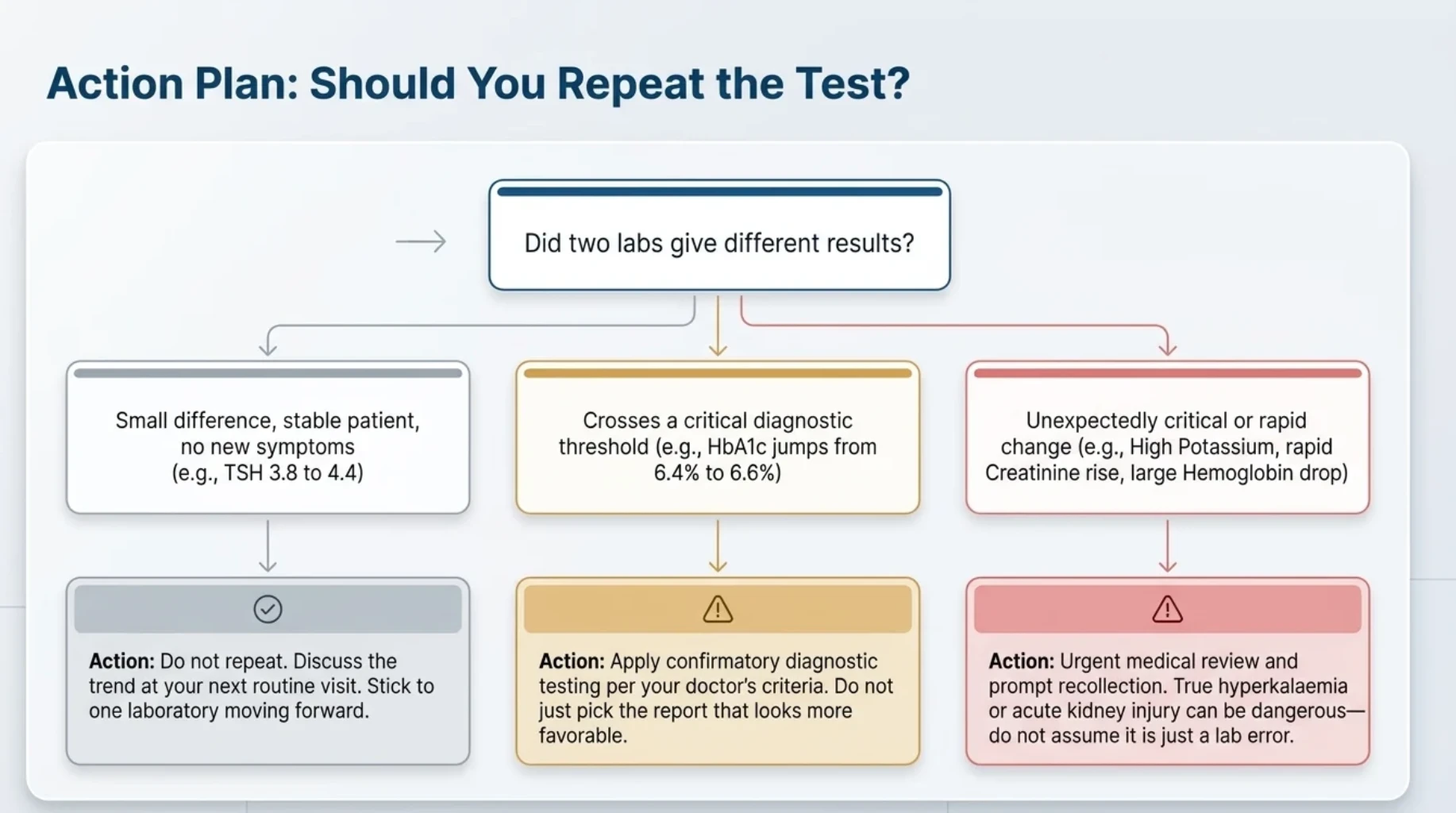
For example, a small difference between two TSH measurements in a clinically stable patient may not require immediate repeat testing.
However, an unexpectedly high potassium result or a rapid increase in creatinine may require prompt evaluation.
When Is Repeat Testing Usually Worth Considering?
Repeat testing may be appropriate when a result is unexpected, inconsistent with the clinical picture, close to a diagnostic threshold or substantially different from previous measurements.
It may also be useful when the laboratory reports possible sample interference, haemolysis or another specimen-quality concern.
However, the decision should be guided by the potential clinical consequences rather than the numerical difference alone.
Should You Repeat the Test at the Same Laboratory?
For routine monitoring, repeating an investigation at the same laboratory may reduce differences caused by changes in testing methods.
However, if a particular assay is suspected of producing an inaccurate result, repeating it using the same method may reproduce the same interference.
In such cases, the clinician may consult the laboratory about using an alternative method or a different testing platform.
How Soon Should a Blood Test Be Repeated?
There is no universal interval.
Some unexpected or potentially dangerous abnormalities require urgent confirmation or assessment.
Other investigations, such as HbA1c or TSH after a treatment adjustment, may require a longer interval because of the underlying physiology.
The appropriate timing should reflect the particular clinical question.
Should You Repeat a Test Simply Because It Is Marked Abnormal?
Not automatically.
A mildly abnormal value may require review of symptoms, medications, previous reports and relevant risk factors before deciding whether repeat testing is useful.
Conversely, a result within the printed reference interval may still require attention if it is inappropriate for the patient’s clinical circumstances.
When Is a Second Laboratory Particularly Useful?
Testing through another laboratory or method may be considered when a result remains inconsistent with the patient’s clinical presentation despite appropriate evaluation.
For example, suspected immunoassay interference may justify testing with an alternative assay platform.
However, repeatedly visiting different laboratories without a clear diagnostic question can increase confusion and unnecessary expense.
When to Repeat a Laboratory Test: Practical Examples
| Situation | Suggested Clinical Approach | Why It Matters |
|---|---|---|
| Slightly different TSH values in a stable patient | Review timing, symptoms, medication history and previous trends | Small differences may not change management |
| HbA1c results on opposite sides of a diagnostic threshold | Apply appropriate confirmatory diagnostic testing | Classification may affect diagnosis and management |
| Unexpectedly high potassium | Prompt clinical review; urgent assessment or repeat testing when indicated | True hyperkalaemia can be dangerous |
| Rapidly rising creatinine | Prompt evaluation for possible acute kidney injury | May represent a genuine deterioration in kidney function |
| Mild ALT difference without concerning symptoms | Review clinical context and determine appropriate follow-up | Minor changes may reflect biological or analytical variation |
| Unexpectedly low platelet count | Consider clinical assessment, smear review or repeat sampling | Platelet clumping or true thrombocytopenia may be involved |
| Vitamin B12 result inconsistent with symptoms | Consider assay limitations and additional testing when appropriate | Total B12 may not fully reflect functional status |
| Large unexpected haemoglobin decrease | Evaluate promptly according to symptoms and clinical circumstances | Blood loss or another medical cause may be present |
16. How Can You Recognise a Potentially Unreliable Laboratory Result?
Patients should not assume that every unexpected result represents laboratory error.
However, certain situations justify further investigation into sample quality, analytical interference or possible reporting problems.
The Result Does Not Match the Clinical Picture
A laboratory value may be inconsistent with symptoms, examination findings or other investigations.
For example, a markedly abnormal thyroid hormone result in a patient without corresponding clinical findings may prompt review of assay interference, medication use and other explanations.
However, the absence of symptoms does not automatically establish that a result is incorrect.
The Result Changes Dramatically Without an Obvious Explanation
A substantial unexpected change may reflect a genuine medical event, a sample-related problem or analytical variation.
Clinical assessment is needed to determine which explanation is most likely.
Different Tests Give Conflicting Information
Sometimes related investigations appear inconsistent.
For example, HbA1c may not agree with glucose monitoring results.
This discrepancy can occur because the measurements reflect different aspects of glucose regulation or because one measurement is affected by interference.
Persistent discordance warrants appropriate evaluation.
The Laboratory Flags a Sample Problem
Laboratories may report haemolysis, lipaemia, insufficient sample volume or other specimen-quality concerns.
Such comments should be considered during interpretation.
Depending on the investigation, recollection may be necessary.
The Report Contains Unexpected Units or Formatting
Before assuming that a result has changed substantially, verify the units and test name.
For example, creatinine reported in mg/dL cannot be compared numerically with a result reported in µmol/L without conversion.
Could the Sample Belong to Someone Else?
Patient identification errors are uncommon in well-managed laboratories but can occur.
If a report contains incorrect identifying details or appears inconsistent with the requested investigation, contact the laboratory promptly for verification.
Important: A suspicious laboratory result should be investigated, not ignored. Potentially critical abnormalities require timely medical assessment even when a laboratory error is being considered.
17. What Does NABL Accreditation Mean for Laboratory Test Accuracy?
In India, the National Accreditation Board for Testing and Calibration Laboratories (NABL) provides accreditation services for medical laboratories and other conformity assessment bodies.
Medical laboratory accreditation is based on applicable standards for quality and competence, including ISO 15189.
Accreditation can provide additional confidence that a laboratory has systems for quality management, technical competence and appropriate testing procedures.
However, accreditation should not be interpreted as a guarantee that every result will be identical across laboratories.
Does NABL Accreditation Mean a Laboratory Is Always Accurate?
No.
Accreditation involves assessment against defined requirements, but measurement uncertainty, biological variation and occasional errors can still occur.
A laboratory must continue maintaining its quality systems and monitoring analytical performance.
Are All Tests Automatically Covered by Accreditation?
No.
Accreditation applies to a defined scope.
Patients should distinguish between a laboratory being accredited and a particular investigation being included within its accredited scope.
How Can Patients Verify NABL Accreditation?
Patients can consult the official NABL website to review accreditation information and relevant scope details.
The laboratory’s accreditation status and validity should be checked rather than relying solely on promotional claims.
Is a Non-NABL Laboratory Automatically Unreliable?
No.
The absence of NABL accreditation does not, by itself, prove that a laboratory’s results are inaccurate.
However, accreditation provides an independent framework for assessing competence and quality systems.
What About Home Sample Collection?
Home collection can be appropriate when samples are collected, identified, transported and processed using validated procedures.
The quality of sample collection and handling matters more than whether the blood was collected at home or inside the laboratory.
Practical advice: When choosing a diagnostic laboratory in India, consider accreditation status, the relevant scope of testing, sample collection procedures, report quality and the laboratory’s ability to clarify unexpected results.
18. How to Compare Two Laboratory Reports: Three Practical Examples
The following hypothetical examples illustrate how a clinician may approach differences between laboratory reports.
They are educational scenarios, not universal rules for deciding whether a result is acceptable.
Example 1: Different TSH Results
A patient taking a stable dose of levothyroxine undergoes TSH testing at two laboratories on different mornings.
Laboratory A reports TSH of 3.8 mIU/L.
Laboratory B reports TSH of 4.4 mIU/L.
The patient has no new symptoms and reports consistent medication use.
Interpretation: The difference may reflect collection timing, biological variation or analytical method differences.
It would be inappropriate to assume that the second laboratory is incorrect or that medication must automatically be increased.
The clinician should consider the patient’s circumstances, treatment goals, previous results and relevant clinical findings.
Example 2: HbA1c Close to the Diabetes Threshold
A patient without classic diabetes symptoms receives an HbA1c result of 6.4% from one laboratory and 6.6% from another.
Interpretation: Although the numerical difference is small, the results fall on opposite sides of the commonly used 6.5% diagnostic threshold.
The discrepancy therefore has potential clinical significance.
Appropriate confirmatory testing should be performed according to accepted diagnostic criteria, with consideration of factors that may affect HbA1c reliability.
The patient should not be diagnosed or reassured solely on the basis of selecting whichever report appears more favourable.
Example 3: Creatinine and eGFR Differences
A patient receives a serum creatinine result of 1.1 mg/dL from one laboratory and 1.2 mg/dL from another.
The accompanying eGFR values also differ.
Interpretation: The creatinine difference may reflect biological or analytical variation, while the eGFR difference may also depend on the equation used.
However, the clinical importance depends on baseline kidney function, age, medications, illness and other findings.
A small isolated difference does not automatically establish chronic kidney disease.
Conversely, a rapidly increasing creatinine concentration during an acute illness may require urgent evaluation even if the absolute change appears modest.
Practical Comparison of Two Laboratory Reports
| Test | Lab A | Lab B | What to Consider |
|---|---|---|---|
| TSH | 3.8 mIU/L | 4.4 mIU/L | Collection timing, assay differences and clinical context |
| HbA1c | 6.4% | 6.6% | Diagnostic threshold, confirmation and assay reliability |
| Creatinine | 1.1 mg/dL | 1.2 mg/dL | Baseline values, method and kidney-related clinical findings |
Note: These values are hypothetical examples. They do not establish allowable analytical differences or replace individual clinical assessment.
19. Should You Always Use the Same Laboratory for Follow-Up Tests?
For many chronic conditions, using the same laboratory for serial monitoring can make trends easier to interpret.
This is particularly useful when different laboratories use different assay platforms, calculation methods or reference intervals.
However, using the same laboratory does not eliminate biological variation or guarantee perfect analytical consistency.
Which Tests May Benefit From Consistent Laboratory Methods?
Tests such as TSH, free thyroid hormones, certain tumour markers, vitamin measurements and other method-dependent assays may be easier to compare when performed using a consistent analytical platform.
For HbA1c, creatinine and lipid measurements, appropriate standardisation also supports comparability, but method changes should still be considered.
What if You Move to Another City?
It is reasonable to continue monitoring through a suitable laboratory in the new location.
Bring previous reports to your clinician and identify when the laboratory or testing method changed.
A new baseline may sometimes be useful, depending on the investigation.
Should You Ignore Older Reports From Another Laboratory?
No.
Previous reports can provide valuable information about trends and disease history.
However, comparisons should account for differences in methods, units and clinical circumstances.
Can You Use Different Laboratories for Different Tests?
Yes.
The appropriate laboratory may depend on test availability, technical expertise, turnaround time and clinical requirements.
Some specialised investigations may be best performed at laboratories with particular expertise or validated methods.
20. How Can Patients Reduce Unnecessary Differences Between Lab Reports?
Although patients cannot control analytical methods or instrument calibration, they can help improve the comparability of repeat investigations.
Follow the Correct Test Preparation Instructions
Ask whether fasting, collection timing or other preparation is required.
Do not assume that every blood test requires fasting.
Use Similar Collection Times When Relevant
For tests influenced by daily physiological rhythms, consistent collection timing may improve serial comparisons.
Inform the Laboratory About Medicines and Supplements
Some medicines and supplements affect physiological measurements or interfere with particular assays.
Do not discontinue prescribed medication simply to obtain a laboratory test unless instructed by an appropriate clinician.
Inform Your Doctor About Recent Illness or Strenuous Exercise
These factors may influence certain measurements and help explain unexpected findings.
Keep Previous Reports
Serial results often provide more useful clinical information than one isolated measurement.
Keeping reports organised can help your doctor assess trends and identify method-related differences.
Use the Same Laboratory When Practical
For ongoing monitoring, consistent laboratory methods can reduce some sources of variation.
However, do not delay urgent investigations merely to return to a preferred laboratory.
Avoid Repeating Tests Without a Clinical Reason
Additional investigations should ideally answer a specific diagnostic or treatment question.
Repeated testing without appropriate interpretation may increase expense and confusion.
Patient Checklist: Before Comparing Two Lab Reports
| Question | Why It Matters |
|---|---|
| Were both samples collected on the same day? | Biological conditions may change over time |
| Were the collection times similar? | Some measurements have daily rhythms |
| Were fasting conditions comparable? | Preparation can affect selected tests |
| Were the same units used? | Different units can create misleading numerical comparisons |
| Were the testing methods identical? | Method differences can affect comparability |
| Were medications or supplements changed? | These may affect physiology or assays |
| Was there recent illness or strenuous exercise? | These can influence some laboratory values |
| Was any sample-quality issue reported? | Haemolysis or other problems may affect results |
| Does the difference cross a clinical decision threshold? | Even a small difference may change interpretation |
| Does the result match symptoms and previous trends? | Clinical context determines significance |
Frequently Asked Questions About Different Lab Test Results
1. Why Do Two Labs Give Different Blood Test Results?
Differences may arise from biological variation, sample collection and handling, analytical methods, calibration and laboratory-specific reference intervals. A difference does not automatically indicate that one laboratory is wrong.
2. Which Laboratory Result Should I Trust?
Consider laboratory quality, the test method, sample conditions and clinical context. If results are substantially different or influence an important medical decision, consult your doctor and consider appropriate confirmation.
3. Is a 5% Difference Between Two Lab Reports Normal?
There is no universal acceptable percentage for all laboratory tests. The significance of a 5% difference depends on the analyte, measurement method, biological variation and clinical circumstances.
4. Can Two NABL-Accredited Laboratories Give Different Results?
Yes. Accreditation supports quality and competence but does not guarantee identical measurements. Different analytical platforms and normal biological variation can still produce differences.
5. Why Does My TSH Change Between Laboratories?
TSH may vary because of collection timing, physiological rhythms, assay methods and interference from certain substances, including biotin in susceptible assays.
6. Can HbA1c Differ by 0.2% Between Labs?
Such a difference is possible, but its interpretation depends on method performance and clinical context. A difference near the diabetes diagnostic threshold may require confirmatory testing.
7. Why Is My Fasting Sugar Different the Next Day?
Fasting glucose can change because of biological variation, sleep, stress, illness, medications and sample-processing conditions.
8. Can Dehydration Affect Blood Test Results?
Yes. Dehydration may influence certain measured concentrations, although the effect differs between investigations and clinical situations.
9. Does the Time of Blood Collection Matter?
For some tests, yes. Hormones such as cortisol and TSH show physiological rhythms, so collection timing can influence results.
10. Can Different Machines Produce Different Test Values?
Yes. Differences in analytical methods, reagents, calibration and instrument performance can contribute to variation between laboratories.
11. Why Are Normal Ranges Different Between Laboratories?
Reference intervals may depend on the measurement method, reference population and laboratory procedures. Clinical decision limits may differ from population-based reference intervals.
12. Can a Normal Lab Result Still Indicate a Health Problem?
Yes. A value within a laboratory reference interval does not exclude every disease. Results must be interpreted alongside symptoms, medical history and other clinical findings.
13. Can a Slightly Abnormal Result Be Harmless?
Sometimes. A mild deviation may reflect biological or analytical variation, but its significance depends on the particular test and clinical circumstances.
14. Why Is My Creatinine Different Between Labs?
Creatinine may vary because of biological factors, recent diet or exercise, and differences between analytical methods. Significant or rapidly changing values require appropriate medical evaluation.
15. Can eGFR Be Different Even When Kidney Function Is Stable?
Yes. eGFR is calculated using serum creatinine or other biomarkers, and differences in measurement or equations can affect the reported value.
16. Why Do Vitamin D Results Differ So Much?
Different testing platforms, assay specificity, calibration and standardisation may contribute to differences in vitamin D measurements.
17. Can Biotin Supplements Affect Blood Tests?
Yes. Biotin can interfere with certain laboratory immunoassays, including some thyroid tests. The effect depends on the dose and analytical platform.
18. Should I Repeat Every Abnormal Blood Test?
No. Repeat testing should depend on the clinical question, the nature of the abnormality and whether confirmation will influence diagnosis or management.
19. Is Home Blood Sample Collection Less Accurate?
Not inherently. Home collection can provide reliable samples when appropriate collection, identification, transportation and processing procedures are followed.
20. Should I Always Use the Same Lab for Follow-Up?
Using the same laboratory and method can improve comparability during long-term monitoring, but it is not mandatory for every test. The quality and suitability of testing remain more important.
Medical Consultation for Abnormal Blood Test Results in Dwarka
Laboratory investigations are important tools for diagnosing and monitoring medical conditions, but individual results do not always provide a complete picture.
Unexpected differences between laboratory reports may require review of medical history, medications, sample collection conditions and previous investigations.
Dr. Pankaj Kumar, General & Lifestyle Physician in Dwarka, New Delhi, provides medical consultations for general health concerns and lifestyle-related conditions.
His clinical interests include diabetes, thyroid disorders, obesity, hypertension, fatty liver disease and metabolic health.
Medical assessment can help determine whether an abnormal result requires further investigation, repeat testing or changes in treatment.
Clinic Information
Dr. Pankaj Kumar Medical & Lifestyle Clinic
Doctor: Dr. Pankaj Kumar
Designation: General & Lifestyle Physician
Qualifications: MBBS, DNB (Family Medicine)
Location: Sector 6, Dwarka, New Delhi – 110075
Consultation: In-person and online appointments
About the Author
Dr. Pankaj Kumar
MBBS, DNB (Family Medicine)
General & Lifestyle Physician
Founder, Diet Plus Minus
Dwarka, New Delhi
Dr. Pankaj Kumar is a General & Lifestyle Physician with a clinical interest in diabetes, obesity, metabolic health, thyroid disorders, hypertension, fatty liver disease and preventive medicine. His approach emphasises evidence-based medical care, practical health education and sustainable lifestyle modification.
Medical Disclaimer: This article is intended for general health education and does not replace individual medical advice. Laboratory results should be interpreted according to the patient’s medical history, symptoms, medications and clinical circumstances. Do not independently change prescribed treatment because two laboratory reports differ. Potentially critical abnormalities or serious symptoms require prompt medical assessment.
If you want a personalized metabolic assessment and lifestyle strategy, you can book a consultation here:
Book an Appointment