


Walk into any gym or browse health supplements online, and you will almost certainly come across creatine. For years, it was viewed mainly as a supplement for bodybuilders and competitive athletes. Today, however, creatine after 40 has become an increasingly discussed topic among physicians, exercise scientists, and healthy ageing experts.
After the age of 40, many adults begin to notice subtle changes in their bodies. Muscle strength gradually declines, recovery from exercise becomes slower, body fat increases more easily, and everyday activities may feel more tiring than they once did. These changes are a normal part of ageing, but lifestyle choices—including nutrition and physical activity—can significantly influence how rapidly they occur.

Among the nutritional strategies being studied, creatine after 40 has attracted considerable attention because of its potential role in supporting muscle function, exercise performance, and healthy ageing when combined with resistance training and adequate protein intake.
However, despite its popularity, creatine remains surrounded by myths. Some people worry that it damages the kidneys, causes dehydration, leads to excessive water retention, or is only suitable for athletes. Others assume it is a steroid or an unsafe performance-enhancing drug.
In reality, many of these concerns are based on misconceptions rather than scientific evidence.
This article explains what creatine is, how it works, the potential benefits of creatine after 40, who may benefit, important safety considerations, and the common myths every adult should understand before considering supplementation.
What Is Creatine?
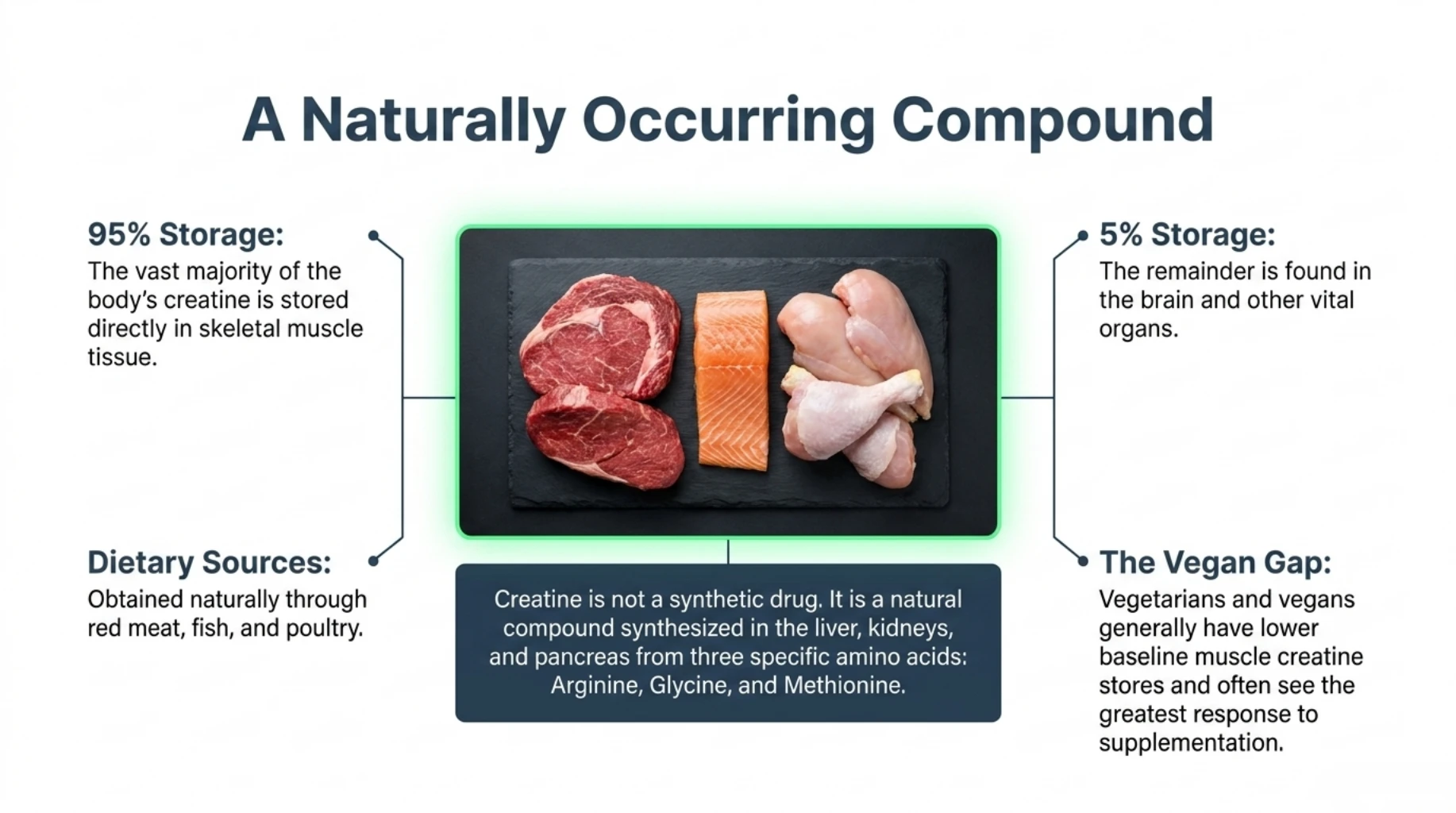
Creatine is a naturally occurring compound made from three amino acids—arginine, glycine, and methionine. Your body produces creatine primarily in the liver, kidneys, and pancreas.
It is then transported through the bloodstream and stored mainly in skeletal muscles, where it plays an important role in producing energy during short bursts of physical activity.
Approximately 95% of the body’s creatine is stored in muscle tissue, while the remaining amount is found in the brain and other organs.
In addition to natural production, creatine is obtained from foods such as:
- Red meat
- Fish
- Poultry (smaller amounts)
People who consume little or no animal-based foods, such as vegetarians and vegans, generally have lower muscle creatine stores and may experience a greater increase in muscle creatine after supplementation.
How Does Creatine Work?
Every movement your body makes—from climbing stairs to lifting a heavy object—requires energy in the form of adenosine triphosphate (ATP).
Unfortunately, ATP stores within muscle cells are very limited and become depleted rapidly during high-intensity activity.
Creatine helps replenish ATP more quickly by donating a phosphate group through phosphocreatine, allowing muscles to continue producing energy during repeated short bursts of effort.
This process is especially important during activities such as:
- Resistance training
- Weight lifting
- Sprinting
- Climbing stairs
- Short periods of vigorous physical activity
Because of this role in energy production, creatine after 40 is often considered alongside strength training programmes designed to preserve muscle mass and physical function.
Why Does Muscle Health Become More Important After 40?
Beginning in the fourth decade of life, adults gradually experience changes in body composition.
Even if body weight remains stable, muscle mass may slowly decline while body fat increases. This age-related reduction in muscle is one of the reasons many people notice reduced strength, slower metabolism, and decreased physical performance.
Without regular resistance exercise and adequate nutrition, these changes can become more noticeable over time.
Maintaining muscle health is important because skeletal muscle contributes to:
- Daily calorie expenditure
- Healthy metabolism
- Blood sugar regulation
- Balance and stability
- Bone support
- Functional independence
This is why strategies that support muscle preservation—including adequate protein intake, regular strength training, and in selected individuals, creatine after 40—have become an important area of healthy ageing research.

Why Is Creatine After 40 Receiving More Attention?
Unlike younger adults, people over 40 often have multiple health goals rather than simply improving athletic performance.
These goals may include:
- Maintaining muscle mass.
- Improving strength.
- Reducing age-related muscle loss.
- Supporting healthy body composition.
- Remaining physically independent with increasing age.
- Improving recovery from resistance training.
For these reasons, researchers have increasingly investigated whether creatine after 40 may complement structured exercise programmes in healthy adults.
Current evidence suggests that creatine appears to be most beneficial when combined with regular resistance training rather than taken as a substitute for exercise.
Benefits of Creatine After 40
The effects of creatine vary between individuals depending on factors such as age, diet, baseline muscle creatine stores, exercise habits, and overall health.
Nevertheless, several potential benefits have been consistently reported in research involving healthy adults.
1. Supports Muscle Strength
One of the best-established benefits of creatine after 40 is its ability to support improvements in muscle strength when combined with resistance training.
By helping replenish energy during repeated muscle contractions, creatine may allow individuals to perform slightly more repetitions or maintain higher training intensity during workouts.
Over time, this may contribute to greater improvements in muscular strength than resistance training alone.
2. Helps Preserve Lean Muscle Mass
Age-related muscle loss, known as sarcopenia, develops gradually over many years.
Although creatine cannot completely prevent this process, research suggests that creatine after 40, when combined with progressive strength training and adequate dietary protein, may help preserve lean muscle mass more effectively than exercise alone.
This may be particularly valuable for adults aiming to maintain physical function as they age.
3. May Improve Exercise Performance
Many adults notice that recovering between sets becomes more difficult with age.
Because creatine helps replenish phosphocreatine stores, it may improve performance during repeated short bursts of high-intensity activity such as resistance exercises, interval training, or stair climbing.
Better training quality over time may contribute to improved overall fitness and muscle development.
4. May Improve Recovery from Resistance Training
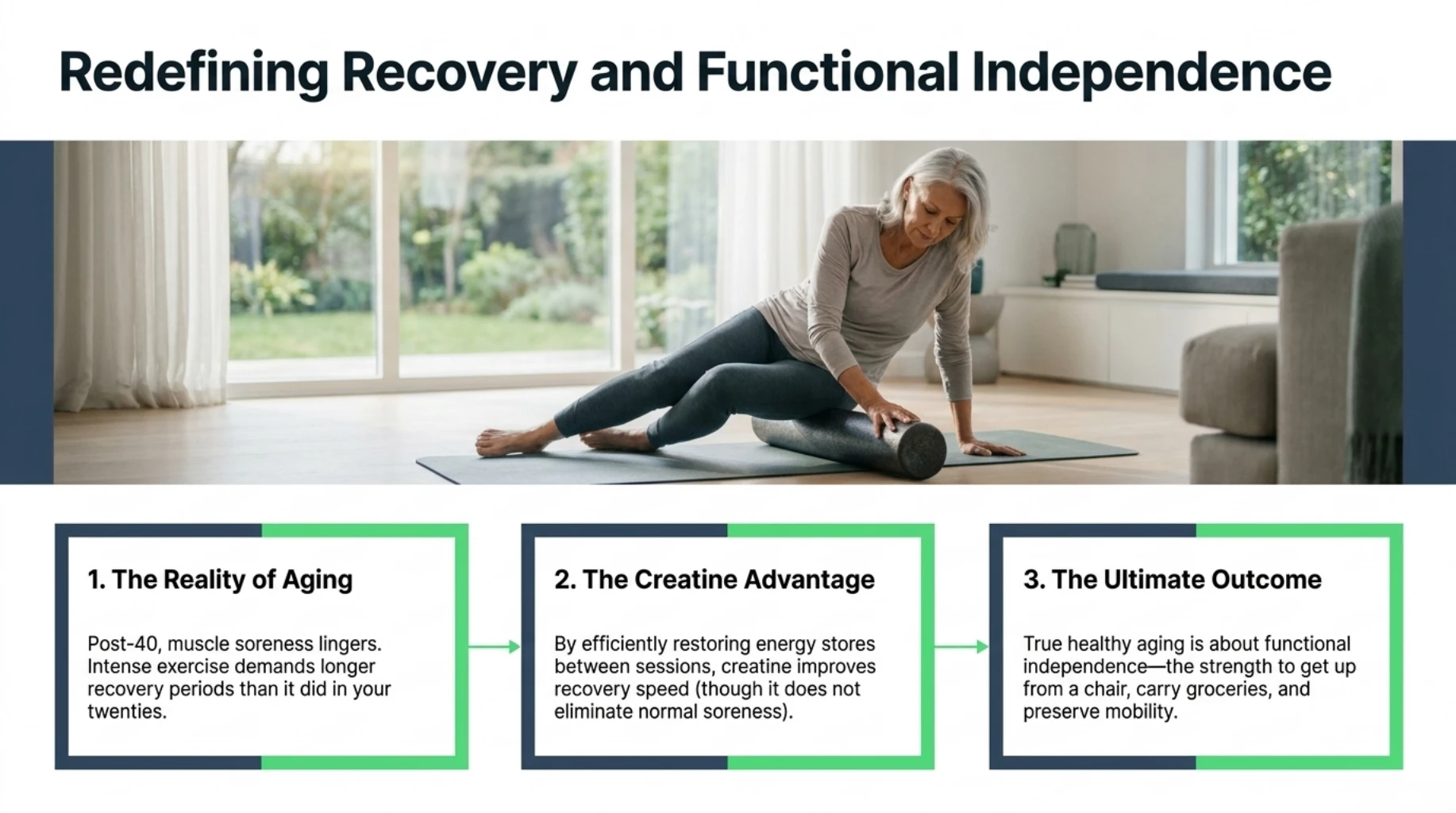
Recovery becomes increasingly important with age. Muscle soreness may last longer, and intense exercise can require more recovery time than it did during early adulthood.
Research suggests that creatine after 40, when combined with a well-designed resistance training programme, may support recovery by helping muscles restore their energy stores more efficiently between exercise sessions.
This does not mean creatine eliminates muscle soreness or prevents injuries, but improved recovery may help individuals maintain consistency with their exercise routine.
5. Supports Healthy Ageing and Physical Function
Healthy ageing is not simply about living longer—it is about maintaining independence and quality of life.
Getting up from a chair, climbing stairs, carrying groceries, lifting grandchildren, or walking comfortably all depend on adequate muscle strength.
Several studies suggest that creatine after 40, particularly in adults over 50, may contribute to better physical function when combined with regular strength training.
Maintaining muscle strength also reduces the likelihood of frailty and helps preserve mobility with advancing age.
6. May Support Bone Health Indirectly
Creatine does not directly increase bone density.
However, stronger muscles allow individuals to perform resistance exercises more effectively, and weight-bearing exercise is an important factor in maintaining healthy bones.
Therefore, the potential benefit of creatine after 40 on bone health is considered indirect and occurs primarily through improved participation in strength-training activities.
7. May Have Potential Cognitive Benefits
Although muscles contain most of the body’s creatine, small amounts are also present in the brain.
Researchers continue to investigate whether creatine supplementation may support certain aspects of cognitive function, particularly during periods of sleep deprivation, mental fatigue, or ageing.
At present, the evidence is still evolving, and creatine should not be promoted as a treatment for memory loss, dementia, or other neurological disorders.
More high-quality research is needed before firm conclusions can be drawn.
Is Creatine After 40 Safe?
This is one of the most frequently asked questions in clinical practice.
For healthy adults, creatine after 40 has been extensively studied and is generally considered safe when taken at recommended doses.
Among sports nutrition supplements, creatine monohydrate has one of the strongest safety profiles supported by scientific research.
However, like any supplement, creatine should be used responsibly and should complement—not replace—a healthy diet, regular exercise, adequate sleep, and appropriate medical care.
Kidney Health: Does Creatine Damage the Kidneys?
This is perhaps the most common myth surrounding creatine.
Current evidence indicates that recommended doses of creatine do not appear to damage kidney function in healthy individuals.
One reason for the confusion is that creatine supplementation may slightly increase blood creatinine levels. Creatinine is a normal breakdown product of creatine and is commonly measured during kidney function tests.
A mildly higher creatinine level after supplementation does not necessarily indicate kidney damage. Healthcare professionals interpret this result in the context of the individual’s medical history, examination findings, and other laboratory tests.
However, people with chronic kidney disease, significantly reduced kidney function, or other serious kidney disorders should consult their physician before using creatine after 40.
Does Creatine Harm the Liver?
Another misconception is that creatine damages the liver.
Current scientific evidence does not support routine liver damage from recommended doses of creatine in healthy adults.
Nevertheless, individuals with chronic liver disease or significant liver impairment should seek personalised medical advice before starting any dietary supplement.
Does Creatine Cause Dehydration?
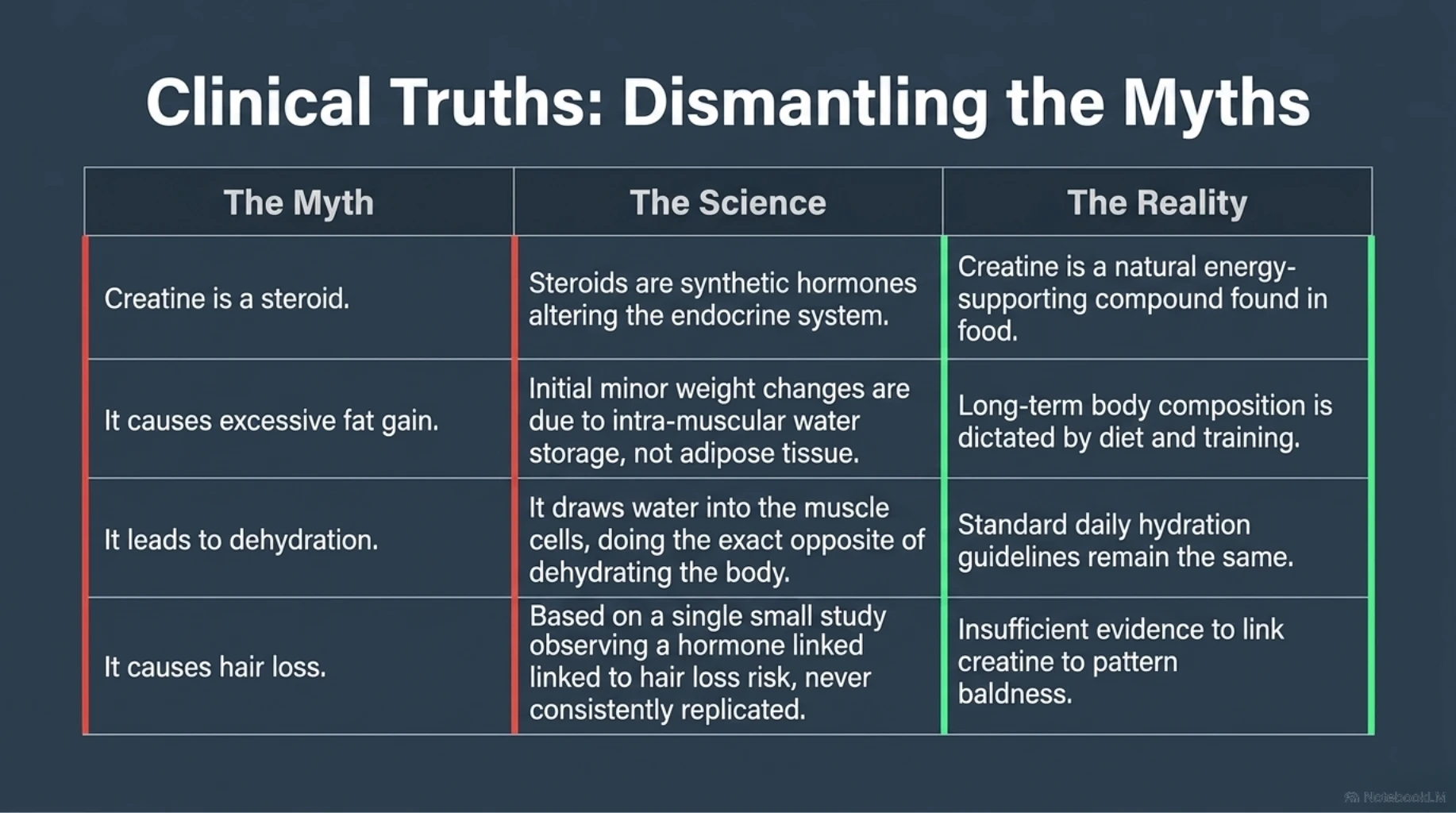
This myth originated many years ago but has not been consistently supported by scientific research.
Creatine increases water content inside muscle cells, which is different from causing dehydration.
Regardless of supplementation, maintaining adequate hydration remains important, especially during exercise, hot weather, or prolonged physical activity.
Does Creatine Cause Excessive Water Retention?
Some individuals notice a small increase in body weight during the first few weeks of creatine supplementation.
This occurs primarily because creatine increases water stored within muscle cells rather than causing unhealthy fluid accumulation under the skin.
This initial change is usually modest and should not be confused with gaining body fat.
Common Myths About Creatine After 40
Myth 1: Creatine Is Only for Bodybuilders
This misconception has persisted for decades.
Although athletes commonly use creatine, current research has expanded its potential role to include healthy ageing, muscle preservation, and resistance training in older adults.
Today, creatine after 40 is increasingly discussed because many adults are more interested in maintaining muscle function than building extreme muscle size.
Myth 2: Creatine Is a Steroid
Creatine is not an anabolic steroid.
Steroids are synthetic hormones that affect the body’s endocrine system.
Creatine is a naturally occurring compound found in the human body and in foods such as meat and fish. It works by supporting cellular energy production rather than altering hormone levels.
Myth 3: Creatine Causes Kidney Failure
Scientific studies have not demonstrated that recommended doses of creatine cause kidney failure in healthy adults.
This myth likely arose because creatinine, a breakdown product measured in blood tests, may increase slightly during supplementation.
Healthcare professionals understand this distinction and evaluate kidney health using a combination of medical history, examination, and appropriate laboratory investigations.
Myth 4: Creatine Makes Everyone Gain Fat
Creatine itself does not increase body fat.
If body weight increases during the early stages of supplementation, it is usually related to increased water stored within muscle cells rather than fat accumulation.
Long-term body composition depends primarily on overall calorie intake, dietary quality, physical activity, and resistance training.
Myth 5: Creatine Causes Hair Loss
This topic frequently appears on social media.
The concern originated from a small study that observed changes in a hormone associated with hair loss risk. However, subsequent research has not consistently confirmed that creatine directly causes hair loss.
Current evidence remains insufficient to conclude that creatine after 40 increases the risk of male or female pattern baldness.
Further research is needed before making definitive claims.
Who Should Avoid Creatine or Consult a Physician First?
Although creatine after 40 is generally considered safe for healthy adults, supplementation is not appropriate for everyone. A personalised medical assessment is advisable before starting creatine if you have significant underlying health conditions.
You should consult your physician before taking creatine if you have:
- Chronic kidney disease or reduced kidney function.
- A history of recurrent kidney stones.
- Chronic liver disease.
- Uncontrolled high blood pressure or heart disease requiring complex medication.
- Pregnancy or breastfeeding.
- A neuromuscular disorder or other chronic medical condition requiring specialist care.
- Concerns about possible interactions with your current medications.
A consultation allows your doctor to determine whether creatine after 40 is appropriate for your health status and whether any baseline investigations are necessary.

Which Form of Creatine Is Best After 40?
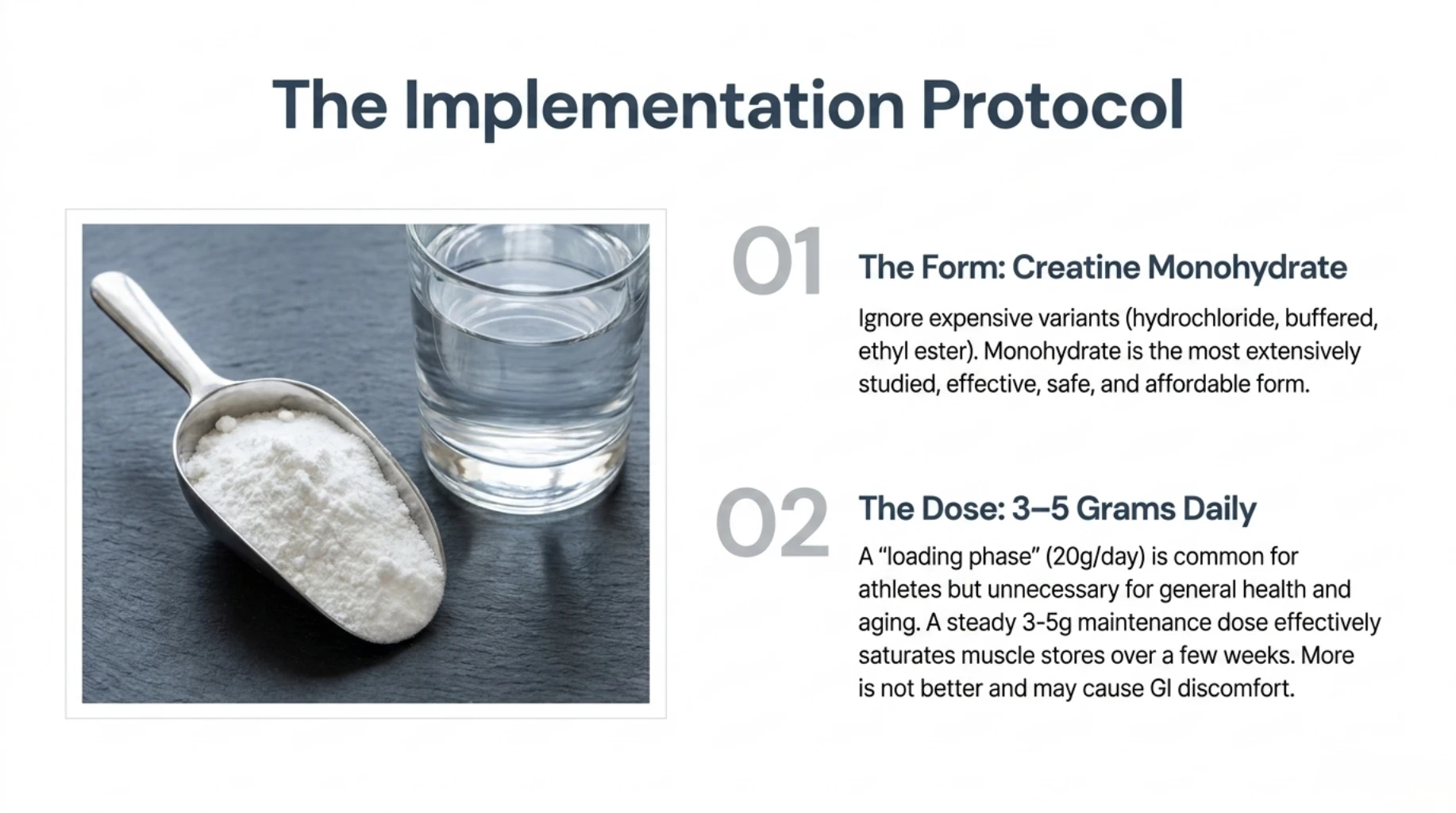
Many different forms of creatine are available, including creatine hydrochloride, buffered creatine, creatine ethyl ester, and various proprietary blends.
However, creatine monohydrate remains the most extensively studied form and has consistently demonstrated effectiveness and safety in clinical research.
For most healthy adults considering creatine after 40, creatine monohydrate is generally the preferred option because:
- It has the strongest scientific evidence.
- It is effective for increasing muscle creatine stores.
- It is widely available.
- It is usually more affordable than newer formulations.
More expensive products are not necessarily more effective simply because they are marketed with additional claims.
How Much Creatine Should You Take?
For most healthy adults, a daily intake of 3–5 grams of creatine monohydrate is sufficient to gradually increase and maintain muscle creatine stores.
Some athletes use a loading phase of approximately 20 grams per day (divided into multiple doses) for 5–7 days before switching to a maintenance dose. However, this approach is not essential for most adults.
For individuals interested in creatine after 40 for general health and muscle preservation, a consistent daily maintenance dose is usually adequate.
More is not better. Taking larger amounts than recommended does not necessarily produce greater benefits and may increase the likelihood of gastrointestinal discomfort.
When Is the Best Time to Take Creatine?
Many people wonder whether creatine should be taken before exercise, after exercise, or at another time of day.
Current evidence suggests that consistency is more important than precise timing.
You can take creatine:
- With breakfast.
- After resistance training.
- With lunch or dinner.
- At any convenient time that helps you remember to take it regularly.
Taking creatine with a balanced meal that contains protein and carbohydrates may support its uptake into muscle, although the overall difference appears relatively small for most individuals.
Do You Need to Cycle Creatine?
Another common misconception is that creatine must be stopped periodically to “rest” the body.
Current scientific evidence does not support routine cycling for healthy adults taking recommended doses.
If creatine after 40 is appropriate for you, it can generally be taken consistently as part of an overall healthy lifestyle.
However, supplementation should always be reviewed if new medical conditions develop or if advised by your healthcare professional.
Can You Get Enough Creatine from Food?
Creatine is naturally present in foods such as red meat and fish.
A balanced diet contributes to your body’s creatine stores, but the amount obtained from food is often lower than the quantities used in research studies evaluating supplementation.
This does not mean everyone needs creatine supplements. Many healthy adults can maintain good muscle health through regular resistance exercise, adequate protein intake, sufficient sleep, and an overall nutritious diet.
Supplementation should be viewed as an optional addition for selected individuals rather than a replacement for healthy lifestyle habits.
Practical Tips Before Starting Creatine After 40
- Prioritise resistance training at least 2–3 times per week.
- Ensure adequate daily protein intake to support muscle maintenance.
- Stay well hydrated throughout the day.
- Choose creatine monohydrate from a reputable manufacturer.
- Take the recommended daily dose consistently rather than intermittently.
- Avoid unrealistic marketing claims about rapid muscle gain or anti-ageing effects.
- Discuss supplementation with your physician if you have chronic medical conditions.
Frequently Asked Questions About Creatine After 40
Can women over 40 take creatine?
Yes. Healthy women who perform resistance training may also benefit from creatine supplementation. Individual suitability should always be assessed in the context of overall health and medical history.
Is creatine useful if I do not exercise?
The greatest benefits of creatine after 40 have been observed when supplementation is combined with regular resistance training. Creatine should not be considered a substitute for physical activity.
Will creatine help me lose weight?
Creatine is not a weight-loss supplement. Its primary role is to support muscle energy production and exercise performance. Any effect on body composition depends largely on diet, resistance training, and overall lifestyle.
Can vegetarians benefit more from creatine?
Some studies suggest that vegetarians may have lower baseline muscle creatine stores and therefore may experience a greater increase after supplementation compared with individuals who regularly consume meat or fish.
Final Thought
After the age of 40, preserving muscle is just as important as losing excess body fat. If used appropriately and under suitable medical guidance when necessary, creatine after 40 may be a useful addition to a comprehensive healthy ageing plan. The goal is not simply to live longer, but to remain stronger, more active, and functionally independent for years to come.
If you want a personalized metabolic assessment and lifestyle strategy, you can book a consultation here:
Book an Appointment