
Understanding Fatty Liver Disease
Fatty liver disease has quietly become one of the most common metabolic disorders worldwide. Millions of people discover it only after an ultrasound report mentions the words “fatty liver.” Naturally, the first question most people ask is whether the condition can be reversed.
The encouraging news is that in many cases, fatty liver can improve significantly with the right lifestyle interventions. Understanding how to reverse fatty liver naturally begins with understanding what the condition actually means.
Fatty liver occurs when excess fat accumulates inside liver cells. Normally the liver contains a small amount of fat, but when fat exceeds about 5 percent of liver weight, doctors classify it as fatty liver disease.
The most common type today is non-alcoholic fatty liver disease (NAFLD). This condition occurs not because of alcohol intake but because of metabolic problems such as obesity, insulin resistance, diabetes, and sedentary lifestyle.
Modern dietary patterns high in refined carbohydrates, sugar, and ultra-processed foods contribute strongly to liver fat accumulation. At the same time, reduced physical activity worsens metabolic imbalance.
If fatty liver remains untreated for years, it may progress to inflammation, fibrosis, and eventually cirrhosis in some individuals. However, the early stages of fatty liver often remain reversible.
Understanding the underlying causes is the first step in discovering how to reverse fatty liver naturally.
Why Fatty Liver Develops
To understand how fatty liver improves, we first need to understand why it develops in the first place.
The liver is the central metabolic organ of the body. It processes nutrients, regulates blood sugar, produces bile, and detoxifies harmful substances.
However, when calorie intake consistently exceeds energy expenditure, excess energy gets stored as fat. Much of this fat accumulates in the liver.
Several metabolic processes contribute to fatty liver development.
- Excess sugar and refined carbohydrates convert into liver fat.
- Insulin resistance increases fat storage inside liver cells.
- Sedentary lifestyle reduces fat burning.
- High visceral fat promotes liver fat accumulation.
- Poor sleep and stress hormones worsen metabolic imbalance.
Research examining metabolic dysfunction associated fatty liver disease highlights the strong connection between insulin resistance and liver fat accumulation.
This is why fatty liver frequently occurs alongside conditions such as obesity, diabetes, high triglycerides, and hypertension.
Rather than a purely liver problem, fatty liver is actually a metabolic health signal. It indicates that the body’s energy handling system is under stress.
Once people understand this connection, the path toward how to reverse fatty liver naturally becomes clearer.
Is Fatty Liver Actually Reversible?
One of the most reassuring aspects of early fatty liver disease is that the condition can often improve when metabolic health improves.
In the early stages, fat accumulation inside liver cells does not permanently damage the liver. When the underlying metabolic imbalance improves, the liver can gradually remove excess fat.
This means that many people diagnosed with fatty liver on ultrasound can reduce liver fat significantly through lifestyle correction.
However, reversibility depends on the stage of the disease.
- Simple fatty liver (steatosis) is often reversible.
- Fatty liver with inflammation (steatohepatitis) may still improve with treatment.
- Advanced fibrosis or cirrhosis becomes more difficult to reverse.
Therefore early detection becomes extremely important.
Many people first discover fatty liver during routine ultrasound or blood tests. At this stage, lifestyle modification can be very effective in improving liver health.
Understanding how to reverse fatty liver naturally therefore focuses primarily on correcting the metabolic causes responsible for fat accumulation.
What Science Says About Fatty Liver Reversal
Modern research provides encouraging evidence that fatty liver can improve significantly with targeted lifestyle interventions.
Clinical studies evaluating lifestyle interventions consistently show that weight reduction and improved metabolic health lead to reduction in liver fat.
For example, research examining lifestyle treatment strategies for fatty liver demonstrates that moderate weight loss can significantly reduce liver fat and improve metabolic markers.
Another important observation from clinical trials is that even modest weight loss can make a difference. Studies evaluating NAFLD treatment suggest that losing approximately 7 to 10 percent of body weight can significantly improve liver histology.
This is encouraging because it means drastic weight loss is not always necessary. Even moderate improvements in body composition and metabolic health can produce meaningful benefits for the liver.
Understanding this scientific evidence helps clarify the practical steps involved in how to reverse fatty liver naturally.
Lifestyle Changes That Help Reverse Fatty Liver Naturally
Once people understand the metabolic causes of fatty liver, the next question becomes practical: what exactly should be done to improve liver health?
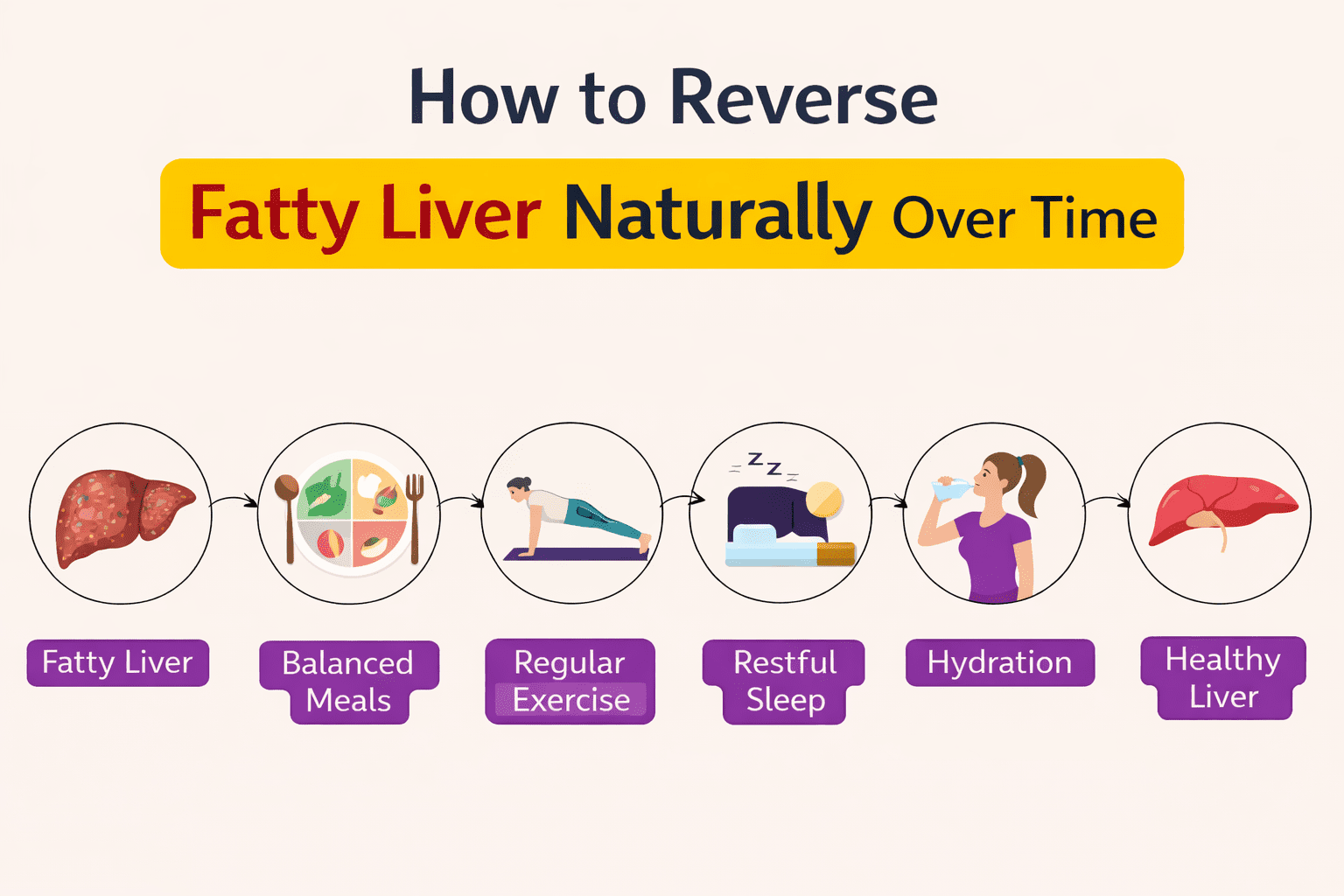
Learning how to reverse fatty liver naturally mainly involves correcting the lifestyle factors responsible for liver fat accumulation. Unlike many chronic diseases that require complex treatments, early fatty liver often responds well to simple but consistent lifestyle adjustments.
The most important goal is improving metabolic balance. This includes improving insulin sensitivity, reducing visceral fat, and stabilizing blood sugar levels.
Among the most effective strategies are:
- Gradual weight reduction
- Improved dietary quality
- Regular physical activity
- Better sleep habits
- Stress management
Each of these factors contributes to improving the body’s metabolic environment, which in turn allows the liver to gradually remove stored fat.
Diet Patterns That Improve Fatty Liver
Diet plays a central role in determining whether liver fat increases or decreases. Highly processed foods rich in refined carbohydrates, sugar, and unhealthy fats promote fat storage in the liver.
On the other hand, balanced dietary patterns help reduce insulin resistance and improve metabolic health.
Research exploring dietary strategies for fatty liver shows that Mediterranean-style diets rich in vegetables, fruits, nuts, whole grains, and healthy fats can significantly improve liver fat levels.
Key dietary principles that support how to reverse fatty liver naturally include:
- Reducing refined sugar and sweetened beverages
- Limiting ultra processed foods
- Increasing fiber intake through vegetables and whole foods
- Choosing healthy fats such as nuts, seeds, and olive oil
- Maintaining balanced portion sizes
These changes gradually improve insulin sensitivity and reduce the metabolic signals that drive liver fat accumulation.
Role of Exercise in Reducing Liver Fat
Physical activity is another powerful tool for improving liver health. Exercise improves insulin sensitivity, promotes fat burning, and helps reduce visceral fat.
Interestingly, research shows that exercise can reduce liver fat even without dramatic weight loss.
A clinical study examining physical activity and liver fat reduction found that consistent exercise improves liver fat levels and metabolic health markers.
This means that people who struggle with weight loss can still improve liver health by increasing physical activity.
Effective exercise approaches include:
- brisk walking
- cycling
- swimming
- strength training
- high intensity interval training when appropriate
Consistency matters far more than intensity. Even 30 to 40 minutes of moderate activity most days of the week can significantly improve metabolic health.
Common Mistakes People Make With Fatty Liver
Many people become anxious after discovering fatty liver and immediately attempt extreme dietary changes or crash diets. Unfortunately, such approaches often fail in the long term.
Several common mistakes can actually worsen metabolic health.
- Following extreme low calorie diets
- Eliminating entire food groups unnecessarily
- Relying on unproven detox products
- Expecting very rapid results
- Ignoring physical activity
Fatty liver typically develops over many years. Therefore improvement also requires consistent lifestyle adjustments over time.
Instead of drastic changes, sustainable habits usually produce better long term outcomes.
Lifestyle Factors That Influence Liver Fat
| Lifestyle Factor | Effect on Liver Health | Recommended Approach |
|---|---|---|
| Diet quality | High sugar intake promotes liver fat | Balanced whole food diet |
| Physical activity | Sedentary lifestyle increases fat storage | Regular aerobic and resistance exercise |
| Body weight | Visceral fat worsens fatty liver | Gradual weight reduction |
| Sleep and stress | Hormonal imbalance worsens metabolism | Adequate sleep and stress management |
These lifestyle factors interact with each other, which is why comprehensive lifestyle correction is often the most effective strategy for improving liver health.
Practical Steps Doctors Recommend for Fatty Liver Reversal
When people ask how to reverse fatty liver naturally, the answer usually involves a combination of lifestyle adjustments rather than a single intervention. In early fatty liver disease, the liver has a remarkable ability to recover once metabolic stress is reduced.
Doctors generally recommend focusing on gradual and sustainable improvements rather than extreme diets or short-term detox approaches. The goal is to restore metabolic balance so the liver can gradually clear excess fat.
The following practical strategies are commonly recommended for improving fatty liver.
- Reduce body weight gradually if overweight or obese.
- Limit added sugar, sweetened beverages, and refined carbohydrates.
- Increase daily physical activity and reduce sedentary time.
- Include more fiber-rich foods such as vegetables, fruits, and whole grains.
- Prioritize good sleep because poor sleep worsens insulin resistance.
- Manage stress levels which influence metabolic hormones.
- Avoid unnecessary alcohol intake even if fatty liver is non-alcoholic.
- Monitor metabolic health markers such as blood sugar and triglycerides.
- Follow consistent long-term habits rather than short-term dieting.
In many cases, these adjustments can significantly improve liver fat levels within months. Because fatty liver is closely connected to metabolic health, the same lifestyle strategies that improve weight, blood sugar, and cholesterol often improve liver health as well.
Individuals who need structured guidance sometimes benefit from supervised programs such as the doctor supervised lifestyle modification program, which focuses on sustainable metabolic health improvement.
When Fatty Liver Requires Medical Attention
Although early fatty liver can often improve with lifestyle changes, some warning signs indicate that medical evaluation is necessary.
People should seek medical advice if they notice the following patterns.
- Persistently elevated liver enzymes on blood tests.
- Fatty liver associated with diabetes or severe obesity.
- Unexplained fatigue or abdominal discomfort.
- Ultrasound reports suggesting fibrosis or inflammation.
- Family history of advanced liver disease.
In these situations, doctors may recommend additional tests such as liver elastography, blood tests for metabolic markers, or imaging studies to evaluate liver health more accurately.
Early medical evaluation helps prevent progression to more serious conditions such as non-alcoholic steatohepatitis (NASH), fibrosis, or cirrhosis.
Key Takeaways
- Fatty liver disease is strongly linked with metabolic health and lifestyle factors.
- Early fatty liver is often reversible when metabolic balance improves.
- Weight reduction of around 7–10 percent can significantly improve liver fat levels.
- Balanced diet patterns and regular exercise help reduce liver fat.
- Crash diets and quick fixes rarely produce sustainable improvement.
- Consistent lifestyle correction is the most effective strategy for long-term liver health.
- Persistent abnormal liver tests should always be evaluated by a doctor.
About the Author
This article is written by Dr. Pankaj Kumar, a physician focused on lifestyle medicine, metabolic health, and prevention of chronic diseases such as obesity, diabetes, and fatty liver disease. His approach emphasizes sustainable lifestyle interventions combined with medical monitoring to improve long-term health outcomes.
References
Need Help Improving Liver Health?
If you have been diagnosed with fatty liver and want a structured plan to improve metabolic health, a personalized evaluation can help identify the most effective lifestyle strategy.
Disclaimer: This article is for educational purposes only and should not replace personalized medical advice. If you have persistent abnormal liver tests or symptoms, consult a qualified healthcare professional.