

Can sitting too much silently damage your liver?
The answer is yes. Even if you do not drink alcohol, a sedentary lifestyle can slowly increase fat accumulation in your liver.
In clinical practice, I often see patients with fatty liver who are confused. Their diet may not be extremely unhealthy, and they may not have obvious symptoms. But one common factor stands out – prolonged sitting.
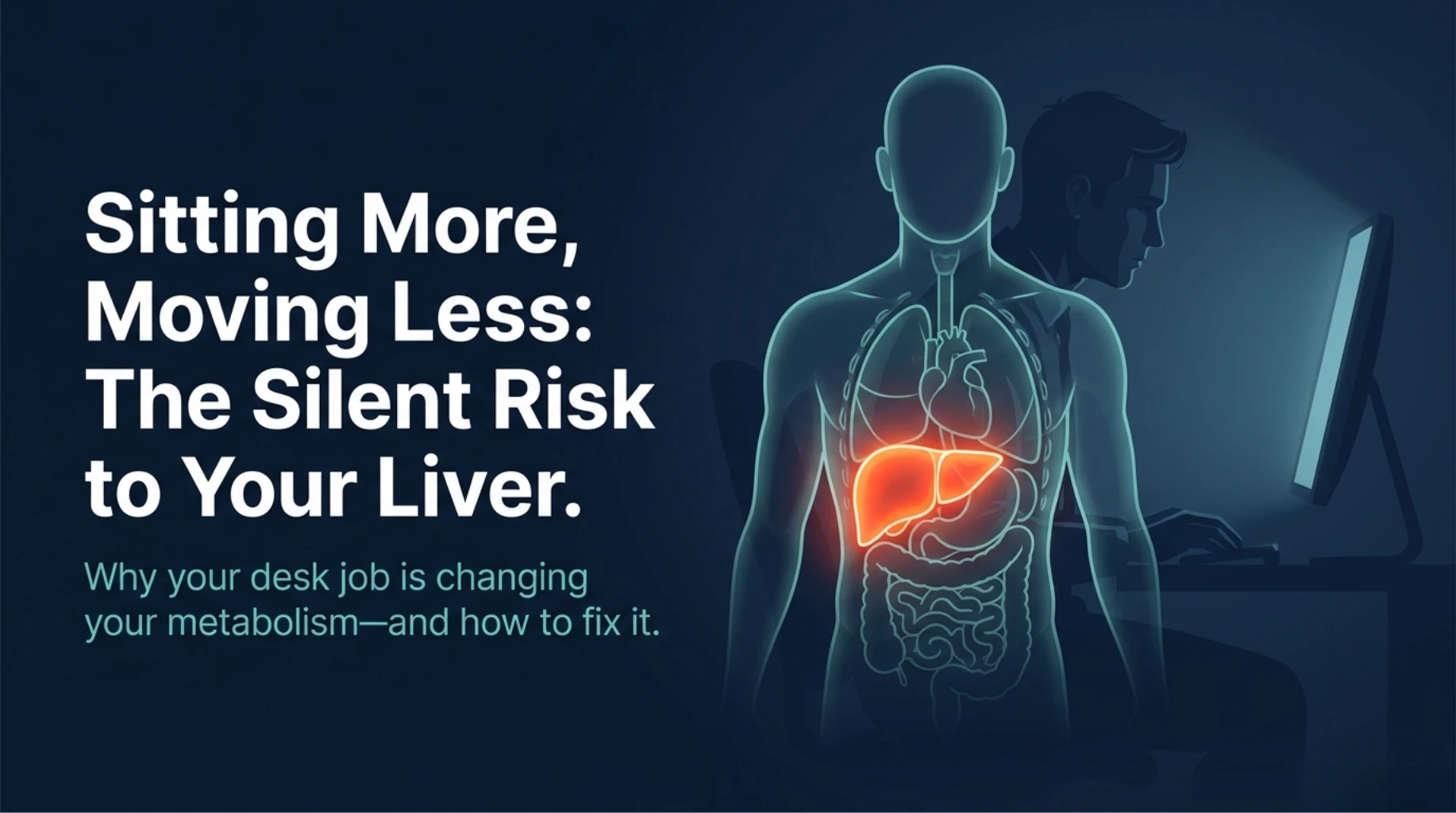
This article explains how a sedentary lifestyle and fatty liver are directly connected, and why reducing sitting time is one of the most important lifestyle changes you can make.
What Is Fatty Liver and Why It Matters
Fatty liver, also known as non-alcoholic fatty liver disease (NAFLD), occurs when excess fat accumulates inside liver cells. Initially, this condition may not cause symptoms, but over time it can lead to inflammation and long-term liver damage.
More importantly, fatty liver is not just a liver problem. It is a metabolic condition linked with:
- Insulin resistance
- Abdominal obesity
- Type 2 diabetes risk
- Cardiovascular disease
Understanding the role of a sedentary lifestyle and fatty liver.
Does Sitting Too Much Cause Fatty Liver?
Yes. Research increasingly shows that prolonged sitting directly contributes to metabolic dysfunction, which increases the risk of fatty liver.
A sedentary lifestyle and fatty liver connection develops because your body is designed for regular movement. When movement reduces, your metabolism slows down and fat storage increases.
This effect is independent of diet alone. Even people who eat relatively healthy can develop fatty liver if their daily activity level is very low.
How a Sedentary Lifestyle Affects Liver Health
Let us break this down into simple mechanisms so you can understand what is happening inside your body.
1. Reduced Muscle Activity Decreases Glucose Utilization
Muscles act as a major site for glucose uptake. When you walk or move, your muscles use blood sugar as energy.
However, during prolonged sitting:
- Muscle activity drops
- Glucose uptake reduces
- Blood sugar remains elevated
This excess glucose is eventually converted into fat, increasing the risk of fatty liver.
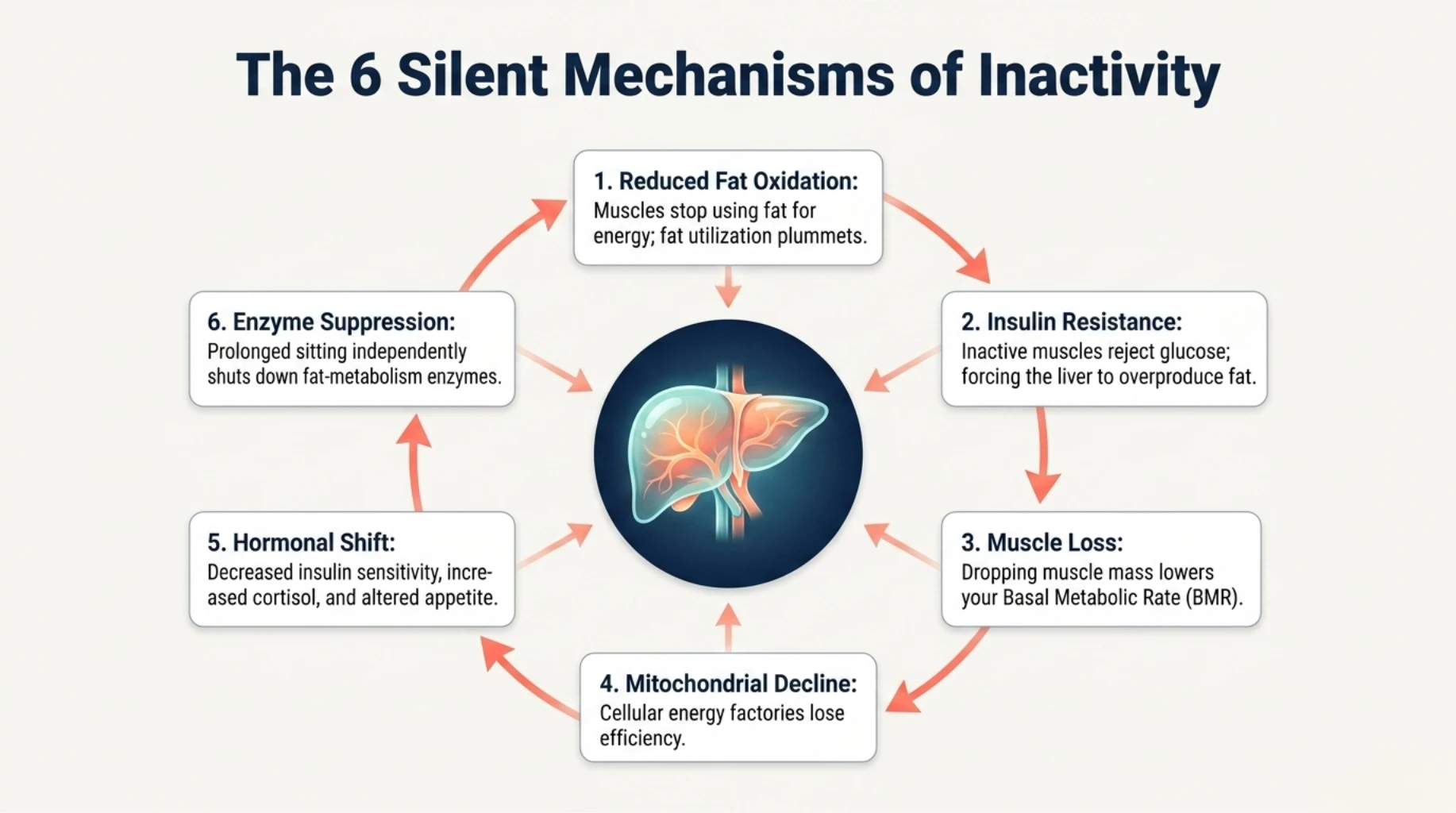
2. Sedentary Lifestyle Increases Insulin Resistance
One of the most important links between sedentary lifestyle and fatty liver is insulin resistance.
When you sit for long hours daily:
- Your body becomes less responsive to insulin
- Insulin levels remain higher for longer periods
- Fat storage increases, especially in the liver
This is why even lean individuals can develop fatty liver if they follow a sedentary routine.
3. Fat Burning Mechanism Slows Down
Physical movement helps your body burn stored fat. In contrast, a sedentary lifestyle shifts your metabolism toward fat storage.
This leads to:
- Reduced fat oxidation
- Increased fat accumulation
- Higher liver fat deposition
Over time, this contributes significantly to fatty liver development.
Why Exercise Alone Cannot Reverse Sedentary Damage
Many people believe that going to the gym for 30 minutes is enough. But if you sit for 8–10 hours daily, that short duration of exercise cannot fully counter the metabolic damage.
This condition is often described as the “active but sedentary” lifestyle.
If your routine includes:
- Long desk hours
- Minimal walking
- High screen time
Then your risk of sedentary lifestyle and fatty liver remains high, even with occasional workouts.
Direct Link Between Sedentary Lifestyle and Fatty Liver
Let us connect everything clearly.
A sedentary lifestyle leads to:
- Poor glucose utilization
- Insulin resistance
- Reduced fat burning
- Increased fat production in the liver
These factors together create the ideal environment for fatty liver, even without alcohol consumption.
Early Signs of Fatty Liver You Should Watch
Fatty liver often remains silent, but some early warning signs can help you detect it sooner:
- Persistent fatigue
- Difficulty losing weight
- Increased waist circumference
- Feeling heavy after meals
- Mildly abnormal liver tests
If these signs are present along with a sedentary lifestyle, your risk becomes significantly higher.
4. Increased Fat Production Inside the Liver
One of the most overlooked effects of a sedentary lifestyle is increased fat production within the liver itself.
When you sit for prolonged periods, excess glucose that is not used by muscles gets converted into fat through a process called de novo lipogenesis. This fat is then stored directly in liver cells.
Over time, this internal fat production significantly contributes to sedentary lifestyle and fatty liver.
5. Frequent Snacking and Sedentary Behavior: A Risky Combination
Sedentary habits are often associated with frequent snacking. This combination becomes particularly harmful for liver health.
When you snack repeatedly without adequate movement:
- Insulin levels remain elevated throughout the day
- The body stays in fat storage mode
- Liver fat accumulation increases steadily
This pattern is very common in people working long desk hours or spending extended time on screens.
6. Poor Post-Meal Activity Increases Liver Fat Storage
What you do after eating matters as much as what you eat.
If you remain seated after meals:
- Glucose spikes remain higher for longer duration
- Insulin response increases
- More glucose gets converted into fat
In contrast, even light activity like walking helps reduce post-meal sugar spikes and lowers the risk of fat storage in the liver.
7. Sedentary Lifestyle Disrupts Hormonal Balance
Physical inactivity also affects key hormones that regulate metabolism.
This includes:
- Reduced sensitivity to insulin
- Increased stress hormones
- Altered appetite regulation
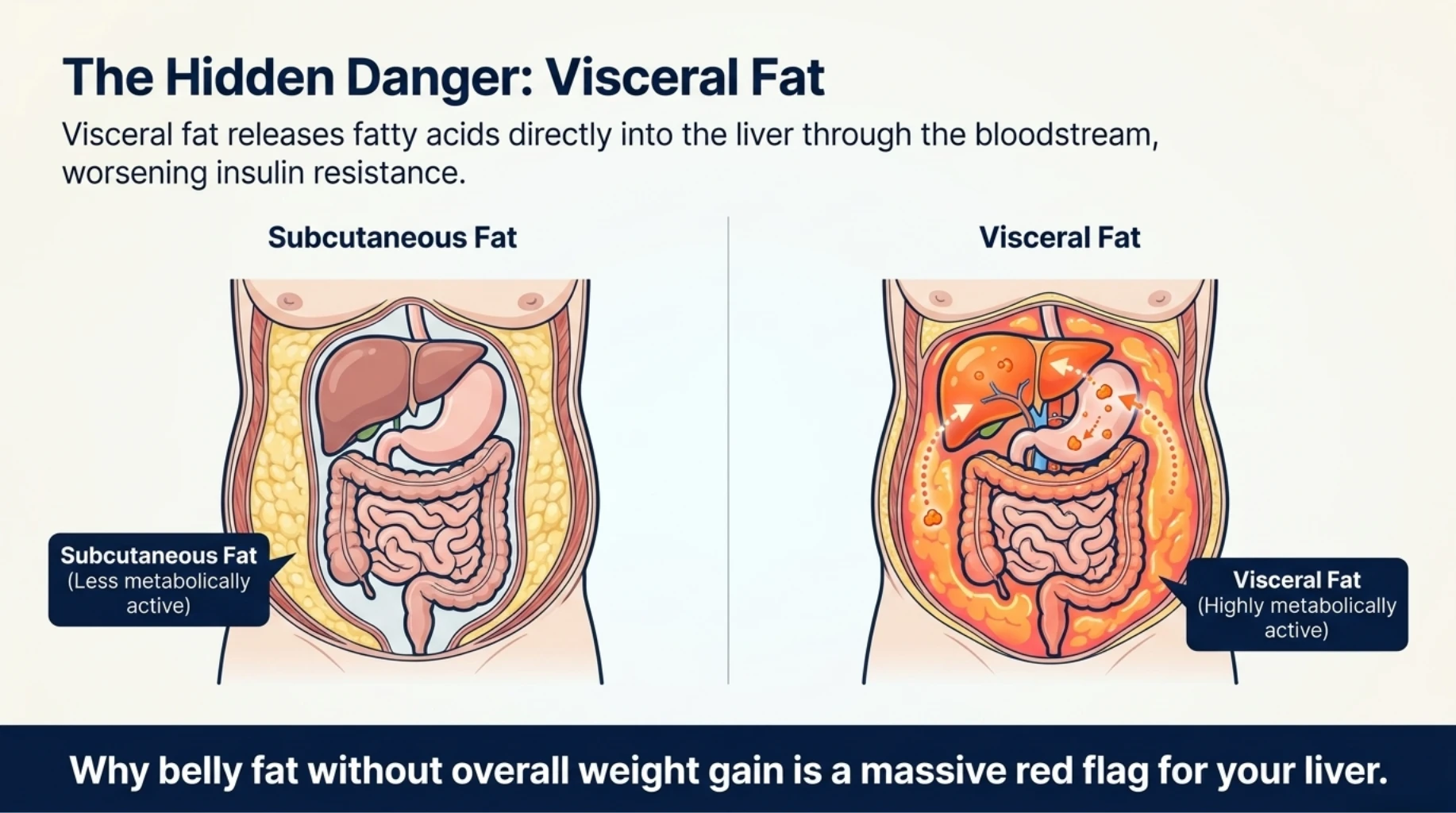
These hormonal changes further promote fat accumulation, particularly in the abdominal area and liver.
Modern Lifestyle Triggers That Increase Sedentary Risk
Today’s routine makes it very easy to fall into a sedentary pattern without realizing it.
Common triggers include:
- Long office or work-from-home hours
- Excessive screen time on mobile or laptop
- Skipping physical activity due to busy schedules
- Using vehicles even for short distances
These habits gradually reduce overall daily movement, which directly impacts metabolic health.
Why Diet Alone Cannot Prevent Fatty Liver
Many individuals focus only on diet but ignore movement. This is a major mistake.
Even if your diet is relatively controlled, lack of physical activity can still lead to fatty liver.
This happens because:
- Calorie balance is only one part of metabolism
- Hormonal response depends on activity levels
- Muscle activity is essential for glucose control
This is why some people say, “I am eating healthy but still gaining fat.” The missing component is often movement.
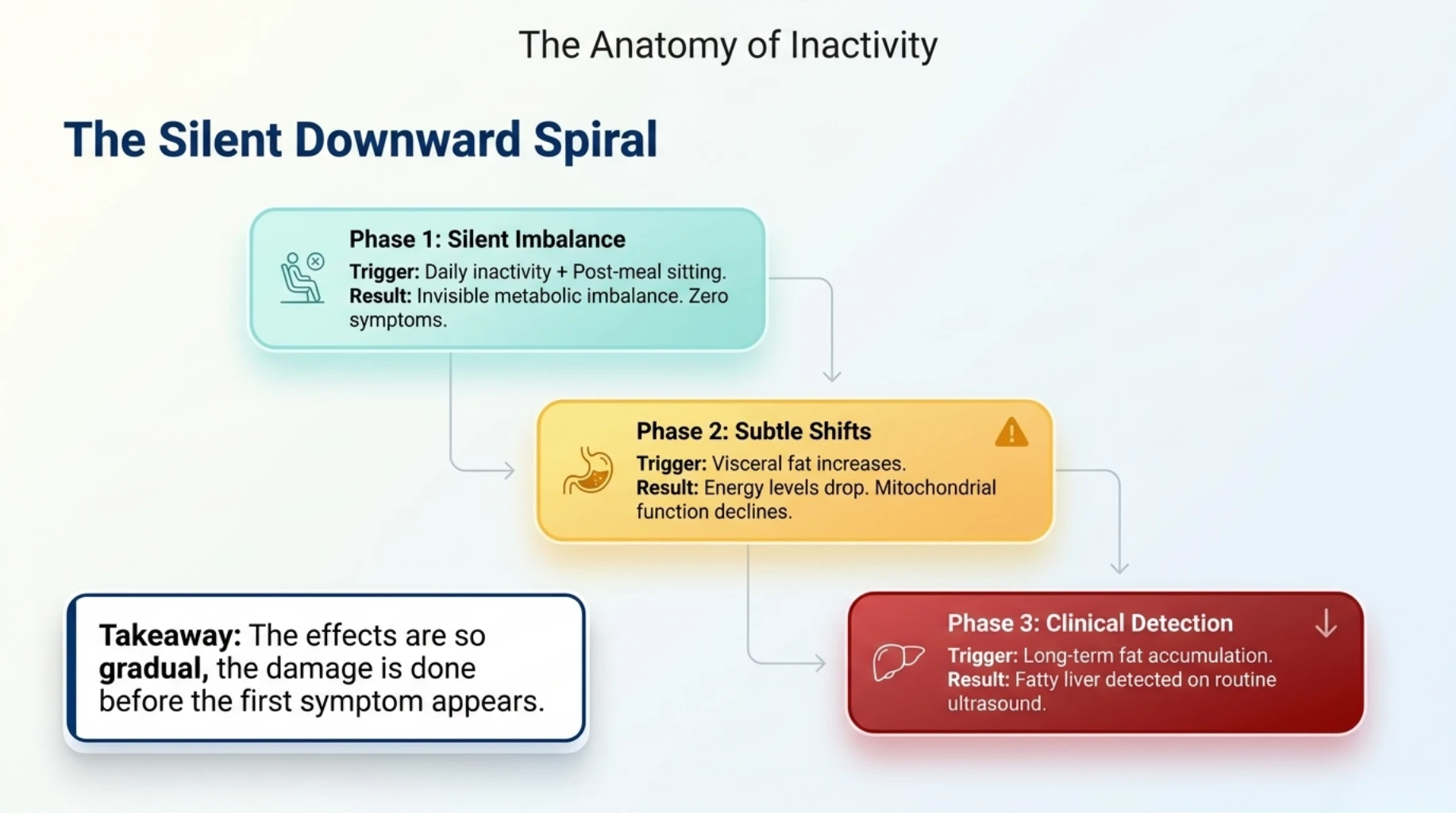
Real-Life Pattern Seen in Patients
A very common pattern I observe is:
- Desk job with 8–10 hours sitting
- Irregular meal timings
- Frequent tea, coffee, or snack intake
- Minimal structured physical activity
Over time, this combination leads to:
- Weight gain or stubborn belly fat
- Persistent fatigue
- Abnormal liver reports
Many patients are surprised because they do not consume alcohol, yet fatty liver develops due to lifestyle factors.
How to Identify If Your Lifestyle Is Putting You at Risk
You may be at higher risk of sedentary lifestyle and fatty liver if:
- You sit for more than 6–8 hours daily
- You rarely walk after meals
- You feel low energy despite adequate food intake
- You struggle with belly fat or weight management
Recognizing these patterns early is important for prevention.
How to Reduce Fatty Liver Risk Despite a Sedentary Lifestyle
The good news is that you do not need extreme changes to protect your liver. Small, consistent lifestyle adjustments can significantly reduce the risk of sedentary lifestyle and fatty liver.
The focus should be on increasing daily movement rather than relying only on short-duration exercise.
1. Break Sitting Time Every 30–45 Minutes
One of the most effective strategies is to avoid prolonged uninterrupted sitting.
- Stand up every 30–45 minutes
- Walk for 2–5 minutes
- Stretch your body
This simple habit improves blood circulation, enhances glucose utilization, and reduces fat accumulation.
2. Walk After Every Meal
Post-meal movement plays a crucial role in metabolic health.
- A 10–15 minute walk after meals helps reduce blood sugar spikes
- Improves insulin sensitivity
- Prevents excess glucose from converting into fat
This is one of the simplest yet most powerful habits for preventing fatty liver.
3. Increase Daily Non-Exercise Activity
Physical activity is not limited to the gym. Daily movement matters more.
- Use stairs instead of lifts
- Walk during phone calls
- Reduce screen time
These small changes collectively improve metabolism and reduce sedentary lifestyle and fatty liver risk.

4. Combine Movement with a Balanced Diet
Diet and activity work together. You cannot ignore one and expect results.
Focus on:
- Reducing refined carbohydrates
- Increasing protein intake
- Adding fiber-rich foods like vegetables
This helps control insulin levels and reduces fat storage in the liver.
5. Improve Sleep and Stress Management
Poor sleep and high stress can worsen metabolic health.
- Aim for 7–8 hours of quality sleep
- Manage stress through simple techniques like walking or relaxation
This supports hormonal balance and reduces the risk of fatty liver.
Simple Daily Routine to Protect Your Liver
If you want a practical approach, follow this simple structure:
- Morning: Light stretching or walking
- During work: Break sitting every 30–45 minutes
- After meals: 10–15 minute walk
- Evening: Moderate physical activity or exercise
This routine is realistic and sustainable for most people.
Key Take-Home Messages
- Sedentary lifestyle and fatty liver is a real and growing problem
- Prolonged sitting affects glucose, insulin, and fat metabolism
- Exercise alone cannot compensate for long hours of sitting
- Small daily movements have a powerful metabolic impact
- Early lifestyle correction can prevent long-term complications