

“Doctor, I feel bloated almost every day now.”
This has become one of the most common digestive complaints in modern lifestyles. People who never previously had stomach problems are now experiencing frequent acidity, bloating, heaviness after meals, gas, and acid reflux symptoms.
What makes it confusing is that many individuals feel they are not eating “very unhealthy.” Yet the symptoms continue.
The reason often lies not only in the food itself, but in the overall pattern of modern eating habits.
Understanding modern eating habits and acid reflux is important because digestion is deeply influenced by timing, speed of eating, stress, sleep, movement, and food quality.

When these patterns become consistently disturbed, the digestive system gradually becomes less efficient and more sensitive.
Why Digestive Complaints Are Increasing So Rapidly
Human digestion evolved around relatively stable routines—structured meals, slower eating, natural movement, and adequate recovery time between meals.
Modern routines are very different. Today, many people experience: rushed eating, late-night meals, prolonged sitting, irregular meal timing, excessive processed foods, stress, poor sleep, and constant screen exposure.
Each of these affects digestion individually. But together, they create continuous digestive stress.
This is one reason acid reflux and bloating problems are becoming increasingly common even in younger adults.
How Fast Eating Increases Bloating
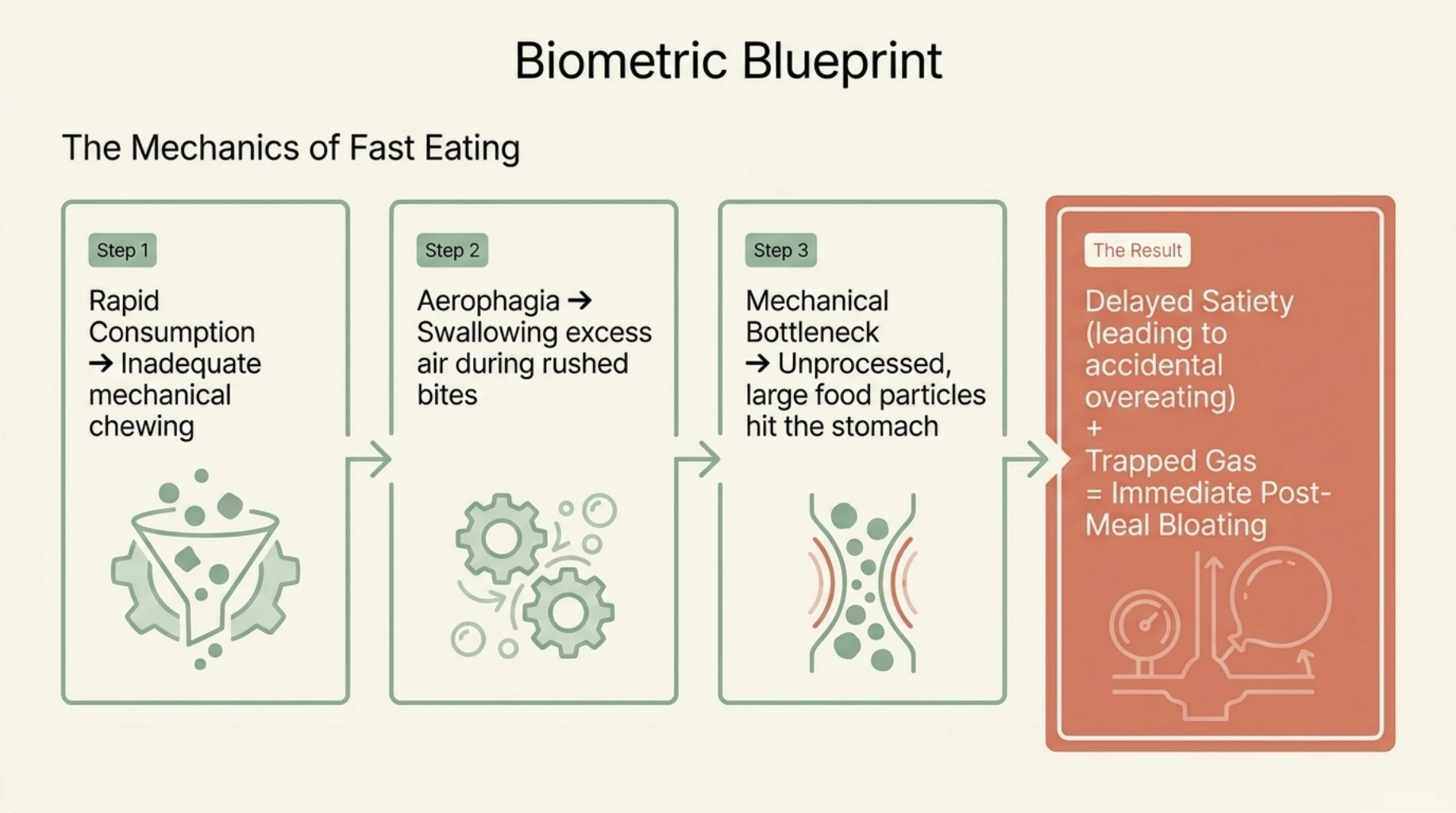
One of the most underestimated habits affecting digestion is eating too quickly. When food is consumed rapidly, chewing becomes inadequate and excess air is swallowed during meals.
The stomach then receives larger food particles that are more difficult to process efficiently. As a result, digestion becomes slower and gas formation becomes more likely.
Many people then experience: post-meal heaviness, bloating, burping, abdominal discomfort, and feeling overly full after eating.
Fast eating also delays satiety signaling, increasing the tendency to overeat before fullness is properly recognized.
The Hidden Problem with Constant Snacking
Modern eating patterns often involve frequent snacking throughout the day.
Tea, coffee, biscuits, bakery foods, sugary beverages, packaged snacks, and processed convenience foods are commonly consumed between meals.
This creates a situation where the digestive system remains continuously active without adequate recovery time. Over time, this may disturb acid balance, digestive rhythm, and gut comfort.
Frequent grazing also increases the likelihood of overeating without realizing it, especially when eating is combined with work or screen use.
Why Late-Night Eating Worsens Acid Reflux
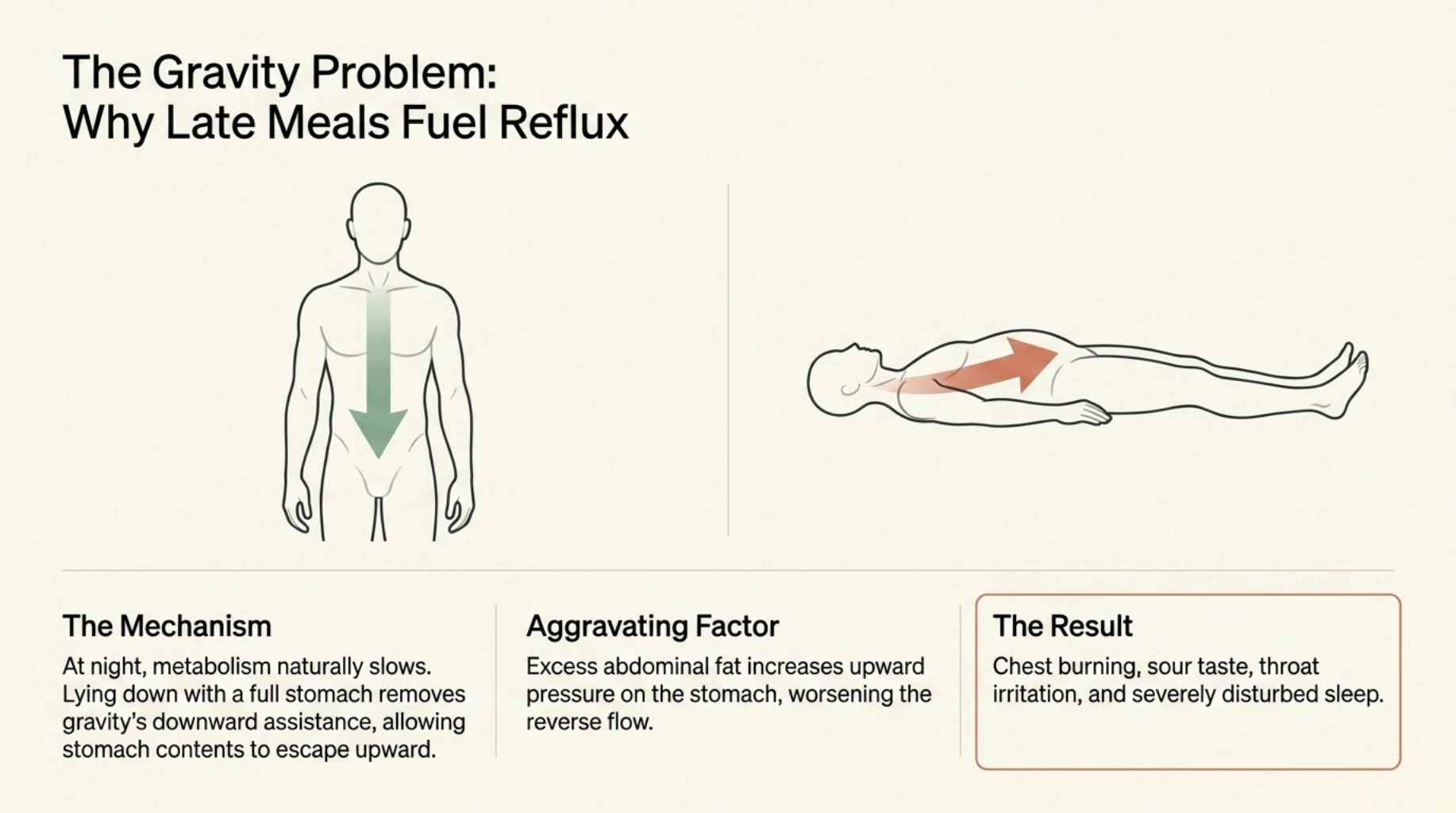
One of the strongest modern triggers for reflux symptoms is delayed eating. At night, digestive activity naturally slows as the body prepares for rest and recovery.
When large meals are consumed late—especially close to bedtime—the stomach remains full for longer periods while the body is trying to slow down metabolically.
If a person lies down soon after eating, stomach acid is more likely to move upward into the food pipe. This commonly leads to: burning sensation in the chest, sour taste in the mouth, throat irritation, disturbed sleep, and nighttime acidity.
How Stress Quietly Disrupts Digestion
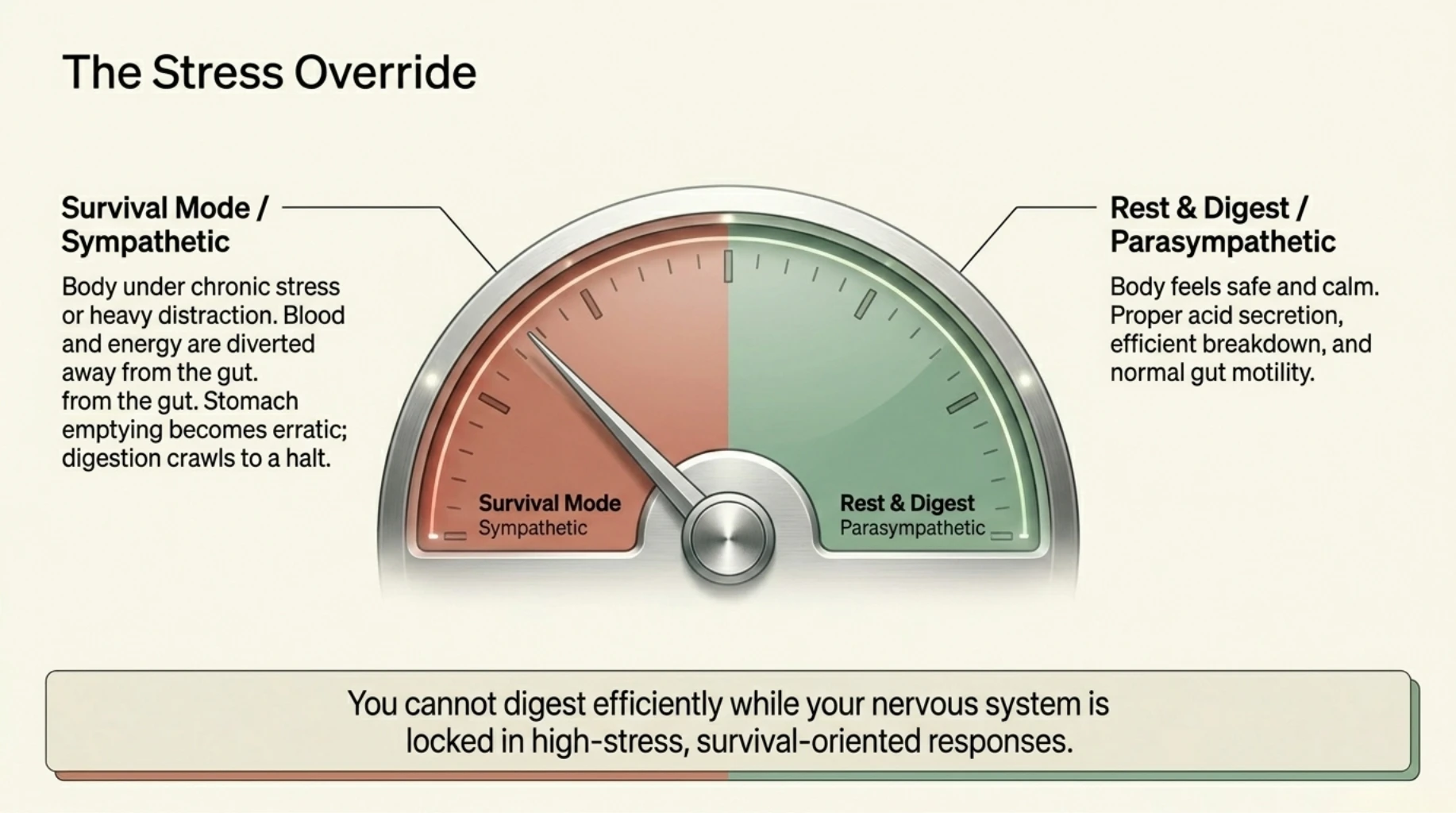
Stress has a direct influence on digestive function. When the body remains in a stressed state, the nervous system shifts focus away from digestion toward survival-oriented responses.
This affects stomach emptying, gut movement, appetite regulation, and acid secretion patterns. As a result, many individuals notice worsening digestive symptoms during stressful periods.
Common complaints include: bloating, acidity, stomach discomfort, irregular bowel habits, and increased sensitivity after meals.
This explains why digestive complaints are becoming increasingly common in high-stress modern lifestyles.
Why Sitting Immediately After Meals Is a Common Trigger
Many working professionals finish meals quickly and return immediately to sitting or screen-based work.
Minimal movement after meals reduces digestive stimulation and may worsen post-meal heaviness and reflux symptoms.
Simple activities like slow walking after meals often improve digestion significantly, but modern routines increasingly remove this natural movement from daily life.
How Processed Foods Disturb Gut Function
Modern packaged foods are designed for convenience and taste, but they often create digestive stress when consumed regularly.
Many processed foods are low in natural fiber and high in refined carbohydrates, additives, unhealthy fats, and rapidly digestible ingredients.
These foods affect digestion in multiple ways. They may alter gut bacteria balance, increase gas production, disturb satiety regulation, and worsen inflammation inside the digestive system.
Over time, frequent intake contributes to: bloating, irregular digestion, heaviness after meals, and increased acid reflux symptoms.
The Hidden Role of Carbonated Drinks and Excess Caffeine
Many individuals with acidity and bloating consume large amounts of tea, coffee, soft drinks, or energy beverages throughout the day without realizing their digestive impact.
Carbonated beverages increase gas accumulation inside the stomach, which may worsen bloating and pressure-related reflux symptoms.
Excess caffeine, especially on an empty stomach or late in the day, can also increase acid-related discomfort in sensitive individuals.
Combined with stress, poor sleep, and irregular meals, these beverages often become part of a larger digestive imbalance pattern.
Why Poor Sleep Makes Digestion Worse
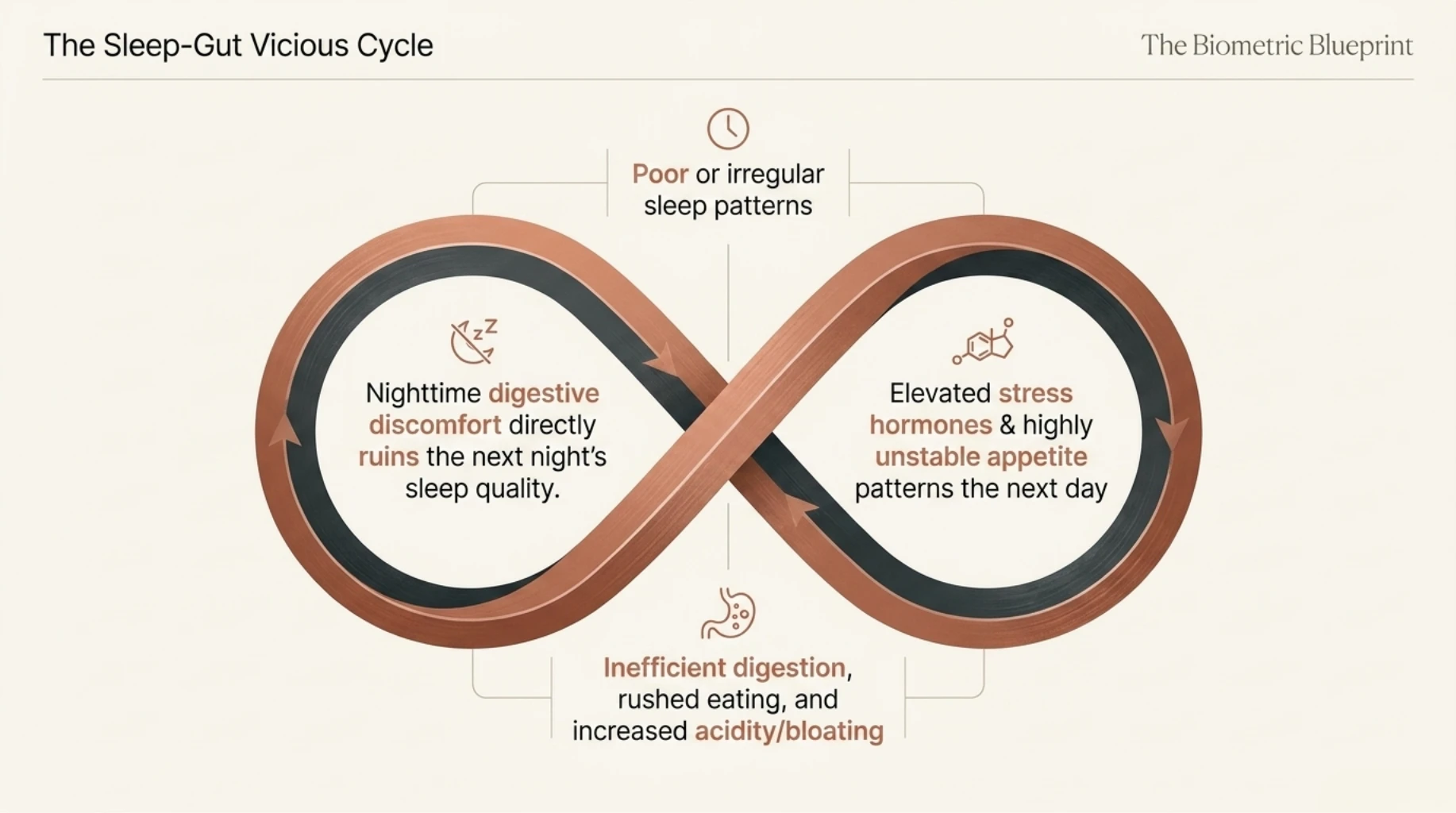
Sleep and digestion are closely connected through hormonal and nervous system regulation. When sleep becomes irregular or inadequate, digestion often becomes less efficient.
Stress hormones remain elevated, appetite patterns become unstable, and acid balance may become more sensitive.
Many people notice that during periods of poor sleep they experience: more acidity, increased bloating, disturbed appetite, and greater digestive discomfort after meals.
This creates a cycle where poor digestion worsens sleep quality while poor sleep further worsens digestion.
Why Bloating Gradually Becomes Chronic
Initially, bloating may occur only occasionally—after overeating, outside food, or irregular schedules. But when digestive stress becomes repetitive, the gut may gradually become more sensitive over time.
The body starts reacting more strongly to factors such as: large meals, rushed eating, processed foods, prolonged sitting, stress, and late-night eating.
As a result, bloating stops feeling like an occasional issue and starts becoming part of daily life. This is why many people eventually say they feel “heavy” or bloated after almost every meal.
The Connection Between Belly Fat and Acid Reflux
Abdominal obesity is another important contributor to reflux symptoms. Excess abdominal fat increases pressure inside the abdomen, which can push stomach contents upward more easily.
This increases the likelihood of acid moving into the food pipe, especially after heavy meals or while lying down.
This is one reason reflux symptoms are more common in individuals with increasing waist circumference and sedentary lifestyles.
Why Eating While Distracted Affects Digestion
Modern eating rarely happens calmly. Many people eat while: working, watching screens, scrolling phones, driving, or multitasking.
When attention is divided, eating speed increases and satiety awareness reduces. The nervous system also remains in a more stimulated state rather than shifting properly toward digestion.
This affects chewing, stomach signaling, and digestive coordination, increasing the likelihood of overeating and post-meal discomfort.
The Real-Life Pattern Seen in Many Patients
In clinical practice, the pattern is remarkably common.
A person starts skipping structured meals due to busy schedules. Tea, coffee, and quick snacks gradually replace proper eating patterns. Lunch becomes rushed, and dinner gets delayed late into the night.
At the same time, prolonged sitting, stress, and poor sleep become routine.
Initially, symptoms are mild—occasional acidity or bloating after outside food. But over time, symptoms begin appearing more frequently, even after normal meals.
Eventually, the digestive system starts feeling sensitive almost daily.
Why Digestive Problems Are No Longer Limited to Older Adults
Earlier, chronic acidity and digestive complaints were seen more commonly in older age groups.
Today, they are increasingly affecting younger adults because modern lifestyles expose the digestive system to continuous stress much earlier in life.
The combination of: processed foods, stress, poor sleep, prolonged sitting, irregular meal timing, and reduced physical activity creates the perfect environment for chronic digestive discomfort to develop gradually.
How to Improve Digestion and Reduce Acid Reflux Naturally
The encouraging part is that digestion often improves significantly when the underlying lifestyle triggers begin changing consistently.
The goal is not to follow extreme restrictions or eliminate every favorite food. The goal is reducing continuous stress on the digestive system. Small sustainable improvements usually work far better than short-term aggressive dieting.
Slow Down While Eating
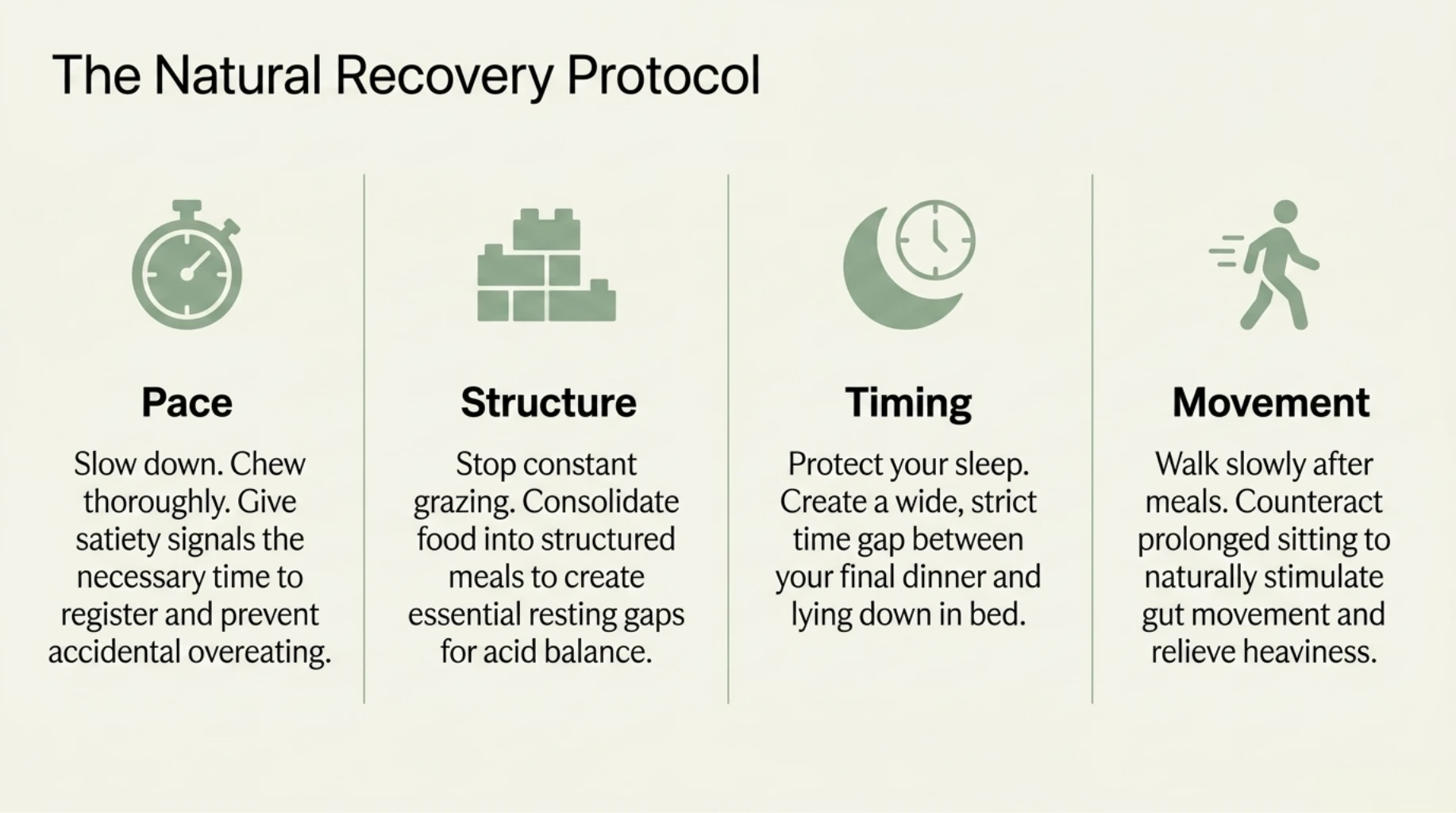
One of the simplest but most effective digestive corrections is eating more slowly. Proper chewing improves mechanical digestion and reduces the amount of air swallowed during meals.
At the same time, slower eating allows satiety signals to function more effectively, reducing the tendency to overeat.
Many people notice that simply slowing meal speed improves bloating and post-meal heaviness significantly.
Create More Structured Meal Timing
The digestive system responds better to relative consistency. Frequent random snacking, prolonged fasting followed by overeating, and late-night meals create repeated digestive stress.
Creating more regular meal timing helps stabilize digestive rhythm and appetite regulation. This does not require perfection. Even gradual improvements in consistency can reduce digestive symptoms over time.
Reduce Late-Night Eating
One of the strongest practical improvements for reflux symptoms is reducing heavy late-night meals. Allowing sufficient gap between dinner and sleep gives the stomach more time to process food before lying down.
This reduces the likelihood of acid moving upward into the food pipe during the night. Many individuals notice significant improvement in nighttime acidity and disturbed sleep simply by adjusting dinner timing.
Improve Food Quality Without Extreme Restriction
Highly processed foods, repeated sugary snacks, excessive refined carbohydrates, and heavy greasy meals commonly worsen digestive discomfort.
Replacing some of these foods with more balanced meals containing adequate fiber, protein, and natural foods often improves satiety and digestive stability.
At the same time, extreme elimination diets are usually unnecessary for most people and may become difficult to sustain long term.
The body generally responds better to balanced eating patterns than repeated cycles of restriction and overeating.
Movement After Meals Can Make a Big Difference
Simple physical movement after meals often improves digestion more than people expect. Slow walking after eating helps stimulate gut movement and reduces prolonged heaviness after meals.
In contrast, immediately sitting or lying down after eating often worsens bloating and reflux symptoms. This is especially important for individuals with desk-based work routines.
Why Stress Reduction Helps Digestion
The digestive system functions best when the body feels relatively relaxed and safe. Chronic stress keeps the nervous system in a heightened state, reducing digestive efficiency and increasing sensitivity to discomfort.
This is why stress management often improves digestive symptoms even without major dietary changes.
Simple habits such as reducing continuous screen exposure, taking breaks, improving sleep, and creating calmer eating environments can support better digestion over time.
Why Quick-Fix Solutions Often Fail
Many people try temporary medications or extreme diets expecting immediate permanent relief. While short-term symptom control may help temporarily, digestive problems often return if the underlying lifestyle pattern remains unchanged.
Bloating and reflux are usually not caused by a single meal alone. They are often the result of repeated daily habits affecting digestive function gradually over time.
This is why long-term improvement depends more on sustainable routine correction than short-term symptom suppression alone.
The Importance of Long-Term Digestive Recovery
The digestive system often recovers gradually.
As meal timing improves, processed food intake reduces, movement increases, sleep stabilizes, and stress decreases, the gut usually becomes less reactive over time.
Many individuals begin noticing: less bloating, fewer acidity episodes, improved bowel patterns, reduced heaviness after meals, and better overall comfort. These changes reflect improving digestive rhythm and metabolic balance.
Putting Everything Into Perspective
Modern digestive problems rarely develop because of one isolated food item alone.
They usually result from a larger lifestyle pattern involving irregular meals, rushed eating, prolonged sitting, stress, poor sleep, processed foods, and disrupted biological rhythm.
This is exactly why modern eating habits and acid reflux are becoming so strongly connected today. When these lifestyle patterns improve consistently, digestion often becomes more stable and resilient again.
Final Thought
Sometimes the stomach is not reacting to a single food—it is reacting to the way modern life is forcing the body to function every day.
If you want a personalized metabolic assessment and lifestyle strategy, you can book a consultation here:
Book an Appointment