


“Doctor, I never felt anything was wrong.”
This is one of the most common reactions people have after discovering conditions like diabetes, fatty liver, hypertension, thyroid imbalance, or metabolic syndrome during routine evaluation.
What surprises many individuals is that these problems may have been developing silently for years.
Understanding why many lifestyle diseases begin without symptoms is important because modern metabolic disorders rarely appear suddenly. In most cases, the body gradually adapts to internal changes while outward symptoms remain minimal or absent.
This creates a dangerous illusion of normal health even when metabolic imbalance has already started progressing.

Why the Body Can Hide Disease for a Long Time
The human body is remarkably adaptable. When changes develop slowly, the body often compensates for them temporarily. Blood sugar may rise gradually, blood pressure may increase silently, and liver fat may accumulate without producing obvious discomfort.
During this phase, the body continues functioning relatively normally, which is why people often feel reassured.
But this adaptation does not mean the problem is absent. It simply means the body is managing to cope with the stress for the time being.
The Difference Between Acute Illness and Lifestyle Disease
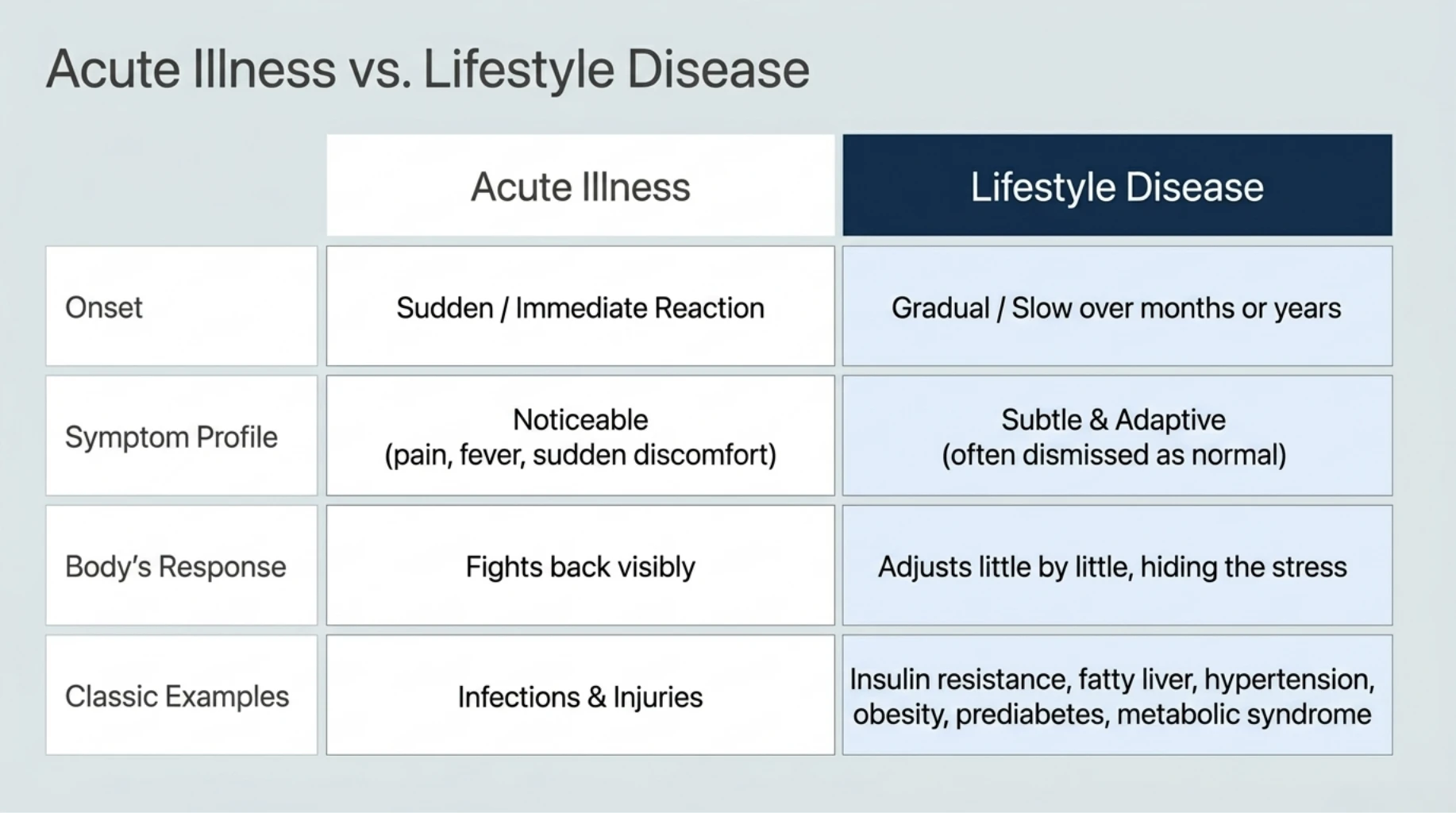
Many people associate illness with noticeable symptoms such as pain, fever, weakness, or sudden discomfort.
Acute infections and injuries usually produce immediate warning signs because the body reacts quickly. Lifestyle diseases behave differently.
Conditions such as: insulin resistance, fatty liver, hypertension, obesity, prediabetes, and metabolic syndrome typically progress gradually over months or years.
Because the progression is slow, the body adjusts little by little, making symptoms far less obvious in the early stages.
Why Early Metabolic Changes Often Go Unnoticed
Most early metabolic disturbances do not interfere dramatically with daily functioning. A person may still go to work, remain socially active, and manage regular responsibilities despite underlying imbalance.
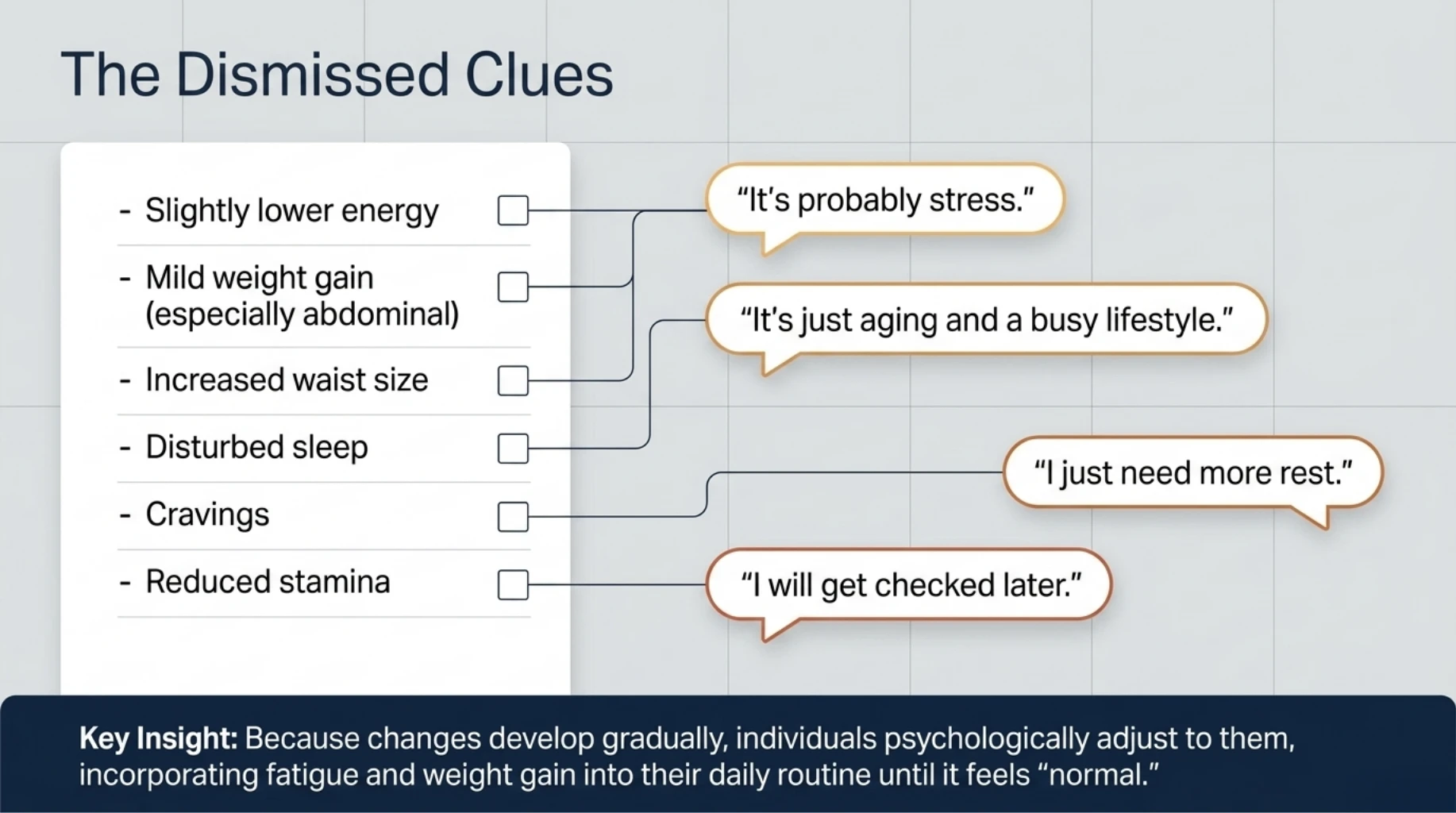
The symptoms, when present, are often subtle: slightly lower energy, mild weight gain, increased waist size, disturbed sleep, cravings, or reduced stamina.
Because these changes develop gradually, they are frequently dismissed as stress, aging, or busy lifestyle effects.
The Silent Nature of Insulin Resistance
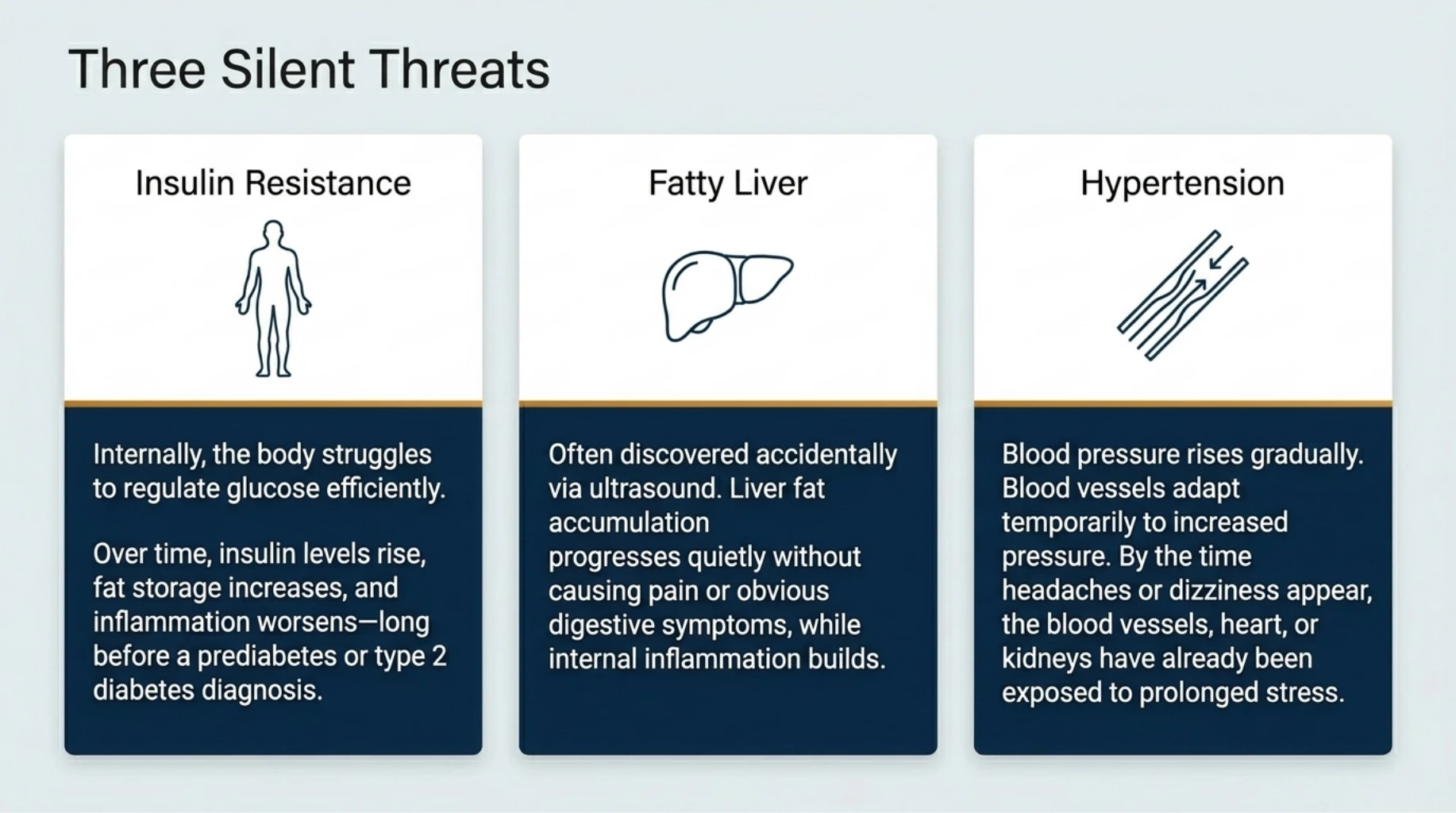
One of the clearest examples of a silent metabolic condition is insulin resistance. In its early stages, insulin resistance may not cause noticeable symptoms at all. Yet internally, the body is already struggling to regulate glucose efficiently.
Over time, insulin levels rise, fat storage increases, inflammation worsens, and energy regulation becomes less stable.
Eventually, this may progress toward prediabetes or type 2 diabetes—but long before diagnosis, the metabolic imbalance has often been present silently for years.
How Fatty Liver Develops Quietly
Fatty liver is another condition that commonly develops without strong symptoms initially. Many people discover it accidentally during ultrasound evaluation done for unrelated reasons.
In the early stages, liver fat accumulation may not cause pain or obvious digestive symptoms. Yet internally, inflammation and metabolic dysfunction may already be progressing.
This is one reason why many lifestyle diseases begin without symptoms—the organs affected initially continue functioning despite early damage.
Why High Blood Pressure Is Often Called a Silent Condition
Blood pressure usually rises gradually over time. In many individuals, there are no obvious warning signs until levels become significantly elevated or complications develop.
Some people assume that absence of headache or dizziness means blood pressure must be normal. Unfortunately, this is not always true.
By the time symptoms appear, blood vessels, heart, or kidneys may already have been exposed to prolonged stress.
Why Younger Adults Often Miss Early Warning Signs
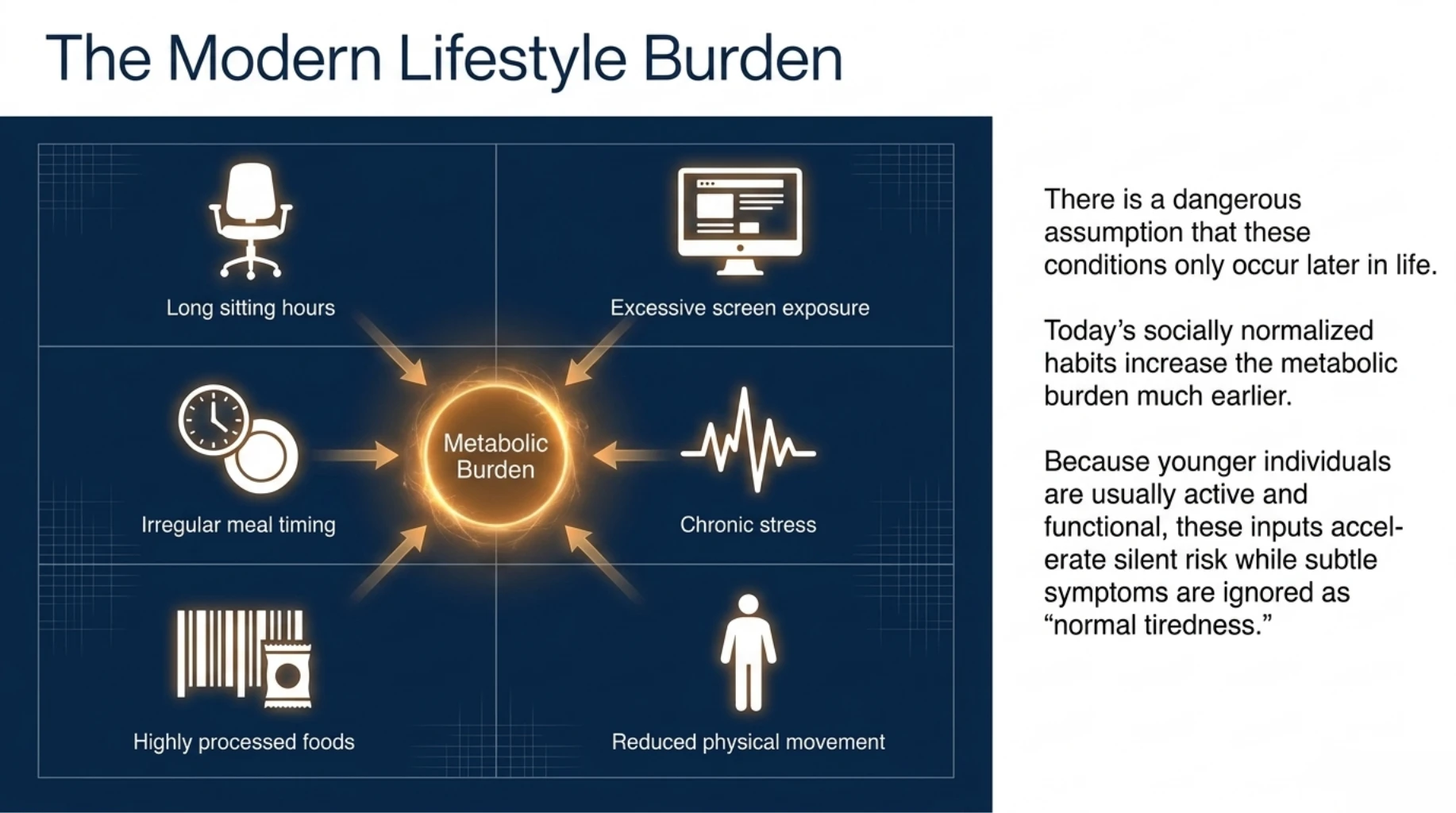
One of the biggest reasons lifestyle diseases remain unnoticed is because many younger adults do not consider themselves at risk. There is a common assumption that conditions like diabetes, fatty liver, or hypertension occur only later in life.
However, modern lifestyle patterns have changed this dramatically. Long sitting hours, poor sleep, processed foods, stress, and reduced physical activity are now affecting metabolic health much earlier than before.
Because younger individuals are usually active and functional, subtle symptoms are often ignored or considered “normal tiredness.”
How the Body Gradually Adapts to Metabolic Stress
The body rarely reacts dramatically during the early stages of lifestyle disease. Instead, it slowly adapts.
For example, when blood sugar regulation begins worsening, the body initially compensates by producing more insulin. Similarly, when blood pressure rises gradually, blood vessels adapt temporarily to increased pressure.
This adaptation delays noticeable symptoms, but it does not stop disease progression. In fact, the longer this silent adaptation continues, the more deeply metabolic dysfunction becomes established.
Why Obesity and Metabolic Imbalance Feel “Normal” Over Time
Weight gain usually develops gradually, especially around the abdomen. Because the change is slow, many people psychologically adjust to it and stop recognizing it as a warning sign.
The same happens with fatigue, poor stamina, disturbed sleep, or reduced physical activity. These changes become incorporated into daily routine and begin feeling normal.
This is one reason why many lifestyle diseases begin without symptoms—or more accurately, without symptoms that people recognize as significant.
The Psychological Tendency to Ignore Mild Symptoms
Human beings naturally tend to prioritize immediate responsibilities over preventive health. As long as symptoms remain manageable, evaluation is often postponed.
People commonly tell themselves:
“It’s probably stress.”
“I just need more rest.”
“I will get checked later.”
While these assumptions may seem harmless initially, they often delay early intervention during the most reversible stage of disease.
How Lifestyle Diseases Affect Multiple Systems Together
One important point many people miss is that lifestyle diseases are rarely isolated.
Insulin resistance, obesity, fatty liver, high blood pressure, poor sleep, inflammation, and abnormal cholesterol often develop together because they are metabolically connected.
This means that by the time one condition becomes obvious, several related imbalances may already be present silently.
This interconnected progression is another reason early symptoms are often unclear and difficult to recognize individually.
The Real-Life Pattern Seen in Many Patients
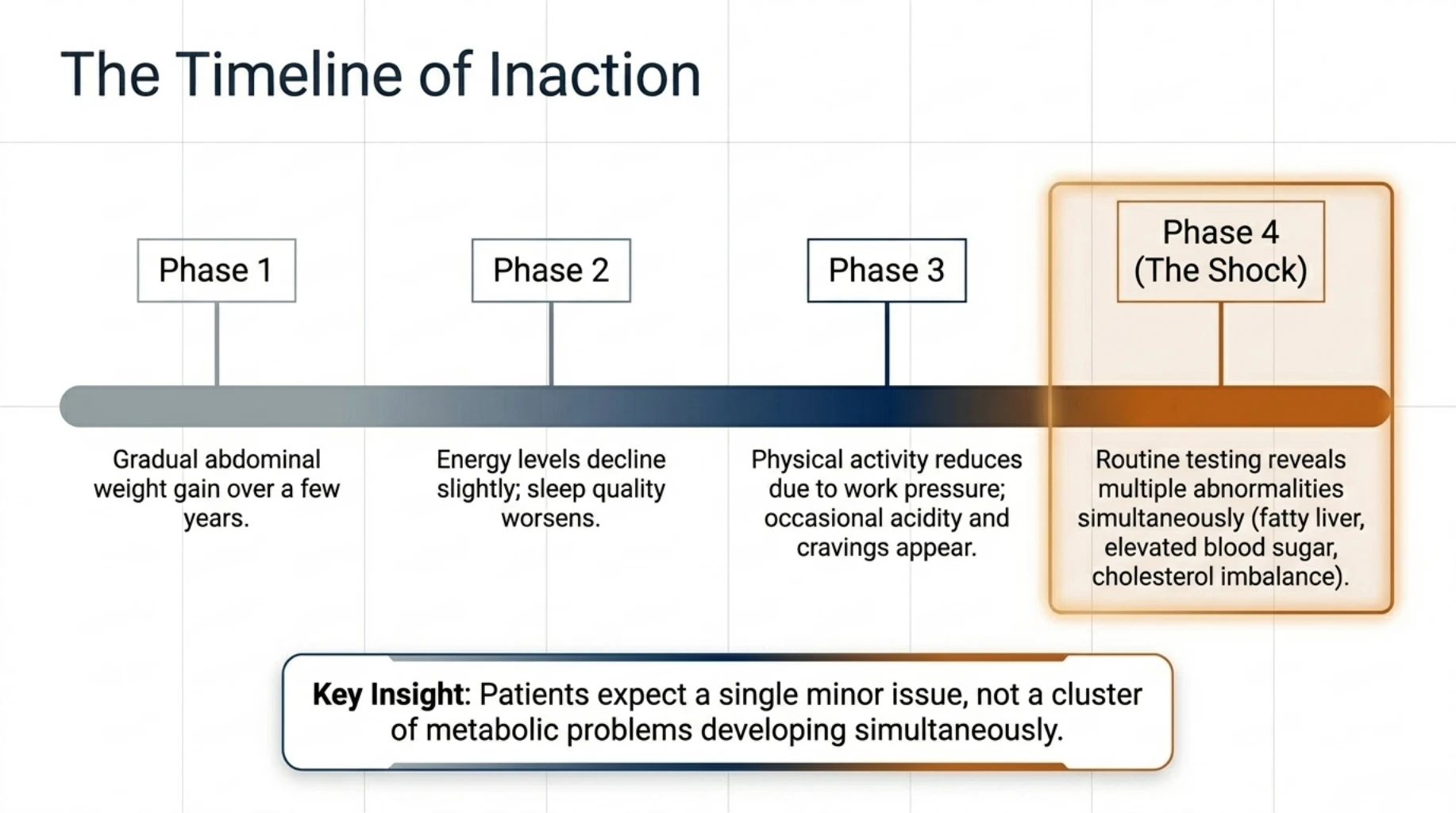
In clinical practice, the pattern is very familiar. A person gradually gains abdominal weight over a few years. Energy levels decline slightly. Sleep quality worsens. Physical activity reduces because of work pressure and fatigue.
Occasional acidity, cravings, poor stamina, or mild blood pressure elevations begin appearing, but none seem severe enough to justify concern.
Eventually, routine testing reveals multiple abnormalities together—fatty liver, elevated blood sugar, cholesterol imbalance, or hypertension.
Patients are often shocked because they expected a single minor issue, not a cluster of metabolic problems developing simultaneously.
Why Delayed Detection Makes Management More Difficult
The earlier metabolic imbalance is identified, the more responsive the body usually is to correction. In the early phase, lifestyle changes may produce significant improvement relatively quickly.
But when conditions remain unnoticed for years, inflammation, vascular changes, hormonal dysfunction, and fat accumulation become more established.
This often means that treatment becomes more intensive and long-term management becomes more challenging.
Why Preventive Evaluation Matters Even Without Symptoms
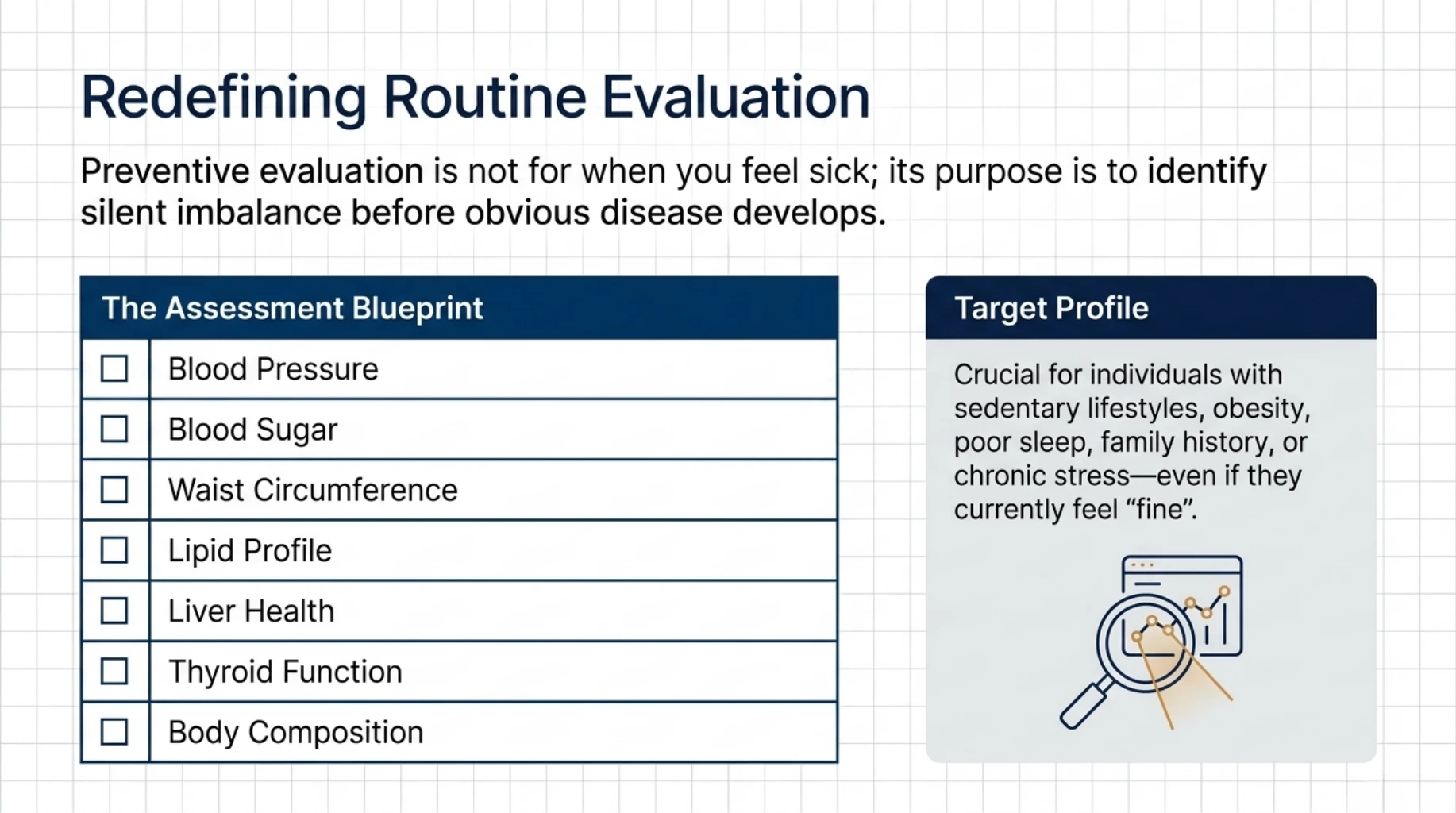
One of the biggest misconceptions in healthcare is believing that testing is necessary only after symptoms appear. Preventive evaluation works differently.
Its purpose is to identify silent imbalance before obvious disease develops.
This is especially important for individuals with sedentary lifestyle, obesity, family history, poor sleep, stress, or unhealthy eating patterns—even if they currently feel “fine.”
How to Recognize Early Metabolic Warning Signs
Even though many lifestyle diseases begin silently, the body often gives subtle clues before obvious disease develops. The challenge is that these signs are usually mild and easy to ignore.
For example, persistent fatigue, increasing abdominal fat, disturbed sleep, cravings, low stamina, poor recovery after meals, or gradual weight gain may appear long before formal diagnosis occurs.
Individually, these symptoms may not seem serious. But when several begin appearing together, they often indicate underlying metabolic stress.
Learning to recognize these early patterns is important because intervention at this stage is usually far more effective.
Why Preventive Evaluation Should Become Routine
Many people seek testing only after symptoms become severe. But by that stage, metabolic imbalance has often been progressing for years.
Preventive evaluation helps shift the focus from late treatment to early identification.
Basic assessments such as: blood pressure, blood sugar, waist circumference, lipid profile, liver health, thyroid function, and body composition can provide valuable insight into metabolic health long before complications appear.
This is especially important for individuals with sedentary lifestyle, obesity, poor sleep, family history, or chronic stress.
The Importance of Looking Beyond Individual Symptoms
One common mistake is focusing only on isolated symptoms rather than overall health patterns.
For example, a person may separately experience: weight gain, fatigue, poor sleep, cravings, mild BP elevation, or low energy.
These may appear unrelated individually, but together they often point toward deeper metabolic dysfunction.
This is why lifestyle diseases are best understood as interconnected processes rather than isolated diagnoses.
How Modern Lifestyle Continues to Increase Silent Risk
Today’s lifestyle environment makes silent metabolic disease increasingly common.
Long sitting hours, excessive screen exposure, irregular meal timing, chronic stress, highly processed foods, and reduced physical movement all gradually increase metabolic burden.
Because these habits are socially normalized, many people underestimate their long-term impact.
The body may continue functioning outwardly while internally metabolic flexibility, hormonal balance, vascular health, and insulin sensitivity continue worsening slowly.
Why Early Lifestyle Correction Creates the Biggest Benefit
The earlier lifestyle imbalance is corrected, the greater the body’s ability to recover.
At early stages, blood vessels remain more adaptable, insulin sensitivity is easier to improve, inflammation is less established, and metabolic systems respond more efficiently to lifestyle modification.
This is why prevention is often far more powerful than late-stage treatment. Simple improvements in movement, sleep, stress management, meal quality, and body composition can significantly change long-term health outcomes when implemented early.
The Importance of Building Health Awareness
One of the most valuable preventive tools is awareness. People often wait for the body to “force” attention through strong symptoms. But many lifestyle diseases progress silently precisely because the body adapts gradually.
Understanding these patterns allows individuals to act earlier rather than reacting only after complications appear.
This mindset shift—from symptom-based healthcare to preventive healthcare—is becoming increasingly important in modern metabolic medicine.
Putting Everything Into Perspective
Feeling normal does not always mean the body is functioning optimally. This is exactly why many lifestyle diseases begin without symptoms.
The body often compensates silently while metabolic stress continues building internally. During this period, subtle changes may already be affecting blood vessels, liver health, insulin balance, hormonal function, and long-term cardiovascular risk.
By the time obvious symptoms appear, the underlying process is often much more advanced.
Final Thought
Sometimes the absence of symptoms does not mean absence of disease—it simply means the body is still trying to cope quietly.
If you want a personalized metabolic assessment and lifestyle strategy, you can book a consultation here:
Book an Appointment