


“Doctor, I don’t drink alcohol… so how did I develop fatty liver?”
This is one of the most common questions people ask after seeing fatty liver mentioned in their reports.
What surprises many individuals is that alcohol is no longer the only major reason behind liver fat accumulation. Modern lifestyle patterns—especially prolonged sitting and desk-based work—have become important contributors.

Understanding why desk jobs increase fatty liver risk is important because many professionals spend most of their day sitting with very little physical movement, often without realizing how strongly this affects metabolism.
Over time, the combination of prolonged sitting, stress, irregular eating, and reduced activity creates an environment where fat begins accumulating silently inside the liver.
Fatty Liver Is Closely Linked With Metabolic Health
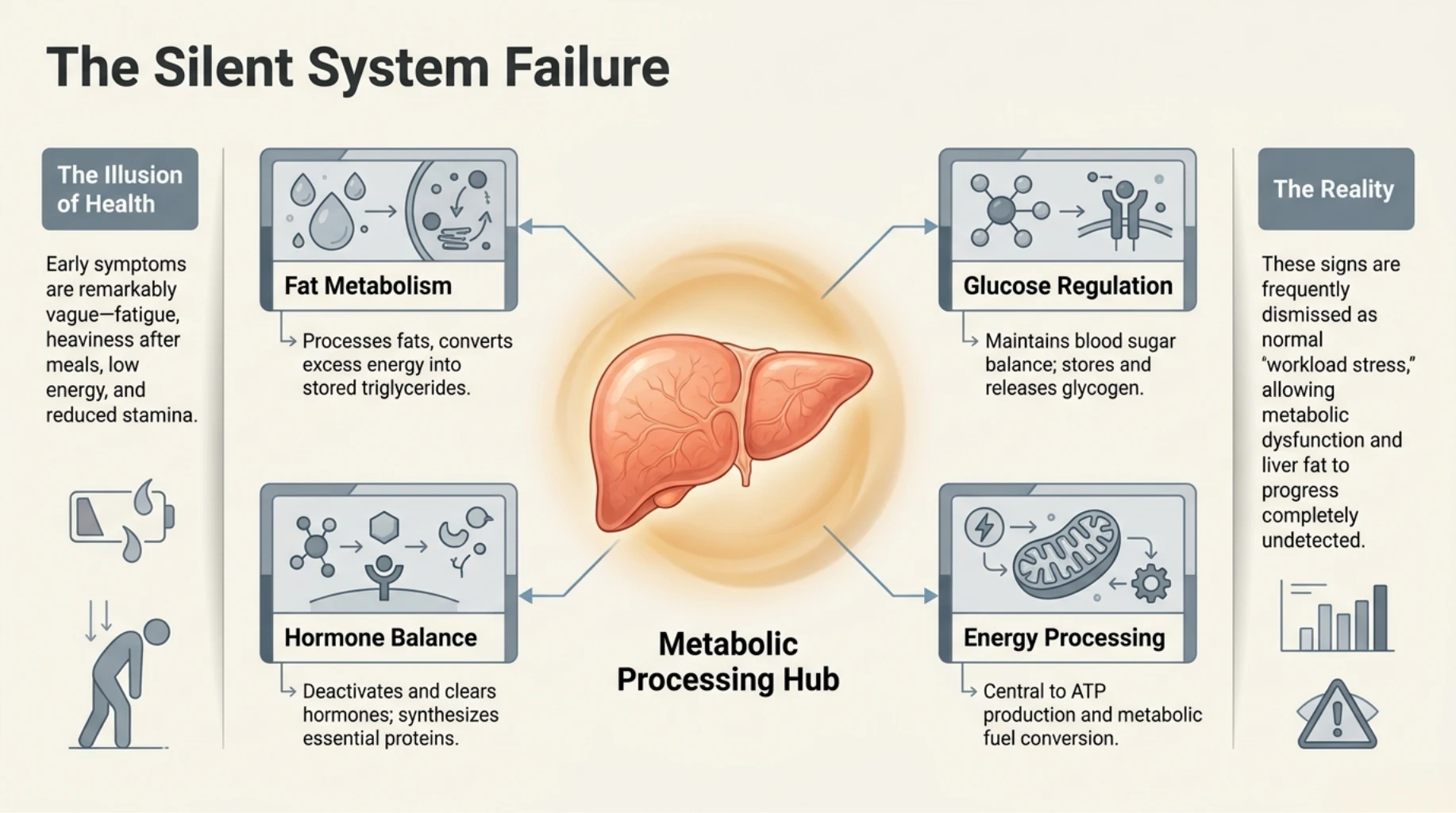
Fatty liver, medically known as non-alcoholic fatty liver disease (NAFLD), is not simply a liver condition. It is strongly connected with overall metabolic health.
The liver plays a central role in: fat metabolism, glucose regulation, hormone balance, and energy processing. When metabolism becomes disturbed, excess fat begins accumulating inside liver cells.
Initially, this may not produce symptoms. But over time, inflammation, insulin resistance, and metabolic dysfunction may continue progressing silently.
Why Desk Jobs Reduce Daily Energy Utilization
The human body is designed for movement. Muscle activity plays a major role in how efficiently glucose and fat are utilized.
In desk-based work environments, however, physical movement becomes minimal for long periods.
Many individuals spend: 8–10 hours sitting continuously, often with very limited walking or physical activity throughout the day.
As movement decreases, the body uses less glucose for energy. Excess energy that is not utilized efficiently is more likely to be stored as fat—including inside the liver. This is one of the major reasons why desk jobs increase fatty liver risk.
The Link Between Prolonged Sitting and Insulin Resistance
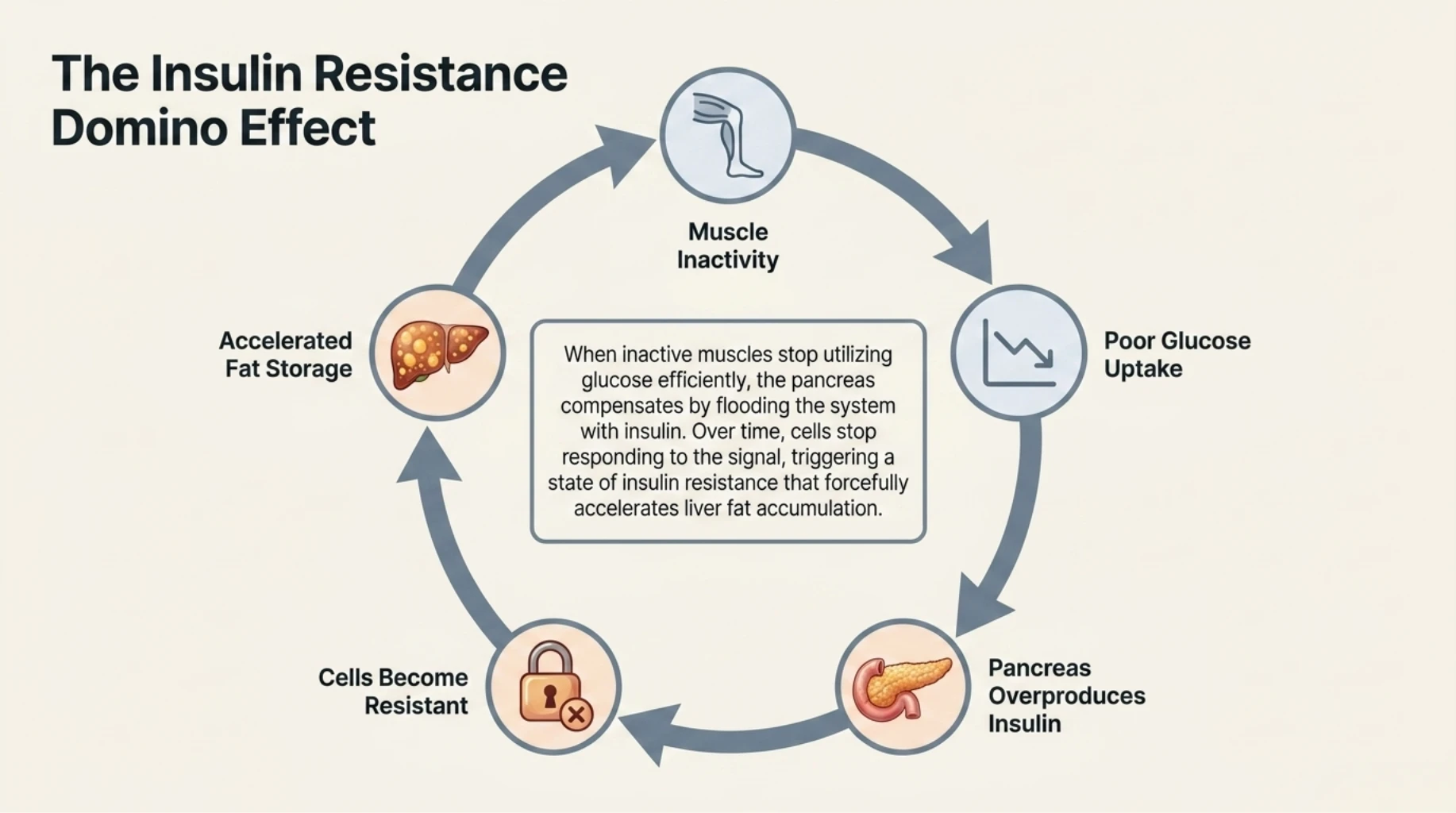
One of the earliest metabolic effects of prolonged sitting is reduced insulin sensitivity. When muscles remain inactive for long periods, glucose uptake becomes less efficient. The body compensates by producing more insulin.
Over time, this contributes to insulin resistance—a condition where cells stop responding effectively to insulin signals.
As insulin resistance worsens: fat storage increases, abdominal obesity becomes more common, and liver fat accumulation accelerates. This process often develops silently for years before diagnosis occurs.
Why Busy Office Routines Worsen Metabolic Health
The issue is not only sitting itself. Desk jobs often come with multiple lifestyle patterns that together worsen metabolic function.
For example, many professionals experience: irregular meal timing, high stress, poor sleep, excessive screen exposure, and dependence on processed snacks or sugary beverages.
Individually, each factor may appear manageable. But together, they create continuous metabolic stress on the body.
This is why fatty liver is becoming increasingly common even in younger working adults.
How Stress and Long Working Hours Affect Liver Health
Chronic stress affects more than mental well-being. When stress hormones remain elevated for prolonged periods, metabolic balance becomes disrupted. Appetite regulation changes, cravings increase, and insulin sensitivity may worsen.
At the same time, long working hours often reduce opportunities for movement, exercise, and proper sleep.
Over months and years, these patterns reinforce each other and gradually increase the likelihood of fatty liver development.
Why Fatty Liver Often Remains Undetected Initially
One of the reasons fatty liver becomes widespread is because it usually develops silently. Many individuals continue functioning normally despite ongoing fat accumulation inside the liver.
Symptoms, when present, are often vague: fatigue, heaviness after meals, low energy, abdominal weight gain, or reduced stamina.
Because these symptoms are subtle, they are frequently ignored or blamed on workload and stress.
How Late-Night Working Patterns Affect Fatty Liver Risk
Many desk-job professionals do not only sit for long hours—they also develop highly irregular daily routines.
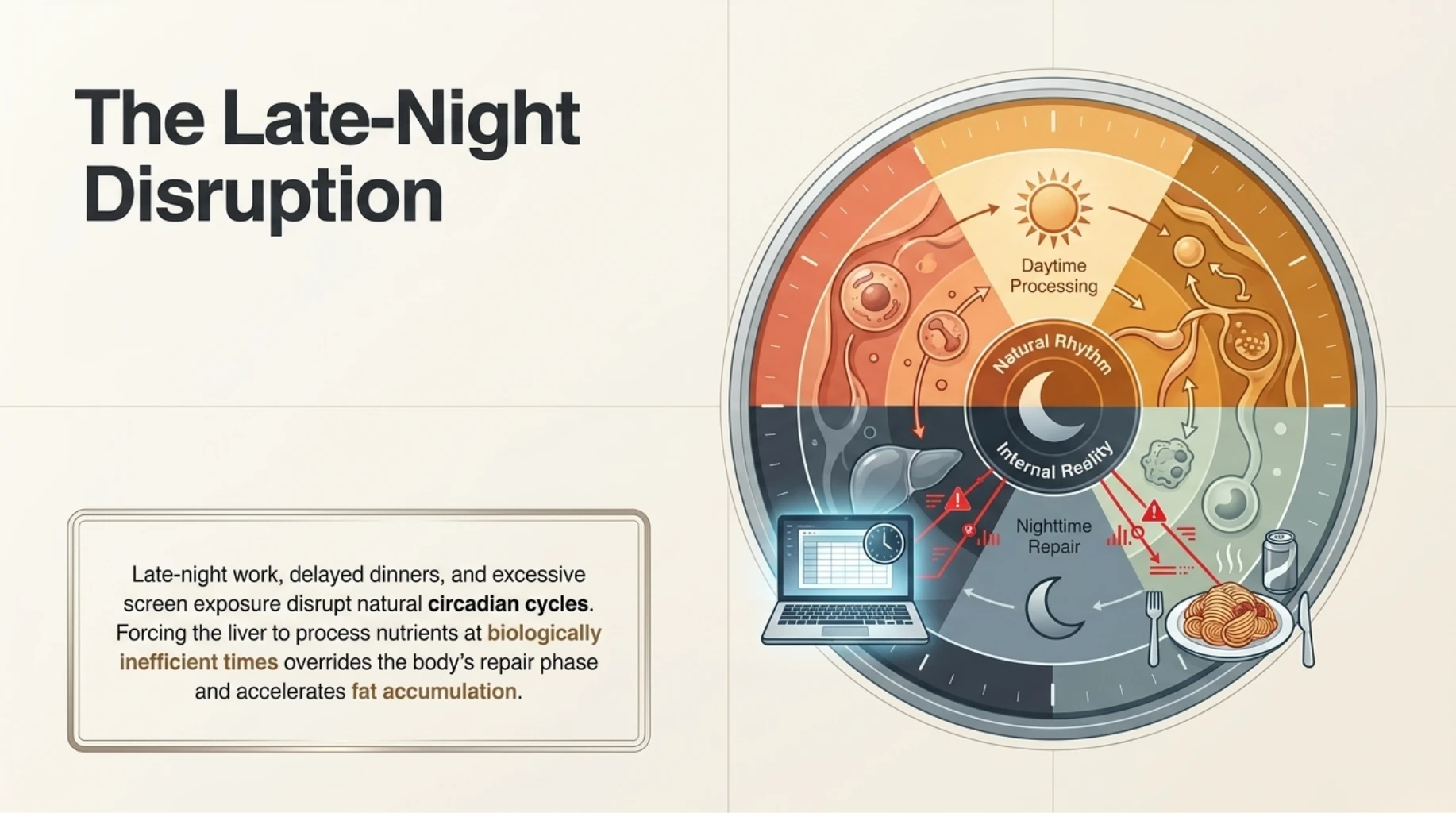
Late-night work, delayed dinners, excessive screen exposure, and poor sleep gradually disrupt the body’s metabolic rhythm.
The body naturally follows circadian cycles that influence hormone balance, digestion, insulin sensitivity, and liver metabolism.
When eating and sleeping patterns become consistently delayed, the liver is forced to process nutrients at biologically inefficient times.
Over time, this contributes to metabolic dysfunction and increases the likelihood of liver fat accumulation.
The Strong Connection Between Belly Fat and Fatty Liver
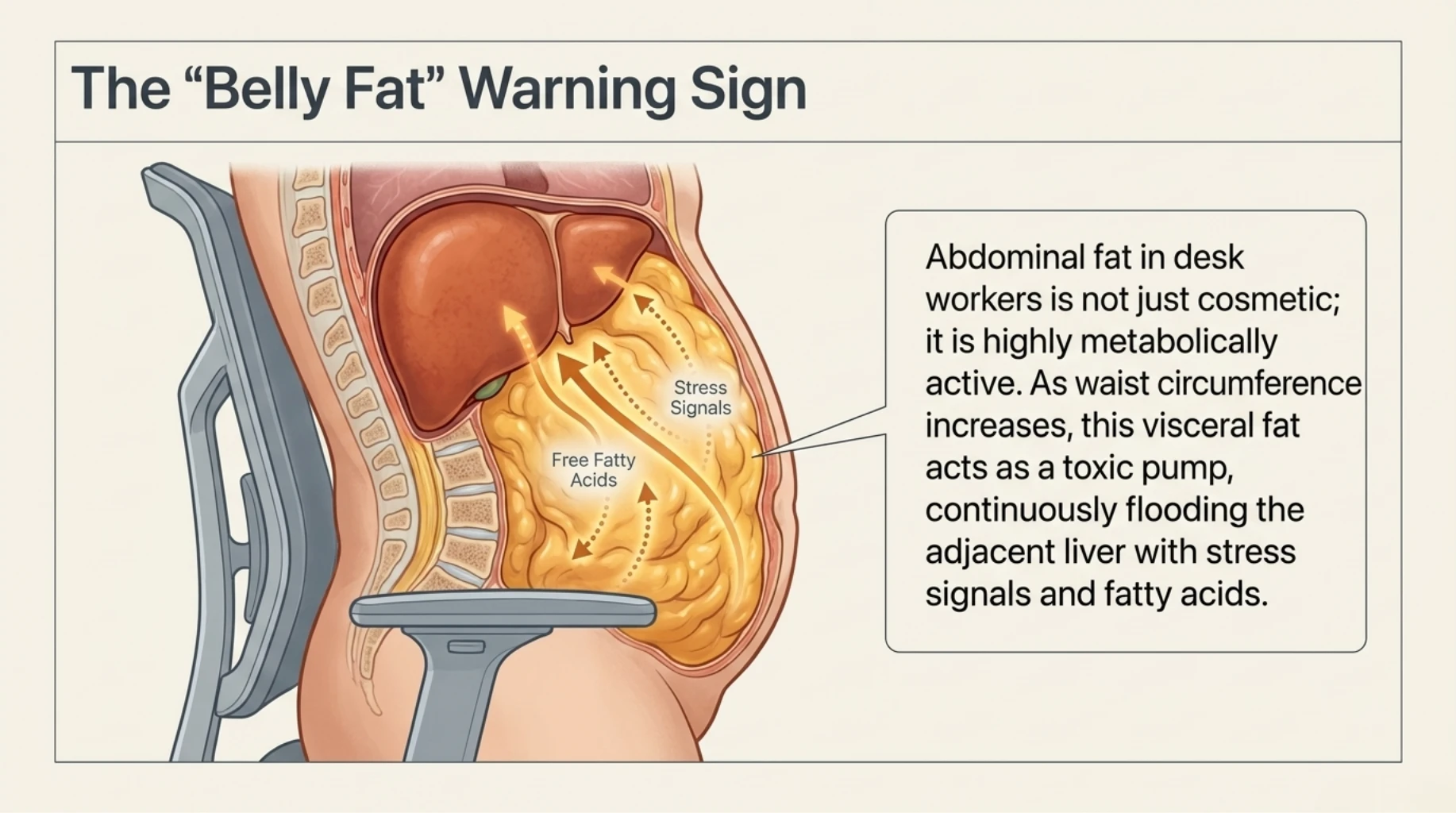
One of the most important warning signs in desk-job lifestyles is increasing abdominal fat.
Fat stored around the abdomen is metabolically active and strongly associated with insulin resistance and inflammation.
As abdominal obesity increases, the liver receives a greater load of free fatty acids and metabolic stress signals.
This creates an environment where fat begins accumulating inside liver cells more rapidly.
This is why many individuals with desk-based work notice both: increasing waist circumference and worsening fatty liver reports developing together.
Why “Going to the Gym Sometimes” Is Often Not Enough
Many professionals assume that occasional exercise compensates for prolonged sitting. Unfortunately, metabolism does not work that simply.
A short workout cannot fully neutralize the metabolic effects of sitting continuously for most of the day.
Research increasingly shows that prolonged uninterrupted sitting itself affects glucose utilization, blood circulation, insulin sensitivity, and fat metabolism—even in people who exercise occasionally.
This is why daily movement throughout the day matters as much as structured workouts.
The Hidden Role of Processed Office Foods
Office environments often encourage convenience-based eating patterns.
Frequent tea or coffee with sugar, packaged snacks, bakery foods, sugary beverages, and irregular meals become common during long working hours.
These foods are usually: high in refined carbohydrates, low in fiber, rapidly digestible, and metabolically disruptive.
Repeated intake creates frequent glucose spikes and worsens insulin resistance, further increasing fatty liver risk.
How Poor Sleep Worsens Liver Metabolism
Sleep is one of the most underestimated components of metabolic health. When sleep duration or quality becomes poor, hormonal balance begins shifting.
Appetite regulation becomes less stable, stress hormones increase, insulin sensitivity worsens, and cravings for high-calorie foods become stronger.
Over time, this creates a cycle where fatigue increases physical inactivity while poor metabolic regulation increases fat accumulation.
This is another important reason why desk jobs increase fatty liver risk when combined with poor sleep habits.
The Real-Life Pattern Seen in Many Working Professionals
In clinical practice, the pattern is remarkably consistent.
A person spends most of the day sitting at work with minimal physical movement. Meals are often delayed or irregular. Stress levels remain high, sleep becomes inconsistent, and physical activity gradually reduces.
At first, only mild changes appear—slight abdominal weight gain, low energy, reduced stamina, or occasional acidity.
Eventually, routine testing reveals fatty liver, elevated triglycerides, insulin resistance, or prediabetes.
Many individuals are surprised because they never considered themselves “unhealthy.” Yet the metabolic impact of their routine had been building silently for years.
Why Fatty Liver Is Becoming Common in Younger Professionals
Earlier, fatty liver was mostly associated with older age or heavy alcohol intake.
Today, it is increasingly seen in younger office workers because modern routines combine multiple metabolic risk factors simultaneously: prolonged sitting, stress, poor sleep, processed foods, reduced movement, and irregular eating patterns.
This combination accelerates metabolic dysfunction much earlier in life than many people expect.
Why Early Detection Matters
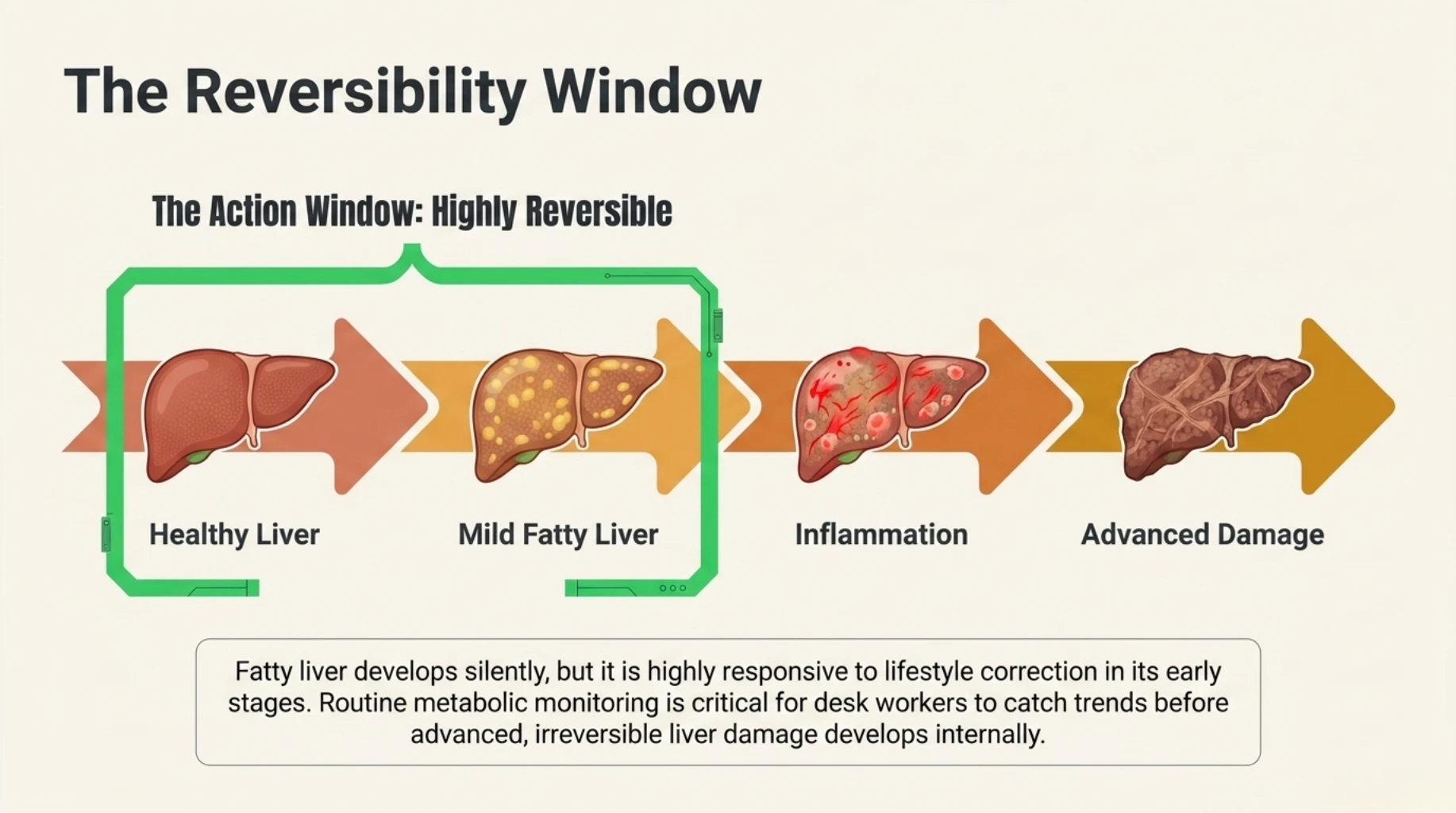
Fatty liver usually progresses gradually. In the early stages, lifestyle correction can often significantly improve liver health. But when ignored for long periods, inflammation and liver damage may continue progressing silently.
This is why preventive evaluation and lifestyle awareness become extremely important for individuals with sedentary work patterns.
How Desk-Job Professionals Can Reduce Fatty Liver Risk
The encouraging part is that fatty liver related to lifestyle is often highly responsive to correction—especially in the earlier stages.
The goal is not perfection. The goal is reducing continuous metabolic stress on the body.
Small, sustainable changes implemented consistently usually work far better than extreme short-term efforts.
Movement Throughout the Day Matters More Than People Realize
One of the biggest mistakes professionals make is separating exercise from the rest of the day.
Even if structured exercise is performed, prolonged uninterrupted sitting still affects metabolism negatively.
This is why increasing movement across the day becomes extremely important.
Simple habits such as: standing periodically, walking during calls, using stairs, stretching between work sessions, or taking short walking breaks help improve blood circulation, glucose utilization, and metabolic efficiency.
Over time, these small actions collectively reduce sedentary stress on the liver.
Why Meal Timing and Food Quality Matter in Desk Jobs
Office routines often push people toward irregular eating and convenience-based foods.
Improving food quality does not require extreme dieting. But it does require reducing highly processed, sugar-heavy, and rapidly digestible foods that worsen insulin resistance.
Meals rich in protein, fiber, and balanced nutrition generally support better satiety and more stable energy levels during work hours.
At the same time, reducing frequent sugary beverages and unnecessary snacking can significantly lower metabolic burden over time.
The Importance of Protecting Sleep
Many working professionals sacrifice sleep repeatedly while trying to maintain productivity.
Unfortunately, poor sleep directly worsens appetite regulation, insulin sensitivity, stress hormones, and liver metabolism.
When this continues for months or years, metabolic dysfunction gradually becomes more established.
Protecting sleep should therefore be viewed as part of metabolic and liver care—not simply rest.
Why Stress Management Influences Liver Health
Stress affects eating behavior, sleep quality, hormonal balance, and physical activity levels simultaneously.
Chronic stress often increases cravings, emotional eating, and metabolic inflammation while reducing motivation for healthy routines.
This creates a cycle where stress indirectly worsens fatty liver progression.
Even small stress-reduction habits such as structured breaks, outdoor movement, mindfulness, or reducing continuous screen overload can improve long-term metabolic balance.
Why Extreme Diets Usually Fail Long Term
Many people respond to fatty liver diagnosis with sudden aggressive dieting.
While short-term restriction may produce temporary weight loss, highly unsustainable approaches usually fail over time.
The body responds better to gradual, consistent lifestyle improvement than repeated cycles of strict dieting and rebound eating.
Long-term liver recovery depends more on sustainable metabolic improvement than rapid short-term weight reduction alone.
The Importance of Regular Health Monitoring
Because fatty liver often develops silently, routine monitoring becomes important—especially for people with sedentary work patterns.
Waiting for symptoms is not ideal because the condition may continue progressing internally even while the person feels relatively normal.
Periodic evaluation helps identify trends early and allows timely lifestyle correction before advanced liver damage develops.
Putting Everything Into Perspective
Desk jobs themselves are not inherently harmful. The problem arises when prolonged sitting combines with poor sleep, stress, processed foods, reduced movement, and metabolic imbalance.
This combination gradually shifts the body toward insulin resistance, abdominal obesity, inflammation, and liver fat accumulation.
This is exactly why desk jobs increase fatty liver risk in modern lifestyles.
The encouraging part is that the body often responds positively when movement, sleep, stress management, and nutrition begin improving consistently.
Final Thought
Sometimes the biggest strain on the liver is not what happens occasionally—but what the body experiences quietly every working day.
If you want a personalized metabolic assessment and lifestyle strategy, you can book a consultation here:
Book an Appointment