


“I was feeling completely fine, doctor. I never thought the reports would show a problem.”
This is something many patients say after discovering diabetes, fatty liver, hypertension, thyroid imbalance, or other metabolic issues during routine testing.
The surprising part is that many of these conditions had been developing silently for years.
Understanding why routine health evaluation is often delayed is important because modern lifestyle diseases usually progress gradually and without obvious symptoms in the early stages.
By the time noticeable symptoms appear, the underlying imbalance may already be well established.

Why Feeling “Normal” Can Be Misleading
One of the biggest reasons people delay health evaluation is because they feel physically normal.
Most individuals assume that if there is no pain, fatigue, or major discomfort, there is no need for testing.
But many metabolic conditions do not produce strong warning signs initially. Blood pressure may rise silently, blood sugar may gradually worsen, and fatty liver may develop without noticeable symptoms.
This creates a false sense of reassurance. People often believe their health is fine simply because the body has adapted to gradual changes.
The Silent Nature of Modern Lifestyle Diseases
Unlike infections or acute illnesses, metabolic diseases usually develop slowly.
Conditions such as: prediabetes, hypertension, insulin resistance, fatty liver, obesity, and thyroid imbalance often progress over months or years before becoming obvious.
During this time, the body continues functioning, but internally several metabolic systems are already under stress.
This is why routine evaluation becomes important—not because you feel sick, but because many problems remain hidden in the early phase.
Why Busy Lifestyles Push Health to the Background
Modern routines are heavily focused on productivity, deadlines, and daily responsibilities. As a result, health evaluation is often postponed repeatedly.
Many people tell themselves they will “get tested later” once work pressure reduces or schedules become less hectic. But in reality, that “later” often keeps getting delayed.
Over time, preventive health checks become less of a priority while lifestyle-related risks continue increasing.
The Psychological Tendency to Avoid Testing
Another important reason why routine health evaluation is often delayed is psychological avoidance. Some people subconsciously avoid testing because they are afraid of discovering a problem.
There is a belief that if symptoms are not present, it is better not to “look for issues.” But avoiding evaluation does not prevent disease progression. It only delays detection.
In fact, early identification often allows problems to be managed more effectively with lifestyle correction before complications develop.
Why Mild Symptoms Are Frequently Ignored
Even when symptoms appear, they are often subtle and easily dismissed.
For example, people may normalize: fatigue, poor sleep, mild weight gain, increased waist size, low energy, acidity, or fluctuating appetite.
These changes are commonly blamed on stress, aging, or busy schedules. While those factors may contribute, they can also be early indicators of deeper metabolic imbalance.
The Problem with Waiting for “Serious” Symptoms
Many individuals seek evaluation only after symptoms become difficult to ignore. Unfortunately, by this stage, the condition has often progressed significantly.
For example, blood sugar imbalance may remain unnoticed for years before diabetes is diagnosed. Similarly, blood pressure may stay elevated silently before finally producing symptoms or complications.
This is why preventive evaluation is far more valuable than waiting for severe symptoms to appear.
Why Younger Adults Are Increasingly Developing Metabolic Problems
One major misconception is that routine health evaluation is only important after a certain age.
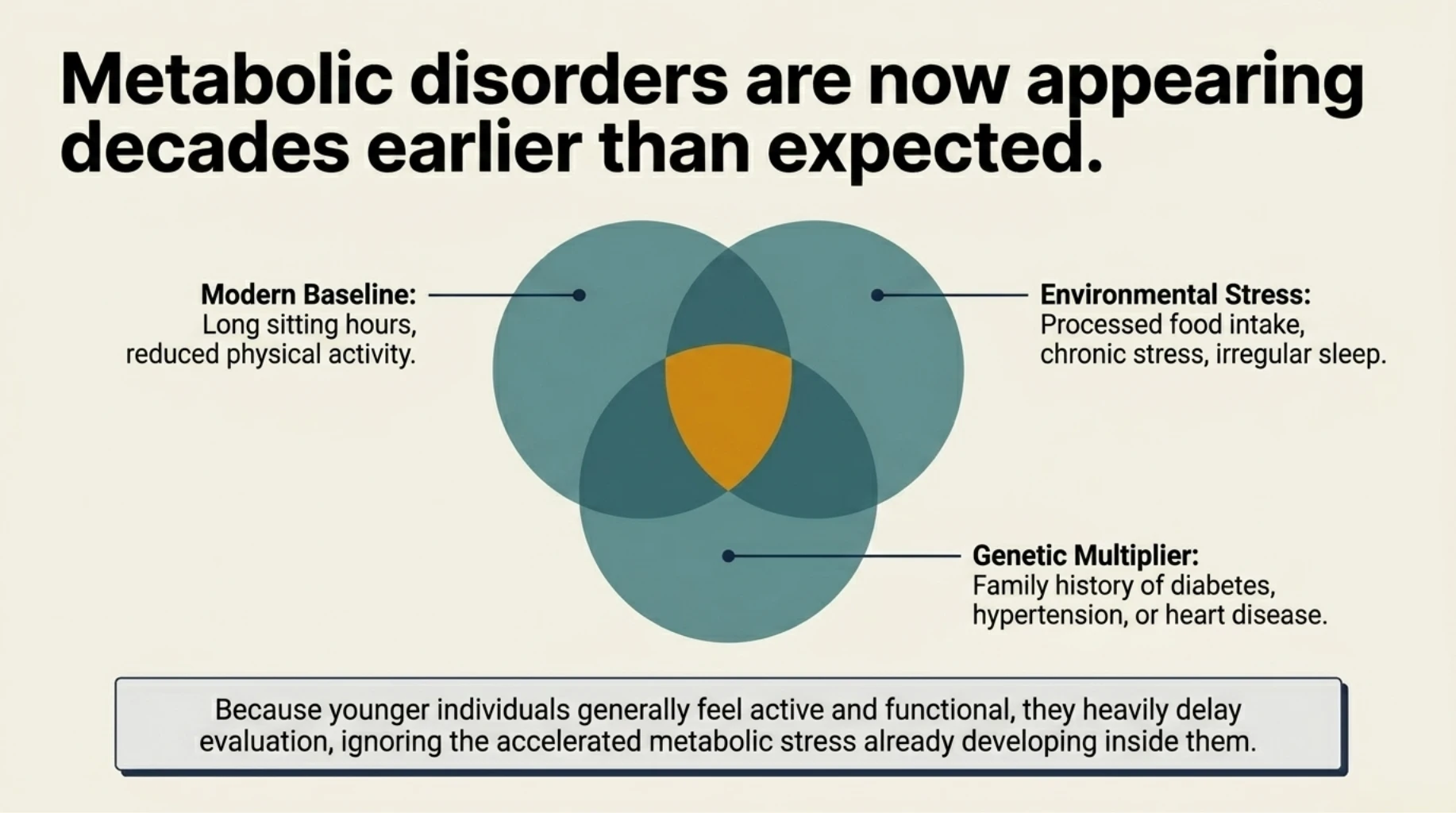
In reality, modern lifestyle patterns are causing metabolic disorders to appear much earlier than before.
Long sitting hours, irregular sleep, processed food intake, stress, and reduced physical activity are affecting younger adults significantly.
As a result, conditions such as insulin resistance, fatty liver, obesity, high blood pressure, and prediabetes are now frequently seen even in people in their 20s and 30s.
Because younger individuals generally feel active and functional, evaluation is often delayed despite underlying metabolic stress already developing.
The Hidden Role of Family History
Family history is another factor people often underestimate. If conditions like diabetes, hypertension, obesity, thyroid disorders, or heart disease are present in close family members, the risk may increase significantly.
However, many individuals assume that if they currently feel healthy, family history will not affect them. What they do not realize is that genetic tendency combined with modern lifestyle habits can accelerate disease development.
This is why routine health evaluation becomes even more important for individuals with strong family history.
How Lifestyle Adaptation Hides Early Warning Signs
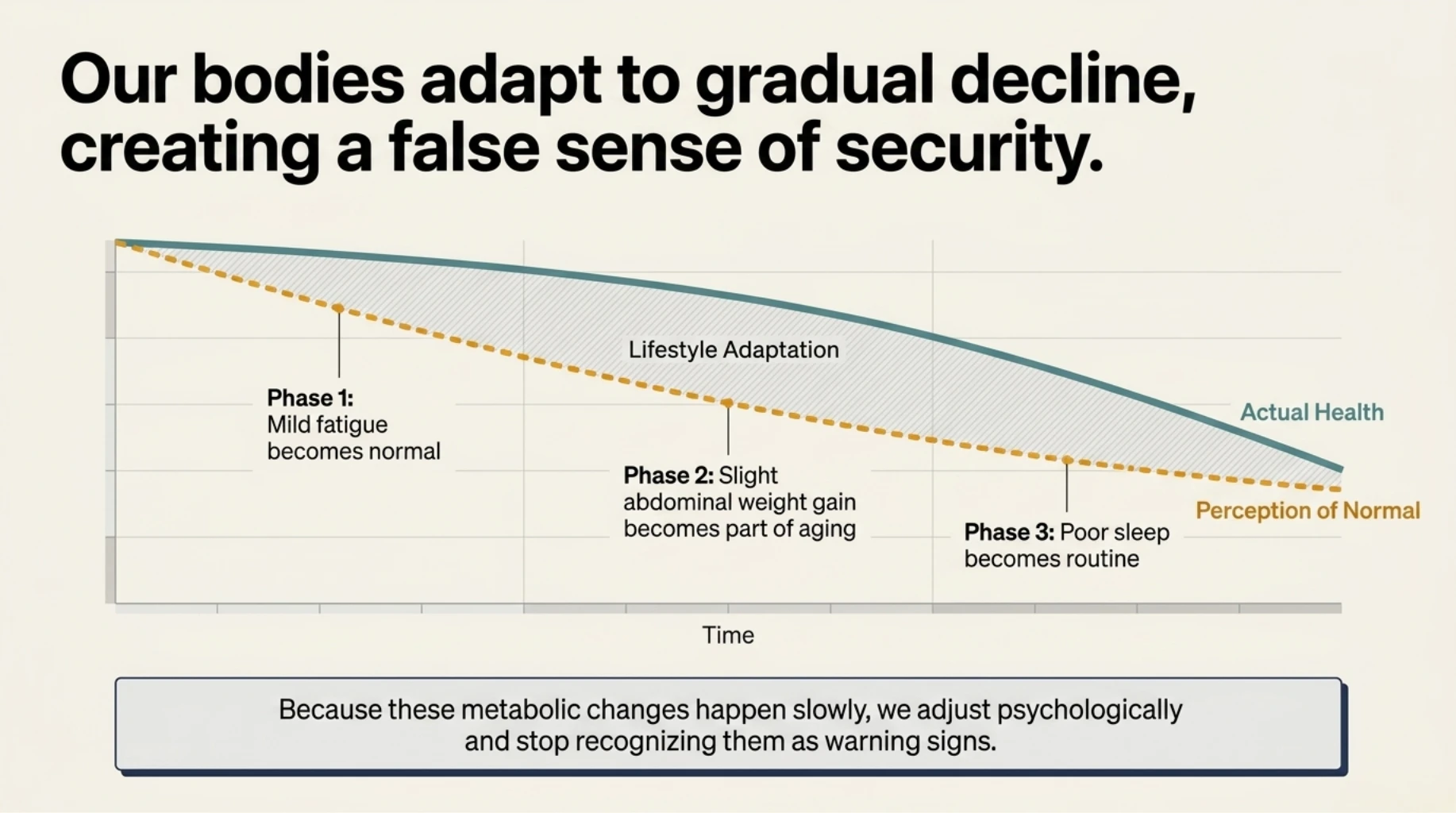
The body has a remarkable ability to adapt. When changes happen gradually, people often stop noticing them.
For example, mild fatigue becomes “normal.” Slight abdominal weight gain becomes “part of aging.” Poor sleep becomes “routine.”
Because these changes develop slowly, individuals adjust psychologically and stop recognizing them as warning signs.
This adaptation delays health evaluation further, even though metabolic imbalance may already be progressing internally.
The Financial and Practical Misconception Around Preventive Testing
Some people avoid routine evaluation because they view testing as unnecessary expense or inconvenience. Ironically, delayed diagnosis often leads to more complex and expensive treatment later.
Preventive evaluation is usually far simpler and more cost-effective than managing advanced complications. Early detection may allow correction through lifestyle modification before long-term medication or complications become necessary.
How Delayed Detection Affects Long-Term Health
The biggest issue with delayed evaluation is not the diagnosis itself—it is the time lost before intervention begins. During this period, metabolic stress continues affecting the body silently.
Blood vessels may gradually stiffen, insulin resistance may worsen, fat accumulation may increase in the liver, and inflammation may continue building internally.
Even if symptoms remain mild, the underlying biological processes continue progressing. This is why early detection often creates a much better opportunity for reversal and long-term control.

The Real-Life Pattern Seen in Many Patients
In practice, the pattern is very familiar. A person remains busy for years, postponing routine testing repeatedly because they feel “mostly fine.” Mild fatigue, slight weight gain, poor sleep, or low energy are ignored because they seem manageable.
Eventually, testing is done—sometimes for unrelated reasons—and multiple abnormalities appear together.
Blood sugar may already be elevated. Fatty liver may be present. Blood pressure may have increased. Cholesterol imbalance may also appear at the same time.
Many patients are shocked because they expected only a small issue, not multiple metabolic problems developing simultaneously.
Why Prevention Is Easier Than Reversal
The body responds much better during the earlier stages of imbalance. At that point, metabolic systems are still relatively flexible, and lifestyle changes often produce faster improvement.
Once disease becomes more advanced, correction becomes slower and usually requires more intensive intervention.
This is why routine evaluation should not be viewed as looking for disease. It should be viewed as identifying imbalance before complications appear.
What Routine Health Evaluation Should Actually Include
Routine health evaluation does not always mean undergoing dozens of complex tests. The goal is not unnecessary investigation. The goal is identifying early metabolic imbalance before it progresses further.
A proper evaluation usually begins with understanding overall lifestyle patterns, body composition, sleep quality, physical activity, stress levels, and family history.
Basic measurements such as: blood pressure, waist circumference, body weight, blood sugar, liver health, lipid profile, and thyroid evaluation often provide valuable insight into metabolic health.
In many cases, these simple assessments are enough to identify early warning signs.
Why Regular Monitoring Matters Even When Reports Are “Normal”
Health is dynamic. It changes over time depending on lifestyle, stress, sleep, nutrition, physical activity, and aging.
This means that a normal report today does not guarantee long-term protection if unhealthy habits continue.
Regular evaluation helps track trends before they become major problems.
For example, a gradual increase in waist circumference, blood pressure, fasting glucose, or liver enzymes may indicate early metabolic stress even before disease becomes obvious.
Monitoring these trends early creates an opportunity for timely correction.
How Often Should Routine Health Evaluation Be Done?
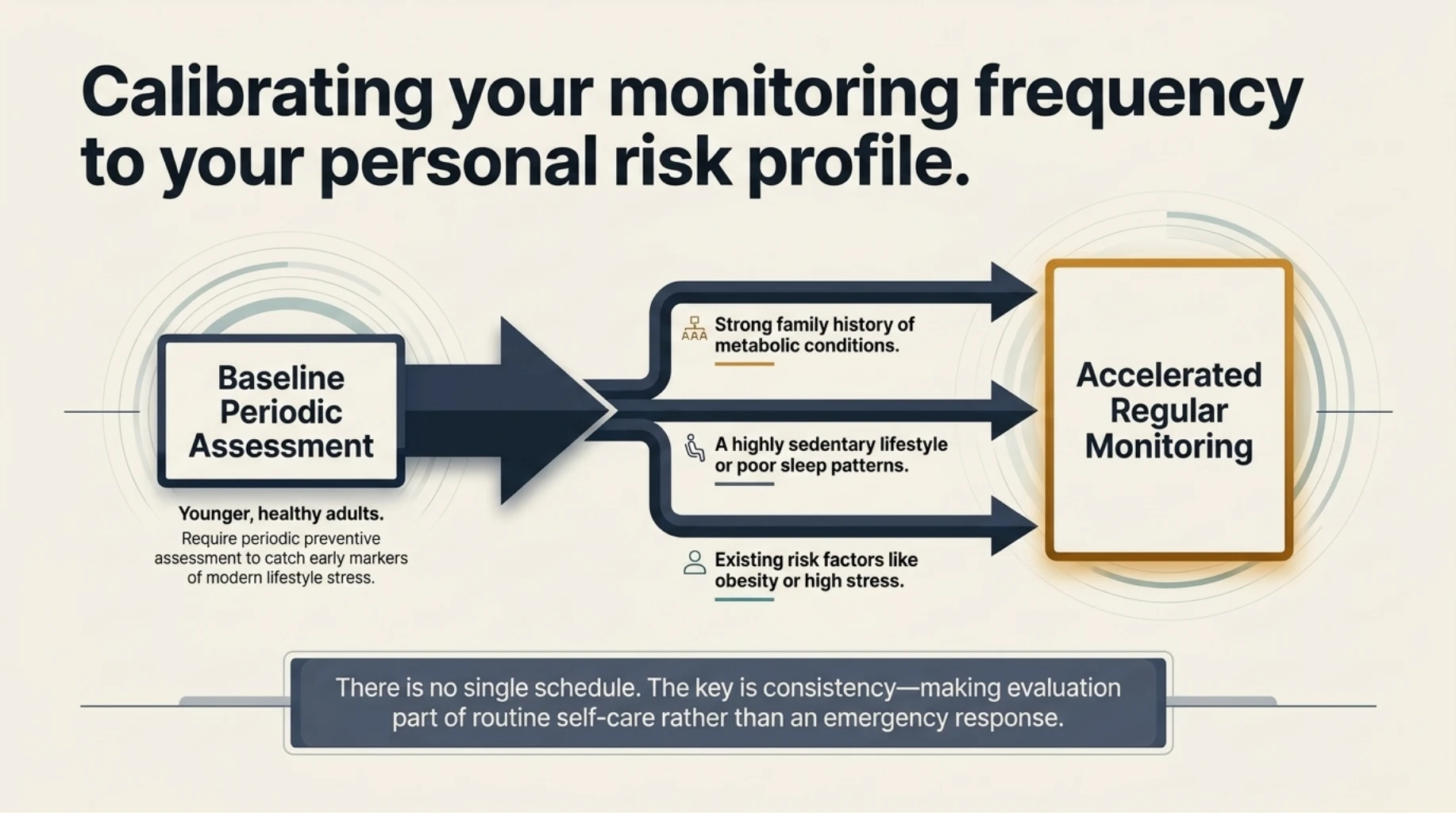
There is no single schedule that applies to everyone. The ideal frequency depends on age, lifestyle, family history, body weight, and existing metabolic risk factors.
Individuals with obesity, sedentary lifestyle, poor sleep, family history of diabetes or hypertension, or existing metabolic concerns generally benefit from more regular evaluation.
For younger healthy adults, periodic preventive assessment can still be valuable because modern lifestyle-related diseases are appearing earlier than before.
The key point is consistency. Preventive evaluation should become part of routine self-care rather than something done only when symptoms become severe.
Why Lifestyle Evaluation Is as Important as Laboratory Tests
Laboratory reports provide useful information, but they do not tell the complete story. Two people may have similar reports yet completely different lifestyle risks.
This is why evaluating daily habits becomes equally important. Sleep quality, meal timing, physical activity, stress levels, prolonged sitting, processed food intake, and screen exposure all influence long-term metabolic health.
Ignoring these factors while focusing only on numbers often misses the root cause of the problem.
The Importance of Looking at Health as a Pattern
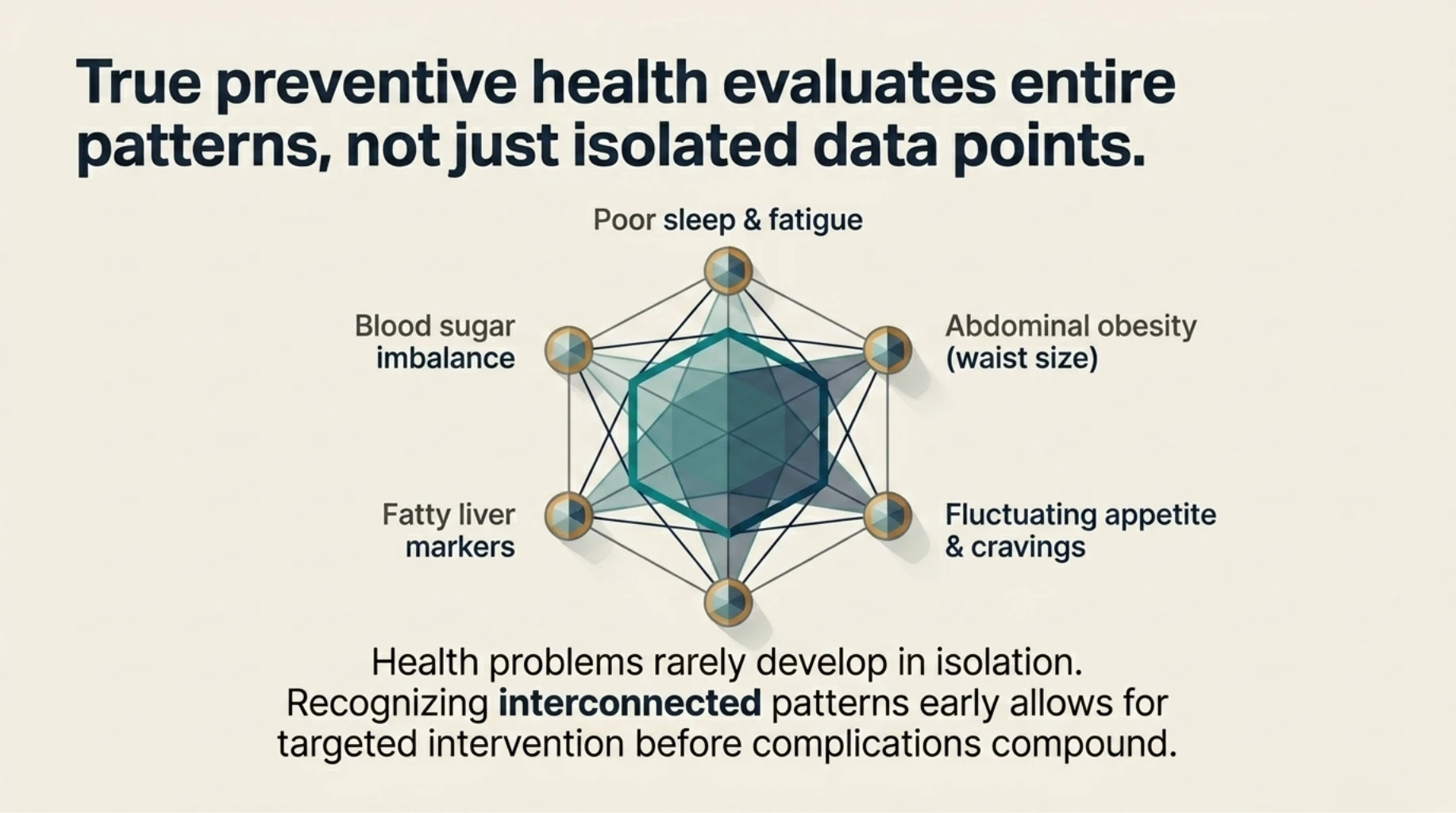
Health problems rarely develop in isolation. Weight gain, fatigue, poor sleep, cravings, abdominal obesity, elevated blood pressure, fatty liver, and blood sugar imbalance are often interconnected.
This is why preventive evaluation works best when viewed as an overall metabolic assessment rather than isolated disease testing.
Recognizing patterns early allows intervention before complications become more difficult to manage.
Changing the Mindset Around Health Evaluation
Many people approach testing with fear—as if discovering a problem automatically means something severe.
But preventive evaluation should be viewed differently. Its purpose is not to create anxiety. Its purpose is to create awareness early enough for correction.
In fact, discovering imbalance at an early stage is often beneficial because lifestyle modification is usually more effective before disease becomes advanced.
Putting Everything Into Perspective
Modern lifestyle diseases rarely appear suddenly. They usually progress silently for years. This is exactly why routine health evaluation is often delayed. People wait for strong symptoms before acting, even though the body may already be under metabolic stress.
By the time symptoms become obvious, the underlying imbalance is often much more established. Routine evaluation helps shift the focus from late treatment to early prevention.
Final Thought
Sometimes the biggest health risk is not the disease itself—but the years it quietly progresses without being noticed.
If you want a personalized metabolic assessment and lifestyle strategy, you can book a consultation here:
Book an Appointment