

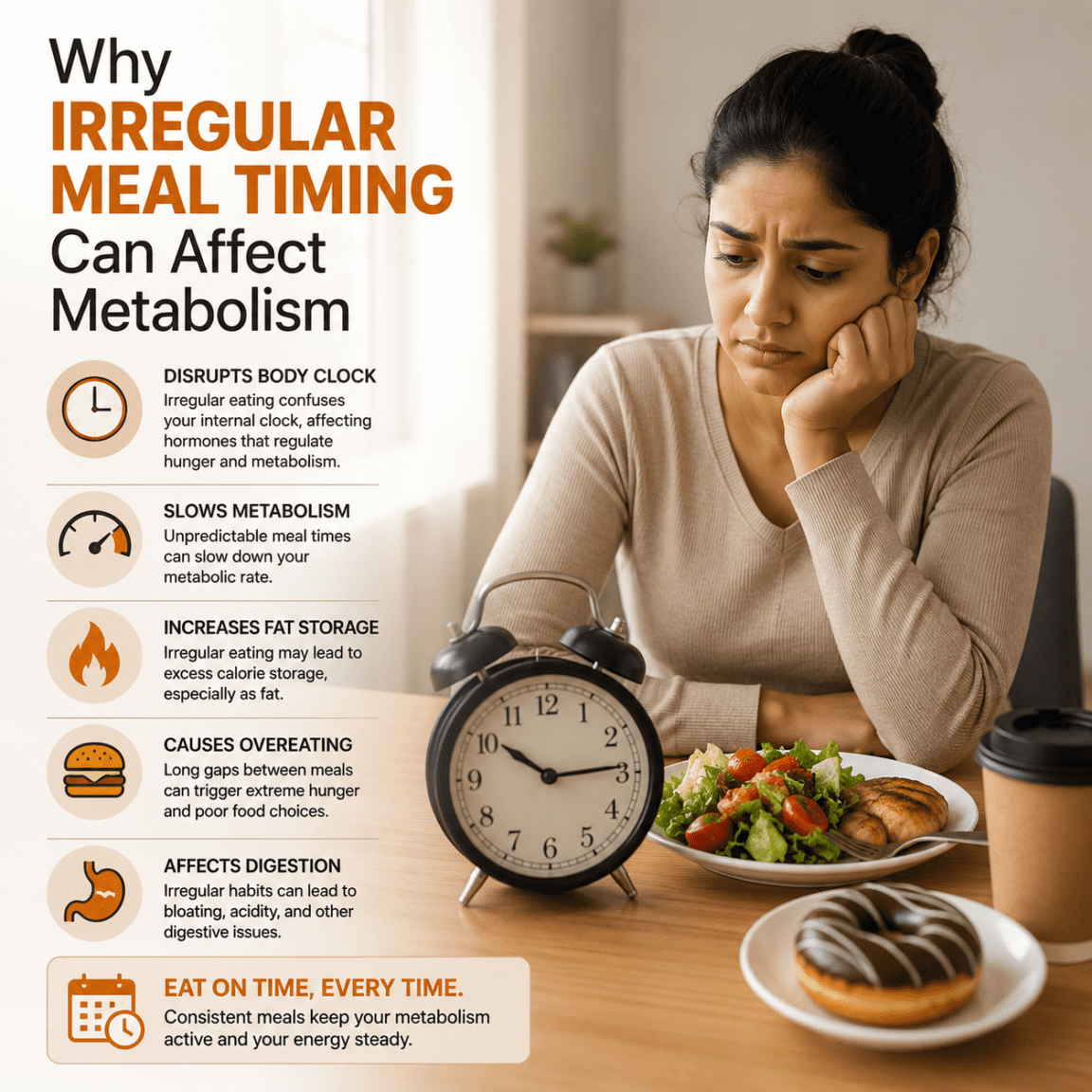
“Doctor, I don’t eat much… but my weight still increases and my energy stays low.”
This is a surprisingly common situation. Many people focus only on what they eat while completely ignoring when they eat.
But the body does not respond only to food quality or calorie intake. It also responds to timing.
Understanding why irregular meal timing can affect metabolism is important because the body follows biological rhythms. When eating patterns become unpredictable, these rhythms begin to lose balance.
Over time, this affects energy regulation, hormones, appetite, blood sugar control, and fat storage.

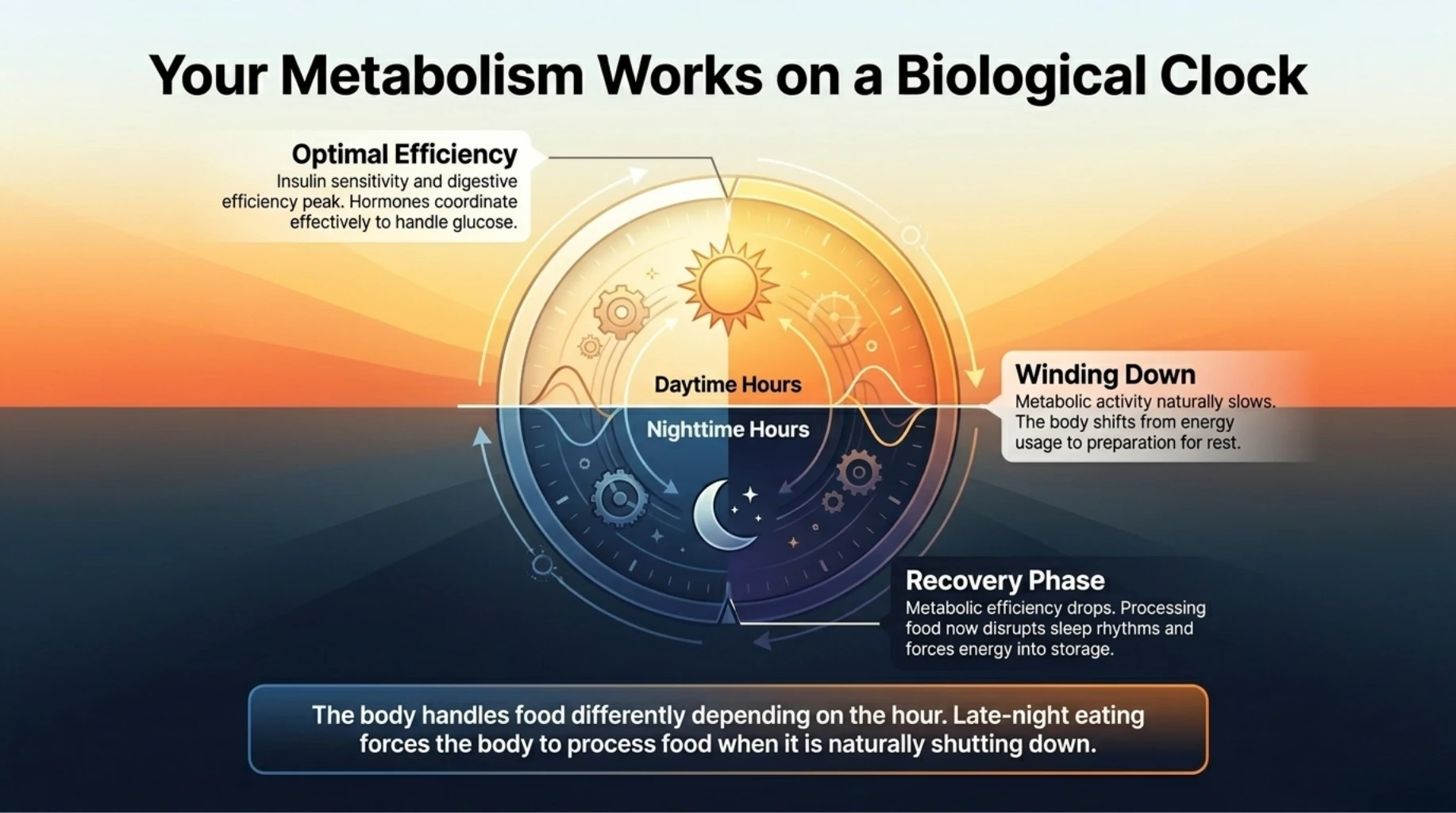
Your Metabolism Works on a Biological Clock
The body is designed to function according to internal timing systems known as circadian rhythms.
These rhythms influence: hunger, digestion, hormone release, insulin sensitivity, sleep, and energy production.
When meal timing remains relatively consistent, the body adapts efficiently. Hormones involved in digestion and metabolism begin working in a coordinated manner.
But when eating patterns become irregular—skipping meals one day, overeating late at night another day, or constantly changing eating schedules—the metabolic system becomes less predictable.
Why the Body Prefers Predictability
Your body constantly prepares itself for expected routines. For example, when meals occur at regular times, digestive hormones, insulin response, and hunger signals begin preparing in advance. This improves metabolic efficiency.
However, irregular meal timing disrupts this coordination. The body becomes less efficient at handling glucose, appetite signals become unstable, and energy levels fluctuate more throughout the day.
This is one of the major reasons why irregular meal timing can affect metabolism.
The Link Between Meal Timing and Blood Sugar Regulation
One of the earliest effects of irregular eating patterns is disturbed blood sugar control.
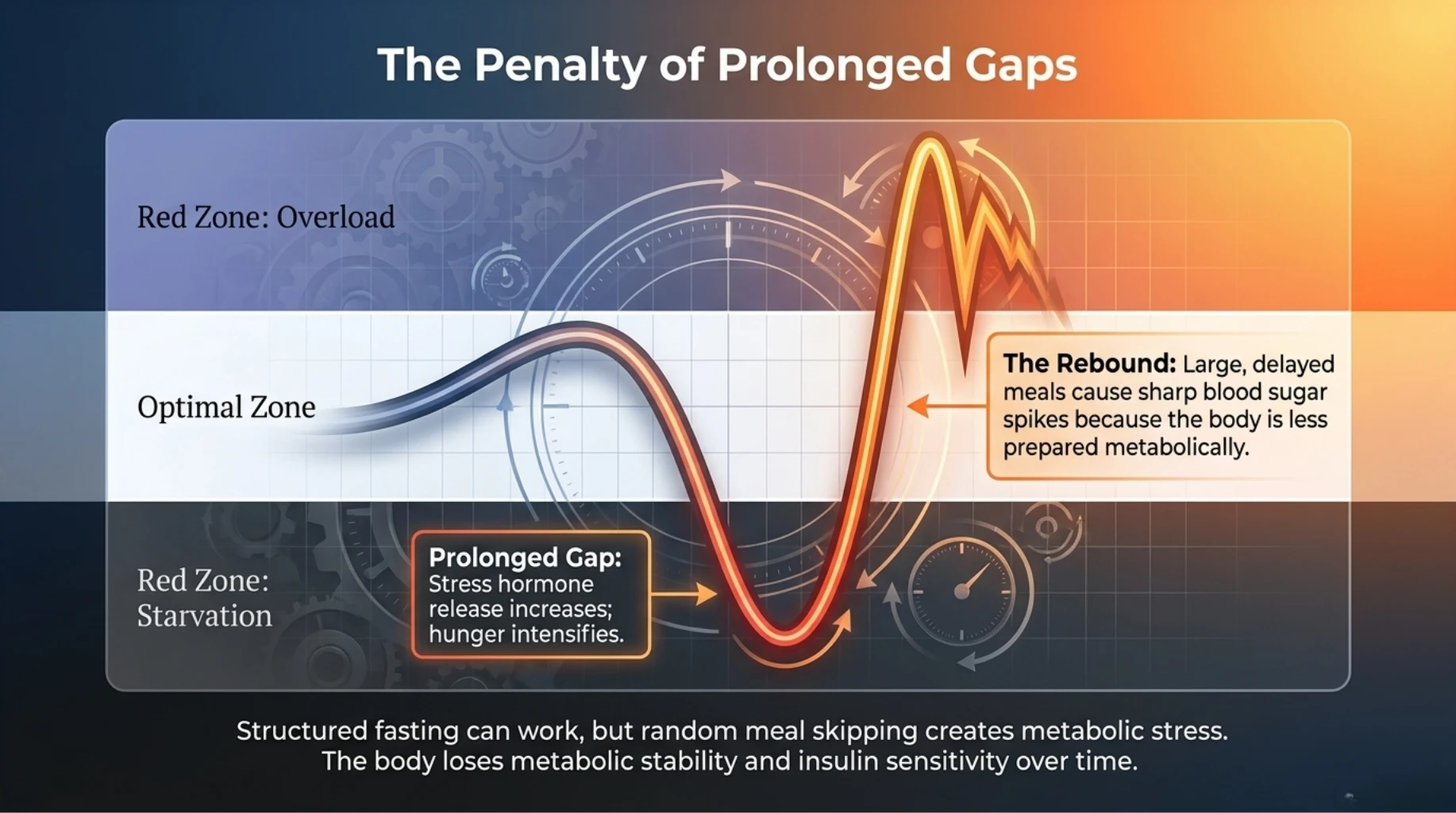
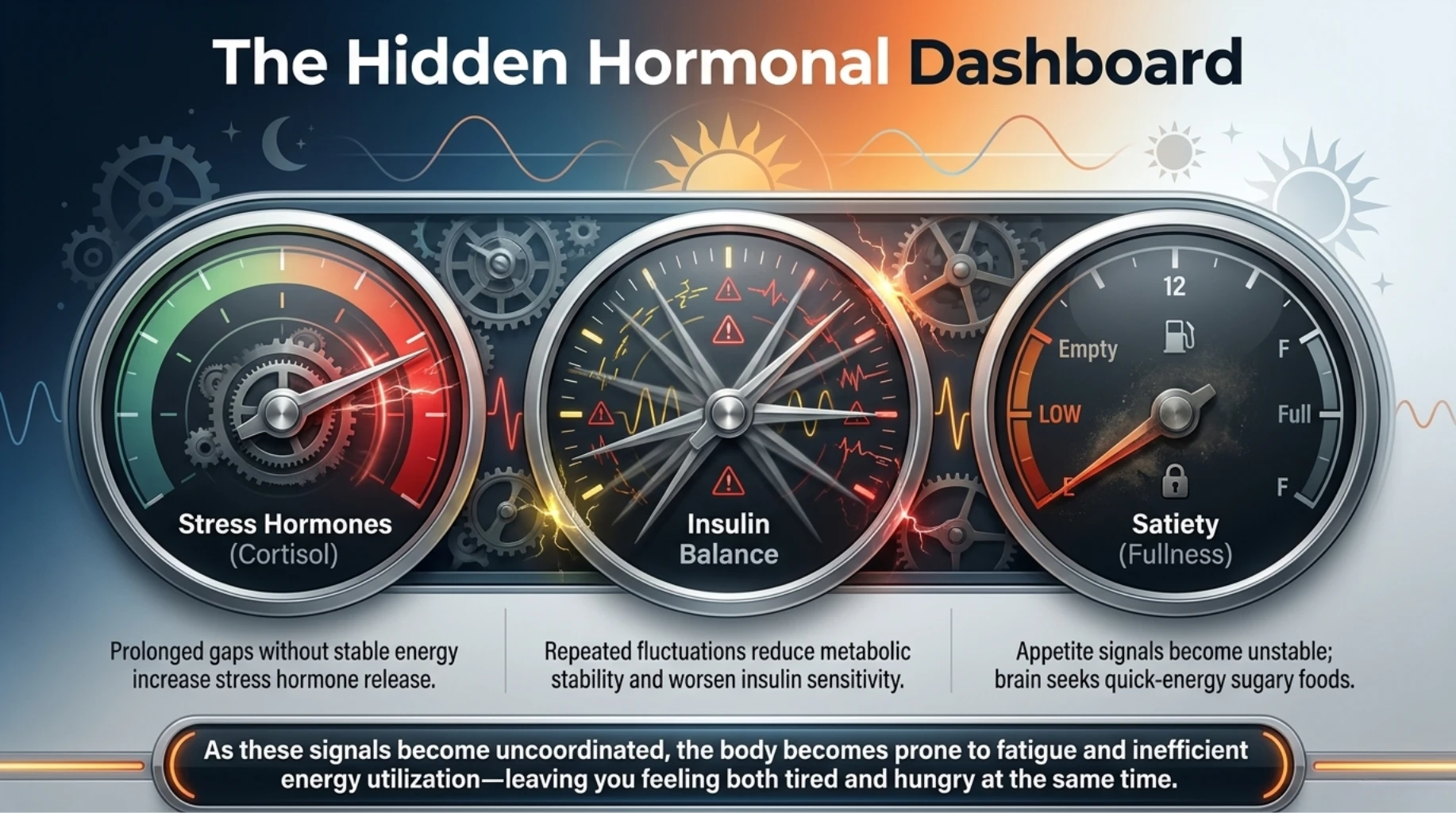
When meals are delayed for long periods, the body experiences prolonged gaps without stable energy intake. This may initially increase stress hormone release and intensify hunger.
Later, when large meals are finally consumed, blood sugar often rises more sharply because the body is less prepared metabolically.
Repeated fluctuations like this gradually reduce metabolic stability and can worsen insulin sensitivity over time.
Why Skipping Meals Often Backfires
Many people intentionally skip meals hoping to reduce calorie intake or lose weight faster.
In some situations, structured fasting approaches may work when done properly. But random meal skipping combined with poor lifestyle patterns usually creates metabolic stress instead of benefit.
Long gaps followed by overeating often lead to: energy crashes, increased cravings, irritability, and excessive hunger later in the day.
This pattern makes appetite regulation more difficult and may increase fat storage over time.
How Late-Night Eating Affects Metabolism
The timing of food intake matters because the body’s metabolic efficiency changes across the day.
Insulin sensitivity and digestive efficiency are generally better during daytime hours. Late-night eating forces the body to process food at a time when metabolic activity is naturally slowing down.
This is why frequent late dinners or nighttime snacking are often associated with: poor digestion, weight gain, disturbed sleep, and increased metabolic dysfunction.
Over time, these habits can significantly affect metabolic health.
The Hidden Hormonal Impact of Irregular Eating
Meal timing directly influences several hormones involved in metabolism.
Irregular eating patterns can disturb insulin balance, stress hormones, appetite regulation hormones, and even sleep-related hormonal rhythms.
As these signals become less coordinated, the body becomes more prone to fatigue, cravings, and inefficient energy utilization.
This explains why people with irregular meal schedules often feel both tired and hungry at the same time.
How Stress and Busy Schedules Disrupt Meal Timing
One of the most common reasons people develop irregular eating habits is not lack of awareness—it is lifestyle pressure.
Busy work schedules, long commutes, unpredictable routines, and constant screen engagement gradually disconnect people from natural hunger patterns.
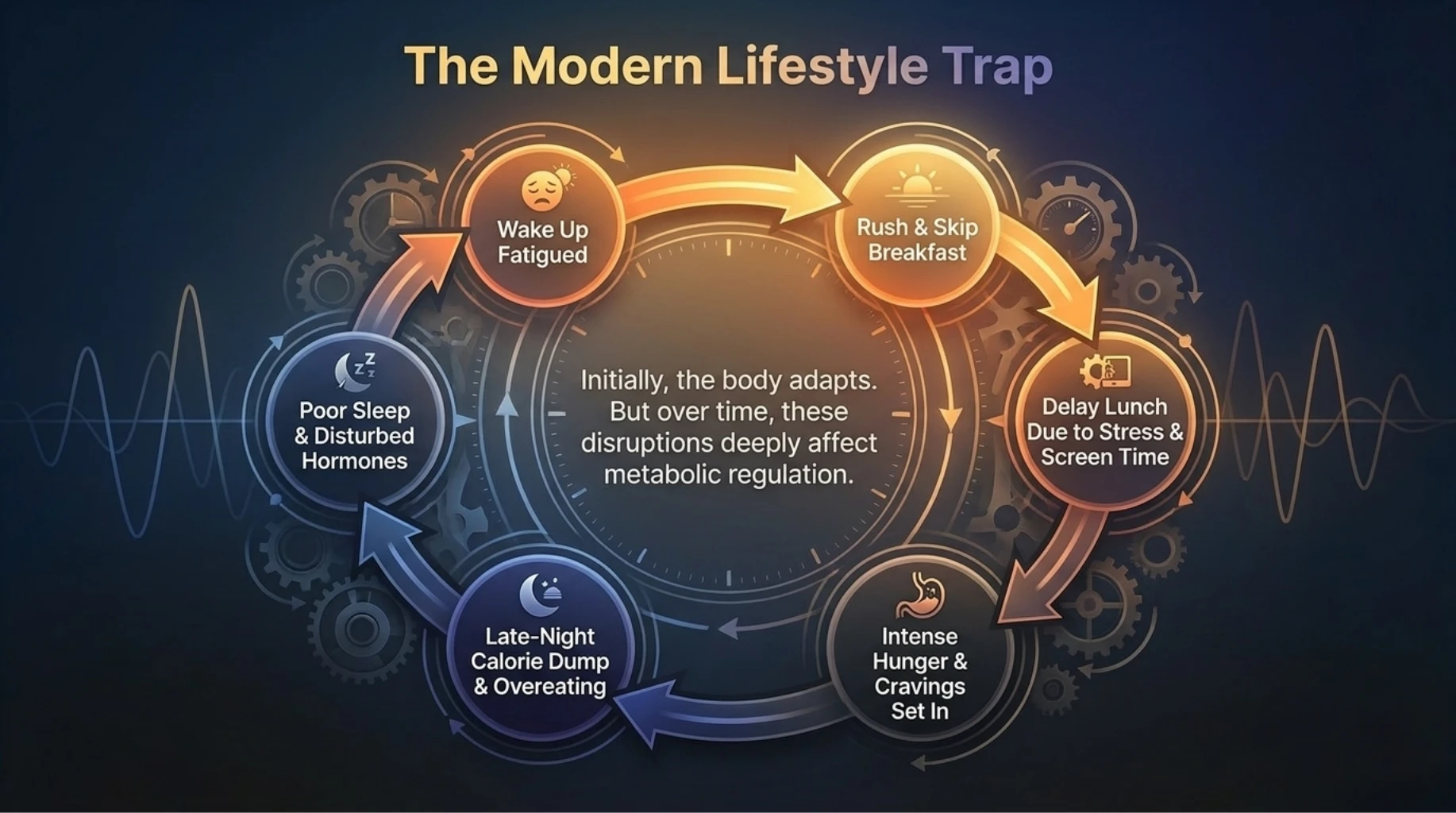
Many individuals start skipping breakfast, delaying lunch, or eating very late at night simply because the day feels too rushed.
Initially, the body adapts. But over time, these disruptions begin affecting metabolic regulation more deeply.
This is one of the practical reasons why irregular meal timing can affect metabolism in modern lifestyles.
Why Long Gaps Between Meals Increase Cravings
When the body goes too long without stable nourishment, hunger signals intensify.
At first, this may appear manageable. But after prolonged gaps, the brain begins seeking quick-energy foods that can rapidly increase blood sugar.
This is why many people who skip meals later develop strong cravings for sugary foods, refined carbohydrates, or large portions.
The problem is not only overeating itself. The larger issue is that these repeated fluctuations disturb appetite regulation and increase metabolic stress.
The Connection Between Irregular Eating and Weight Gain
Many people assume that eating less frequently automatically improves weight control. In reality, the relationship is more complicated.
Irregular meal timing often leads to unstable hunger patterns, poor food choices, and excessive intake later in the day.
For example, a person may skip meals during working hours but consume large, calorie-dense meals late at night when hunger becomes overwhelming.
Over time, this pattern contributes to: fat accumulation, abdominal weight gain, poor satiety control, and metabolic inefficiency.
This is why people with irregular eating schedules often feel frustrated that they are “not eating much” yet still gaining weight.
The Myth of “Damaged Metabolism”
Many people worry that their metabolism is permanently damaged. In most cases, metabolism is not permanently broken—but it can become inefficient.
Irregular meal timing creates repeated stress on hormonal and metabolic systems. The body becomes less predictable in how it handles hunger, glucose, and energy storage.
This can create the feeling that metabolism has “slowed down,” especially when accompanied by fatigue, cravings, and weight gain.
The encouraging part is that these patterns often improve when eating routines become more structured and consistent.
Digestive Health Also Depends on Meal Timing
Digestion itself follows biological rhythms.
When eating patterns are highly irregular, digestive efficiency can also become disturbed. Some individuals notice: bloating, heaviness after meals, acidity, irregular bowel patterns, or discomfort after late-night eating.
This happens because the digestive system functions best when routines are relatively stable.
Constantly changing meal schedules forces the body to repeatedly adjust digestive activity, which may reduce efficiency over time.
The Hormonal Effect of Eating Too Late at Night
Late-night eating affects more than digestion alone.
At night, the body naturally prepares for recovery and reduced metabolic activity. When large meals are consumed late, insulin response and metabolic efficiency may not function optimally.
This can interfere with sleep quality, appetite regulation the next day, and overall metabolic balance. Over time, the body begins losing the natural coordination between eating, activity, and recovery.
The Real-Life Pattern Seen in Many Patients
In practice, the pattern is very common.
A person starts the day hurriedly and skips breakfast. Lunch gets delayed because of meetings or workload. By evening, hunger becomes intense, leading to overeating or unhealthy snacking.
Late-night dinners become routine, often followed by screen time and delayed sleep. Gradually, energy levels fluctuate more, cravings increase, sleep quality worsens, and weight starts rising—especially around the abdomen.
Many people assume these are separate issues. In reality, they are often connected through disrupted metabolic rhythms caused by irregular meal timing.
Why Consistency Matters More Than Perfection
The body does not require perfect meal timing every single day. But it does benefit from relative consistency.
Regular eating patterns help stabilize hunger hormones, improve insulin response, support digestion, and maintain more stable energy levels.
This is why creating a sustainable routine is more effective than following extreme dietary rules inconsistently.
How to Improve Meal Timing Without Following Extreme Rules
The goal of improving meal timing is not to create stress around eating. It is to help the body regain rhythm and predictability.
Many people fail because they try to follow unrealistic schedules that do not fit their lifestyle. Sustainable changes work far better than rigid plans that last only a few days.
The body responds positively to consistency, even if the routine is not perfect.
Start by Creating More Structured Eating Patterns
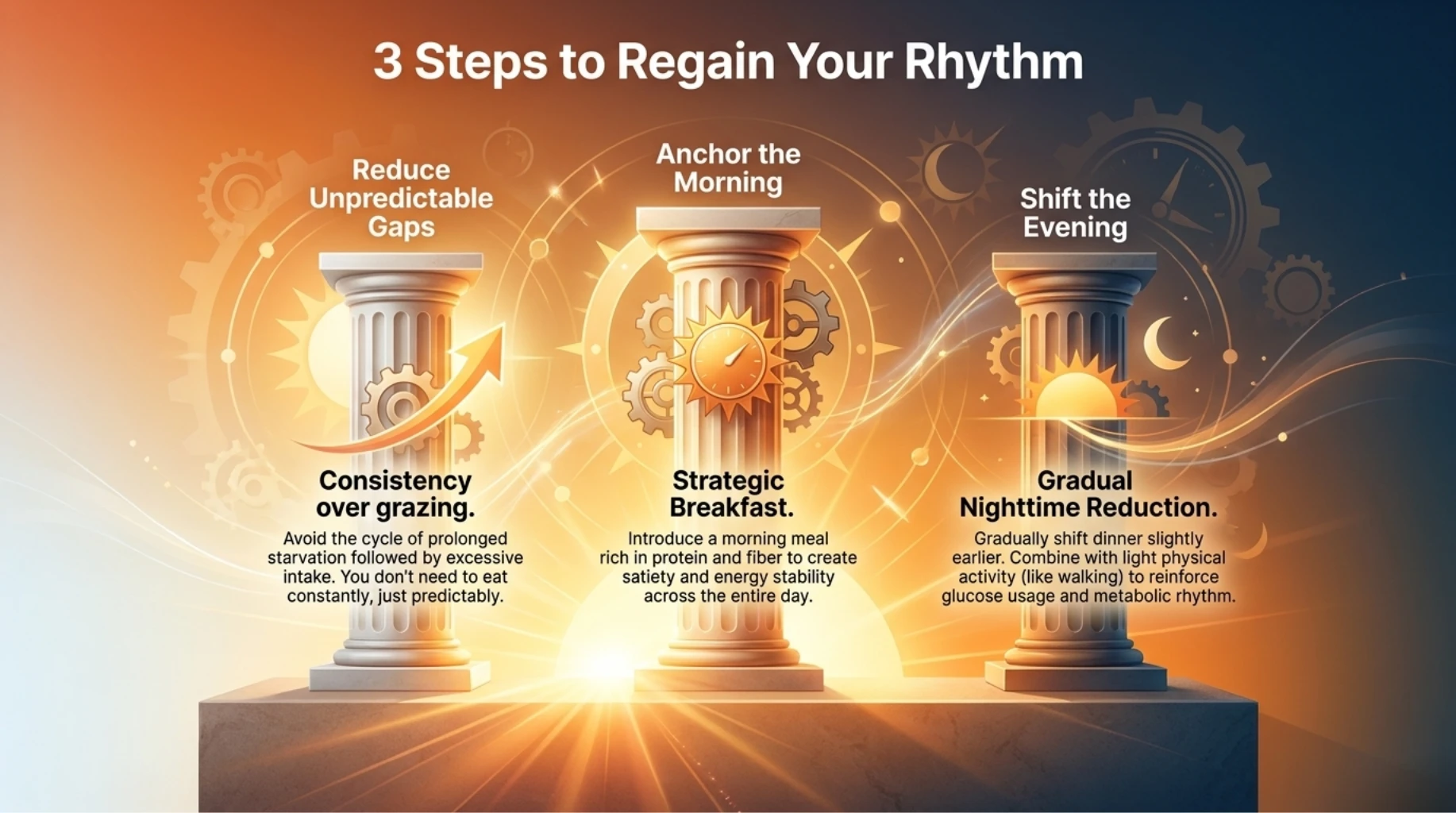
One of the simplest and most effective steps is reducing long, unpredictable gaps between meals.
This does not mean eating constantly. It means avoiding the cycle of prolonged starvation followed by excessive intake.
When meals occur at relatively stable times, hunger hormones become more regulated, blood sugar fluctuations reduce, and energy levels become steadier.
Many people notice that even small improvements in routine reduce cravings and overeating significantly.
Why Breakfast Timing Matters for Some Individuals
Breakfast is often debated, but what matters most is not simply eating early—it is creating metabolic stability across the day.
For individuals who skip breakfast and later experience severe hunger, overeating, or energy crashes, introducing a balanced morning meal may improve appetite regulation.
However, the quality of breakfast matters more than simply eating anything. Meals rich in protein and fiber generally create better satiety and energy stability than highly processed or sugary foods.
Reduce Late-Night Eating Gradually
One of the most common metabolic mistakes is consuming large meals very late at night.
At that time, the body is naturally preparing for recovery and reduced activity. Heavy nighttime eating often disrupts digestion, sleep quality, and next-day appetite control.
The solution does not need to be extreme. Even gradually shifting dinner slightly earlier and reducing late-night snacking can improve metabolic rhythm over time.
Do Not Confuse Structured Eating with Constant Snacking
Some people respond to irregular meal timing by eating very frequently throughout the day.
However, constant grazing or repeated snacking can also create problems if food quality and appetite regulation remain poor.
The goal is not to eat continuously. The goal is to allow meals to create proper satiety while avoiding excessive metabolic fluctuations.
This is why balanced meals are usually more effective than repeatedly consuming small processed snacks.
Physical Activity Helps Reinforce Metabolic Rhythm
Movement and meal timing are closely connected. Regular physical activity improves insulin sensitivity and helps the body use nutrients more efficiently. It also supports more stable appetite regulation.
Even simple habits like walking after meals or reducing prolonged sitting can improve how the body handles glucose and energy.
Over time, these changes reinforce healthier metabolic patterns.
Why Extreme Dieting Often Worsens Metabolic Instability
Many people trying to lose weight follow highly restrictive diets with inconsistent eating patterns.
Initially, this may produce temporary results. But over time, the body often responds with stronger hunger signals, cravings, and metabolic stress.
Very irregular eating combined with severe calorie restriction can increase fatigue and make appetite control more difficult.
This is why sustainable meal structure usually works better than aggressive short-term dieting.
The Importance of Long-Term Routine
Metabolic health improves gradually. As meal timing becomes more stable, the body begins regulating hunger, digestion, energy, and hormonal responses more efficiently.
Many individuals start noticing: more stable energy, reduced cravings, improved digestion, fewer energy crashes, and better appetite control.
These are signs that metabolic rhythm is becoming healthier again.
Putting Everything Into Perspective
Food quality is important, but meal timing also influences how efficiently the body responds to food. This is exactly why irregular meal timing can affect metabolism.
When eating patterns become unpredictable, hormonal coordination, digestion, appetite regulation, and energy balance all become less stable.
Over time, this contributes to fatigue, cravings, weight gain, and metabolic dysfunction.
Creating a more structured and sustainable routine allows the body to function with greater efficiency again.
Final Thought
Sometimes the issue is not only what you eat—but when your body is forced to handle it.
If you want a personalized metabolic assessment and lifestyle strategy, you can book a consultation here:
Book an Appointment