
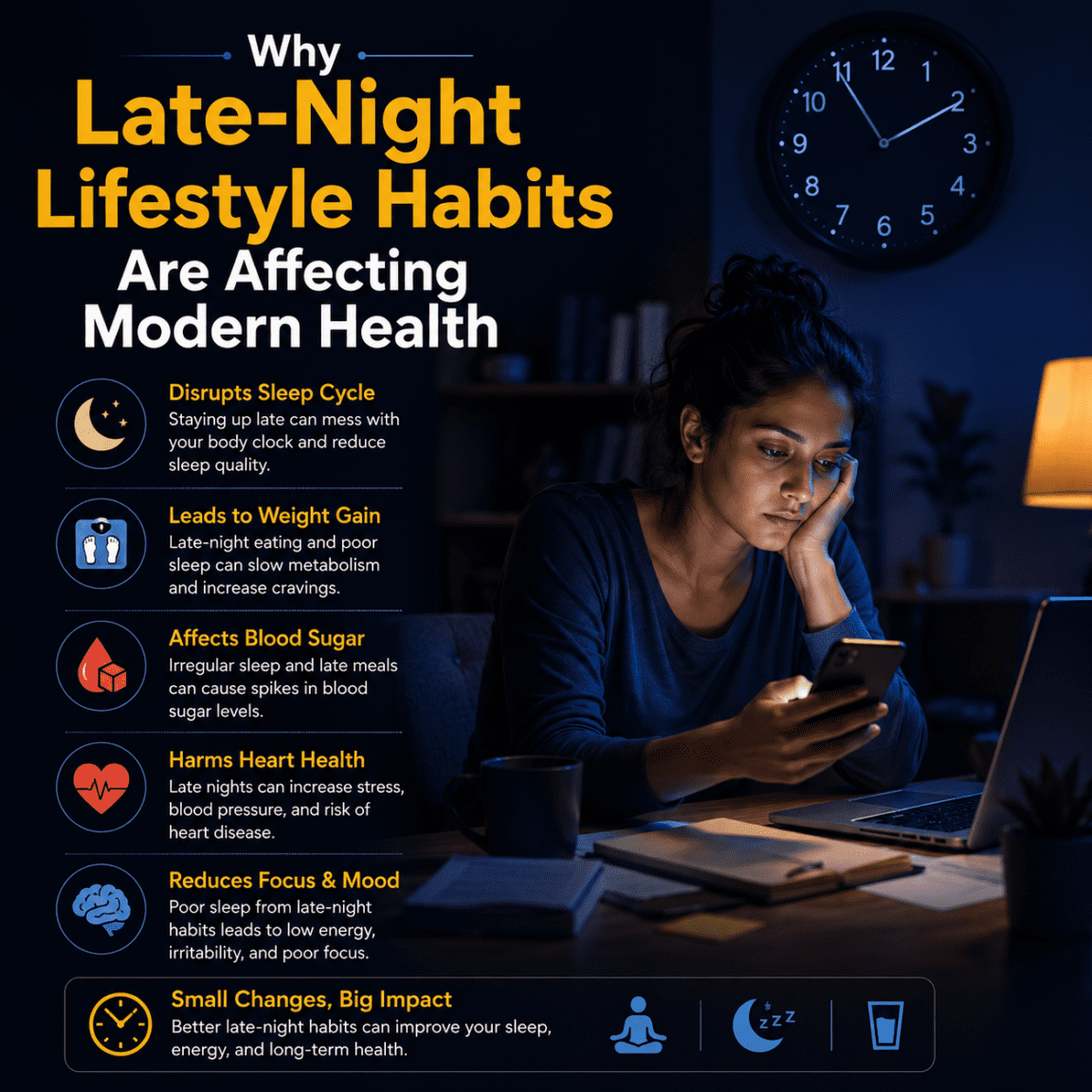
“Doctor, I sleep late every day… but I never thought it could affect my health this much.”
This realization is becoming increasingly common.
Modern lifestyles have gradually shifted daily routines later into the night. Work deadlines, social media, streaming platforms, late dinners, prolonged screen exposure, and irregular sleep schedules have become normalized in many households.
Initially, these habits may seem harmless because the body continues functioning. But over time, the internal effects begin accumulating silently.
Understanding why late-night lifestyle habits are affecting modern health is important because the body follows biological rhythms that strongly influence metabolism, hormones, digestion, energy regulation, and recovery.

When these rhythms are repeatedly disturbed, multiple metabolic systems gradually become less efficient.
The Human Body Is Designed Around Biological Timing
The body operates according to internal timing systems known as circadian rhythms.
These rhythms regulate: sleep, hormone release, digestion, blood sugar control, appetite, body temperature, and energy production.
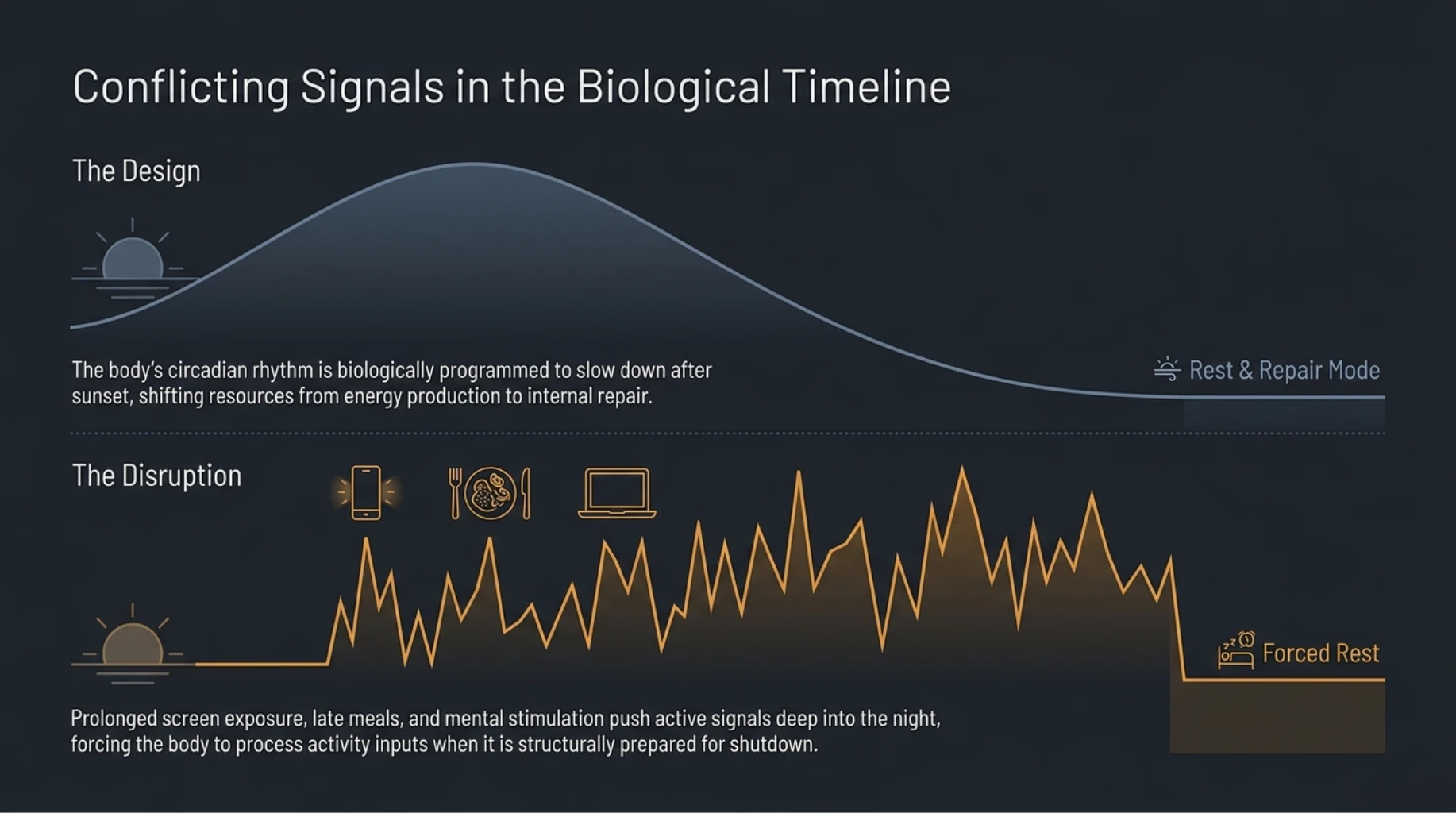
Under natural conditions, the body gradually slows down at night to focus on repair and recovery. Modern late-night routines interfere with this process.
When eating, screen exposure, stress, and stimulation continue deep into the night, the body receives conflicting signals about whether it should remain active or begin recovery.
Why Sleeping Late Affects Hormonal Balance
Sleep timing influences several important hormones involved in metabolic health. When sleep becomes consistently delayed, hormonal rhythms begin shifting.
This affects: cortisol balance, appetite regulation, insulin sensitivity, and recovery-related hormonal activity.
Over time, the body becomes less efficient at regulating energy, hunger, stress response, and fat metabolism.
This is one reason why late-night routines are increasingly associated with fatigue, cravings, weight gain, and metabolic imbalance.
The Connection Between Late-Night Eating and Metabolism
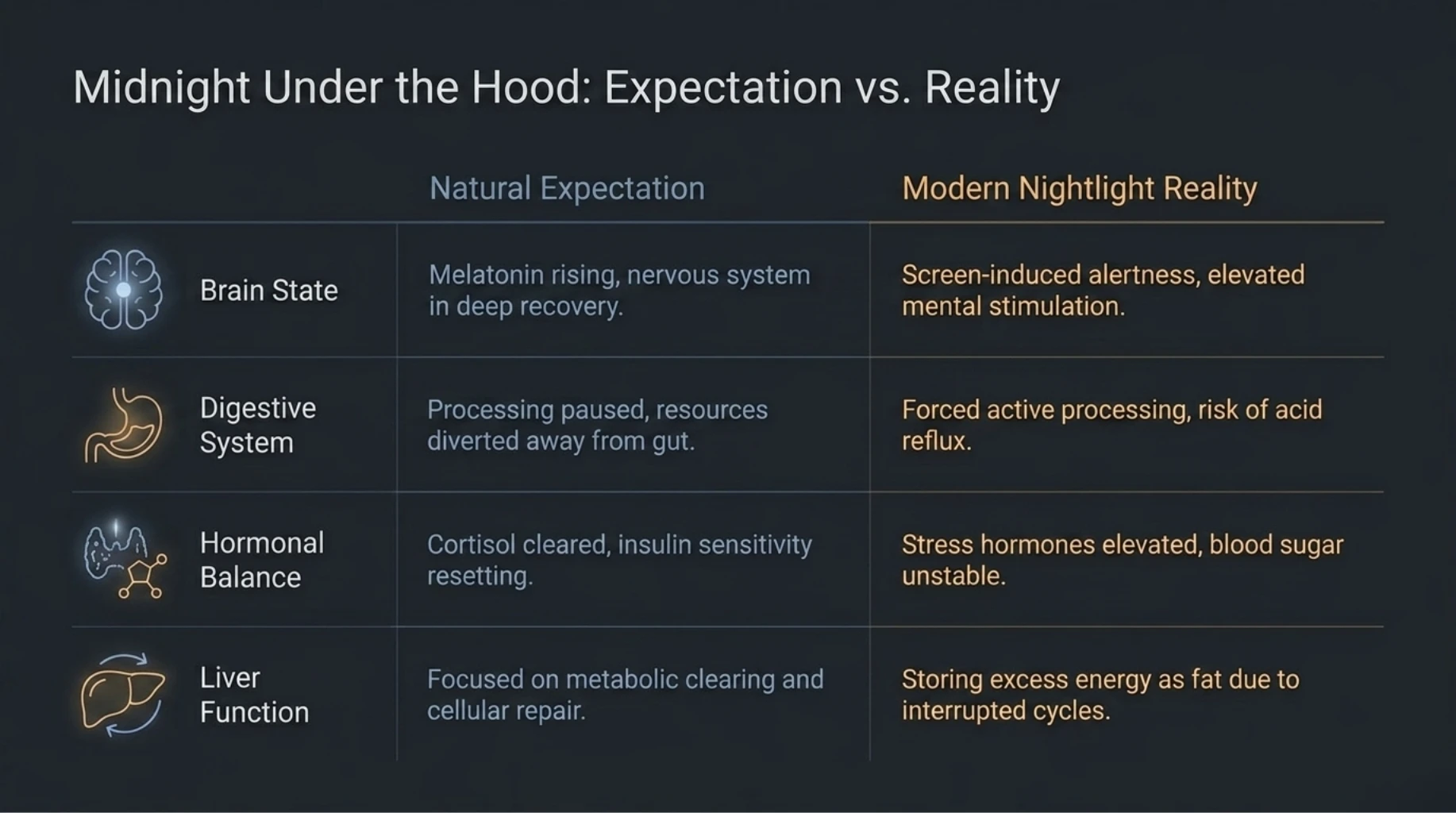
One of the most harmful modern habits is eating heavy meals very late at night. At night, digestive and metabolic activity naturally slow down as the body prepares for recovery.
When large meals are consumed late, the body must continue active digestion during a period when it is biologically less prepared to process food efficiently.
This often contributes to: acid reflux, poor digestion, bloating, disturbed sleep, unstable blood sugar, and increased fat storage. Repeated late-night eating gradually increases metabolic stress over time.
How Screen Exposure Quietly Disrupts Sleep Quality
Modern nights are heavily dominated by screens. Phones, laptops, television, social media, and streaming platforms keep the brain mentally stimulated long after the body should be preparing for sleep.
Bright screen exposure at night affects melatonin regulation—the hormone responsible for supporting natural sleep initiation. As a result, sleep becomes delayed, lighter, or less restorative.
Many individuals technically “sleep enough hours” yet still wake up feeling mentally and physically tired because sleep quality remains poor.
Why Late Nights Increase Cravings and Appetite
Poor sleep and delayed sleeping patterns strongly affect appetite regulation. When the body is sleep-deprived or hormonally stressed, hunger signals become stronger while satiety regulation becomes less efficient.
This commonly leads to: late-night cravings, sugar cravings, emotional eating, and increased appetite the next day.
Over time, this creates a cycle where poor sleep worsens eating habits while unhealthy eating further worsens metabolic balance.
The Hidden Effect on Energy and Productivity
Many people assume they are “used to” sleeping late because they continue managing work and responsibilities. But adaptation does not mean optimal functioning.
Chronic late-night habits often reduce mental clarity, concentration, recovery, motivation, and physical energy gradually over time.
Because the decline is slow, individuals often normalize fatigue and reduced stamina without realizing the deeper lifestyle imbalance developing underneath.
How Late-Night Stress and Mental Stimulation Affect Health
Modern nights are rarely calm anymore. Even after work ends, the brain often remains continuously stimulated through social media, emails, entertainment platforms, gaming, or emotionally stressful content.
This ongoing mental activation keeps the nervous system in a more alert state instead of allowing gradual relaxation before sleep.
As a result, stress hormones remain elevated longer into the night, making it harder for the body to transition properly into recovery mode.
Over time, this contributes to disturbed sleep quality, fatigue, mood fluctuations, and metabolic imbalance.
The Link Between Late Nights and Weight Gain
One of the most common long-term effects of chronic late-night habits is gradual weight gain, especially around the abdomen. Poor sleep affects appetite regulation, insulin sensitivity, and energy balance simultaneously.
When sleep becomes inadequate or irregular, the body often experiences: stronger cravings, reduced satiety, increased emotional eating, and lower physical energy.
At the same time, late-night eating and reduced activity worsen fat storage patterns. This combination gradually shifts metabolism toward abdominal obesity and metabolic dysfunction.
How Insulin Resistance Quietly Develops
Sleep timing and metabolic health are closely connected. When late-night routines continue consistently, insulin sensitivity often becomes less efficient over time.
The body begins struggling to regulate glucose properly, especially when combined with processed foods, stress, prolonged sitting, and irregular meal timing.
Initially, this may not produce obvious symptoms. But internally, insulin resistance may already be developing silently.
This is another important reason why late-night lifestyle habits are affecting modern health so strongly.
The Hidden Impact on Liver Health
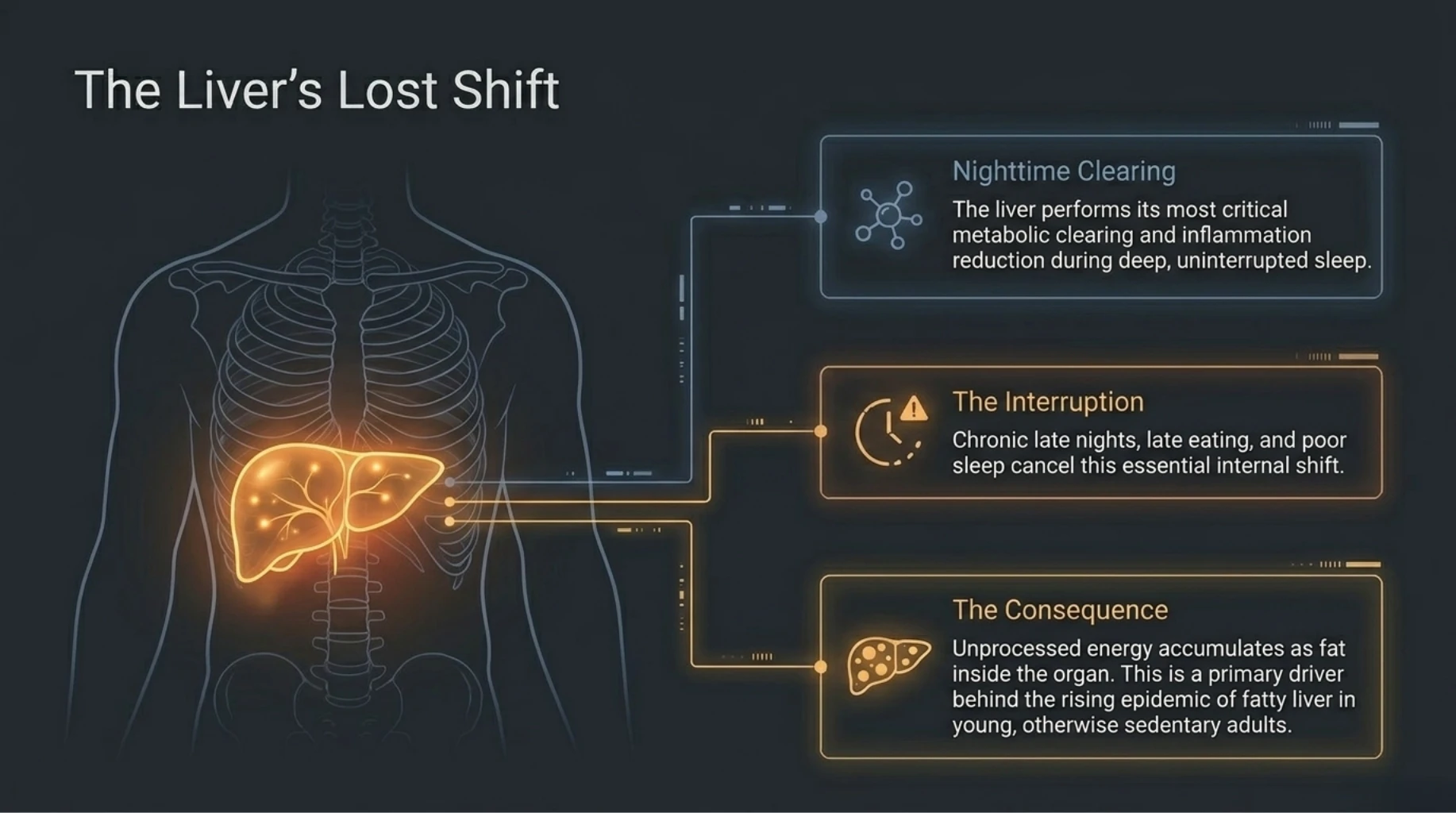
The liver performs many important metabolic and recovery functions during nighttime hours. Chronic late-night eating, poor sleep, and metabolic stress interfere with these processes.
Over time, this increases the likelihood of: fat accumulation inside the liver, inflammation, poor metabolic flexibility, and fatty liver development.
This is why fatty liver is becoming increasingly common even in younger individuals with sedentary and irregular lifestyles.
Why Recovery and Healing Become Less Efficient
Nighttime is not simply “inactive time” for the body. During proper sleep, the body performs critical repair functions involving: hormonal regulation, nervous system recovery, immune function, and tissue repair.
When sleep timing becomes chronically delayed or inconsistent, these recovery mechanisms become less efficient. This often creates a constant feeling of tiredness despite adequate rest duration.
Why Younger Adults Are Increasingly Affected
Earlier, chronic metabolic disorders were seen more commonly in older age groups.
Today, younger adults are increasingly experiencing: poor sleep, fatigue, obesity, fatty liver, insulin resistance, anxiety, digestive issues, and reduced stamina. One major reason is the normalization of late-night routines from an early age.
Continuous screen exposure, disrupted sleep schedules, irregular eating, and prolonged mental stimulation are now becoming part of everyday lifestyle.
Because these changes develop gradually, the health impact often remains unnoticed for years.
The Real-Life Pattern Seen in Many Patients
In clinical practice, the pattern is extremely common.
A person starts sleeping slightly later because of work, entertainment, or phone use. Gradually, dinner timing also shifts later into the night. Sleep quality declines, morning fatigue increases, and physical activity decreases.
To compensate for low energy, more caffeine, sugary foods, or processed snacks are consumed during the day.
Over months or years, weight gain, poor stamina, cravings, digestive discomfort, or metabolic abnormalities begin appearing.
Many individuals are surprised because the decline happened so gradually that they never recognized the cumulative impact of their nightly routine.
Why the Body Cannot Fully “Adapt” to Chronic Sleep Disruption
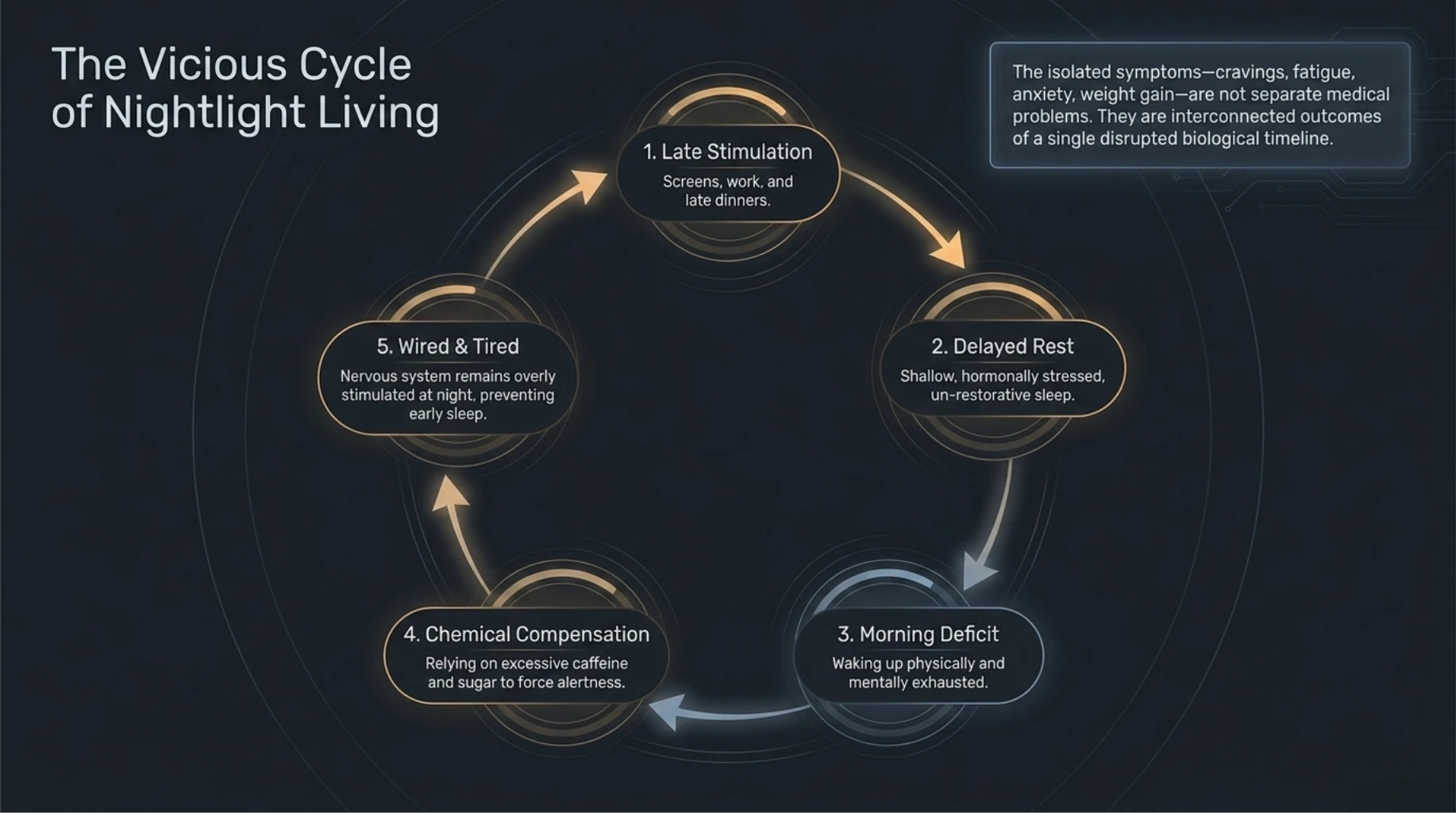
Many people believe they have trained themselves to function on poor or irregular sleep. While the body may adapt enough to continue daily responsibilities, internal metabolic stress often continues silently.
This means a person may feel “functional” while blood sugar regulation, hormonal balance, appetite control, and recovery mechanisms are slowly becoming less efficient.
This silent adaptation is what makes chronic late-night lifestyle patterns particularly risky in the long term.
How to Improve Late-Night Lifestyle Habits Realistically
The goal is not to create a perfect lifestyle overnight. The goal is gradually reducing continuous stress on the body’s biological rhythm.
Many people fail because they attempt sudden extreme corrections that are difficult to maintain consistently.
Sustainable improvement usually comes from small but repeated changes that allow the body to regain healthier sleep and metabolic patterns over time.
Start by Stabilizing Sleep Timing
One of the most effective changes is improving sleep consistency. The body responds better to relatively stable sleep and wake timing than highly unpredictable schedules.
Even gradual improvements—such as sleeping 30–45 minutes earlier consistently—can positively influence energy, appetite regulation, and recovery.
Consistency matters more than occasional “catch-up sleep” on weekends.
Reduce Screen Exposure Before Bed
Modern screen habits are one of the biggest reasons people struggle to sleep on time. Phones, social media, videos, and work-related stimulation keep the brain mentally active long after the body should be preparing for rest.
Reducing screen exposure before bedtime allows the nervous system to transition more naturally toward sleep.
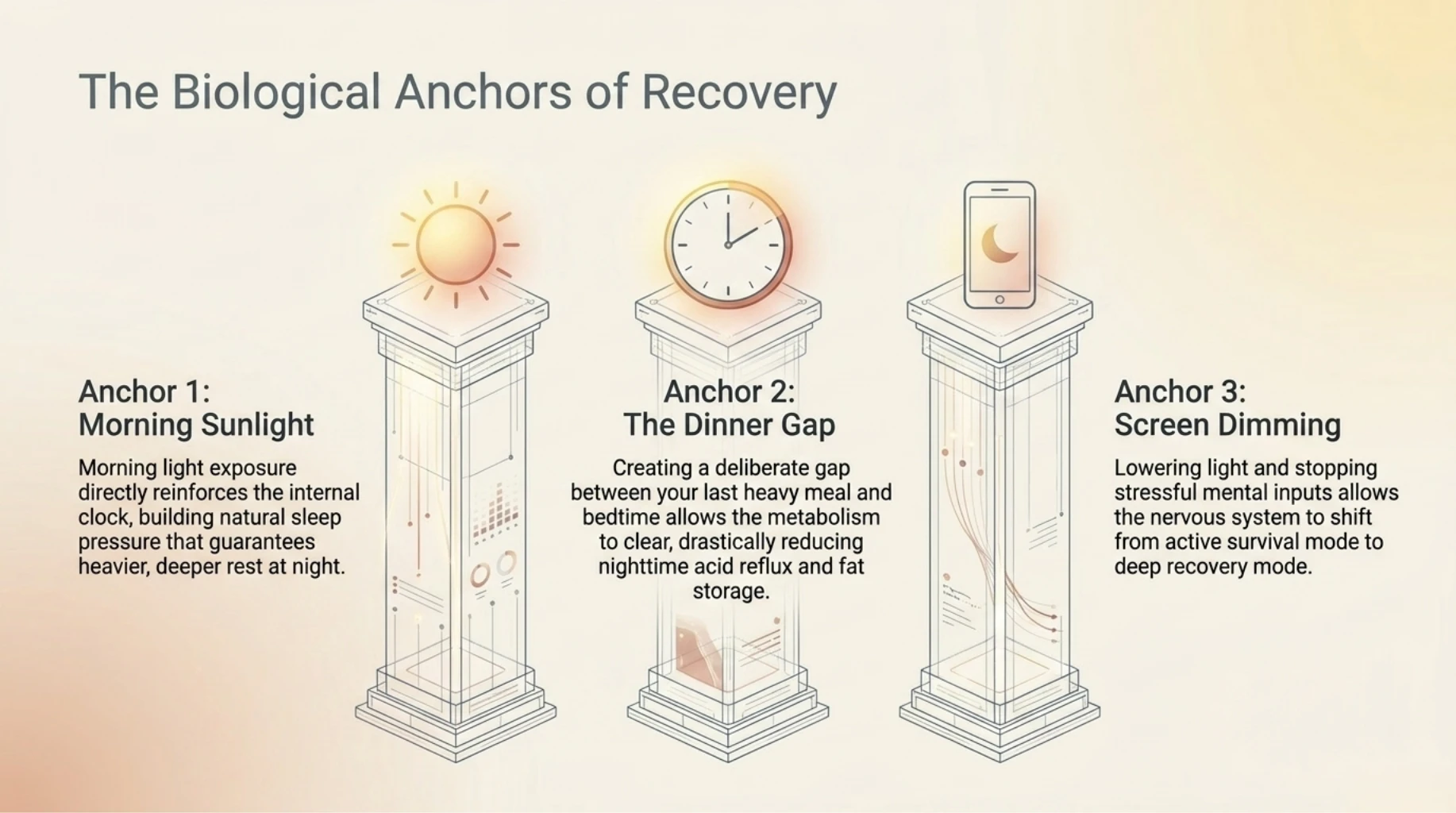
Even simple changes such as dimming lights, avoiding stimulating content, or keeping phones away during bedtime can improve sleep quality significantly over time.
Improve Dinner Timing and Night Eating Habits
Late-night heavy meals place continuous stress on digestion and metabolism.
Creating a reasonable gap between dinner and sleep often improves: digestion, acid reflux, sleep quality, appetite regulation, and next-day energy stability.
The objective is not aggressive restriction but improving timing consistency gradually. Reducing unnecessary late-night snacking also helps lower metabolic stress during nighttime recovery hours.
Morning Light Exposure Helps Reset Biological Rhythm
One often-overlooked factor in sleep regulation is daytime light exposure. Morning sunlight helps reinforce the body’s internal clock and supports healthier sleep timing later at night.
At the same time, regular physical movement during the day improves sleep pressure naturally, making nighttime sleep more restorative.
This is why movement, sunlight exposure, and sleep are deeply interconnected.
Why Stress Management Is Essential for Better Sleep
Many people try to improve sleep while ignoring the chronic mental stimulation keeping the nervous system activated.
Stress management is not only about relaxation—it directly affects hormonal balance and recovery.
Simple habits such as structured breaks, mindfulness, reducing work carryover into bedtime, and creating calmer nighttime routines can significantly improve sleep quality over time.
When stress levels reduce, both digestion and metabolic balance usually improve as well.
Why Energy Drinks and Excess Caffeine Often Make Things Worse
Many individuals compensate for poor sleep with repeated caffeine intake or energy drinks throughout the day.
While this may temporarily improve alertness, excessive stimulation often worsens the underlying cycle by delaying sleep further.
This creates a pattern where fatigue leads to more stimulants, and stimulants further worsen sleep quality. Over time, this cycle increases hormonal stress and metabolic instability.
The Importance of Long-Term Recovery Instead of Quick Fixes
Late-night lifestyle damage does not develop in a few days, and recovery also takes time.
As sleep improves, meal timing stabilizes, movement increases, and stress reduces, the body gradually restores healthier hormonal and metabolic balance.
Many individuals begin noticing: better energy, fewer cravings, improved digestion, more stable mood, better concentration, and improved stamina. These are signs that biological recovery is beginning.
Putting Everything Into Perspective
Late-night routines affect far more than sleep alone. They influence metabolism, appetite regulation, hormonal balance, digestion, liver health, inflammation, energy production, and long-term cardiovascular risk.
This is exactly why late-night lifestyle habits are affecting modern health so significantly today. When the body repeatedly loses its natural rhythm, multiple metabolic systems gradually become less efficient.
The encouraging part is that many of these changes improve when lifestyle rhythm becomes healthier again.
Final Thought
Sometimes the body is not becoming weak—it is simply being forced to recover at a time when modern life refuses to slow down.
If you want a personalized metabolic assessment and lifestyle strategy, you can book a consultation here:
Book an Appointment