


“Doctor, my neck hurts even though I don’t do any heavy physical work. Why is this happening?”
This has become one of the most common complaints among students, office workers, professionals, and even teenagers. Many people spend eight to twelve hours every day looking at computers, laptops, tablets, or mobile phones. Although technology has made life easier, it has also introduced a new health challenge—persistent neck and back discomfort.
One of the biggest reasons behind this growing problem is the close relationship between screen time and neck pain. The longer people remain in poor postures while using digital devices, the greater the stress placed on muscles, joints, ligaments, and the spine.

Many individuals believe neck pain develops only after an injury or heavy lifting. In reality, modern lifestyle habits can slowly damage posture and overload the spine without causing any obvious injury.
Understanding the connection between screen time and neck pain is important because early lifestyle changes can prevent long-term musculoskeletal problems and improve overall quality of life.
Why Screen Time Has Increased Dramatically
Modern life revolves around digital devices.
People work on computers during office hours, attend online meetings, check emails on smartphones, watch television in the evening, and spend additional hours scrolling through social media before sleeping.
Children attend online classes, students prepare assignments on laptops, and many professionals continue working even after reaching home.
As a result, daily screen exposure has increased far beyond what most people realize.
The problem is not technology itself. The concern is the prolonged posture maintained while using these devices.
How Poor Posture Creates Neck Pain
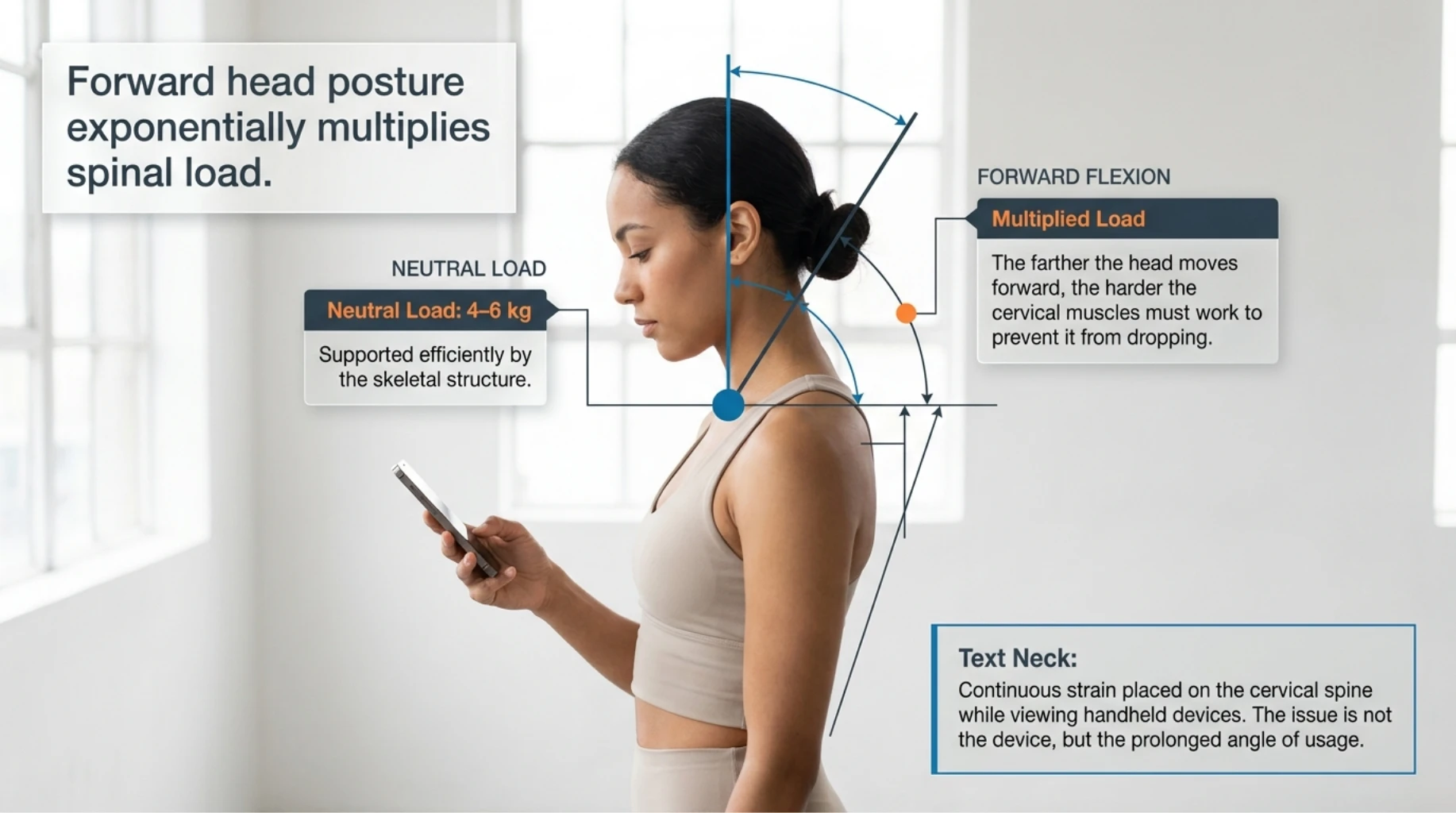
The human head weighs approximately four to six kilograms in an upright position.
When the head remains directly above the shoulders, the spine supports this weight efficiently.
However, while looking down at phones or leaning towards computer screens, the angle of the neck changes significantly.
This forward head posture increases the load on the neck muscles and cervical spine.
The farther the head moves forward, the harder the muscles have to work to support it.
Repeating this posture every day is one of the biggest reasons why screen time and neck pain are becoming increasingly common.
Why Back Pain Often Develops Alongside Neck Pain
The spine functions as one connected structure.
When neck posture changes, the upper back, shoulders, and lower back also adjust to maintain balance.
Over time, prolonged sitting with rounded shoulders and a slouched back places continuous stress on multiple areas of the spine.
Many people therefore experience: neck stiffness, shoulder tightness, upper back discomfort, lower back pain, headaches, and muscle fatigue.
These symptoms rarely develop overnight. Instead, they build gradually through repeated daily habits.
The Hidden Effect of Continuous Sitting
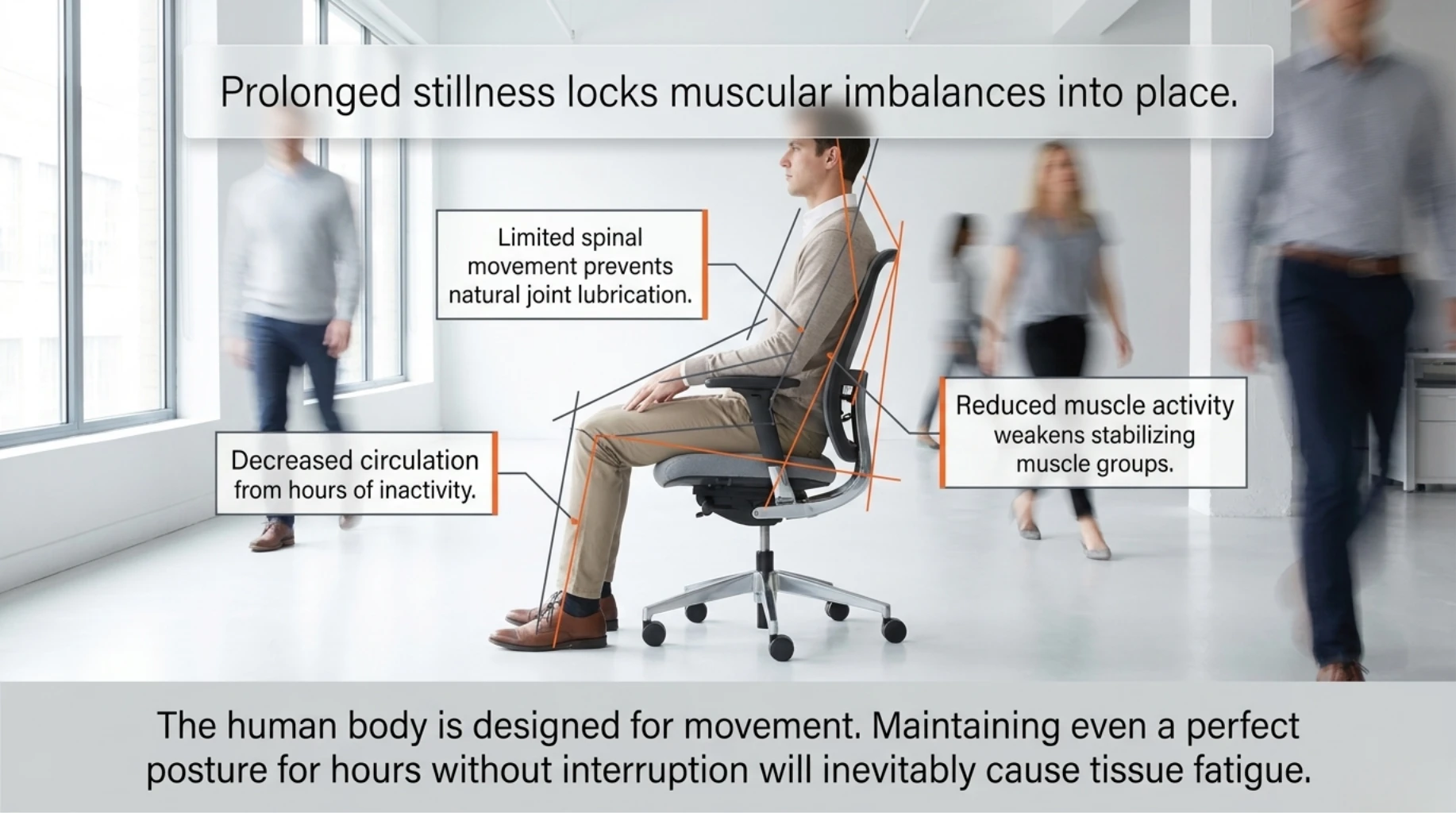
Screen use is usually accompanied by prolonged sitting.
Remaining seated for hours reduces muscle activity, decreases circulation, and limits movement of the spine.
Without regular posture changes, muscles become tight while others gradually weaken.
This muscular imbalance further contributes to poor posture and increases the likelihood of persistent discomfort.
The combination of prolonged sitting and screen time and neck pain has become one of the defining musculoskeletal problems of modern lifestyles.
Why Pain Often Appears at the End of the Day
Many individuals feel completely comfortable during work but notice increasing pain during the evening.
This happens because muscles can compensate for poor posture temporarily.
As the day progresses, continuous strain leads to muscle fatigue, reduced flexibility, and joint stiffness.
Eventually, the body’s ability to compensate decreases, and discomfort becomes more noticeable.
This delayed appearance of symptoms often causes people to underestimate the effects of prolonged screen use.
Who Is Most at Risk?
Almost anyone who spends several hours using digital devices may develop posture-related problems.
However, the risk is particularly high among: office workers, software professionals, students, teachers, designers, gamers, content creators, drivers, and individuals working from home.
Even children are increasingly developing posture problems because of prolonged smartphone and tablet use.
This makes screen time and neck pain an important public health concern rather than simply an individual problem.
What Is Text Neck and Why Is It Becoming So Common?
One of the most frequently discussed posture-related problems today is text neck. This term describes the strain placed on the neck when the head remains bent forward for prolonged periods while looking at smartphones, tablets, or other handheld devices.
Although the name refers to texting, the same posture occurs while watching videos, browsing social media, reading messages, attending online classes, or working on portable devices.
The issue is not the device itself—it is the prolonged position in which the device is used.
When this posture becomes a daily habit, the relationship between screen time and neck pain becomes increasingly noticeable.

How Muscles Become Imbalanced
The human body is designed for movement, not for remaining in one position for hours.
When sitting with poor posture every day, certain muscles become tight while others gradually weaken.
For example, the muscles at the front of the chest often become shortened, while the muscles supporting the upper back and shoulders become weaker.
This muscular imbalance affects posture, reduces spinal stability, and increases the likelihood of persistent neck and back discomfort.
Without correcting these movement patterns, the cycle often continues regardless of pain-relieving medications.
Why Shoulder Pain Often Accompanies Neck Pain
The neck and shoulders work together during almost every movement of the upper body.
When the neck remains under continuous strain, the shoulder muscles frequently compensate by becoming tense.
Many people therefore notice: tight shoulders, stiffness between the shoulder blades, difficulty turning the neck, or discomfort while lifting the arms.
These symptoms often develop gradually, making it difficult to identify the original cause.
This is another reason why screen time and neck pain should be viewed as a broader posture-related issue rather than an isolated neck problem.
Can Excessive Screen Time Cause Headaches?
Yes, it can contribute in many individuals. Prolonged screen use often places continuous tension on the muscles of the neck, upper back, and scalp.
At the same time, reduced blinking, prolonged visual focus, and poor workstation ergonomics may increase eye strain.
Together, these factors can contribute to tension-type headaches in susceptible individuals.
While not every headache is related to posture or screen use, persistent headaches associated with prolonged computer work deserve attention.
How Screen Time Affects Sleep Quality
Many adults continue using smartphones, tablets, or laptops until shortly before going to bed.
This habit may influence sleep in several ways.
Late-night screen use often delays bedtime, reduces opportunities for physical movement, and encourages prolonged sitting even during hours that should be reserved for recovery.
In addition, bright light from electronic devices may delay the body’s natural preparation for sleep in some individuals.
Poor sleep reduces muscle recovery, making discomfort from screen time and neck pain more noticeable the following day.
The Effect on Productivity and Mental Well-Being
Persistent neck and back discomfort affects much more than physical health.
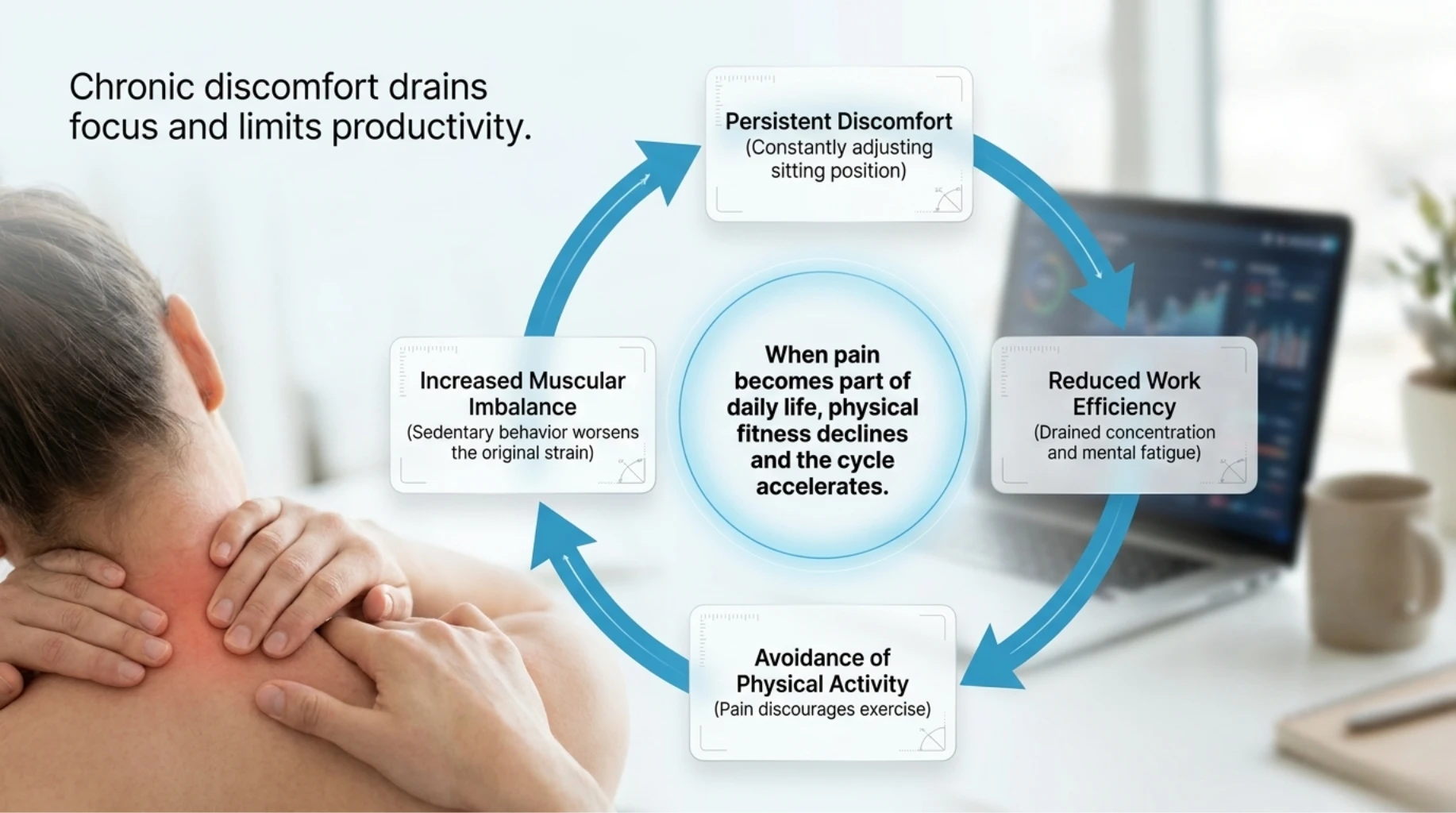
When pain becomes part of daily life, concentration, work efficiency, and mood may also suffer.
Many individuals report difficulty focusing on tasks because they are constantly adjusting their sitting position or stretching their neck.
Chronic discomfort may also discourage regular physical activity, creating a cycle of reduced fitness and increasing pain.
This demonstrates how posture-related problems can gradually affect overall quality of life.
The Real-Life Pattern Seen in Clinical Practice
Many patients describe a remarkably similar routine.
They spend most of the day working on a laptop, attend multiple online meetings, check their phone during breaks, drive home, watch television in the evening, and then continue using their smartphone before sleeping.
Although no single activity appears harmful, the combined hours of uninterrupted sitting and poor posture place continuous stress on the spine.
Over months or years, they begin experiencing recurring neck stiffness, upper back pain, headaches, shoulder tightness, and reduced flexibility.
The symptoms usually develop so gradually that people accept them as a normal part of modern life rather than recognising that they may be related to screen time and neck pain.
Why Younger Adults Are Experiencing These Problems Earlier
Neck and back pain were once considered problems mainly affecting older adults or people performing physically demanding work.
Today, posture-related discomfort is increasingly seen among students, young professionals, and even school-going children.
The widespread use of smartphones, online learning, remote work, and digital entertainment means that prolonged screen exposure now begins much earlier in life.
This makes prevention especially important, as healthy posture habits developed early can help reduce the risk of long-term spinal problems.
How to Reduce Screen Time and Neck Pain
The good news is that most posture-related neck and back problems can be improved or prevented with simple lifestyle changes. The objective is not to avoid technology altogether, but to use it in a way that places less stress on the spine.
Small improvements in daily habits often produce significant long-term benefits when practiced consistently.
Improve Your Workstation Ergonomics
Your workstation should support a comfortable, neutral posture rather than forcing your body to adapt to poor positioning.
Ideally, the top of the computer screen should be close to eye level so that you do not constantly bend your neck downward.
Your chair should provide adequate back support, your feet should rest comfortably on the floor, and your elbows should remain close to the body while typing.
Small ergonomic adjustments can significantly reduce the strain associated with screen time and neck pain.
Avoid Holding Your Phone Below Eye Level
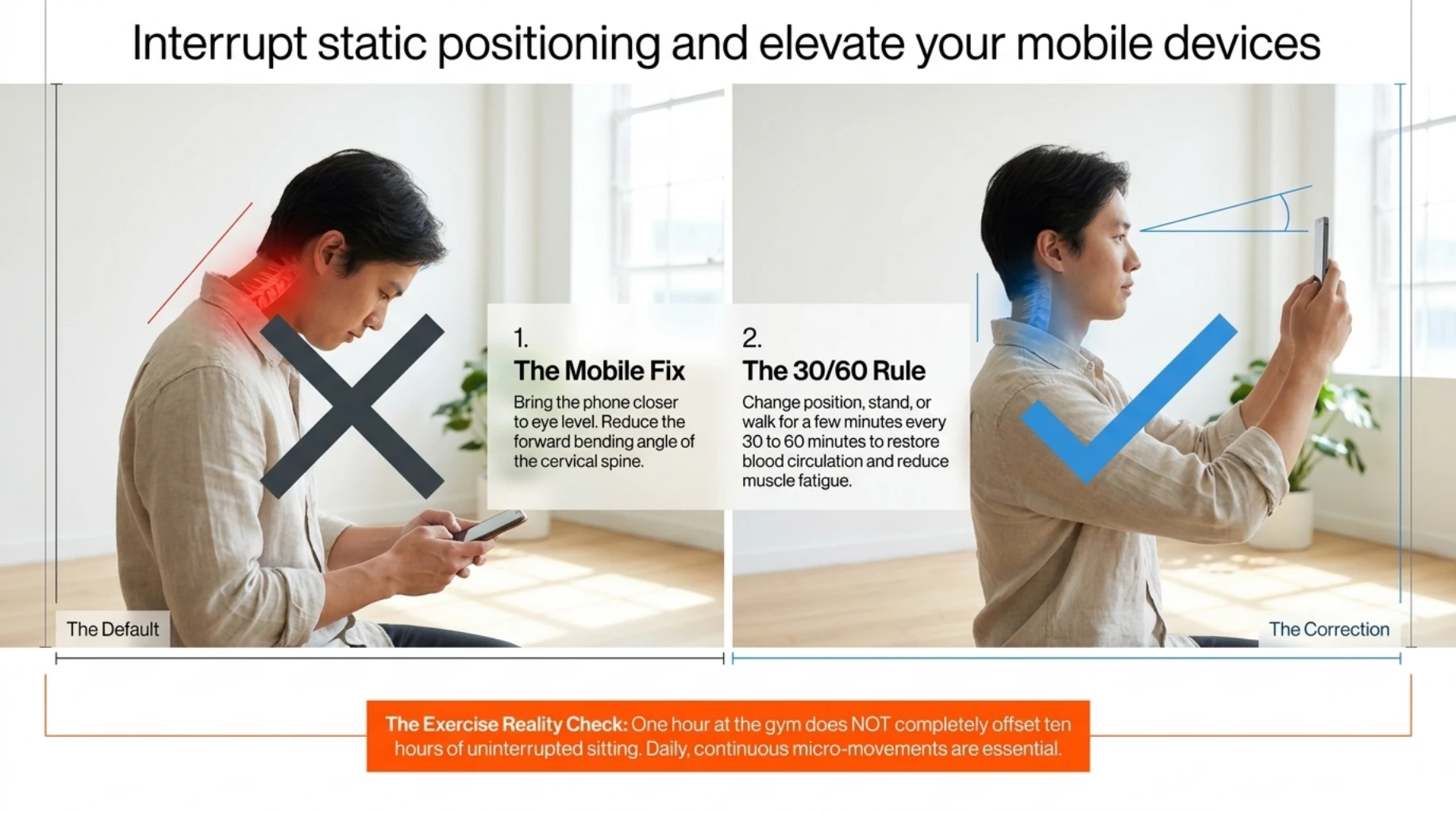
Many people spend hours looking down at their smartphones. Whenever possible, bring the phone closer to eye level instead of bending your neck toward the device.
This simple adjustment reduces the forward bending angle of the neck and decreases stress on the cervical spine.
Although it may feel unusual initially, this habit becomes easier with regular practice.
Take Frequent Movement Breaks
The body is designed to move regularly. Even the best sitting posture becomes uncomfortable when maintained for several hours without interruption.
Standing up, stretching, walking for a few minutes, or changing position every 30 to 60 minutes helps reduce muscle fatigue and improves blood circulation.
These short movement breaks are one of the most effective ways to minimise the effects of prolonged screen use.
Strengthen the Muscles That Support Good Posture
Strong muscles help maintain proper spinal alignment throughout the day.
Regular exercises that strengthen the neck, shoulders, upper back, core, and hip muscles improve posture and reduce the likelihood of recurring discomfort.
Activities such as yoga, Pilates, resistance training, swimming, and supervised physiotherapy exercises can all contribute to better spinal health.
Exercise should always be appropriate for an individual’s age, fitness level, and medical condition.
Don’t Ignore Physical Activity Outside Work
Many office workers believe that going to the gym for one hour completely offsets ten hours of sitting.
Unfortunately, prolonged sitting still has important health effects even in people who exercise regularly.
Daily movement throughout the day remains essential.
Walking during phone calls, using stairs, standing during short meetings, and taking regular activity breaks all help reduce the overall impact of prolonged sitting.
These habits complement structured exercise and further reduce the risk of screen time and neck pain.
Protect Your Sleep and Recovery
Muscles and joints recover during sleep. Late-night screen use, inadequate sleep, and poor sleeping posture can delay recovery and make neck discomfort worse.
Creating a regular bedtime routine, reducing screen exposure before sleep, and using a supportive pillow may help improve recovery and reduce morning stiffness.
Good sleep is therefore an important part of maintaining spinal health.
When Should You Seek Medical Advice?
Many episodes of posture-related discomfort improve with lifestyle modification, exercise, and ergonomic correction.
However, medical evaluation is important if neck or back pain: persists for several weeks, becomes progressively worse, follows a significant injury, radiates into the arms or legs, causes numbness or weakness, is associated with loss of bladder or bowel control, or interferes significantly with daily activities.
Early assessment helps identify underlying conditions that may require specific treatment rather than assuming all pain is caused by posture alone.
Healthy Technology Use Is the Real Goal
Digital devices are an essential part of modern education, work, communication, and entertainment.
The solution is not to eliminate technology but to develop healthier ways of using it.
Good posture, regular movement, appropriate workstation design, adequate physical activity, and sufficient sleep allow people to enjoy the benefits of technology while reducing its physical impact.
Putting Everything Into Perspective
The growing relationship between screen time and neck pain reflects how modern lifestyles have changed over the past two decades.
Long hours of sitting, excessive smartphone use, poor posture, and reduced physical activity place continuous stress on the spine.
Fortunately, these are lifestyle factors that can often be modified.
Simple daily changes, when practiced consistently, can reduce discomfort, improve posture, enhance productivity, and protect long-term spinal health.
Final Thought
Your spine supports you every minute of the day. Taking a few minutes to improve your posture, move regularly, and use technology wisely can protect your neck and back for many years to come.
If you want a personalized metabolic assessment and lifestyle strategy, you can book a consultation here:
Book an Appointment