
“Doctor, I feel tired all the time—even without doing heavy physical work.”
This has become one of the most common complaints in modern urban life.
Many individuals wake up feeling unrefreshed, experience low energy through the day, struggle with poor concentration, and feel mentally exhausted despite relatively sedentary lifestyles.
What makes this confusing is that people often assume fatigue occurs only after intense physical activity. But modern fatigue is different.
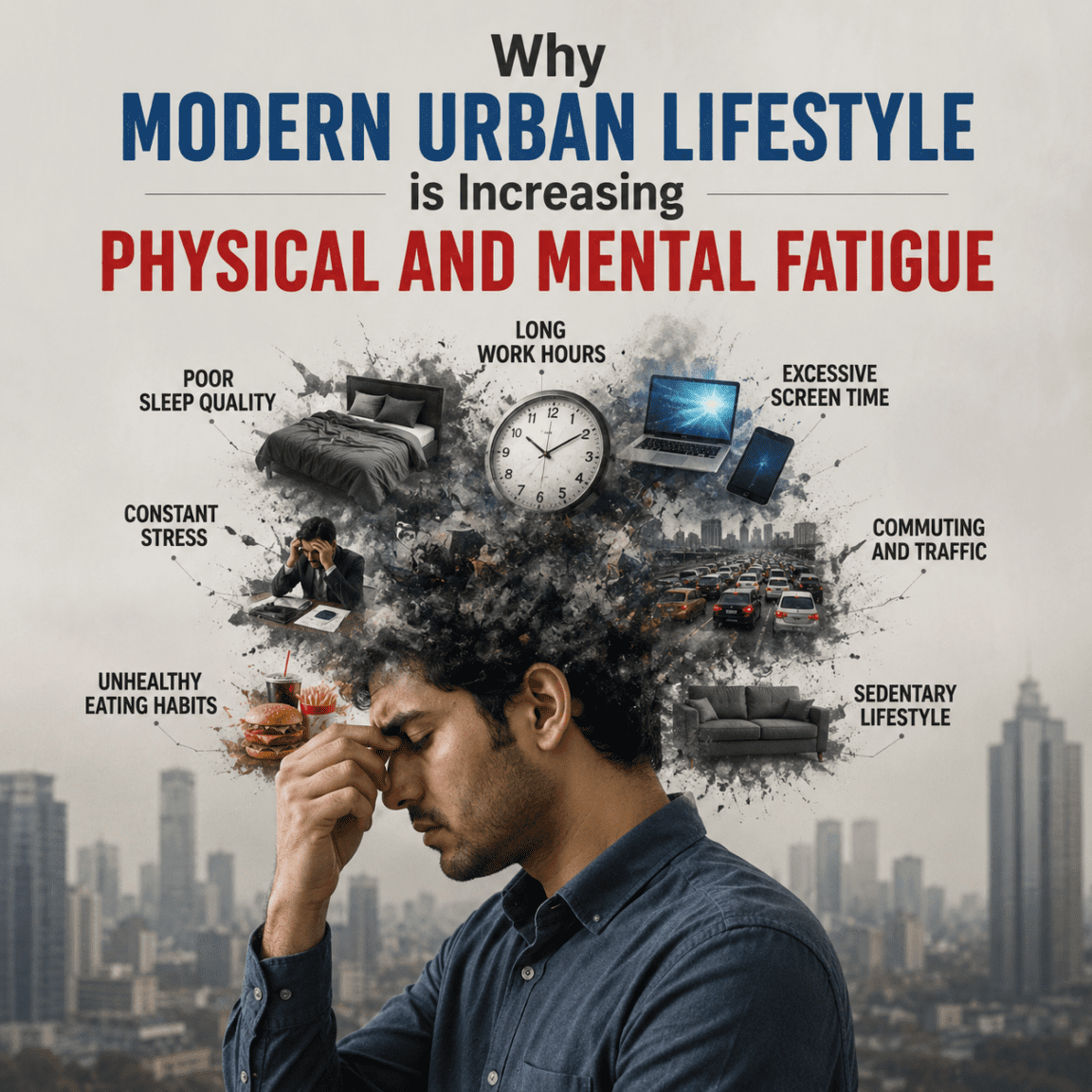
Understanding why modern urban lifestyle is increasing physical and mental fatigue is important because the body is now exposed to continuous low-grade stress from multiple directions simultaneously.

Over time, these repeated lifestyle pressures gradually disturb sleep, hormones, metabolism, mental recovery, and energy regulation.
Why Modern Fatigue Feels Different
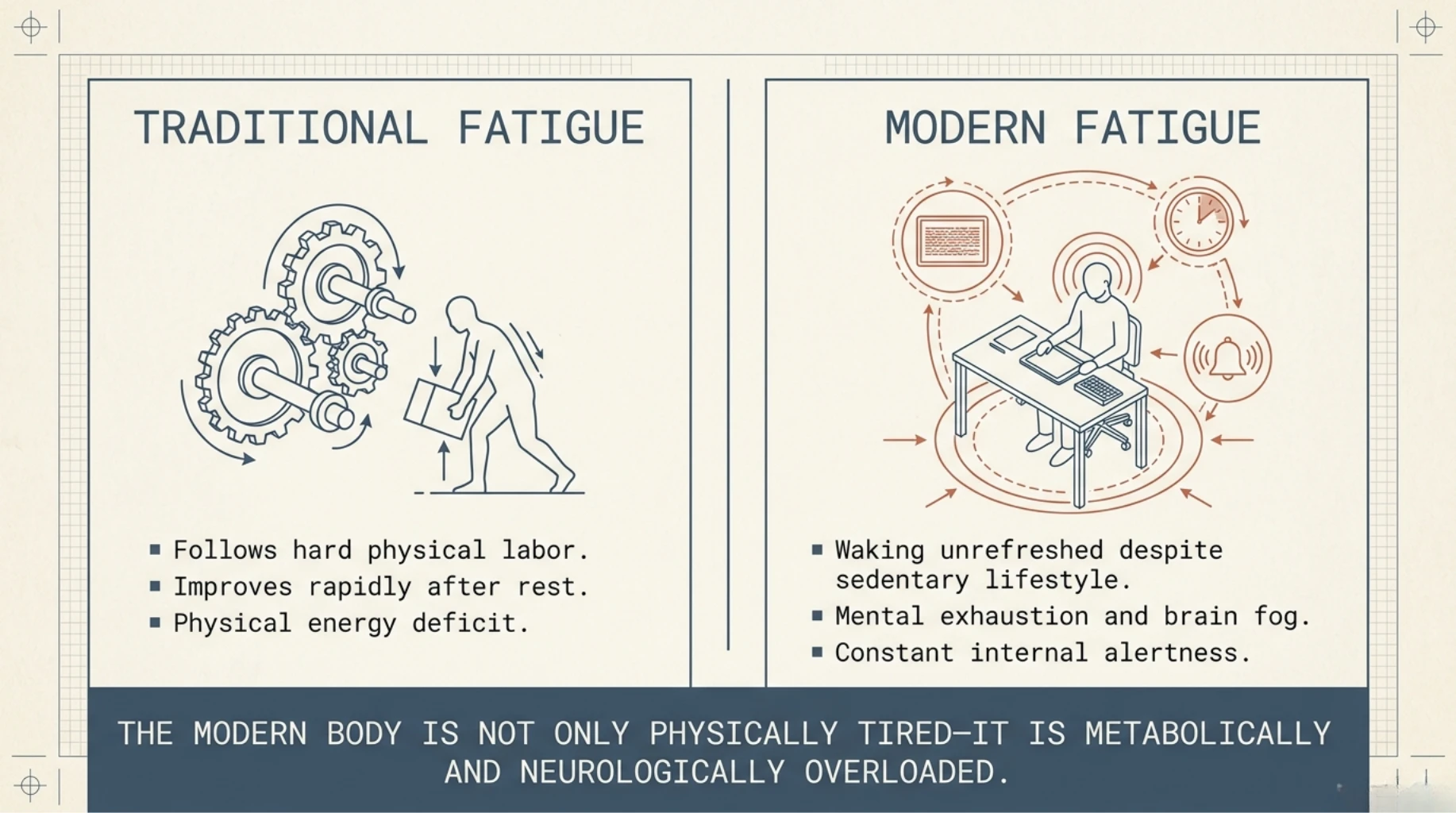
Traditional physical fatigue usually followed hard physical labor and improved after rest. Modern fatigue is often more complex.
Many people today experience: mental exhaustion, low motivation, poor concentration, brain fog, disturbed sleep, low stamina, and constant tiredness.
This happens because the body is not only physically tired—it is metabolically and neurologically overloaded.
The combination of prolonged sitting, stress, excessive stimulation, poor sleep, irregular eating, and reduced recovery gradually drains both physical and mental energy systems.
The Hidden Effect of Continuous Mental Stimulation
Urban lifestyles expose the brain to continuous stimulation almost throughout the day.
Phones, notifications, emails, traffic, work deadlines, social media, multitasking, and constant information exposure keep the nervous system persistently active.
Even during “rest,” the brain often remains mentally engaged. As a result, the nervous system rarely gets true recovery time.
Over months and years, this creates chronic mental fatigue, reduced attention span, irritability, and difficulty feeling mentally refreshed.
Why Prolonged Sitting Reduces Energy Levels
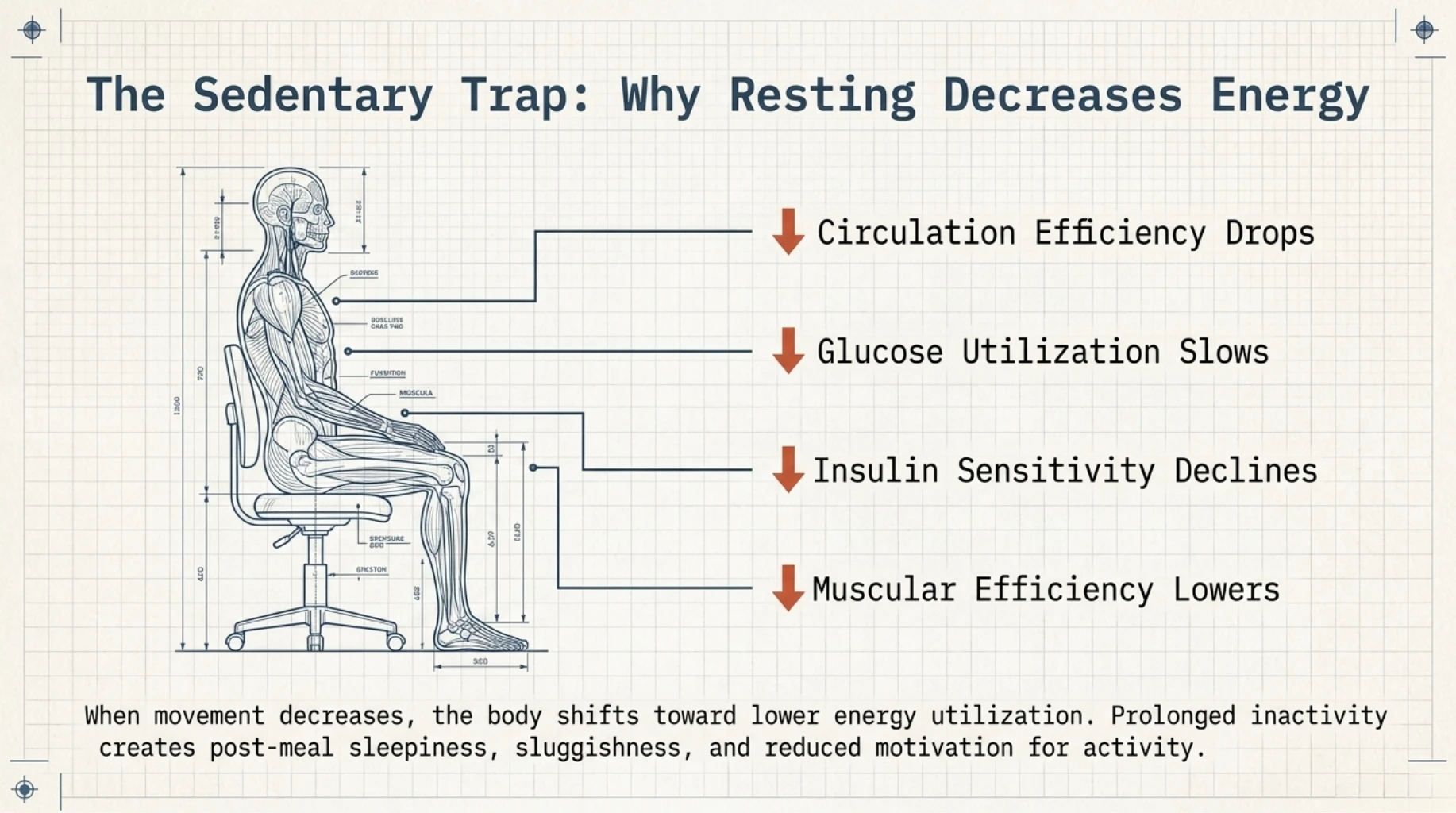
Many people associate physical fatigue only with heavy movement. But prolonged inactivity also affects energy significantly.
When movement decreases, circulation, glucose utilization, and metabolic flexibility become less efficient.
The body gradually shifts toward lower energy utilization while insulin sensitivity and muscular efficiency begin declining.
This commonly contributes to: low stamina, heaviness, sluggishness, poor post-meal energy, and reduced motivation for activity.
This is one reason why modern urban lifestyle is increasing physical and mental fatigue even in people who are not physically overworked.
How Poor Sleep Quietly Worsens Fatigue
Sleep quality has become one of the most disrupted aspects of modern life. Late-night screen exposure, stress, irregular schedules, and delayed sleeping patterns interfere with natural recovery rhythms.
Even when total sleep hours appear reasonable, sleep quality often becomes poor.
This affects: hormonal balance, brain recovery, appetite regulation, memory processing, and energy restoration.
Over time, poor-quality sleep creates cumulative fatigue that becomes increasingly difficult to reverse.
The Role of Stress Hormones in Chronic Exhaustion
Stress hormones like cortisol help the body handle short-term challenges. But when stress becomes continuous, the body remains in a prolonged state of internal alertness.
Initially, this may create temporary hyper-productivity or increased mental drive. But eventually, the nervous system becomes exhausted.
This is why many people describe themselves as: “constantly tired but unable to relax properly.”
Chronic stress gradually drains both physical and mental recovery capacity.
Why Irregular Eating Patterns Affect Energy Stability
Modern routines often disrupt meal timing and food quality.
Skipping meals, frequent snacking, processed foods, excessive caffeine, sugary beverages, and late-night eating create repeated fluctuations in blood sugar and appetite regulation.
These metabolic fluctuations contribute to: energy crashes, poor concentration, cravings, irritability, and unstable stamina throughout the day.
Over time, the body becomes less efficient at maintaining stable energy levels.
How Urban Stress Creates Continuous Internal Fatigue
Modern urban life rarely allows the nervous system to fully relax.
Even outside working hours, many individuals remain mentally occupied with responsibilities, notifications, financial pressure, deadlines, social expectations, or digital stimulation.
The body therefore remains in a prolonged “alert mode” instead of entering proper recovery mode.
Initially, people may continue functioning normally. But over time, continuous stress gradually affects hormonal balance, sleep quality, digestion, concentration, and energy regulation.
This is one of the major reasons why modern urban lifestyle is increasing physical and mental fatigue.
The Difference Between Tiredness and Burnout
Normal tiredness usually improves after rest or sleep. Burnout feels different.
Many individuals experiencing burnout describe: mental exhaustion, emotional detachment, low motivation, irritability, poor concentration, and feeling drained even after rest.
This occurs when the body and nervous system remain under continuous psychological strain for prolonged periods.
Because the decline happens gradually, people often normalize these symptoms until functioning becomes significantly affected.
Why Younger Adults Are Feeling Exhausted Earlier
Earlier, chronic fatigue and burnout were more commonly associated with middle age. Today, even younger adults are increasingly experiencing persistent exhaustion.
One major reason is the combination of: late-night schedules, prolonged screen exposure, reduced physical activity, irregular eating patterns, stress, and continuous digital stimulation.
The body may continue functioning outwardly, but internally recovery systems become progressively strained.
This gradual overload often remains unnoticed until fatigue becomes difficult to ignore.
The Link Between Inflammation and Low Energy
Modern lifestyle habits also increase low-grade chronic inflammation inside the body.
Poor sleep, stress, processed foods, obesity, insulin resistance, and inactivity collectively create inflammatory stress over time.
Inflammation itself consumes significant metabolic energy and affects how efficiently the body produces and utilizes energy.
This often creates: persistent heaviness, low stamina, body fatigue, and reduced mental clarity.
Many people interpret this only as “weakness” when it is actually part of broader metabolic dysfunction.
How Obesity and Insulin Resistance Worsen Fatigue
Urban lifestyles increasingly promote abdominal obesity and insulin resistance. When insulin balance becomes disturbed, the body struggles to use glucose efficiently for energy.
As a result, many individuals experience: post-meal sleepiness, energy crashes, low physical endurance, and constant hunger combined with fatigue.
At the same time, increasing body weight itself reduces physical efficiency, making movement feel more exhausting.
This creates a cycle where fatigue reduces activity, and reduced activity worsens metabolic health further.
The Hidden Role of Excessive Screen Time
Screen exposure affects more than vision or posture. Constant digital stimulation keeps the brain continuously engaged, reducing true mental recovery time.
Social media scrolling, multitasking, notifications, entertainment content, and work-related screens collectively increase cognitive overload.
Over time, this contributes to: mental fatigue, poor concentration, reduced attention span, anxiety, and difficulty relaxing mentally.
Many people underestimate how strongly continuous digital stimulation affects overall energy and recovery.
The Real-Life Pattern Seen in Many Urban Professionals
In practice, the pattern is extremely common.
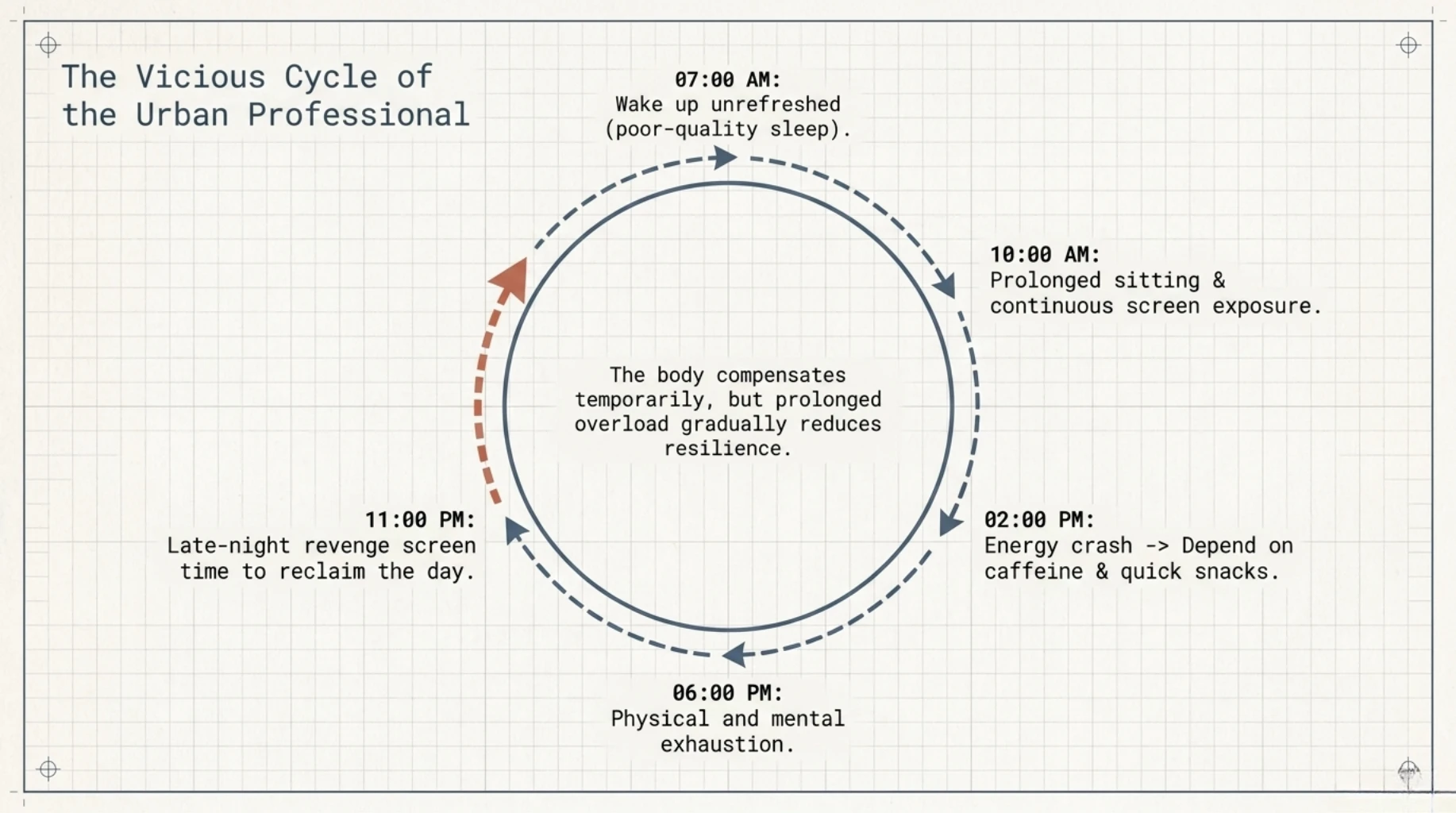
A person wakes up already feeling tired due to poor-quality sleep. The day involves prolonged sitting, mental stress, continuous screen exposure, irregular meals, and minimal physical movement.
To maintain productivity, caffeine and quick snacks are consumed repeatedly. By evening, physical and mental exhaustion increase, but instead of recovery, late-night screen use and delayed sleep continue the cycle.
Over months or years, fatigue becomes chronic and gradually affects mood, metabolism, digestion, concentration, and overall health.
Why the Body Cannot Sustain Continuous Overload Forever
The body is highly adaptable, but adaptation has limits. Many individuals continue functioning despite poor sleep, stress, irregular eating, and inactivity because the body compensates temporarily.
However, prolonged overload gradually reduces resilience. This is why chronic fatigue often develops silently before more obvious metabolic problems such as obesity, hypertension, fatty liver, insulin resistance, or burnout begin appearing.
How to Recover Energy in Modern Urban Life Realistically
The solution to modern fatigue is usually not a single supplement, energy drink, or short-term motivation boost.
True recovery happens when the body gradually regains metabolic balance, nervous system recovery, and healthier biological rhythm. This process does not require perfection. But it does require consistency.
Protect Sleep as a Health Priority
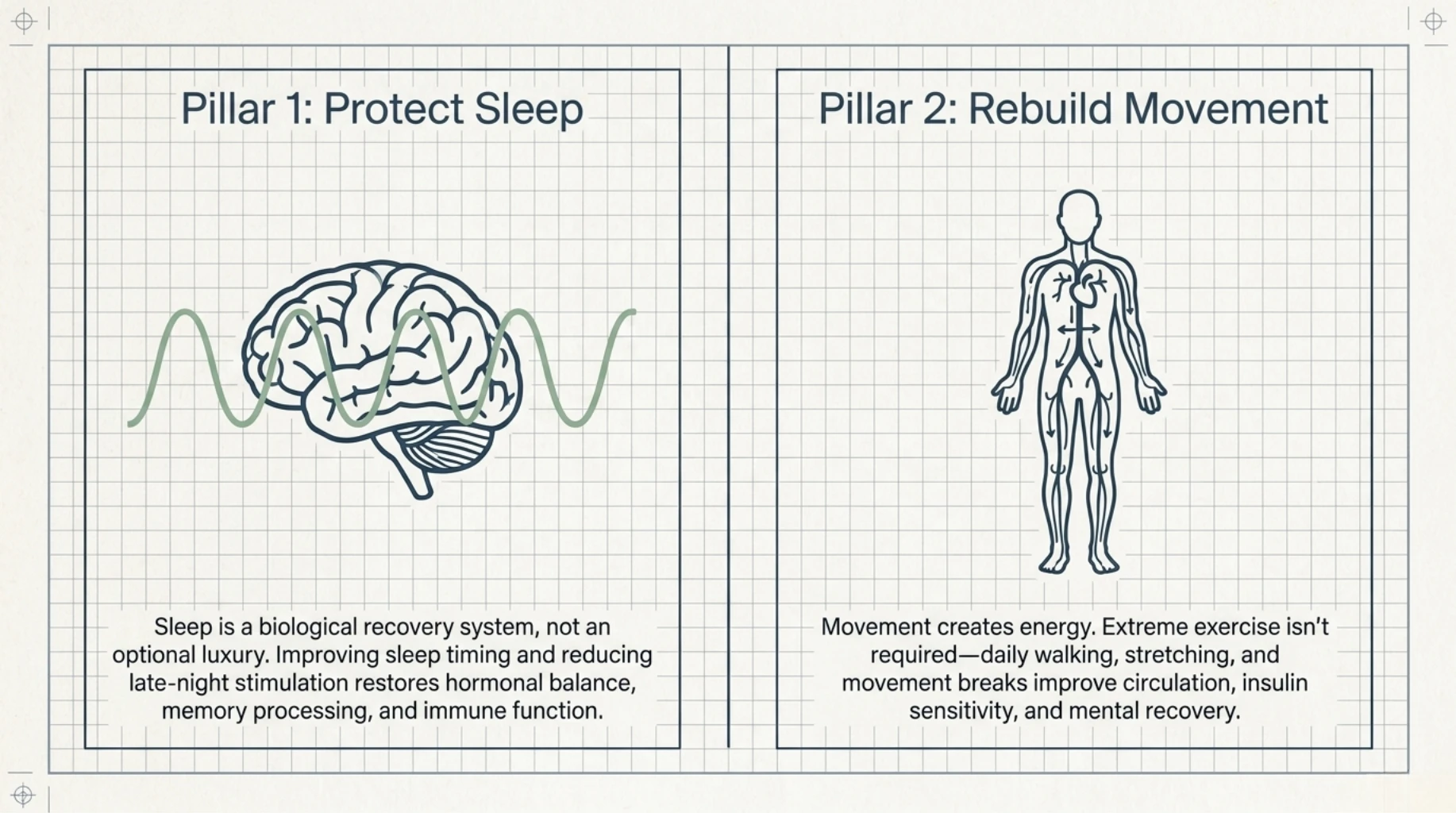
Many people treat sleep as optional while trying to maintain productivity. In reality, sleep is one of the most important biological recovery systems in the body.
Good-quality sleep supports: brain recovery, hormonal balance, memory processing, appetite regulation, immune function, and energy restoration.
Improving sleep timing and reducing late-night stimulation often produces noticeable improvement in energy levels within weeks.
Even small improvements in sleep consistency can significantly reduce chronic fatigue over time.
Movement Is Essential for Energy Production
One of the biggest misconceptions is believing that rest alone improves fatigue. In reality, prolonged inactivity often worsens physical sluggishness and metabolic inefficiency.
Regular movement improves circulation, insulin sensitivity, muscular efficiency, and mental recovery. This does not mean extreme exercise is necessary.
Simple habits such as: daily walking, stretching, reducing prolonged sitting, taking movement breaks, and regular physical activity can gradually improve energy regulation significantly.
Reduce Continuous Mental Overload
The brain requires periods of recovery just like the body. Constant multitasking, notifications, digital stimulation, and information overload prevent proper mental relaxation.
Creating small periods of mental quietness during the day can improve concentration and reduce nervous system exhaustion.
Even simple habits such as reducing unnecessary screen exposure, taking breaks between tasks, and spending time away from digital stimulation can improve mental recovery over time.
Stabilize Energy Through Better Eating Patterns
Frequent processed foods, excessive caffeine, sugary snacks, and irregular meals often worsen energy instability rather than improving it.
Balanced meals with adequate protein, fiber, and nutrient quality help maintain more stable blood sugar and energy regulation.
At the same time, reducing heavy late-night eating and repeated stimulant dependence often improves both sleep and daytime energy.
The body generally functions better with steady metabolic support rather than repeated energy spikes and crashes.
Why Stress Management Is Essential
Many people attempt to improve fatigue while continuing the same chronic stress patterns daily. But stress itself consumes significant mental and metabolic energy.
Simple stress-reduction habits such as: structured downtime, outdoor walking, mindfulness, proper boundaries between work and rest, and regular recovery periods
help reduce nervous system overload gradually. When stress decreases, both physical and mental recovery become more efficient.
Why Stimulants Cannot Replace Recovery
Modern lifestyles often rely heavily on caffeine, sugary drinks, or energy boosters to compensate for exhaustion.
While these may temporarily improve alertness, they do not correct the underlying recovery deficit.
In many cases, excessive stimulant use worsens the cycle further by delaying sleep and increasing nervous system stress.
This creates a pattern where fatigue leads to more stimulation, and stimulation worsens long-term exhaustion.
The Importance of Rebuilding Biological Rhythm
The body functions best when sleep, meals, movement, and recovery follow relatively stable patterns. Modern urban life often disrupts this rhythm continuously.
As healthier routines gradually return, the body begins restoring: better energy stability, improved mood, stronger concentration, reduced cravings, healthier sleep, and better metabolic balance.
These improvements usually happen gradually, not overnight.
Putting Everything Into Perspective
Modern fatigue is rarely caused by one single factor.
It usually develops through the cumulative effect of: poor sleep, stress, prolonged sitting, digital overload, irregular eating, reduced movement, and chronic metabolic strain.
This is exactly why modern urban lifestyle is increasing physical and mental fatigue so significantly today.
The encouraging part is that the body often responds positively once healthier rhythms begin returning consistently.
Final Thought
Sometimes the body is not lacking strength—it is simply exhausted from trying to keep up with a lifestyle that never truly allows recovery.
If you want a personalized metabolic assessment and lifestyle strategy, you can book a consultation here:
Book an Appointment