

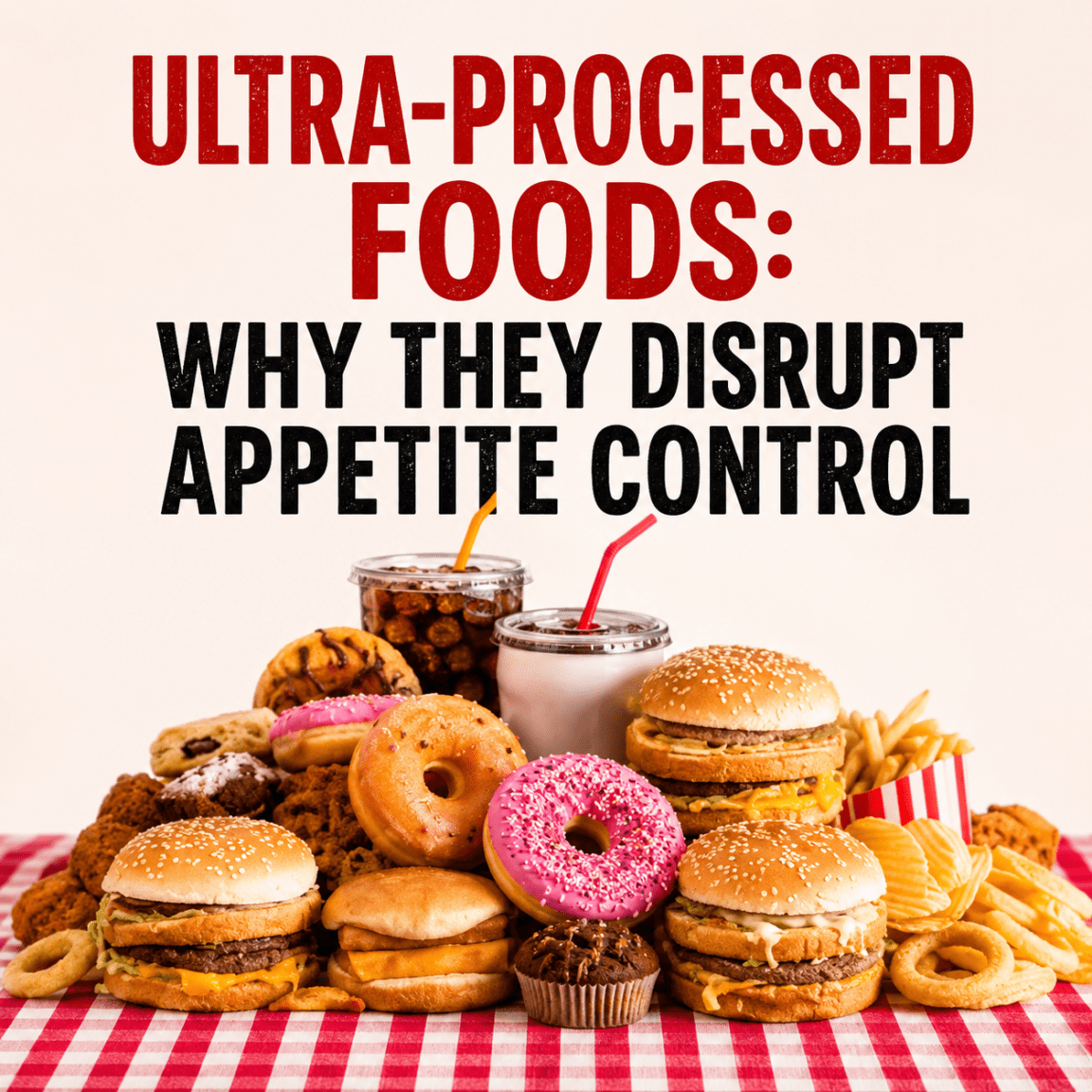
“Doctor, I feel hungry again soon after eating.”
This is a surprisingly common complaint today. Many people feel that they are constantly thinking about food, struggling with cravings, or finding it difficult to feel satisfied after meals. In many cases, the problem is not simply a lack of willpower.
The modern food environment has changed dramatically over the last few decades, and one of the biggest contributors is the growing consumption of ultra-processed foods.

These foods are now deeply integrated into daily life because they are convenient, affordable, heavily marketed, and widely available. However, their impact on appetite regulation is often underestimated.
Understanding how ultra-processed foods affect hunger and satiety is important because appetite control plays a central role in weight management, metabolic health, and long-term well-being.
What Are Ultra-Processed Foods?
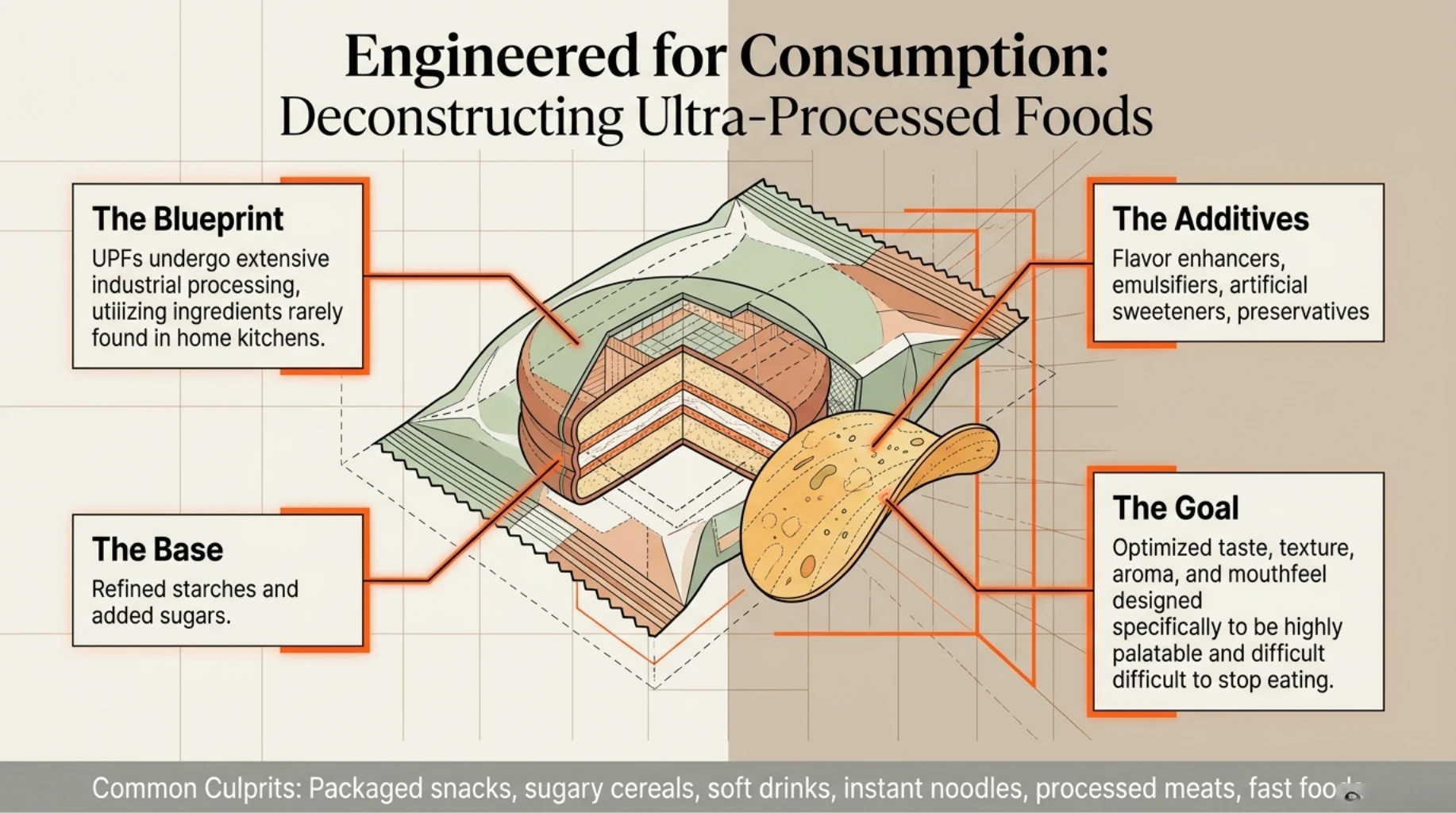
Ultra-processed foods are products that have undergone extensive industrial processing and often contain ingredients rarely used in home cooking.
These may include: flavor enhancers, emulsifiers, artificial sweeteners, preservatives, refined starches, added sugars, and various food additives.
Examples commonly include packaged snacks, sugary breakfast cereals, soft drinks, instant noodles, packaged desserts, processed meats, fast foods, and many ready-to-eat convenience products.
Not every processed food is problematic. The concern is the degree of processing and how these foods influence eating behavior.
Why Appetite Control Matters
The human body has sophisticated systems that regulate hunger and fullness. Under normal circumstances, hormones, nerves, and digestive signals work together to help regulate how much food is needed.
After eating a balanced meal, the body typically generates satiety signals that reduce hunger and help prevent excessive intake. This system evolved to maintain energy balance and support survival.
However, ultra-processed foods can interfere with many of these natural regulatory mechanisms.
Why Ultra-Processed Foods Are Easy to Overeat
One of the defining characteristics of ultra-processed foods is that they are designed to be highly appealing.
Food manufacturers invest heavily in optimizing taste, texture, aroma, and mouthfeel to encourage repeated consumption.
These products are often engineered to be: highly palatable, rapidly consumed, and difficult to stop eating.
As a result, people frequently consume larger portions before their body’s natural fullness signals have time to activate effectively. This can lead to unintentional overeating even when energy requirements have already been met.
The Problem with Low Satiety Density
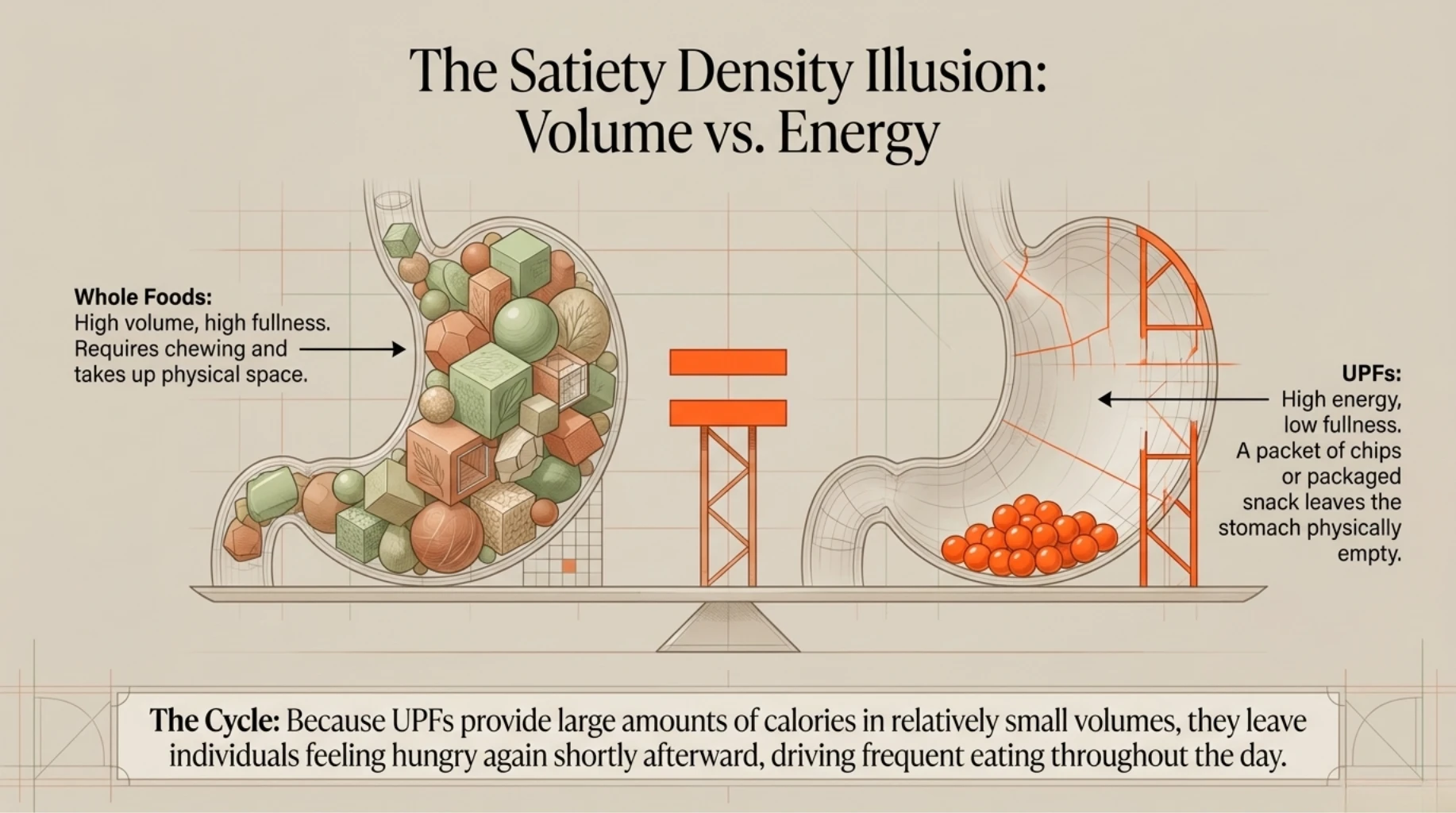
Many ultra-processed foods provide large amounts of calories in relatively small volumes. They are often low in fiber, lower in protein, and easier to consume quickly compared with minimally processed foods.
Because of this, they may not create the same degree of fullness that whole foods provide. A packet of chips, sweetened beverage, or packaged snack may contain significant calories, yet leave a person feeling hungry again shortly afterward.
This creates a cycle where frequent eating becomes more likely throughout the day.
How Rapid Digestion Influences Hunger
Many ultra-processed foods are rapidly digested and absorbed. This can lead to faster rises in blood sugar followed by relatively quicker declines compared with meals rich in fiber, protein, and minimally processed ingredients.
When energy fluctuations become more pronounced, hunger and cravings may return sooner.
Over time, individuals may begin feeling that they need to eat more frequently, even when overall calorie intake is already high. This is one reason ultra-processed foods are often associated with difficulty controlling appetite.
The Hidden Role of Fiber Deficiency
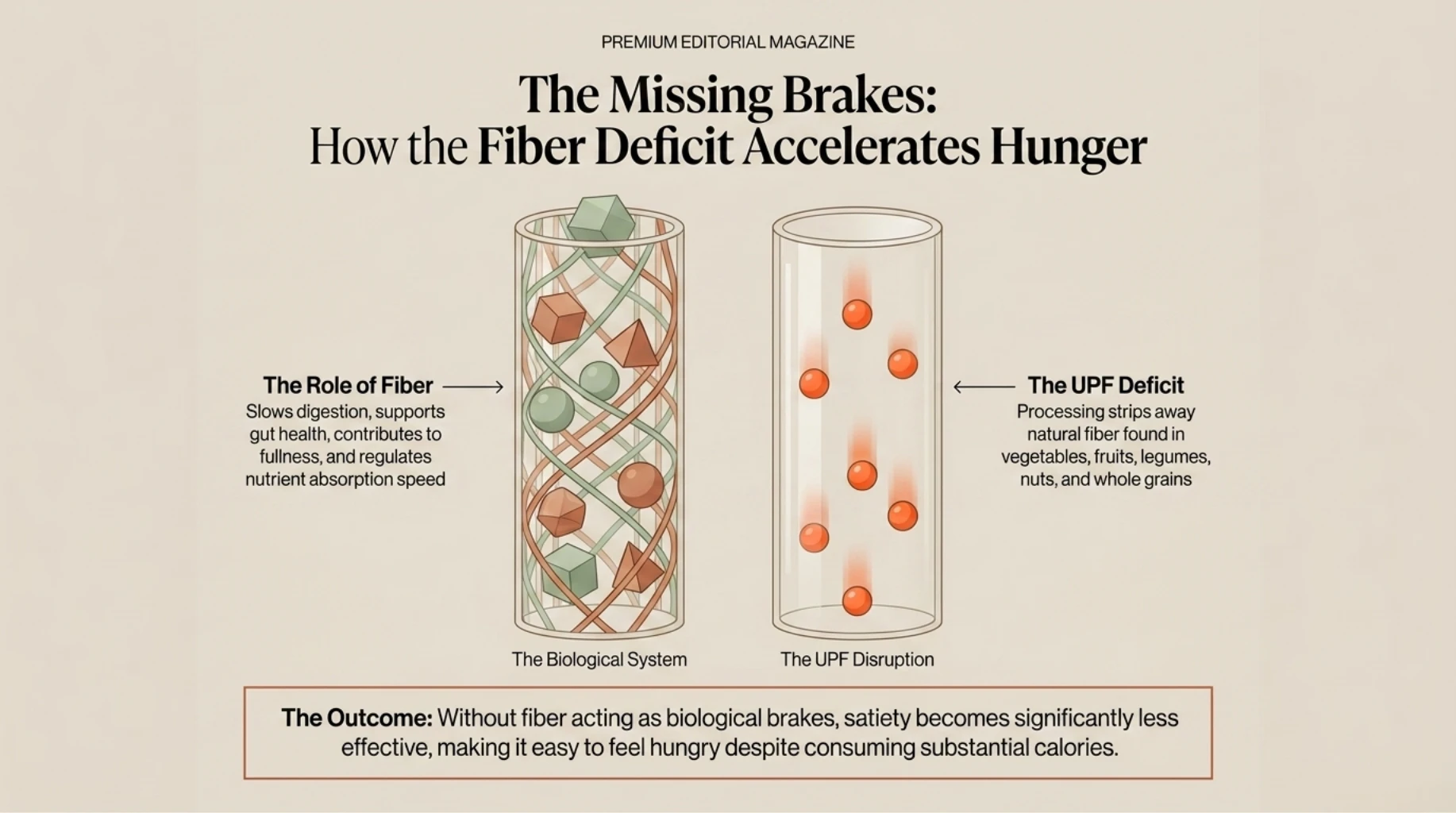
Fiber plays an important role in appetite regulation. It slows digestion, supports gut health, contributes to fullness, and helps regulate how quickly nutrients are absorbed.
Many ultra-processed foods contain significantly less fiber than whole foods such as vegetables, fruits, legumes, nuts, and whole grains.
As fiber intake decreases, satiety often becomes less effective. This makes it easier to feel hungry again despite consuming substantial calories.
Why Ultra-Processed Foods Increase Cravings
One of the most noticeable effects of ultra-processed foods is their ability to increase cravings.
Many people find it easier to stop eating after a bowl of lentils, vegetables, eggs, fish, or a home-cooked meal than after a packet of chips, cookies, or packaged snacks. This difference is not accidental.
Ultra-processed foods are often carefully designed to maximize taste appeal. The combination of sugar, refined carbohydrates, fats, salt, and flavor enhancers creates a powerful sensory experience that encourages repeated consumption.
As a result, eating becomes driven not only by hunger but also by reward and pleasure signals. This can make appetite control significantly more challenging.
How Ultra-Processed Foods Affect Satiety Signals
The body relies on multiple signals to determine when enough food has been consumed. These signals originate from the stomach, intestines, nervous system, and various appetite-regulating hormones.
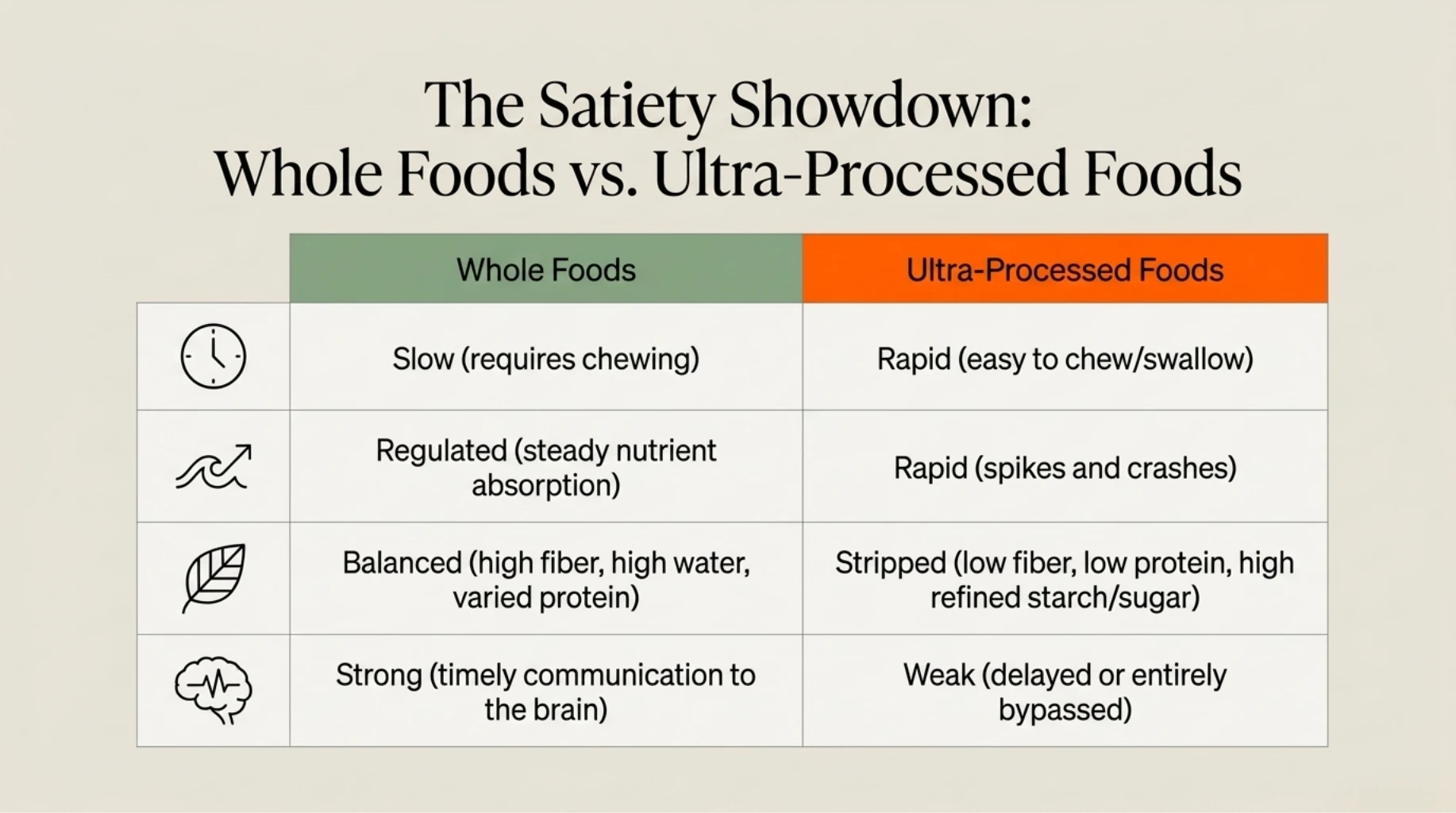
Whole foods generally support these natural feedback systems because they contain a balance of fiber, protein, water, and nutrients. Ultra-processed foods often lack this balance.
Because they are easy to chew, easy to swallow, and rapidly digested, the body may receive weaker satiety signals compared with less processed foods.
This increases the likelihood of consuming more food before fullness is properly recognized.
The Problem with Liquid Calories
Many ultra-processed foods are consumed in liquid form. Soft drinks, sweetened beverages, flavored coffees, packaged juices, milkshakes, and energy drinks can provide large amounts of calories while contributing relatively little fullness.
The body often does not compensate effectively for these liquid calories by reducing food intake later.
As a result, individuals may consume additional calories without experiencing meaningful reductions in hunger.
This is one reason sugary beverages are strongly associated with weight gain and poor appetite regulation.
How Ultra-Processed Foods Contribute to Weight Gain
When appetite control becomes less effective, calorie intake often increases gradually. The challenge is that overeating may occur without obvious awareness.
A person may consume several small snacks, beverages, or convenience foods throughout the day without realizing how much energy is being added.
Over months and years, this pattern can contribute to: weight gain, abdominal obesity, insulin resistance, fatty liver, and metabolic dysfunction.
This is one reason ultra-processed foods are frequently discussed in relation to obesity and chronic disease.
The Connection Between Insulin Resistance and Appetite
Appetite regulation and metabolic health are closely linked. As insulin resistance develops, hunger patterns often become less stable.
Individuals may experience: stronger cravings, more frequent hunger, energy crashes, and increased desire for highly palatable foods.
Ultra-processed foods can contribute to this cycle because they often worsen the metabolic conditions that make appetite regulation more difficult.
Over time, appetite control becomes increasingly challenging despite the body’s energy stores already being abundant.
Why Children and Teenagers Are Also Affected
The impact of ultra-processed foods is not limited to adults. Children and adolescents are increasingly exposed to packaged snacks, sugary drinks, convenience foods, and aggressive food marketing.
Because eating habits often develop early in life, regular exposure to highly processed foods may influence long-term food preferences and appetite patterns.
This is one reason childhood obesity and metabolic health concerns have become growing public health issues in many countries.
The Real-Life Pattern Seen in Many Families
In practice, the pattern is extremely common.
A person starts the day with a packaged breakfast, consumes tea or coffee with biscuits, snacks during work, orders convenience meals, and finishes the evening with processed foods while watching television.
Despite eating frequently, they often report: persistent hunger, cravings, low energy, difficulty losing weight, and poor satiety.
The issue is not necessarily a lack of discipline. It is often the cumulative effect of a food environment that constantly encourages overeating.
Why Appetite Problems Often Develop Gradually
Most people do not notice changes in appetite control immediately. The process usually develops slowly.
Over time, highly processed foods become normal, portion sizes increase, cravings become more frequent, and natural fullness signals become less effective.
Because the transition is gradual, many individuals assume their eating behavior is unchanged when, in reality, appetite regulation has shifted significantly.
How to Improve Appetite Control Naturally
The good news is that appetite regulation often improves when the overall quality of the diet improves.
Most people do not need extreme diets or complicated food rules. Instead, they benefit from creating an environment where natural hunger and fullness signals can function more effectively.
The goal is not perfection. The goal is making consistent choices that support satiety and metabolic health.
Why Whole Foods Support Better Satiety
Whole and minimally processed foods tend to provide a combination of nutrients that naturally promote fullness.
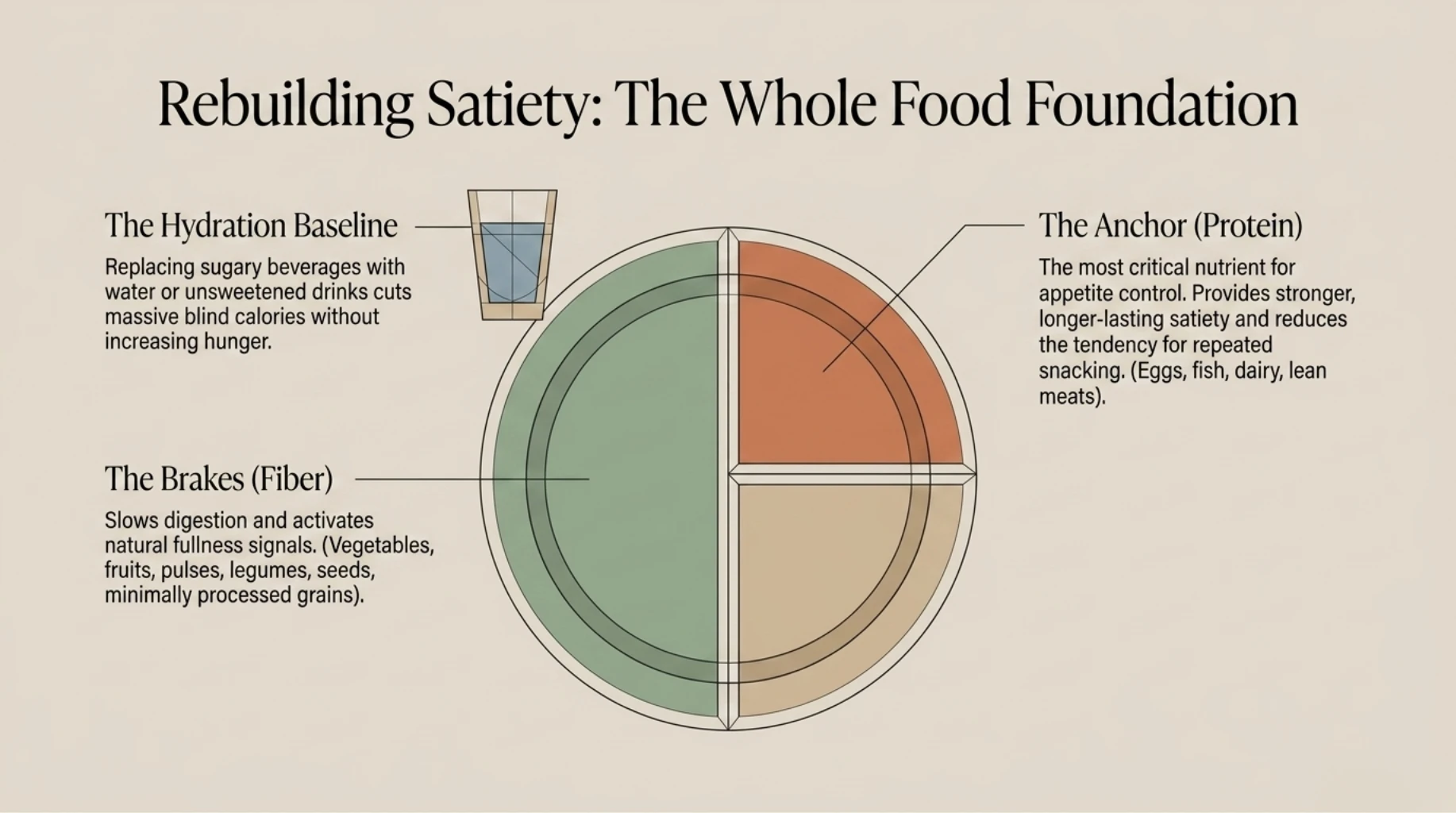
Foods such as vegetables, fruits, pulses, legumes, eggs, fish, dairy products, nuts, seeds, and minimally processed grains generally require more chewing, digest more slowly, and provide greater satiety.
Many of these foods also contain fiber, protein, and water, which help activate natural fullness signals. As a result, people often feel satisfied for longer periods after eating them.
The Importance of Protein at Meals
Protein is one of the most important nutrients for appetite control. Compared with many refined carbohydrates and processed snack foods, protein-rich meals often provide stronger and longer-lasting satiety.
This is one reason individuals who consume adequate protein frequently report fewer cravings and better appetite control throughout the day.
Including a meaningful protein source in major meals may help reduce the tendency for repeated snacking.
How Fiber Helps Control Hunger
Fiber plays several important roles in appetite regulation. It slows digestion, contributes to fullness, supports gut health, and helps regulate how quickly nutrients are absorbed.
Many ultra-processed foods are relatively low in fiber, while whole foods often contain substantially more.
Increasing fiber intake through vegetables, fruits, legumes, and whole grains can help create meals that are more satisfying and metabolically supportive.
Why Drinking Calories Often Backfires
One of the easiest ways to consume excess calories is through beverages. Soft drinks, sweetened teas, flavored coffees, energy drinks, packaged juices, and other sugary beverages may provide substantial energy while contributing little fullness.
Replacing these drinks with water, unsweetened beverages, or lower-calorie alternatives can significantly reduce unnecessary calorie intake without increasing hunger. This simple change often produces meaningful long-term benefits.
The Role of Sleep and Stress in Appetite Control
Appetite is not controlled by food alone. Poor sleep and chronic stress can strongly influence hunger signals and food choices.
When sleep quality declines, many individuals experience stronger cravings and reduced satiety.
Similarly, chronic stress often encourages emotional eating and increased consumption of highly palatable foods.
This is why improving sleep and stress management frequently supports better appetite regulation alongside dietary changes.
Why Gradual Change Works Better Than Restriction
Many people attempt to eliminate all processed foods immediately. While the intention is good, highly restrictive approaches are often difficult to sustain.
Long-term success usually comes from gradually increasing the proportion of minimally processed foods while reducing reliance on ultra-processed products.
Small improvements repeated consistently tend to produce better outcomes than short periods of extreme restriction followed by relapse.
The Importance of Looking at the Bigger Picture
Ultra-processed foods are only one part of the modern health equation.
Appetite control is influenced by multiple factors including: sleep, stress, physical activity, meal timing, body composition, metabolic health, and overall dietary quality.
Addressing these factors together usually produces better results than focusing on a single food item or nutrient.
The most effective strategy is creating a lifestyle that supports healthy appetite regulation naturally.
Putting Everything Into Perspective
Ultra-processed foods are popular because they are convenient, affordable, and highly enjoyable to eat. The concern is not occasional consumption. The concern is when they become a major part of daily nutrition.
Because these foods are often designed to encourage repeated eating while providing relatively weak satiety, they can gradually disrupt the body’s natural appetite regulation systems.
This is why ultra-processed foods are increasingly linked to overeating, weight gain, metabolic dysfunction, and difficulty maintaining a healthy body weight.
Final Thought
Sometimes the problem is not that people lack self-control. It is that the modern food environment is constantly encouraging them to eat more than their body actually needs.