
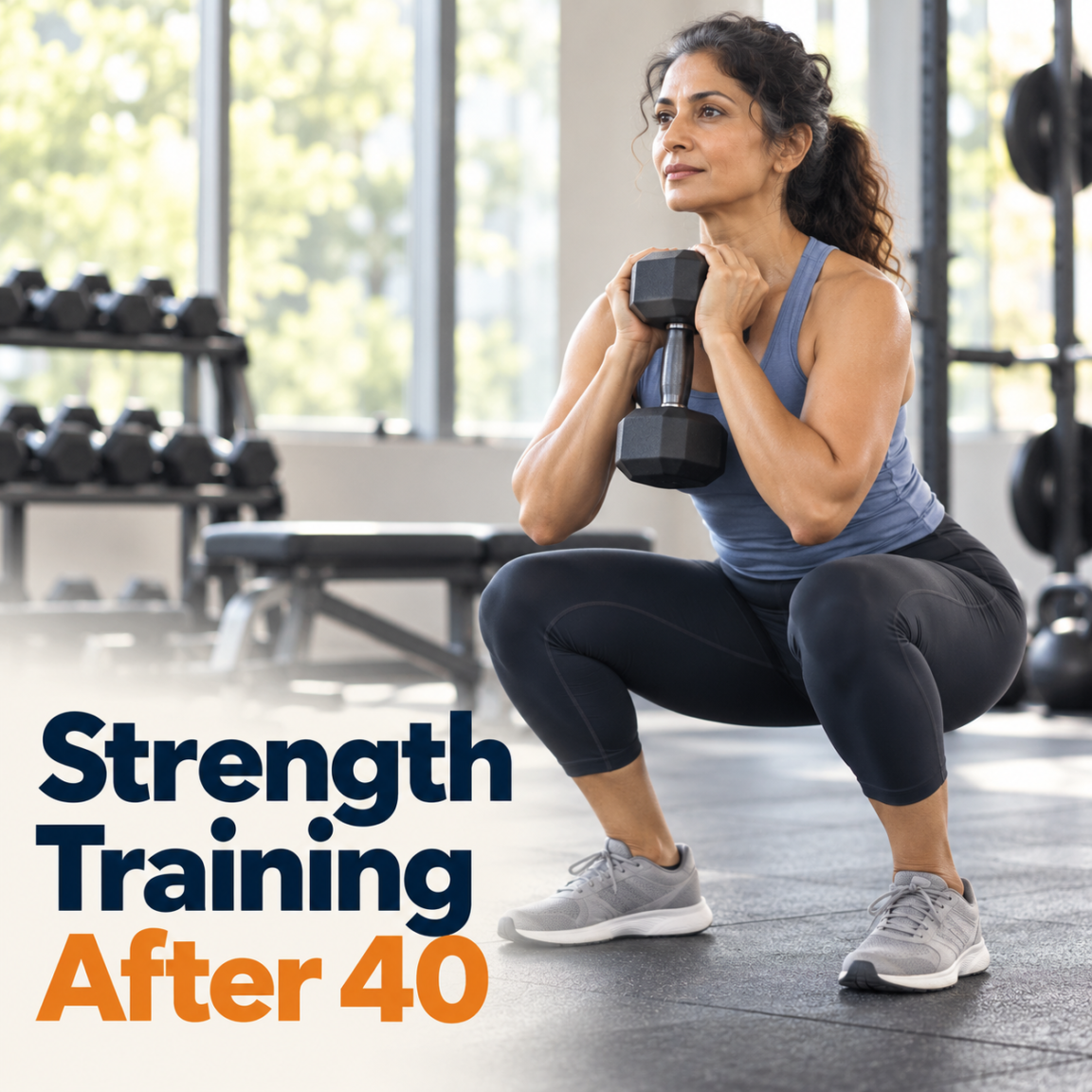
Strength Training After 40: 9 Benefits Beyond Building Muscle
When people hear the words “strength training,” they often imagine bodybuilding.
Large muscles.
Heavy barbells.
Gym mirrors.
Protein shakes.
But after the age of 40, strength training becomes much more important than simply changing how your body looks.
It can become part of a long-term strategy for preserving how your body functions.
Your ability to climb stairs comfortably, carry luggage, get up from the floor, maintain balance, control blood glucose, protect your bones and remain physically independent later in life is influenced partly by the muscle and strength you preserve through middle age.
This is why I increasingly view strength training after 40 as a health intervention rather than simply a fitness activity.
You do not need to become a bodybuilder.
You do not need to lift enormous weights.
And you certainly do not need to train like a 22-year-old competitive athlete.
But your muscles need a reason to remain strong.
Without sufficient resistance, the gradual combination of ageing, sedentary work, reduced physical activity and metabolic changes can slowly reduce muscle mass and physical capacity.
Walking remains valuable.
Cardiovascular exercise remains valuable.
Good nutrition remains essential.
But none of these completely replaces the specific stimulus produced by progressive resistance exercise.
And the benefits extend well beyond muscle size.

Why Strength Training After 40 Deserves More Attention
Ageing does not suddenly begin on your 40th birthday.
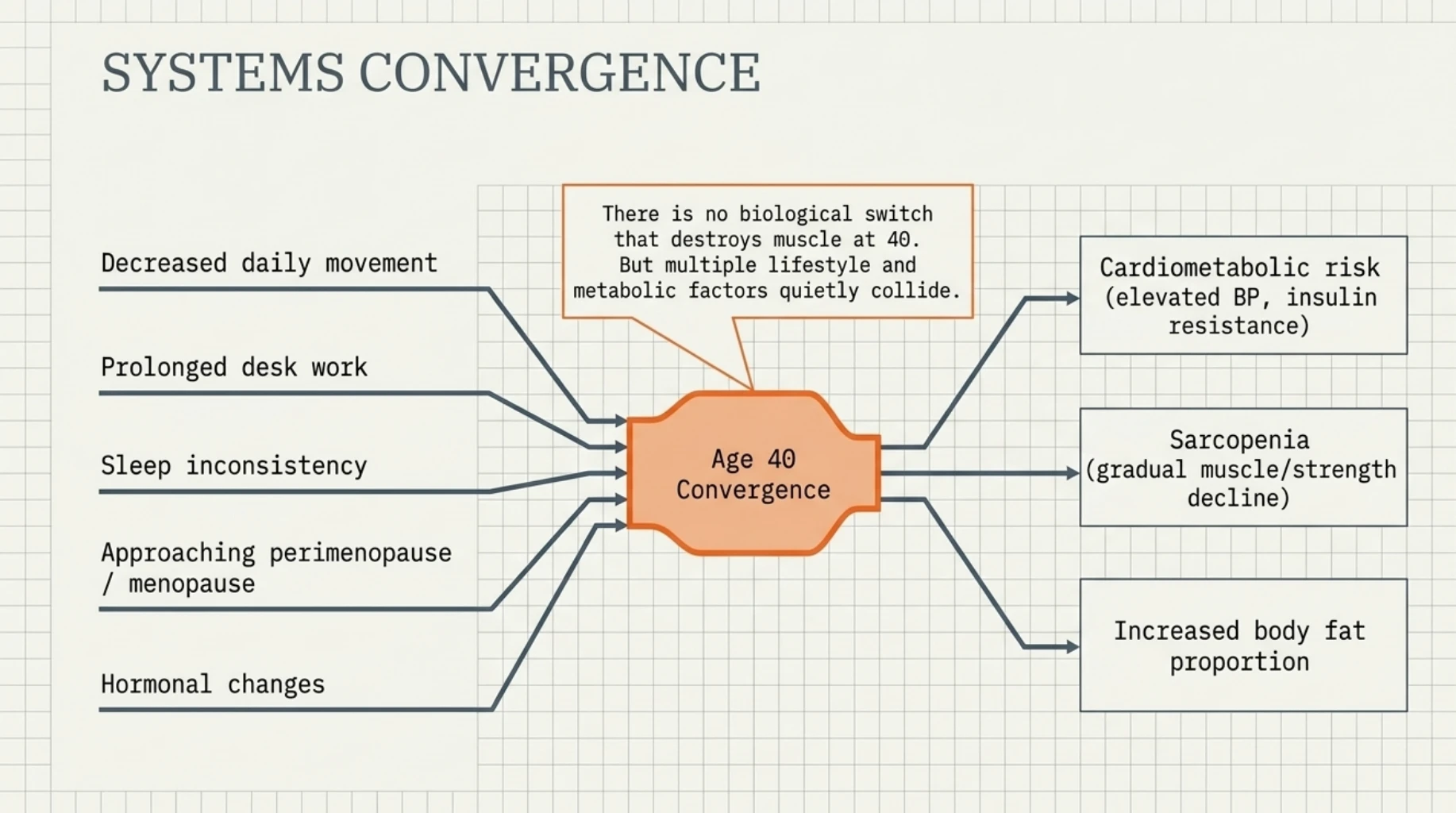
There is no biological switch that turns on at midnight and causes your muscles to disappear.
Changes occur gradually.
But the fourth and fifth decades of life are often when several factors begin converging.
People become busier professionally.
Daily movement may decrease.
Desk work increases.
Sleep may become less consistent.
Body fat may gradually increase.
Muscle-building activity may decline.
Women may begin approaching perimenopause and menopause.
Cardiometabolic risk factors such as elevated blood pressure, insulin resistance, prediabetes and dyslipidaemia may also become more common.
This makes the period after 40 an excellent time to think beyond simply “losing a few kilograms.”
A better question is:
What kind of body composition and physical capacity do I want to carry into my 50s, 60s and 70s?
Muscle Is Not Just for Appearance
Skeletal muscle is sometimes treated as cosmetic tissue.
It is not.
Muscle is involved in:
- Movement.
- Strength.
- Glucose disposal.
- Physical function.
- Balance and stability.
- Energy metabolism.
- Supporting joints.
- Maintaining independence with ageing.
This is one reason losing muscle while gaining fat can be metabolically and functionally important even when body weight does not change dramatically.
The number on the weighing scale tells you how heavy you are.
It does not tell you what proportion of that weight is muscle or fat.
What Happens to Muscle as We Age?
Age-related loss of skeletal muscle mass and function is often discussed under the term sarcopenia.
However, clinically important sarcopenia is not simply “getting slightly smaller muscles because you are older.”
Muscle strength and physical performance are also important.
Ageing-related muscle decline is influenced by multiple factors, including:
- Reduced physical activity.
- Insufficient resistance exercise.
- Changes in anabolic signalling.
- Inadequate protein or overall nutrition.
- Chronic disease.
- Hormonal changes.
- Periods of illness or immobilisation.
Importantly, muscle decline is not completely inevitable.
Resistance training provides a strong signal for the body to maintain and build muscular capacity.
Muscle Mass and Muscle Strength Are Not the Same Thing
A person can gain strength without developing dramatically larger muscles.
Early improvements in strength often involve neurological adaptations as the nervous system becomes better at recruiting and coordinating muscle fibres.
Over time, muscle hypertrophy can also contribute.
This distinction matters for people who avoid strength training after 40 because they are afraid of becoming “too bulky.”
For most recreational exercisers, that concern is misplaced.
Building very large amounts of muscle generally requires substantial training, nutrition and time.
Basic resistance training is much more likely to make everyday tasks easier than to suddenly transform you into a competitive bodybuilder.
Why Walking Alone Is Not Enough
I strongly encourage walking.
It is accessible, inexpensive and valuable for cardiovascular and metabolic health.
Walking after meals can also be a practical strategy for reducing prolonged sitting and improving post-meal glucose handling.
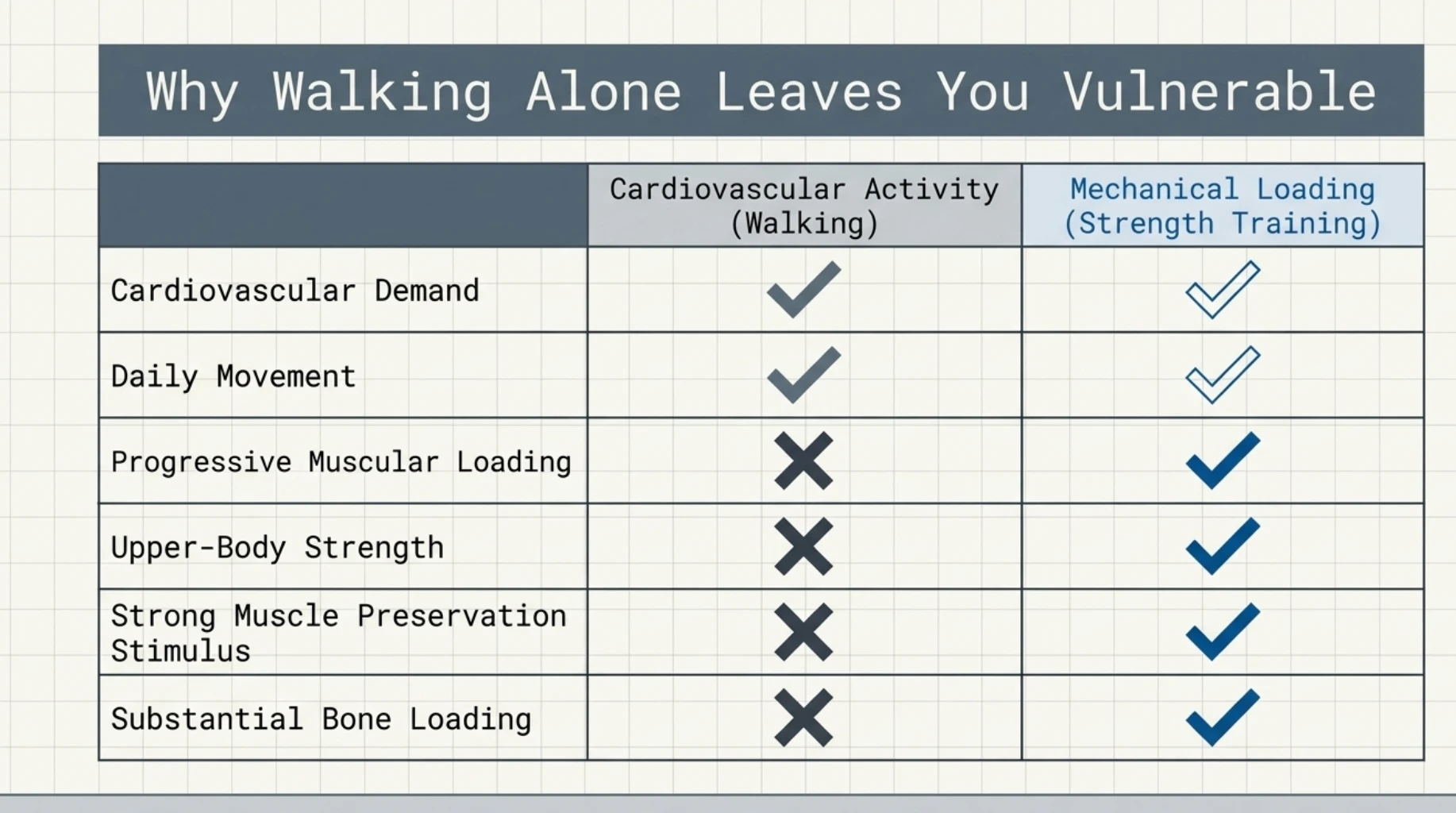
But walking and resistance training provide different stimuli.
| Feature | Walking | Strength Training |
|---|---|---|
| Cardiovascular activity | Yes | Some cardiovascular demand depending on programme |
| Daily movement | Excellent | Does not replace general daily movement |
| Progressive muscular loading | Limited for many muscle groups | Primary training stimulus |
| Upper-body strength | Minimal stimulus | Can be trained directly |
| Muscle preservation | Helpful through activity | Provides a stronger specific stimulus |
| Bone-loading potential | Weight-bearing but relatively modest | Can provide substantial progressive mechanical loading |
The most useful message is not: walking versus strength training.
It is: walking plus strength training.
Strength Training After 40 Benefit 1: Preserving Muscle Mass
The most obvious benefit comes first.
Resistance training provides the mechanical stimulus needed to help preserve and potentially increase skeletal muscle.
This becomes increasingly relevant with age because inactivity can accelerate muscle loss.
Consider what happens to many adults during their 40s.
They may spend eight to ten hours sitting at work.
They drive instead of walking.
Household tasks become increasingly automated.
Recreational sport becomes less frequent.
Then they attempt to manage increasing body weight entirely through calorie restriction.
If weight loss occurs without resistance training and adequate nutrition, some lean tissue may also be lost.
That is not the ideal body-composition outcome.
The goal should not simply be to become lighter.
Whenever appropriate, it should be to reduce excess fat while preserving as much useful lean tissue and physical function as possible.
Why Muscle Preservation Matters During Weight Loss
Imagine two people who each lose 10 kilograms.
Person A loses predominantly fat while preserving most of their muscle.
Person B loses a larger proportion of lean tissue along with fat.
The scale shows the same 10-kilogram reduction.
The physiological outcome is not identical.
Preserving muscle supports:
- Strength.
- Physical function.
- Training capacity.
- Long-term mobility.
- Healthier body composition.
This is why resistance training becomes particularly important during medical or lifestyle-based weight reduction.
Can You Build Muscle After 40?
Yes.
The ability to respond to resistance training does not disappear at 40.
Adults can improve strength and muscle well into later life.
The rate of adaptation varies according to:
- Training history.
- Genetics.
- Nutrition.
- Protein intake.
- Sleep.
- Hormonal environment.
- Health conditions.
- Programme quality.
A previously sedentary 45-year-old may actually experience noticeable early improvements because the training stimulus is new.
Strength Training After 40 Benefit 2: Improving Strength for Everyday Life
Muscle size matters, but strength may matter even more functionally.
You use strength when you:
- Stand up from a low chair.
- Climb stairs.
- Carry groceries.
- Lift luggage.
- Pick something up from the floor.
- Carry a child.
- Move furniture.
- Recover from a loss of balance.
These tasks may seem trivial at 40.
But preserving the physical capacity to perform them easily is part of preparing for later life.
Think of Strength as a Physical Reserve
You do not need exactly the minimum strength required for daily life.
Having a reserve is useful.
If climbing one flight of stairs requires almost all of your available lower-body strength and cardiovascular capacity, everyday life becomes physically demanding.
If the same task uses only a small fraction of your capacity, it feels easy.
Strength training increases that reserve.
This concept becomes particularly important during ageing, illness and periods of temporary inactivity.
Strength Training After 40 Benefit 3: Supporting Bone Health
Muscle is not the only tissue that responds to mechanical loading.
Bone is also biologically active.
Resistance exercise exposes the skeleton to forces generated by muscles and external resistance.
Over time, appropriately designed loading can contribute to maintaining bone strength and may improve bone mineral density at some skeletal sites.
This becomes particularly relevant:
- After menopause.
- With increasing age.
- In people with low bone density.
- After prolonged inactivity.
Walking is weight-bearing, but it may not provide a sufficiently strong or novel mechanical stimulus for every bone-health objective.
Progressive resistance training can complement walking.
Why Bone Health Becomes Especially Important for Women After 40
Women approaching menopause should pay particular attention to both muscle and bone.
Declining oestrogen around menopause can accelerate bone loss.
At the same time, reductions in muscle mass and strength can affect physical function and fall risk.
This creates an important opportunity for prevention.
Strength training after 40 can help women enter menopause with greater muscular capacity and a regular habit of loading the skeleton.
Exercise does not replace osteoporosis medication when medication is clinically indicated.
But resistance training remains an important part of a broader bone-health strategy.
Strength Training After 40 Benefit 4: Supporting Better Blood Sugar Control
Skeletal muscle plays a major role in glucose metabolism.
After a meal, glucose enters the bloodstream.
Muscle is one of the major tissues capable of taking up and storing glucose.
Exercise also improves glucose uptake through mechanisms that are not entirely dependent on insulin.
Repeated resistance training can therefore contribute to improved insulin sensitivity and glycaemic control.
This is particularly relevant for adults with:
- Insulin resistance.
- Prediabetes.
- Type 2 diabetes.
- Abdominal obesity.
- Metabolic syndrome.
Why Muscle Is Important in Insulin Resistance
When discussing insulin resistance, attention often focuses entirely on reducing sugar or carbohydrates.
Diet matters.
But the amount and metabolic activity of skeletal muscle also matter.
A useful way to think about muscle is as a large metabolically active tissue that regularly handles glucose.
Improving muscular fitness does not make dietary quality irrelevant.
It gives metabolic health another powerful tool.
Strength Training and HbA1c
Resistance training can contribute to better glycaemic control in people with type 2 diabetes, particularly when combined with appropriate aerobic activity, nutrition and medical management.
However, exercise should not be presented as a replacement for necessary medication.
Some people may eventually require medication adjustment as fitness, body weight and glucose control improve, but those decisions should be based on actual glucose readings and clinical assessment.
The most useful strategy is usually not:
cardio or weights.
It is:
aerobic activity plus resistance training plus regular daily movement.
Strength Training After 40 Benefit 5: Improving Body Composition
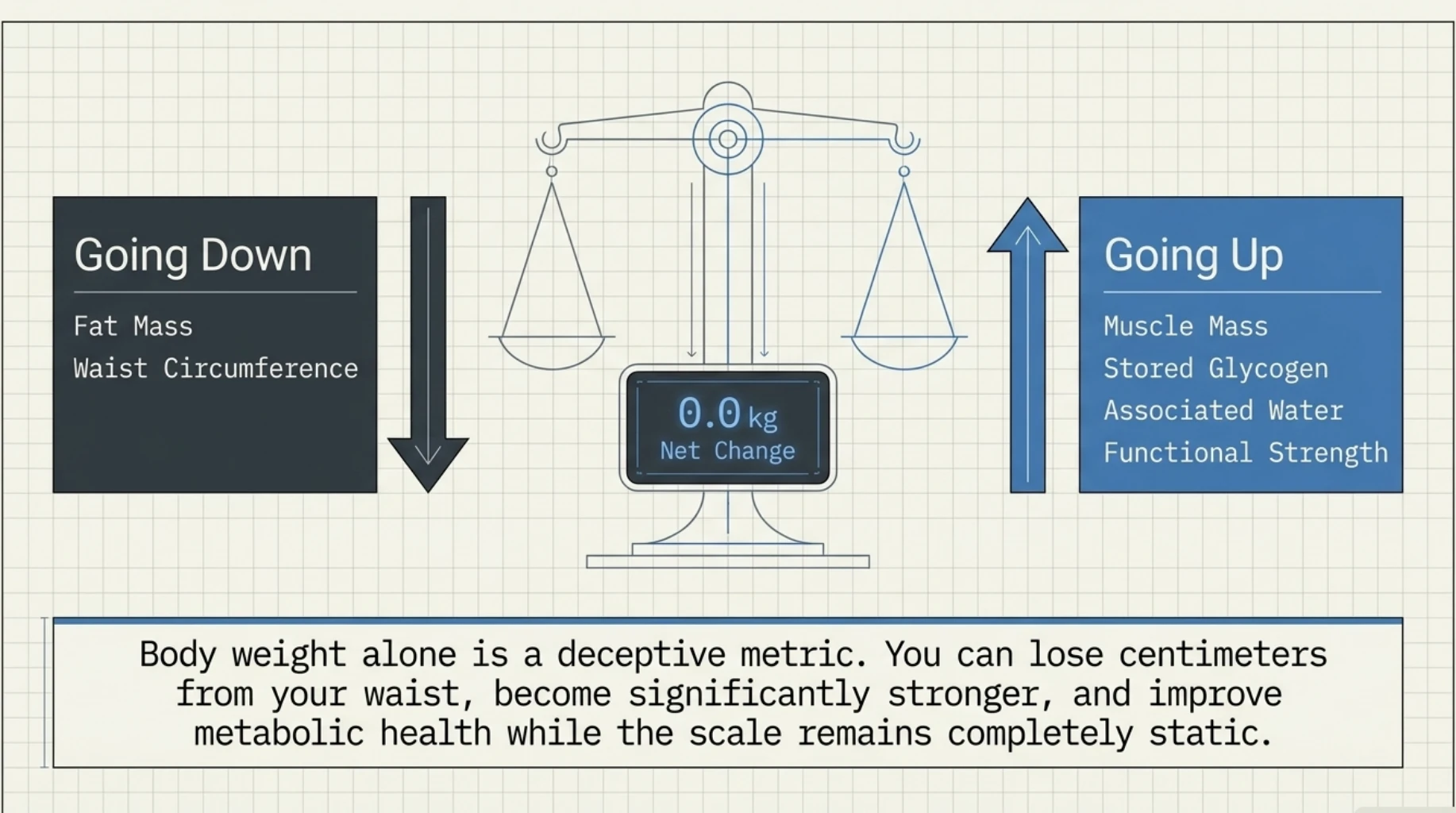
Body weight alone can be misleading.
Two people can have exactly the same body weight and very different proportions of muscle and fat.
This is one reason I prefer to look beyond the weighing scale when discussing metabolic health.
Resistance training can help preserve or increase lean tissue while fat loss is driven primarily by sustained energy balance.
As a result, someone may:
- Lose centimetres from the waist.
- Become stronger.
- Improve body composition.
- Fit into smaller clothes.
- Look visibly leaner.
while the scale changes more slowly than expected.
This is not necessarily failure.
Why the Scale Can Mislead You After Starting Strength Training
Suppose you lose three kilograms of fat while gaining some lean tissue and storing more muscle glycogen and associated water.
The scale may not show the dramatic decline you expected.
But your waist circumference, strength and body composition may all be improving.
This is why evaluating a strength-training programme only through daily body weight can create unnecessary frustration.
| Measure | What It Tells You |
|---|---|
| Body weight | Total mass, but not how much is muscle versus fat |
| Waist circumference | Useful information about central body size and fat distribution |
| Strength | Shows whether physical capacity is improving |
| Clothing fit | Can reflect changes in body dimensions |
| Body composition | Attempts to estimate relative fat and lean tissue, although measurement methods have limitations |
| Fitness | Shows functional improvements that a weighing scale cannot measure |
Strength Training After 40 Does Not Automatically Make You Bulky
This fear is especially common among women.
Resistance training does not suddenly create large amounts of muscle.
Substantial muscular hypertrophy requires repeated progressive training over time and is influenced by genetics, nutrition and hormonal factors.
For most adults training for health, the more likely changes are:
- Improved strength.
- Better muscle definition.
- Improved physical function.
- Better body composition.
- Greater confidence performing everyday physical tasks.
If fear of becoming “too muscular” has kept you away from resistance training, it is worth reconsidering what strength training actually does.
The First Five Benefits of Strength Training After 40
| Benefit | Why It Matters | Long-Term Relevance |
|---|---|---|
| 1 | Preserves muscle mass | Helps counter inactivity and age-related muscle decline |
| 2 | Improves strength | Makes everyday physical tasks easier and builds functional reserve |
| 3 | Supports bone health | Provides mechanical loading that becomes increasingly important with age |
| 4 | Supports glucose control | Improves muscular fitness and contributes to better insulin sensitivity |
| 5 | Improves body composition | Helps preserve lean tissue while supporting fat-loss programmes |
These benefits alone would make resistance training valuable after 40.
But the remaining benefits may be even more important for long-term health because they involve cardiovascular risk, balance, physical independence and how well you age—not simply how much muscle you can see in the mirror.
Strength Training After 40 Benefit 6: Supporting Cardiovascular and Metabolic Health
Strength training is usually associated with muscles, while walking, running and cycling are associated with heart health.
That distinction is too simplistic.
Aerobic exercise remains extremely important for cardiovascular fitness, but resistance training can also contribute to a healthier cardiometabolic profile.
Regular strength training may help improve several factors that commonly become important after 40, including:
- Blood pressure.
- Insulin sensitivity.
- Glucose control.
- Body composition.
- Waist circumference.
- Overall physical fitness.
This does not mean lifting weights should replace aerobic exercise.
The broader message is that cardiovascular health does not require choosing between cardio and weights.
For many adults, the most complete programme combines both.
Strength Training and Blood Pressure
People with hypertension sometimes avoid resistance training because they assume lifting weights is inherently dangerous for blood pressure.
This requires more nuance.
Blood pressure temporarily rises during resistance exercise, particularly during heavy efforts. However, regular appropriately prescribed resistance training can form part of an exercise programme for many people with hypertension.
Technique matters.
Repeated breath-holding and excessive straining should generally be avoided, particularly in people with cardiovascular risk factors.
Instead, focus on:
- Controlled repetitions.
- Appropriate resistance.
- Progressive training.
- Normal breathing during exercise.
- Good technique.
People with poorly controlled blood pressure, significant cardiovascular disease or concerning symptoms should obtain appropriate medical guidance before beginning demanding resistance exercise.
Strength Training and Cholesterol
Exercise is one component of managing cardiovascular risk.
Resistance training can contribute to improved metabolic health, but it should not be presented as a stand-alone treatment for abnormal cholesterol.
Lipid levels are influenced by:
- Genetics.
- Diet.
- Body weight and fat distribution.
- Insulin resistance.
- Physical activity.
- Smoking.
- Medical conditions.
- Medications.
Someone with significantly elevated LDL cholesterol should therefore not assume that becoming stronger in the gym makes the lipid abnormality irrelevant.
Strength training belongs within a broader cardiovascular-risk strategy.
Strength Training After 40 and Fatty Liver
Metabolic dysfunction-associated steatotic liver disease, or MASLD, is closely connected with insulin resistance, abdominal obesity and cardiometabolic health.
Exercise can help even when the weighing scale changes relatively little.
Both aerobic and resistance exercise can contribute to improvements in metabolic fitness and liver-related risk factors.
This is especially relevant for people who believe they must first lose a large amount of weight before exercise becomes useful.
You can begin improving fitness before reaching your final weight goal.
The liver, muscles and cardiovascular system do not need to wait for the scale to become “perfect” before benefiting from regular activity.
Strength Training After 40 Benefit 7: Improving Balance and Reducing Fall Risk
Falls are often thought of as a problem only in very old age.
But the physical abilities that help prevent falls are built much earlier.
Maintaining lower-body strength helps you:
- Control your body when stepping.
- Recover from a small loss of balance.
- Climb stairs safely.
- Stand from a chair.
- Navigate uneven surfaces.
Resistance training can improve several components of physical function that contribute to stability.
However, strength training and balance training are not identical.
Someone at increased risk of falling may benefit from specific balance exercises in addition to resistance training.
Why Leg Strength Matters More Than You May Realise
Many gym programmes focus heavily on visible upper-body muscles.
But from a healthy-ageing perspective, lower-body strength is extremely important.
Your quadriceps, gluteal muscles, hamstrings and calf muscles contribute to:
- Standing.
- Walking.
- Climbing stairs.
- Getting out of a chair.
- Maintaining balance.
- Recovering from a stumble.
This is why exercises such as squats, sit-to-stands, step-ups, lunges, leg presses, hip hinges and calf raises can have practical value beyond appearance.
The Chair Test: A Simple Example of Functional Strength
Imagine sitting in a normal chair and standing up without using your hands.
At 40, this may seem so easy that you never think about it.
But the movement requires coordinated strength from the hips and legs, adequate balance and sufficient mobility.
Now imagine performing the same task repeatedly at 75.
This is why I prefer to think of strength training after 40 as investing in future physical capacity.
You are not merely training for today’s workout.
You are building reserve for later decades.
Strength Training After 40 Benefit 8: Preserving Mobility and Independence
One of the most meaningful benefits of strength training is also one of the least glamorous.
It can help preserve your ability to do things for yourself.
Physical independence depends on multiple systems, including:
- Muscle strength.
- Balance.
- Cardiovascular fitness.
- Joint function.
- Neurological function.
- Vision.
Strength training cannot control all of these.
But muscular strength is one of the components we can actively train.
Why Independence Is a Better Long-Term Goal Than Bigger Muscles
Ask yourself what you would like to be capable of at 70.
Perhaps you want to:
- Travel independently.
- Carry your own luggage.
- Walk through an airport comfortably.
- Climb stairs.
- Play with grandchildren.
- Get up from the floor.
- Continue household activities.
- Remain confident outside the home.
These activities require physical capacity.
The foundation for that capacity is not built when you turn 70.
It is influenced by what you do during the decades before.
Strength Is Like a Retirement Fund for Your Body
Financial retirement planning works by building resources before they are urgently needed.
Physical capacity works in a similar way.
You build muscle, strength, balance and fitness while you have the opportunity.
Then, as ageing gradually reduces some physiological reserve, you begin from a higher starting point.
A person who enters later life with good muscular strength has more reserve than someone who has spent decades progressively losing it.
This does not guarantee independence.
Disease, injury and genetics still matter.
But maintaining physical reserve improves the foundation from which you age.
Strength Training After 40 Benefit 9: Building Resilience for Healthy Ageing
The ninth benefit brings many of the others together.
Strength training after 40 helps build physical resilience.
Resilience means having enough reserve to tolerate challenges.
Those challenges may include:
- A period of illness.
- Temporary bed rest.
- Surgery.
- Travel.
- Reduced activity after an injury.
- The gradual physiological changes associated with ageing.
Muscle can be lost relatively quickly during prolonged inactivity, particularly in older adults.
Starting with greater strength and muscle reserve may therefore be valuable when life temporarily reduces your activity.
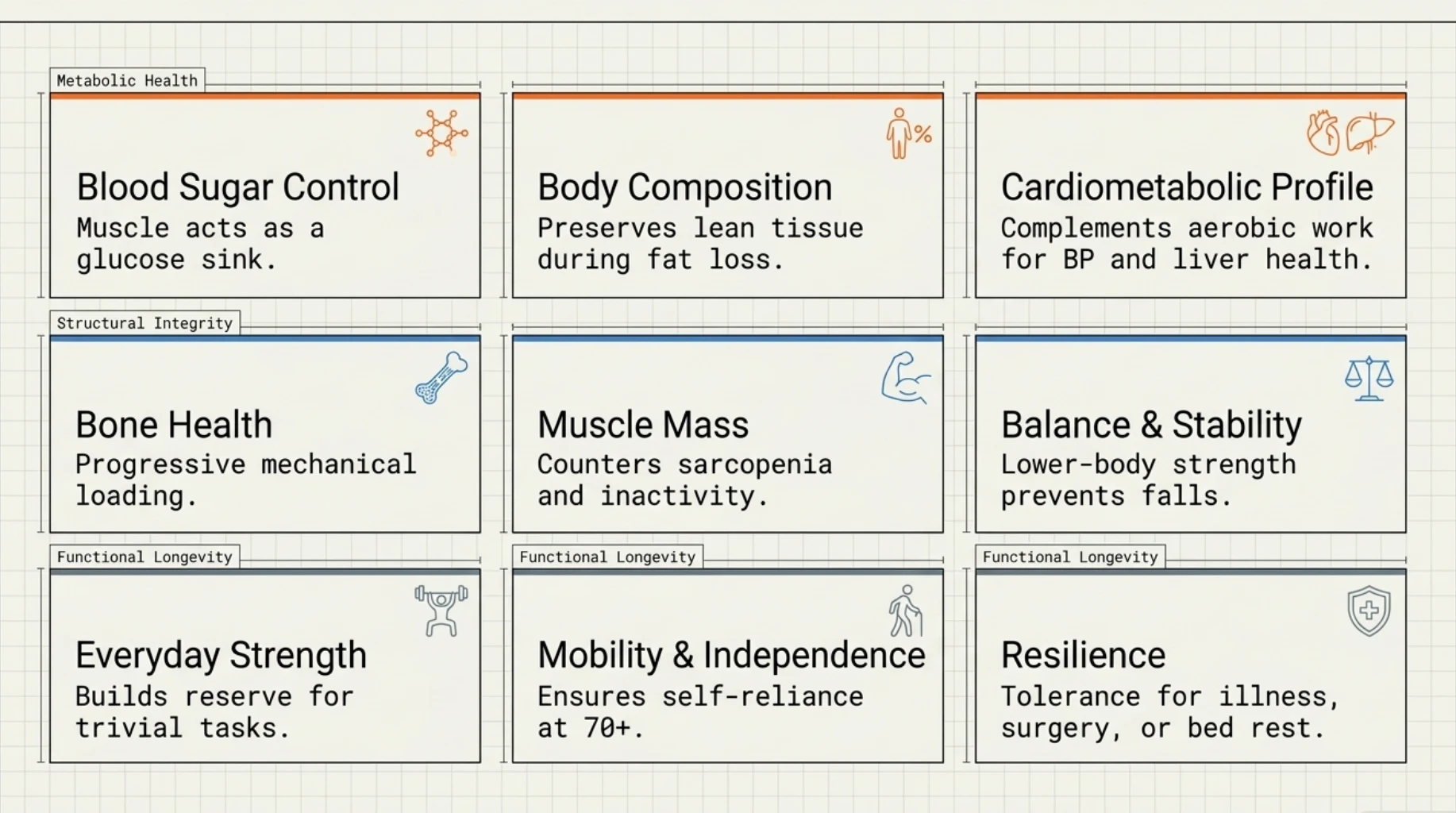
The 9 Benefits of Strength Training After 40
| No. | Benefit | Why It Matters After 40 |
|---|---|---|
| 1 | Preserves muscle mass | Helps counter inactivity and age-related muscle decline |
| 2 | Improves strength | Builds reserve for everyday physical tasks |
| 3 | Supports bone health | Provides progressive mechanical loading to the skeleton |
| 4 | Supports blood sugar control | Muscle plays an important role in glucose disposal and insulin sensitivity |
| 5 | Improves body composition | Helps preserve lean tissue during fat loss |
| 6 | Supports cardiometabolic health | Complements aerobic exercise for blood pressure, metabolic fitness and cardiovascular risk management |
| 7 | Improves balance and stability | Stronger lower-body muscles contribute to physical control and fall prevention |
| 8 | Preserves mobility and independence | Supports the physical capacity required for everyday life |
| 9 | Builds resilience for healthy ageing | Creates greater physical reserve before later-life challenges occur |
Strength Training After 40 for Men
Men in their 40s often approach resistance training with one of two extremes.
Some stop strength training completely because work and family commitments become more demanding.
Others try to train exactly as they did at 22.
Neither approach is necessary.
Training after 40 can still be challenging and progressive.
But programme design should account for:
- Current fitness rather than past fitness.
- Previous injuries.
- Sleep.
- Recovery capacity.
- Joint and tendon tolerance.
- Work and family stress.
The fact that you once bench-pressed a particular weight at 25 does not mean that should be your starting weight after a ten-year break.
Does Testosterone Decline After 40 Mean You Cannot Build Muscle?
No.
Hormonal changes occur with ageing, but the common idea that men suddenly become unable to gain muscle after 40 is incorrect.
Resistance training remains effective.
Sleep, nutrition, body composition, alcohol intake, medical conditions and medications can also influence hormonal health.
Unexplained symptoms suggesting a hormonal problem should be medically evaluated rather than automatically treated with unregulated “testosterone boosters.”
Strength Training After 40 for Women
Resistance training is particularly valuable for women approaching perimenopause and menopause.
During this period, changes in ovarian hormones can influence:
- Bone turnover.
- Body-fat distribution.
- Muscle health.
- Sleep.
- Metabolic risk.
This does not mean menopause inevitably causes obesity or severe muscle loss.
But it does mean that preserving muscle and bone deserves deliberate attention.
Strength training is one of the most practical tools available.
Strength Training During Perimenopause
Perimenopause can be accompanied by irregular cycles, sleep disruption, hot flushes and changes in energy levels.
A rigid programme that assumes every day will feel identical may therefore be difficult for some women.
The answer is not to stop resistance training.
Instead, training can be adjusted when needed while maintaining the overall habit.
For example, a particularly poor night of sleep might justify reducing training volume without abandoning the entire programme.
Strength Training After Menopause
After menopause, resistance training becomes particularly valuable because both muscle and bone deserve protection.
A programme may combine:
- Progressive resistance training.
- Weight-bearing activity.
- Aerobic exercise.
- Balance training.
- Adequate protein.
- Appropriate calcium and vitamin D intake.
Women with established osteoporosis, previous fragility fractures or significant musculoskeletal problems may require individualised exercise selection.
The presence of osteoporosis should not automatically lead to avoiding exercise altogether.
Is 40 Too Late to Start Strength Training?
No.
Forty is not late.
Fifty is not necessarily late.
Sixty is not necessarily late.
Even adults beginning resistance exercise considerably later in life can improve strength and physical function.
The important issue is not whether you have trained before.
It is whether the starting programme matches your current ability.
What if You Have Never Entered a Gym?
A gym is useful, but it is not mandatory.
Resistance can come from:
- Dumbbells.
- Resistance bands.
- Machines.
- Barbells.
- Kettlebells.
- Body weight.
- Weighted household objects when used safely.
The body does not know whether resistance came from an expensive machine or a dumbbell.
It responds to mechanical tension and progressive challenge.
Can You Start Strength Training at Home?
Yes.
A simple home programme can begin with exercises such as:
- Sit-to-stands or squats.
- Wall or elevated push-ups.
- Resistance-band rows.
- Hip hinges.
- Step-ups.
- Calf raises.
- Loaded carries.
As these exercises become easy, however, the resistance or difficulty should gradually increase.
This principle is called progressive overload.
Why Progressive Overload Matters After 40
Your body adapts to repeated demands.
If you perform exactly the same easy exercise with the same resistance for years, eventually the exercise provides little new stimulus.
Progressive overload means gradually increasing the challenge as your capacity improves.
This can involve:
- Increasing resistance.
- Adding repetitions.
- Adding sets where appropriate.
- Increasing range of motion.
- Using a more challenging exercise variation.
- Improving movement control.
Progression does not mean adding weight every workout forever.
It means ensuring that training remains appropriately challenging over time.
How Heavy Should You Lift After 40?
There is no single ideal weight.
“Heavy” is relative to the individual.
A 10-kilogram dumbbell may be extremely challenging for one person and a warm-up weight for another.
A useful resistance should allow you to perform the exercise with controlled technique while making the final repetitions meaningfully challenging.
You do not need to test your maximum strength every week.
For general health and muscle preservation, a range of loads can be effective when the exercise is sufficiently challenging and progressed appropriately.
Do You Need to Lift Very Heavy Weights After 40?
No.
Moderate resistance can produce substantial improvements in strength and muscle, particularly for beginners.
Heavier resistance can also be useful as experience increases and when appropriate for the individual.
The important distinction is between:
challenging training and reckless training.
The goal is not to prove how much weight you can lift once.
The goal is to create a repeatable training stimulus that you can recover from and progressively improve.
How Many Days a Week Should You Strength Train After 40?
For many adults, two or three resistance-training sessions per week provide an excellent starting point.
This allows the major muscle groups to be trained regularly while leaving recovery time between demanding sessions.
More experienced trainees may train more frequently by dividing muscle groups or movement patterns across the week.
More training days are not automatically better.
The programme must remain recoverable.
| Experience Level | Possible Starting Structure | Key Consideration |
|---|---|---|
| Complete beginner | 2 full-body sessions per week | Learn technique and establish consistency |
| Beginner progressing well | 2–3 full-body sessions per week | Gradually increase resistance |
| Intermediate trainee | 3–4 sessions per week | Workload can be distributed across sessions |
| Experienced trainee | Individualised frequency | Training volume, intensity and recovery matter more than simply counting days |
How Long Should a Strength Workout Last?
You do not need to spend two hours in the gym.
For many adults, a well-organised session can be completed in approximately 30–60 minutes.
Workout quality matters more than occupying the gym for a particular amount of time.
A focused programme covering major movement patterns can be highly effective.
Which Muscles Should You Train After 40?
A balanced programme should train the major muscle groups rather than focusing only on arms or chest.
Important movement patterns include:
- Squatting or sitting-to-standing.
- Hip hinging.
- Pushing.
- Pulling.
- Stepping or lunging.
- Carrying.
- Calf and ankle strengthening.
- Appropriate trunk-strengthening movements.
These patterns collectively develop a broad base of strength that transfers better to everyday life.
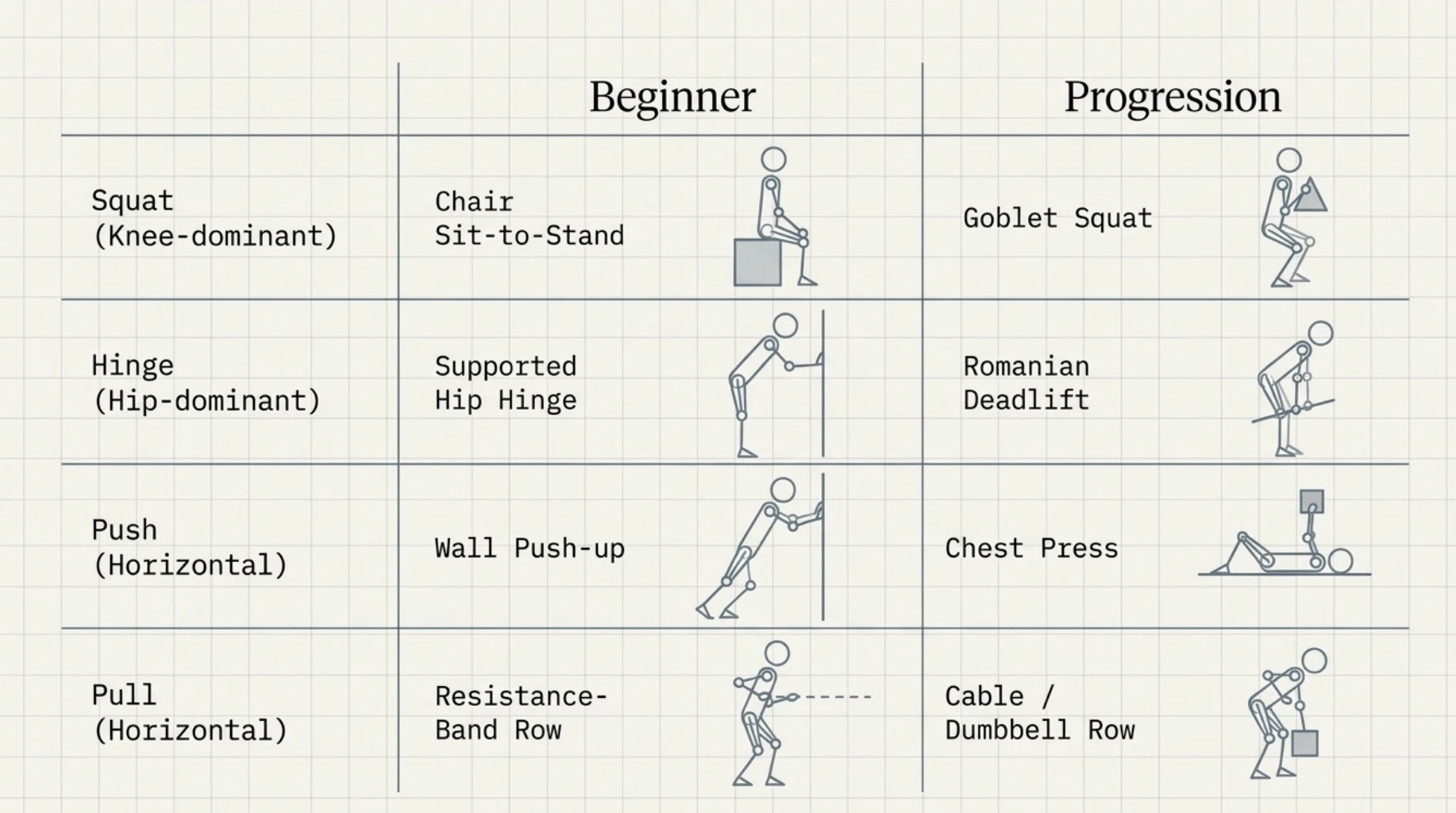
A Practical Strength Training After 40 Framework
| Movement Pattern | Beginner Example | Possible Progression |
|---|---|---|
| Squat | Chair sit-to-stand | Goblet squat or progressively loaded squat |
| Hip hinge | Supported hip hinge | Romanian deadlift or another loaded hinge |
| Push | Wall or elevated push-up | Push-up, chest press or other loaded press |
| Pull | Resistance-band row | Cable, machine or dumbbell row |
| Step | Low step-up | Higher or progressively loaded step-up |
| Calf | Supported calf raise | Single-leg or weighted calf raise |
| Carry | Light farmer carry | Progressively heavier loaded carry |
The exact exercises are less important than choosing movements you can perform safely and progressively.
Machines vs Free Weights After 40
Both can work.
Machines are not “cheating,” and free weights are not automatically superior.
Machines may be particularly useful for beginners because they can simplify movement and allow specific muscles to be trained with less balance demand.
Free weights can provide greater movement freedom and require more stabilisation.
A programme can use either or both.
The best equipment is usually the equipment that allows you to train consistently, progressively and comfortably.
Resistance Bands vs Weights After 40
Resistance bands can be extremely useful, particularly for home training and beginners.
The limitation is progression.
If the same light band remains easy for months, the stimulus eventually becomes insufficient.
Bands are therefore effective when resistance is progressively increased just like any other training method.
Are Squats Safe After 40?
For many people, yes.
Squatting is a fundamental human movement.
Every time you sit down and stand up, you perform a variation of a squat.
The exercise should be adapted to:
- Mobility.
- Strength.
- Training experience.
- Joint symptoms.
- Previous injuries.
A chair sit-to-stand may be an appropriate starting squat for one person, while an experienced lifter may comfortably use substantial external resistance.
Are Deadlifts Safe After 40?
A deadlift is fundamentally a loaded hip-hinge movement.
Learning how to bend and lift objects using appropriate mechanics can be useful for everyday life.
But the exercise should be taught and progressed appropriately.
Someone with no previous resistance-training experience does not need to begin by attempting a maximal barbell deadlift.
The movement can start with a light kettlebell, dumbbells or another manageable resistance and progress as technique and capacity improve.
What if You Have Knee Pain?
Knee pain does not automatically mean that all lower-body strength training must stop.
The cause and severity matter.
Exercise selection, range of motion, resistance and total training volume can often be modified.
For example, one person may tolerate a controlled sit-to-stand better than a deep squat.
Another may tolerate a leg press or step-up.
Persistent swelling, locking, instability, significant trauma or worsening pain deserves appropriate assessment rather than repeatedly exercising through it.
What if You Have Back Pain?
Back pain is common and does not automatically mean the spine must never be loaded again.
In many cases, appropriately selected exercise is part of restoring strength and function.
However, the programme should account for the cause of pain, symptoms and current capacity.
New neurological symptoms, significant weakness, bowel or bladder disturbance, major trauma or other concerning features require medical assessment rather than generic gym advice.
Why Recovery Becomes Part of Strength Training After 40
Strength improves when training stress is followed by adaptation.
More exercise is therefore not automatically better.
Recovery depends on:
- Training volume.
- Training intensity.
- Sleep.
- Nutrition.
- Protein intake.
- Overall calorie intake.
- Psychological stress.
- Training history.
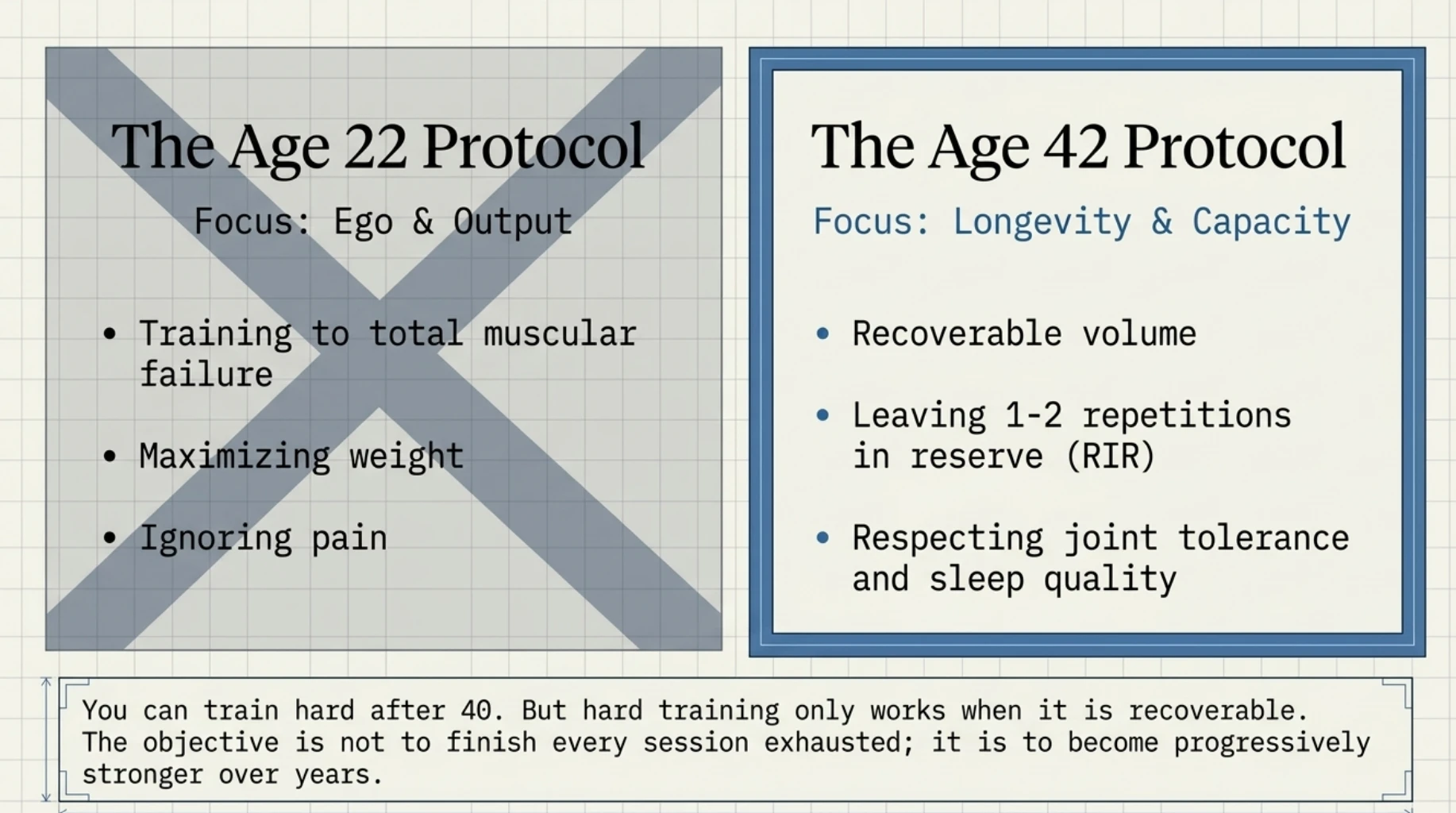
You can train hard after 40.
But hard training works best when it is recoverable.
The objective is not to finish every session exhausted.
The objective is to become progressively stronger over time.
How Hard Should Strength Training After 40 Feel?
Strength training needs to be challenging enough to create adaptation.
If every exercise feels effortless and you could perform another 20 repetitions without difficulty, the resistance may eventually be too low to provide a meaningful strength stimulus.
But the opposite extreme is unnecessary.
You do not need to reach complete muscular failure on every set.
For many adults training for health, strength and muscle preservation, it is reasonable to finish many working sets while still feeling that a small number of good-quality repetitions would have been possible.
This allows the muscles to receive a meaningful stimulus without making every session unnecessarily exhausting.
Do You Need to Train to Failure After 40?
No.
Training to failure means continuing a set until you cannot complete another repetition with appropriate technique.
It can be used selectively, particularly by experienced trainees, but it is not required for every exercise or every set.
Repeated failure training can increase fatigue and may make recovery more difficult.
For someone beginning strength training after 40, good technique, consistency and progressive overload are usually more important than proving how hard you can push during one workout.
How Many Sets and Repetitions Should You Do?
There is no single repetition range that everyone over 40 must follow.
Muscle and strength can improve across a range of loads when the resistance is sufficiently challenging.
A beginner programme may start conservatively with a small number of working sets for each major movement pattern.
As training experience increases, volume can gradually increase according to goals and recovery.
| Training Goal | Practical Approach | Important Point |
|---|---|---|
| Learning technique | Moderate resistance with controlled repetitions | Movement quality comes before heavy loading |
| General strength | Progressively challenging resistance | A range of repetitions can be effective |
| Muscle preservation | Regular resistance training of major muscle groups | Consistency and adequate training stimulus matter |
| Muscle growth | Sufficient weekly training volume with progressive overload | Nutrition and recovery also become important |
| Healthy ageing | Combination of strength, balance, aerobic fitness and daily movement | Do not rely on one type of exercise alone |
Why Technique Matters More Than Ego
One of the biggest mistakes after returning to the gym is choosing weights based on what you used to lift.
Your muscles do not care what you bench-pressed 15 years ago.
Your current strength, mobility, training history and tissue tolerance determine what is appropriate today.
Using excessive resistance can cause technique to deteriorate.
Instead of progressively loading the intended muscles, you may begin compensating through other joints and movement patterns.
Start where you are.
Then progress from there.
Should You Warm Up Before Strength Training After 40?
A warm-up can prepare you for the movements you are about to perform.
It does not need to become another workout.
A practical warm-up might include a few minutes of comfortable movement followed by lighter versions of the exercises you plan to perform.
For example, before a heavier squat variation, you might perform body-weight squats or lighter warm-up sets.
As the working weight becomes heavier, specific warm-up sets become increasingly useful.
Do You Need to Stretch Before Lifting Weights?
Long static stretching of every muscle before every workout is not mandatory.
A dynamic warm-up and exercise-specific preparation are often more practical.
If a particular mobility limitation prevents you from performing an exercise comfortably, targeted mobility work may be useful.
But flexibility training and strength training serve different purposes.
You do not need extreme flexibility to become stronger.
How Much Recovery Do You Need After 40?
Recovery requirements depend more on the workout and the individual than on reaching a particular birthday.
A demanding full-body strength session creates different recovery needs from a 20-minute easy walk.
Recovery is influenced by:
- Training intensity.
- Training volume.
- Exercise selection.
- Previous training experience.
- Sleep.
- Protein and total nutrition.
- Calorie restriction.
- Work and psychological stress.
For many beginners, leaving a day or more between demanding full-body strength sessions is a simple way to distribute training.
This does not mean you need to remain inactive between workouts.
Walking and other moderate activities can continue.
Strength Training After 40 and Protein
Resistance exercise provides the stimulus.
Dietary protein provides amino acids required for muscle protein remodelling.
Both matter.
Protein-containing foods can include:
- Eggs.
- Milk and curd.
- Paneer.
- Fish.
- Chicken and other lean meats where consumed.
- Soya and tofu.
- Dal and legumes.
- Protein supplements when useful for convenience.
Rather than consuming nearly all your protein at dinner, distributing meaningful protein-containing foods across the day can be practical.
Do You Need a Protein Powder After 40?
No.
Protein powder is food supplementation, not a requirement for strength training.
If your normal diet provides sufficient protein, a supplement may add little beyond convenience.
But if appetite, lifestyle or dietary preferences make adequate protein difficult, a suitable protein supplement can sometimes help fill the gap.
The presence of a protein shake does not determine whether your programme will succeed.
Strength Training During Weight Loss After 40
This is one of the situations where I consider resistance training particularly valuable.
Many people approaching middle age try to lose weight by doing only two things:
eat less and walk more.
Both can be useful.
But if weight loss occurs without a strong muscle-preserving stimulus, some lean tissue may also be lost.
A more complete approach can include:
- A sustainable calorie deficit where weight loss is needed.
- Adequate protein.
- Resistance training.
- Aerobic exercise.
- Regular walking and daily movement.
- Adequate sleep and recovery.
The objective is not simply to produce the lowest possible number on the weighing scale.
The objective is to improve health and body composition while preserving physical capacity.
Strength Training During Medical Weight Loss
This principle remains important when weight loss is supported by medical treatment.
When appetite falls substantially, total food and protein intake can also decline.
At the same time, rapid weight reduction can include loss of lean tissue as well as fat.
Resistance training, adequate nutrition and appropriate protein intake therefore deserve attention during a medically supervised weight-loss programme.
Exercise should still be introduced according to the individual’s current fitness and medical status rather than suddenly prescribing very high training volumes.
Can Strength Training Help With Belly Fat After 40?
No exercise can selectively force fat to disappear from the abdomen.
Doing hundreds of abdominal exercises does not specifically burn abdominal fat.
Reduction in excess body fat depends largely on sustained energy balance, while genetics and hormonal factors influence where fat is stored and lost.
Strength training can nevertheless be valuable because it helps preserve or build lean tissue while a broader weight-management strategy reduces excess fat.
Waist circumference may therefore improve even though strength training itself is not a spot-reduction treatment.
Strength Training After 40 and Metabolism
You may have heard that adding muscle will “massively boost metabolism.”
This claim is often exaggerated.
Muscle is metabolically active tissue, but adding a modest amount of muscle does not suddenly allow unlimited calorie intake.
The metabolic value of resistance training is broader.
It includes:
- Preserving metabolically active lean tissue.
- Improving insulin sensitivity.
- Supporting glucose disposal.
- Increasing exercise capacity.
- Helping maintain physical activity.
- Improving body composition.
These benefits are more meaningful than promising a dramatic increase in resting metabolism.
What About Creatine After 40?
Creatine is one of the more extensively studied sports-nutrition supplements and can support improvements in strength and lean mass when combined with resistance training.
It can be particularly interesting in middle-aged and older adults because the goal increasingly shifts towards preserving muscle and physical function.
But creatine is optional.
You can become substantially stronger without using it.
Training quality, adequate nutrition, protein and consistency remain the foundation.
People with kidney disease or other relevant medical concerns should discuss supplement use with their treating clinician rather than assuming that every fitness supplement is appropriate for them.
Can People With Diabetes Do Strength Training?
For many people with type 2 diabetes, resistance training can be an important component of exercise management.
It can complement walking and aerobic activity by improving muscular fitness and contributing to better insulin sensitivity.
However, exercise plans may need modification in the presence of complications such as:
- Significant peripheral neuropathy.
- Active foot problems.
- Certain eye complications.
- Advanced kidney disease.
- Cardiovascular disease.
People taking insulin or medicines that can cause hypoglycaemia may also need individual guidance regarding glucose monitoring, food intake and medication around exercise.
Can People With High Blood Pressure Lift Weights?
Many people with hypertension can perform resistance training.
Appropriate exercise can be part of a comprehensive blood-pressure management strategy.
However, very heavy lifting combined with prolonged breath-holding can cause substantial temporary increases in blood pressure.
People with hypertension should focus on controlled breathing, appropriate resistance and gradual progression.
Severely uncontrolled blood pressure or significant cardiovascular disease deserves medical assessment before demanding exercise.
Can You Strength Train With Arthritis?
Arthritis does not automatically mean avoiding resistance exercise.
Strengthening the muscles surrounding a joint can support function.
The programme may need modification according to:
- The joint involved.
- Pain severity.
- Range of motion.
- Current inflammation.
- Previous surgery.
- Overall physical capacity.
Exercise should be adapted rather than forcing painful movements simply because they appear in a standard gym programme.
Common Strength Training Mistakes After 40
Mistake 1: Trying to Train Like Your Younger Self
Your previous fitness history can be useful, but it should not dictate your starting point after years away from training.
Start according to your current capacity.
Mistake 2: Avoiding Resistance Because You Think Walking Is Enough
Walking is excellent exercise.
But it does not provide the same progressive loading stimulus to all major muscle groups.
Use both where possible.
Mistake 3: Doing Only Cardio for Weight Loss
Cardio can increase energy expenditure and improve cardiovascular fitness.
But resistance training adds a muscle-preserving stimulus that becomes particularly valuable during calorie restriction.
Mistake 4: Lifting Too Heavy Too Soon
The fastest way to progress is not necessarily to place the heaviest possible weight on the bar during your first week.
Technique and tissue tolerance need time to develop.
Mistake 5: Never Increasing the Resistance
The opposite problem is using the same very light dumbbells indefinitely.
As you become stronger, the programme needs some form of progression.
Mistake 6: Training Only the Muscles You Can See in the Mirror
A programme consisting almost entirely of chest and arm exercises neglects much of the body.
Legs, hips, back, pulling movements and functional movement patterns deserve equal attention.
Mistake 7: Ignoring Pain
Training effort can be uncomfortable.
Persistent sharp or worsening joint pain is different.
Do not repeatedly force a painful movement simply because someone told you that “no pain, no gain.”
Mistake 8: Expecting Supplements to Replace Training
Protein powder, creatine and other supplements cannot compensate for inconsistent resistance training.
The training stimulus comes first.
Mistake 9: Ignoring Recovery
More training is not always better.
Strength develops when training is followed by sufficient recovery for adaptation.
Persistent declining performance, excessive fatigue and accumulating pain are reasons to reassess the programme rather than simply adding more workouts.
A Simple Beginner Strength Training After 40 Plan
For someone medically suitable for exercise and completely new to resistance training, a simple full-body structure can be easier to sustain than a complicated bodybuilding split.
| Movement | Example Exercise | Initial Goal |
|---|---|---|
| Knee-dominant movement | Chair squat or goblet squat | Develop leg strength and movement control |
| Hip-dominant movement | Hip hinge or light Romanian deadlift | Strengthen hips and posterior chain |
| Horizontal push | Wall push-up or chest press | Train chest, shoulders and triceps |
| Horizontal pull | Band, cable or machine row | Train upper back and arms |
| Step | Low step-up | Develop unilateral leg strength and control |
| Calf | Supported calf raise | Strengthen lower leg and ankle complex |
| Carry | Farmer carry | Develop grip and whole-body functional strength |
A beginner might perform this type of programme twice weekly, learn the movements and gradually progress.
Exercise selection should be modified when necessary for mobility limitations, injuries or medical conditions.
Example Weekly Fitness Plan After 40
Strength training works best as part of a broader fitness programme rather than replacing all other movement.
| Day | Example Activity |
|---|---|
| Monday | Full-body strength training |
| Tuesday | Brisk walking or moderate aerobic exercise |
| Wednesday | Walking and mobility |
| Thursday | Full-body strength training |
| Friday | Moderate aerobic exercise or brisk walking |
| Saturday | Recreational activity, walking or optional additional training according to fitness |
| Sunday | Rest or comfortable active recovery |
This is an example, not a prescription for everyone.
The best weekly structure is the one that fits your health, fitness, schedule and recovery capacity while allowing consistent progression.
How Soon Will You See Results From Strength Training After 40?
Some improvements occur before visible muscle growth becomes obvious.
Beginners may notice that movements feel easier and strength improves within the early weeks of consistent training.
Visible body-composition changes usually require more time and depend heavily on nutrition and starting body composition.
Do not judge the programme only by the mirror.
Also ask:
- Am I lifting more than when I started?
- Can I perform more controlled repetitions?
- Are stairs becoming easier?
- Can I get up from the floor more comfortably?
- Has my waist circumference changed?
- Am I moving with greater confidence?
These are meaningful forms of progress.
Frequently Asked Questions About Strength Training After 40
Is 40 Too Old to Start Strength Training?
No. Adults can improve muscle strength and physical function well beyond 40. The programme should simply start at an appropriate level and progress gradually.
How Many Times a Week Should I Strength Train After 40?
For many beginners, two to three full-body resistance-training sessions per week can provide a practical starting structure. More experienced trainees may use different schedules according to training volume and recovery.
Can I Build Muscle After 40?
Yes. The ability to build muscle does not disappear at 40. Training quality, protein intake, overall nutrition, sleep, genetics and previous training experience influence the response.
Should I Lift Heavy After 40?
You should use resistance that is appropriately challenging for your ability and goals. You do not need maximal weights to gain strength or muscle, particularly when starting.
Is Strength Training Safe for Women Over 40?
For most healthy women, appropriately designed resistance training is highly valuable. It becomes particularly relevant for preserving muscle, strength and bone health around perimenopause and menopause.
Will Strength Training Make Women Bulky?
Ordinary health-focused resistance training does not suddenly produce a bodybuilding physique. Significant muscular hypertrophy generally requires substantial progressive training over time.
Is Walking Enough After 40?
Walking is excellent for health and should be encouraged, but it does not provide the same progressive resistance stimulus for all major muscle groups. Combining walking with resistance training provides broader benefits.
Can I Strength Train if I Have Knee Pain?
Often yes, but exercise selection and range of motion may need modification depending on the cause and severity of symptoms. Persistent swelling, instability, locking or worsening pain should be assessed.
Do I Need Protein Powder for Strength Training?
No. Protein powder is simply a convenient protein source. Adequate protein can also come entirely from regular food.
Do I Need Creatine After 40?
No. Creatine can be useful for some people when combined with resistance training, but it is optional rather than essential.
Can Strength Training Help Prediabetes?
Resistance exercise can improve muscular fitness and insulin sensitivity and can form part of a broader lifestyle strategy for prediabetes alongside nutrition, aerobic activity, weight management where appropriate and adequate sleep.
Can Strength Training Help With Weight Loss?
Resistance training is particularly valuable for preserving lean tissue during weight loss. Fat loss itself still depends largely on sustained energy balance rather than the number of strength exercises performed.
Should I Do Cardio or Strength Training After 40?
For most adults, this does not need to be an either-or decision. Resistance training, aerobic activity and regular daily movement provide complementary benefits.
Strength Training After 40: A Practical Checklist
| Question | Practical Goal |
|---|---|
| Am I training the major muscle groups? | Use a balanced full-body programme rather than only arms and chest |
| Is the resistance challenging? | The final repetitions should require meaningful effort while technique remains controlled |
| Am I progressing? | Gradually increase resistance, repetitions or another appropriate training variable |
| Am I doing cardiovascular exercise too? | Combine resistance training with aerobic fitness and daily movement |
| Am I eating enough protein? | Include adequate protein across the day according to individual requirements |
| Am I recovering? | Allow adequate sleep and recovery between demanding sessions |
| Am I training through pain? | Modify persistent painful movements and assess concerning symptoms |
| Am I measuring progress only with weight? | Also monitor strength, waist, physical function and fitness |
| Can I sustain this programme? | Choose a schedule you can maintain for months and years |
When Should You Get Medical Advice Before Starting?
Most people do not need an extensive medical investigation simply because they have turned 40 and want to exercise.
However, medical guidance becomes particularly important when there are significant symptoms or known health problems that may affect exercise safety.
Examples include:
- Chest pain or pressure with activity.
- Unexplained fainting.
- Significant unexplained breathlessness.
- Concerning palpitations.
- Severely uncontrolled blood pressure.
- Known significant cardiovascular disease.
- Important diabetes-related complications.
- Previous fragility fractures or significant osteoporosis requiring exercise modification.
- Major musculoskeletal limitations.
The purpose of medical assessment is not to create unnecessary fear around exercise.
It is to help choose an appropriate starting point when additional risk factors are present.
Final Thought
After 40, exercise should not be viewed only as a way to burn calories.
It is an opportunity to build physical reserve.
Cardiovascular exercise trains your endurance.
Walking keeps you moving.
Good nutrition supports metabolic health.
And resistance training gives your muscles and bones a reason to remain capable.
Strength training after 40 is therefore not simply about building a better-looking body. It is about building a stronger body for the decades still ahead.
If you want a personalized metabolic assessment and lifestyle strategy, you can book a consultation here:
Book an Appointment