
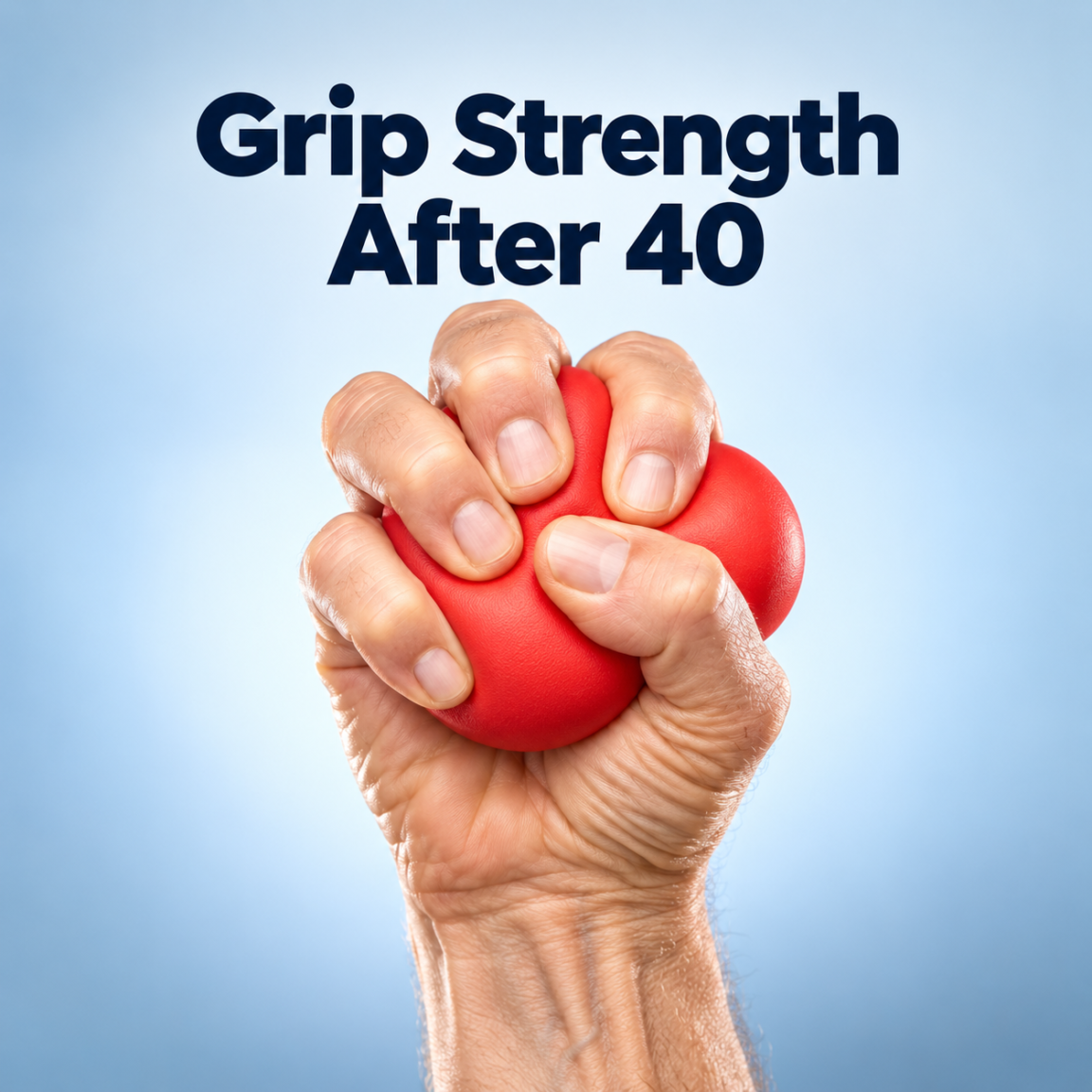
Grip Strength After 40: Why It May Reveal More Than Hand Strength
How strongly you can squeeze someone’s hand may seem like a very narrow measure of fitness.
After all, grip strength comes from the muscles of the hand and forearm.
So why has it become such an important measurement in research on ageing, muscle health and physical function?
The answer is that grip strength after 40 can sometimes tell us more than whether your hands are strong.
Handgrip strength is a simple, inexpensive and reproducible measure of muscular strength. Across large populations, lower grip strength has been associated with poorer physical function, frailty, disability and several adverse health outcomes.
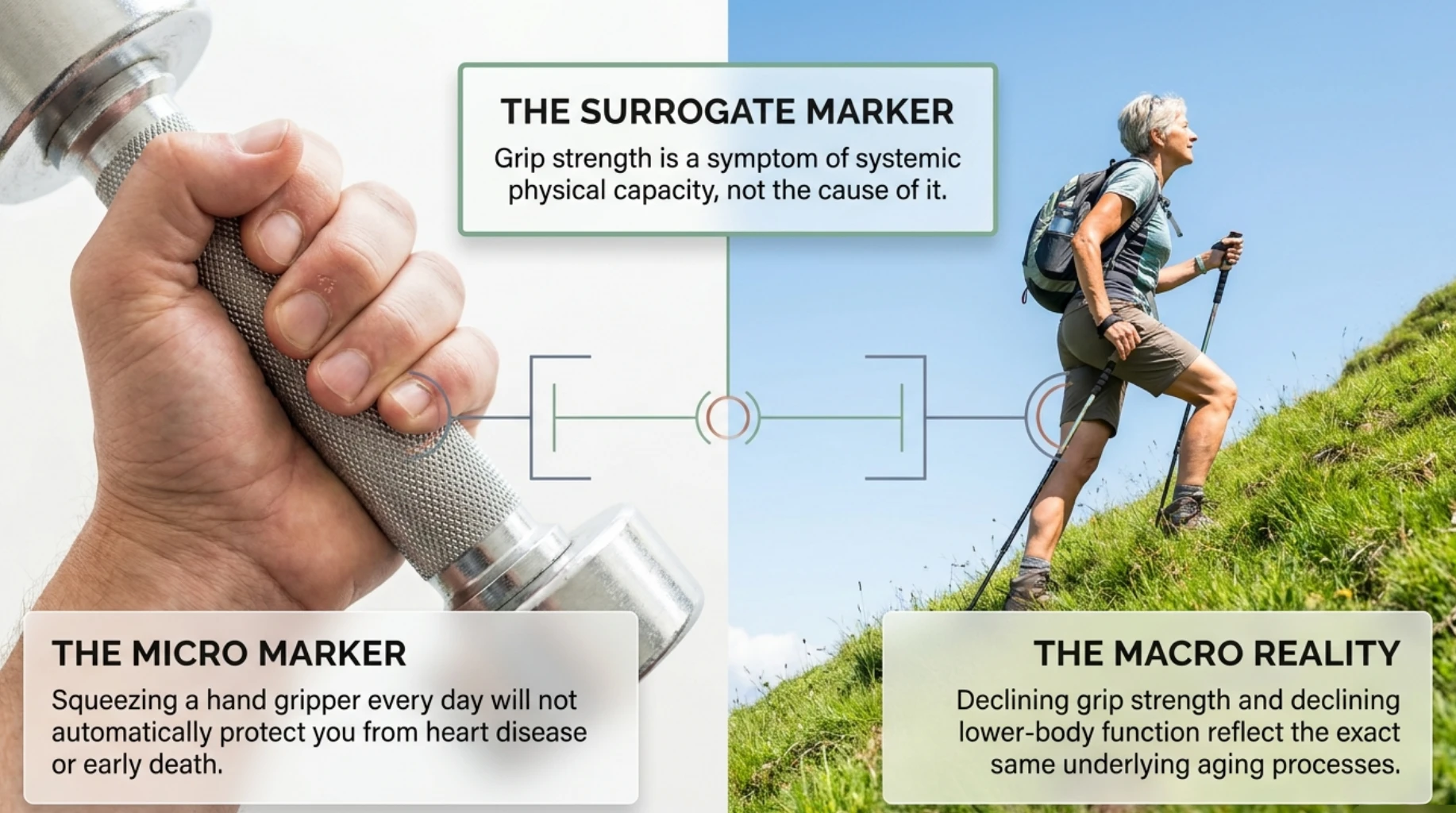
That does not mean a weak grip causes heart disease, diabetes or early death.
Nor does it mean squeezing a hand gripper every day will automatically protect you from these conditions.
Instead, grip strength can function as a practical marker of broader physical capacity.
Think of it as one small window into a much larger system.
Your grip may reflect aspects of:
- Overall muscular strength.
- Muscle quality.
- Physical activity.
- Nutritional status.
- Neurological function.
- Ageing-related changes in physical reserve.
This becomes increasingly relevant from middle age onwards.
You do not suddenly become weak on your 40th birthday.
But the decades after 40 are often when sedentary work, reduced activity, weight gain, chronic disease and gradual loss of muscle begin to accumulate.
Grip strength provides one simple way of asking an important question:
How well are you preserving your physical capacity as you age?
What Is Grip Strength?
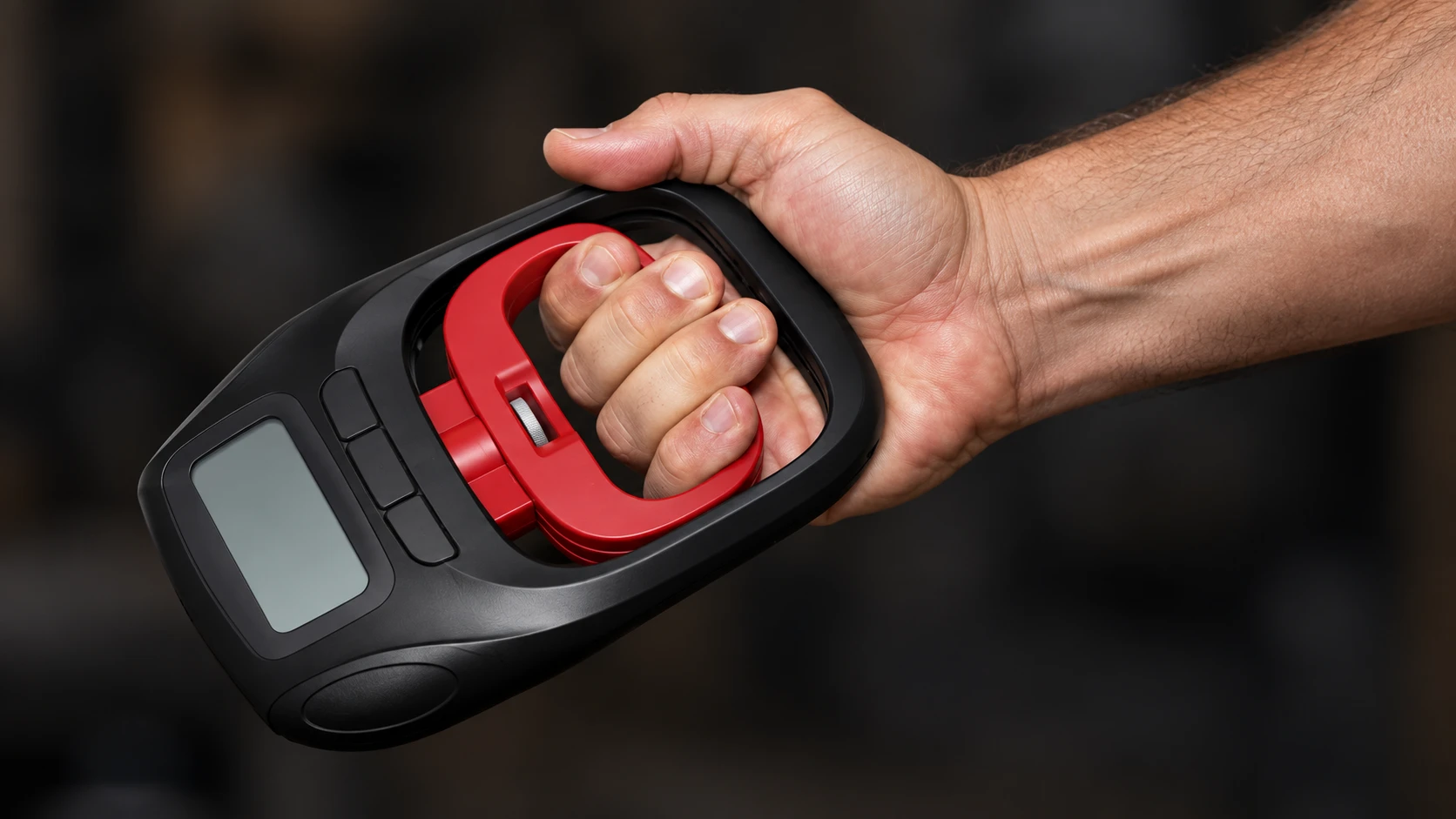
Grip strength is the amount of force generated when you squeeze an object with your hand.
In clinical and research settings, it is usually measured using a device called a handgrip dynamometer.
You hold the dynamometer in a standardised position and squeeze as strongly as possible.
The device records the force, commonly in kilograms or kilograms-force depending on the instrument and reporting method.
The test takes only a few seconds.
Yet it provides useful information about muscular function.
Why Measure the Hand Instead of the Whole Body?
This is an obvious question.
If we want to know whether someone is strong, why not test their legs, back and chest as well?
In a gym, that may be possible.
In a clinic, hospital, community survey or research study involving thousands of people, it becomes much more difficult.
A handgrip dynamometer offers several advantages.
- Testing is quick.
- The equipment is relatively portable.
- The test requires little space.
- It is generally easy to perform.
- Results can be quantified objectively.
- It can be repeated over time.
More importantly, grip strength correlates with broader measures of muscular strength and physical function at a population level.
That makes it a useful surrogate marker.
Grip Strength Is a Marker, Not a Complete Fitness Test
This distinction is essential.
A dynamometer cannot tell me everything about your health.
It cannot directly measure:
- Cardiorespiratory fitness.
- Bone density.
- Balance.
- Leg power.
- Mobility.
- Body-fat percentage.
- Insulin sensitivity.
A person can have an excellent grip and still have poor cardiovascular fitness.
Another person may have modest grip strength while being a competent endurance athlete.
Grip strength therefore belongs inside a broader assessment rather than replacing it.
Why Grip Strength After 40 Becomes More Relevant
Ageing is accompanied by gradual changes in muscle quantity, muscle quality and neuromuscular function.
But chronological age alone does not determine the rate of decline.
Several factors can accelerate loss of strength:
- Physical inactivity.
- Prolonged sedentary behaviour.
- Inadequate protein or overall nutrition.
- Repeated illness.
- Long periods of bed rest.
- Obesity and metabolic disease.
- Some medications.
- Neurological or musculoskeletal disease.
This means two people who are both 55 years old may have very different levels of physical reserve.
One may strength train, walk regularly and remain highly functional.
The other may have spent 20 years becoming progressively more sedentary.
The calendar says they are the same age.
Their physical capacity may tell a very different story.
What Does Grip Strength Actually Reflect?
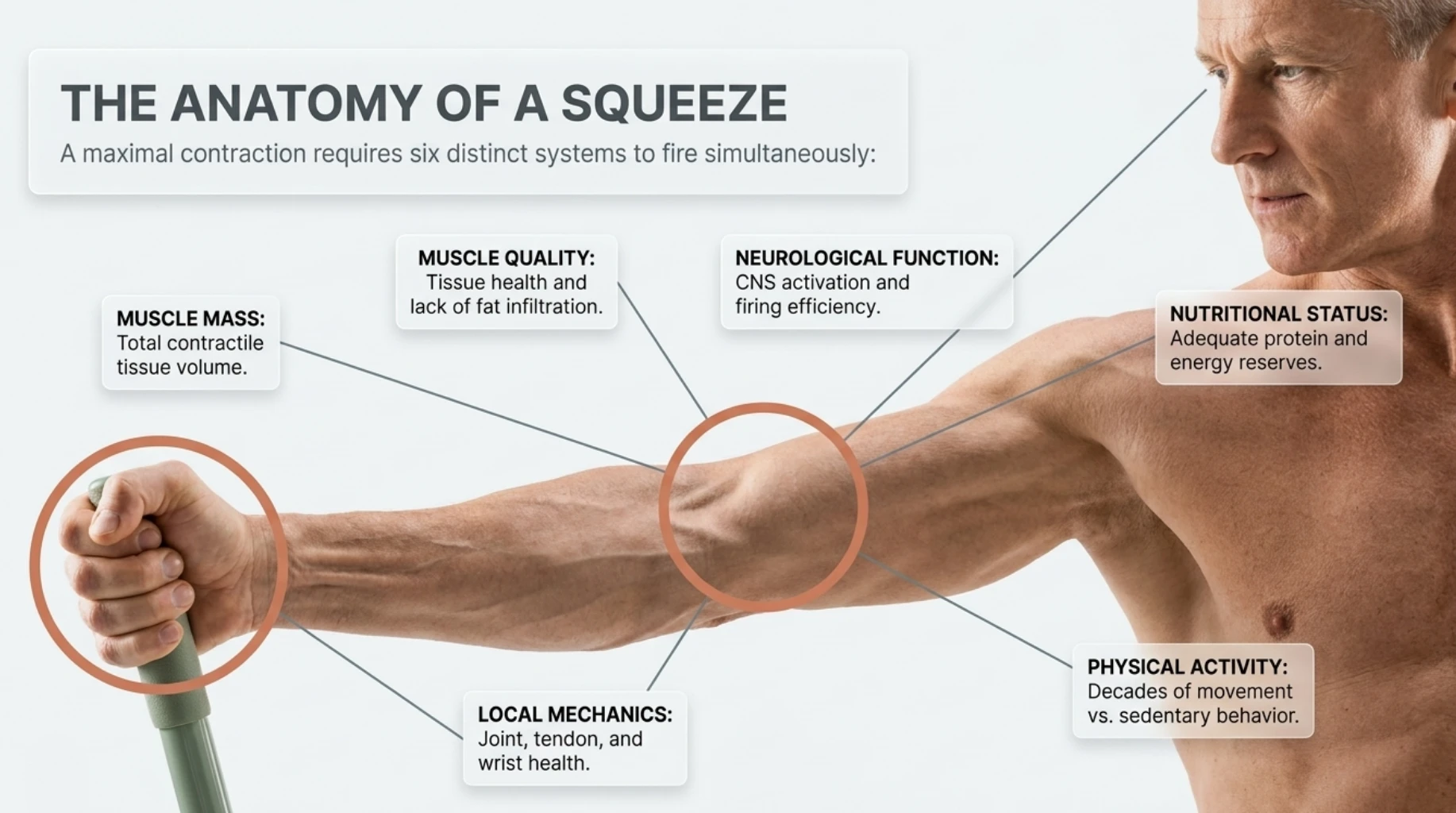
A maximal handgrip contraction requires more than forearm muscle size.
It depends on the nervous system activating the muscles effectively, the muscles generating force and the joints and tendons allowing that force to be expressed.
Grip strength can therefore be influenced by:
| Factor | How It Can Influence Grip Strength |
|---|---|
| Muscle mass | More contractile tissue can contribute to greater force production |
| Muscle quality | Muscle size alone does not determine how effectively force is generated |
| Neurological function | Nerves must activate the muscles effectively |
| Physical activity | Regular resistance and functional activity can help preserve strength |
| Nutrition | Undernutrition and inadequate protein can contribute to loss of muscle and strength |
| Hand or wrist problems | Arthritis, pain, injury or nerve compression can reduce grip independently of whole-body strength |
| Age and sex | Population distributions differ substantially according to age and biological sex |
| Body size | Height, frame size and body composition can influence absolute strength |
This is why one isolated grip-strength value should never be interpreted without context.
Grip Strength and Sarcopenia
Sarcopenia refers to age-related deterioration in skeletal muscle health.
Historically, discussions focused heavily on how much muscle a person had.
Modern clinical thinking gives much greater importance to muscle strength and physical performance.
This matters because having a certain amount of muscle does not guarantee that the muscle functions well.
Two people can have similar amounts of lean tissue while having substantially different strength.
Grip strength is therefore frequently used as part of sarcopenia screening and assessment frameworks.
Muscle Mass and Muscle Strength Are Not the Same
This distinction becomes increasingly important after 40.
A body-composition machine may estimate how much lean or skeletal muscle tissue you have.
Grip testing asks a different question:
How much force can you produce?
| Measurement | What It Mainly Tells You |
|---|---|
| Muscle mass | How much muscle or lean tissue is estimated to be present |
| Grip strength | How much force can be generated during a handgrip test |
| Chair-rise performance | How effectively lower-body strength translates into a functional task |
| Walking speed | One aspect of mobility and overall physical performance |
| VO₂ max | Cardiorespiratory fitness rather than muscular strength |
No single measurement tells the entire story.
Together, however, they can provide a much richer picture of physical health.
Why Strength Can Decline Before Muscle Loss Looks Obvious
Many people assume that if their arms and legs look roughly the same, their muscle health must be unchanged.
That is not necessarily true.
Muscular strength depends on more than visible muscle size.
Age-related changes can involve:
- Neuromuscular activation.
- Muscle fibre characteristics.
- Muscle quality.
- Fat infiltration within muscle.
- Physical activity patterns.
As a result, strength can deteriorate disproportionately to changes in muscle mass.
This is one reason functional measurements become increasingly useful with age.
Grip Strength After 40 and Physical Function
Why should hand strength tell us anything about walking, stairs or independence?
Because grip strength often behaves as a general marker of muscular capacity rather than an isolated hand characteristic.
At the population level, lower grip strength tends to accompany poorer physical performance and functional limitation.
Again, this is an association.
It does not mean your hands control your ability to walk.
Instead, declining grip and declining lower-body function can reflect some of the same underlying processes.
Grip Strength and Healthy Ageing
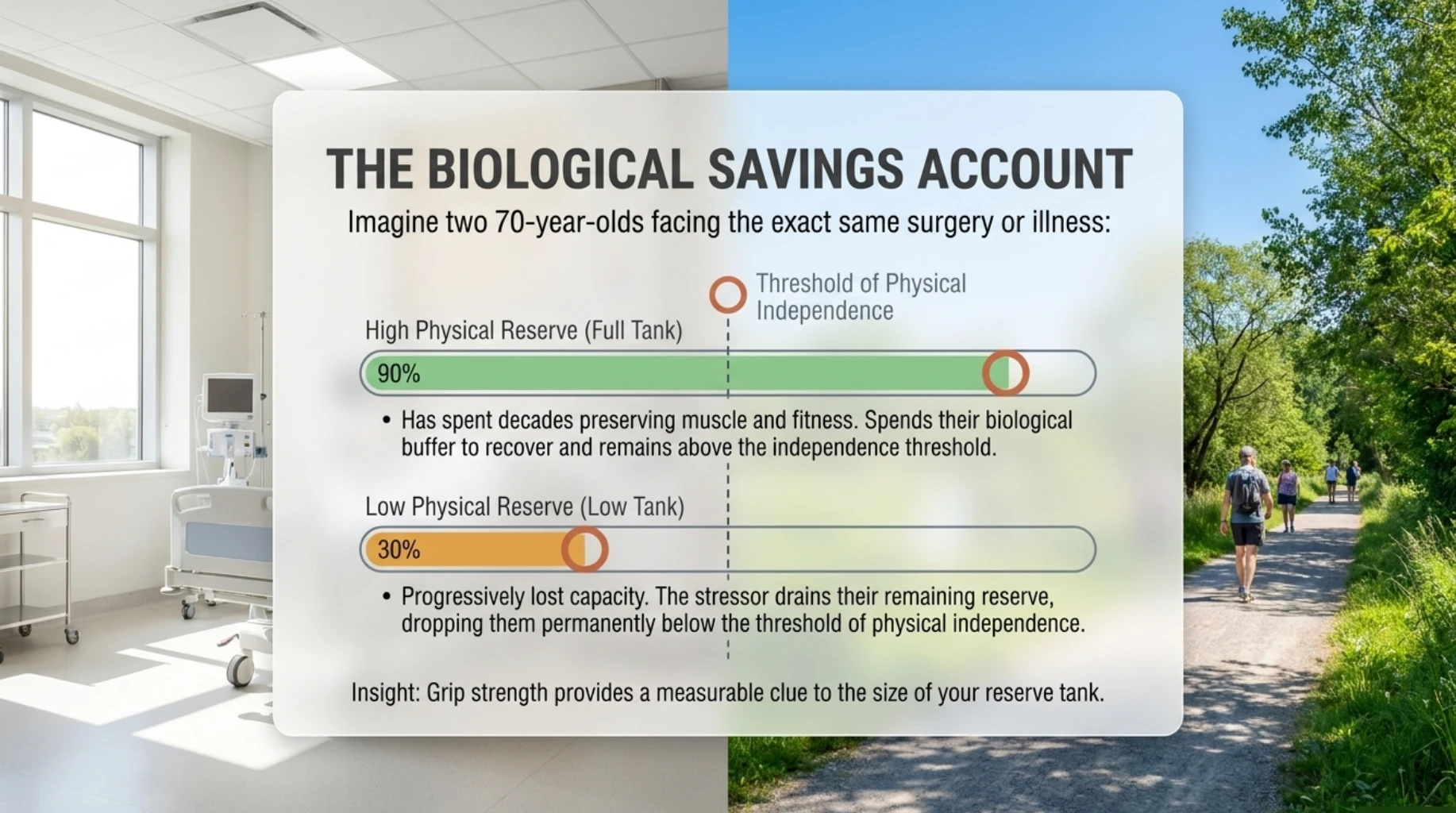
One of my preferred ways to think about ageing is through the concept of physical reserve.
Imagine two people reaching age 70.
One has spent decades preserving muscle, cardiovascular fitness, balance and mobility.
The other has progressively lost these capacities.
Both may experience illness, injury or periods of inactivity.
But they begin those challenges with very different reserves.
Grip strength can provide one small indication of that reserve.
It is not the reserve itself.
It is a measurable clue.
Grip Strength and Frailty
Frailty is a clinical state involving reduced physiological reserve and greater vulnerability to stressors.
Someone who is frail may have more difficulty recovering from events such as:
- Infection.
- Surgery.
- Hospitalisation.
- A fall.
- A period of bed rest.
Low grip strength is used in some frailty assessment approaches because muscular weakness can be one feature of declining physiological reserve.
However, frailty cannot be diagnosed from grip strength alone.
Grip Strength and Risk of Falls
Lower muscular strength is relevant to fall risk, but grip strength itself is not a direct balance test.
If fall risk is the concern, I would also want to know about:
- Leg strength.
- Balance.
- Walking ability.
- Vision.
- Neuropathy.
- Medications.
- Previous falls.
- Blood-pressure changes on standing.
This is a good example of why a useful biomarker should not be turned into a complete diagnosis.
Grip Strength and Cardiovascular Health
One reason grip strength attracts so much attention is that observational studies have found associations between lower grip strength and adverse cardiovascular outcomes.
This finding is interesting, but it needs careful interpretation.
Weak grip does not necessarily damage the heart.
Instead, low grip strength may partly reflect broader factors such as:
- Low physical activity.
- Poor muscle health.
- Chronic disease burden.
- Ageing-related decline.
- Nutritional status.
- Reduced overall physiological reserve.
Grip strength can therefore behave as a health marker without being the direct cause of the health outcome.
Does Weak Grip Strength Predict Heart Disease?
“Predict” needs to be used carefully.
Population studies can identify statistical relationships between lower grip strength and future cardiovascular events.
That does not make a dynamometer a stand-alone cardiovascular screening test.
If someone has hypertension, diabetes, smoking exposure, abnormal cholesterol or a strong family history, those established cardiovascular risk factors still require appropriate assessment.
A strong grip does not cancel them out.
Grip Strength and Mortality: What Does the Research Really Mean?
You may have seen headlines suggesting that grip strength can “predict how long you will live.”
That wording is too dramatic.
Research has repeatedly found that lower grip strength is associated with higher mortality risk in populations.
But an association observed across thousands of people cannot tell an individual exactly how long they will live.
Grip strength is influenced by many of the same factors that influence long-term health.
It should therefore be understood as a marker of physical health and reserve—not as a countdown clock.
Does Improving Grip Strength Make You Live Longer?
This is where association and causation must be separated.
Suppose people with stronger grip tend to have better long-term outcomes.
That does not prove that performing hand-squeezing exercises alone will reproduce those outcomes.
A person with stronger grip may also:
- Have more whole-body muscle.
- Be more physically active.
- Perform resistance training.
- Have better nutritional status.
- Have fewer disabling illnesses.
If the goal is healthy ageing, therefore, I would focus on improving overall physical capacity rather than chasing a dynamometer score in isolation.
Grip Strength and Diabetes
Muscle health and metabolic health are closely connected.
Skeletal muscle is a major site of glucose disposal, and insulin resistance is commonly associated with obesity, physical inactivity and changes in muscle quality.
Lower muscular strength has also been associated with metabolic disease in observational research.
But again, grip strength is not a diagnostic test for diabetes.
You cannot squeeze a dynamometer and determine whether you have insulin resistance.
Blood glucose, HbA1c and other appropriate clinical assessments remain necessary.
Why Muscle Health Matters in Type 2 Diabetes
People with type 2 diabetes often focus almost entirely on glucose readings.
But preserving muscle deserves attention too.
Muscle contributes to:
- Glucose utilisation.
- Strength.
- Mobility.
- Balance.
- Physical independence.
This is why resistance training can be particularly valuable alongside aerobic activity in appropriate people with type 2 diabetes.
The goal is not simply to produce stronger hands.
It is to preserve a stronger body.
Grip Strength After 40 During Weight Loss
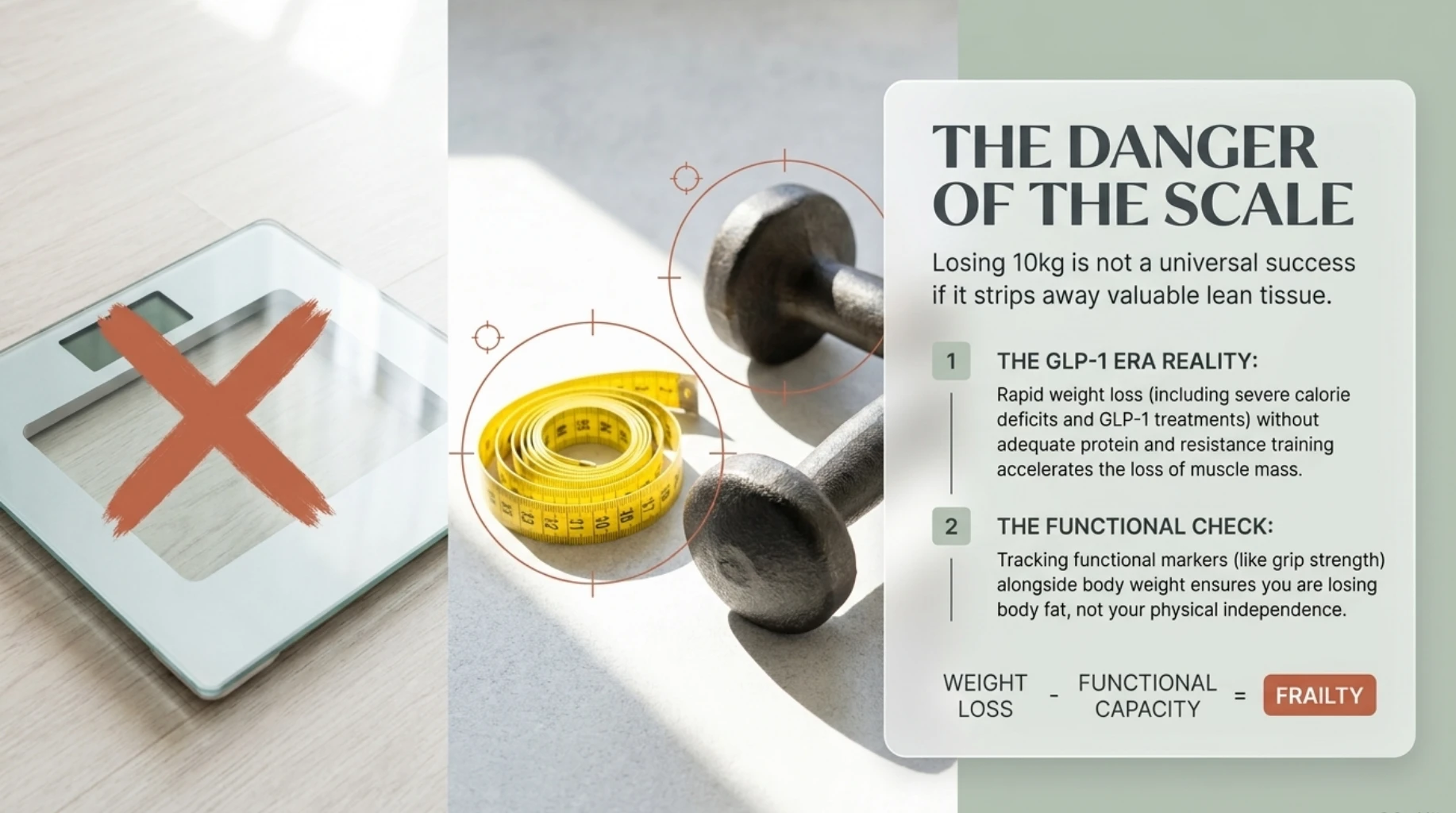
Weight loss creates another situation where functional measurements become useful.
Imagine two people each lose 10 kilograms.
The weighing scale reports the same success.
But suppose one person preserves most of their muscle while the other loses substantial lean tissue and becomes weaker.
Those are not equivalent outcomes.
This is why a weight-management programme should not be evaluated only by kilograms lost.
Depending on the individual, useful measures may include:
- Waist circumference.
- Body composition.
- Strength.
- Physical function.
- Metabolic markers.
Grip strength can provide one additional functional measure.
Grip Strength During Rapid Weight Loss
This becomes particularly relevant when weight loss is rapid or appetite is substantially reduced.
A calorie deficit can reduce body fat, but some lean tissue can also be lost.
The risk of losing valuable muscle becomes more concerning when the programme includes:
- Very low protein intake.
- No resistance training.
- Severe calorie restriction.
- Prolonged inactivity.
Monitoring function alongside body weight can therefore provide useful information about the quality of weight loss.
Grip Strength and Medical Weight Loss
People receiving medical treatment for obesity may sometimes experience substantial appetite reduction and relatively rapid weight loss.
This makes muscle preservation an important part of treatment planning.
Resistance training, adequate protein and an appropriate overall diet can help support lean tissue.
Grip strength can potentially be tracked alongside other measures of physical function, particularly when there is concern about declining strength.
However, no single grip-strength reading can determine whether muscle loss has occurred.
It should be interpreted alongside weight change, body composition where available, dietary intake and overall physical performance.
Grip Strength After 40: What a Low Reading Might Mean
A low grip-strength result does not automatically mean sarcopenia.
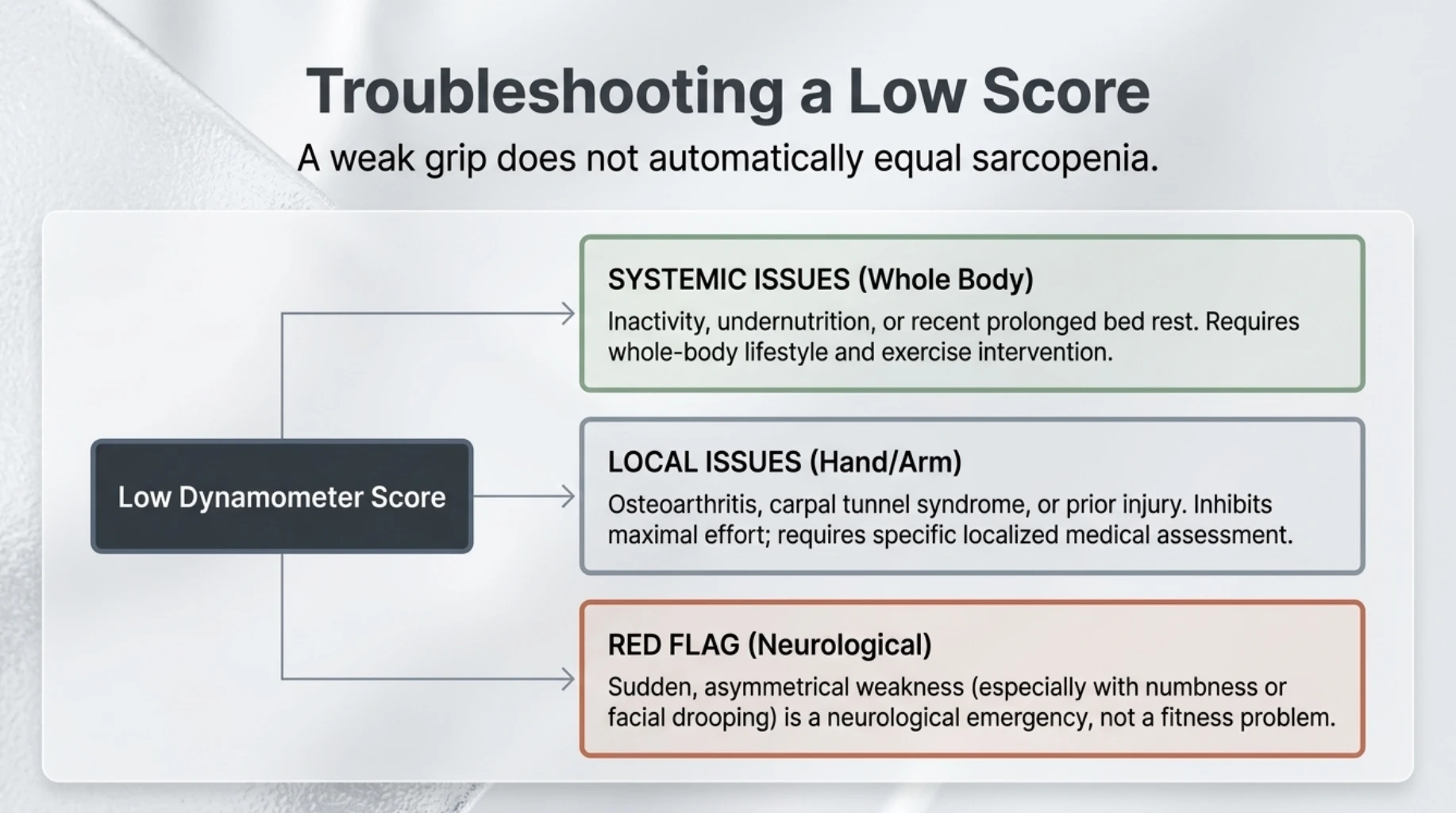
Possible explanations include:
| Possible Factor | Why It Matters |
|---|---|
| Low overall muscular strength | Grip may reflect broader weakness |
| Physical inactivity | Long periods without resistance activity can reduce strength |
| Recent illness | Illness and bed rest can temporarily reduce physical capacity |
| Undernutrition | Insufficient energy or protein can contribute to loss of muscle and strength |
| Hand arthritis | Pain may limit maximal gripping force |
| Wrist or hand injury | Local mechanical problems can lower the result |
| Nerve problems | Peripheral nerve or cervical problems may affect hand strength |
| Measurement technique | Position, device settings and effort can influence the reading |
This is why the number should start a conversation rather than end one.
One Weak Hand Is Different From General Weakness
There is an important difference between both hands gradually becoming weaker and one hand suddenly becoming weak.
Marked asymmetry can sometimes reflect a local problem involving:
- The hand.
- The wrist.
- The elbow.
- Peripheral nerves.
- The cervical spine.
Sudden new weakness, particularly when accompanied by facial weakness, speech difficulty, numbness or other neurological symptoms, requires urgent medical assessment.
That is not a fitness issue to solve with grip exercises.
Should Everyone Over 40 Test Their Grip Strength?
Not necessarily.
You do not need a dynamometer to live a healthy life.
For a healthy, active 42-year-old who strength trains regularly and has excellent physical function, routine grip testing may add relatively little.
It becomes more interesting when we want an objective measure of strength over time or when there is concern about:
- Age-related muscle decline.
- Frailty.
- Unexplained weakness.
- Loss of physical function.
- Recovery after illness.
- Muscle preservation during significant weight loss.
In these situations, grip strength can be a useful part of a broader assessment.
The Most Important Message About Grip Strength After 40
Grip strength is valuable precisely because it is simple.
But simplicity can also lead to overinterpretation.
A strong grip does not prove that you are metabolically healthy.
A weak grip does not diagnose a disease.
And training your hands alone does not reproduce all the benefits associated with being a stronger person.
The real value of grip strength after 40 is that it can encourage us to look beyond body weight and appearance and ask a more meaningful question:
How well is your body still able to produce strength and perform the tasks you need it to perform?
How Is Grip Strength Measured?
The standard method uses a handgrip dynamometer.
The person holds the device in one hand and squeezes as strongly as possible for a few seconds. The dynamometer records the peak force generated.
Although the test looks simple, technique matters.
Results can change according to:
- Body position.
- Elbow position.
- Handle size.
- Which hand is tested.
- Number of attempts.
- Rest between attempts.
- Pain or injury.
- Motivation and effort.
This is why repeated measurements are most useful when performed under reasonably similar conditions.
Why Standardising the Test Matters
Suppose your grip strength is measured while sitting comfortably during one visit.
Three months later, you test yourself using a different device, different handle position and different technique.
If the number changes, it becomes difficult to know whether your strength actually changed or the testing method changed.
For tracking grip strength after 40, consistency improves the value of the measurement.
Ideally, use:
- The same dynamometer.
- The same hand position.
- The same body position.
- A similar testing protocol.
- Comparable effort.
Should Both Hands Be Tested?
Usually, testing both hands provides more information than testing only one.
Most people have some difference between their dominant and non-dominant hands.
A small difference is not automatically abnormal.
But a large or unexpected difference may deserve further consideration, particularly when accompanied by pain, numbness, tingling or functional difficulty.
It is also useful to know whether a low reading occurs in both hands or only one.
Generalised weakness and local hand weakness are not necessarily the same problem.
What Is Normal Grip Strength After 40?
This question sounds straightforward, but there is no single normal grip-strength number for every adult over 40.
Grip strength varies considerably according to:
- Age.
- Sex.
- Body size.
- Ethnicity and population studied.
- Dominant hand.
- Testing protocol.
- Type of dynamometer.
A value that is relatively low for one person may be expected for another.
This is why grip-strength results should ideally be interpreted against appropriate reference values or validated clinical cut-offs rather than comparing yourself with a random number from social media.
Men and Women Should Not Use the Same Grip-Strength Reference
On average, absolute grip strength differs substantially between adult men and women.
This means using one universal threshold for everyone would be misleading.
Age matters as well.
A healthy 25-year-old and an 80-year-old should not necessarily be expected to have identical strength.
| Factor | Why It Matters |
|---|---|
| Sex | Absolute muscular strength differs substantially at the population level |
| Age | Grip strength generally changes across adulthood and tends to decline later in life |
| Height and body size | Larger individuals may generate greater absolute force |
| Dominant hand | The dominant hand may be somewhat stronger in many individuals |
| Population | Reference distributions can differ between populations |
| Testing method | Device and protocol can influence the recorded value |
What Grip Strength Is Considered Low?
Clinical frameworks sometimes use grip-strength cut-offs when evaluating possible sarcopenia.
One widely used European consensus framework has used thresholds of less than 27 kg in men and less than 16 kg in women as indicators of low grip strength.
These numbers are useful in the appropriate clinical context, but they should not be converted into universal fitness targets.
They were developed to help identify clinically important muscle weakness, particularly in sarcopenia assessment.
A 45-year-old man measuring 28 kg should therefore not conclude that everything is excellent simply because he is technically above one clinical cut-off.
Similarly, a single result below a threshold should be interpreted in context and, where appropriate, confirmed.
Clinical Cut-Offs Are Not Fitness Goals
This distinction is extremely important.
A clinical cut-off generally helps identify people who may have abnormally low strength.
It does not tell you what your optimal strength should be.
Consider blood pressure as an analogy.
A threshold used to identify disease is not necessarily the same thing as a performance target.
Grip strength works similarly.
The question is not simply:
“Am I above the low-strength threshold?”
A better question may be:
“Am I maintaining or improving my strength and physical function as I age?”
When Does Grip Strength Start Declining?
Grip strength does not remain constant throughout life.
It generally increases through childhood and adolescence, reaches its highest levels in early-to-middle adulthood, and eventually declines with advancing age.
The exact trajectory differs between individuals.
Importantly, age-related decline is not completely predetermined.
Physical activity, resistance training, nutrition, illness and lifestyle can influence how much strength is preserved.
This is why I would not interpret declining strength after 40 as something that simply has to be accepted.
Ageing happens.
But the rate at which physical capacity deteriorates is modifiable to an important extent.
Why Grip Strength After 40 May Start Falling
For many adults, the problem is not ageing alone.
It is ageing combined with progressively less physical demand.
Think about how modern life changes between 25 and 45.
Many people move from:
- More walking to more driving.
- Active leisure to prolonged sitting.
- Sports to desk work.
- Regular exercise to occasional exercise.
- More sleep to chronic sleep restriction.
At the same time, body fat may increase and chronic metabolic conditions may begin to appear.
Muscles adapt to what you repeatedly ask them to do.
If very little strength is required for years, there is less stimulus to preserve it.
Grip Strength After 40 and Sarcopenia Screening
One reason grip strength has become clinically important is its role in evaluating sarcopenia.
Modern sarcopenia assessment does not rely only on measuring muscle mass.
Muscle strength is particularly important because function can deteriorate even when muscle quantity does not appear dramatically reduced.
A typical assessment may consider several domains.
| Domain | Possible Measurement |
|---|---|
| Muscle strength | Grip strength or chair-stand performance |
| Muscle quantity | DXA, bioimpedance or other body-composition methods depending on setting |
| Physical performance | Walking speed, timed mobility tests or related functional measures |
The exact approach varies between clinical frameworks and settings.
The important concept is that muscle health has multiple dimensions.
Why Leg Strength Still Matters More Than Your Grip for Many Daily Tasks
If grip strength is so useful, it can be tempting to focus on the hands.
But daily independence depends heavily on lower-body strength.
Your legs help you:
- Stand up from a chair.
- Climb stairs.
- Walk quickly.
- Recover from a stumble.
- Get up from the floor.
- Carry your body weight during daily activity.
This is why grip strength should not replace functional assessment of the lower body.
It is simply easier to measure.
The Chair-Stand Test Complements Grip Strength
One simple functional test involves repeatedly standing from a chair.
This provides information about lower-body strength and functional performance.
Someone may have acceptable handgrip strength but struggle substantially to rise from a chair without using their arms.
That finding would change how I think about their overall physical capacity.
Conversely, an active person with strong legs but reduced grip because of painful hand arthritis should not automatically be labelled generally weak.
Context remains essential.
Walking Speed Can Add Another Piece of the Puzzle
Walking speed is another surprisingly informative functional measurement.
Walking requires coordination between:
- Muscle strength.
- Balance.
- Cardiovascular capacity.
- Neurological function.
- Joint mobility.
For this reason, walking performance can provide information that a handgrip test cannot.
A broader healthy-ageing assessment may therefore consider strength, walking ability and other functional measures together.
Grip Strength vs Muscle Mass: Which Is More Important?
It is usually unnecessary to choose one.
They measure different things.
Muscle mass describes quantity.
Grip strength describes one aspect of force-generating capacity.
Physical performance shows how effectively the body uses its capacity during real-world tasks.
In healthy ageing, function is ultimately what matters.
You do not preserve muscle simply to achieve a better number on a body-composition report.
You preserve muscle so that you can continue using your body effectively.
Can Someone Have Normal Muscle Mass but Low Grip Strength?
Yes.
This is one reason muscle quantity alone can be misleading.
Strength depends on factors beyond the amount of muscle present.
These include:
- Neuromuscular activation.
- Muscle fibre characteristics.
- Muscle quality.
- Training history.
- Pain.
- Neurological function.
A person can therefore have apparently adequate lean mass while performing poorly on strength tests.
Can Someone Have Low Muscle Mass but Reasonable Strength?
That is also possible.
A smaller person may naturally have less absolute muscle mass but remain functionally strong for their body size.
This is why interpretation becomes more sophisticated than simply asking whether a body-composition machine reports a high or low muscle number.
Body size, age, sex, strength and functional performance all matter.
Grip Strength and Body Composition
Body-composition measurements can complement strength testing, but they should not be confused with one another.
| Measurement | Main Question |
|---|---|
| Body weight | How much do you weigh? |
| Body-fat estimate | How much of that weight may be fat? |
| Lean mass | How much non-fat tissue is present? |
| Skeletal muscle estimate | How much muscle tissue is estimated? |
| Grip strength | How much gripping force can you produce? |
| Functional testing | How well can you perform relevant physical tasks? |
This is why I prefer looking at several measurements when assessing physical progress rather than relying on one number.
Grip Strength During Weight Loss: What Should Happen?
If someone is intentionally losing excess body fat, I would ideally like them to preserve as much useful lean tissue and physical function as reasonably possible.
Body weight may decrease substantially.
Strength does not necessarily need to decline proportionally.
In beginners, strength can sometimes even improve during weight loss because resistance training produces rapid neuromuscular adaptations.
However, the response varies according to:
- Size of the calorie deficit.
- Starting body composition.
- Protein intake.
- Resistance training.
- Sleep.
- Age.
- Medical conditions.
When Falling Grip Strength During Weight Loss Deserves Attention
A small variation between tests may simply reflect measurement variability.
But a consistent downward trend alongside other signs can be more meaningful.
For example:
- Progressive weakness.
- Falling exercise performance.
- Difficulty performing previous daily activities.
- Very low food intake.
- Inadequate protein intake.
- Rapid weight loss.
- Loss of substantial lean mass.
In that situation, the weight-loss programme may need reassessment.
The objective is not merely to make body weight fall.
It is to improve health while maintaining physical capability.
Can GLP-1 Weight-Loss Treatment Affect Grip Strength?
GLP-1-based obesity treatments do not directly mean that someone will develop weak grip strength.
The more relevant issue is what happens during substantial weight loss.
Weight reduction generally includes loss of fat mass, but some lean tissue can also be lost.
If appetite suppression leads to very low food intake, insufficient protein and little resistance exercise, preserving muscle may become more difficult.
This is why medical weight loss should ideally consider body composition and function—not only kilograms lost.
Resistance training and appropriate nutrition become particularly important.
Does Protein Improve Grip Strength?
Protein provides amino acids required for maintaining and building muscle tissue.
But protein alone is not a strength-training programme.
If someone increases protein intake while remaining completely sedentary, they should not expect the same adaptation as someone combining adequate nutrition with progressive resistance exercise.
The combination matters.
Resistance training provides the stimulus.
Nutrition provides the resources for adaptation.
Why Protein Distribution May Matter After 40
Many adults consume relatively little protein at breakfast, a modest amount at lunch and most of their daily protein at dinner.
Including meaningful protein sources across meals can provide repeated opportunities for muscle protein synthesis.
Practical protein sources include:
- Eggs.
- Milk and curd.
- Paneer.
- Soya and tofu.
- Dal and legumes.
- Fish.
- Chicken and other lean meats where consumed.
- Protein supplements when useful for convenience.
Requirements should still be individualised, particularly in people with kidney disease or other medical conditions affecting nutrition.
Can You Improve Grip Strength After 40?
Yes.
Age does not eliminate the ability to become stronger.
Grip strength can improve through both direct grip exercises and broader resistance training.
But if the purpose is healthy ageing, I would not train only the hands.
Instead, build whole-body strength.
The Best Way to Improve Grip Strength Is Not Just Squeezing a Gripper
Hand grippers can strengthen specific gripping muscles.
But many whole-body exercises also challenge grip naturally.
Examples include:
- Rows.
- Deadlift variations.
- Farmer carries.
- Pull-downs.
- Pull-ups where appropriate.
- Dumbbell exercises.
- Kettlebell exercises.
These exercises provide an additional advantage:
while your hands are learning to hold a load, your back, shoulders, hips or legs are also being trained.
Farmer Carries for Grip Strength After 40
A farmer carry is simple in principle.
You hold a suitable weight in each hand and walk while maintaining good posture.
This can train:
- Grip.
- Forearms.
- Shoulder stability.
- Trunk control.
- Whole-body load tolerance.
The resistance should match your current ability.
The goal is not to carry the heaviest possible dumbbells on your first day.
Deadlifts and Grip Strength
Deadlift variations require you to maintain your grip while the hips and legs produce force.
As loads increase, grip may become one of the limiting factors.
But you do not need maximal barbell deadlifts simply to improve grip.
Dumbbell Romanian deadlifts, kettlebell hinges and other appropriately loaded variations can provide useful training.
Rows and Pulling Exercises
Rows and pull-downs require sustained gripping while training the upper back.
These exercises are particularly useful because many sedentary adults perform very little pulling activity during daily life.
A balanced resistance programme should generally contain both pushing and pulling patterns rather than focusing only on chest and arms.
Do Hand Grippers Work?
Yes, hand grippers can improve specific grip strength when used progressively.
But the result follows the principle of specificity.
You become better at producing force in the pattern you train.
If your only goal is improving a dynamometer number, direct grip training may help.
If your goal is healthy ageing, physical independence and overall strength, a whole-body programme provides much broader value.
Three Different Types of Grip Strength
“Grip strength” is actually a broad term.
Different tasks challenge the hand differently.
| Type | Example | What It Involves |
|---|---|---|
| Crush grip | Squeezing a dynamometer or hand gripper | Closing the fingers strongly towards the palm |
| Support grip | Holding dumbbells during a farmer carry | Maintaining grip on an object for time |
| Pinch grip | Holding an object between fingers and thumb | Thumb and finger force without wrapping the entire hand around the object |
A dynamometer primarily measures one aspect of gripping strength.
Real-world hand function is broader.
How Often Should You Train Grip Strength?
If you already perform resistance training two or three times per week, your grip may receive substantial training through pulling exercises, carries and free weights.
Additional grip-specific exercises can be included when there is a particular need.
There is usually no reason for a beginner to perform exhaustive grip training every day.
Hands, forearms and tendons also need recovery.
Why Grip Strength Can Improve Quickly in Beginners
Early strength gains are not caused only by growing larger muscles.
The nervous system becomes better at coordinating and recruiting muscle during the task.
Technique also improves.
This means someone beginning resistance training may become noticeably stronger before major visible muscle growth occurs.
That is normal.
Strength is both muscular and neurological.
Can Grip Strength Improve Without Bigger Forearms?
Yes.
Strength and muscle size are related but not identical.
Neurological adaptation, technique and improved force production can increase strength without dramatic changes in visible muscle size.
This is another reason not to judge muscle function entirely by appearance.
Does Creatine Improve Grip Strength?
Creatine monohydrate can support improvements in strength and lean mass when combined with resistance training, although the effect on any single test such as grip strength varies between individuals and studies.
Creatine is optional.
It is not a substitute for resistance training or adequate nutrition.
People with kidney disease or other relevant medical concerns should discuss supplement use with their treating clinician rather than starting supplements solely because they are popular in fitness content.
Can Low Vitamin D Cause Weak Grip?
Vitamin D deficiency can be associated with impaired musculoskeletal health, particularly when deficiency is significant.
But weak grip is not specific enough to diagnose vitamin D deficiency.
Many different conditions can cause weakness.
Testing should be based on clinical context rather than assuming every low grip-strength result requires a long list of vitamin tests.
Can Vitamin B12 Deficiency Affect Grip Strength?
Vitamin B12 deficiency can produce neurological problems, including weakness, numbness and sensory symptoms in some people.
However, reduced grip strength alone does not diagnose B12 deficiency.
If weakness is accompanied by numbness, tingling, balance problems, anaemia or relevant risk factors, appropriate clinical evaluation becomes more important.
Can Thyroid Problems Affect Muscle Strength?
Yes. Thyroid disorders can affect muscle function and exercise tolerance.
But once again, grip strength is not a thyroid test.
Unexplained generalised weakness should be assessed in the context of other symptoms, examination findings, medication history and appropriate investigations.
Grip Strength and Hand Arthritis
One important limitation of grip testing is that the hand itself can be the problem.
Someone with painful osteoarthritis, rheumatoid arthritis, thumb-base arthritis or a recent hand injury may produce a low grip-strength result despite having reasonable whole-body muscle strength.
Pain inhibits maximal effort.
In this situation, interpreting the grip number as evidence of general sarcopenia could be misleading.
Grip Strength and Carpal Tunnel Syndrome
Carpal tunnel syndrome can cause numbness, tingling and weakness involving the hand.
Depending on severity, grip performance may be affected.
If reduced grip is accompanied by persistent numbness, night-time hand symptoms, dropping objects or progressive weakness, the problem deserves clinical assessment rather than simply more grip training.
Grip Strength and Cervical Nerve Problems
Nerves supplying the arm and hand originate from the cervical spine.
Nerve compression or other neurological problems can therefore affect hand strength.
Particular attention is warranted when weakness is:
- New.
- Progressive.
- Markedly one-sided.
- Associated with numbness.
- Associated with radiating arm pain.
- Accompanied by loss of dexterity.
The appropriate response is not simply to buy a stronger hand gripper.
When Sudden Grip Weakness Is an Emergency
Sudden weakness in one arm or hand can occasionally be part of a neurological emergency.
Seek urgent medical care when sudden weakness occurs with symptoms such as:
- Facial drooping.
- Difficulty speaking.
- New numbness.
- Weakness elsewhere on one side of the body.
- Severe sudden balance or coordination difficulty.
Do not wait to see whether grip strength improves with exercise.
Can You Measure Grip Strength at Home?
Yes, consumer dynamometers are available.
They can be useful for tracking trends if you use the same device and a consistent testing technique.
However, home measurements should not be overinterpreted.
A consumer device may not have the same accuracy or calibration as equipment used in research or clinical settings.
The greatest value may therefore be in monitoring your own trend rather than comparing your number directly with someone using a different device.
Why Trends May Be More Useful Than One Reading
Imagine your grip measurements over several months are:
34 kg → 36 kg → 38 kg.
That consistent upward trend may be meaningful if testing conditions remain similar.
Now imagine one isolated reading falls from 38 kg to 35 kg after a poor night’s sleep and a demanding upper-body workout.
That does not necessarily mean you suddenly lost muscle.
Measurements contain normal biological and technical variability.
Look for patterns rather than reacting to every number.
What Else Should You Track Alongside Grip Strength After 40?
If your goal is healthy ageing, I would not create a dashboard containing grip strength alone.
A more useful picture can include several domains.
| Measure | What It Adds |
|---|---|
| Grip strength | A simple measure of muscular strength |
| Chair-rise ability | Lower-body strength and function |
| Walking speed or capacity | Mobility and functional fitness |
| Waist circumference | Information about central adiposity |
| Body composition | Additional information about fat and lean tissue |
| Resistance-training performance | Shows whether whole-body strength is progressing |
| Aerobic fitness | Reflects cardiovascular capacity rather than muscular strength |
No single number defines healthy ageing.
The pattern across several measures is usually more informative.
Grip Strength After 40 Should Lead to a Bigger Question
The purpose of measuring grip strength should not be to create another number to worry about.
Its real value is that it can redirect attention towards physical function.
After 40, many health discussions become dominated by:
- Body weight.
- Blood sugar.
- Cholesterol.
- Blood pressure.
These are important.
But another question deserves a place beside them:
Are you maintaining your physical capacity?
Can you carry your luggage?
Can you lift groceries?
Can you climb stairs?
Can you get up from the floor?
Can you continue doing these things 10 or 20 years from now?
Grip strength is useful because a very simple test can start that much larger conversation.
How to Build Better Grip Strength After 40
If your grip strength is lower than expected, the solution depends on why it is low.
A person whose grip is limited by hand arthritis needs a different approach from someone who has simply become sedentary and generally weaker.
For most otherwise healthy adults, however, the most useful strategy is not to train the hands in isolation.
Build whole-body strength.
A well-designed resistance-training programme can include:
- Squat or sit-to-stand movements.
- Hip-hinge exercises.
- Rows and other pulling movements.
- Push-ups or pressing movements.
- Step-ups or split-squat variations.
- Loaded carries.
- Appropriate direct grip work when useful.
Your hands participate in many of these exercises naturally.
This means grip strength after 40 can improve while you simultaneously train the larger muscles that matter for mobility, metabolic health and physical independence.
A Simple Grip Strength After 40 Training Framework
You do not need a complicated forearm programme.
For a beginner, grip work can be incorporated into normal resistance training.
| Exercise | Main Training Effect | Grip Involvement |
|---|---|---|
| Dumbbell row | Upper back and arms | Holding the dumbbell challenges support grip |
| Lat pull-down | Back and arms | Requires sustained gripping during pulling |
| Romanian deadlift | Hips, hamstrings and back | Grip maintains control of the external load |
| Farmer carry | Whole-body strength and trunk stability | Strong sustained grip requirement |
| Hand gripper | Forearm and hand muscles | Direct crush-grip training |
| Plate or object hold | Hands and forearms | Can challenge pinch or support grip depending on technique |
The exercises should be selected according to current ability, previous injuries and access to equipment.
Progressive Overload Matters for Grip Too
Muscles adapt when they are repeatedly challenged.
If you squeeze the same very easy hand gripper for the same number of repetitions indefinitely, improvement will eventually slow.
Progression can involve:
- Using slightly more resistance.
- Holding a load for longer.
- Performing additional controlled repetitions.
- Carrying a load for a greater distance.
- Progressing to a more challenging exercise.
The progression should be gradual.
Hand and forearm tendons can become irritated when training volume increases suddenly.
Do You Need Grip Exercises Every Day?
No.
Your grip is already involved in many normal resistance-training exercises.
Adding intensive direct grip training every day may simply create unnecessary fatigue or tendon irritation.
If you strength train several times per week, pulling exercises and loaded carries may already provide considerable grip stimulus.
Additional direct work can be added when there is a specific reason to improve grip further.
What About Hanging From a Bar?
Dead hangs are popular for grip training.
They can challenge the fingers and forearms while requiring the shoulders to tolerate your body weight.
But they are not appropriate for everyone.
Someone with significant shoulder pain, previous instability or certain upper-limb problems may require modification.
You also do not need to hang from a bar to develop a useful grip.
Farmer carries, dumbbells, rows and other resistance exercises provide alternatives.
Should You Use Lifting Straps?
Lifting straps reduce the extent to which grip limits certain pulling exercises.
They can be useful when the target muscles are capable of handling substantially more resistance than the hands can hold.
However, if improving grip is one of your goals, using straps for every pulling exercise may remove some useful grip stimulus.
A practical approach is to perform appropriate exercises without straps when possible and use straps selectively when grip would otherwise prevent adequate training of larger muscle groups.
How Long Does It Take to Improve Grip Strength?
There is no fixed timeline.
Beginners can sometimes notice improvements relatively quickly because the nervous system becomes more efficient at producing force and technique improves.
Longer-term improvements depend on:
- Starting strength.
- Training consistency.
- Exercise selection.
- Progressive overload.
- Nutrition.
- Recovery.
- Medical conditions.
Rather than testing your maximum grip every day, it is more useful to train consistently and reassess periodically under similar conditions.
Can Grip Strength Decline During Illness?
Yes.
Illness can reduce appetite, physical activity and overall muscle function.
Hospitalisation and prolonged bed rest can accelerate deconditioning, particularly in older adults.
A temporary reduction in strength after significant illness therefore does not necessarily mean permanent decline.
Recovery may require gradual rebuilding of activity, adequate nutrition and resistance exercise when medically appropriate.
Why Hospitalisation Can Affect Muscle Faster Than Many People Expect
Muscle responds to use.
When someone who normally walks, climbs stairs and performs everyday activities suddenly spends much of the day in bed, the mechanical stimulus to muscle falls sharply.
This can be particularly important in older adults who already have limited physical reserve.
The issue is not just the number of kilograms of muscle lost.
Even modest reductions in strength can affect:
- Walking.
- Chair rising.
- Stair climbing.
- Balance.
- Confidence with movement.
This is one reason preserving physical reserve before illness becomes valuable.
Grip Strength and Physical Reserve
Imagine strength as a reserve account.
If you enter later life with substantial muscular capacity, a period of illness or inactivity may reduce that capacity while still leaving enough strength for independent function.
If you begin with very little reserve, the same loss can have a greater functional impact.
This analogy does not mean stronger people are protected from every illness.
It simply explains why maintaining strength before it is urgently needed can be worthwhile.
Grip Strength After 40 and Menopause
Women approaching and passing through menopause deserve particular attention to muscle and bone health.
Changes associated with ageing and menopause can influence body composition, bone health and metabolic risk.
This makes resistance training increasingly valuable.
The objective should not be merely to preserve grip strength.
A more complete programme should challenge:
- Legs.
- Hips.
- Back.
- Chest.
- Shoulders.
- Arms and grip.
Combining resistance exercise with adequate nutrition and appropriate aerobic activity provides a broader healthy-ageing strategy.
Grip Strength After 40 in Men
Men may also experience gradual declines in strength with age, particularly when physical activity falls.
One common mistake is assuming that being naturally stronger when younger guarantees adequate strength later.
It does not.
Years of inactivity can substantially change physical capacity.
Another mistake is returning to the gym and immediately trying to lift the loads used 15 years earlier.
Current capacity should determine the starting point.
Strength can then be rebuilt progressively.
Does Low Testosterone Cause Weak Grip?
Hormonal status can influence muscle health, but grip strength alone cannot diagnose testosterone deficiency.
Weakness has many possible causes.
Testing testosterone simply because a dynamometer reading is disappointing is not a sensible screening strategy in isolation.
Hormonal evaluation should be guided by the broader clinical picture and relevant symptoms.
Grip Strength and Nutrition After 40
Resistance training works best when nutrition supports adaptation.
Several dietary principles matter for muscle health:
- Adequate total energy intake.
- Adequate protein.
- A varied diet providing essential micronutrients.
- Avoiding unnecessarily severe calorie restriction.
Protein becomes particularly important during weight loss because maintaining lean tissue becomes more challenging in an energy deficit.
But more protein is not automatically better.
Requirements depend on body size, physical activity, overall diet and medical conditions.
Grip Strength and Protein After 40
For physically active adults, protein intake above the basic minimum requirement is often discussed in the context of supporting training adaptation and muscle maintenance.
However, an exact target should not be prescribed solely from age.
A healthy resistance-training adult and someone with significant chronic kidney disease may require very different nutritional advice.
Whole-food protein sources can include:
- Milk and curd.
- Paneer.
- Eggs.
- Soya and tofu.
- Dal and legumes.
- Fish.
- Chicken or other lean meats where consumed.
Protein powder can be used for convenience when appropriate, but it is not essential.
Grip Strength and Leucine
Leucine is an essential amino acid involved in signalling muscle protein synthesis.
This has led to considerable interest in leucine-rich foods and supplements.
However, muscle health cannot be reduced to one amino acid.
Total protein intake, protein quality, overall nutrition and resistance training remain important.
A diet containing adequate high-quality protein generally provides leucine alongside the other essential amino acids required for muscle protein synthesis.
Does Sleep Affect Grip Strength?
Sleep affects exercise recovery, training quality and several aspects of metabolic and hormonal physiology.
A single poor night’s sleep can also influence how energetic and motivated you feel during maximal testing.
Chronic inadequate sleep can make maintaining a high-quality exercise programme more difficult.
Sleep should therefore be considered part of recovery rather than something completely separate from fitness.
Can Stress Affect Your Grip Test?
Potentially.
A maximal strength test requires effort and concentration.
Fatigue, stress, illness and motivation can influence performance.
This is another reason not to overreact to one isolated measurement.
Repeated testing under similar conditions provides a more useful trend.
When Low Grip Strength Should Prompt Further Evaluation
A low reading does not automatically require extensive investigation.
But further assessment becomes more relevant when weakness is unexplained, progressive or accompanied by other changes.
Examples include:
- Progressive whole-body weakness.
- Unintentional weight loss.
- Difficulty rising from a chair.
- Frequent falls.
- Loss of walking ability.
- Persistent numbness or tingling.
- Marked asymmetry between hands.
- Difficulty performing usual daily activities.
The objective is to identify whether the issue is simple deconditioning or whether another medical, neurological, nutritional or musculoskeletal factor needs attention.
Common Mistakes When Interpreting Grip Strength After 40
| Mistake | Better Interpretation |
|---|---|
| “My grip is strong, so I am completely healthy.” | Grip strength represents only one aspect of physical health |
| “My grip is weak, so I have sarcopenia.” | Sarcopenia requires broader assessment |
| “Weak grip predicts exactly how long I will live.” | Population associations cannot predict an individual’s lifespan |
| “I only need hand grippers.” | Whole-body resistance training provides much broader benefits |
| “Muscle mass and strength are the same.” | Muscle quantity and force-generating capacity are related but distinct |
| “One low measurement means I am losing muscle.” | Testing variability and local hand problems must be considered |
| “Grip strength diagnoses diabetes or heart disease.” | It is not a diagnostic test for metabolic or cardiovascular disease |
A Practical Strength-Preservation Plan After 40
If the larger objective is maintaining physical capacity, a programme might look much broader than grip training alone.
| Component | Practical Role |
|---|---|
| Resistance training | Provides progressive loading to preserve or improve muscular strength |
| Aerobic exercise | Develops cardiorespiratory fitness and endurance |
| Daily walking | Maintains regular movement and reduces sedentary time |
| Adequate protein | Provides amino acids required for muscle maintenance and adaptation |
| Adequate energy intake | Helps avoid unnecessary loss of lean tissue, particularly during aggressive dieting |
| Sleep and recovery | Supports training quality and adaptation |
| Functional monitoring | Tracks whether physical capability is being preserved |
Grip strength can be one measurement within this framework.
It should not become the framework itself.
Frequently Asked Questions About Grip Strength After 40
What Is Grip Strength?
Grip strength measures how much force the hand can generate while squeezing. It is commonly measured using a handgrip dynamometer.
Why Is Grip Strength Important After 40?
Grip strength can provide a simple indication of muscular strength and physical function. Lower grip strength is associated at the population level with poorer functional and health outcomes, although it is not a stand-alone diagnostic test.
Does Grip Strength Measure Overall Body Strength?
Not directly. However, grip strength correlates with broader muscular strength and physical function at the population level, which makes it a useful surrogate marker.
What Is Considered Low Grip Strength?
Cut-offs depend on the clinical framework, population and testing method. Some sarcopenia frameworks use values below 27 kg for men and below 16 kg for women as indicators of low grip strength, but these are clinical screening thresholds rather than universal fitness goals.
Should Grip Strength Be Different in Men and Women?
Yes. Population reference values differ substantially according to sex and also vary with age, body size and testing method.
Does Grip Strength Decline With Age?
Grip strength generally declines with advancing age, particularly later in life. However, physical activity and resistance training can help preserve strength.
Can I Improve Grip Strength After 40?
Yes. Resistance training, loaded carries, pulling exercises and appropriate direct grip exercises can improve grip strength.
Are Hand Grippers Enough?
They can improve specific hand and forearm strength, but they do not replace whole-body resistance training if the goal is healthy ageing and physical independence.
Can Low Grip Strength Mean Sarcopenia?
Low grip strength can raise suspicion of reduced muscle strength and may form part of sarcopenia assessment. It does not establish the diagnosis by itself.
Can Weak Grip Mean Vitamin D or B12 Deficiency?
Deficiencies can contribute to muscle or neurological problems in some circumstances, but low grip strength is not specific enough to diagnose either condition.
Can Diabetes Affect Muscle Strength?
Type 2 diabetes can coexist with impaired muscle health, particularly with ageing, inactivity and other metabolic problems. Grip strength alone, however, cannot diagnose diabetes or its complications.
Should I Monitor Grip Strength During Weight Loss?
It can provide additional functional information, particularly during substantial or rapid weight loss. It is best interpreted alongside resistance-training performance, nutrition, body composition where available and overall physical function.
Can Grip Strength Fall While Taking Weight-Loss Medicines?
Weight-loss medicines do not automatically cause weak grip. However, substantial weight loss can include some loss of lean tissue, making adequate nutrition and resistance training important for preserving muscle and strength.
Does Strong Grip Mean I Have a Healthy Heart?
No. Strong grip does not exclude hypertension, high cholesterol, diabetes or cardiovascular disease. Grip strength and cardiovascular risk assessment measure different things.
Can Grip Strength Predict How Long I Will Live?
No test can use your grip strength to determine your individual lifespan. Lower grip strength has been associated with higher mortality risk in population studies, but that is very different from predicting an individual’s life expectancy.
Should I Test Both Hands?
Testing both hands can be useful because it identifies asymmetry and provides more context than measuring only one side.
How Often Should I Measure Grip Strength?
There is little value in testing maximal grip every day. If you are monitoring progress, periodic measurements performed with the same device and technique are more informative.
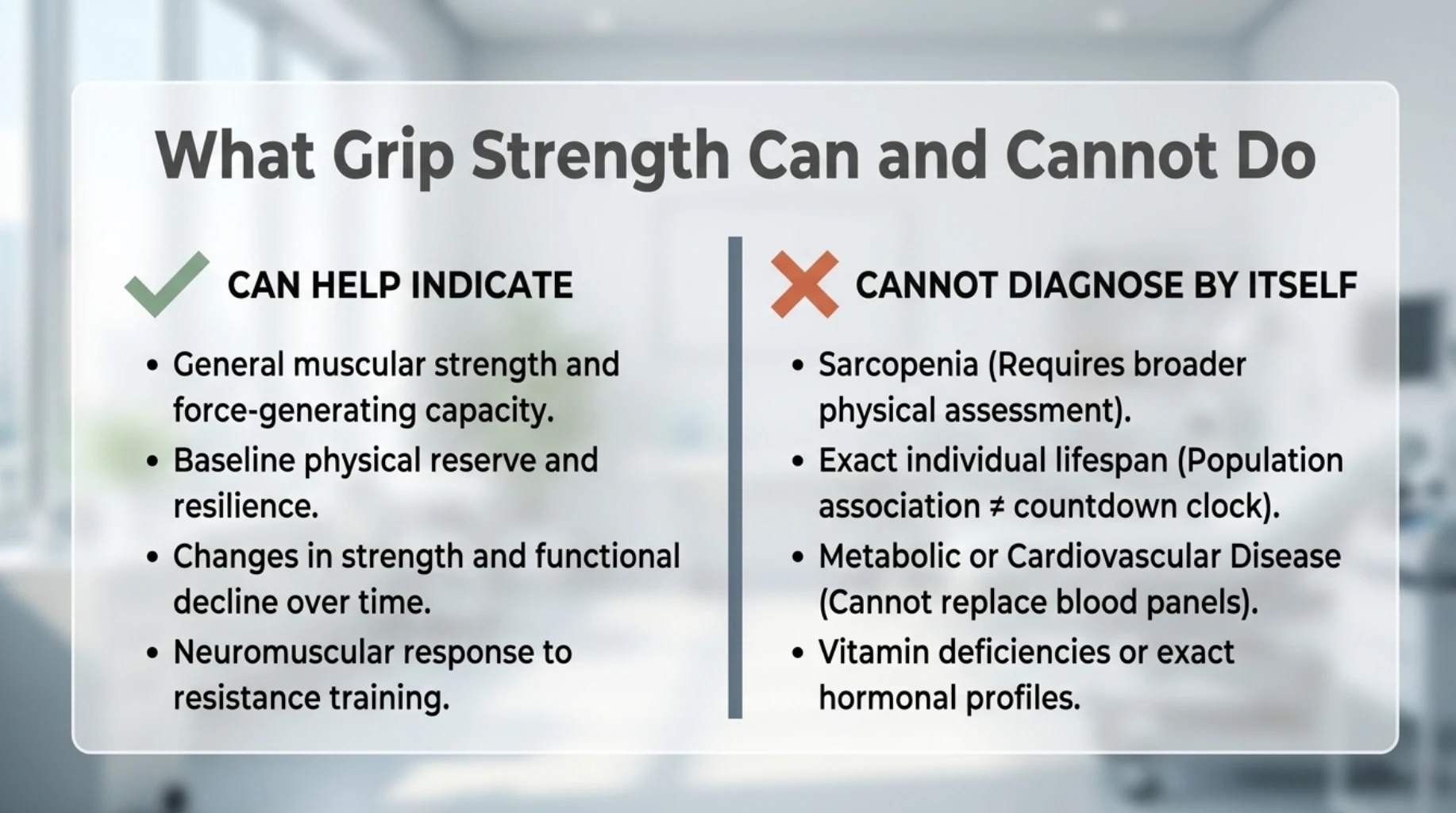
Grip Strength After 40: What Your Number Can and Cannot Tell You
| Grip Strength Can Help Indicate | Grip Strength Cannot Diagnose by Itself |
|---|---|
| Muscular strength | Sarcopenia |
| Changes in strength over time | Diabetes |
| Possible physical decline | Heart disease |
| Response to resistance training | Vitamin deficiency |
| One component of physical reserve | Frailty in isolation |
| Possible asymmetry between hands | The exact cause of neurological weakness |
Final Thought
After 40, one of the most useful questions is not simply:
“How much do I weigh?”
It is:
“How much physical capacity am I carrying into the next decade of my life?”
Grip strength cannot answer that question completely.
But it can provide one useful clue.
Your grip is measured in the hand, but what it may reveal is a much bigger story about muscle strength, physical function and the reserve you are building for the years ahead.
If you want a personalized metabolic assessment and lifestyle strategy, you can book a consultation here:
Book an Appointment