

“Doctor, my muscles are still sore three days after my workout. Is this normal or should I be worried?”
This is one of the most common questions asked by people who have recently started exercising or increased the intensity of their workouts.
Experiencing muscle soreness after exercise is usually a normal part of the body’s adaptation to physical activity. In many cases, mild discomfort simply reflects that muscles are recovering from unfamiliar or strenuous exercise.
However, not every episode of muscle soreness after exercise is caused by normal delayed-onset muscle soreness (DOMS). Severe pain, progressive swelling, marked weakness, or symptoms that continue to worsen instead of improving may indicate a more significant problem that deserves medical attention.
Understanding the difference between normal recovery and warning signs of injury can help you exercise safely while avoiding unnecessary anxiety.
This article explains what causes muscle soreness after exercise, how long normal DOMS usually lasts, seven warning signs that suggest something more serious, and practical ways to recover safely.
What Is Muscle Soreness After Exercise?
Muscle soreness after exercise refers to discomfort, stiffness, or tenderness that develops after physical activity.
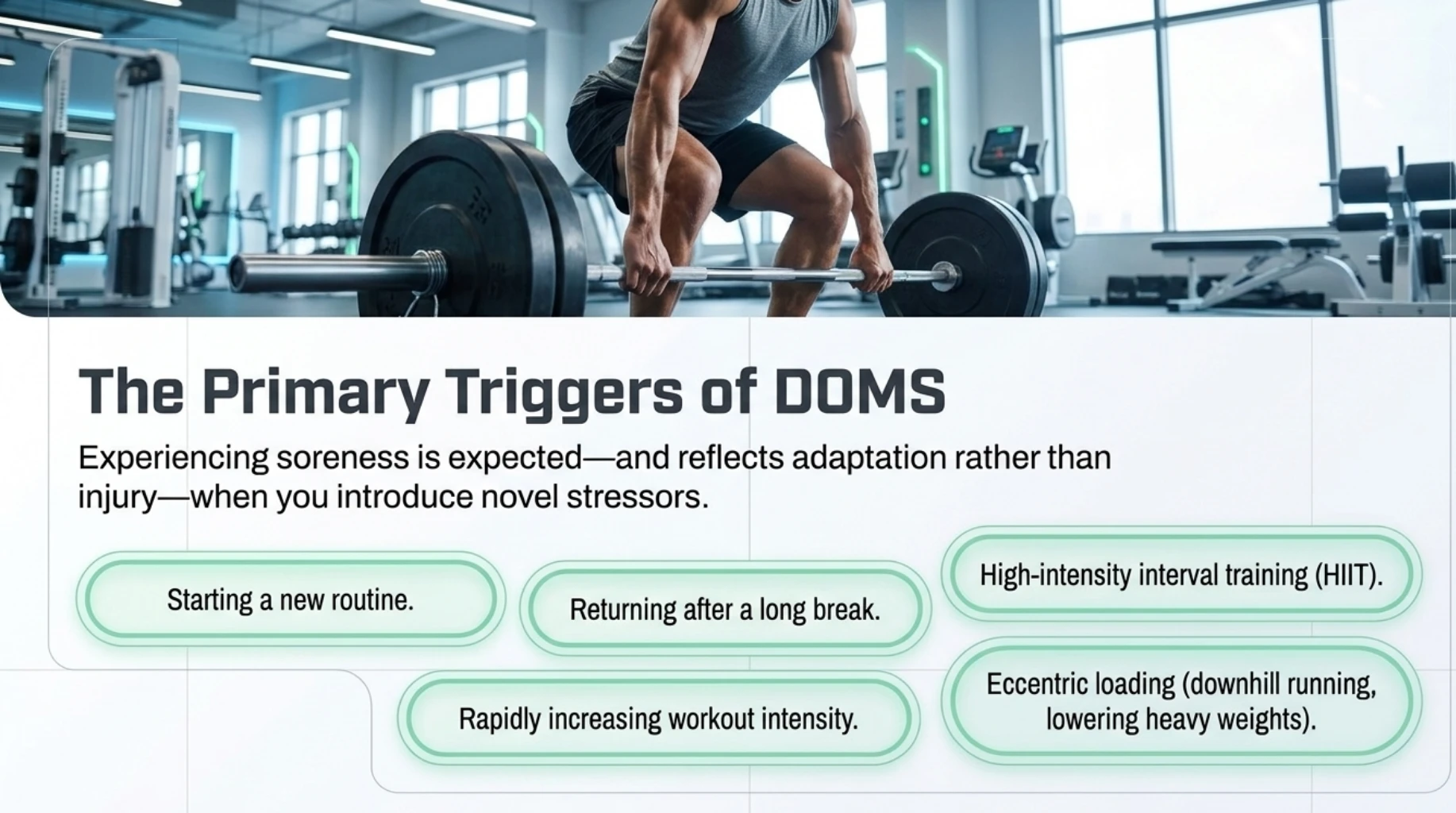
The most common cause is Delayed-Onset Muscle Soreness (DOMS), which usually appears after performing new exercises, increasing workout intensity, or returning to exercise after a long break.
Unlike an acute injury, DOMS develops gradually rather than immediately.
People commonly describe the discomfort as:
- Muscle tenderness.
- Stiffness during movement.
- Mild swelling.
- Temporary reduction in strength.
- Discomfort when sitting, standing, or climbing stairs.
Although uncomfortable, normal muscle soreness after exercise is usually temporary and improves as muscles recover.
What Causes Normal DOMS?
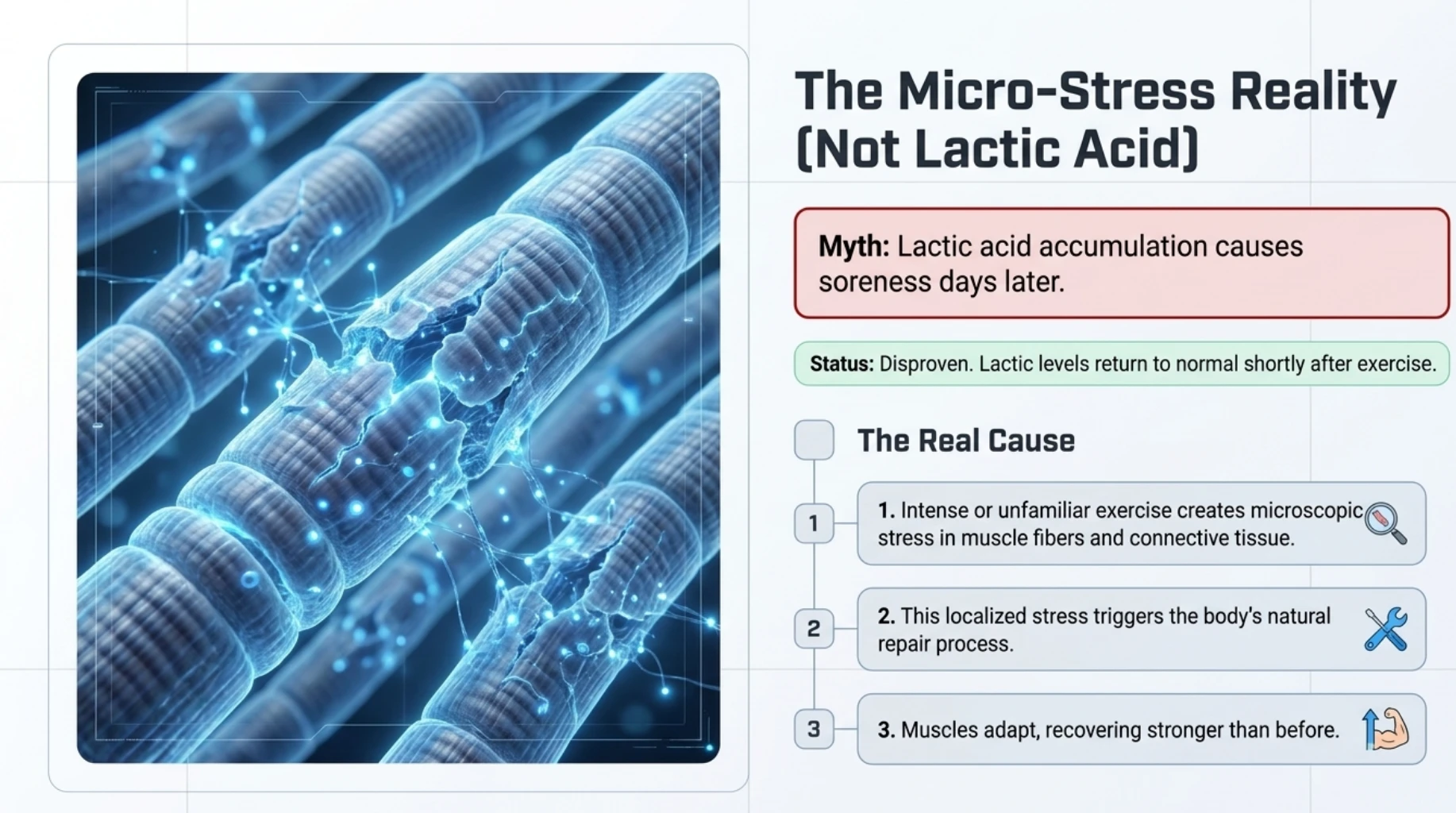
For many years, muscle soreness was thought to result from lactic acid accumulation. Current research has shown that this explanation is incorrect.
DOMS is now understood to occur because unfamiliar or intense exercise creates microscopic stress within muscle fibres and surrounding connective tissue.
This normal process stimulates repair and adaptation, allowing muscles to become stronger over time.
Activities that commonly trigger DOMS include:
- Starting a new exercise programme.
- Increasing workout intensity.
- Performing resistance training.
- Running downhill.
- High-intensity interval training.
- Returning to exercise after several weeks or months.
These activities frequently lead to muscle soreness after exercise, particularly when muscles are exposed to movements they are not accustomed to performing.
How Long Does Normal Muscle Soreness After Exercise Last?
Understanding the typical pattern of DOMS helps distinguish it from more serious conditions.
In most healthy individuals:
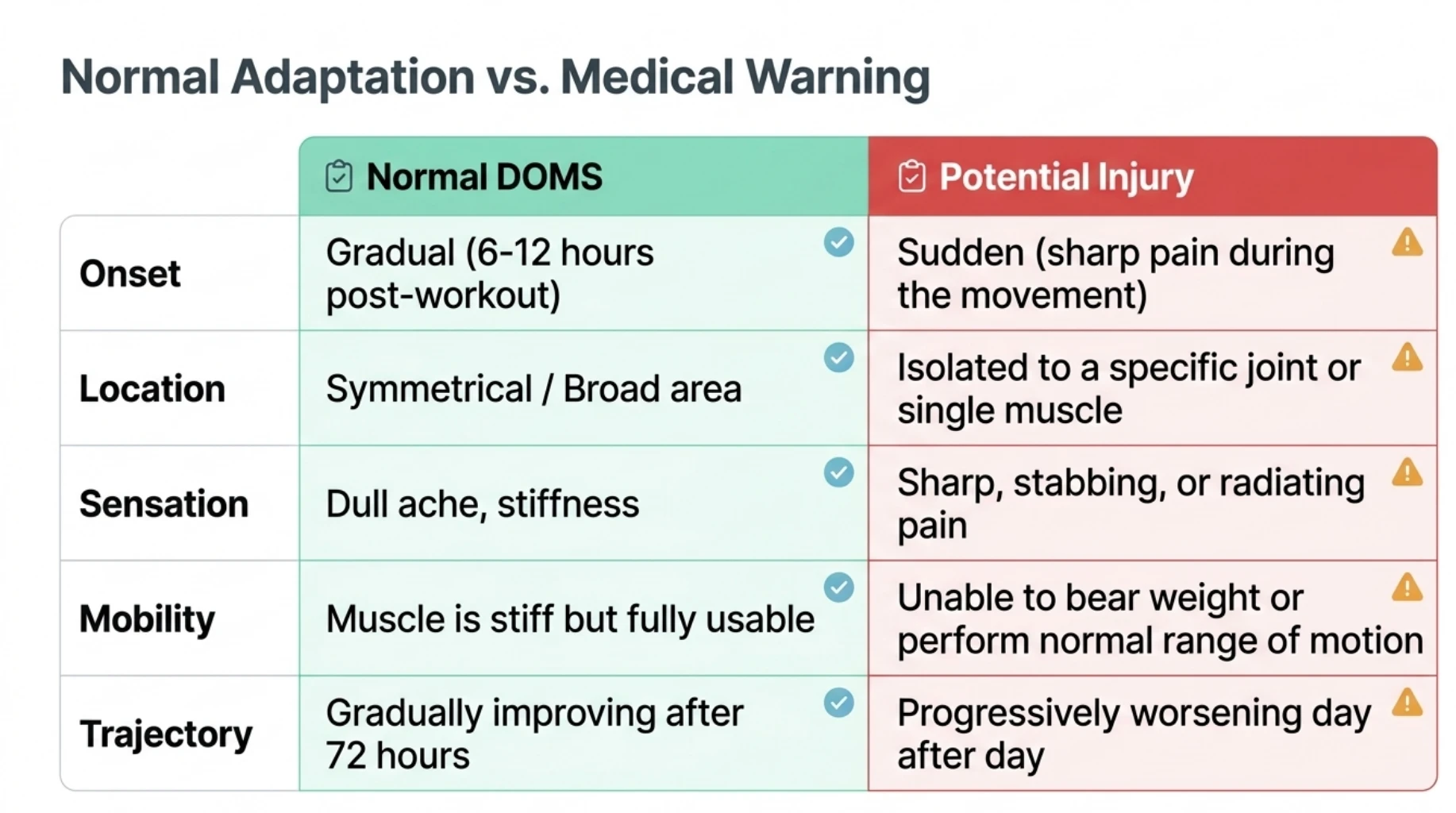
- Soreness begins approximately 6–12 hours after exercise.
- Symptoms usually become more noticeable after 24–48 hours.
- The discomfort often peaks between 24 and 72 hours.
- Most people recover within 3–5 days, although recovery may occasionally take up to one week after very strenuous exercise.
During this period, muscle soreness after exercise should gradually improve rather than become progressively worse.
Why Muscle Soreness After Exercise Is More Common After 40
Adults over the age of 40 often notice that recovery takes longer than it did in their twenties.
This does not necessarily mean that exercise has become unsafe. Instead, several age-related physiological changes influence recovery.
These include:
- Gradual decline in muscle mass.
- Reduced muscle protein synthesis.
- Slower tissue repair.
- Lower physical activity levels.
- Poor sleep quality.
- Inadequate protein intake.
For this reason, muscle soreness after exercise may last slightly longer in middle-aged and older adults, particularly if they are beginning resistance training for the first time.
When Muscle Soreness After Exercise Is Usually Normal
In most situations, soreness is simply part of healthy recovery.
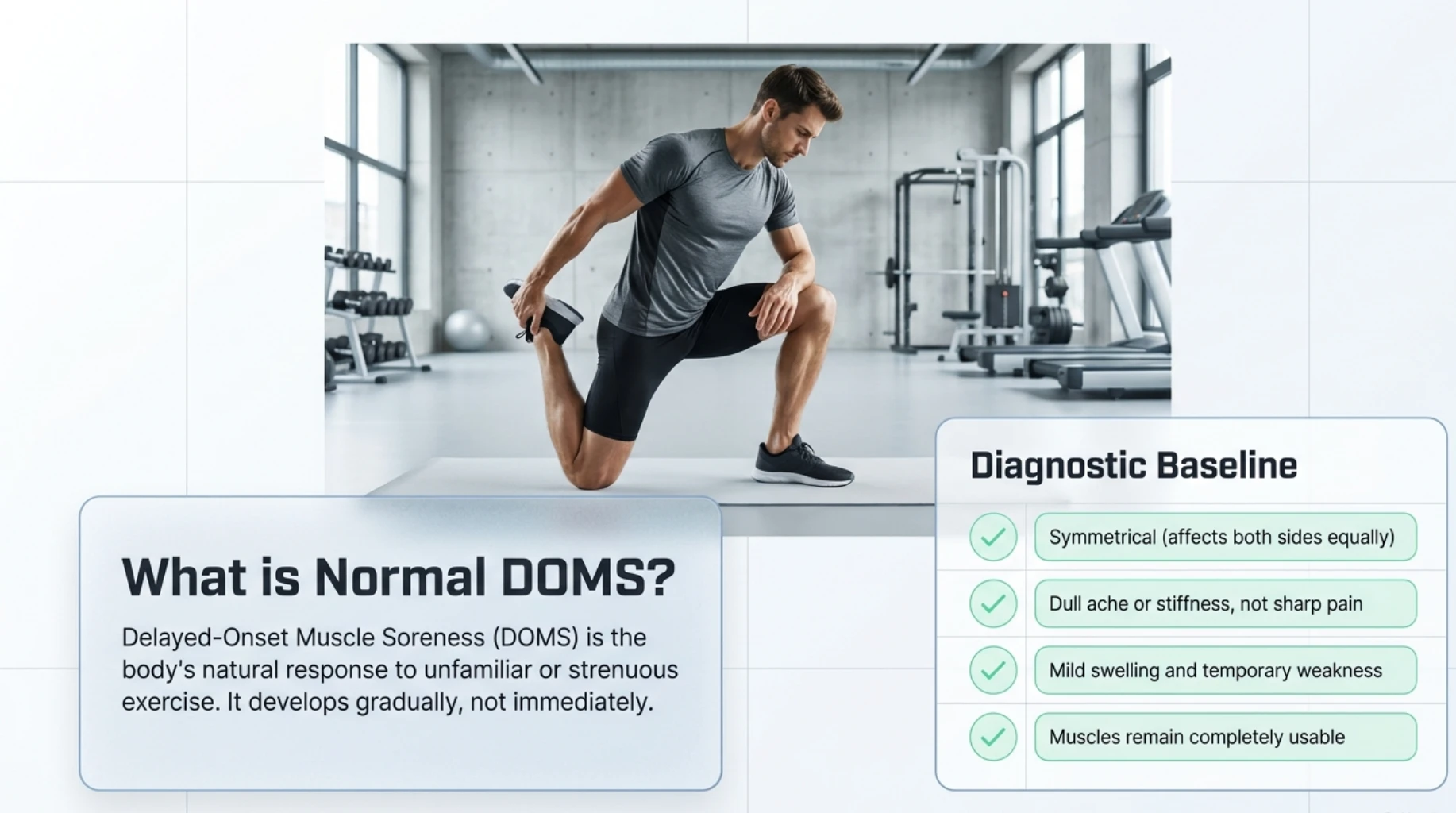
Normal muscle soreness after exercise usually has the following characteristics:
- It develops several hours after exercise rather than immediately.
- Both sides of the body are often affected similarly.
- The discomfort feels dull or achy rather than sharp.
- The affected muscles remain usable despite feeling stiff.
- Symptoms gradually improve over the following few days.
If your symptoms follow this pattern, they are most likely consistent with uncomplicated DOMS.
Sign #1: The Pain Started Suddenly During Exercise
Normal DOMS develops gradually after completing exercise.
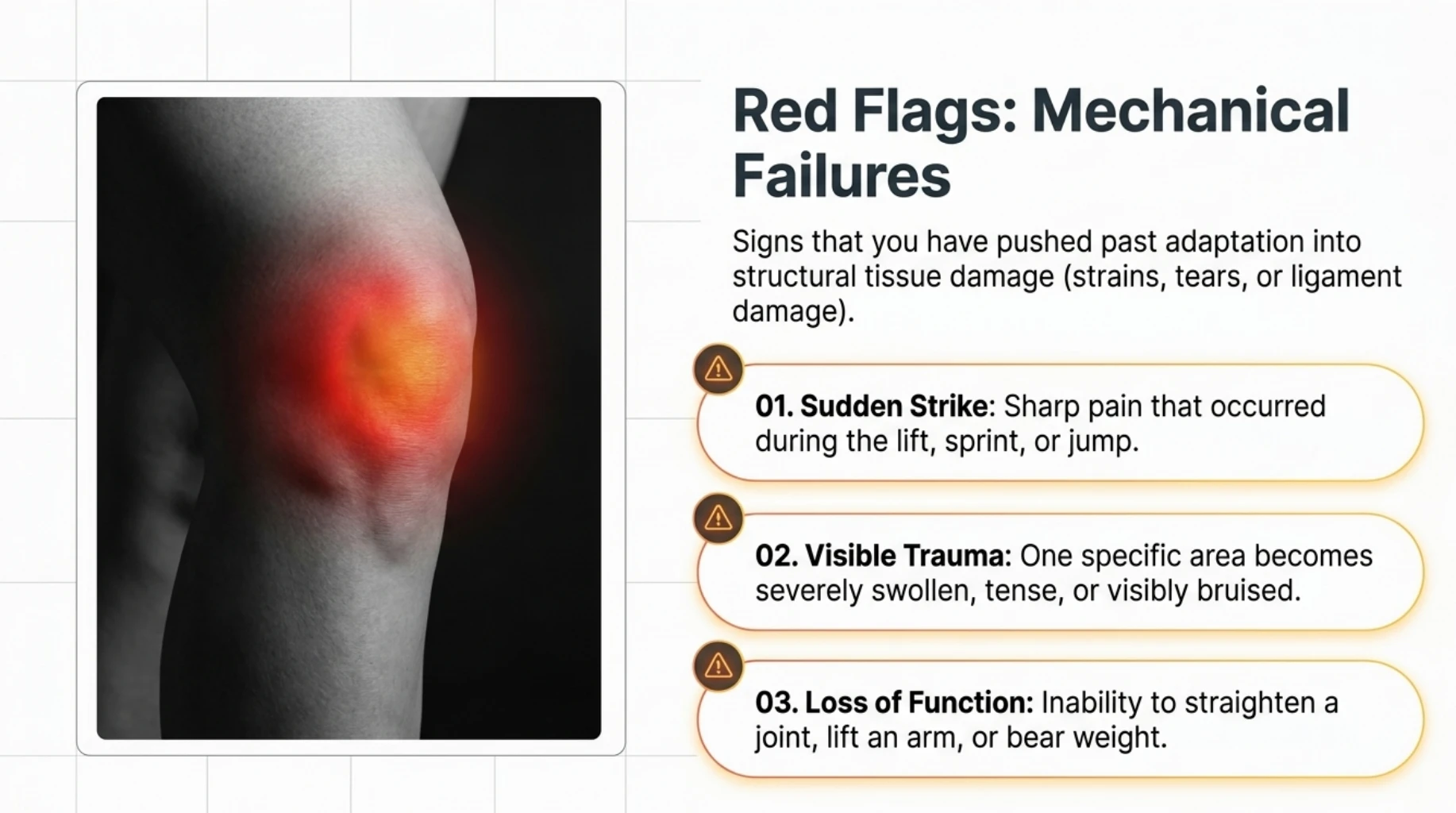
If you experience a sudden sharp pain during a lift, sprint, jump, or other movement, this is less likely to represent routine muscle soreness after exercise.
Sudden pain may suggest:
- A muscle strain.
- A tendon injury.
- A ligament injury.
- A tear involving muscle fibres.
Continuing to exercise through sharp pain increases the risk of worsening the injury.
Sign #2: One Area Becomes Severely Swollen or Bruised
Mild swelling can occur with normal DOMS, but marked swelling or visible bruising is unusual.
If one muscle becomes significantly enlarged, tense, or discoloured after exercise, medical assessment is advisable.
These symptoms may indicate bleeding within the muscle, a significant muscle tear, or another injury rather than uncomplicated muscle soreness after exercise.
Sign #3: You Cannot Use the Muscle Properly
With normal DOMS, muscles feel stiff and uncomfortable, but they continue to function.
If you are unable to bear weight, lift your arm, straighten your knee, or perform everyday movements because of severe weakness or pain, the problem may be more than ordinary muscle soreness after exercise.
Difficulty using the affected muscle should not be ignored, particularly if symptoms are worsening instead of improving.
Sign #4: The Pain Continues to Get Worse Instead of Better
One of the most reassuring features of normal DOMS is that it follows a predictable recovery pattern.
Although muscle soreness after exercise may peak within the first two or three days, the discomfort should gradually begin to improve afterwards.
If the pain continues to worsen day after day, prevents sleep, or becomes increasingly severe instead of gradually settling, it may indicate an underlying injury rather than routine muscle recovery.
Persistent worsening symptoms should be evaluated, particularly if they interfere with normal daily activities.
Sign #5: You Develop Dark or Cola-Coloured Urine
This is one of the most important warning signs following intense physical activity.
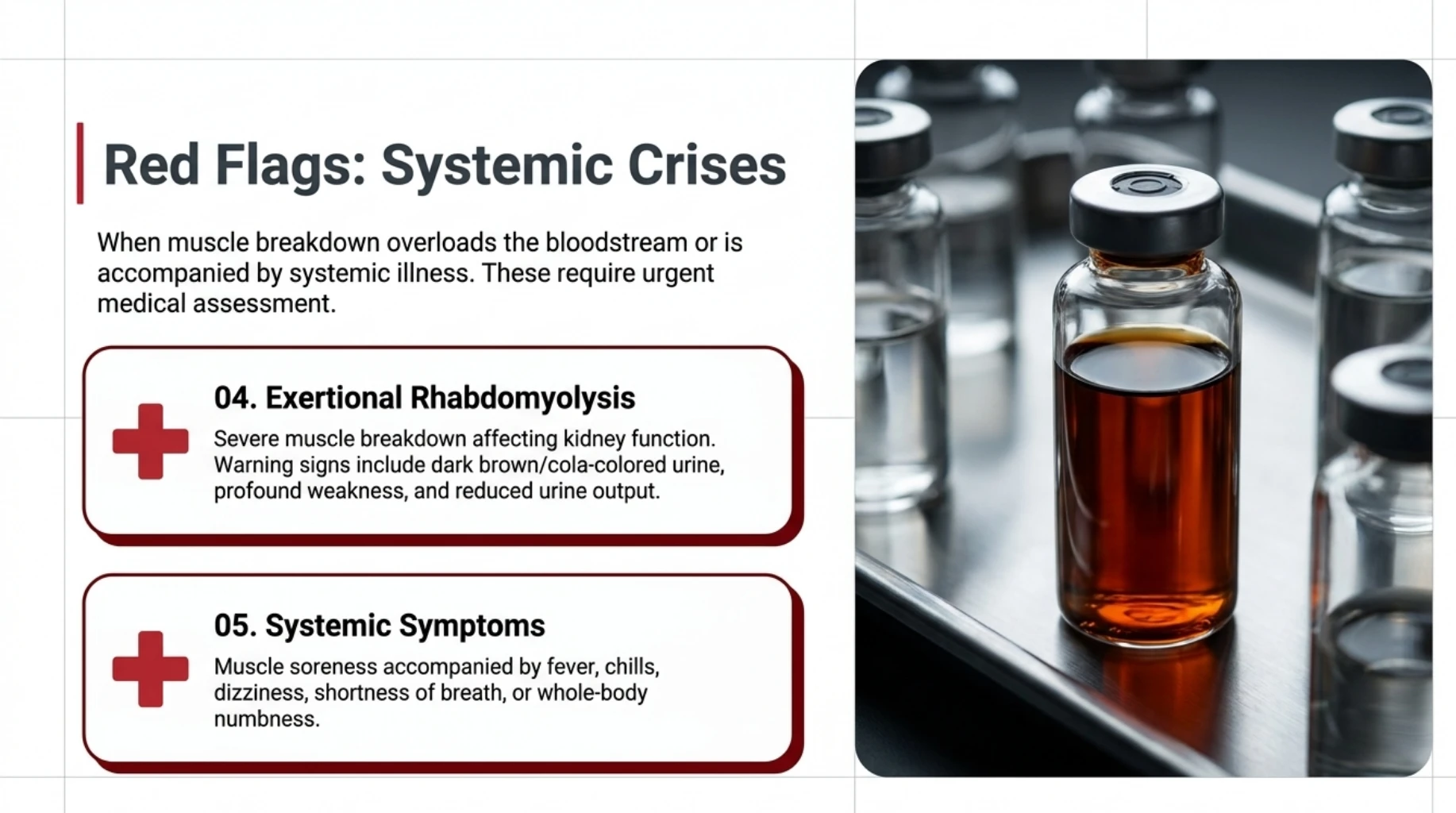
Very strenuous exercise can, in rare cases, lead to a serious condition called exertional rhabdomyolysis. In this condition, significant muscle breakdown releases substances into the bloodstream that may affect kidney function.
Warning signs include:
- Dark brown or cola-coloured urine.
- Severe muscle pain.
- Marked swelling.
- Profound weakness.
- Reduced urine output.
These symptoms are not typical of normal muscle soreness after exercise and require urgent medical assessment.
Sign #6: You Have Fever, Numbness, or Other Unusual Symptoms
Normal DOMS causes muscle discomfort but should not produce significant systemic symptoms.
If muscle soreness after exercise is accompanied by any of the following, medical evaluation is recommended:
- Fever.
- Chills.
- Numbness or tingling.
- Loss of sensation.
- Difficulty breathing.
- Persistent dizziness.
- Severe weakness affecting the entire body.
These symptoms may indicate infection, nerve involvement, heat-related illness, or another medical condition unrelated to uncomplicated DOMS.
Sign #7: The Pain Persists Beyond One Week Without Improvement
Most episodes of uncomplicated muscle soreness after exercise improve within several days.
If pain remains unchanged or continues beyond one week, particularly without any gradual improvement, further assessment may be appropriate.
Persistent pain could reflect:
- A muscle strain.
- Tendon injury.
- Stress fracture.
- Joint pathology.
- An underlying medical condition unrelated to exercise.
Early assessment helps identify problems before they become more difficult to treat.
Who Is More Likely to Experience Muscle Soreness After Exercise?
Although anyone can develop DOMS, certain situations increase the likelihood of experiencing muscle soreness after exercise.
Higher-risk groups include:
- People starting exercise for the first time.
- Individuals returning after a long break.
- Adults over 40 beginning resistance training.
- People rapidly increasing exercise intensity.
- Those performing eccentric exercises such as downhill running or lowering heavy weights.
Experiencing soreness in these situations is often expected and usually reflects adaptation rather than injury.
Does More Muscle Soreness Mean a Better Workout?
This is one of the most common fitness myths. The answer is no.
Although muscle soreness after exercise may occur after an effective workout, soreness itself is not a reliable indicator of training quality.
Many experienced athletes make excellent progress with very little soreness because their muscles have adapted to regular training.
Similarly, an extremely painful workout does not necessarily produce better fitness results.
The goal of exercise is consistent improvement in strength, endurance, mobility, and overall health—not excessive soreness.
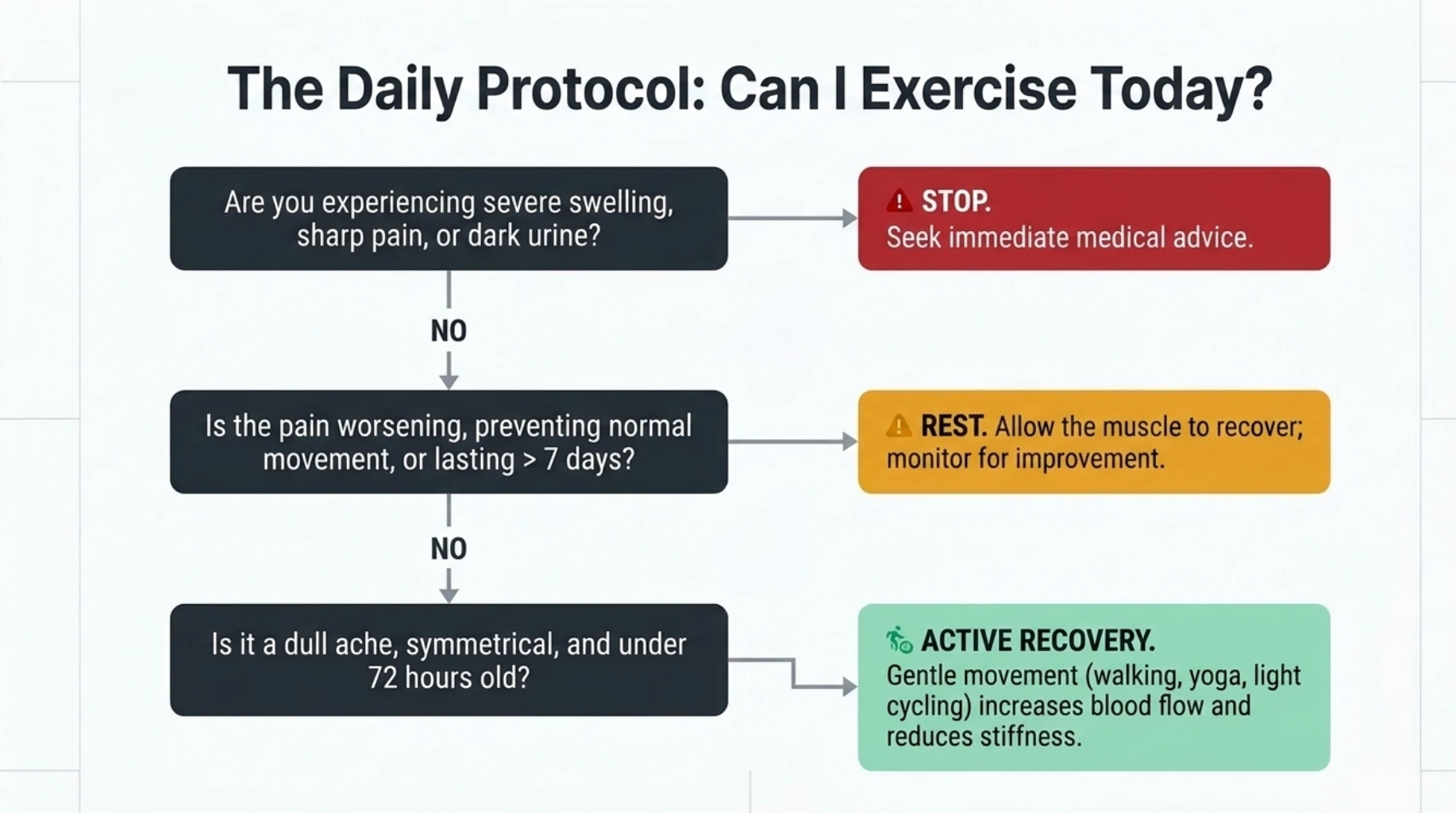
Can You Exercise If You Have Muscle Soreness After Exercise?
In many cases, yes.
If soreness is mild to moderate and consistent with normal DOMS, gentle activity may actually help reduce stiffness.
Suitable options include:
- Walking.
- Light cycling.
- Gentle stretching.
- Mobility exercises.
- Yoga.
However, if muscle soreness after exercise is severe, associated with swelling, sharp pain, or significant weakness, the affected muscles should be allowed to recover and medical advice should be sought if symptoms are concerning.
What Helps Muscle Soreness After Exercise Recover Faster?
There is no instant cure for DOMS, but several evidence-based strategies may help support recovery.
- Maintain light physical activity instead of complete bed rest.
- Stay well hydrated.
- Consume adequate daily protein to support muscle repair.
- Prioritise good-quality sleep.
- Gradually increase exercise intensity instead of making sudden large changes.
- Perform an appropriate warm-up before exercise and a cool-down afterwards.
Massage, foam rolling, and gentle stretching may provide temporary relief for some individuals, although responses vary from person to person.
The most effective long-term strategy is allowing muscles to adapt gradually through regular, progressive training.
How to Prevent Muscle Soreness After Exercise
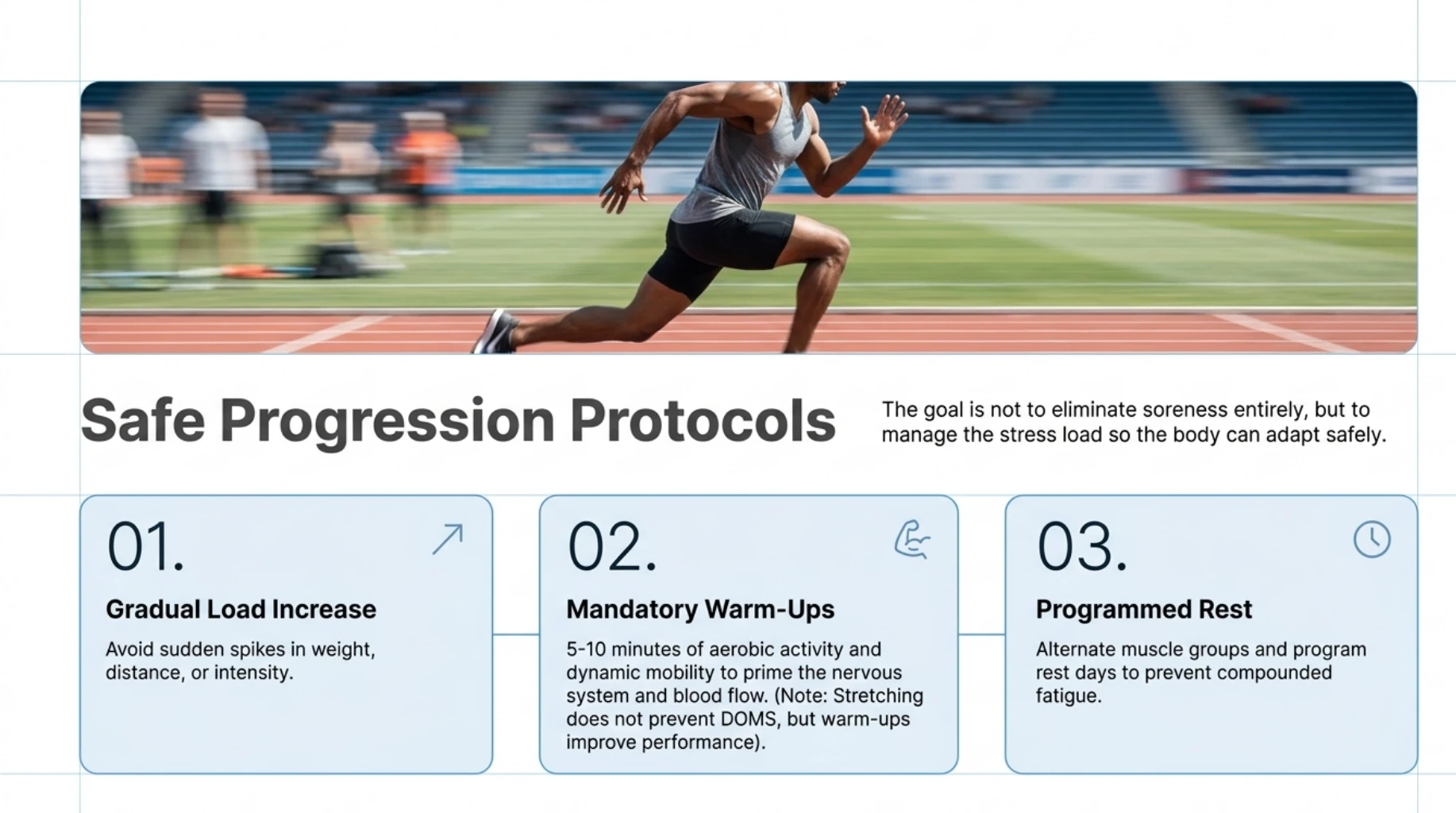
Although it is not always possible to avoid muscle soreness after exercise, a few simple strategies can reduce its severity while allowing your body to adapt safely to physical activity.
The goal is not to eliminate all soreness but to progress gradually so that muscles have sufficient time to recover and become stronger.
1. Increase Exercise Intensity Gradually
One of the biggest mistakes beginners make is trying to do too much too soon.
Suddenly increasing the weight lifted, running much farther than usual, or performing high-intensity workouts after a long break significantly increases the likelihood of muscle soreness after exercise.
A gradual increase in intensity, duration, or resistance allows muscles to adapt while reducing the risk of excessive soreness and injury.
2. Never Skip the Warm-Up
A proper warm-up prepares muscles, joints, and the cardiovascular system for physical activity.
Five to ten minutes of light aerobic activity followed by dynamic mobility exercises can improve blood flow and prepare muscles for more demanding movements.
Although warming up does not completely prevent muscle soreness after exercise, it reduces stiffness and helps improve exercise performance.
3. Prioritise Protein Intake
Exercise stimulates muscle repair, but muscles require adequate protein to recover effectively.
Including high-quality protein throughout the day supports muscle protein synthesis and helps the body repair microscopic muscle damage following exercise.
Good protein sources include:
- Eggs
- Fish
- Chicken
- Milk and yoghurt
- Paneer
- Tofu
- Soya products
- Pulses and lentils
Adequate nutrition is an essential part of reducing excessive muscle soreness after exercise and supporting long-term muscle health.
4. Stay Well Hydrated
Hydration supports normal muscle function and overall exercise performance.
Although drinking extra water does not eliminate DOMS, dehydration may contribute to fatigue and reduced recovery capacity.
Make hydration a routine part of your exercise programme, particularly during hot weather or prolonged physical activity.
5. Make Sleep Part of Your Recovery Plan
Sleep is one of the most important yet overlooked aspects of exercise recovery.
During sleep, the body carries out many of the repair processes necessary for muscle recovery and adaptation.
Poor sleep may slow recovery, reduce exercise performance, and increase the perception of muscle soreness after exercise.
Aim for consistent, good-quality sleep as part of a balanced fitness programme.
6. Allow Time for Recovery
Muscles become stronger during recovery, not during the workout itself.
Alternating muscle groups, including rest days, and avoiding repeated high-intensity training of the same muscles on consecutive days helps reduce excessive fatigue and supports healthy adaptation.
Recovery is an essential part of every successful exercise programme.
Common Myths About Muscle Soreness After Exercise
Myth 1: More Pain Means a Better Workout
This is one of the most widespread misconceptions.
While muscle soreness after exercise may occur following an effective workout, excessive soreness is not a measure of success.
Progress is better judged by improvements in strength, endurance, mobility, and overall fitness rather than by how much discomfort you experience the next day.
Myth 2: Lactic Acid Causes DOMS
This belief has largely been disproven.
Lactic acid levels return to normal relatively soon after exercise and do not explain the soreness that develops one or two days later.
Current evidence indicates that DOMS results from microscopic muscle fibre damage and the body’s natural repair process.
Myth 3: You Should Stop Exercising Until Every Ache Disappears
Complete rest is not always necessary.
If muscle soreness after exercise is mild and typical of DOMS, light movement often helps reduce stiffness and improve circulation.
However, severe pain, marked weakness, or suspected injury should always be evaluated before returning to exercise.
Myth 4: Stretching Completely Prevents DOMS
Stretching improves flexibility and may help you feel more comfortable, but it does not completely prevent delayed-onset muscle soreness.
The most effective strategy remains gradual progression, appropriate training loads, good nutrition, hydration, and adequate recovery.
When Should You See a Doctor?
Seek medical evaluation if muscle soreness after exercise is accompanied by:
- Sudden severe pain during exercise.
- Significant swelling or bruising.
- Loss of muscle function.
- Dark or cola-coloured urine.
- Fever or severe weakness.
- Numbness or tingling.
- Pain lasting longer than one week without improvement.
- Chest pain, dizziness, or shortness of breath during or after exercise.
Early assessment helps identify muscle tears, tendon injuries, exertional rhabdomyolysis, fractures, or other medical conditions that require prompt treatment.
Final Thought
A little soreness often means your muscles are adapting. Persistent, severe, or unusual pain may be your body’s way of telling you that something more than normal recovery is happening. Learning the difference helps you stay active, recover safely, and protect your long-term health.
If you want a personalized metabolic assessment and lifestyle strategy, you can book a consultation here:
Book an Appointment