
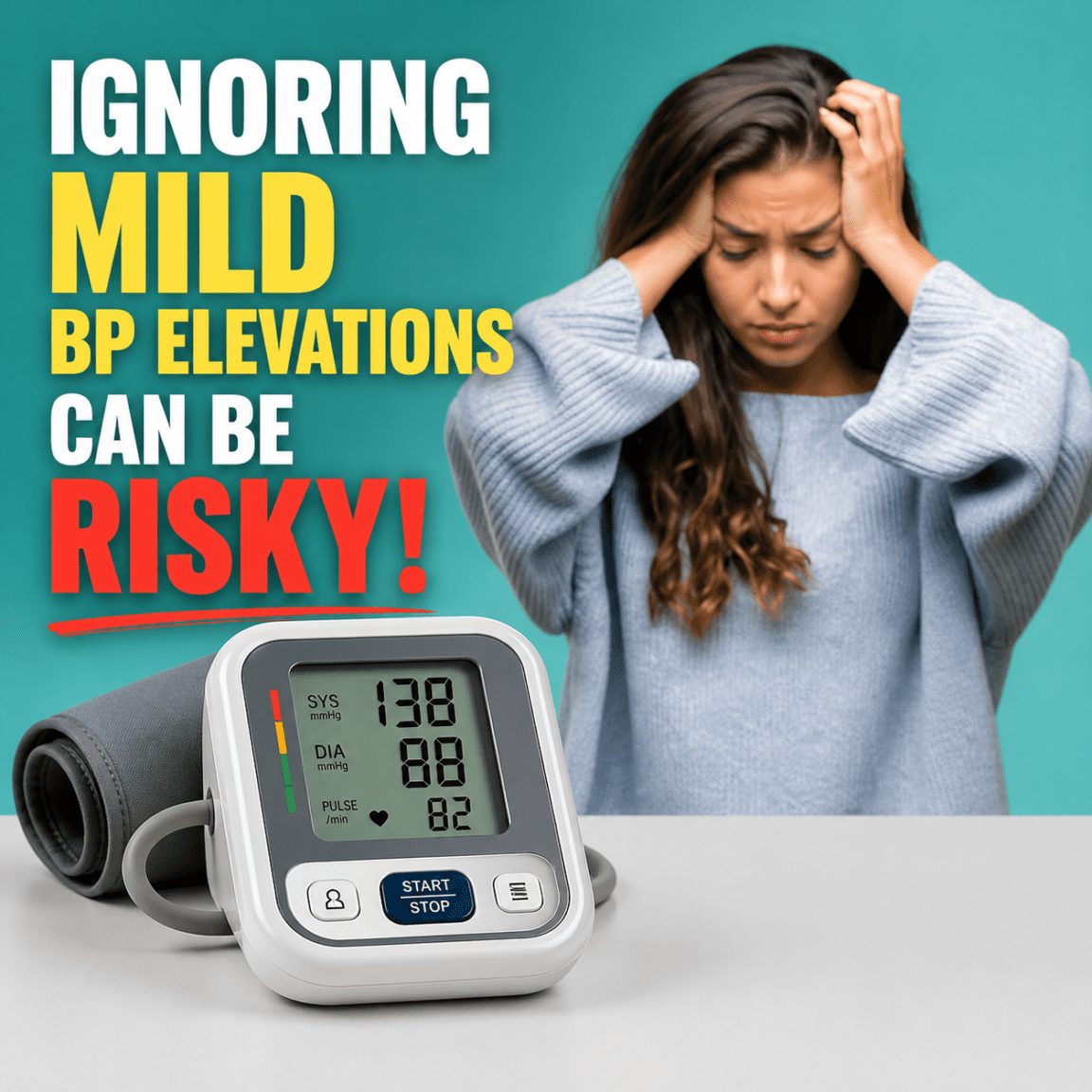
“Doctor, it’s just slightly high… nothing to worry, right?”
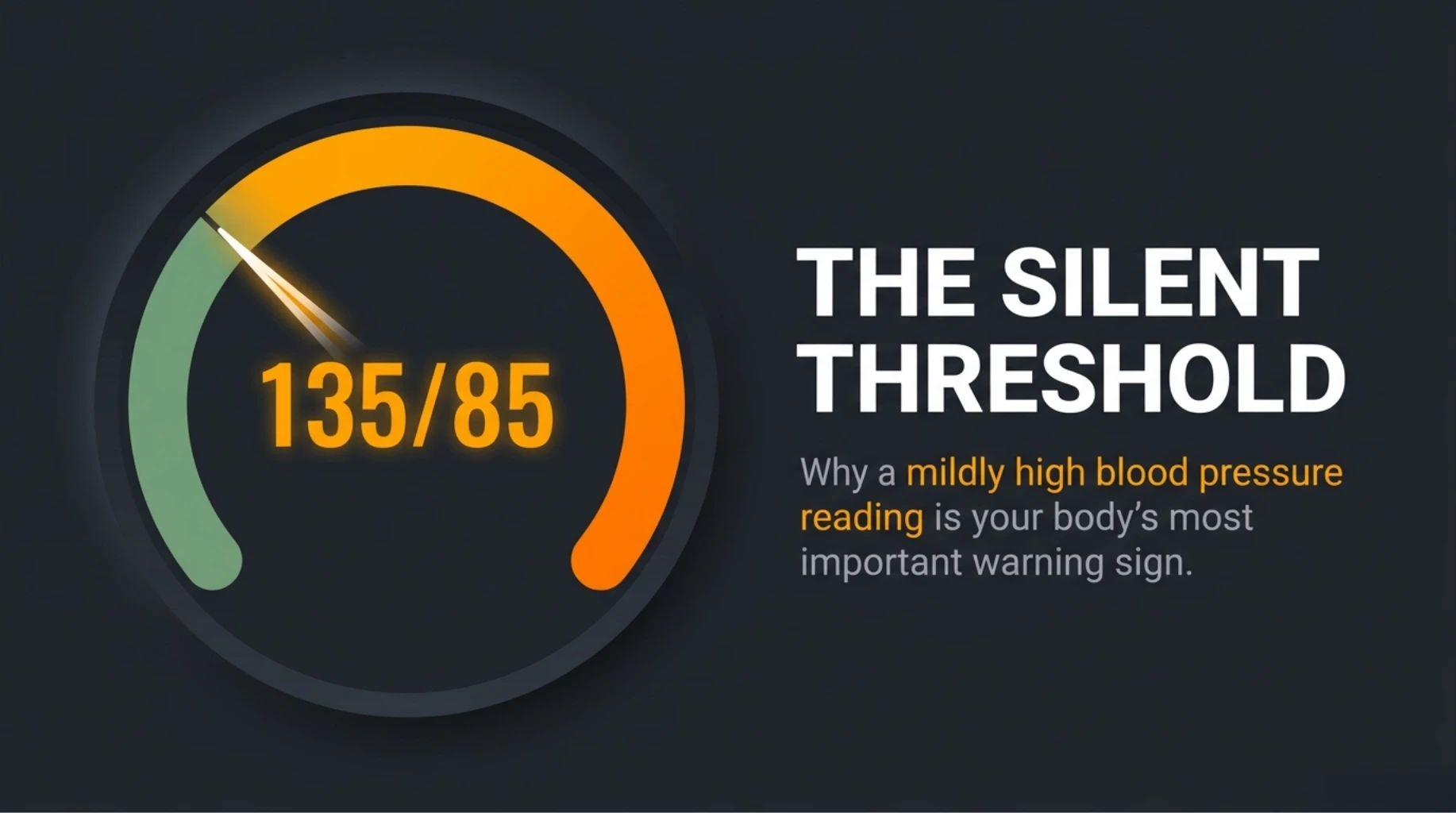
This is one of the most common statements I hear in practice. A patient sees a reading like 135/85 or 140/90 and assumes it is temporary, stress-related, or not serious enough to act on.
But this is exactly where the problem begins.
Understanding why ignoring mild BP elevations can be risky is important because high blood pressure does not usually start suddenly. It develops gradually, and those “mild” readings are often the first visible sign.
Why “Mild” Blood Pressure Is Not Always Mild
Blood pressure is not a switch that suddenly turns from normal to dangerous. It exists on a spectrum. What appears as a mild elevation is often an early stage of a long-term process.
At this stage, the body is already under subtle stress. Blood vessels are beginning to lose flexibility, and the regulatory mechanisms that control pressure are starting to shift.
Because there are no obvious symptoms, most people ignore it. But internally, changes have already started.
The Slow and Silent Nature of Blood Pressure Damage
One of the biggest challenges with blood pressure is that it does not cause immediate discomfort. Unlike pain or fever, it does not force you to take action. This is why it is often called a silent condition.
Even mildly elevated blood pressure, when present consistently, can begin to affect the inner lining of blood vessels. Over time, this leads to gradual stiffening and narrowing.
What makes it risky is not a single reading, but the repeated exposure of your body to slightly higher pressure than normal.
What Happens Inside Your Body at This Stage
When blood pressure remains mildly elevated over weeks or months, several changes begin to occur.
Your heart has to work slightly harder with every beat. Your blood vessels experience more pressure than they are designed to handle. Your kidneys, which help regulate fluid balance, also start adjusting to this higher pressure.
Individually, these changes are small. But together, they set the stage for future complications.
Why People Ignore Mild BP Elevations
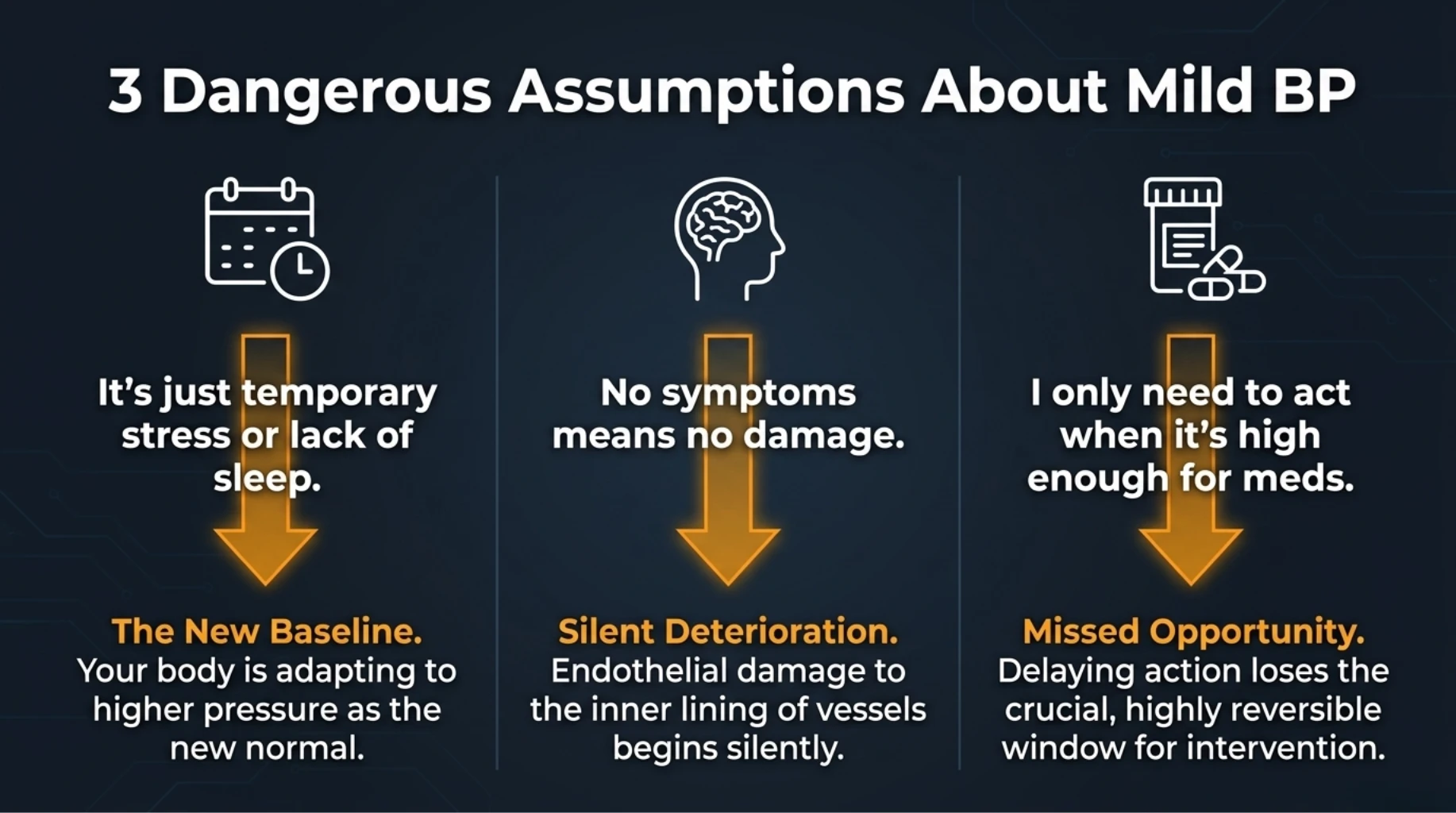
There are a few common reasons why people do not take mild readings seriously. First, they feel completely normal. There is no headache, no dizziness, no obvious warning sign.
Second, they assume the reading is temporary—perhaps due to stress, travel, or lack of sleep.
Third, there is a belief that medication is only needed when readings become very high.
While these assumptions may seem reasonable, they often delay early intervention, which is actually the most effective stage to act.
The Concept of “Early Window of Prevention”
Mild blood pressure elevation is not just a warning—it is an opportunity.
This is the stage where lifestyle changes can have the maximum impact. Blood vessels are still relatively adaptable, and metabolic changes are still reversible.
Once blood pressure becomes persistently high, the same changes require more effort, and often medication becomes necessary.
This is why ignoring mild BP elevations can be risky—not because something dramatic happens immediately, but because the best opportunity to correct it is lost.
How Mild BP Elevations Gradually Turn Into Hypertension
One of the most important things to understand is that blood pressure does not usually jump from normal to very high overnight. It increases gradually.
What starts as an occasional reading of 135/85 or 140/90 may slowly become more frequent. Over time, these readings stop being “occasional” and start becoming your new baseline.
This progression happens silently. The body adapts to the higher pressure, and because there are no symptoms, the change often goes unnoticed until it becomes more difficult to reverse.
The Impact on the Heart: Subtle but Progressive
Even mild elevation in blood pressure increases the workload on the heart. With every beat, the heart has to push blood against slightly higher resistance.
Initially, the body compensates for this. But over time, the heart muscle begins to thicken as it adapts to the increased demand.
This may not cause immediate symptoms, but it reduces the efficiency of the heart in the long run. If the process continues, it can increase the risk of heart disease.
What Happens to Blood Vessels Over Time
Blood vessels are designed to be flexible. They expand and contract with each heartbeat, allowing smooth blood flow.
When pressure remains even slightly elevated for long periods, this flexibility begins to reduce. The inner lining of blood vessels gets affected, making them more rigid.
This stiffness increases resistance to blood flow, which further raises blood pressure—creating a cycle that becomes harder to break over time.
The Hidden Effect on Kidneys
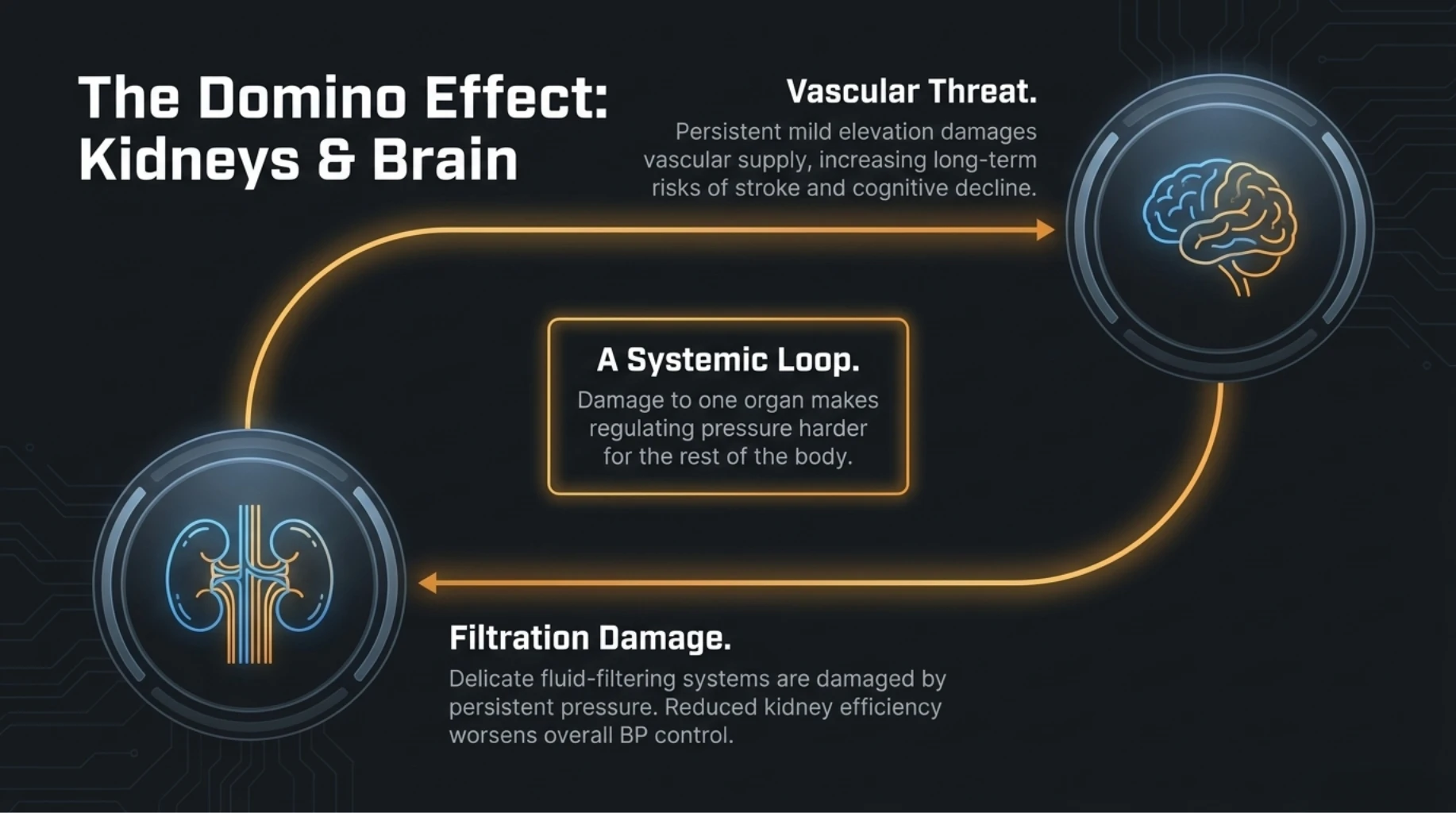
The kidneys play a key role in regulating blood pressure by controlling fluid and salt balance.
Mild but persistent elevation in blood pressure affects the delicate filtering system of the kidneys. Over time, this can reduce their efficiency.
As kidney function declines, it further disrupts blood pressure regulation, making control more difficult.
Why Brain Health Is Also Affected
Blood pressure directly influences the blood supply to the brain. Even mildly elevated levels, when persistent, can increase the risk of long-term vascular changes.
These changes may not cause immediate symptoms, but over years, they can contribute to an increased risk of stroke or cognitive decline.
This is why early control is important—not just for current health, but for long-term protection.
The Role of Lifestyle in This Progression
When mild BP elevations are ignored, lifestyle factors continue to push the numbers higher.
Factors like prolonged sitting, high salt intake, poor sleep, stress, and weight gain gradually reinforce the problem.
Each of these may seem small individually, but together they create a consistent upward pressure on your readings.
This is why patients often say, “My BP was slightly high before, but now it has increased more.” It is not sudden—it is cumulative.
Real-Life Pattern Seen in Patients
In many cases, the pattern is quite similar.
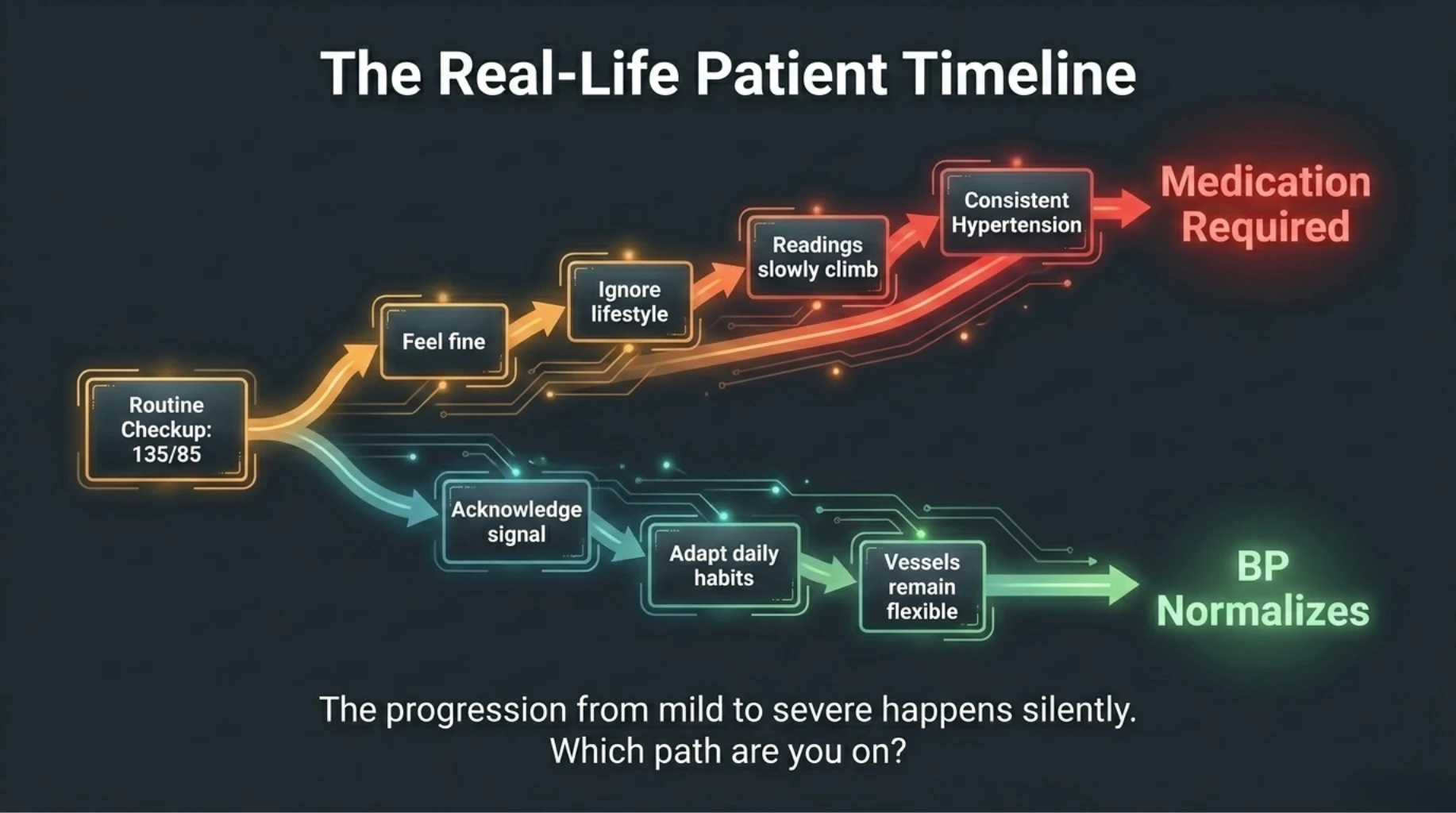
A person gets a mildly elevated reading during a routine checkup. They are advised to monitor it, but since they feel fine, no major changes are made.
Over the next few months or years, lifestyle remains unchanged—long sitting hours, irregular meals, stress, and poor sleep.
Gradually, the readings increase. Eventually, when they return for evaluation, blood pressure is consistently high, and medication becomes necessary.
This entire progression could have been slowed or even prevented if action was taken at the earlier stage.
What You Should Do When You Notice Mild BP Elevation
The most important step is not to panic—but also not to ignore it.
A mildly elevated reading does not mean you need immediate medication in every case. But it does mean that your body is giving you an early signal that something needs attention.
The right approach at this stage is observation combined with timely action.
Start with Accurate Monitoring
Before making any conclusions, it is important to confirm whether the elevation is consistent.
Blood pressure can vary due to stress, sleep, or even the environment in which it is measured. This is why a single reading should not be over-interpreted.
Instead, regular monitoring at home over a few days or weeks provides a clearer picture. When you observe a consistent pattern of mild elevation, it becomes meaningful.
Use This Stage as an Opportunity, Not a Warning Alone
Many people view mild BP elevation as a problem. A better way to look at it is as an opportunity.
At this stage, the body is still responsive. Blood vessels are more adaptable, and metabolic changes are not yet fixed.
This is where lifestyle changes can have the strongest impact, often preventing progression to full hypertension.
Focus on Daily Habits That Influence Blood Pressure
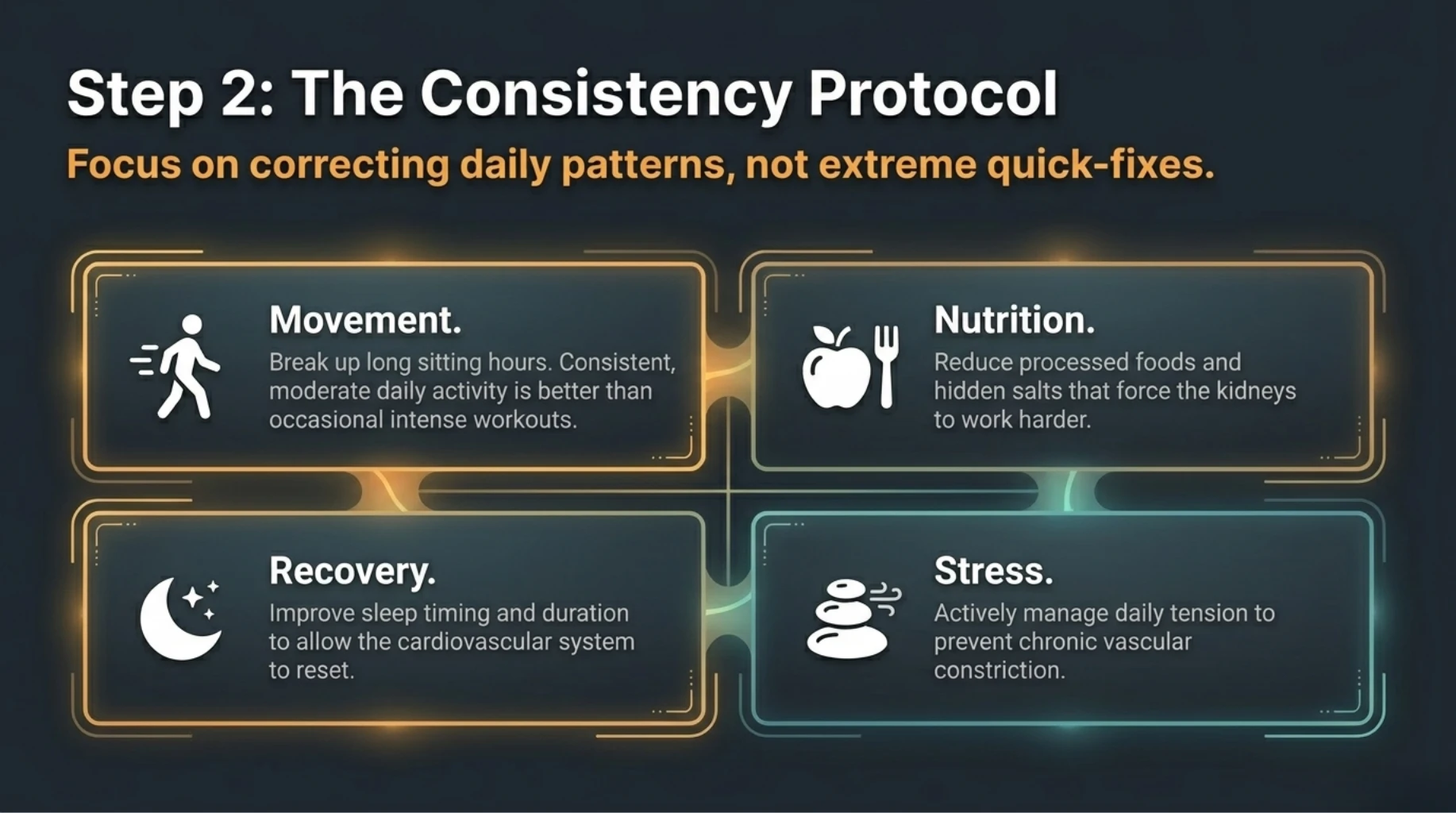
Instead of looking for quick fixes, focus on patterns.
If your day involves long sitting hours, irregular meals, high salt intake, poor sleep, and ongoing stress, these factors collectively push your blood pressure upward.
Correcting these does not require extreme measures. It requires consistency.
For example, increasing daily movement, reducing processed food intake, improving sleep timing, and managing stress can gradually bring readings closer to normal.
When Lifestyle Changes Are Enough—and When They Are Not
In many individuals, especially in early stages, lifestyle correction alone can significantly improve blood pressure.
However, if readings continue to rise or remain consistently high despite changes, medical evaluation becomes important.
The goal is not to avoid medication at all costs, but to use it appropriately when needed—while still continuing lifestyle improvements.
The Importance of Early Action
One of the biggest advantages of identifying mild BP elevation early is that it gives you time.
Time to understand your body. Time to correct your habits. Time to prevent long-term damage.
Once blood pressure becomes persistently high, the same corrections require more effort, and the margin for reversal becomes smaller.
This is why ignoring mild BP elevations can be risky—not because of immediate danger, but because of missed opportunity.
Putting It Into Perspective
It is important to remember that health problems rarely appear suddenly. They develop gradually, often over years.
Mild blood pressure elevation is one of those early signals that can easily be overlooked. But for those who pay attention, it becomes a powerful point of intervention.
By acting at this stage, you are not just controlling a number—you are protecting your heart, blood vessels, kidneys, and brain for the long term.