

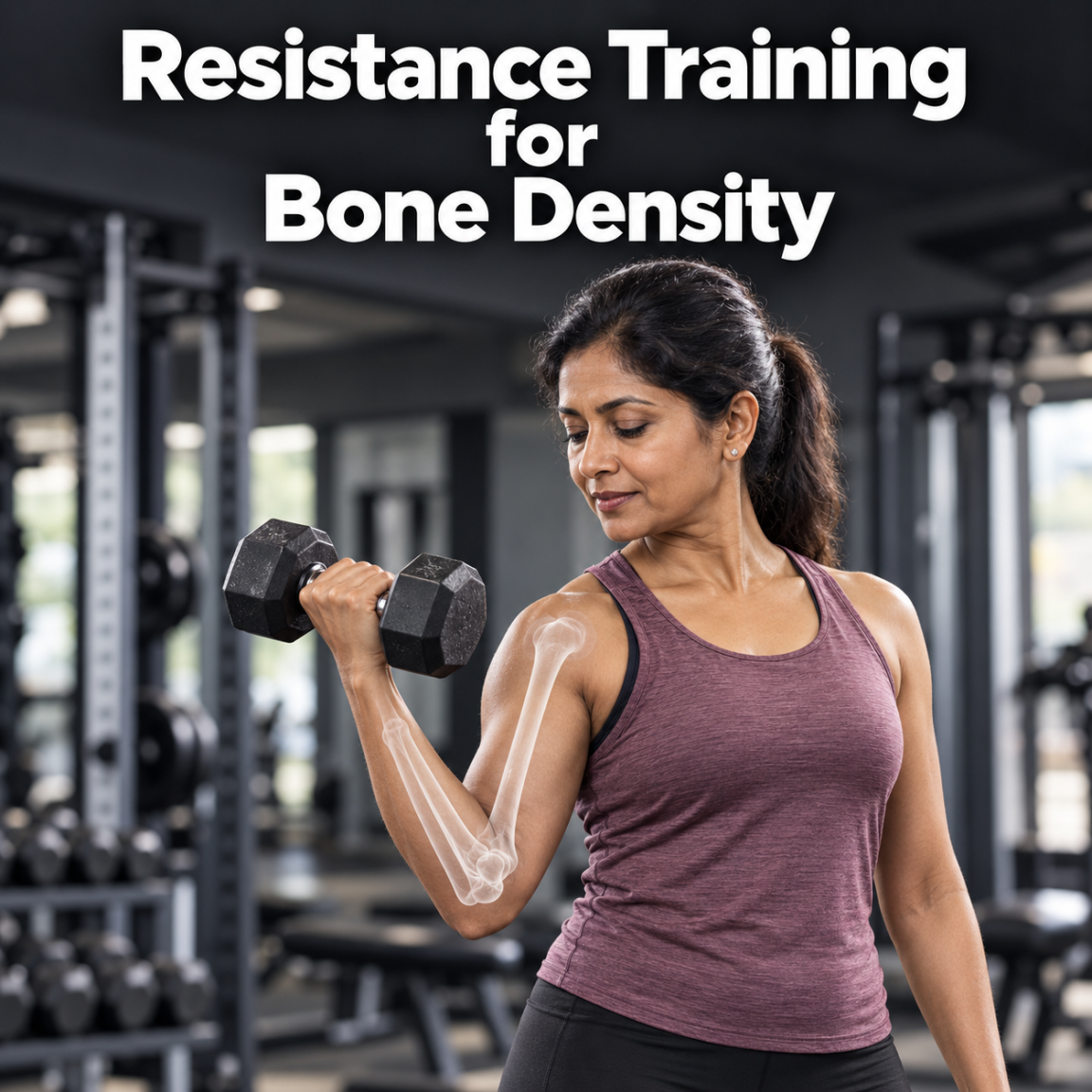
Resistance Training for Bone Density: Can Lifting Weights Protect Your Bones?
Most people begin lifting weights because they want stronger muscles.
But your muscles are not the only tissues responding to resistance training.
Your bones are also living, biologically active tissues that continually adapt to the forces placed upon them.
This becomes particularly important with ageing.
Bone mineral density gradually declines in many adults, and the process can accelerate after menopause. Over time, sufficient bone loss can progress from osteopenia to osteoporosis, increasing the risk of fractures.
That raises an important question:
Can lifting weights actually make your bones stronger?
The answer is encouraging, but it needs some qualification.
Research suggests that appropriately designed resistance training for bone density can help preserve bone and, in some circumstances, produce measurable improvements in bone mineral density.
However, simply holding a pair of very light dumbbells occasionally is unlikely to provide the same skeletal stimulus as progressive resistance training.
Bones respond to mechanical loading.
The amount, direction, rate and progression of that loading all matter.
Resistance exercise also improves muscle strength, balance and physical function—factors that become increasingly important for reducing fall and fracture risk as we age.

What Is Bone Density?
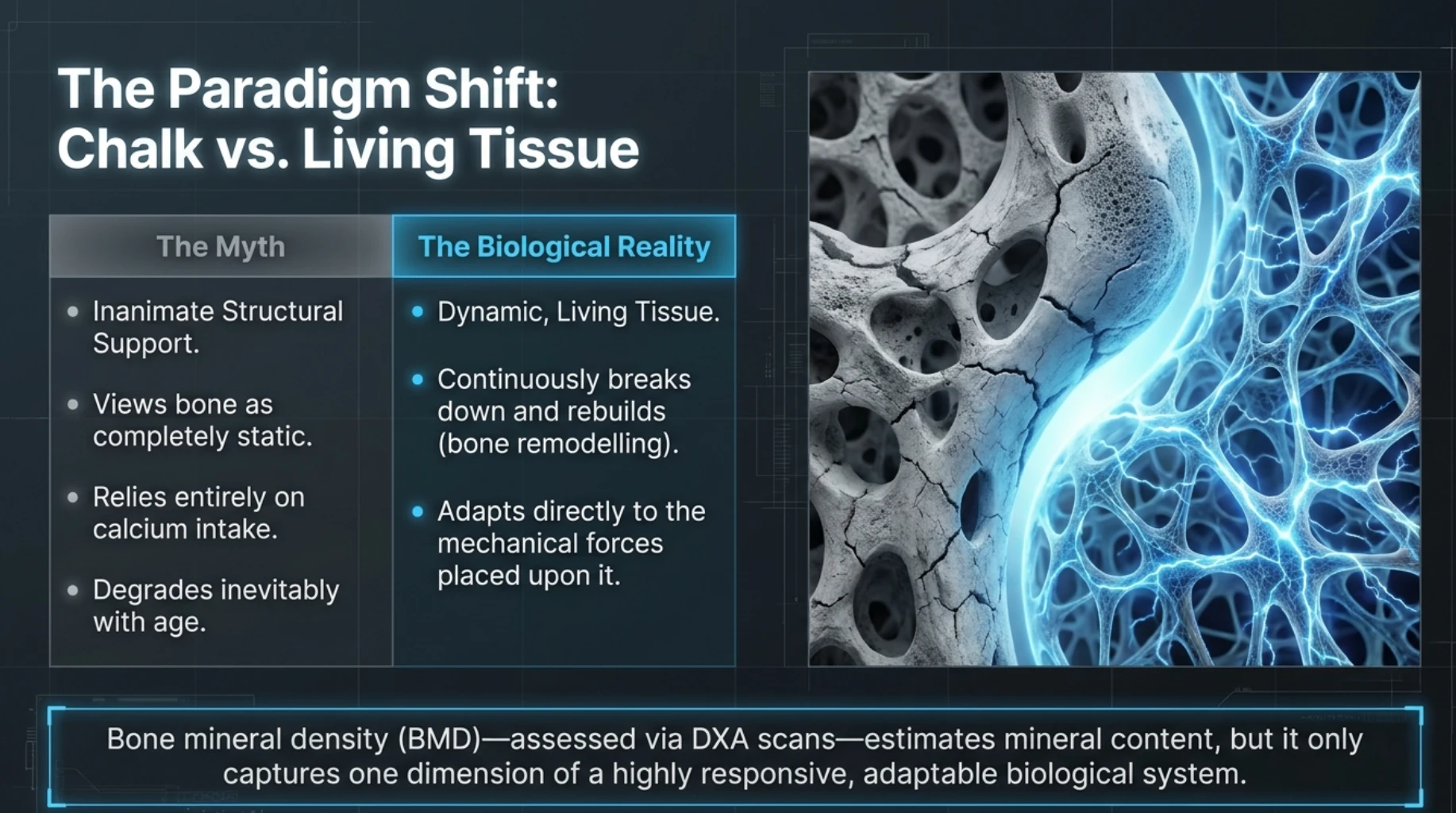
Bone may look like a solid, inactive structure, but biologically it is far more dynamic.
Throughout life, old bone tissue is continuously broken down and new bone tissue is formed through a process known as bone remodelling.
Bone mineral density, usually abbreviated as BMD, provides an estimate of the mineral content of bone within a particular area.
It is commonly assessed using a DXA or DEXA scan.
Common measurement sites include:
- Lumbar spine.
- Femoral neck.
- Total hip.
These locations are clinically important because fractures involving the spine and hip can have major consequences, particularly in older adults.
Bone Density Is Only One Part of Bone Strength
It is tempting to think that bone strength and bone density are exactly the same thing.
They are related, but not identical.
Bone strength is influenced by several factors, including:
- Bone mineral density.
- Bone size and geometry.
- Microarchitecture.
- Material properties of bone tissue.
- Bone turnover.
- Previous fractures.
This distinction is important because exercise may provide benefits that are not completely captured by a single DXA measurement.
Exercise can also improve muscle strength, balance and coordination, potentially reducing the likelihood of falling in the first place.
Why Does Bone Density Decline With Age?
Bone mass is built primarily during childhood, adolescence and early adulthood.
After peak bone mass has been achieved, maintaining bone becomes increasingly important.
With ageing, the balance between bone formation and bone resorption can gradually shift towards net bone loss.
Several factors can accelerate this process.
| Factor | How It May Affect Bone Health |
|---|---|
| Ageing | Bone formation may become less able to keep pace with bone resorption. |
| Menopause | Declining oestrogen can accelerate bone turnover and bone loss. |
| Physical inactivity | Reduces regular mechanical loading of the skeleton. |
| Loss of muscle | Reduces the forces muscles normally transmit to bones. |
| Low calcium intake | May compromise the nutritional environment required for bone maintenance. |
| Vitamin D deficiency | Can impair calcium absorption and contribute to poor bone health. |
| Very low body weight | Can be associated with lower bone mass and reduced mechanical loading. |
| Smoking | Is associated with poorer bone health and increased fracture risk. |
| Heavy alcohol intake | Can adversely affect bone and increase fall risk. |
| Certain medicines | Long-term glucocorticoid therapy is an important example. |
| Certain medical conditions | Endocrine, gastrointestinal, inflammatory and other disorders can contribute to secondary osteoporosis. |
This is why bone health cannot be reduced to taking a calcium tablet.
Nutrition matters, but bones also need an appropriate mechanical stimulus.
How Does Resistance Training Affect Your Bones?
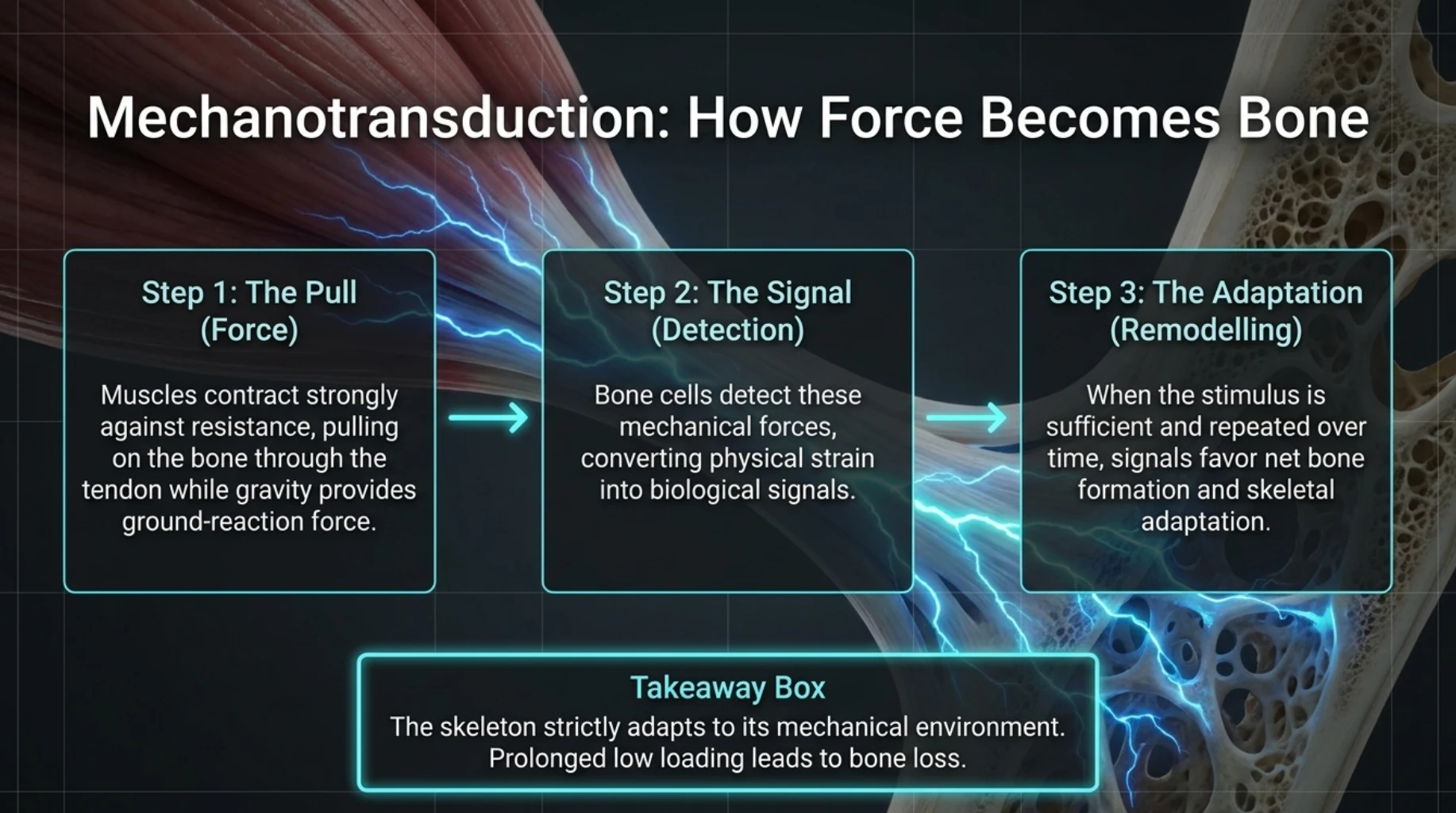
When a muscle contracts strongly against resistance, it pulls on the bone through its tendon.
At the same time, weight-bearing movements expose the skeleton to forces generated by gravity and ground reaction.
Bone cells can detect these mechanical forces.
This process is sometimes described as mechanotransduction—the conversion of a mechanical stimulus into biological signals within the tissue.
When the loading stimulus is sufficient and repeated over time, these signals can favour skeletal adaptation.
This is the biological foundation of resistance training for bone density.
Your Bones Adapt to What You Ask Them to Do
A useful principle in bone physiology is that the skeleton adapts to its mechanical environment.
If the skeleton is regularly exposed to meaningful loads, there is a reason to maintain sufficient strength to tolerate those loads.
If mechanical loading becomes very low for prolonged periods, bone can be lost.
We see an extreme example during prolonged immobilisation or exposure to microgravity.
Normal ageing is obviously different, but the principle remains useful:
Bones benefit from being appropriately loaded.
Why Walking Alone May Not Be Enough for Bone Density
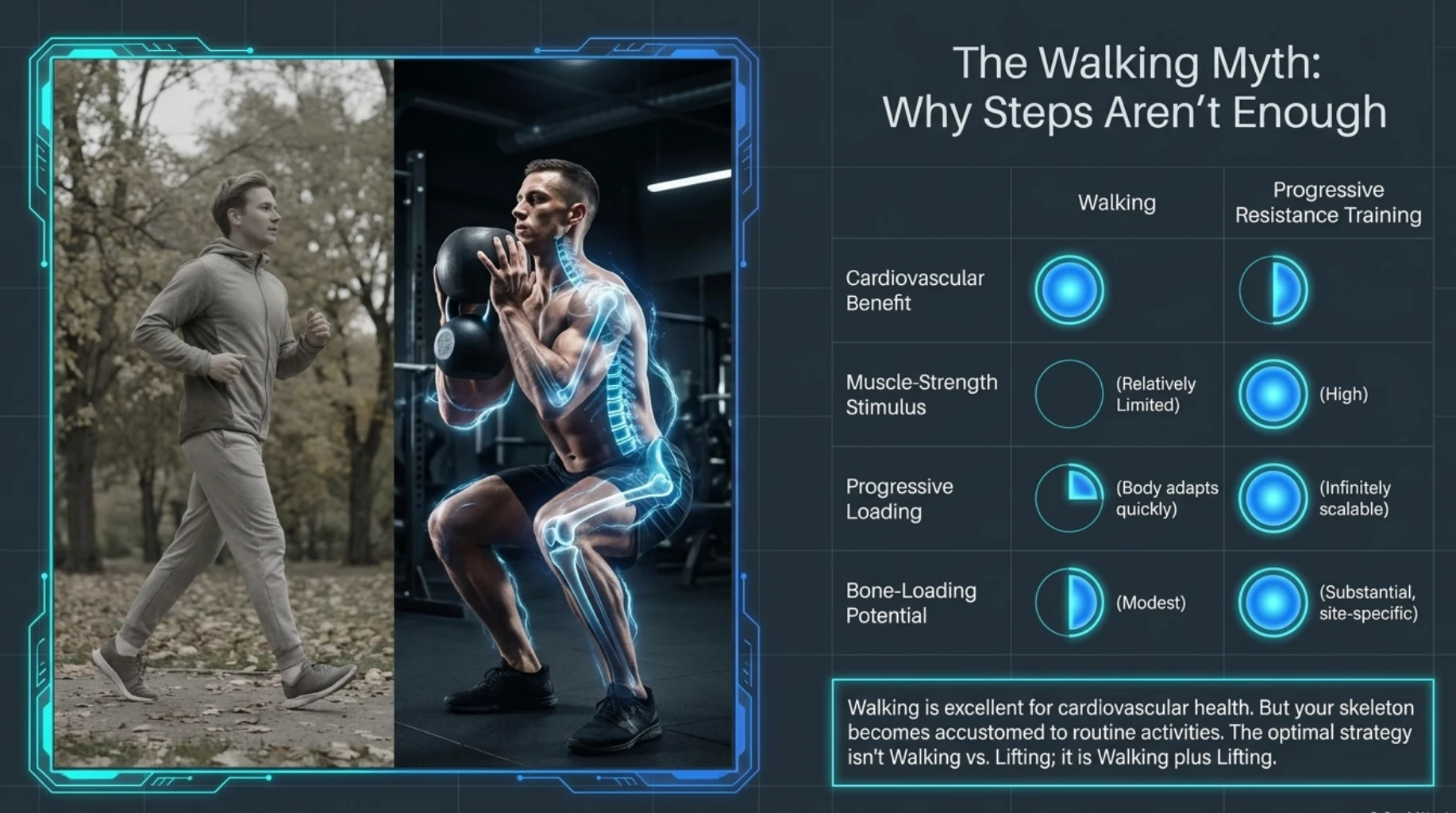
Walking is excellent exercise.
It can improve cardiovascular health, increase daily energy expenditure, reduce sedentary time and help maintain mobility.
But walking and resistance training do not provide identical skeletal stimuli.
Your body becomes accustomed to activities it performs repeatedly.
If you have been walking for years, an ordinary walk may no longer represent a particularly novel or strong mechanical challenge to the skeleton.
This does not make walking useless.
It simply means walking should not necessarily be the only exercise strategy when preserving bone and muscle is an important goal.
Walking vs Resistance Training for Bone Health
| Feature | Walking | Resistance Training |
|---|---|---|
| Weight-bearing | Yes | Often yes, depending on exercise |
| Cardiovascular benefit | Good | Some benefit, but not its primary role |
| Muscle-strength stimulus | Relatively limited | High when appropriately programmed |
| Progressive loading | More limited | Can be progressively increased |
| Bone-loading potential | Useful but generally modest | Can provide substantial site-specific loading |
| Balance and mobility | Helpful | Can improve both when appropriately designed |
| Role in healthy ageing | Important | Important |
The better strategy for many adults is not walking versus resistance training.
It is walking plus resistance training.
Does Research Support Resistance Training for Bone Density?
Yes, although the magnitude of improvement varies.
Research involving postmenopausal women has repeatedly found that exercise can help preserve or improve bone mineral density at important skeletal sites.
Resistance training is particularly interesting because it simultaneously targets two age-related problems:
bone loss and muscle loss.
However, not every resistance-training programme produces the same skeletal response.
Differences between studies can arise from:
- Training intensity.
- Exercise selection.
- Programme duration.
- Frequency.
- Progressive overload.
- Baseline bone density.
- Age.
- Menopausal status.
- Nutrition.
- Adherence.
This helps explain why one study may show a meaningful improvement while another shows mainly preservation of bone density.
Preserving Bone Density Can Still Be a Success
This point is often overlooked.
Suppose bone density would normally decline with ageing.
After a year of resistance training, a DXA scan shows little or no increase.
It might appear that exercise “did not work.”
But if the expected trajectory without exercise was bone loss, maintaining bone density may itself represent a beneficial outcome.
This is especially relevant after menopause and later in life.
Exercise should therefore not be judged only by whether a DXA number rises dramatically.
Resistance Training for Bone Density After Menopause
Bone health becomes particularly important during and after the menopausal transition.
Oestrogen plays an important role in bone metabolism.
As oestrogen levels decline, bone resorption can accelerate, contributing to more rapid bone loss.
This is one reason osteoporosis becomes much more common in postmenopausal women.
Resistance exercise provides a non-pharmacological mechanical stimulus to bone while simultaneously helping preserve muscle strength and physical function.
Recent research in postmenopausal women supports beneficial effects of resistance training on bone mineral density, although the response varies by skeletal site and training programme.
Why Muscle Matters for Bone Health After Menopause
Muscle and bone should not be considered completely separate systems.
Stronger muscles generate larger forces.
Those forces are transmitted to bones.
Muscle strength also helps with:
- Balance.
- Walking stability.
- Climbing stairs.
- Getting up from the floor.
- Recovering from a loss of balance.
- Maintaining independence.
Therefore, resistance training may support fracture prevention through more than one pathway.
Bone Density Is Only Half of the Fracture Story
Fractures occur when the force applied to a bone exceeds its ability to tolerate that force.
Low bone strength increases susceptibility.
But many fractures also involve a fall.
This means fracture risk is influenced by both skeletal strength and the probability of falling.
| Fracture-Related Factor | How Resistance Training May Help |
|---|---|
| Bone mineral density | Can help maintain or improve BMD when the training stimulus is sufficient. |
| Muscle strength | Improves the ability to control movement and perform daily activities. |
| Lower-body power | May improve the ability to react when balance is disturbed. |
| Balance | Can improve when appropriate balance and functional exercises are included. |
| Physical function | Supports safer walking, stair climbing and transfers. |
| Confidence | Improved strength may make everyday movement easier and reduce fear of activity. |
This broader perspective is important.
The objective is not simply to produce a better number on a DXA report.
The real objective is to maintain a skeleton and body capable of supporting an active, independent life.
What Type of Resistance Training Helps Bone Density?
Bones need sufficient mechanical loading to adapt.
This means that resistance training for bone health generally needs to progress beyond exercises that remain extremely easy indefinitely.
Useful resistance can come from:
- Free weights.
- Weight machines.
- Resistance bands.
- Body-weight exercises.
- Weighted functional movements.
The equipment itself is less important than whether the exercise safely creates an adequate and progressively challenging load.
Why Progressive Overload Matters for Bones
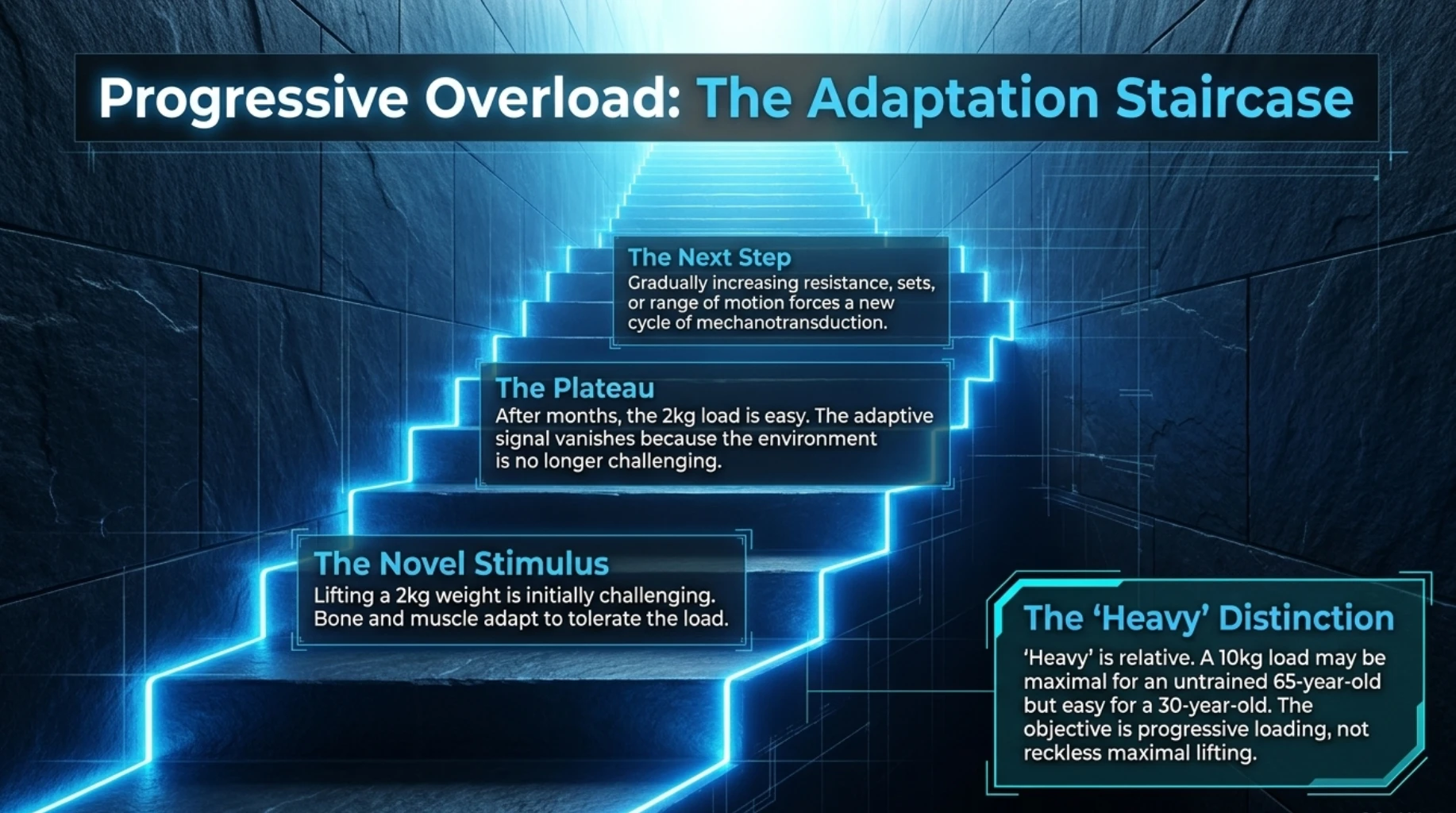
Imagine beginning a strength programme with a 2 kg dumbbell.
Initially, that load may be challenging.
After several months, the same exercise with the same 2 kg dumbbell may become very easy.
Your muscles have adapted.
Your skeleton has also become accustomed to the mechanical environment.
If the stimulus never changes, the adaptive signal may become smaller.
Progressive overload means gradually increasing the challenge as your capacity improves.
This could involve:
- Increasing resistance.
- Progressing to a more challenging exercise.
- Increasing repetitions within an appropriate range.
- Increasing sets.
- Improving movement quality and range of motion.
For bone health, however, simply performing more and more easy repetitions is not necessarily equivalent to gradually exposing the skeleton to appropriately higher loads.
Do You Need to Lift Heavy Weights for Bone Density?
This requires an important distinction.
“Heavy” is relative.
A load that is easy for a trained 30-year-old may be very challenging for a previously sedentary 65-year-old.
Research suggests that higher-intensity resistance training can provide a useful osteogenic stimulus, and some evidence in postmenopausal women with osteoporosis suggests that appropriately supervised higher-intensity resistance and impact programmes may produce meaningful benefits.
But this does not mean an untrained person with osteoporosis should immediately begin maximal lifting.
The load should be:
- Appropriate for current ability.
- Technically controlled.
- Progressively increased.
- Compatible with existing medical and musculoskeletal conditions.
The goal is progressive loading—not reckless loading.
Resistance Training for Bone Density: Which Exercises Are Useful?
Exercises that load the hips, legs and spine through muscular force can be particularly relevant because these include common sites of osteoporotic fracture.
Depending on ability and medical status, a programme may include movements such as:
- Squats or squat variations.
- Sit-to-stand progressions.
- Deadlift or hip-hinge variations.
- Step-ups.
- Lunges or supported split squats.
- Leg press.
- Rows.
- Chest press.
- Overhead pressing where appropriate.
- Calf raises.
- Loaded carries.
The correct exercise selection depends on the individual.
A healthy 45-year-old and an 80-year-old with severe osteoporosis and previous vertebral fractures should not automatically receive the same programme.
Do Resistance Bands Improve Bone Density?
Resistance bands can strengthen muscles and are particularly useful for beginners, home exercise and rehabilitation.
However, the important question is not whether the resistance comes from a band or a dumbbell.
The question is whether the load provides sufficient progressive mechanical challenge.
As strength increases, very light bands may become insufficient unless resistance is progressively increased.
Bands can therefore be useful, but they should not automatically be assumed to provide the same skeletal loading as appropriately performed higher-load resistance exercises.
What About Body-Weight Exercise?
Body-weight exercises can also be valuable.
Squats, step-ups, lunges, push-ups and other movements use the body itself as resistance.
For a beginner, this may provide a substantial training stimulus.
But the same principle applies:
the body eventually adapts.
Progression may then require a harder variation, additional external resistance, greater range of motion or another appropriate method of increasing mechanical demand.
Resistance Training vs Calcium for Bone Health
This is not an either-or decision.
Calcium provides a nutritional component needed for bone mineralisation.
Resistance training provides mechanical stimulation.
Vitamin D contributes to calcium homeostasis and normal musculoskeletal function.
Protein contributes to the structural matrix of bone and supports muscle.
These factors work together.
| Factor | Primary Role in Bone Health |
|---|---|
| Resistance training | Provides mechanical loading and strengthens muscles. |
| Weight-bearing activity | Loads the skeleton against gravity. |
| Calcium | Provides an essential mineral component of bone. |
| Vitamin D | Supports calcium absorption and musculoskeletal function. |
| Protein | Supports bone matrix, muscle mass and recovery. |
| Adequate energy intake | Supports normal bone remodelling and hormonal function. |
| Hormonal health | Strongly influences bone turnover across the lifespan. |
Taking calcium while remaining physically inactive does not reproduce the effects of mechanical loading.
Similarly, resistance training cannot compensate for severe nutritional deficiencies.
Can You Have Normal Calcium but Low Bone Density?
Yes.
A normal blood calcium level does not prove that bone density is normal.
The body tightly regulates calcium concentration in the bloodstream because calcium is required for critical functions including nerve signalling and muscle contraction.
Blood calcium and bone mineral density therefore answer different clinical questions.
A person can have normal serum calcium and still have osteopenia or osteoporosis.
Can Resistance Training Reverse Osteoporosis?
The word “reverse” can be misleading.
Resistance training can be an important component of osteoporosis management, but osteoporosis is a multifactorial skeletal disease.
Some people may improve their bone mineral density with appropriate exercise, nutrition and treatment.
Others may primarily maintain bone density or slow further loss.
People at high fracture risk may also require osteoporosis medication.
Exercise should therefore not be presented as a replacement for indicated medical treatment.
A better goal is to improve overall bone strength, muscle function, balance and fracture resistance as much as possible.
Why Resistance Training Becomes More Important After 40
People often begin thinking about bone health only after a DXA scan shows osteopenia.
That is late in the process.
From midlife onward, maintaining both muscle and bone should become a deliberate health priority.
This is particularly relevant because several age-related changes can occur simultaneously:
- Muscle mass may gradually decline.
- Strength can decrease.
- Physical activity may fall.
- Women approach menopause.
- Body fat may increase.
- Balance and power can eventually deteriorate.
Resistance training for bone density therefore offers benefits extending well beyond the skeleton.
It can help preserve the entire muscle-bone system that supports movement, metabolic health and independence.
What Resistance Training Cannot Do Alone
Resistance training is powerful, but it is not a complete osteoporosis-prevention programme by itself.
Bone health also requires attention to:
- Calcium intake.
- Vitamin D status.
- Adequate protein.
- Overall nutrition.
- Smoking.
- Alcohol intake.
- Fall prevention.
- Hormonal and medical causes of bone loss.
- Medication when clinically indicated.
The strongest approach is therefore not simply “lift weights.”
It is to combine appropriate mechanical loading with adequate nutrition, healthy lifestyle habits and medical assessment when risk factors are present.
How Heavy Should You Lift for Bone Density?
One of the most important questions about resistance training for bone density is how much resistance is actually needed.
The answer is not a particular number of kilograms.
A 10 kg load may be extremely challenging for one person and very easy for another.
Instead, resistance should be considered relative to the person’s current strength, training experience and medical status.
For a healthy adult who already has resistance-training experience, progressively heavier loads can provide a substantial mechanical stimulus to both muscle and bone.
For an older adult who has never exercised, the starting load may be considerably lower.
The important principle is progression.
The exercise should eventually become challenging enough that the muscles—and therefore the bones to which those muscles attach—experience a meaningful mechanical load.
Does Light Weight With High Repetitions Improve Bone Density?
Light resistance exercise is better than complete inactivity and can be useful when someone is beginning a strength programme.
It can improve movement confidence, muscular endurance and exercise technique.
However, bone adaptation appears to depend partly on the magnitude of mechanical strain.
This means repeatedly performing very easy exercises with very light weights may not provide the same bone-building stimulus as progressively heavier resistance.
For example, performing 40 repetitions with a weight that feels extremely easy is not necessarily equivalent to performing fewer repetitions against a substantially more challenging load.
This distinction becomes important when the specific objective is bone health rather than simply movement.
What Does Moderate or Heavy Resistance Actually Mean?
Exercise intensity can be described in several ways.
One method uses a percentage of the maximum weight someone could lift once, known as the one-repetition maximum or 1RM.
But most general patients do not need to perform a true maximum-strength test.
A more practical method is to judge how challenging the final repetitions of a set feel.
| Effort Level | What It Feels Like | Likely Training Role |
|---|---|---|
| Very light | You could easily perform many more repetitions | Warm-up, rehabilitation or early familiarisation |
| Light | Some effort, but many repetitions remain possible | Useful for beginners and some accessory exercises |
| Moderate | The final repetitions require clear effort while technique remains controlled | Useful for general strength development |
| Challenging | Only a few additional good-quality repetitions would be possible | Can provide a strong muscle and skeletal loading stimulus |
| Maximal | No additional repetition is possible | Usually unnecessary for routine bone-health training |
Bone-health training does not require repeatedly lifting the heaviest weight possible.
What it does require is sufficient challenge and progression.
How Many Repetitions Are Useful for Bone Health?
There is no single repetition range that has been proven to be ideal for every adult.
However, moderate-to-higher intensity resistance programmes often use relatively lower repetition ranges than very light endurance-style training.
For many healthy adults, exercises performed for approximately 6–12 controlled repetitions can provide an effective strength stimulus when the resistance is appropriately challenging.
Beginners, older adults or people with medical or musculoskeletal limitations may initially work at lighter loads and somewhat higher repetition ranges while learning technique.
The programme can then progress according to tolerance.
The number of repetitions is only one variable.
Resistance, sets, exercise selection, progression, frequency and consistency all contribute to the training stimulus.
How Many Sets Should You Perform?
A beginner may initially benefit from one or two working sets per exercise.
As training capacity improves, two to three sets of major exercises are commonly used in general resistance-training programmes.
More is not automatically better.
The objective is to provide enough stimulus to promote adaptation while allowing adequate recovery.
Someone who has never lifted weights does not need a bodybuilding-style programme containing 20 exercises.
A relatively small number of well-selected movements can train the major muscle groups effectively.
How Often Should You Do Resistance Training for Bone Density?
For general health, major guidelines recommend muscle-strengthening activities involving the major muscle groups on at least two days each week.
For bone health, consistency over months and years matters.
A practical programme may therefore include resistance training approximately two to three times per week, depending on training experience, programme design, recovery and individual circumstances.
This does not mean the same muscles must be trained maximally every day.
Recovery is part of adaptation.
| Training Variable | Practical Starting Framework | Important Qualification |
|---|---|---|
| Frequency | Often 2–3 sessions per week | Depends on programme design and recovery |
| Sets | Often 1–3 working sets per exercise | Beginners may start with less |
| Repetitions | Often approximately 6–12 for many strength exercises | Higher repetitions may initially be appropriate for some individuals |
| Resistance | Progressively challenging | Should remain compatible with good technique |
| Progression | Gradual | Increase challenge as strength improves |
| Duration | Long term | Bone adaptation occurs slowly |
These are practical training principles, not a prescription for every person with osteoporosis.
How Long Does It Take to Improve Bone Density?
Muscles can become stronger relatively quickly.
Bones adapt much more slowly.
You may notice improvements in strength, balance and confidence within weeks, while measurable changes in bone mineral density generally require much longer.
This is why a bone-health exercise programme should be viewed in terms of months and years rather than a six-week transformation.
It also explains why repeatedly checking bone density over very short intervals is usually not useful.
Small changes may be difficult to distinguish from normal measurement variability.
Resistance Training for Bone Density and the DXA Scan
DXA is commonly used to assess bone mineral density at the lumbar spine and hip.
The report may include a T-score and, depending on age and circumstances, a Z-score.
A T-score compares an individual’s bone mineral density with that of a young healthy reference population.
In postmenopausal women and men aged 50 years and older, the commonly used diagnostic categories are:
| T-Score | Usual Classification |
|---|---|
| -1.0 or above | Normal bone mineral density |
| Between -1.0 and -2.5 | Low bone mass, often called osteopenia |
| -2.5 or below | Osteoporosis |
These categories are useful, but fracture risk should not be assessed from the T-score alone.
Age, previous fragility fractures, falls, family history, glucocorticoid exposure, smoking, alcohol, body weight and other clinical factors also matter.
What Is Osteopenia?
Osteopenia means bone mineral density is lower than the young-adult reference range but has not reached the densitometric threshold used to define osteoporosis.
It should not automatically be interpreted as “mild osteoporosis.”
Fracture risk varies considerably among people with osteopenia.
One person may have relatively few additional risk factors, while another may have a previous fragility fracture, recurrent falls and long-term steroid exposure.
The management strategy should therefore be based on overall fracture risk rather than the T-score in isolation.
Resistance Training for Osteopenia
For many people with osteopenia, resistance training is an important part of a comprehensive bone-health programme.
The objective is to maintain or improve:
- Bone strength.
- Muscle mass.
- Muscle strength.
- Balance.
- Mobility.
- Confidence with movement.
People who are otherwise healthy can often progress to meaningful resistance loads after learning correct technique.
Having osteopenia does not automatically mean someone should avoid lifting weights.
In many cases, avoiding resistance exercise entirely would remove an important stimulus that the musculoskeletal system needs.
Resistance Training for Osteoporosis Requires More Individualisation
People with osteoporosis can also benefit from resistance training, but programme design becomes more important.
The level of caution depends on factors such as:
- Severity of osteoporosis.
- Previous vertebral fractures.
- Previous hip or other fragility fractures.
- Spinal deformity or significant kyphosis.
- Balance impairment.
- Musculoskeletal pain.
- Training experience.
- Other medical conditions.
Someone with osteoporosis should not automatically be restricted to extremely light exercise forever.
At the same time, copying a heavy gym programme from a healthy young adult is inappropriate.
Exercise should be progressed according to fracture risk, movement ability and technical competence.
Are Squats Safe With Osteoporosis?
A squat is a movement pattern rather than one fixed exercise.
It can range from standing up from a chair to performing a heavily loaded barbell squat.
For many people, appropriately selected squat variations can strengthen the hips and legs and improve everyday function.
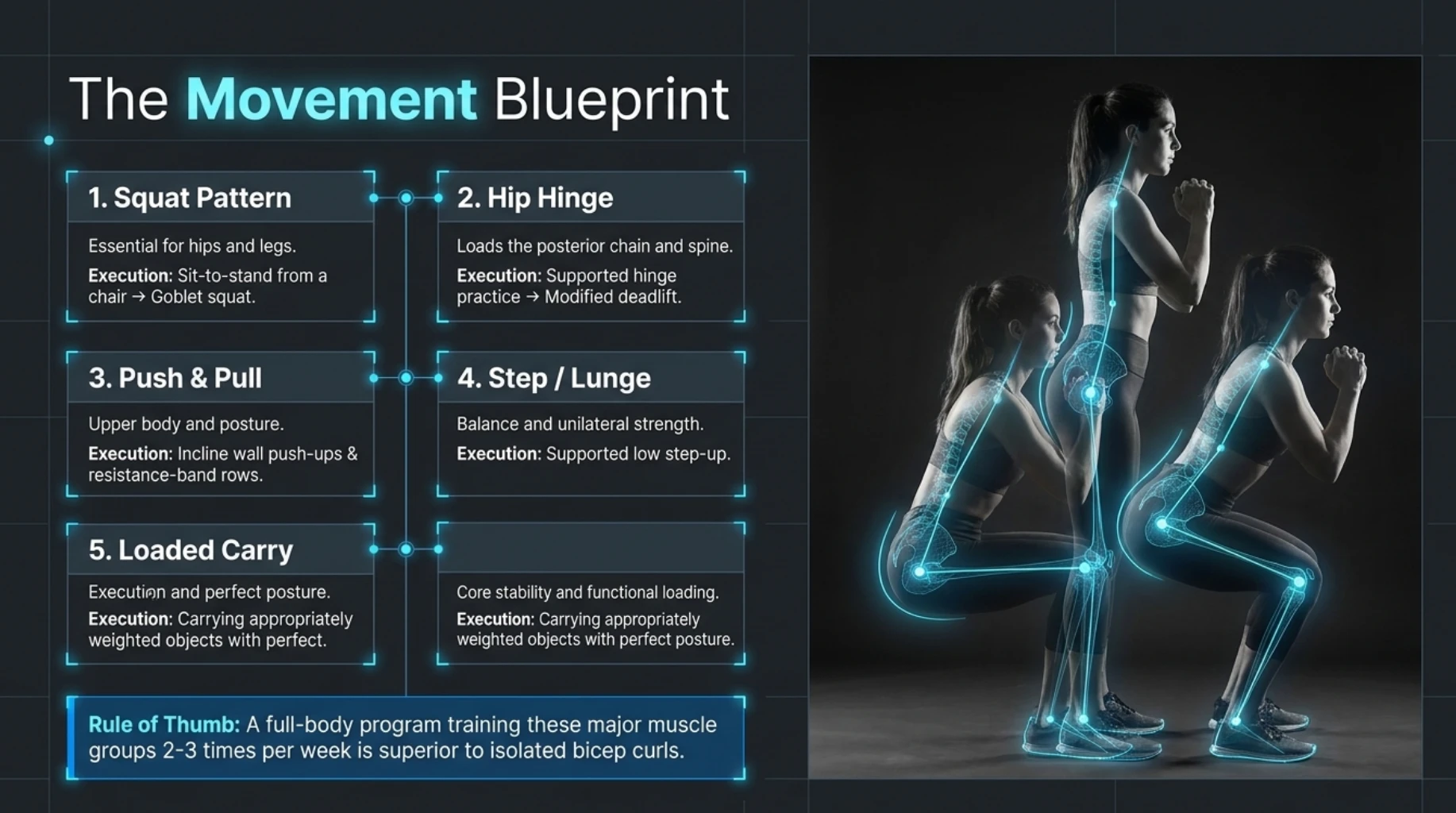
Possible progressions include:
- Sit-to-stand from a chair.
- Supported squat.
- Body-weight squat.
- Goblet squat.
- More heavily loaded variations in appropriately trained individuals.
The correct variation depends on strength, balance, mobility, technique and fracture risk.
Are Deadlifts Good for Bone Density?
Hip-hinge and deadlift-type movements can load the hips, legs, back musculature and upper body simultaneously.
They can therefore be useful resistance exercises when performed appropriately.
However, technique becomes particularly important in people with osteoporosis.
A person with vertebral osteoporosis or previous vertebral compression fractures should not simply begin heavy conventional deadlifts without appropriate assessment and instruction.
The movement can often be modified through:
- Reduced load.
- Raised starting position.
- Different equipment.
- Shorter range of motion.
- Alternative hip-hinge exercises.
The goal is to create useful loading while controlling unnecessary risk.
Why Spinal Position Matters in Osteoporosis
People with osteoporosis—particularly vertebral osteoporosis—should pay attention to spinal loading and movement technique.
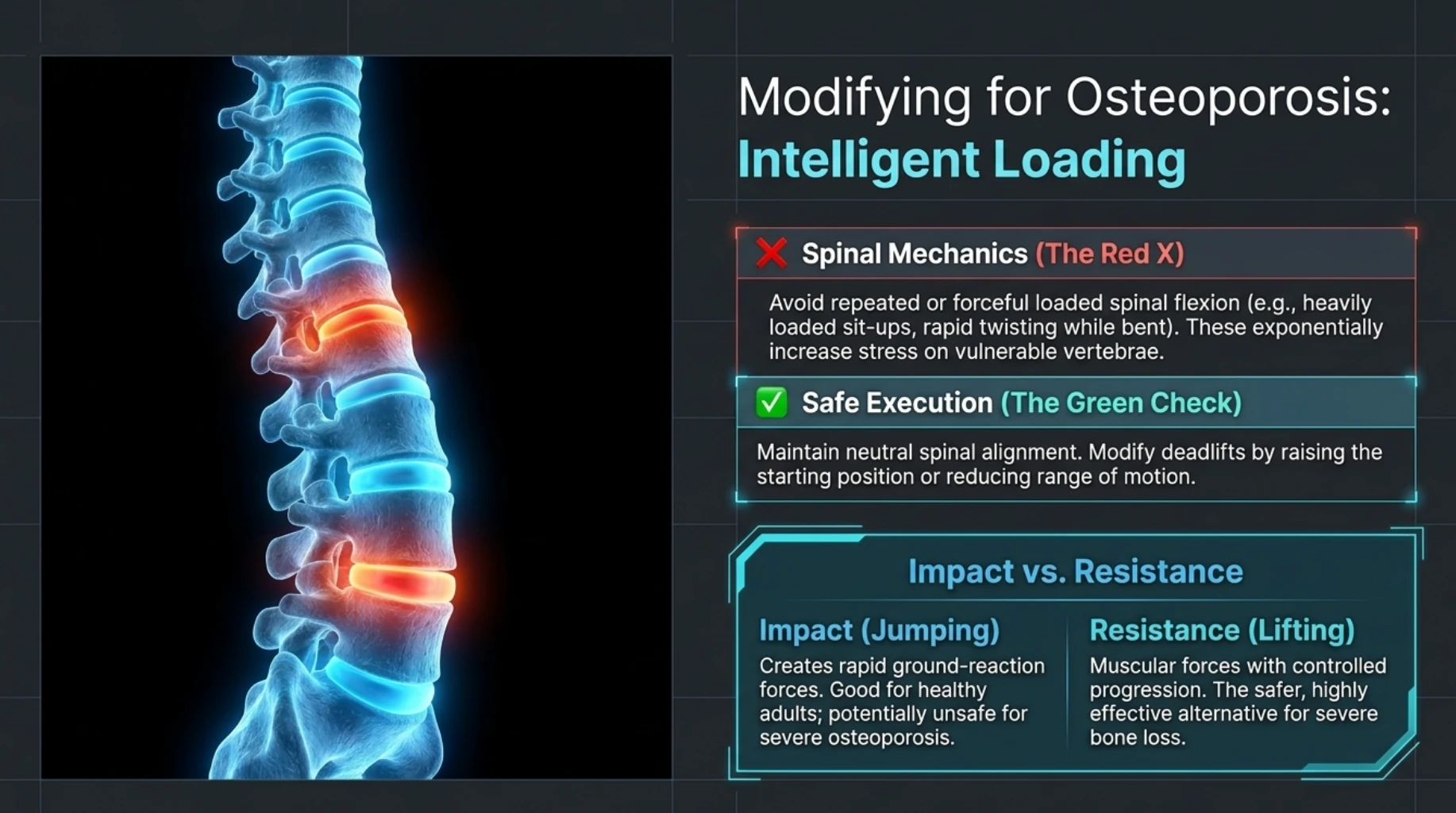
Repeated or forceful loaded spinal flexion can increase stress on vulnerable vertebrae.
This does not mean the spine should never move.
It means that certain loaded movements may require modification in people at high fracture risk.
Examples that may deserve particular caution include:
- Repeated loaded sit-ups.
- Forceful forward bending under load.
- Rapid combined bending and twisting.
- Exercises that encourage uncontrolled spinal rounding with substantial resistance.
Exercise restrictions should be individualised rather than applied indiscriminately to everyone with low bone density.
Can Impact Exercise Improve Bone Density?
Bone responds not only to resistance training but also to impact loading.
Activities involving jumping, hopping or other ground impacts can create relatively rapid skeletal loading and may provide an osteogenic stimulus.
However, impact exercise is not appropriate for everyone.
A healthy middle-aged adult may tolerate jumping exercises well.
An older adult with severe osteoporosis, previous vertebral fractures, poor balance or painful arthritis may require a very different approach.
Resistance Training vs Impact Exercise for Bone Health
| Feature | Resistance Training | Impact Exercise |
|---|---|---|
| Main stimulus | Muscular forces and external resistance | Rapid ground-reaction forces |
| Muscle strength | Strong benefit | Variable |
| Bone-loading potential | High when appropriately programmed | Can be high |
| Progression | Resistance can be precisely adjusted | Impact level can also be progressed but requires judgement |
| Suitability in severe osteoporosis | Often possible with appropriate modification | High-impact exercise may be inappropriate for some people |
| Fall risk | Can usually be controlled through exercise selection | Some activities require greater balance and coordination |
For appropriate individuals, combining progressive resistance training with weight-bearing or impact activity may provide a broader skeletal stimulus than either strategy alone.
Is Swimming Good for Bone Density?
Swimming is excellent cardiovascular exercise and can improve endurance and general fitness.
It is particularly useful for people who experience joint pain during land-based exercise.
However, water supports much of the body’s weight.
As a result, swimming does not expose the skeleton to the same gravitational loading as walking, running, jumping or resistance training.
Someone who enjoys swimming should continue if it is appropriate, but swimming alone may not provide the optimal mechanical stimulus for maintaining bone density.
Adding land-based resistance training can help address this limitation.
Is Cycling Enough for Bone Health?
Cycling provides excellent cardiovascular exercise and can substantially improve fitness.
But like swimming, it is relatively low impact and the bicycle supports much of the body weight.
People who primarily cycle may therefore benefit from including resistance and weight-bearing exercise in their weekly programme.
This is particularly relevant for older adults and people at risk of low bone density.
Resistance Training for Bone Density After 50
After 50, resistance training becomes increasingly valuable because bone loss and muscle loss can occur simultaneously.
The programme should ideally train all major muscle groups rather than focusing only on arms or isolated machine exercises.
A balanced programme may include:
- A squat or sit-to-stand pattern.
- A hip-hinge pattern.
- A step-up or lunge pattern where appropriate.
- A pushing movement.
- A pulling movement.
- Calf strengthening.
- Loaded carrying or another functional loading exercise.
- Balance exercises where needed.
This provides a much broader musculoskeletal stimulus than performing only light biceps curls.
Resistance Training After Menopause
Postmenopausal women have a particularly strong reason to include resistance exercise.
Declining oestrogen contributes to accelerated bone loss, while ageing can simultaneously reduce muscle mass and strength.
A well-designed programme therefore targets both tissues.
Resistance training may help preserve or improve bone mineral density while also improving:
- Lower-body strength.
- Grip and upper-body strength.
- Functional capacity.
- Balance.
- Body composition.
- Confidence with everyday physical tasks.
These benefits matter even if the change in DXA-measured bone density is relatively modest.
Can You Start Resistance Training at 60 or 70?
Yes.
There is no age at which the body completely loses its ability to adapt to resistance exercise.
Older adults can improve strength and physical function even when training begins relatively late in life.
The starting point simply needs to reflect current ability.
For someone who has been sedentary for years, initial exercises may involve:
- Repeated sit-to-stand.
- Supported step-ups.
- Machine resistance exercises.
- Light dumbbells.
- Resistance bands.
- Balance exercises.
As strength and confidence improve, the programme can become progressively more challenging.
Starting conservatively does not mean remaining at the beginner level indefinitely.
Bone Health Is Not Just a Women’s Issue
Osteoporosis is more common in women, particularly after menopause, but men also experience age-related bone loss and osteoporotic fractures.
Risk in men may increase with:
- Older age.
- Low body weight.
- Smoking.
- Heavy alcohol intake.
- Long-term glucocorticoid treatment.
- Low testosterone.
- Certain chronic diseases.
- Prolonged physical inactivity.
Resistance training therefore remains relevant to bone and muscle health in both men and women.
Protein and Resistance Training for Bone Density
Protein is often discussed only in relation to muscle.
But bone also contains a substantial protein matrix, primarily collagen, upon which mineral is deposited.
Adequate dietary protein supports both muscle and skeletal health.
This is particularly important in older adults, where inadequate protein intake may coexist with loss of muscle, frailty and low bone density.
Protein intake should be considered as part of the complete diet rather than relying automatically on supplements.
Individual requirements can vary according to body size, activity, age and medical conditions.
Calcium: Food First Where Practical
Calcium is essential for normal bone mineralisation.
Useful dietary sources can include:
- Milk.
- Curd or yoghurt.
- Paneer and other dairy foods.
- Calcium-set tofu.
- Fortified foods where available.
- Other calcium-containing foods as part of a varied diet.
Calcium supplements should not automatically be prescribed to everyone simply because they are over 50.
The first step is to consider habitual dietary intake and whether supplementation is actually needed.
Vitamin D and Bone Health
Vitamin D plays an important role in calcium absorption and musculoskeletal health.
Deficiency can contribute to impaired bone mineralisation and muscle weakness.
People at risk of deficiency may require assessment and appropriate replacement.
However, taking increasingly large doses of vitamin D does not continuously increase bone density.
The goal is adequacy—not megadosing.
Magnesium, Vitamin K and Other Nutrients
Bone biology involves many nutrients beyond calcium and vitamin D.
Magnesium, phosphorus, vitamin K and several other nutrients contribute to normal skeletal physiology.
For most people, the best strategy is a varied, nutritionally adequate diet rather than assembling a large collection of “bone health” supplements.
Supplementation should correct genuine dietary inadequacy or deficiency rather than substitute for good nutrition.
Rapid Weight Loss Can Affect Bone and Muscle
Weight loss can improve metabolic health when excess adiposity is present, but aggressive weight reduction deserves additional attention in older adults.
Large calorie deficits can contribute to loss of lean tissue and may adversely affect bone if nutrition and exercise are inadequate.
This becomes particularly relevant after menopause and during later life.
A weight-management programme should therefore aim not simply to make the scale fall, but to preserve as much muscle and skeletal health as possible.
Strategies include:
- Adequate protein.
- Progressive resistance training.
- Adequate calcium and vitamin D.
- Avoiding unnecessarily severe calorie restriction.
- Monitoring functional strength as well as body weight.
GLP-1 Weight Loss and Bone Health
People using GLP-1-based obesity medicines may experience substantial weight loss and marked appetite reduction.
Reduced food intake can make it harder to consume enough protein and micronutrients if meals are not planned carefully.
Weight loss may also include some lean mass.
For middle-aged and older adults, this makes resistance training particularly relevant.
The goal should be to reduce excess body fat while preserving muscle, strength and overall musculoskeletal function.
Bone health should therefore form part of the broader conversation about healthy weight loss rather than focusing exclusively on kilograms lost.
Why Balance Training Still Matters
Even a strong skeleton can fracture if a sufficiently large force is applied.
Preventing falls is therefore a central part of fracture prevention.
Resistance training improves strength, but some older adults also need specific balance exercises.
Depending on ability, these may include:
- Tandem standing.
- Single-leg stance with appropriate support nearby.
- Controlled stepping exercises.
- Changing direction safely.
- Functional sit-to-stand practice.
Balance training becomes particularly important in people with a history of falls or impaired mobility.
Resistance Training for Bone Density: A More Complete Programme
| Component | Main Purpose |
|---|---|
| Progressive resistance training | Strengthens muscles and provides mechanical loading to bone |
| Weight-bearing aerobic activity | Supports cardiovascular health while loading the skeleton |
| Impact activity where appropriate | Provides rapid mechanical loading that may stimulate bone adaptation |
| Balance training | Helps reduce fall risk |
| Mobility where needed | Supports safe movement and exercise technique |
| Adequate protein | Supports muscle and bone matrix |
| Adequate calcium and vitamin D | Supports normal bone mineralisation and musculoskeletal health |
| Fall-risk management | Reduces the likelihood of fracture-producing falls |
This is why resistance training for bone density should be considered part of a complete musculoskeletal-health strategy rather than a stand-alone treatment.
Who Should Get Professional Guidance Before Starting?
Most adults can benefit from resistance exercise, but professional assessment is particularly useful when there is:
- Known osteoporosis.
- A previous fragility fracture.
- A previous vertebral compression fracture.
- Marked kyphosis.
- Recurrent falls.
- Significant balance impairment.
- Persistent unexplained back pain.
- Major joint disease.
- Recent surgery.
- Significant cardiovascular disease.
- Long-term glucocorticoid use.
The objective is not to frighten people away from exercise.
It is to select the safest way to provide the mechanical stimulus that muscle and bone need.
Do Not Let an Osteoporosis Diagnosis Make You Afraid of Movement
This is an important message.
After receiving a diagnosis of osteoporosis, some people become afraid to bend, lift, walk quickly or perform any challenging physical activity.
Excessive fear can lead to reduced movement.
Reduced movement can lead to further loss of strength and confidence.
That, in turn, may increase fall risk.
The goal is therefore not to avoid loading altogether.
The goal is to learn how to load the body appropriately, progressively and safely.
With the right programme, resistance exercise can become part of the solution rather than something to fear.
Resistance Training for Bone Density: Common Mistakes
Resistance training can be highly beneficial for bone and muscle health, but the way it is performed matters.
Simply joining a gym does not guarantee that the skeleton receives an appropriate training stimulus.
Several common mistakes can reduce the potential benefit or unnecessarily increase injury risk.
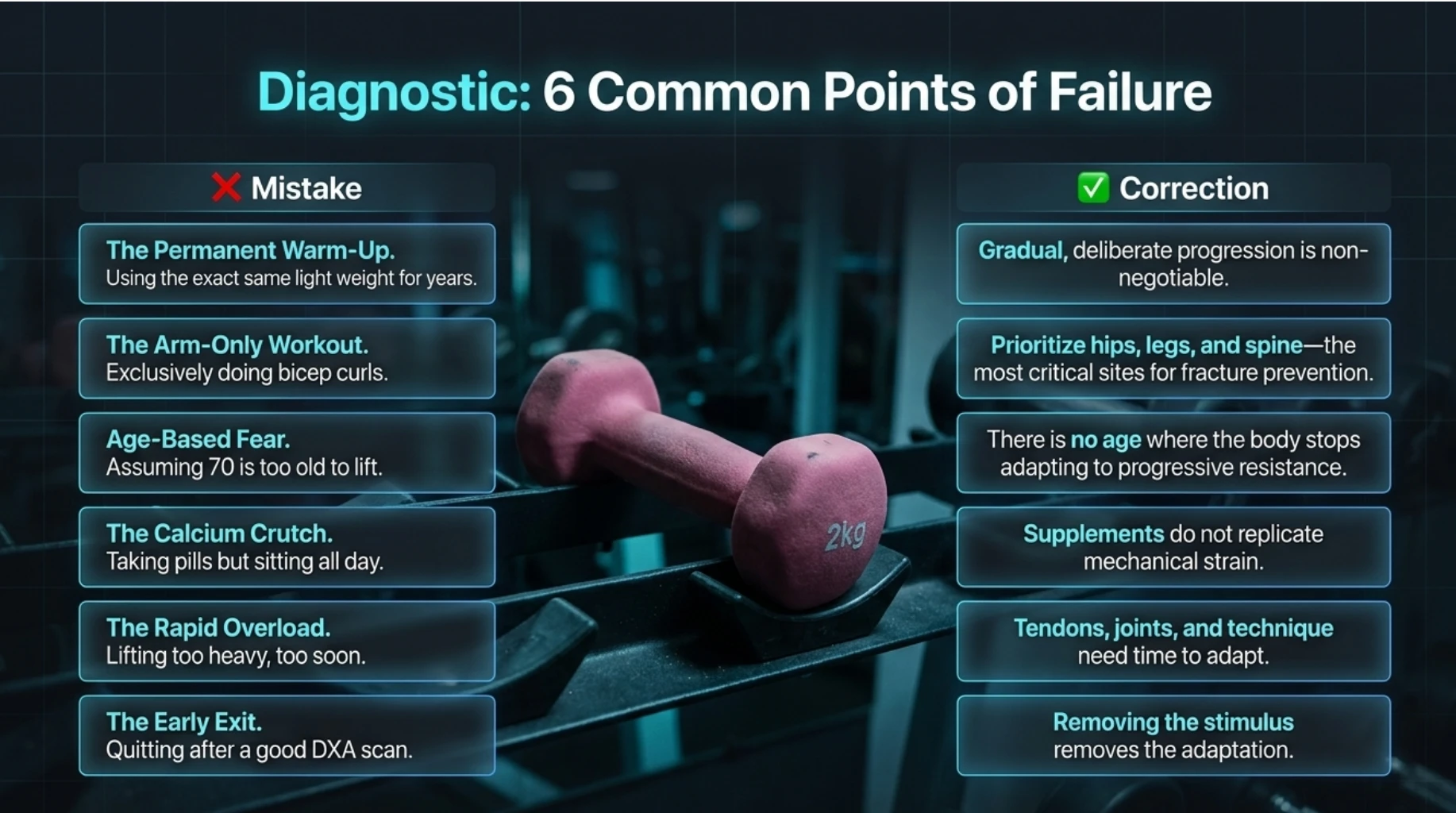
Mistake 1: Using the Same Light Weights for Years
Starting with light resistance is often appropriate.
The problem occurs when the starting weight becomes the permanent weight.
If an exercise that was initially challenging becomes extremely easy, the body has adapted.
Continuing indefinitely without progression may provide a smaller stimulus for further strength and skeletal adaptation.
Progression does not have to be aggressive, but some form of increasing challenge is usually necessary.
Mistake 2: Training Only the Arms
Many beginners associate strength training with dumbbell curls and a few shoulder exercises.
These movements can strengthen specific muscles, but a bone-health programme should generally involve the major muscle groups.
The hips and spine are particularly important because fractures at these sites can have major consequences later in life.
Lower-body and whole-body movements therefore deserve an important place in the programme.
Mistake 3: Avoiding Resistance Training Because of Age
Age itself is not a reason to avoid strength training.
In fact, maintaining muscle strength and physical function becomes increasingly important with age.
The programme may need modification, but the principle of progressive resistance remains valuable.
A 70-year-old beginner does not need to train like a 25-year-old athlete, but neither should the 70-year-old automatically be limited to movements that are too easy to produce adaptation.
Mistake 4: Assuming Walking Is Enough
Walking should remain part of an active lifestyle.
However, walking does not fully replace resistance training.
Someone who walks every day may have excellent walking endurance while still having relatively poor upper-body strength, declining muscle mass or low bone density.
Walking and resistance training provide overlapping but different benefits.
Mistake 5: Taking Calcium but Ignoring Exercise
Calcium is necessary for bone health, but bones are not maintained by calcium alone.
Mechanical loading, vitamin D, protein, overall nutrition, hormonal status and other factors also matter.
A calcium supplement cannot reproduce the muscular and skeletal stimulus created by exercise.
Mistake 6: Lifting Too Heavy Too Soon
Progressive overload is important.
Rapid overload is not.
Someone who has been sedentary for years should not suddenly copy the programme of an experienced lifter.
Muscles, tendons, joints, coordination and exercise technique all need time to adapt.
Progress gradually while maintaining good movement quality.
Mistake 7: Ignoring Balance
Bone density is important, but preventing the fall that causes a fracture is equally important.
Older adults with impaired balance may therefore benefit from combining resistance training with specific balance exercises and functional movement practice.
Mistake 8: Stopping Exercise After a Good DXA Result
Exercise is not a temporary treatment that can necessarily be stopped once bone density improves.
The musculoskeletal system responds to the environment in which it lives.
Removing the training stimulus can gradually remove some of the adaptations that training produced.
Strength training should therefore be viewed as a long-term component of healthy ageing.
Resistance Training for Bone Density: A Practical Beginner Framework
A healthy beginner does not need a complicated programme.
The initial goal is to learn fundamental movement patterns, develop confidence and gradually increase resistance.
A simple full-body programme performed two or three times per week can train the major muscle groups effectively.
| Movement Pattern | Beginner Example | Possible Progression |
|---|---|---|
| Squat | Sit-to-stand from chair | Body-weight squat, goblet squat or other loaded squat variation |
| Hip hinge | Supported hip-hinge practice | Appropriate deadlift or weighted hip-hinge variation |
| Step | Low supported step-up | Higher step or additional resistance where appropriate |
| Push | Wall push-up or machine chest press | Incline push-up, floor push-up or progressively heavier press |
| Pull | Resistance-band row | Cable, machine or dumbbell row |
| Calf | Supported calf raise | Single-leg or externally loaded calf raise |
| Carry | Light loaded carry | Progressively heavier carry with good posture |
This is an example of progression, not a universal exercise prescription.
Someone with severe osteoporosis, previous fractures or significant musculoskeletal disease may require different exercises.
How Do You Know When to Increase the Weight?
A practical approach is to observe how the final repetitions of each set feel.
Suppose you are performing 8–10 repetitions.
Initially, repetition number 10 may require substantial effort while technique remains good.
After several weeks, you may find that 10 repetitions are easy and you could comfortably perform another six or eight.
That suggests the current resistance may no longer be providing the same strength stimulus.
Depending on the exercise and individual, you could then:
- Increase the resistance slightly.
- Progress to a harder variation.
- Increase the range of motion where appropriate.
- Add another set.
Progression should be deliberate rather than automatic.
Should You Train to Failure for Bone Density?
No.
Muscular failure means continuing a set until another repetition cannot be completed with appropriate technique.
Training to complete failure is not necessary for most people exercising for bone health.
A challenging set can provide a meaningful training stimulus while still leaving a small number of good-quality repetitions possible.
This is particularly useful for older beginners, where maintaining technique and avoiding unnecessary fatigue may be more important than squeezing out one final repetition.
Can Home Workouts Protect Bone Density?
Yes, provided the home programme can create sufficient progressive resistance.
A gym is convenient because machines, dumbbells and barbells make load progression straightforward, but the building itself has no special bone-building effect.
At home, useful equipment may include:
- Adjustable dumbbells.
- Resistance bands of increasing strength.
- A weighted backpack.
- Kettlebells.
- Stable steps or benches where appropriate.
The challenge with home training is often progression.
If the only available equipment is a pair of very light dumbbells, stronger individuals may eventually outgrow the available resistance.
Resistance Training for Bone Density Without a Gym
Even without specialised equipment, beginners can start building strength using movements such as:
- Sit-to-stand.
- Squats.
- Step-ups.
- Supported lunges.
- Wall or incline push-ups.
- Resistance-band rows.
- Calf raises.
- Loaded carries using appropriately weighted household objects.
As these become easier, resistance or exercise difficulty should gradually increase.
How Long Should a Resistance Workout Last?
A useful resistance-training session does not need to last 90 minutes.
A focused full-body session containing several major movement patterns can often be completed in approximately 30–60 minutes.
Beginners may require less.
The quality of the exercises, resistance used and consistency of the programme are more important than spending a predetermined amount of time in the gym.
Should You Do Cardio and Weights on the Same Day?
Yes, if that schedule works well for you.
Resistance training and aerobic exercise provide complementary benefits.
Aerobic activity primarily supports cardiorespiratory fitness and metabolic health, while resistance training provides a stronger stimulus for muscle strength and can provide important skeletal loading.
For general health, there is no requirement to separate them onto different days.
If strength is the priority, performing demanding resistance training before prolonged or exhausting cardio may help preserve training quality.
What About Yoga for Bone Density?
Yoga can improve mobility, balance, body awareness and, depending on the style, some muscular strength.
These are valuable benefits.
However, yoga should not automatically be considered equivalent to progressive resistance training for improving bone density.
Some yoga positions may also require modification in people with vertebral osteoporosis, particularly movements involving substantial or repeated spinal flexion.
Yoga can complement resistance training rather than necessarily replace it.
What About Pilates?
Pilates can improve core control, posture, balance and muscular endurance.
These benefits may support physical function.
But, as with yoga, the mechanical loading provided may not always equal that achieved through progressively loaded resistance exercise.
People with osteoporosis should also ensure that exercises involving repeated spinal flexion are appropriate for their individual fracture risk.
Resistance Training and Sarcopenia
Bone loss is only one musculoskeletal problem associated with ageing.
Sarcopenia refers to age-related loss of muscle strength and muscle mass, with physical performance becoming important in more advanced disease.
Osteoporosis and sarcopenia can coexist.
When low bone mass and poor muscle function occur together, fracture vulnerability may become greater because both sides of the problem are affected:
the skeleton may be weaker and the muscles protecting it may also be weaker.
This makes resistance exercise particularly valuable because it directly targets muscle strength while simultaneously loading bone.
Why Grip Strength Alone Is Not Enough
Grip strength can provide useful information about overall muscle function, particularly in older adults.
But a strong grip does not necessarily mean that the hips and legs are strong.
Bone-health programmes should include lower-body and whole-body resistance training rather than focusing exclusively on hand exercises.
Hip and leg strength is particularly important for walking, climbing stairs, rising from a chair and recovering from a loss of balance.
Resistance Training and Fall Prevention
A fracture-prevention programme should ask two questions:
How strong is the bone?
and
How likely is the person to fall?
Fall risk can be influenced by:
- Lower-body weakness.
- Poor balance.
- Visual impairment.
- Certain medicines.
- Postural hypotension.
- Neurological disease.
- Unsafe footwear.
- Environmental hazards.
Resistance training addresses some of these factors, particularly strength and physical function, but a person with recurrent falls may require a broader assessment.
Can Stronger Muscles Protect Bones Even Without a Large BMD Increase?
Potentially, yes.
This is one reason exercise benefits should not be judged entirely by changes on a DXA scan.
Suppose resistance training produces only a modest change in bone mineral density but substantially improves:
- Leg strength.
- Balance.
- Walking stability.
- Reaction to loss of balance.
- Ability to climb stairs.
- Confidence during everyday movement.
Those changes can still be clinically valuable.
Fracture prevention is broader than increasing one numerical measurement.
Bone Density and Body Weight: More Is Not Always Better
Higher body weight can expose bones to greater mechanical loading, and very low body weight is an established osteoporosis risk factor.
But this should not be interpreted to mean that obesity protects overall skeletal health.
Obesity can coexist with poor muscle quality, metabolic disease, reduced mobility and increased fall-related forces.
Body weight alone therefore provides an incomplete picture of bone and fracture risk.
The better objective is to maintain healthy body composition, adequate muscle and appropriate skeletal loading.
Can Very Low-Calorie Diets Harm Bone Health?
Prolonged severe energy restriction can create problems for both muscle and bone.
During rapid weight loss, reduced mechanical loading, inadequate nutrient intake and loss of lean tissue may all become relevant.
This does not mean people with obesity should avoid clinically appropriate weight loss.
It means weight reduction should ideally preserve musculoskeletal health.
Resistance training, adequate protein and appropriate calcium and vitamin D intake become particularly important during weight-loss programmes.
When Should Bone Health Be Investigated Further?
Resistance training is valuable, but exercise should not delay evaluation of possible osteoporosis or secondary causes of bone loss.
Further assessment may be appropriate in people with:
- A fragility fracture.
- Significant loss of height.
- Suspected vertebral fracture.
- Long-term glucocorticoid use.
- Premature menopause.
- Very low body weight.
- Conditions associated with malabsorption.
- Endocrine disorders affecting bone.
- Strong clinical risk factors for osteoporosis.
Depending on the clinical situation, evaluation may include DXA scanning and investigation for secondary causes of bone loss.
Frequently Asked Questions About Resistance Training for Bone Density
Can Lifting Weights Increase Bone Density?
Yes. Appropriately designed progressive resistance training can help preserve bone mineral density and may produce improvements at certain skeletal sites. The response depends on age, baseline bone health, training intensity, exercise selection, nutrition and programme duration.
Is Resistance Training Good for Osteoporosis?
Yes. Resistance training can improve strength, physical function and skeletal loading in people with osteoporosis. However, exercise selection and progression may need modification, particularly in people with previous vertebral or other fragility fractures.
Is Walking Enough to Prevent Osteoporosis?
Walking is beneficial for overall health and provides weight-bearing activity, but it may not provide sufficient progressive loading to maximise muscle strength and skeletal adaptation. Combining walking with resistance training is generally more comprehensive.
How Many Days a Week Should I Lift Weights for Bone Health?
For many adults, resistance training approximately two to three times per week is practical. Major muscle groups should be trained consistently, with adequate recovery between demanding sessions.
Do I Need Heavy Weights to Improve Bone Density?
Bones generally require meaningful mechanical loading, and higher-intensity resistance training can provide a stronger stimulus than indefinitely using very light loads. However, “heavy” is relative to the individual, and resistance should be progressed gradually with good technique.
Can I Lift Weights if I Have Osteopenia?
In many cases, yes. Resistance training is often an important part of managing low bone mass. The programme should reflect overall fracture risk, fitness level and any associated medical or musculoskeletal conditions.
Can I Lift Weights if I Have Osteoporosis?
Often yes, but the programme may require greater individualisation. People with severe osteoporosis or previous fragility fractures may benefit from professional guidance regarding exercise selection, spinal positioning, loading and progression.
Are Squats Good for Bone Density?
Squat variations can provide useful loading to the hips and legs while improving lower-body strength. The appropriate version can range from a chair sit-to-stand to progressively loaded squats depending on ability and fracture risk.
Are Deadlifts Safe With Osteoporosis?
Hip-hinge and deadlift variations may be appropriate for some people, but technique and exercise selection are particularly important in vertebral osteoporosis. Heavy lifting should not be started without appropriate preparation and individual assessment.
Can Resistance Bands Strengthen Bones?
Resistance bands can strengthen muscles and may contribute to skeletal loading, particularly in beginners. As strength improves, resistance needs to progress if the exercise is to remain challenging.
Does Calcium Increase Bone Density Without Exercise?
Calcium is necessary for normal bone mineralisation, but supplementation alone does not reproduce the effects of mechanical loading. Bone health depends on a combination of nutrition, physical activity, hormonal factors and other clinical variables.
How Long Does Resistance Training Take to Improve Bone Density?
Bone adapts slowly. Strength improvements may appear within weeks, but measurable changes in bone mineral density generally require sustained training over many months. Long-term consistency is therefore essential.
Resistance Training for Bone Density: Practical Checklist
| Bone-Health Strategy | Practical Approach |
|---|---|
| Resistance training | Train major muscle groups regularly rather than only arms or isolated muscles. |
| Progressive overload | Increase the challenge gradually as exercises become easier. |
| Training frequency | For many adults, approximately 2–3 resistance sessions per week is practical. |
| Weight-bearing activity | Include walking or other appropriate land-based activity. |
| Impact exercise | Consider where appropriate; modify or avoid high-impact activity when fracture risk makes it unsuitable. |
| Balance | Include balance work when fall risk is present. |
| Protein | Consume adequate protein to support muscle and bone. |
| Calcium | Aim for adequate intake, preferably through food where practical. |
| Vitamin D | Identify and correct deficiency when present. |
| Weight management | Avoid unnecessary crash dieting and protect muscle during weight loss. |
| Smoking | Avoid smoking because it adversely affects skeletal and overall health. |
| Medical evaluation | Investigate significant risk factors, fragility fractures or suspected secondary osteoporosis. |
Resistance Training for Bone Density: What Matters Most?
| Factor | Why It Matters |
|---|---|
| Mechanical loading | Bone needs an appropriate physical stimulus to adapt. |
| Progression | A stimulus that remains unchanged may become less challenging as the body adapts. |
| Consistency | Bone adaptation requires sustained training over long periods. |
| Muscle strength | Stronger muscles support movement, balance and functional independence. |
| Exercise technique | Allows meaningful loading while helping control unnecessary injury risk. |
| Nutrition | Protein, calcium, vitamin D and adequate energy support musculoskeletal health. |
| Fall prevention | Reducing falls is an important part of reducing fracture risk. |
| Individualisation | Training should reflect age, fitness, fracture history and medical status. |
Final Thought
Most people think about bones only after being told that their bone density is low.
A better approach is to protect muscle and bone long before a fracture occurs.
Resistance training for bone density is not simply about lifting weights. It is about giving your skeleton a reason to remain strong while building the muscle, balance and physical capacity needed to keep using that skeleton throughout life.
If you want a personalized metabolic assessment and lifestyle strategy, you can book a consultation here:
Book an Appointment