


Is Getting a Second Medical Opinion Really Necessary?
Imagine visiting a doctor because of persistent abdominal discomfort. After examining you and reviewing your investigations, the doctor recommends surgery. You understand that treatment may be necessary, but several questions remain unanswered. Is surgery the only option? Could medicines or observation help? What might happen if you wait?
Or perhaps you have been taking treatment for several months, yet your symptoms have not improved. Different doctors have suggested different explanations, and you are unsure which diagnosis is correct.
These are situations in which a second medical opinion may help you make a more informed healthcare decision.
Seeking another opinion does not automatically mean that the first doctor was wrong. Medicine involves clinical judgement, interpretation of evidence and decisions made under varying degrees of uncertainty. Two competent doctors may sometimes recommend different approaches because the available evidence allows more than one reasonable option.
A second opinion can provide an independent review of the diagnosis, investigations and proposed treatment. It may confirm the original recommendation, identify another reasonable option or suggest that additional evaluation is necessary.
However, seeking multiple opinions is not always beneficial. Repeated consultations without a clear purpose can create confusion, increase healthcare expenses and occasionally delay important treatment.
The key is knowing when to get a second medical opinion, how to choose the appropriate doctor and how to use the information constructively.
In India, patients often consult different doctors when faced with surgery, cancer treatment, persistent symptoms or expensive medical procedures. Family members may also encourage another consultation before a major decision.
While these concerns are understandable, a second opinion should ideally be a structured review of an important clinical question rather than an attempt to collect as many prescriptions as possible.
This article explains seven situations when a second medical opinion may be worth considering, the limitations of additional consultations and the circumstances in which seeking another opinion should never delay emergency medical care.

What Is a Second Medical Opinion?
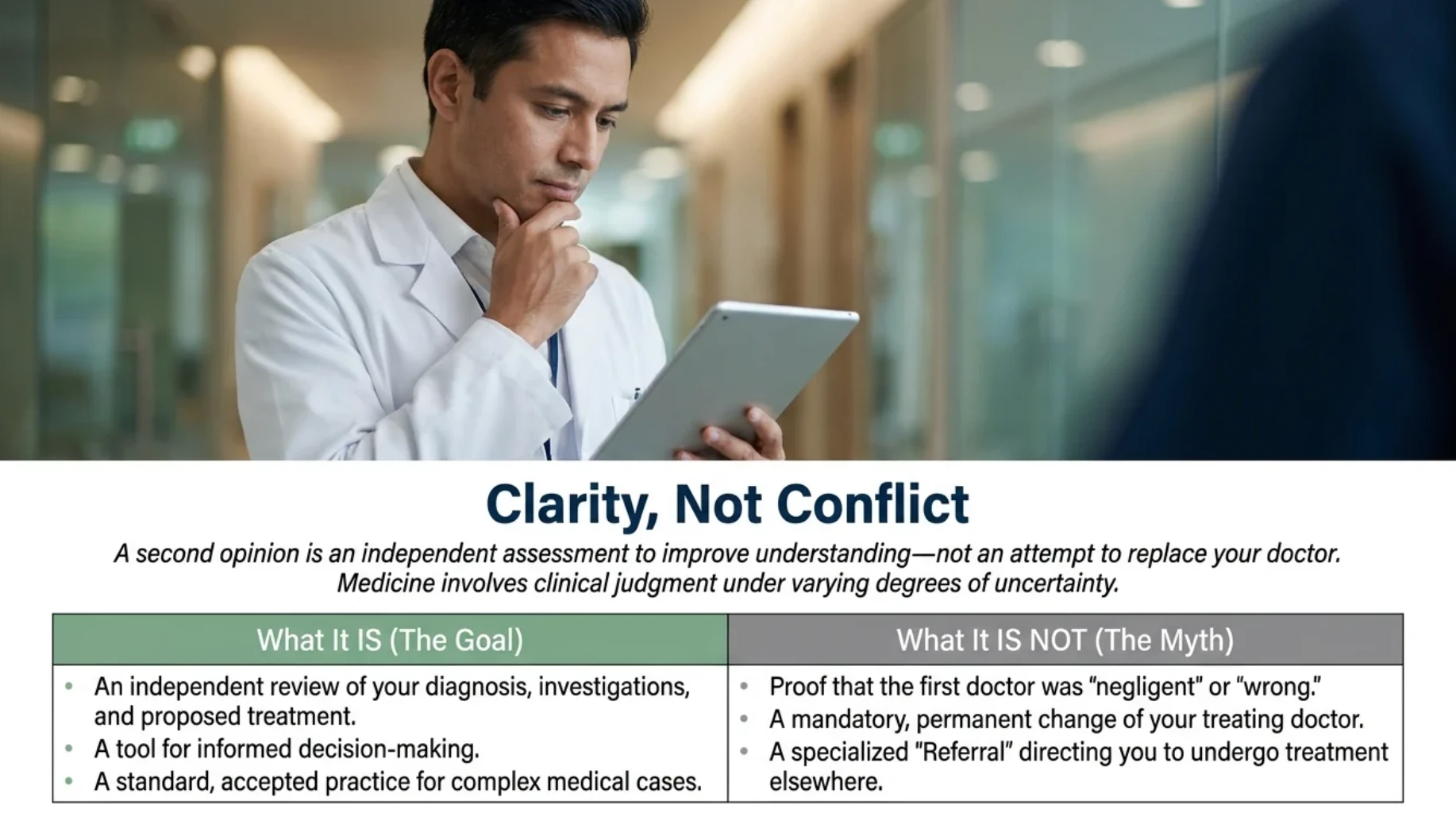
A second medical opinion is an independent assessment by another appropriately qualified medical professional regarding an existing diagnosis, investigation result or treatment recommendation.
The second doctor reviews the available clinical information and may conduct an additional history, examination or interpretation of investigations.
The purpose is not necessarily to replace the original treating doctor. Instead, it is to improve understanding of the condition and support informed decision-making.
What Happens During a Second Opinion Consultation?
The doctor may review your symptoms, medical history, examination findings, laboratory reports, imaging studies and previous treatment response.
Depending on the clinical problem, the doctor may agree with the original diagnosis, suggest an alternative explanation or recommend additional investigations.
For example, a patient with persistent knee pain may have been advised to consider joint replacement surgery. Another specialist may review the severity of arthritis, physical limitations, previous treatment and suitability for conservative management before offering an independent recommendation.
The second doctor may reach the same conclusion as the first. This can still be useful because it provides additional confidence in a significant treatment decision.
Does a Second Opinion Mean Changing Doctors?
No. Obtaining a second opinion does not require you to permanently change your treating doctor.
Many patients return to their original doctor after the consultation, particularly when the second assessment supports the initial management plan.
Others may choose to continue care with the second specialist if that arrangement better suits their clinical needs.
The decision should consider continuity of care, communication, professional expertise and practical circumstances.
Is a Second Opinion the Same as a Referral?
Not exactly.
A referral usually involves directing a patient to another healthcare professional for specialised evaluation, investigation or treatment.
A second opinion specifically seeks an independent assessment of a diagnosis or proposed management plan.
Sometimes the two overlap. For example, a general physician may refer a patient to a specialist for an independent review of a complex diagnosis.
Can Two Doctors Give Different Opinions Without Either Being Wrong?
Yes.
Clinical evidence does not always identify one universally correct treatment for every patient.
Different recommendations may reflect differences in clinical experience, interpretation of findings, treatment availability, patient preferences or the relative importance assigned to potential benefits and harms.
For example, some conditions can reasonably be managed with either continued conservative treatment or an elective procedure, depending on symptom severity and patient priorities.
The important question is whether each recommendation is medically reasonable and supported by an appropriate assessment.
Clinical takeaway: A second medical opinion is intended to improve the quality of an important healthcare decision. Agreement between doctors can be reassuring, while disagreement may identify questions that need further clarification.
Why Do Patients Seek a Second Medical Opinion?
Patients seek additional medical advice for several reasons. Sometimes the diagnosis is uncertain. In other situations, the diagnosis is established but the treatment options involve different risks, costs or long-term consequences.
A patient may also want a clearer explanation of an investigation report or reassurance before agreeing to an invasive procedure.
Some individuals seek another opinion because symptoms have persisted despite treatment, while others are concerned about possible medication side effects.
There may also be differences between what the patient expects and what the treating doctor recommends.
These concerns deserve attention, but not every disagreement requires another consultation. Sometimes a detailed discussion with the current doctor can resolve the uncertainty.
Can a Second Opinion Improve Diagnosis?
In selected circumstances, an independent assessment may identify an alternative diagnosis or suggest additional investigations.
However, a second opinion does not guarantee that the diagnosis will change or become more accurate.
The value depends on the clinical situation, the information available and the expertise of the reviewing professional.
Can It Prevent Unnecessary Treatment?
Occasionally, another assessment may identify a reasonable non-surgical or less invasive treatment option.
Conversely, it may confirm that the originally recommended procedure is appropriate.
The purpose should be to select suitable care rather than to avoid treatment at all costs.
Can It Help Patients Understand Their Options?
Yes. A useful second opinion may clarify the expected benefits, potential complications, alternative treatments and consequences of delaying care.
These considerations are especially important when treatment involves irreversible changes or substantial effects on quality of life.
Second Medical Opinion: 7 Situations When It May Be Worth Getting One
There is no universal rule requiring every patient to obtain a second opinion. However, certain clinical situations make independent review particularly valuable.
The following seven situations are examples in which another medical assessment may help patients make a better-informed decision.
1. When Major Surgery or an Invasive Procedure Is Recommended
One of the most common reasons for seeking a second medical opinion is a recommendation for major surgery or another invasive procedure.
Surgery may offer substantial benefits, including relief of symptoms, prevention of complications or treatment of serious disease.
However, procedures can also involve anaesthesia, postoperative pain, infection, bleeding, recovery time and other potential complications.
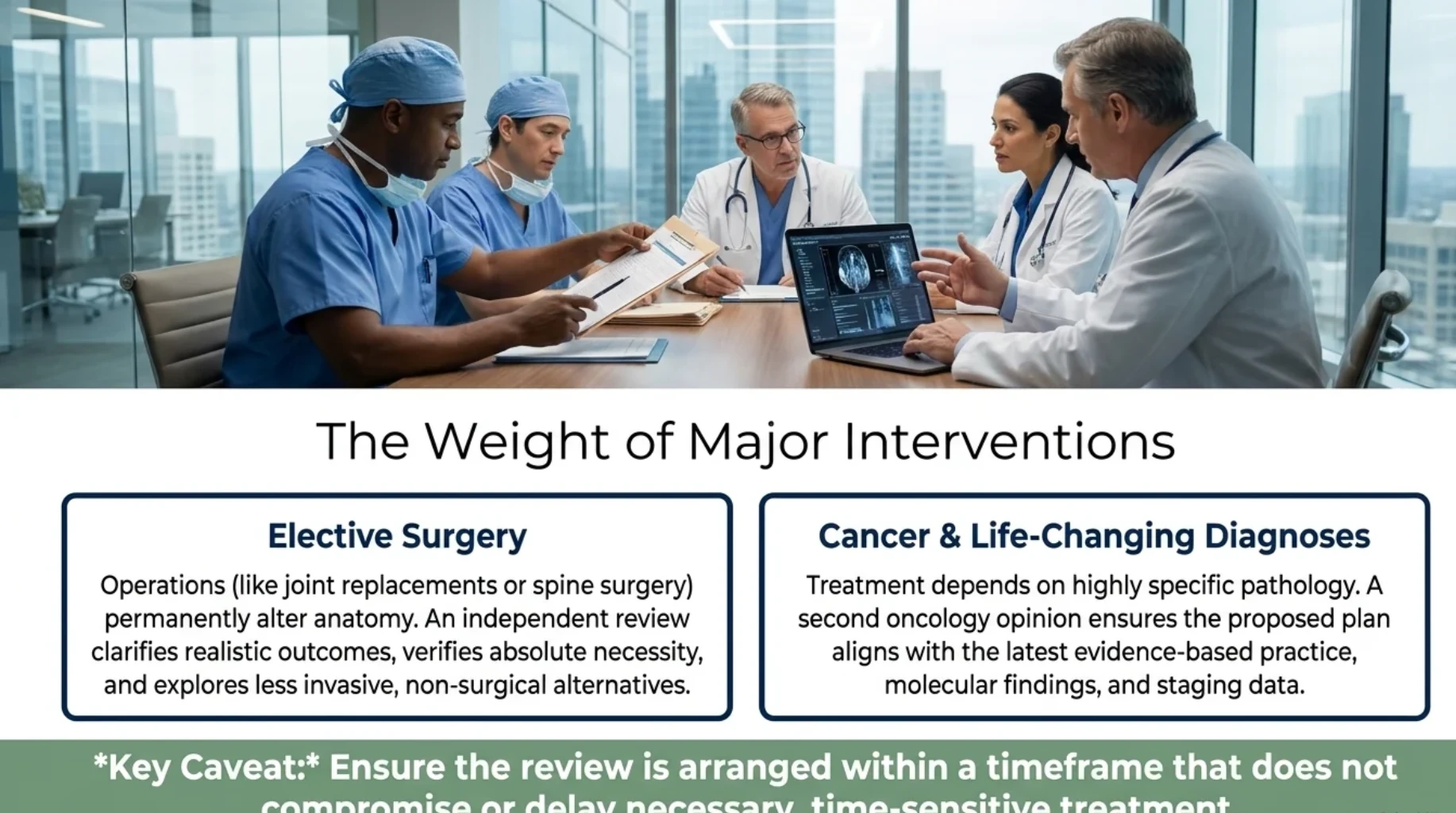
Some operations permanently alter anatomy or function.
When surgery is elective and there is sufficient time to consider alternatives, an independent specialist opinion may help patients understand whether the proposed procedure is necessary, what outcomes are realistic and whether other options are appropriate.
Second Opinion Before Spine Surgery
Back pain is common, but not every abnormal MRI finding requires surgery.
Disc bulges, degenerative changes and other imaging abnormalities can occur in people without symptoms.
For patients with persistent back pain, a second opinion may help determine whether imaging findings correspond to the clinical symptoms and whether conservative treatment has been adequately considered.
However, progressive neurological deficits, suspected cauda equina syndrome or other serious conditions may require urgent intervention.
In such circumstances, delaying treatment to obtain several opinions could be harmful.
Second Opinion Before Knee Replacement
Patients with advanced knee osteoarthritis may be advised to undergo joint replacement when pain and functional limitations remain substantial despite appropriate management.
A second opinion may help clarify the severity of joint disease, expected benefits of surgery, rehabilitation requirements and available non-surgical options.
However, another consultation should not create unrealistic expectations that severely damaged joint structures can always be restored through medicines, injections or supplements.
Second Opinion Before Hysterectomy
A hysterectomy may be recommended for selected gynaecological conditions, including certain cases involving fibroids, abnormal bleeding or malignancy.
Depending on the diagnosis, alternatives may include medicines, less invasive procedures or other management approaches.
Because hysterectomy has permanent reproductive consequences, patients may reasonably wish to understand the indication and alternatives before proceeding when the situation is not urgent.
Questions to Ask Before Elective Surgery
Patients should understand the diagnosis, the expected benefit of surgery, the risks of the procedure, possible alternatives and the consequences of postponement.
They should also ask whether the procedure is urgent, time-sensitive or elective.
Important: A second opinion may be useful before elective surgery, but it should not delay emergency procedures for conditions such as uncontrolled internal bleeding, bowel perforation, certain acute vascular emergencies or other immediately life-threatening problems.
2. When You Receive a Serious or Life-Changing Diagnosis
Receiving a diagnosis of cancer, a serious neurological disorder or another potentially life-changing illness can be overwhelming.
Patients may need to make complex decisions while processing unfamiliar medical information.
In these situations, a second medical opinion may provide additional clarity about the diagnosis, disease severity and available treatment approaches.
Second Medical Opinion for Cancer
Cancer treatment decisions may involve surgery, radiotherapy, systemic therapy or combinations of treatments.
The most appropriate approach depends on the cancer type, stage, pathology, molecular findings, overall health and treatment goals.
An independent opinion from a relevant oncology specialist or multidisciplinary cancer team may help clarify whether the diagnosis and proposed treatment are consistent with current evidence-based practice.
For some cancers, specialist pathology review or additional molecular testing may influence treatment decisions.
However, not every patient requires repeated biopsies or scans simply because another opinion is being sought.
Why Does Specialist Experience Matter?
Some diseases are uncommon or involve highly specialised treatment.
A specialist or centre with relevant experience may be able to provide additional insight into diagnostic interpretation, available procedures or clinical trial options.
This does not automatically mean that treatment at a smaller hospital is inappropriate.
Rather, the value of the opinion depends on the complexity of the condition and the specific question being asked.
What If the Second Doctor Recommends a Different Cancer Treatment?
Different recommendations should be reviewed carefully.
They may reflect differences in interpretation, patient suitability, treatment availability or the balance between expected benefit and potential harm.
Patients should ask both teams to explain the reasons for their recommendations.
When appropriate, a multidisciplinary discussion may help resolve important differences.
Should Cancer Treatment Be Delayed for a Second Opinion?
The safety of waiting depends on the cancer type, stage, clinical condition and proposed treatment.
Some treatment decisions allow time for careful review, while others are urgent.
Patients should ask the treating oncologist how much time is medically reasonable for obtaining an additional opinion.
Clinical takeaway: For serious diagnoses such as cancer, a second opinion may help confirm the diagnosis and clarify treatment options. However, the review should be arranged within a timeframe that does not compromise necessary treatment.
3. When Symptoms Continue Despite Appropriate Treatment
Persistent symptoms are another situation in which a second medical opinion may be useful.
For example, a patient may continue to experience abdominal discomfort despite several courses of treatment, or chronic headaches may remain troublesome despite following the recommended management plan.
Persistent symptoms do not automatically mean that the original diagnosis was incorrect.
Some conditions require longer treatment, and others may improve only partially.
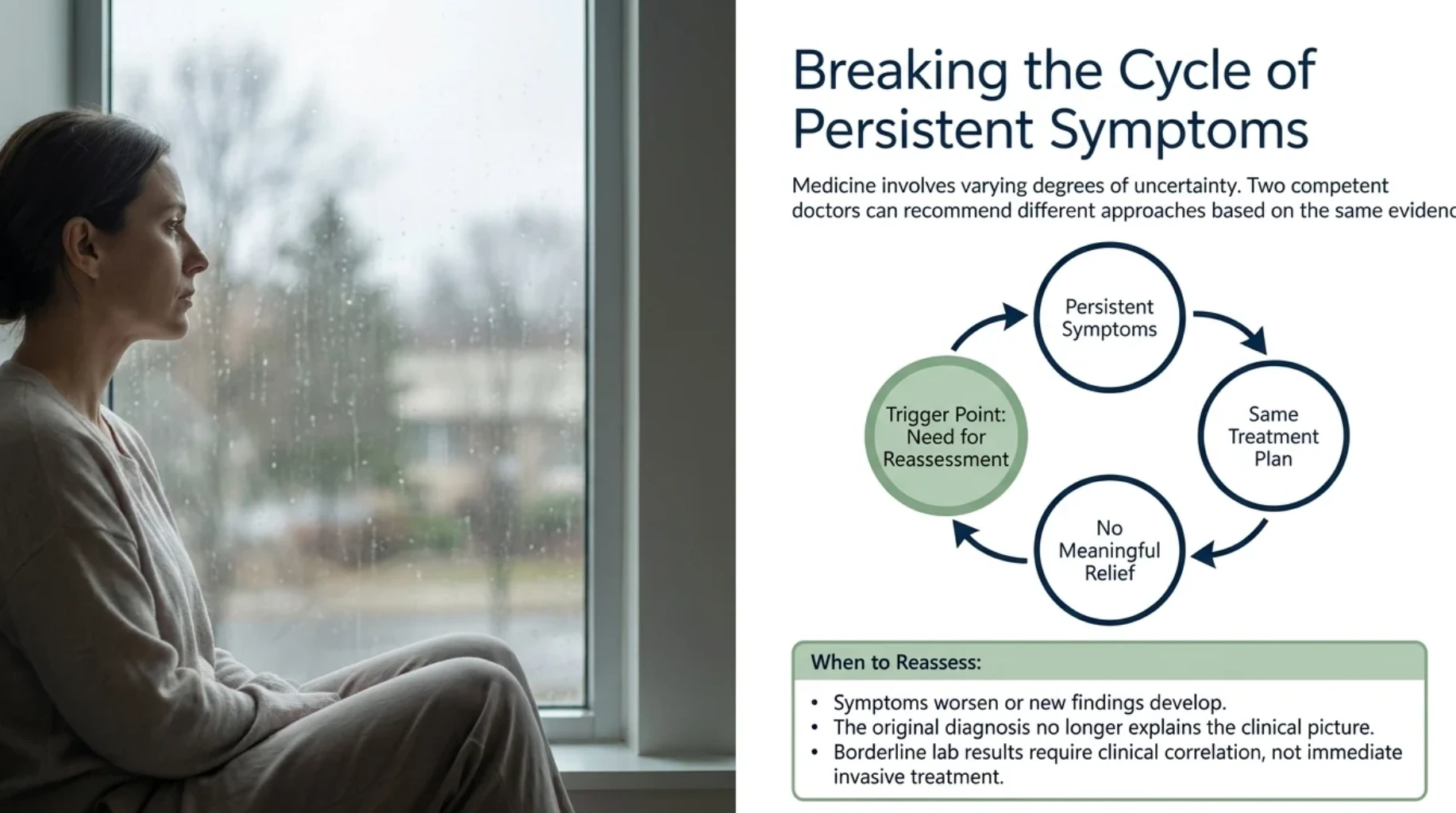
However, ongoing symptoms may justify reassessment of the diagnosis, treatment adherence, medication effects and possible alternative explanations.
Persistent Abdominal Pain
Abdominal pain can arise from several organ systems and may have gastrointestinal, urinary, gynaecological or other causes.
When symptoms persist, another medical assessment may help determine whether additional evaluation is necessary.
However, sudden severe abdominal pain, signs of gastrointestinal bleeding or other concerning symptoms require urgent care rather than a routine second opinion.
Chronic Headache
Headaches can occur due to migraine, tension-type headache, medication overuse and several other conditions.
If headaches remain uncontrolled despite appropriate treatment, reassessment may help clarify the diagnosis and management plan.
A sudden severe headache, new neurological deficit or other concerning feature requires urgent medical assessment.
Persistent Fatigue
Fatigue is a nonspecific symptom that may occur with sleep disorders, anaemia, thyroid disease, medication effects, mental health conditions and many other problems.
When symptoms remain unexplained, another clinician may review the history and previous investigations to identify whether additional evaluation is appropriate.
However, repeated broad laboratory panels without a clear clinical indication may increase cost and produce incidental findings without improving care.
When Should Treatment Be Reassessed?
Reassessment is particularly useful when symptoms worsen, new findings develop, treatment causes significant adverse effects or the original diagnosis no longer adequately explains the clinical picture.
The second opinion should focus on a specific clinical question rather than repeating every investigation automatically.
4. When the Diagnosis Is Uncertain or Different Doctors Disagree
Medical diagnosis is sometimes straightforward, but many conditions have overlapping symptoms and no single definitive test.
Clinical findings may evolve over time, and early investigations may be inconclusive.
When uncertainty remains significant, an independent assessment may help clarify the likely diagnosis and the next appropriate step.
Why Can Different Doctors Reach Different Diagnoses?
Doctors may evaluate patients at different stages of illness or have access to different information.
They may also interpret symptoms, examination findings and investigation results differently.
Some diagnoses depend on patterns of clinical evidence rather than a single laboratory value.
For example, dizziness may arise from vestibular disorders, medication effects, cardiovascular causes or neurological conditions.
A second opinion may help determine whether the original explanation adequately accounts for the patient’s symptoms.
What If Two Doctors Interpret the Same MRI Differently?
Imaging reports require clinical correlation.
Two specialists may place different emphasis on findings depending on the patient’s symptoms and examination.
In selected cases, formal radiology review or specialist interpretation may be useful.
However, disagreement does not automatically mean that one doctor is negligent or incompetent.
What If Laboratory Results Are Borderline?
Some laboratory values fluctuate because of biological variation, testing conditions and other factors.
A borderline result may require repeat testing, review of symptoms or assessment of additional information rather than immediate treatment.
For example, a mildly abnormal thyroid-stimulating hormone result should be interpreted in the context of free thyroid hormone levels, symptoms, age, pregnancy status and other clinical considerations.
How Can a Second Opinion Help With Diagnostic Uncertainty?
The reviewing doctor may confirm that the available evidence supports the original diagnosis.
Alternatively, they may identify an overlooked possibility, recommend targeted investigations or suggest a period of structured monitoring.
In some situations, the most appropriate conclusion is that the diagnosis remains uncertain and requires follow-up rather than immediate treatment.
Clinical perspective: Diagnostic uncertainty is a recognised part of medical practice. A useful second opinion should clarify what is known, what remains uncertain and which additional steps are likely to improve patient care.
Second Medical Opinion: The First Four Situations Compared
The following table summarises how a second opinion may help in different clinical situations.
| Situation | Why Another Opinion May Help | Important Precaution |
|---|---|---|
| Major elective surgery | Clarifies necessity, alternatives, benefits and procedural risks | Do not delay emergency or time-sensitive surgery |
| Serious diagnosis such as cancer | May confirm diagnosis, staging and treatment options | Agree on a safe review timeframe with the treating team |
| Persistent symptoms despite treatment | May identify alternative explanations or treatment adjustments | Urgent warning signs require immediate assessment |
| Uncertain or conflicting diagnoses | Provides independent clinical interpretation | Avoid unnecessary repeat tests without a clear indication |
Is Getting a Second Medical Opinion Always Beneficial?
Although another opinion may be valuable in selected circumstances, more consultations do not automatically produce better care.
Repeatedly consulting different doctors without sharing previous records can lead to fragmented treatment and unnecessary duplication of investigations.
Patients may also receive conflicting prescriptions, making it difficult to understand which medicines should be continued.
This is particularly concerning when several doctors prescribe medicines that may interact or duplicate the same therapeutic effect.
Why Is Continuity of Care Important?
Continuity allows a treating doctor to observe how symptoms, examination findings and investigations change over time.
It also supports monitoring of treatment response and adverse effects.
A second opinion is often most useful when it strengthens the overall care plan rather than unnecessarily disrupting it.
Should You Inform Your Current Doctor?
Patients can generally tell their treating doctor that they would like another opinion.
Many clinicians recognise that independent review can be helpful when major decisions are involved.
Patients should ideally obtain copies of relevant reports, prescriptions, imaging and discharge summaries to share with the reviewing doctor.
What If the Second Opinion Is Completely Different?
Rather than immediately changing treatment, patients should try to understand why the recommendations differ.
The doctors may be using different assumptions, interpreting findings differently or prioritising different treatment outcomes.
A focused discussion may clarify which recommendation best fits the patient’s clinical circumstances and preferences.
5. When the Recommended Treatment Has Significant Risks or Long-Term Consequences
Some medical treatments offer substantial benefits but also carry important risks, require long-term monitoring or may permanently affect a patient’s health and daily life.
When a proposed treatment has major consequences, obtaining a second medical opinion may help patients better understand the balance between expected benefits and potential harms.
However, treatment risk must always be considered alongside the risk of leaving the underlying condition untreated. Avoiding a recommended treatment is not automatically the safer choice.
Second Opinion Before Starting Long-Term Medication
Patients are sometimes concerned when they are advised to begin medication that may be required for several years or indefinitely.
For example, a person newly diagnosed with hypertension may wonder whether lifestyle changes alone would be sufficient or whether medication should begin immediately.
The answer depends on several factors, including blood pressure measurements, cardiovascular risk, kidney function, existing disease and the severity of hypertension.
A second opinion may help clarify the diagnosis, treatment threshold, medication options and appropriate monitoring.
However, patients should not discontinue prescribed medicines while arranging another consultation without discussing the decision with an appropriately qualified clinician.
Second Opinion Before Immunosuppressive Treatment
Some autoimmune and inflammatory conditions require medicines that modify immune system activity.
These treatments may substantially reduce disease activity and prevent complications, but they can also involve infection risks, laboratory monitoring and other precautions.
An independent specialist assessment may be useful when the diagnosis is uncertain, several treatment options are available or the proposed therapy has important long-term implications.
Patients should understand why treatment is recommended, what monitoring is necessary and what could happen if treatment is delayed.
Second Opinion Before Chemotherapy or Other Cancer Treatment
Cancer treatment decisions can involve different combinations of surgery, systemic therapy and radiotherapy.
Each approach may have a different balance of benefits, adverse effects and effects on quality of life.
For selected patients, another oncology opinion may help clarify the rationale for the recommended treatment and whether alternative evidence-based options exist.
However, cancer treatment should not be postponed indefinitely while seeking repeated opinions.
Second Opinion Before a High-Risk Procedure
Some procedures carry increased risk because of the patient’s age, medical conditions, anatomical complexity or the nature of the intervention.
For example, a patient with significant heart or lung disease may face additional perioperative risks.
A second opinion may help determine whether the expected benefit justifies the procedure and whether the risks can be reduced through appropriate preparation.
What Should Patients Ask About Treatment Risks?
Patients should understand the likely benefit of treatment, the frequency and severity of important complications, the available alternatives and the consequences of choosing no treatment.
It is also useful to ask whether the risks are temporary, reversible, long-term or potentially permanent.
Clinical takeaway: A second opinion may be particularly useful when treatment has substantial risks or long-term consequences. However, the decision must compare treatment risks with the risks of untreated disease.
6. When Several Reasonable Treatment Options Are Available
Many medical conditions do not have a single treatment that is best for every patient.
Different options may offer similar clinical outcomes while differing in convenience, cost, adverse effects, recovery time or long-term implications.
These situations are sometimes described as preference-sensitive decisions because the most appropriate choice depends partly on the patient’s values and priorities.
A second medical opinion can help clarify the options and support shared decision-making.
Medical Treatment vs Surgery
Some conditions can be managed through medicines, lifestyle intervention, rehabilitation, procedures or surgery.
The choice depends on the diagnosis, severity, previous treatment response and patient preferences.
For example, certain patients with symptomatic gallstones may be advised to undergo cholecystectomy, while others with incidental asymptomatic gallstones may not require immediate surgery.
The clinical circumstances matter. Acute complications of gallstone disease may require urgent assessment and treatment.
A second opinion may help patients understand why an intervention is recommended in their particular case.
Different Treatments for Uterine Fibroids
Uterine fibroids may cause heavy menstrual bleeding, pelvic pressure or reproductive concerns, although some patients have no symptoms.
Depending on the size, location, symptoms and reproductive goals, management may involve observation, medicines, procedures or surgery.
A second gynaecological opinion may be valuable when a proposed treatment could affect fertility or involves an irreversible procedure.
Different Approaches to Prostate Problems
Men with urinary symptoms related to benign prostatic enlargement may have several management options.
These can include lifestyle measures, medication and procedures, depending on symptom severity and complications.
A second opinion may help patients understand the expected benefit and potential adverse effects of each approach.
Choosing Between Different Diabetes Treatments
Type 2 diabetes management has evolved considerably, and treatment decisions may involve several medication classes with different effects on blood glucose, body weight, cardiovascular risk and kidney outcomes.
The appropriate choice depends on the patient’s overall clinical condition, comorbidities, medication tolerability, affordability and preferences.
For example, certain patients with established cardiovascular disease, heart failure or chronic kidney disease may benefit from treatments selected partly for their cardiovascular or kidney-related effects.
However, a second opinion is not required every time a routine diabetes prescription is adjusted.
It may be particularly useful when the treatment plan is complex, the diagnosis is uncertain or the patient faces an important decision involving benefits, risks and cost.
Why Do Patient Preferences Matter?
Two patients with the same diagnosis may reasonably choose different treatments after understanding the evidence.
One patient may prioritise avoiding an invasive procedure, while another may prefer a treatment offering a greater chance of symptom relief despite a longer recovery period.
The role of the doctor is to explain medically reasonable options and help the patient make an informed decision.
Example: A patient with knee osteoarthritis may wish to continue structured exercise and other conservative measures, while another patient with severe pain and substantial functional limitation may prefer joint replacement after understanding the expected benefits and risks. The decision should be individualised.
7. When You Still Feel Uncertain About an Important Medical Decision
Sometimes the diagnosis is reasonably clear and the recommended treatment is evidence-based, but the patient still does not fully understand the decision.
This may happen because the medical explanation was difficult to follow, the consultation was brief or the patient needs more time to consider the implications.
In such circumstances, a second opinion may help provide additional clarity.
However, patients should first consider whether their concerns can be addressed through another discussion with the treating doctor.
When You Do Not Understand Why a Procedure Is Necessary
Patients should understand the purpose of a proposed procedure and the expected benefits.
For example, someone advised to undergo coronary angiography may want to know what clinical findings support the recommendation, what information the procedure is expected to provide and how the result might influence treatment.
The urgency of the investigation depends on the clinical situation. Patients with suspected acute coronary syndromes or other emergencies should not delay necessary assessment.
When You Feel Pressured to Make an Immediate Decision
For elective treatment, patients should ordinarily have an opportunity to ask questions and consider reasonable alternatives.
If the decision is not urgent and the patient feels unable to make an informed choice, another consultation may be helpful.
However, an urgent recommendation is not necessarily inappropriate pressure. Some conditions genuinely require rapid treatment.
Patients should ask the doctor to explain the medical reason for urgency and the consequences of delay.
When the Explanation Does Not Match Your Understanding
A patient may have read about alternative treatments or heard different experiences from friends and relatives.
Online information can be useful, but it may not apply to the patient’s specific diagnosis or clinical condition.
A second opinion may help distinguish reliable evidence from general information or misleading claims.
When You Have Concerns About Communication
Effective medical care depends on communication, trust and the patient’s understanding of the treatment plan.
If important questions remain unanswered despite reasonable attempts to discuss them, another medical opinion may help.
However, patients should avoid assuming that a doctor who gives an unwelcome recommendation is necessarily providing incorrect advice.
When Family Members Disagree About Treatment
Family members may have different views about surgery, long-term medicines or treatment for a serious illness.
An independent medical opinion can sometimes help clarify the available options and reduce confusion.
For an adult patient with decision-making capacity, the patient’s informed preferences remain central to the decision.
Clinical takeaway: Feeling uncertain about an important treatment decision is a reasonable reason to seek clarification. A second opinion is most useful when it answers specific questions and supports informed consent rather than simply providing another prescription.
Second Medical Opinion: All 7 Situations Compared
The following table summarises when another medical opinion may be worth considering and what patients should keep in mind.
| Situation | Potential Value of a Second Opinion | Important Consideration |
|---|---|---|
| 1. Major elective surgery | Review necessity, alternatives and expected outcomes | Do not delay emergency surgery |
| 2. Serious or life-changing diagnosis | Confirm diagnosis and clarify treatment options | Agree on a safe review timeframe |
| 3. Persistent symptoms despite treatment | Reassess diagnosis and treatment response | New warning signs may require urgent care |
| 4. Uncertain or conflicting diagnoses | Obtain independent interpretation | Avoid unnecessary repeat investigations |
| 5. Treatment with significant risks | Clarify benefits, harms and alternatives | Consider the risks of untreated disease |
| 6. Several reasonable treatment options | Support shared decision-making | Patient preferences and clinical evidence both matter |
| 7. Ongoing uncertainty about a major decision | Improve understanding and confidence | First consider discussing unanswered questions with the treating doctor |
When a Second Medical Opinion May Not Be Necessary
Not every medical consultation needs to be followed by another opinion.
For common, uncomplicated conditions with a clear diagnosis and standard treatment, additional consultations may offer little benefit.
For example, a patient with a straightforward minor illness who is improving with appropriate treatment may not need another doctor to confirm the same management plan.
Similarly, a stable patient with a well-established chronic condition may benefit more from continuity of care and regular follow-up than repeated consultations with different clinicians.
When the Diagnosis and Treatment Are Straightforward
Some medical problems can be managed using well-established clinical approaches.
When the patient understands the diagnosis, treatment is appropriate and recovery is progressing as expected, a second opinion may not add meaningful value.
When Symptoms Are Improving
Many acute illnesses and musculoskeletal conditions improve gradually.
Patients should understand the expected course of recovery and warning signs that would require reassessment.
Improvement does not guarantee that a diagnosis is correct, but it may reduce the need for additional consultation when the overall clinical picture is reassuring.
When Repeated Opinions Are Increasing Confusion
Consulting numerous doctors without a clear clinical question can result in conflicting advice and fragmented care.
Patients may receive duplicate prescriptions or unnecessary investigations.
At some point, it may be more useful to select a responsible treating team and follow a structured management plan.
When the Main Concern Is an Unanswered Question
Sometimes the problem is not disagreement about treatment but inadequate understanding of the recommendation.
Requesting clarification from the current doctor may resolve the concern without another consultation.
When Seeking a Second Medical Opinion Could Be Dangerous
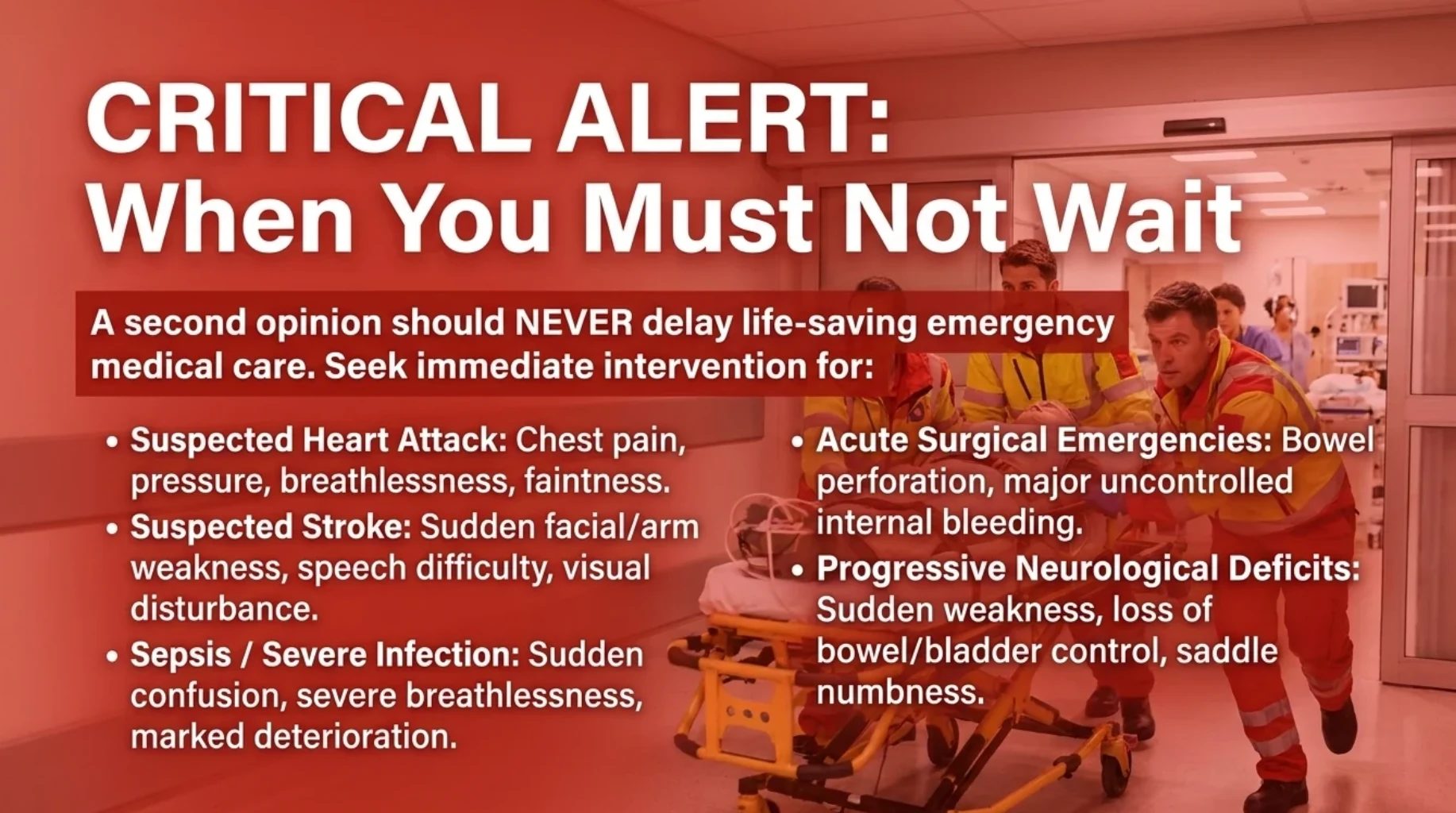
One of the most important limitations of seeking additional opinions is the possibility of delaying urgent medical care.
Some conditions require treatment within a short period to prevent death, disability or irreversible organ damage.
In these situations, patients should prioritise emergency assessment and treatment.
Suspected Heart Attack
Chest pain or pressure associated with sweating, breathlessness, faintness or other concerning symptoms may indicate a heart attack.
Patients should seek emergency medical assessment rather than waiting for a routine second opinion.
Prompt diagnosis and treatment can be critical.
Suspected Stroke
Sudden facial weakness, arm weakness, speech difficulty, visual disturbance or other acute neurological symptoms may indicate stroke.
Stroke treatment is time-sensitive.
Patients should seek emergency services immediately rather than travelling between clinics for additional opinions.
Severe Infection or Sepsis
Serious infections can progress rapidly and may cause organ dysfunction.
Symptoms such as confusion, severe breathlessness, marked deterioration or other signs of critical illness require urgent assessment.
Severe Hypoglycaemia
Patients with diabetes who develop severe hypoglycaemia, particularly when associated with altered consciousness, seizures or inability to swallow safely, require immediate assistance and emergency care.
Food or drink should not be given orally to a person who cannot swallow safely.
Acute Surgical Emergencies
Conditions such as bowel perforation, uncontrolled internal bleeding and certain acute vascular emergencies may require immediate intervention.
Delaying necessary treatment while seeking multiple opinions may increase the risk of serious complications.
Progressive Neurological Deficits
New or progressive weakness, loss of bladder or bowel control, saddle numbness or other findings suggesting serious neurological compression require urgent medical evaluation.
These symptoms should not be managed by waiting for routine appointments.
Emergency warning: A second medical opinion should never delay emergency treatment for suspected heart attack, stroke, severe infection, major bleeding, serious neurological compression or another potentially life-threatening condition. Seek immediate emergency medical care.
How to Choose the Right Doctor for a Second Medical Opinion
The value of a second opinion depends partly on selecting a doctor with appropriate expertise for the clinical question.
Another consultation with a professional who does not have relevant experience may not provide useful additional information.
Choose a Specialist Relevant to the Diagnosis
For a complex neurological condition, a neurologist may be appropriate.
For a proposed orthopaedic procedure, an orthopaedic surgeon with relevant experience may provide an independent assessment.
For cancer treatment, the appropriate specialist depends on the cancer type and treatment being considered.
In some cases, a multidisciplinary team review may be more informative than an isolated consultation.
Verify Medical Qualifications
Patients in India can verify a doctor’s qualifications and registration through appropriate official medical regulatory resources where available.
Professional titles, advertisements and social media profiles should not replace verification of relevant credentials.
Consider Experience With the Specific Condition
For uncommon or complex conditions, relevant experience may be particularly important.
For example, a surgeon who frequently manages a particular condition may be able to explain procedural options and expected outcomes in greater detail.
However, experience should be considered alongside evidence-based practice, communication and patient safety.
Seek an Independent Assessment
The purpose of a second opinion is to obtain an independent clinical review.
The reviewing doctor should assess the available information rather than automatically agreeing or disagreeing with the original recommendation.
Provide Complete Medical Records
Patients should share relevant prescriptions, laboratory reports, imaging studies, pathology findings, discharge summaries and previous treatment details.
Incomplete information can lead to unnecessary repeat investigations or inaccurate conclusions.
Second Medical Opinion: General Physician or Specialist?
Patients sometimes wonder whether they should consult another general physician or directly approach a specialist.
The most appropriate choice depends on the clinical problem.
When Another General Physician May Help
A general physician may be useful when symptoms involve several possible organ systems, the diagnosis remains unclear or the patient needs a broader review of existing medical conditions and medicines.
For example, persistent fatigue may involve sleep, endocrine, nutritional, medication-related or other causes.
A general physician can review the overall clinical picture and determine whether specialist referral is necessary.
When a Specialist Opinion Is More Appropriate
A specialist may be more suitable when the question concerns a complex diagnosis, specialised procedure or advanced treatment decision.
For example, a patient considering complex spine surgery may benefit from an independent assessment by an appropriately qualified spine specialist.
Can a General Physician Coordinate Different Specialist Opinions?
Yes. A general physician can help review recommendations from different specialists, reconcile medication lists and support continuity of care.
This may be especially useful for older adults and patients managing several chronic conditions.
Why Is Coordination Important?
Without coordination, patients may receive overlapping medicines, conflicting follow-up instructions or repeated investigations.
A clearly identified treating clinician can help ensure that decisions from different consultations are incorporated into a coherent care plan.
What If Two Doctors Recommend Completely Different Treatments?
Conflicting medical recommendations can be unsettling, particularly when one doctor recommends surgery and another advises conservative treatment.
However, disagreement does not necessarily mean that one recommendation is unsafe or incorrect.
Different doctors may interpret the evidence differently or assign different importance to specific risks and benefits.
Compare the Clinical Reasoning
Ask each doctor to explain the diagnosis, treatment goals and evidence supporting the recommendation.
Understanding the reasoning is more useful than simply counting how many doctors support a particular option.
Check Whether Both Doctors Reviewed the Same Information
Recommendations may differ because one clinician had access to newer investigations or additional medical history.
Ensure that both opinions are based on sufficiently complete information.
Clarify the Risks of Each Option
Patients should compare the potential benefits, complications, recovery requirements and consequences of delaying treatment.
The risks of doing nothing should also be considered.
Consider a Multidisciplinary Review
For complex cases, a discussion involving relevant specialists may help reconcile different recommendations.
This may be particularly useful in oncology and other conditions requiring coordinated treatment.
Make a Shared Decision
The final decision should consider clinical evidence, professional judgement and the patient’s informed preferences.
For adults with decision-making capacity, informed consent is central to medical decision-making.
Clinical perspective: When medical opinions differ, focus on understanding the reasons rather than choosing whichever recommendation appears easiest. The most appropriate decision should reflect the clinical evidence, treatment risks and the patient’s circumstances.
https://www.dietplusminus.com/uploads/2026/10/65854104_1793435762_what-to-do-when-doctors-disagree-second-opinion.webp
Should You Stop Treatment While Waiting for a Second Opinion?
In general, patients should not independently stop prescribed treatment simply because another consultation has been arranged.
Sudden discontinuation of certain medicines can lead to withdrawal effects, recurrence of disease or other complications.
For example, abruptly stopping some corticosteroids after prolonged use can be dangerous.
Similarly, discontinuing insulin in a patient who requires it may cause severe hyperglycaemia or diabetic ketoacidosis.
Stopping anticoagulants without appropriate medical guidance may increase the risk of thrombosis in susceptible patients.
However, a suspected serious adverse drug reaction requires prompt medical assessment, and the immediate response depends on the medicine and clinical situation.
Patients should contact an appropriate healthcare professional rather than making potentially harmful changes independently.
How Many Second Opinions Are Enough?
There is no fixed number that applies to every medical decision.
For many situations, one independent, appropriately qualified opinion may provide sufficient clarification.
Complex or rare conditions may occasionally require additional specialist or multidisciplinary review.
However, repeatedly seeking opinions until someone recommends the preferred treatment may not improve medical decision-making.
What Is Doctor Shopping?
The term doctor shopping is sometimes used to describe repeated consultations with different doctors.
However, it should not be used to dismiss patients who have legitimate concerns or remain undiagnosed despite appropriate evaluation.
The relevant issue is whether each additional consultation has a clear clinical purpose.
When Should You Stop Seeking More Opinions?
When the diagnosis has been adequately assessed, reasonable treatment options have been explained and the patient understands the benefits and risks, further consultations may add little value.
At that stage, selecting a treating team and following a structured management plan may be more helpful.
How to Prepare for a Second Medical Opinion
Obtaining a second medical opinion is most useful when the reviewing doctor has sufficient information to understand the clinical problem and the reason another assessment is being requested.
Patients sometimes attend a second consultation with only a recent prescription or a verbal description of their previous treatment. This can make it difficult for the reviewing doctor to understand what has already been investigated, which diagnoses were considered and how the patient responded to treatment.
Proper preparation can improve the quality of the consultation and reduce unnecessary duplication of tests.
Prepare a Brief Summary of Your Medical Problem
Before the appointment, write down when your symptoms began, how they have changed and which treatments you have already received.
For example, a patient seeking another opinion about persistent abdominal pain should explain the location of the pain, duration, associated symptoms, previous investigations and response to medicines.
This information helps the doctor assess whether the original diagnosis adequately explains the clinical findings.
Identify the Main Question You Want Answered
A second opinion is more useful when the patient has a specific concern.
For example, instead of asking whether the first doctor was correct, a patient might ask whether surgery is necessary at the present stage or whether another evidence-based treatment option is reasonable.
Similarly, a patient diagnosed with cancer may wish to know whether the proposed treatment is consistent with current recommendations and whether additional testing could affect management.
Prepare a Complete Medication List
Patients should bring details of their current prescription medicines, over-the-counter products, supplements and any known drug allergies.
Include the dose and frequency where possible.
This is particularly important for older adults and patients with several chronic medical conditions because duplicate prescriptions and drug interactions may create safety concerns.
Be Open About Previous Medical Advice
Patients should explain what their original doctor recommended and why they are seeking another assessment.
There is no need to conceal previous consultations.
Providing complete information allows the reviewing doctor to focus on the clinical question rather than repeating work unnecessarily.
Practical advice: Before attending a second-opinion consultation, prepare a one-page summary of your symptoms, diagnosis, previous treatment and the main questions you want answered. Bring all relevant medical records.
What Documents Should You Carry for a Second Medical Opinion?
The required documents depend on the medical condition, but complete and organised records can make the consultation more productive.
Patients should preferably carry original reports or clear copies rather than relying only on screenshots of selected results.
| Document | Why It May Be Useful |
|---|---|
| Previous prescriptions | Shows medicines prescribed and changes in treatment |
| Laboratory reports | Helps review test results and trends over time |
| Imaging reports | Provides previous radiological interpretations |
| CT, MRI or ultrasound images | Allows review of the actual images when relevant |
| Biopsy and histopathology reports | Important for cancer and other tissue-based diagnoses |
| Discharge summaries | Documents hospital treatment, procedures and complications |
| Operation notes | Useful when reviewing previous surgical treatment |
| Current medication list | Helps identify interactions, duplication and treatment-related risks |
| Symptom timeline | Clarifies the sequence and progression of illness |
| Written questions | Helps ensure important concerns are discussed |
Should You Repeat All Investigations?
Not necessarily.
A second opinion does not automatically require repeating every laboratory test, scan or biopsy.
The reviewing doctor should consider whether previous investigations are sufficiently recent, technically adequate and relevant to the current clinical question.
Repeat testing may be appropriate when symptoms have changed, results are uncertain or additional information could influence treatment.
However, unnecessary duplication can increase costs and may expose patients to avoidable risks, particularly when imaging involves ionising radiation or invasive procedures.
Should You Bring the Actual MRI or CT Images?
When imaging findings are central to the treatment decision, access to the actual images may be useful.
A written report summarises the radiologist’s interpretation, but a relevant specialist may need to review the images directly.
Digital imaging files or access through a hospital imaging portal may be appropriate when available.
What If You Do Not Have All Your Records?
Patients can request available copies of relevant medical records from the treating healthcare establishment.
The applicable procedure, timeframe and any permitted charges depend on the governing rules and the type of establishment.
If records remain incomplete, the reviewing doctor should be informed so that the limitations of the assessment are understood.
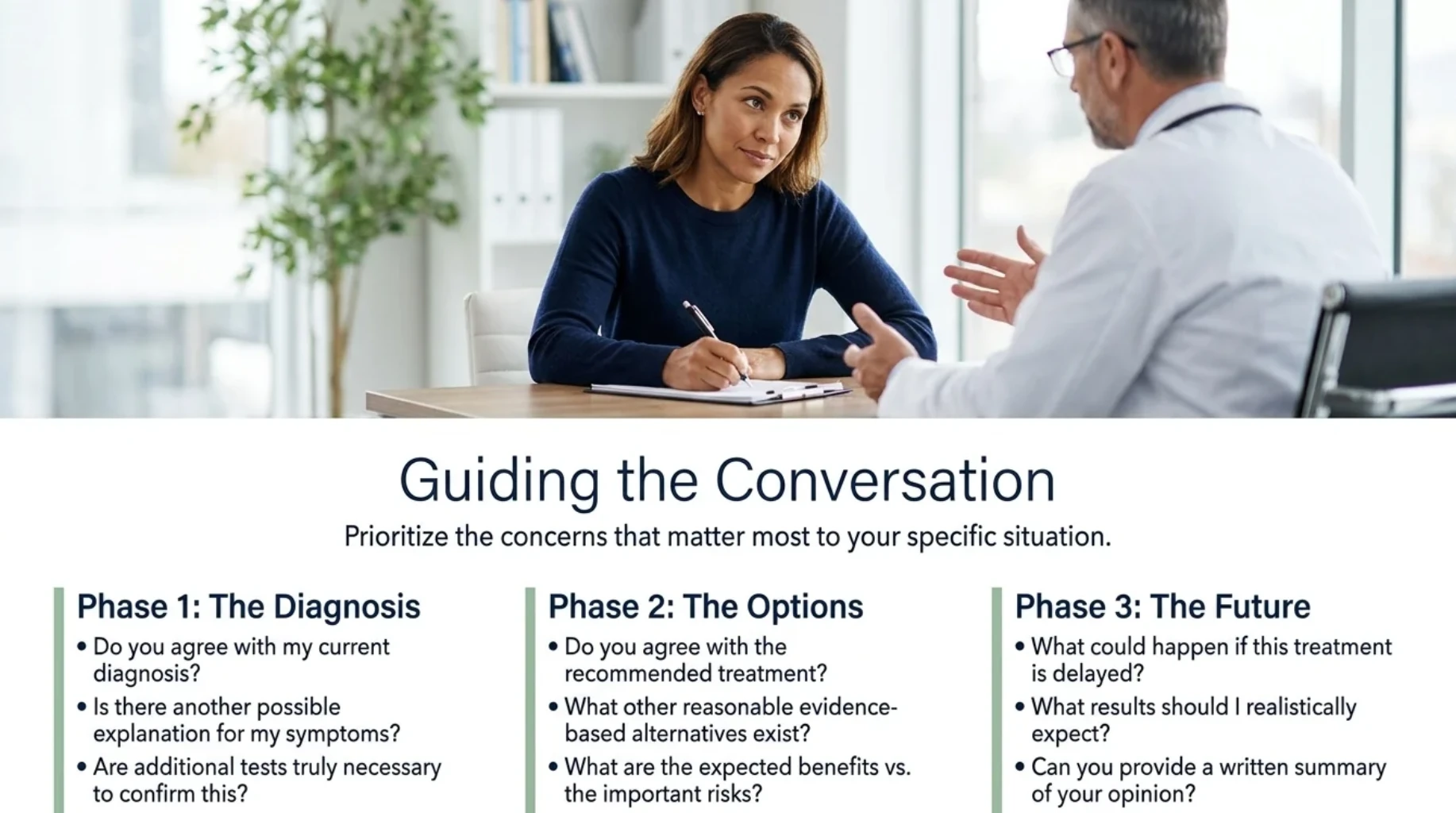
10 Important Questions to Ask During a Second Medical Opinion
A second opinion should help patients understand their condition and make an informed decision rather than simply provide another prescription.
The following questions can be useful during the consultation.
| Question | Purpose |
|---|---|
| 1. Do you agree with my current diagnosis? | Clarifies whether the original diagnosis is supported |
| 2. Is there another possible explanation for my symptoms? | Explores relevant alternative diagnoses |
| 3. Are additional tests necessary? | Identifies investigations likely to influence care |
| 4. Do you agree with the recommended treatment? | Obtains an independent assessment of the plan |
| 5. What other reasonable treatment options exist? | Clarifies available alternatives |
| 6. What are the expected benefits and important risks? | Supports informed decision-making |
| 7. What could happen if treatment is delayed? | Clarifies urgency and potential consequences |
| 8. What results should I realistically expect? | Helps establish appropriate expectations |
| 9. What follow-up or monitoring will be needed? | Clarifies ongoing care requirements |
| 10. Can you provide a written summary of your opinion? | Helps communicate recommendations to the treating team |
Not every question will be relevant to every condition. Patients should prioritise the concerns that matter most to their situation.
Online Second Medical Opinion in India: Is It Reliable?
Online second-opinion services have become more accessible through hospital portals, specialist consultations and digital healthcare platforms.
For some patients, remote review may provide an opportunity to obtain specialist advice without travelling to another city.
However, an online second opinion has limitations and should not automatically be considered equivalent to a complete in-person clinical examination.
What Can Be Reviewed Online?
Depending on the condition, a doctor may review medical history, prescriptions, laboratory findings, imaging reports, discharge summaries and proposed treatment plans.
For example, a patient considering an elective procedure may seek a specialist review of the available records and the rationale for surgery.
The reviewing doctor may provide recommendations, identify questions requiring clarification or suggest an in-person examination.
When Is an Online Second Opinion Useful?
Remote consultation may be useful when the main question concerns interpretation of existing records, clarification of treatment options or advice about whether specialist evaluation is appropriate.
It may also help patients living in areas with limited access to certain specialists.
When Is an In-Person Consultation Better?
An in-person assessment may be necessary when diagnosis depends on physical examination, neurological findings, abdominal examination or other clinical assessments that cannot be reliably completed remotely.
Patients with acute or worsening symptoms should not assume that uploading reports is sufficient.
Can an Online Doctor Change My Treatment?
Recommendations about treatment depend on the adequacy of the available information, the doctor’s qualifications and applicable telemedicine rules.
In India, telemedicine practice by registered medical practitioners is subject to relevant professional guidance and legal requirements.
Some clinical decisions require in-person examination or further investigations.
What About International Second Opinions?
Patients sometimes seek advice from specialists practising outside India.
International consultations may provide additional expertise for selected complex conditions, but professional licensing, prescribing authority, data protection and cross-border practice rules can differ.
Patients should verify the service’s scope and whether the opinion can be appropriately integrated into treatment in their own country.
Clinical takeaway: Online second opinions can be useful for selected non-emergency decisions, especially when comprehensive medical records are available. They cannot replace necessary physical examination, emergency assessment or procedures requiring direct clinical evaluation.
Patient Rights and Second Medical Opinions in India
Patients should be able to participate meaningfully in decisions about their healthcare.
This includes receiving understandable information about their diagnosis, proposed treatment, important risks and reasonable alternatives.
India’s Ministry of Health and Family Welfare has published a Charter of Patients’ Rights and Responsibilities that includes the right to seek a second opinion.
However, the Charter’s implementation and legal enforceability may depend on the applicable laws, regulations and healthcare establishment.
Can a Patient Ask for a Second Opinion?
Yes. Patients may request an independent medical assessment, particularly when facing an important treatment decision.
The request should not automatically be interpreted as an accusation against the treating doctor.
Can Patients Request Their Medical Records?
Patients may request access to relevant medical records in accordance with applicable professional and legal requirements.
Record-release procedures may vary depending on the healthcare establishment and the governing rules.
Patients should ask the hospital or clinic about the appropriate process.
Can a Doctor Refuse to Treat a Patient Who Wants Another Opinion?
Seeking another opinion should not, by itself, be treated as misconduct by the patient.
However, treatment relationships, referral arrangements and the obligations of healthcare professionals depend on the clinical circumstances and applicable rules.
Doctors should communicate professionally and avoid unsafe abandonment of patients who require ongoing or urgent care.
Can You Decline a Recommended Treatment?
Adults with decision-making capacity generally have an important role in consenting to or refusing medical treatment, subject to applicable law and particular clinical circumstances.
Informed refusal should involve understanding the likely consequences of declining treatment.
Special situations, including emergencies, incapacity and legally regulated interventions, may involve additional considerations.
Should You Inform Your First Doctor About the Second Opinion?
Although patients may independently seek another consultation, sharing relevant findings with the treating doctor can improve continuity and safety.
It can help avoid duplicate medicines, conflicting instructions and unnecessary repeat investigations.
How Much Does a Second Medical Opinion Cost in India?
The cost of a second opinion varies depending on the doctor’s speciality, clinical setting, complexity of the case and whether the consultation is conducted in person or online.
A routine outpatient assessment may have a different fee from a complex multidisciplinary review involving pathology or imaging reassessment.
Patients should ask about consultation charges and any additional fees before booking.
Does a Second Opinion Always Require New Tests?
No. Many second opinions begin with a review of existing medical records.
Additional tests should be recommended when they are clinically justified and likely to influence diagnosis or management.
Will Health Insurance Pay for a Second Opinion?
Insurance coverage varies according to the policy, insurer and type of service.
Some policies or healthcare programmes may include second-opinion services, while others may not cover standalone outpatient consultations.
Patients should verify the terms of their individual policy rather than assuming reimbursement.
Is an Expensive Second Opinion Always Better?
No. Consultation cost alone does not establish the quality of medical advice.
Relevant expertise, adequate clinical assessment, evidence-based reasoning and clear communication are more important considerations.
When Might a Specialist Centre Be Worth Considering?
For rare diseases, complex cancers, unusual neurological conditions or highly specialised procedures, assessment at a centre with relevant expertise may be useful.
However, not every common medical problem requires consultation at a large tertiary hospital.
How to Use a Second Opinion Without Disrupting Your Medical Care
Obtaining another opinion should ideally strengthen the treatment plan rather than create fragmented care.
Patients should ensure that relevant recommendations are communicated to the clinician responsible for ongoing management.
Keep One Updated Medication List
When several doctors are involved, patients should maintain an accurate list of all medicines, doses and frequencies.
This helps reduce the risk of duplicate prescriptions and drug interactions.
Do Not Combine Prescriptions Independently
Patients should not assume that medicines prescribed by two different doctors should automatically be taken together.
Some prescriptions may contain duplicate medicines or treatments intended as alternatives.
An appropriate clinician should review the combined medication list.
Ask Which Doctor Will Coordinate Follow-Up
Complex conditions may involve several specialists.
Identifying a clinician responsible for coordinating care can help ensure that investigations, prescriptions and follow-up recommendations remain consistent.
Discuss Any Change in Treatment
If the second doctor recommends changing treatment, patients should clarify how the transition should occur.
Some medicines require gradual adjustment or specific monitoring.
Sudden changes without appropriate supervision can be harmful.
Frequently Asked Questions About Second Medical Opinions
1. What Is a Second Medical Opinion?
A second medical opinion is an independent assessment by another appropriately qualified doctor regarding an existing diagnosis, investigation or treatment recommendation.
2. When Should I Get a Second Medical Opinion?
It may be useful before major elective surgery, after a serious diagnosis, when symptoms persist despite treatment, when the diagnosis is uncertain or when important treatment options require careful consideration.
3. Is It Wrong to Ask Another Doctor for an Opinion?
No. Seeking an independent assessment is a reasonable part of informed healthcare decision-making, particularly when a significant medical decision is involved.
4. Will My First Doctor Be Offended?
Professional reactions vary, but seeking another opinion should not automatically be interpreted as a criticism of the treating doctor. Open communication may help maintain continuity of care.
5. Should I Get a Second Opinion Before Surgery?
For major elective surgery, another specialist assessment may help clarify the indication, benefits, risks and alternatives. Emergency or time-sensitive surgery should not be delayed unnecessarily.
6. Is a Second Opinion Necessary for Cancer?
Not every patient requires one, but an independent oncology opinion may be valuable for complex diagnoses or major treatment decisions. The review should occur within a medically appropriate timeframe.
7. Can a Second Opinion Change My Diagnosis?
Sometimes. Another assessment may identify an alternative diagnosis or recommend additional investigations. However, a second opinion does not guarantee a different or more accurate diagnosis.
8. What If Two Doctors Give Different Advice?
Ask each doctor to explain the reasoning, expected benefits, risks and available alternatives. For complex cases, a multidisciplinary review may help resolve important differences.
9. Can I Get a Second Opinion Online?
Yes, for selected non-emergency situations. Online consultations may help review records and treatment options, but some conditions require physical examination or urgent in-person assessment.
10. Do I Need a Referral for a Second Opinion?
Requirements depend on the healthcare service, hospital, insurance arrangement and speciality. Some consultations can be booked directly, while others may require a referral.
11. What Documents Should I Carry?
Bring relevant prescriptions, laboratory reports, imaging, discharge summaries, biopsy reports, medication details and a brief history of your symptoms.
12. Should I Repeat My MRI or Blood Tests?
Not automatically. Repeat investigations should be based on clinical need, the quality and timing of previous tests, and whether new results would influence management.
13. Can I Stop Medicines While Waiting for Another Opinion?
Do not independently stop prescribed medicines. Some treatments require careful adjustment, and sudden discontinuation can cause serious complications. Seek prompt medical advice if you suspect a serious adverse reaction.
14. How Many Medical Opinions Should I Take?
There is no fixed number. One independent opinion is often sufficient, although complex conditions may require further specialist or multidisciplinary assessment.
15. Is a Second Opinion Expensive?
Fees vary according to speciality, consultation setting and case complexity. Patients should clarify charges and any additional investigation costs before booking.
16. Does Health Insurance Cover Second Opinions?
Coverage depends on the policy and insurer. Patients should check their specific benefits and any applicable conditions.
17. Can a General Physician Provide a Second Opinion?
Yes. A general physician may provide an independent assessment for many medical concerns and help determine whether specialist evaluation is necessary.
18. When Should I Consult a Specialist Instead?
A specialist opinion may be more appropriate when the question involves a complex diagnosis, specialised treatment or major procedure within that speciality.
19. Can Seeking a Second Opinion Delay Treatment?
Yes. Repeated consultations may delay necessary treatment if not arranged appropriately. Patients should ask their treating doctor how urgently treatment is needed.
20. Can I Get a Second Medical Opinion in Dwarka, New Delhi?
Patients in Dwarka can seek an independent medical assessment from an appropriately qualified doctor. The suitable clinician depends on the diagnosis, symptoms and complexity of the treatment decision.
Authoritative Medical References and Patient Resources
The following resources provide information about shared decision-making, informed consent, patient rights and second medical opinions.
- NICE Guideline NG197 — Shared Decision Making — Guidance on involving patients in decisions about investigations and treatment.
- National Cancer Institute — Finding Cancer Care and Second Opinions — Patient information about obtaining another opinion for cancer-related decisions.
- MedlinePlus — US National Library of Medicine — Reliable patient education resources about diagnoses, tests and treatment decisions.
- Agency for Healthcare Research and Quality — Resources on patient safety, communication and healthcare decision-making.
- Ministry of Health and Family Welfare, Government of India — Official healthcare policy and patient-rights resources, including the Charter of Patients’ Rights and Responsibilities.
- National Medical Commission, India — Official resources concerning medical qualifications and professional regulation.
- World Health Organization — Patient Safety — Information about reducing avoidable harm and improving safe healthcare.
Patients should consult current official guidance because healthcare regulations, treatment recommendations and clinical evidence may change.
Medical Consultation and Second Opinion in Dwarka, New Delhi
If you have persistent symptoms, an uncertain diagnosis, concerns about prescribed treatment or questions about a medical condition, an independent clinical assessment may help clarify the next appropriate step.
Dr. Pankaj Kumar is a General & Lifestyle Physician practising in Dwarka, New Delhi.
Depending on the clinical problem, a consultation may involve review of symptoms, medical history, existing investigations, prescriptions and previous treatment response.
Patients may receive an assessment of their current medical condition, clarification of relevant treatment considerations and referral to an appropriate specialist when necessary.
For highly specialised decisions, including complex cancer treatment or major surgery, an opinion from the relevant specialist or multidisciplinary team may be more appropriate.
Clinic Information
Dr. Pankaj Kumar Medical & Lifestyle Clinic
Doctor: Dr. Pankaj Kumar
Designation: General & Lifestyle Physician
Qualifications: MBBS, DNB (Family Medicine)
Address: 13A, Pocket-2, Sector-6, Doctors Lane, Dwarka, New Delhi – 110075
Phone/WhatsApp: +91 9582292277
Consultation: In-person and online appointments
Patients with suspected heart attack, stroke, severe infection, major bleeding or another medical emergency should seek immediate emergency care rather than waiting for a routine second-opinion appointment.
About the Author
Dr. Pankaj Kumar
MBBS, DNB (Family Medicine)
General & Lifestyle Physician
Dwarka, New Delhi
Dr. Pankaj Kumar provides general medical consultations with a particular interest in diabetes, obesity, hypertension, thyroid disorders, fatty liver disease and preventive healthcare. His approach emphasises appropriate diagnosis, evidence-informed medical treatment, patient education and coordination with relevant specialists when necessary.
Medical Disclaimer: This article is intended for general health education and does not replace individual medical assessment. The need for a second opinion, the urgency of treatment and the suitability of particular investigations or interventions depend on the patient’s clinical circumstances. Patients should not independently discontinue prescribed medicines or delay emergency treatment while seeking additional opinions.
If you want a personalized metabolic assessment and lifestyle strategy, you can book a consultation here:
Book an Appointment