

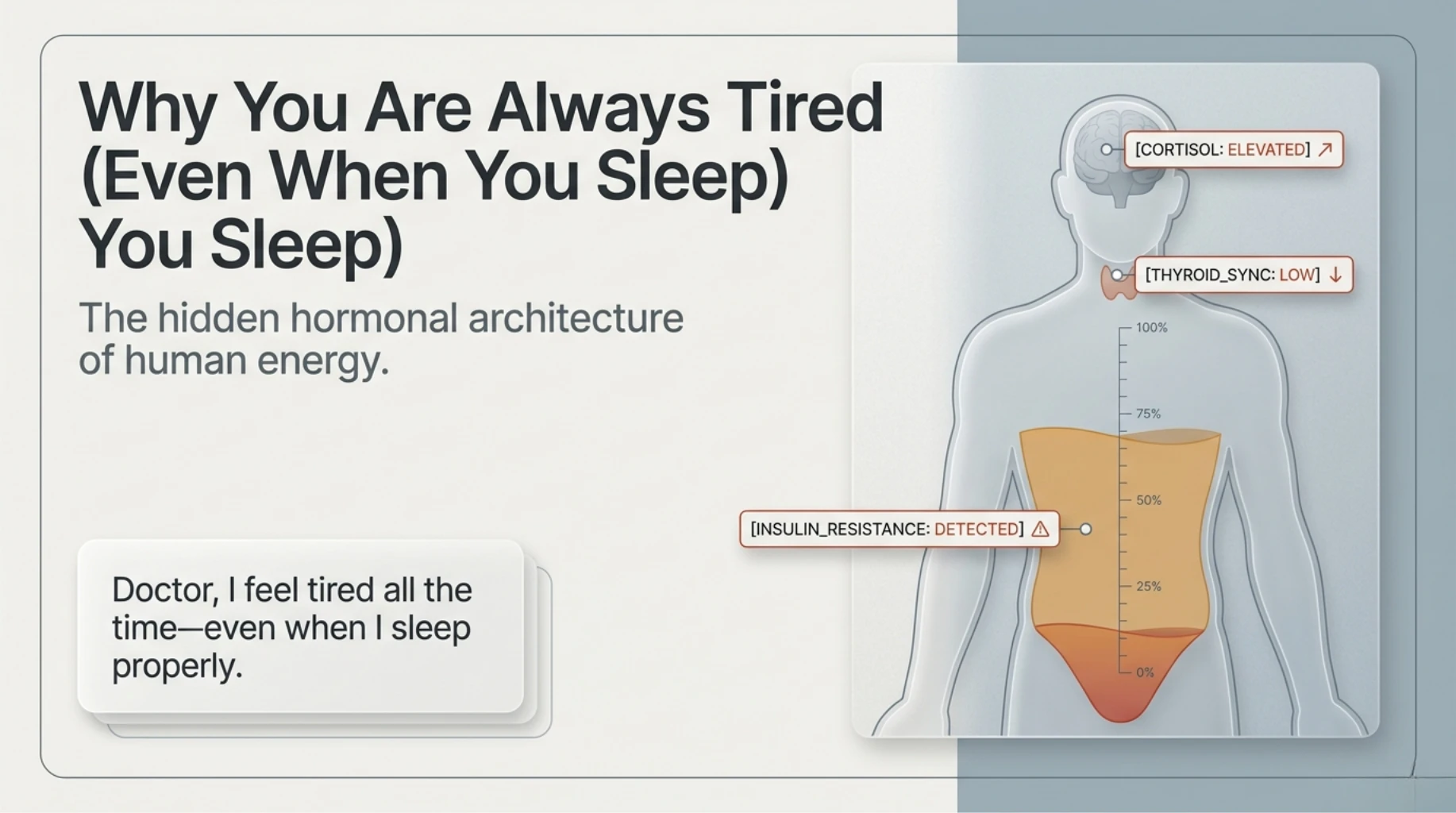
“Doctor, I feel tired all the time—even when I sleep properly.”
This is one of the most common concerns people bring during consultations. Many assume that low energy is simply due to stress, age, or a busy lifestyle. Sometimes that is true. But very often, the deeper issue lies in hormonal balance.
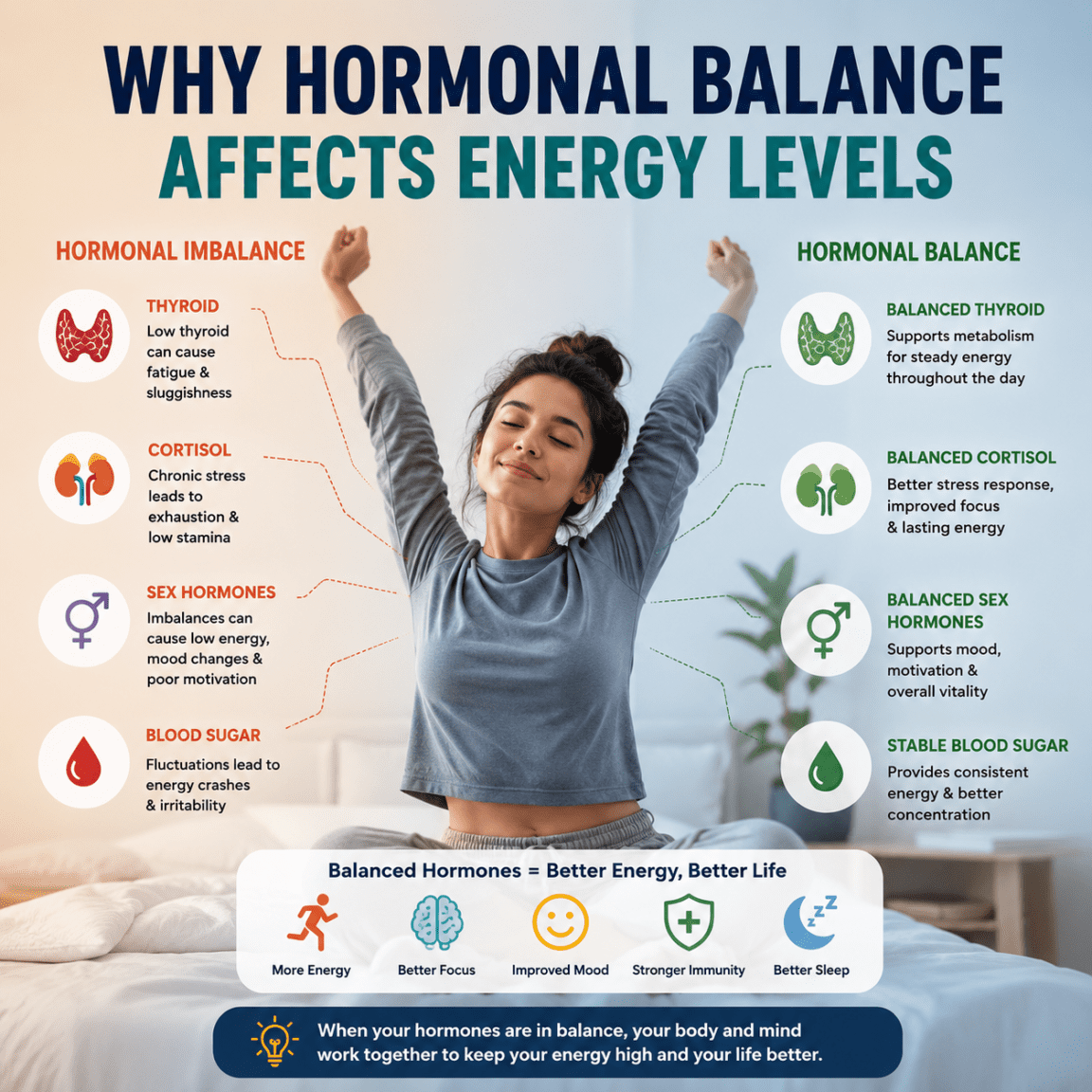
Understanding why hormonal balance affects energy levels is important because hormones are not just related to weight or reproduction. They regulate how your body produces, stores, and uses energy every single day.
When hormonal balance is disturbed, the body may continue functioning—but not efficiently. This is why many people feel exhausted, mentally drained, or physically slow even when routine reports appear “mostly normal.”
Why Energy Levels Depend on Hormonal Signals
Your body constantly communicates through hormones. These chemical messengers coordinate how different organs work together.
Energy production is not controlled by one hormone alone. It depends on a network involving the thyroid, insulin, cortisol, sleep hormones, and metabolic regulators.
When these signals are balanced, the body maintains stable energy throughout the day. But when the balance shifts, energy production becomes inefficient.
This is why hormonal imbalance often causes fatigue that feels deeper than ordinary tiredness.
The Difference Between Normal Tiredness and Hormonal Fatigue
Everyone feels tired occasionally. A busy day, poor sleep, or physical exertion can naturally lower energy levels temporarily.
Hormonal fatigue feels different.
Many people describe it as persistent low energy that does not improve properly even after rest. Some experience mental fog, reduced motivation, or heaviness in the body despite sleeping adequately.
This happens because the issue is not just lack of rest—it is reduced efficiency in how the body generates and utilizes energy.
The Role of Thyroid Hormones in Energy Production
The thyroid gland plays one of the biggest roles in regulating metabolism.
Thyroid hormones influence how quickly your cells produce and use energy. When thyroid function slows down, metabolic activity decreases.
As a result, people may experience:
persistent fatigue, low motivation, slower thinking, cold intolerance, and reduced physical stamina.
Even mild thyroid imbalance can affect how energetic a person feels throughout the day.
How Insulin Balance Influences Energy Stability
Insulin is commonly associated with diabetes, but its role goes far beyond blood sugar alone.
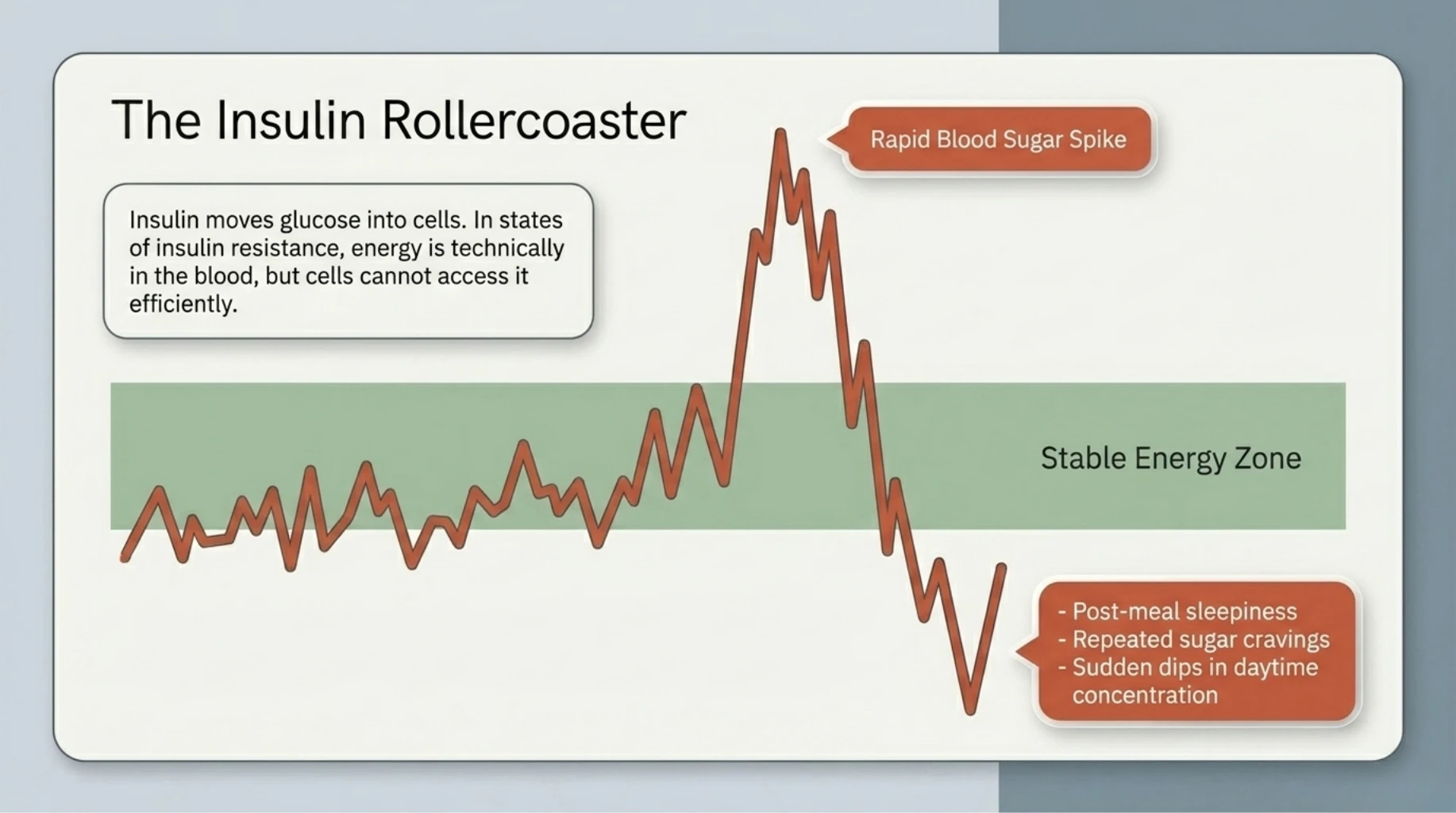
Insulin helps move glucose from the bloodstream into cells where it can be used for energy. When insulin balance is disturbed—especially in insulin resistance—the body struggles to use glucose efficiently.
This creates a situation where energy is technically available, but cells are unable to access it properly.
As a result, many individuals experience:
post-meal sleepiness, energy crashes, constant hunger, and daytime fatigue.
This is one of the most important reasons why hormonal balance affects energy levels.
The Hidden Impact of Cortisol and Stress Hormones
Cortisol is often called the stress hormone, but its role is more complex than people realize.
In balanced amounts, cortisol helps maintain alertness and supports daily energy regulation. However, chronic stress can disturb this rhythm.
When cortisol remains elevated for long periods, the body stays in a continuous state of internal stress. Initially, this may create temporary hyper-alertness. But over time, it leads to exhaustion.
This is why many people under chronic stress feel “wired but tired”—mentally active yet physically drained.
How Sleep Hormones Affect Daytime Energy
Many people think energy depends only on food intake or physical activity, but sleep quality plays an equally important role. And sleep itself is strongly regulated by hormones.
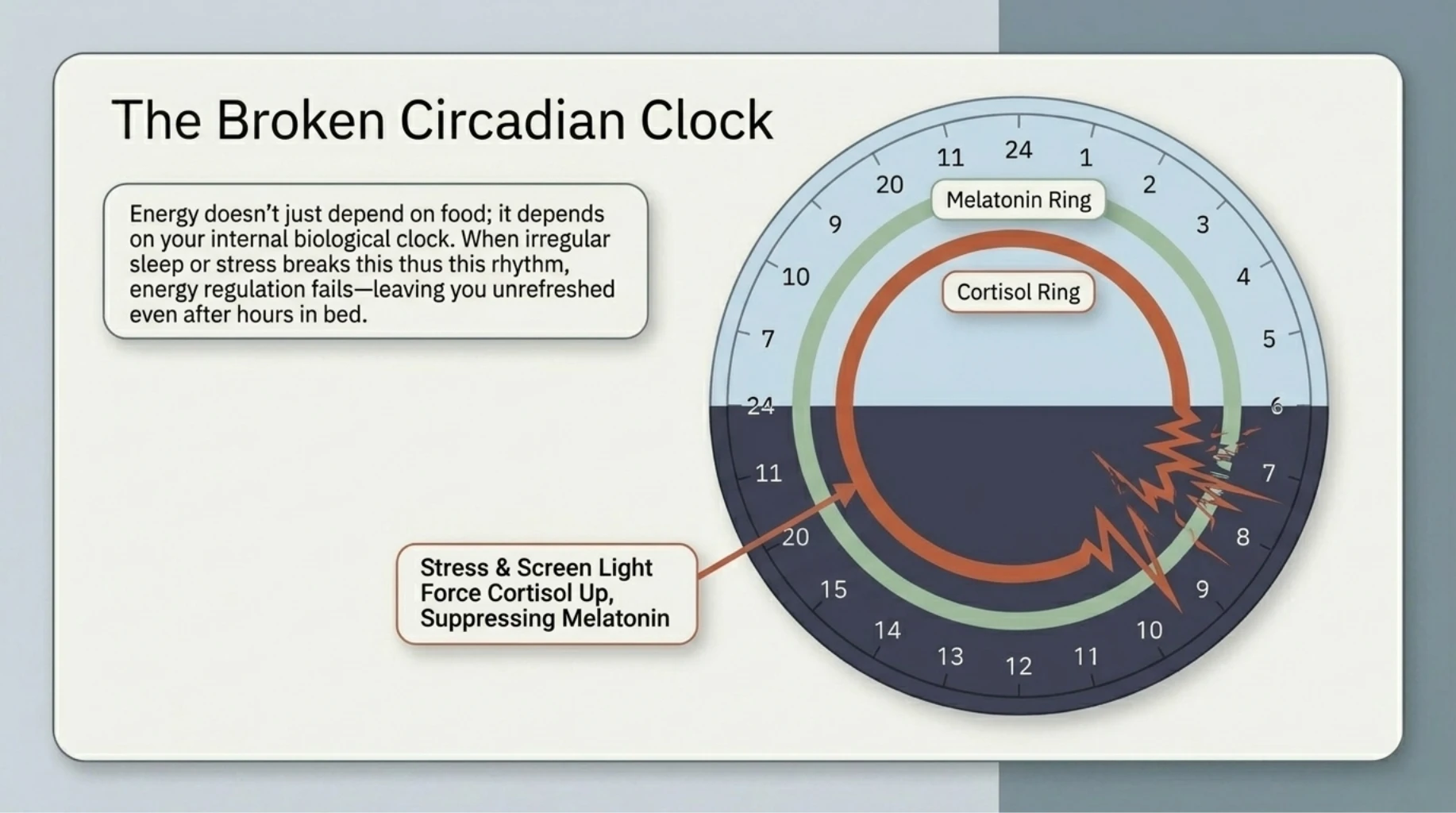
Your body follows an internal biological clock known as the circadian rhythm. Hormones like melatonin and cortisol work together to maintain this cycle.
Under normal conditions, melatonin increases at night to promote sleep, while cortisol rises naturally in the morning to help you wake up feeling alert.
When this rhythm gets disrupted—due to late-night screen exposure, irregular sleep timing, stress, or poor sleep quality—energy regulation also becomes disturbed.
This is why some people sleep for many hours yet still wake up feeling unrefreshed.
Why Energy Crashes Happen Despite Eating Properly
A very common complaint is, “Doctor, I eat properly but still feel low on energy.”
In many such cases, the issue is not the quantity of food but how the body is processing it hormonally.
If insulin balance is disturbed, blood sugar may fluctuate more rapidly after meals. This creates temporary spikes followed by energy crashes.
Similarly, if stress hormones remain elevated, the body may stay in a constant state of metabolic strain, making energy utilization less efficient.
This explains why some individuals feel sleepy after meals, crave sugar repeatedly, or experience sudden dips in concentration during the day.
The Link Between Obesity, Hormonal Imbalance, and Fatigue
Body fat is not just passive storage tissue. It actively influences hormones and metabolism.
Excess body fat, especially around the abdomen, increases inflammation and worsens insulin resistance. Over time, this disrupts energy regulation.
As metabolic flexibility decreases, the body becomes less efficient at switching between energy sources. This contributes to:
persistent tiredness, low physical stamina, and reduced motivation to stay active.
This is one reason why many individuals with obesity feel exhausted even without intense physical activity.
How PCOS and Hormonal Imbalance Affect Energy Levels
In women, conditions like polycystic ovary syndrome (PCOS) are often associated with hormonal imbalance and fatigue.
PCOS is not only about irregular periods or weight gain. It is also closely linked with insulin resistance and metabolic dysfunction.
Because of these changes, many women experience:
low energy, increased cravings, poor concentration, and daytime sleepiness.
The fatigue is often underestimated because routine blood tests may appear “acceptable,” while the underlying metabolic imbalance continues.
Why Chronic Inflammation Drains Energy
Hormonal imbalance and chronic inflammation often exist together.
When the body remains in a prolonged inflammatory state—due to obesity, stress, poor diet, inadequate sleep, or metabolic disease—it consumes significant energy internally.
This creates a constant feeling of heaviness and exhaustion.
Many people describe this as “feeling tired for no reason,” when in reality the body is under ongoing physiological stress.
The Real-Life Pattern Seen in Many Patients
In clinical practice, the pattern is often remarkably similar.
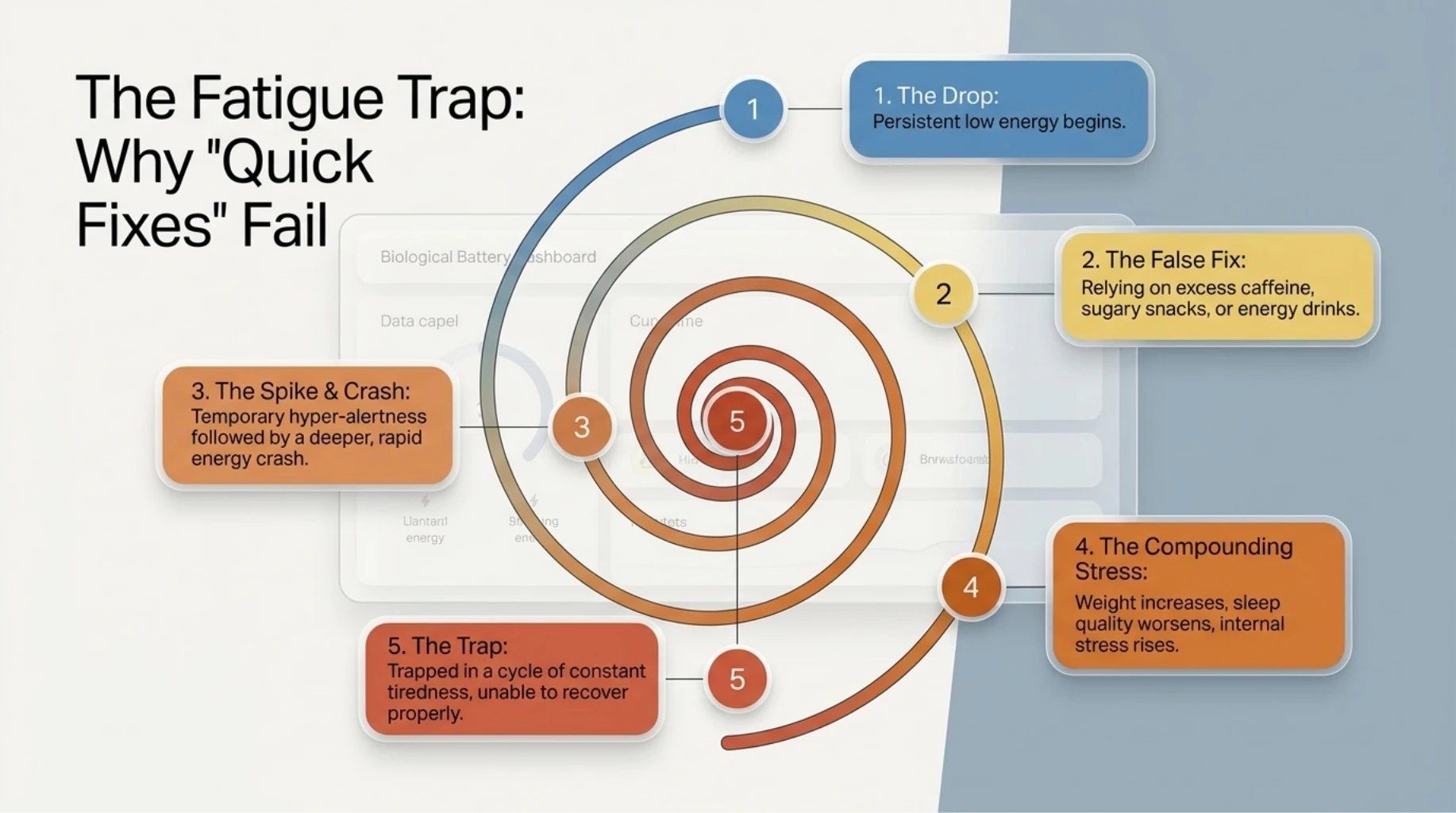
A person starts feeling low on energy gradually. Initially, they blame workload or lack of sleep. To compensate, they increase tea, coffee, sugary snacks, or energy drinks.
For some time, this creates temporary improvement. But eventually, the crashes become more frequent.
At the same time, weight may increase, sleep quality may worsen, and stress levels continue rising. Over months or years, the underlying hormonal imbalance becomes more pronounced.
This is why many people feel trapped in a cycle where they are constantly tired yet unable to recover properly.
Why Ignoring Hormonal Health Makes Fatigue Worse
One of the biggest mistakes is treating fatigue only as a motivation problem.
When hormonal balance is disturbed, simply “trying harder” is usually not enough. The body itself is functioning inefficiently.
This is why understanding why hormonal balance affects energy levels becomes important. Unless the underlying imbalance is addressed, symptoms often continue to return.
How to Improve Hormonal Balance and Restore Energy Levels
The encouraging part about hormonal health is that the body often responds very well to consistent lifestyle correction.
Many people assume that low energy can only be fixed with supplements, stimulants, or quick solutions. But long-term improvement usually comes from restoring the body’s natural hormonal rhythm.
This process takes time, but when done properly, it improves not only energy levels but overall metabolic health as well.
Focus on Sleep Before Looking for Stimulants
One of the biggest mistakes people make is relying on caffeine and sugary foods while ignoring sleep quality.
If your sleep cycle is disturbed, the hormonal systems regulating energy can never function optimally.
Improving sleep often produces noticeable improvement in energy levels within weeks. Maintaining a consistent sleep schedule, reducing late-night screen exposure, and allowing the body adequate recovery time are simple but powerful changes.
Many individuals are surprised by how much better they feel once their sleep rhythm stabilizes.
Improve Metabolic Health Through Food Quality
Hormones respond continuously to dietary patterns.
Frequent intake of highly processed foods, excessive sugar, and irregular eating habits creates metabolic stress. Over time, this affects insulin balance and energy regulation.
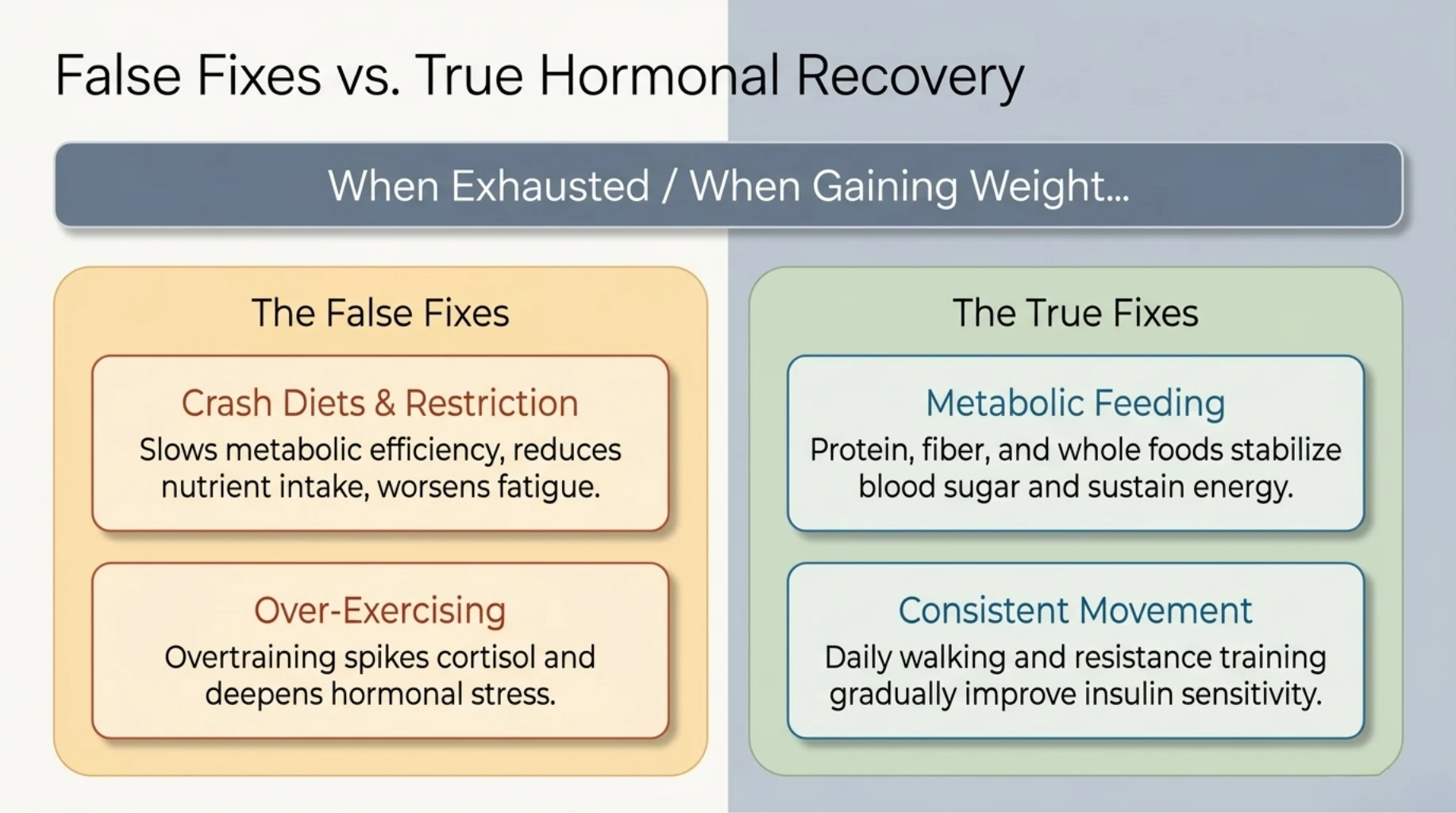
On the other hand, balanced meals with adequate protein, fiber, and nutrient-rich foods help stabilize blood sugar and improve sustained energy production.
This is especially important for individuals experiencing post-meal fatigue or repeated energy crashes during the day.
Movement Is Essential for Hormonal Efficiency
Physical activity influences almost every major hormone involved in energy regulation.
Regular movement improves insulin sensitivity, supports metabolic flexibility, and reduces stress hormone overload.
This does not mean extreme workouts are necessary. In fact, consistency matters far more than intensity.
Simple activities like daily walking, resistance training, stretching, or reducing prolonged sitting can gradually improve how efficiently the body produces and uses energy.
Reduce Chronic Stress Instead of Only “Managing” Fatigue
Many people focus only on treating fatigue itself while ignoring the chronic stress creating it.
If the body remains in a constant stress response, hormonal balance becomes difficult to restore.
This is why long-term energy recovery often requires reducing mental overload, improving recovery time, and creating periods of genuine rest during the day.
Even small changes—such as structured breaks, outdoor walks, or reducing continuous screen exposure—can significantly reduce internal stress signals over time.
Why Crash Diets and Overexercising Often Backfire
When people feel tired or gain weight, they sometimes respond with extreme dieting or excessive exercise.
Unfortunately, this can worsen hormonal stress rather than improve it.
Very restrictive diets reduce nutrient intake and may further slow metabolic efficiency. Similarly, overtraining without adequate recovery increases cortisol levels and can deepen fatigue.
The body responds best to balance, not extremes.
The Importance of Consistency Over Quick Results
Hormonal health rarely changes overnight. The body requires time to adapt and recover.
This is why short-term fixes often fail. Sustainable improvement comes from repeated daily habits that gradually restore metabolic stability.
Many patients begin noticing subtle improvements first—better sleep, fewer crashes, clearer thinking, improved stamina. Over time, these changes become more significant.
This gradual recovery is a sign that the body is functioning more efficiently again.
Putting It All Together
When you step back and look at the bigger picture, energy levels are not controlled by one isolated factor. They reflect the overall state of your hormonal and metabolic health.
Sleep, stress, food quality, movement, body composition, and metabolic balance all work together.
When these systems are aligned, the body produces energy more efficiently. When they become disrupted, fatigue often becomes persistent and difficult to explain.
This is exactly why hormonal balance affects energy levels so profoundly.
Final Thought
If you constantly feel low on energy despite adequate rest, it may be time to look beyond surface-level explanations.
Sometimes, the body is not lacking motivation—it is struggling with imbalance.
If you want a personalized metabolic assessment and lifestyle strategy, you can book a consultation here:
Book an Appointment