


Online Doctor Consultation: Is It Always a Good Alternative to Visiting a Clinic?
Imagine that you have been taking medicines for diabetes or hypertension for several months. Your condition is stable, you have completed the laboratory tests recommended during your previous appointment, and you mainly need to discuss the results and review your treatment plan.
Would you necessarily need to travel to a clinic, wait for your appointment and meet the doctor in person?
Not always.
In many such situations, an online doctor consultation may be a practical and clinically appropriate option.
Now consider a different situation. A person develops sudden chest discomfort, severe breathlessness or weakness affecting one side of the body.
In these circumstances, relying on a routine video consultation could delay essential emergency assessment and treatment.
The difference between these situations illustrates an important principle: online consultations can be valuable, but they are not suitable for every medical problem.
Telemedicine has expanded access to healthcare by allowing patients and doctors to communicate remotely through video calls, telephone conversations and other permitted digital methods.
It may reduce unnecessary travel, make follow-up appointments easier and improve continuity of care for people managing chronic conditions.
However, remote consultation has limitations. A doctor may not be able to perform a physical examination, assess certain clinical signs or carry out diagnostic procedures through a screen.
The appropriate consultation method depends on the patient’s symptoms, medical history, available information and whether a physical examination is necessary.
This article explains when an online doctor consultation works well, when an in-person appointment is preferable and which symptoms require urgent medical attention.

What Is an Online Doctor Consultation?
An online doctor consultation is a medical interaction in which a patient and a qualified medical practitioner communicate remotely using an appropriate digital or telecommunications platform.
This may involve a video consultation, telephone call or another permitted communication method.
In India, telemedicine practice is governed by applicable professional and regulatory requirements, including the Telemedicine Practice Guidelines issued in 2020, subject to subsequent regulatory developments.
These guidelines describe important considerations relating to patient identification, consent, medical records, professional responsibilities and medicine prescribing.
Importantly, telemedicine does not remove the doctor’s responsibility to exercise appropriate clinical judgement.
Is an Online Consultation the Same as a Video Call?
A video call may be used to conduct an online medical consultation, but a medical consultation involves more than simply speaking through a camera.
The doctor must obtain relevant clinical information, assess whether remote evaluation is adequate, provide appropriate advice and maintain suitable documentation.
When necessary, the doctor should recommend an in-person assessment or referral to an appropriate healthcare facility.
Can Doctors Diagnose Medical Conditions Online?
In selected circumstances, a doctor may be able to make a reasonable clinical assessment and diagnosis remotely.
However, the reliability of that assessment depends on the condition, available information and limitations of the consultation method.
Some problems require examination findings, laboratory investigations, imaging or other procedures before a diagnosis can be established.
Therefore, online consultation should not be presented as a guaranteed replacement for a physical examination.
Can an Online Doctor Prescribe Medicines?
Doctors may prescribe medicines through teleconsultation when permitted under the applicable telemedicine framework and when clinically appropriate.
However, restrictions apply to certain medicine categories and prescribing circumstances.
The doctor must consider the consultation mode, available clinical information, patient safety and relevant regulatory requirements.
Patients should not assume that every medicine can legally or appropriately be prescribed through an online consultation.
Is Online Consultation Suitable for First-Time Patients?
Sometimes.
A first consultation may be conducted remotely when sufficient clinical assessment is possible and the applicable requirements are satisfied.
However, the doctor may determine that a physical examination is necessary before making a diagnosis or recommending treatment.
For example, a patient with a newly discovered mildly elevated blood pressure reading may benefit from an initial discussion about measurement technique, symptoms and relevant history.
But concerning symptoms, suspected organ complications or other clinical findings may require an in-person assessment.
Clinical takeaway: An online doctor consultation is a legitimate healthcare delivery method when used appropriately. Its suitability depends on the clinical problem, not merely the availability of a video-calling platform.
Online Doctor Consultation vs In-Person Consultation: Key Differences
| Factor | Online Doctor Consultation | In-Person Consultation |
|---|---|---|
| Convenience | Can be accessed remotely | Requires travel to a healthcare facility |
| Medical history | Can usually be discussed in detail | Can be discussed in detail |
| Physical examination | Limited or unavailable | Direct examination is possible |
| Laboratory report review | Often suitable when reports are available | Also suitable |
| Chronic disease follow-up | Often appropriate for selected stable patients | Important when examination or procedures are needed |
| Medicine review | May be possible within clinical and regulatory limits | Allows direct examination when required |
| Diagnostic procedures | Cannot be performed directly through a routine call | May be arranged or performed at the facility |
| Emergency assessment | Not a substitute for emergency care | Emergency department assessment may be essential |
| Travel requirements | Usually minimal | Depends on clinic location |
| Clinical suitability | Depends on symptoms and available information | Often preferable when direct examination is needed |

When Does an Online Doctor Consultation Work Well?
Online consultations are particularly useful when the main purpose of the appointment is to review information, discuss treatment or monitor a previously assessed condition.
However, each situation still requires individual clinical judgement.
1. Follow-Up Appointments for Stable Chronic Conditions
Many people living with chronic diseases require regular follow-up rather than a completely new diagnostic assessment at every appointment.
For example, a patient with type 2 diabetes may need to review home glucose readings, HbA1c results, current medicines and lifestyle changes.
If the patient is clinically stable and no examination or procedure is currently required, an online follow-up may be appropriate.
Similarly, selected patients with hypertension, hypothyroidism or dyslipidaemia may be suitable for remote reviews.
However, online follow-up should complement rather than eliminate necessary physical examinations, screening tests and periodic in-person assessments.
2. Reviewing Blood Test Reports
Laboratory reports can often be discussed through a remote consultation.
For example, a patient may have completed tests for thyroid function, blood glucose, cholesterol, liver enzymes or kidney function.
The doctor can review the results in the context of the patient’s history, symptoms and previous reports.
However, an abnormal laboratory result does not always establish a diagnosis.
Some findings require repeat testing, physical examination or additional investigations.
3. Reviewing Home Blood Pressure Readings
Home blood pressure monitoring can provide useful information about blood pressure patterns outside the clinic.
Patients may share appropriately recorded readings during an online consultation.
The doctor can review measurement technique, average readings, symptoms and treatment adherence.
However, severe blood pressure elevations accompanied by concerning symptoms require urgent assessment rather than routine remote follow-up.
4. Discussing Diabetes Monitoring Results
Patients with diabetes may use home glucose meters or continuous glucose monitoring devices.
These records can help identify patterns of hyperglycaemia, hypoglycaemia and glucose variability.
Online consultations may be useful for reviewing these data, discussing diet and physical activity, and assessing whether the current treatment plan remains suitable.
However, severe hypoglycaemia, suspected diabetic ketoacidosis or other acute complications require immediate appropriate care.
5. Medication Review and Treatment Adherence
Some patients need an appointment mainly to clarify how medicines should be taken or to discuss difficulties following the prescribed regimen.
An online consultation may allow the doctor to review medicine names, doses, schedules and relevant side effects.
However, clinically significant changes may require additional assessment or investigations.
Prescribing must also comply with the applicable telemedicine requirements.
6. Lifestyle Medicine Follow-Up
Many lifestyle-related concerns involve ongoing behavioural changes rather than a single intervention.
Patients working on weight management, physical activity, sleep routines or dietary improvements may benefit from periodic follow-up.
Online consultations can be useful for reviewing progress, identifying barriers and adjusting realistic lifestyle goals.
However, symptoms suggesting an underlying medical problem should not automatically be attributed to lifestyle factors.
7. Discussing Previously Established Diagnoses
Patients sometimes need clarification about a condition that has already been diagnosed.
For example, someone recently diagnosed with fatty liver disease may want to understand the meaning of laboratory results, the importance of metabolic risk factors and the role of lifestyle changes.
Such discussions may be suitable for online consultation when no immediate physical assessment is necessary.

Common Conditions That May Be Suitable for Online Follow-Up
| Condition | Potential Online Consultation Use | When In-Person Assessment May Be Needed |
|---|---|---|
| Type 2 diabetes | Review of glucose logs, HbA1c and stable treatment | Foot examination, complications, acute symptoms or required procedures |
| Hypertension | Review of home BP readings and treatment adherence | Concerning symptoms, suspected complications or examination needs |
| Hypothyroidism | TSH review and stable treatment follow-up | New neck swelling, concerning symptoms or examination requirements |
| Dyslipidaemia | Lipid report review and cardiovascular risk discussion | Symptoms or findings requiring direct assessment |
| Obesity | Lifestyle progress and selected treatment follow-up | Initial comprehensive assessment or suspected complications |
| PCOS | Review of investigations and lifestyle management | Pelvic examination, procedures or concerning symptoms |
| Fatty liver disease | Review of liver tests and metabolic risk factors | Suspected advanced disease or additional clinical assessment |
| Stable medication-related concerns | Clarification of medicine schedules and selected side effects | Severe reactions, examination needs or acute deterioration |
These examples describe possible uses of telemedicine rather than automatic eligibility for remote treatment.
The treating doctor should determine whether sufficient information is available and whether the consultation can be conducted safely.
What Makes an Online Consultation More Effective?
The usefulness of a remote appointment depends partly on how well the patient prepares.
For example, a patient discussing diabetes management may benefit from keeping recent glucose readings, medicine details and laboratory reports available.
A patient seeking hypertension follow-up may prepare a record of home blood pressure measurements taken using an appropriate technique.
Patients should also describe their symptoms accurately, including when they began, how they have changed and whether any warning signs are present.
Should You Send Reports Before the Appointment?
When the consultation platform allows secure document sharing, providing relevant reports in advance may help the doctor review the available information.
However, patients should use appropriate communication channels and avoid sharing sensitive medical information through unverified services.
Should You Measure Blood Pressure or Blood Sugar Before the Call?
When relevant to the reason for consultation, recent home measurements may be useful.
However, measurements should be taken using appropriate devices and techniques.
Patients should not delay urgent medical care merely to collect additional readings.
Can a Family Member Join the Consultation?
A family member or caregiver may participate when the patient agrees and their involvement is appropriate.
This may be helpful for older adults, patients with communication difficulties or people who need assistance managing medicines.
Patient privacy and consent should be respected.
Practical advice: Before an online consultation, keep your current medicines, relevant reports, recent home readings and a short description of your symptoms ready. This can make the appointment more efficient and clinically useful.
When Is an In-Person Doctor Consultation Necessary?
An online doctor consultation can be useful when a medical problem can be assessed adequately through history, available reports, home measurements and appropriate remote communication.
However, certain symptoms and clinical situations require direct physical examination, diagnostic testing or procedures that cannot be performed through a routine video or telephone consultation.
For example, a patient with stable hypothyroidism who needs to discuss a recent TSH report may be suitable for an online follow-up.
In contrast, a patient who develops a new neck swelling, difficulty swallowing or rapidly worsening symptoms may require direct examination and further investigation.
The important consideration is not whether the patient prefers an online appointment. It is whether the consultation method allows the doctor to make a sufficiently reliable assessment and recommend appropriate care.
Sometimes an online consultation can serve as an initial assessment, after which the doctor recommends a clinic visit.
In other situations, particularly emergencies, arranging a routine teleconsultation may cause an unsafe delay.
1. Symptoms That Require a Physical Examination
Physical examination remains an important part of medical assessment.
Although video consultations can provide useful visual information, they cannot reliably reproduce many elements of an in-person examination.
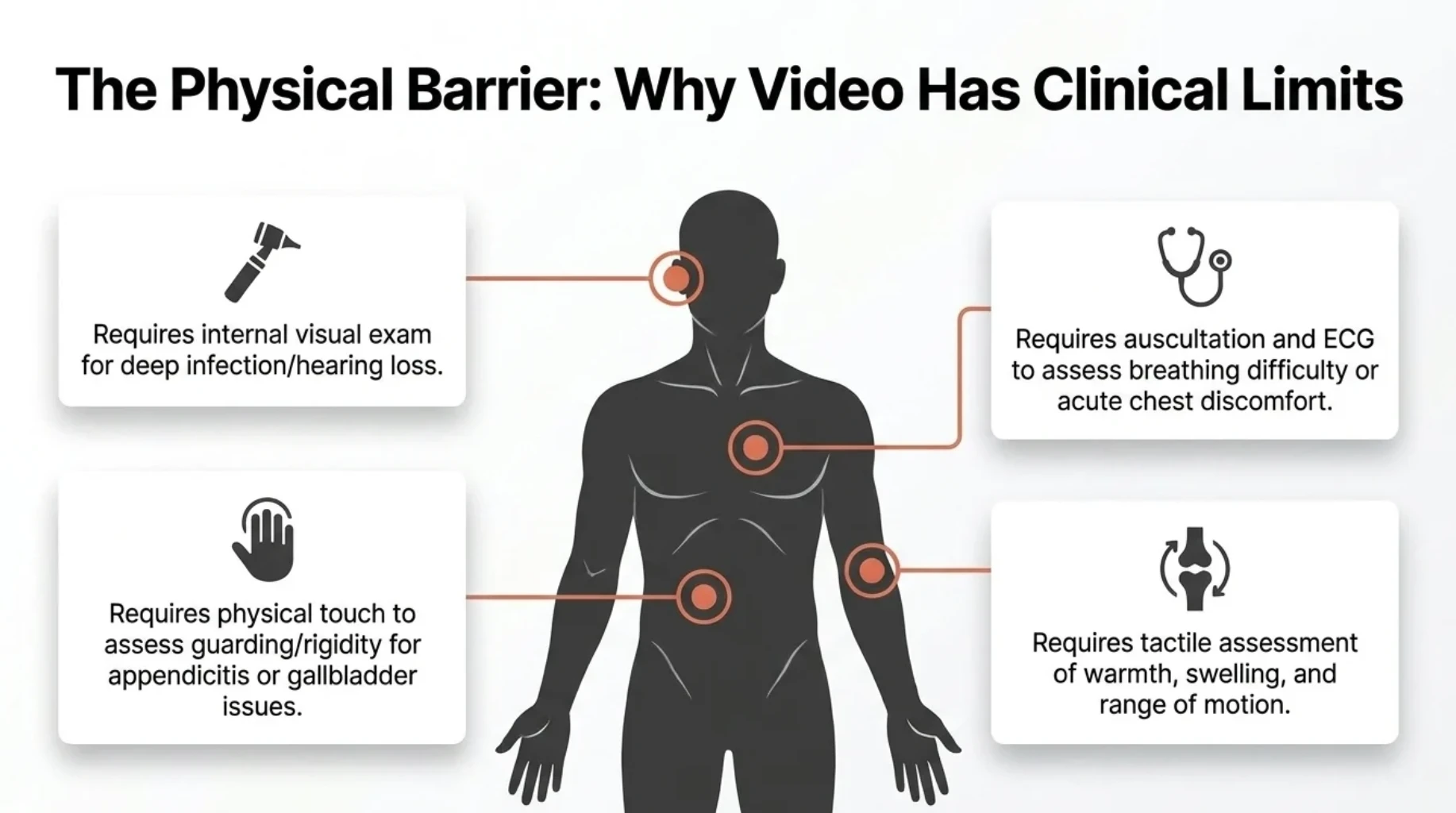
A doctor may need to examine the abdomen, listen to the heart or lungs, assess neurological function, inspect the throat or evaluate a painful joint.
When these findings are necessary for clinical decision-making, an in-person appointment is preferable.
New or Persistent Abdominal Pain
Abdominal pain can have many causes, ranging from relatively minor digestive disturbances to conditions requiring urgent treatment.
During an in-person examination, the doctor may assess the location of pain, tenderness, guarding, abdominal distension and other relevant signs.
These findings cannot be assessed reliably through a routine video call.
For example, pain in the right lower abdomen may raise concern about appendicitis, while severe upper abdominal pain may require assessment for gallbladder disease, pancreatitis or other conditions.
Severe, sudden or worsening abdominal pain, particularly with vomiting, fainting, abdominal rigidity or other concerning symptoms, requires urgent medical evaluation.
Chest Discomfort or Chest Pain
Chest discomfort may arise from several causes, including musculoskeletal problems, acid reflux, respiratory conditions and cardiovascular disease.
However, potentially serious cardiac causes cannot be reliably excluded through a routine online consultation.
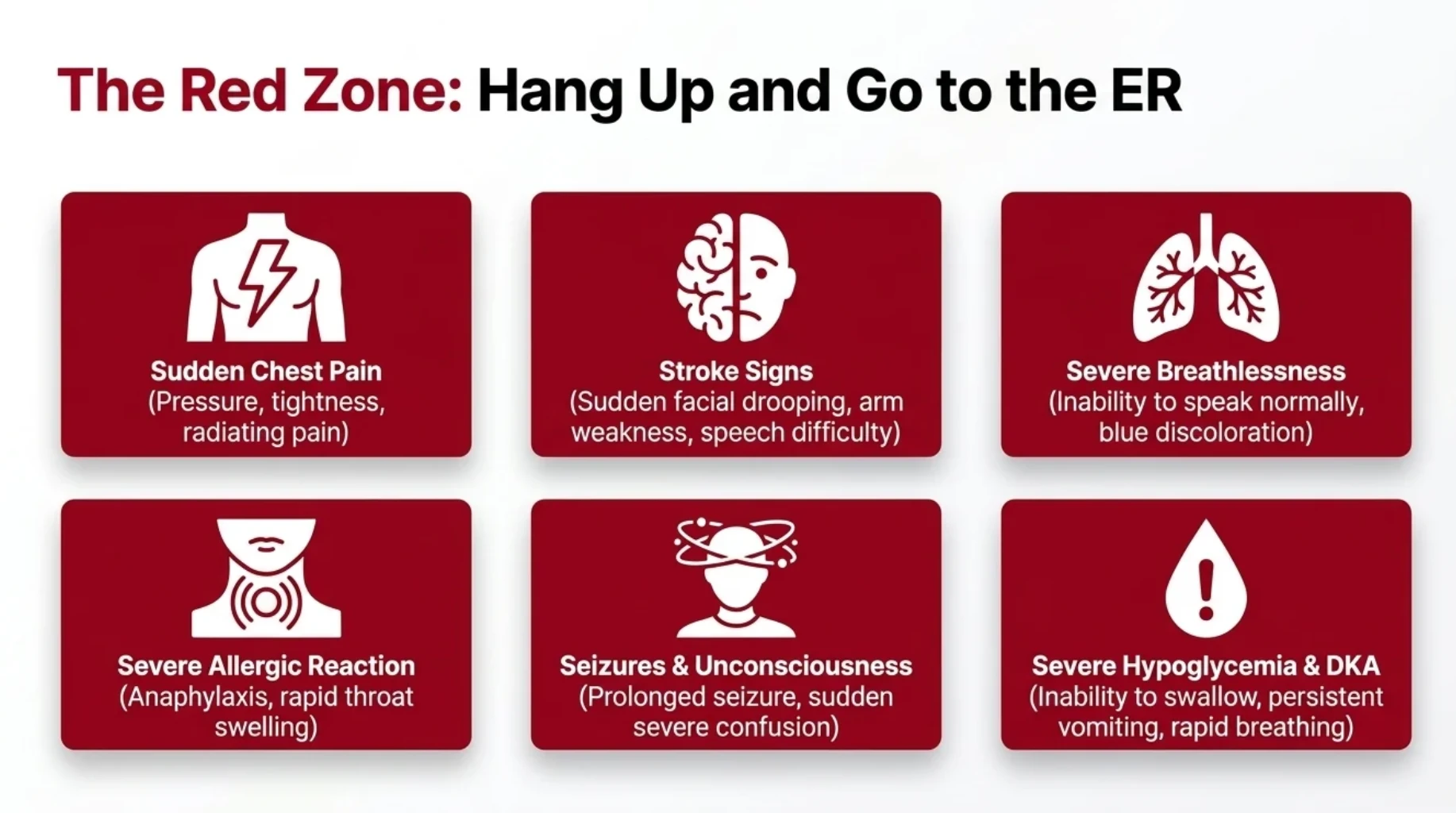
New, severe or unexplained chest discomfort, particularly when associated with sweating, breathlessness, nausea, fainting or pain spreading to the arm, back or jaw, requires emergency assessment.
Patients should not wait for an online appointment when symptoms suggest a possible heart attack.
Breathing Difficulty
Breathlessness may occur with respiratory infections, asthma, heart failure, pulmonary embolism and several other conditions.
In-person assessment may involve respiratory rate, oxygen saturation, chest examination and further investigations.
Severe or rapidly worsening breathlessness requires emergency care.
A normal-looking appearance during a video call does not reliably exclude serious respiratory illness.
New Swelling in the Legs
Leg swelling may be associated with venous disease, medication effects, heart or kidney problems, or other causes.
A new swollen, painful or red leg may require prompt assessment for deep vein thrombosis.
Sudden breathlessness or chest pain accompanying possible thrombosis requires emergency evaluation.
Joint Pain With Swelling
Joint pain may require examination of swelling, warmth, movement and tenderness.
A hot, markedly swollen joint, particularly with fever or severe pain, requires urgent evaluation because joint infection is a possibility.
Remote consultation should not delay necessary assessment.
New Neck Swelling or Thyroid Enlargement
A patient with a newly noticed neck lump may need examination to assess its location, size and other characteristics.
Ultrasound or additional investigations may be necessary.
Rapid enlargement, difficulty breathing or significant swallowing difficulty warrants urgent evaluation.
Clinical takeaway: When diagnosis or treatment depends on physical examination findings, an in-person doctor consultation is generally more appropriate than relying exclusively on telemedicine.
2. Emergency Symptoms: When Online Doctor Consultation Is Not Appropriate
One of the most important limitations of telemedicine is its inability to provide immediate emergency examination, monitoring and treatment.
An online consultation should not be used as a substitute for emergency services when a patient develops potentially life-threatening symptoms.
In India, patients may contact the applicable local emergency ambulance service, including 112 or 108 where available, or seek immediate care at an emergency department.
Possible Heart Attack
Warning symptoms may include persistent chest pressure, tightness or discomfort, particularly when accompanied by breathlessness, sweating, nausea or pain radiating to the arm, jaw or back.
Not every patient experiences typical chest pain.
Some patients, including people with diabetes, older adults and women, may experience less typical symptoms.
Suspected heart attack requires emergency medical assessment.
Possible Stroke
Sudden weakness of the face, arm or leg, difficulty speaking, facial drooping, new vision problems or sudden loss of balance may indicate a stroke.
Patients should seek emergency care immediately, even if symptoms improve or disappear.
Time-sensitive treatment may reduce disability in eligible patients.
Severe Breathing Difficulty
Severe breathlessness, inability to speak normally because of breathing difficulty, blue or grey discoloration, or altered consciousness requires emergency assessment.
Severe Allergic Reaction
Swelling of the tongue or throat, breathing difficulty, collapse or rapidly developing systemic allergic symptoms may indicate anaphylaxis.
This requires immediate emergency treatment rather than a routine online consultation.
Seizures or Altered Consciousness
A prolonged seizure, repeated seizures without recovery, unexplained loss of consciousness or sudden severe confusion requires urgent assessment.
Severe Hypoglycaemia
A person with diabetes who becomes unconscious, has a seizure or cannot safely swallow because of suspected hypoglycaemia requires immediate assistance and emergency care.
Oral food or drinks should not be given to someone who cannot swallow safely.
Suspected Diabetic Ketoacidosis
People with diabetes who develop persistent vomiting, abdominal pain, rapid or deep breathing, dehydration or significant drowsiness may have a serious metabolic complication.
Diabetic ketoacidosis can occur even without extremely high glucose readings in certain circumstances, including with some glucose-lowering medicines.
Suspected diabetic ketoacidosis requires urgent hospital assessment.
Severe Dehydration or Persistent Vomiting
Repeated vomiting, inability to retain fluids, markedly reduced urine output, fainting or significant weakness may indicate dehydration or another serious condition.
In-person assessment may be necessary, particularly for children, older adults and patients with significant medical conditions.
Severe Headache With Warning Signs
A sudden headache reaching maximum intensity within seconds or minutes, especially when described as the worst headache experienced, requires emergency evaluation.
Headache accompanied by new neurological deficits, altered consciousness, seizures or fever with neck stiffness also warrants urgent assessment.
Emergency warning: Do not wait for an online appointment if you experience possible heart attack or stroke symptoms, severe breathing difficulty, collapse, anaphylaxis, major bleeding or another potentially life-threatening condition. Seek emergency medical care immediately.
Emergency Symptoms vs Routine Online Consultation: Quick Reference
| Symptom or Situation | Recommended Level of Care | Reason |
|---|---|---|
| Stable diabetes follow-up without new symptoms | Online consultation may be suitable | Reports and glucose records may support remote review |
| Sudden chest pain suggesting a heart attack | Emergency department | Requires urgent cardiac assessment |
| Sudden facial drooping or arm weakness | Emergency department | Possible stroke |
| Severe breathlessness | Emergency department | Potential respiratory or cardiovascular emergency |
| New abdominal pain requiring examination | In-person assessment; urgent if severe or worsening | Physical examination may guide diagnosis |
| Stable thyroid report review | Online consultation may be suitable | Clinical history and laboratory results may be sufficient |
| New painful swollen leg | Prompt in-person assessment | Possible deep vein thrombosis |
| Unconsciousness or seizure | Emergency department | Requires immediate assessment and treatment |
| Severe allergic reaction | Emergency department | Possible anaphylaxis |
| Routine cholesterol report discussion | Online consultation may be suitable | Often manageable through report review and risk assessment |
These examples are general guidance. The appropriate urgency depends on the complete clinical situation, and concerning symptoms should not be delayed while attempting to arrange a routine consultation.
3. When Diagnostic Tests or Medical Procedures Are Needed
An online doctor consultation may help determine whether further investigations are appropriate, but diagnostic tests and procedures generally require separate arrangements.
For example, a doctor may recommend blood tests, an ECG, ultrasound or other investigations following an online discussion.
However, ordering a test remotely is not equivalent to completing the clinical assessment needed to interpret the result.
When Is an ECG Necessary?
An electrocardiogram records electrical activity of the heart and may be important when assessing certain cardiac symptoms or rhythm abnormalities.
A routine video call cannot replace an indicated ECG.
When symptoms suggest an acute cardiac emergency, patients should attend an emergency facility rather than scheduling routine outpatient testing.
Can a Doctor Assess Lung Sounds Online?
A standard video or telephone consultation does not allow conventional auscultation of the lungs.
Although specialised remote monitoring equipment exists, it is not routinely available in ordinary teleconsultations.
Patients with symptoms requiring chest examination may need an in-person assessment.
Can a Doctor Diagnose an Ear Infection Through Video?
Some symptoms can be discussed remotely, but reliable diagnosis of many ear conditions requires examination of the ear canal and eardrum using an otoscope.
Persistent ear pain, discharge, hearing loss or other concerning symptoms may require direct examination.
Can Skin Problems Be Diagnosed Online?
Selected skin conditions may be assessed through photographs or video, depending on image quality, history and the clinical problem.
However, photographs may not accurately show texture, depth, distribution or other relevant findings.
Suspicious skin lesions, rapidly progressing infections and conditions requiring procedures may need direct examination.
What About Abdominal Ultrasound or FibroScan?
An online consultation can help review previous ultrasound or FibroScan reports and discuss their significance.
However, the procedures themselves require appropriate equipment and trained personnel.
Patients should also understand that imaging results must be interpreted alongside clinical history, laboratory findings and other relevant information.
4. Why Video Consultations Have Clinical Limitations
Video consultations provide more visual information than telephone calls, but they still have important limitations.
These limitations do not make telemedicine inherently unsafe. Instead, they determine which clinical situations are suitable for remote assessment.
Limited Physical Examination
The doctor cannot reliably perform palpation, percussion, conventional auscultation or several other components of a physical examination through a routine video call.
These findings may be important for diagnosing certain conditions.
Dependence on Patient-Reported Information
Remote assessment often depends on the patient’s description of symptoms and any measurements available at home.
Information may be incomplete or inaccurate because of misunderstanding, measurement errors or communication difficulties.
Home Monitoring Devices May Be Inaccurate
Blood pressure monitors, glucose meters, thermometers and pulse oximeters can provide useful information.
However, results may be affected by device quality, measurement technique and other factors.
Doctors should interpret home measurements in the context of symptoms and the overall clinical picture.
Poor Internet Connectivity
Interrupted video calls or poor audio quality may make it difficult to obtain an accurate history.
Communication problems can be particularly important when patients are describing complex symptoms or medication instructions.
Difficulty Assessing Certain Patients
Remote consultations may be challenging for patients who have difficulty communicating, are confused, have significant hearing impairment or cannot provide an adequate history.
Caregiver assistance may be helpful in selected circumstances, with appropriate patient consent.
However, some patients still require direct clinical assessment.
Risk of Delayed Diagnosis
One potential risk of relying on telemedicine in an unsuitable situation is delayed recognition of a serious condition.
For example, treating persistent abdominal pain as a minor digestive complaint without appropriate examination could delay diagnosis of a condition requiring urgent treatment.
The doctor should therefore recognise when remote information is insufficient and recommend an appropriate next step.
Clinical takeaway: The main limitation of telemedicine is not the technology itself. It is the possibility that essential clinical information may be unavailable without direct examination or diagnostic testing.
5. Online vs In-Person Doctor Consultation for Common Medical Problems
Patients often find it difficult to decide whether their symptoms justify travelling to a clinic.
The following examples illustrate how the appropriate consultation method may vary according to the situation.
| Medical Problem | When Online Consultation May Work | When In-Person Assessment Is Preferable |
|---|---|---|
| Diabetes | Stable glucose monitoring and scheduled follow-up | Suspected complications, foot problems or acute deterioration |
| Hypertension | Review of home BP records in a stable patient | Concerning symptoms, suspected complications or examination needs |
| Hypothyroidism | Routine TSH review and stable treatment discussion | New neck swelling, compressive symptoms or unclear diagnosis |
| PCOS | Review of investigations and lifestyle follow-up | Pelvic examination, procedures or significant new symptoms |
| Obesity | Selected lifestyle and treatment follow-up | Comprehensive examination, complications or procedural assessment |
| Fatty liver disease | Discussion of reports and metabolic risk factors | Suspected advanced liver disease or complications |
| Fever | Selected mild, uncomplicated presentations after assessment | Persistent or worsening fever, dehydration or concerning symptoms |
| Abdominal pain | Selected mild, previously assessed problems | New, persistent or worsening pain; emergency care if severe |
| Skin rash | Selected uncomplicated problems with adequate images | Rapid spread, severe pain, systemic symptoms or uncertain diagnosis |
| Joint pain | Selected stable follow-up discussions | New swelling, significant injury, restricted movement or severe pain |
The distinction between online and in-person care is not always absolute.
A patient may begin with an online consultation and subsequently require examination.
Alternatively, a patient who has undergone a comprehensive in-person assessment may be suitable for remote follow-up.
The decision should be based on clinical requirements rather than convenience alone.
6. Special Considerations for Children, Older Adults and Pregnant Women
Some patient groups may require additional caution when deciding whether remote consultation is appropriate.
Online Consultation for Children
Teleconsultation may be useful for selected paediatric follow-ups or minor concerns.
However, young children may deteriorate rapidly, and some symptoms are difficult to assess remotely.
Infants with fever, children with breathing difficulty, significant dehydration, altered responsiveness or other concerning symptoms require prompt in-person assessment.
In particular, a temperature of 38°C or higher in an infant younger than three months warrants urgent medical evaluation.
Online Consultation for Older Adults
Remote follow-up can be convenient for older adults with mobility difficulties or multiple chronic conditions.
However, new confusion, falls, weakness, dehydration or sudden changes in function may require direct assessment.
Older adults may also have less typical presentations of serious illnesses.
Online Consultation During Pregnancy
Selected antenatal discussions, report reviews and follow-up appointments may be suitable for telemedicine.
However, pregnancy-related warning symptoms require appropriate obstetric assessment.
Vaginal bleeding, severe abdominal pain, severe headache with visual symptoms, seizures, significant breathlessness or reduced fetal movements when movements are normally established should not be managed solely through a routine online appointment.
The urgency depends on the symptom and stage of pregnancy, and emergency maternity assessment may be necessary.
Patients Taking Multiple Medicines
Online medication review may be useful when the patient can provide an accurate list of medicines and relevant clinical information.
However, new adverse effects, unexplained symptoms or complex treatment decisions may require examination and additional investigations.
7. When Should an Online Consultation Be Converted Into an In-Person Visit?
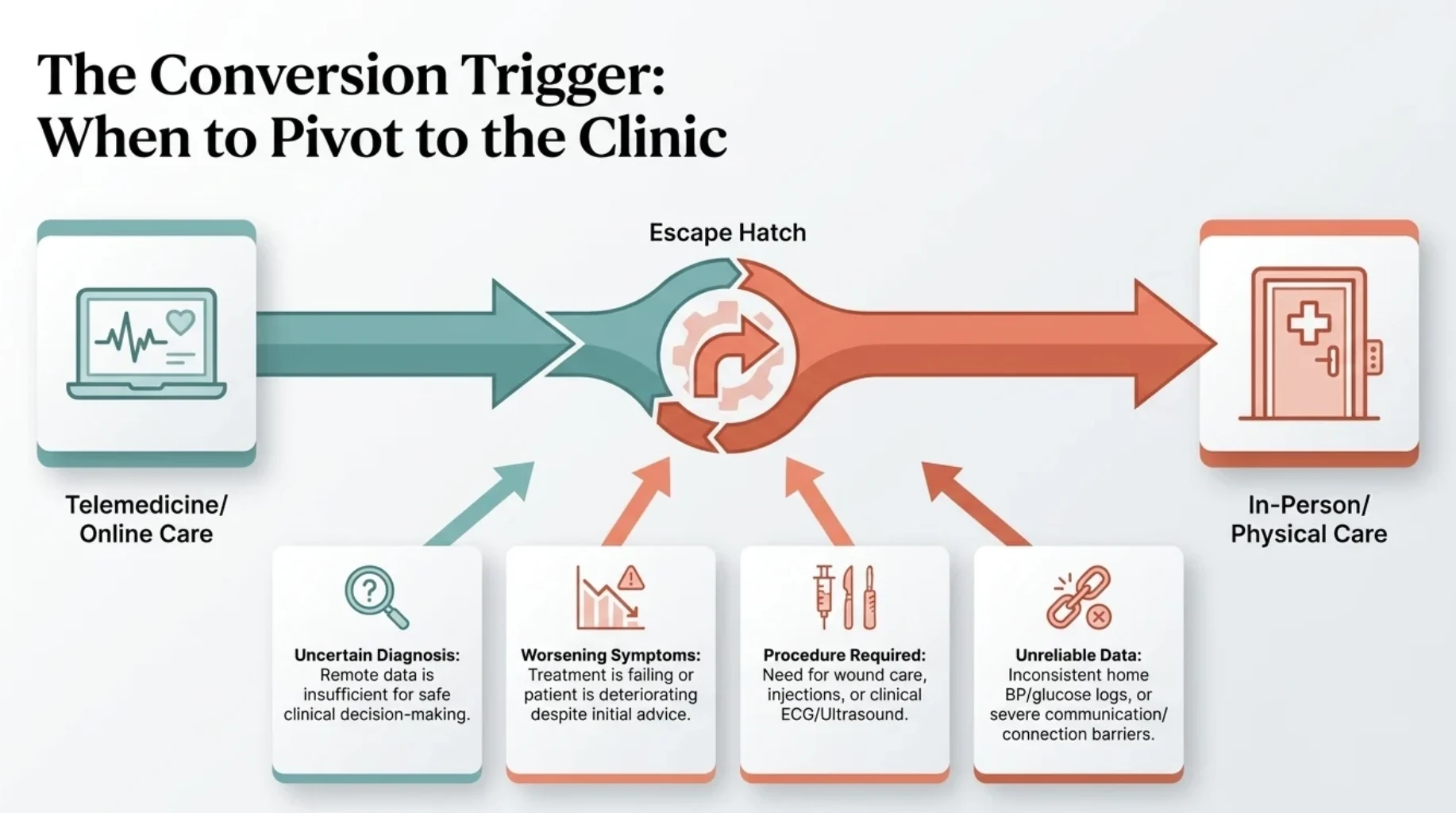
Sometimes a doctor may begin a consultation remotely but determine that the available information is insufficient for safe clinical decision-making.
This is not necessarily a failure of telemedicine.
It is an appropriate recognition of the limits of remote assessment.
When the Diagnosis Remains Uncertain
If the history and available information do not allow a sufficiently reliable assessment, physical examination or further testing may be necessary.
When Symptoms Are Worsening
A patient who develops worsening symptoms despite initial advice may require reassessment.
Urgent symptoms should prompt immediate care rather than waiting for another routine appointment.
When Treatment Is Not Working as Expected
Persistent or worsening symptoms may indicate that the original diagnosis needs reconsideration or that complications have developed.
In-person examination may help clarify the situation.
When a Procedure Is Required
Some clinical needs cannot be fulfilled remotely, including wound examination and treatment, injections, certain diagnostic procedures and other hands-on interventions.
When Home Measurements Are Unreliable
If home blood pressure or other measurements are inconsistent, technically unreliable or do not match the clinical picture, direct assessment may be appropriate.
When the Patient Cannot Communicate Adequately
Significant communication difficulties may prevent the doctor from obtaining an adequate history or confirming that instructions are understood.
In such situations, an in-person consultation may provide a safer assessment.
Important: Patients should not interpret a recommendation for an in-person visit as evidence that an online consultation was unnecessary. Recognising when direct examination is required is part of responsible telemedicine practice.
How to Decide Between Online and In-Person Doctor Consultation
Before booking an appointment, patients can consider three practical questions.
Is This a Medical Emergency?
If symptoms suggest a potentially life-threatening condition, seek emergency care rather than arranging a routine online consultation.
Does the Doctor Need to Examine Me?
New or unexplained symptoms, significant pain, swelling, injury or suspected complications may require direct examination.
Is the Main Purpose to Review Existing Information?
When the appointment mainly involves discussing reports, home readings, medicines or progress with a stable condition, online consultation may be suitable.
However, the doctor should make the final clinical decision about whether remote assessment is adequate.
Telemedicine Guidelines in India: What Patients Should Know
An online doctor consultation is not simply an informal conversation about health. When a registered medical practitioner provides medical advice remotely, the consultation must follow applicable professional, ethical and regulatory requirements.
In India, the Telemedicine Practice Guidelines issued in March 2020 established a framework for consultations conducted through video, audio and text-based communication.
The guidelines address important matters such as patient identification, consent, clinical assessment, documentation, professional responsibilities and medicine prescribing.
However, telemedicine regulations and professional conduct requirements may change. Doctors and patients should refer to the applicable rules and official notifications in force at the time of consultation.
Who Can Provide an Online Doctor Consultation?
Medical consultations should be provided by appropriately qualified and registered medical practitioners acting within their professional competence and applicable legal requirements.
Patients should be able to identify the doctor providing the consultation and verify relevant professional registration details.
A healthcare website or mobile application should not create the impression that automated responses or unqualified personnel are equivalent to a consultation with a registered medical practitioner.
Does a Doctor Need to Identify the Patient?
Yes. Appropriate patient identification is an important part of telemedicine practice.
The doctor may need relevant details such as the patient’s name, age and other information necessary for clinical assessment.
Additional identification may be required in particular circumstances, including age verification where relevant to prescribing restrictions.
Is Patient Consent Required?
Consent is an important component of telemedicine.
Under the 2020 Telemedicine Practice Guidelines, consent is generally considered implied when a patient initiates a teleconsultation.
When a consultation is initiated by a healthcare worker, caregiver or another person, explicit patient consent may be required according to the circumstances.
Consent should be documented as appropriate, and patients should understand the nature and limitations of remote consultation.
Can a Doctor Refuse to Continue an Online Consultation?
A doctor may determine that the available information is insufficient for a safe remote assessment.
In such circumstances, recommending an in-person consultation, diagnostic testing or referral may be clinically appropriate.
For example, a patient describing severe abdominal pain may need direct examination rather than a prescription based only on a telephone conversation.
Similarly, a patient with possible stroke symptoms requires emergency care rather than a routine video appointment.

Are Medical Records Required for Online Consultations?
Appropriate clinical documentation remains important in telemedicine.
Records may include the relevant history, clinical assessment, advice, prescriptions, investigations and follow-up recommendations.
Documentation should be maintained according to applicable professional and legal requirements.
Clinical takeaway: Telemedicine changes how doctors and patients communicate, but it does not remove the need for professional judgement, appropriate consent, documentation or patient safety.
Can Doctors Prescribe Medicines During an Online Consultation?
One common question about online doctor consultation is whether medicines can be prescribed without physically visiting a clinic.
In selected circumstances, registered medical practitioners may prescribe medicines through teleconsultation.
However, prescribing is subject to applicable telemedicine guidelines, medicine restrictions, the consultation method and the doctor’s clinical assessment.
Not every medicine can be prescribed remotely, and a prescription should not be issued merely because a patient requests a particular product.
What Are the Medicine Lists Under India’s Telemedicine Guidelines?
The 2020 Telemedicine Practice Guidelines describe medicine categories commonly referred to as List O, List A, List B and a prohibited list.
These categories are relevant to the circumstances in which medicines may be prescribed remotely.
| Medicine Category | General Purpose Under the 2020 Framework | Important Limitation |
|---|---|---|
| List O | Medicines regarded as suitable for prescribing through permitted teleconsultation modes in appropriate circumstances | Clinical suitability and other applicable restrictions still matter |
| List A | Medicines permitted in specified circumstances, including certain first video consultations and qualifying follow-ups | Eligibility depends on consultation circumstances and the applicable list |
| List B | Medicines that may be considered during qualifying follow-up consultations as add-on or optimisation treatment | Not a general permission to initiate any medicine remotely |
| Prohibited list | Medicines excluded from telemedicine prescribing under the framework | Includes specified restricted categories; the current official requirements must be followed |
This table summarises the structure of the 2020 guidelines and should not be treated as a complete prescribing list or a substitute for the official document.
Can Antibiotics Be Prescribed Online?
Some antibiotic prescribing may be permissible in particular teleconsultation circumstances, depending on the applicable guidelines and the clinical situation.
However, antibiotics should not be prescribed automatically for fever, cough, sore throat or other symptoms without an appropriate assessment.
Many common respiratory infections are viral and do not benefit from antibiotics.
Unnecessary antibiotic use increases the risk of adverse effects and antimicrobial resistance.
Can Diabetes and Blood Pressure Medicines Be Continued Online?
Selected follow-up consultations may be suitable for reviewing ongoing treatment for diabetes or hypertension.
However, whether a particular medicine can be prescribed or continued remotely depends on the relevant regulatory requirements and clinical circumstances.
For example, a patient with stable hypertension may be suitable for a scheduled review of home blood pressure readings.
In contrast, severe symptoms or suspected complications may require direct assessment before treatment decisions are made.
Can Sleeping Pills or Controlled Medicines Be Prescribed Online?
Certain medicines are subject to additional restrictions, including controlled substances and medicines covered by specific regulatory categories.
Patients should not assume that these medicines can be obtained through routine teleconsultation.
Doctors must follow the applicable prescribing restrictions and professional requirements.
Can an Online Prescription Be Sent Electronically?
Electronic prescriptions may be used where permitted under applicable requirements.
The prescription should contain appropriate identifying and prescribing information and be issued through a suitable process.
Patients should obtain medicines from an accountable pharmacy that follows the relevant dispensing requirements.
Important: A video call does not automatically authorise the prescription of every medicine. The doctor must assess clinical suitability and comply with the applicable prescribing rules.
Is an Online Doctor Consultation Safe and Confidential?
Medical consultations involve sensitive personal information.
Patients may discuss symptoms, diagnoses, laboratory reports, medicines and other details that they would not want disclosed unnecessarily.
Privacy and appropriate handling of medical information are therefore important considerations when choosing an online consultation service.
Should You Use Any Video Calling Application?
Patients should use communication channels that are appropriate for the consultation and allow reasonable protection of their information.
Before sharing sensitive documents, it is useful to understand who operates the platform, how information is handled and whether relevant privacy safeguards are in place.
No digital platform should be assumed completely risk-free.
Can Online Consultations Be Recorded?
Patients should not assume that every consultation is routinely recorded.
If a recording is proposed, the purpose, applicable consent requirements, access arrangements and data-handling procedures should be explained.
Recording and storing medical consultations must comply with relevant legal and professional obligations.
Should You Send Medical Reports Through Social Media?
Patients should avoid posting medical reports in public groups or sending them to unidentified accounts.
When reports need to be shared, use an appropriate consultation channel and confirm the intended recipient.
Medical reports may contain names, dates of birth, identification details and sensitive health information.
What About Data Protection Laws in India?
Digital health services may be subject to applicable data-protection, confidentiality and professional obligations.
The Digital Personal Data Protection Act, 2023, and associated rules and commencement notifications should be considered according to their legal status at the relevant time.
Patients should not assume that every provision of a recently enacted law has necessarily commenced or applies identically in every circumstance.
Healthcare providers should follow the requirements currently in force.
How to Prepare for an Online Doctor Consultation
Preparation can make a remote consultation more useful, particularly for patients with chronic medical conditions.
Unlike an in-person appointment, the doctor may not have immediate access to physical examination findings or measurements unless the patient can provide them.
Keeping relevant information ready may help improve the quality of the clinical discussion.
1. Write Down Your Main Symptoms
Before the appointment, identify the main reason for consultation.
Note when symptoms started, how they have changed and whether anything makes them better or worse.
Do not minimise important symptoms simply because you prefer to avoid visiting a clinic.
2. Keep Your Current Medicines Available
Prepare a list of prescription medicines, over-the-counter products and relevant supplements.
Include the strength and dose when possible.
This is particularly useful for patients taking several medicines.
3. Organise Relevant Laboratory Reports
Keep recent reports and, when available, previous results for comparison.
For example, a patient discussing thyroid treatment may benefit from having recent and earlier TSH reports available.
Similarly, someone with diabetes may prepare HbA1c results and home glucose records.
4. Record Home Measurements Correctly
When relevant, prepare recent blood pressure, blood glucose, weight or other measurements.
Use appropriate devices and measurement techniques.
Do not repeatedly measure values in a way that increases anxiety without improving clinical information.
5. Choose a Quiet and Private Location
A private environment may help patients discuss sensitive symptoms comfortably.
Ensure that the doctor can hear you clearly and that you can understand the advice provided.
6. Check Your Internet Connection
For video consultations, ensure that the camera, microphone and connection are functioning.
If technical difficulties prevent an adequate assessment, another consultation method or an in-person appointment may be necessary.
7. Clarify the Follow-Up Plan
Before ending the consultation, understand the recommended treatment, investigations, follow-up timing and symptoms that should prompt urgent medical attention.
Ask for clarification if any instruction is unclear.

Online Consultation Preparation Checklist
| Item | What to Prepare | Why It Helps |
|---|---|---|
| Symptoms | Duration, severity and associated complaints | Supports clinical history-taking |
| Medicines | Names, strengths and current doses | Helps review treatment and possible interactions |
| Medical history | Relevant diagnoses and previous treatment | Provides clinical context |
| Laboratory reports | Recent and relevant previous results | Allows comparison and interpretation |
| Home measurements | Relevant BP, glucose or other records | Supports selected follow-up decisions |
| Communication | Working phone, microphone or internet connection | Reduces interruptions |
| Privacy | Quiet location and appropriate document sharing | Supports confidential communication |
| Questions | Main concerns and treatment-related doubts | Helps make the consultation more focused |
Common Mistakes Patients Make During Online Doctor Consultations
Expecting a Complete Diagnosis Without Examination
Some conditions cannot be diagnosed reliably without physical examination or additional investigations.
Patients should be prepared for an in-person referral when clinically necessary.
Requesting a Prescription Without Providing Medical History
Safe prescribing requires adequate clinical information.
A doctor may need to ask about allergies, current medicines, symptoms and relevant medical conditions before recommending treatment.
Ignoring Emergency Symptoms
Chest pain, stroke symptoms, severe breathing difficulty and other emergencies should not be managed through routine teleconsultation.
Sharing Incomplete Medicine Information
Patients sometimes mention the medicine name but omit its strength or formulation.
This can create confusion, particularly when medicines are available in multiple strengths or combinations.
Assuming Every Abnormal Report Requires Medicine
Laboratory results should be interpreted in clinical context.
Not every mildly abnormal result requires immediate medication, and some findings require confirmation or further evaluation.
Changing Medicines Without Understanding the Plan
Patients should clarify whether a medicine is being started, stopped, continued or adjusted.
Unclear instructions can contribute to medication errors.
Using Unverified Online Consultation Services
Patients should verify the identity and professional credentials of the consulting doctor and use an accountable healthcare service.
Online Doctor Consultation or In-Person Visit: Final Decision Checklist
| Question | If Yes | Practical Next Step |
|---|---|---|
| Do you have symptoms suggesting a medical emergency? | Possible immediate risk | Seek emergency care |
| Do you have new symptoms requiring physical examination? | Remote assessment may be insufficient | Arrange an in-person assessment |
| Is the appointment mainly for reviewing reports? | Remote review may be practical | Consider online consultation |
| Is your chronic condition stable? | Selected follow-ups may be suitable | Consider online review if clinically appropriate |
| Do you need a procedure or hands-on treatment? | Physical attendance is necessary | Book an appropriate facility visit |
| Are symptoms worsening despite treatment? | Reassessment may be required | Seek timely medical review; urgent care if severe |
| Can you provide adequate history and records remotely? | May support teleconsultation | Consider online consultation |
| Has the doctor requested an examination? | Direct assessment is needed | Attend the recommended in-person visit |
This checklist is intended for general patient education and is not a validated medical triage tool.
Clinical urgency and the appropriate consultation method should be determined according to the complete circumstances.
Frequently Asked Questions About Online Doctor Consultation
1. Is Online Doctor Consultation Legal in India?
Telemedicine is recognised within India’s applicable professional and regulatory framework. Consultations must follow relevant requirements, including those concerning professional registration, clinical assessment, consent and prescribing.
2. Is Online Doctor Consultation as Effective as an In-Person Visit?
For selected conditions and follow-up needs, online consultation can provide useful care. However, it cannot replace physical examination or procedures when these are necessary.
3. Can a Doctor Diagnose a Disease Through Video Consultation?
Sometimes. Diagnosis depends on the condition and whether adequate information is available remotely. Some problems require direct examination or further investigations.
4. Can I Get a Prescription Through Online Consultation?
Yes, in circumstances permitted by the applicable telemedicine framework and when the doctor considers prescribing clinically appropriate.
5. Can I Consult a Doctor Online for Diabetes?
Selected diabetes follow-ups, glucose-record reviews and treatment discussions may be suitable. Acute complications and required physical examinations need appropriate in-person care.
6. Is Online Consultation Suitable for High Blood Pressure?
Stable patients may benefit from remote review of home blood pressure readings. Severe symptoms or suspected complications require urgent assessment.
7. Can Thyroid Medicines Be Reviewed Online?
Routine thyroid report review and selected treatment follow-ups may be appropriate remotely. New neck swelling or concerning symptoms may require direct examination.
8. Can I Discuss Fatty Liver Reports Online?
Yes. Laboratory reports, ultrasound findings and metabolic risk factors can often be discussed remotely, although additional examination or investigations may be necessary.
9. Is Online Consultation Useful for Weight Management?
It may be useful for selected lifestyle and treatment follow-ups. A comprehensive assessment or particular treatment decisions may require an in-person visit.
10. Can PCOS Be Managed Through Online Consultation?
Selected follow-ups and discussions about investigations, symptoms and lifestyle management may be suitable. Some symptoms and procedures require in-person assessment.
11. Can I Consult Online for Fever?
Selected mild presentations may be assessed remotely, but persistent fever, significant dehydration, breathing difficulty or other concerning symptoms may require direct or urgent assessment.
12. Should I Use Online Consultation for Chest Pain?
New or unexplained chest pain may represent a medical emergency. Seek urgent medical assessment rather than relying on a routine online appointment.
13. Can Children Be Consulted Online?
Selected paediatric concerns may be suitable, but young children and infants require particular caution. Fever in an infant younger than three months warrants urgent medical evaluation.
14. Can Pregnant Women Consult Doctors Online?
Selected report reviews and follow-up discussions may be suitable. Pregnancy-related warning symptoms require appropriate obstetric assessment.
15. Is an Online Prescription Valid at a Pharmacy?
An appropriately issued prescription may be used according to applicable prescribing and dispensing requirements. Validity depends on the medicine and relevant legal conditions.
16. Can a Doctor Refuse to Prescribe Medicine Online?
Yes. A doctor may decide that prescribing is inappropriate without additional information, examination or investigations.
17. Are Online Medical Consultations Confidential?
Healthcare providers must follow applicable confidentiality and data-protection requirements. Patients should use accountable services and appropriate communication channels.
18. What Reports Should I Keep Ready?
Keep reports relevant to the consultation, such as blood glucose, HbA1c, thyroid function, lipid profile, liver or kidney function tests, along with previous results when useful.
19. Can an Online Doctor Ask Me to Visit a Clinic?
Yes. Recommending an in-person assessment when remote information is insufficient is an appropriate part of safe telemedicine practice.
20. When Should I Choose Online Consultation Instead of Visiting a Clinic?
Online consultation may be suitable when the main purpose is reviewing reports, discussing stable chronic conditions or obtaining selected follow-up advice, provided the doctor can assess the problem adequately and no urgent examination is required.
Online and In-Person Doctor Consultation in Dwarka, New Delhi
Patients seeking consultation for general medical concerns or ongoing management of lifestyle-related conditions may choose between online and in-person appointments according to their clinical needs.
Dr. Pankaj Kumar, General & Lifestyle Physician in Dwarka, New Delhi, provides medical consultations for conditions including diabetes, hypertension, thyroid disorders, obesity, fatty liver disease and other general medical concerns.
Online appointments may be suitable for selected follow-ups and report reviews, while physical examinations and investigations may require an in-person visit.
Patients experiencing medical emergencies should seek immediate emergency care rather than booking a routine consultation.
Clinic Information
Dr. Pankaj Kumar Medical & Lifestyle Clinic
Doctor: Dr. Pankaj Kumar
Designation: General & Lifestyle Physician
Qualifications: MBBS, DNB (Family Medicine)
Location: Sector 6, Dwarka, New Delhi – 110075
Consultation: In-person and online appointments
Book an Online or Clinic Consultation
About the Author
Dr. Pankaj Kumar
MBBS, DNB (Family Medicine)
Diploma in Nutrition & Health Education
General & Lifestyle Physician
Founder, Diet Plus Minus
Dwarka, New Delhi
Dr. Pankaj Kumar is a General & Lifestyle Physician with a clinical interest in diabetes, obesity, hypertension, thyroid disorders, fatty liver disease, PCOS and preventive medicine. His approach emphasises evidence-based clinical care, practical patient education and sustainable lifestyle modification.
Medical Disclaimer: This article is intended for general health education and does not replace individual medical assessment. Telemedicine suitability depends on symptoms, medical history, available information and applicable professional requirements. Do not delay emergency care while waiting for an online appointment. Medicine prescribing and consultation practices must comply with the regulations in force at the time of care.
If you want a personalized metabolic assessment and lifestyle strategy, you can book a consultation here:
Book an Appointment