

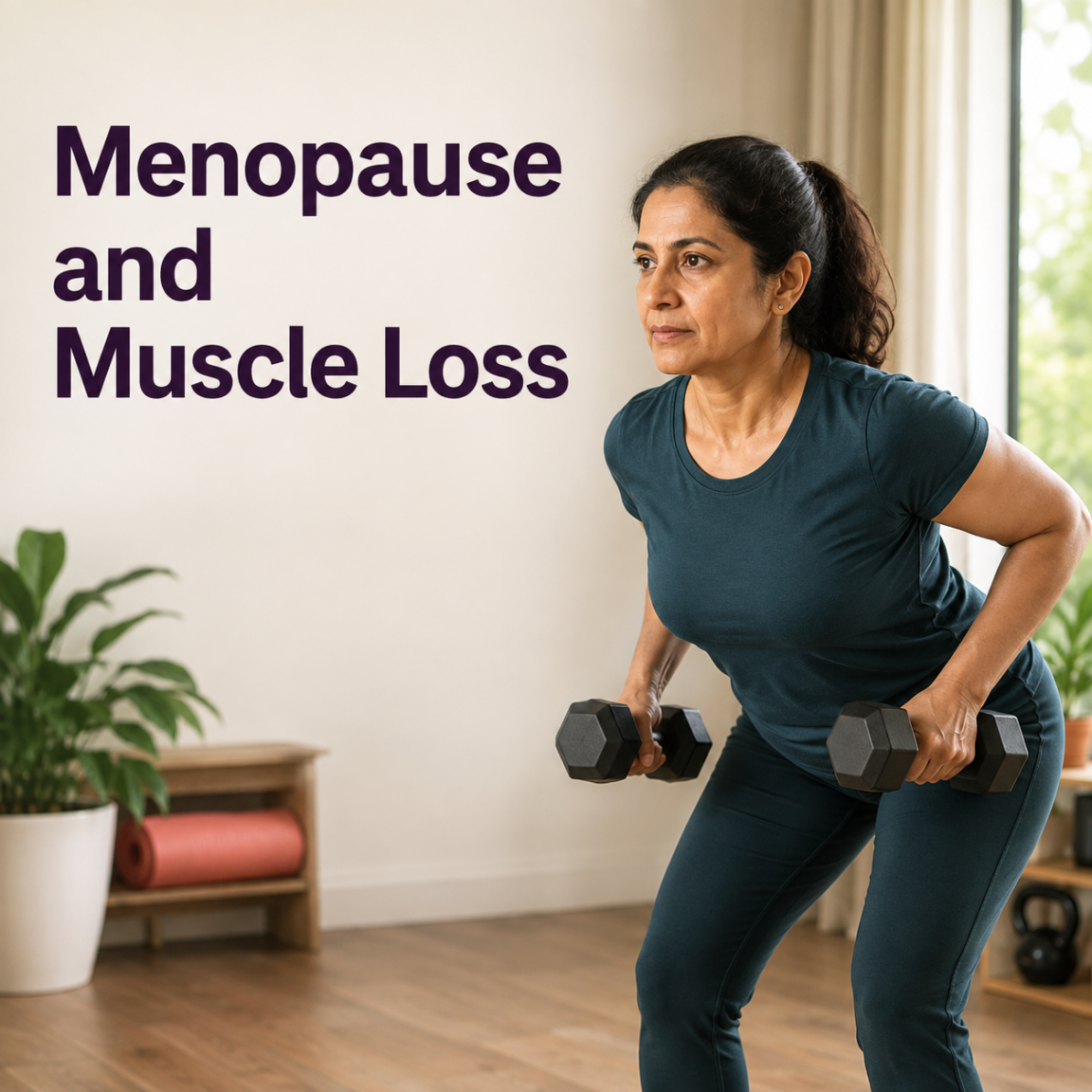
Menopause and Muscle Loss: Why Strength Can Decline Even Without Weight Change
A woman in her late forties or early fifties may step on the weighing scale and see almost the same number she saw several years ago.
Yet something feels different.
Climbing stairs requires more effort. Grocery bags feel heavier. Getting up from the floor is not as easy. The weights she once lifted comfortably at the gym now feel challenging. Her waist may also be getting larger even though her overall body weight has barely changed.
This is an important but often overlooked aspect of menopause and muscle loss.
The weighing scale measures total body weight. It cannot tell you how much of that weight comes from muscle, body fat, bone, organs, or water.
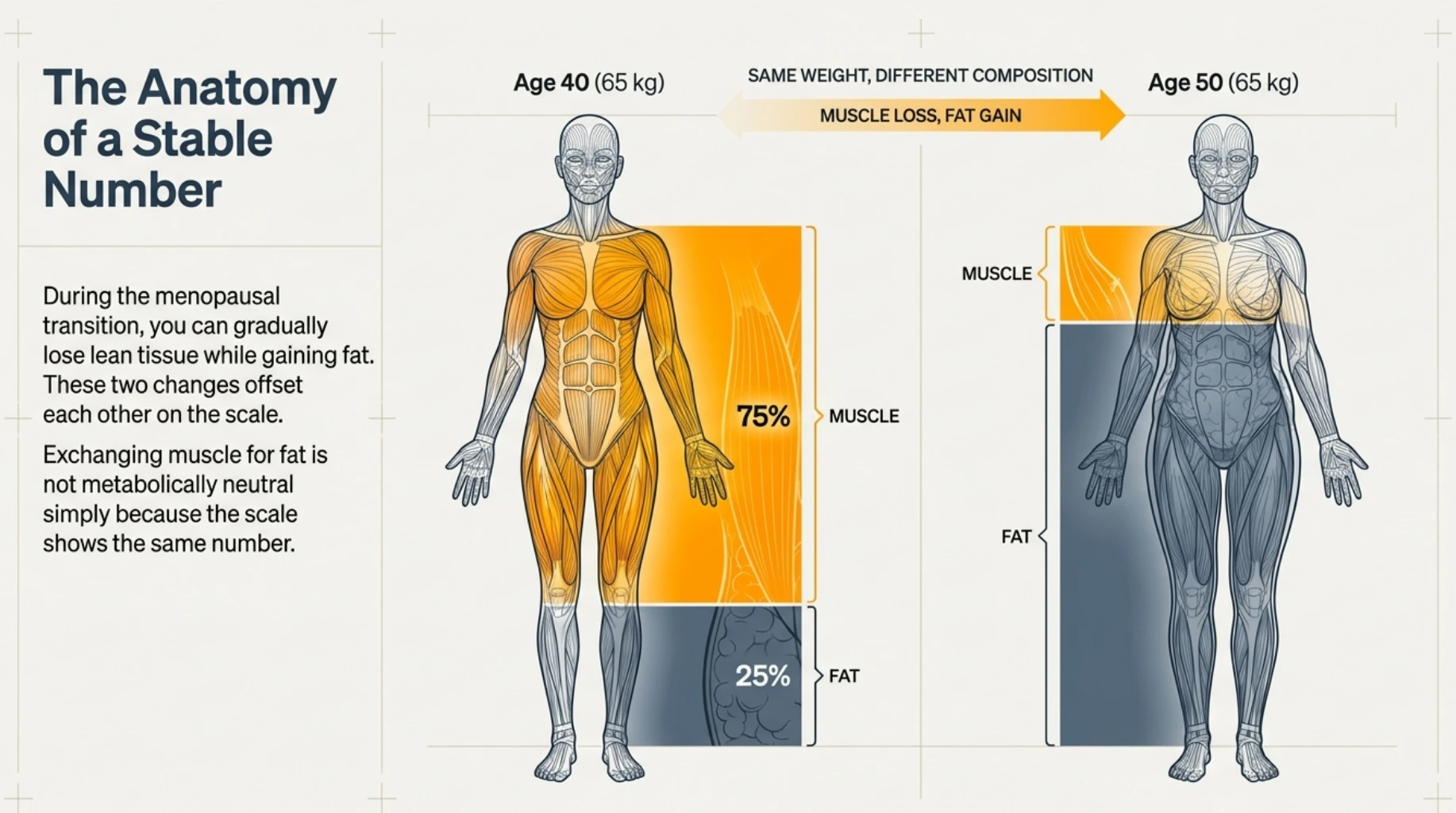
During the menopausal transition, body composition can change even when body weight changes very little. A woman may gradually lose lean tissue while gaining fat, particularly around the abdomen. The two changes can partially offset each other on the scale.
This means that stable weight does not necessarily mean stable body composition.
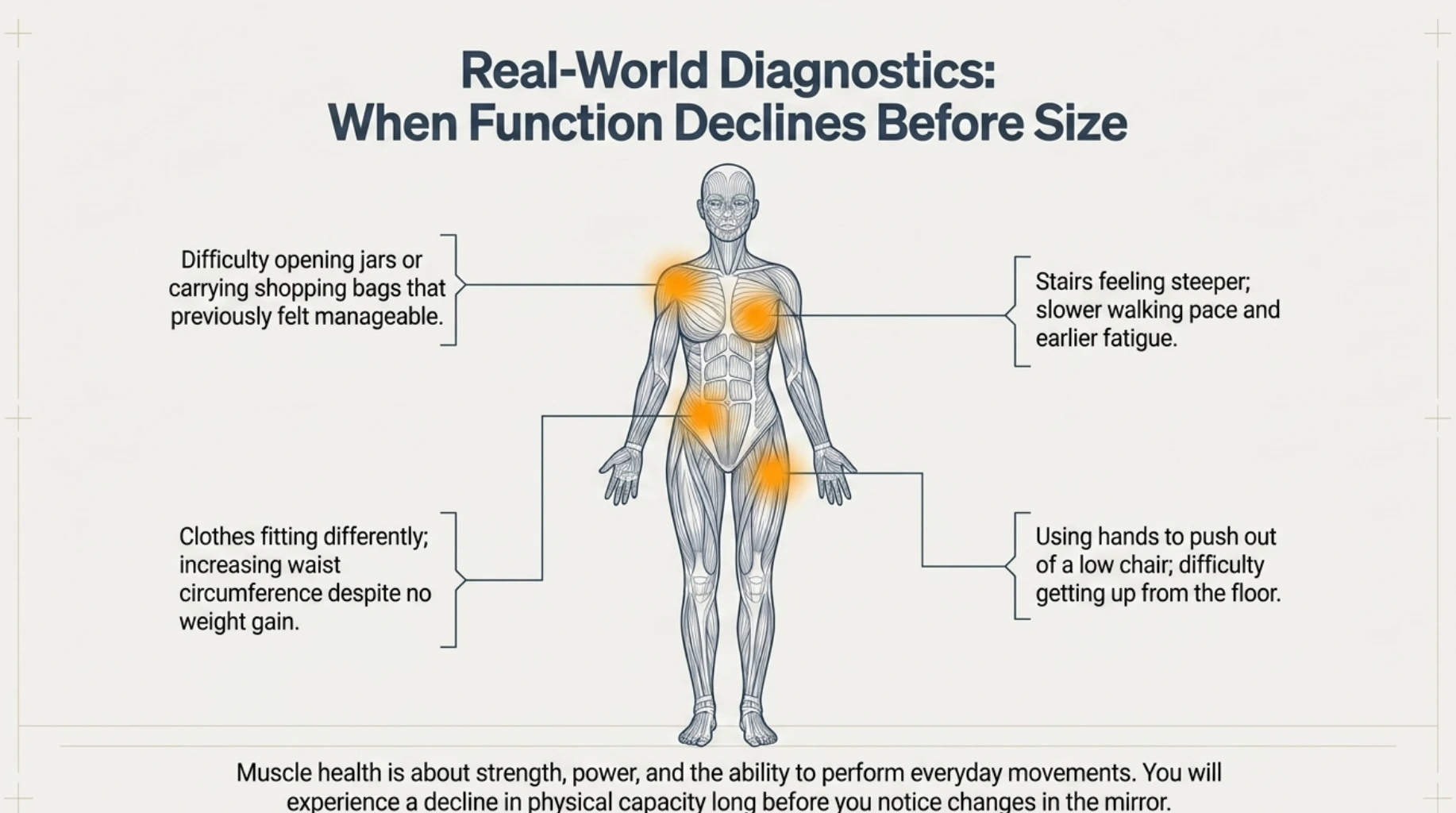
Muscle health also involves much more than muscle size. Strength, power, balance, and the ability to perform everyday movements are equally important. A woman may therefore experience declining physical function before she notices any obvious change in the appearance of her muscles.

Menopause is not the only reason this happens. Ageing, reduced physical activity, inadequate resistance training, poor sleep, insufficient protein intake, repeated restrictive dieting, chronic health conditions, and hormonal changes can all interact during midlife.
Understanding menopause and muscle loss therefore requires looking beyond hormones—and beyond the weighing scale.
Menopause and Muscle Loss Can Happen Without Losing Weight
Body weight is simply the combined weight of everything in your body.
Imagine that a woman weighs 65 kg.
Several years later, she still weighs approximately 65 kg.
It is tempting to conclude that nothing important has changed.
But suppose she has gradually lost some lean tissue while gaining approximately the same amount of body fat.
| Earlier | Several Years Later |
|---|---|
| More lean tissue | Less lean tissue |
| Less body fat | More body fat |
| Smaller waist | Larger waist |
| Better strength | Reduced strength |
| Body weight: 65 kg | Body weight: 65 kg |
The scale shows no meaningful difference.
Her body composition and physical function tell a very different story.
Why the Weighing Scale Can Miss Menopause and Muscle Loss
The weighing scale cannot distinguish between muscle and fat.
This limitation becomes particularly important during midlife because changes in fat distribution and lean tissue can occur simultaneously.
A woman may therefore notice:
- An increasing waist circumference.
- Clothes fitting differently around the abdomen.
- Less muscle definition.
- Reduced strength during exercise.
- Difficulty carrying loads that previously felt manageable.
- More effort when climbing stairs.
- Reduced ability to get up from a low chair or the floor.
- Slower walking or earlier fatigue during physical activity.
These functional changes may be more informative than a stable number on the scale.
Why Menopause and Muscle Loss Are Connected
The menopausal transition usually occurs during a period of life when several biological and lifestyle changes are happening simultaneously.
Ovarian hormone production changes, but women are also getting older. Work and family responsibilities may reduce exercise time. Sleep may become disrupted. Some women repeatedly diet to control increasing abdominal fat. Others become less physically active because of joint pain, fatigue, or changing routines.
It is therefore inaccurate to blame menopause and muscle loss entirely on one hormone.
Muscle health during midlife reflects the interaction between hormonal changes, ageing, nutrition, physical activity, resistance exercise, metabolic health, and recovery.
1. Hormonal Changes Can Influence Skeletal Muscle
Oestrogen receptors are present in skeletal muscle, and changing ovarian hormone levels may influence muscle metabolism, repair, and function.
The menopausal transition has also been associated with changes in body composition, including a tendency towards increased fat mass and reduced lean mass.
However, the relationship is complex.
Menopause does not suddenly switch off muscle growth, and lower oestrogen should not be treated as the sole explanation whenever a woman becomes weaker.
Physical activity and resistance training remain powerful determinants of muscle function before, during, and after menopause.
2. Age-Related Muscle Loss Is Happening at the Same Time
Menopause does not occur independently of ageing.
By the time most women reach the menopausal transition, age-related changes in skeletal muscle have already begun.
Without sufficient physical stimulus, muscle strength and muscle quality can gradually decline with age.
This is one reason the forties and fifties are an important period for establishing or maintaining resistance training.
Waiting until significant weakness develops later in life makes the problem harder to address.
Menopause and Muscle Loss Are Not Inevitable at the Same Rate for Everyone
Two women of the same age can have dramatically different levels of muscle strength.
One may perform regular resistance training, eat adequate protein, remain physically active, and maintain good metabolic health.
Another may spend most of the day sitting, repeatedly follow very-low-calorie diets, consume little protein, and perform no strength training.
Both women may have gone through menopause, but their physical function can be very different.
This is an important message because it means that declining strength is not simply something women have to accept.
3. Physical Activity Often Declines During Midlife
Midlife can be one of the busiest periods of adulthood.
Professional responsibilities, caring for children or ageing parents, household work, commuting, and disrupted sleep can gradually reduce time devoted to structured exercise.
At the same time, modern life removes much of the physical work that previous generations performed routinely.
Long periods may be spent:
- Sitting at a computer.
- Driving.
- Using lifts instead of stairs.
- Ordering groceries and meals online.
- Watching television or using a phone in the evening.
Over time, the muscles receive less stimulus to remain strong.
This can contribute to menopause and muscle loss even when total body weight remains stable.
4. Muscle Power May Decline Before the Change Looks Obvious
Muscle health is not just about how much muscle you have.
Muscle power refers broadly to the ability to generate force quickly.
This matters during everyday situations such as:
- Climbing stairs.
- Getting up quickly from a chair.
- Recovering from a stumble.
- Carrying luggage.
- Crossing a road efficiently.
- Performing recreational activities.
A woman may therefore notice declining performance even though she does not look visibly different.
The suitcase feels heavier.
Stairs feel steeper.
The floor feels farther away when she tries to stand up.
These observations can provide useful clues that physical capacity is changing.
Strength Matters as Much as Muscle Size
It is easy to assume that muscle health can be assessed simply by looking at someone’s arms or legs.
That is misleading.
Muscle quantity, muscle quality, strength, and physical performance are related but not identical.
A person may have a reasonable amount of muscle tissue but still have poor strength or function.
This is why modern approaches to sarcopenia place considerable emphasis on muscle strength and physical performance rather than relying exclusively on muscle mass.
For women concerned about menopause and muscle loss, practical indicators of declining function can therefore be extremely useful.
Simple Signs That Strength May Be Declining
Pay attention if activities that were previously easy are gradually becoming more difficult.
Examples include:
- Using your hands to push yourself out of a chair.
- Difficulty getting up from the floor.
- Finding stairs increasingly tiring.
- Reducing the weights you can lift during exercise.
- Difficulty opening jars or carrying shopping bags.
- Walking more slowly than before.
- Avoiding activities because they feel physically demanding.
None of these observations alone diagnoses muscle loss or sarcopenia.
But a persistent decline in several aspects of physical function deserves attention.
5. Protein Intake May Be Lower Than Required
Muscle is constantly undergoing breakdown and rebuilding.
Dietary protein provides amino acids needed for muscle protein synthesis and tissue maintenance.
Some women consume less protein than they realise, particularly when meals are predominantly cereal-based.
A typical day might include:
- Tea and toast or poha at breakfast.
- Roti, vegetables, and a small amount of dal at lunch.
- Tea and biscuits in the evening.
- Rice or roti with vegetables and some dal at dinner.
This can be a nutritious diet in several respects, but depending on portions, it may provide less protein than is desirable for preserving muscle.
Improving protein intake does not require abandoning Indian food.
Useful protein sources include:
- Milk and curd.
- Paneer.
- Tofu.
- Soy and soy chunks.
- Dal and pulses.
- Rajma and chana.
- Eggs.
- Fish and chicken for women who consume them.
The appropriate amount depends on body size, activity level, total calorie intake, health conditions, and individual goals.
Protein Alone Will Not Solve Menopause and Muscle Loss
Eating more protein without providing the muscles with an appropriate training stimulus is not an optimal strategy for preserving strength.
Protein supplies building materials.
Resistance training provides the signal telling muscle that greater strength and capacity are required.
These two factors work together.
This is why simply adding protein powder to an otherwise sedentary lifestyle is unlikely to provide the same benefit as combining adequate protein with progressive resistance training.
6. Poor Sleep Can Make Muscle Preservation More Difficult
Sleep disturbance is common during the menopausal transition.
Hot flushes, night sweats, mood symptoms, stress, sleep apnoea, and other factors can interfere with sleep quality.
Poor sleep does not directly explain every case of muscle loss, but it can influence several behaviours that matter for muscle health.
When someone is chronically tired, she may:
- Exercise less.
- Train at lower intensity.
- Recover poorly between workouts.
- Spend more time sedentary.
- Experience greater appetite and food cravings.
Sleep should therefore be considered part of the broader strategy for maintaining health during menopause rather than being treated as an unrelated issue.
7. Repeated Dieting Can Contribute to Lean-Mass Loss
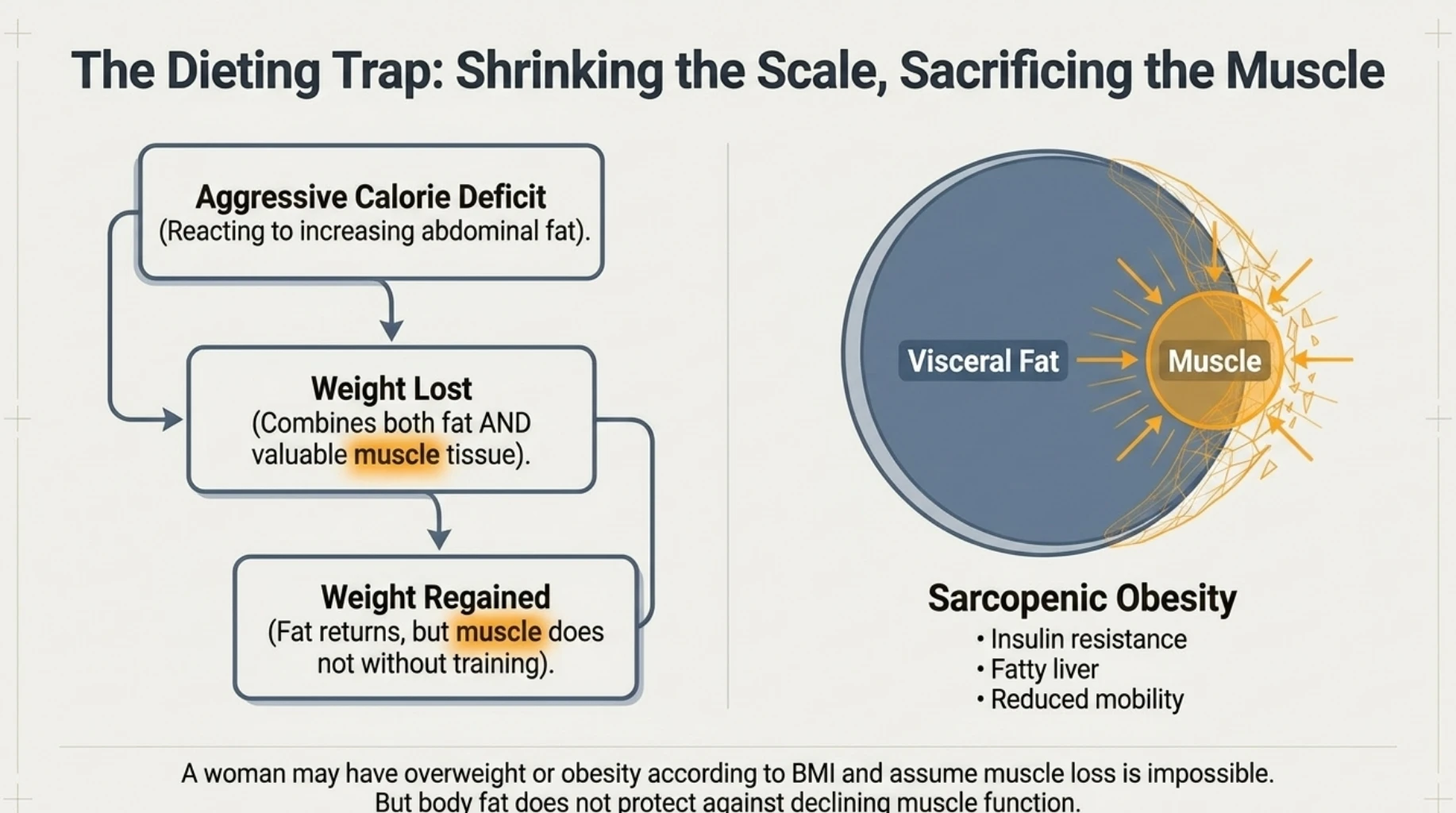
Many women respond to increasing abdominal fat by repeatedly cutting calories more aggressively.
Weight decreases, the diet becomes difficult to sustain, weight returns, and another restrictive diet begins.
The problem is that weight lost during dieting is not always entirely body fat.
Some lean tissue can also be lost, particularly when calorie restriction is severe, protein intake is inadequate, and resistance training is absent.
Repeated cycles of weight loss and regain may therefore produce a disappointing result: the scale eventually returns to approximately the same number while body composition is not necessarily the same.
This is another reason menopause and muscle loss should not be managed by focusing exclusively on weight.
The Goal Should Be Fat Loss With Muscle Preservation
For a woman with excess body fat, weight reduction may improve metabolic and cardiovascular health.
But the objective should not simply be to make the scale fall as quickly as possible.
A better strategy is to reduce excess body fat while protecting muscle through:
- A reasonable calorie deficit.
- Adequate protein.
- Progressive resistance training.
- Regular physical activity.
- Adequate sleep and recovery.
This may sometimes produce slower scale changes than an aggressive crash diet, but the quality of the weight loss matters.
8. Increasing Body Fat Can Hide Menopause and Muscle Loss
This brings us back to the central message of the article.
If a woman loses muscle while simultaneously gaining fat, body weight may remain surprisingly stable.
She may say:
“My weight hasn’t changed, so why do I feel weaker and why has my waist increased?”
The answer may lie in body composition.
Muscle and fat are different tissues with different metabolic and functional roles. Exchanging some muscle for fat is not metabolically neutral simply because the weighing scale shows the same number.
Muscle supports strength, movement, glucose disposal, physical independence, and the ability to remain active.
Excess visceral and abdominal fat, on the other hand, is associated with greater cardiometabolic risk.
This combination—less functional muscle alongside greater adiposity—is particularly important during midlife and later adulthood.
Menopause, Muscle Loss and Sarcopenic Obesity
Muscle loss is often imagined as a problem affecting only thin, frail older adults.
That is incorrect.
A person can have excess body fat while simultaneously having low muscle mass, poor muscle quality, reduced strength, or impaired physical function.
When obesity and sarcopenia coexist, the condition is generally referred to as sarcopenic obesity.
This can be difficult to recognise by appearance alone.
A woman may have overweight or obesity according to BMI and therefore assume that muscle loss is impossible because her body weight is high.
But body fat does not protect against declining muscle function.
This is why the combination of menopause and muscle loss deserves attention even in women whose weight has not decreased.
Why Sarcopenic Obesity Matters for Metabolic Health
Skeletal muscle is an important site of glucose disposal and plays a major role in physical activity and energy metabolism.
Reduced muscle function combined with increasing visceral adiposity can create an unfavourable metabolic environment.
This may coexist with:
- Insulin resistance.
- Prediabetes or type 2 diabetes.
- Fatty liver.
- High triglycerides.
- Hypertension.
- Reduced mobility.
- Lower cardiorespiratory fitness.
These conditions have multiple causes, and muscle loss should not be presented as the sole explanation.
But maintaining muscle and physical function is an important part of long-term metabolic health.
Menopause and Muscle Loss Are About Function, Not Just Appearance
The purpose of preserving muscle after menopause is not simply to look more toned.
Muscle allows you to remain physically capable.
It helps you climb stairs, carry luggage, lift objects, get up from the floor, maintain balance, exercise, travel, and remain independent as you grow older.
This is why strength should be considered a health outcome, not merely a fitness goal.
The most useful question may therefore not be:
“Has my weight changed?”
but:
“Am I maintaining the strength and physical capacity I want to have ten or twenty years from now?”
How to Reduce Menopause and Muscle Loss
The encouraging part of this discussion is that declining strength is not something women simply have to accept after menopause.
Hormonal changes cannot be stopped through exercise, but many of the factors influencing muscle strength and physical function are modifiable.
The most effective strategy is not a single supplement, special menopause diet, or specific exercise. It is a combination of progressive resistance training, adequate nutrition, regular movement, recovery, and appropriate management of medical problems.
Resistance Training Should Be the Foundation
If preserving muscle and strength is the goal, resistance training deserves a central role.
Walking, yoga, stretching, and aerobic exercise all have benefits, but they do not provide exactly the same muscular stimulus as progressively loading the muscles.
Resistance training can involve:
- Free weights.
- Resistance machines.
- Resistance bands.
- Body-weight exercises.
- Appropriately progressed home-based exercises.
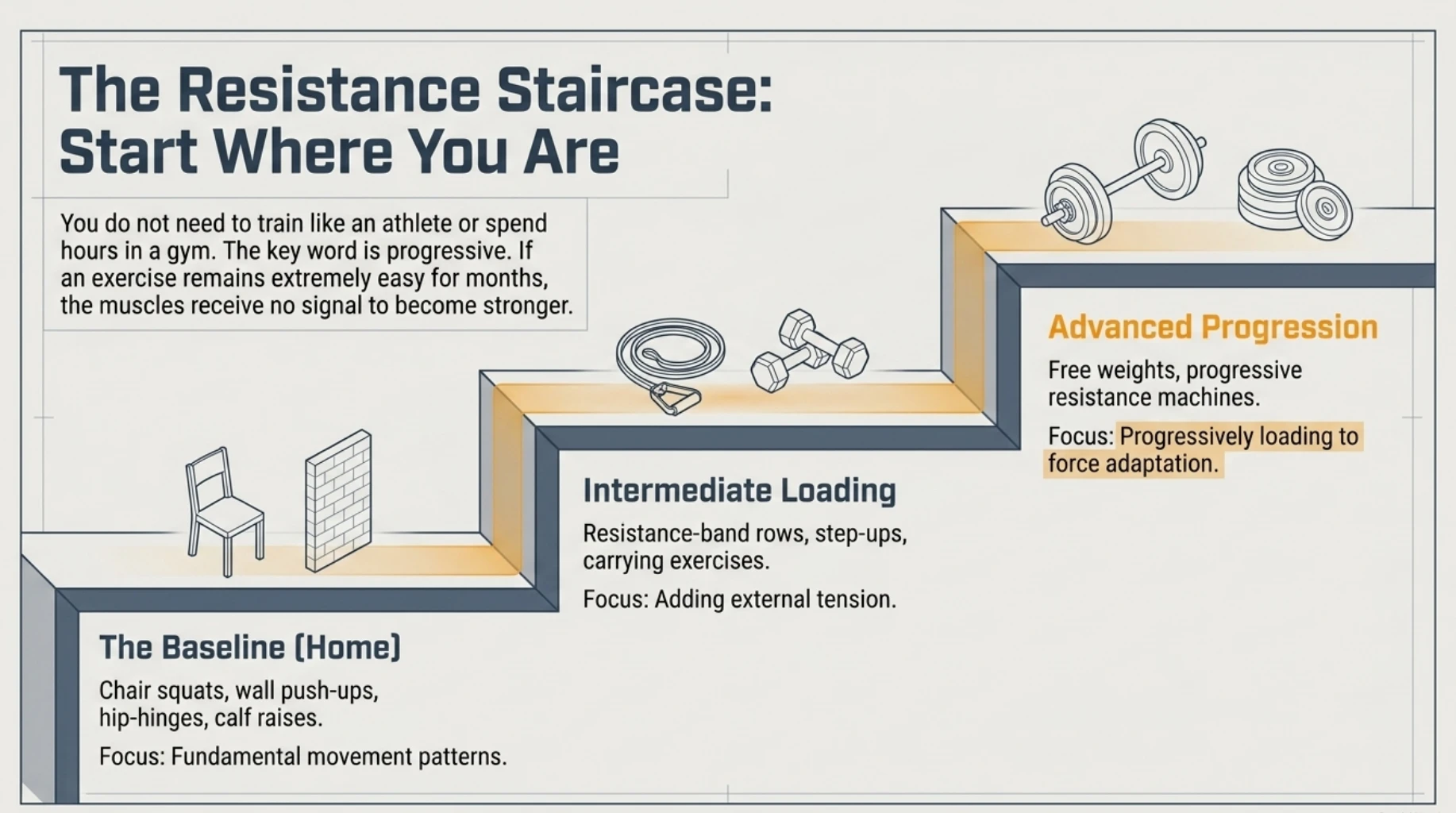
The key word is progressive.
If an exercise remains extremely easy for months, the muscles receive little reason to become stronger. As capacity improves, resistance, repetitions, exercise difficulty, or another training variable needs to progress appropriately.
Research in menopausal women supports exercise, particularly resistance-based programmes, for improving strength and aspects of lean body mass and physical function.
This makes resistance training one of the most practical tools available for addressing menopause and muscle loss.
Women Do Not Need to Train Like Bodybuilders
The phrase “strength training” sometimes creates the impression that women need to lift extremely heavy weights or spend hours in a gym.
That is unnecessary.
A well-designed programme begins at the individual’s current ability and progresses gradually.
A beginner may initially work on movements such as:
- Chair squats.
- Wall or incline push-ups.
- Resistance-band rows.
- Step-ups.
- Hip-hinge movements.
- Calf raises.
- Appropriate carrying exercises.
As these become easier, the challenge can increase.
The objective is not to train like an athlete. It is to maintain enough strength for the demands of everyday life and healthy ageing.
Do Not Rely on Walking Alone to Prevent Menopause and Muscle Loss
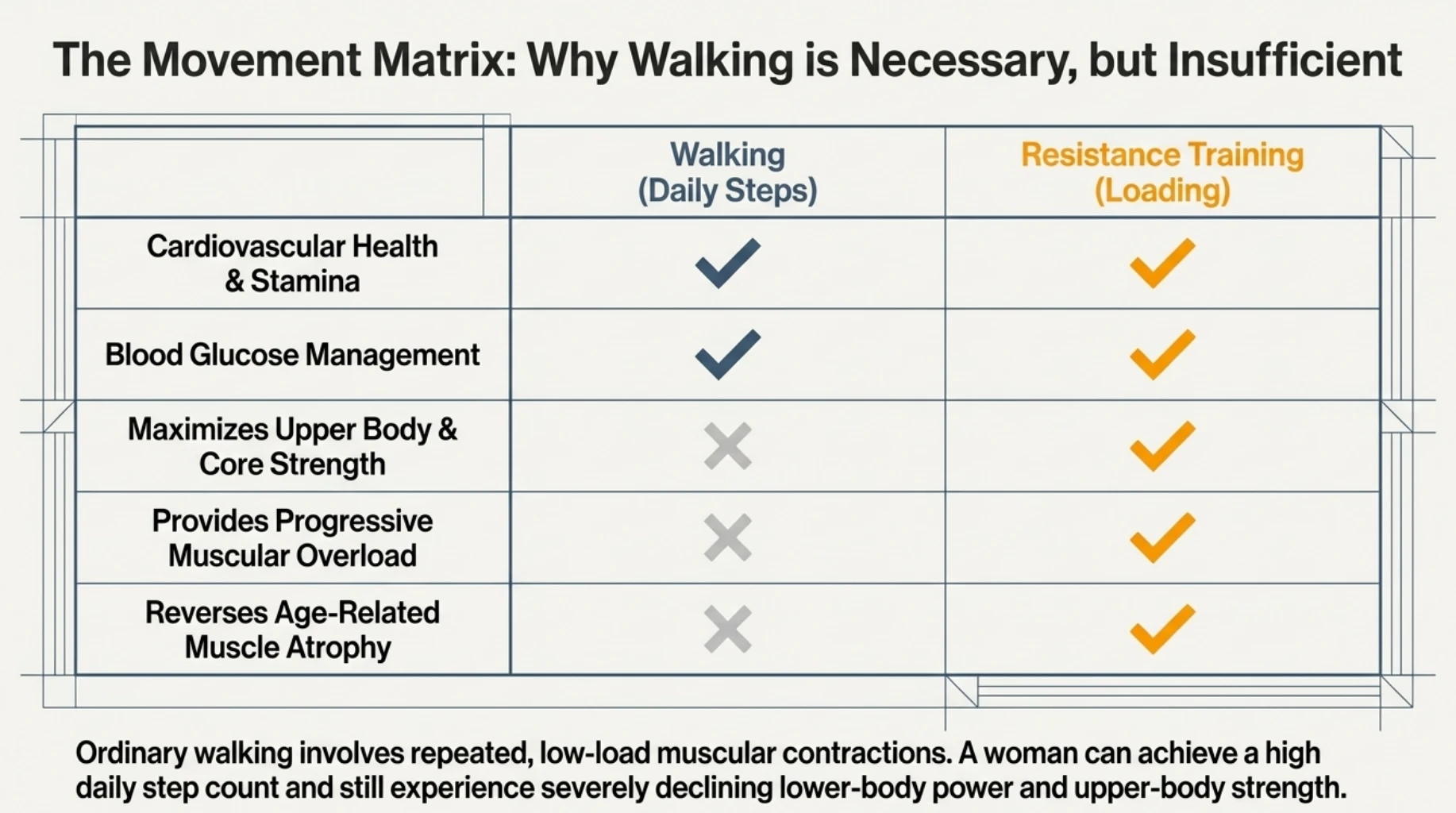
Walking is one of the most useful forms of physical activity. It supports cardiovascular health, mobility, blood glucose management, energy expenditure, and mental well-being.
But walking and resistance training perform different jobs.
Ordinary walking involves repeated relatively low-load muscular contractions. It does not consistently provide the progressive overload required to maximise strength in all major muscle groups.
This means a woman can achieve a high daily step count and still have relatively poor upper-body strength or declining lower-body strength.
The better approach is not to stop walking.
It is to combine walking with resistance exercise.
Cardiovascular Fitness Still Matters
Muscle preservation should not lead to the opposite mistake of ignoring aerobic exercise.
Cardiorespiratory fitness is important for cardiovascular health, stamina, metabolic health, and the ability to remain active.
A comprehensive exercise programme during and after menopause should therefore ideally include:
- Resistance training.
- Aerobic activity.
- Regular everyday movement.
- Balance training where appropriate.
- Mobility work according to individual needs.
The exact combination depends on health, fitness, joint problems, previous exercise experience, and personal preferences.
Protein Intake and Menopause and Muscle Loss
Resistance training creates the stimulus for muscle adaptation. Dietary protein provides amino acids required for muscle repair and remodelling.
Both matter.
Protein requirements are not identical for every woman. Body size, age, activity level, calorie intake, medical conditions, and training goals all influence the appropriate amount.
For generally healthy middle-aged and older adults concerned about muscle preservation, protein intakes above the basic adult minimum may sometimes be appropriate, particularly when combined with resistance training.
However, there is no need to convert this into an obsession with extremely high protein intake.
The first practical step is to determine whether meals contain meaningful protein at all.
Protein at Breakfast Is Often Overlooked
Breakfast is one of the weakest protein meals in many Indian diets.
A breakfast consisting mainly of tea and biscuits, plain toast, poha, or a small paratha may provide relatively little protein.
Protein can be increased using options such as:
- Eggs.
- Curd or strained yoghurt.
- Paneer.
- Tofu.
- Besan chilla.
- Moong chilla.
- Milk.
- Soy foods.
The appropriate choice depends on dietary preference and individual health requirements.
Improving breakfast can make it easier to distribute protein across the day rather than trying to obtain most of it at dinner.
Vegetarian Women Need to Look at Protein Density
A vegetarian diet can provide adequate protein, but simply eating dal every day does not automatically guarantee that requirements are met.
For example, a meal containing several rotis or a large quantity of rice with only a small serving of dal may remain relatively low in protein compared with its total calorie content.
Vegetarian protein sources can include:
- Dal and pulses.
- Rajma and chana.
- Soybeans and soy chunks.
- Tofu.
- Paneer.
- Milk and curd.
- Besan.
- Nuts and seeds as supplementary sources.
Using a variety of these foods can improve both protein quantity and overall dietary quality.
Menopause and Muscle Loss During Weight Reduction
Weight loss deserves particular care during and after menopause.
Many women want to reduce abdominal fat, and this can be an appropriate goal when excess adiposity is affecting metabolic health.
But a calorie deficit does not exclusively remove body fat.
Some lean tissue can also be lost.
The risk becomes more concerning when weight loss is rapid, protein intake is inadequate, physical activity is low, and resistance training is absent.
This means the quality of weight loss matters.
Do Not Chase the Lowest Possible Number on the Scale
A woman may lose several kilograms and feel successful because the scale has fallen rapidly.
But if a substantial proportion of that weight includes lean tissue, the outcome may be less favourable than the number suggests.
A better weight-management programme should consider:
- Waist circumference.
- Strength.
- Physical function.
- Body composition where useful.
- Protein intake.
- Resistance training.
- Metabolic markers.
For women concerned about menopause and muscle loss, maintaining strength during weight reduction is an important indicator that deserves attention alongside kilograms lost.
Muscle Preservation Is Particularly Important With Large Weight Loss
This issue has become increasingly relevant as modern obesity treatments can produce substantial reductions in appetite and body weight.
When food intake decreases markedly, total protein intake can also fall unless meals are planned carefully.
Regardless of whether weight loss occurs through lifestyle intervention, medication, or bariatric treatment, preserving lean tissue deserves attention.
That means prioritising adequate nutrition and resistance exercise rather than focusing only on how quickly body weight decreases.
Can You Regain Muscle After Menopause?
Yes.
Menopause does not remove the ability of skeletal muscle to adapt to training.
Women can improve strength and physical function after menopause through appropriately designed resistance exercise.
This is an important message because women sometimes assume that once menopause has occurred, muscle decline is irreversible.
It is not.
The response varies between individuals, and building muscle may become more challenging with ageing, but meaningful improvement remains possible.
You Can Become Stronger Even If You Start Late
Someone who has never lifted weights at 50 or 60 has not “missed the window.”
Beginning resistance training later is still preferable to remaining inactive.
In fact, people starting from a low baseline may notice meaningful improvements in everyday function as strength develops.
Tasks such as climbing stairs, carrying bags, getting up from a chair, or lifting household objects may begin to feel easier.
This functional improvement is one of the most valuable outcomes of addressing menopause and muscle loss.
How Can You Tell Whether You Are Losing Muscle?
No single home measurement can perfectly determine muscle loss.
Body weight alone is particularly limited.
A more useful assessment combines several pieces of information.
1. Track Your Strength
If you perform resistance exercise, pay attention to your training performance.
If the same exercises become progressively more difficult despite similar effort and no obvious explanation, declining strength deserves consideration.
For someone who does not exercise formally, everyday tasks can provide clues.
2. Notice Chair-Rise Ability
Getting up from a chair requires lower-body strength and coordination.
Increasing difficulty rising without using the arms may indicate declining physical function, although arthritis, pain, balance problems, and neurological conditions can also contribute.
3. Pay Attention to Grip Strength
Grip strength is commonly used in research and clinical assessment as a simple marker of muscle strength.
Formal measurement requires a handgrip dynamometer and appropriate reference values.
Difficulty opening containers or carrying objects can provide everyday clues, but these are not substitutes for formal testing.
4. Observe Your Walking and Stair-Climbing Ability
A gradual decline in usual walking speed, increasing difficulty climbing stairs, or reduced endurance may indicate changes in physical capacity.
These changes can have many causes, so persistent deterioration should not automatically be blamed on menopause.
5. Measure Waist Circumference
Waist circumference does not measure muscle, but an increasing waist despite relatively stable body weight may indicate changing fat distribution.
When this occurs alongside declining strength, it raises the possibility that body composition is changing even though total weight is not.
6. Use Body-Composition Testing When It Adds Useful Information
Methods such as DXA can provide estimates of body composition and are used in research and selected clinical settings.
Bioelectrical impedance devices are more accessible but can be influenced by hydration, food intake, exercise, device quality, and testing conditions.
Body-composition numbers should therefore be interpreted alongside strength and function rather than treated as perfect measurements.
Menopause and Muscle Loss: When Should You Seek Medical Advice?
Not every decline in strength should be attributed to menopause.
Medical evaluation is appropriate when weakness is significant, progressive, unexplained, or accompanied by other symptoms.
Examples include:
- Sudden or one-sided weakness.
- Repeated falls.
- New balance problems.
- Numbness or altered sensation.
- Unexplained severe fatigue.
- Persistent muscle pain.
- Marked unintentional weight loss.
- Difficulty swallowing.
- Significant breathlessness.
- A substantial decline in everyday physical function.
Depending on the clinical picture, causes other than menopause may need consideration, including neurological disease, thyroid disorders, anaemia, nutritional deficiencies, inflammatory conditions, medication effects, or other medical problems.
Does Menopause Hormone Therapy Prevent Muscle Loss?
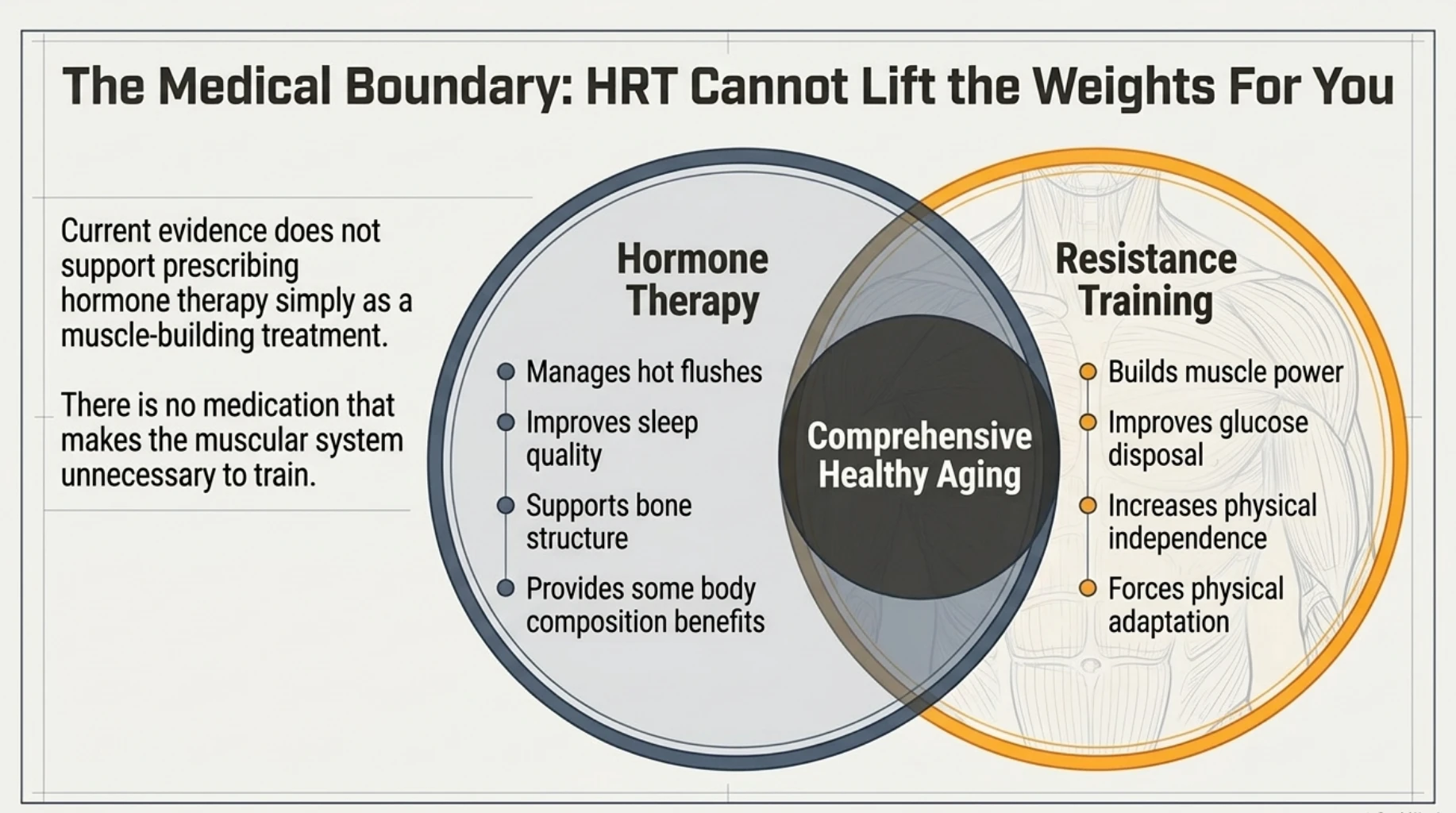
Menopausal hormone therapy can be appropriate for selected women, particularly for management of troublesome menopausal symptoms after consideration of individual benefits, risks, and contraindications.
However, it should not be presented as a replacement for resistance training or adequate nutrition.
Research examining hormone therapy and muscle outcomes has produced mixed results, and current evidence does not support prescribing menopausal hormone therapy simply as a muscle-building treatment.
Some evidence suggests favourable effects on aspects of body composition, but improvements in lean mass or strength are not sufficiently consistent to make hormone therapy the primary strategy for preventing menopause and muscle loss.
The decision to use hormone therapy should therefore be based on appropriate menopausal indications and an individual clinical assessment.
Exercise Still Matters Whether or Not You Use Hormone Therapy
A woman taking menopausal hormone therapy still needs physical activity, resistance exercise, adequate nutrition, sleep, and management of cardiometabolic risk factors.
Likewise, a woman who does not use hormone therapy can still make substantial improvements in strength through exercise.
There is no medication that makes the muscular system unnecessary to train.
Bone and Muscle Health Should Be Considered Together
Menopause is widely associated with concern about bone loss, but muscle deserves attention at the same time.
Muscle strength contributes to balance, mobility, and the ability to prevent or recover from a fall.
Resistance and weight-bearing exercise can therefore support a broader musculoskeletal strategy rather than treating bone and muscle as unrelated tissues.
A woman may have excellent bone-health awareness yet perform no resistance training and consume inadequate protein.
Healthy ageing requires protecting both the structure of the skeleton and the muscles that move it.
Menopause and Muscle Loss: A Practical Weekly Strategy
Women do not need a complicated anti-ageing programme to protect muscle after menopause.
The fundamentals are relatively simple. The challenge is applying them consistently.
A practical week should include a combination of resistance exercise, aerobic activity, everyday movement, adequate nutrition, and recovery.
| Area | Practical Goal |
|---|---|
| Resistance training | Train the major muscle groups at least twice weekly, with appropriate progression |
| Aerobic activity | Include regular brisk walking, cycling, swimming, or another suitable activity |
| Daily movement | Reduce long periods of uninterrupted sitting and remain active throughout the day |
| Protein | Include meaningful protein sources across meals rather than relying mainly on dinner |
| Balance | Include balance work where appropriate, particularly when stability is declining |
| Sleep | Address persistent sleep disruption rather than accepting chronic exhaustion as normal |
| Weight management | Prioritise fat loss with muscle preservation when weight reduction is needed |
This is not a rigid prescription. Exercise needs to be modified according to fitness, medical conditions, joint health, previous training experience, and individual goals.
Common Myths About Menopause and Muscle Loss
Myth 1: My Weight Has Not Changed, So My Muscle Mass Must Be Stable
This is one of the most important misconceptions to correct.
Body weight cannot tell you how much muscle or fat you have.
A woman can lose lean tissue while gaining a similar amount of fat and therefore see almost no change on the weighing scale.
Changes in waist circumference, strength, exercise performance, and physical function may reveal what the scale misses.
Myth 2: Menopause Automatically Causes Severe Muscle Loss
Menopause is associated with physiological changes that can influence body composition and muscle function, but it does not determine the outcome by itself.
Ageing, physical inactivity, resistance training, dietary intake, sleep, chronic disease, and overall metabolic health also matter.
The relationship between menopause and muscle loss is therefore more complex than simply blaming falling oestrogen levels.
Myth 3: Walking Every Day Is Enough to Preserve Muscle
Walking is excellent for cardiovascular health, mobility, blood sugar management, and overall physical activity.
However, it does not provide the same progressive muscular loading as resistance training.
Women should continue walking, but muscle-strengthening exercise deserves its own place in a healthy-ageing programme.
Myth 4: Women Should Avoid Challenging Weights After Menopause
There is no general rule that menopausal women should exercise only with very light weights.
The appropriate resistance depends on training experience, medical conditions, technique, bone health, joint problems, and individual ability.
For resistance training to remain effective, the muscles need an appropriate challenge.
Beginners should start at a manageable level and progress gradually rather than avoiding progression altogether.
Myth 5: Protein Powder Will Prevent Menopause and Muscle Loss
Protein supplements can be convenient when dietary intake is inadequate, but they are not compulsory and they do not replace exercise.
Many women can obtain adequate protein through normal foods.
More importantly, consuming large amounts of protein without providing an appropriate resistance-training stimulus is not an optimal muscle-preservation strategy.
Food and training need to work together.
Myth 6: It Is Too Late to Build Strength After Menopause
This is incorrect.
Postmenopausal women remain capable of responding to resistance training.
Strength, balance, and physical function can improve even when structured training begins later in life.
The earlier healthy habits begin, the better, but there is no reason to abandon strength training simply because menopause has already occurred.
Myth 7: Hormone Therapy Can Replace Exercise
Menopausal hormone therapy may be appropriate for selected women for recognised clinical indications, but it is not a substitute for resistance training.
Muscles still need to be used and appropriately challenged.
Exercise also provides cardiovascular, metabolic, functional, and psychological benefits that cannot be replaced by hormone therapy.
Myth 8: Lower Body Weight Always Means Better Health After Menopause
Lower weight can be beneficial when excess body fat is contributing to metabolic risk, but the method and composition of weight loss matter.
Losing substantial muscle along with fat is not the desired outcome.
A woman who weighs slightly more but has better strength, more muscle, a healthier waist circumference, and better metabolic health may be in a very different position from someone who weighs less but has poor muscle function.
The scale should therefore be interpreted as one measurement rather than the final definition of health.
Menopause and Muscle Loss: What Matters More Than Your Weight?
For many women, body weight has been the main health number they have watched for decades.
After menopause, it becomes increasingly useful to broaden that perspective.
Consider asking:
- Is my waist circumference increasing?
- Am I maintaining my strength?
- Can I climb stairs comfortably?
- Can I get up from the floor?
- Can I carry normal household loads?
- Am I walking confidently and at my usual pace?
- Am I becoming fitter or progressively more sedentary?
- Am I eating enough protein?
- Am I performing resistance exercise?
These questions tell you something the weighing scale cannot: how well your body is functioning.
A Simple Self-Check for Women Over 40
You do not need to perform complicated tests every week.
Instead, pay attention to trends in everyday physical ability.
Think back one or two years.
Are stairs noticeably more difficult?
Do shopping bags feel heavier?
Have you stopped doing activities because they now feel physically demanding?
Are you using your arms more often to push yourself out of a chair?
Have you reduced the weights you can lift during exercise?
Has your waist increased despite relatively little change in body weight?
None of these observations diagnoses sarcopenia. But several changes occurring together can be a useful reason to examine your activity, nutrition, strength, and overall health more carefully.
What If You Have Never Done Strength Training?
Many women reach their forties, fifties, or sixties having never performed formal resistance training.
This does not mean they should suddenly begin with a demanding gym programme.
It means the starting point should match current ability.
Initially, learning fundamental movement patterns and correct technique may be more important than lifting heavy loads.
A beginner programme might include appropriate versions of:
- Squatting or sitting-to-standing.
- Pushing.
- Pulling.
- Hip-hinge movements.
- Stepping.
- Carrying.
- Calf strengthening.
As these movements become easier, resistance can gradually increase.
Women with osteoporosis, significant arthritis, cardiovascular disease, recurrent falls, previous fractures, or other important medical conditions may require individualised exercise advice.
Menopause and Muscle Loss: Why Starting Before Menopause Is Even Better
Women do not need to wait for menopause before thinking about muscle.
Building strength during the thirties and forties creates a stronger foundation for later life.
This is particularly relevant during perimenopause, when hormonal changes may already be occurring but substantial opportunities remain to improve fitness and body composition.
A woman who enters later life with good muscle strength and established exercise habits begins from a different position than someone who starts after years of inactivity.
That does not mean starting later is ineffective.
It simply means that muscle health is worth protecting before a problem becomes obvious.
Frequently Asked Questions About Menopause and Muscle Loss
Does Menopause Cause Muscle Loss?
Menopause is associated with hormonal and body-composition changes that may contribute to changes in muscle mass and function. However, ageing, physical inactivity, inadequate resistance training, nutrition, sleep, and chronic health conditions also contribute.
Menopause should therefore not be treated as the sole cause of declining strength.
Can You Lose Muscle Without Losing Weight?
Yes. Muscle or other lean tissue can decrease while body fat increases. These changes may partially offset each other, leaving total body weight relatively unchanged.
This is one reason menopause and muscle loss cannot be assessed using the weighing scale alone.
Why Is My Waist Increasing Even Though My Weight Is the Same?
Body-fat distribution can change during the menopausal transition, with a greater tendency towards central or abdominal fat accumulation. Changes in activity, diet, ageing, sleep, and metabolic health may also contribute.
An increasing waist with stable weight can therefore reflect changing body composition.
What Are the Early Signs of Muscle Loss After Menopause?
Possible clues include declining strength, greater difficulty climbing stairs, reduced exercise performance, slower walking, difficulty rising from a chair, and everyday objects feeling heavier than before.
These symptoms can have other causes and should not automatically be attributed to menopause.
Can I Build Muscle After Menopause?
Yes. Postmenopausal women can improve muscle strength and physical function through appropriately designed resistance training. Adequate nutrition, particularly sufficient protein and total energy intake, supports the training response.
How Much Protein Should a Woman Eat After Menopause?
There is no single protein target suitable for every woman. Requirements depend on age, body size, physical activity, calorie intake, health conditions, and training goals.
Women with kidney disease or other conditions affecting dietary protein requirements should receive individualised advice rather than following generic high-protein recommendations.
Is Walking Enough After Menopause?
Walking is valuable and should usually be encouraged, but it does not fully replace muscle-strengthening exercise.
Combining aerobic activity with resistance training provides a broader approach to cardiovascular fitness, metabolic health, muscle strength, and healthy ageing.
Does Menopause Hormone Therapy Build Muscle?
Menopausal hormone therapy should not be considered a muscle-building treatment. Its use should be based on appropriate menopausal indications after individual assessment of benefits and risks.
Resistance training and adequate nutrition remain the main lifestyle strategies for protecting muscle function.
Can Weight-Loss Diets Make Muscle Loss Worse?
Weight reduction can include loss of both fat and lean tissue. The risk of undesirable lean-tissue loss may be greater with aggressive calorie restriction, inadequate protein, inactivity, and lack of resistance training.
When weight loss is appropriate, the goal should therefore be fat reduction while preserving as much muscle and physical function as possible.
Final Thought
Menopause may change the environment in which your muscles have to function, but it does not make strength irrelevant or improvement impossible. The goal is not to fight ageing by chasing a younger body weight. It is to build and preserve a body that remains strong, metabolically healthy, and physically capable for the decades ahead.
If you want a personalized metabolic assessment and lifestyle strategy, you can book a consultation here:
Book an Appointment