
“Doctor, my weight is almost the same, but I feel weaker than before.”
This is becoming an increasingly common concern among modern adults.
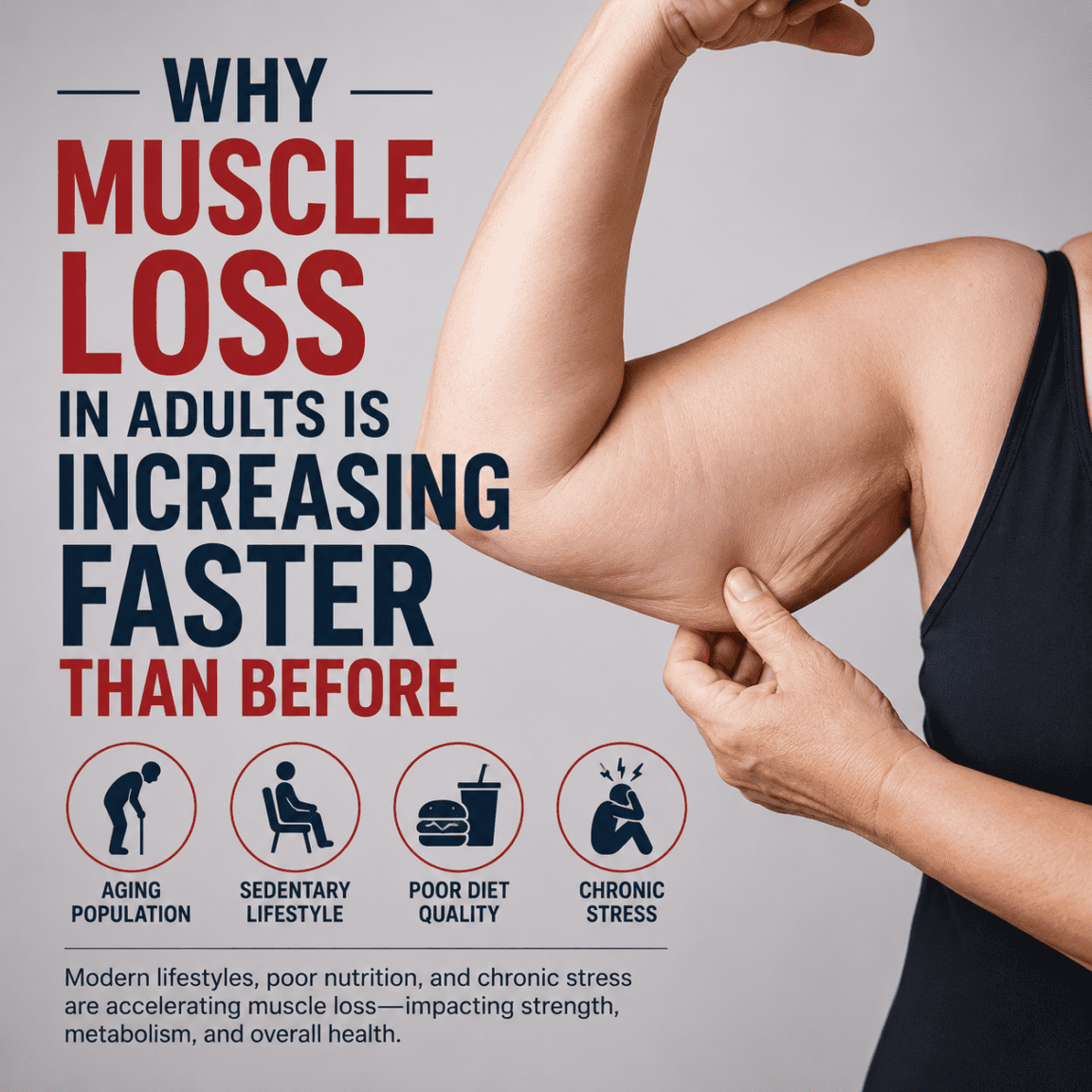
Many people assume muscle loss is a problem that only affects elderly individuals. However, a growing number of adults in their 30s, 40s, and even 20s are experiencing gradual reductions in strength, stamina, and muscle mass.
What makes this particularly concerning is that muscle loss often develops quietly. A person may notice slightly lower energy levels, difficulty carrying weights, slower recovery after activity, or increasing body fat without realizing that muscle tissue is gradually declining.

Understanding muscle loss in adults is important because muscle is far more than a cosmetic feature. It plays a critical role in metabolism, blood sugar regulation, physical function, injury prevention, and healthy aging.
Why Muscle Health Matters More Than Most People Realize
When people think about health, they often focus on body weight. However, body weight alone does not reveal how much muscle or fat a person has.
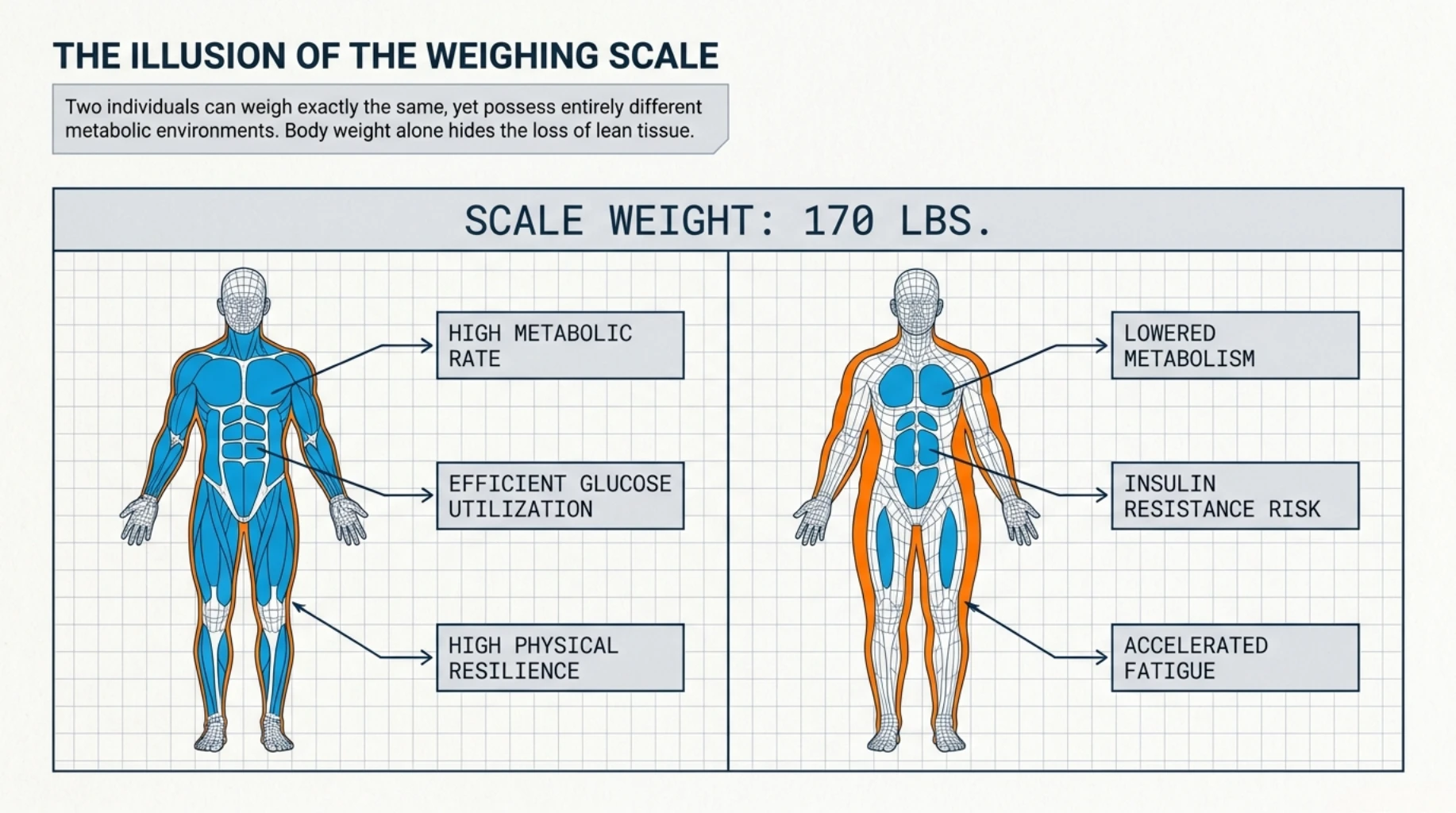
Two individuals may weigh exactly the same, yet one may have significantly more muscle and better metabolic health.
Muscle tissue acts as a metabolic engine. It helps the body utilize glucose efficiently, supports physical performance, improves balance, and contributes to overall energy levels.
When muscle mass declines, metabolism often becomes less efficient, making weight management and long-term health more challenging.
Why Modern Lifestyle Is Creating the Perfect Environment for Muscle Loss
The human body is designed to maintain muscle when it is used regularly. Historically, daily life naturally involved walking, lifting, climbing, carrying, and other forms of physical activity. Muscle tissue was constantly being challenged and therefore preserved.
Modern life is very different. Today, many adults spend most of the day sitting at desks, driving, using screens, or performing tasks that require minimal physical effort.
As muscle activity decreases, the body gradually receives fewer signals to maintain muscle tissue. This is one of the major reasons muscle loss in adults is becoming increasingly common.
The Hidden Effect of Prolonged Sitting
Most people associate muscle loss with inactivity lasting months or years. What they often overlook is the cumulative effect of sitting for long periods every day. Muscles require regular stimulation to remain strong and metabolically active.
When sitting becomes the dominant activity, large muscle groups in the legs, hips, and core receive significantly less activation.
Over time, muscular efficiency begins declining. Strength gradually decreases, physical endurance reduces, and body composition starts shifting toward higher fat accumulation.
This process is often so slow that people do not notice it until substantial changes have already occurred.
Why Protein Intake Is Often Inadequate
Another important contributor to muscle loss is insufficient protein intake. Many adults consume enough calories but not enough high-quality protein to adequately support muscle maintenance.
This is particularly common in individuals who frequently rely on processed foods, refined carbohydrates, convenience meals, or highly irregular eating patterns.
Without adequate protein, the body struggles to repair and maintain muscle tissue efficiently. Over time, this contributes to gradual loss of lean body mass.
How Poor Sleep Accelerates Muscle Loss
Sleep is one of the most overlooked factors affecting muscle health. During sleep, the body performs critical recovery and repair functions that help maintain muscle tissue.
When sleep becomes chronically inadequate or poor in quality, recovery mechanisms become less efficient.
This affects hormonal balance, physical performance, appetite regulation, and muscle repair processes.
As a result, adults with poor sleep habits often experience slower recovery and greater difficulty maintaining muscle mass over time.
The Role of Stress Hormones
Chronic stress affects much more than mental well-being. When stress hormones remain elevated for prolonged periods, the body shifts into a survival-oriented state.
In this environment, muscle building becomes less of a priority while energy conservation becomes more important.
Over time, chronic stress may contribute to reduced recovery, poorer exercise performance, and gradual decline in muscle health.
This is another hidden reason why muscle loss in adults is becoming more common in modern lifestyles.
Why Adults Often Gain Fat While Losing Muscle at the Same Time
One of the most misunderstood changes in adult health is that body weight alone does not tell the full story.
Many individuals assume that if their weight has remained stable, their muscle mass must also be stable. Unfortunately, this is not always true.
A person can gradually lose muscle while simultaneously gaining body fat. This process often happens slowly over years. The weighing scale may show little change, yet body composition can shift significantly.
As muscle decreases and fat increases, metabolism becomes less efficient, physical performance declines, and long-term health risks begin increasing.
This silent body composition change is becoming increasingly common in modern adults.
The Connection Between Insulin Resistance and Muscle Health
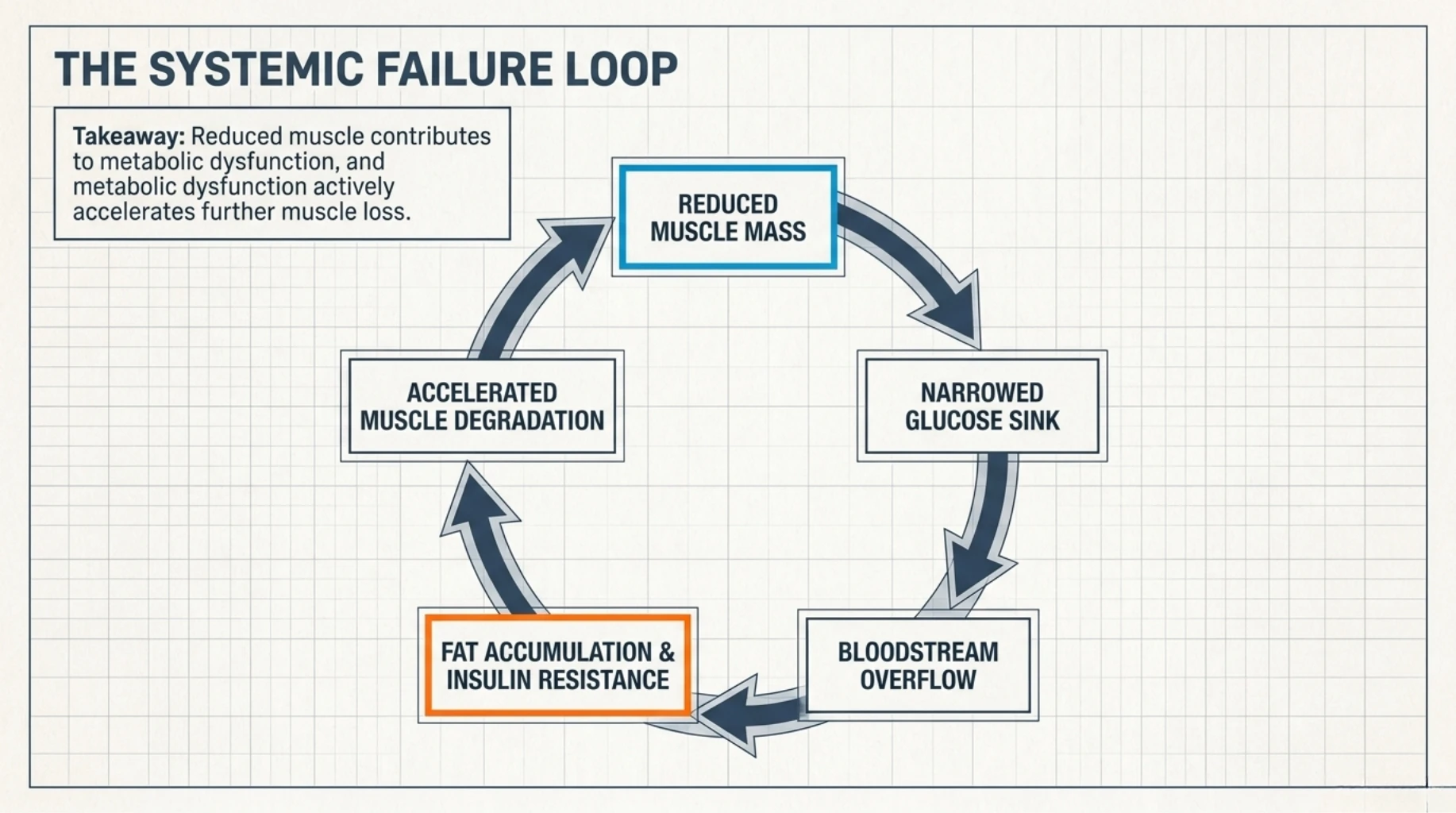
Muscle tissue is one of the body’s most important sites for glucose utilization. Healthy muscles help remove glucose from the bloodstream and use it efficiently for energy.
When muscle mass declines, glucose handling often becomes less efficient. At the same time, insulin resistance may begin worsening.
This creates a cycle where reduced muscle contributes to metabolic dysfunction, and metabolic dysfunction further accelerates muscle loss.
Over time, this cycle increases the likelihood of: abdominal obesity, prediabetes, type 2 diabetes, fatty liver, and declining physical function.
Is It Aging or Lifestyle?
Many people blame muscle loss entirely on aging. While age-related muscle decline is real, lifestyle plays a major role in determining how quickly it occurs.
Two people of the same age may have dramatically different muscle mass depending on their activity levels, nutrition, sleep quality, and overall lifestyle habits.
This is why some individuals remain physically strong and active well into later life while others experience significant weakness much earlier.
Modern lifestyle factors are often accelerating muscle loss beyond what would be expected from aging alone.
Why Cardio Alone Is Often Not Enough
Many adults trying to improve fitness focus exclusively on walking, jogging, cycling, or other cardiovascular activities.
These activities provide important health benefits and should absolutely be encouraged.
However, maintaining muscle requires more than simply burning calories.
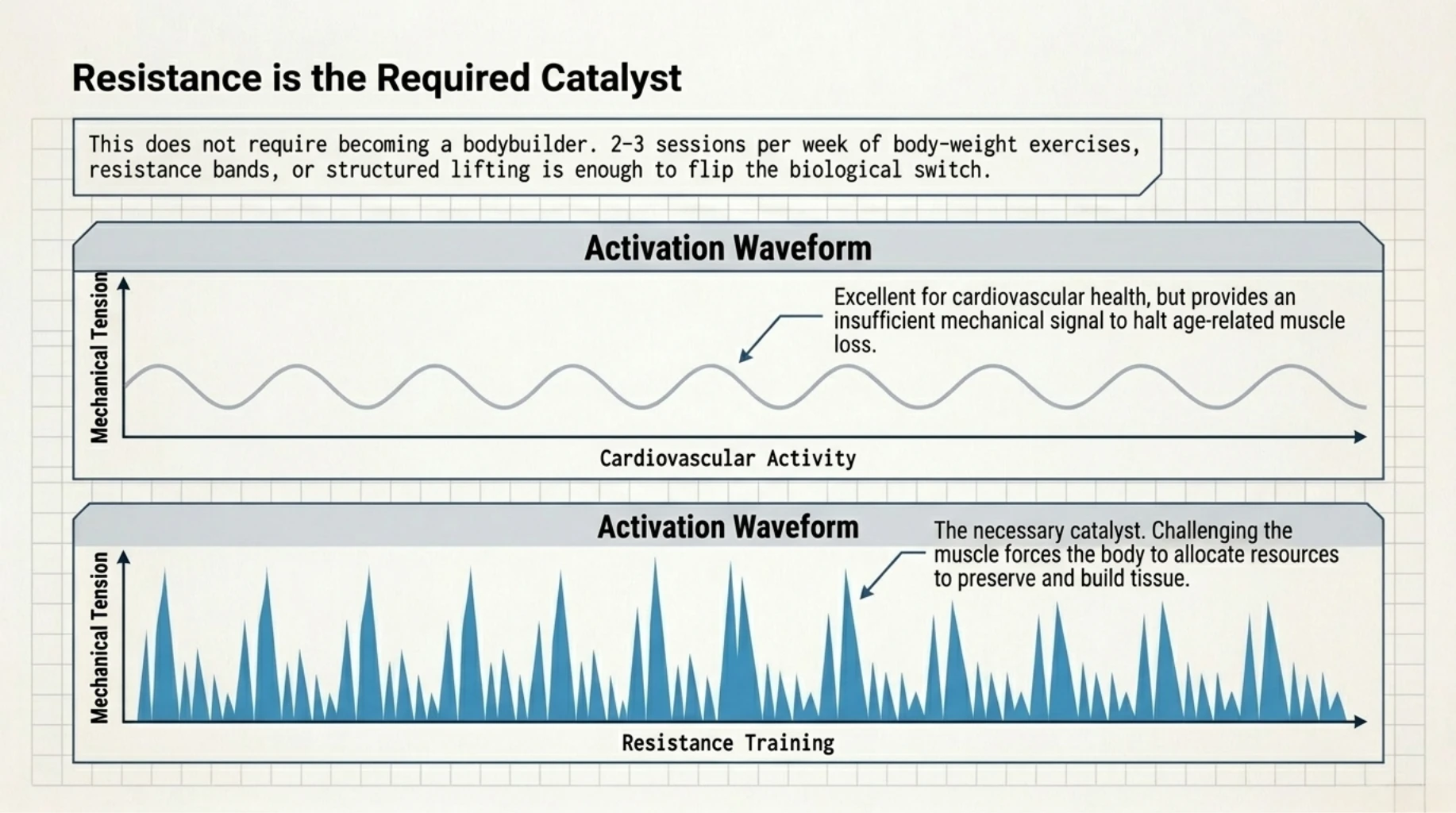
Muscle tissue responds most strongly to resistance and strength-based stimulation. Without this signal, the body has less reason to preserve muscle mass.
This explains why some individuals lose weight through dieting and cardio but still feel weaker, softer, or less energetic than before.
The Hidden Impact of Highly Processed Diets
Modern diets are often calorie-rich but nutrient-poor. Many convenience foods provide substantial energy while supplying relatively little high-quality protein, micronutrients, or other nutrients needed for muscle maintenance.
When this pattern continues for years, the body may accumulate excess fat while struggling to adequately preserve lean muscle tissue. This is particularly problematic when combined with inactivity and poor sleep.
How Hormonal Changes Affect Muscle Mass
Several hormones help regulate muscle maintenance throughout adult life. Sleep disruption, chronic stress, obesity, insulin resistance, and metabolic dysfunction can all influence these hormonal systems.
As hormonal balance becomes less optimal, muscle repair and recovery often become less efficient. This contributes to gradual declines in strength, endurance, and body composition quality over time.
The Real-Life Pattern Seen in Many Adults
In clinical practice, the pattern is remarkably common.
A person becomes increasingly busy with work and family responsibilities. Physical activity gradually decreases. Sleep quality worsens. Meals become more convenience-based, and stress levels increase.
Over the next several years, abdominal fat begins accumulating while energy levels slowly decline.
The individual notices that climbing stairs feels harder, recovery after activity takes longer, and strength is not what it used to be.
Yet because these changes happen gradually, they are often attributed simply to getting older. In reality, lifestyle-related muscle loss may have been progressing silently for years.
Why Muscle Loss Often Goes Undetected
Unlike sudden illness, muscle loss usually develops quietly. There is rarely a dramatic symptom that forces attention early on.
Instead, subtle signs appear gradually: lower strength, reduced stamina, slower recovery, increasing body fat, poorer balance, and declining physical confidence.
Because these changes occur slowly, many adults normalize them until substantial muscle loss has already occurred.
How Adults Can Preserve and Rebuild Muscle Mass
The encouraging news is that muscle tissue remains highly adaptable throughout life.
Many adults assume that once muscle is lost, it cannot be regained. In reality, the body retains an impressive ability to build and maintain muscle when given the right signals.
The key is consistency rather than intensity. Small, sustainable improvements in activity, nutrition, sleep, and recovery often produce significant long-term benefits.
Why Strength Training Becomes More Important With Age
One of the most effective ways to preserve muscle mass is regular resistance training.
Muscles grow stronger when they are challenged. Without challenge, the body gradually reduces the resources allocated to maintaining muscle tissue.
This does not mean everyone needs to become a bodybuilder or spend hours in the gym.
Simple resistance-based activities such as body-weight exercises, resistance bands, weight training, or structured strength programs can provide the stimulus muscles need.
Even two to three strength-focused sessions per week can make a meaningful difference when performed consistently.
Protein Intake Matters More Than Most Adults Realize
Many people focus heavily on calories while paying little attention to protein quality and quantity. Muscle tissue requires amino acids from dietary protein for maintenance and repair.
If protein intake remains inadequate for prolonged periods, the body struggles to preserve lean muscle mass efficiently.
This is particularly important during weight loss efforts because muscle tissue may be lost alongside body fat when protein intake is insufficient.
Ensuring adequate protein distribution throughout the day often supports better muscle preservation and recovery.
Movement Throughout the Day Supports Muscle Health
Formal exercise is important, but daily movement also plays a major role. Long periods of sitting reduce muscle activation and metabolic efficiency.
Simple habits such as: walking regularly, using stairs, standing more often, carrying groceries, gardening, stretching, and staying physically engaged throughout the day help maintain muscle function and improve overall metabolic health.
These small actions accumulate significantly over time.
Why Sleep Is a Muscle-Building Tool
Many people think muscle development happens only during exercise. In reality, much of the recovery and repair process occurs during sleep.
When sleep quality is poor, the body becomes less efficient at repairing tissues, regulating hormones, and supporting physical recovery.
This is why individuals with chronic sleep deprivation often struggle with both energy levels and body composition.
Protecting sleep is therefore an important part of preserving muscle health.
The Importance of Managing Chronic Stress
Stress management is rarely discussed in conversations about muscle health, but it plays a significant role.
When stress remains continuously elevated, recovery becomes less efficient and healthy lifestyle habits become harder to maintain.
People under chronic stress often exercise less, sleep poorly, make less optimal food choices, and experience greater fatigue.
Over time, these factors collectively contribute to muscle decline. Reducing chronic stress therefore supports both physical and metabolic recovery.
Why Crash Diets Often Accelerate Muscle Loss
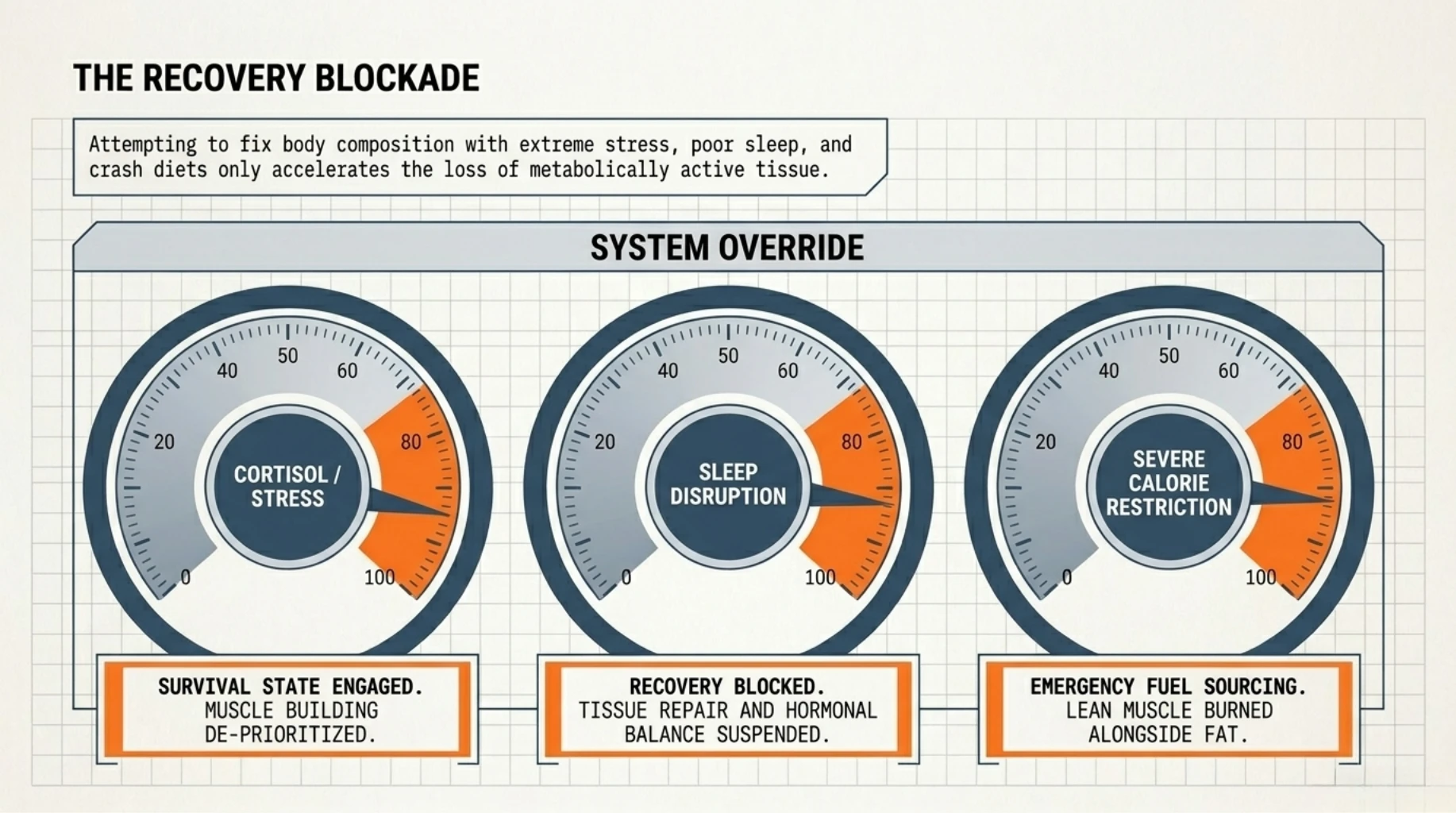
Many adults trying to lose weight unintentionally worsen muscle loss through extreme dieting. Severe calorie restriction may produce rapid weight reduction, but a portion of that weight often comes from lean muscle tissue.
This creates a situation where the scale moves down, yet metabolism becomes weaker and body composition may actually worsen.
Sustainable weight management focuses on preserving muscle while reducing excess body fat. This generally produces better long-term health outcomes than aggressive short-term dieting.
The Importance of Looking Beyond the Scale
One of the biggest lessons in modern metabolic health is that body weight is only one measurement.
Strength, stamina, body composition, waist circumference, mobility, and physical function often provide more meaningful insight into long-term health.
Someone may maintain the same weight for years while gradually losing muscle and gaining fat.
This is why preserving muscle mass should be viewed as a major health goal, not simply a fitness goal.
Putting Everything Into Perspective
Muscle loss in adults is becoming more common because modern lifestyles often remove the very signals that help preserve muscle.
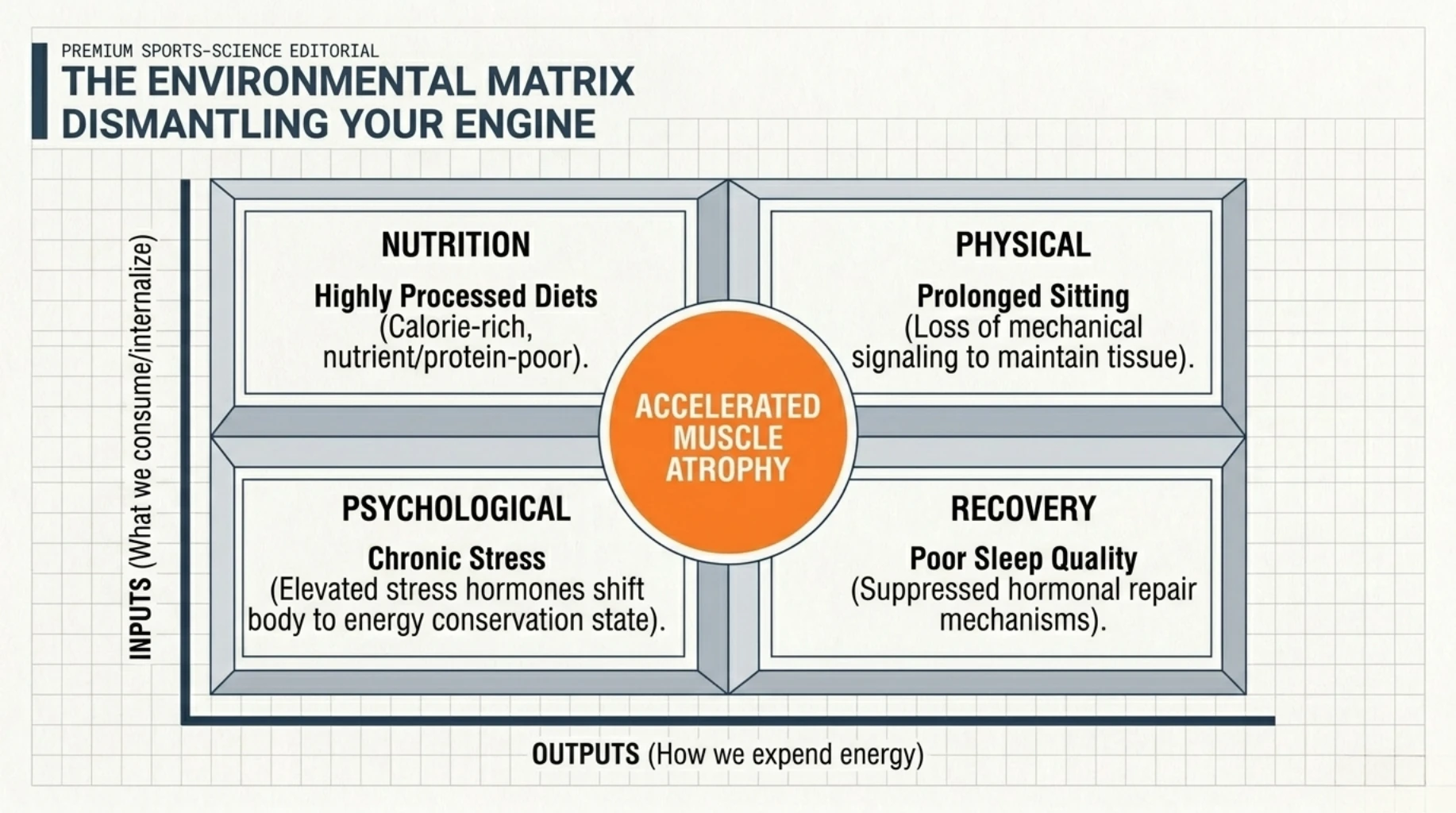
Prolonged sitting, inadequate protein intake, poor sleep, chronic stress, processed diets, and reduced physical activity collectively create an environment where muscle tissue gradually declines.
The encouraging reality is that these factors are modifiable.
When movement improves, strength training becomes routine, nutrition supports recovery, and sleep quality increases, the body often responds remarkably well.
Final Thought
Many people focus on losing weight. A better question may be whether the body is losing fat, preserving muscle, and becoming stronger for the years ahead.
If you want a personalized metabolic assessment and lifestyle strategy, you can book a consultation here:
Book an Appointment