
Multiparameter Patient Monitor: What Does It Measure and Who Uses It?
What Is a Multiparameter Patient Monitor?
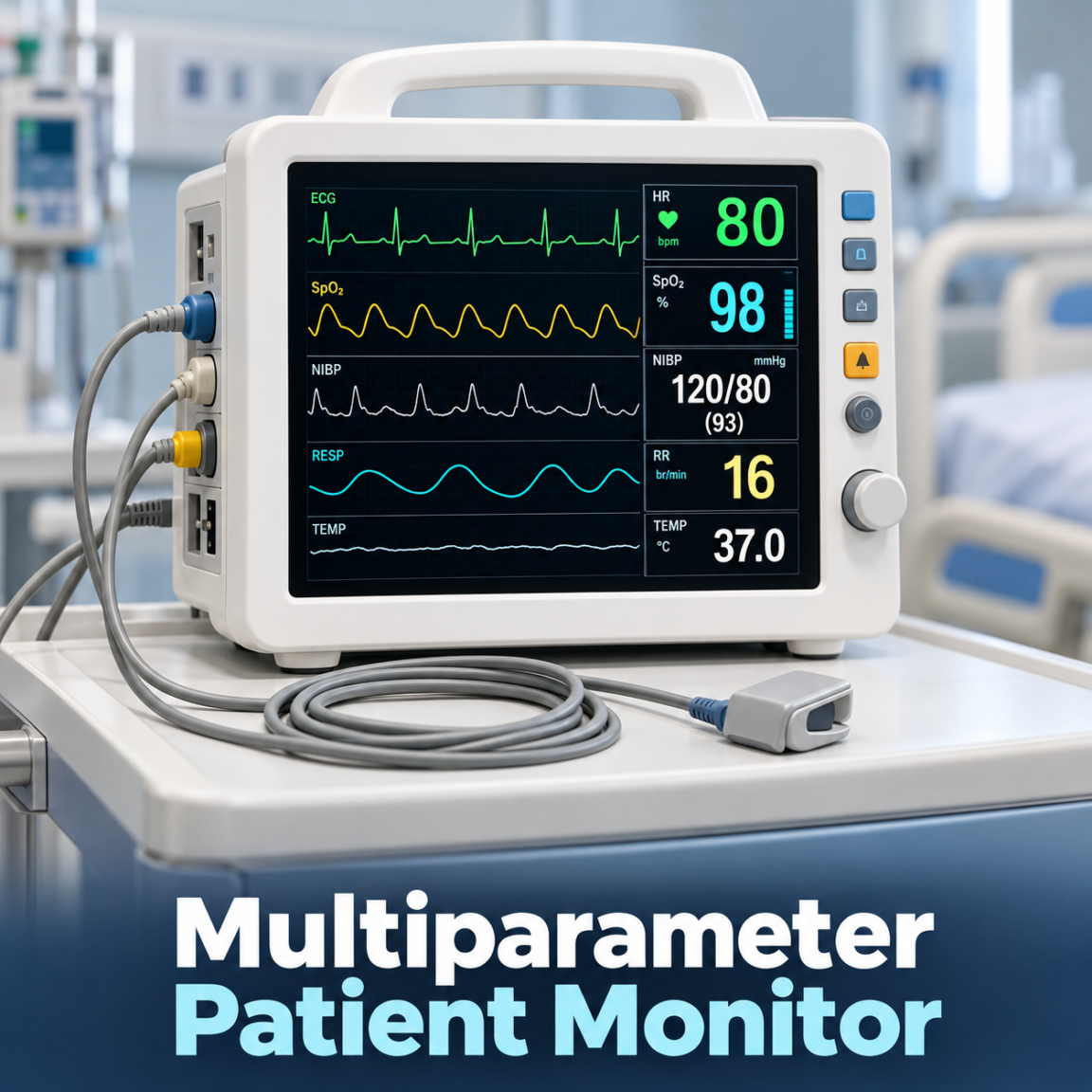
Walk into an intensive care unit, an emergency department or an operating theatre, and you will often see a screen displaying several numbers and waveforms beside a patient’s bed. One number represents heart rate, another shows blood pressure, a third indicates oxygen saturation, and a moving waveform displays the electrical activity of the heart.
This equipment is called a multiparameter patient monitor.
Unlike a basic blood pressure monitor or fingertip pulse oximeter, which measures one or two physiological variables, a multiparameter monitor combines several monitoring functions into a single system.
Its purpose is to provide healthcare professionals with continuously updated information about important physiological parameters, helping them recognise changes in a patient’s condition and assess responses to treatment.
However, a patient monitor is not a machine that independently diagnoses every medical problem. It displays measurements and derived information that must be interpreted alongside the patient’s symptoms, physical examination, medical history and other investigations.
Understanding what these devices measure is useful not only for doctors and nurses but also for patients and family members who may see a monitor during hospitalisation and wonder what the numbers mean.
Why Is It Called a Multiparameter Monitor?
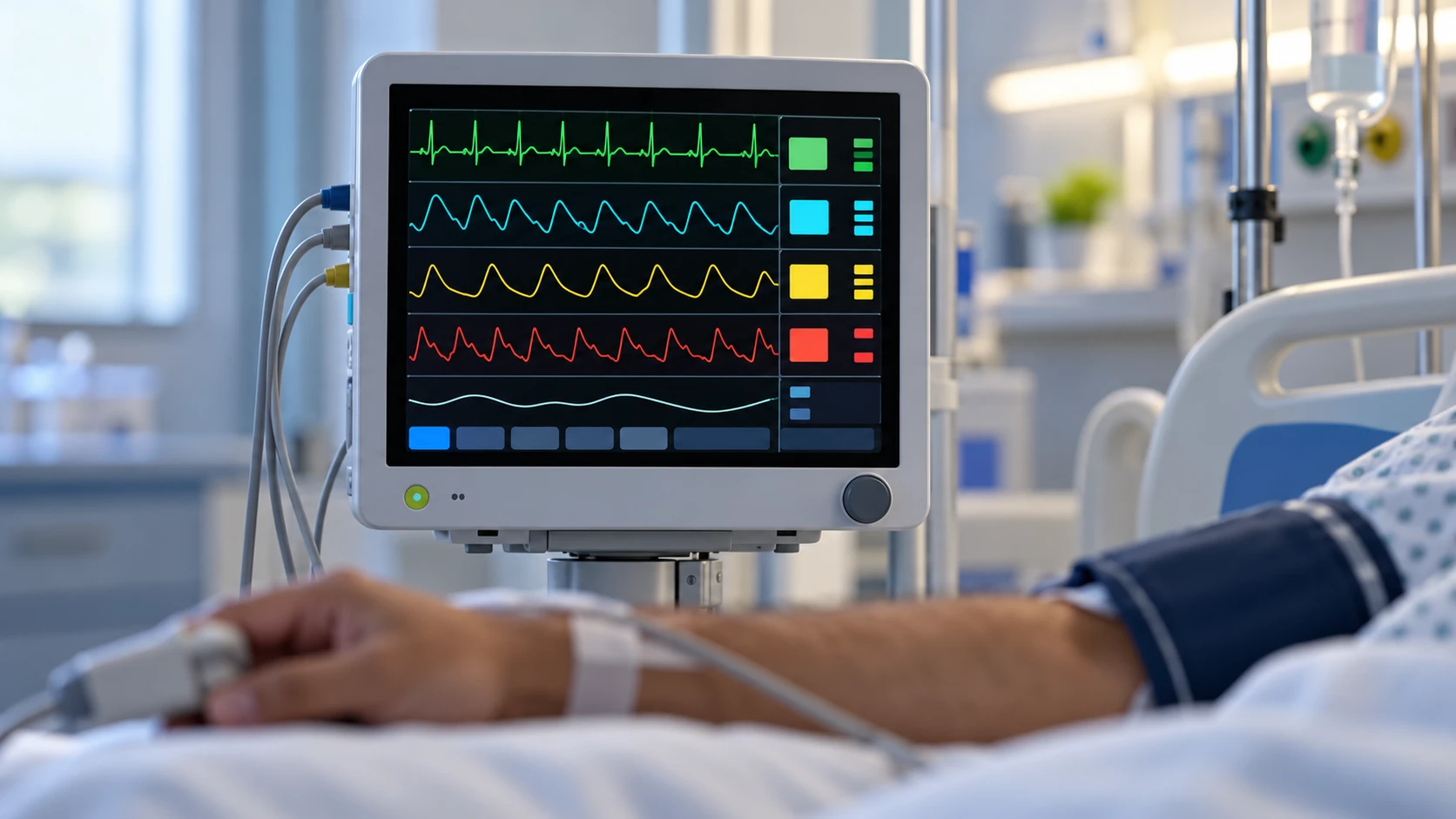
The term multiparameter means that the device measures or displays multiple physiological variables.
A conventional multiparameter monitor may combine electrocardiography, heart rate, oxygen saturation, non-invasive blood pressure, respiratory rate and temperature monitoring.
More advanced configurations may support invasive blood pressure, end-tidal carbon dioxide, cardiac output and other specialised measurements.
The exact capabilities depend on the manufacturer, model, installed modules and connected sensors.
Therefore, not every device advertised as a multiparameter patient monitor measures every parameter discussed in this article.
What Does a Multiparameter Patient Monitor Measure?
Most bedside multiparameter monitors are designed to provide information about several core vital signs. These measurements help clinicians evaluate cardiovascular function, oxygenation, breathing and temperature.
| Parameter | Common Display | What It Represents |
|---|---|---|
| Electrocardiogram | ECG waveform | Electrical activity of the heart |
| Heart rate | HR, beats/min | Number of heartbeats per minute |
| Oxygen saturation | SpO2, % | Estimated peripheral arterial oxygen saturation |
| Non-invasive blood pressure | NIBP, mmHg | Systolic, diastolic and sometimes mean arterial pressure |
| Respiratory rate | RR or RESP, breaths/min | Estimated number of breaths per minute |
| Temperature | T1, T2 or TEMP, °C | Temperature at the connected sensor site |
| End-tidal carbon dioxide | EtCO2, mmHg or kPa | Carbon dioxide concentration or partial pressure near the end of exhalation |
| Invasive blood pressure | IBP or ART | Pressure measured through an appropriate invasive catheter-transducer system |
Some measurements are continuous, while others are obtained intermittently. This distinction is important because a number remaining on the screen does not always mean the device is currently taking a new measurement.
1. ECG Monitoring: Understanding the Heart’s Electrical Activity
Electrocardiography is one of the most recognisable functions of a multiparameter patient monitor.
Electrodes attached to the patient’s skin detect electrical signals generated by the heart. The monitor processes these signals and displays them as an ECG waveform.
Healthcare professionals use ECG monitoring to observe heart rhythm and identify certain rhythm abnormalities during patient care.
What Does the ECG Waveform Show?
A typical ECG tracing contains several components associated with electrical activation and recovery of the heart.
These include the P wave, QRS complex and T wave.
The P wave generally represents atrial depolarisation, the QRS complex represents ventricular depolarisation, and the T wave represents ventricular repolarisation.
Bedside monitors usually display one or more selected ECG leads rather than the complete information available from a standard diagnostic 12-lead ECG.
Can a Multiparameter Monitor Detect an Abnormal Heart Rhythm?
Many monitors include algorithms that can identify selected rhythm disturbances or generate alerts for abnormal heart rates.
Some advanced systems support arrhythmia analysis and ST-segment monitoring.
However, automated interpretation has limitations. Movement, loose electrodes, electrical interference and unusual ECG morphology may produce false alerts or missed abnormalities.
Clinicians must therefore review the actual ECG waveform and assess the patient rather than relying entirely on the monitor’s automated classification.
Is Bedside ECG Monitoring the Same as a 12-Lead ECG?
No.
Bedside ECG monitoring is primarily intended for ongoing rhythm surveillance, although additional analysis may be available depending on the device.
A diagnostic 12-lead ECG records electrical activity from multiple perspectives and is generally more appropriate for detailed evaluation of many cardiac conditions.
A normal-looking bedside rhythm trace does not exclude acute coronary syndrome or other important cardiac disease.
2. Heart Rate Monitoring: How Fast Is the Heart Beating?
Heart rate is usually displayed prominently on a multiparameter patient monitor.
It represents the number of heartbeats occurring per minute and is commonly expressed as beats/min or bpm.
In adults at rest, heart rate is often approximately 60–100 beats per minute, although normal values vary with age, fitness, medications and clinical circumstances.
Some healthy individuals, particularly trained athletes, may have resting heart rates below 60 without underlying disease.
Where Does the Heart Rate Number Come From?
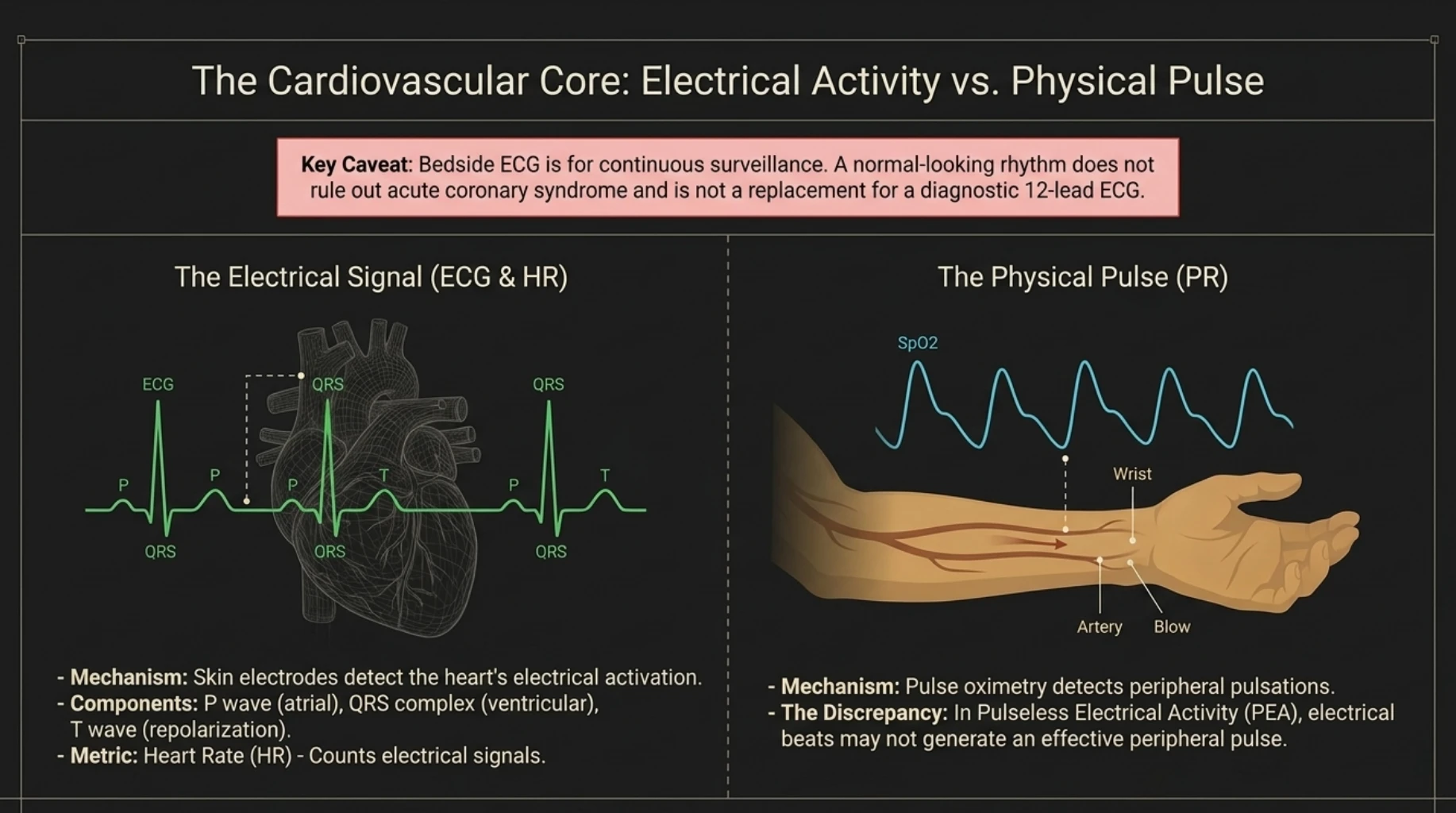
When ECG electrodes are connected, the monitor may calculate heart rate from detected QRS complexes.
Pulse oximetry can also provide a pulse-rate estimate based on peripheral pulsations.
These measurements are related but not necessarily identical.
Heart Rate vs Pulse Rate: Are They the Same?
In many healthy individuals, heart rate and peripheral pulse rate are similar.
However, certain arrhythmias or haemodynamic conditions may produce heartbeats that do not generate an easily detectable peripheral pulse.
Consequently, the ECG-derived heart rate and pulse oximeter-derived pulse rate may differ.
A discrepancy can be clinically relevant, but it can also result from sensor problems or measurement artefacts.
What Does a High Heart Rate Mean?
A high heart rate, or tachycardia, can occur with fever, pain, anxiety, dehydration, blood loss, infection, physical activity and various cardiac conditions.
It is not a diagnosis by itself.
For example, a heart rate of 115 beats per minute in someone with fever may have a different significance from the same rate in a patient experiencing chest pain or low blood pressure.
The number must be interpreted alongside the patient’s condition.
What Does a Low Heart Rate Mean?
A low heart rate, or bradycardia, can occur during sleep, in physically trained individuals, with certain medications or in cardiac conduction disorders.
Its clinical significance depends on symptoms, rhythm and haemodynamic status.
A slow heart rate accompanied by fainting, hypotension or altered consciousness requires a different response from an asymptomatic low resting heart rate in a healthy person.
3. SpO2 Monitoring: Measuring Oxygen Saturation
Oxygen saturation is another core measurement displayed by many multiparameter monitors.
The monitor uses a connected pulse oximetry sensor, often placed on a finger, toe or another suitable site, to estimate peripheral arterial oxygen saturation.
The result is displayed as SpO2.
What Does an SpO2 Reading Mean?
An SpO2 reading of 97% indicates that the device estimates approximately 97% of the measured haemoglobin oxygen-binding sites are occupied by oxygen.
At sea level, healthy adults commonly have resting SpO2 readings around 95–100%.
However, values must be interpreted according to altitude, medical condition, symptoms and the limitations of the device.
Why Is Oxygen Saturation Monitored in Hospitals?
Oxygen saturation monitoring can help clinicians recognise changes in oxygenation during anaesthesia, sedation, respiratory illness and other clinical situations.
Continuous monitoring is particularly useful when a patient is at risk of deterioration or when treatment may influence breathing and oxygenation.
Nevertheless, SpO2 does not provide a complete assessment of respiratory function.
Can a Normal SpO2 Rule Out Respiratory Failure?
No.
Pulse oximetry estimates oxygen saturation but does not directly measure carbon dioxide retention or ventilation.
Some patients can develop clinically important hypoventilation or hypercapnia while oxygen saturation remains relatively preserved, particularly when receiving supplemental oxygen.
This is one reason additional respiratory monitoring may be required in selected patients.
What Can Make Hospital SpO2 Readings Inaccurate?
Movement, poor peripheral circulation, sensor displacement, ambient light, nail products and device-specific limitations can affect readings.
Skin pigmentation may also contribute to systematic measurement bias in some devices, including overestimation of oxygen saturation in certain circumstances.
Clinicians must therefore interpret the number together with the patient’s appearance, respiratory effort and other findings.
4. Non-Invasive Blood Pressure Monitoring (NIBP)
Many multiparameter patient monitors include an automated blood pressure cuff connected to the main device.
This function is commonly labelled NIBP, meaning non-invasive blood pressure.
It typically measures blood pressure using an oscillometric method.
What Blood Pressure Values Are Displayed?
The monitor generally displays systolic blood pressure, diastolic blood pressure and mean arterial pressure.
For example:
Blood pressure: 124/78 mmHg
The systolic value represents pressure during ventricular contraction, while the diastolic value represents pressure during the relaxation phase between heartbeats.
What Is Mean Arterial Pressure?
Mean arterial pressure, or MAP, represents an estimate of the average arterial pressure over a cardiac cycle.
It is relevant to assessment of organ perfusion, particularly in critically ill patients.
In routine teaching, MAP is sometimes approximated from systolic and diastolic pressure, but this approximation is less reliable in certain physiological circumstances.
Oscillometric devices may estimate MAP from cuff oscillations and derive the displayed systolic and diastolic values using device-specific algorithms.
Does a Multiparameter Monitor Measure Blood Pressure Continuously?
Not necessarily.
Standard cuff-based NIBP monitoring is intermittent. The cuff inflates at selected intervals, such as every few minutes, depending on the clinical setting and monitoring plan.
Between measurements, the screen may continue displaying the most recent blood pressure value.
This is different from continuous invasive arterial pressure monitoring.
Why Is Correct Cuff Size Important?
An incorrectly sized cuff can produce inaccurate blood pressure measurements.
A cuff that is too small may overestimate blood pressure, while a cuff that is too large may underestimate it, although the magnitude and direction of error depend on circumstances.
Correct cuff selection, positioning and patient movement remain important even when the blood pressure is measured by sophisticated hospital equipment.
5. Respiratory Rate Monitoring: How Frequently Is the Patient Breathing?
Respiratory rate represents the number of breaths taken per minute.
In a resting adult, a commonly referenced range is approximately 12–20 breaths per minute, although normal values vary with age and clinical circumstances.
Respiratory rate is an important vital sign because changes may occur during respiratory illness, metabolic disturbances, infection, pain, sedation or clinical deterioration.
How Does a Multiparameter Monitor Measure Respiratory Rate?
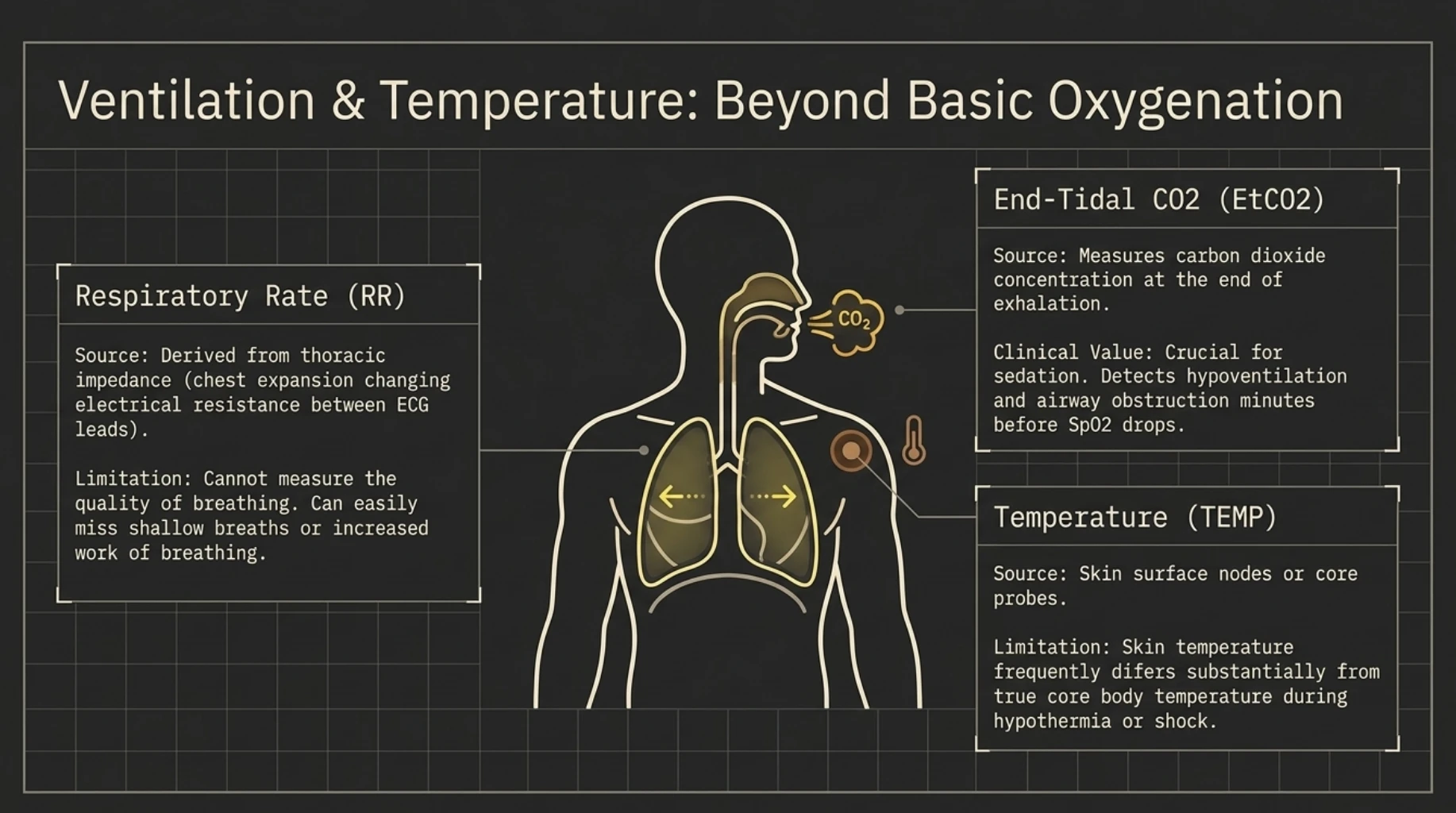
Some monitors estimate respiratory rate through thoracic impedance changes detected using ECG electrodes.
As the chest expands and contracts during breathing, electrical impedance changes. The monitor processes these changes to estimate respiratory activity.
Other monitoring systems may derive respiratory rate from capnography or additional sensors.
The measurement method depends on the device configuration.
Can Respiratory Rate Measurements Be Wrong?
Yes.
Impedance-derived respiratory measurements may be affected by movement, electrode problems and other artefacts.
Some types of breathing difficulty may not be adequately represented by a simple numerical respiratory rate.
For example, a patient can have a respiratory rate within a conventional range while still showing increased work of breathing.
Therefore, direct observation of breathing remains essential.
Why Respiratory Rate Is Clinically Important
Respiratory rate is sometimes overlooked because heart rate, blood pressure and oxygen saturation are more visually prominent on the monitor.
However, an increasing respiratory rate can be an early indicator of physiological stress or deterioration.
Clinicians should consider both the number and the pattern of breathing, including respiratory effort, depth and regularity.
6. Temperature Monitoring
Many multiparameter monitors support temperature measurement through compatible probes.
Depending on the equipment, temperature may be measured at a skin surface or through other clinically appropriate sensor sites.
Some systems allow two temperature channels to be displayed simultaneously.
Why Is Temperature Monitored?
Temperature monitoring is relevant during surgery, critical illness, anaesthesia and selected postoperative situations.
Both elevated and reduced body temperature can have clinical significance.
Temperature monitoring may help clinicians recognise fever, hypothermia or changes related to the clinical environment and treatment.
Is Skin Temperature the Same as Core Temperature?
No.
Skin temperature can differ substantially from core body temperature, particularly when peripheral circulation or environmental conditions change.
The clinical interpretation depends on the sensor location and measurement method.
A monitor displaying a temperature value should not automatically be assumed to be measuring core temperature.
7. End-Tidal Carbon Dioxide Monitoring (EtCO2)
Some multiparameter patient monitors support capnography, which measures carbon dioxide in exhaled gas and displays a waveform known as a capnogram.
The carbon dioxide value measured near the end of exhalation is called end-tidal carbon dioxide, or EtCO2.
Capnography provides information related to ventilation and is especially useful in selected anaesthesia, sedation and emergency-care settings.
What Does EtCO2 Tell Clinicians?
EtCO2 reflects the interaction of carbon dioxide production, pulmonary blood flow and alveolar ventilation.
It can help identify changes in ventilation and may provide important information about airway and breathing problems.
In a healthy adult under appropriate conditions, EtCO2 is often around 35–45 mmHg, but values vary with the clinical situation.
Is EtCO2 the Same as PaCO2?
No.
EtCO2 measures carbon dioxide in exhaled gas, whereas PaCO2 is the partial pressure of carbon dioxide in arterial blood.
They are related, but the difference between them can increase in certain respiratory or circulatory conditions.
EtCO2 should not automatically be treated as a direct substitute for arterial blood gas analysis.
Why Is Capnography Important During Sedation?
During sedation, breathing may become inadequate before oxygen saturation falls significantly, particularly when supplemental oxygen is being administered.
Capnography can provide earlier information about changes in ventilation in some circumstances.
However, it must still be interpreted alongside direct observation and other monitoring parameters.
8. Invasive Blood Pressure Monitoring
Advanced multiparameter monitors may support invasive arterial blood pressure monitoring.
This requires an arterial catheter connected through a fluid-filled system to a pressure transducer and monitoring equipment.
Unlike intermittent cuff-based NIBP measurement, invasive arterial monitoring can provide a continuously updated arterial pressure waveform.
When Is Invasive Blood Pressure Monitoring Used?
It may be used in selected critically ill patients, during major surgery or when frequent blood pressure assessment and arterial blood sampling are clinically indicated.
It can provide valuable haemodynamic information, but it is an invasive procedure with associated risks.
Therefore, it is not used simply because continuous measurements are technologically possible.
Why Can Invasive and Non-Invasive Blood Pressure Readings Differ?
Differences may result from measurement technique, vascular physiology, cuff limitations, transducer positioning, waveform damping or other technical factors.
Correct setup and interpretation are essential.
For example, an improperly levelled pressure transducer can produce a misleading arterial pressure measurement even when the monitor itself is functioning correctly.
Additional Parameters Available in Advanced Patient Monitors
More sophisticated systems may support additional measurements through specialised modules or connected equipment.
Depending on the clinical setting, these can include central venous pressure, cardiac output, advanced haemodynamic variables, anaesthetic gas concentrations and selected neuromuscular monitoring parameters.
Not all of these functions are present in standard bedside monitors.
| Additional Parameter | Potential Clinical Use | Important Limitation |
|---|---|---|
| Central venous pressure | Selected haemodynamic assessment | Does not independently establish fluid responsiveness |
| Cardiac output | Assessment of circulatory performance | Requires an appropriate measurement method and interpretation |
| Anaesthetic gas monitoring | Monitoring selected inhaled anaesthetic agents | Requires compatible equipment and sensors |
| Neuromuscular monitoring | Assessment of neuromuscular blockade during anaesthesia | Requires specialised stimulation and sensing equipment |
| Advanced haemodynamic variables | Selected critical-care management | Clinical usefulness depends on the variable and patient context |
How to Read a Multiparameter Patient Monitor Screen
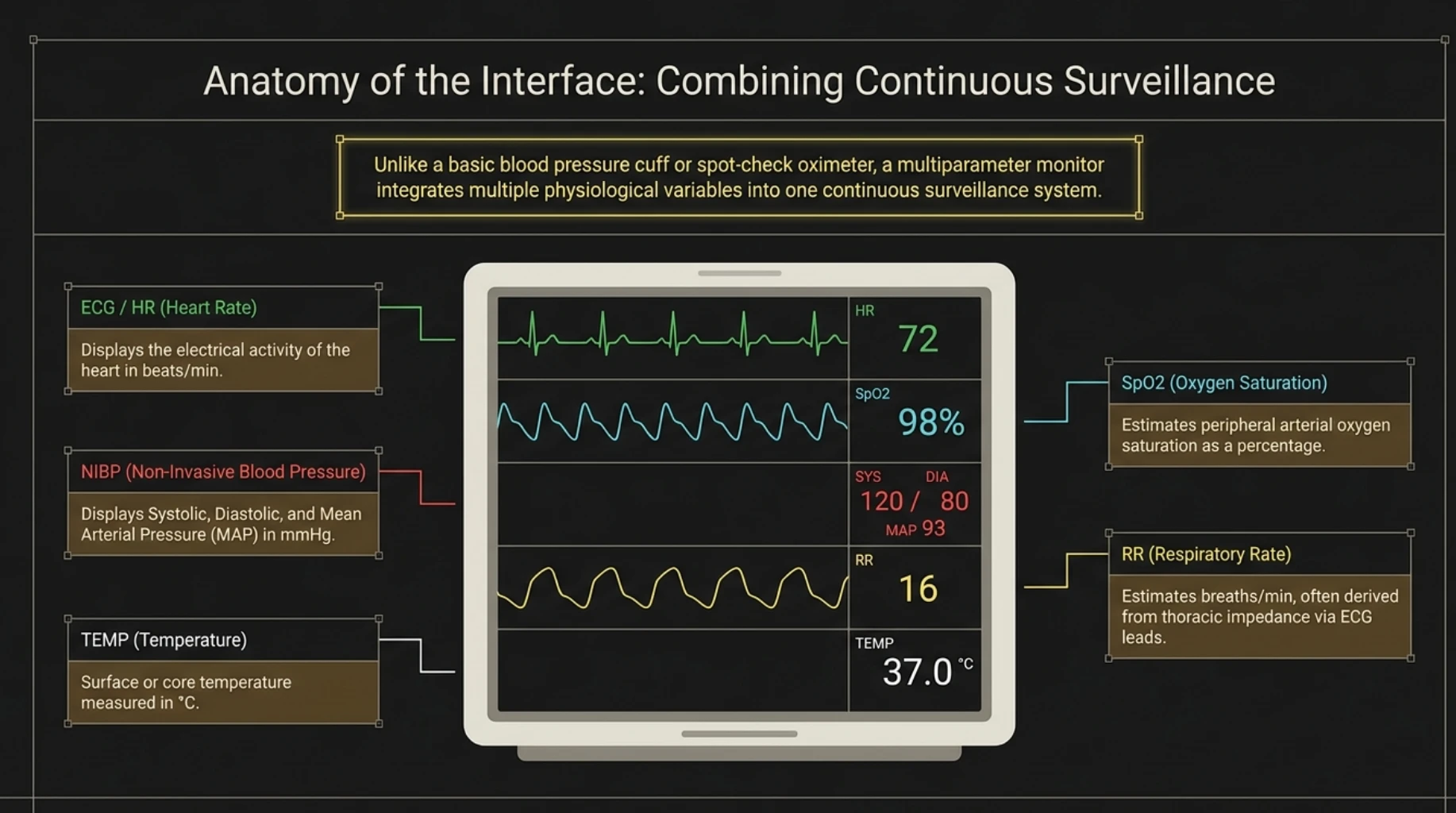
For patients and family members, the display may initially look complicated. Several coloured waveforms move across the screen, numbers change, and alarms may sound intermittently.
Although screen layouts vary, many monitors group information according to the physiological parameter being measured.
An ECG waveform may appear near the top, with heart rate displayed nearby. Oxygen saturation and pulse rate may appear in another section, while blood pressure, respiratory rate and temperature are shown elsewhere.
Some monitors use familiar colour conventions, but colours are not standardised across all manufacturers. It is therefore safer to identify parameters by their labels rather than by colour alone.
What Do HR, SpO2, NIBP, RR and TEMP Mean?
| Display Label | Meaning |
|---|---|
| HR | Heart rate |
| PR | Pulse rate |
| SpO2 | Peripheral oxygen saturation estimate |
| NIBP | Non-invasive blood pressure |
| SYS | Systolic blood pressure |
| DIA | Diastolic blood pressure |
| MAP | Mean arterial pressure |
| RR / RESP | Respiratory rate |
| TEMP | Temperature |
| EtCO2 | End-tidal carbon dioxide |
| IBP / ART | Invasive arterial pressure |
Understanding these abbreviations can help families follow explanations from healthcare professionals, but it should not encourage independent treatment decisions based on monitor numbers.
Who Uses a Multiparameter Patient Monitor?
Multiparameter patient monitors are used in healthcare environments where repeated or continuous observation of physiological parameters is clinically useful.
The need for monitoring depends on the patient’s condition, the procedure being performed and the risk of deterioration.
Intensive Care Units
In intensive care units, patients may have unstable cardiovascular or respiratory function, require organ support or need close observation following serious illness.
Multiparameter monitors allow clinical teams to follow important physiological variables and recognise changes that may require intervention.
Advanced ICU monitoring may include invasive arterial pressure, capnography and other specialised measurements.
Emergency Departments
Emergency departments use patient monitors for individuals who may be experiencing acute illness, injury or physiological instability.
Examples include patients with chest pain, severe respiratory symptoms, altered consciousness, significant trauma or suspected circulatory compromise.
Monitoring can support assessment and treatment, but it does not replace clinical examination or diagnostic investigations.
Operating Theatres
During anaesthesia, monitoring is essential because anaesthetic agents and surgical procedures can influence cardiovascular function, ventilation and temperature.
Depending on the procedure and anaesthetic technique, monitoring may include ECG, blood pressure, oxygen saturation, capnography and temperature.
More complex operations may require additional invasive or specialised monitoring.
Post-Anaesthesia Care Units
After surgery or procedural anaesthesia, patients may require observation while recovering from the effects of anaesthetic and sedative medications.
Monitoring helps clinicians assess breathing, oxygenation, circulation and recovery.
High-Dependency Units
High-dependency or step-down units care for patients who require closer observation than a standard ward can provide but may not need the full level of intensive care.
Multiparameter monitoring may be used when clinically indicated.
Ambulances and Emergency Transport
Portable multiparameter monitors may be used during emergency transport to assess heart rhythm, oxygen saturation, blood pressure and other relevant parameters.
Transport devices are designed to function in mobile environments, but movement and vibration can still affect measurement quality.
Procedure and Recovery Areas
Monitoring may also be used during selected procedures involving sedation or when a patient’s condition creates an increased risk of physiological instability.
The monitoring requirements depend on the procedure, sedation depth and applicable clinical standards.
Multiparameter Patient Monitor vs Home Blood Pressure Monitor
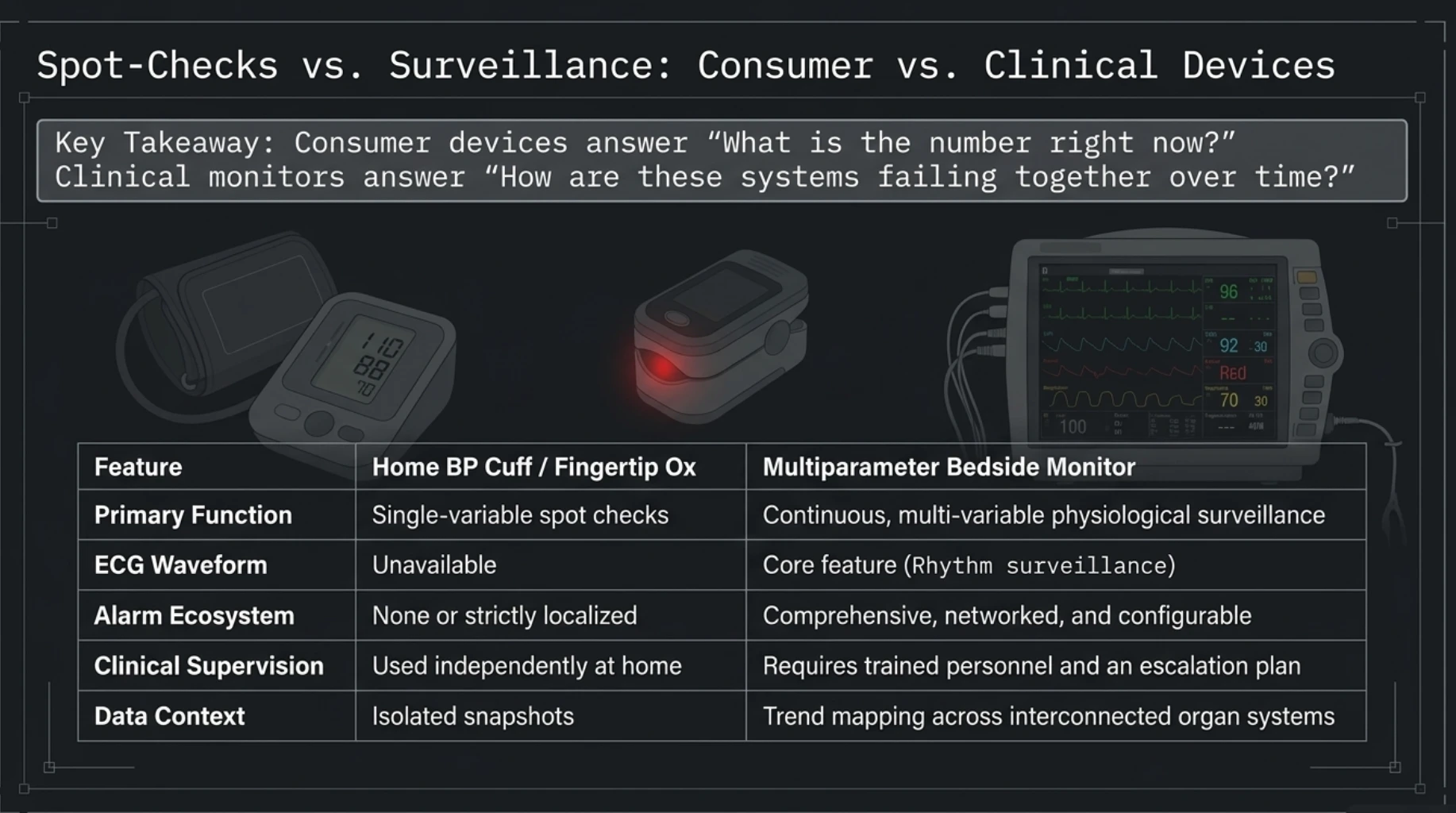
A home blood pressure monitor and a multiparameter patient monitor serve different purposes.
A home blood pressure monitor is generally designed for intermittent measurement of blood pressure, usually with a cuff placed around the upper arm.
A multiparameter patient monitor combines several physiological measurements and is typically used where healthcare professionals need ongoing observation of a patient’s condition.
| Feature | Home BP Monitor | Multiparameter Patient Monitor |
|---|---|---|
| Primary function | Blood pressure measurement | Monitoring multiple physiological variables |
| ECG waveform | Usually unavailable | Commonly available |
| SpO2 monitoring | Usually unavailable | Commonly available |
| Respiratory rate | Usually unavailable | Often available |
| Blood pressure | Intermittent cuff measurement | Intermittent cuff measurement; invasive options on selected models |
| Alarm system | Usually limited | More comprehensive, depending on model |
| Typical setting | Home | Hospital, procedure area or medical transport |
| Clinical supervision | May be used independently under guidance | Generally requires trained personnel and an appropriate monitoring plan |
Multiparameter Patient Monitor vs Fingertip Pulse Oximeter
A fingertip pulse oximeter generally estimates oxygen saturation and pulse rate. It is compact, simple and suitable for selected spot measurements when appropriately validated.
A multiparameter monitor may incorporate pulse oximetry but also provide ECG, blood pressure, respiratory rate, temperature and additional functions.
The additional parameters make multiparameter monitors more useful in settings where several aspects of physiological function need observation.
However, the presence of more parameters does not automatically make every individual measurement more accurate.
Measurement quality still depends on the device, sensor, technique and clinical circumstances.
Multiparameter Patient Monitor vs ECG Machine
A bedside patient monitor and a diagnostic ECG machine both detect cardiac electrical signals, but they are designed for different primary purposes.
A multiparameter monitor commonly provides ongoing rhythm surveillance using selected ECG leads.
A diagnostic 12-lead ECG machine records electrical activity from multiple perspectives and is generally more suitable for detailed diagnostic interpretation.
Therefore, a bedside monitor should not automatically be considered a replacement for a diagnostic ECG when clinically indicated.
Why Multiparameter Monitoring Is Useful but Not a Substitute for Clinical Assessment
One of the greatest advantages of multiparameter monitoring is that several physiological variables can be observed together.
For example, a patient may develop an increasing heart rate, falling blood pressure and rising respiratory rate. Together, these changes may suggest physiological deterioration that deserves urgent clinical attention.
However, the monitor cannot independently determine the underlying cause.
The same pattern may occur in different clinical situations, and some abnormalities may result from measurement artefacts rather than true physiological changes.
Healthcare professionals must therefore interpret trends alongside symptoms, examination findings, treatment history and other investigations.
How Accurate Is a Multiparameter Patient Monitor?
A multiparameter patient monitor can provide valuable physiological information, but its accuracy is not determined by the screen size, number of waveforms or price alone. Each parameter is measured using a different technology, and each measurement has its own sources of error.
For example, heart rate may be calculated from ECG signals, oxygen saturation from optical measurements, and non-invasive blood pressure from pressure oscillations detected by an inflatable cuff. Respiratory rate may be estimated from changes in thoracic impedance, while temperature depends on the type and location of the connected sensor.
Consequently, a monitor may display a reliable heart rate while simultaneously showing an inaccurate oxygen saturation because the pulse oximetry sensor is poorly positioned.
Similarly, a blood pressure reading may be affected by an incorrectly sized cuff even when the ECG waveform appears completely normal.
This is why clinicians evaluate each measurement separately rather than assuming that every number displayed by a functioning monitor is equally reliable.
Does a Hospital-Grade Patient Monitor Guarantee Accurate Readings?
No medical monitoring device can guarantee perfect accuracy under every clinical condition.
Appropriately designed medical monitors undergo performance testing and are intended for specific clinical applications. However, their accuracy still depends on sensor selection, correct application, maintenance, measurement conditions and the physiological characteristics of the patient.
The term “hospital grade” is frequently used in marketing, but it should not replace examination of the manufacturer’s technical specifications, intended use and applicable regulatory documentation.
A reliable multiparameter patient monitor is one whose performance has been appropriately evaluated and whose limitations are understood by the people using it.
Why Can Two Patient Monitors Show Different Numbers?
Two monitors attached to the same patient may occasionally display different values because they use different sensors, algorithms, averaging intervals or measurement sites.
For example, an ECG-derived heart rate may respond rapidly to changes in cardiac rhythm, while a pulse oximeter-derived pulse rate may update more slowly because it averages the peripheral pulse signal over a period of time.
Likewise, intermittent cuff blood pressure and invasive arterial pressure may differ because they use fundamentally different measurement methods.
A discrepancy does not automatically mean that one monitor is defective. The clinical team must determine whether the difference reflects measurement technique, physiology, equipment limitations or a genuine change in the patient’s condition.
Understanding Accuracy, Precision and Measurement Artefacts
Three concepts are particularly important when interpreting patient monitor readings: accuracy, precision and artefacts.
Accuracy describes how closely a measurement corresponds to an appropriate reference value. Precision describes how consistently repeated measurements agree with one another under similar conditions.
An artefact is a signal or displayed abnormality produced by something other than the physiological event the monitor is intended to measure.
A device can produce highly consistent readings that are nevertheless inaccurate. Conversely, a clinically meaningful physiological variable may fluctuate naturally even when the monitoring equipment is functioning correctly.
| Concept | Meaning | Clinical Example |
|---|---|---|
| Accuracy | Closeness to an appropriate reference measurement | Blood pressure compared with a suitable reference method |
| Precision | Consistency of repeated measurements | Similar readings obtained under stable conditions |
| Artefact | Distortion unrelated to the intended physiological signal | Movement creating an abnormal-looking ECG trace |
| Signal loss | Failure to obtain a usable measurement signal | Pulse oximeter unable to detect adequate peripheral pulsation |
| Measurement delay | Time between a physiological change and its appearance on the display | SpO2 changing after a delay because of averaging and circulation time |
These distinctions explain why healthcare professionals examine waveforms, sensor connections and patient condition before making decisions based on an unexpected number.
ECG Monitoring Accuracy: Why the Waveform Can Be Misleading
ECG monitoring is a core function of many multiparameter monitors. Electrodes attached to the patient’s skin detect electrical signals generated by the heart, which are processed into a displayed waveform.
However, the signal recorded at the skin surface is relatively small and can be affected by movement, muscle activity, electrode contact and electrical interference.
When these disturbances occur, the monitor may display an irregular-looking tracing or calculate an incorrect heart rate.
What Causes ECG Artefacts?
Common causes include loose electrodes, dried electrode gel, patient movement, shivering, muscle tremors, damaged cables and electrical interference.
For example, a patient who is shivering may generate rapid muscular electrical activity that distorts the ECG waveform. In some circumstances, automated algorithms may incorrectly classify these disturbances as an arrhythmia.
This is why a sudden abnormal ECG display should be assessed alongside the patient’s pulse, symptoms and overall condition.
Can Movement Look Like Ventricular Tachycardia?
Yes. Certain movement-related artefacts can produce a waveform that resembles a dangerous tachyarrhythmia.
However, genuine ventricular tachycardia can also be life-threatening. An apparently abnormal rhythm should never be dismissed without appropriate assessment.
Clinicians may examine the ECG waveform, compare it with other available leads, assess the patient’s pulse and circulation, and determine whether the displayed rhythm is physiologically plausible.
In an unstable or unresponsive patient, emergency assessment and treatment must not be delayed while attempting to prove that the monitor is displaying an artefact.
Can Loose ECG Electrodes Cause a False Asystole Alarm?
Yes. Loss of electrode contact or disconnection can produce a flat or absent ECG signal that may resemble asystole on the screen.
However, asystole is a serious cardiac rhythm requiring immediate attention.
The correct response is to assess the patient promptly while checking the monitoring system, rather than assuming the alarm is false.
Why ECG Heart Rate and Pulse Rate May Differ
The ECG-derived heart rate counts detected electrical cardiac events, whereas the pulse rate from pulse oximetry depends on detectable peripheral pulsations.
In certain arrhythmias or haemodynamic states, some electrical heartbeats may not generate an effective peripheral pulse.
Differences may also arise from motion artefacts, weak perfusion or different averaging periods.
A persistent discrepancy may provide clinically useful information, but it requires appropriate interpretation.
SpO2 Accuracy in Multiparameter Patient Monitors
Oxygen saturation monitoring is widely used in hospitals because it provides a non-invasive estimate of arterial haemoglobin oxygen saturation.
However, pulse oximetry is subject to important technical and physiological limitations.
Even a sophisticated hospital monitor can produce misleading readings when the optical signal is poor or when particular conditions affect the measurement.
Why Can SpO2 Suddenly Fall on the Monitor?
A sudden fall in displayed oxygen saturation may represent genuine deterioration in oxygenation. It may also result from sensor displacement, movement, poor peripheral circulation or other measurement problems.
The clinical team must assess the patient and the quality of the signal.
For example, if a patient’s hand moves repeatedly during a procedure, the pulse oximeter may temporarily lose its pulsatile signal and display an unstable saturation.
However, a falling SpO2 accompanied by increased breathing effort, altered consciousness or other concerning signs requires immediate clinical attention.
How Does Poor Circulation Affect SpO2?
Pulse oximetry relies on detecting pulsatile blood flow at the sensor site.
Peripheral vasoconstriction, hypothermia, shock and certain vascular conditions can reduce signal quality.
In such circumstances, the monitor may show an unstable value, delayed updates or an inability to obtain a measurement.
A missing SpO2 reading should not automatically be interpreted as either normal or low oxygen saturation. It may indicate that the device cannot obtain a reliable measurement.
Does Skin Pigmentation Affect Hospital Pulse Oximetry?
Research has identified clinically important differences in pulse oximetry performance associated with skin pigmentation. Some devices may overestimate arterial oxygen saturation in people with darker skin pigmentation, potentially contributing to missed recognition of hypoxaemia.
The magnitude of this effect varies across devices, individuals and measurement conditions.
Clinicians should therefore avoid interpreting a normal-looking SpO2 reading as definitive evidence of adequate oxygenation when the patient’s symptoms or other clinical findings suggest otherwise.
Can SpO2 Be Normal When a Patient Is Seriously Ill?
Yes. A normal oxygen saturation does not exclude serious respiratory or cardiovascular illness.
Pulse oximetry does not directly measure carbon dioxide retention, haemoglobin concentration, cardiac output or tissue oxygen delivery.
For example, a patient with severe anaemia may have relatively normal haemoglobin oxygen saturation despite reduced total oxygen-carrying capacity.
Similarly, a patient receiving supplemental oxygen may maintain an acceptable SpO2 despite developing clinically important hypoventilation.
Blood Pressure Monitoring Accuracy: Why NIBP Readings Can Differ
Non-invasive blood pressure monitoring is another important component of a multiparameter patient monitor.
Most automated systems use oscillometric technology, detecting pressure oscillations within an inflatable cuff and applying device-specific algorithms to estimate blood pressure.
The quality of the result depends on correct cuff selection, positioning, movement and the patient’s cardiovascular condition.
Why Does Cuff Size Matter?
An incorrectly sized cuff can distort blood pressure readings.
A cuff that is too small may produce falsely elevated measurements, while an excessively large cuff may underestimate pressure in some circumstances.
Correct sizing is particularly important in patients with very large or very small arm circumferences.
Healthcare professionals should select a cuff according to the manufacturer’s recommended limb circumference range rather than relying on visual estimation alone.
Can Movement Affect Hospital Blood Pressure Readings?
Yes. Patient movement, muscle tension, shivering and other disturbances can interfere with oscillometric measurement.
Some devices may display an error message or repeat the measurement automatically when they cannot obtain a usable result.
Others may produce a numerical value that requires clinical scrutiny.
When an unexpected reading is obtained, clinicians may repeat the measurement under improved conditions or use an alternative appropriate method.
Why Is Blood Pressure Different During Arrhythmias?
Irregular cardiac rhythms can produce beat-to-beat variations in stroke volume and arterial pressure.
This may make oscillometric blood pressure estimation more difficult, particularly in certain arrhythmias.
Repeated measurements or alternative methods may be necessary depending on the clinical situation.
Can NIBP Detect Sudden Blood Pressure Changes Continuously?
No. Conventional cuff-based NIBP monitoring is intermittent.
If the cuff measures blood pressure every five minutes, a significant change may occur between measurements.
The number displayed on the screen may represent the most recent completed measurement rather than the patient’s current pressure.
In patients requiring beat-to-beat arterial pressure monitoring, an appropriate invasive arterial monitoring system may be considered.
Invasive Blood Pressure Monitoring: Accuracy and Technical Limitations
Invasive arterial pressure monitoring can provide continuously updated pressure measurements and waveforms through an arterial catheter and pressure transducer system.
However, the accuracy of this system depends on correct setup and maintenance.
Problems such as incorrect transducer levelling, improper zeroing, air bubbles, tubing obstruction or abnormal waveform damping can produce misleading values.
What Is Transducer Levelling?
A pressure transducer measures pressure relative to its reference level.
If the transducer is positioned too high or too low relative to the appropriate anatomical reference point, the displayed pressure may be affected by hydrostatic pressure differences.
Correct levelling is therefore essential.
What Is Waveform Damping?
Damping describes how the catheter-tubing-transducer system responds to changes in arterial pressure.
An overdamped system may underestimate systolic pressure and overestimate diastolic pressure, while an underdamped system may exaggerate waveform oscillations and systolic pressure.
The displayed mean arterial pressure may be less affected than the systolic and diastolic values in some damping situations, but it should not be assumed immune to technical errors.
These systems require trained clinical personnel and appropriate quality checks.
Respiratory Rate Monitoring: Why the Number May Be Incorrect
Respiratory rate is a clinically important vital sign, but automated respiratory monitoring has limitations.
Some multiparameter monitors derive respiratory rate from changes in thoracic impedance detected through ECG electrodes.
Movement, poor electrode contact and other signal disturbances may interfere with this measurement.
Can a Monitor Miss Abnormal Breathing?
Yes. A numerical respiratory rate does not fully describe breathing quality.
A patient may have increased respiratory effort, shallow breathing or an abnormal breathing pattern despite a displayed rate within a conventional range.
In some situations, impedance-based monitoring may also detect chest movement without reliably establishing adequate airflow.
Therefore, clinicians must observe the patient and consider other monitoring methods when appropriate.
Why Is Respiratory Rate Important in Clinical Deterioration?
An increasing respiratory rate may reflect physiological stress from respiratory illness, metabolic disturbances, infection, circulatory compromise or other conditions.
Changes in respiratory rate can be clinically important even when blood pressure and oxygen saturation have not yet changed substantially.
However, the interpretation depends on the complete clinical picture rather than one isolated number.
Capnography: Why EtCO2 Adds Information Beyond SpO2
Capnography measures carbon dioxide in exhaled gas and displays a waveform reflecting respiratory activity.
It provides information related to ventilation, whereas pulse oximetry estimates oxygen saturation.
These measurements are complementary rather than interchangeable.
Can Oxygen Saturation Remain Normal During Hypoventilation?
Yes, particularly when supplemental oxygen is being administered.
A patient may develop inadequate ventilation and rising carbon dioxide before a significant fall in SpO2 becomes apparent.
Capnography may help identify certain ventilation problems earlier, depending on the monitoring method and clinical circumstances.
Can EtCO2 Be Misleading?
Yes. EtCO2 depends on ventilation, pulmonary blood flow, carbon dioxide production and the sampling system.
Sampling-line obstruction, leaks, poor waveform quality and certain physiological conditions can affect the measurement.
EtCO2 is not always equivalent to arterial PaCO2, and the difference between them may become clinically important in some patients.
Why Does a Multiparameter Patient Monitor Beep?
Audible alarms are one of the most familiar features of bedside patient monitors.
Their purpose is to draw attention to a physiological measurement crossing a configured limit, an abnormal waveform or a technical problem affecting monitoring.
However, not every beep indicates a medical emergency.
Some alarms are generated by temporary signal loss, sensor disconnection or measurement artefacts.
Others may indicate a clinically important change requiring immediate assessment.
Physiological Alarms vs Technical Alarms
| Alarm Type | What It Indicates | Example |
|---|---|---|
| Physiological alarm | A monitored parameter has crossed a configured limit or an event has been detected | High heart rate or low SpO2 |
| Technical alarm | A problem may be affecting measurement or equipment operation | ECG lead disconnected |
| Signal-quality alert | The monitor may not be obtaining a reliable physiological signal | Poor pulse oximetry signal |
| System or equipment alert | An operational issue requires attention | Low battery or equipment malfunction |
The exact terminology and alarm categories vary between manufacturers.
Why Does the Monitor Alarm When the Patient Appears Comfortable?
An alarm may occur because a parameter has crossed a preset threshold even though the patient has no obvious symptoms.
Alternatively, movement or sensor problems may have produced an inaccurate reading.
However, the absence of visible distress does not prove that an alarm is false. Certain physiological abnormalities may initially produce few symptoms.
The appropriate response is clinical assessment and verification of the measurement.
Understanding Alarm Limits in Patient Monitors
Alarm limits define the range outside which a monitored parameter triggers an alert.
For example, a heart-rate alarm may be configured to activate when the measured rate exceeds an upper threshold or falls below a lower threshold.
Alarm settings must be appropriate for the patient’s age, medical condition, treatment and monitoring environment.
Are Alarm Limits the Same for Every Patient?
No.
A heart rate that is expected during one clinical situation may be concerning in another.
Similarly, oxygen saturation targets can differ in selected patients with chronic respiratory disease.
Using identical alarm limits for every patient may generate unnecessary alerts or fail to identify clinically relevant changes.
Can Family Members Change Monitor Alarm Settings?
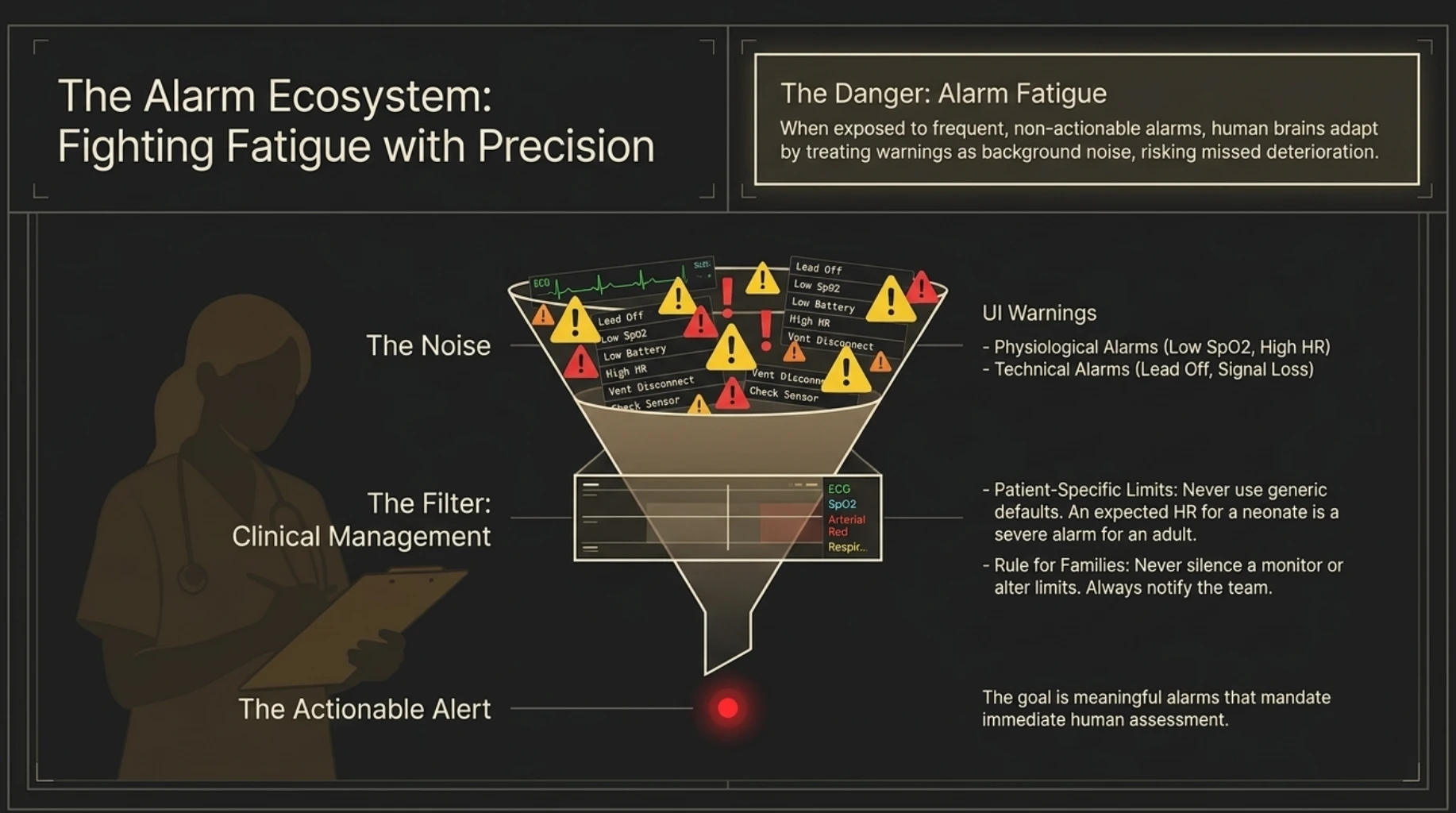
No. Alarm limits and monitoring settings should be managed by authorised healthcare personnel according to the patient’s clinical needs and institutional protocols.
Changing or disabling alarms without appropriate clinical oversight can create serious safety risks.
If an alarm is repeatedly sounding, inform the responsible healthcare team rather than attempting to silence or reconfigure the monitor yourself.
What Is Alarm Fatigue in Hospitals?
Alarm fatigue refers to reduced responsiveness to alarms when healthcare professionals are exposed to frequent alerts, particularly when many are non-actionable or false.
Patient monitors may generate alarms because of genuine physiological changes, overly broad monitoring practices, inappropriate alarm settings, sensor problems or artefacts.
When alarms occur too frequently, important alerts may become harder to distinguish from background noise.
This is a recognised patient-safety concern.
Why Can Excessive Alarms Be Dangerous?
Frequent non-actionable alarms increase workload and may contribute to delayed recognition of clinically important events.
They can also disturb patients and affect sleep, particularly in intensive care environments.
Effective alarm management aims to reduce unnecessary alerts without compromising the ability to recognise deterioration.
How Do Hospitals Reduce Alarm Fatigue?
Approaches may include appropriate patient-specific alarm limits, reliable sensor application, regular equipment maintenance, staff training and institutional alarm-management protocols.
Clinical teams also need clear responsibilities for responding to alarms and identifying which alerts require immediate action.
The objective is not to eliminate alarms. It is to make alarms clinically meaningful and actionable.
What Should Happen When a Patient Monitor Shows an Abnormal Reading?
An abnormal reading should trigger an appropriate assessment rather than an automatic assumption about the diagnosis.
Clinicians consider the patient’s condition, the reliability of the signal and the possible causes of the change.
For example, an unexpectedly low SpO2 reading may require assessment of breathing and circulation while checking sensor placement and signal quality.
A sudden abnormal ECG rhythm may require immediate evaluation of the patient’s pulse and haemodynamic stability.
A markedly low blood pressure reading may prompt assessment of circulation and confirmation of the measurement using an appropriate method.
Assess the Patient, Not Just the Monitor
This is a fundamental principle of patient monitoring.
A screen can display numbers, but it cannot independently assess consciousness, skin perfusion, breathing effort, pain or many other important clinical findings.
If the patient is unresponsive, severely breathless or showing signs of circulatory collapse, emergency care takes priority over repeated attempts to obtain a perfect monitor reading.
Technical verification and clinical assessment often occur together, but checking equipment must not delay life-saving treatment.
Why Trends Are Often More Useful Than One Isolated Number
A major advantage of multiparameter monitoring is the ability to observe changes over time.
A single heart rate of 105 beats per minute may have limited meaning without context. However, a progressive rise in heart rate accompanied by falling blood pressure and increasing respiratory rate may indicate a developing physiological problem.
Similarly, a gradual decline in oxygen saturation may be more informative than one isolated value obtained during movement.
Trends can help clinicians recognise patterns and assess responses to treatment.
Example: Recognising a Deteriorating Pattern
Consider a hypothetical patient whose measurements change over several hours:
| Time | Heart Rate | Blood Pressure | Respiratory Rate | SpO2 |
|---|---|---|---|---|
| 10:00 AM | 82/min | 124/78 | 16/min | 98% |
| 11:00 AM | 96/min | 112/72 | 20/min | 97% |
| 12:00 PM | 112/min | 98/64 | 25/min | 95% |
| 1:00 PM | 124/min | 88/56 | 30/min | 93% |
These values are illustrative and do not represent an actual patient.
The progressive rise in heart rate and respiratory rate, together with falling blood pressure and oxygen saturation, is concerning and requires prompt clinical evaluation.
The monitor does not identify the cause. Possible explanations must be considered through clinical assessment and appropriate investigations.
The example illustrates why monitoring several parameters together can be more informative than focusing on one number in isolation.
Can a Multiparameter Monitor Predict Clinical Deterioration?
A multiparameter monitor does not independently predict every episode of clinical deterioration.
However, it provides measurements that may contribute to early recognition of worsening physiological function.
Some hospitals use early warning scores or clinical decision-support systems that incorporate vital signs such as respiratory rate, heart rate, blood pressure, oxygen saturation, temperature and level of consciousness.
These systems can support structured assessment and escalation, but they do not replace clinical judgement.
What Is an Early Warning Score?
An early warning score is a structured method of assessing physiological abnormalities using selected clinical observations.
Different scoring systems have different criteria and intended settings.
A monitor may provide several measurements needed for such a score, but additional clinical information may be required.
The score must be interpreted according to the applicable protocol and patient population.
Can a Patient Monitor Detect a Heart Attack?
A multiparameter monitor may identify certain ECG abnormalities, rhythm changes or physiological disturbances that occur during acute cardiac illness.
However, it cannot reliably diagnose or exclude a heart attack on its own.
Some patients with acute coronary syndrome may have relatively normal vital signs or no obvious abnormalities on the limited ECG leads displayed by a bedside monitor.
Evaluation may require a diagnostic 12-lead ECG, cardiac biomarkers and other clinical investigations.
Chest pain or symptoms suggestive of acute coronary syndrome require appropriate medical assessment even when the monitor numbers appear normal.
Can a Multiparameter Monitor Detect Sepsis?
Patient monitors can display physiological changes that may occur during sepsis, including tachycardia, tachypnoea, hypotension or altered oxygenation.
However, these abnormalities are not specific to sepsis.
Similar patterns may occur in dehydration, bleeding, cardiac conditions and other illnesses.
Diagnosis of sepsis requires assessment of suspected or confirmed infection and associated organ dysfunction, supported by appropriate clinical investigations.
Monitoring helps recognise deterioration but does not establish the diagnosis independently.
Can a Multiparameter Monitor Detect Respiratory Failure?
A multiparameter monitor may identify abnormalities associated with respiratory failure, such as low oxygen saturation, abnormal respiratory rate or changes in capnography.
However, respiratory failure can involve impaired oxygenation, ventilation or both.
Standard pulse oximetry cannot directly measure carbon dioxide retention.
Therefore, blood gas analysis and other investigations may be needed to characterise respiratory failure and guide treatment.
Clinical signs such as increased breathing effort, altered consciousness and exhaustion remain important even when displayed measurements appear relatively stable.
Can a Patient Monitor Detect Shock?
Shock involves inadequate tissue perfusion and may occur through several different mechanisms.
A patient monitor may display findings such as tachycardia, hypotension or changes in oxygenation, but these findings are neither universally present nor specific to shock.
Importantly, blood pressure can remain relatively preserved during some earlier or compensated stages of circulatory compromise.
Assessment of shock requires evaluation of the patient, perfusion, clinical history and other relevant investigations.
A normal blood pressure reading alone does not exclude clinically important circulatory failure.
Can Normal Monitor Readings Rule Out Serious Disease?
No.
A multiparameter patient monitor measures selected physiological variables. It does not provide a complete assessment of every organ system or disease process.
A patient may have normal heart rate, blood pressure and oxygen saturation while still having a condition that requires urgent medical attention.
For example, early pulmonary embolism, acute coronary syndrome or other serious illnesses may not initially produce obvious abnormalities in every monitored vital sign.
This is why monitoring complements clinical evaluation rather than replacing it.
Patient Safety: What Families Should Understand About Bedside Monitors
For family members visiting a patient in hospital, monitor numbers can be both reassuring and frightening.
Seeing an oxygen saturation of 98% or a blood pressure of 120/80 may create a sense that everything is normal. Conversely, an alarm or temporarily abnormal number may create immediate anxiety.
Neither reaction necessarily reflects the complete clinical situation.
Monitor values are influenced by the patient’s illness, treatment, measurement method and sensor quality.
Family members should avoid making independent decisions about oxygen delivery, medication or monitoring settings based on displayed numbers.
Should Family Members Silence the Monitor?
No. If an alarm sounds, notify the responsible healthcare staff.
Do not disconnect sensors, switch off the device or change alarm settings unless specifically instructed and authorised by the clinical team.
An alarm may be technical, but it may also indicate a clinically important event.
Should You Worry About Every Small Change?
Not every small fluctuation indicates deterioration.
Heart rate, respiratory rate and blood pressure change naturally in response to movement, sleep, pain, emotion and treatment.
The clinical importance of a change depends on its magnitude, persistence, associated symptoms and overall pattern.
If you are concerned about a reading, ask the treating team for an explanation rather than attempting to interpret the monitor independently.
Common Sources of Error in Multiparameter Patient Monitoring
| Parameter | Possible Error Source | Clinical Consideration |
|---|---|---|
| ECG | Loose electrodes, movement, muscle tremor | Review waveform and assess the patient |
| Heart rate | Artefact, incorrect QRS detection | Compare with pulse and clinical findings |
| SpO2 | Motion, poor perfusion, sensor displacement, measurement bias | Assess signal quality and oxygenation clinically |
| NIBP | Incorrect cuff size, movement, arrhythmia | Check technique and repeat when appropriate |
| Respiratory rate | Movement, impedance artefacts, poor electrode contact | Observe breathing directly |
| Temperature | Incorrect probe location or sensor problems | Confirm measurement site and method |
| EtCO2 | Sampling-line obstruction, leak, waveform distortion | Review capnogram and ventilation |
| Invasive BP | Levelling, zeroing, damping, tubing problems | Check the pressure monitoring system |
How Multiparameter Patient Monitors Improve Clinical Communication
Another important benefit of multiparameter monitoring is that it creates a shared source of physiological information for the healthcare team.
Doctors, nurses, anaesthetists and other professionals can review measurements and trends when assessing the patient’s condition.
In some settings, monitoring data can be transmitted to central stations or integrated into electronic medical records.
This may support continuity of care, documentation and recognition of changes across shifts.
However, electronic integration introduces additional responsibilities involving correct patient identification, data integrity, cybersecurity and system reliability.
Monitoring information is most useful when it is accurate, appropriately documented and interpreted by trained personnel.
Why More Monitoring Is Not Always Better
It may seem logical that monitoring more parameters continuously must always improve patient safety.
In practice, monitoring should be matched to the patient’s clinical needs.
Unnecessary monitoring can generate false alarms, disturb sleep, increase staff workload and create opportunities for misinterpretation.
Some monitoring techniques also involve invasive procedures with their own risks.
The objective is not to collect the maximum possible number of physiological measurements. It is to obtain information that can meaningfully guide patient care.
The Most Important Principle of Multiparameter Monitoring
A multiparameter patient monitor can display heart rate, ECG, oxygen saturation, blood pressure, respiratory rate, temperature and other physiological measurements together.
This allows healthcare professionals to recognise changes, review trends and assess responses to treatment.
However, no monitor can independently determine whether every displayed abnormality is genuine or whether a patient is medically stable.
A false alarm can resemble a dangerous event, and a normal-looking set of numbers can sometimes coexist with serious illness.
The safest approach combines reliable monitoring technology, appropriate alarm management, trained clinical interpretation and direct assessment of the patient.
How to Choose a Multiparameter Patient Monitor
Choosing a multiparameter patient monitor requires a different approach from purchasing an ordinary home blood pressure monitor or fingertip pulse oximeter. A patient monitor is a clinical monitoring system, and its suitability depends on the environment in which it will be used, the patients being monitored and the decisions healthcare professionals need to make using its measurements.
A device designed for a general hospital ward may not have all the capabilities required in an intensive care unit. Similarly, a compact transport monitor may prioritise portability, battery performance and resistance to movement, whereas a bedside monitor may emphasise display size, connectivity and support for additional measurement modules.
Therefore, the first question should not be which multiparameter monitor has the largest screen or the most features. It should be which physiological measurements are clinically necessary for the intended setting.
Start With the Clinical Setting
Monitoring requirements differ considerably between a general ward, emergency department, operating theatre, intensive care unit and ambulance.
In a general ward, selected patients may require ECG, oxygen saturation and intermittent blood pressure monitoring. In an intensive care unit, some patients may additionally need invasive arterial pressure monitoring, capnography or advanced haemodynamic measurements.
During anaesthesia, the monitoring configuration must meet applicable clinical standards and the requirements of the procedure.
The equipment should be selected according to clinical need rather than assuming that every parameter must be available for every patient.
Consider the Patient Population
Adult, paediatric and neonatal patients have different physiological characteristics and sensor requirements.
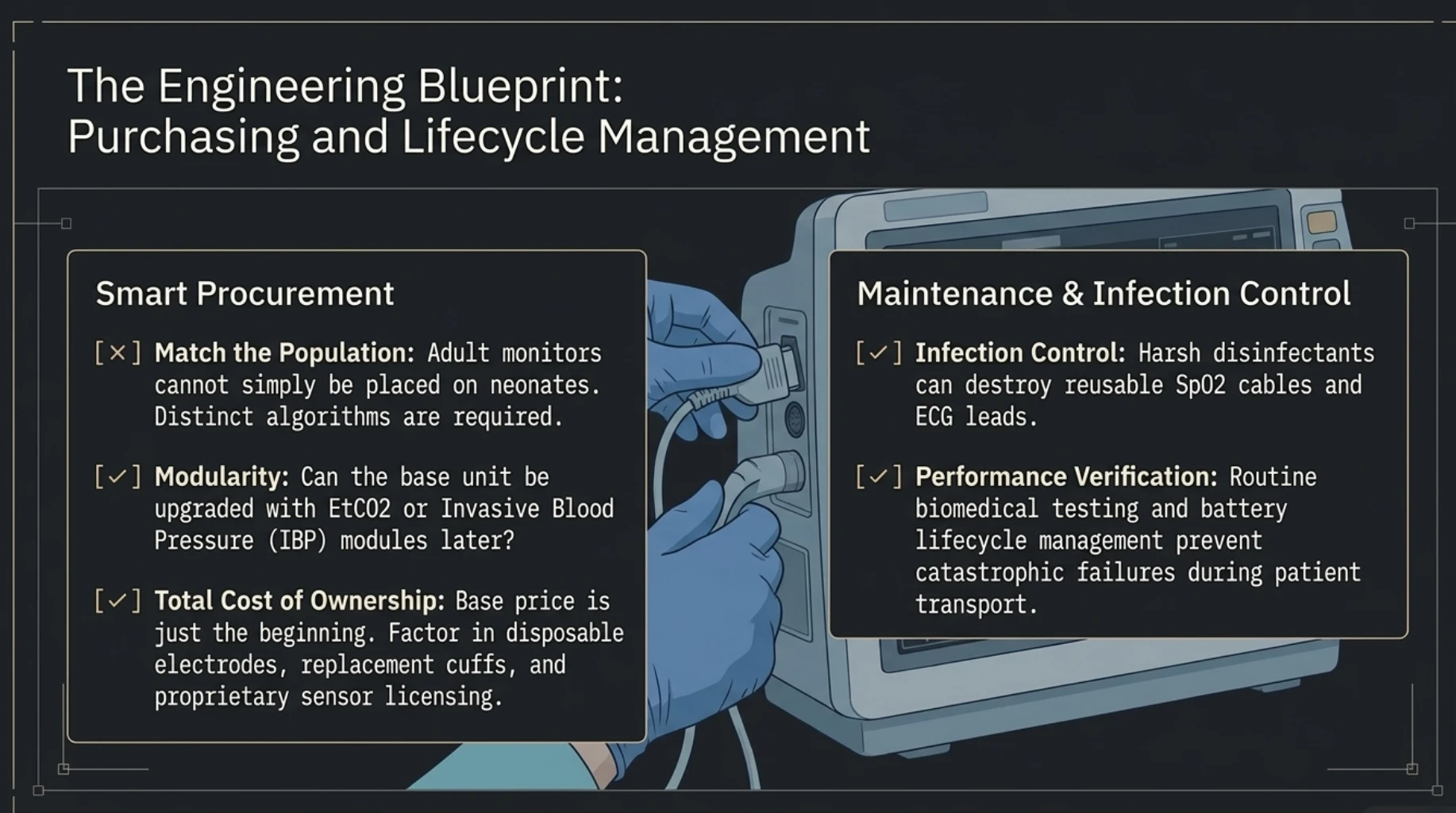
A monitor intended for adults should not automatically be considered suitable for infants or newborns. Even when the main monitor supports different age groups, appropriate cuffs, ECG accessories, pulse oximetry sensors and measurement settings are necessary.
Device specifications should clearly identify the populations for which the relevant monitoring functions are intended.
Check the Exact Model and Configuration
Multiparameter monitors are often sold in different configurations under similar model names. One version may support basic ECG, SpO2 and NIBP monitoring, while another may include temperature, capnography or invasive pressure modules.
Before selecting a device, verify the exact model number, installed modules, included accessories and available software functions.
Do not assume that every feature shown in promotional photographs is included in the standard package.
Essential Features of a Multiparameter Patient Monitor
Although requirements vary, several features deserve particular attention when evaluating a monitor for clinical use.
| Feature | Why It Matters | Priority |
|---|---|---|
| Appropriate ECG monitoring | Supports heart-rate and rhythm surveillance | Core for many bedside applications |
| Pulse oximetry | Provides estimated oxygen saturation and pulse rate | Core for many clinical settings |
| Non-invasive blood pressure | Supports intermittent blood pressure assessment | Core for many clinical settings |
| Respiratory rate monitoring | Provides information about breathing frequency | Commonly required |
| Temperature monitoring | Useful in selected clinical situations | Setting dependent |
| Configurable alarm system | Alerts staff to selected physiological and technical events | Essential for appropriate monitored care |
| Waveform display | Helps clinicians evaluate signals and artefacts | Very important |
| Trend storage | Supports review of changes over time | Very useful |
| Battery backup | Supports operation during transport or temporary power interruption | Important according to setting |
| Connectivity | May support central monitoring and electronic records | Setting dependent |
| Invasive BP and EtCO2 modules | Support specialised monitoring | Required only in selected settings |
Display Size and Screen Readability
A larger display can make it easier to view multiple waveforms and numerical values simultaneously. This is particularly useful when several parameters require continuous observation.
However, screen size alone does not determine the quality of a monitor.
Display readability also depends on the arrangement of parameters, waveform clarity, font size, contrast, viewing angles and how easily clinicians can identify alarms.
A compact monitor with a well-organised display may be more practical for transport than a larger device that is difficult to move.
Does a Touchscreen Make a Monitor Better?
Touchscreen controls can simplify navigation, but they are not inherently superior to physical controls.
In some clinical environments, physical buttons or dedicated controls may be useful when staff wear gloves or need rapid access to important functions.
The interface should allow authorised personnel to operate the monitor efficiently without increasing the risk of accidental changes to critical settings.
Bedside vs Portable Multiparameter Patient Monitors
Multiparameter monitors are available in different physical designs. Two broad categories are bedside monitors and portable or transport monitors.
Bedside Patient Monitors
Bedside monitors are generally designed for use at a fixed patient location, such as an ICU bed, recovery bay or monitored hospital bed.
They may provide larger displays, extended trend storage, network connectivity and support for additional monitoring modules.
Some systems can be integrated with central monitoring stations or hospital information systems.
Portable Patient Monitors
Portable monitors are designed for situations in which monitoring must continue while the patient is moved or when equipment needs to be transported between clinical locations.
They may be used during intra-hospital transfers, ambulance transport or selected emergency-care situations.
Important considerations include weight, battery performance, mounting options, durability and reliable operation under transport conditions.
| Feature | Bedside Monitor | Portable Monitor |
|---|---|---|
| Primary setting | Fixed clinical location | Transport and mobile clinical use |
| Display | Often larger | Usually more compact |
| Power | Mains supply with battery backup where provided | Battery operation is particularly important |
| Additional modules | May support more advanced configurations | Depends on model and intended use |
| Portability | Variable | Designed for easier movement |
| Connectivity | May integrate with central monitoring | May support wired or wireless connectivity |
The distinction is not absolute. Some modern monitoring systems use modular designs that allow continuity between bedside and transport monitoring.
What Is a Modular Multiparameter Patient Monitor?
A modular patient monitor allows selected measurement capabilities to be added or configured through compatible modules.
For example, a basic system may support ECG, SpO2 and NIBP, while additional modules may provide invasive pressure or capnography.
This approach can be useful in facilities where monitoring needs differ between departments.
However, modularity does not guarantee compatibility with every accessory or module from the same manufacturer. Software versions, hardware requirements and licensing may affect available functions.
Before purchasing, confirm the exact configuration and future expansion options.
How Important Is the Alarm System?
The alarm system is one of the most important safety-related features of a multiparameter patient monitor.
A monitor should provide appropriate alerts for relevant physiological abnormalities and technical failures, according to its intended use and applicable standards.
However, alarms are only effective when they are correctly configured and there is a reliable process for responding to them.
Patient-Specific Alarm Limits
Alarm thresholds should reflect the patient’s clinical circumstances rather than relying indiscriminately on default settings.
For example, an expected heart-rate range may differ between an adult, an infant and a patient receiving certain medications.
Likewise, oxygen saturation targets may be individualised in selected respiratory conditions.
Alarm configuration should be performed by trained and authorised personnel according to institutional protocols.
Why Alarm History Matters
Some monitors maintain records of alarm events. This can help clinical teams review episodes of physiological change and investigate monitoring problems.
However, alarm history must be interpreted alongside actual measurements, clinical records and sensor quality.
A recorded alarm does not necessarily establish that a genuine physiological event occurred.
Trend Monitoring and Data Storage
One of the practical advantages of a multiparameter monitor is the ability to display changes over time rather than only the most recent measurement.
Trend graphs may show how heart rate, blood pressure, oxygen saturation or respiratory rate changed over a defined period.
This can help clinicians assess the response to treatment and identify gradual deterioration.
Why Trends Can Be More Useful Than Individual Numbers
A single mildly elevated heart rate may have limited significance. However, a progressive rise in heart rate accompanied by falling blood pressure and increasing respiratory rate may indicate a clinically important change.
Trend interpretation must still consider measurement artefacts, medication administration, procedures and other events.
It is also important to distinguish continuous measurements from intermittent readings. A blood pressure trend based on measurements every several minutes is not equivalent to continuous beat-to-beat arterial pressure monitoring.
Does More Data Automatically Improve Patient Care?
Not necessarily.
Large amounts of monitoring data can be useful, but only when they are accurate, accessible and clinically interpreted.
Unnecessary monitoring may increase false alarms and workload without improving outcomes.
The goal is meaningful information rather than the maximum possible number of measurements.
Central Monitoring Systems: Can One Station Display Multiple Patients?
Some multiparameter patient monitors can connect to a central monitoring station that displays information from several beds.
These systems are commonly used in selected hospital environments where centralised observation is helpful.
A central station may display selected waveforms, numerical values, trends and alarm notifications, depending on the system.
However, central monitoring does not eliminate the need for bedside clinical assessment or clearly assigned responsibilities for responding to alarms.
What Happens if Network Connectivity Fails?
Network interruption may affect the transmission of data to the central station.
The behaviour of the bedside monitor and alarm system during network failure depends on the equipment design and configuration.
Facilities should have appropriate procedures for connectivity failures, including local alarm management and clinical observation.
Multiparameter Patient Monitor for Adults, Children and Newborns
Different patient populations require different sensor sizes, measurement settings and interpretation.
A monitor may support adult, paediatric and neonatal modes, but this capability must be confirmed for the exact model and each measurement function.
Adult Monitoring
Adult monitoring commonly includes ECG, oxygen saturation, non-invasive blood pressure and respiratory rate, with additional measurements according to clinical need.
Correct cuff size, sensor fit and alarm settings remain important.
Paediatric Monitoring
Children have age-dependent heart rates, respiratory rates and blood pressure ranges.
Adult alarm limits may therefore be inappropriate for paediatric patients.
Paediatric-compatible cuffs and sensors should be used according to the manufacturer’s instructions.
Neonatal Monitoring
Newborns, particularly premature or critically ill infants, may require specialised monitoring equipment and sensors.
Small body size, delicate skin, different physiological ranges and the potential for sensor-related injury make appropriate equipment selection essential.
Neonatal monitoring should be performed using systems intended for that population and under trained clinical supervision.
Can a Multiparameter Patient Monitor Be Used at Home?
Some patients require advanced monitoring outside a hospital, but this is not the same as purchasing a hospital monitor for general household use.
For most people, routine home health monitoring does not require a full multiparameter system.
A validated upper-arm blood pressure monitor or an appropriately selected pulse oximeter may be sufficient when these measurements are clinically indicated.
Continuous multiparameter monitoring at home introduces additional challenges involving sensor application, alarm interpretation, equipment maintenance, power supply and response to abnormal readings.
Who Might Need Advanced Monitoring at Home?
Selected patients receiving complex home healthcare may require specialised monitoring as part of an individualised care plan.
Examples may include certain patients receiving respiratory support or those with complex medical needs under a supervised home-care service.
The type of monitoring should be determined by the treating clinical team rather than by the availability of a particular device.
Why Is Unsupervised Home Use Risky?
Multiparameter monitors can generate alarms because of both genuine physiological changes and technical artefacts.
Without appropriate training, users may misinterpret the displayed information, overlook clinically important deterioration or respond unnecessarily to false alarms.
A monitor also cannot provide treatment or replace emergency medical care.
For these reasons, home use should be based on a clearly defined clinical purpose, suitable equipment, training and an escalation plan.
Can a Multiparameter Monitor Replace a Doctor or Nurse?
No. A patient monitor measures selected physiological variables. It cannot independently perform a complete medical assessment.
It does not directly evaluate pain, consciousness, skin perfusion, neurological function or many other clinical findings unless additional information is entered or specialised systems are used.
Even when numerical values appear normal, a patient may still have a serious medical condition.
The monitor supports healthcare professionals by providing physiological information, but diagnosis and treatment require clinical judgement.
What to Check Before Purchasing a Multiparameter Patient Monitor
For a hospital, clinic or healthcare organisation, equipment selection should involve clinical users, biomedical engineering personnel and procurement or technical teams as appropriate.
The evaluation should consider intended use, measurement performance, safety, serviceability and total ownership costs.
Medical Device Documentation
Verify the manufacturer’s identity, exact model, intended use and applicable regulatory status.
In India, medical-device regulatory requirements depend on the device classification and applicable provisions under the Medical Devices Rules and related regulatory framework.
Do not assume that an online seller’s claim of certification independently establishes compliance with every applicable requirement.
Technical Performance Specifications
Review the specifications for each measurement parameter, including the supported measurement ranges, accuracy claims, operating conditions and limitations.
Particular attention should be given to the exact SpO2 technology, NIBP cuff compatibility, ECG capabilities and any optional invasive or respiratory monitoring modules.
Availability of Accessories
A multiparameter monitor depends on compatible sensors and accessories.
These may include ECG lead wires, electrodes, SpO2 probes, blood pressure cuffs, temperature probes and specialised cables.
Before purchasing, confirm that replacement accessories are available and that their compatibility is documented.
Warranty and Service Support
Consider the availability of authorised technical support, repair services, spare parts and preventive maintenance.
Equipment downtime can disrupt clinical care, particularly when replacement monitoring systems are not readily available.
Total Cost of Ownership
The purchase price is only one component of the overall cost.
Additional costs may include sensors, disposable accessories, batteries, software options, maintenance, repairs and periodic technical testing.
A lower initial purchase price may not represent better value if essential accessories or service support are difficult to obtain.
Multiparameter Patient Monitor Purchasing Checklist
| Evaluation Point | What to Verify | Check |
|---|---|---|
| Clinical setting | Suitable for ward, ICU, OT, emergency or transport use | □ |
| Patient population | Adult, paediatric or neonatal compatibility as required | □ |
| Core measurements | ECG, SpO2, NIBP, respiration and required temperature functions | □ |
| Optional measurements | EtCO2, invasive pressure or other required modules | □ |
| Performance documentation | Relevant specifications and supporting evidence | □ |
| Alarm system | Appropriate physiological and technical alarms | □ |
| Display | Readable waveforms and numerical values | □ |
| Battery | Suitable backup or transport operating time | □ |
| Trend storage | Appropriate recording and review functions | □ |
| Connectivity | Compatibility with existing systems where needed | □ |
| Accessories | Availability of compatible replacement sensors and cuffs | □ |
| Regulatory documentation | Applicable medical-device compliance and intended use | □ |
| Service support | Maintenance, repairs and spare-parts availability | □ |
| Staff training | Operating, alarm-response and troubleshooting training | □ |
Maintenance of a Multiparameter Patient Monitor
Multiparameter monitors require appropriate maintenance because their measurements may influence clinical decisions.
Maintenance involves more than keeping the screen clean or replacing damaged cables.
Facilities should follow the manufacturer’s instructions and applicable institutional requirements for inspection, preventive maintenance, electrical safety testing and performance verification.
Routine Visual Inspection
Before use, staff should check for obvious damage, loose connections, damaged cables and unsuitable accessories according to local procedures.
Sensor condition is particularly important because a damaged probe may affect measurement reliability.
Performance Verification
Biomedical engineering personnel may perform scheduled checks of monitoring functions using appropriate test equipment and procedures.
These checks should follow the manufacturer’s recommendations and applicable technical standards.
Not every function can be fully validated using a simple simulator, and technical testing should not be confused with clinical performance evaluation.
Battery Maintenance
Devices with internal batteries require appropriate charging, inspection and replacement according to the manufacturer’s guidance.
Battery performance is particularly important for transport monitors and systems expected to remain operational during temporary power interruptions.
Software and Security
Network-connected monitors may require controlled software updates, cybersecurity management and appropriate access restrictions.
Updates should be managed according to manufacturer and institutional procedures because changes to monitoring software can affect system operation or compatibility.
Cleaning and Infection Prevention
Patient monitors and their accessories may come into contact with patients, staff and clinical surfaces.
Appropriate cleaning and disinfection help reduce the risk of cross-contamination.
However, cleaning methods must be compatible with the equipment.
Using unsuitable disinfectants or allowing liquid to enter sensitive components can damage sensors, cables and electronic systems.
ECG Electrodes and Cables
Disposable electrodes should be used according to their intended use and institutional infection-prevention policies.
Reusable ECG cables require appropriate cleaning between patients.
SpO2 Probes
Reusable pulse oximetry probes should be cleaned according to the manufacturer’s instructions and local infection-control protocols.
Single-use sensors should not be reused contrary to their intended use.
Blood Pressure Cuffs
Reusable cuffs may require cleaning between patients, particularly when visibly contaminated or used in higher-risk clinical environments.
The cuff material and manufacturer’s instructions determine the appropriate cleaning method.
Temperature Probes
Temperature sensors and probe covers should be handled according to their intended use and infection-prevention requirements.
Some probes require dedicated protective covers or specific reprocessing procedures.
What Happens if a Patient Monitor Stops Working?
Equipment failure can occur because of power problems, sensor damage, cable disconnection, software issues or internal hardware faults.
In clinical settings, the response depends on the patient’s condition and the importance of continuous monitoring.
Healthcare facilities should have procedures for recognising monitor failure, providing alternative observation or equipment, and obtaining technical support.
If monitoring is clinically essential, the patient must not be left without appropriate assessment simply because the equipment is malfunctioning.
Frequently Asked Questions About Multiparameter Patient Monitors
1. What Is a Multiparameter Patient Monitor?
A multiparameter patient monitor is a medical device that measures or displays several physiological parameters, commonly including ECG, heart rate, oxygen saturation, blood pressure and respiratory rate. Additional functions depend on the device configuration.
2. What Are the Five Basic Parameters of a Patient Monitor?
Many basic configurations include ECG or heart rate, SpO2, non-invasive blood pressure, respiratory rate and temperature. However, the exact set of measurements varies between models.
3. What Is the Difference Between a Multiparameter Monitor and a Vital Signs Monitor?
A vital signs monitor may focus on intermittent measurements such as blood pressure, pulse rate, temperature and SpO2. A multiparameter bedside monitor often provides continuous waveforms, more extensive alarms and additional monitoring capabilities.
4. Does a Multiparameter Monitor Measure Blood Pressure Continuously?
Standard cuff-based NIBP monitoring is intermittent. Continuous arterial pressure monitoring requires an appropriate system, such as an invasive arterial catheter-transducer setup or another specifically designed continuous technology.
5. Can a Patient Monitor Detect a Heart Attack?
It may identify certain ECG or physiological abnormalities, but it cannot independently diagnose or exclude a heart attack. Appropriate clinical assessment, diagnostic ECG and laboratory investigations may be required.
6. Can a Patient Monitor Detect Arrhythmias?
Many monitors support rhythm surveillance and selected arrhythmia alerts. Automated detection is not perfect, and abnormal rhythms require clinical interpretation.
7. Why Does the Patient Monitor Keep Beeping?
Alarms may indicate a physiological measurement crossing a configured threshold, an abnormal rhythm, sensor disconnection or another technical issue. Staff should assess the alarm rather than assuming it is harmless.
8. Can a Multiparameter Monitor Measure Oxygen Saturation?
Yes. Most standard multiparameter monitors support pulse oximetry using a compatible sensor, although accuracy depends on the device and measurement conditions.
9. What Is the Difference Between HR and PR?
HR generally represents heart rate, often derived from ECG. PR represents pulse rate, which may be derived from pulse oximetry. The values are usually similar but can differ in certain arrhythmias or when signals are unreliable.
10. What Does NIBP Mean?
NIBP stands for non-invasive blood pressure. It generally refers to automated cuff-based blood pressure measurement.
11. What Does MAP Mean on a Patient Monitor?
MAP stands for mean arterial pressure. It represents an estimate of average arterial pressure over a cardiac cycle and is relevant to haemodynamic assessment.
12. What Is EtCO2 on a Multiparameter Monitor?
EtCO2 is end-tidal carbon dioxide, measured near the end of exhalation. It provides information related to ventilation and is available when compatible capnography equipment is connected.
13. Can a Multiparameter Monitor Detect Sepsis?
It can display physiological changes that may occur during sepsis, but it cannot independently diagnose the condition. Clinical evaluation and appropriate investigations are necessary.
14. Can a Multiparameter Monitor Detect Shock?
It may show abnormalities associated with circulatory compromise, such as tachycardia or hypotension. However, shock cannot be diagnosed or excluded solely from monitor readings.
15. Are All Multiparameter Patient Monitors Suitable for Children?
No. Paediatric and neonatal use requires appropriate device specifications, sensors, cuffs and alarm settings. Compatibility should be confirmed for the exact model.
16. Can a Multiparameter Patient Monitor Be Used at Home?
Selected patients may require advanced home monitoring under clinical supervision. For most households, a full multiparameter monitor is unnecessary and may introduce avoidable complexity.
17. What Is a Portable Multiparameter Patient Monitor?
It is a monitor designed for mobile clinical use, such as patient transport or emergency care. Battery operation, durability and portability are particularly important.
18. What Is a Modular Patient Monitor?
A modular monitor supports selected measurement capabilities through compatible modules or configurations. This can allow monitoring functions to be matched to clinical requirements.
19. Can Family Members Change Alarm Limits?
No. Alarm settings should be managed by authorised healthcare professionals according to the patient’s clinical needs and institutional procedures.
20. Is a More Expensive Patient Monitor Always Better?
No. Price may reflect additional modules, display size, connectivity and other features. The best device is one that meets the intended clinical requirements with appropriate performance evidence, safety features and service support.
Multiparameter Patient Monitor: Final Comparison of Clinical Uses
| Clinical Setting | Common Monitoring Needs | Additional Considerations |
|---|---|---|
| General ward | Selected vital signs and monitoring according to patient risk | Ease of use, alarm management and workflow |
| Emergency department | ECG, SpO2, blood pressure and respiratory monitoring as indicated | Rapid setup, portability and reliable alarms |
| Intensive care unit | Continuous multiparameter monitoring | Advanced modules, trends, connectivity and invasive monitoring when indicated |
| Operating theatre | Monitoring appropriate to anaesthesia and procedure | Capnography and additional specialised measurements as required |
| Recovery area | Observation of oxygenation, ventilation and circulation | Post-anaesthesia monitoring and appropriate alarm response |
| Ambulance or transport | Portable monitoring of selected vital signs | Battery performance, durability and transport suitability |
| Specialised home care | Individualised monitoring prescribed by the clinical team | Training, technical support and an escalation plan |
Final Thought
Modern patient monitors can display several physiological measurements on one screen, generate alerts and preserve trends over time. These capabilities have made them valuable tools in contemporary healthcare.
But more measurements do not automatically mean better care.
The most useful monitoring system is one that measures the right parameters for the right patient, produces dependable information and supports timely clinical decisions.
Monitor the numbers, understand their limitations, and always assess the patient.
References and Further Reading
The following professional and regulatory resources provide additional information about medical monitoring, equipment safety and clinical standards.
- U.S. Food and Drug Administration — Medical Devices
- World Health Organization — Medical Devices
- Central Drugs Standard Control Organisation, India
- International Organization for Standardization
- International Electrotechnical Commission
If you want a personalized metabolic assessment and lifestyle strategy, you can book a consultation here:
Book an Appointment