


“Doctor, why do I feel sleepy every time I eat? Is something wrong with me?”
This is one of the most common questions patients ask, particularly working professionals who struggle to stay alert after lunch.
Many people assume that feeling sleepy after eating is completely normal. While mild relaxation after a meal can occur, persistent post-meal fatigue should not always be ignored—especially when it starts affecting productivity, concentration, or quality of life.
Modern lifestyles have changed the way people eat. Large portion sizes, highly processed foods, irregular meal timings, poor sleep, and prolonged sitting have all become increasingly common.
As a result, post-meal fatigue is now seen across all age groups, from students and office workers to older adults.

Understanding the causes of post-meal fatigue can help individuals make practical lifestyle changes and identify when medical evaluation may be appropriate.
What Is Post-Meal Fatigue?
Post-meal fatigue refers to the feeling of tiredness, sleepiness, reduced concentration, or lack of energy that occurs after eating.
For some people, it appears after lunch. For others, it occurs after every major meal.
Symptoms may include: sleepiness, brain fog, reduced productivity, difficulty concentrating, low energy, and a desire to rest shortly after eating.
Although occasional fatigue after a heavy meal is common, persistent symptoms deserve attention—particularly if they are accompanied by weight gain, cravings, or changes in blood sugar levels.
Why Modern Eating Habits Are Making It Worse
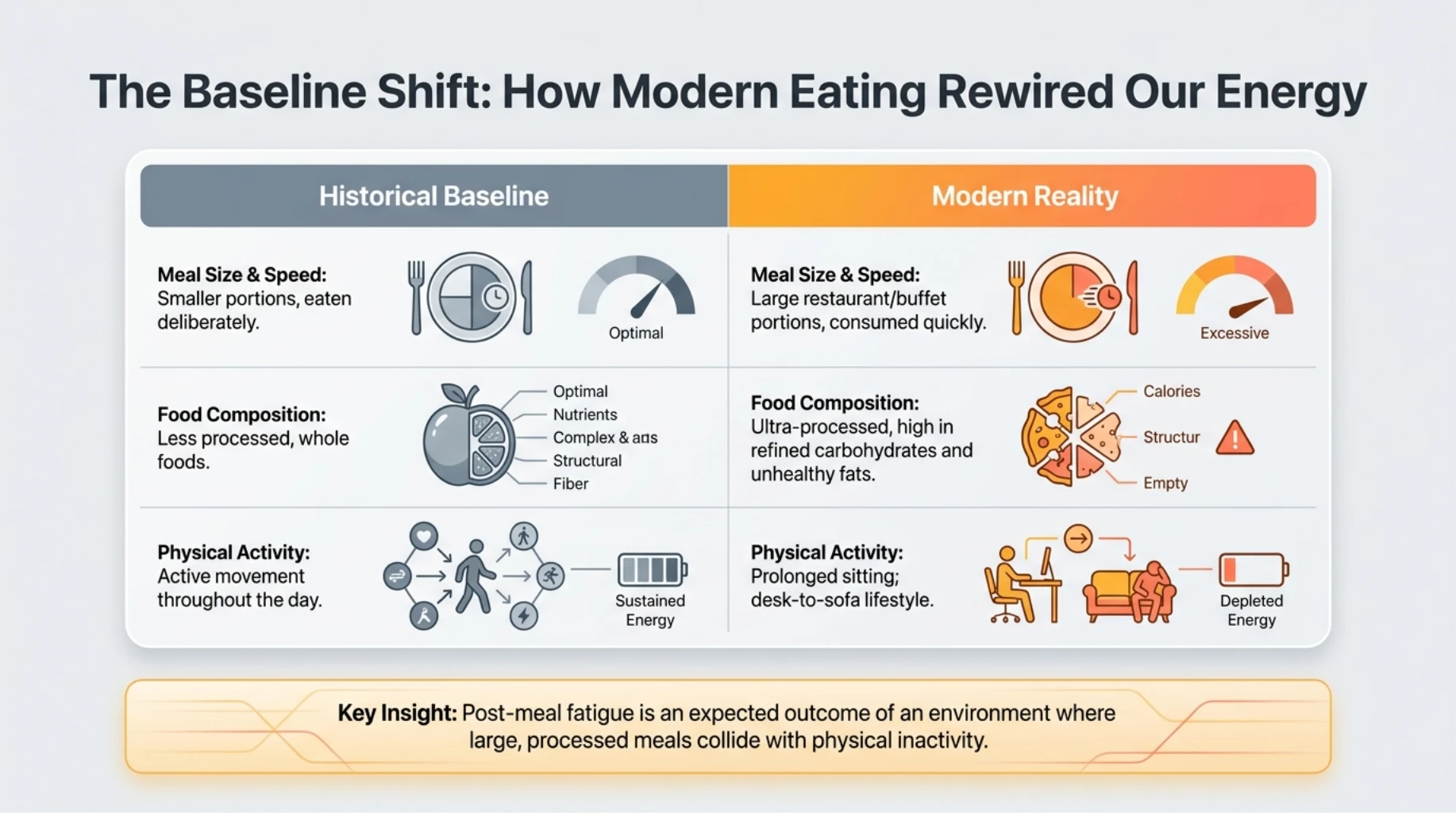
Historically, meals were often smaller, less processed, and accompanied by greater physical activity throughout the day. Modern eating patterns are very different.
Many individuals consume large meals quickly, often while sitting at a desk or looking at a screen. Restaurant portions have increased, processed foods are more widely available, and many people spend most of the day physically inactive.
These changes create an environment where post-meal fatigue becomes increasingly likely.
The Hidden Effect of Large Meals
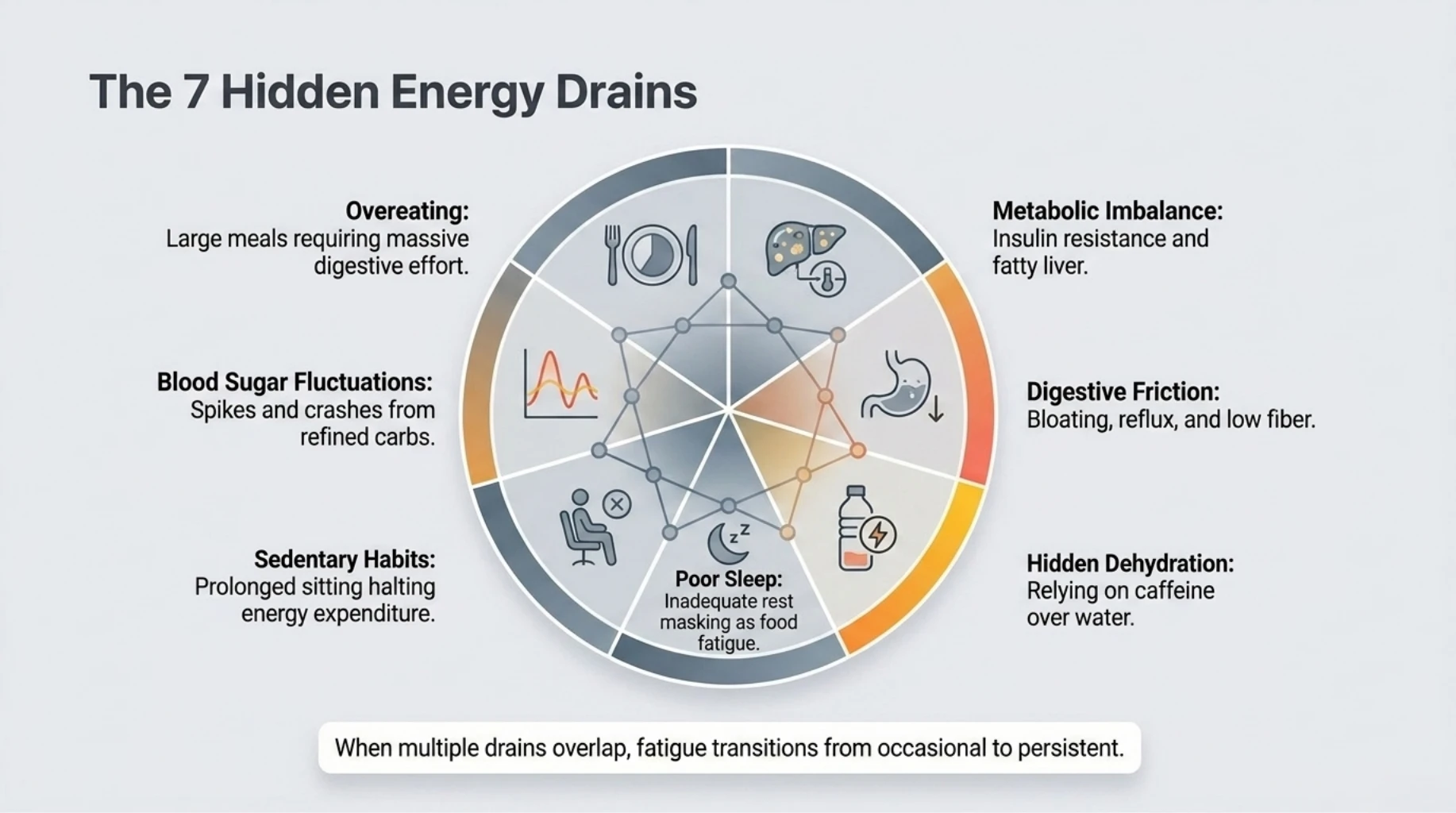
One of the simplest explanations for feeling sleepy after eating is consuming more food than the body comfortably requires at one time. Large meals require significant digestive effort.
After eating, the body redirects resources toward digestion and nutrient absorption. While this process is completely normal, very heavy meals can leave some individuals feeling sluggish and less alert.
This is particularly common after: buffets, festive meals, restaurant lunches, and meals rich in refined carbohydrates and fats.
Many people notice that their post-meal fatigue is more pronounced after overeating.
How Blood Sugar Fluctuations Affect Energy Levels
Food has a direct impact on blood sugar levels. Meals that are rich in refined carbohydrates and added sugars may lead to relatively rapid increases in blood glucose, followed by a subsequent decline.
Some individuals are particularly sensitive to these fluctuations and may experience: sleepiness, hunger soon after eating, irritability, and difficulty concentrating.
This is one reason why individuals with insulin resistance, prediabetes, or type 2 diabetes may report persistent post-meal fatigue.
Why Sitting After Meals Makes Things Worse
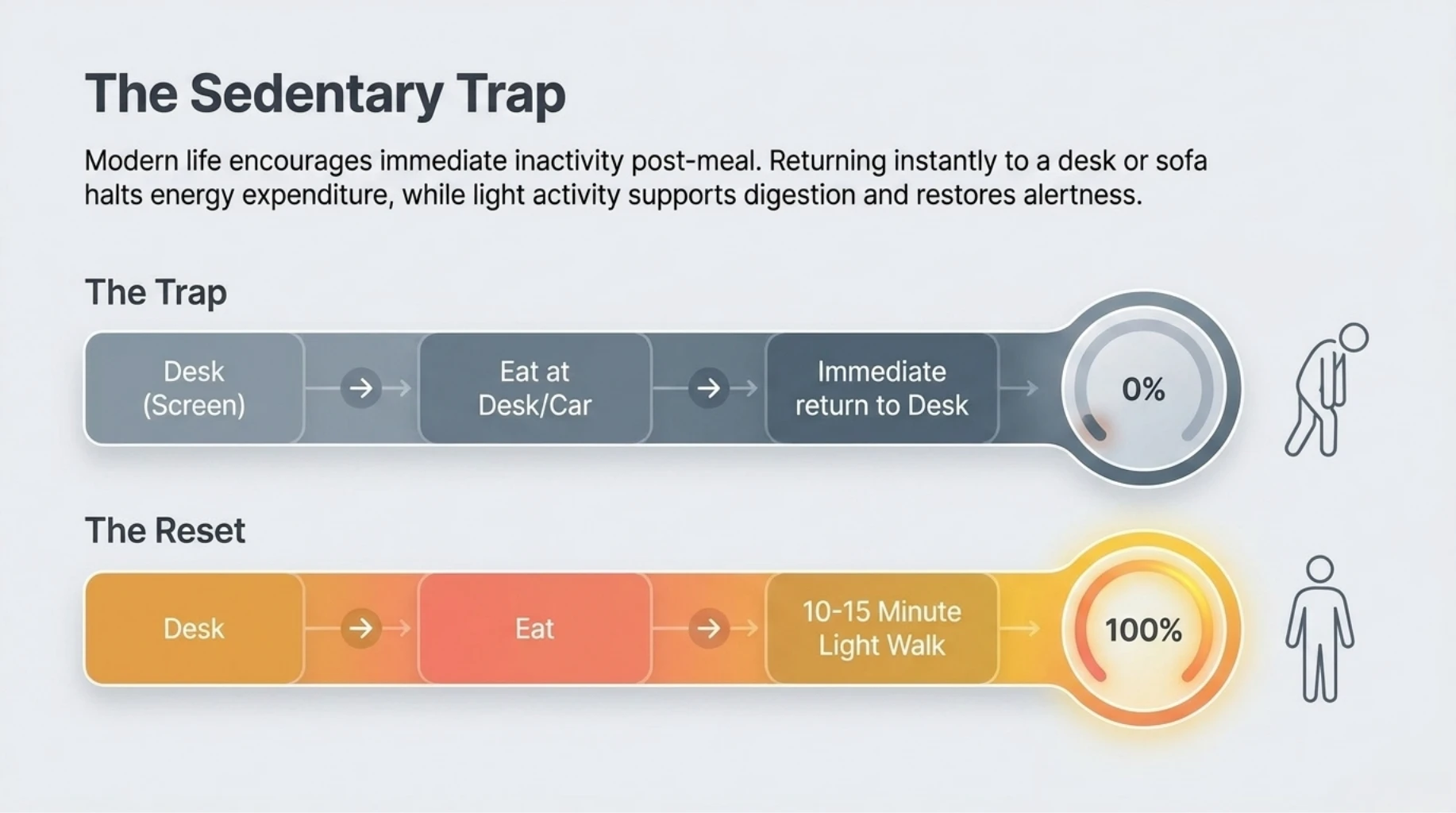
Modern life encourages prolonged sitting. Many people finish lunch and immediately return to their desk, sofa, or car.
Physical inactivity after meals may contribute to feelings of sluggishness by reducing overall movement and energy expenditure.
In contrast, light activity after eating—such as a short walk—often helps many individuals feel more alert.
This is another example of how modern lifestyle habits contribute to post-meal fatigue.
The Role of Poor Sleep
Sleep and energy are closely connected. Someone who sleeps poorly at night is more likely to feel tired throughout the day, including after meals.
In many cases, eating is not the primary problem. Instead, meals simply reveal underlying fatigue that was already present.
Many patients with persistent post-meal fatigue report: late bedtimes, poor sleep quality, excessive screen time, and inadequate sleep duration.
Addressing sleep habits often improves daytime energy just as much as changing dietary habits.
The Connection Between Insulin Resistance and Post-Meal Fatigue
One of the most important metabolic causes of post-meal fatigue is insulin resistance.
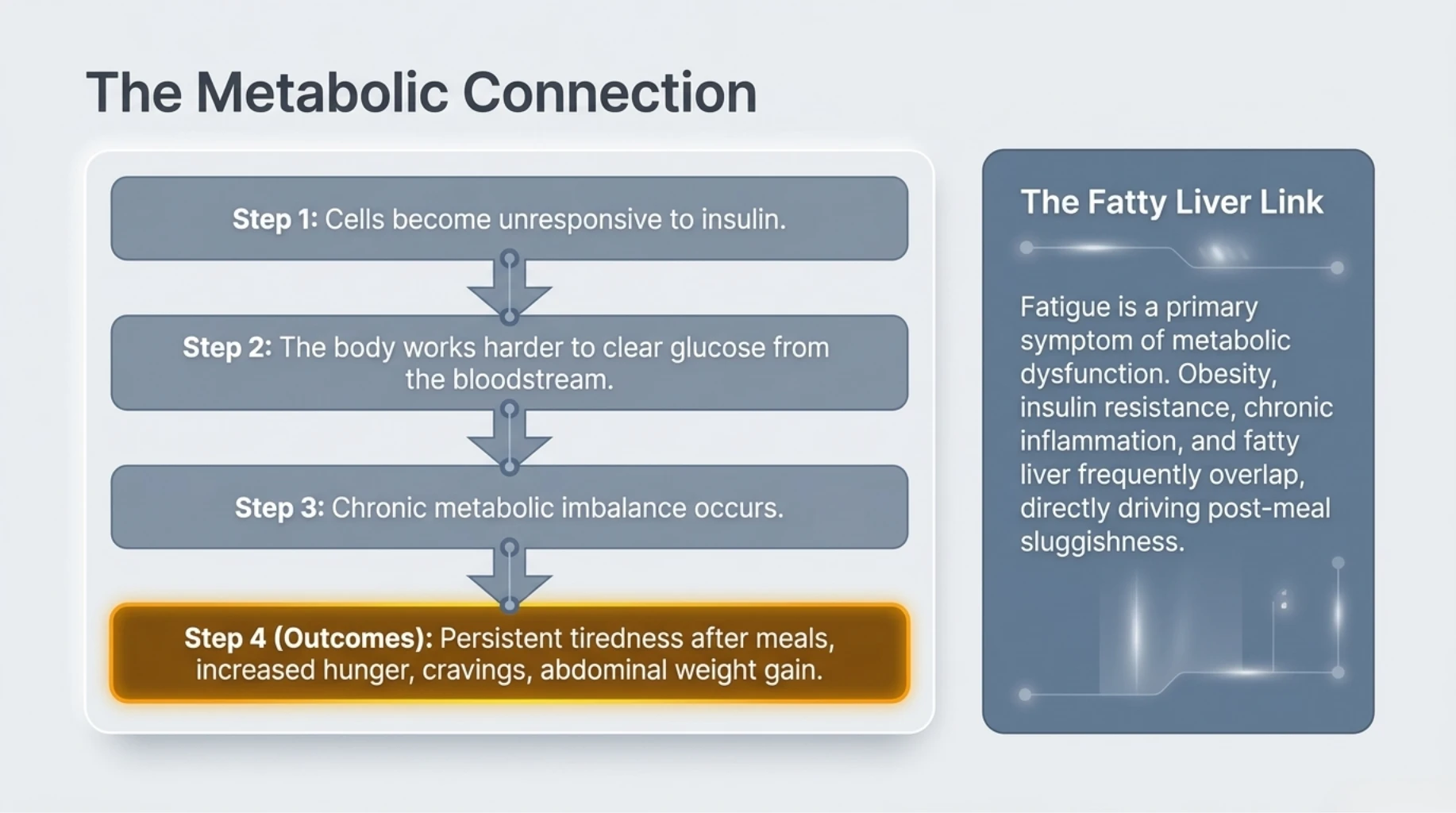
Insulin helps move glucose from the bloodstream into cells where it can be used for energy. When cells become less responsive to insulin, the body has to work harder to maintain normal blood sugar levels.
Over time, this metabolic imbalance may contribute to: persistent tiredness, increased hunger, abdominal weight gain, cravings, and feeling sleepy after meals.
This is why individuals with prediabetes, obesity, fatty liver, or type 2 diabetes frequently report that they feel unusually tired after eating.
Can Hidden Dehydration Make You Feel Sleepy After Eating?
Absolutely. Many people go through the day drinking very little water while relying heavily on tea, coffee, or sugary beverages.
When mild dehydration is already present, the additional demands of digestion may make fatigue more noticeable after meals.
People often assume they need more caffeine when, in reality, they may simply need better hydration.
Because hidden dehydration is so common in modern lifestyles, it should always be considered when evaluating persistent post-meal fatigue.
Why Ultra-Processed Foods Leave You Feeling Tired
Not all calories affect the body in the same way. Meals dominated by ultra-processed foods often provide large amounts of refined carbohydrates, unhealthy fats, and added sugars while offering relatively little fibre and protein.
These meals may contribute to: rapid hunger, poor satiety, blood sugar fluctuations, and reduced energy levels.
Many individuals notice that they feel significantly more tired after eating fast food or heavily processed meals compared with balanced home-cooked meals.
This is another reason why modern eating habits are strongly associated with post-meal fatigue.
How Digestive Health Influences Energy
The digestive system plays a major role in overall well-being. Conditions such as bloating, acid reflux, constipation, and indigestion may leave individuals feeling uncomfortable and tired after meals.
In some cases, the body is not simply responding to food itself—it is responding to inefficient digestion and underlying gastrointestinal discomfort.
Supporting digestive health through adequate fibre intake, hydration, physical activity, and balanced meals often helps improve energy levels over time.
The Link Between Fatty Liver and Fatigue
Fatigue is one of the most commonly reported symptoms among individuals with metabolic dysfunction.
Fatty liver frequently occurs alongside obesity, insulin resistance, poor sleep, and chronic inflammation—all of which can contribute to low energy levels.
Although fatty liver itself does not always cause symptoms, many individuals with fatty liver report feeling tired more often than expected.
When this fatigue becomes particularly noticeable after meals, it further highlights the complex relationship between metabolism and post-meal fatigue.
Why Younger Adults Are Increasingly Affected
Feeling sleepy after meals is no longer limited to older adults.
Today’s younger generations are exposed to multiple lifestyle factors that increase the risk of fatigue: late-night screen use, poor sleep, sedentary behaviour, processed foods, irregular meal timings, and chronic stress.
As these habits become more common, complaints of post-meal fatigue are increasingly seen among students, young professionals, and even teenagers.
The Real-Life Pattern Seen in Clinical Practice
Many patients describe a remarkably similar routine.
They wake up feeling tired, skip breakfast or eat something quickly, consume multiple cups of tea or coffee, sit for most of the day, eat a large lunch, and then struggle to stay awake during the afternoon.
Some even rely on additional caffeine to remain productive. Over time, they begin accepting fatigue as a normal part of adult life.
However, when sleep, hydration, meal composition, physical activity, and metabolic health are evaluated together, it becomes clear that post-meal fatigue is often a symptom of broader lifestyle patterns rather than a standalone problem.
Why Feeling Sleepy After Eating Should Not Always Be Ignored
Occasional sleepiness after a large festive meal is usually nothing to worry about. Persistent fatigue after most meals, however, deserves closer attention.
When symptoms occur regularly, they may provide an opportunity to identify lifestyle habits or underlying health conditions before they progress further.
Listening to these early warning signs is an important part of preventive healthcare.
How to Reduce Post-Meal Fatigue Naturally
The encouraging news is that post-meal fatigue often improves significantly with simple lifestyle changes.
Most people do not need extreme diets or complicated meal plans. Instead, they benefit from improving the quality of their meals, maintaining better sleep habits, staying physically active, and supporting their overall metabolic health.
Small, sustainable changes usually produce the best long-term results.
Pay Attention to Meal Composition
What you eat often matters just as much as how much you eat.
Meals that are heavily dominated by refined carbohydrates and sugary foods are more likely to leave people feeling sleepy afterward.
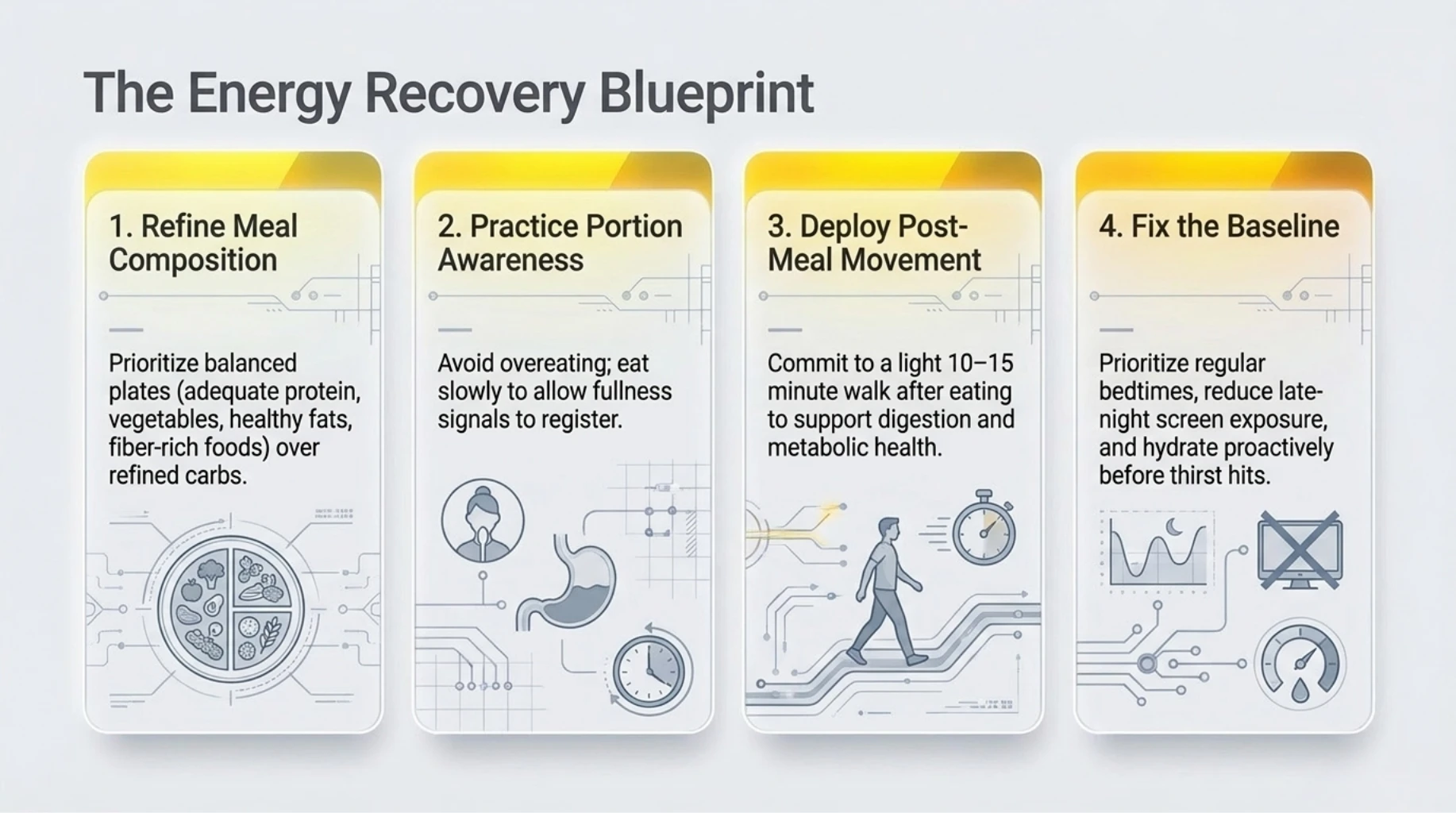
In contrast, balanced meals containing: adequate protein, vegetables, healthy fats, and fibre-rich foods tend to support better satiety and more stable energy levels.
Many individuals notice that simply improving meal composition significantly reduces post-meal fatigue.
Avoid Overeating
Large meals place a greater demand on the digestive system. Although occasional indulgence is part of life, regularly eating until feeling overly full often contributes to sluggishness afterward.
Practicing portion awareness and eating more slowly allows the body time to recognize fullness signals.
Many people are surprised by how much more energetic they feel after eating slightly smaller, balanced meals.
Try Walking After Meals
One of the simplest lifestyle interventions is taking a short walk after eating. Light physical activity supports digestion, promotes movement, and helps many individuals feel more alert.
This does not need to be intense exercise. Even a 10–15 minute walk after meals can become a useful habit for supporting overall metabolic health.
For many patients, this is one of the easiest ways to improve post-meal fatigue without making major changes to their routine.
Improve Your Sleep Habits
Persistent daytime fatigue often begins the night before.
If someone consistently sleeps for only five or six hours, meals may simply reveal the tiredness that already exists.
Prioritizing: regular bedtimes, adequate sleep duration, reduced late-night screen exposure, and better sleep hygiene can significantly improve daytime energy levels.
Healthy sleep remains one of the most overlooked treatments for fatigue.
Stay Hydrated Throughout the Day
Hydration plays an important role in maintaining energy and concentration. Waiting until you feel extremely thirsty is not always the best strategy.
Building regular hydration habits throughout the day supports both digestion and overall well-being.
For some individuals, improving hydration alone noticeably reduces symptoms of post-meal fatigue.
Support Your Metabolic Health
Because insulin resistance and metabolic dysfunction are closely linked to fatigue, supporting long-term metabolic health is essential.
This includes: maintaining a healthy body weight, engaging in regular physical activity, eating balanced meals, managing stress, and obtaining adequate sleep.
These habits benefit far more than energy levels—they support cardiovascular health, blood sugar regulation, and overall longevity.
When Should You Seek Medical Advice?
Occasional tiredness after a particularly large meal is usually not a cause for concern.
However, medical evaluation should be considered if post-meal fatigue: occurs after most meals, significantly affects daily life, is accompanied by unexplained weight changes, excessive thirst, frequent urination, persistent fatigue, dizziness, or other concerning symptoms.
In some cases, further evaluation may be needed to assess blood sugar levels, thyroid function, sleep quality, nutritional status, or other underlying health conditions.
Healthy Energy Is Built Through Daily Habits
Many people search for supplements or energy drinks when they feel tired after eating.
While these may provide temporary stimulation, they rarely address the underlying cause.
Long-term energy is usually built through consistent habits: better sleep, healthier meals, regular movement, good hydration, and improved metabolic health.
These lifestyle changes often provide benefits that extend far beyond reducing fatigue alone.
Putting Everything Into Perspective
Post-meal fatigue is becoming increasingly common because modern lifestyles encourage many of the behaviours that contribute to it—poor sleep, processed foods, large meals, prolonged sitting, and chronic stress.
Although feeling sleepy after eating is often harmless, persistent symptoms should not always be dismissed as normal.
Sometimes, the body is simply asking for better habits. Other times, it may be providing an early clue that metabolic health deserves closer attention.
Final Thought
If your body consistently asks for sleep after every meal, it may not be a sign of laziness. It may simply be asking for a healthier lifestyle.
If you want a personalized metabolic assessment and lifestyle strategy, you can book a consultation here:
Book an Appointment