

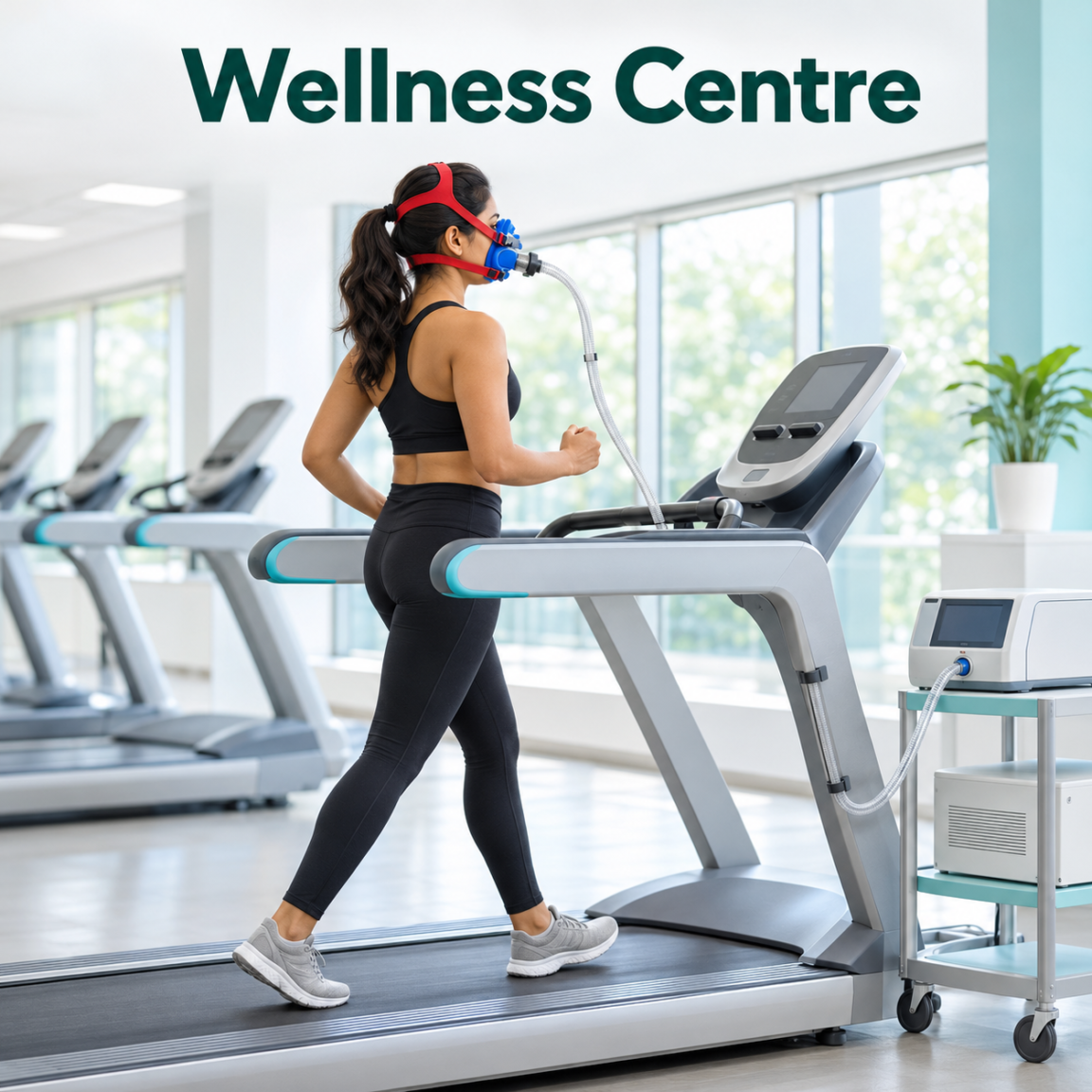
A wellness centre should be able to tell you who will assess you, what service you are paying for, how it will be adapted to your health, and what happens if you need care outside the centre. For a beginner’s fitness class, that may mean a short health questionnaire and an instructor who can show you easier exercises. For persistent knee pain or a weight programme that includes medication, it means a different assessment, different qualifications and a clear follow-up plan.
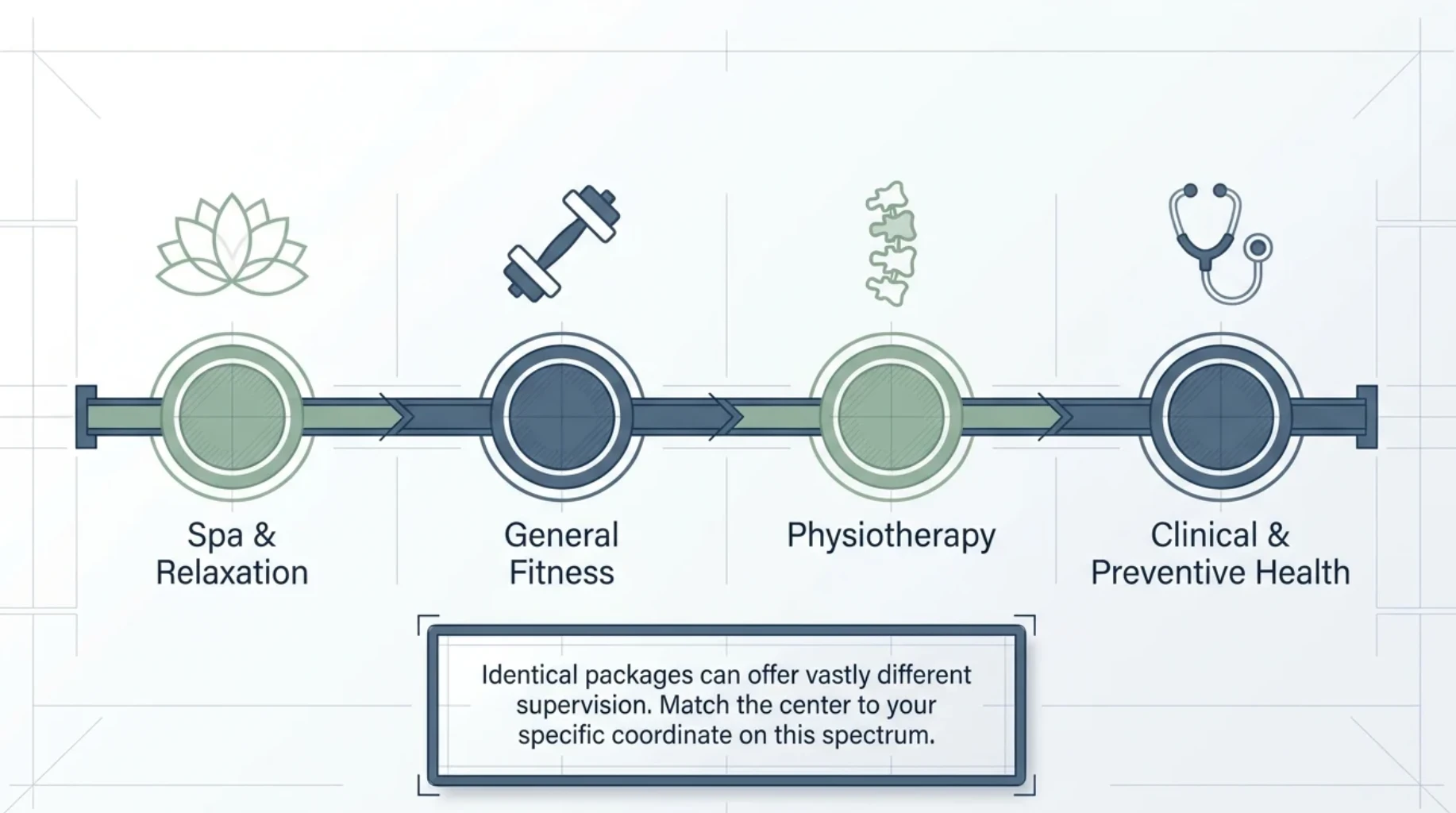
In India, the same search for a “wellness centre near me” can bring up a yoga studio, a spa, a physiotherapy clinic and an executive health-check facility. Two centres may advertise identical packages while offering very different levels of supervision. Ask the centre to describe your first visit from the moment you arrive to the time you leave. You will quickly find out whether their service matches the reason you are booking.

What services should a wellness centre offer?
The essential services depend on the centre’s scope. Every centre should explain its services and fees, identify the person responsible for your session, ask about relevant health concerns, and explain how to stop or modify a session. A centre offering clinical services should also explain who makes clinical decisions, how records are kept and how referrals are handled. India’s National Accreditation Board for Hospitals & Healthcare Providers (NABH) uses a broad wellness-centre framework covering areas such as customer rights, staff, equipment, hygiene and facility safety. Its wellness accreditation programme is voluntary. If a branch advertises accreditation, ask for the current certificate and check the facility address, programme and validity. NABH wellness centre accreditation framework
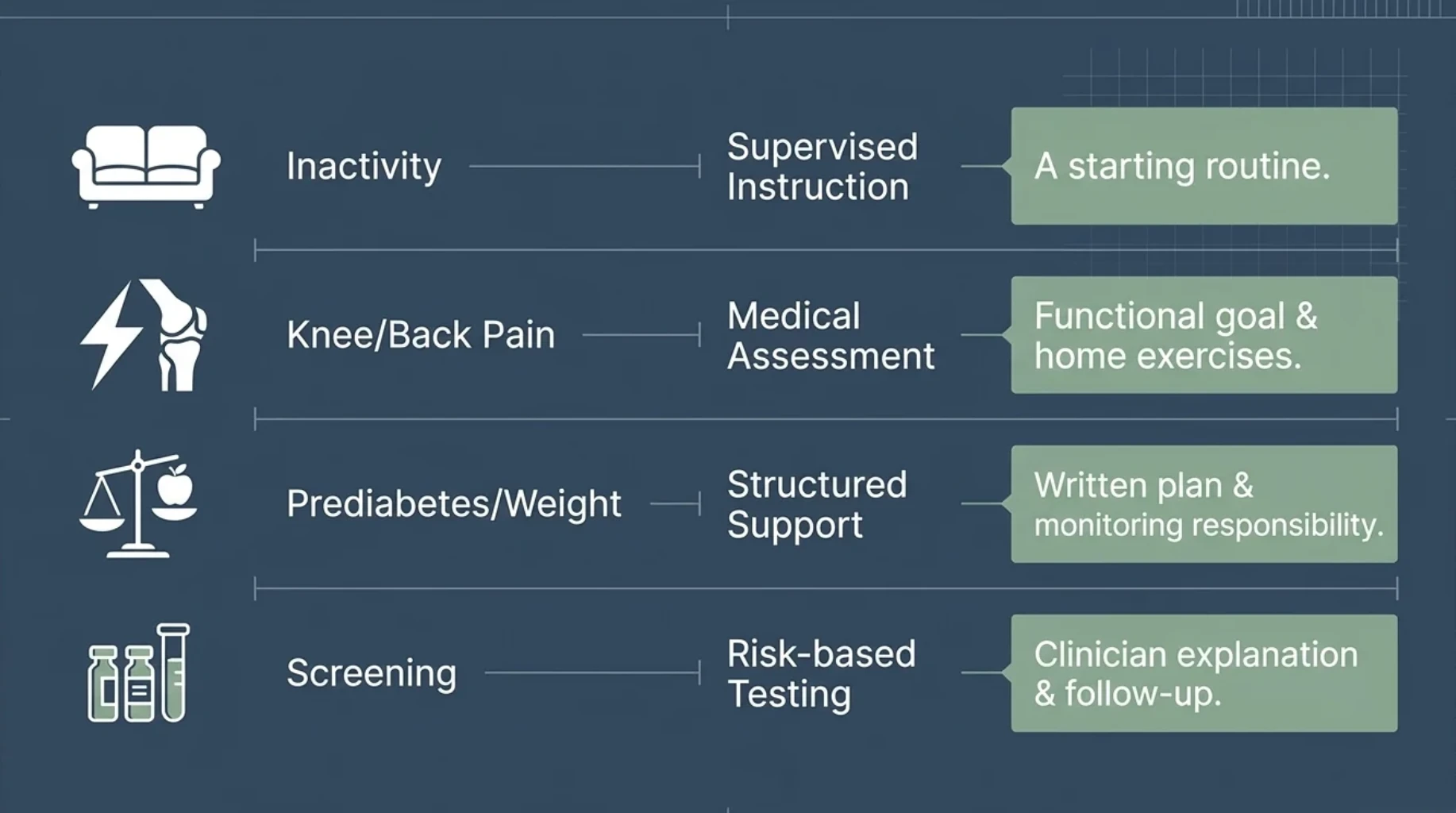
| Your reason for booking | Service to ask for | What you should leave with |
|---|---|---|
| Start exercising after years of inactivity | Beginner assessment and supervised instruction | A starting routine and a plan to progress |
| Knee or back pain limits daily activity | Physiotherapy or medical assessment, depending on symptoms | A functional goal, home exercises if appropriate and review criteria |
| Weight management or prediabetes | Structured nutrition, activity and behaviour support with clinical input as needed | A written plan, review date and responsibility for monitoring |
| Relaxation after a busy week | A suitable class or relaxation session with clear safety procedures | A clear understanding of the service, limits and total cost |
| Preventive health screening | Risk-based test selection and a clinician-led results review | An explanation of results and a plan for anything that needs follow-up |
1. An initial assessment that changes the plan
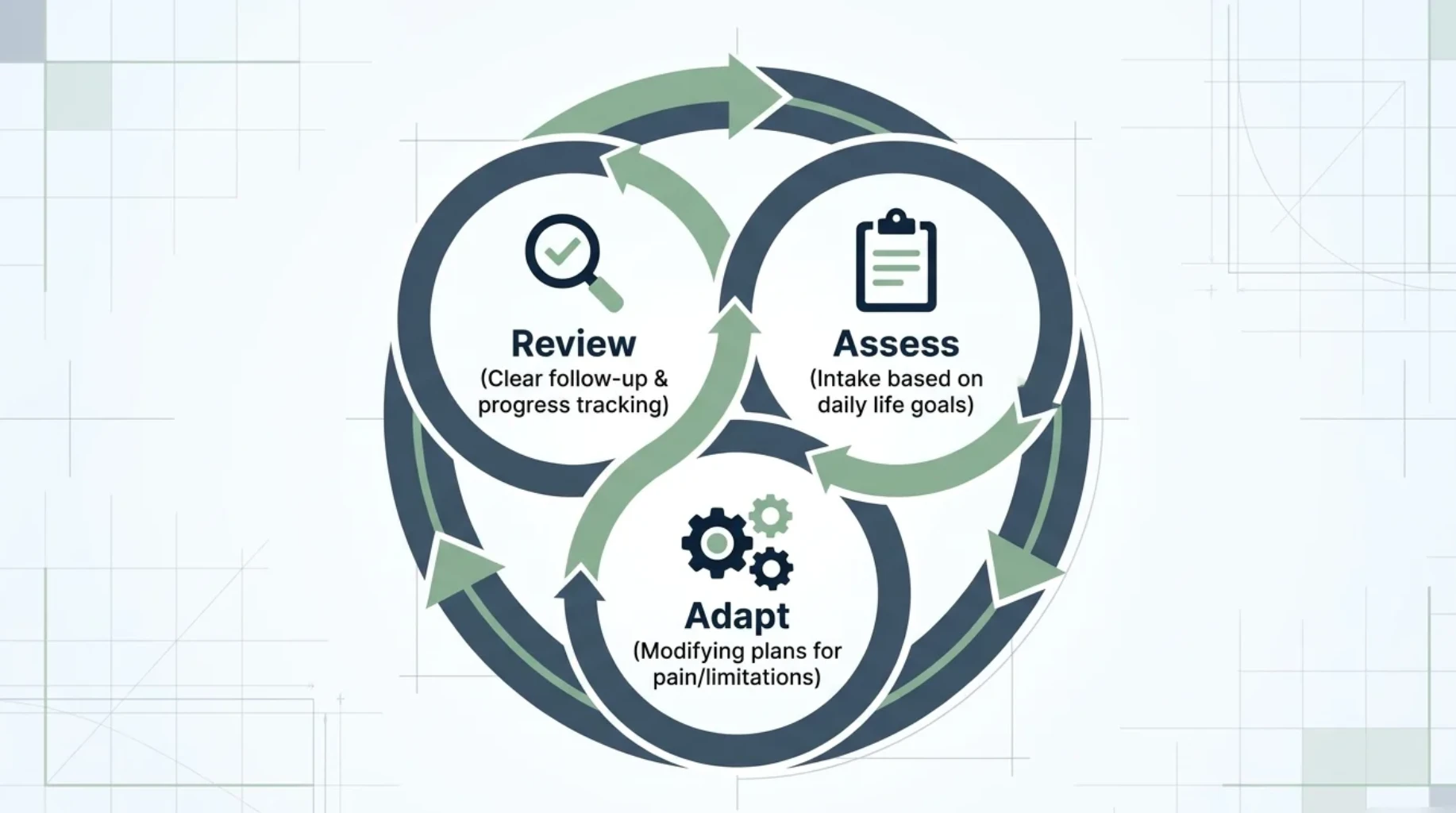
A useful wellness assessment begins with a question about what you want to do in daily life. You may want to climb a staircase without stopping or return to badminton after a long break. That answer should shape the visit. A good intake may cover your current activity, previous injuries, relevant diagnoses, operations, medicines and symptoms during exertion. For a beginner group class, the intake can be brief. For a medically supervised programme, expect more time and a private discussion.
Ask what the team does with your answers. If you mention knee pain when walking downstairs, can the trainer demonstrate an easier option and explain when a physiotherapy assessment would help? If you have poor balance, will someone supervise your first session near a stable support? If the centre asks about your medications, ask which professional reviews the information and how it affects the session. A form that goes straight into a file can tell you less about the centre’s practice than one well-handled answer.
Baseline measures should answer a question you care about. A person who struggles to rise from a chair could track performance on an appropriate chair-stand assessment under supervision. Someone preparing for a walking holiday could track comfortable walking time and recovery. Asking both people to buy the same body-composition scan tells you very little about how the programme will be personalised. The CDC’s STEADI resources illustrate how chair stands, balance and mobility tests each measure a different aspect of older adults’ function. A history of falls also merits a broader assessment when indicated. CDC STEADI clinical resources
For a healthy beginner, the centre should be able to offer a gradual starting point. If you develop chest pain or pressure, faint during exertion, or have severe breathlessness, seek urgent medical assessment. If you have a recent operation, unexplained symptoms or a condition that affects exercise safety, ask who assesses when you can begin and what, if any, restrictions apply. If a clinician has already given you instructions, confirm the centre can follow them before you pay.
2. Exercise coaching that teaches you how to progress
A fitness-oriented wellness centre should explain how a beginner is introduced to exercise, how instructors supervise sessions and how they decide when to increase the workload. The World Health Organization’s adult activity recommendations include 150–300 minutes of moderate aerobic activity weekly, or the vigorous equivalent, plus muscle-strengthening work on at least two days. Older adults should also include activity that emphasises balance and strength. These are weekly public-health targets. A centre should help you build towards suitable targets from the activity you can manage today. WHO physical activity guidance
Ask what a first month might look like for someone with your starting point. A desk worker who rarely exercises might practise several basic strength movements, try a short walk at a manageable pace and learn how to judge effort. The instructor should be able to explain which part of the routine might progress first, such as longer walks, more repetitions or a small increase in resistance. The plan should also say when to pause and ask for help if symptoms develop. Look for specific instruction you can use between appointments.
Watch a session at the time you would actually attend. A quiet midday tour can conceal how busy the floor gets at 7 pm. See whether the instructor checks new members’ technique, how long people wait for commonly used equipment and whether sessions leave space to move safely. Ask whether the centre is staffed during all member-access hours. If your expected routine depends on somebody being there to supervise, get that commitment for your actual time slot.
For older adults, ask about entrance steps, rails, lift access, stable chairs and floor space. Find out whether staff can teach chair-supported or standing alternatives if getting down to a mat is difficult. For a person taking medicines that can cause low glucose, an exercise programme should be coordinated with the diabetes team as needed. Ask how the centre responds to possible hypoglycaemia and whether staff know whom to contact. Bring your existing exercise and glucose-safety instructions if you have them. ADA Standards of Care in Diabetes 2026, health behaviours and well-being
3. Nutrition counselling that works with your household
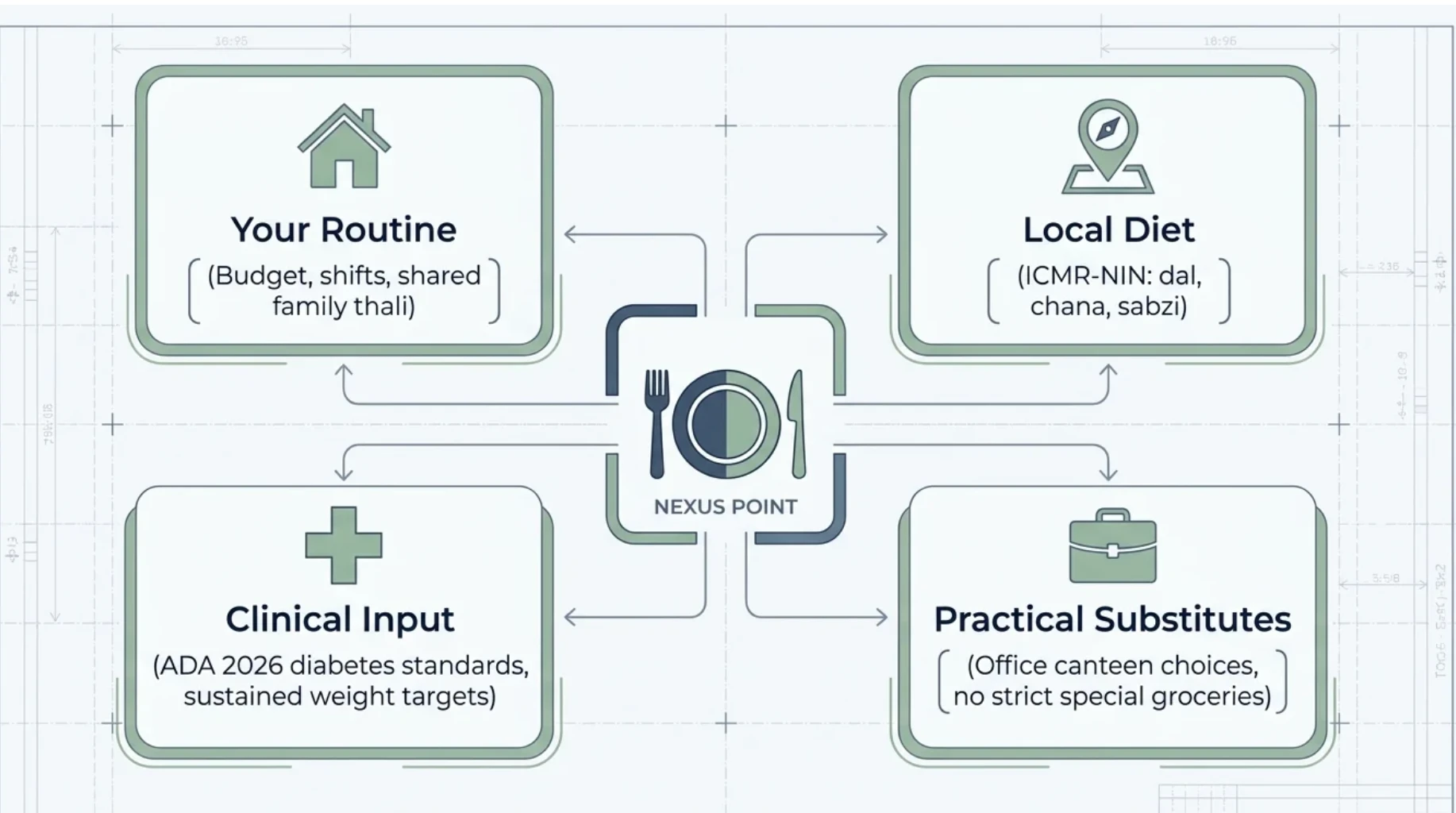
A worthwhile nutrition visit should start with your usual meals, budget, food preferences, cooking arrangements and working hours. Ask the practitioner to show you what the programme might change on an ordinary day. A person who eats at an office canteen needs help choosing from that menu. Somebody living with family may need to adjust portions of a shared thali. A night-shift employee may need meals that can be packed and eaten during a predictable break. All three should receive advice they can use on the days when following a plan is hardest.
The ICMR–National Institute of Nutrition’s Dietary Guidelines for Indians offer a locally relevant starting point for food variety and healthy eating. A practitioner should be able to discuss customary foods such as dal, chana, vegetable sabzi, curd, eggs, fish, rice or roti in the context of your needs and preferences. Ask what the practitioner would change first if your budget limits the use of special products. Ask whether outside food, religious fasting and shared family meals can be discussed at follow-up. These answers tell you how much the advice will depend on buying a separate set of groceries. ICMR–NIN Dietary Guidelines for Indians, 2024
Check what “diet consultation” means in the package. It could be one conversation, a written plan with review appointments, or access to a group channel. Ask for the practitioner’s qualifications and experience with your condition if you are seeking help for diabetes, kidney disease or another medical issue. If you have a treating clinician, ask whether the centre can share recommendations with them with your consent. The staff member who creates your meal plan should know who handles questions about prescriptions, treatment targets or new symptoms.
Use the first follow-up to discuss what happened when you tried the plan. For instance, if a suggested afternoon snack is unavailable at work, the centre should help you find a substitute you can buy nearby or carry from home. If the programme recommends a supplement, ask why it is indicated, who checked possible interactions, how long you would take it and whether you can decline it without losing access to counselling.
4. Weight management and metabolic support with follow-up
Ask a wellness centre offering a weight management package for its contact schedule. Find out how many sessions are individual, who reviews your progress and what support continues after the initial package. NICE’s obesity management guidance describes behavioural programmes that address eating, activity and behaviour change together, with goals and ongoing support. A practical programme should help you plan for difficult weeks and decide how to resume after a lapse. NICE guidance on behavioural weight management
If you are booking because a clinician found prediabetes, ask whether the programme includes structured coaching and a plan for repeat testing with your clinician. The ADA’s 2026 standards recommend referral to an evidence-based prevention programme for adults with overweight or obesity at high risk of type 2 diabetes. One recommended approach aims for a sustained reduction of at least 5–7% of starting weight and at least 150 minutes of moderate activity per week. That recommendation applies to the specified group and describes a structured programme. Ask the centre how closely its delivery resembles the intervention it cites. ADA Standards of Care in Diabetes 2026, diabetes prevention
For people who find weigh-ins stressful, ask how the programme accommodates that preference and whether you can agree on other relevant measures. The plan might track walking capacity, attendance at strength sessions or how consistently you can prepare meals that fit your goal. When body weight is useful, agree on when it is measured and how longer-term trends will guide decisions. That helps keep a short-term fluctuation from becoming an automatic reason to change your plan.
If prescription medicines are offered, ask for the name and qualifications of the prescribing clinician, the assessment involved, how side effects are managed and who you can contact between reviews. Ask for the price of consultations, medicines and tests separately. Find out how the centre coordinates with your existing diabetes or blood-pressure care, particularly if substantial changes to eating or activity could affect treatment. The same questions apply to packages advertised as injection-led weight loss.
5. Physiotherapy and pain support built around function
If a wellness centre advertises physiotherapy, ask who does the assessment and who delivers subsequent sessions. A first visit for persistent back or knee symptoms should usually explore how the problem began, what aggravates it and which activity you want to regain. For a person with back pain who cannot sit through the commute, the relevant progress measure might be comfortable sitting or walking time. For somebody with knee pain, it could be getting up from a chair or taking the stairs with less difficulty.
The WHO guideline for chronic primary low back pain includes structured education and exercise among its approaches. Its scope matters. It addresses chronic primary low back pain in adults, a category that requires appropriate assessment. If a centre describes every back problem as poor posture and offers the same set of sessions to every client, ask what findings support the proposed approach for you. Ask when progress would trigger a change and when new symptoms would trigger a referral. WHO guideline on chronic primary low back pain, 2023
Some people value hands-on treatment for symptom relief. Before buying a prepaid block, ask how any passive treatment fits with practice at home and the activities you want to recover. Will the therapist teach movements you can repeat yourself? Will they check that you can perform them? Will they reassess you if the pain or your ability to move changes? If you are recovering from surgery, confirm the physiotherapist can work with your surgeon’s instructions and knows which restrictions apply.
Here is a simple way to compare two proposals. Ask each practitioner what they expect you to be able to do by the first review and what they will do if you are still struggling. A clear answer may include an achievable early goal, a home plan and an explicit review point. A list of machine names and session durations answers a different question: how your time at the facility will be spent.
6. Stress, sleep and relaxation services with clear boundaries
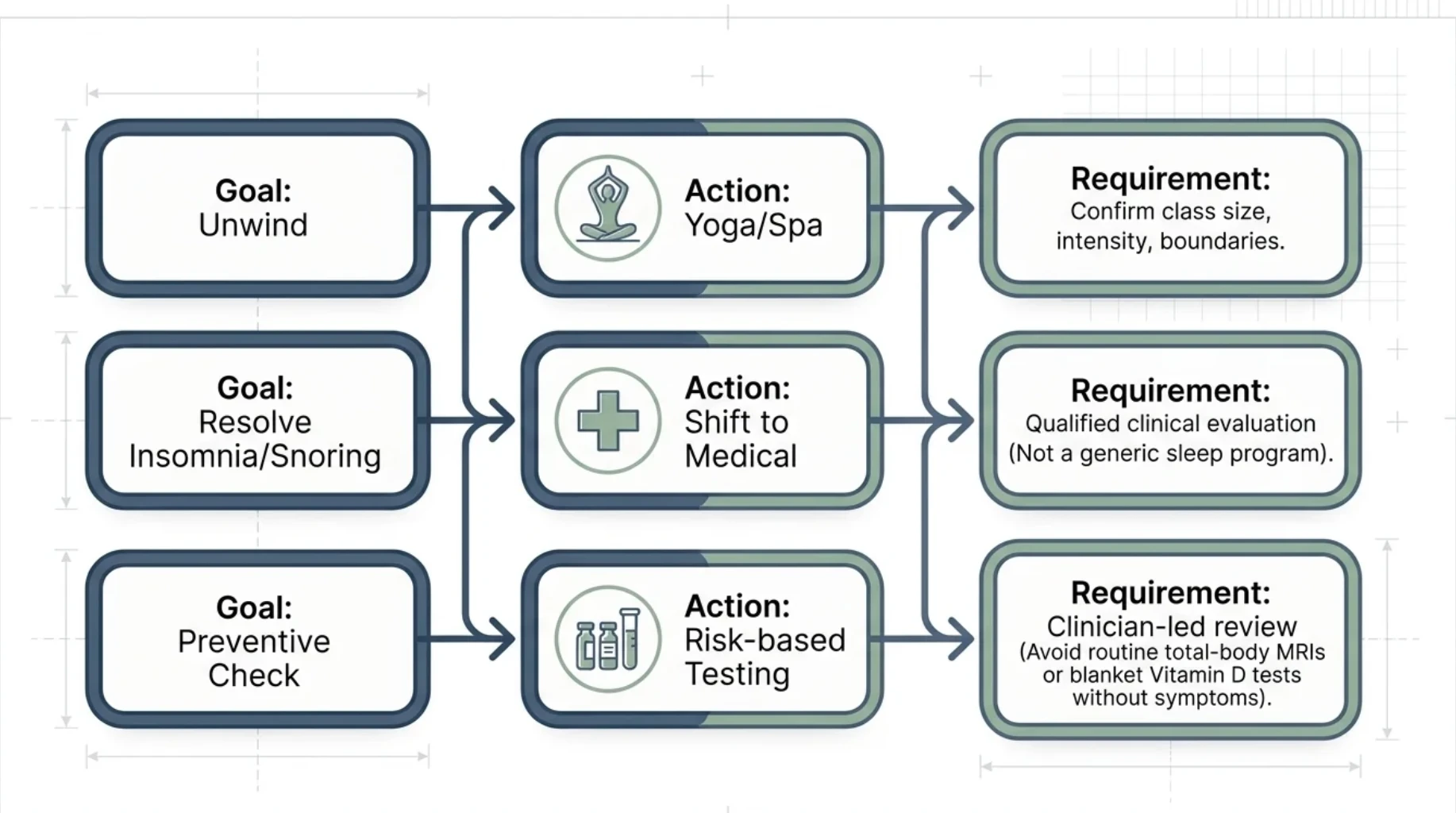
A gentle yoga class, breathing practice or relaxation session can be a reasonable booking when your aim is to unwind or build a routine. Confirm the class size, instructor experience, intensity, and whether you can skip exercises or use a chair. Tell the instructor about relevant limitations before the session. At a spa, confirm what the treatment involves, whether you can choose or decline areas of touch, and whether the therapist can explain the hygiene practices for linens and shared equipment.
Exercise can play a role in a broader mental-health plan. A 2024 BMJ network meta-analysis of randomised trials found benefits for several types of exercise among people with depression, although confidence in many estimates was low or very low. The findings concern exercise interventions in defined study populations. When a centre advertises counselling or treatment for depression or anxiety, ask for the clinician’s qualifications, how sessions are kept private and what happens if someone needs more specialised help. Noetel and colleagues, BMJ, 2024
Ask what a “sleep programme” covers. Help with a regular schedule can be appropriate if you want to change daily habits. Persistent insomnia or loud snoring with witnessed breathing pauses and daytime sleepiness deserves clinical evaluation. If these symptoms prompted the booking, ask whether the centre provides an assessment by a qualified clinician or can help you arrange an appropriate referral. A clear referral can save weeks of trying to solve the wrong sleep problem.
7. Preventive screening with a reason for each test
If you want a preventive check-up, ask for a consultation that considers age, medical and family history, symptoms, relevant medications and tests you have recently had. Ask what each proposed test would change. For instance, a blood pressure check can lead to repeat measurements if the first reading is high, while a blood glucose test may make sense when your risk or screening history supports it. The centre should be able to tell you who reads the result, when you will hear from them and how urgent results are handled.
When dozens of markers are measured together, a result just outside its reference range can lead to anxiety, repeat testing or further investigations. The meaning depends on the marker and your situation. The Endocrine Society’s 2024 guideline suggests against routine vitamin D blood testing in generally healthy adults without an established indication. The American College of Radiology found insufficient evidence to recommend screening total-body MRI for people without symptoms or relevant risk factors. Both examples show why the same test can be appropriate for one person and questionable as a universal package item. Endocrine Society vitamin D guideline, 2024 · ACR statement on total-body MRI screening, 2023
Before payment, request an itemised list and the name of the laboratory or imaging provider if services are outsourced. Ask whether you can bring recent reports and omit duplicate tests. Find out who explains borderline findings and whether that review is included. If you are booking for an older parent who is already seeing a doctor, make sure there is a clear route to share the report with the person who manages their treatment. A package that includes a report without a review may leave the family doing the hardest part of the work.
How to check safety, fees and privacy before paying
Ask the centre to explain its emergency procedure in practical terms. In an exercise facility, who is trained to respond at your session time, where is the first-aid kit and how would staff call emergency services? If the facility advertises an automated external defibrillator, ask where it is kept and whether trained staff are present. Check how the centre manages equipment cleaning, slippery floors and crowding. For procedures that involve skin contact or sharps, ask the provider to explain the hygiene and disposal practices relevant to that treatment.
Ask which services are delivered at the branch and which are arranged elsewhere. A resident physiotherapist, a visiting practitioner available twice a month and a partner clinic across town are three different arrangements. Check the actual duration of appointments, waiting time after the assessment, and whether you can choose a different practitioner if you need to. If you need a particular language, a chaperone or an accessible changing room, confirm availability during the time slot you plan to use.
Request the full price in writing. Check the number of appointments, whether they are individual or group sessions, how long you have to use them, and whether taxes, joining charges, tests and products are included. Find out if membership renews automatically and what happens if you travel, fall ill or need to change the timing. A discounted package can become expensive if it expires before you can use the appointments. Run the calculation using the number of visits you can realistically attend.
Ask how the centre shares health forms, photos and reports. Individual health information should have a private route for sharing. Ask whether WhatsApp messages are one-to-one or in a group, who sees the records and whether joining the group is optional. If the centre takes progress photos, ask why they are needed and whether marketing permission is requested separately. If you are booking for another adult, ask them what they are comfortable sharing and with whom.
A five-minute call to compare wellness centres
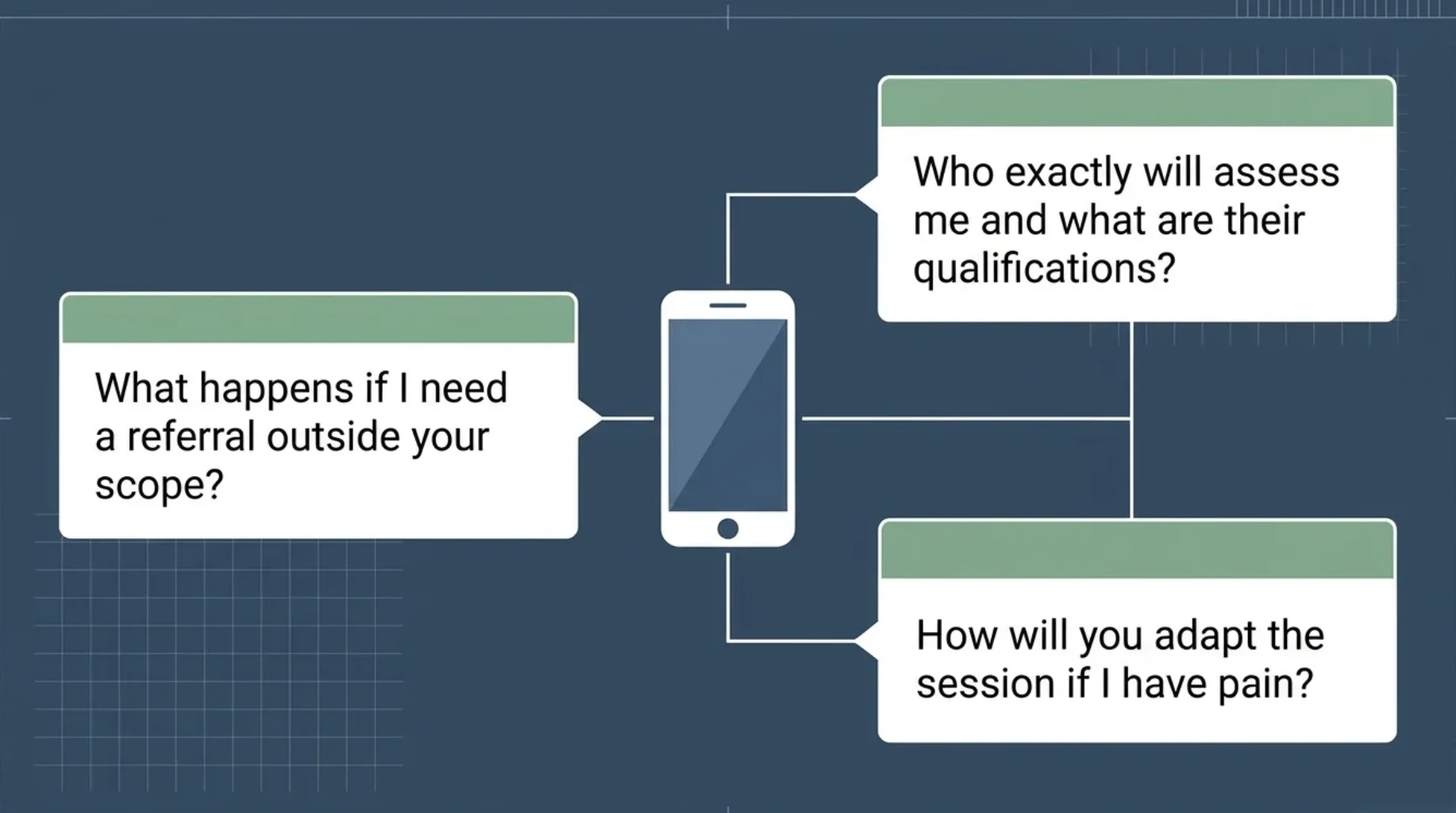
Tell both centres the same thing about your goal. For example: “I want to start strength training, and my knee hurts when I use the stairs. Who will assess me, and what would you change about my first session?” If one centre describes who will see you, how they will adapt the session and when they would refer you, you have enough information to compare it with the other centre’s response. Use these prompts if you are comparing packages over the phone:
- Who will deliver my first appointment, and what qualifications or experience do they have for my goal?
- What will the assessment cover, and can you give an example of how it might change my plan?
- What will I receive in writing after the first visit?
- When will you review my progress, and who handles symptoms or findings outside your scope?
- What is the full cost, including any fees for tests, products, review visits or cancellations?
If you only need one service, ask about a standalone session before committing. This gives you a chance to check whether the practitioner listens, explains the options and leaves you with something you can use. Pause if a centre cannot put its fees in writing, cannot identify who will supervise you, or tries to sell tests or treatments before hearing why you came. Where claims are specific, such as losing a fixed amount of weight in a fixed time or curing chronic disease, ask what outcome was studied, for whom and with what harms or limitations.
Frequently asked questions about wellness centre services
Does every wellness centre need an on-site doctor?
The answer depends on the service. A centre offering ordinary group fitness or relaxation should explain its screening process and where it refers people when medical input is needed. A service that diagnoses conditions, manages prescription treatment or markets a medical assessment should identify the qualified clinician responsible and tell you how to reach them for follow-up.
Can I join a wellness centre if I have diabetes or high blood pressure?
Many people with these conditions can benefit from suitable physical activity and lifestyle support. Tell the centre about your conditions, medications and relevant symptoms, and explain any guidance you have received about exercise. Ask how the plan would be adapted and how staff respond if you feel unwell. If you have recent symptoms or a new complication, clarify the level of activity with your clinical team first. WHO physical activity guidance
Should I book a wellness centre or a physiotherapy clinic?
Start with the service and the professional you need. For pain, reduced movement, or rehabilitation after injury or surgery, ask for an assessment by a qualified physiotherapist or another appropriate clinician. The same service may be available inside a multidisciplinary wellness centre. Check who delivers it and whether they have experience with your concern. For general conditioning, a suitably supervised fitness programme may meet your aim.
What should I bring to the first appointment?
Bring a list of relevant medicines, medical or surgical restrictions and recent reports that relate to the service. You can also note the activity you find difficult and when symptoms occur. For nutrition, a rough account of two or three usual days can help the practitioner understand your routine. Share reports privately with the relevant professional.
Is a monthly membership better than paying per visit?
A membership can make sense when you know you can attend regularly and the sessions you need are included. Paying per visit gives you more flexibility if you are still assessing the service or only need a few appointments. Compare the total you would pay over the same period and what each option includes. Ask what happens if the centre changes its timetable or your availability changes.
How soon should a wellness centre review progress?
Agree on a review date at the start. The interval depends on the service, your starting point and what you are measuring. A trainer can check exercise technique and tolerance from the first visit. Nutrition changes may need several weeks of practice before you know whether they fit your routine. Clinical measures should be reviewed on the schedule advised by the clinician responsible for your care.
What to expect before you book
Choose a wellness centre that can name the professional you will see, show how the first assessment changes your plan, and put the full cost and review arrangements in writing. The first appointment should answer one practical question: what can you do next to get closer to the goal that brought you there? If you leave with a step you can take, a way to judge progress and a person to contact for help, you have a basis for deciding whether to continue.
By Dr. Pankaj Kumar, General & Lifestyle Physician.
This article provides general health education. The appropriate assessment or treatment depends on your symptoms and medical history.