

Yoga Centre vs Gym: Why the Right Choice Depends on Your Fitness Goals
Imagine two people planning to begin a regular exercise routine.
The first is a 32-year-old office professional who spends most of the day sitting. She experiences work-related stress, feels physically stiff and wants to improve her flexibility and general fitness.
The second is a 48-year-old man who has recently been diagnosed with type 2 diabetes. He has excess abdominal fat, reduced muscular strength and wants to improve his metabolic health.
Both individuals may benefit from regular physical activity, but their priorities are different.
The first person may find a well-structured yoga programme appealing because it combines movement, balance, breathing practices and relaxation.
The second may benefit from a programme that includes progressive resistance training and aerobic exercise, which may be easier to organise in a properly equipped gym.
However, this does not mean that yoga is unsuitable for diabetes or that gym exercise cannot improve mental well-being.
The distinction is more nuanced.
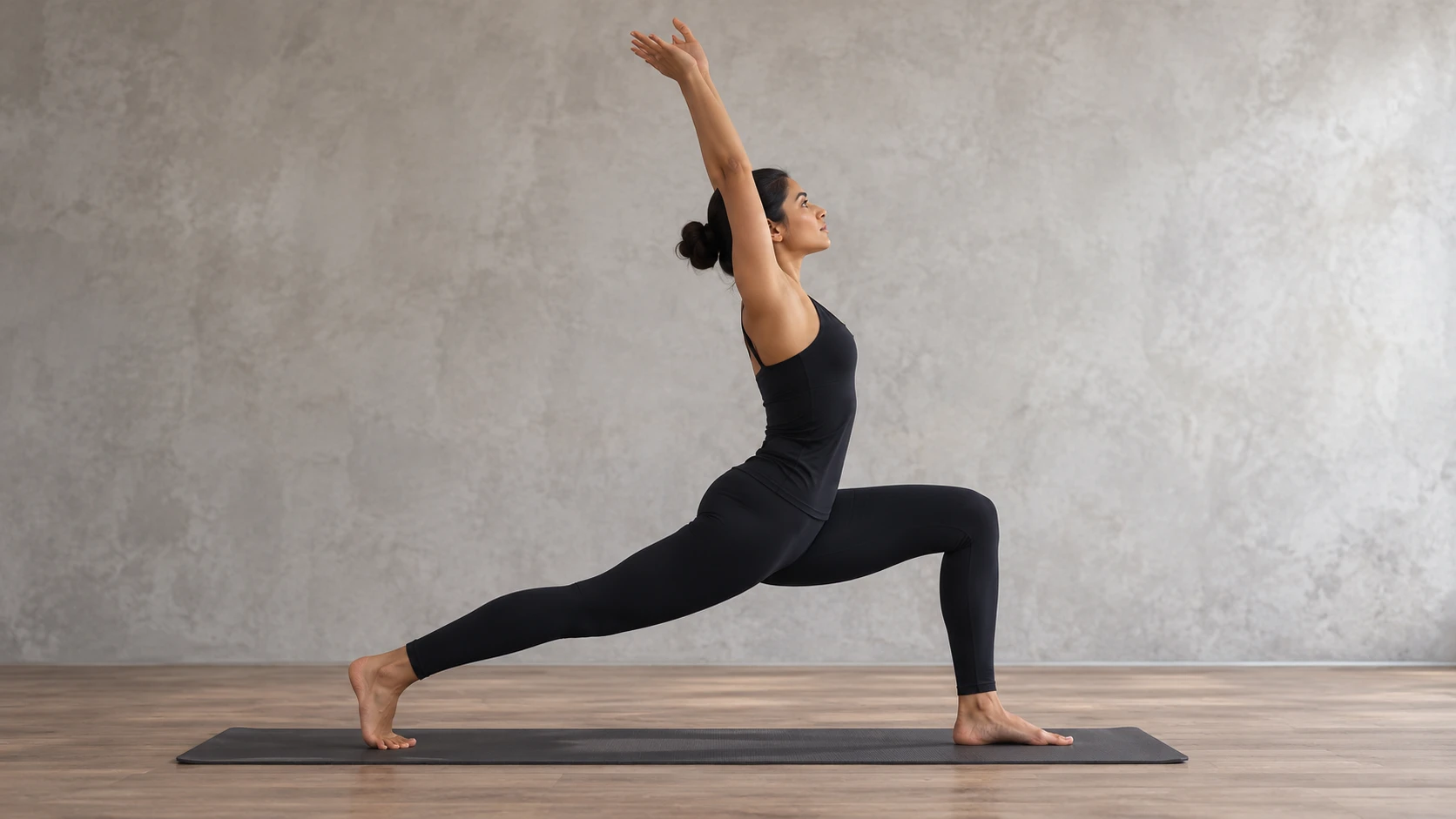
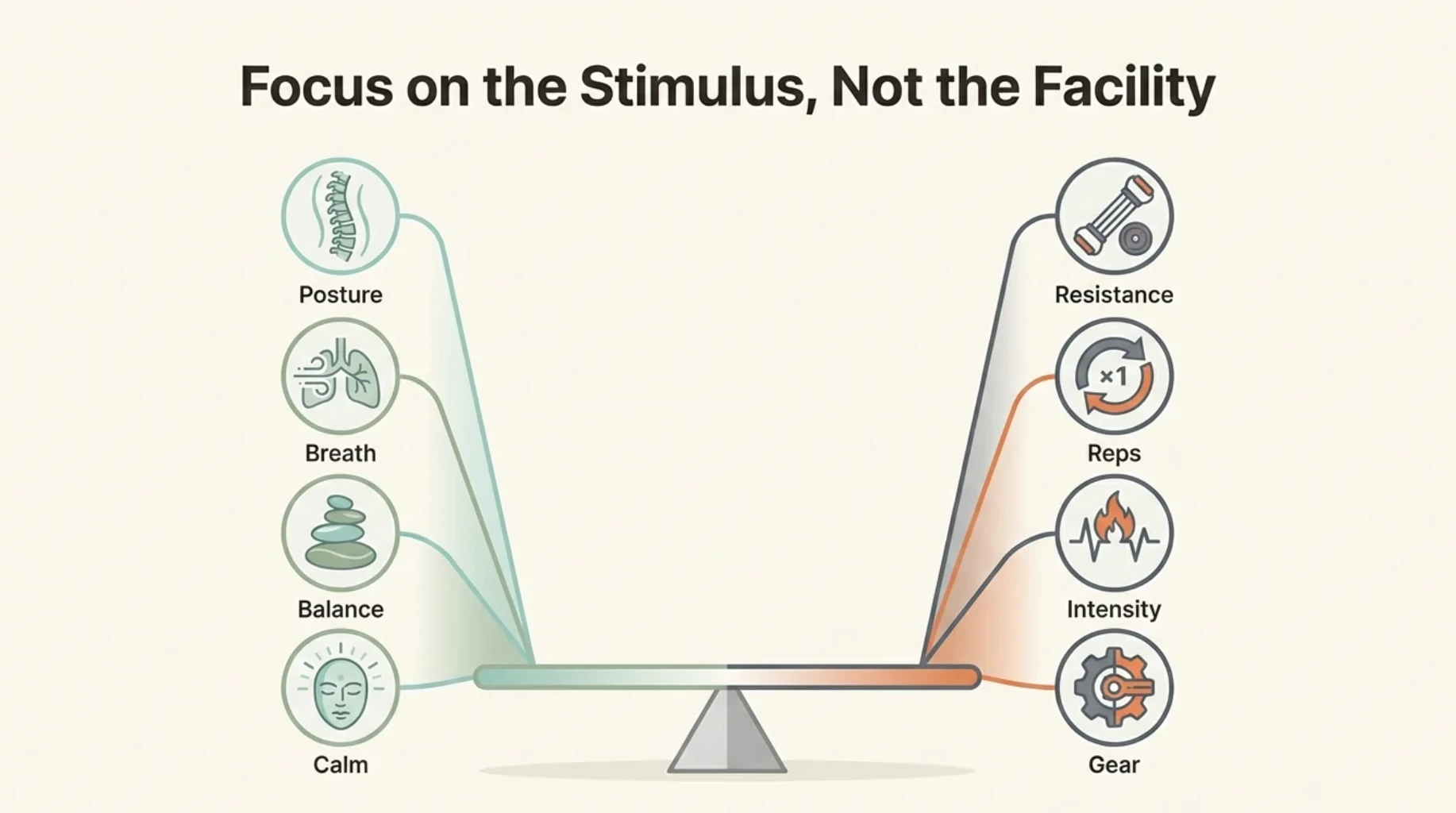
When comparing a yoga centre vs gym, the most useful question is not which facility is better overall. It is which one offers the type, intensity and progression of exercise needed to achieve your personal health goals.
Regular physical activity contributes to cardiovascular health, metabolic function, muscular strength, mobility, psychological well-being and healthy ageing.
Different forms of exercise may emphasise different aspects of fitness, but a balanced routine often combines several types of movement.
What Is the Difference Between a Yoga Centre and a Gym?
A yoga centre generally provides structured sessions involving physical postures, breathing practices, relaxation and, in some settings, meditation.
The exact experience depends on the yoga tradition, instructor qualifications, class structure and intensity.
Some sessions involve slow, supported movements, while others include physically demanding sequences that challenge muscular endurance, balance and mobility.
A gym typically provides equipment and space for resistance training, cardiovascular exercise and other forms of physical conditioning.
Depending on the facility, it may include free weights, resistance machines, treadmills, stationary bicycles, rowing machines and instructor-led classes.
Neither environment automatically guarantees an effective exercise programme.
A yoga centre with poorly supervised classes may be unsuitable for someone with particular physical limitations.
Similarly, a gym with inadequate equipment, unqualified trainers or inappropriate exercise programming may fail to meet a member’s needs.
Does Yoga Count as Physical Exercise?
Yes. Many yoga practices involve physical activity and can contribute to movement, flexibility, balance and muscular endurance.
However, not every yoga session provides enough cardiovascular intensity or resistance stimulus to satisfy all recommended components of physical fitness.
A gentle yoga session focused on breathing and stretching may have different physiological effects from a vigorous sequence involving repeated standing postures and sustained muscular effort.
Does Going to the Gym Automatically Improve Fitness?
No.
Simply joining a gym does not ensure improved health.
The results depend on exercise selection, frequency, intensity, progression, recovery and consistency.
For example, spending a few minutes walking slowly on a treadmill without gradually increasing activity may not provide the same fitness benefits as a structured aerobic and resistance-training programme.
Similarly, lifting weights with inappropriate technique or excessive loading can increase injury risk.
Clinical takeaway: A yoga centre and a gym are places where physical activity can be performed. Their value depends on the quality of the exercise programme and whether it matches the individual’s needs.
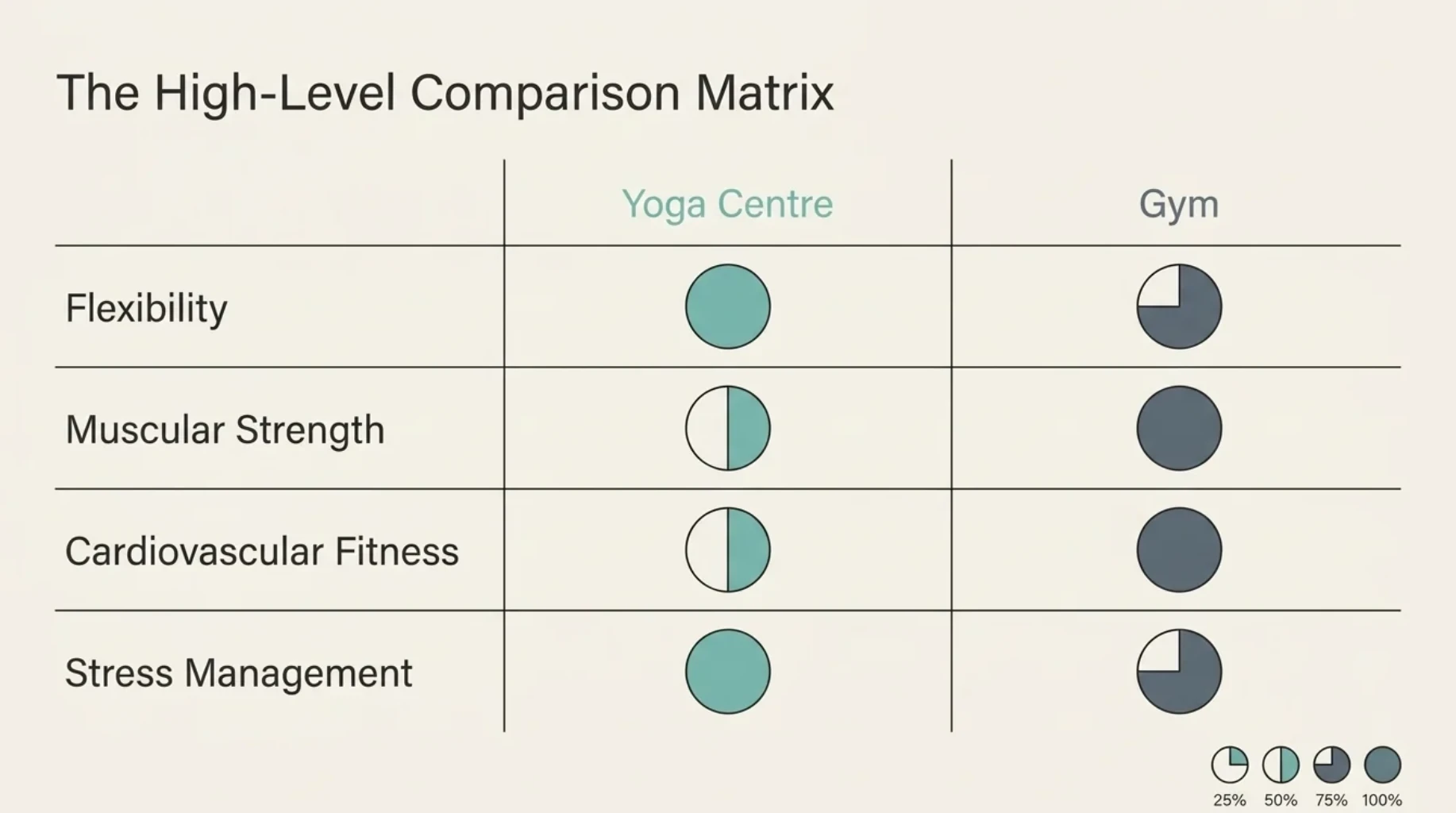
Yoga Centre vs Gym: A Side-by-Side Comparison
| Fitness Factor | Yoga Centre | Gym |
|---|---|---|
| Flexibility | Often a major component of classes | Can be improved through mobility exercises and full-range resistance training |
| Muscular strength | May improve, particularly in beginners | Usually offers more options for progressive resistance training |
| Cardiovascular fitness | Depends on yoga style and session intensity | Usually offers dedicated aerobic exercise equipment |
| Balance | Frequently incorporated into postures | Can be trained through dedicated exercises |
| Stress management | Often includes breathing and relaxation practices | Exercise can improve psychological well-being; relaxation training varies |
| Muscle development | Possible to a degree, depending on programme | Generally more suitable for progressive muscle-building goals |
| Weight management | May support activity, well-being and adherence | Can support aerobic activity and resistance training |
| Equipment requirements | Often minimal | Depends on training goals and facility |
| Exercise progression | Through posture complexity, duration and control | Through resistance, repetitions, duration and intensity |
| Suitable for beginners | Yes, with appropriate instruction | Yes, with appropriate instruction |
This comparison describes common characteristics rather than fixed rules.
A yoga centre may offer strength-focused classes, and a gym may offer yoga, Pilates or mobility training.
The quality and content of the individual programme matter more than the facility’s name.
1. Yoga Centre vs Gym for Weight Loss: Which Is More Effective?
Weight loss is one of the most common reasons people begin exercising.
However, the relationship between exercise and weight loss is frequently misunderstood.
Body weight changes are influenced by energy intake, energy expenditure, sleep, medications, medical conditions and several behavioural and biological factors.
Exercise can contribute to weight management, but it should not be considered a guaranteed weight-loss treatment on its own.
How Can Yoga Support Weight Management?
Yoga may contribute to weight management through physical activity, improved movement confidence and behavioural factors such as stress management.
Some individuals may find that regular yoga practice helps them establish a consistent exercise routine.
For people who experience stress-related eating or difficulty maintaining healthy routines, the relaxation component may be useful as part of a broader lifestyle approach.
However, it would be inaccurate to claim that yoga automatically reduces abdominal fat, accelerates metabolism or produces substantial weight loss independently of other factors.
How Can Gym Exercise Support Weight Loss?
A gym can provide structured opportunities for aerobic exercise and resistance training.
Aerobic exercise contributes to energy expenditure and cardiorespiratory fitness.
Resistance training helps improve muscular strength and can support the preservation of lean tissue during weight loss.
These benefits are relevant because successful weight management should involve more than reducing the number on the weighing scale.
For example, an individual who loses weight while preserving muscle strength may experience better functional outcomes than someone who loses a similar amount of weight with substantial loss of lean tissue.
Does Gym Exercise Burn More Calories Than Yoga?
Many moderate-to-vigorous gym workouts may expend more energy per unit of time than gentle yoga sessions.
However, calorie expenditure varies substantially according to body size, exercise intensity, duration and individual characteristics.
A vigorous yoga class may be more physically demanding than a very light gym session.
Therefore, comparing exercise types using a single fixed calorie-burning number can be misleading.
Which Should You Choose for Weight Loss?
If the primary goal is improving body composition, aerobic capacity and muscular strength, a gym with suitable equipment may offer practical advantages.
However, someone who enjoys yoga and practises it consistently may achieve greater overall activity than someone who joins a gym but rarely attends.
For many people, combining regular walking, resistance training and yoga may be a more balanced approach than relying exclusively on one activity.
Clinical takeaway: For weight management, exercise consistency and overall lifestyle habits matter more than choosing a yoga centre or gym based on claims about calorie burning. Resistance training is particularly valuable for maintaining strength and lean tissue.
2. Yoga Centre vs Gym for Muscle Strength and Healthy Ageing
Muscular strength becomes increasingly important with age.
From adulthood onwards, inadequate physical activity and ageing can contribute to gradual changes in muscle mass, strength and physical function.
These changes may become particularly relevant after midlife, especially when combined with prolonged inactivity, chronic illness or inadequate nutritional intake.
Regular resistance training can help maintain or improve muscular strength and functional ability.
Can Yoga Build Muscle?
Yoga postures often require the body to support its own weight.
Movements such as modified plank positions, standing poses and controlled transitions can challenge muscles and improve muscular endurance.
Beginners may experience improvements in strength as they adapt to these activities.
However, the resistance provided by yoga postures may eventually become insufficient for someone seeking substantial gains in maximal strength or muscle size.
Why Does Progressive Resistance Training Matter?
Muscles adapt when they are exposed to an appropriate training stimulus.
Progressive resistance training involves gradually adjusting the challenge through resistance, repetitions, sets or exercise difficulty.
For example, a person may initially perform a squat using body weight and later progress to an appropriately loaded exercise.
This progression can be structured according to strength, technique and recovery.
Gyms with adjustable resistance equipment often make such progression easier to quantify.
Is Strength Training Important After 40?
Yes.
Resistance training can be useful across adulthood and becomes particularly important as people age.
It supports muscular strength, physical function and the ability to perform daily activities.
For women approaching or experiencing menopause, resistance training is also an important component of a broader exercise programme supporting musculoskeletal health.
However, resistance training does not eliminate the need for adequate nutrition, appropriate medical care or other forms of physical activity.
Can Older Adults Benefit From Yoga?
Yes. Appropriately adapted yoga may help older adults work on balance, mobility and movement confidence.
However, individuals with significant balance difficulties, osteoporosis, joint problems or other physical limitations may require modifications.
Some postures may be inappropriate for particular conditions.
A qualified instructor should adapt exercises rather than expecting every participant to perform the same movements.
Should Older Adults Choose Yoga or a Gym?
For many older adults, a balanced programme may include resistance training, aerobic activity and balance exercises.
Yoga may contribute to balance and mobility, while resistance training may provide a more direct way to develop muscular strength.
The best approach depends on physical capacity, medical history and access to competent supervision.
Yoga vs Gym for Strength: What Each Can Offer
| Goal | Yoga | Gym-Based Training |
|---|---|---|
| Improve basic muscular endurance | Can be useful | Can be useful |
| Increase maximal strength | May help beginners, but progression can be limited | Usually offers more precise resistance progression |
| Build substantial muscle mass | May provide some stimulus | Generally more suitable |
| Improve balance | Often included | Can be included through dedicated training |
| Improve mobility | Often emphasised | Can improve through mobility and full-range exercises |
| Maintain function with ageing | May contribute | Resistance training provides important strength benefits |
3. Yoga Centre vs Gym for Flexibility, Mobility and Posture
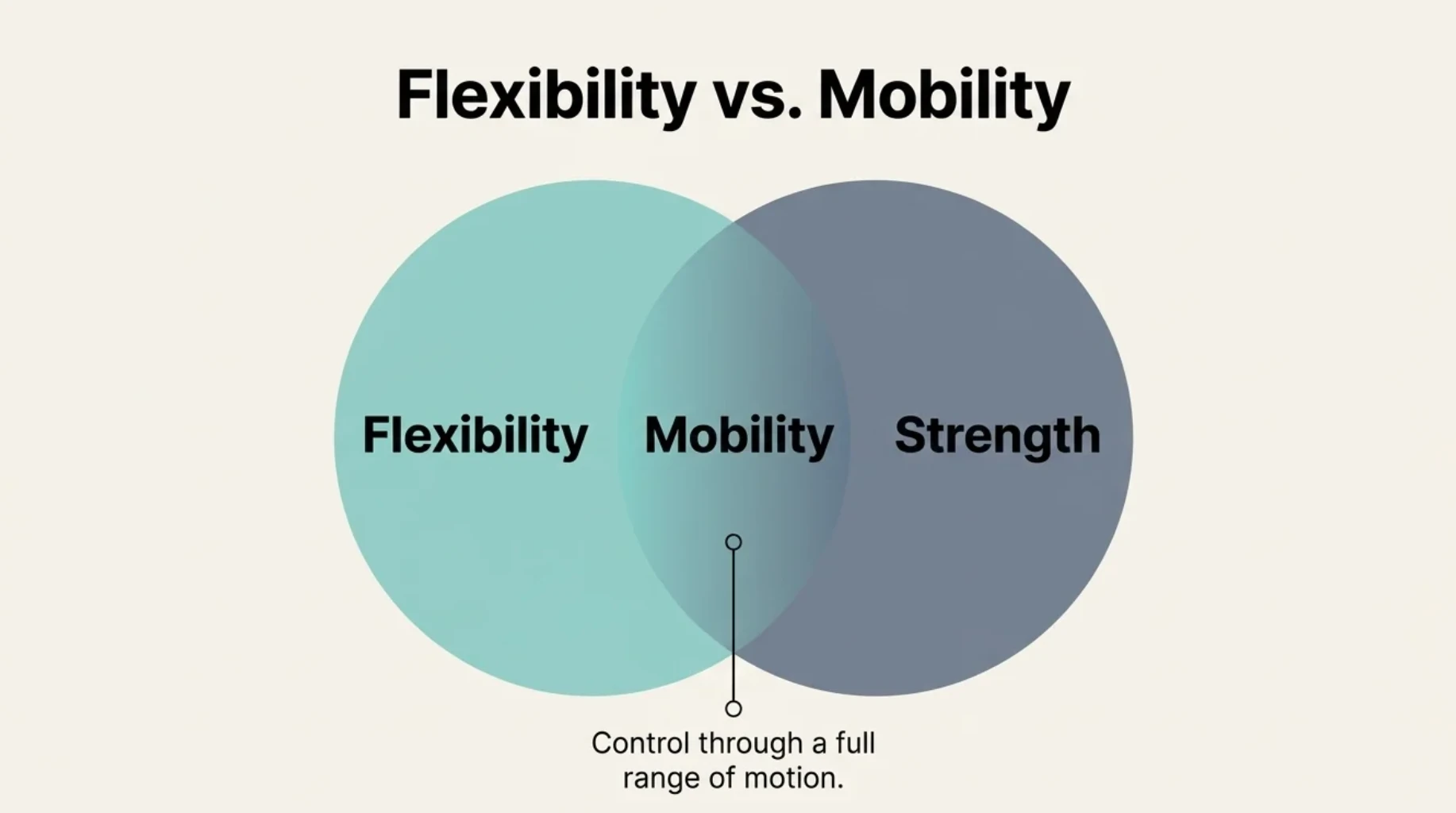
Flexibility and mobility are often used interchangeably, but they describe related rather than identical physical abilities.
Flexibility generally refers to the ability of muscles and other tissues to permit movement through a range.
Mobility involves the ability to move a joint through an appropriate range with control.
Both can influence comfort and performance during everyday activities.
Is Yoga Better for Flexibility?
Yoga commonly includes stretching, controlled movement and sustained postures.
These practices may improve flexibility and range of motion over time.
For someone whose main goal is becoming more comfortable with movements such as bending, reaching or maintaining certain positions, an appropriately structured yoga programme may be appealing.
However, progress depends on consistency, technique and the individual’s starting ability.
Can Gym Training Improve Flexibility?
Yes.
Resistance training performed through an appropriate range of motion can also improve flexibility and mobility.
For example, controlled squats, lunges and other exercises may develop strength across relevant joint ranges.
Stretching and dedicated mobility exercises can also be incorporated into a gym programme.
Therefore, it is incorrect to assume that gym training necessarily makes muscles stiff.
Can Yoga Correct Poor Posture?
Yoga may improve body awareness, mobility and muscular endurance.
However, posture is influenced by many factors, including habitual positions, physical capacity, work demands and individual anatomy.
There is no single universally correct posture that everyone must maintain throughout the day.
Claims that a particular yoga pose can permanently correct every postural problem are not scientifically justified.
What About Neck and Back Discomfort From Desk Work?
People who spend long periods sitting may benefit from regular movement breaks, physical activity and exercises that improve strength and mobility.
Yoga may be useful for some individuals, while resistance training and other forms of exercise may also provide benefits.
Persistent pain, neurological symptoms or other warning signs require appropriate clinical assessment.
Exercise should be adapted to the individual’s symptoms and physical capacity rather than following a universal routine.
Clinical takeaway: Yoga can be an effective way to practise flexibility, balance and controlled movement. However, properly designed resistance training can also improve mobility. Neither approach should be promoted as a universal cure for posture-related pain.
4. Yoga Centre vs Gym for Diabetes and Insulin Resistance
For people living with type 2 diabetes or insulin resistance, regular physical activity is an important part of metabolic health management.
Exercise can improve insulin sensitivity, cardiorespiratory fitness, muscular function and several cardiovascular risk factors.
However, different exercise methods produce different physiological demands. This becomes important when comparing a yoga centre vs gym for diabetes management.
How Does Exercise Improve Blood Sugar Control?
During physical activity, skeletal muscles use glucose to support movement. Muscle contractions can stimulate glucose uptake through mechanisms that are partly independent of insulin.
Regular exercise also produces adaptations that can improve insulin sensitivity and the body’s capacity to use glucose.
These effects depend on the exercise performed, its intensity, duration, frequency and the individual’s health status.
For example, brisk walking, cycling and resistance training can all contribute to improved glucose regulation.
However, exercise should complement appropriate medical treatment rather than replace prescribed diabetes medicines.
Can Yoga Help People With Type 2 Diabetes?
Yoga may be a useful addition to diabetes management for selected individuals.
Studies have reported improvements in some glycaemic and cardiometabolic outcomes among people participating in yoga programmes.
However, the evidence varies in quality. Studies often differ in yoga style, session duration, participant characteristics and the comparison groups used.
Some trials are relatively small or have methodological limitations, making it difficult to determine how much benefit is attributable specifically to yoga.
Therefore, yoga should not be presented as a treatment that reverses diabetes or eliminates the need for medication.
Its practical value may include increasing physical activity, improving movement confidence and supporting stress management.
Why Are Aerobic and Resistance Exercises Important in Diabetes?
Aerobic exercise, such as brisk walking, cycling or swimming, can improve cardiovascular fitness and support glycaemic control.
Resistance training improves muscular strength and can contribute to better glucose regulation.
Because skeletal muscle is an important site of glucose disposal, maintaining muscle mass and function is particularly relevant for metabolic health.
A gym may make it easier to combine structured aerobic exercise with progressive resistance training.
However, these activities do not necessarily require a commercial gym. Walking outdoors, using resistance bands or performing appropriately progressed home exercises may also be effective.
Is Yoga or Gym Exercise Better for Reducing HbA1c?
There is insufficient high-quality comparative evidence to claim that one specific yoga programme is universally superior or inferior to every gym-based programme for reducing HbA1c.
Nevertheless, established diabetes exercise recommendations support regular aerobic activity and resistance training because these approaches have substantial evidence for improving fitness and glycaemic outcomes.
Yoga may be incorporated as a complementary activity, particularly when it improves adherence, flexibility or psychological well-being.
What About Exercise-Related Hypoglycaemia?
People using insulin or medicines that stimulate insulin secretion, such as sulfonylureas, may experience hypoglycaemia during or after exercise.
The risk depends on medication, exercise intensity, duration, meal timing and other factors.
Patients may need an individualised plan for glucose monitoring, carbohydrate intake and medication adjustment.
People taking medicines that do not usually cause hypoglycaemia may have a lower risk, although individual circumstances still matter.
Exercise should also be adapted for people with diabetes-related neuropathy, retinopathy, cardiovascular disease or other complications.
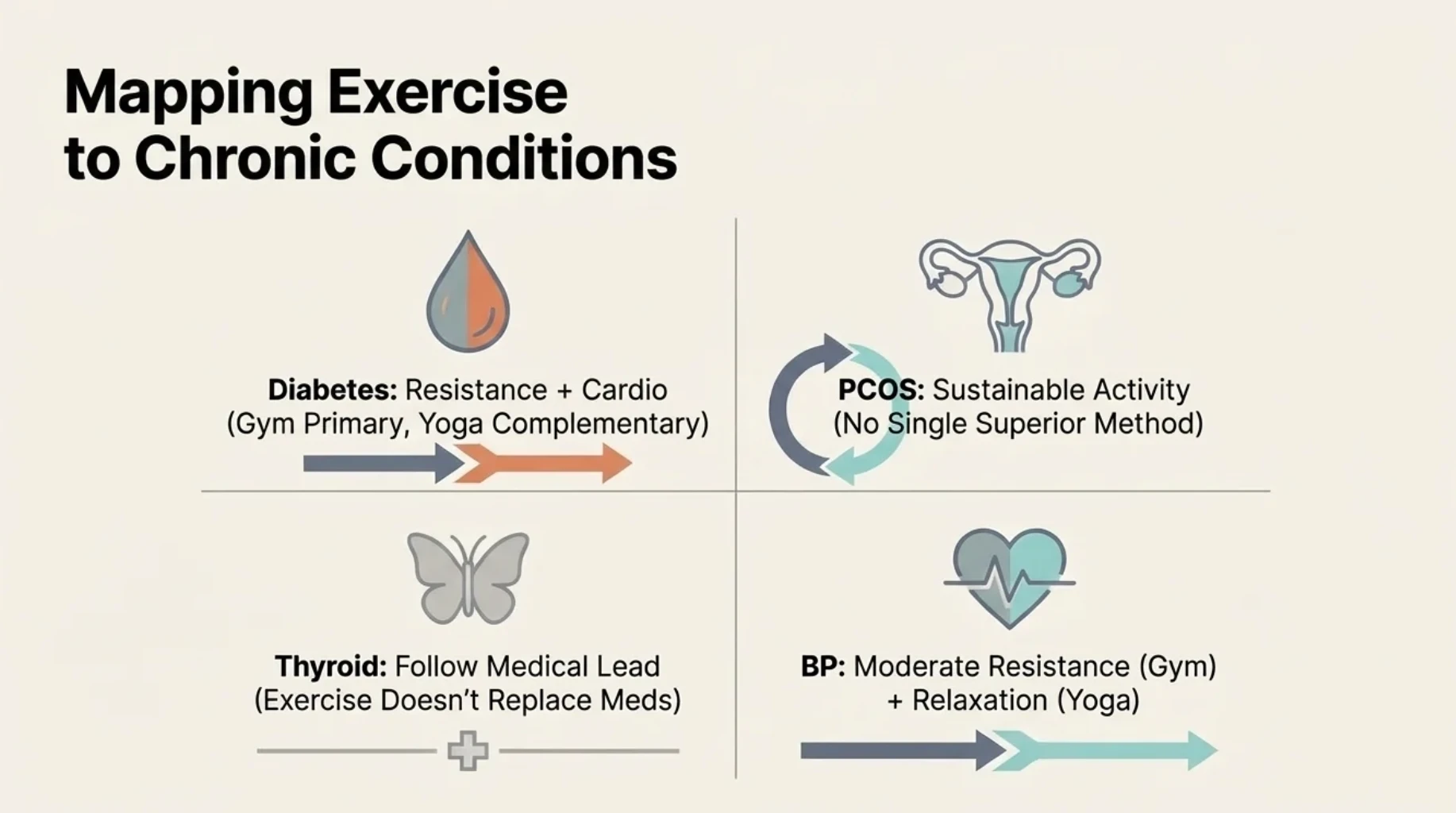
Clinical takeaway: For type 2 diabetes, a programme combining aerobic activity and progressive resistance training has a strong evidence base. Yoga can be a useful complementary activity, but it should not be promoted as a replacement for established diabetes care.
5. Yoga vs Gym for PCOS: Which Is More Suitable?
Polycystic ovary syndrome, commonly called PCOS, is a complex condition involving reproductive, metabolic and psychological features.
Some women with PCOS experience insulin resistance, weight-management difficulties, irregular menstrual cycles or increased cardiometabolic risk.
Regular physical activity is an important component of lifestyle management, but there is no single exercise method that works best for every woman with PCOS.
Does PCOS Require a Special Exercise Programme?
Not necessarily.
The 2023 International Evidence-based Guideline for the Assessment and Management of PCOS supports physical activity and healthy lifestyle behaviours.
However, the guideline does not identify one particular exercise type or intensity as universally superior for all women with PCOS.
Exercise should be selected according to individual goals, preferences, physical ability and relevant health considerations.
Can Yoga Improve PCOS Symptoms?
Yoga may support physical activity, stress management and psychological well-being in some women with PCOS.
Small studies have explored effects on metabolic, hormonal and psychological outcomes.
However, evidence is not sufficiently consistent to claim that yoga reliably normalises hormones, restores ovulation or cures PCOS.
Claims that specific yoga postures directly reverse ovarian cysts or permanently correct hormonal imbalance are not supported by strong clinical evidence.
Can Strength Training Help Women With PCOS?
Resistance training can improve muscular strength and may contribute to better body composition and metabolic health.
Women with PCOS can generally participate in appropriately designed resistance-training programmes according to their health status.
There is no scientific reason to restrict all women with PCOS to gentle exercise or prohibit weightlifting solely because they have PCOS.
Is High-Intensity Exercise Harmful for PCOS?
High-intensity exercise is sometimes described online as harmful for women with PCOS because it supposedly increases cortisol and worsens hormonal imbalance.
This is an oversimplification.
Temporary changes in stress hormones during exercise are normal physiological responses and do not automatically indicate harm.
High-intensity training may be appropriate for selected individuals, but it is not compulsory for effective PCOS management.
Exercise intensity should be adjusted according to fitness, recovery, symptoms and personal preference.
What Should a Woman With PCOS Choose?
A woman who enjoys yoga and finds it easier to maintain regularly may benefit from continuing yoga while incorporating additional aerobic or strengthening activities as needed.
Someone who wants structured strength progression may prefer a gym.
For many women, a combination of walking, resistance training and yoga may provide a practical approach.
The overall goal is sustainable physical activity and improved health, not adherence to a supposedly PCOS-specific workout trend.
6. Yoga Centre vs Gym for Thyroid Disorders
People with hypothyroidism sometimes experience fatigue, reduced exercise tolerance, weight changes or muscle discomfort.
These symptoms can make starting an exercise routine more challenging.
However, it is important to distinguish the benefits of physical activity from the medical treatment of thyroid disease.
Can Yoga Improve Thyroid Function?
Yoga may support general physical and psychological well-being, but there is no convincing evidence that particular yoga postures can reliably correct thyroid hormone deficiency.
Practices such as shoulder stands, neck exercises or breathing techniques should not be promoted as substitutes for thyroid hormone replacement when treatment is indicated.
Hypothyroidism requires appropriate clinical evaluation and, when necessary, medication and laboratory monitoring.
Is Gym Exercise Safe With Hypothyroidism?
Many people with adequately treated hypothyroidism can participate in aerobic and resistance exercise.
However, individuals with significant untreated symptoms, marked weakness or other medical concerns may need assessment before beginning strenuous activity.
Exercise should be introduced gradually according to tolerance and physical capacity.
What About Hyperthyroidism?
Uncontrolled hyperthyroidism may be associated with rapid heart rate, palpitations, reduced exercise tolerance and other cardiovascular effects.
Strenuous exercise may be inappropriate until the condition is adequately assessed and controlled.
Patients with significant symptoms should obtain individual medical guidance before starting intense workouts.
Which Is Better for Thyroid-Related Weight Gain?
Neither yoga nor gym exercise directly replaces the treatment of hypothyroidism.
Once thyroid function is appropriately managed, exercise selection should follow the person’s broader fitness goals.
A combination of aerobic activity and resistance training may be useful for improving fitness and supporting weight management.
Yoga may be added for flexibility, relaxation and enjoyment.
Important: Claims that yoga postures stimulate the thyroid gland sufficiently to cure hypothyroidism are not supported by reliable clinical evidence. Exercise supports health but does not replace indicated thyroid treatment.
7. Yoga Centre vs Gym for Heart Health and Blood Pressure
Cardiovascular health is influenced by physical activity, blood pressure, cholesterol, blood glucose, body composition, smoking, sleep and several other factors.
Regular exercise is an important component of cardiovascular disease prevention.
However, the cardiovascular benefits of a particular activity depend partly on its intensity and the physiological demands it creates.
How Does Aerobic Exercise Benefit the Heart?
Aerobic exercise challenges the cardiovascular and respiratory systems through sustained rhythmic activity.
Examples include brisk walking, cycling, swimming and jogging.
Regular aerobic training can improve cardiorespiratory fitness and contribute to blood pressure management.
Many gyms provide treadmills, exercise bicycles and other equipment that make structured aerobic training convenient.
However, walking or cycling outdoors can provide similar forms of activity without gym membership.
Can Yoga Lower Blood Pressure?
Some clinical studies and systematic reviews suggest that yoga programmes may produce modest reductions in blood pressure.
However, effects vary across studies, and differences in programme content and study quality limit certainty about the size of benefit.
Yoga may be a useful addition to a broader hypertension management plan.
It should not be considered a substitute for indicated antihypertensive medication or appropriate clinical monitoring.
Is Weightlifting Safe for People With Hypertension?
Resistance training can be part of a blood pressure management programme for many individuals.
However, technique, breathing and exercise intensity matter.
Very heavy lifting with prolonged breath-holding can produce substantial temporary increases in blood pressure.
People with markedly uncontrolled hypertension or relevant cardiovascular symptoms may require assessment before strenuous resistance exercise.
For suitable individuals, moderate resistance training with appropriate breathing and gradual progression may be beneficial.
Which Exercise Is Better for Cardiovascular Fitness?
For improving aerobic capacity, structured aerobic exercise generally provides a more predictable training stimulus than gentle yoga.
Some vigorous yoga styles may increase heart rate considerably, but this does not mean that every yoga session is equivalent to moderate-intensity aerobic training.
Individuals whose primary goal is improving cardiorespiratory fitness should ensure that their weekly routine includes sufficient aerobic activity.
What About People With Existing Heart Disease?
Exercise recommendations should be individualised according to the diagnosis, symptoms, functional capacity and medical treatment.
Some patients may benefit from supervised cardiac rehabilitation rather than beginning an unsupervised gym or yoga programme.
Chest pain, unexplained breathlessness, fainting or concerning palpitations during exercise require appropriate medical evaluation.
Yoga vs Gym for Metabolic and Cardiovascular Health: Practical Comparison
| Health Goal | Yoga | Gym-Based Exercise | Practical Interpretation |
|---|---|---|---|
| Improve insulin sensitivity | May contribute through physical activity | Aerobic and resistance training have substantial supporting evidence | Prioritise adequate weekly activity and strengthening |
| Improve HbA1c | Potential complementary benefit | Structured aerobic and resistance exercise are established approaches | Exercise should complement diabetes treatment |
| Improve blood pressure | May produce modest improvements | Aerobic and resistance exercise can contribute | Individualise intensity and monitor clinical status |
| Improve cardiorespiratory fitness | Depends strongly on style and intensity | Dedicated aerobic training is easier to structure | Ensure sufficient aerobic exercise |
| Improve muscular strength | Can help, particularly in beginners | Progressive resistance training offers more options | Strength training is valuable for metabolic health |
| Support stress management | Often includes breathing and relaxation | Regular exercise also supports mental well-being | Choose an approach that is sustainable and enjoyable |
8. Yoga Centre vs Gym for Stress, Anxiety and Mental Well-Being
Stress management is one reason many people consider joining a yoga centre.
Modern lifestyles may involve prolonged sitting, irregular sleep, work pressure and limited opportunities for physical activity.
Both yoga and gym-based exercise may contribute to psychological well-being, although they do so through partly different experiences.
How Can Yoga Support Stress Management?
Yoga programmes often combine physical postures, controlled breathing, attention to movement and relaxation.
These elements may help some individuals manage perceived stress and improve their sense of well-being.
Clinical studies suggest potential benefits for stress and anxiety symptoms, although the evidence varies according to the population, intervention and study design.
Yoga should not be presented as a guaranteed treatment for anxiety disorders or depression.
Can Gym Exercise Improve Mental Health?
Yes.
Regular physical activity, including aerobic exercise and resistance training, is associated with improvements in several mental health outcomes.
Exercise can also provide a sense of achievement, structure and social interaction.
For some individuals, strength training may improve confidence by allowing them to observe measurable progress.
For others, walking, cycling or group fitness classes may be more enjoyable.
Is Yoga Better Than Gym Exercise for Anxiety?
There is no reliable basis for claiming that yoga is universally better than every other form of exercise for anxiety.
Individual responses vary, and the quality of available comparative evidence differs.
Someone who finds quiet, guided movement calming may prefer yoga.
Another person may find that brisk walking, cycling or resistance training provides greater psychological benefit.
Preference and consistency are important.
Can Exercise Replace Mental Health Treatment?
Exercise can be a useful component of mental health care, but it should not automatically replace evidence-based psychological treatment or medication when these are indicated.
Persistent anxiety, depression, severe functional impairment or other concerning symptoms require appropriate clinical assessment.
Clinical takeaway: Both yoga and gym-based exercise may support mental well-being. Yoga commonly integrates relaxation and breathing practices, while aerobic and resistance exercise also have meaningful mental health benefits.
9. Yoga vs Gym for Better Sleep
Sleep quality and physical activity influence one another.
People who sleep poorly may experience greater fatigue, reduced motivation to exercise and difficulty maintaining healthy routines.
Conversely, regular physical activity can contribute to improved sleep in many individuals.
Can Yoga Improve Sleep Quality?
Some studies suggest that yoga programmes may improve self-reported sleep quality, particularly in certain populations.
Relaxation and breathing components may be useful for individuals who find it difficult to unwind before bedtime.
However, the effects vary, and yoga should not be considered a universal treatment for insomnia.
Does Gym Exercise Improve Sleep?
Regular aerobic and resistance exercise may improve sleep quality and several aspects of sleep health.
Exercise timing and intensity should be adjusted according to individual tolerance.
Some people can exercise in the evening without difficulty, while others may find vigorous activity close to bedtime stimulating.
What If Poor Sleep Is Caused by Sleep Apnoea?
Yoga and gym exercise do not replace evaluation and treatment for obstructive sleep apnoea.
People with loud habitual snoring, witnessed breathing pauses, excessive daytime sleepiness or other suggestive symptoms may require assessment.
Exercise and weight management can contribute to broader care, but specific treatment may still be necessary.
Which Should You Choose for Sleep?
If relaxation and winding down are the main priorities, a gentle yoga programme may be appealing.
If improving overall fitness and metabolic health is also important, aerobic and resistance exercise may offer broader benefits.
Many individuals can combine these approaches.
10. Yoga Centre vs Gym After 50: Which Supports Healthy Ageing Better?
After the age of 50, exercise priorities often extend beyond appearance or weight loss.
Muscular strength, balance, mobility, cardiovascular fitness and independence become increasingly important.
However, ageing does not automatically mean that people should avoid challenging exercise.
Many adults can safely participate in appropriately progressed resistance and aerobic training, even when beginning later in life.
Why Does Muscle Strength Matter After 50?
Age-related changes in muscle strength and physical function can affect walking, climbing stairs, lifting objects and maintaining independence.
Progressive resistance training can improve strength and functional performance in older adults.
It can also complement other interventions aimed at preserving musculoskeletal health.
Can Yoga Improve Balance in Older Adults?
Yoga may help some older adults practise balance, body awareness and controlled movement.
However, exercises should be adapted for individuals with poor balance, joint limitations or other medical conditions.
Some standing or inverted postures may increase fall or injury risk if performed without appropriate support.
What About Osteoporosis?
People with osteoporosis may benefit from appropriately selected weight-bearing activity, resistance training and balance exercises.
However, certain movements involving repeated or loaded spinal flexion or twisting may be unsuitable for individuals with vertebral fragility or previous fractures.
Exercise selection should reflect fracture risk, physical ability and professional assessment.
Neither yoga nor gym exercise should be assumed universally safe without considering the specific movements involved.
Should Someone Above 60 Join a Gym?
Age alone is not a reason to avoid gym exercise.
A well-managed gym with adjustable equipment and qualified instructors may be suitable for older adults.
Beginners should start at an appropriate level and progress gradually.
People with significant medical conditions or functional limitations may benefit from individual assessment.
Can Yoga and Strength Training Be Combined After 50?
Yes.
A balanced routine may include resistance training for strength, aerobic activity for cardiovascular fitness and yoga or other exercises for mobility and balance.
The relative emphasis should depend on individual needs.
Yoga vs Gym for Different Age Groups and Fitness Goals
| Individual or Goal | Potentially Useful Approach | Important Consideration |
|---|---|---|
| Young adult seeking muscle development | Progressive resistance training | Technique, progression and adequate recovery |
| Office worker seeking flexibility and stress relief | Yoga, mobility exercises and regular physical activity | Also address prolonged sitting and low aerobic activity |
| Person with type 2 diabetes | Aerobic and resistance exercise; yoga may complement | Glucose monitoring, medicines and complications |
| Woman with PCOS | Enjoyable, sustainable aerobic and strengthening activities | No single exercise style is universally superior |
| Adult with stable hypertension | Appropriately prescribed aerobic and resistance exercise | Blood pressure control, symptoms and exercise intensity |
| Woman after menopause | Resistance training, aerobic activity and balance exercises | Musculoskeletal health and individual risk factors |
| Older adult concerned about falls | Balance and strengthening exercises; adapted yoga may help | Supervision and fall-risk assessment |
| Person seeking relaxation | Gentle yoga or preferred physical activity | Consider sleep, stress and mental health needs |
11. Can You Combine Yoga and Gym Workouts?
Yes. For many people, combining yoga and gym-based exercise may be more practical than treating them as competing options.
The reason is that different activities can address different components of fitness.
Resistance training provides a structured stimulus for muscular strength.
Aerobic exercise improves cardiorespiratory fitness.
Yoga may contribute to flexibility, balance, controlled movement and relaxation.
A combined routine can incorporate these elements without requiring every session to be long or intense.
Does Everyone Need Both a Yoga Centre and a Gym Membership?
No.
A balanced exercise programme does not necessarily require two memberships.
Someone may attend a gym for resistance training, walk regularly outdoors and practise yoga at home.
Another person may attend yoga classes while performing strengthening exercises using resistance bands or body weight.
The key is ensuring that the overall routine includes the relevant components of physical fitness.
Can Yoga Be Done on Rest Days?
Gentle yoga may be appropriate on some recovery days, depending on the individual’s training load and physical condition.
However, vigorous yoga sessions can also be physically demanding and should not automatically be considered rest.
Recovery requirements depend on exercise intensity, volume, sleep, nutrition and individual tolerance.
Should Yoga Be Done Before or After Weight Training?
The appropriate sequence depends on the session’s purpose.
A brief, relevant warm-up may be useful before resistance training.
Long-duration static stretching immediately before maximal strength or power efforts may temporarily affect performance in some circumstances.
Gentle mobility exercises or yoga-based movements may be incorporated according to individual preference and training goals.
There is no universal rule that yoga must always be performed before or after gym exercise.
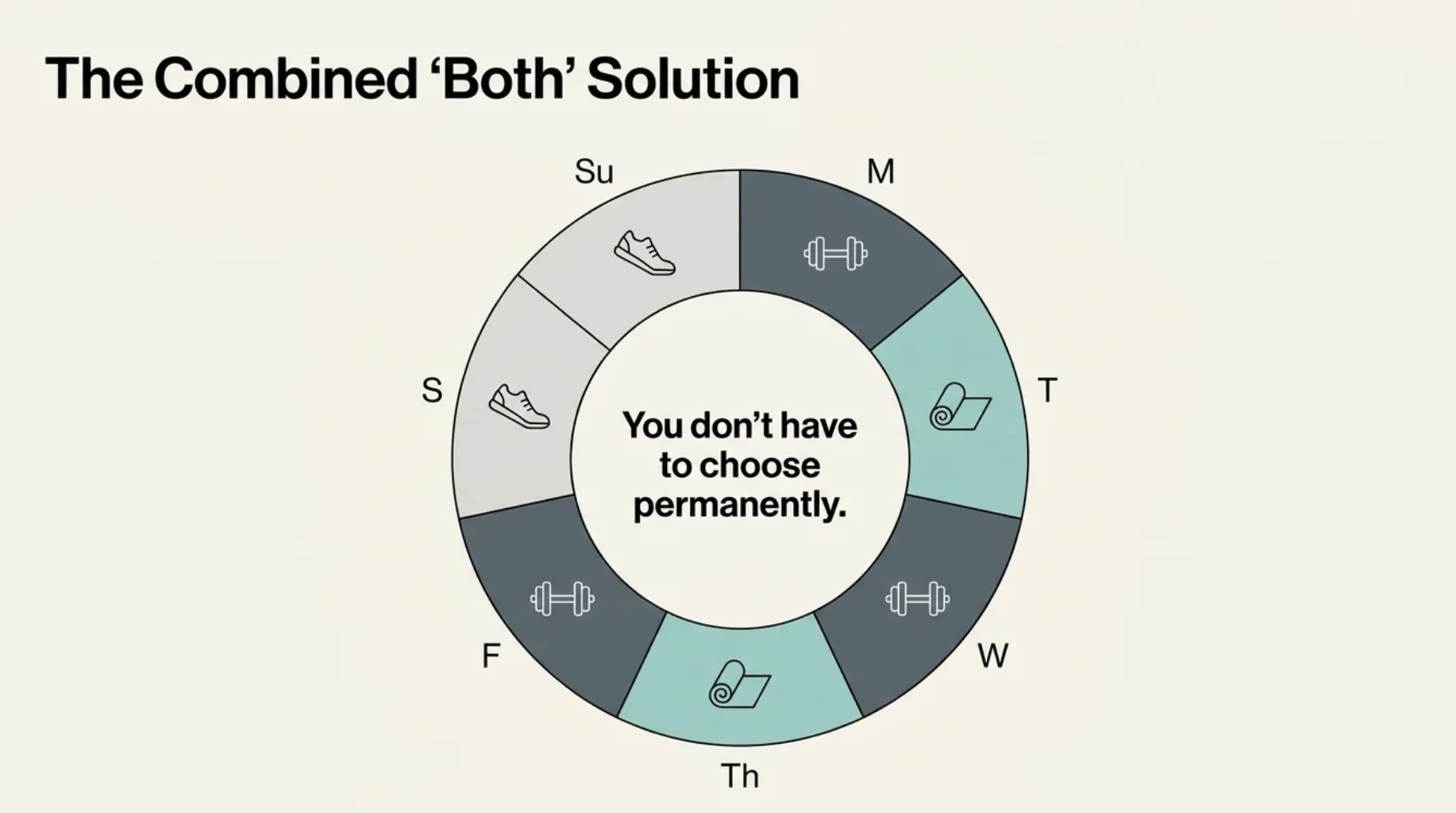
Example Weekly Routine Combining Yoga, Strength Training and Cardio
The following schedule is an illustrative routine for a generally healthy adult who has already developed sufficient exercise tolerance.
It is not a personalised exercise prescription.
| Day | Activity | Main Focus |
|---|---|---|
| Monday | Full-body resistance training and moderate walking | Muscular strength and aerobic activity |
| Tuesday | Moderate aerobic exercise and gentle yoga | Cardiovascular fitness and mobility |
| Wednesday | Full-body resistance training and walking | Strength and functional fitness |
| Thursday | Moderate aerobic activity and optional relaxation-focused yoga | Cardiovascular health and recovery |
| Friday | Full-body resistance training and walking | Progressive strength development |
| Saturday | Longer walk, cycling or another enjoyable aerobic activity | Endurance and activity consistency |
| Sunday | Rest, light walking or gentle mobility exercises | Recovery and flexibility |
The weekly amount of aerobic activity should be adjusted to work towards established physical activity recommendations.
For most adults, general guidelines recommend at least 150–300 minutes of moderate-intensity aerobic activity per week, or an equivalent amount of vigorous activity, along with muscle-strengthening activities on at least two days per week.
Older adults may also benefit from multicomponent activities that emphasise functional balance and strength.
People who are currently inactive should build up gradually rather than attempting a demanding schedule immediately.
Individuals with relevant medical conditions, symptoms or physical limitations may require modifications.
Practical lesson: You do not have to choose between yoga and gym exercise permanently. A sustainable routine can combine strength, cardiovascular activity, mobility and relaxation according to your goals and available time.
12. Yoga Centre vs Gym: How to Choose the Right Facility
Once you understand the differences between yoga and gym-based exercise, the next step is choosing a facility that matches your goals.
When comparing a yoga centre vs gym, it is tempting to focus on monthly membership fees, location, interiors or promotional offers.
However, a facility’s appearance does not necessarily reflect the quality of its instruction or exercise programmes.
A well-equipped gym may still provide poor supervision. Similarly, a peaceful-looking yoga studio may employ instructors who lack the experience to adapt exercises for people with physical limitations.
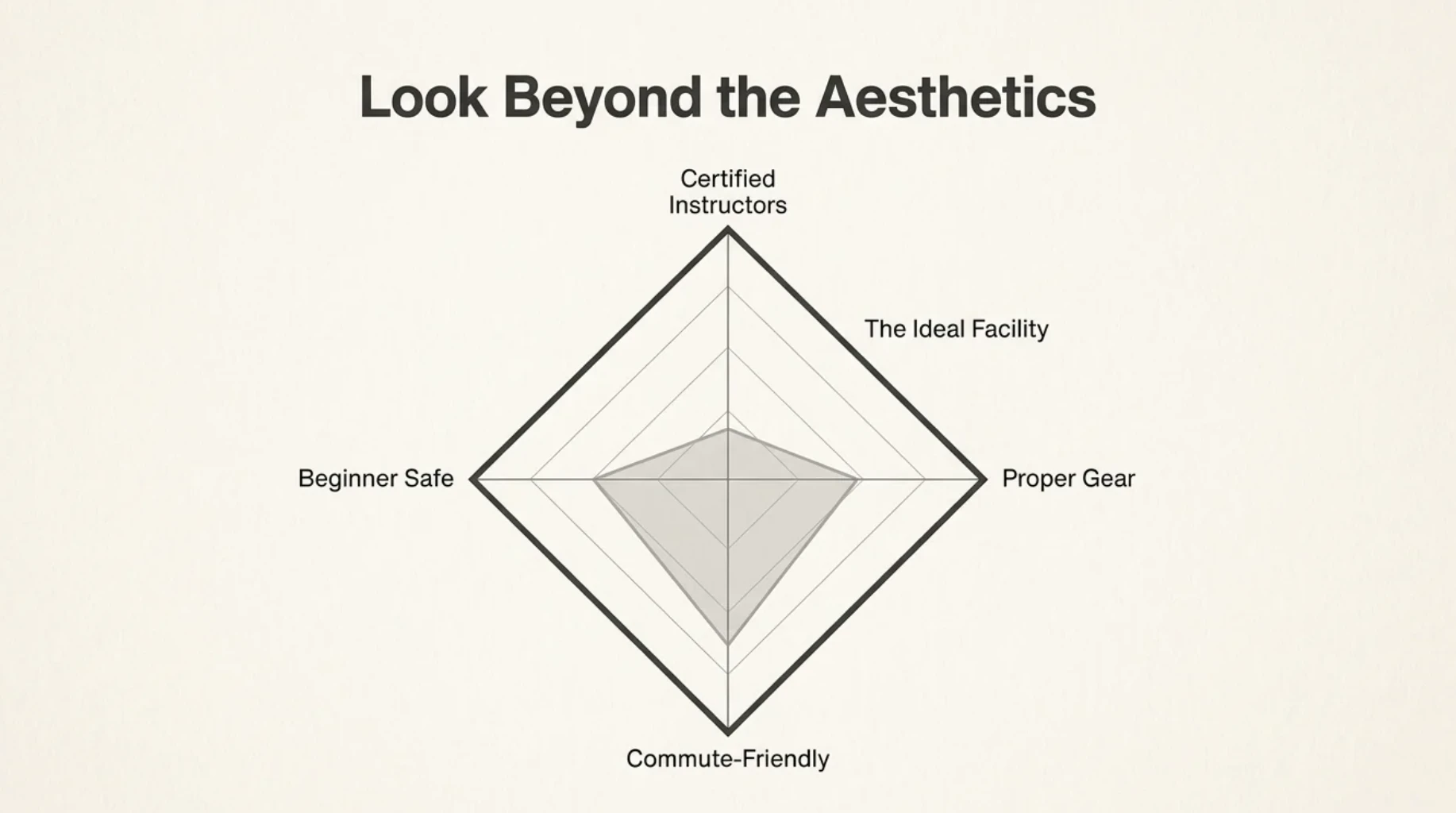
The most useful approach is to evaluate the facility according to the type of exercise you need, the qualifications of the instructors, safety arrangements and whether the programme can be maintained consistently.
Start by Identifying Your Main Fitness Goal
Before visiting a yoga centre or gym, consider what you want to achieve over the next three to six months.
For example, someone who wants to improve flexibility, balance and relaxation may prefer structured yoga classes.
A person whose primary goal is developing muscular strength may benefit from a gym offering adjustable resistance equipment and appropriate instruction.
Someone with diabetes or hypertension may need a programme that includes aerobic activity and resistance training, with suitable modifications according to their health status.
There is no requirement that every person must choose the same exercise environment.
Consider Whether You Enjoy the Activity
Exercise benefits depend partly on regular participation.
A scientifically sound programme offers limited practical value if someone finds it unpleasant, inconvenient or impossible to maintain.
For example, a person who enjoys group yoga classes may attend regularly, while someone who dislikes crowded fitness facilities may prefer walking and home resistance exercises.
Similarly, someone who enjoys measurable strength progression may find gym training more motivating.
Personal preference is therefore a legitimate consideration, provided the overall exercise routine meets relevant health and fitness needs.
13. Check Instructor Qualifications Before Joining a Yoga Centre or Gym
The competence of the instructor is one of the most important factors when choosing an exercise facility.
Whether the instructor teaches yoga or resistance training, they should understand exercise technique, progression, individual limitations and basic safety principles.
What Qualifications Should a Yoga Instructor Have?
A yoga instructor should have appropriate training in the style of yoga being taught, including practical instruction, relevant anatomy and exercise modifications.
In India, recognised training and certification pathways may include programmes aligned with the Yoga Certification Board under the Ministry of AYUSH.
However, the existence of a certificate does not automatically establish competence in managing medical conditions.
It is useful to ask about the instructor’s practical experience, the type of students they teach and their approach to modifying postures.
What Qualifications Should a Gym Trainer Have?
A gym trainer should have relevant education or recognised training in exercise instruction, resistance training, anatomy and safe exercise programming.
Practical experience and continuing professional development are also valuable.
A trainer should be able to explain why a particular exercise has been selected and how it can be modified according to a member’s abilities.
Demonstrating impressive personal strength or physique does not, by itself, establish professional competence.
Should Instructors Understand Medical Conditions?
Instructors should be able to recognise when an individual may need medical assessment or a modified exercise programme.
For example, a person with uncontrolled hypertension, significant osteoporosis, recent surgery or a history of cardiovascular disease may require additional precautions.
However, yoga instructors and fitness trainers should not diagnose medical conditions, independently change prescribed medicines or claim to cure diseases through exercise.
Should a Trainer Provide a Disease-Specific Diet Plan?
General nutrition education may fall within the competence of appropriately trained fitness professionals.
However, medical nutrition therapy for diabetes, kidney disease, pregnancy-related complications or other clinical conditions requires suitable professional expertise.
Exercise instructors should not prescribe restrictive medical diets or recommend stopping treatment on the basis of unverified health claims.
Clinical takeaway: Choose instructors who understand exercise technique, communicate clearly, adapt programmes to individual needs and recognise the limits of their professional responsibilities.
14. Evaluate Exercise Safety, Equipment and Class Size
Safety should be considered before purchasing a long-term membership.
Although yoga and gym-based exercise are generally beneficial when appropriately performed, injuries can occur with either approach.
The risk depends on exercise selection, intensity, technique, supervision and individual physical capacity.
Does the Facility Assess Beginners?
A responsible instructor should ask about previous exercise experience, current physical limitations and relevant medical concerns.
Not everyone requires formal medical clearance before beginning physical activity.
However, concerning symptoms or significant health conditions may justify individual assessment before strenuous exercise.
Are Exercises Adapted to Individual Ability?
In a yoga class, beginners should not be pressured to perform advanced inversions, deep backbends or extreme stretching positions.
Appropriate alternatives should be available.
In a gym, beginners should not be expected to lift heavy weights before learning suitable movement techniques.
Exercise progression should reflect ability and tolerance rather than competition with other members.
Does Class Size Affect Safety?
Large classes are not automatically unsafe, but instructor supervision becomes more challenging when many participants require individual guidance.
This may be particularly relevant for beginners, older adults and individuals with physical limitations.
During a trial session, observe whether the instructor can identify and correct inappropriate technique.
What Should You Check in a Gym?
Look for equipment that is maintained appropriately, adjustable resistance options, adequate space between exercise stations and suitable ventilation.
Emergency exits should be accessible, and the facility should have appropriate arrangements for responding to injuries or medical emergencies.
What Should You Check in a Yoga Centre?
Evaluate floor safety, adequate spacing, cleanliness of shared mats and equipment, ventilation and availability of appropriate supports such as blocks or straps.
Observe whether the instructor explains modifications and respects participants’ physical limitations.
Is Pain Normal During Exercise?
Some muscular effort and temporary fatigue are expected during exercise.
However, sharp pain, severe dizziness, chest discomfort, unusual breathlessness or other concerning symptoms should not be dismissed as normal signs of progress.
Exercise should be stopped and appropriate assessment obtained when warning symptoms occur.
Yoga Centre vs Gym: Safety and Facility Checklist
| Factor | Yoga Centre | Gym |
|---|---|---|
| Instructor qualifications | Appropriate yoga training and practical experience | Relevant fitness or strength-training qualifications |
| Beginner assessment | Questions about mobility, experience and limitations | Assessment of experience, technique and relevant health concerns |
| Exercise modifications | Alternative postures and suitable supports | Adjustable resistance and alternative exercises |
| Supervision | Instructor observes and guides participants | Trainer checks technique and progression |
| Equipment safety | Clean mats, stable supports and adequate space | Maintained machines, weights and exercise stations |
| Emergency arrangements | First-aid and appropriate emergency procedures | First-aid and appropriate emergency procedures |
| Hygiene | Clean floor, mats and shared accessories | Clean equipment, changing rooms and shared facilities |
| Medical claims | No unsupported promises to cure diseases | No guaranteed fat-loss or disease-reversal claims |
15. Compare Membership Costs and Practical Convenience
Membership cost is an important consideration, particularly for people planning to exercise regularly over several months.
However, the cheapest option is not necessarily the best value, and the most expensive facility does not automatically provide better results.
Are Yoga Centres Cheaper Than Gyms?
Fees vary according to location, instructor experience, class size, facilities and the type of membership.
A small neighbourhood yoga class may cost less than a premium gym, but specialised yoga instruction can also be expensive.
Similarly, gym memberships range from basic facilities to premium clubs offering personal training and additional services.
There is no reliable universal price difference between the two.
Should You Pay for an Annual Membership?
Long-term packages may offer lower monthly costs, but they can be inconvenient if the facility does not suit your needs.
Before purchasing a long membership, consider attending a trial session or choosing a shorter plan.
Ask about cancellation, membership freezing, transfers and refund policies.
Are Personal Training Sessions Necessary?
Not everyone requires ongoing one-to-one training.
However, beginners may benefit from professional instruction when learning exercise techniques.
People with particular physical limitations may require individualised supervision.
A facility should explain whether personal training is optional and what services are included in the standard membership.
Does Location Matter?
Yes. A facility that is difficult to reach may become inconvenient, particularly when work, commuting and family responsibilities are considered.
For many people, a reasonably equipped facility near home or work may be more practical than a premium centre requiring substantial travel.
Convenience can influence long-term exercise adherence.
16. Beware of Misleading Fitness and Medical Claims
Both yoga centres and gyms may use promotional claims to attract new members.
Some claims are reasonable descriptions of possible benefits, while others exaggerate the effects of exercise or imply that a particular method can cure medical conditions.
Patients should distinguish evidence-based exercise guidance from unsupported marketing.
Claim: Yoga Can Cure Diabetes
Yoga may contribute to physical activity and metabolic health, but it should not be promoted as a guaranteed cure for diabetes.
Diabetes management may require nutrition therapy, physical activity, medication and appropriate monitoring.
Claim: Certain Yoga Poses Cure Thyroid Disease
There is no convincing clinical evidence that specific postures reliably correct thyroid hormone deficiency or eliminate the need for indicated treatment.
Claim: Gym Workouts Can Remove Belly Fat in Seven Days
Exercise cannot reliably produce selective fat loss from one body region.
Abdominal exercises strengthen relevant muscles but do not guarantee targeted reduction of abdominal fat.
Claim: Women Should Avoid Weightlifting
Appropriately designed resistance training is beneficial for many women.
There is no scientific basis for universally restricting women to cardio exercise or light weights.
Claim: Sweating More Means Burning More Fat
Sweating is primarily involved in temperature regulation.
Changes in body weight immediately after a sweaty workout may largely reflect fluid loss rather than fat loss.
Claim: Exercise Must Be Painful to Work
Effective exercise does not require severe pain or extreme exhaustion.
Training should provide an appropriate stimulus while allowing adequate recovery.
Claim: Everyone Needs High-Intensity Workouts
High-intensity exercise may be useful for selected individuals, but it is not necessary for everyone.
Moderate-intensity aerobic activity and progressive resistance training can provide substantial health benefits.
Warning signs: Be cautious of facilities promising guaranteed disease reversal, rapid spot reduction, hormone balancing without medical assessment, compulsory supplements or instructions to discontinue prescribed medicines.
17. Yoga Centre vs Gym: Which Should You Choose for Your Main Fitness Goal?
The following table summarises the practical advantages of different exercise approaches.
| Your Main Goal | Potentially Suitable Choice | Reason |
|---|---|---|
| Improve flexibility | Yoga or structured mobility training | Emphasises range of motion and controlled movement |
| Build muscular strength | Gym or structured resistance training | Allows progressive increases in resistance |
| Increase muscle mass | Progressive resistance training | Provides a more easily adjustable muscle-building stimulus |
| Improve cardiovascular fitness | Structured aerobic exercise | Provides a measurable cardiovascular training stimulus |
| Manage stress | Yoga or another enjoyable exercise programme | Both may support psychological well-being |
| Improve balance | Yoga or dedicated balance training | Both can develop balance with appropriate progression |
| Support type 2 diabetes management | Aerobic and resistance exercise; yoga may complement | Supports fitness and metabolic health |
| Support PCOS management | Preferred sustainable exercise, including strengthening | No single exercise type is universally superior |
| Support healthy ageing | Resistance, aerobic and balance exercises | Addresses several important components of physical function |
| Improve general fitness | Combination of suitable activities | Develops multiple components of fitness |
This table is intended as practical guidance rather than a scientifically validated ranking of exercise methods.
Individual preferences, medical conditions and access to qualified instruction remain important.
18. A Practical 7-Point Checklist Before Joining a Yoga Centre or Gym
Before purchasing a membership, evaluate the following seven considerations.
| Checklist Item | What to Ask |
|---|---|
| 1. Fitness goals | Does the programme support the outcomes I want? |
| 2. Instructor qualifications | Does the instructor have appropriate training and experience? |
| 3. Exercise safety | Are exercises modified according to ability and limitations? |
| 4. Equipment and facilities | Is the environment clean, maintained and suitable? |
| 5. Programme progression | Can the difficulty increase gradually as fitness improves? |
| 6. Membership transparency | Are fees, additional charges and cancellation terms clear? |
| 7. Long-term convenience | Can I realistically attend regularly? |
A facility that meets your needs and encourages regular participation may be more useful than one that offers numerous services you are unlikely to use.
19. Can You Improve Fitness Without Joining a Yoga Centre or Gym?
Yes.
Commercial memberships are not essential for achieving many physical activity goals.
Walking, cycling, body-weight exercises, resistance bands, stair climbing and home-based yoga can all contribute to physical fitness.
The appropriate combination depends on individual goals and physical capacity.
Can Walking Replace Gym Exercise?
Walking is an accessible form of aerobic activity and can provide meaningful health benefits.
However, walking alone may not provide sufficient resistance stimulus to optimise muscular strength.
Additional strengthening exercises may be useful.
Can Home Yoga Replace a Yoga Centre?
Some individuals can practise suitable yoga routines at home.
However, beginners may benefit from professional instruction, particularly when learning unfamiliar postures or managing physical limitations.
Online videos should not be assumed appropriate for everyone.
Can Resistance Bands Replace Gym Equipment?
Resistance bands can provide a useful strengthening stimulus when exercises are appropriately selected and progressed.
However, particular strength goals may be easier to achieve using adjustable weights or resistance machines.
The best equipment is the equipment that allows appropriate, safe and sustainable progression.
20. A Simple Weekly Exercise Plan Without Two Memberships
For someone who wants general fitness but does not wish to pay for both a yoga centre and a gym, a mixed routine may be practical.
The following is an illustrative example for a generally healthy adult. The duration and intensity should be adjusted according to current fitness.
| Day | Activity | Purpose |
|---|---|---|
| Monday | Full-body resistance training and walking | Strength and aerobic fitness |
| Tuesday | Brisk walking and gentle yoga | Cardiovascular fitness and mobility |
| Wednesday | Full-body resistance training | Muscular strength |
| Thursday | Walking or cycling | Aerobic fitness |
| Friday | Full-body resistance training and mobility exercises | Strength and movement control |
| Saturday | Longer walk and optional yoga session | Endurance and flexibility |
| Sunday | Rest or gentle activity | Recovery |
The schedule should be adjusted so that weekly aerobic activity and muscle-strengthening exercise progress towards appropriate physical activity recommendations.
For most adults, general guidelines recommend 150–300 minutes of moderate-intensity aerobic activity per week, or an equivalent amount of vigorous activity, together with muscle-strengthening activities on at least two days per week.
People who are currently inactive can begin with smaller amounts and gradually increase their activity.
Those with significant medical conditions, recent surgery, pregnancy-related concerns or relevant symptoms may require individual modifications.
Frequently Asked Questions About Yoga Centre vs Gym
1. Is Yoga Better Than Gym Exercise?
Neither is universally better. Yoga often emphasises flexibility, balance and relaxation, while gyms commonly offer more options for progressive strength and aerobic training.
2. Is Yoga or Gym Better for Weight Loss?
Both may support weight management. Gym-based aerobic and resistance training may offer practical advantages for structured conditioning, but long-term consistency and overall lifestyle habits matter.
3. Can Yoga Build Muscle?
Yoga can improve muscular endurance and some strength, particularly in beginners. Progressive resistance training is generally more suitable for substantial muscle development.
4. Is Gym Exercise Better for Diabetes?
Structured aerobic and resistance exercise has an established evidence base for diabetes management. Yoga may provide complementary benefits.
5. Is Yoga Good for PCOS?
Yoga may support physical activity and psychological well-being. However, no single exercise method is universally superior for PCOS, and yoga should not be described as a cure.
6. Can Yoga Cure Thyroid Problems?
No reliable evidence shows that yoga postures cure hypothyroidism or replace indicated thyroid hormone treatment.
7. Is Gym Exercise Safe for Women?
Appropriately designed gym exercise, including resistance training, is generally safe and beneficial for many women.
8. Should Beginners Start With Yoga or Gym?
Either can be appropriate. Beginners should choose a programme that matches their goals and provides suitable instruction and gradual progression.
9. Is Yoga Enough for Cardiovascular Fitness?
It depends on the style and intensity. Gentle yoga may not provide sufficient aerobic stimulus to meet cardiovascular fitness recommendations.
10. Can Gym Exercise Improve Flexibility?
Yes. Resistance training through appropriate ranges of motion, stretching and mobility exercises can improve flexibility.
11. Is Yoga Better for Stress?
Yoga may be useful for relaxation and stress management, but aerobic and resistance exercise can also support mental well-being.
12. Can Yoga and Gym Workouts Be Done Together?
Yes. Combining resistance training, aerobic exercise and yoga may address multiple components of physical fitness.
13. Is Gym Exercise Safe After 50?
Many adults over 50 can benefit from appropriately supervised resistance and aerobic exercise, with modifications according to their health and physical ability.
14. Is Yoga Safe for Osteoporosis?
Selected modified yoga exercises may be appropriate, but some movements can be unsuitable for people with significant bone fragility or previous vertebral fractures.
15. Does Yoga Reduce Belly Fat?
Yoga may contribute to overall activity and weight management, but no specific posture reliably produces selective abdominal fat loss.
16. Does Sweating More Mean Better Weight Loss?
No. Sweating primarily regulates body temperature. Immediate weight changes after heavy sweating often reflect fluid loss.
17. Do I Need a Personal Trainer?
Not everyone needs ongoing personal training, although beginners and individuals with particular training needs may benefit from professional guidance.
18. Is a Yoga Centre Cheaper Than a Gym?
Fees vary according to location, facilities, instructor experience and membership structure. Neither option is always cheaper.
19. Can I Exercise at Home Instead?
Yes. Walking, resistance bands, body-weight exercises and suitable yoga routines can support fitness without commercial membership.
20. What Is the Best Exercise for Overall Health?
A balanced programme generally includes aerobic activity, muscle-strengthening exercise and appropriate mobility or balance activities. The best routine is one that meets individual needs and can be maintained consistently.
Scientific References and Professional Guidelines
- World Health Organization. WHO Guidelines on Physical Activity and Sedentary Behaviour. Geneva: WHO; 2020. WHO Guidelines.
- World Health Organization. Physical Activity Fact Sheet. Updated 2024. WHO Physical Activity.
- Teede HJ, et al. Recommendations From the 2023 International Evidence-based Guideline for the Assessment and Management of Polycystic Ovary Syndrome. Human Reproduction. 2023;38(9):1655–1679. DOI.
- American Diabetes Association Professional Practice Committee. Standards of Care in Diabetes—2026. Diabetes Care. 2026. ADA Standards of Care.
- Singh B, et al. Effectiveness of physical activity interventions for improving depression, anxiety and distress: an overview of systematic reviews. British Journal of Sports Medicine. 2023;57:1203–1209. DOI.
- National Institute on Aging. Exercise and Physical Activity Resources for Older Adults. NIA Resources.
- Yoga Certification Board, Ministry of AYUSH, Government of India. Yoga Professional Certification and Related Information. Official Website.
Reference note: The WHO 2020 guidelines remain a foundational source for physical activity recommendations. The article also includes more recent evidence and professional guidance. Specific clinical recommendations should be interpreted in the context of the latest applicable guidelines and individual patient circumstances.
Medical and Lifestyle Consultation in Dwarka, New Delhi
People with diabetes, obesity, hypertension, thyroid disorders, PCOS or other medical conditions may benefit from an individual assessment when planning substantial changes in physical activity.
Dr. Pankaj Kumar, General & Lifestyle Physician in Dwarka, New Delhi, provides medical consultations for general health concerns and lifestyle-related conditions.
The objective is to support appropriate medical treatment alongside practical and sustainable lifestyle changes.
Clinic Information
Dr. Pankaj Kumar Medical & Lifestyle Clinic
Doctor: Dr. Pankaj Kumar
Designation: General & Lifestyle Physician
Qualifications: MBBS, DNB (Family Medicine)
Location: Sector 6, Dwarka, New Delhi – 110075
Consultation: In-person and online appointments
About the Author
Dr. Pankaj Kumar
MBBS, DNB (Family Medicine)
Diploma in Nutrition & Health Education
General & Lifestyle Physician
Founder, Diet Plus Minus
Dwarka, New Delhi
Dr. Pankaj Kumar is a General & Lifestyle Physician with a clinical interest in diabetes, obesity, hypertension, thyroid disorders, fatty liver disease, PCOS and preventive medicine. His approach emphasises evidence-based medical care, practical patient education and sustainable lifestyle modification.
Medical Disclaimer: This article provides general health and fitness education and does not replace individual medical advice, physiotherapy assessment or qualified exercise instruction. Exercise programmes should be adapted to individual health conditions, symptoms and physical capacity. People with significant medical conditions or concerning exercise-related symptoms may require clinical assessment before beginning strenuous activity.
If you want a personalized metabolic assessment and lifestyle strategy, you can book a consultation here:
Book an Appointment