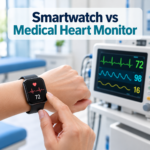

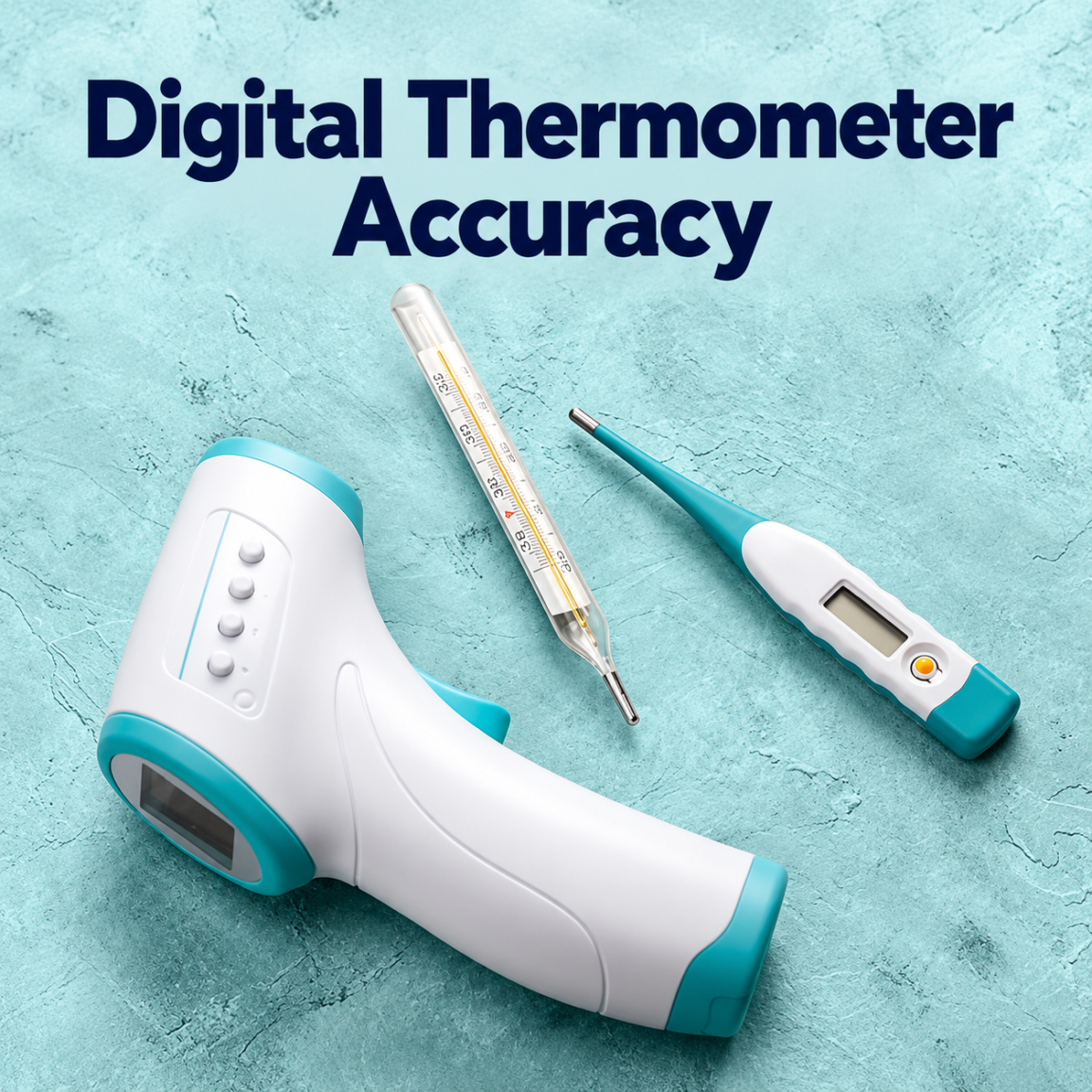
Why Does Your Digital Thermometer Show Different Temperatures?
A digital thermometer is one of the most commonly used medical devices at home. Whether someone develops a fever, a child feels unusually warm, or an adult experiences chills and body aches, checking body temperature is often the first step.
However, many people become confused when their thermometer shows different readings within a few minutes. One measurement may be 98.6°F, another 99.4°F, and a third 100.1°F. Some people immediately assume that the thermometer is defective, while others believe their body temperature is changing rapidly.
In reality, differences in temperature readings can occur for several reasons. The measurement site, thermometer type, surrounding temperature, recent food or drink intake, sensor placement and measurement technique can all influence the result.
Understanding digital thermometer accuracy is important because an incorrect reading can lead to unnecessary concern or, more seriously, false reassurance when someone is genuinely unwell.
For example, a falsely low reading may delay recognition of fever, while a falsely high reading may cause someone to believe they have a fever when their actual body temperature is not elevated.
It is also important to understand that body temperature is not a fixed number. Temperature varies naturally throughout the day and differs according to where it is measured.
In this article, we will explain how digital thermometers work, why different devices produce different results, the eight common mistakes that affect accuracy, and how to obtain more reliable readings at home.
What Is a Digital Thermometer?
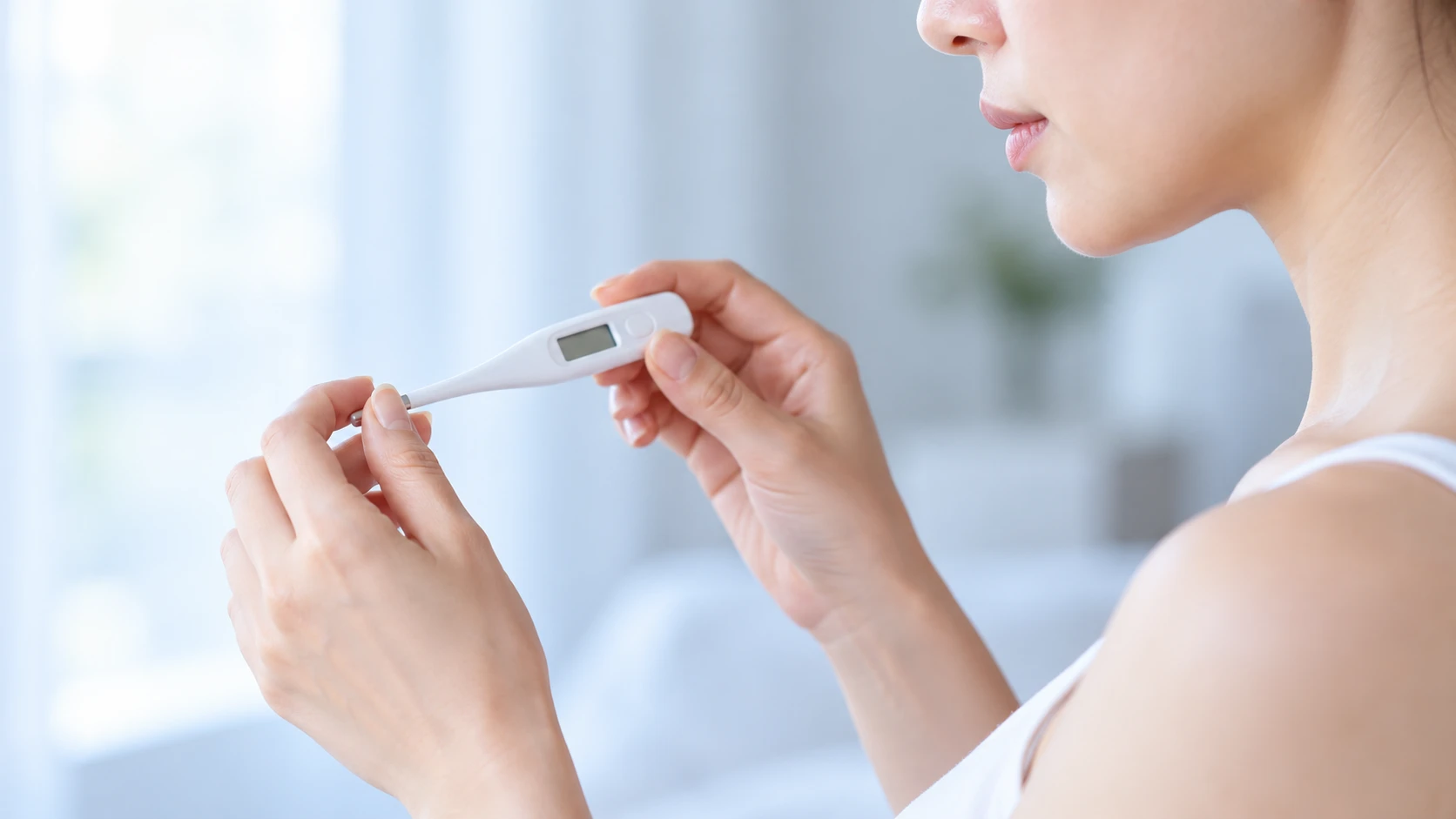
A digital thermometer is an electronic device designed to measure temperature and display the result numerically, usually in degrees Celsius or Fahrenheit.
Unlike traditional mercury-in-glass thermometers, electronic thermometers use sensors and internal circuitry to detect temperature changes.
However, the term digital thermometer includes several different technologies.
A standard contact digital thermometer may be used orally, under the arm or rectally, depending on its intended use and the manufacturer’s instructions.
Infrared thermometers estimate temperature from infrared radiation emitted by the body and may be designed for forehead or ear measurements.
Although all these devices display a digital number, they do not necessarily measure the same anatomical site or use the same measurement method.
How Does a Contact Digital Thermometer Work?
Most conventional electronic contact thermometers use a temperature-sensitive component, such as a thermistor, located near the probe tip.
As the sensor temperature changes, its electrical characteristics change. The thermometer processes this signal and calculates a temperature value.
Some thermometers estimate the final temperature using a predictive algorithm rather than waiting until the probe has fully reached thermal equilibrium.
This means the displayed result may depend on both sensor performance and the algorithm used by the device.
How Does an Infrared Thermometer Work?
Infrared thermometers detect infrared energy emitted from a target surface or anatomical region.
Forehead thermometers may use measurements over the temporal region, while ear thermometers estimate temperature from infrared radiation within the ear canal, depending on the device design.
Because these systems measure radiation rather than relying on direct thermal contact in the same way as a probe thermometer, they have different sources of measurement error.
Distance, positioning, environmental conditions and the intended measurement site may all affect the result.
How Accurate Is a Digital Thermometer?
A properly designed digital thermometer can provide useful and reasonably accurate body temperature measurements when used according to its instructions.
However, accuracy is not determined simply by whether the display shows one or two decimal places.
For example, a thermometer displaying 98.64°F is not necessarily more accurate than one displaying 98.6°F.
The number of displayed digits indicates resolution, not necessarily measurement accuracy.
Accuracy vs Precision: What Is the Difference?
Accuracy describes how closely a measurement corresponds to an appropriate reference value.
Precision describes how consistently a device produces similar results when measurements are repeated under comparable conditions.
A thermometer may produce highly consistent readings but still be inaccurate because of calibration problems or improper use.
Similarly, two measurements may differ because the body temperature or measurement conditions changed, even when the thermometer is functioning properly.
Is a Digital Thermometer Accurate to 0.1°C?
Many digital thermometers display temperature in increments of 0.1°C, but this does not mean every reading is accurate within 0.1°C.
Actual accuracy depends on the thermometer’s specifications, intended measurement site, operating conditions and proper use.
Manufacturers may specify accuracy under particular laboratory conditions. Real-world performance can differ because of user technique and physiological variation.
When evaluating a thermometer, examine the manufacturer’s stated accuracy and intended use rather than relying on the number of decimal places displayed.
Why Different Thermometers Can Show Different Readings
Two thermometers may produce different values even when both are functioning correctly.
One important reason is that temperature varies across different anatomical sites.
Oral, axillary, rectal, tympanic and forehead measurements are not interchangeable.
Some sites more closely approximate core body temperature under appropriate conditions, while others are more influenced by environmental temperature and local circulation.
For example, an underarm measurement may be lower than an oral or rectal measurement, but the difference is not fixed for every person.
Therefore, adding a standard correction such as 1°F to every underarm reading is not a reliable way to calculate an equivalent oral or core temperature.
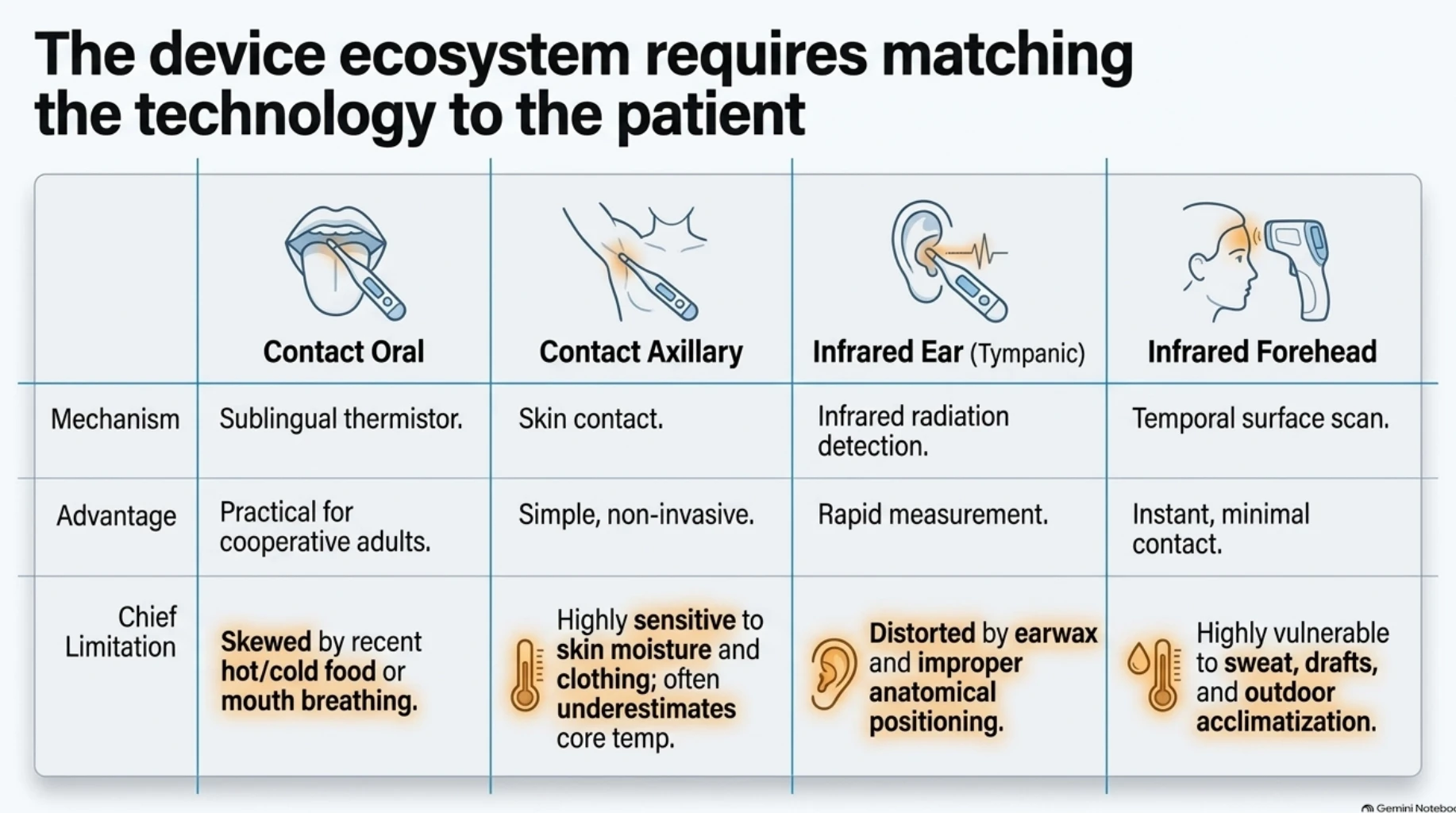
Oral Temperature
Oral thermometers measure temperature inside the mouth, usually in the sublingual region beneath the tongue.
Readings can be influenced by recent eating, drinking, smoking, mouth breathing and incorrect probe placement.
When used correctly, oral temperature measurement is practical for many cooperative older children and adults.
Axillary Temperature
Axillary temperature is measured in the armpit.
It is convenient and non-invasive, but readings may be influenced by skin contact, clothing, sweating and environmental conditions.
Axillary readings may be less reliable for identifying fever than appropriately performed measurements at certain other sites.
Rectal Temperature
Rectal temperature is often used as a reference for core temperature assessment in young infants in appropriate clinical or caregiver settings.
However, rectal measurement requires correct technique, a suitable thermometer and attention to safety.
It should not be performed when contraindicated or without appropriate instruction.
Ear Temperature
Tympanic infrared thermometers measure infrared energy from within the ear canal.
Incorrect positioning, earwax, anatomical differences and unsuitable use in very young infants may affect accuracy.
Forehead Temperature
Forehead thermometers offer rapid and convenient measurements.
However, performance depends on the specific device, measurement technique and environmental conditions.
Some forehead devices estimate body temperature using an algorithm based on measured skin temperature, so the displayed value should not be interpreted as a direct measurement of internal body temperature.
Digital Thermometer Types: Accuracy and Common Limitations
| Thermometer Type | Measurement Site | Main Advantage | Common Limitation |
|---|---|---|---|
| Contact digital thermometer | Oral | Practical for many adults and cooperative children | Affected by recent food, drinks and incorrect placement |
| Contact digital thermometer | Axillary | Simple and non-invasive | Skin contact and ambient conditions can affect readings |
| Appropriate rectal digital thermometer | Rectal | Useful in selected infant temperature assessments | Requires correct technique and safety precautions |
| Infrared ear thermometer | Ear canal | Rapid measurement | Positioning and ear anatomy affect performance |
| Infrared forehead thermometer | Forehead or temporal region | Convenient and quick | Environmental conditions and technique may influence readings |
| Non-contact infrared thermometer | Specified forehead measurement region | Minimal physical contact | Incorrect distance, angle or environment can produce errors |
No thermometer type should automatically be considered the most accurate in every patient and situation.
Device selection depends on age, clinical purpose, intended measurement site and correct use.
Digital Thermometer Accuracy: 8 Common Mistakes That Can Give a Wrong Reading
Most temperature measurement errors are not caused by a completely defective thermometer. Many occur because of everyday mistakes in technique.
Understanding these errors can improve the reliability of home fever monitoring.
Mistake 1: Measuring Temperature Immediately After Eating or Drinking
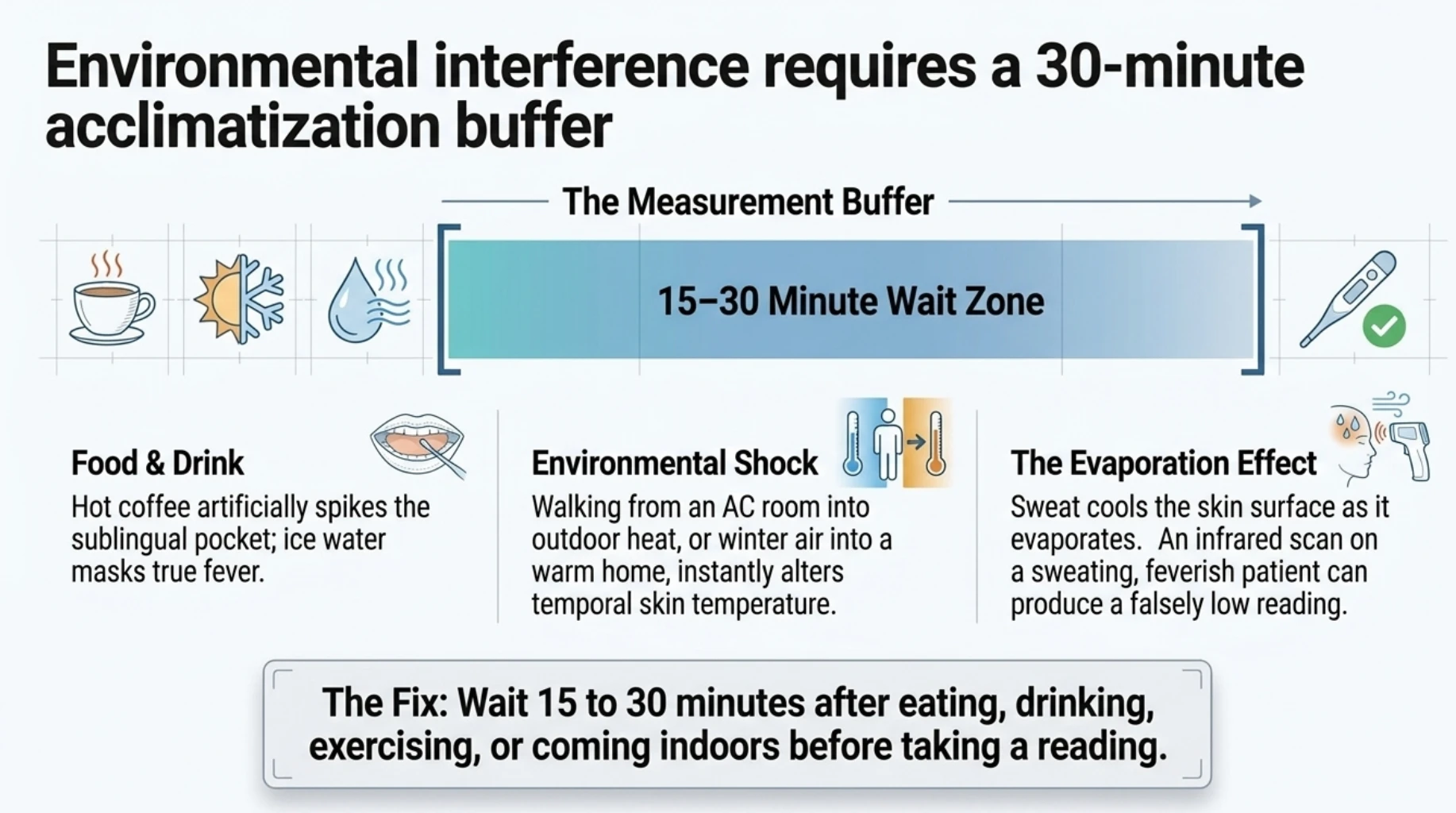
One of the most common causes of inaccurate oral temperature readings is checking temperature immediately after consuming hot or cold food and drinks.
When you drink hot tea, coffee or soup, the temperature inside your mouth temporarily increases.
If an oral thermometer is used immediately afterwards, the sensor may detect this local temperature change rather than a representative body temperature.
Similarly, cold water, chilled drinks or ice cream can temporarily lower the temperature inside the mouth.
This may produce a falsely low oral reading.
How Long Should You Wait After Eating or Drinking?
A practical approach is to wait approximately 15–30 minutes after eating or drinking before taking an oral temperature, following the thermometer manufacturer’s instructions.
Allowing sufficient time helps reduce the influence of local temperature changes inside the mouth.
If you need to measure temperature sooner, an appropriate alternative measurement site may be considered according to the patient’s age and the device instructions.
Can Hot Tea Make a Thermometer Show Fever?
Yes. A hot drink may temporarily increase the temperature measured in the mouth.
However, this does not necessarily represent an increase in core body temperature.
When an unexpectedly high oral reading follows a hot drink, repeat the measurement after an appropriate waiting period if the person is otherwise stable.
Can Cold Water Hide a Fever?
Cold drinks can temporarily lower oral temperature readings.
Consequently, measuring immediately after drinking cold water may underestimate the actual body temperature.
This is particularly important when someone has symptoms suggestive of fever but the thermometer shows an unexpectedly low result.
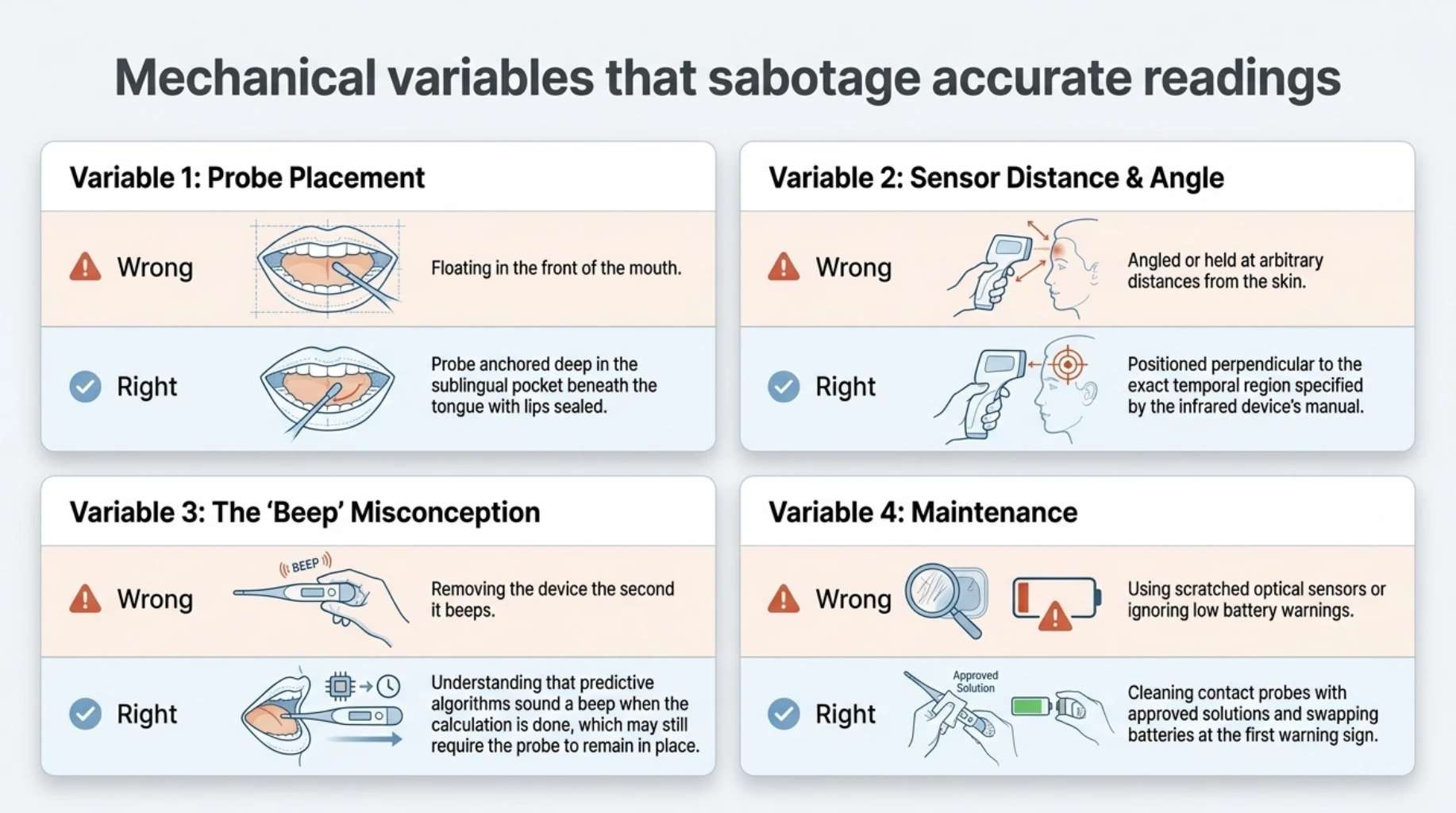
Mistake 2: Placing the Thermometer in the Wrong Position
Correct sensor placement is essential for reliable temperature measurement.
A thermometer may be functioning normally but produce inaccurate readings if the probe is not positioned at the intended measurement site.
This is particularly common with oral and axillary thermometers.
Correct Oral Thermometer Placement
For oral temperature measurement, the probe tip should generally be placed beneath the tongue in the appropriate sublingual region, according to the manufacturer’s instructions.
The mouth should remain closed during measurement.
Holding the thermometer between the teeth, positioning it near the front of the mouth or repeatedly moving it may affect the result.
The patient should remain still until the device indicates that the measurement is complete.
Why Does Placement Under the Tongue Matter?
The temperature inside the mouth is not completely uniform.
Different locations may be affected differently by airflow, saliva and contact with surrounding tissues.
Placing the sensor correctly improves consistency and reduces avoidable variation.
Correct Axillary Thermometer Placement
For an underarm measurement, the probe must make appropriate contact with the skin in the centre of the armpit.
The arm should be held close to the body as directed by the manufacturer.
If the probe is partly exposed to room air or positioned over clothing, the reading may be unreliable.
The armpit should be dry when the manufacturer’s instructions require it.
Mistake 3: Using a Forehead Thermometer at the Wrong Distance or Angle
Non-contact infrared forehead thermometers are popular because they provide rapid measurements without touching the skin.
However, these devices can be particularly sensitive to incorrect measurement technique.
Each model is designed for a specified measurement distance and anatomical location.
Holding the device too far away, too close or at an incorrect angle may produce a reading that differs from the intended measurement.
Why Measurement Distance Matters
An infrared thermometer detects energy from a defined area within its field of view.
When the device is positioned incorrectly, the sensor may collect radiation from an unintended region or receive a signal that does not meet the manufacturer’s measurement requirements.
This can affect the displayed temperature.
There is no single correct distance for every non-contact thermometer. The appropriate distance must be obtained from the instructions for the exact device.
Can You Measure Temperature From Any Part of the Forehead?
Not necessarily.
Some devices are designed for a specific forehead location, while others use a scanning technique across the temporal region.
Using a device outside its intended measurement area may reduce accuracy.
Does the Thermometer Need to Be Perpendicular to the Forehead?
Many non-contact thermometers require a particular orientation relative to the measurement surface.
Incorrect angling can affect the measured area and optical signal.
Follow the manufacturer’s positioning instructions rather than assuming that every infrared thermometer works in the same way.
Mistake 4: Measuring Temperature Immediately After Coming From Outdoors
Body surface temperature can be influenced by environmental conditions.
This becomes particularly important when using forehead or other infrared thermometers.
For example, someone entering an air-conditioned room after spending time outdoors in hot weather may have a forehead temperature that has been affected by sun exposure.
Similarly, someone coming indoors from cold weather may have cooler skin despite having a relatively stable internal body temperature.
These changes can produce misleading surface temperature measurements.
Can Air Conditioning Affect a Forehead Thermometer?
Yes. Direct airflow and changes in surrounding temperature may influence forehead skin temperature and the measurement conditions of some infrared devices.
For reliable measurement, use the thermometer within its specified environmental operating range and avoid direct airflow when recommended by the manufacturer.
Can Hot Weather Cause a Falsely High Reading?
Recent sun exposure or a hot environment may increase forehead skin temperature and affect infrared measurements.
However, the direction and size of the error depend on the device and measurement conditions.
A high forehead reading should not automatically be dismissed as environmental interference when the person has symptoms suggestive of fever or heat-related illness.
How Long Should You Wait After Coming Indoors?
Allow the person and thermometer to adjust to the recommended measurement environment according to the manufacturer’s instructions.
Some devices specify an acclimatisation period, which may be around 15–30 minutes or longer depending on the product and conditions.
There is no universal waiting period that applies to every thermometer.
What About Delhi’s Summer and Winter Temperatures?
In Delhi-NCR, people frequently move between outdoor heat, air-conditioned rooms and cooler environments during winter.
These changes can influence skin temperature and make correct infrared thermometer technique particularly important.
For example, checking forehead temperature immediately after a child returns from outdoor play on a hot afternoon may produce a result affected by recent environmental exposure.
Similarly, a low forehead reading immediately after coming indoors on a cold winter morning may not accurately represent internal body temperature.
When the result is unexpected, repeat the measurement under appropriate conditions or use another suitable thermometer according to the person’s age and clinical situation.
Why These First Four Mistakes Matter
The first four common thermometer mistakes illustrate an important principle: digital thermometer accuracy depends on both the device and how it is used.
Hot or cold drinks can affect oral measurements. Incorrect probe placement can alter oral or underarm readings. Improper distance or angle can affect non-contact infrared measurements, while recent environmental exposure can influence forehead temperature.
These factors may produce differences even when the thermometer itself is functioning correctly.
However, an unexpected reading should never be considered harmless solely because a measurement error is possible.
If a patient appears significantly unwell, clinical assessment is more important than repeatedly trying to obtain a particular temperature number.
Mistake 5: Measuring Temperature Over Sweat, Hair or Moist Skin
One of the most overlooked factors affecting digital thermometer accuracy is the condition of the skin at the measurement site. This is particularly relevant when using forehead and non-contact infrared thermometers.
Many people check their temperature immediately after exercising, walking outdoors, taking a shower or experiencing heavy sweating during fever. Under these conditions, the temperature measured at the skin surface may not accurately reflect internal body temperature.
When sweat evaporates from the skin, it removes heat and produces a cooling effect. Consequently, a forehead thermometer may display a lower temperature than expected, even when the person feels feverish.
Hair covering the forehead can also interfere with measurement. Instead of measuring the intended skin surface, the infrared sensor may detect radiation from hair or a combination of different surfaces.
How Does Sweating Affect a Forehead Thermometer?
Sweating is a normal mechanism through which the body regulates temperature. As moisture evaporates, the skin surface cools.
Infrared forehead thermometers depend on measuring thermal radiation from the intended surface. If that surface is wet or cooling rapidly, the result may be affected.
This does not mean that every person who is sweating will have an inaccurate reading. The degree of error depends on the device, measurement technique and surrounding conditions.
However, an unexpectedly low forehead reading in someone who is sweating heavily should be interpreted cautiously.
Can a Forehead Thermometer Give a Low Reading During Fever?
Yes. A forehead thermometer may show a lower-than-expected value if the skin is being cooled by sweat, environmental airflow or other factors.
During a febrile illness, skin temperature and internal body temperature do not always change in exactly the same way.
For example, a person may experience chills during the rising phase of fever, followed by sweating as the body begins to lose heat.
These physiological changes can complicate interpretation of surface temperature measurements.
How to Avoid This Mistake
Follow the manufacturer’s instructions regarding skin condition and preparation. If the device requires a dry, unobstructed forehead, gently remove sweat and move hair away from the measurement area.
Allow the skin to stabilise when appropriate before taking the reading.
If the result remains inconsistent with the person’s symptoms, consider a suitable alternative measurement method.
Importantly, do not delay medical assessment when someone appears seriously ill simply because a forehead thermometer reports a normal temperature.
Mistake 6: Removing the Thermometer Too Early or Ignoring the Completion Signal
Many digital thermometers use an audible beep or visual indicator to signal that a measurement has been completed.
However, not every thermometer uses the same measurement algorithm.
Some devices measure until a particular temperature condition is reached, while others use predictive calculations to estimate the final temperature before complete thermal equilibrium occurs.
Removing the thermometer before the required measurement period can produce an incomplete or inaccurate result.
Why Does Measurement Time Matter?
When a contact thermometer is placed beneath the tongue or in the armpit, its sensor requires time to respond to the surrounding temperature.
If the probe is removed too early, it may not have collected sufficient information to produce the intended measurement.
This can result in a falsely low or otherwise unreliable reading.
The required duration depends on the thermometer model and the measurement site.
Does the Beep Always Mean the Thermometer Has Reached the Final Temperature?
Not necessarily.
For many predictive digital thermometers, the completion signal indicates that the device has calculated its intended result according to its internal algorithm.
It does not necessarily mean that the sensor has reached complete thermal equilibrium.
Some manufacturers provide different instructions for oral, axillary and rectal measurements.
Therefore, it is important to follow the instructions for the exact thermometer rather than assuming that every device should remain in place for the same number of seconds.
Should You Keep the Thermometer in Place After It Beeps?
Not automatically.
Some devices are designed to provide a valid result when the completion signal occurs. Others may have specific instructions about additional measurement time for certain sites.
Keeping a predictive thermometer in place longer does not necessarily make its reading more accurate.
Follow the manufacturer’s guidance rather than applying a universal rule.
Why Are Underarm Measurements Particularly Sensitive to Technique?
Axillary temperature measurement depends on consistent contact between the sensor and the skin.
If the arm is moved, the probe shifts or the measurement is stopped prematurely, the result may be unreliable.
This is one reason why underarm temperature readings can vary more than expected during home monitoring.
Mistake 7: Using the Wrong Thermometer or Measurement Site for the Patient’s Age
A thermometer that works well for an adult may not be the most appropriate device for a newborn or young child.
Different measurement sites have different advantages, limitations and safety considerations.
Age is particularly important because young infants may develop serious infections without displaying the same symptoms seen in older children or adults.
Therefore, thermometer selection should consider both measurement accuracy and the clinical consequences of missing fever.
Digital Thermometer Accuracy in Newborns and Young Infants
In infants younger than three months, a measured temperature of 38°C (100.4°F) or higher is an important clinical finding that requires urgent medical assessment.
Rectal temperature is commonly used as a reference method in this age group when performed appropriately, although the recommended home measurement approach may vary by local clinical guidance.
Parents and caregivers should use a thermometer and technique suitable for the infant’s age and follow guidance from their healthcare professional.
If a young infant appears unwell, has poor feeding, unusual sleepiness, breathing difficulty or other concerning symptoms, urgent assessment is necessary even if a home thermometer does not show fever.
Why Ear Thermometers May Be Less Reliable in Very Young Infants
Ear thermometers depend on correct positioning within the ear canal.
In young infants, the ear canal is small, making it more difficult to obtain a reliable measurement.
Many clinical recommendations discourage relying on tympanic measurements in infants younger than six months, although suitability depends on the exact device and applicable guidance.
Always check the manufacturer’s stated age range.
Why Oral Temperature Measurement Is Difficult in Young Children
Oral temperature measurement requires the child to hold the probe correctly beneath the tongue and keep the mouth closed.
Young children may have difficulty cooperating consistently, resulting in unreliable readings.
Oral thermometers are generally more practical in older, cooperative children.
Can You Use an Adult Thermometer for a Baby?
Some contact digital thermometers are designed for multiple age groups and measurement sites, while others have specific restrictions.
The thermometer must be appropriate for the intended site and used according to its instructions.
A thermometer used rectally should be clearly designated for that purpose and should not subsequently be used orally.
Rectal measurement requires careful technique to avoid injury and should not be attempted without appropriate guidance.
Mistake 8: Using a Dirty, Damaged or Poorly Maintained Thermometer
Digital thermometers are electronic medical devices. Like other measuring instruments, their performance can be affected by physical damage, unsuitable storage, battery problems and improper maintenance.
A thermometer may continue displaying numbers even when its sensor or internal components are no longer functioning as intended.
Therefore, the presence of a digital display does not guarantee measurement accuracy.
Can a Low Battery Cause Wrong Temperature Readings?
Some thermometers display a low-battery warning or stop operating when battery power becomes insufficient.
Depending on the device design, battery problems may affect normal operation.
However, not every unusual reading is caused by a weak battery.
Replace batteries according to the manufacturer’s instructions and avoid using a device that displays an error or low-battery warning until the problem has been addressed.
Can Dropping a Thermometer Affect Accuracy?
Yes. Physical impact may damage the sensor, electronics or housing.
Even if the display continues working, measurement performance may be affected.
If a thermometer has been dropped and subsequently produces implausible readings, inspect it according to the manufacturer’s instructions and consider replacement or authorised testing.
Why Cleaning Matters
Thermometers may come into contact with saliva, skin, sweat and other biological material.
Appropriate cleaning reduces contamination risk and helps maintain the device.
However, using unsuitable disinfectants or immersing a thermometer that is not waterproof can damage electronic components.
Use only cleaning methods recommended by the manufacturer.
Can Improper Storage Affect a Digital Thermometer?
Yes. Excessive heat, cold, moisture and direct sunlight may affect electronic equipment.
For example, leaving a thermometer inside a parked car during extreme summer heat may expose it to temperatures outside its recommended storage range.
Before use, allow the device to return to its specified operating conditions when required.
When Should You Replace a Digital Thermometer?
Replacement may be appropriate when the device is physically damaged, repeatedly displays error messages, fails to operate normally or produces consistently implausible readings despite correct technique.
The manufacturer’s recommendations and availability of technical support should guide the decision.
The 8 Mistakes That Affect Digital Thermometer Accuracy
| Mistake | Possible Effect | How to Improve Accuracy |
|---|---|---|
| 1. Measuring immediately after hot or cold food and drinks | Falsely high or low oral reading | Wait approximately 15–30 minutes when appropriate |
| 2. Incorrect probe placement | Unreliable oral or axillary measurement | Use the correct anatomical position |
| 3. Incorrect forehead thermometer distance or angle | Infrared measurement error | Follow the exact device instructions |
| 4. Measuring immediately after environmental temperature changes | Surface temperature may not reflect internal temperature | Allow appropriate acclimatisation |
| 5. Measuring over sweat, hair or moist skin | Distorted forehead temperature | Prepare the measurement site as instructed |
| 6. Removing the thermometer too early | Incomplete or unreliable reading | Follow the completion indicator and instructions |
| 7. Using an unsuitable thermometer or measurement site | Age-related accuracy or safety problems | Select an appropriate device and technique |
| 8. Poor maintenance or damaged equipment | Unreliable operation or measurement | Inspect, clean and maintain the thermometer properly |
Why Does Body Temperature Change Throughout the Day?
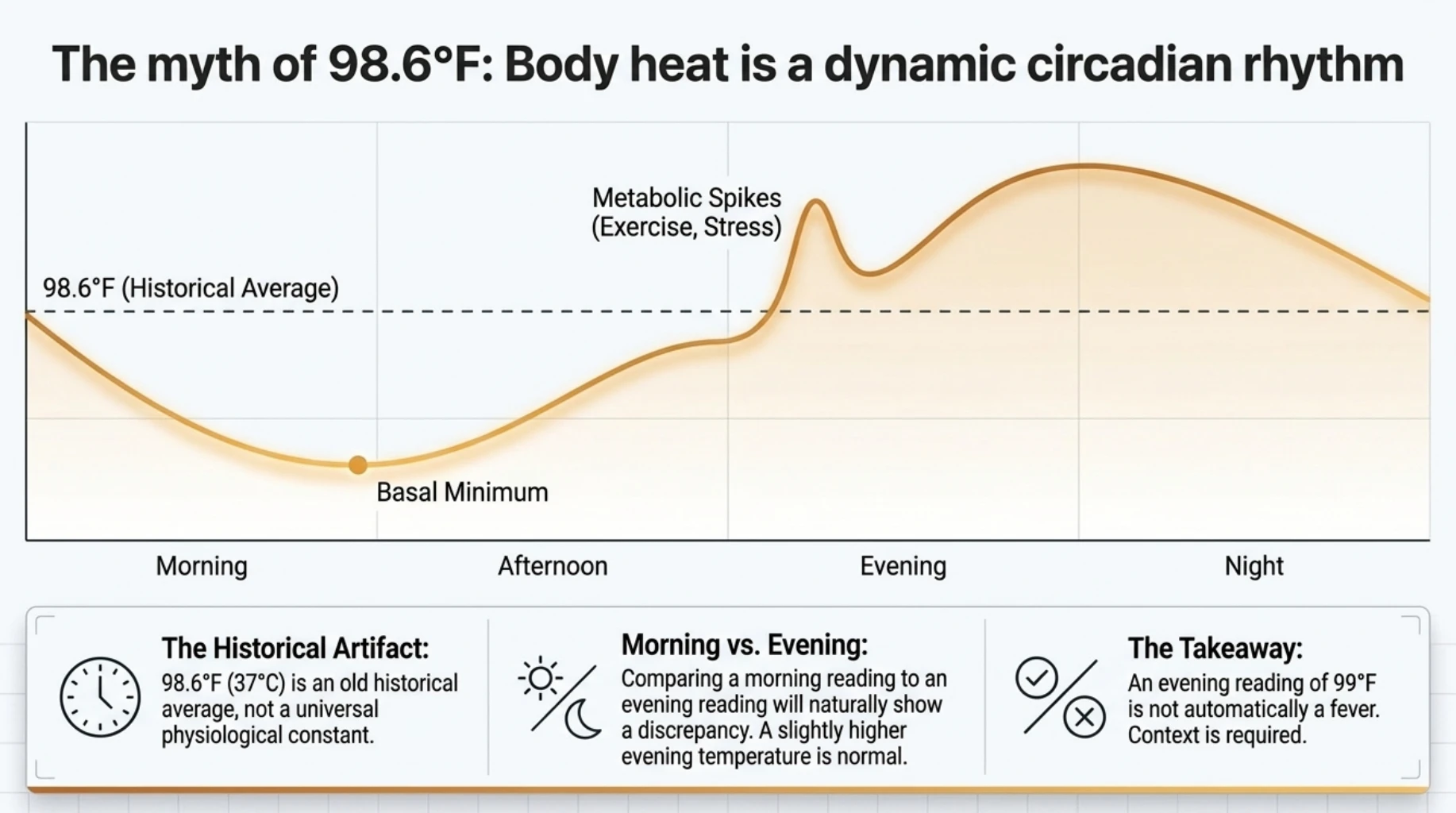
Body temperature is not a fixed number. It varies naturally according to circadian rhythm, physical activity, hormonal influences, environmental conditions and individual physiology.
In many people, body temperature tends to be lower during the early morning and higher during the late afternoon or evening.
These variations are normal and should not automatically be interpreted as fever.
Morning vs Evening Temperature
A person may record a lower temperature in the morning and a slightly higher temperature in the evening without having an infection.
For this reason, comparing readings obtained at different times of day may be misleading.
When monitoring temperature trends, it can be helpful to record the measurement time and anatomical site.
Does Exercise Increase Body Temperature?
Yes. Physical activity generates metabolic heat and can temporarily increase body temperature.
Measurements taken immediately after exercise may not represent resting body temperature.
When appropriate, allow time for recovery before measuring.
Can Menstrual Cycle Changes Affect Body Temperature?
Yes. Hormonal changes across the menstrual cycle can influence basal body temperature.
After ovulation, progesterone is associated with a small increase in basal temperature in many individuals.
However, ordinary home fever measurements should not be interpreted as precise indicators of ovulation or hormonal status.
Can Stress Increase Body Temperature?
Stress and emotional arousal can influence autonomic activity and physiological responses, including temperature regulation.
However, persistent fever should not automatically be attributed to stress without considering other causes.
What Is Normal Body Temperature?
The commonly quoted normal body temperature of 98.6°F (37°C) is a historical reference value rather than a universal constant.
Healthy body temperature varies between individuals and according to the measurement site, time of day and other factors.
A reading slightly above or below 98.6°F does not necessarily indicate illness.
Similarly, fever thresholds must be interpreted according to age, measurement site and clinical circumstances.
Is 99°F a Fever?
A temperature of 99°F (approximately 37.2°C) is not automatically considered fever.
Its significance depends on where and when the temperature was measured and whether symptoms are present.
A single reading should not be interpreted without context.
Is 100°F a Fever?
A temperature of 100°F (approximately 37.8°C) may be elevated depending on the measurement site and clinical circumstances.
However, a commonly used fever threshold is 38°C (100.4°F), particularly for appropriately measured core or rectal temperature.
Other measurement sites may have different practical thresholds.
Is 100.4°F Always a Fever?
A temperature of 100.4°F (38°C) is widely used as a fever threshold, but interpretation still depends on the measurement method and patient population.
In infants younger than three months, a temperature at or above this threshold requires urgent medical assessment.
In older children and adults, the significance depends on symptoms, medical history and other clinical findings.
Fever Measurement in Adults: What Is the Best Method?
For many cooperative adults, a correctly used oral digital thermometer is a practical method of measuring body temperature at home.
It is relatively inexpensive, widely available and straightforward to use.
However, oral measurements may be unsuitable when a person cannot safely hold the thermometer in the mouth or when the reading is likely to be affected by recent food, drinks or mouth breathing.
Underarm and forehead thermometers may be convenient alternatives, but their limitations should be understood.
Should Adults Use Oral or Forehead Thermometers?
Both can be useful when the device is suitable and used correctly.
An oral thermometer may provide a more direct and consistent measurement in many cooperative adults.
A forehead thermometer offers speed and convenience but may be more affected by environmental conditions and measurement technique.
The best choice depends on the clinical purpose, patient cooperation and the specific device.
Fever Measurement in Children: What Parents Should Know
Measuring temperature in children can be challenging because young children may move, resist the thermometer or have difficulty following instructions.
Age-appropriate thermometer selection is important.
For infants younger than three months, possible fever requires particular attention because serious infections may initially produce subtle symptoms.
Parents should not rely solely on whether the child feels warm to the touch.
What If a Child Feels Hot but the Thermometer Shows Normal?
A normal reading does not necessarily exclude illness.
The measurement may have been affected by incorrect technique, an unsuitable site or device limitations.
Repeat the measurement appropriately if the child is stable, and consider the child’s overall condition.
Persistent lethargy, breathing difficulty, poor feeding, dehydration or other concerning symptoms require medical assessment regardless of the thermometer result.
What If a Child Has Fever but Is Playing Normally?
A child with fever may remain active and interactive, particularly during a mild illness.
The child’s general appearance, hydration, breathing, age and other symptoms are important when deciding the need for medical care.
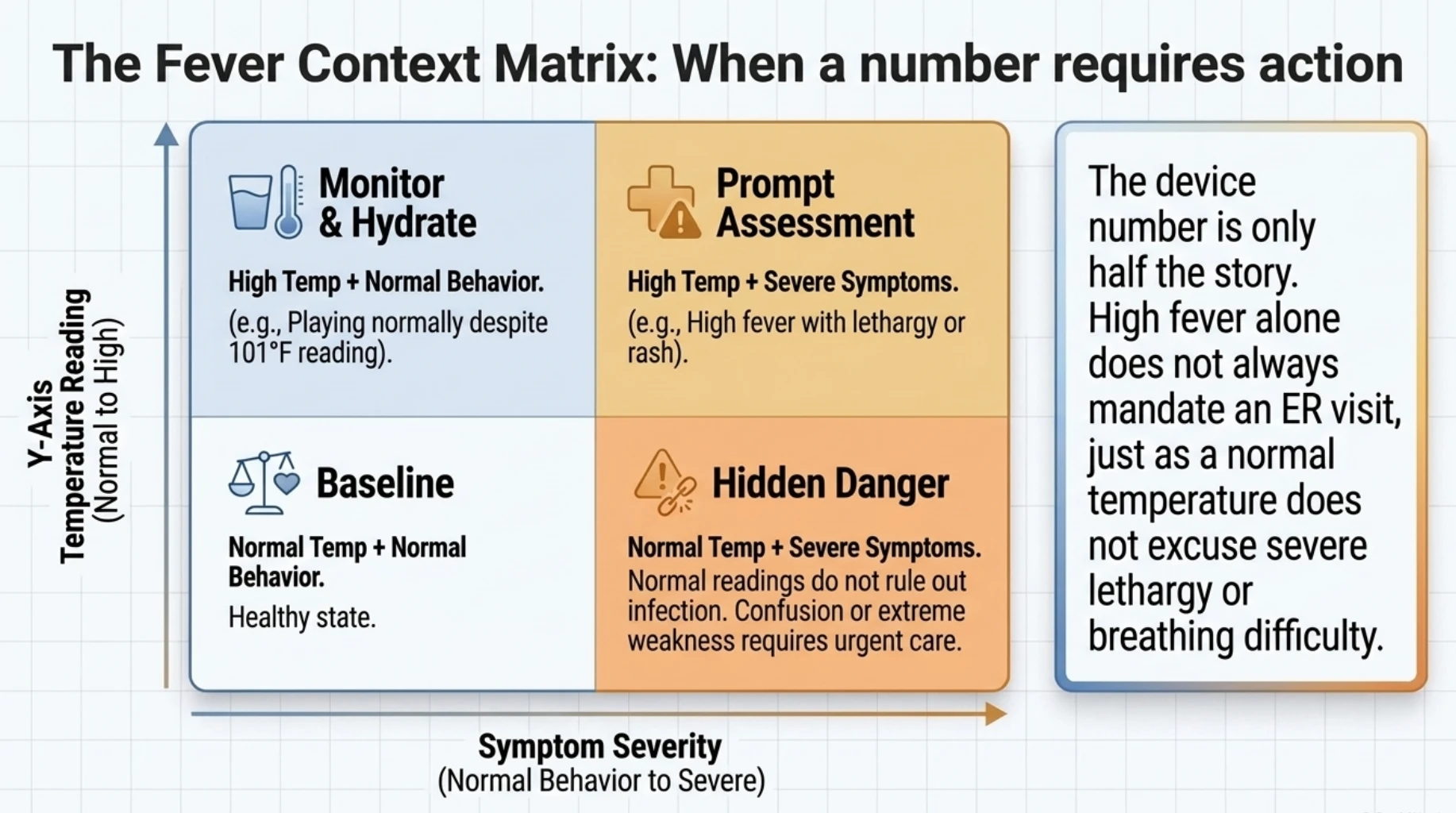
Fever height alone does not reliably indicate the seriousness of an illness.
Should You Wake a Sleeping Child to Check Temperature?
Routine repeated temperature checks are not always necessary when a child is sleeping comfortably and otherwise appears well.
However, the appropriate monitoring approach depends on age, illness severity and medical advice.
Young infants and children with concerning symptoms require more careful assessment.
What If Two Digital Thermometers Show Different Readings?
Differences between thermometers are common, particularly when different technologies or measurement sites are used.
For example, an oral thermometer and a forehead thermometer may display different values because they measure temperature differently.
This does not automatically mean that one device is defective.
Compare the Same Measurement Site
When comparing two contact thermometers, use the same anatomical site under similar conditions, provided both devices are intended for that use.
Do not compare an axillary measurement directly with an oral measurement and assume that the difference represents device error.
Allow Similar Measurement Conditions
Temperature can change with time, activity and environmental exposure.
For a meaningful comparison, measurements should be obtained close together under stable conditions.
Check for Repeated Discrepancies
If one thermometer repeatedly produces implausible results despite correct technique, consult the manufacturer’s troubleshooting guidance.
Replacement or technical assessment may be appropriate.
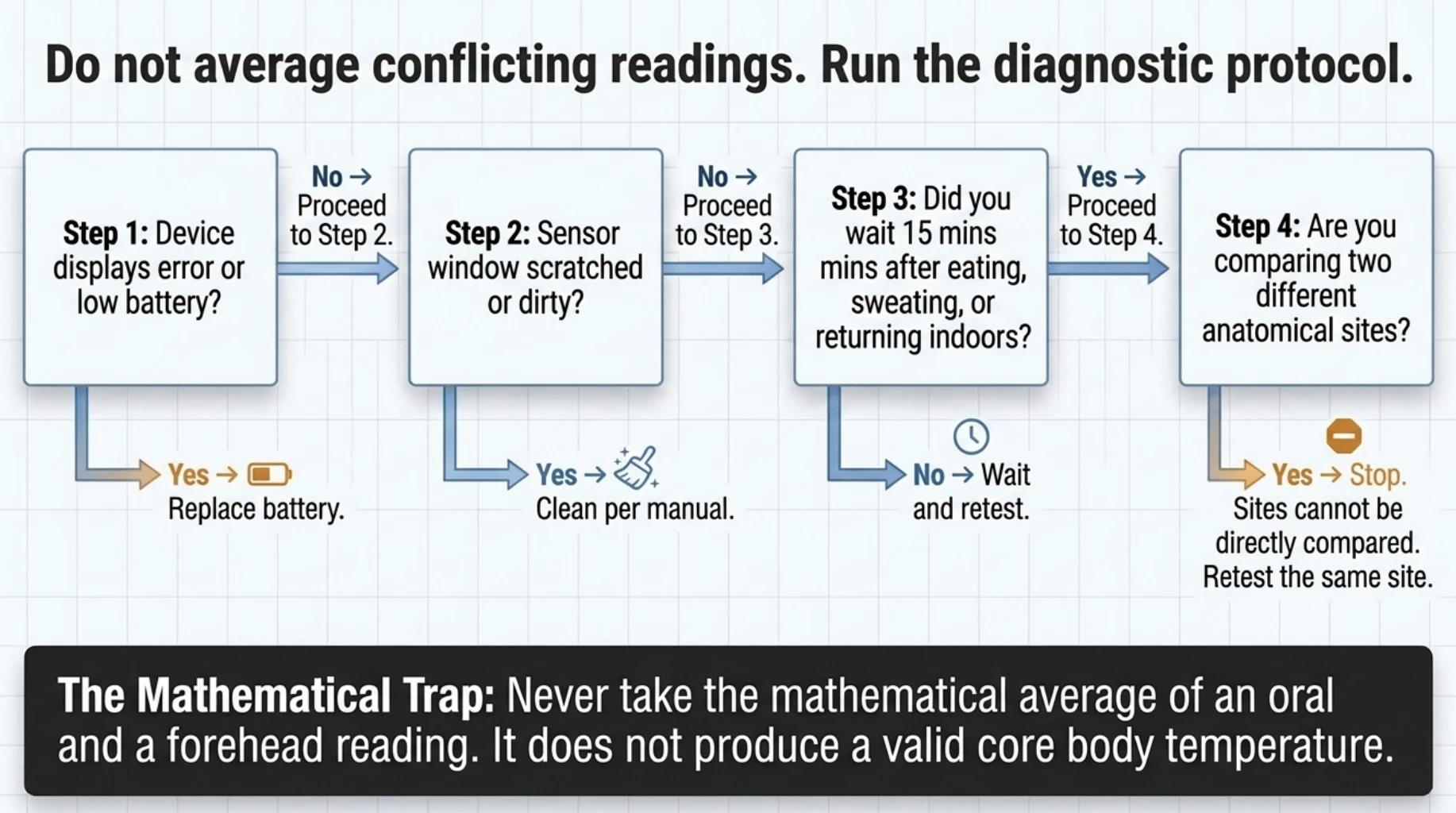
Do Not Average Two Different Readings
Taking the mathematical average of an oral and forehead reading does not produce a validated estimate of core body temperature.
Instead, use an appropriate measurement method and interpret the result according to the site and clinical context.
Why Repeated Temperature Checks Can Create Confusion
Some people measure temperature repeatedly within a few minutes because they are worried about fever.
However, repeated measurements can produce small differences because of sensor placement, measurement technique and normal physiological variation.
When every minor change is treated as clinically important, this can create unnecessary anxiety.
For most stable patients, it is more useful to monitor temperature at sensible intervals and pay attention to symptoms rather than repeatedly checking every few minutes.
The appropriate frequency depends on age, illness severity and clinical advice.
Should You Record Temperature Readings?
Keeping a simple record may be helpful during an illness.
Record the temperature, time, measurement site and relevant symptoms. It may also be useful to note when fever-reducing medication was taken.
This information can help a clinician understand the pattern of illness.
| Time | Temperature | Measurement Site | Relevant Information |
|---|---|---|---|
| 8:00 AM | 37.4°C | Oral | Mild body aches |
| 12:00 PM | 38.2°C | Oral | Fever and headache |
| 4:00 PM | 37.8°C | Oral | Resting after medication |
| 8:00 PM | 38.0°C | Oral | Chills reported |
Note: These values are hypothetical examples intended to illustrate temperature recording, not a recommended measurement schedule or treatment plan.
Can a Normal Digital Thermometer Reading Rule Out Infection?
No. A normal temperature reading does not exclude infection or other significant illness.
Some infections do not cause fever, particularly during their early stages.
Older adults, people with certain immune-system problems and individuals taking some medications may have serious infections without a typical fever response.
Fever-reducing medicines can also lower the measured temperature without necessarily resolving the underlying illness.
Therefore, clinical symptoms and overall condition remain important.
Confusion, significant weakness, difficulty breathing, reduced consciousness or other serious symptoms require assessment even when the thermometer displays a normal value.
How to Choose an Accurate Digital Thermometer for Home Use
Choosing a digital thermometer may appear simple, but not every device is equally suitable for every patient. The most expensive thermometer is not necessarily the most accurate, and a device that works well for an adult may not be appropriate for a newborn or young child.
When purchasing a thermometer, the most important considerations are the measurement technology, intended anatomical site, age suitability, manufacturer’s stated accuracy and ease of correct use.
A reliable thermometer should provide consistent measurements when used under appropriate conditions. However, even a well-designed device can produce misleading results if it is used incorrectly.
Understanding digital thermometer accuracy helps consumers make more informed decisions instead of relying solely on advertising claims such as “medical grade”, “instant reading” or “high precision”.
1. Choose the Correct Thermometer Type
For many adults and cooperative older children, a conventional contact digital thermometer intended for oral measurement is a practical choice.
Axillary measurements may be convenient when oral measurement is unsuitable, although they can be less reliable for detecting fever.
Forehead and ear thermometers provide rapid measurements but require careful attention to device-specific positioning and environmental conditions.
For young infants, select a thermometer and measurement method appropriate for the child’s age and follow paediatric guidance.
2. Check the Manufacturer’s Accuracy Specifications
Manufacturers may specify thermometer accuracy under defined laboratory conditions and within a particular temperature range.
For example, a thermometer may have a stated accuracy tolerance under specified testing conditions. This tolerance should not be assumed to apply under every home-use condition.
Check whether the manufacturer’s documentation identifies the intended measurement site, operating temperature range and applicable performance standards.
A thermometer displaying temperature to one decimal place is not necessarily accurate to that decimal place.
3. Look for Appropriate Regulatory Information
Medical thermometers should be purchased from reputable manufacturers and sellers that provide clear product identification, instructions and applicable regulatory information.
In India, medical-device requirements are administered through the relevant regulatory framework, including the Central Drugs Standard Control Organisation (CDSCO).
Regulatory applicability and documentation vary according to the device and its classification.
Do not assume that every product described as “FDA approved” or “clinically certified” has undergone the same evaluation. Regulatory terminology has specific meanings, and marketing claims should be verified.
4. Consider Measurement Time
A rapid measurement can be useful, particularly for children who find it difficult to remain still.
However, a shorter measurement time does not automatically mean better accuracy.
Some contact thermometers use predictive algorithms, while infrared thermometers estimate temperature from emitted radiation.
The important question is whether the device provides a sufficiently reliable measurement when used according to its instructions.
5. Choose a Clear, Easy-to-Read Display
A large display, clear completion signal and straightforward controls can reduce user errors.
For older adults or caregivers measuring a child’s temperature at night, readability and ease of operation may be particularly important.
Backlighting and memory functions may improve convenience but do not independently establish measurement accuracy.
6. Check Cleaning and Maintenance Requirements
Contact thermometers require appropriate cleaning between uses, especially when shared between family members.
Some devices are water-resistant, while others can be damaged by immersion.
Review the cleaning instructions before purchasing, particularly when the thermometer will be used frequently.
7. Consider Battery Availability and Replacement
A thermometer should be easy to maintain.
Check whether the battery can be replaced and whether the device provides a low-battery warning.
Store spare batteries safely away from children, especially button-cell batteries, which can cause life-threatening injury if swallowed.
Digital Thermometer Buying Guide: Which Type Is Best?
| Thermometer Type | Suitable Situation | Main Advantage | Important Limitation |
|---|---|---|---|
| Contact digital oral thermometer | Cooperative older children and adults | Practical, widely available and generally affordable | Requires correct placement and avoidance of recent hot or cold drinks |
| Contact digital axillary thermometer | Situations where oral measurement is unsuitable | Non-invasive and convenient | May underestimate fever and is sensitive to technique |
| Appropriate rectal digital thermometer | Selected infant temperature assessments | Useful reference measurement when performed correctly | Requires appropriate instruction and safety precautions |
| Infrared ear thermometer | Age groups supported by the specific device | Rapid measurement | Ear anatomy, wax and positioning may affect readings |
| Infrared forehead thermometer | Convenient temperature checks | Fast and often comfortable | Influenced by technique and environmental conditions |
| Non-contact infrared thermometer | Situations where minimal contact is preferred | Quick measurement without direct skin contact | Distance, angle and ambient conditions require careful control |
For routine home fever monitoring, a well-designed contact digital thermometer is often a sensible starting point. However, the most appropriate measurement site depends on the patient’s age, ability to cooperate and clinical circumstances.
How to Check Whether Your Digital Thermometer Is Working Properly
Many people suspect a thermometer is defective when it produces two different readings within a short period.
However, temperature variation does not automatically indicate device failure.
Before replacing a thermometer, review the measurement technique, anatomical site, environmental conditions and manufacturer’s troubleshooting instructions.
Check the Display and Error Indicators
Inspect the display for missing segments, low-battery warnings or error messages.
If the thermometer reports an error, follow the manufacturer’s instructions rather than repeatedly attempting measurements without identifying the problem.
Inspect the Sensor and Housing
Look for cracks, loose components, contamination or visible damage.
A damaged thermometer may not operate reliably even if it continues to display numerical values.
Repeat the Measurement Under Stable Conditions
When the patient is stable, repeat the measurement using the correct technique and anatomical site.
Small differences may occur because of placement and physiological variation.
Repeated implausible readings should prompt further troubleshooting or replacement.
Compare With Another Suitable Thermometer
Comparison may help identify a possible problem, but it should be performed carefully.
Use the same measurement site where appropriate and compare readings obtained close together under similar conditions.
Different technologies and anatomical sites should not be expected to provide identical values.
Can You Test a Medical Thermometer in Ice Water?
Household ice-water tests are not a universal or reliable method for checking clinical body-temperature accuracy.
Some thermometers are designed to operate only within a limited body-temperature range and may not provide meaningful results at 0°C.
Similarly, infrared forehead thermometers use algorithms intended for specific measurement conditions and should not be assessed using arbitrary household surfaces.
Use manufacturer-approved verification procedures or professional testing when necessary.
Can You Calibrate a Digital Thermometer at Home?
Many consumer digital thermometers do not provide user-accessible calibration adjustments.
Attempting to modify the sensor or internal settings may damage the device.
If calibration or accuracy verification is required, consult the manufacturer or an appropriately equipped service provider.
Why Two Accurate Thermometers May Still Show Different Temperatures
Even when two thermometers are functioning properly, their readings may differ because they measure different physiological regions or use different algorithms.
An oral thermometer measures temperature within the mouth, while a forehead infrared thermometer estimates temperature using thermal radiation from the skin.
These are not identical measurements.
Furthermore, temperature can change during the interval between measurements.
Differences in probe placement, device response time and averaging methods may also contribute.
Should You Add 1°F to an Underarm Temperature?
No fixed correction should be applied universally.
Although axillary temperature is often lower than oral or rectal temperature, the difference varies between individuals and measurement conditions.
Adding 1°F to every underarm reading does not reliably convert it into an equivalent core temperature.
Interpret the measured temperature according to the anatomical site and the clinical context.
Should You Average Two Thermometer Readings?
Averaging values obtained from different measurement sites does not produce a validated estimate of internal body temperature.
For example, calculating the average of an oral and forehead temperature may conceal an unreliable measurement rather than improve accuracy.
It is preferable to use an appropriate thermometer consistently and repeat an unexpected result using correct technique.
Digital Thermometer Cleaning and Maintenance
Proper cleaning and storage help maintain thermometer performance and reduce the risk of transmitting infections between users.
However, cleaning procedures differ between contact and infrared devices.
Cleaning a Contact Digital Thermometer
Clean the probe according to the manufacturer’s instructions before and after use.
Use only approved cleaning solutions and avoid immersing the entire device unless it is specifically designed to tolerate immersion.
When disposable probe covers are required, use the type recommended for the device.
Keep oral and rectal thermometers clearly separated to prevent cross-contamination.
Cleaning an Infrared Forehead Thermometer
Infrared thermometers contain optical components that may be damaged by unsuitable cleaning methods.
Follow the manufacturer’s instructions for cleaning the sensor window.
Do not scratch the optical surface or apply excessive liquid.
Storing a Digital Thermometer
Store the thermometer in a clean, dry location within its recommended temperature and humidity range.
Avoid prolonged exposure to direct sunlight, extreme temperatures and moisture.
Use the protective case when provided.
How Often Should You Replace the Battery?
Battery life depends on the device and frequency of use.
Replace the battery when indicated by the manufacturer or when a low-battery warning appears.
Do not assume that a weak battery is the cause of every unusual reading.
Digital Thermometer Accuracy in Fever Monitoring: Why Clinical Symptoms Matter
A thermometer measures temperature. It does not determine the cause of fever, assess the severity of an infection or establish whether someone requires hospital treatment.
For example, a patient with a temperature of 38.5°C may have a mild self-limiting viral illness, while another patient with a normal temperature may have a serious medical condition.
The interpretation of fever depends on age, medical history, symptoms and overall clinical condition.
Why Fever Height Alone Does Not Determine Illness Severity
The highest recorded temperature is only one part of clinical assessment.
Hydration, breathing, consciousness, circulation, associated symptoms and the patient’s underlying medical conditions may be more important than a small difference in temperature.
For example, a child who is alert, drinking adequately and breathing comfortably may require a different level of assessment from a child who is lethargic, dehydrated or struggling to breathe.
Similarly, an older adult with confusion and weakness may require urgent evaluation even without a high fever.
Can Fever-Reducing Medicines Affect Thermometer Readings?
Yes. Medicines such as paracetamol may reduce body temperature and improve discomfort.
However, a lower reading after medication does not necessarily mean that the underlying cause of illness has resolved.
Record the timing of fever-reducing medication when monitoring an illness, particularly if medical assessment may be needed.
Can Serious Infection Occur Without Fever?
Yes. Some serious infections occur without a typical fever response.
This may be particularly relevant in older adults, people with certain immune-system disorders and patients taking medications that alter inflammatory responses.
A normal thermometer reading should never override concerning clinical symptoms.
When Should Fever Prompt Medical Attention?
Deciding when to seek medical care requires more than checking whether the thermometer displays 100°F, 101°F or 102°F.
The patient’s age, general condition, underlying diseases and associated symptoms are important.
Infants Younger Than Three Months
A temperature of 38°C (100.4°F) or higher in an infant younger than three months requires urgent medical assessment.
If fever is suspected but the measurement is uncertain, seek medical advice promptly rather than repeatedly attempting to obtain a reassuring reading.
Young infants may also require urgent evaluation when they have poor feeding, unusual sleepiness, breathing difficulty, abnormal temperature or other signs of illness.
Children With Concerning Symptoms
Medical assessment is important when a child has difficulty breathing, dehydration, persistent lethargy, a non-blanching rash, seizure or other serious symptoms.
Age and fever duration also influence the need for evaluation.
A child who appears significantly unwell requires attention even when the thermometer reading is not particularly high.
Adults With Persistent or Unexplained Fever
Adults should seek medical advice when fever persists, repeatedly returns, or is accompanied by concerning symptoms.
Particular attention is needed when the patient has significant underlying illness, immune suppression or other factors that increase the risk of complications.
Emergency Warning Signs
Seek emergency medical care for severe breathing difficulty, confusion or reduced consciousness, seizures, signs of shock, severe chest pain, or other serious symptoms.
Do not delay care to repeat temperature measurements or troubleshoot the thermometer.
| Clinical Situation | Recommended Response |
|---|---|
| Infant younger than 3 months with temperature at or above 38°C | Urgent medical assessment |
| Child with breathing difficulty, lethargy or dehydration | Prompt or emergency assessment depending on severity |
| Adult with persistent unexplained fever | Arrange clinical evaluation |
| Patient with significant immune suppression and suspected infection | Seek prompt medical advice, even if temperature is normal |
| Severe breathing difficulty, confusion, seizure or collapse | Emergency medical care |
| Unexpected thermometer reading without concerning symptoms | Check technique and repeat appropriately |
Practical Fever Monitoring at Home
For most stable patients, home temperature monitoring should be simple and consistent.
Choose a thermometer suitable for the person’s age and follow the manufacturer’s instructions.
When possible, use the same measurement site for repeated readings so that temperature trends are easier to interpret.
Record the time, measured temperature, anatomical site and relevant symptoms.
If fever-reducing medication has been taken, note the time and dose according to the prescribed or recommended regimen.
Repeated measurements every few minutes are usually unnecessary unless there is a specific clinical reason.
Focus on the person’s overall condition rather than reacting to every minor change in the displayed number.
Example of a Simple Home Temperature Record
| Date and Time | Temperature | Measurement Site | Symptoms or Notes |
|---|---|---|---|
| Day 1, 8:00 AM | 37.3°C | Oral | Mild headache |
| Day 1, 2:00 PM | 38.1°C | Oral | Body aches and fatigue |
| Day 1, 8:00 PM | 38.3°C | Oral | Chills reported |
| Day 2, 8:00 AM | 37.6°C | Oral | Feeling better |
These are illustrative readings, not a prescribed monitoring schedule or treatment recommendation.
Frequently Asked Questions About Digital Thermometer Accuracy
1. How Accurate Is a Digital Thermometer?
A properly designed digital thermometer can provide reliable temperature measurements when used according to its instructions. Accuracy depends on the device, measurement site, technique and operating conditions.
2. Why Does My Digital Thermometer Show Different Readings Every Time?
Differences may result from probe placement, measurement timing, body temperature variation, environmental conditions or device limitations. Repeated small differences do not necessarily indicate a defective thermometer.
3. Can a Digital Thermometer Be Wrong by 1°F?
Yes. Errors of this magnitude or larger may occur under certain conditions, particularly with incorrect technique or unsuitable measurement conditions. However, there is no universal error margin that applies to every thermometer.
4. Is 98.6°F the Only Normal Body Temperature?
No. Normal body temperature varies between individuals, anatomical sites and times of day. A value slightly above or below 98.6°F does not automatically indicate illness.
5. Is 99°F Considered Fever?
Not automatically. A temperature of 99°F may fall within normal variation depending on the measurement site, time of day and individual circumstances.
6. Is 100.4°F a Fever?
A temperature of 100.4°F (38°C) is a commonly used fever threshold, although interpretation depends on measurement site, age and clinical context. In infants younger than three months, this finding requires urgent assessment.
7. Which Digital Thermometer Is Most Accurate for Adults?
A properly used oral contact digital thermometer is a practical and generally reliable choice for many cooperative adults. The best option depends on the patient and clinical circumstances.
8. Which Thermometer Is Best for a Newborn?
Young infants require an age-appropriate thermometer and measurement method. Rectal temperature is commonly used as a reference in selected settings, but safe technique and local paediatric guidance are important. Suspected fever in an infant younger than three months requires urgent medical advice.
9. Is a Forehead Thermometer Accurate?
Forehead thermometers can provide useful readings when properly designed and used according to instructions. However, sweat, environmental temperature, measurement distance and positioning may affect accuracy.
10. Is an Ear Thermometer Better Than a Forehead Thermometer?
Neither is universally better. Performance depends on the specific device, patient age, anatomy and measurement technique.
11. Why Does My Forehead Thermometer Show a Low Temperature?
Possible reasons include sweat, recent cold exposure, incorrect positioning, environmental airflow or device limitations.
12. Can Drinking Hot Tea Increase an Oral Thermometer Reading?
Yes. Hot drinks may temporarily increase oral temperature readings. Wait an appropriate period, commonly around 15–30 minutes, before measuring according to device instructions.
13. Can Cold Water Cause a Falsely Low Reading?
Yes. Cold drinks can temporarily lower the temperature inside the mouth and affect oral thermometer measurements.
14. Should I Keep a Digital Thermometer in Place After It Beeps?
Follow the manufacturer’s instructions. Some thermometers use predictive algorithms, and keeping the probe in place longer does not necessarily improve accuracy.
15. Can a Low Battery Cause an Incorrect Temperature Reading?
Battery problems may affect operation depending on device design. Replace the battery when indicated, but do not assume every unusual reading is caused by low battery power.
16. Can I Calibrate My Digital Thermometer at Home?
Most consumer thermometers do not provide user-accessible calibration adjustments. Use manufacturer-approved procedures or professional testing when verification is required.
17. Can I Use the Same Thermometer Orally and Rectally?
A thermometer used rectally should be clearly designated for that purpose and should not subsequently be used orally, even after cleaning.
18. Why Is My Underarm Temperature Lower Than My Oral Temperature?
Axillary temperature is often lower because it measures a different anatomical site and is influenced by skin contact and environmental conditions. The difference is not fixed.
19. Should I Add 1°F to an Underarm Reading?
No. A universal correction is not reliable. Interpret the temperature according to the measurement site and clinical context.
20. Can I Have an Infection Without Fever?
Yes. Some infections occur without fever, particularly in older adults, people with immune-system problems or those taking certain medications.
21. Can a Thermometer Show Normal Temperature During a Serious Illness?
Yes. A normal temperature does not exclude serious illness. Symptoms such as confusion, breathing difficulty, collapse or marked weakness require appropriate assessment.
22. How Often Should I Check Temperature During Fever?
The appropriate frequency depends on age, illness severity and medical advice. For most stable patients, repeated measurements every few minutes are unnecessary.
23. Can Exercise Affect Digital Thermometer Accuracy?
Exercise can increase body temperature and influence skin temperature. Measurements immediately after physical activity may differ from resting values.
24. Can Air Conditioning Affect Infrared Thermometer Readings?
Yes. Environmental temperature and direct airflow may influence skin temperature and infrared measurement conditions.
25. When Should I Replace My Digital Thermometer?
Consider replacement if the device is damaged, repeatedly displays errors, fails to operate normally or produces consistently implausible results despite correct technique.
Evidence-Based Resources and References
Accurate temperature measurement depends on device performance, appropriate measurement technique and clinical interpretation. The following organisations provide relevant information about fever, medical thermometers and device safety.
- U.S. Food and Drug Administration (FDA) — Medical device information, including safety and regulatory guidance.
- Centers for Disease Control and Prevention (CDC) — Public health information about fever, infections and related clinical considerations.
- National Health Service (NHS) — Patient guidance about high temperature and fever in children and adults.
- American Academy of Pediatrics — HealthyChildren.org — Parent-focused information about fever and temperature measurement in children.
- Central Drugs Standard Control Organisation (CDSCO), India — Medical-device regulatory information.
- International Organization for Standardization (ISO) — Information about applicable standards, including the ISO 80601-2-56 series for clinical thermometers.
Manufacturer instructions and applicable standards should be consulted for the exact thermometer model. General educational information cannot establish the accuracy of a particular device.
When to Consult a General & Lifestyle Physician
If you experience persistent fever, repeated unexplained temperature fluctuations or symptoms that do not match your thermometer readings, medical evaluation may help identify the underlying cause.
Clinical assessment may include a review of symptoms, physical examination, medication history and investigations when indicated.
At Diet Plus Minus in Dwarka, New Delhi, Dr. Pankaj Kumar provides general medical consultations and lifestyle-focused care for adults with common medical concerns and metabolic health conditions.
For non-emergency medical concerns, appointments can be arranged online.
Book an Appointment
Contact on WhatsApp
Dr. Pankaj Kumar
General & Lifestyle Physician
MBBS, DNB Family Medicine
Diet Plus Minus
Doctors Lane, Sector 6, Dwarka, New Delhi
Medical disclaimer: This article is intended for general health education and does not replace personalised medical advice. Fever assessment depends on age, measurement site, symptoms and clinical circumstances. Seek urgent medical attention for serious symptoms or suspected fever in a young infant.
If you want a personalized metabolic assessment and lifestyle strategy, you can book a consultation here:
Book an Appointment