
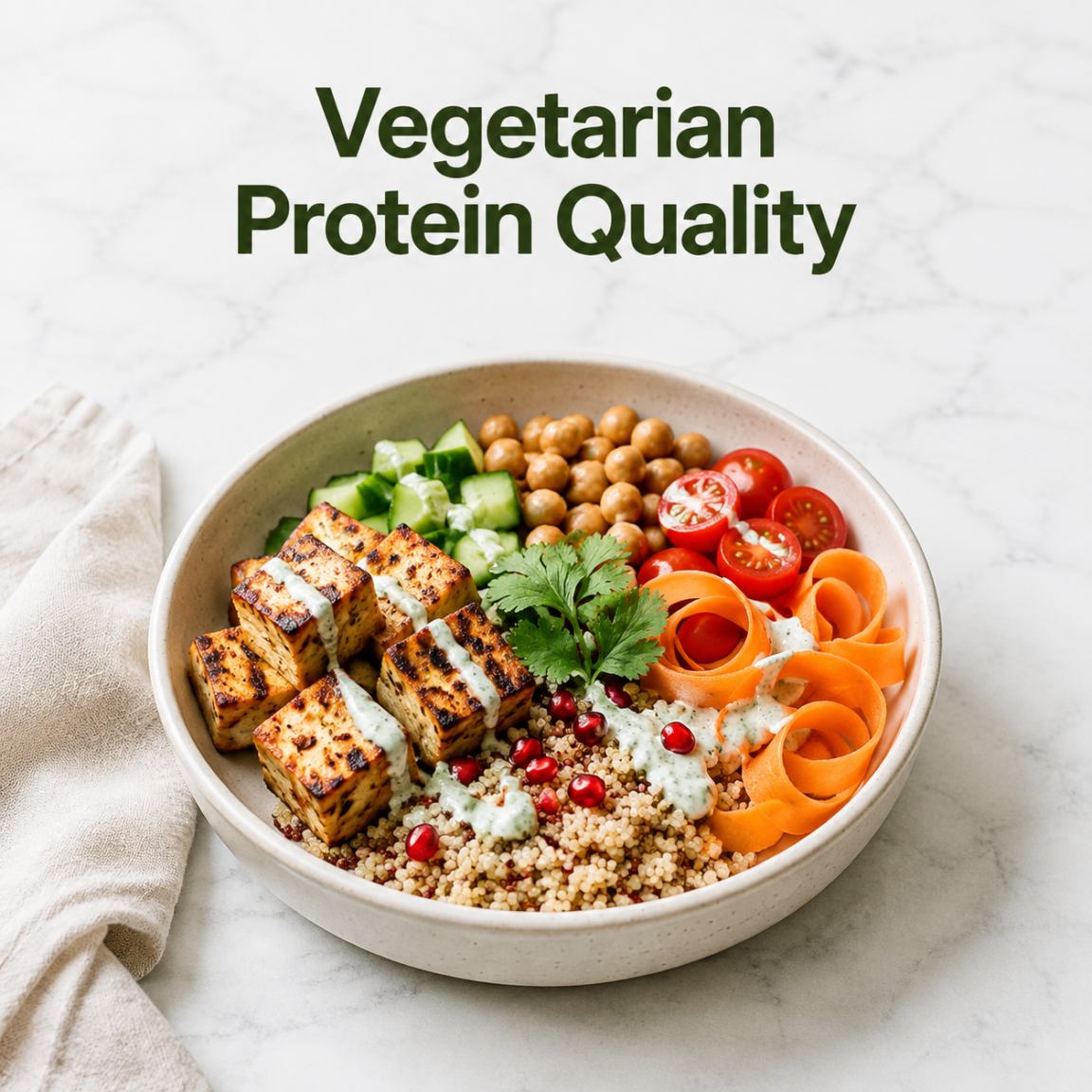
Vegetarian Protein Quality: 10 Indian Food Combinations That Work Better Together
“I eat dal, vegetables, roti, nuts, and curd every day. Does that mean I am getting enough good-quality protein?”
This is an important question for anyone following a predominantly vegetarian Indian diet.
Indian diets contain many nutritious plant foods that contribute protein. Dal, rajma, chana, soy, cereals, nuts, seeds, milk, curd, and paneer can all contribute towards daily protein requirements. Yet simply having several protein-containing foods in the diet does not automatically mean that total protein intake—or vegetarian protein quality—is optimal.
Different foods provide different amounts and proportions of essential amino acids. They also differ in digestibility and protein density. This is why looking only at the number of grams of protein on a food label tells only part of the story.
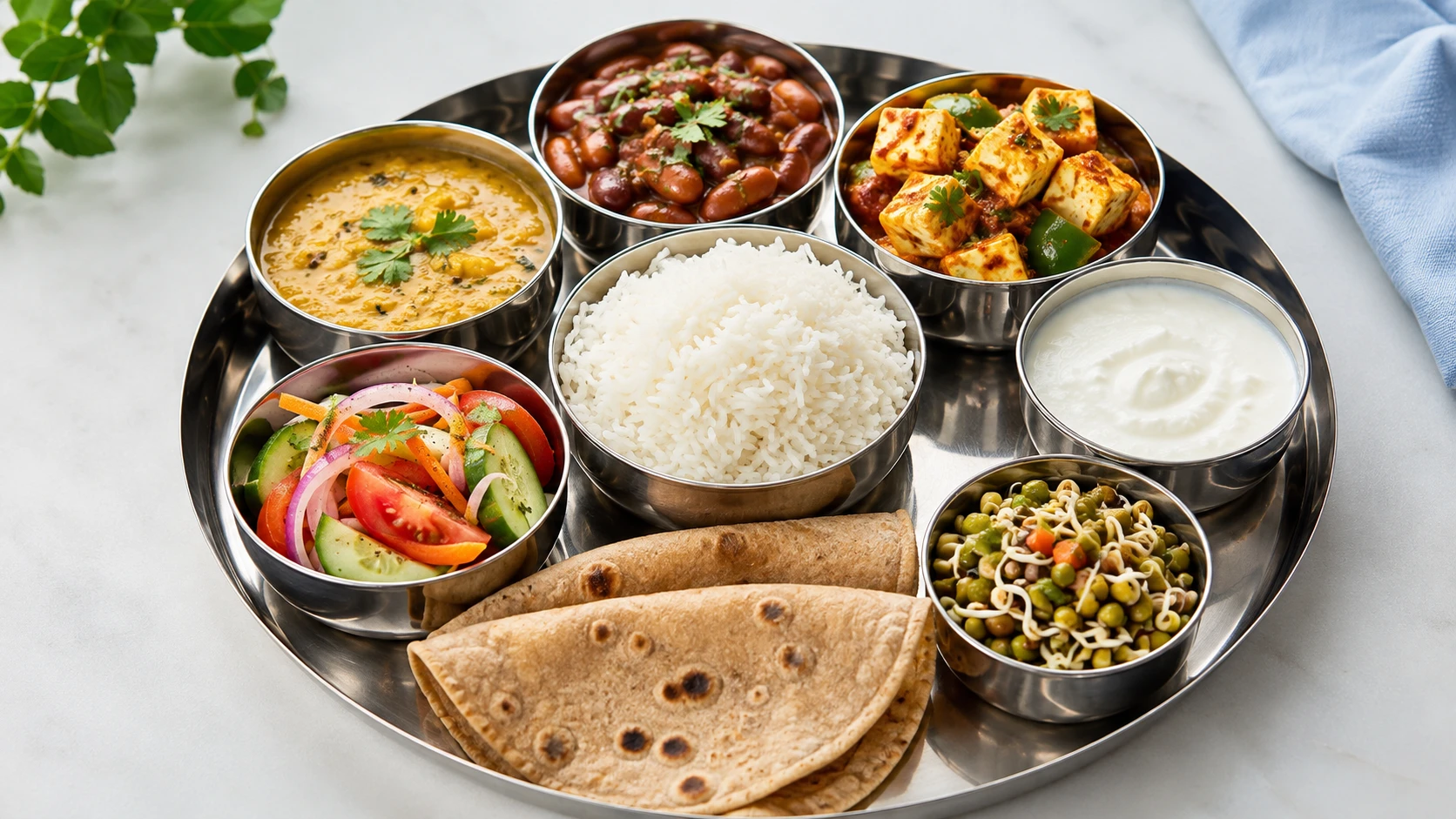
Fortunately, traditional Indian food patterns already contain an important nutritional advantage: many cereals, pulses, dairy foods, nuts, and seeds are naturally eaten together.
Dal with rice, rajma with rice, chole with roti, idli with sambar, and khichdi with curd are familiar examples.
These combinations can improve the overall amino-acid profile of a meal and, when portions are planned appropriately, help improve vegetarian protein quality.
But there is an important qualification.
A better amino-acid combination does not automatically mean a high-protein meal.
A large plate of rice accompanied by only a few tablespoons of dal may provide complementary amino acids but still contain less total protein than someone trying to preserve or build muscle needs.
This article explains what vegetarian protein quality actually means, why traditional Indian foods can work well together, and 10 practical combinations that can help you build a more protein-conscious diet without abandoning familiar foods.
What Does Vegetarian Protein Quality Actually Mean?
Dietary protein is made from amino acids. The body uses these amino acids to build and maintain muscle, enzymes, hormones, transport proteins, immune-system components, connective tissue, and many other structures.
There are nine essential amino acids that the human body cannot produce in sufficient amounts and therefore needs to obtain from food.
When discussing vegetarian protein quality, several factors are relevant:
- The amount of protein in the food.
- Its essential amino-acid composition.
- How well the protein is digested.
- How much of those amino acids become available to the body.
- The amount of protein actually eaten in a normal serving.
This is why two foods containing the same number of grams of protein may not necessarily provide exactly the same nutritional value.
Essential Amino Acids and Vegetarian Protein Quality
Many plant proteins contain all nine essential amino acids, but one or more may be present in relatively lower proportions compared with human requirements.
This amino acid is sometimes described as the limiting amino acid.
Legumes such as dal, rajma, and chana are generally good sources of lysine but tend to contain relatively lower amounts of sulphur-containing amino acids such as methionine.
Cereals such as rice and wheat generally contain relatively less lysine but provide a different amino-acid pattern.
When cereals and pulses are consumed as part of the same varied diet, their amino-acid profiles can complement each other.
This principle is one of the foundations of improving vegetarian protein quality in traditional Indian diets.
Protein Quantity and Vegetarian Protein Quality Are Not the Same
This distinction is essential.
Suppose a meal contains foods with complementary amino-acid profiles. That tells us something useful about protein quality.
It does not tell us whether the meal contains enough total protein.
For example, rice and dal complement each other nutritionally. But if the meal contains two cups of rice and only a very small quantity of dal, the overall meal may still be relatively protein-light.
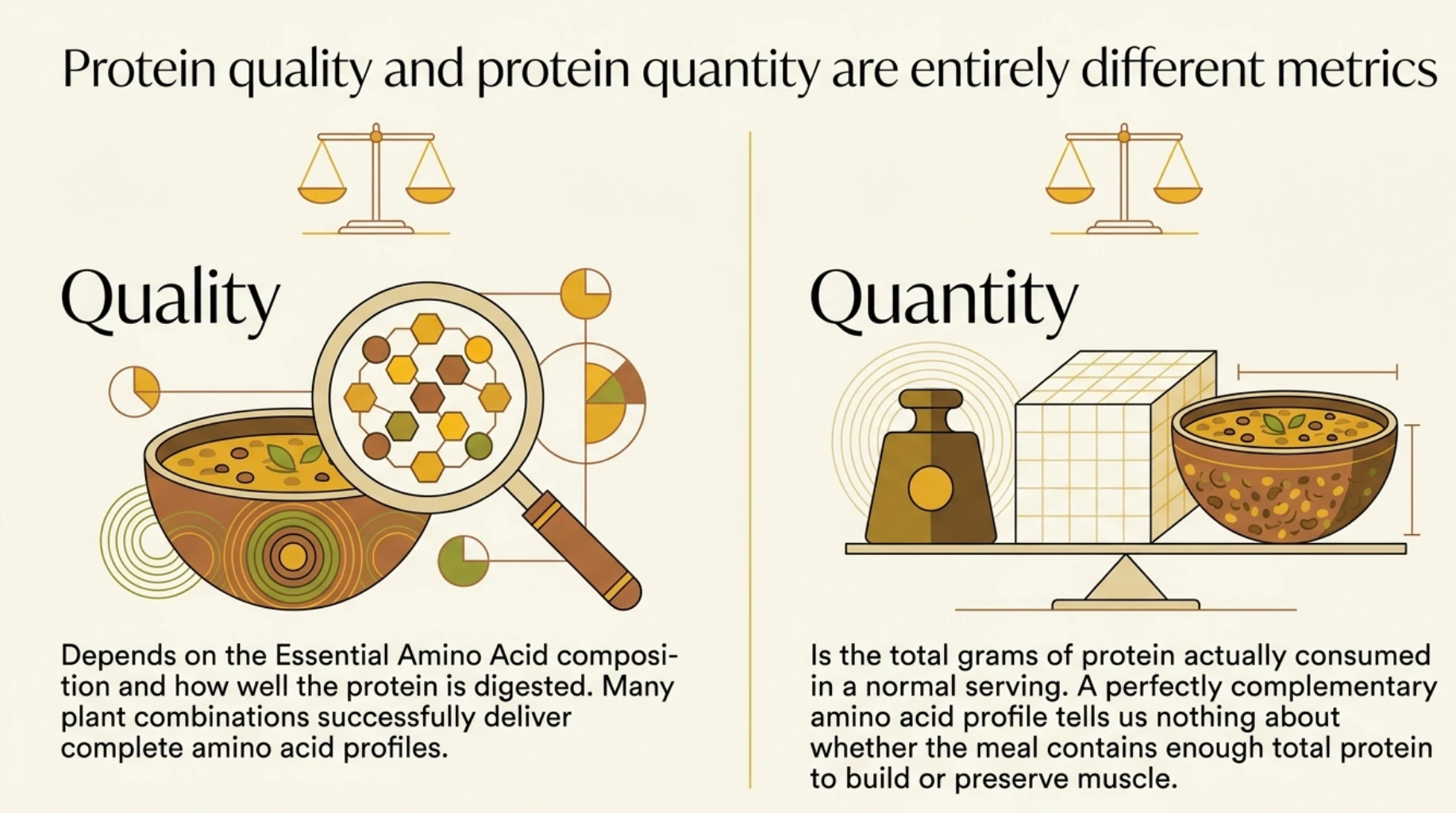
Therefore, improving vegetarian protein quality requires attention to both:
- Quality: Essential amino acids and digestibility.
- Quantity: Total grams of protein consumed.
This becomes especially important for people with higher protein requirements.
Why Combining Indian Foods Can Improve Vegetarian Protein Quality
Traditional Indian diets often combine food groups naturally.
Rice is eaten with dal or rajma. Roti is served with chana or dal. Fermented rice-and-lentil preparations such as idli and dosa are commonly accompanied by sambar. Khichdi may be eaten with curd.
These combinations can improve vegetarian protein quality because different foods contribute different amino acids and nutrients.
However, there is no need to become obsessed with creating a perfect amino-acid equation at every meal.
For most healthy adults, eating a varied diet containing adequate amounts of pulses, grains, soy, dairy where consumed, nuts, seeds, and other protein-rich foods across the day is more important than micromanaging every amino acid.
Do Complementary Proteins Have to Be Eaten at the Same Meal?
No.
This is an older nutrition concept that continues to create unnecessary confusion.
Vegetarians do not need to carefully match every cereal with a pulse during the same meal for the protein to “count.”
The body maintains an amino-acid pool and can use amino acids obtained from different foods consumed across the day.
Therefore, someone who eats dal at lunch and another complementary protein source at a different meal can still achieve adequate amino-acid intake as part of a varied diet.
Traditional combinations remain useful because they are convenient, nutritious, and often improve meal quality—but they are not a biological requirement at every sitting.
10 Indian Food Combinations That Improve Vegetarian Protein Quality
The following combinations are not presented as magical “complete protein” meals. Instead, they demonstrate practical ways to combine familiar Indian foods so that protein quantity, amino-acid balance, or both can be improved.
1. Dal and Rice for Better Vegetarian Protein Quality
Dal and rice is perhaps the best-known example of protein complementation in Indian food.
Pulses provide relatively more lysine, while rice contributes a complementary amino-acid pattern.
But the proportion matters.
A rice-heavy plate containing very little dal may still provide relatively little protein.
A better approach is to increase the dal-to-rice ratio and include vegetables plus another protein source if individual requirements are higher.
For lacto-vegetarians, curd can be an easy addition. Tofu or soy can also be included where appropriate.
The key message is simple: more dal and an appropriate rice portion, rather than treating dal as a small quantity of gravy.
2. Rajma and Rice for Better Vegetarian Protein Quality
Rajma-chawal is another classic cereal-legume combination.
Kidney beans provide protein, fibre, potassium, folate, and several other nutrients, while rice contributes carbohydrate and complementary amino acids.
However, rajma-chawal can become calorie-dense when rice portions are very large or substantial amounts of oil or ghee are added during cooking.
If protein is the priority, increase the proportion of rajma relative to rice rather than simply increasing the total quantity of both.
Adding vegetables or salad can further improve the meal’s fibre and micronutrient content.
3. Chole and Roti for Better Vegetarian Protein Quality
Chickpeas are a useful source of plant protein and fibre, while wheat provides a complementary cereal protein.
Chole and roti therefore represent another practical way of improving vegetarian protein quality.
Again, portion balance matters.
Four or five large rotis accompanied by a small amount of chole is very different nutritionally from a substantial serving of chickpeas with an appropriate number of rotis and vegetables.
If protein requirements are higher, curd, paneer, tofu, or another concentrated protein source can be added.
4. Khichdi and Curd for Better Vegetarian Protein Quality
Khichdi combines a cereal and pulse within the same dish. Adding curd provides additional high-quality dairy protein for people who consume dairy.
However, not all khichdi is nutritionally identical.
A preparation made predominantly from rice with only a small amount of dal may still be relatively low in protein.
Increasing the dal proportion is one of the simplest ways to improve the meal.
Vegetables can also be added for fibre, micronutrients, and greater food volume.
This creates a practical, familiar meal that can work for children, adults, and older people depending on individual nutritional needs.
5. Idli and Sambar for Better Vegetarian Protein Quality
Traditional idli batter combines rice with urad dal, while sambar adds another serving of pulses.
This makes idli with sambar nutritionally different from eating idli alone.
If improving vegetarian protein quality is the goal, the amount of sambar matters.
Eating several idlis with only a few spoonfuls of thin sambar may still produce a carbohydrate-heavy breakfast.
A more substantial serving of dal-rich sambar improves the meal’s protein contribution while vegetables in the sambar add further nutritional value.
Why the First Five Combinations Work Only When Portions Make Sense
There is a recurring pattern in all these examples.
Dal-rice, rajma-rice, chole-roti, khichdi-curd, and idli-sambar can all contribute towards better vegetarian protein quality, but the name of the dish does not determine how much protein you actually eat.
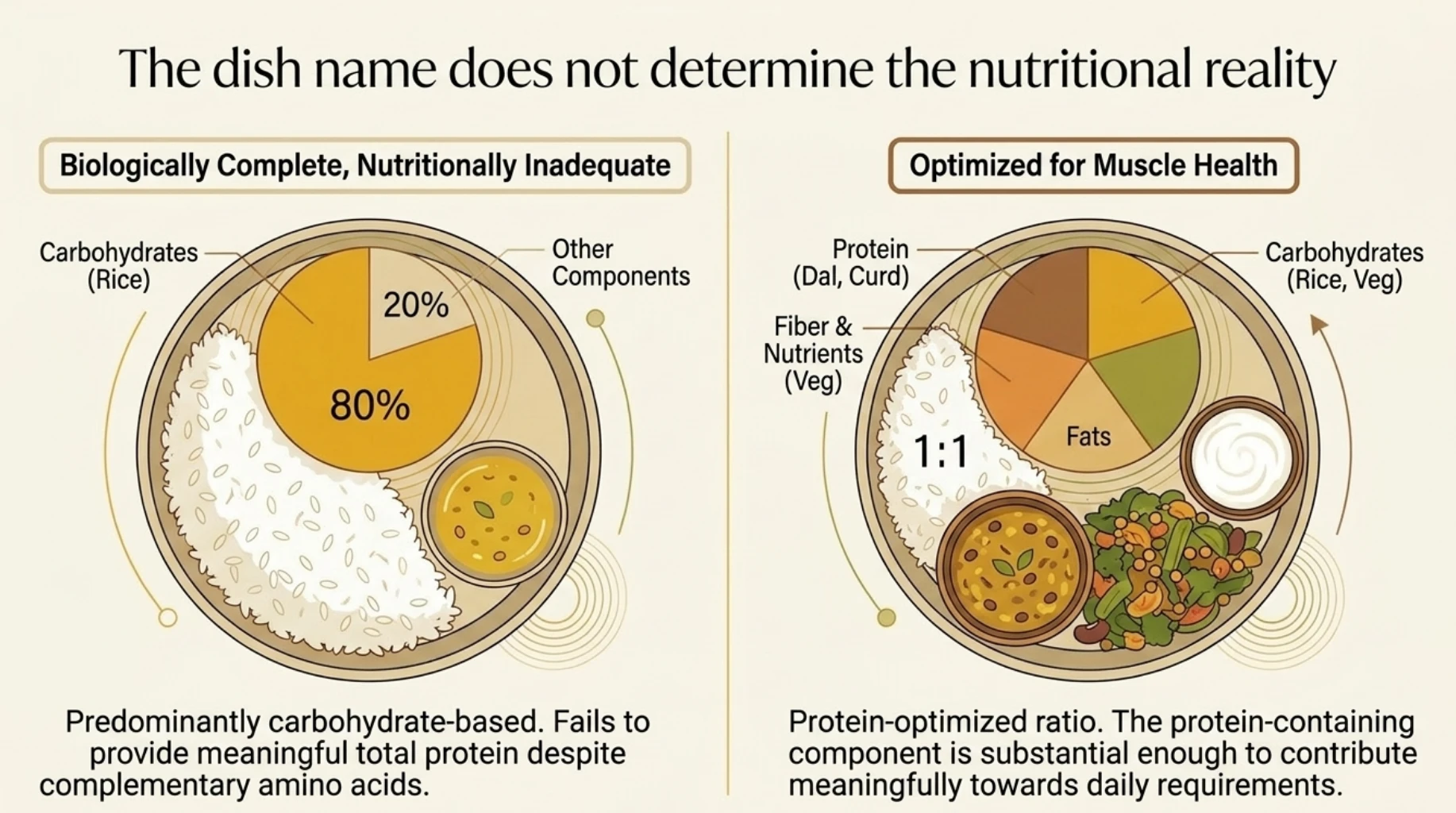
Portions determine the nutritional reality.
A cereal-heavy meal with a token amount of pulses remains predominantly carbohydrate-based even if the two foods technically complement each other’s amino-acid profiles.
For muscle health, particularly after 40 or during resistance training and weight loss, the protein-containing component needs to be substantial enough to contribute meaningfully towards daily requirements.
Vegetarian Protein Quality Is About the Whole Day, Not One Perfect Meal
One of the biggest mistakes in protein discussions is searching for a single “perfect” food combination.
Human nutrition does not work that way.
A vegetarian diet might include:
- Curd or milk at breakfast.
- Dal and rice at lunch.
- Roasted chana as a snack.
- Paneer, tofu, soy, or pulses at dinner.
Each meal contributes to the day’s total amino-acid and protein intake.
Therefore, the most useful question is not simply:
“Is this food a complete protein?”
A better question is:
“Does my overall diet provide enough total protein, essential amino acids, and protein-rich meals for my individual needs?”
That shift in thinking makes vegetarian protein quality much easier to understand—and much easier to apply in everyday Indian meals.
More Indian Food Combinations for Better Vegetarian Protein Quality
The first five combinations show how traditional cereal-pulse and pulse-dairy meals can contribute to better protein intake. The same principle can be applied to several other familiar Indian breakfasts and main meals.
However, remember that improving vegetarian protein quality does not simply mean adding more foods to the plate. The aim is to improve protein quantity and amino-acid adequacy without unnecessarily increasing total calories.
6. Dosa and Sambar for Better Vegetarian Protein Quality
Traditional dosa batter is generally prepared from rice and urad dal, making it another familiar cereal-pulse combination.
Fermentation also changes some nutritional and digestibility characteristics of the batter, although it does not transform dosa into an exceptionally high-protein food.
The nutritional value of the complete meal depends greatly on what accompanies the dosa.
A dosa served with a generous portion of dal-rich sambar provides more protein than dosa served mainly with coconut chutney.
Coconut chutney can certainly be part of the meal, but coconut is predominantly a source of fat rather than a concentrated protein source.
If improving vegetarian protein quality is the goal, prioritise a substantial serving of sambar rather than assuming the dosa itself provides enough protein.
7. Besan Chilla and Curd for Better Vegetarian Protein Quality
Besan, made from chickpeas, provides more protein than many cereal-based breakfast foods. Pairing besan chilla with curd can further increase the meal’s protein content and improve the overall essential amino-acid profile.
Vegetables such as onion, spinach, tomato, capsicum, or grated vegetables can be added to the batter for additional fibre and micronutrients.
For someone trying to increase protein intake, besan chilla with curd may therefore be a more useful breakfast than tea with biscuits, plain toast, or a predominantly refined-carbohydrate breakfast.
However, cooking method matters. Large quantities of oil can substantially increase the calorie content without improving protein intake.
8. Roti, Dal, and Curd for Better Vegetarian Protein Quality
This is one of the easiest traditional Indian meals to improve without introducing unfamiliar foods.
Wheat and pulses provide complementary amino-acid patterns, while curd contributes additional high-quality protein.
The problem arises when the meal contains several rotis but only a small bowl of thin dal.
For better vegetarian protein quality, make dal a substantial part of the meal rather than a small accompaniment.
A practical plate may include:
- An appropriate number of rotis.
- A substantial serving of dal.
- Curd.
- Vegetables or salad.
People with higher protein requirements may still need another concentrated protein source depending on their total daily intake.
9. Poha, Peanuts, and Curd for Better Vegetarian Protein Quality
Poha is a familiar and convenient breakfast, but plain poha is predominantly carbohydrate-based.
Adding peanuts increases protein somewhat and also provides healthy fats, while curd contributes additional protein.
Vegetables can improve fibre and micronutrient content.
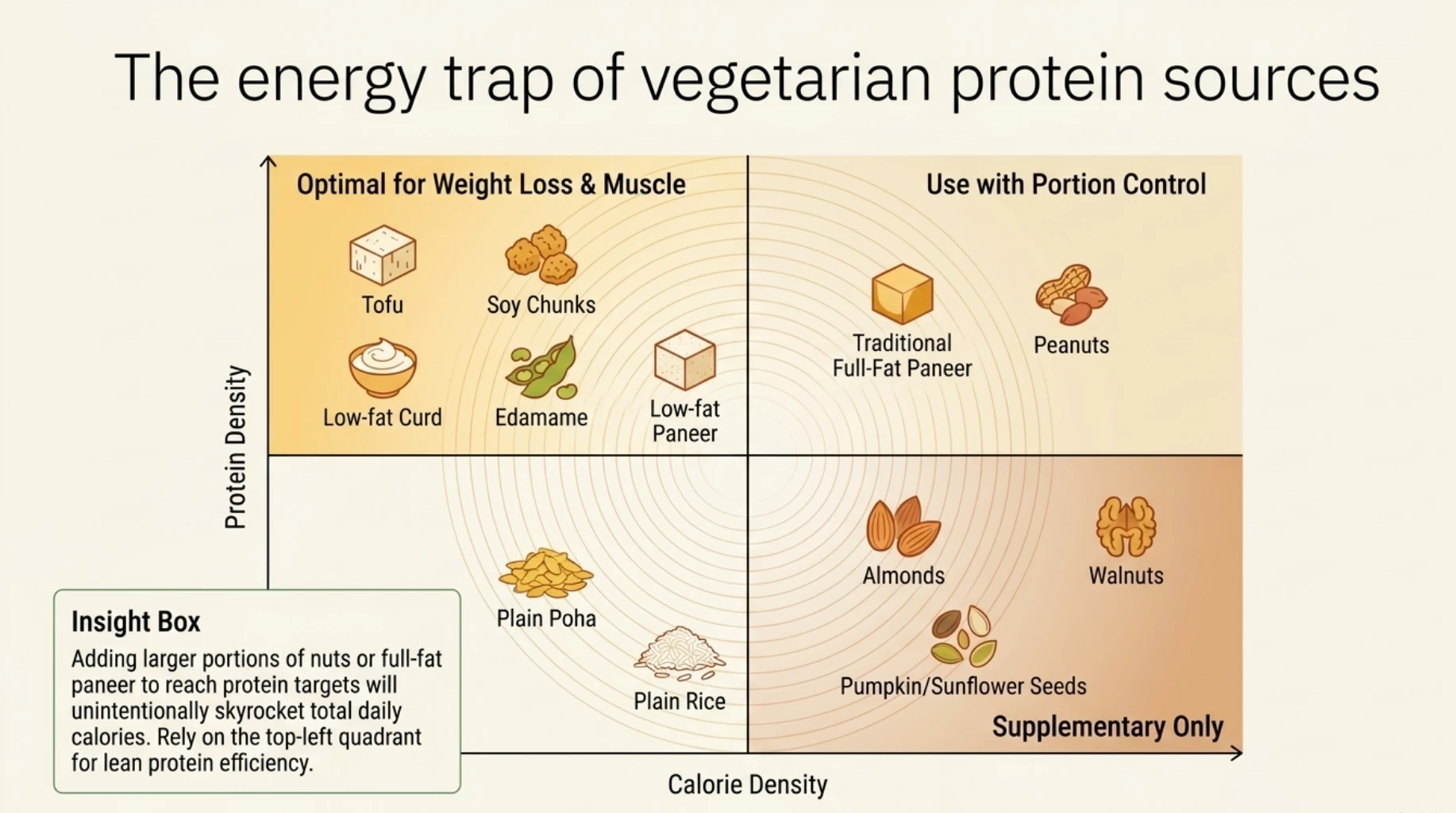
However, peanuts deserve some perspective. They contain protein, but they are also calorie-dense because of their high fat content.
Therefore, adding very large quantities of peanuts solely to increase protein may not be the most efficient strategy, particularly during weight loss.
For better vegetarian protein quality, poha can be accompanied by curd or another meaningful protein source rather than relying entirely on peanuts.
10. Oats, Milk or Curd, Nuts and Seeds for Better Vegetarian Protein Quality
Oats contribute some protein, but a bowl of oats prepared only with water is not necessarily a high-protein breakfast.
Preparing oats with milk or combining them with curd or Greek-style yoghurt can substantially improve the protein content.
Nuts and seeds may contribute additional protein, healthy fats, fibre, minerals, and other nutrients.
Again, portions matter because nuts and seeds are energy-dense.
Someone with higher protein requirements may benefit from using a more concentrated protein source rather than trying to obtain most of the meal’s protein from nuts.
This combination illustrates an important principle: improving vegetarian protein quality often involves modifying an existing meal rather than replacing it completely.
Is Better Vegetarian Protein Quality Enough for Muscle Building?
No single food combination can build muscle by itself.
Even a diet with an excellent amino-acid profile will not produce optimal muscle growth if total protein intake is inadequate or the muscles are not challenged through resistance exercise.
Muscle health depends on several factors working together:
- Adequate total daily protein.
- Sufficient essential amino acids.
- Meaningful protein servings across the day.
- Progressive resistance training.
- Adequate overall energy intake.
- Good-quality sleep.
- Recovery between training sessions.
Therefore, vegetarian protein quality should be viewed as one component of a complete muscle-health strategy.
Vegetarian Protein Quality and Leucine
Leucine is one of the nine essential amino acids and has an important signalling role in stimulating muscle protein synthesis.
Different proteins provide different amounts of leucine and other essential amino acids per serving.
Dairy and soy are useful vegetarian protein sources because they provide substantial amounts of essential amino acids. Pulses, cereals, nuts, and seeds also contribute, but the amount obtained in a normal serving varies considerably.
This is one reason a vegetarian meal containing several grams of protein from small amounts of many foods may not necessarily produce the same muscle protein synthesis stimulus as a meal containing a substantial serving of high-quality protein.
However, there is usually no need for healthy adults to calculate the leucine content of every meal.
Ensuring adequate total protein, including a variety of protein-rich foods, and performing regular resistance training is a much more practical strategy.
Vegetarian Protein Quality and Protein Per Meal
Total daily protein remains important, but meal distribution also deserves attention, particularly for muscle preservation.
A common Indian vegetarian pattern may look like:
- Breakfast: Tea, toast, poha, or paratha with little protein.
- Lunch: Moderate protein from dal and curd.
- Snack: Tea and biscuits.
- Dinner: Most of the day’s protein.
Even if total protein intake is reasonable, this pattern provides relatively little protein during large parts of the day.
A more balanced approach is to include a meaningful protein source at each main meal.
This may include dairy, soy, tofu, paneer, pulses, besan, or appropriate combinations of these foods.
Vegetarian Protein Quality After 40
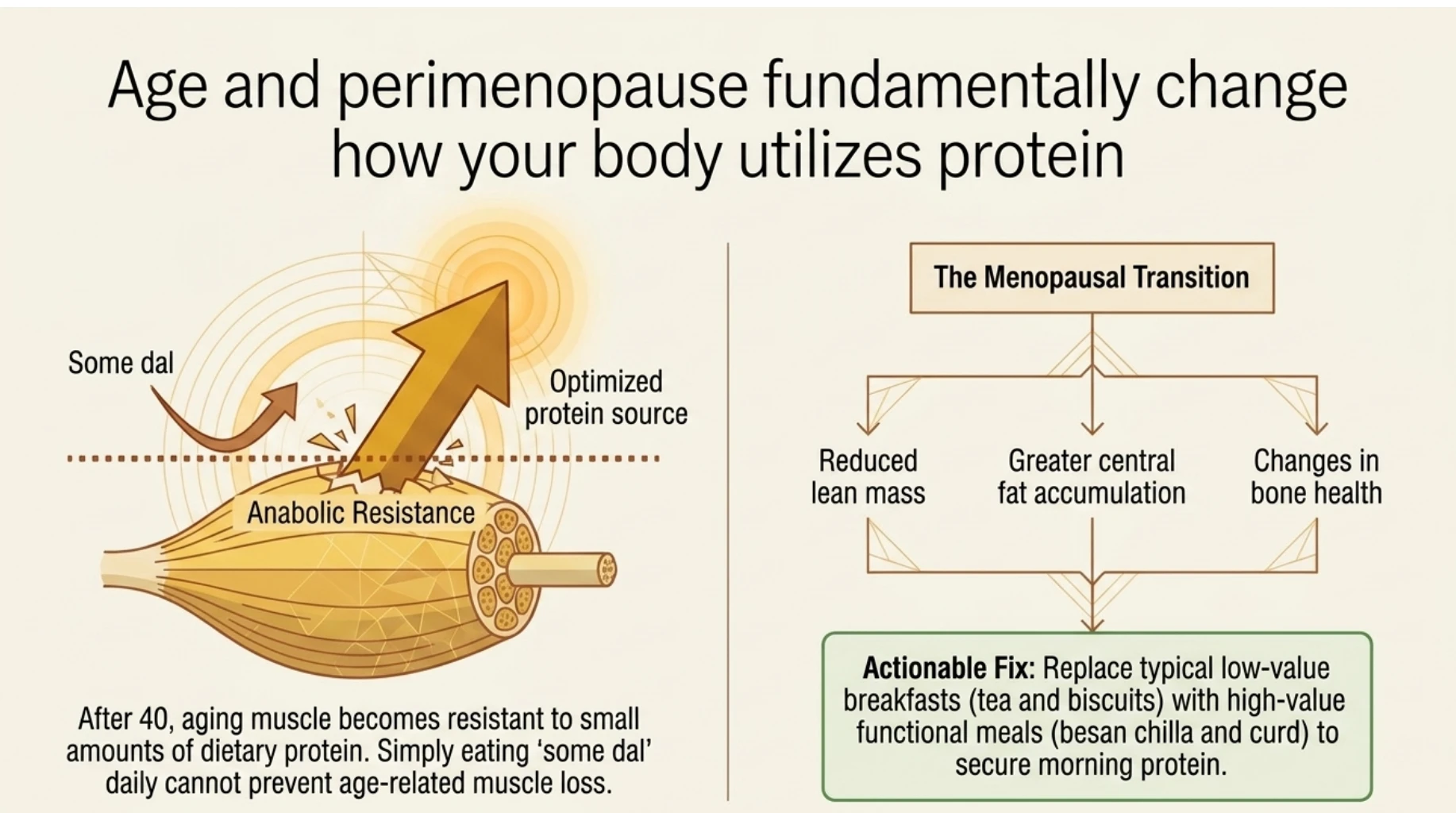
Protein intake becomes increasingly important during middle age because muscle mass and strength gradually decline with advancing age, particularly in people who are physically inactive.
Ageing muscle may also become less responsive to smaller amounts of dietary protein, a phenomenon often described as anabolic resistance.
This means that simply eating “some dal” every day may not be enough to optimise muscle preservation if the total protein intake remains low.
For adults over 40, improving vegetarian protein quality should therefore be accompanied by attention to:
- Total daily protein.
- Protein distribution across meals.
- Resistance training.
- Overall physical activity.
- Adequate energy and micronutrient intake.
- Sleep and recovery.
The goal is not to consume excessive protein but to prevent gradual underconsumption from contributing to age-related muscle loss.
Why Vegetarian Protein Quality Matters During Perimenopause
Women entering perimenopause should pay particular attention to muscle and bone health.
Ageing and the menopausal transition can contribute to changes in body composition, including a tendency towards reduced lean mass and greater central fat accumulation.
Resistance training and adequate protein become increasingly valuable during this stage.
A vegetarian diet can support these goals, but meals need to contain meaningful protein rather than being predominantly cereal-based.
For example, replacing a breakfast of tea and biscuits with besan chilla and curd, or adding a substantial protein source to poha or oats, can improve the day’s overall protein distribution.
How to Improve Vegetarian Protein Quality Without Excess Calories
This is particularly important during weight management.
Many nutritious vegetarian protein-containing foods also provide substantial carbohydrate or fat.
For example:
- Dal and beans provide protein but also carbohydrate.
- Nuts provide protein but are predominantly fat-rich and calorie-dense.
- Seeds contain protein but are also energy-dense.
- Paneer provides protein but can contain substantial fat depending on the type.
These foods are not unhealthy. The issue is protein efficiency when calorie intake needs to be controlled.
Simply eating larger and larger portions to increase protein can unintentionally raise total calorie intake.
Choose More Protein-Dense Vegetarian Foods When Needed
People with higher protein requirements or lower calorie targets may benefit from including more protein-dense options.
Depending on dietary preferences and tolerance, these may include:
- Low-fat paneer.
- Tofu.
- Soy chunks.
- Edamame.
- Greek-style or strained yoghurt.
- Low-fat milk or curd.
- Higher-protein dairy products where available.
Dal, beans, chickpeas, nuts, and seeds can still contribute valuable nutrition. The objective is simply to build a combination that provides adequate protein without requiring excessive calories.
Are Nuts and Seeds Good Sources of Vegetarian Protein?
Yes, but they are better viewed as supplementary protein sources rather than the main protein component of most meals.
Almonds, peanuts, walnuts, pumpkin seeds, sunflower seeds, sesame, and other nuts and seeds contribute protein along with healthy fats and micronutrients.
However, because they are calorie-dense, obtaining a large amount of protein entirely from nuts and seeds can require substantial energy intake.
This becomes relevant for someone trying to improve vegetarian protein quality while simultaneously losing body fat.
A small quantity of nuts and seeds can enhance a balanced diet, but they should not automatically replace more protein-dense foods.
Is Paneer Always the Best Vegetarian Protein?
Paneer is an excellent and familiar source of high-quality protein for lacto-vegetarians, but it is not automatically the best option in every situation.
Traditional full-fat paneer can also provide substantial calories from fat.
This may be perfectly appropriate for someone with higher energy requirements, but people following a calorie-controlled diet may need to consider portion size or choose lower-fat versions.
Tofu and soy products can provide useful alternatives, while dairy foods such as strained yoghurt can add protein with different calorie profiles.
The best approach is variety rather than depending on a single food every day.
Vegetarian Protein Quality for Weight Loss
Protein deserves particular attention during weight loss because calorie restriction can lead to loss of both body fat and lean tissue.
Adequate protein combined with resistance training helps support muscle preservation during a calorie deficit.
Protein-rich meals may also improve satiety for some people, making a calorie-controlled diet easier to maintain.
However, simply adding protein foods on top of an existing diet may increase total calorie intake.
Instead, improve the composition of the meal.
For example:
Instead of: Large rice portion + small dal portion
Consider: More dal + appropriate rice portion + vegetables + curd/tofu according to requirements.
Instead of: Poha + tea
Consider: Vegetable poha + moderate peanuts + curd or another meaningful protein source.
Instead of: Several rotis + small amount of sabzi
Consider: Appropriate roti portion + substantial dal/paneer/tofu + vegetables.
These changes improve vegetarian protein quality without requiring an unfamiliar “diet food” menu.
Do Vegetarians Need Protein Powder?
Not necessarily.
Many people can meet their protein requirements through a well-planned diet containing pulses, dairy, soy, tofu, paneer, beans, chickpeas, and other protein-rich foods.
Protein powder can be useful when food alone makes it difficult to meet requirements because of high protein needs, limited appetite, convenience, travel, or calorie restrictions.
But it should be viewed as a practical option rather than a requirement for every vegetarian.
Improving vegetarian protein quality begins with the overall diet, not with buying a supplement.
Common Myths About Vegetarian Protein Quality
Vegetarian protein is surrounded by several misconceptions. Some exaggerate the limitations of plant foods, while others underestimate the importance of protein quantity and meal planning.
Understanding these myths makes it easier to improve vegetarian protein quality without unnecessarily restricting traditional Indian foods.
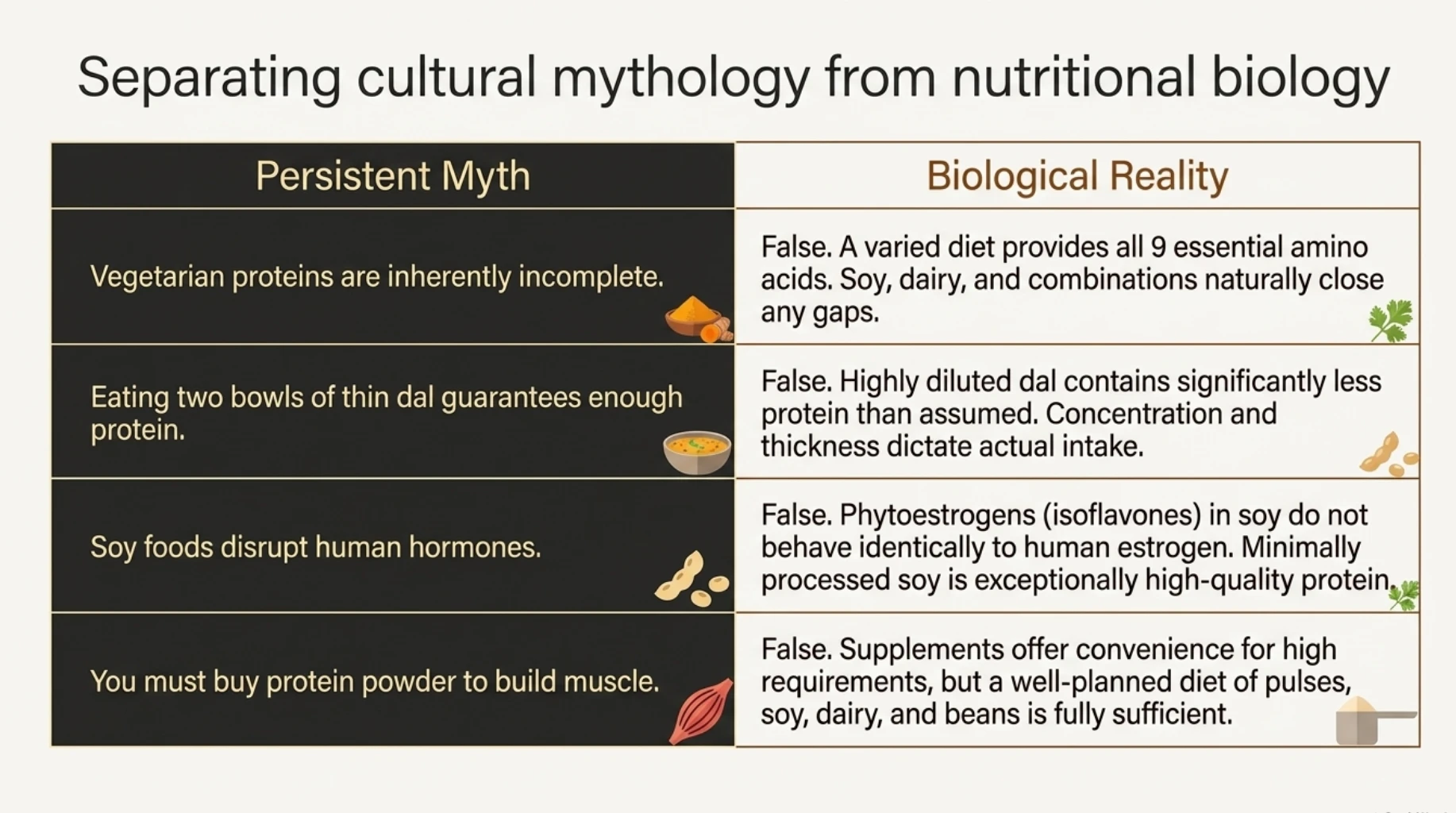
Myth 1: Vegetarian Protein Is Always Incomplete
This statement is too simplistic.
Many plant foods contain all nine essential amino acids, although one or more may be present in relatively lower proportions compared with human requirements.
The more useful question is whether your overall diet provides adequate total protein and sufficient essential amino acids.
A varied vegetarian diet containing pulses, cereals, soy foods, dairy where consumed, nuts, and seeds can provide all essential amino acids.
Myth 2: You Must Combine Plant Proteins at Every Meal
No.
There is no requirement to carefully combine two complementary plant proteins every time you eat.
The body can use amino acids obtained from different foods consumed throughout the day.
Traditional combinations such as dal-rice and chole-roti remain nutritionally useful, but improving vegetarian protein quality does not require creating a perfect amino-acid combination at every meal.
Myth 3: Eating Dal Twice a Day Guarantees Enough Protein
Dal is nutritious and contributes valuable protein, fibre, minerals, and other nutrients.
But the actual protein intake depends on the type of dal, its concentration, portion size, and the rest of the diet.
A small katori of thin dal may contain considerably less protein than someone assumes.
Therefore, the statement “I eat dal, so my protein intake must be adequate” is not always correct.
Myth 4: Nuts Are an Ideal Primary Protein Source
Nuts contain protein, but they also contain substantial amounts of fat and calories.
They are nutritious foods and can certainly contribute to the diet, but using large quantities of nuts primarily to achieve a protein target may result in a high calorie intake.
Nuts generally work better as supplementary protein and healthy-fat sources rather than the main protein component of every meal.
Myth 5: Soy Is Unsafe for Most People
Soy has accumulated numerous myths, particularly regarding hormones.
Soy foods contain isoflavones, which are classified as phytoestrogens, but they do not behave identically to human oestrogen.
For most people, moderate consumption of traditional soy foods such as tofu, soybeans, edamame, and soy milk can form part of a healthy diet.
Soy is particularly useful when improving vegetarian protein quality because it provides a favourable essential amino-acid profile and relatively high protein density.
Myth 6: Vegetarians Cannot Build Muscle
Vegetarians can build muscle successfully.
The important requirements remain the same:
- Progressive resistance training.
- Adequate total daily protein.
- Sufficient essential amino acids.
- Appropriate overall calorie intake.
- Good sleep.
- Adequate recovery.
A well-planned vegetarian diet can support these requirements.
Myth 7: Protein Powder Is Mandatory for Vegetarian Muscle Building
No supplement is automatically necessary simply because someone follows a vegetarian diet.
Protein powder can be convenient when requirements are difficult to meet through food, but many people can obtain adequate protein from dairy, soy, tofu, paneer, pulses, beans, chickpeas, and other foods.
The decision should depend on dietary intake and individual requirements rather than marketing.
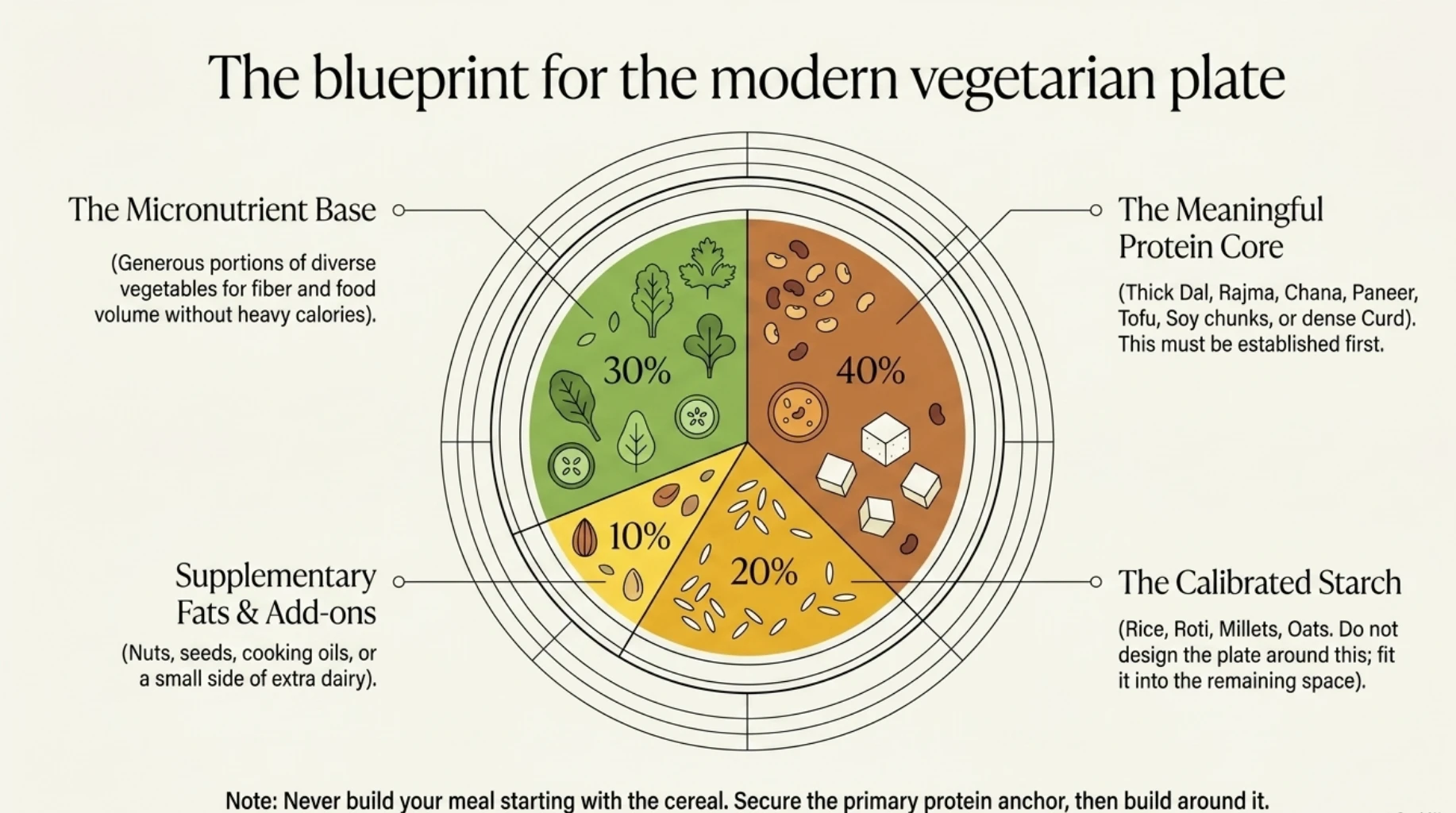
How to Build a Better Vegetarian Protein Plate
Instead of memorising complicated amino-acid combinations, use a simple meal-building approach.
Begin with a meaningful protein source rather than designing the entire plate around cereal foods.
A practical vegetarian meal can include:
- Primary protein: Dal, rajma, chana, paneer, tofu, soy, curd, or another suitable source.
- Appropriate cereal or starch: Rice, roti, millets, oats, potatoes, or another carbohydrate source according to individual needs.
- Vegetables: A generous portion for fibre, micronutrients, and food volume.
- Additional protein where needed: Curd, tofu, paneer, soy, or another suitable food.
- Healthy fats: Nuts, seeds, or cooking oils in appropriate quantities.
This approach improves vegetarian protein quality without requiring traditional foods to be replaced by expensive or unfamiliar alternatives.
A Simple Rule for Better Vegetarian Protein Quality
Before eating a meal, ask yourself one question:
“Where is the meaningful protein source on this plate?”
If the answer is only “there are a few peanuts in the poha” or “there is a little dal with my rice,” the meal may need improvement.
Protein should be a visible and substantial component of the meal rather than a nutritional afterthought.
Sample Indian Day for Better Vegetarian Protein Quality
The following is an example rather than a personalised diet prescription. Portion sizes should be adjusted according to body size, calorie requirements, physical activity, health conditions, and individual goals.
Breakfast
Besan or moong chilla with curd and vegetables.
Alternatively, oats prepared with milk and accompanied by strained yoghurt can provide a more protein-focused breakfast than plain oats prepared with water.
Lunch
A substantial portion of dal or rajma, an appropriate serving of rice or roti, vegetables, and curd.
People with higher requirements may add tofu, soy, paneer, or another suitable protein source.
Snack
Curd, milk, roasted chana, or another protein-containing option can be chosen according to individual calorie and protein requirements.
Dinner
Tofu, soy, paneer, dal, or another pulse-based dish accompanied by vegetables and an appropriate amount of roti or rice.
The important principle is that protein appears meaningfully throughout the day rather than being concentrated almost entirely at dinner.
When Vegetarian Protein Quality Deserves Extra Attention
Most people do not need to calculate every amino acid they consume. However, certain groups should pay greater attention to both protein quantity and quality.
These include:
- Adults over 40 concerned about muscle preservation.
- Older adults at risk of sarcopenia.
- Women during perimenopause and after menopause.
- People performing regular resistance training.
- Individuals losing weight while trying to preserve lean mass.
- People following calorie-restricted vegetarian diets.
- Vegetarians who eat predominantly cereal-based meals.
- People with poor appetite or low overall food intake.
For these groups, improving vegetarian protein quality while ensuring sufficient total protein may be more important than simply confirming that the diet contains some pulses or dairy.
When Protein Requirements Need Medical Individualisation
More protein is not automatically better for everyone.
Protein recommendations may need individualisation in people with:
- Chronic kidney disease.
- Advanced liver disease.
- Significant malnutrition.
- Major gastrointestinal disease affecting nutrition.
- Certain metabolic disorders.
- Serious illness or recovery after major surgery.
For example, protein requirements in chronic kidney disease vary according to disease stage, nutritional status, dialysis status, and other clinical factors.
These individuals should not automatically follow high-protein recommendations designed for healthy adults or gym-goers.
Frequently Asked Questions About Vegetarian Protein Quality
What Is the Best Way to Improve Vegetarian Protein Quality?
Eat a varied diet containing adequate amounts of pulses, soy foods, dairy if consumed, cereals, beans, nuts, and seeds. More importantly, make sure total protein intake is adequate and include meaningful protein sources throughout the day.
Do Dal and Rice Make a Complete Protein?
Dal and rice have complementary amino-acid profiles. Pulses are relatively rich in lysine but lower in sulphur-containing amino acids, while cereals have a complementary pattern.
Together they improve the overall amino-acid balance, but this does not guarantee that the meal contains enough total protein.
Which Indian Vegetarian Food Has the Best Protein Quality?
There is no need to identify one universally “best” food. Soy and dairy proteins are particularly useful because of their essential amino-acid profiles and protein density, while pulses, beans, chickpeas, cereals, nuts, and seeds contribute valuable protein as part of a varied diet.
Can Vegetarian Protein Build Muscle?
Yes. Muscle can be built on a vegetarian diet when total protein, essential amino acids, calories, resistance training, and recovery are adequate.
The source of protein matters, but the entire dietary and training pattern is more important than whether someone eats meat.
Do I Need to Eat Dal and Rice Together?
No. Complementary proteins do not have to be consumed at exactly the same meal. Adequate protein and essential amino acids consumed through a varied diet across the day can meet nutritional requirements.
Are Nuts Enough for Protein?
Nuts contribute protein but are also rich in fat and calories. They are generally better used as supplementary protein sources rather than the main strategy for meeting high protein requirements.
Is Soy a Good Vegetarian Protein?
Yes. Soy provides all essential amino acids and is a useful protein-dense option for vegetarians. Tofu, soybeans, edamame, soy milk, and other minimally processed soy foods can be incorporated according to individual preference and tolerance.
Final Thought
You do not need to create a perfect amino-acid combination every time you sit down to eat. For better vegetarian protein quality, focus on variety, adequate portions, meaningful protein at each main meal, and your total intake across the day. Traditional Indian food already provides an excellent foundation—the key is getting the proportions right.
If you want a personalized metabolic assessment and lifestyle strategy, you can book a consultation here:
Book an Appointment