

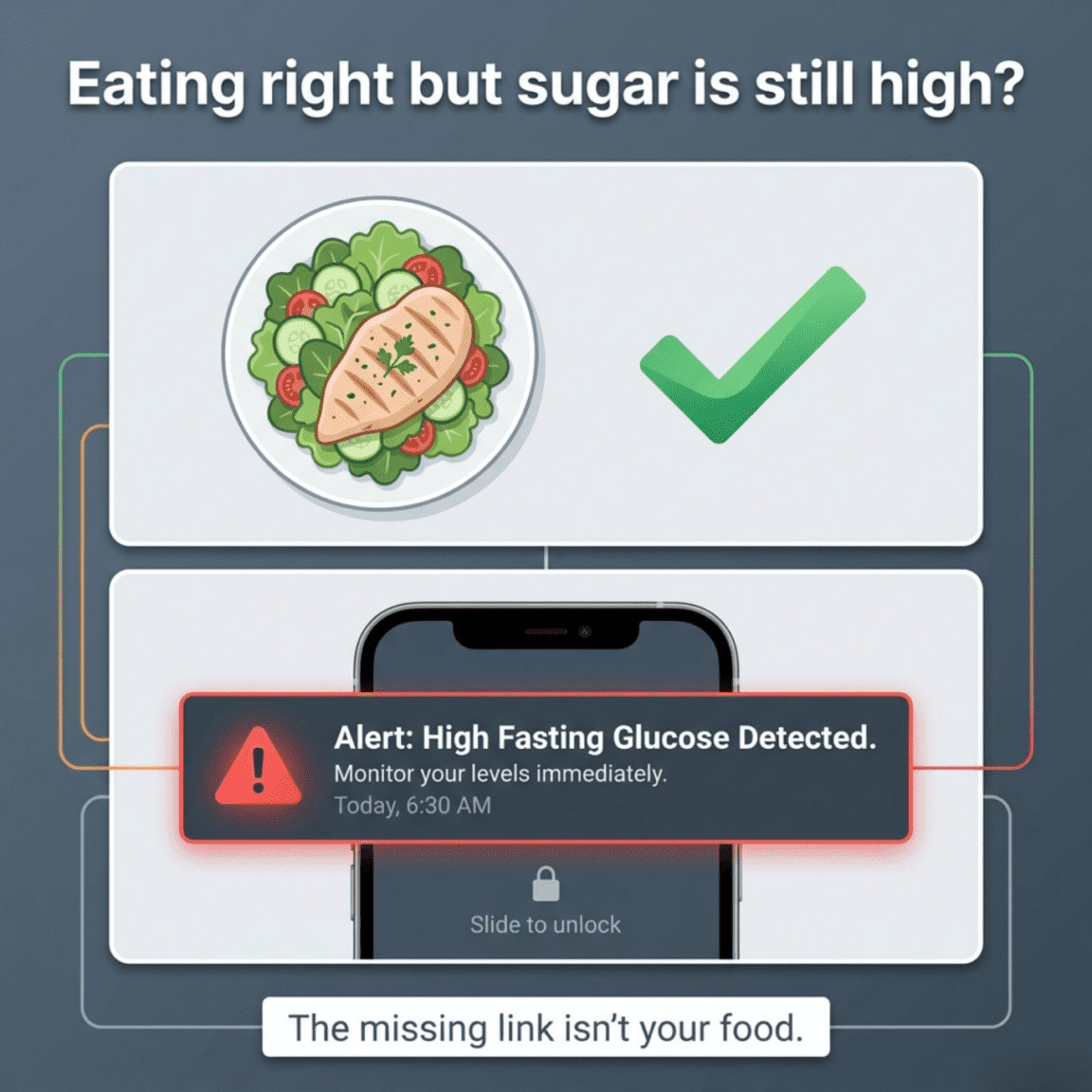
Why Diet Alone Often Fails to Control Blood Sugar
If you have ever wondered why diet alone is not enough for blood sugar control, you are not alone. This is one of the most common concerns seen in real-life clinical practice.
Many people follow strict diets, reduce sugar intake, avoid processed foods, and still find that their blood sugar levels remain unstable.
This creates confusion and frustration. It feels like you are doing everything right, but the results do not match your efforts.
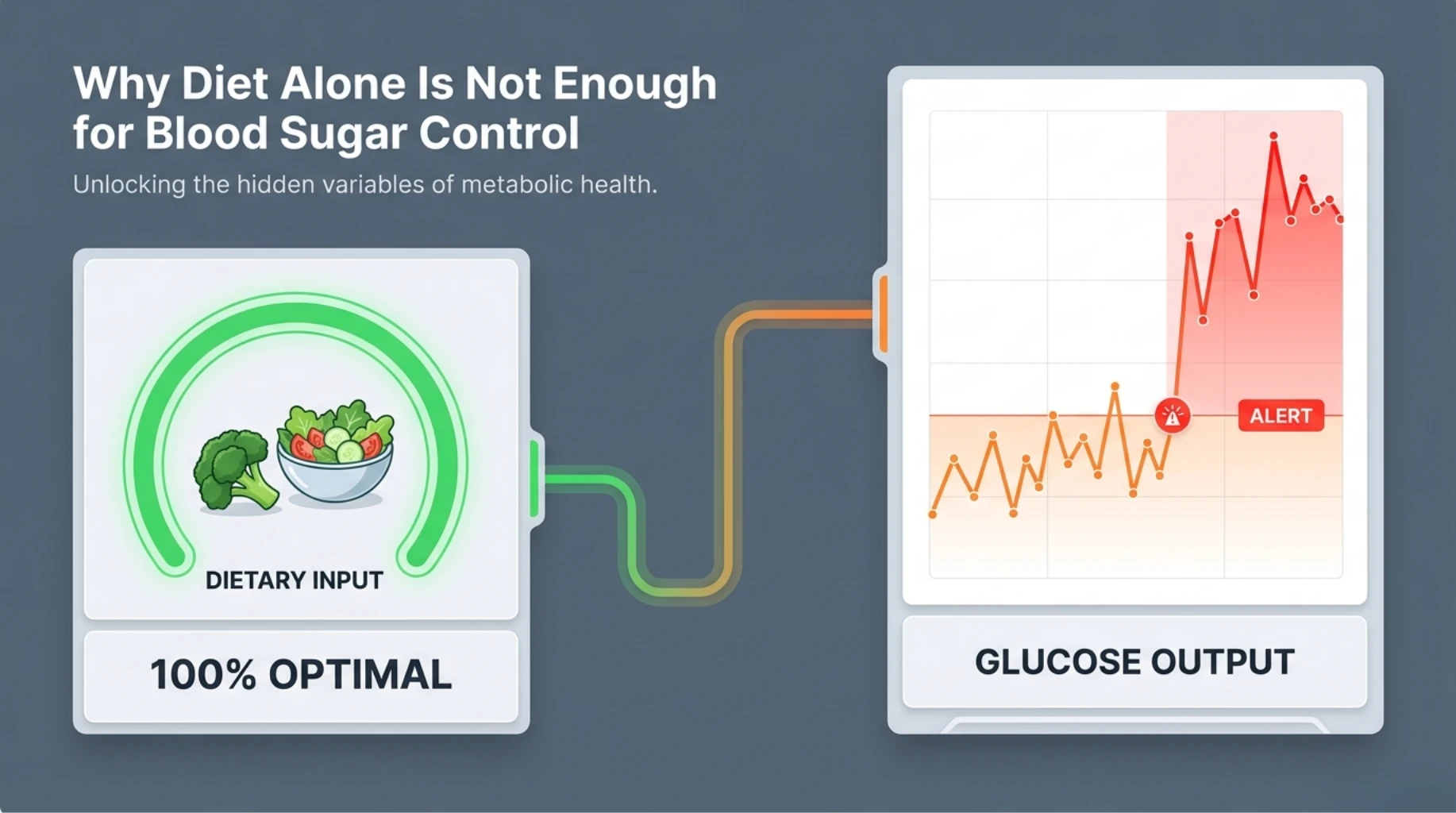
The key issue is this: blood sugar control is not a single-factor problem. It is a multi-system process involving hormones, metabolism, sleep, stress, and physical activity.
Diet is important, but it is only one part of a larger system.
For more practical lifestyle insights, you can explore: lifestyle section.
The Common Pattern: “I Am Eating Right, But My Sugar Is Still High”
A very common situation is when someone says:
- I have reduced sugar intake
- I am eating healthy meals
- I am avoiding junk food
Yet, their reports still show:
- Fluctuating fasting sugar
- High post-meal sugar
- Rising HbA1c levels
This pattern clearly shows that diet alone is not addressing the root cause. The body’s response to food depends on how well insulin works, how active your muscles are, how much stress your body is under, and how well you sleep.
Ignoring these factors leads to incomplete blood sugar control.
How Blood Sugar Is Regulated in the Body
To fully understand why diet alone is not enough for blood sugar control, it is important to understand how the body regulates glucose.
After eating:
- Blood sugar rises
- The pancreas releases insulin
- Glucose enters cells to be used as energy
However, this process depends on how sensitive your body is to insulin.
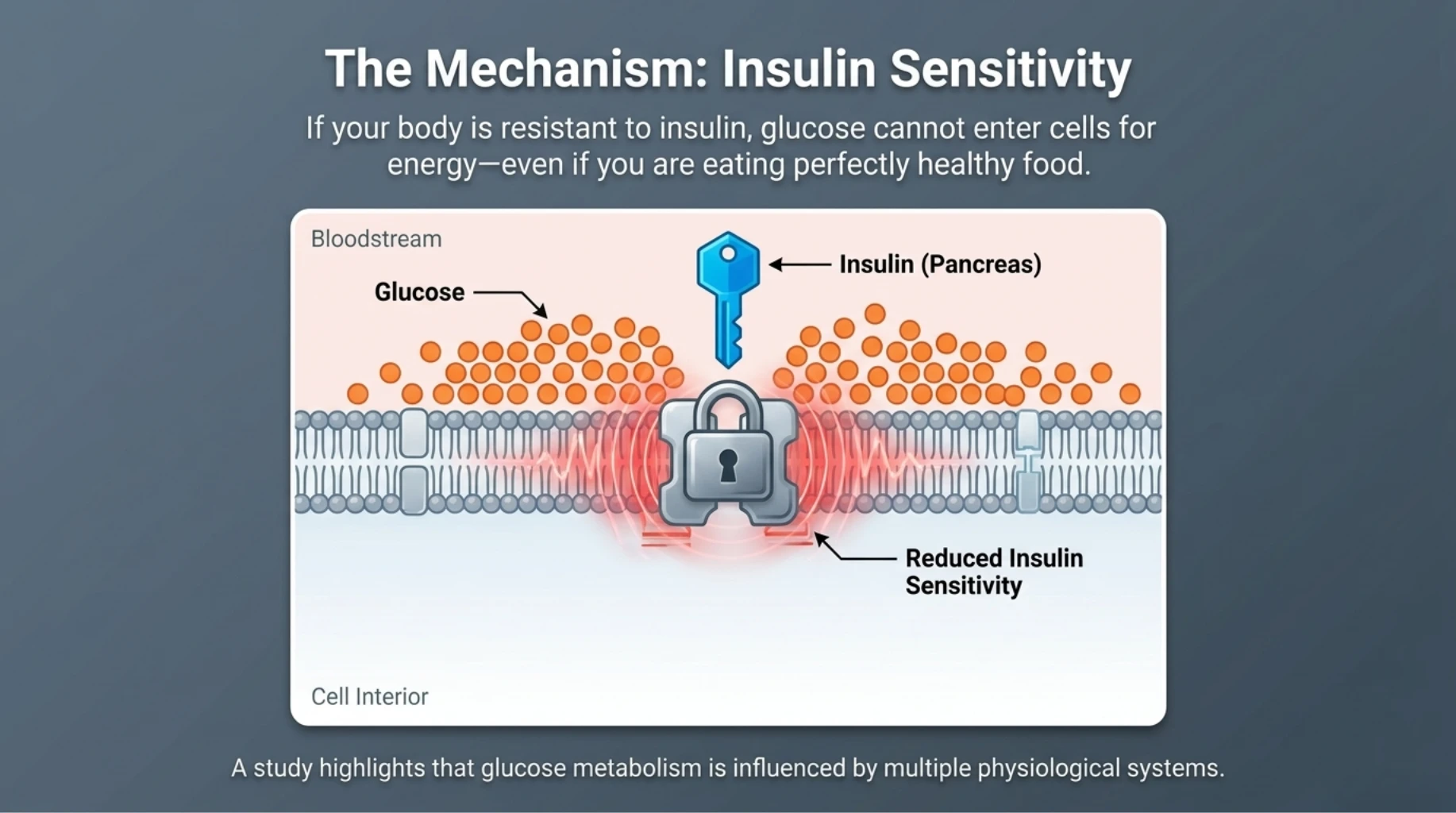
If insulin sensitivity is reduced, glucose cannot enter cells effectively, even if you are eating healthy food.
A study highlights that glucose metabolism is influenced by multiple physiological systems, including hormonal regulation and lifestyle factors. This explains why diet alone cannot fully control blood sugar levels.
The Missing Link: Blood Sugar Is a Lifestyle-Driven Process
Blood sugar regulation is not just about what you eat. It is about how your body responds to what you eat.
This response is influenced by:
- Physical activity levels
- Sleep quality and duration
- Stress and hormonal balance
- Meal timing and frequency
If these factors are not optimized, even the best diet may not produce stable results. This is why a broader lifestyle approach is necessary for effective blood sugar control.
Key Factors Beyond Diet That Affect Blood Sugar
To truly understand why diet alone is not enough for blood sugar control, we need to look at the major lifestyle factors that directly influence glucose regulation.
These factors often remain unaddressed, which is why many people struggle despite following a good diet.
1. Physical Activity and Muscle Utilization
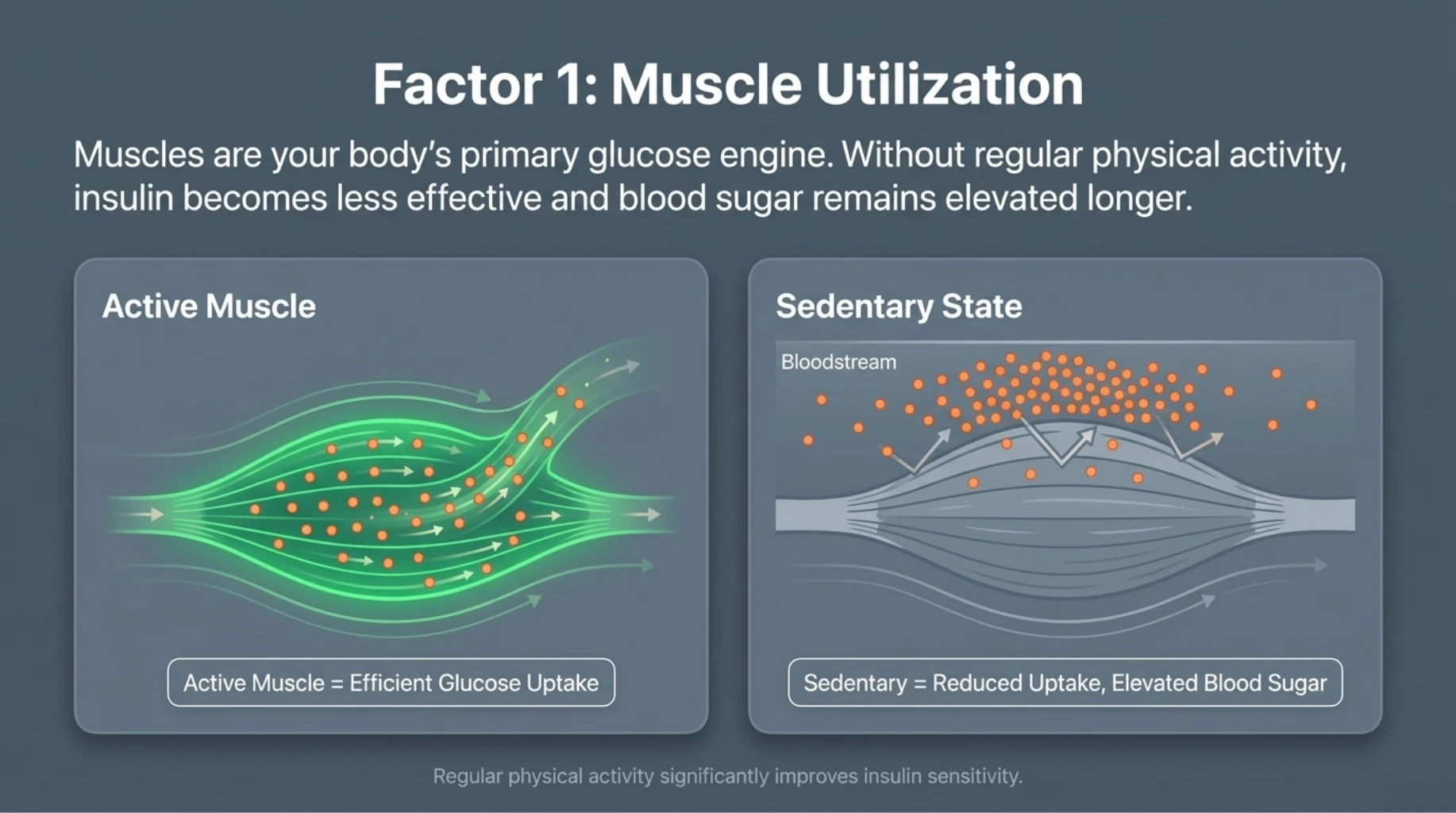
Muscles play a crucial role in using glucose. When you are physically active, muscles absorb glucose more efficiently, reducing blood sugar levels.
If your lifestyle is sedentary:
- Glucose uptake by muscles reduces
- Insulin becomes less effective
- Blood sugar remains elevated longer
A study highlights that regular physical activity significantly improves insulin sensitivity and glucose metabolism.
2. Sleep Quality and Glucose Control
Sleep is one of the most underestimated factors in blood sugar control. Poor sleep affects hormonal balance and increases insulin resistance.
Even short-term sleep deprivation can:
- Increase blood sugar levels
- Reduce insulin sensitivity
- Increase hunger and cravings
A study shows that sleep disturbances negatively impact glucose metabolism and increase metabolic risk.
3. Stress and Hormonal Impact
Stress directly affects blood sugar through hormones like cortisol.
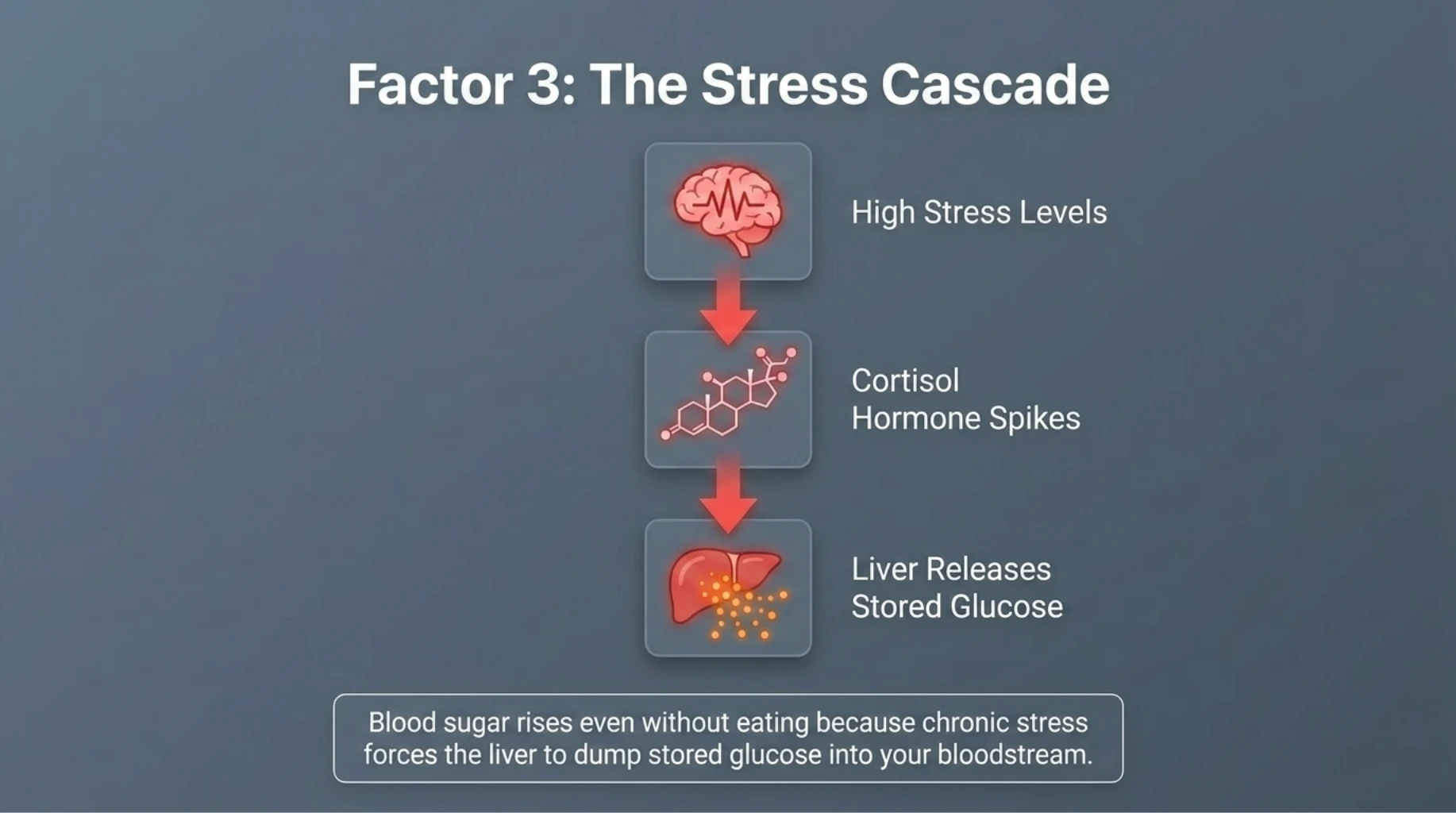
When stress levels are high:
- Cortisol increases
- The liver releases more glucose
- Blood sugar rises even without eating
This explains why some people notice higher sugar levels during stressful periods despite maintaining a healthy diet.
A study highlights that chronic stress contributes to insulin resistance and glucose imbalance.
4. Meal Timing and Eating Patterns
When you eat is just as important as what you eat. Irregular eating patterns can disrupt the body’s metabolic rhythm:
- Late-night meals can raise fasting sugar levels
- Frequent snacking keeps insulin elevated
- Skipping meals may lead to glucose spikes later
Consistent meal timing supports better hormonal balance and glucose stability.
Real-Life Patterns That Explain Poor Blood Sugar Control
In daily life, why diet alone is not enough for blood sugar control becomes clear through common patterns:
- Eating healthy but sitting for long hours
- Following a diet but sleeping late or poorly
- Managing food but experiencing high stress
- Avoiding sugar but snacking frequently
These patterns show that diet is only one part of the overall picture.
Diet vs Lifestyle Factors in Blood Sugar Control
| Factor | Role | Impact on Blood Sugar |
|---|---|---|
| Diet | Controls glucose intake | Moderate |
| Physical Activity | Improves glucose usage | High |
| Sleep | Regulates hormones | High |
| Stress | Affects cortisol levels | High |
This comparison clearly shows why a holistic approach is essential for effective blood sugar control.
What You Should Do for Better Blood Sugar Control
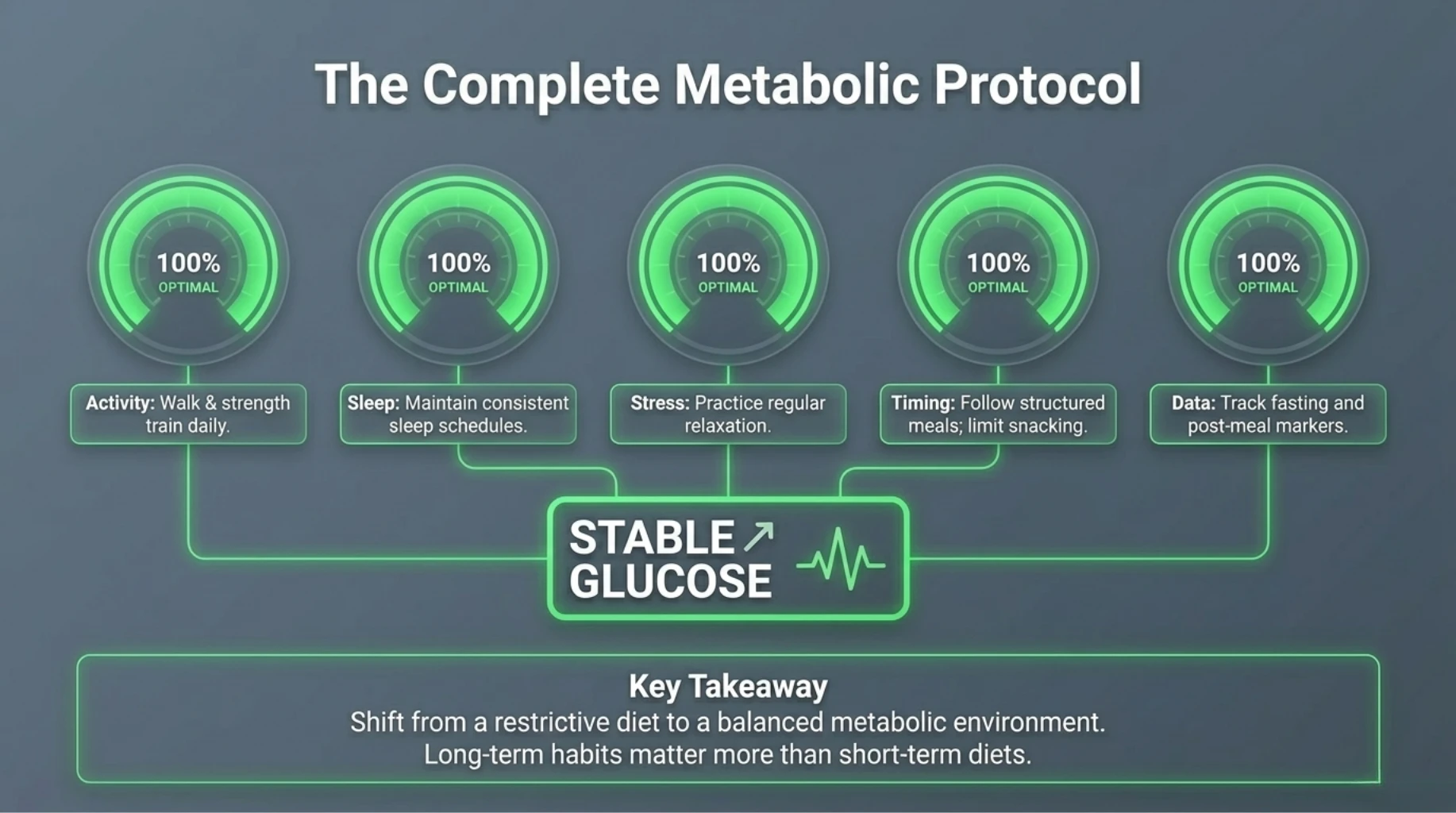
Understanding why diet alone is not enough for blood sugar control helps you shift from a restrictive approach to a more effective, balanced strategy.
In real-life clinical settings, the focus is always on improving the overall metabolic environment, not just food choices.
- Stay physically active daily: Include walking and strength-based activity
- Improve sleep quality: Maintain a consistent sleep schedule
- Manage stress actively: Practice relaxation techniques regularly
- Follow structured meal timing: Avoid irregular eating patterns
- Limit frequent snacking: Allow insulin levels to normalize
- Monitor your health markers: Track fasting and post-meal sugar
- Focus on consistency: Long-term habits matter more than short-term diets
For personalized guidance: Consultation Link.
Warning Signs That Your Blood Sugar Is Not Well Controlled
Even if you are following a diet, certain signs may indicate that blood sugar is not stable:
- Frequent fatigue or low energy
- Sudden hunger or cravings
- Fluctuating weight
- Difficulty maintaining consistent readings
- Borderline or rising HbA1c levels
A clinical reference highlights that long-term glucose imbalance is influenced by multiple lifestyle factors.
Key Takeaway
Why diet alone is not enough for blood sugar control is because glucose regulation depends on a combination of diet, activity, sleep, and stress. A balanced lifestyle approach is essential for achieving stable and long-term results.
References
- Glucose metabolism study
- Physical activity and insulin sensitivity
- Stress and metabolic impact
- Sleep and glucose regulation
- Clinical overview reference
Take the Next Step
This information is for educational purposes only and should not replace professional medical advice. Always consult a qualified doctor for personalized care.