
Why Preventive Healthcare Is Gaining Importance Today
Understanding preventive healthcare importance has become essential in today’s lifestyle. Earlier, healthcare was mainly focused on treating diseases after they appeared. Now, the focus is shifting toward preventing diseases before they develop.
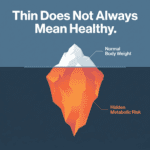
Modern lifestyles have increased the risk of conditions like diabetes, obesity, fatty liver, and heart disease. These conditions often develop silently over time.
By the time symptoms appear, the disease may already be established.
Why Diseases Are Often Detected Late
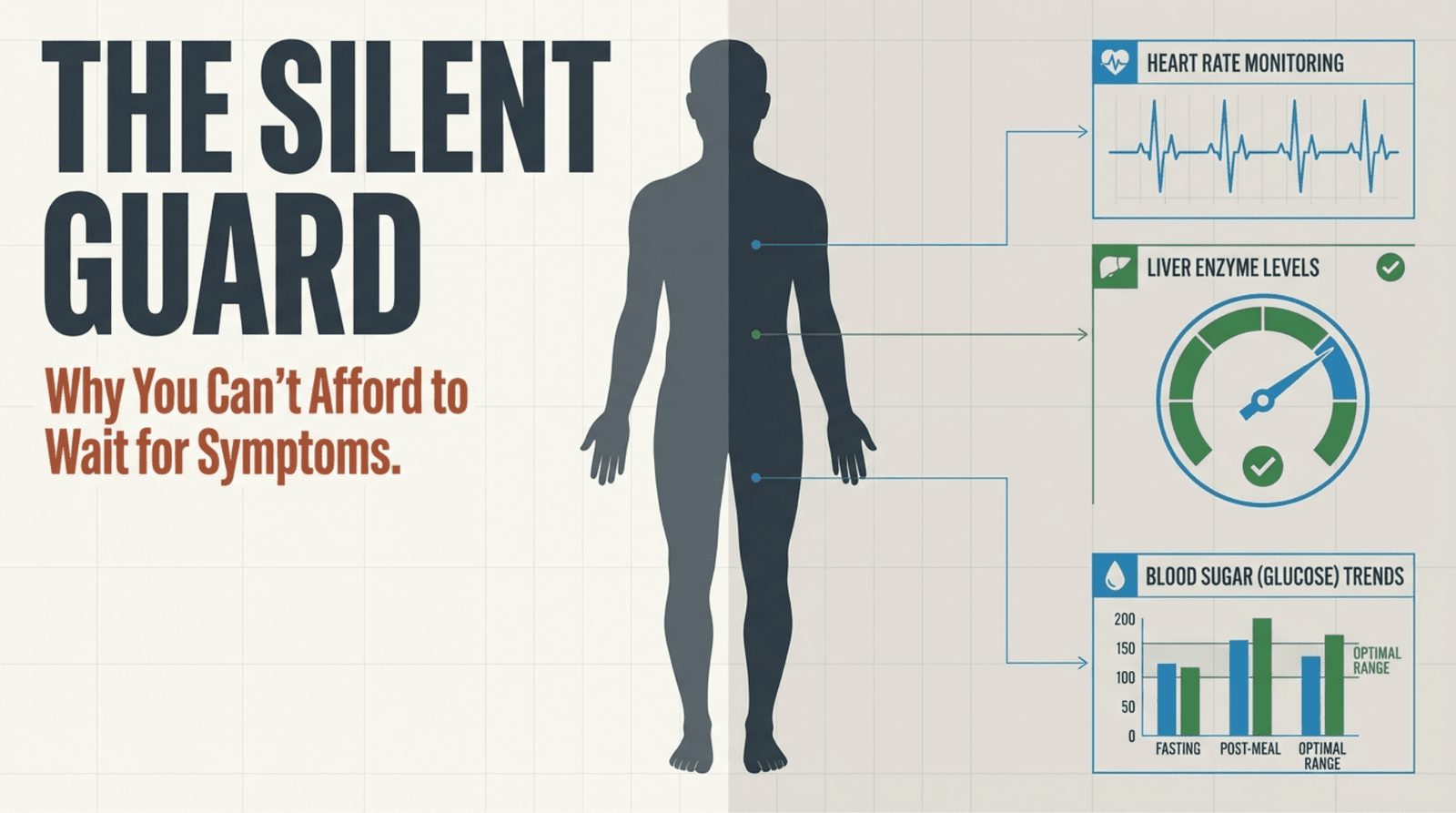
To fully understand preventive healthcare importance, it is important to see why diseases are often diagnosed late. Many common conditions do not cause noticeable symptoms in their early stages.
For example:
- Prediabetes may not show clear symptoms
- Fatty liver can develop without discomfort
- High cholesterol usually has no early warning signs
A study highlights that a large proportion of metabolic diseases remain undiagnosed in their early stages. This delay in detection increases the risk of complications.
How Preventive Healthcare Works in Real Life
To clearly understand preventive healthcare importance, it is useful to see how prevention actually works in real life.
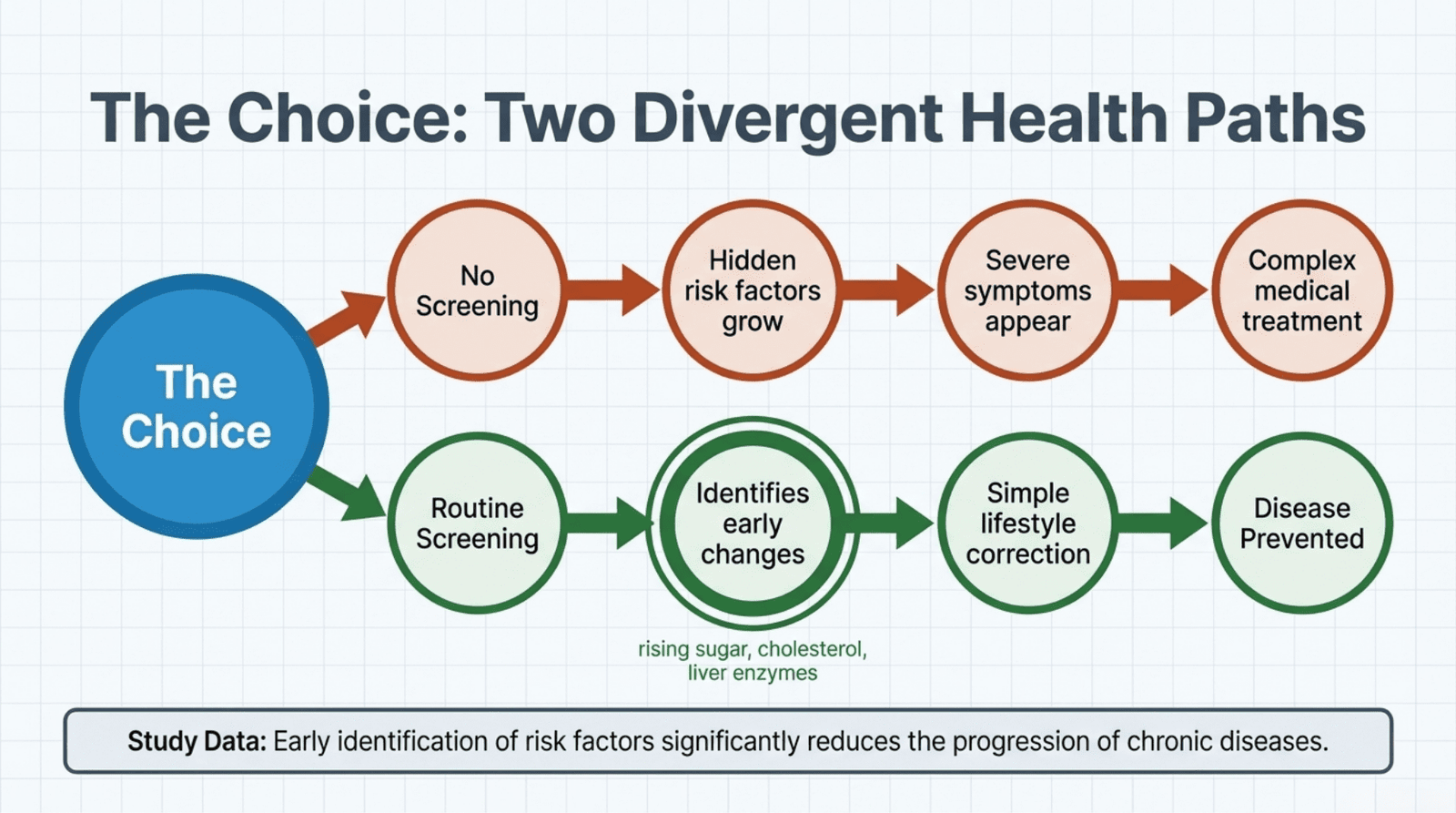
Preventive healthcare focuses on identifying risk factors before they turn into disease. This includes lifestyle assessment, routine screening, and early medical evaluation.
Instead of waiting for symptoms, preventive care looks for early changes such as:
- Rising blood sugar levels
- Increasing cholesterol values
- Early liver enzyme changes
- Hormonal imbalances
A study shows that early identification of risk factors significantly reduces the progression of chronic diseases.
Benefits of Preventive Healthcare
The growing focus on preventive healthcare importance is driven by its clear benefits. When health issues are detected early:
- Intervention becomes simpler
- Lifestyle changes are more effective
- Medication may be avoided or delayed
- Long-term complications can be prevented
In contrast, late diagnosis often leads to:
- Advanced disease
- Long-term medication
- Higher treatment complexity
A study highlights that preventive healthcare improves outcomes and reduces healthcare burden.
Real-Life Patterns Showing the Need for Prevention
In everyday life, the preventive healthcare importance becomes clear through common patterns:
- People feeling normal but having abnormal reports
- Gradual weight gain without noticeable lifestyle changes
- Fatigue ignored until it becomes persistent
- Routine tests revealing early metabolic imbalance
These situations highlight how disease can develop silently.
A study confirms that early screening helps identify hidden health risks before symptoms appear.
Prevention vs Treatment Approach
| Approach | Timing | Outcome |
|---|---|---|
| Preventive Healthcare | Before symptoms | Early correction |
| Treatment-Based Care | After symptoms | Long-term management |
This comparison clearly explains why preventive healthcare is becoming more important today.
What You Can Do to Practice Preventive Healthcare
Understanding preventive healthcare importance is only useful if you apply it in daily life. Prevention is not complicated. It is about consistent, simple actions.
- Schedule regular health checkups: Even when you feel normal
- Monitor key health markers: Blood sugar, cholesterol, and liver function
- Maintain a balanced diet: Avoid excess processed and high-calorie foods
- Stay physically active: Include movement throughout the day
- Improve sleep quality: Maintain consistent sleep timing
- Manage stress: Incorporate relaxation techniques
- Track your health trends: Compare reports over time
For structured lifestyle support: Consultation Link.
Warning Signs That Should Not Be Ignored
Even with preventive care, certain symptoms should prompt immediate attention:
- Persistent fatigue
- Unexplained weight changes
- Frequent headaches
- Sleep disturbances
- Reduced energy levels
A clinical reference highlights that early recognition of symptoms combined with preventive care improves outcomes.
Key Takeaway
Preventive healthcare importance lies in early action. Most diseases develop silently and can be managed effectively if detected early. Regular screening, healthy habits, and timely intervention can significantly reduce long-term health risks.
References
- Undiagnosed metabolic conditions
- Risk factor identification
- Preventive healthcare outcomes
- Early screening benefits
- Clinical overview of prevention
Take the Next Step
This information is for educational purposes only and should not replace professional medical advice. Always consult a qualified doctor for personalized care.