
Can You Trust the Heart Rate Displayed on Your Smartwatch
Smartwatches have become a familiar part of everyday life. Many people wear them throughout the day to count steps, track exercise, estimate sleep duration and monitor their heart rate. Some newer devices also offer ECG recordings, irregular rhythm notifications and alerts when the heart rate becomes unusually high or low.
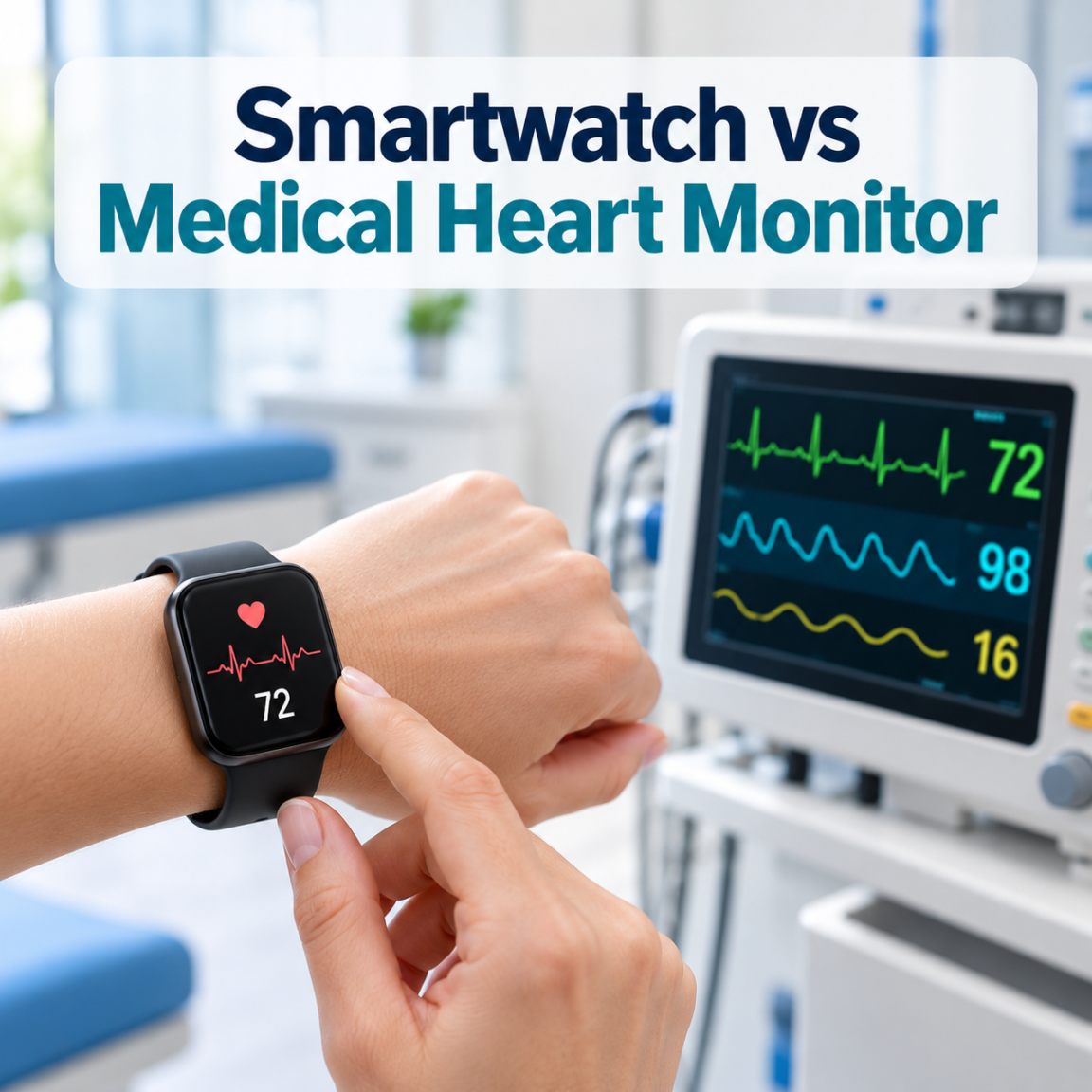
These features can make a smartwatch feel like a miniature cardiac monitoring system. However, the technology used by a smartwatch is not necessarily the same as the technology used by a medical heart monitor in a hospital or cardiology clinic.
Consider a common situation. You are walking briskly, and your smartwatch shows a heart rate of 145 beats per minute. A few moments later, the number falls to 118, even though your walking speed has not changed. Alternatively, your watch may show a resting heart rate of 52, while a medical ECG records 60 beats per minute.
Does this mean the smartwatch is inaccurate? Is the medical device always correct? Or are the two devices measuring slightly different physiological signals?
The answer depends on the measurement technology, sensor placement, movement, circulation, heart rhythm and the conditions under which the readings were obtained.
Understanding smartwatch vs medical heart monitor accuracy is particularly important for people who use wearable devices to track exercise intensity, investigate palpitations or monitor possible cardiac rhythm abnormalities.
Although consumer wearables have become increasingly sophisticated, a normal smartwatch reading cannot exclude heart disease, and an abnormal alert does not automatically establish a cardiac diagnosis.
In this article, we will examine how these technologies differ, when smartwatch readings are useful, why discrepancies occur and when formal medical monitoring is necessary.
What Is a Smartwatch Heart Rate Monitor?
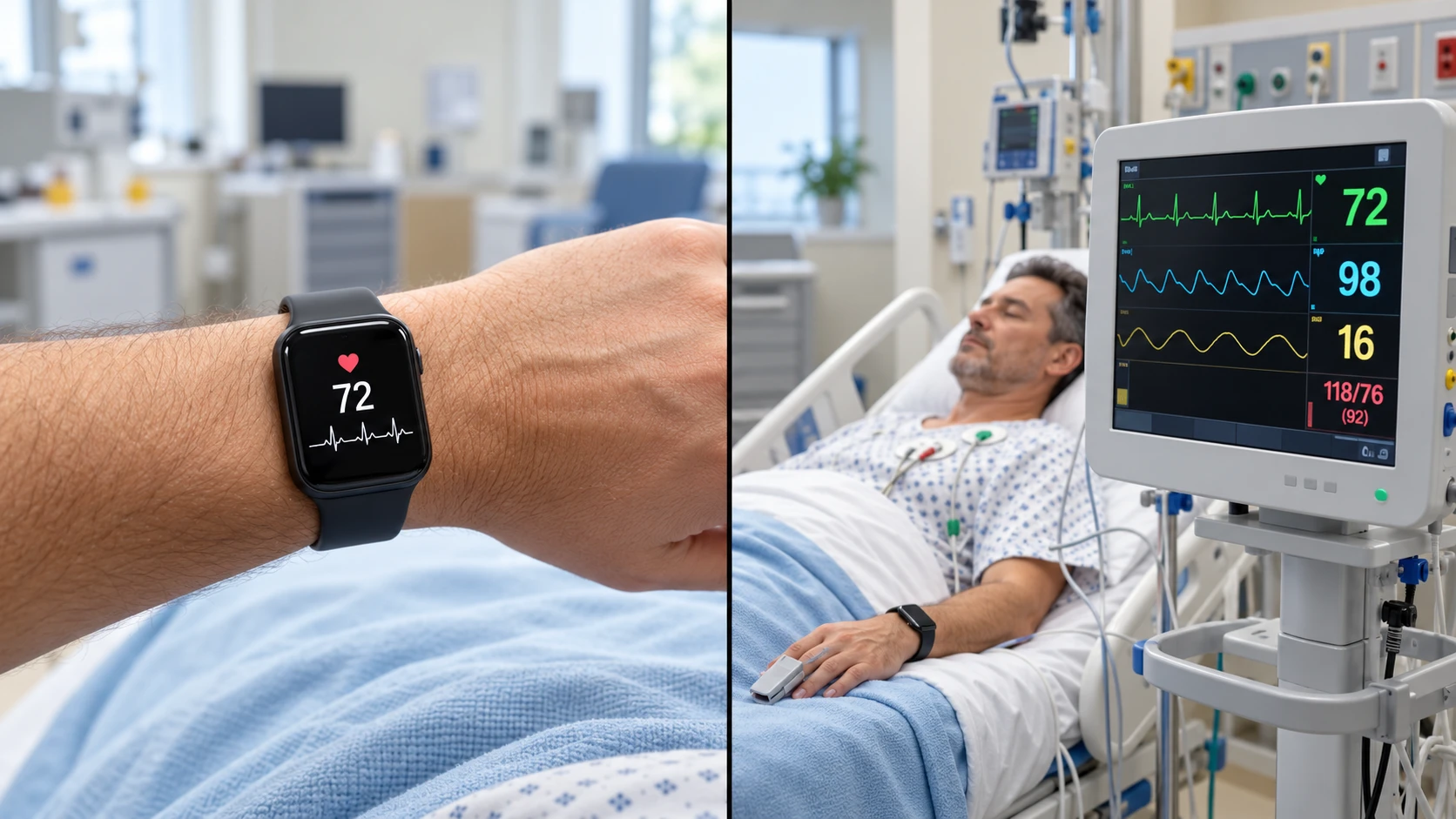
A smartwatch heart rate monitor is a wearable sensor system that estimates heart rate, usually through optical measurements taken at the wrist.
Most consumer smartwatches use a technology called photoplethysmography, commonly abbreviated as PPG.
PPG uses light to detect changes in blood volume within the tissue beneath the sensor. As blood flow changes with each heartbeat, the reflected optical signal changes. The device processes these variations to estimate pulse rate.
Some smartwatches also contain electrodes that allow the user to record a short single-lead or limited-lead electrocardiogram.
These ECG functions are separate from routine optical heart rate tracking and should not be assumed to operate continuously unless the specific device explicitly supports such monitoring.
What Does a Smartwatch Actually Measure?
During routine optical heart rate monitoring, a smartwatch generally detects peripheral pulse-related changes rather than directly measuring the heart’s electrical activity.
It then uses algorithms to estimate pulse rate and present it as heart rate.
In many healthy people with regular cardiac rhythms, pulse rate and heart rate are very similar.
However, they are not always identical, particularly when an arrhythmia causes some electrical heartbeats to produce weak or undetectable peripheral pulses.
Does Every Smartwatch Have ECG Monitoring?
No. Many smartwatches provide optical heart rate tracking without ECG recording.
Among devices with ECG features, the recording duration, lead configuration, rhythm classification and regulatory status differ.
A smartwatch should therefore be evaluated according to the exact model and the specific function being used.

What Is a Medical Heart Monitor?
The term medical heart monitor refers to several types of devices used to assess heart rate, rhythm or other cardiovascular information in a clinical setting.
These devices are not all identical.
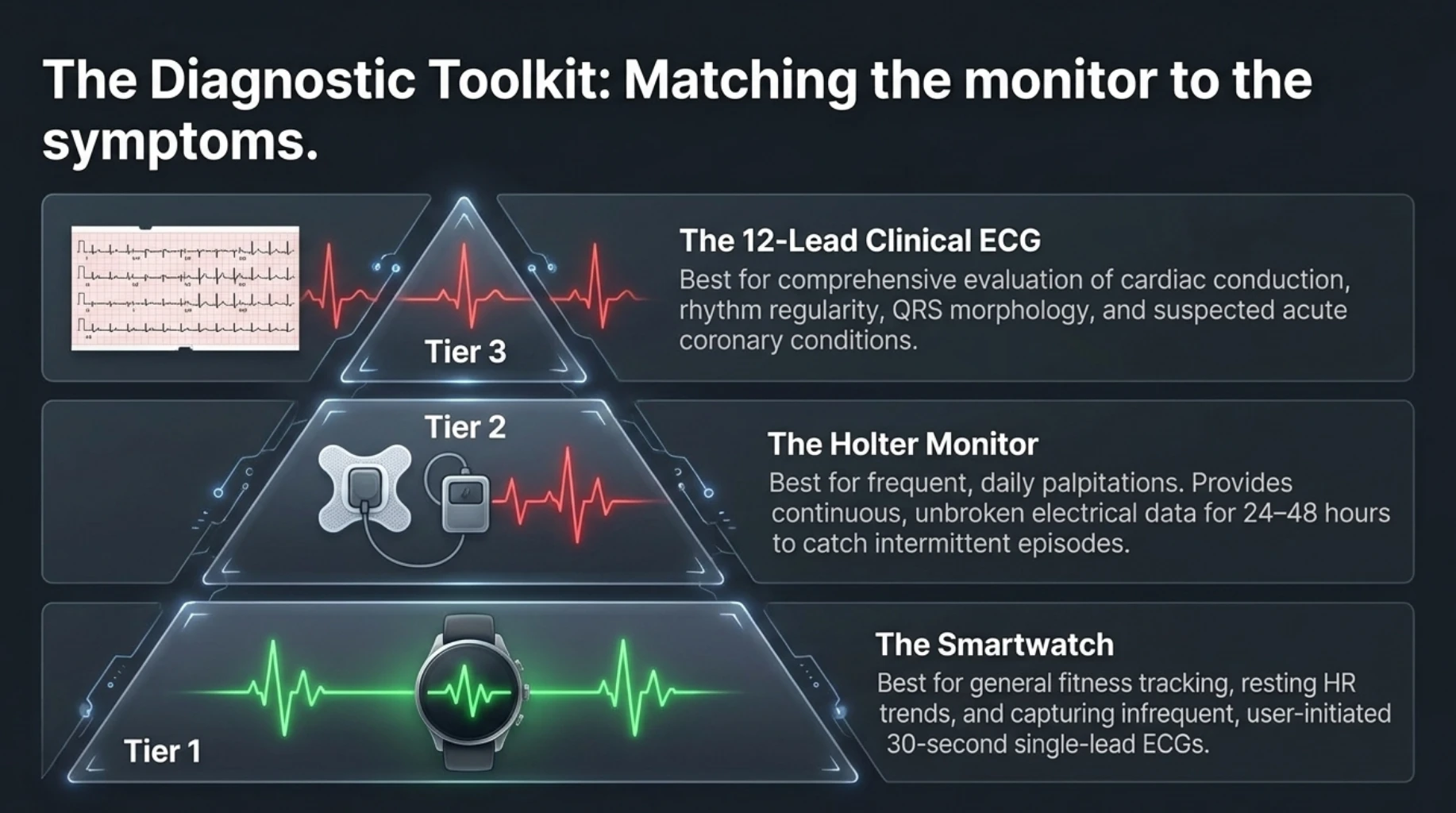
A standard 12-lead ECG machine records the heart’s electrical activity from multiple perspectives during a relatively brief examination.
A Holter monitor records ECG signals over an extended period, commonly 24–48 hours, although some devices support longer recordings.
Ambulatory ECG patches may provide continuous recording for several days or longer, depending on the model.
Event monitors and external loop recorders may be used when symptoms occur intermittently, while implantable cardiac monitors can provide long-term rhythm surveillance in selected patients.
Hospital bedside monitors provide continuous or near-continuous rhythm surveillance during acute care, often alongside blood pressure, oxygen saturation and other physiological parameters.
Does a Medical Heart Monitor Always Measure ECG?
Many medical cardiac monitoring devices record electrical signals from the heart, but the term can also be used more broadly for equipment that monitors pulse or cardiovascular variables.
When comparing smartwatch heart rate accuracy with a medical ECG monitor, the distinction between optical pulse detection and electrical cardiac recording is particularly important.
Why Are Medical Monitors Used?
Medical cardiac monitors are selected according to the clinical question.
For example, a physician may request a 12-lead ECG when evaluating chest discomfort, a Holter monitor for frequent palpitations, or a longer ambulatory ECG recording when suspected rhythm abnormalities occur infrequently.
Medical monitoring is not simply about obtaining a heart rate number. It may be necessary to identify the type of rhythm, its duration, associated symptoms and other clinically relevant findings.
Smartwatch vs Medical Heart Monitor: Main Differences
| Feature | Smartwatch | Medical Heart Monitor |
|---|---|---|
| Primary purpose | Fitness, wellness and selected health-monitoring functions | Clinical cardiac assessment or surveillance |
| Common measurement method | Optical PPG at the wrist | ECG electrodes for many cardiac monitors |
| Heart rate information | Estimated pulse rate, often displayed as heart rate | Often calculated from detected cardiac electrical activity |
| ECG recording | Available on selected models | Core function of ECG-based cardiac monitors |
| Rhythm assessment | Limited to supported algorithms and recordings | Depends on ECG lead configuration and recording duration |
| Continuous ECG recording | Not typical of standard smartwatch ECG features | Available with Holter, patch and selected other monitors |
| Exercise tracking | Commonly designed for everyday activity tracking | Depends on device and clinical purpose |
| Clinical interpretation | May require medical confirmation of findings | Designed to support formal clinical interpretation |
| Diagnostic capability | Function-specific and device-dependent | Depends on the type of medical monitoring system |
The most important distinction is that the two devices may not be measuring exactly the same signal.
A smartwatch using PPG estimates peripheral pulsations, while an ECG monitor detects cardiac electrical activity.
These signals usually correspond closely, but discrepancies can occur because of physiology, sensor limitations or processing algorithms.
How Does a Smartwatch Measure Heart Rate?
Most smartwatches use optical photoplethysmography to estimate heart rate.
The underside of the watch contains light emitters and photodetectors. Light enters the skin, interacts with tissue and blood, and a portion returns to the sensor.
Because blood volume changes with each pulse, the reflected light signal also changes.
The device uses signal-processing algorithms to estimate the timing and frequency of these pulsations.
Why Do Smartwatches Use Green Light?
Many optical heart rate sensors use green light because changes in blood volume can produce a useful optical signal at this wavelength.
Some devices also use other wavelengths, including red or infrared light, for selected measurements or operating conditions.
The exact optical design varies between manufacturers.
The presence of multiple LEDs does not independently establish superior clinical accuracy.
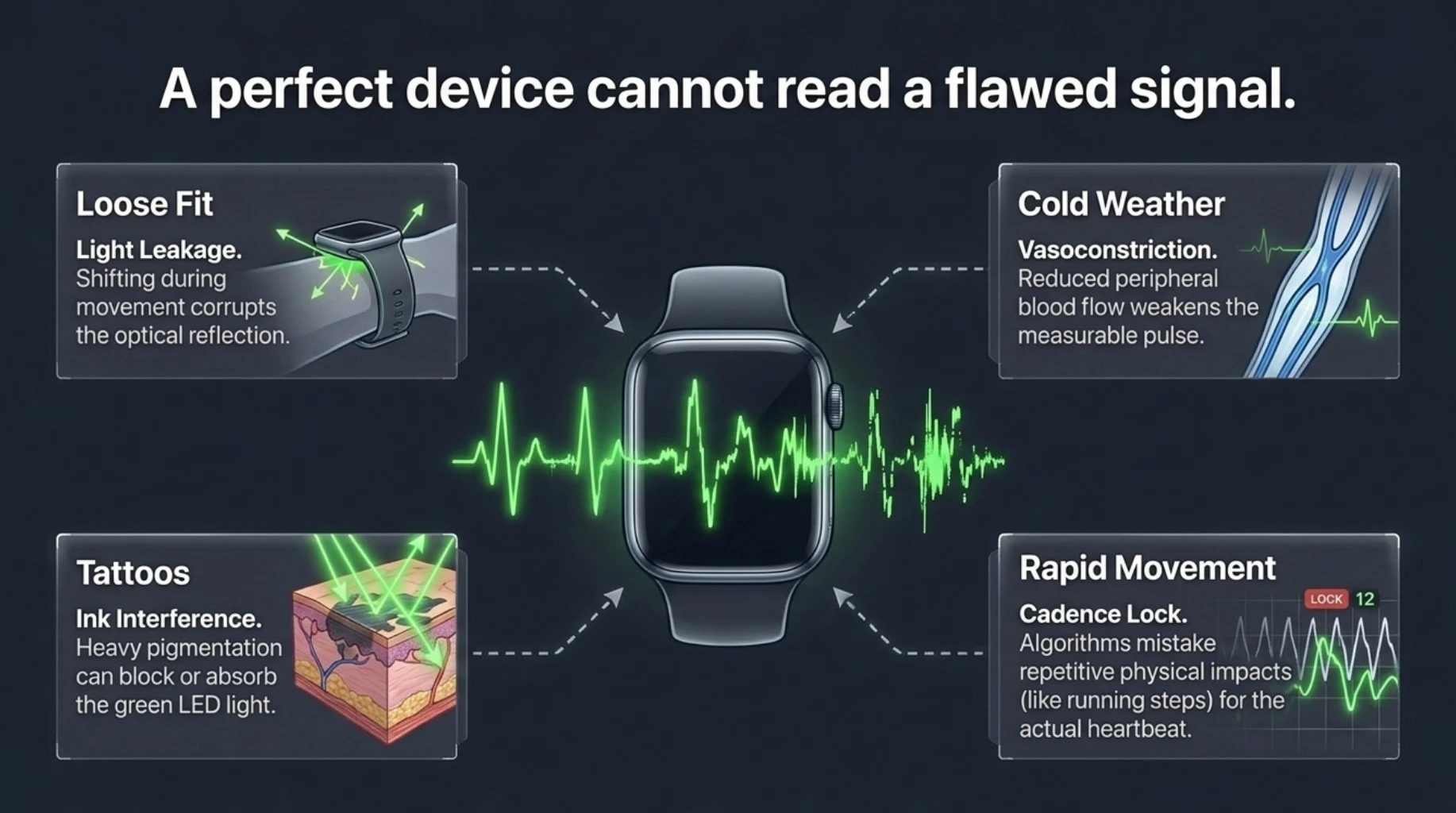
Why Does Wrist Placement Matter?
Optical monitoring depends on maintaining adequate contact between the sensor and the skin.
If the watch is too loose, shifts during movement or is positioned poorly, the signal may become unreliable.
Wrist anatomy, skin characteristics, local blood flow and movement can also affect optical measurements.
Correct fit can improve signal acquisition, but it cannot eliminate every source of error.
How Does a Medical ECG Monitor Measure Heart Rate?
An ECG monitor detects electrical activity generated during the cardiac cycle through electrodes positioned on the body.
Each normal ventricular depolarisation produces a QRS complex on the ECG tracing.
The monitor can estimate heart rate by measuring the time between detected QRS complexes.
For example, when consecutive heartbeats occur at regular intervals, the device can calculate a corresponding rate in beats per minute.
Unlike optical PPG, ECG does not depend on detecting peripheral blood volume changes.
However, ECG monitoring also has limitations. Loose electrodes, muscle tremor, movement and electrical interference can distort the signal.
Why Is ECG Useful for Rhythm Assessment?
ECG provides information about cardiac electrical activation rather than only pulse frequency.
This allows clinicians to assess rhythm regularity, QRS morphology and other electrical characteristics, depending on the recording system.
For example, two patients may both have a heart rate of 140 beats per minute, but one may have sinus tachycardia while the other has a clinically important tachyarrhythmia.
A simple heart rate number cannot reliably distinguish these possibilities.
PPG vs ECG: Why the Technology Matters
Photoplethysmography and electrocardiography measure different physiological phenomena.
PPG detects peripheral pulsatile blood volume changes, whereas ECG detects electrical cardiac activity.
In a person with a regular rhythm and good peripheral circulation, the estimated rates may agree closely.
However, differences may become more apparent during movement, irregular rhythms or reduced peripheral perfusion.
| Characteristic | PPG | ECG |
|---|---|---|
| Physiological signal | Peripheral blood volume changes | Cardiac electrical activity |
| Common sensor | Optical sensor | Electrodes |
| Typical smartwatch use | Routine pulse-rate tracking | Short ECG recording on supported models |
| Motion sensitivity | Can be substantial during certain activities | Also susceptible to movement and muscle artefacts |
| Arrhythmia information | Pulse irregularity may suggest a problem | Provides electrical rhythm information |
| Peripheral circulation dependence | Important | Not required for electrical signal detection |
| Common limitation | Pulse detection and algorithm errors | Electrode and electrical signal artefacts |
How Different Can Smartwatch and Medical Monitor Readings Be?
There is no single universal difference that applies to every smartwatch, medical monitor or measurement condition.
Under favourable resting conditions, some validated smartwatch models can provide heart rate estimates that agree closely with reference ECG measurements.
However, agreement varies between devices and may deteriorate during certain activities, at higher heart rates or when the optical signal is poor.
Research studies often report average measurement error across groups of participants. These averages should not be interpreted as a guarantee that an individual reading will be accurate within the same margin.
Example: Smartwatch Shows 78 bpm and ECG Shows 80 bpm
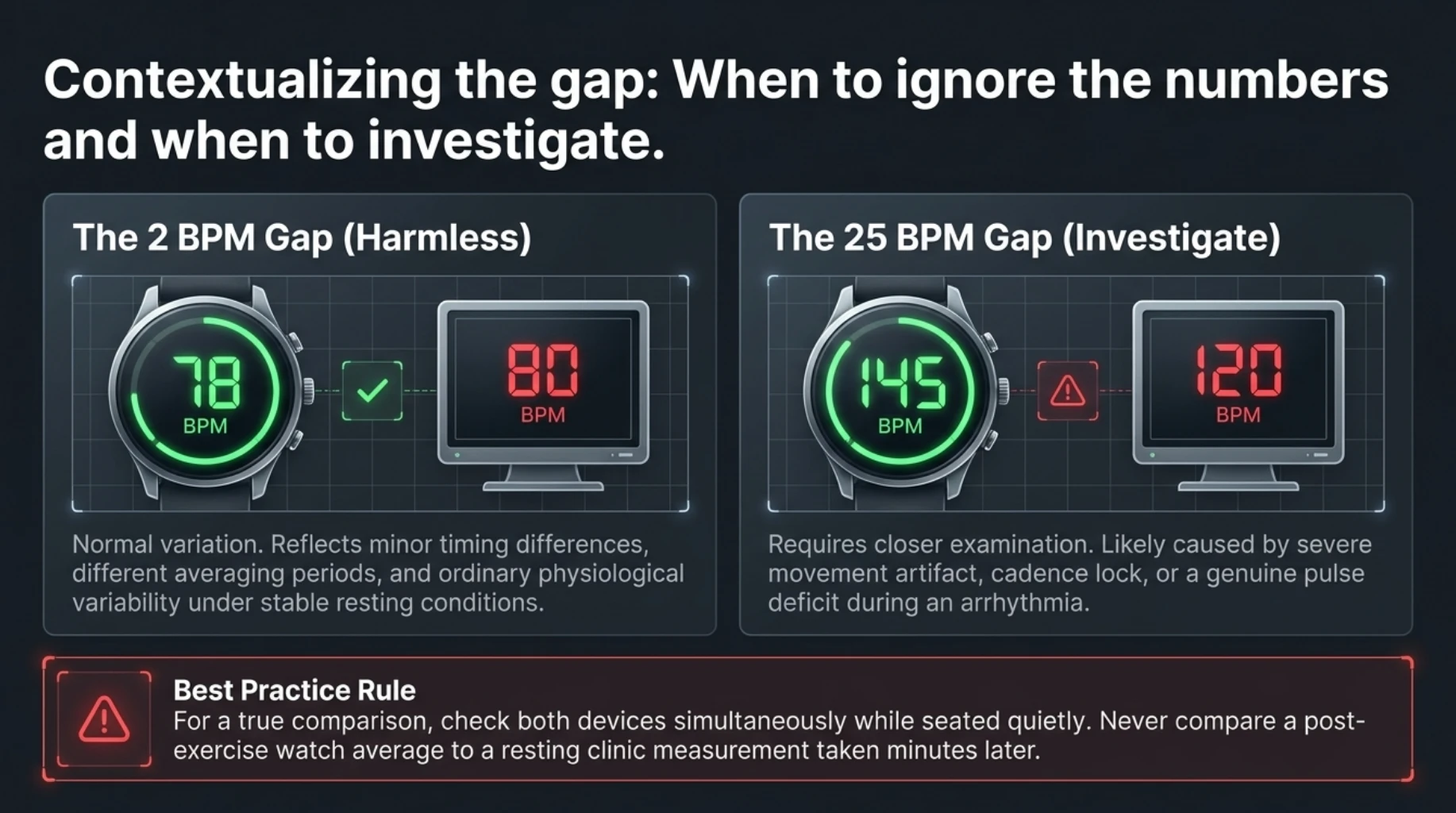
A difference of two beats per minute under stable resting conditions may be relatively small and could reflect normal timing differences, averaging or measurement variability.
However, agreement between two readings does not independently prove that either device is functioning correctly under every condition.
Example: Smartwatch Shows 145 bpm and ECG Shows 120 bpm
A larger discrepancy requires closer examination.
Possible explanations include movement artefacts, poor optical contact, algorithm limitations, differences in averaging periods or a genuine difference between electrical heartbeats and detectable peripheral pulses.
The clinical significance depends on symptoms, rhythm, activity and the reliability of both signals.
Is a Difference of 10 bpm Normal?
A difference of 10 beats per minute may occur under some conditions, but it should not automatically be classified as either normal or abnormal without context.
For example, a short-lived difference during vigorous movement may reflect measurement lag or artefact.
A persistent discrepancy at rest, particularly when associated with palpitations, dizziness or other symptoms, deserves closer assessment.
Smartwatch Heart Rate Accuracy at Rest
Resting heart rate is one of the conditions under which many smartwatch optical sensors perform relatively well.
When the person is sitting quietly, the wrist is still, the watch fits correctly and peripheral circulation is adequate, the optical signal is often easier to interpret.
However, performance still varies between models.
Factors such as skin contact, tattoos, wrist anatomy, local blood flow and algorithm design can influence the measurement.
Can You Use a Smartwatch to Track Resting Heart Rate Trends?
For many people, a smartwatch can be useful for observing changes in resting heart rate over time.
For example, a consistently higher resting heart rate may accompany fever, poor sleep, dehydration, increased physiological stress or other changes.
However, a change in resting heart rate is not a diagnosis.
Persistent or unexplained changes, particularly when accompanied by symptoms, should be interpreted clinically.
Why Is My Smartwatch Resting Heart Rate Different From My Clinic Reading?
Heart rate varies throughout the day.
Walking to the clinic, sitting quietly, anxiety, recent caffeine intake, medications and the timing of the measurement can all influence the result.
A smartwatch average calculated over a period of rest is not necessarily comparable with a brief heart rate measurement obtained during a consultation.
For a meaningful comparison, measurements should ideally be obtained at approximately the same time under similar conditions.
Smartwatch Accuracy During Walking and Exercise
Exercise creates additional challenges for optical heart rate monitoring.
As activity intensity increases, the wrist may move more rapidly, the watch may shift against the skin and the optical signal may become contaminated by movement-related changes.
Some algorithms compensate for these disturbances effectively, while others may produce delayed or inaccurate estimates.
Is a Smartwatch Accurate During Walking?
During steady walking, many devices can provide useful heart rate estimates when the watch fits correctly.
However, performance varies with arm movement, walking intensity and the specific sensor technology.
A smartwatch that performs well during quiet walking may not perform equally well during activities involving rapid or irregular wrist movements.
What Happens During Running?
Running can create repetitive arm movements and changes in sensor contact.
These movements may introduce optical artefacts, especially if the watch is loose or the sensor signal is weak.
Some devices may also respond slowly when heart rate rises or falls rapidly.
Why Is Heart Rate Tracking Difficult During Strength Training?
Strength training involves gripping, wrist flexion, intermittent muscle contraction and changes in peripheral circulation.
These factors may interfere with wrist-based optical measurements.
During exercises such as heavy rows, push-ups or weightlifting, the watch may display a heart rate that differs from an ECG-based reference.
This does not mean wrist-based monitoring is useless for strength training, but it highlights why individual readings should not be treated as precise physiological measurements under every condition.
Why Does a Smartwatch Sometimes Show Half or Double the Actual Heart Rate?
Optical sensors and their algorithms may occasionally identify the wrong frequency within a noisy signal.
For example, movement-related patterns may be mistaken for pulse-related changes, or the device may fail to detect some pulsations.
This can result in a displayed rate that is substantially lower or higher than the actual heart rate.
Some exercise-related errors are described as cadence lock, in which the wearable’s estimated heart rate appears to follow the rhythm of repetitive movement rather than the true pulse.
Such errors are device- and situation-dependent and should not be assumed to explain every unusual reading.
What Should You Do When the Reading Looks Implausible?
If you feel well and the reading is unexpected, stop moving briefly, check the watch position and allow the signal to stabilise.
When appropriate, compare the result with a manually counted pulse or another suitable measurement method.
However, if you experience chest pain, fainting, severe breathlessness or other serious symptoms, seek urgent medical assessment rather than spending time troubleshooting the watch.
Smartwatch vs Chest Strap Heart Rate Monitor
Chest strap heart rate monitors are commonly used in exercise and sports settings.
Many chest straps detect electrical signals associated with cardiac activity, although their design and capabilities differ from diagnostic medical ECG systems.
Because they are less dependent on wrist-based optical signals, some chest strap monitors may provide more consistent heart rate tracking during activities that interfere with smartwatch PPG measurements.
However, a sports chest strap is not automatically equivalent to a clinical ECG monitor.
Is a Chest Strap Better for Exercise Heart Rate Tracking?
For activities involving rapid heart rate changes or substantial wrist movement, a suitable chest strap may provide more dependable exercise heart rate information than some wrist-based optical devices.
Actual performance depends on the model, sensor contact, movement and other conditions.
Can a Chest Strap Diagnose Arrhythmias?
Most consumer sports chest straps are primarily designed for heart rate tracking, not comprehensive diagnostic rhythm evaluation.
Even when electrical signals are detected, the available data and recording format may not be sufficient for clinical diagnosis.
Suspected arrhythmias may require a medical ECG or ambulatory monitoring.
Does a Smartwatch Measure Heart Rate Continuously?
Many smartwatches collect optical heart rate measurements repeatedly throughout the day, but the sampling frequency and processing may vary with activity, battery settings and device model.
Some watches increase sampling during exercise and reduce it during other periods.
Therefore, a heart rate graph that appears continuous may contain measurements collected at different intervals.
This is different from continuous ECG recording, in which electrical cardiac activity is recorded over time.
Can a Smartwatch Miss a Brief Arrhythmia?
Yes.
A brief rhythm disturbance may occur between measurements or may not satisfy the device’s detection criteria.
Even watches with irregular rhythm notification features are not designed to detect every type of arrhythmia.
A normal notification history does not exclude intermittent cardiac rhythm abnormalities.
Smartwatch ECG vs Medical 12-Lead ECG
Selected smartwatches allow users to record a short ECG by touching an electrode or activating a dedicated recording function.
These recordings can provide useful rhythm information, but they differ substantially from a standard diagnostic 12-lead ECG.
What Does a Single-Lead Smartwatch ECG Show?
A single-lead ECG records electrical activity from one measurement perspective.
Depending on signal quality, it may show cardiac electrical complexes and rhythm regularity.
Some supported devices can classify selected recordings as sinus rhythm, possible atrial fibrillation or inconclusive, subject to their intended use and algorithm limitations.
However, the absence of an atrial fibrillation notification does not mean every other rhythm disorder has been excluded.
Why Is a 12-Lead ECG Different?
A standard 12-lead ECG records electrical activity from multiple perspectives.
It provides more detailed information about cardiac conduction, rhythm, QRS morphology, ST-segment changes and other electrical characteristics.
This makes it important in the evaluation of many cardiac conditions, including suspected acute coronary syndrome.
A smartwatch ECG should not be considered a replacement for a diagnostic 12-lead ECG when one is clinically indicated.
| Feature | Smartwatch ECG | Medical 12-Lead ECG |
|---|---|---|
| Typical lead configuration | Usually single-lead or limited-lead | 12 diagnostic leads |
| Recording | Usually user-initiated, short duration | Clinically performed diagnostic recording |
| Rhythm information | Useful for selected rhythm assessments | More comprehensive electrical assessment |
| AF detection | Available on selected models | Can demonstrate AF during the recording |
| Heart attack evaluation | Not a replacement for clinical assessment | Important component of evaluation |
| Interpretation | Automated classifications have limitations | Requires appropriate clinical interpretation |
Can a Smartwatch Detect Atrial Fibrillation?
Some smartwatches offer features designed to identify pulse irregularity suggestive of atrial fibrillation, while selected models also provide ECG-based rhythm classification.
Atrial fibrillation is an arrhythmia characterised by disorganised atrial electrical activity and an irregular ventricular response in many cases.
Detection of possible AF through a wearable device may prompt further clinical assessment.
However, smartwatch performance depends on the exact device, the algorithm, the user’s characteristics and the quality of the recorded signal.
Does an AF Alert Mean You Have Atrial Fibrillation?
Not necessarily.
False-positive alerts can occur because of premature beats, movement artefacts or other irregular pulse patterns.
Confirmation generally requires appropriate ECG documentation and clinical evaluation.
Does No AF Alert Mean Your Heart Rhythm Is Normal?
No.
A smartwatch may miss intermittent AF or other arrhythmias, particularly when episodes are brief or occur outside the device’s monitoring intervals.
Some detection features also have restrictions relating to age, heart rate range, activity or intended population.
These limitations make it inappropriate to use the absence of alerts as proof that no rhythm disorder exists.
What Is a Holter Monitor and Why Is It Different From a Smartwatch?
A Holter monitor is a medical ambulatory ECG recording system used to observe the heart’s electrical activity over an extended period.
Traditional Holter monitoring commonly records for 24–48 hours, although longer ambulatory ECG systems are available.
The device can help clinicians evaluate heart rhythm during ordinary daily activities and relate recorded abnormalities to reported symptoms.
Why Might a Doctor Recommend Holter Monitoring?
Holter monitoring may be considered when symptoms such as palpitations, unexplained dizziness or suspected rhythm abnormalities require further evaluation.
The choice of monitoring duration depends partly on how frequently symptoms occur.
For example, a short Holter recording may be useful when symptoms occur daily, while longer-duration monitoring may be more appropriate for less frequent episodes.
Why Can’t a Smartwatch Replace a Holter Monitor?
Most smartwatch ECG features require the user to initiate a recording and do not provide the same continuous electrical rhythm data as a medical Holter monitor.
A brief arrhythmia may occur during sleep or at a time when the user is unable to activate the ECG feature.
In contrast, a continuous ambulatory ECG system can record cardiac electrical activity throughout its monitoring period, subject to signal quality and device limitations.
This makes medical ambulatory ECG monitoring particularly useful when the timing or nature of suspected arrhythmias is uncertain.
When Is a Smartwatch Useful for Heart Health?
Despite its limitations, a smartwatch can provide useful information when used appropriately.
For many people, resting heart rate trends, exercise heart rate patterns and selected rhythm notifications may help identify changes worth discussing with a healthcare professional.
A smartwatch may also allow users to record the timing of symptoms or capture an ECG during an episode of palpitations, provided the device supports that function and a usable recording can be obtained.
Such information can sometimes assist clinical evaluation.
However, consumer wearable data should be interpreted as supplementary information rather than a complete cardiac assessment.
Who Benefits Most From Smartwatch Heart Rate Tracking?
People interested in exercise intensity, fitness trends and general activity monitoring may find smartwatch heart rate data useful.
Selected individuals with intermittent symptoms may also benefit from recording relevant information to discuss with their clinician.
However, someone with suspected serious arrhythmia, recurrent fainting or concerning cardiac symptoms requires appropriate medical evaluation rather than relying on a smartwatch.
Can a Smartwatch Reliably Detect Atrial Fibrillation?
One of the most widely discussed medical applications of smartwatches is the detection of atrial fibrillation, commonly called AF or AFib. This is an irregular heart rhythm that can increase the risk of stroke and other complications in certain patients.
Some smartwatches can identify pulse irregularity using optical photoplethysmography (PPG), while selected models allow users to record a short electrocardiogram (ECG). These are different technologies, and their results should not be interpreted as interchangeable.
A smartwatch may help identify previously unrecognised rhythm irregularities, but it cannot replace a comprehensive cardiac assessment. The accuracy of detection depends on the device, recording quality, monitoring conditions and characteristics of the individual being monitored.
How Does a Smartwatch Identify Possible AFib?
Smartwatches may use one or both of two approaches.
The first is optical pulse irregularity analysis. The device examines variations in the timing of peripheral pulse waves. When the pattern meets its algorithm’s criteria, it may generate a notification suggesting possible atrial fibrillation.
The second approach uses a short ECG recording. When the user activates the ECG function, the watch records electrical activity through its available electrodes and may classify the tracing using an automated algorithm.
Both methods have limitations. Irregular peripheral pulses can occur for reasons other than atrial fibrillation, and short ECG recordings may fail to capture intermittent arrhythmias.
Does an AFib Notification Confirm Atrial Fibrillation?
No. An irregular rhythm notification is a screening signal that may justify further assessment. It is not automatically a confirmed diagnosis.
Confirmation of atrial fibrillation requires appropriate ECG evidence and clinical interpretation. Depending on the circumstances, this may involve reviewing a usable smartwatch ECG tracing, performing a standard 12-lead ECG or arranging ambulatory ECG monitoring.
Not every smartwatch ECG tracing is sufficiently clear for diagnosis. Recordings affected by movement, poor contact or other artefacts may be inconclusive.
Can a Smartwatch Miss Atrial Fibrillation?
Yes. A smartwatch can produce false-negative results.
Intermittent AF may occur between optical monitoring intervals or outside the period when a user records an ECG. Some detection algorithms also operate only within defined heart-rate ranges or under particular conditions.
Therefore, the absence of an AF notification does not prove that a person has never experienced atrial fibrillation.
False-Positive and False-Negative Smartwatch Heart Alerts
Understanding false alerts is essential when comparing a smartwatch vs medical heart monitor.
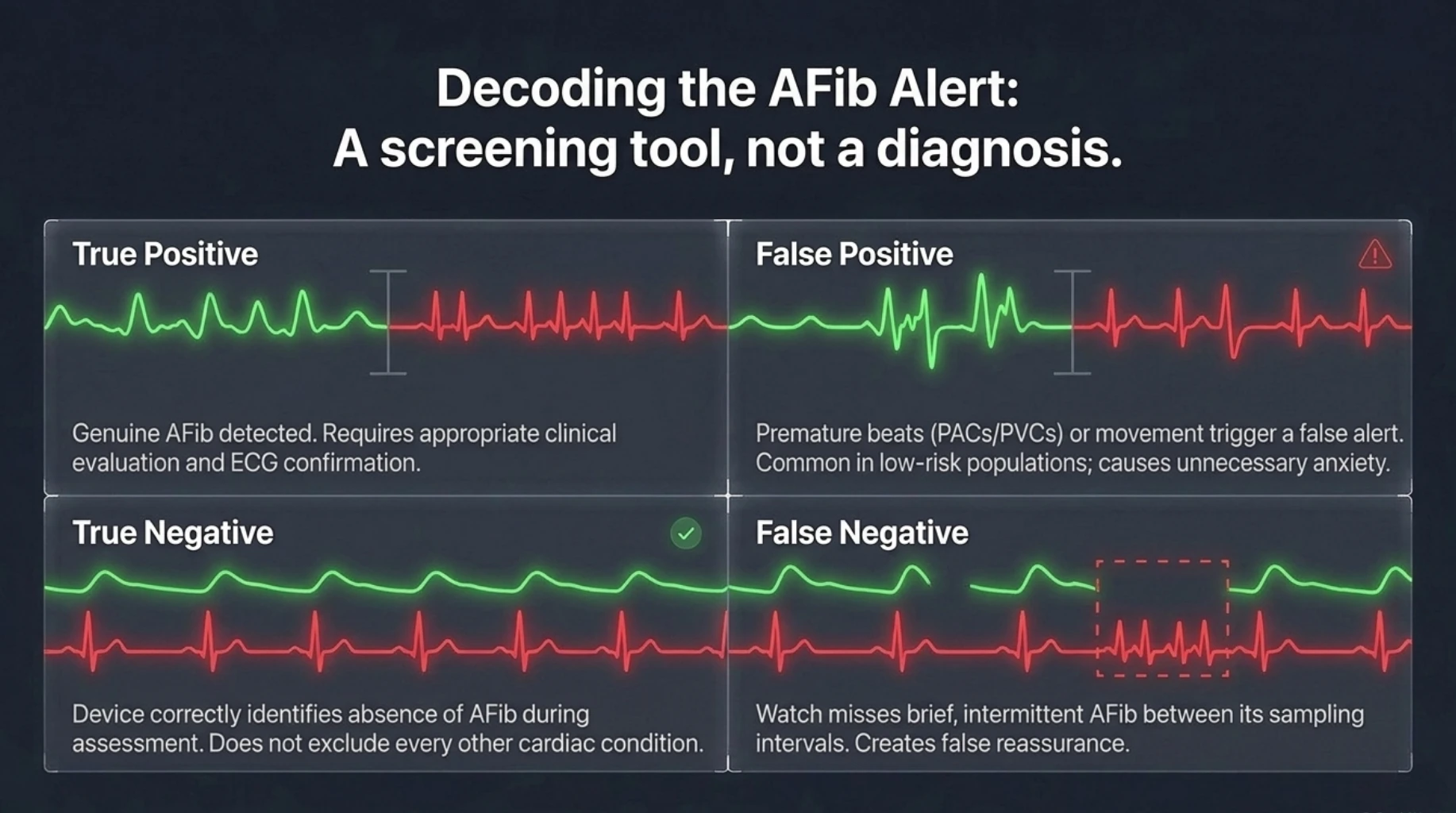
A false-positive result occurs when a device suggests an abnormality that is not actually present. A false-negative result occurs when a genuine abnormality is not detected.
Both are possible with wearable cardiac monitoring.
Why Do False-Positive Alerts Occur?
Premature atrial contractions, premature ventricular contractions, movement artefacts and poor sensor contact may produce irregular pulse patterns that trigger notifications.
For example, an occasional premature heartbeat may create an irregular interval between peripheral pulses. An optical algorithm may identify this irregularity without being able to determine its precise electrical cause.
Some notifications may therefore require medical confirmation even when the person feels completely well.
Why Are False Positives More Important in Low-Risk Populations?
The probability that a positive screening result represents a genuine condition depends partly on how common that condition is in the population being tested.
When atrial fibrillation is uncommon, such as in many younger individuals without known cardiac disease, a larger proportion of positive screening alerts may be false positives even when the test has good sensitivity and specificity.
This is a general principle of diagnostic testing known as positive predictive value.
Consequently, the usefulness of routine smartwatch rhythm screening depends not only on device performance but also on the population, clinical context and consequences of subsequent testing.
Why Do False Negatives Occur?
False negatives may result from intermittent monitoring, insufficient recording duration, poor signal quality or algorithm limitations.
A device designed primarily to identify atrial fibrillation may not recognise other clinically important arrhythmias.
A normal smartwatch result should therefore never be used to dismiss persistent palpitations, fainting or other concerning symptoms.
| Result | Meaning | Practical Interpretation |
|---|---|---|
| True positive | The device identifies an abnormality that is genuinely present | Requires appropriate clinical evaluation and management |
| False positive | The device suggests an abnormality that is absent | May lead to unnecessary concern or investigations |
| True negative | The device correctly identifies the absence of the targeted abnormality during assessment | Does not exclude every cardiac condition |
| False negative | The device fails to identify a genuine abnormality | May create false reassurance |
| Inconclusive recording | The device cannot reliably classify the available signal | May require repeat recording or formal assessment |
What Should You Do After a Smartwatch AFib Alert?
If your smartwatch reports possible atrial fibrillation, the appropriate response depends on your symptoms and clinical circumstances.
When you feel well and the alert is unexpected, review the notification and preserve any available ECG recording or relevant data. Arrange medical assessment to determine whether the alert represents a genuine rhythm abnormality.
If you experience chest pain, severe breathlessness, fainting, new neurological symptoms or other signs of serious illness, seek emergency medical care rather than waiting for another smartwatch recording.
Do not start anticoagulants, antiarrhythmic medications or other cardiac treatment solely because of a smartwatch notification.
Should You Repeat the Smartwatch ECG?
When you are stable and the device instructions permit it, repeating a recording under better conditions may improve signal quality.
Sit comfortably, keep your arm supported and follow the manufacturer’s electrode-contact instructions.
However, repeated recordings should not delay medical assessment when symptoms are concerning.
Should You Share Smartwatch ECG Recordings With Your Doctor?
Yes, when available. A usable ECG tracing captured during symptoms can sometimes provide clinically relevant information.
The recording time, associated symptoms and activity at the time are also helpful.
However, screenshots showing only a heart-rate number are generally less informative for rhythm diagnosis than an interpretable ECG waveform.
Smartwatch Readings During Palpitations: How Useful Are They?
Palpitations describe the sensation of an unusually fast, forceful, irregular or noticeable heartbeat.
They may occur with benign premature beats, anxiety, physical activity, dehydration, fever, medication effects or clinically important arrhythmias.
A smartwatch can sometimes help document the heart rate during an episode, but a numerical rate alone rarely identifies the exact rhythm.
Example: Smartwatch Shows 135 bpm During Palpitations
Suppose someone experiences sudden palpitations while sitting and notices a smartwatch reading of 135 beats per minute.
Several explanations are possible, including sinus tachycardia, supraventricular tachycardia, atrial fibrillation or an inaccurate optical reading.
The heart-rate number does not reliably distinguish these possibilities.
An ECG recorded during the episode may provide more useful information, although a single-lead smartwatch tracing still has limitations.
What If Palpitations Stop Before the ECG Is Recorded?
Intermittent arrhythmias can be difficult to diagnose because the rhythm may return to normal before a clinical ECG is obtained.
When symptoms are frequent, a short ambulatory ECG recording may be useful. Less frequent episodes may require longer monitoring, depending on clinical assessment.
The monitoring strategy should match the frequency and severity of symptoms.
Can a Smartwatch Detect Every Cause of Palpitations?
No. A smartwatch cannot reliably identify every rhythm disorder or non-cardiac cause of palpitations.
Even an ECG recording may not establish the underlying cause if the abnormality is not present during recording.
Medical evaluation may include history, examination, ECG, selected blood tests or ambulatory monitoring, depending on the circumstances.
When Is a Holter Monitor Better Than a Smartwatch?
A Holter monitor is a medical ambulatory ECG system that records the heart’s electrical activity over an extended period.
Unlike most smartwatch ECG functions, which capture brief user-initiated recordings, a Holter monitor can continuously record cardiac electrical signals throughout the prescribed monitoring period.
This is particularly useful when suspected arrhythmias occur unexpectedly.
Daily Palpitations
If palpitations occur almost every day, a 24–48-hour Holter monitor may have a reasonable chance of capturing an episode.
The precise duration should be selected according to clinical circumstances.
Occasional Palpitations
When symptoms occur only once every few weeks, a short Holter recording may not capture the event.
Longer ambulatory ECG patches, event monitors or other recording systems may be more appropriate.
Unexplained Fainting
Unexplained syncope requires medical assessment because some causes can be serious.
Depending on the clinical findings and frequency of episodes, longer-term rhythm monitoring may be considered.
A smartwatch should not be used as the sole investigation for recurrent unexplained fainting.
| Clinical Situation | Potential Monitoring Approach | Important Consideration |
|---|---|---|
| General fitness tracking | Smartwatch optical heart rate | Useful for trends, not diagnosis |
| Occasional palpitations with an available ECG feature | Smartwatch ECG may provide supplementary information | Recording must capture the episode and be interpretable |
| Frequent palpitations | Short-duration ambulatory ECG may be considered | Choice depends on clinical evaluation |
| Infrequent suspected arrhythmia | Longer ambulatory ECG monitoring may be appropriate | Monitoring duration should reflect symptom frequency |
| Recurrent unexplained fainting | Formal clinical evaluation and selected cardiac monitoring | Potentially serious causes must be considered |
| Acute chest pain or severe symptoms | Emergency medical assessment | Do not delay care for wearable measurements |
What Is Heart Rate Variability (HRV)?
Heart rate variability, or HRV, describes variation in the time intervals between successive heartbeats.
Even when the average heart rate is relatively stable, the intervals between individual heartbeats are not perfectly identical.
These variations are influenced by autonomic nervous system activity, breathing, sleep, exercise, illness, medications and several other factors.
Many smartwatches estimate HRV and present it as part of a recovery, stress or readiness score.
How Is HRV Measured?
Clinical ECG-based HRV analysis uses intervals between appropriate normal heartbeats, commonly called NN intervals.
Wearable devices may estimate beat-to-beat intervals using optical pulse signals or ECG, depending on the model.
Optical pulse-derived variability is related to HRV but is not necessarily identical because pulse transit time and other physiological factors can influence peripheral pulse timing.
Why Do Different Devices Show Different HRV Values?
HRV depends strongly on the measurement method and metric.
For example, RMSSD and SDNN are different HRV measures. Their values should not be directly compared as though they represent the same quantity.
Recording duration, time of day, breathing pattern, body position, artefact correction and algorithm design can also influence the result.
Consequently, HRV values from two different wearable brands may not be directly interchangeable.
Does Low HRV Mean You Have Heart Disease?
No. A low HRV value does not independently diagnose heart disease.
HRV varies considerably between individuals and can change with age, sleep, stress, exercise load and illness.
Clinical interpretation requires consideration of the measurement method, context and relevant medical information.
Can You Use HRV to Track Recovery?
Some people use consistent HRV measurements to observe personal trends during training and recovery.
However, the scientific validity of proprietary recovery scores varies, and a single low reading should not automatically be interpreted as overtraining, illness or poor cardiovascular health.
Sleep quality, symptoms, exercise performance and overall wellbeing remain important.
Smartwatch Stress Scores: Are They Medically Reliable?
Some smartwatches calculate stress scores using HRV, heart rate, activity and other sensor-derived information.
These scores may reflect aspects of physiological arousal, but they do not directly measure psychological stress or diagnose anxiety disorders.
A high stress score may occur after poor sleep, exercise, caffeine intake or illness.
Similarly, a low score does not guarantee the absence of psychological distress or medical problems.
Such features are best understood as general wellness indicators rather than validated diagnostic tests unless the exact device and function have evidence supporting a particular clinical use.
Smartwatch High Heart Rate Alerts: When Should You Worry?
Many smartwatches allow notifications when heart rate exceeds a selected threshold, sometimes specifically during periods of apparent inactivity.
A high heart rate can have many causes, including physical activity, fever, dehydration, anxiety, pain, medications, anaemia and cardiac arrhythmias.
The significance depends on the actual rhythm, symptoms and clinical circumstances.
Is a Resting Heart Rate of 110 bpm Dangerous?
A resting heart rate of 110 beats per minute is above the commonly referenced resting adult range, but it does not identify a diagnosis.
It may occur temporarily with fever, dehydration or other physiological stress.
However, persistent or unexplained tachycardia deserves medical assessment, particularly when accompanied by breathlessness, chest discomfort, dizziness or weakness.
What If Your Watch Shows 160 bpm While Sitting?
An unexpected reading of 160 beats per minute at rest may reflect a genuine tachyarrhythmia or a measurement error.
If the reading is accompanied by chest pain, fainting, severe breathlessness or marked weakness, seek emergency medical care.
Even without severe symptoms, a sustained unexpectedly high resting heart rate should be assessed promptly rather than dismissed as a smartwatch problem.
Can Anxiety Cause a High Smartwatch Reading?
Yes. Anxiety can increase sympathetic nervous system activity and raise heart rate.
However, a high heart rate should not automatically be attributed to anxiety, particularly when symptoms are new, persistent or unusual.
Other causes may need evaluation.
Smartwatch Low Heart Rate Alerts: What Do They Mean?
Some devices generate notifications when the detected heart rate falls below a selected threshold.
A low resting heart rate, or bradycardia, can occur normally during sleep or in physically trained individuals.
It can also occur because of medications, conduction abnormalities and other medical conditions.
Is a Heart Rate of 50 bpm Normal?
A resting heart rate of 50 beats per minute may be normal for some healthy individuals, especially those who are physically active.
However, its significance depends on symptoms, medical history and rhythm.
Bradycardia associated with fainting, dizziness, confusion, breathlessness or hypotension requires clinical assessment.
Why Does My Smartwatch Show 40 bpm During Sleep?
Heart rate commonly decreases during sleep.
Some healthy people may have relatively low nocturnal heart rates, but smartwatch optical errors can also occur because of poor contact or weak peripheral signals.
Repeated unexpectedly low readings, particularly when accompanied by symptoms, may justify ECG evaluation or ambulatory monitoring.
Can a Smartwatch Detect Heart Block?
A smartwatch displaying a low pulse rate cannot independently diagnose heart block.
Heart block is an electrical conduction abnormality that requires appropriate ECG assessment.
Some smartwatch ECG recordings may capture relevant electrical findings, but automated consumer algorithms are not designed to diagnose every conduction disorder.
Smartwatch Heart Rate During Sleep vs Medical Monitoring
Smartwatches commonly estimate heart rate during sleep and may display nightly averages, minimum values or trends.
These measurements can provide general information about nocturnal heart rate patterns.
However, optical wrist monitoring is not equivalent to continuous diagnostic ECG recording.
Can a Smartwatch Detect Night-Time Arrhythmias?
Some wearable devices may identify irregular pulse patterns or generate notifications during periods of inactivity.
However, intermittent optical monitoring can miss brief arrhythmias, and a heart rate graph does not necessarily reveal the underlying rhythm.
If nocturnal arrhythmia is suspected, a clinician may recommend ambulatory ECG monitoring.
Can a Smartwatch Diagnose Sleep Apnoea From Heart Rate?
No. Heart rate patterns alone cannot reliably diagnose or exclude obstructive sleep apnoea.
Some consumer devices include sleep-related breathing disturbance features, but their intended use and performance vary.
Formal assessment may require home sleep apnoea testing or polysomnography, depending on the clinical situation.
A normal smartwatch sleep report does not exclude clinically important sleep-disordered breathing.
Why Smartwatch Heart Rate May Be Inaccurate During Sleep
Optical heart rate monitoring depends on adequate contact and a usable peripheral pulse signal.
During sleep, the watch may shift position, press against bedding or lose consistent contact with the skin.
Peripheral circulation and skin temperature can also change.
These factors may produce missing data, implausible values or inaccuracies in derived sleep metrics.
When a smartwatch reports an unusual overnight heart rate, consider the measurement conditions and the broader clinical context before drawing conclusions.
Smartwatch Heart Rate Accuracy in People With Arrhythmias
Optical heart rate monitoring can become more challenging when the cardiac rhythm is irregular.
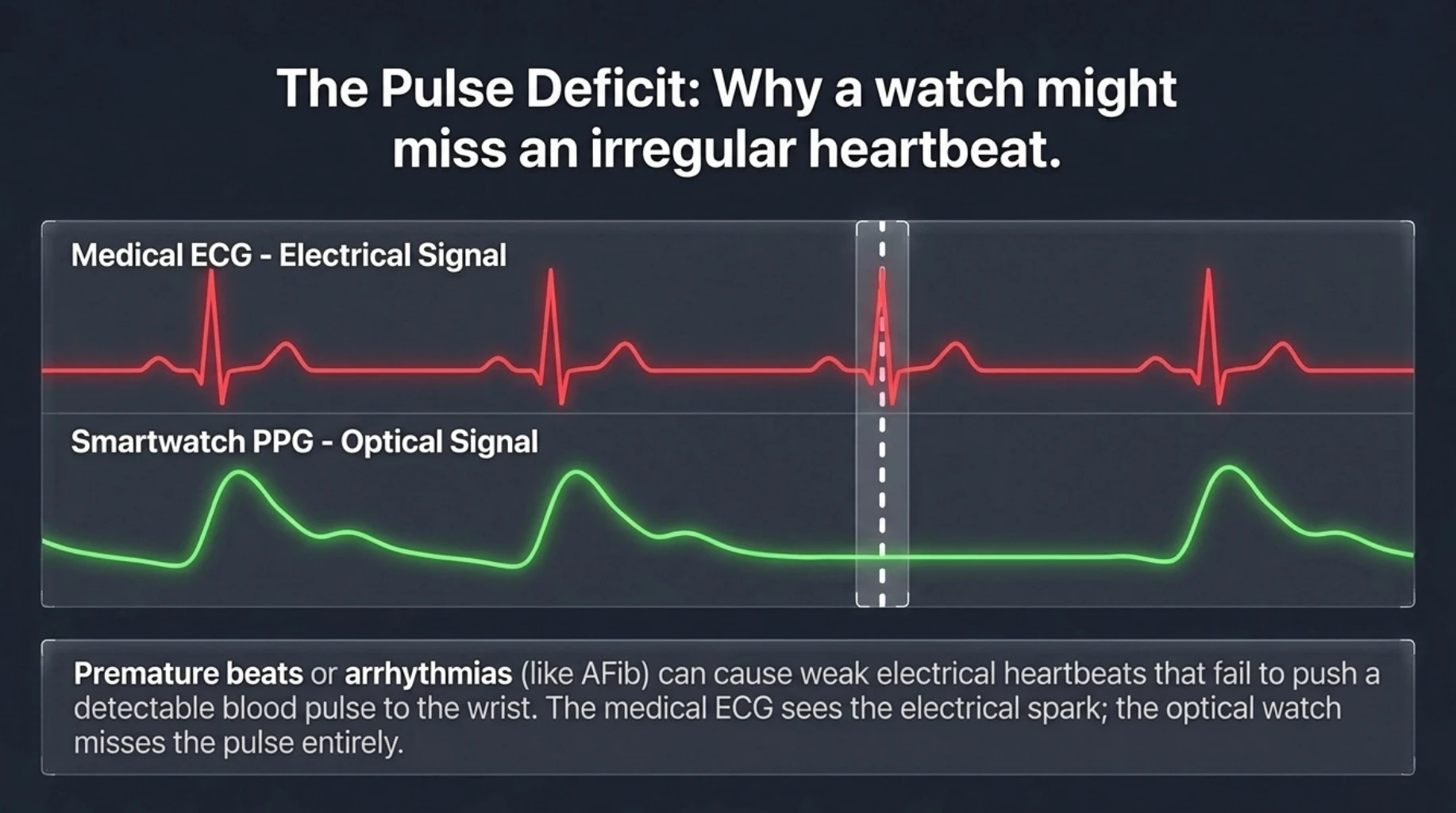
In atrial fibrillation, for example, the intervals between heartbeats vary, and some beats may generate weaker peripheral pulses.
As a result, the peripheral pulse rate estimated by a smartwatch may differ from the electrical heart rate recorded by ECG.
What Is a Pulse Deficit?
A pulse deficit occurs when the number of electrical heartbeats exceeds the number of effective peripheral pulses detected during the same period.
This may occur in certain arrhythmias because some cardiac contractions do not generate a sufficiently strong peripheral pulse.
A smartwatch using PPG may therefore underestimate the ECG-derived heart rate in some circumstances.
However, not every discrepancy represents a true pulse deficit; sensor artefacts and algorithm errors can also contribute.
Can Premature Beats Confuse Smartwatch Sensors?
Yes. Premature atrial or ventricular beats may alter the timing and strength of peripheral pulses.
Optical algorithms may struggle to identify every pulsation accurately, especially when beats are frequent or occur in complex patterns.
ECG recording can provide additional information about the electrical rhythm, although interpretation may still require clinical expertise.
Smartwatch Accuracy in People With Poor Peripheral Circulation
Wrist-based optical monitoring depends on detecting pulsatile blood volume changes in peripheral tissue.
Cold exposure, vasoconstriction and certain circulatory conditions can weaken the optical signal.
As a result, the watch may display delayed, unstable or missing heart rate values.
This limitation is particularly relevant when users compare smartwatch readings with ECG-based medical monitors, which detect electrical activity rather than peripheral pulsation.
Can Cold Weather Affect Smartwatch Heart Rate?
Yes. Cold conditions may reduce peripheral blood flow and affect optical signal quality.
During outdoor exercise in cold weather, movement and reduced peripheral circulation may occur together, making measurement more difficult.
A sudden implausible reading should be interpreted cautiously.
Can Tattoos Affect Smartwatch Heart Rate Accuracy?
Tattoos at the sensor site may interfere with optical measurements in some devices and individuals.
Ink characteristics, coverage, sensor design and light wavelength can influence the effect.
The degree of interference varies, and not every tattoo causes unreliable measurements.
When the device repeatedly struggles to obtain a signal, following the manufacturer’s placement guidance may help.
Does Skin Pigmentation Affect Smartwatch Heart Rate Accuracy?
Optical sensor performance can be influenced by skin optical properties, including pigmentation, although the magnitude and direction of any bias depend on the device and measurement method.
It is important not to assume that findings from pulse oximetry accuracy studies apply identically to optical heart rate estimation.
These are different measurement tasks, and device-specific validation is necessary.
Manufacturers should ideally evaluate performance across diverse populations and realistic usage conditions.
Why a Smartwatch May Show Different Heart Rates on Different Wrists
Differences in sensor contact, watch position, movement and local blood flow may contribute to different readings between wrists.
Strap tightness and wrist anatomy can also affect signal acquisition.
For consistent trend tracking, use the device according to the manufacturer’s instructions and maintain similar measurement conditions where practical.
A persistent discrepancy between wearable readings and clinical measurements should not be resolved simply by selecting whichever number appears more reassuring.
How to Compare Smartwatch and Medical Heart Monitor Readings Properly
Comparing two devices requires attention to timing and measurement conditions.
A smartwatch may display an averaged pulse estimate, while an ECG monitor may update heart rate using a different calculation interval.
When heart rate is changing rapidly, even two functioning devices may temporarily display different values.
Use Similar Measurement Conditions
For a resting comparison, sit comfortably and allow heart rate to settle.
Ensure that the smartwatch is positioned correctly and that the medical measurement is obtained using appropriate technique.
Compare readings taken at approximately the same time rather than comparing a smartwatch average with a separate clinic measurement obtained several minutes later.
Consider the Actual ECG Rhythm
If the rhythm is irregular, comparing only the numerical heart rates may not be sufficient.
ECG information may be necessary to understand whether differences reflect pulse deficit, algorithm limitations or another cause.
Do Not Treat One Comparison as Device Validation
Two similar readings do not prove that a smartwatch is medically accurate across different activities, heart rates and clinical conditions.
Likewise, one discrepancy does not necessarily establish that the wearable is defective.
Formal accuracy evaluation requires appropriate methods and reference measurements.
Can Smartwatch Data Increase Health Anxiety?
Continuous access to physiological data can be useful, but it may also increase worry in some individuals.
Small heart rate fluctuations are normal. However, frequent checking may lead users to interpret ordinary variations as signs of serious disease.
Repeated notifications, uncertain ECG classifications or changes in proprietary recovery scores can also create anxiety when their limitations are not understood.
This does not mean smartwatch monitoring is inherently harmful. Rather, the value of monitoring depends on whether the information supports useful decisions.
Should You Check Your Heart Rate Every Few Minutes?
For most healthy people, repeatedly checking heart rate throughout the day is unnecessary.
Heart rate changes naturally with movement, breathing, emotion, temperature and many other factors.
Unless a clinician has recommended structured monitoring, observing general trends may be more useful than reacting to every individual reading.
When Should You Disable Unnecessary Notifications?
Some people may benefit from reviewing optional wellness notifications and discussing their usefulness with a clinician.
However, medically indicated alerts or monitoring settings should not be disabled without appropriate guidance.
The objective is to reduce unnecessary worry while preserving clinically useful information.
When Should Smartwatch Heart Rate Readings Prompt Medical Assessment?
A smartwatch reading should be interpreted alongside symptoms rather than as an isolated diagnostic result.
Persistent unexplained tachycardia, repeated unexpectedly low heart rate readings, recurrent palpitations or possible AF notifications may justify clinical evaluation.
Symptoms such as fainting, near-fainting, unexplained exercise intolerance or recurrent dizziness may also require assessment even when the smartwatch reports normal heart rate values.
Emergency medical care is appropriate for severe chest pain, significant breathlessness, collapse, new neurological deficits or other serious symptoms.
Do not wait for the smartwatch to confirm an abnormality before seeking help.
| Situation | Suggested Response |
|---|---|
| Small heart rate differences without symptoms | Consider timing, activity and measurement conditions |
| Occasional implausible reading during movement | Check fit and repeat under stable conditions when appropriate |
| Repeated unexplained high resting heart rate | Arrange clinical assessment |
| Repeated unexpectedly low heart rate with symptoms | Seek prompt medical evaluation |
| Possible AF notification | Preserve available recordings and arrange medical confirmation |
| Recurrent palpitations despite normal smartwatch readings | Consider clinical assessment and appropriate ECG monitoring |
| Fainting, severe chest pain or significant breathlessness | Seek emergency medical care |
What Is More Important: Smartwatch Accuracy or Clinical Interpretation?
Both are important, but they address different questions.
Measurement accuracy determines how closely the displayed value reflects the underlying physiological signal.
Clinical interpretation determines what that information means for the individual patient.
For example, an accurately measured resting heart rate of 115 beats per minute may occur with fever, dehydration, anaemia, medication effects or a cardiac rhythm disorder.
The number alone does not identify the cause.
Similarly, a smartwatch may correctly record an irregular rhythm without establishing its clinical significance or the need for treatment.
Medical decisions depend on symptoms, examination, ECG findings, relevant investigations and the patient’s overall risk profile.
Smartwatch vs Medical Heart Monitor: Which One Should You Choose?
Choosing between a smartwatch and a medical heart monitor depends primarily on why you want to measure your heart rate. A person interested in improving fitness has different monitoring needs from someone experiencing unexplained palpitations, recurrent dizziness or suspected cardiac arrhythmias.
A smartwatch can provide useful information about everyday activity, resting heart rate, exercise intensity and selected rhythm irregularities. However, a medical heart monitor is generally more appropriate when the objective is to investigate a suspected cardiac condition or obtain diagnostic ECG information.
The key difference is not simply whether one device costs more or displays more numbers. It is whether the device measures the physiological information needed to answer a specific clinical question.
For example, a smartwatch showing a heart rate of 130 beats per minute cannot reliably determine whether the rhythm is sinus tachycardia, atrial fibrillation or another tachyarrhythmia. A suitable ECG recording may provide information that a numerical pulse-rate estimate cannot.
Therefore, the most useful approach to the smartwatch vs medical heart monitor comparison is to begin with the intended purpose rather than the advertised features.
For General Fitness and Everyday Activity
For people who want to monitor walking, running, daily activity and broad resting heart rate trends, a smartwatch may be sufficient.
Many devices can estimate heart rate reasonably well during favourable measurement conditions. They can also make it easier to observe personal trends over weeks or months.
However, exercise readings should not be treated as perfectly accurate under every condition, particularly during activities involving substantial wrist movement or rapidly changing heart rates.
For Structured Exercise Training
People who require more consistent heart rate information during training may consider a suitable chest strap monitor, particularly when wrist-based optical measurements are unreliable.
Some chest straps detect electrical cardiac signals and may perform better during certain forms of exercise. However, a sports chest strap is not automatically a diagnostic medical ECG device.
For most recreational exercisers, the choice depends on the level of precision needed and the type of activity performed.
For Recurrent Palpitations
When palpitations occur repeatedly, the priority is identifying the actual cardiac rhythm during symptoms.
A smartwatch ECG may occasionally capture a useful recording, but it may miss brief or unpredictable episodes.
A clinician may recommend a 12-lead ECG, Holter monitor, ambulatory ECG patch or another recording system according to the frequency and nature of symptoms.
For Suspected Atrial Fibrillation
A smartwatch with an appropriately validated rhythm-detection feature may provide useful screening information.
However, possible atrial fibrillation should be confirmed using appropriate ECG evidence and clinical interpretation.
The absence of an irregular rhythm notification does not exclude intermittent atrial fibrillation or other arrhythmias.
For Unexplained Fainting or Serious Cardiac Symptoms
A smartwatch is not an adequate substitute for medical assessment when someone experiences unexplained fainting, significant chest pain, severe breathlessness or other concerning symptoms.
Such presentations may require urgent evaluation and appropriately selected investigations.
Choosing the Right Device for Different Situations
| Monitoring Goal | Potentially Suitable Device | Important Limitation |
|---|---|---|
| Daily activity and general fitness | Smartwatch or fitness tracker | Heart rate estimates may be affected by movement and sensor contact |
| Resting heart rate trends | Smartwatch | Changes are not diagnostic by themselves |
| Exercise heart rate training | Smartwatch or suitable chest strap | Accuracy varies by activity and device |
| Occasional user-initiated ECG recording | Smartwatch with supported ECG function | Short recordings may miss intermittent abnormalities |
| Frequent unexplained palpitations | Clinician-selected ambulatory ECG monitor | Monitoring duration must match symptom frequency |
| Infrequent suspected arrhythmias | Longer-duration ambulatory ECG monitoring | Requires individualised clinical assessment |
| Suspected acute cardiac illness | Appropriate emergency evaluation and diagnostic ECG | Wearable data must not delay assessment |
| Hospital cardiac surveillance | Clinical ECG monitoring system | Requires appropriate monitoring and response protocols |
What Features Matter When Buying a Smartwatch for Heart Monitoring?
Smartwatch advertisements often emphasise advanced sensors, artificial intelligence, recovery scores and numerous health-related features. However, not all features are equally useful for heart monitoring.
Before purchasing a smartwatch primarily for cardiovascular information, examine the exact model’s capabilities, intended use and available validation evidence.
1. Heart Rate Measurement Performance
Look for independent or manufacturer-supported performance evaluations that compare the exact smartwatch model with an appropriate reference method.
Performance during rest, walking, running and strength training may differ.
A device that performs well during quiet sitting should not automatically be assumed equally accurate during vigorous exercise.
2. ECG Recording Capability
Some smartwatches include ECG recording, while others provide only optical pulse tracking.
If ECG functionality is important, verify that it is available on the exact model and supported in your region.
Also check the recording duration, intended use, rhythm classifications and whether recordings can be exported for clinical review.
3. Irregular Rhythm Notifications
Selected devices can analyse pulse irregularity and notify users about patterns suggestive of atrial fibrillation.
However, these features have specific limitations and should not be interpreted as comprehensive arrhythmia surveillance.
Confirm which rhythms the device is designed to identify and whether the feature is intended for the user’s age group and clinical circumstances.
4. Sensor Fit and Comfort
Optical heart rate monitoring requires adequate sensor contact.
A watch that is uncomfortable, excessively loose or difficult to position correctly may produce less reliable measurements.
Comfort also influences whether the device can be worn consistently during ordinary activities.
5. Data Export and Sharing
When wearable information is being used to support a medical consultation, the ability to share relevant ECG recordings or heart rate trends may be useful.
A clinically interpretable ECG tracing is generally more informative for rhythm evaluation than a screenshot showing only a numerical heart rate.
6. Battery Life
Battery life affects convenience and the amount of time the device can be worn.
However, longer battery life does not establish better measurement accuracy or more comprehensive cardiac monitoring.
7. Privacy and Data Handling
Smartwatches and companion applications may collect sensitive health-related information.
Review the manufacturer’s privacy practices, data-sharing options and account security features.
Where possible, use appropriate account protection and understand how recordings can be accessed, exported or deleted.
Smartwatch Features: Essential, Useful and Optional
| Feature | Practical Value | Priority |
|---|---|---|
| Reliable optical heart rate tracking | Supports resting and exercise heart rate trends | Essential for heart rate tracking |
| Comfortable and secure fit | Improves sensor contact and usability | Essential |
| Evidence supporting measurement performance | Helps evaluate reliability | Very important |
| ECG recording | May capture selected rhythm information | Useful for specific purposes |
| Irregular rhythm notifications | May prompt evaluation of possible AF | Situation dependent |
| Exportable ECG recordings | Supports clinical review | Useful |
| Resting heart rate trends | Supports observation of personal patterns | Useful |
| HRV measurements | May provide supplementary wellness information | Optional |
| Stress and readiness scores | General wellness interpretation | Optional |
| Advanced display features | Convenience and usability | Optional |
Is an Expensive Smartwatch More Accurate Than a Budget Smartwatch?
Price alone cannot establish heart rate accuracy.
More expensive smartwatches may offer improved displays, materials, battery management, software support and additional health features.
Some premium models may also incorporate sophisticated sensors and signal-processing algorithms.
However, measurement accuracy must be evaluated using evidence relevant to the exact model and measurement conditions.
A premium smartwatch should not automatically be considered equivalent to a medical ECG monitor simply because it offers an ECG application.
Are Budget Smartwatches Reliable for Heart Rate Tracking?
Some budget devices may provide useful heart rate estimates during favourable conditions, but performance varies considerably.
Consumers should be cautious about devices that advertise medical-grade accuracy without credible supporting information.
For general activity tracking, a budget device may be adequate. For investigation of a suspected cardiac condition, clinical evaluation is more important than purchasing a more expensive wearable.
Should You Buy a Smartwatch Mainly for AFib Detection?
That decision depends on your age, medical history, symptoms and reason for monitoring.
Routine screening of every healthy individual using a consumer wearable is not automatically beneficial.
For some people, rhythm notifications may lead to useful evaluation. For others, false-positive alerts and uncertain findings may create unnecessary investigations or anxiety.
If atrial fibrillation is a specific concern, discuss the most appropriate monitoring strategy with a healthcare professional.
How to Improve Smartwatch Heart Rate Accuracy
Even a well-designed smartwatch can produce unreliable readings when used under unsuitable conditions.
Several practical measures may improve signal quality, although they cannot eliminate all sources of measurement error.
Wear the Watch Correctly
Position the watch according to the manufacturer’s instructions, usually slightly above the wrist bone.
The strap should be secure enough to maintain sensor contact without being excessively tight.
A watch that slides repeatedly during movement may have difficulty detecting a consistent optical pulse signal.
Keep the Sensor Clean
Dirt, sweat residue or other material on the sensor surface may interfere with optical measurements.
Clean the device according to the manufacturer’s instructions and avoid using chemicals that could damage the sensor or protective surfaces.
Allow the Reading to Stabilise
When checking resting heart rate, sit quietly and allow the device time to obtain a stable measurement.
Readings obtained immediately after walking, climbing stairs or changing position may reflect genuine physiological changes rather than measurement errors.
Consider Movement During Exercise
Rapid wrist movements, gripping and repeated changes in contact pressure may reduce optical signal quality.
If consistent exercise heart rate information is important, a suitable chest strap may be worth considering.
Check Unexpected Readings
If a smartwatch displays an implausible number while you feel well, check the fit and measurement conditions.
A manually counted pulse may provide additional information when the rhythm is regular, although it is not a substitute for ECG assessment when an arrhythmia is suspected.
Do not spend time troubleshooting the device when serious symptoms are present.
How to Compare Smartwatch and ECG Heart Rate Readings
Comparing smartwatch and ECG measurements is more meaningful when the readings are obtained at approximately the same time under stable conditions.
Heart rate naturally changes with breathing, posture, activity and emotion. A difference between measurements taken several minutes apart may therefore reflect genuine physiological variation.
The devices may also use different averaging periods and display-update intervals.
Why Simultaneous Measurement Matters
Suppose your smartwatch shows 92 beats per minute after walking, while a clinic ECG shows 78 beats per minute after you have been sitting quietly for several minutes.
These values cannot establish that either device is inaccurate because the measurements were obtained under different physiological conditions.
For a useful comparison, timing and activity should be similar.
Why Agreement at Rest Does Not Guarantee Exercise Accuracy
A smartwatch may agree closely with ECG at rest but show larger errors during running or strength training.
Motion artefacts, rapid heart rate changes and peripheral signal limitations may contribute.
Therefore, a single successful comparison does not validate the device across all activities.
Why a Medical ECG Monitor Can Also Display Errors
Medical ECG systems can be affected by loose electrodes, muscle activity, movement and electrical interference.
However, an appropriately acquired ECG provides electrical rhythm information that an optical heart rate number cannot.
When a discrepancy is clinically important, the actual ECG waveform and the patient’s condition should be assessed.
Five Common Mistakes When Interpreting Smartwatch Heart Data
1. Assuming Every High Heart Rate Is an Arrhythmia
Heart rate can rise normally during exercise and may increase with fever, dehydration, anxiety, pain or other physiological stress.
A high number does not independently establish an abnormal cardiac rhythm.
2. Assuming a Normal Heart Rate Excludes Heart Disease
Many cardiac conditions can occur while the heart rate remains within a conventional resting range.
A normal smartwatch reading does not exclude coronary artery disease, structural heart disease or intermittent arrhythmias.
3. Treating an AFib Alert as a Confirmed Diagnosis
Smartwatch rhythm notifications may be clinically useful, but they require appropriate confirmation.
False-positive alerts can occur, and treatment decisions should not be based solely on an unconfirmed notification.
4. Comparing Different HRV Metrics
Different devices may calculate HRV using different recording methods, durations and statistical metrics.
Values should not be directly compared without understanding what each device measures.
5. Ignoring Symptoms Because the Watch Looks Normal
Severe chest pain, fainting, significant breathlessness or other serious symptoms require medical attention even when the smartwatch displays a normal heart rate.
Wearable technology should support appropriate decisions, not delay them.
When Should You Consult a Doctor About Smartwatch Readings?
Medical assessment is appropriate when smartwatch findings are persistent, unexplained or associated with symptoms.
Repeated unusually high resting heart rate readings, unexpected low heart rate notifications, possible atrial fibrillation alerts and recurrent palpitations may warrant evaluation.
However, clinical assessment may also be necessary when symptoms occur despite apparently normal wearable readings.
What Information Should You Bring to the Consultation?
Useful information includes the timing of symptoms, what you were doing when they occurred, associated dizziness or breathlessness, relevant medications and any available ECG recordings.
Heart rate trends can be helpful, but an actual ECG tracing captured during symptoms may provide more useful rhythm information.
Depending on the clinical situation, your physician may recommend a 12-lead ECG, selected laboratory investigations, echocardiography or ambulatory ECG monitoring.
When Is Emergency Care Necessary?
Seek emergency medical assistance for severe or persistent chest pain, significant breathing difficulty, fainting with concerning symptoms, new neurological deficits or other signs of acute illness.
Do not wait for the smartwatch to display an abnormal number before seeking care.
Smartwatch vs Medical Heart Monitor: Final Practical Comparison
| Question | Smartwatch | Medical ECG Monitor |
|---|---|---|
| Can it measure heart rate? | Yes, usually through optical PPG | Yes, usually from ECG signals |
| Can it track exercise heart rate? | Yes, with variable accuracy | Depends on the device and clinical application |
| Can it record ECG? | Selected models | Yes, for ECG-based systems |
| Can it identify AF? | Selected features may identify possible AF | Can document AF when captured on an interpretable ECG |
| Can it diagnose every arrhythmia? | No | Capability depends on leads, recording duration and interpretation |
| Can it monitor ECG continuously? | Not typical of standard smartwatch ECG functions | Available with suitable ambulatory or bedside systems |
| Can it miss brief rhythm disturbances? | Yes | Yes, particularly when events occur outside the recording period |
| Is it suitable for general fitness? | Usually yes | Generally unnecessary for routine fitness tracking |
| Is it a substitute for clinical assessment? | No | No |
Frequently Asked Questions About Smartwatch vs Medical Heart Monitor
1. Is a Smartwatch Heart Rate Monitor as Accurate as a Medical ECG?
Some smartwatch models provide heart rate estimates that agree closely with ECG under favourable conditions. However, accuracy varies with movement, sensor contact, rhythm and device design. A smartwatch optical sensor also measures a different physiological signal from ECG.
2. How Many Beats per Minute Can a Smartwatch Be Wrong?
There is no universal error margin. Some readings may be very close to an ECG reference, while larger discrepancies can occur during movement, irregular rhythms or poor optical signal conditions.
3. Is a Difference of 5 bpm Between a Smartwatch and ECG Normal?
A small difference may reflect measurement timing, averaging or ordinary variability. Its significance depends on the conditions and clinical context.
4. Why Does My Smartwatch Show 120 bpm When I Am Resting?
A high resting reading may reflect genuine tachycardia or measurement error. Fever, dehydration, anxiety, medications and arrhythmias are among possible explanations. Persistent unexplained tachycardia warrants assessment.
5. Why Does My Smartwatch Show 40 bpm During Sleep?
Heart rate may decrease during sleep, particularly in physically fit individuals. However, optical errors or clinically important bradycardia are also possible. Symptoms and repeated unexplained findings deserve evaluation.
6. Can a Smartwatch Detect a Heart Attack?
No. A smartwatch should not be used to diagnose or exclude a heart attack. Suspected acute coronary syndrome requires urgent medical assessment and appropriate investigations.
7. Can a Smartwatch Detect Atrial Fibrillation?
Selected devices can identify possible atrial fibrillation through pulse irregularity analysis or ECG recordings. However, false positives and false negatives occur, and appropriate ECG confirmation is necessary.
8. Can a Smartwatch Detect Heart Block?
A low heart rate notification does not diagnose heart block. Appropriate ECG assessment is needed to evaluate cardiac conduction abnormalities.
9. Is a Smartwatch ECG the Same as a 12-Lead ECG?
No. Most smartwatch ECG functions record a single lead or limited electrical perspective. A standard diagnostic 12-lead ECG provides substantially more comprehensive electrical information.
10. Can a Smartwatch Replace a Holter Monitor?
Generally not when continuous diagnostic ECG recording is required. Most smartwatch ECG features provide brief recordings and may miss unpredictable or asymptomatic rhythm disturbances.
11. Is a Chest Strap More Accurate Than a Smartwatch?
Some suitable chest straps provide more consistent exercise heart rate measurements than wrist-based optical sensors, particularly during activities involving substantial wrist movement. Performance depends on the exact devices and conditions.
12. Can Smartwatch HRV Diagnose Stress or Heart Disease?
No. HRV is influenced by many physiological factors, and consumer-derived scores are not standalone diagnostic tests for psychological stress or cardiac disease.
13. Why Do Two Smartwatches Show Different Heart Rates?
Differences may result from sensor design, wrist placement, averaging intervals, signal-processing algorithms and measurement artefacts.
14. Does Skin Colour Affect Smartwatch Heart Rate Accuracy?
Optical measurements can be influenced by skin characteristics, including pigmentation. The effect varies by device and should be assessed through appropriate validation across diverse users.
15. Can Tattoos Affect Smartwatch Heart Rate Readings?
Yes. Tattoos beneath an optical sensor can interfere with measurements in some circumstances, depending on the ink and device design.
16. Is a Smartwatch Reliable During Strength Training?
Accuracy may decrease during activities involving gripping, wrist flexion and movement. A suitable chest strap may be more consistent for some users.
17. Can a Smartwatch Detect Palpitations?
A smartwatch may display a heart rate change or capture an ECG during palpitations, but it cannot identify every cause. Formal monitoring may be needed when symptoms are recurrent or unexplained.
18. Should I Buy a Smartwatch for Heart Monitoring After Age 40?
Age alone does not establish a need for smartwatch cardiac monitoring. The usefulness of a device depends on symptoms, medical history, cardiovascular risk and the specific monitoring objective.
19. Should I Trust a Smartwatch AFib Alert?
Treat it as information that may require medical assessment, not as a confirmed diagnosis. Preserve any available ECG recording and discuss appropriate confirmation with a clinician.
20. When Should I Stop Relying on My Smartwatch and Seek Medical Advice?
Seek assessment for persistent unexplained abnormalities, recurrent palpitations, dizziness, fainting or other concerning symptoms. Serious chest pain, severe breathlessness or collapse require emergency care regardless of smartwatch readings.
Evidence and Professional Guidance
Clinical understanding of wearable heart monitoring continues to evolve as sensor technology, algorithms and validation methods improve.
For evidence-based information, the following professional and regulatory resources are useful starting points:
- American Heart Association — Information about cardiovascular health, arrhythmias and cardiac monitoring.
- European Society of Cardiology — Professional cardiovascular guidelines and scientific resources.
- U.S. Food and Drug Administration — Information about medical devices and regulatory oversight.
- NHS — Atrial Fibrillation — Patient information about AF and clinical evaluation.
- Heart Rhythm Society — Professional information about cardiac electrophysiology and rhythm disorders.
Device-specific clinical performance should be assessed using relevant validation studies and regulatory documentation rather than relying solely on advertising claims.
When to Consult a General & Lifestyle Physician
If you are experiencing recurrent palpitations, persistent unexplained changes in resting heart rate, dizziness or concerning smartwatch notifications, a clinical assessment can help determine whether further investigations are necessary.
Assessment may include review of symptoms, medications, blood pressure, medical history, available smartwatch ECG recordings and other relevant findings.
Depending on the clinical situation, a diagnostic ECG, selected blood tests or referral for ambulatory cardiac monitoring may be appropriate.
At Diet Plus Minus in Dwarka, New Delhi, Dr. Pankaj Kumar provides general medical and lifestyle-focused consultations, including evaluation of cardiovascular risk factors such as hypertension, diabetes, obesity and metabolic disorders.
For non-emergency concerns, you can arrange a consultation through the appointment page.
Dr. Pankaj Kumar
General & Lifestyle Physician
MBBS, DNB Family Medicine
Diet Plus Minus, Sector 6, Dwarka, New Delhi
Medical disclaimer: This article is intended for general health education. Smartwatch and medical monitoring information should be interpreted according to the exact device, its intended use and the individual’s clinical circumstances. The article does not replace medical consultation, diagnosis or emergency care.
If you want a personalized metabolic assessment and lifestyle strategy, you can book a consultation here:
Book an Appointment