

Why Long Sitting Hours Are a Growing Health Concern
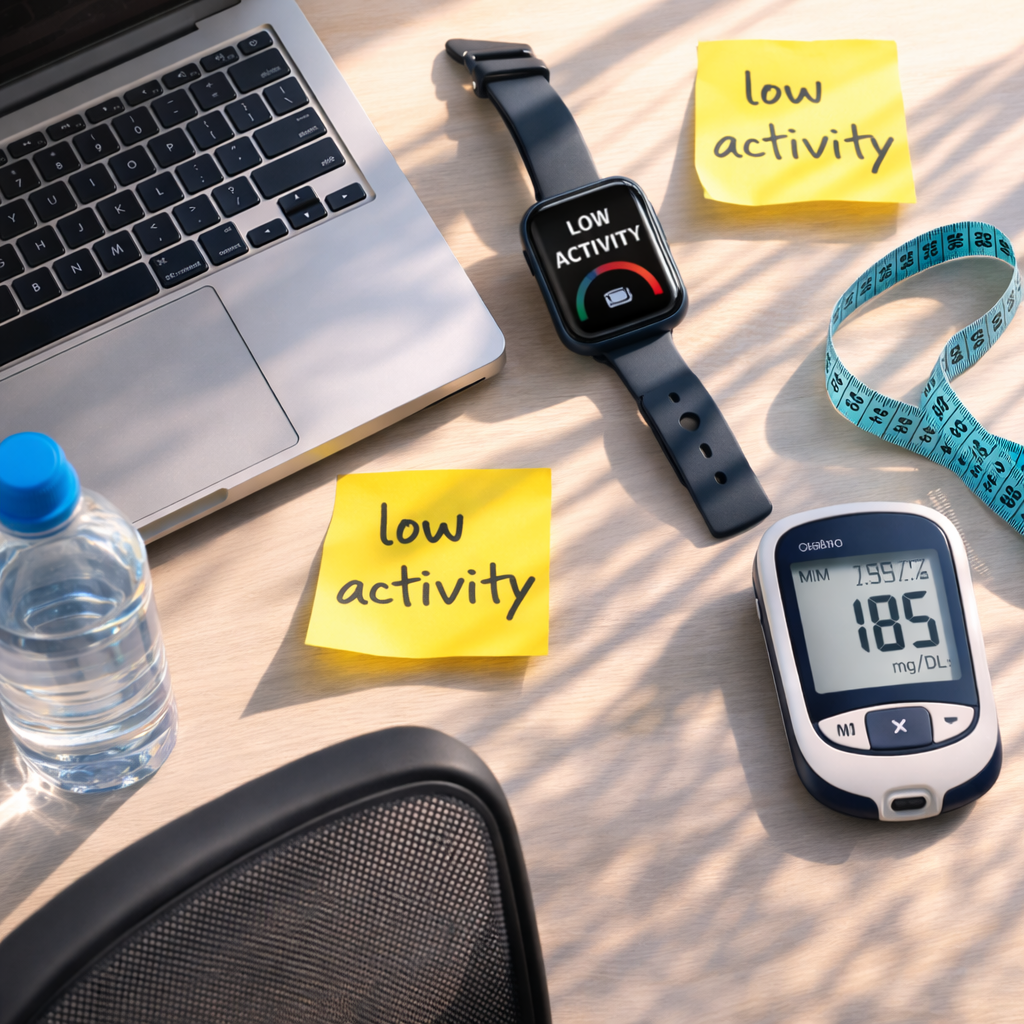
Understanding long sitting hours effects on health is becoming increasingly important in today’s lifestyle. Many people spend most of their day sitting, whether at work, during travel, or while using screens.
Office jobs, work-from-home setups, and digital habits have reduced physical movement significantly. Even individuals who exercise for a short duration may still spend the majority of their day inactive.
This creates a hidden problem. The body is designed for movement, but modern routines promote prolonged sitting.

What Happens Inside Your Body When You Sit for Long Hours
To understand long sitting hours effects on health, it is important to look at what happens inside the body during prolonged inactivity.
When you sit for extended periods:
- Muscle activity decreases significantly
- Calorie burning slows down
- Blood circulation becomes less efficient
- Fat metabolism is reduced
This shift affects how the body uses energy and stores fat. A study highlights that prolonged sedentary behavior is linked to metabolic dysfunction and increased health risks.
These changes may not be noticeable immediately, but over time, they contribute to significant metabolic imbalance.
How Long Sitting Hours Affect Metabolism
The most important aspect of long sitting hours effects on health is its impact on metabolism. Even if you eat the same food, your body processes it differently when you remain inactive for long periods.
Metabolism depends on muscle activity. When you sit continuously, muscle contraction reduces, leading to lower energy expenditure.
Over time, this results in:
- Reduced calorie burning
- Increased fat storage
- Lower metabolic efficiency
A study shows that prolonged sitting reduces metabolic rate and increases the risk of obesity and metabolic disorders.
Why Sitting Long Hours Leads to Weight Gain
Another key outcome of long sitting hours effects on health is gradual weight gain. When the body burns fewer calories but intake remains the same, excess energy gets stored as fat. This process is slow and often unnoticed initially.
Common patterns include:
- Increase in abdominal fat
- Difficulty losing weight despite dieting
- Reduced muscle mass over time
This is why many desk job professionals struggle with weight even when their diet seems controlled.
Impact on Blood Sugar and Insulin Resistance
One of the most concerning long sitting hours effects on health is its effect on blood sugar regulation.
Muscles play a key role in using glucose from the bloodstream. When muscle activity decreases, glucose uptake reduces, leading to higher blood sugar levels. Over time, this can contribute to insulin resistance, which is an early stage of diabetes.
A study highlights that sedentary behavior is strongly associated with impaired glucose metabolism and insulin resistance.
Real-Life Sitting Patterns That Cause Problems
In real life, long sitting hours effects on health are seen in common daily routines:
- Working 8–10 hours at a desk
- Long screen time after work
- Minimal physical activity between tasks
- Skipping breaks during work hours
These patterns create continuous inactivity, which is more harmful than short periods of inactivity.
| Lifestyle Pattern | Effect on Body | Long-Term Impact |
|---|---|---|
| Continuous sitting | Low calorie burn | Weight gain |
| Minimal movement | Reduced glucose use | Insulin resistance |
| Sedentary routine | Poor circulation | Metabolic risk |
Another study confirms that prolonged sedentary time is associated with increased risk of metabolic syndrome and cardiovascular disease. This shows that sitting is not just a posture. It is a metabolic state that affects your entire body.
What You Can Do to Reduce the Impact of Long Sitting Hours
Understanding long sitting hours effects on health is only useful if you take practical steps to reduce the risk.
The goal is not to eliminate sitting completely, but to break prolonged inactivity.
-
- Take short breaks every 30–45 minutes: Even 2–3 minutes of movement helps
- Stand or walk during calls: Reduces continuous sitting time
- Use reminders: Set alarms to move regularly
- Incorporate light activity: Stretching or walking improves circulation
- Focus on daily movement: Not just gym workouts
Key Takeaway
Long sitting hours effects on health are often underestimated because the damage builds slowly and silently. Prolonged sitting reduces calorie burning, impairs blood sugar control, and increases fat storage, even if you exercise for a short time daily. The real risk is continuous inactivity throughout the day, not just lack of workouts. Breaking sitting time with small, frequent movements is one of the simplest and most effective ways to protect your metabolic health.
