


Why Choosing the Right Pathology Lab Matters
Imagine undergoing a routine blood test and discovering that your fasting blood sugar is unexpectedly high. You may immediately become concerned about diabetes. A few days later, another laboratory reports a different result. Which report should you trust?
Or consider a patient whose thyroid-stimulating hormone (TSH) level appears abnormal in one report but falls within the reference interval when the test is repeated elsewhere. Does this indicate a genuine change in thyroid function, a difference between laboratory methods, normal biological variation or a problem with sample handling?
Such situations highlight an important aspect of healthcare that many patients overlook: the quality of a laboratory result depends on more than the machine used to perform the test.
Laboratory investigations play an important role in modern medicine. Blood tests, urine examinations, microbiological investigations and tissue analysis help physicians diagnose diseases, monitor treatment and assess health risks.
However, laboratory results are only useful when the testing process is reliable.
Errors can occur before a sample reaches the analyser, during the analytical process or while results are being recorded and communicated. Problems involving patient identification, sample collection, transport, storage, equipment calibration or reporting may affect the reliability of a result.
For patients, choosing a pathology laboratory can therefore be an important healthcare decision.
In cities such as Delhi, including Dwarka and surrounding areas, patients have access to numerous diagnostic laboratories, collection centres and home sample collection services.
Online searches for a pathology lab near me, blood test near me or diagnostic laboratory in Dwarka may display many options with different prices, health checkup packages, reviews and advertised turnaround times.
However, the laboratory offering the largest discount or the fastest report is not necessarily the most suitable for every investigation.
A laboratory’s accreditation status, qualified personnel, quality assurance systems, sample handling procedures and ability to perform the required test are more meaningful considerations.
Patients should also understand that even a high-quality laboratory result must be interpreted in the context of symptoms, medical history, medications and clinical examination.
This article explains how to choose a pathology lab using nine practical considerations that patients can check before undergoing blood tests or other diagnostic investigations.
The aim is not to encourage unnecessary testing or promote any particular laboratory. It is to help patients make informed decisions about diagnostic services and understand why laboratory quality matters.

What Is a Pathology Lab and What Does It Actually Do?
A pathology laboratory is a healthcare facility that examines biological samples to provide information relevant to disease diagnosis, monitoring and medical decision-making.
Depending on its facilities, personnel and scope of services, a laboratory may perform investigations involving blood, urine, stool, body fluids or tissue specimens.
The term pathology lab is commonly used by patients to describe facilities offering routine blood and urine tests. However, laboratory medicine includes several specialised disciplines.
Clinical Biochemistry
Clinical biochemistry involves measuring substances in blood and other biological samples.
Common examples include glucose, HbA1c, creatinine, electrolytes, liver enzymes, cholesterol and thyroid-related hormones.
These tests may help evaluate diabetes, kidney function, liver-related abnormalities, metabolic disorders and other medical conditions.
Haematology
Haematology laboratories examine blood cells and related parameters.
A complete blood count may provide information about haemoglobin, white blood cells and platelets.
These results can contribute to the evaluation of anaemia, infection-related changes, platelet disorders and other conditions.
Microbiology
Microbiology laboratories investigate infectious organisms.
Depending on the service, testing may include bacterial cultures, antimicrobial susceptibility testing and other investigations used to identify infectious agents.
Correct sample collection, transport and processing are particularly important because contamination or delays may affect results.
Histopathology and Cytopathology
Histopathology involves microscopic examination of tissue samples, while cytopathology evaluates cells obtained through different collection methods.
These investigations may be important in diagnosing inflammatory conditions, tumours and other tissue abnormalities.
Such services require appropriate professional expertise and laboratory infrastructure.
Molecular Diagnostics
Molecular laboratories use methods that detect or analyse genetic material and related molecular targets.
Examples include certain nucleic acid amplification tests used in infectious disease diagnosis and selected genetic investigations.
Not every routine pathology laboratory performs molecular tests on-site.
Some facilities collect samples and send them to specialised reference laboratories.
Important: A sample collection centre is not necessarily the same as a laboratory that performs testing. Patients should know which laboratory will actually analyse their sample, especially for specialised investigations.
How to Choose a Pathology Lab: 9 Essential Quality Checks
When selecting a diagnostic laboratory, patients should consider the reliability of the entire testing process rather than judging the service only by price, convenience or online ratings.
Laboratory quality depends on several interconnected factors, including trained personnel, validated methods, appropriate equipment, sample identification and quality assurance.
The following nine checks provide a practical framework for comparing pathology laboratories.
1. Check NABL Accreditation and Its Scope
One of the first things to consider when learning how to choose a pathology lab in India is whether the laboratory holds relevant accreditation from the National Accreditation Board for Testing and Calibration Laboratories, commonly known as NABL.
NABL is a constituent board of the Quality Council of India and operates accreditation programmes for laboratories and other conformity assessment bodies.
Medical laboratory accreditation is generally assessed against the applicable requirements of ISO 15189, an international standard addressing quality and competence in medical laboratories.
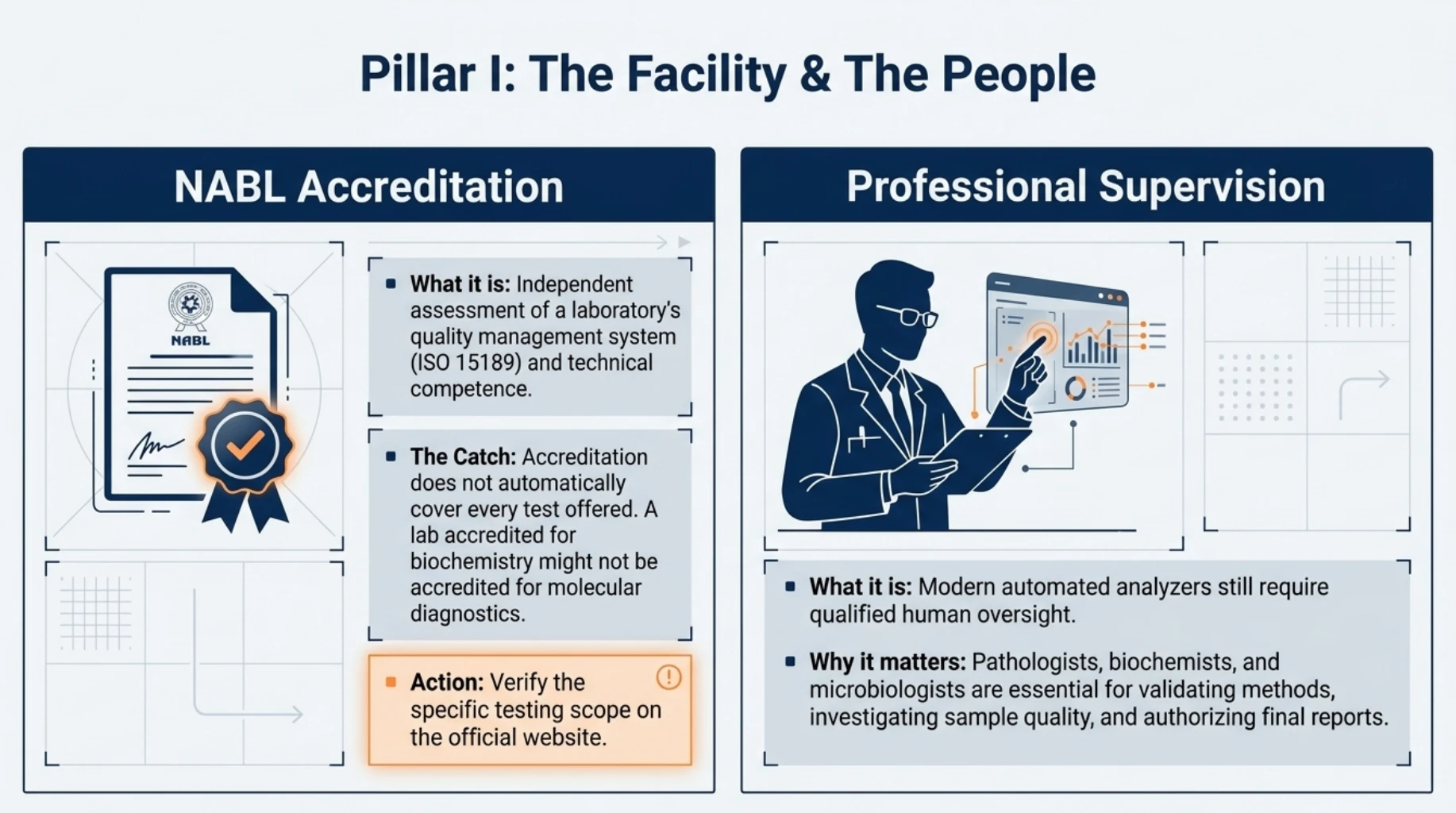
Accreditation provides independent assessment of a laboratory’s quality management system and technical competence within its approved scope.
However, patients should understand what accreditation does and does not establish.
What Does NABL Accreditation Mean?
NABL accreditation indicates that a laboratory has undergone assessment against relevant requirements for the services covered by its accreditation.
Assessment may include laboratory personnel, equipment, testing methods, quality control, sample handling, documentation and other technical or management requirements.
Accreditation is an important quality indicator, but it is not a guarantee that every individual result will be error-free.
Even accredited laboratories must continually monitor their performance and address identified problems.
Does NABL Accreditation Cover Every Test Offered by a Laboratory?
No. This is an important distinction.
A laboratory may be accredited for certain tests or disciplines while offering additional investigations outside its accredited scope.
For example, accreditation for selected clinical biochemistry tests does not automatically establish accreditation for every microbiology, molecular or histopathology investigation offered by the facility.
Patients seeking a specialised test should verify whether the particular investigation, or relevant testing discipline and method, is included within the laboratory’s current accredited scope.
How Can Patients Verify NABL Accreditation?
Patients can consult the official NABL website and its laboratory accreditation resources.
When reviewing a laboratory’s status, check the identity of the accredited facility, the accreditation validity and the applicable scope of accreditation.
A company may operate multiple branches, laboratories and collection centres. Accreditation associated with one testing facility should not automatically be assumed to apply to every branch or every service.
When a sample is collected at one location and tested at another, it is useful to identify the actual testing laboratory.
Is a Laboratory Without NABL Accreditation Automatically Unreliable?
No. Lack of NABL accreditation does not by itself establish that a laboratory produces inaccurate results.
However, relevant accreditation provides additional independent evidence of assessed competence and quality systems.
For important or specialised investigations, choosing a laboratory with appropriate current accreditation may provide greater confidence in the testing process.
Patients should also consider applicable legal requirements, qualified personnel and the laboratory’s quality assurance practices.
Can a Laboratory Advertise Itself as NABL Accredited?
Laboratories may communicate their accreditation status, but patients should avoid relying solely on a logo displayed in advertisements or on a website.
The current accreditation record and scope should be checked through official sources when verification is important.
An outdated certificate or a general accreditation claim may not establish that the requested test is currently covered.
What patients should check: Confirm the actual testing laboratory, its current accreditation status and whether the required test falls within the relevant accredited scope. Use the official NABL website for verification.
2. Check Whether Qualified Professionals Supervise Laboratory Testing
Reliable laboratory testing requires more than sophisticated instruments.
Qualified personnel are essential for selecting and validating methods, maintaining quality systems, identifying analytical problems, reviewing unusual findings and ensuring that results are appropriately authorised.
Different laboratory disciplines require different professional competencies.
For example, histopathology requires appropriate expertise in tissue examination, while clinical biochemistry and microbiology require personnel competent in their respective laboratory processes.
Why Does Professional Supervision Matter?
Modern analysers can process large numbers of samples efficiently, but automated instruments do not eliminate the need for professional oversight.
Unexpected results may require technical review, repeat analysis, investigation of sample quality or communication with the treating physician.
Quality assurance also involves decisions about calibration, method performance, control failures and corrective action.
These responsibilities require appropriately trained and authorised personnel.
Who Should Authorise a Laboratory Report?
Reports should be reviewed and authorised according to the laboratory’s documented procedures and applicable professional requirements.
The qualifications and authorisation responsibilities of personnel may vary by laboratory discipline and relevant regulations.
Patients should not assume that a digitally generated report has necessarily undergone appropriate review merely because it contains an electronic signature.
At the same time, electronically authorised reports can be legitimate when the laboratory has appropriate systems for authentication and authorisation.
Does Every Test Need a Pathologist to Perform It Personally?
No. Laboratory testing is a team-based process involving qualified technical and professional personnel.
Many analytical procedures are performed by trained laboratory staff using validated methods and automated instruments.
Professional supervision, technical competence and appropriate report authorisation are the key considerations.
The exact staffing requirements depend on the testing discipline, scope of services and applicable regulations.
What About Small Local Laboratories?
A smaller laboratory is not automatically inferior to a large diagnostic chain.
Quality depends on appropriate staffing, validated methods, equipment maintenance, quality assurance and safe sample handling.
However, patients should be cautious when a facility offers complex investigations without clear information about where testing occurs or who is responsible for technical oversight.
What Should Patients Ask?
For routine investigations, it may be sufficient to confirm that the laboratory is appropriately established and follows recognised quality procedures.
For specialised tests, patients can ask whether the investigation is performed on-site or referred to another laboratory and whether the testing facility has the relevant expertise.
What patients should check: Look for appropriately qualified laboratory personnel, clear report authorisation and transparent information about where specialised tests are performed.
3. Understand Laboratory Quality Control and Accuracy
One of the most important factors in choosing a pathology lab is the reliability of its testing process.
Patients often assume that laboratory accuracy depends mainly on whether the facility uses expensive or modern equipment.
However, an advanced analyser can still produce unreliable results if it is poorly maintained, improperly calibrated or operated without appropriate quality control.
Reliable testing requires a systematic approach that monitors performance before, during and after sample analysis.
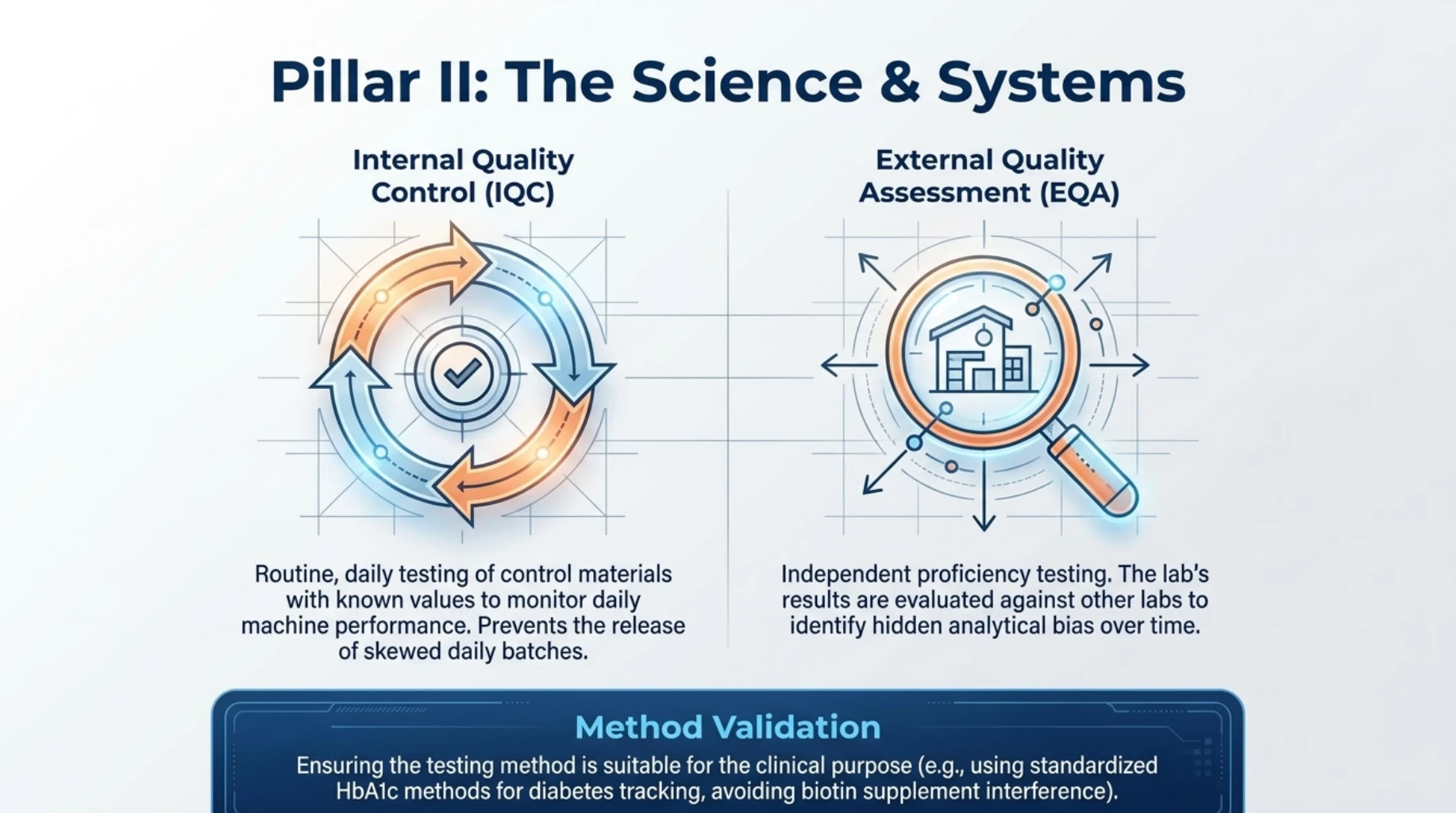
What Is Internal Quality Control?
Internal quality control involves testing appropriate control materials to monitor whether an analytical method is performing within defined limits.
For example, a laboratory measuring blood glucose may analyse control materials with known expected ranges to assess the performance of the testing system.
If control results fall outside acceptable limits, the laboratory should investigate the problem and take appropriate corrective action before releasing affected patient results.
Internal quality control is a routine part of laboratory quality management.
What Is External Quality Assessment?
External quality assessment involves evaluating laboratory performance through an external programme.
Participating laboratories may receive samples or other assessment materials and submit results for comparison or evaluation.
These programmes can help identify analytical bias, performance problems and opportunities for improvement.
Proficiency testing is one form of external assessment.
Participation in appropriate external quality assessment programmes is an important quality indicator, particularly for tests where suitable programmes are available.
What Is the Difference Between Accuracy and Precision?
Accuracy describes how close a measurement is to an accepted reference value, while precision describes how closely repeated measurements agree with one another under specified conditions.
A testing method can be precise without being sufficiently accurate if it consistently produces results that are biased away from the reference value.
Reliable laboratory methods aim to achieve acceptable analytical performance for their intended clinical use.
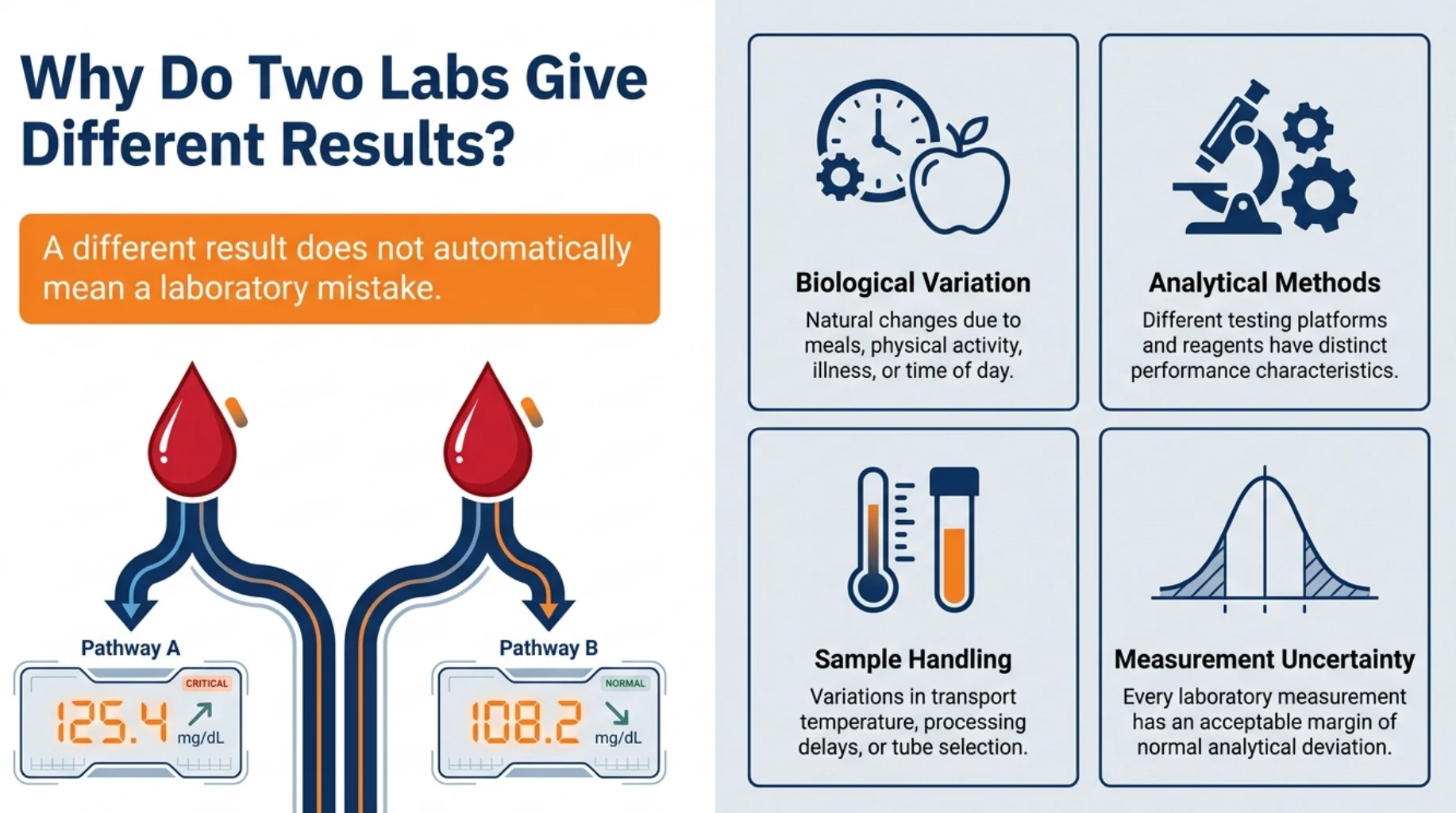
Why Can Two Laboratories Report Different Results?
Different laboratory results do not always indicate that one laboratory has made a mistake.
Variation may occur because of differences in analytical methods, calibration, reference intervals, biological changes and pre-analytical factors.
For example, blood glucose can change according to meals, medications, illness and the timing of sample collection.
Some hormone measurements may vary according to the time of day or the testing method.
Sample handling and storage conditions may also influence certain results.
When results differ significantly or do not match the patient’s clinical condition, the treating physician may recommend repeat testing or further evaluation.
Can a Laboratory Result Be Wrong Even When the Machine Is Working?
Yes. Errors may occur at several stages of the laboratory testing process.
A correctly functioning analyser cannot compensate for a sample collected from the wrong patient, incorrectly labelled, contaminated or transported under unsuitable conditions.
Similarly, a technically accurate result may still be misleading if reported with incorrect patient details or inappropriate units.
What Are Pre-Analytical, Analytical and Post-Analytical Errors?
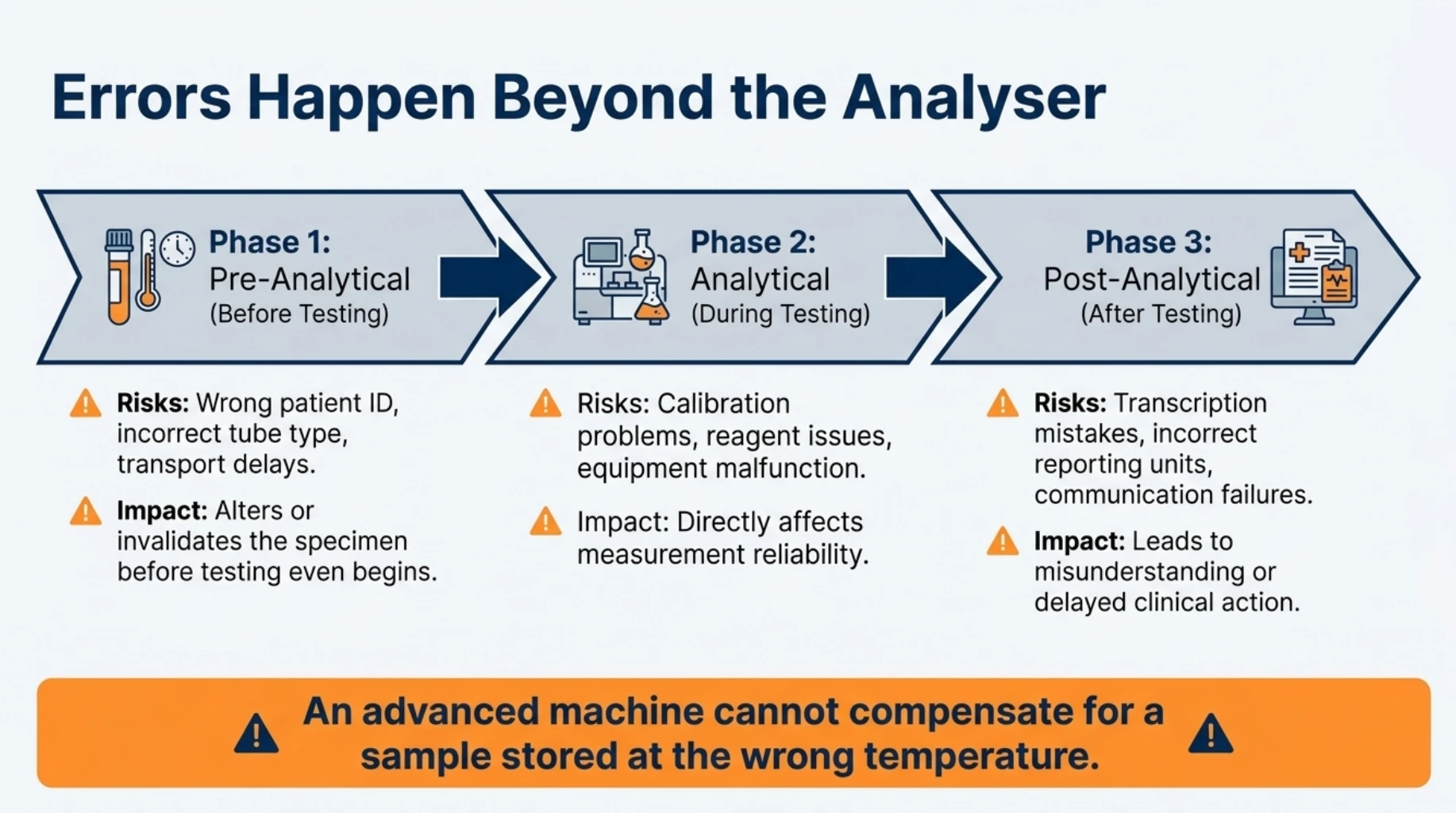
Laboratory testing is commonly described in three phases.
The pre-analytical phase includes test ordering, patient preparation, sample collection, identification, transport and processing.
The analytical phase includes measurement of the sample using the selected testing method.
The post-analytical phase includes result review, reporting, communication and interpretation-related processes.
Quality assurance must address all three phases.
| Testing Phase | Examples of Potential Problems | Why It Matters |
|---|---|---|
| Pre-analytical | Wrong patient identification, incorrect tube, inadequate sample, delayed transport | May alter or invalidate the specimen before testing begins |
| Analytical | Calibration problems, reagent issues, equipment malfunction, quality-control failure | May affect measurement reliability |
| Post-analytical | Transcription mistakes, incorrect units, reporting delays, communication failures | May lead to misunderstanding or delayed clinical action |
How Can Patients Assess Laboratory Quality Control?
Patients usually cannot directly inspect internal quality-control records or independently evaluate complex analytical systems.
However, they can look for meaningful indicators such as relevant accreditation, participation in external quality assessment programmes and transparent laboratory quality policies.
For specialised or high-impact investigations, the treating physician may also recommend a laboratory with established expertise in that particular test.
What patients should check: Prefer laboratories with documented quality assurance systems, appropriate internal quality control, external quality assessment where applicable and clear procedures for investigating unexpected results.
Why the Cheapest Pathology Lab Is Not Always the Best Choice
Diagnostic testing costs can vary substantially between laboratories.
Discounted health checkup packages, promotional offers and online booking platforms may make some services appear particularly attractive.
However, a lower price does not automatically mean poor quality, just as a higher price does not guarantee greater accuracy.
Laboratory pricing can reflect operating costs, test volumes, equipment, reagents, sample transport arrangements and business models.
The more important question is whether the laboratory can provide the required investigation reliably and within an appropriate timeframe.
For a routine test, a reasonably priced laboratory with relevant quality systems may be a suitable choice.
For a specialised investigation, the competence of the actual testing laboratory may be more important than a promotional discount.
Are Large Diagnostic Chains Always More Accurate?
Not necessarily.
Large laboratory networks may have advantages in automation, standardisation, logistics and access to specialised testing facilities.
However, quality should be assessed at the level of the actual testing laboratory and its relevant services.
A smaller laboratory with appropriate personnel, validated methods and robust quality assurance may also provide reliable testing.
Should Patients Choose a Lab Based on Google Reviews?
Online reviews can provide information about appointment booking, sample collection, staff behaviour and report delivery.
However, most patients cannot independently determine the analytical accuracy of their test results.
A high star rating should therefore not be treated as proof of laboratory competence.
Reviews are best considered alongside accreditation, laboratory expertise and other quality indicators.
Pathology Lab vs Collection Centre: An Important Difference
Many patients book tests through a nearby collection centre without knowing where the sample will actually be analysed.
A collection centre may receive patient samples and transport them to a central or reference laboratory.
This arrangement can be appropriate when the collection, transport and testing processes are properly managed.
However, it introduces additional considerations involving sample identification, transport time, temperature control and communication between facilities.
| Feature | Testing Laboratory | Sample Collection Centre |
|---|---|---|
| Primary function | Performs laboratory analysis | Collects and forwards specimens |
| Testing equipment | Has instruments and facilities appropriate to its test menu | May not have analytical equipment for the requested tests |
| Quality responsibilities | Analytical testing, quality control and report authorisation | Patient identification, collection, specimen handling and transport |
| Accreditation considerations | Check current accreditation and relevant scope | Clarify its relationship to the accredited testing facility and applicable scope |
| Important patient question | Is this test performed here? | Which laboratory will perform my test? |
Patients should not assume that a collection centre and its associated central laboratory are the same accredited entity or that every service is covered by the same accreditation scope.
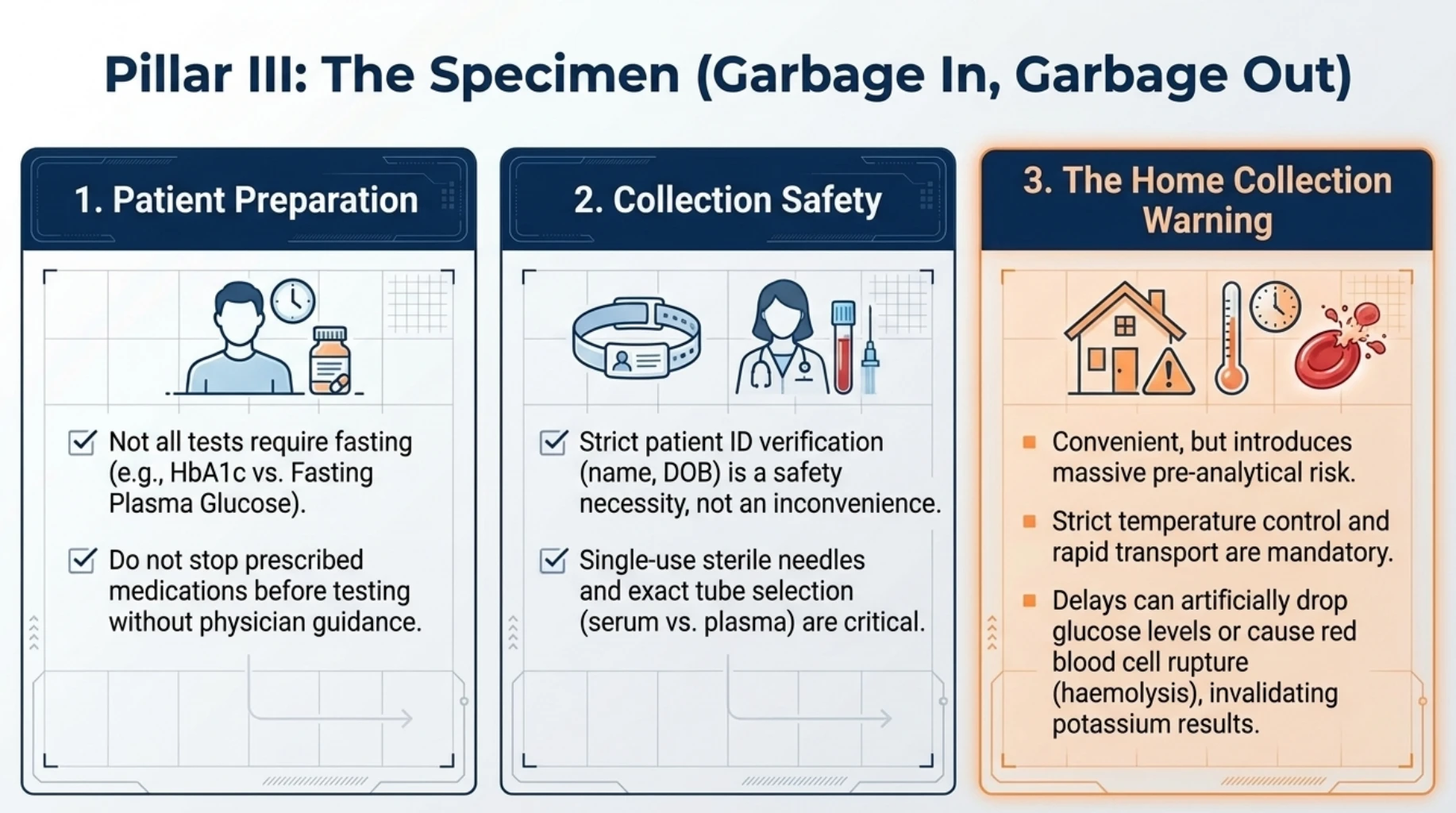
4. Check Sample Collection Procedures and Home Blood Testing Safety
When learning how to choose a pathology lab, many patients focus on accreditation, equipment and report prices. However, one of the most important aspects of laboratory accuracy begins before the sample reaches the testing machine.
Blood, urine and other biological samples must be collected, labelled, transported and processed correctly. Errors at any of these stages can affect the reliability of laboratory results.
A technically advanced laboratory cannot always compensate for a specimen that has been collected incorrectly or stored under unsuitable conditions.
This is why sample collection procedures should be an important consideration when choosing a diagnostic laboratory.
Why Correct Patient Identification Matters
Before collecting a sample, laboratory staff should confirm the patient’s identity using appropriate identifiers.
Depending on the laboratory’s procedures, this may involve confirming the patient’s full name, date of birth, registration number or another approved identifier.
The sample should then be labelled correctly and linked to the appropriate test request.
Incorrect patient identification can result in a report being assigned to the wrong person, potentially leading to inappropriate medical decisions.
Patients should therefore cooperate when collection staff ask them to confirm identifying details.
Repeated identity checks are a patient safety measure rather than an unnecessary formality.
Does the Person Collecting Blood Need Proper Training?
Yes. Blood collection, also called phlebotomy, should be performed by personnel who have received appropriate training and are competent in the procedure.
Correct technique helps reduce discomfort, contamination, haemolysis and other specimen-related problems.
For example, excessive mechanical stress during blood collection or inappropriate handling can cause red blood cells to rupture, a process known as haemolysis.
Haemolysis can interfere with the measurement of certain laboratory parameters, including potassium and some enzymes.
Depending on the degree of interference and the test involved, the laboratory may need to reject the sample or request recollection.
Are Disposable Needles and Proper Hygiene Important?
Yes. Safe blood collection requires appropriate hand hygiene, skin preparation, sterile single-use collection devices and safe disposal of used sharps.
Needles must not be reused between patients.
Collection staff should follow relevant infection prevention and occupational safety procedures.
Patients should be cautious if they observe unsafe handling of needles, poor hygiene or improper disposal of used collection materials.
Why Does the Type of Collection Tube Matter?
Different laboratory tests may require different sample types and collection tubes.
For example, some tests require serum, while others require plasma or whole blood collected with a particular anticoagulant.
HbA1c is commonly measured using appropriately collected anticoagulated whole blood, whereas many routine biochemistry investigations use serum or plasma.
Using an unsuitable collection tube can invalidate a test or interfere with the result.
The correct tube and specimen requirements should be determined by the testing laboratory’s validated procedures.
Can Sample Transport Affect Blood Test Results?
Yes. Some laboratory measurements are sensitive to the time between collection and analysis, transport temperature, exposure to light or delays in separating blood cells from serum or plasma.
For example, glucose concentration can decrease in an unprocessed blood sample because blood cells continue to consume glucose after collection.
The extent of this change depends on the sample type, collection additives, temperature and processing delay.
Appropriate sample handling helps minimise such changes.
Other investigations may require refrigeration, protection from light or specific transport media.
Transport conditions should therefore follow the requirements of the particular test rather than one universal rule for every specimen.
Is Home Blood Sample Collection Reliable?
Home sample collection can be convenient, particularly for older adults, people with mobility limitations and patients requiring repeated investigations.
However, home collection should follow the same essential principles of patient identification, safe collection, specimen labelling and appropriate transport.
The reliability of home collection depends on the competence of the collection personnel, the laboratory’s transport arrangements and the stability requirements of the requested tests.
Patients should ask whether the collection service is operated by the laboratory itself or by an external provider.
When Might Home Collection Be Unsuitable?
Some investigations require tightly controlled timing, immediate processing, specialised collection procedures or clinical supervision.
In such situations, collection at a properly equipped facility may be preferable or necessary.
The laboratory should inform patients when a particular test cannot be collected safely or reliably at home.
What Should You Check Before Booking Home Blood Collection?
Confirm which laboratory will perform the analysis, whether the collector is appropriately trained, what preparation is required and how the sample will be transported.
Patients should also clarify the collection charge and expected reporting time.
What patients should check: Choose a laboratory or collection service that follows proper patient identification, safe phlebotomy, correct specimen labelling and test-specific transport procedures. Home collection should meet the same quality expectations as collection at a laboratory.
How Patient Preparation Can Affect Laboratory Test Accuracy
Even when a laboratory follows appropriate quality procedures, certain tests can be influenced by patient preparation.
Food intake, exercise, medication use, specimen timing and other factors may affect some laboratory measurements.
Patients should follow the preparation instructions provided for their specific investigations.
Do All Blood Tests Require Fasting?
No. Many routine blood tests do not require fasting.
For example, HbA1c generally does not require fasting because it reflects average glucose exposure over approximately the preceding two to three months, with greater weighting toward recent weeks.
Some lipid profiles can also be performed without fasting, depending on the clinical question and the laboratory’s protocol.
However, fasting may be required for certain investigations, including fasting plasma glucose and selected metabolic tests.
Patients should not assume that every blood test requires an overnight fast.
Can Drinking Water Affect a Fasting Blood Test?
Plain water is generally permitted during fasting for many routine blood investigations and can help avoid dehydration.
However, preparation instructions vary by test.
Patients should follow the laboratory’s specific guidance rather than assuming that the same fasting rules apply to all investigations.
Should You Stop Medicines Before a Blood Test?
Patients should not independently stop prescribed medicines simply because they are undergoing laboratory testing.
Some medicines can influence laboratory measurements, but withholding treatment may be unsafe.
Any medication adjustment before testing should be made according to the treating clinician’s instructions.
Can Exercise Affect Blood Test Results?
Strenuous exercise can temporarily affect certain laboratory parameters, including muscle-related enzymes and some metabolic measurements.
For selected investigations, the physician or laboratory may recommend avoiding unusually intense exercise before sample collection.
Does the Time of Day Matter?
Some biological measurements follow daily rhythms.
Cortisol, for example, varies substantially according to the time of day and the patient’s sleep-wake pattern.
Other hormones and biochemical measurements may also be affected by collection timing.
When timing is clinically important, the laboratory should provide clear collection instructions.
| Test or Situation | Preparation Consideration | Why It Matters |
|---|---|---|
| Fasting plasma glucose | Follow the prescribed fasting duration | Recent food intake can influence glucose levels |
| HbA1c | Fasting is generally not required | Reflects longer-term glycaemic exposure rather than only the current glucose level |
| Lipid profile | Fasting requirements depend on the clinical indication | Post-meal changes can affect triglycerides and some calculated values |
| Selected hormone tests | Collection timing may be important | Hormone concentrations may vary during the day |
| Urine culture | Follow the instructed collection method | Contamination can affect interpretation |
| Tests affected by exercise | Ask whether strenuous exercise should be avoided | Recent exertion may temporarily change some measurements |
Correct preparation helps make laboratory results more clinically meaningful and reduces the likelihood of avoidable repeat testing.
5. Check Laboratory Testing Methods and Equipment
Another important consideration when choosing a pathology lab is whether the laboratory uses appropriate, validated testing methods.
Patients often see advertisements mentioning fully automated analysers, advanced technology or imported diagnostic machines.
Modern equipment can improve laboratory efficiency and consistency, but equipment alone does not establish analytical quality.
The suitability of the testing method, calibration procedures, maintenance, quality control and staff competence are equally important.
Does a Fully Automated Laboratory Always Produce More Accurate Results?
Not necessarily.
Automation can reduce certain manual handling steps and allow laboratories to process large numbers of samples efficiently.
However, automated systems still require correct calibration, appropriate reagents, quality control and maintenance.
An automated instrument operating outside acceptable performance limits may produce unreliable results.
Similarly, a properly validated method involving manual procedures may be appropriate for certain investigations.
What Is Test Method Validation?
Validation is the process of establishing that a testing method is suitable for its intended use and meets defined performance requirements.
When a laboratory introduces a method already validated by its manufacturer, it may need to verify that the method performs acceptably under its own operating conditions.
The exact validation or verification requirements depend on the method, intended use and applicable laboratory standards.
Why Do Different Laboratories Use Different Methods?
Laboratories may use different analytical platforms, reagents or measurement principles.
For example, some hormone tests are performed using immunoassay methods, while certain specialised measurements may require more specific analytical techniques.
Different methods may have different analytical limitations and interference patterns.
Consequently, results obtained from different platforms are not always directly interchangeable.
What Is Laboratory Calibration?
Calibration establishes the relationship between an instrument’s response and known reference values or standards.
Appropriate calibration helps maintain measurement reliability.
However, calibration does not replace routine quality control or other quality assurance procedures.
Why Are Reference Methods Important?
For some investigations, standardisation and traceability to recognised reference systems help improve comparability between laboratories.
HbA1c testing is an important example because standardised methods support more consistent interpretation for diabetes diagnosis and monitoring.
When a test is being used for a major clinical decision, the physician may consider whether the method is appropriate and whether any known analytical interference could affect interpretation.
Can Biotin Supplements Affect Blood Tests?
Yes. High-dose biotin supplements can interfere with certain laboratory immunoassays, depending on the testing method.
This may produce misleading results for some hormone and other measurements.
Patients should inform their physician and laboratory about biotin-containing supplements, particularly when taking high doses.
Whether supplementation needs to be withheld and for how long depends on the assay, dose and clinical circumstances.
Patients should not stop prescribed treatment without appropriate medical advice.
Are Point-of-Care Tests the Same as Central Laboratory Tests?
Point-of-care testing involves performing investigations near the patient rather than in a central laboratory.
Examples include some bedside glucose measurements and rapid diagnostic tests.
These methods can be useful for timely clinical decisions but have specific performance characteristics and limitations.
For example, a home glucose meter is valuable for diabetes monitoring but is not generally used to establish a formal diagnosis of diabetes.
Diagnostic decisions should follow the appropriate testing criteria and clinical guidelines.
What patients should check: Look for laboratories using appropriate validated or verified methods, maintained equipment, suitable quality-control procedures and testing platforms appropriate to the clinical purpose.
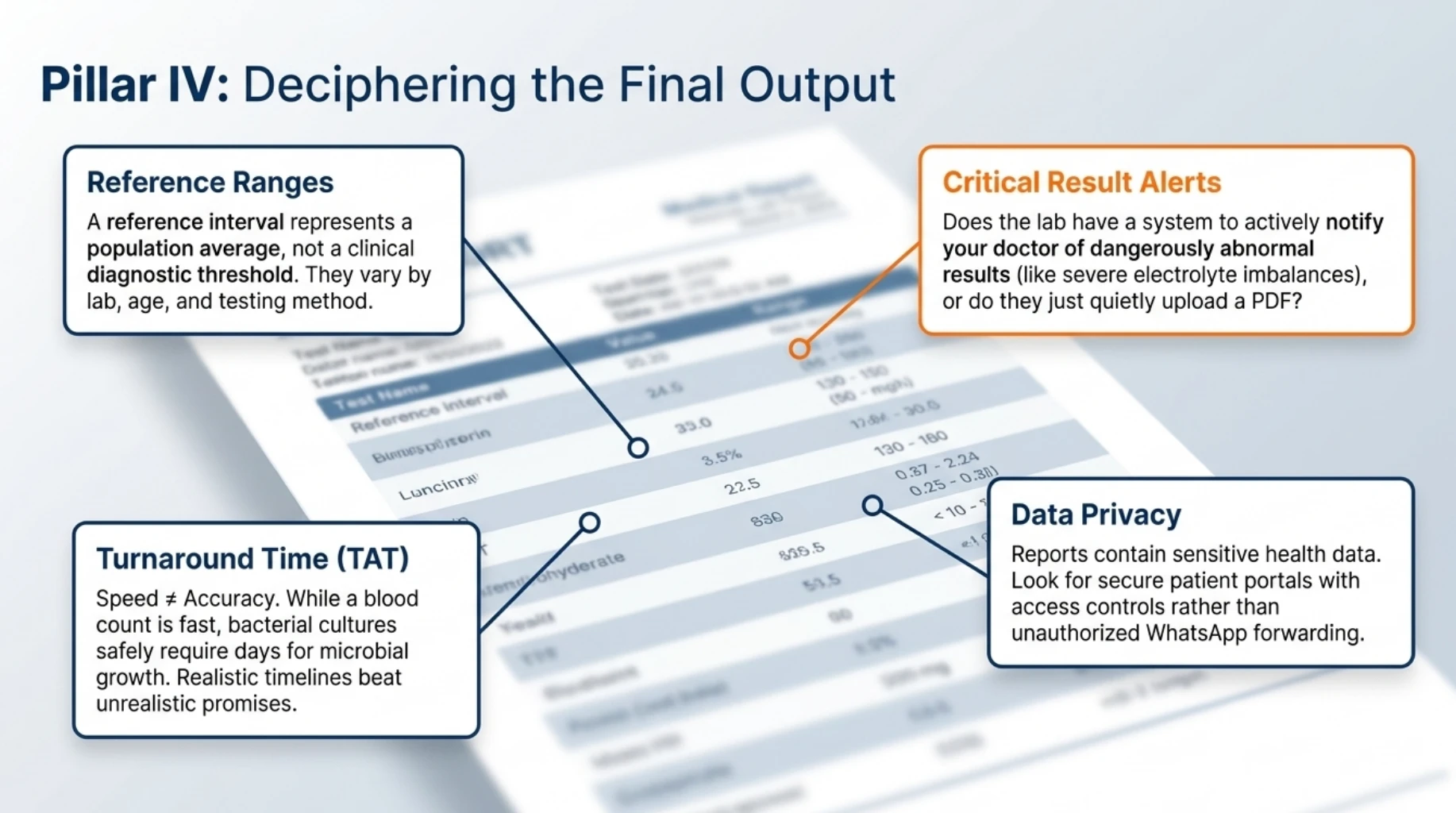
6. Evaluate Report Reliability, Reference Ranges and Critical Result Communication
A laboratory report is more than a collection of numbers.
It is a clinical document that communicates measurements, units, reference intervals and other information relevant to medical decision-making.
A reliable report should identify the patient correctly, specify the investigations performed and present results clearly.
Where applicable, it should also include appropriate reference intervals, interpretive comments and information about the testing laboratory.
What Information Should a Laboratory Report Contain?
The exact reporting requirements depend on the test and applicable laboratory standards.
However, reports commonly include patient identification details, sample information, test names, results, units, reference intervals and laboratory identification.
Reports should also be appropriately authorised according to the laboratory’s procedures.
Why Are Reference Ranges Important?
A reference interval represents the range of values observed in a defined reference population under specified conditions.
It is not always the same as a clinical decision threshold.
For example, diagnostic thresholds for diabetes are based on established clinical criteria rather than simply whether a result falls inside or outside a laboratory’s displayed reference interval.
Similarly, cholesterol treatment decisions depend on overall cardiovascular risk and applicable clinical recommendations, not merely whether LDL cholesterol is marked as high.
Can Reference Ranges Differ Between Laboratories?
Yes. Reference intervals may vary according to the analytical method, population, age, sex and other relevant factors.
Some measurements also have established clinical decision limits that may be more important than a general reference interval.
Patients should avoid comparing laboratory values without considering the method, units and clinical context.
What Is a Critical Laboratory Result?
A critical result is a laboratory finding that may indicate an immediate or serious risk to the patient and requires timely communication according to the laboratory’s established procedures.
Examples may include certain severe electrolyte abnormalities or dangerously abnormal glucose results.
The exact critical thresholds depend on the investigation, laboratory policy and clinical setting.
Laboratories should have systems for promptly communicating relevant critical findings to an appropriate healthcare professional or other authorised recipient.
Why Is Critical Result Communication Important?
A result may be analytically correct but still fail to contribute to patient safety if a dangerous abnormality is not communicated promptly.
For example, a severely abnormal potassium result may require urgent clinical assessment.
Simply uploading the report to an online portal without an appropriate communication process may be insufficient for certain critical findings.
Should Patients Interpret Abnormal Reports Themselves?
Patients can review their reports, but abnormal values should be interpreted in the context of medical history, symptoms, examination findings and other investigations.
A result slightly outside the reference interval does not automatically indicate disease.
Conversely, a result within the reference interval does not always exclude a clinically important condition.
The significance of an abnormality depends on the particular test and the patient’s circumstances.
What If a Report Does Not Match Your Symptoms?
Unexpected laboratory results should be discussed with the treating physician.
The physician may consider biological variation, medications, specimen handling, analytical interference or the possibility of a genuine medical problem.
Depending on the circumstances, repeat testing or further investigations may be appropriate.
Patients should not assume that every unexpected result is a laboratory error.
Why Is Consistency Useful for Long-Term Monitoring?
For certain tests, using the same laboratory or a comparable analytical method over time may help reduce differences caused by testing platforms.
This can be useful when monitoring trends in thyroid hormones, selected tumour markers or other method-sensitive measurements.
However, continuing with the same laboratory is not more important than ensuring that the testing service is reliable and clinically appropriate.
| Report Feature | Why It Matters |
|---|---|
| Correct patient details | Reduces the risk of assigning results to the wrong person |
| Clear test names | Helps identify exactly what was measured |
| Appropriate units | Supports accurate clinical interpretation |
| Relevant reference intervals or decision limits | Provides context for interpreting results |
| Testing laboratory identification | Clarifies responsibility for the analysis |
| Appropriate report authorisation | Supports accountability and reporting quality |
| Critical result communication | Helps ensure timely clinical action for dangerous abnormalities |
What patients should check: Choose laboratories that provide clearly identified, appropriately authorised reports with relevant units, reference information and procedures for communicating critical results.
Why Two Pathology Labs May Give Different Results for the Same Test
Patients sometimes become concerned when two laboratories report different values for the same investigation.
However, differences between results do not automatically mean that one laboratory is unreliable.
Several factors may contribute to variation.
Biological Variation
Many laboratory measurements change naturally over time.
Glucose levels, hormone concentrations and some blood parameters may vary according to meals, physical activity, illness and other physiological factors.
Differences in Analytical Methods
Different testing platforms may produce slightly different results because of method-specific characteristics.
For some investigations, these differences may be clinically important.
Sample Collection and Processing
Differences in collection technique, sample type, processing delay or storage conditions may influence certain measurements.
Medication and Supplement Interference
Some medicines and supplements may affect either the patient’s actual biological measurements or the laboratory method used to measure them.
Normal Measurement Uncertainty
Every laboratory measurement has some degree of uncertainty.
Quality systems aim to keep this uncertainty within acceptable limits for the intended clinical use.
Small differences should therefore not always be interpreted as meaningful changes in health.
When results are unexpectedly different, the treating physician should determine whether the difference is clinically significant and whether further assessment is required.
7. Check Transparent Pricing and Avoid Unnecessary Test Packages
Cost is an important consideration when choosing a pathology lab, particularly for patients requiring repeated investigations.
However, the cheapest test package is not necessarily the most appropriate, and the most expensive package is not necessarily the most comprehensive from a clinical perspective.
Patients should focus on whether the requested investigations are medically relevant and whether the laboratory clearly communicates the total cost.
Why Are Pathology Test Prices Different Between Laboratories?
Pricing can vary because of laboratory operating costs, test volumes, reagents, equipment, staffing, logistics and commercial arrangements.
Some laboratories process samples centrally, while others perform investigations at individual facilities.
These operational differences may influence prices.
However, price alone does not establish the accuracy or clinical value of a test.
What Should Be Included in the Quoted Price?
Patients should confirm whether the quoted amount includes sample collection, laboratory analysis, reporting and applicable taxes or additional service charges.
Home sample collection may involve a separate fee.
Specialised investigations may also have different reporting times or additional handling requirements.
Are Full Body Checkup Packages Always Useful?
Not necessarily.
Health checkup packages often combine numerous investigations at a discounted price.
However, testing should be guided by the patient’s age, symptoms, medical history, risk factors and evidence-based screening recommendations.
Ordering large panels without a clinical indication can produce incidental abnormalities that lead to anxiety, repeat investigations or unnecessary consultations.
A package containing more tests is not automatically better.
Should Healthy Adults Undergo Every Available Screening Test?
No. Screening is beneficial when there is evidence that identifying a condition early improves health outcomes and when the benefits outweigh potential harms.
Some tests are appropriate for particular age groups or risk profiles, while others are not recommended for routine screening in asymptomatic individuals.
The treating physician can help determine which investigations are appropriate.
What About Vitamin and Hormone Panels?
Vitamin and hormone investigations may be useful when symptoms, medical history or clinical findings suggest a relevant disorder.
However, routine measurement of numerous vitamins or hormones without a clear indication may not improve healthcare outcomes.
Testing should answer a meaningful clinical question.
Are Tumour Marker Tests Suitable for General Cancer Screening?
Most tumour markers are not appropriate as broad screening tests for cancer in otherwise asymptomatic individuals.
They may have specific roles in selected diagnostic or monitoring situations.
Using multiple tumour markers as part of a routine health package can lead to false-positive results, unnecessary investigations and false reassurance.
Age-appropriate and risk-based cancer screening should follow established clinical recommendations.
Should You Choose a Lab Offering the Largest Discount?
Discounts can make necessary testing more affordable, but they should not be the main factor in laboratory selection.
Relevant accreditation, appropriate testing methods, sample handling, report quality and clinical suitability remain important.
| Pricing Question | What Patients Should Clarify |
|---|---|
| Is the quoted amount final? | Confirm any additional collection, transport or service charges |
| Is home collection included? | Ask whether there is a separate home visit fee |
| Are all tests necessary? | Discuss the clinical indication with the treating physician |
| Where will the test be performed? | Identify the actual testing laboratory |
| When will results be available? | Confirm the expected reporting time for each investigation |
| What happens if recollection is required? | Ask about the laboratory’s policy for rejected or unsuitable samples |
What patients should check: Prefer transparent pricing, clarify additional charges and avoid choosing large test packages solely because they are discounted. Medical necessity should guide the selection of investigations.
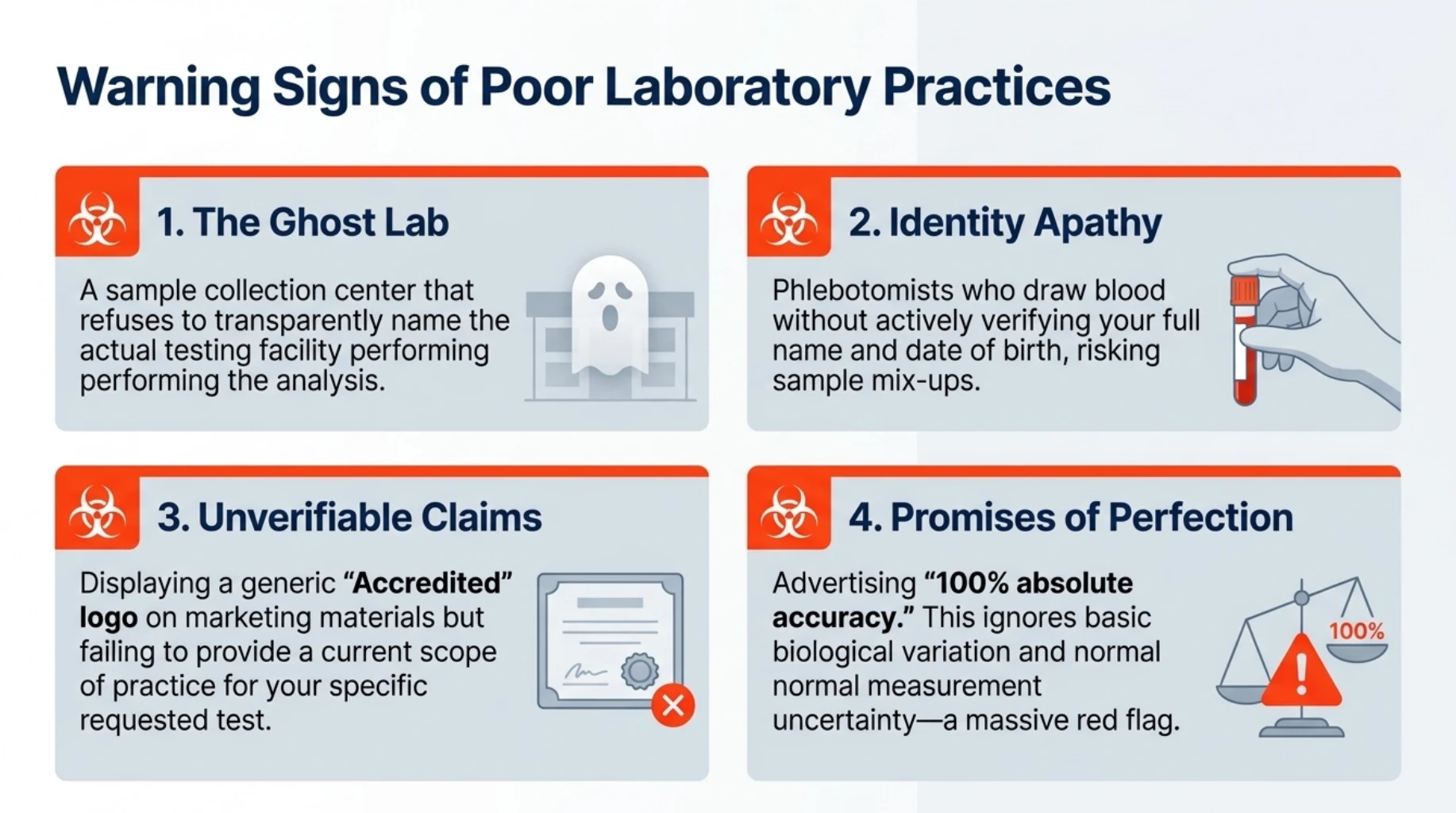
Warning Signs of Poor Laboratory Practices
Patients cannot independently assess every technical aspect of laboratory performance. However, certain visible practices may raise concerns about the quality or safety of a diagnostic service.
Unclear Laboratory Identity
A collection centre that cannot clearly identify the laboratory performing the requested investigation may warrant further questions.
Failure to Verify Patient Identity
Sample collection without appropriate patient identification increases the risk of specimen misidentification.
Unsafe Blood Collection Practices
Reuse of needles, improper sharps handling or visibly poor infection prevention practices are serious concerns.
Unclear Sample Transport Arrangements
For tests requiring controlled transport conditions, the collection service should have appropriate procedures.
Unverifiable Accreditation Claims
Patients should be cautious when a facility prominently advertises accreditation but cannot provide information about the accredited testing laboratory or its scope.
Reports With Missing or Confusing Information
Reports lacking clear patient identification, test names, units or laboratory details may require clarification.
Unrealistic Claims of Perfect Accuracy
No laboratory can guarantee that every result will be completely free from biological variation, measurement uncertainty or the possibility of error.
Claims of absolute accuracy should therefore be viewed cautiously.
Promotion of Unnecessary Testing
Patients should be cautious about claims that every healthy adult needs extensive monthly laboratory panels or large numbers of tumour markers.
Appropriate investigations should be selected according to clinical need.
8. Check Report Turnaround Time and Urgent Result Communication
When deciding how to choose a pathology lab, patients often compare how quickly different laboratories promise to deliver their reports. Some diagnostic services advertise same-day results, rapid blood testing or online reports within a few hours.
Timely reporting is important, particularly when laboratory findings are needed for a medical decision. However, the fastest laboratory is not necessarily the most reliable.
The appropriate turnaround time depends on the type of investigation, specimen processing requirements, analytical method, quality-control procedures and whether the test is performed locally or referred to another facility.
For example, a routine complete blood count may be available relatively quickly, while a bacterial culture requires sufficient time for microbial growth, identification and any necessary antimicrobial susceptibility testing.
Similarly, some specialised hormone, immunological or molecular investigations may be performed in scheduled batches or at reference laboratories.
Patients should therefore distinguish between a reasonable reporting time and an unrealistic promise of immediate results for every investigation.
What Is Laboratory Turnaround Time?
Laboratory turnaround time refers to the interval between defined stages of the testing process.
Different laboratories may measure it differently. Some calculate turnaround time from sample registration to report release, while others measure it from sample receipt at the testing laboratory.
For patients, the most useful information is the expected time between sample collection and availability of the authorised report.
This distinction becomes particularly important when samples are collected at home or transported from a collection centre to a central laboratory.
Why Do Some Tests Take Longer Than Others?
Laboratory investigations vary substantially in their technical requirements.
Routine automated tests may be processed relatively quickly when equipment and staff are available.
Microbiological cultures require biological growth and additional identification procedures. Histopathology may require tissue fixation, processing, section preparation, staining and microscopic examination.
Some specialised investigations require additional quality checks or confirmation before results can be released.
These processes cannot always be shortened safely without affecting the quality of the investigation.
Should You Choose a Laboratory Promising the Fastest Report?
Speed should be considered alongside reliability.
A laboratory that consistently provides reports within a realistic timeframe can be more useful than one that promises unusually rapid results but frequently delays reporting or issues incomplete information.
Patients should ask for the expected turnaround time for the specific test rather than assuming that every investigation will be reported on the same day.
What Happens If a Sample Is Rejected?
A laboratory may reject a sample when it does not meet the requirements for reliable testing.
Reasons may include insufficient sample volume, incorrect collection tube, unsuitable transport conditions, identification problems or interference such as significant haemolysis.
Sample rejection is not automatically evidence of poor laboratory quality. Appropriate rejection can be an important patient safety measure.
However, the laboratory should communicate the problem, explain whether recollection is necessary and provide appropriate instructions.
Why Is Communication of Critical Results Important?
Some laboratory findings may indicate a potentially dangerous medical condition requiring prompt attention.
Examples include certain severe abnormalities involving potassium, glucose, haemoglobin or other clinically important measurements.
The exact thresholds used for critical result notification depend on the test, laboratory policy and clinical setting.
A laboratory should have documented procedures for identifying and communicating critical findings to appropriate healthcare professionals or authorised recipients.
Merely making a report available through an application may not be sufficient when an urgent result requires timely clinical action.
Can Patients Receive Laboratory Reports Online?
Yes. Many laboratories provide reports through secure websites, mobile applications, email or other digital systems.
Digital delivery can improve convenience and make previous results easier to retrieve.
However, online access should not replace appropriate communication of critical findings or medical interpretation when necessary.
Should You Wait for All Reports Before Consulting Your Doctor?
Not always.
If symptoms are worsening or a serious abnormality has been identified, patients should seek timely medical advice rather than waiting for every pending investigation.
For severe or potentially life-threatening symptoms, emergency assessment is necessary regardless of whether laboratory results are available.
| Investigation | Why Reporting Time May Vary | What Patients Should Ask |
|---|---|---|
| Complete blood count | Sample transport, processing and verification requirements | When will the authorised report be available? |
| Blood glucose and routine biochemistry | Sample preparation, analyser availability and quality checks | Is the test performed at this laboratory or elsewhere? |
| Thyroid function tests | Testing schedule, platform and laboratory workflow | When should I expect the complete report? |
| Urine or blood culture | Microbial growth, identification and susceptibility testing | Will preliminary and final results be issued separately? |
| Histopathology | Tissue processing, microscopic examination and possible additional studies | What is the expected final reporting time? |
| Specialised molecular tests | Method requirements, batching or referral to a reference laboratory | Where will the test be performed and when will results be ready? |
What patients should check: Choose a laboratory that provides realistic reporting times, communicates delays or sample problems clearly and has appropriate procedures for notifying critical results.
9. Check Patient Privacy, Data Security and Post-Test Support
The final consideration when choosing a pathology lab is how the laboratory protects patient information and supports patients after testing.
Laboratory reports may contain sensitive health information, including details about infections, hormonal conditions, pregnancy-related investigations, genetic findings and chronic diseases.
Patients should expect this information to be handled confidentially and disclosed only through appropriate and authorised processes.
Why Does Laboratory Data Privacy Matter?
Medical information can influence employment, insurance, family relationships and other aspects of a person’s life.
Unauthorised disclosure may cause distress or expose patients to unnecessary privacy risks.
Laboratories should therefore use appropriate safeguards when collecting, storing, processing and communicating personal health information.
These safeguards should reflect applicable Indian legal requirements and relevant professional obligations.
Are WhatsApp and Email Reports Safe?
Electronic communication can be convenient, but the security of report delivery depends on the system used, recipient verification and appropriate safeguards.
Patients should confirm that their registered mobile number or email address is correct before reports are sent.
Laboratories should avoid sending sensitive reports to unrelated individuals without appropriate authorisation.
Where available, secure patient portals with suitable access controls may provide an additional way to retrieve reports.
Can a Laboratory Share Your Report With Family Members?
Sharing health information should follow the patient’s authorisation and applicable legal or professional requirements.
Special considerations may apply to minors, patients who lack decision-making capacity and other legally recognised situations.
Patients should be able to clarify who is authorised to receive their results.
Should a Laboratory Explain Abnormal Results?
Laboratory professionals may provide technical clarification about test methods, sample issues, reference intervals and reporting information within their professional scope.
However, diagnosis and treatment decisions generally require clinical interpretation by an appropriately qualified treating clinician.
For example, an elevated liver enzyme result does not independently establish fatty liver disease, viral hepatitis or another specific diagnosis.
Similarly, an abnormal thyroid result should be interpreted alongside symptoms, medications, other relevant tests and clinical circumstances.
What If You Find an Error in Your Report?
Patients should contact the laboratory promptly if they notice incorrect personal details, missing tests, inconsistent units or other apparent reporting problems.
The laboratory should have a procedure for reviewing complaints, investigating errors and issuing corrected reports when necessary.
Any correction should be handled through an appropriate documented process rather than silently replacing information without traceability.
Can You Request a Copy of Previous Reports?
Laboratories should have appropriate record-retention and report-access procedures consistent with applicable requirements.
Patients may ask how long reports remain available and how they can obtain copies.
Retaining previous results can be helpful for monitoring chronic conditions such as diabetes, kidney disease and thyroid dysfunction.
What Is Good Post-Test Patient Support?
Good support includes clear communication about report availability, specimen recollection, billing concerns, technical corrections and appropriate channels for resolving complaints.
It should not involve making unsupported diagnoses or recommending medicines solely on the basis of an isolated laboratory result.
What patients should check: Choose a laboratory that protects confidential information, verifies report recipients, provides access to authorised results and maintains a clear process for addressing complaints and reporting errors.
How to Choose a Pathology Lab: Complete 9-Point Checklist
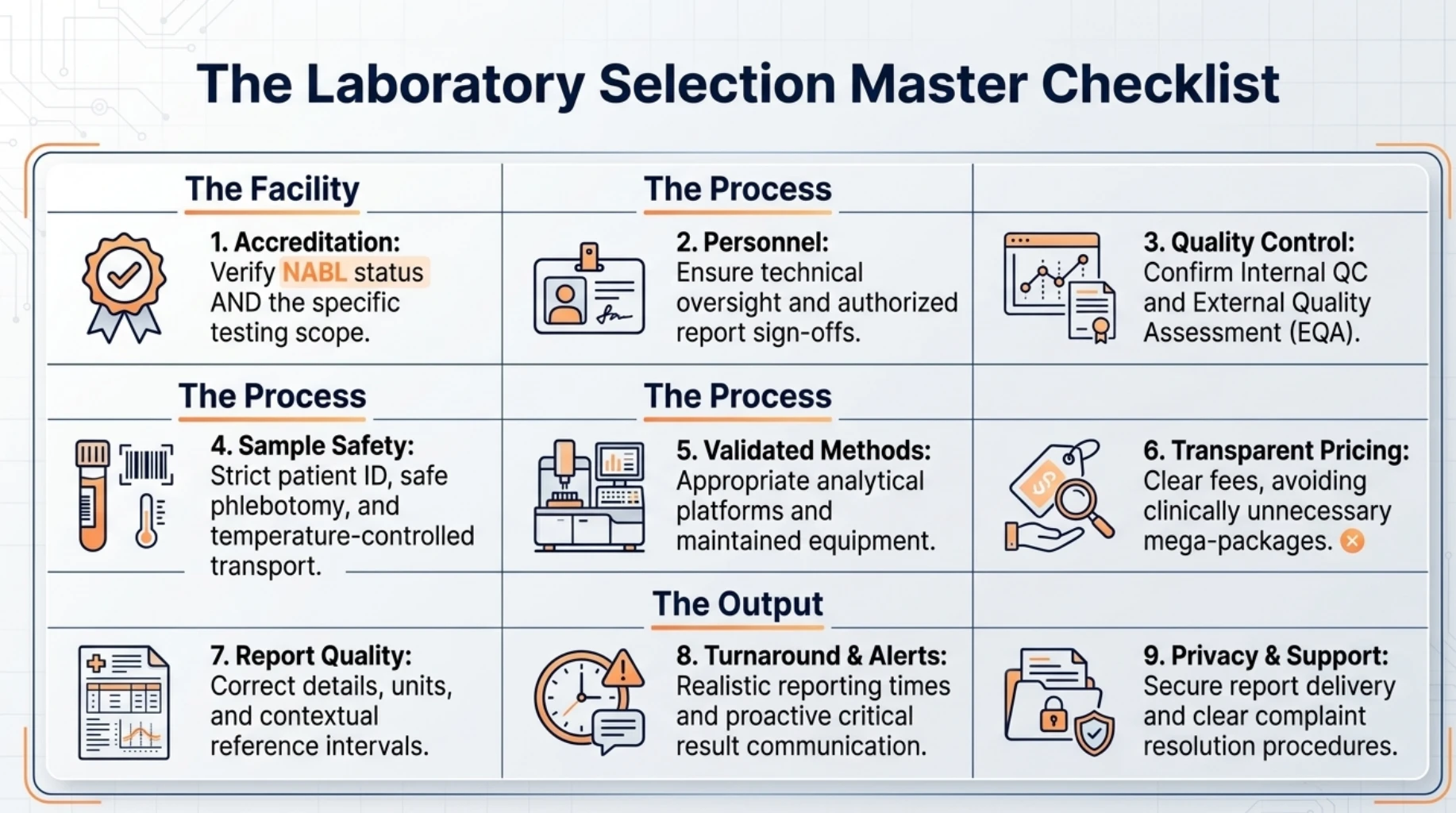
The following checklist summarises the nine essential factors discussed throughout this guide.
Patients can use it when comparing diagnostic laboratories, collection centres or home blood testing services.
| Quality Factor | What to Verify | Why It Matters |
|---|---|---|
| 1. Accreditation | Current NABL status and relevant scope | Provides independent evidence of assessed laboratory competence |
| 2. Qualified personnel | Appropriate technical supervision and report authorisation | Supports reliable testing and professional accountability |
| 3. Quality control | Internal quality control and external assessment where applicable | Helps monitor analytical performance |
| 4. Sample collection | Patient identification, safe phlebotomy, labelling and transport | Reduces avoidable pre-analytical errors |
| 5. Testing methods | Appropriate validated or verified methods and maintained equipment | Supports reliable measurement |
| 6. Report quality | Correct details, units, reference information and authorisation | Supports appropriate clinical interpretation |
| 7. Transparent pricing | Test charges, collection fees and clinical relevance | Helps avoid unexpected costs and unnecessary testing |
| 8. Turnaround time | Realistic reporting estimates and critical result communication | Supports timely medical decisions |
| 9. Privacy and support | Confidential report delivery and complaint resolution | Protects patient information and supports accountability |
No single factor guarantees that every laboratory result will be error-free.
However, evaluating these nine areas can help patients make a more informed choice.
How to Choose a Pathology Lab in Dwarka and Delhi
Patients searching for a pathology lab in Dwarka, a diagnostic centre in Delhi or blood sample collection near their home may find many available options.
Convenience is important, particularly for patients requiring fasting tests, repeated investigations or assistance with mobility.
However, proximity alone should not determine the choice of laboratory.
Should You Choose the Nearest Pathology Lab?
A nearby collection centre may be suitable for many routine investigations if it follows appropriate sample handling procedures and sends specimens to a competent testing laboratory.
For specialised investigations, the expertise and quality systems of the actual testing facility may be more important than the location of the collection centre.
What About Home Blood Collection in Dwarka?
Home sample collection may be convenient for patients in Dwarka and other parts of Delhi-NCR.
Before booking, confirm the identity of the testing laboratory, the collection service’s procedures and any additional charges.
Patients should also ask whether the requested investigations can be reliably collected and transported from home.
Are Online Diagnostic Booking Platforms Reliable?
Online platforms may help patients compare prices and arrange appointments.
However, the booking platform may not be the organisation performing the laboratory analysis.
Patients should identify the actual testing laboratory and verify relevant quality information independently when necessary.
Does Every Diagnostic Centre Have Its Own Laboratory?
No. Some diagnostic centres function primarily as sample collection facilities.
Others operate testing laboratories, imaging services or both.
Patients should clarify which services are performed on-site and which are referred elsewhere.
Should You Use the Same Laboratory for Follow-Up Tests?
For selected measurements, using the same reliable laboratory or comparable testing method can help with longitudinal interpretation.
This may be useful for monitoring thyroid-related measurements, selected hormones and other method-sensitive investigations.
However, patients should not continue using a laboratory solely for consistency if there are legitimate concerns about quality or suitability.
Which Blood Tests Should You Get Before Visiting a General Physician?
Many patients undergo large laboratory panels before consulting a doctor because they believe more investigations will make the consultation more productive.
However, the most useful investigations depend on the patient’s symptoms, medical history, age and risk factors.
For example, a patient with unexplained fatigue may require a different evaluation from someone with suspected diabetes or recurrent abdominal pain.
Ordering every available test before a clinical assessment may increase costs and create confusing incidental findings.
Are Routine Annual Blood Tests Necessary for Everyone?
There is no single universal blood test package appropriate for every healthy adult.
Preventive investigations should be selected according to evidence-based screening recommendations and individual risk.
Some people may benefit from screening for diabetes or dyslipidaemia, while others may require different assessments.
Can a Normal Blood Test Report Rule Out All Diseases?
No. Laboratory investigations provide information about specific biological measurements.
A normal report does not exclude every medical condition.
Some diseases may require physical examination, imaging, specialised investigations or assessment over time.
What If a Test Is Slightly Outside the Reference Range?
A mildly abnormal result does not automatically indicate serious disease.
The significance depends on the particular test, the degree of abnormality, previous results and the patient’s clinical condition.
The treating physician may recommend observation, repeat testing or further evaluation depending on the circumstances.
Should You Repeat Every Abnormal Blood Test?
Not necessarily.
Some results require confirmation, while others may be sufficiently reliable to guide clinical decisions when interpreted with the overall presentation.
Severe abnormalities may require urgent action rather than delaying care for routine repeat testing.
The decision should be made by the treating clinician.
Frequently Asked Questions About Choosing a Pathology Lab
1. How Do I Choose a Good Pathology Lab?
Check the laboratory’s relevant accreditation, qualified personnel, quality assurance systems, sample collection practices, reporting procedures and transparency about pricing. The laboratory should also be suitable for the specific investigation you need.
2. Is NABL Accreditation Important for a Pathology Lab?
Relevant NABL accreditation provides independent assessment of laboratory competence within the accredited scope. It is an important quality indicator, although it does not guarantee that every result will be error-free.
3. How Can I Check Whether a Laboratory Is NABL Accredited?
Use the official NABL website to review the laboratory’s accreditation status, validity and scope. Confirm the actual testing facility rather than relying solely on advertising claims.
4. Does NABL Accreditation Cover Every Test?
No. Accreditation applies to the scope granted to the laboratory. Patients seeking specialised investigations should confirm whether the relevant test or method is included.
5. Are Large Diagnostic Chains Better Than Small Laboratories?
Not necessarily. Laboratory quality depends on technical competence, appropriate methods, quality assurance and sample handling. Both large and smaller laboratories can provide reliable services when appropriate standards are followed.
6. Is the Cheapest Pathology Lab a Good Choice?
Low pricing does not automatically indicate poor quality, but price alone should not determine the choice. Consider the laboratory’s competence, relevant accreditation and suitability for the requested test.
7. Is Home Blood Sample Collection Accurate?
Home collection can be reliable when trained personnel follow appropriate identification, collection, labelling and transport procedures. Some specialised investigations may require collection at a laboratory or healthcare facility.
8. Do All Blood Tests Require Fasting?
No. Fasting requirements depend on the test and clinical purpose. HbA1c generally does not require fasting, while fasting plasma glucose does. Follow the instructions provided for your specific investigation.
9. Can I Drink Water Before a Fasting Blood Test?
Plain water is generally allowed for many routine fasting blood tests, but instructions may vary. Confirm the preparation requirements with the laboratory.
10. Why Do Two Pathology Labs Give Different Results?
Differences may arise from biological variation, testing methods, sample collection, processing conditions or measurement uncertainty. Unexpected differences should be reviewed with the treating physician.
11. Can a Blood Test Report Be Wrong?
Yes. Errors can occur during patient identification, sample collection, analysis or reporting. Appropriate laboratory quality systems aim to minimise these risks.
12. What Is Internal Quality Control?
Internal quality control involves testing appropriate control materials to monitor whether an analytical method is performing within acceptable limits.
13. What Is External Quality Assessment?
External quality assessment evaluates laboratory performance through an external programme and can help identify analytical problems or opportunities for improvement.
14. What Is the Difference Between a Pathology Lab and a Collection Centre?
A testing laboratory performs sample analysis, while a collection centre primarily collects and forwards specimens. Patients should know which laboratory will perform their tests.
15. Should I Choose a Laboratory Based on Google Reviews?
Reviews may provide information about service experiences, but they do not independently establish analytical accuracy. Consider them alongside technical quality indicators.
16. How Long Should Blood Test Reports Take?
Reporting time depends on the investigation, laboratory workflow and whether specialised processing is necessary. Ask for the expected turnaround time for your specific tests.
17. What Should I Do If My Laboratory Report Is Abnormal?
Discuss the result with your treating physician. Interpretation depends on the test, degree of abnormality, symptoms and other clinical information. Critical or dangerous findings may require urgent assessment.
18. Should I Repeat Tests at the Same Laboratory?
Using the same reliable laboratory or comparable method can help with trend interpretation for certain investigations. However, the most important consideration is the suitability and quality of the testing service.
19. Are Full Body Checkup Packages Worth Buying?
Some packages may include appropriate investigations, but more tests do not automatically mean better preventive care. Screening should be based on individual risk and evidence-based recommendations.
20. How Do I Choose a Pathology Lab in Dwarka?
Identify the actual testing laboratory, verify relevant NABL accreditation when applicable, check sample collection and transport arrangements, confirm pricing and reporting time, and discuss test selection with your physician.
Authoritative References and Laboratory Quality Resources
The following sources provide guidance on medical laboratory accreditation, quality management, testing procedures and patient safety.
- National Accreditation Board for Testing and Calibration Laboratories (NABL) — Accreditation programmes and laboratory verification resources.
- ISO 15189:2022 — Medical Laboratories: Requirements for Quality and Competence — International requirements for medical laboratory quality and competence.
- World Health Organization — Laboratory Quality Management System Handbook — Laboratory quality management principles and practices.
- World Health Organization — Patient Safety — Principles of preventing avoidable harm in healthcare.
- Centers for Disease Control and Prevention — Laboratory Quality — Laboratory quality and testing reliability resources.
- National Medical Commission, India — Medical professional registration and regulatory information.
- Ministry of Health and Family Welfare, Government of India — National health policies and public health information.
Laboratory accreditation requirements and professional regulations may change. Patients and healthcare professionals should consult current official sources when verifying a laboratory’s status or interpreting regulatory requirements.
Need Medical Advice About Blood Tests in Dwarka, New Delhi?
If you are planning a health checkup or have received abnormal blood test results, a medical consultation can help determine which findings are clinically important and whether further evaluation is necessary.
Dr. Pankaj Kumar is a General & Lifestyle Physician practising in Dwarka, New Delhi.
His clinical interests include general medical consultations, type 2 diabetes, hypertension, obesity, dyslipidaemia, fatty liver disease and lifestyle-related metabolic disorders.
Consultations may involve reviewing laboratory reports, evaluating symptoms, assessing relevant risk factors and recommending appropriate investigations or follow-up.
The objective is to select investigations according to medical need rather than routinely ordering extensive laboratory packages.
Clinic and Appointment Information
Doctor: Dr. Pankaj Kumar
Designation: General & Lifestyle Physician
Location: Doctors Lane, Sector 6, Dwarka, New Delhi
Landmark: In front of Dhanwantari Labs
Consultation: In-person and online appointments
The clinic provides medical consultations and interpretation of laboratory findings. Laboratory investigations may be performed through external diagnostic facilities as appropriate.
Patients with severe symptoms or potentially life-threatening abnormalities should seek urgent medical assessment at an appropriate emergency facility.
About the Author
Dr. Pankaj Kumar
MBBS, DNB (Family Medicine)
General & Lifestyle Physician
Founder, Diet Plus Minus
Dwarka, New Delhi
Dr. Pankaj Kumar provides general medical consultations with a particular interest in diabetes, obesity, hypertension, fatty liver disease and lifestyle-related metabolic disorders. His approach emphasises appropriate medical assessment, evidence-informed investigations, preventive healthcare and continuity of care.
Medical Disclaimer: This article is intended for general health education and does not replace individual medical consultation. Laboratory accreditation, testing methods, clinical guidelines and regulatory requirements may change. Laboratory results should be interpreted by an appropriately qualified healthcare professional in the context of the patient’s medical condition. Seek urgent medical attention for severe or potentially life-threatening symptoms.
If you want a personalized metabolic assessment and lifestyle strategy, you can book a consultation here:
Book an Appointment